IRELAND: PAST & PRESENT
THE AGE OF SAINTS AND SCHOLARS (AD 450-800)
VIKING INVASION AND DEFEAT (800-1100)
ANGLO-NORMAN ARRIVAL (1100-1500)
THE END OF GAELIC RULE (1500s)
ENGLISH COLONIZATION AND IRISH REBELLIONS (1600s)
VOTES, VIOLENCE, AND THE FAMINE (1800s)
EASTER RISING AND WAR OF INDEPENDENCE (1900-1920)
PARTITION AND CIVIL WAR (1920-1950)
THE TROUBLES IN NORTHERN IRELAND (1950-2000s)
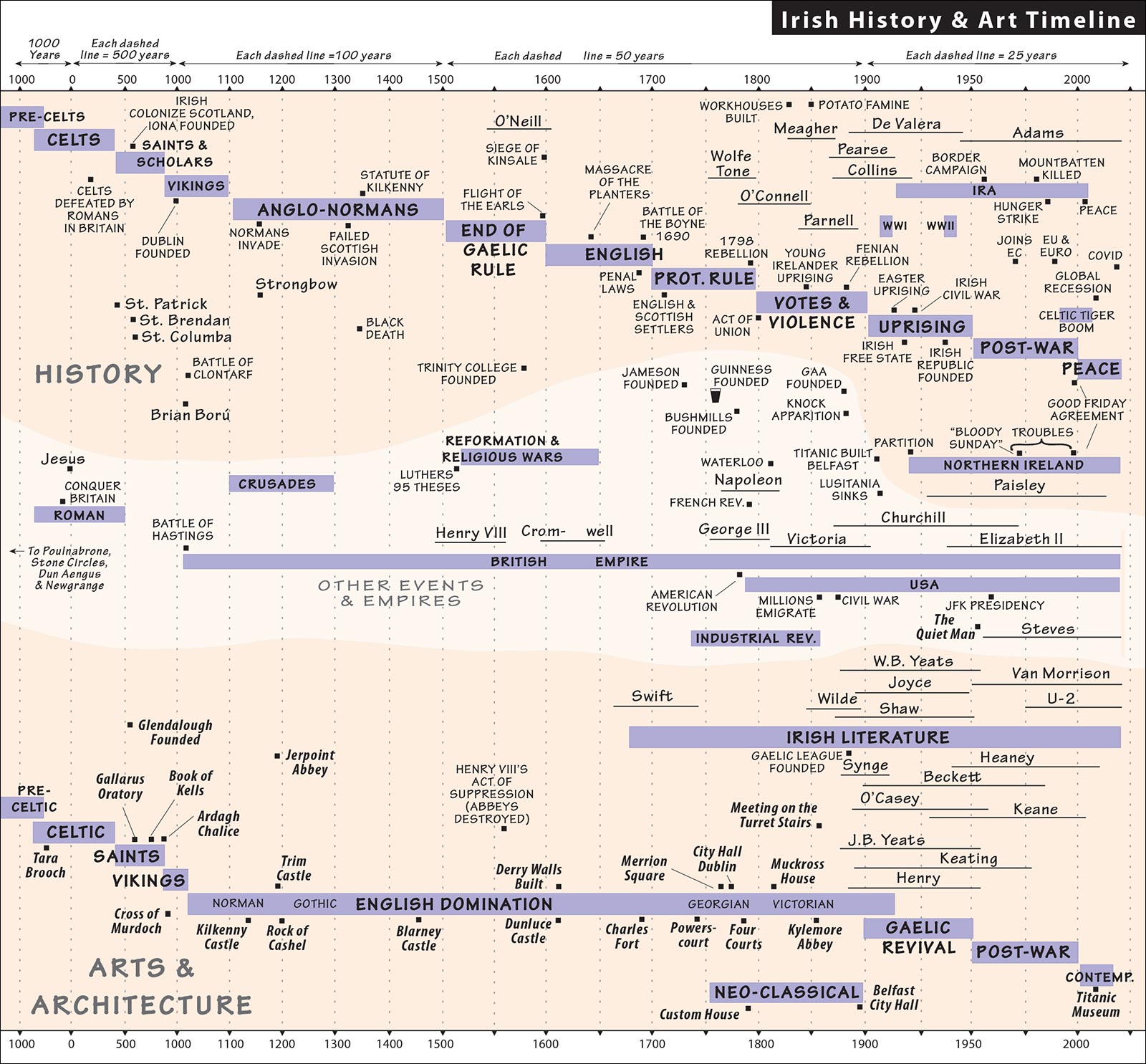
Map: Irish History & Art Timeline
Ireland continues to transform and grow today, achieving a new affluence in the contemporary world as it addresses modern challenges. This chapter provides a brief introduction to Irish history, art, literature, and language. For a deeper dive into the divisions leading up to the period known as the Troubles, see that chapter.
Irish History
PREHISTORY
Ireland became an island when rising seas covered the last land bridge (7000 BC), a separation from Britain that the Irish would fight to maintain for the next 9,000 years. (Snakes were too slow to migrate before the seas cut Ireland off, despite later legends about St. Patrick banishing them.) By 6000 BC, Stone Age hunter-fishers had settled on the east coast, followed by Neolithic farmers from the island of Britain. These early inhabitants left behind impressive but mysterious funeral mounds (passage graves, such as the ones at Brú na Bóinne) and large Stonehenge-type stone circles.
THE CELTS (500 BC-AD 450)
More an invasion of ideas than of armies, the Celtic culture from Central Europe settled in Ireland, where it would dominate for a thousand years. There were more than 300 tuatha (kingdoms) in Ireland, each with its own rí (king), who would’ve happily chopped the legs off anyone who called him “petty.” The island was nominally ruled by a single Ard Rí (high king) at the Hill of Tara (north of Dublin), though there was no centralized nation.
In 55 BC, the Romans conquered the Celts in England, but they never invaded Ireland. Irish history forever skewed in a different direction—Gaelic, not Latin. The Romans called Ireland Hibernia, meaning Land of Winter; it was apparently too cold and bleak to merit an attempt at colonization.
THE AGE OF SAINTS AND SCHOLARS (AD 450-800)
When Ancient Rome fell and took the Continent—and many of the achievements of Roman culture—with it, Gaelic Ireland was unaffected. In fact, the island was a beacon of culture for the rest of Europe. Ireland (population c. 750,000) was still a land of many feuding kings, but the culture was stable.
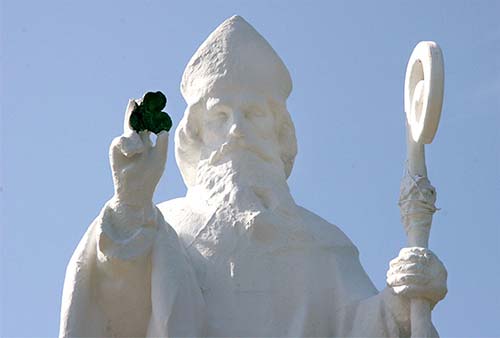
Christianity and Latin culture arrived first as a trickle from trading contacts with Christian Gaul (France), then more emphatically in AD 432 with St. Patrick, who persuasively converted the sun- and nature-worshipping Celts. Legends say he drove Ireland’s snakes (symbolic of pagan beliefs) into the sea and explained the Trinity with a shamrock—three leaves on one stem.
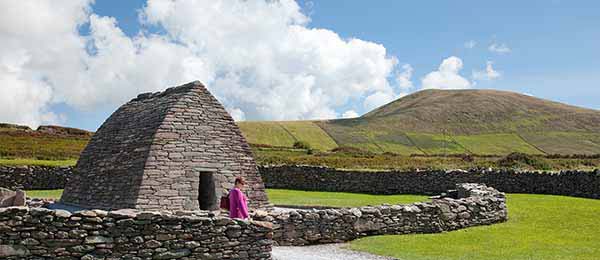
Later monks continued Christianizing the island. They flocked to scattered, isolated monasteries, living in stone igloo beehive huts, translating and illustrating manuscripts. Perhaps the greatest works of art from all of Dark Age Europe are these manuscripts, particularly the ninth-century Book of Kells (in Dublin).
By 800, Charlemagne was importing educated and literate Irish monks to help organize and run his Frankish kingdom. Meanwhile, Ireland remained a relatively cohesive society based on monastic settlements rather than cities. Impressive round towers from those settlements still dot the Irish landscape—silent reminders of this scholarly age.
VIKING INVASION AND DEFEAT (800-1100)
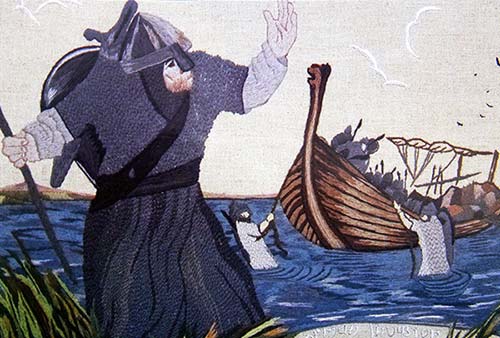
In 795, Viking pirates from Norway invaded, first testing isolated island monasteries, then boldly sailing up Irish rivers into the country’s interior. The many raids wreaked havoc on the monasteries and continued to shake Irish civilization for two chaotic centuries. In 841, a conquering Viking band decided to winter in Ireland. The idea caught on as subsequent raiders eventually built the island’s first permanent walled cities, Dublin and Waterford. The Viking raiders slowly evolved into Viking traders. They were the first to introduce urban life and commerce to Ireland.
ANGLO-NORMAN ARRIVAL (1100-1500)
The Normans were Ireland’s next aggressive guests. In 1170, a small army of well-armed soldiers of fortune invaded Ireland under the pretense of helping a deposed Irish king regain his lands. This was the spearhead of a century-long invasion by the so-called Anglo-Normans—the French-speaking rulers of England, descended from William the Conqueror and his troops.
By 1250, the Anglo-Normans occupied two-thirds of the island. But when the Black Death came in 1348, it spread rapidly and fatally in the tightly packed Norman settlements. The plague, along with Normans intermarrying with Gaels, eventually diluted Norman identity and shrank English control. But even as Anglo-Norman power eroded, the English kings considered Ireland theirs.
THE END OF GAELIC RULE (1500s)
Martin Luther’s Reformation split the Christian churches into Catholic and Protestant, making Catholic Ireland a hot potato for newly Protestant England to handle. In 1534, angered by Henry VIII and his break with Catholicism, the earls of Kildare (father, then son) led a rebellion. Henry crushed the revolt, executed the earls, and confiscated their land. Henry’s daughter, Elizabeth I, gave the land to English Protestant colonists (called “planters”). The next four centuries would see a series of rebellions by Gaelic-speaking Irish-Catholic farmers fighting to free themselves from rule by English-speaking Protestant landowners.
Hugh O’Neill (1540-1616), a Gaelic chieftain angered by planters and English abuses, led a Gaelic revolt in 1595. At the Battle of Yellow Ford (1598), guerrilla tactics brought about an initial Irish victory. But after the disastrous Battle of Kinsale (1601), O’Neill ceded a half-million acres to England, signaling the end of Gaelic Irish rule.
ENGLISH COLONIZATION AND IRISH REBELLIONS (1600s)
By 1641, 25,000 Protestant English and Scottish planters had settled into the confiscated land, making Ulster (in the northeast) the most English area of the island.
Then, Oliver Cromwell—who had pulled off a coup d’état in England—invaded and conquered Ireland (1649-1650) with a Puritanical, anti-Catholic zeal. Cromwell confiscated 11 million additional acres of land from Catholic Irish landowners to give to English Protestants.
Ireland is home to more than 200 evocative stone circles. These jaggedly sparse boulder rings are rudimentary in comparison to Britain’s more famous Stonehenge. But their misty, mossy settings provide curious travelers with a glimpse of the mysterious people who lived in Ireland before the Celts.
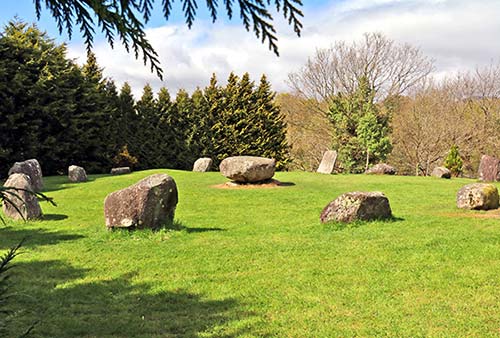
Late Bronze Age communities put considerable time and effort into moving huge rocks into ring formations. Scholars believe that these circles may have been used as solar observatories, to calculate solstices and equinoxes as they planned life-sustaining seasonal crop-planting cycles. Without any written records, we can only surmise their exact purpose.
In the Middle Ages, superstitious people believed that the stones had been arranged by an earlier race of giants. Later, some thought that at least one circle was made up of petrified partiers who had dared to dance on the Sabbath. A nearby standing stone was supposed to have been the piper who had been playing the tunes.
Two main regional clusters hold more than a hundred circles each: central Ulster, in the north (radiocarbon-dated 1500-700 BC); and County Cork and County Kerry, in the south (radiocarbon-dated 1000-700 BC). The remaining dozen circles are scattered across central Ireland. Some circles have only recently been rediscovered, having been buried over the centuries by rapidly accumulating bog growth.
Dedicated travelers seeking stone circles will find them marked in the Ordnance Survey atlas and signposted along rural roads. Ask a local farmer for directions—and savor the experience (wear shoes impervious to grass dew and sheep doo).
My favorite stone circles are all within a druid’s dance of other destinations mentioned in this book:
Kenmare is in County Kerry, on the western fringe of Kenmare town. It’s the most easily accessible of the circles listed here (and described in the Ring of Kerry chapter).
Drombeg is in County Cork, 35 miles (56 km) southwest of Kinsale, up a narrow winding lane just south of the R-597 coastal road.
Glebe is in County Mayo, two miles (3 km) east of Cong and 100 yards south of the R-345 road to Neale (across a minefield of sheep droppings).
Beltany is in County Donegal, 10 miles (16 km) southeast of Letterkenny, straight south of Raphoe.
Beaghmore is in County Tyrone, 20 miles (32 km) east of Omagh, north off A-505 (Cookstown Road).
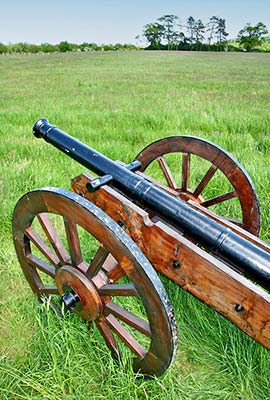
In 1688-1689, Irish rebels rallied around Catholic King James II, who had been deposed by the English Parliament. He wound up in Ireland, where he formed an army to retake the crown. The showdown came at the massive Battle of the Boyne (1690), north of Dublin. James and his 25,000 men were defeated by the troops of Protestant King William III of Orange. From this point on, the color orange became a symbol in Ireland for pro-English, pro-Protestant forces.
PROTESTANT RULE (1700s)
During the 18th century, urban Ireland thrived economically, and even culturally, under the English. Dublin in the 1700s (pop. 50,000) was Britain’s second city, and one of Europe’s wealthiest and most sophisticated.
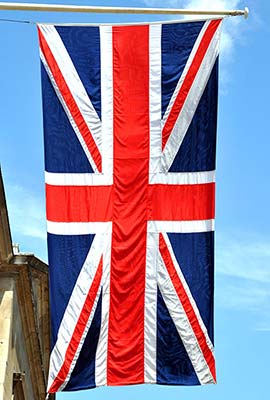
But beyond Dublin, rebellion continued to brew. Irish nationalists were inspired by budding democratic revolutions in America (1776) and France (1789). Increasingly, the issue of Irish independence was less a religious question than a political one.
England tried to solve the Irish problem by forcing Ireland into a “Union” with England as part of a “United Kingdom” (Act of Union, 1801). The 500-year-old Irish Parliament was dissolved, with its members becoming part of England’s Parliament in London. From then on, “Unionists” have been those who oppose Irish independence, wanting to preserve the country’s union with England.
VOTES, VIOLENCE, AND THE FAMINE (1800s)
Irish politicians lobbied in the British Parliament for Catholic rights, reform of absentee-landlordism, and Home Rule. But those efforts were soon overwhelmed by the biggest catastrophe in Irish history: the Great Potato Famine (1845-1849). It’s estimated that at least a million people starved to death or died of related diseases. Another 1 to 2 million emigrated.
Ireland’s economy—and spirit—took generations to recover. And culturally, old Gaelic, rural Ireland was being crushed under the Industrial Revolution and the political control wielded by Protestant England.
Castles were fortified residences for medieval nobles. In Ireland, Norman (evolving into English) warlords introduced them in the late 1100s. Castles come in all shapes and sizes, but knowing a few general terms will help you understand them.
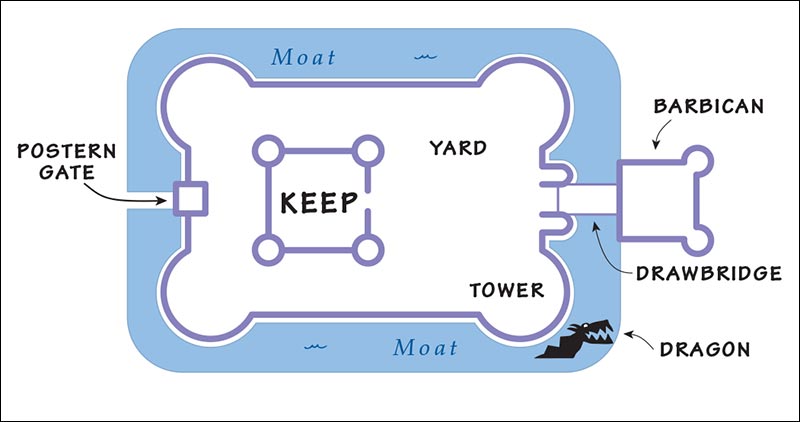
Barbican: Fortifed gatehouse, sometimes a standalone building located outside the main walls
Crenellation: Gap-toothed pattern of stones atop the parapet Drawbridge: Bridge that could be raised or lowered using counterweights or a chain and winch
Great Hall: Largest room in the castle, serving as throne room, conference center, and dining hall
Hoardings (or Gallery or Brattice): Wooden huts built onto the upper parts of the stone walls; served as watchtowers, living quarters, and fighting platforms
Keep (or Donjon): High, strong stone tower in the center of the complex; the lord’s home and refuge of last resort
Loopholes (or Embrasures): Narrow wall slits through which soldiers could shoot arrows
Machicolation: Stone ledge jutting out from the wall, with holes through which soldiers could drop rocks or boiling oil onto wall-scaling enemies below
Moat: Ditch encircling the wall, sometimes filled with water
Parapet: Outer railing of the wall walk
Portcullis: Iron grille that could be lowered across the entrance
Postern Gate: Small, unfortified side or rear entrance; in wartime, became a sally port used to launch surprise attacks or as an escape route
Towers: Square or round structures with crenellated tops or conical roofs serving as lookouts, chapels, living quarters, or the dungeon
Turret: Small lookout tower rising from the top of the wall
Wall Walk (or Allure): Pathway atop the wall where guards could patrol and where soldiers stood to fire at the enemy
Yard (or Bailey): Open courtyard inside the castle walls
The oldest stone churches that survive in Ireland were designed and built by religious orders (Cistercians, Benedictines, Franciscans, and Dominicans) that came to Ireland from the Continent in the mid-1100s, and were supported by the Norman invaders who soon followed. Even if you wouldn’t know your apse from a hole in the ground, learning a few simple terms will enrich your experience.
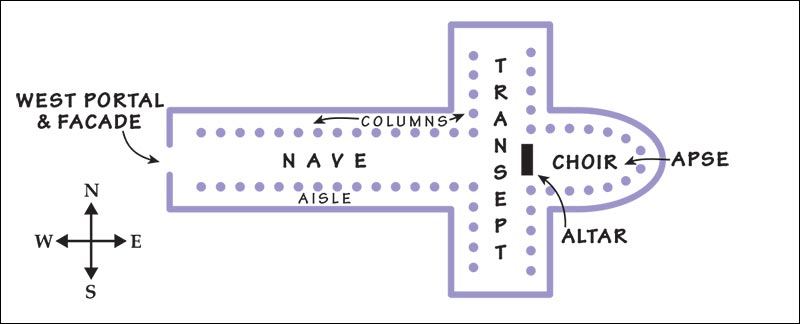
Aisles: Long, generally low-ceilinged arcades that flank the nave
Altar: Raised area with a ceremonial table (often adorned with candles or a crucifix), where the priest prepares and serves the bread and wine for Communion
Apse: Space behind the altar, sometimes bordered with small chapels
Barrel Vault: Continuous round-arched ceiling that resembles an extended upside-down U
Choir: Intimate space reserved for clergy and choir, located within the nave near the high altar and often screened off
Cloister: Covered hallways bordering a square or rectangular open-air courtyard, traditionally where monks and nuns got fresh air
Facade: Exterior of the church’s main (west) entrance, usually highly decorated
Groin Vault: Arched ceiling formed where two equal barrel vaults meet at right angles
Narthex: Area (portico or foyer) between the main entry and the nave
Nave: Long central section of the church (running west to east, from the entrance to the altar) where the congregation sits or stands during the service
Transept: One of the two parts forming the “arms” of the cross in a traditional cross-shaped floor plan; runs north-south, perpendicularly crossing the east-west nave
West Portal: Main entry to the church (on the west end, opposite the main altar)
EASTER RISING AND WAR OF INDEPENDENCE (1900-1920)
As the century turned, Ireland prepared for the inevitable showdown with Britain. On Easter Monday, April 24, 1916, Irish nationalists marched on Dublin and proclaimed Ireland an independent republic. British troops suppressed the insurrection within a week and swiftly executed the ringleaders.
In Britain’s 1918 general elections (the first in which British women were allowed to vote), the separatist Sinn Féin party won big, and formed their own independent Irish Parliament in Dublin—sparking the War of Independence in 1919. The fledgling Irish Republican Army faced 40,000 British troops. A thousand people died in this multiyear guerrilla war of street fighting, sniper fire, jailhouse beatings, terrorist bombs, and reprisals.
PARTITION AND CIVIL WAR (1920-1950)
Finally, Britain agreed to Irish independence. But Ireland itself was a divided nation—the southern three-quarters of the island was mostly Catholic, Gaelic, rural, and for Home Rule; the northern quarter was Protestant, English, industrial, and Unionist. The solution? In 1921, the Anglo-Irish Treaty partitioned the island into two independent, self-governing countries within the British Commonwealth: Northern Ireland and the Irish Free State.
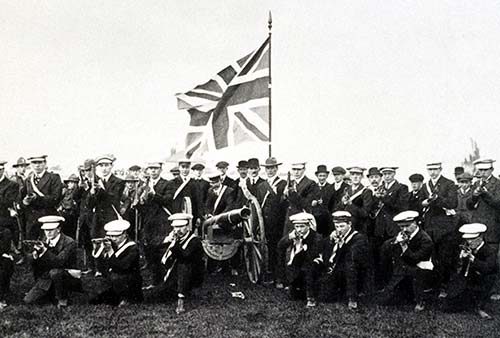
Within a year the island plunged into a Civil War (1922-1923). The hardline IRA opposed the partition. Dublin and the southeast were ravaged in a year of bitter fighting before the Irish Free State emerged victorious. The IRA went underground, moving its fight north and trying for the rest of the century to topple the government of Northern Ireland.
In 1949, the Irish Free State left the Commonwealth and officially became the Republic of Ireland.
THE TROUBLES IN NORTHERN IRELAND (1950-2000s)
The Republic moved toward prosperity in the second half of the century, but Northern Ireland—with its slight Protestant majority and large, disaffected Catholic minority—was plagued by the Troubles. I’ve described this period in greater detail in the Understanding the Troubles chapter. Here’s the short version:
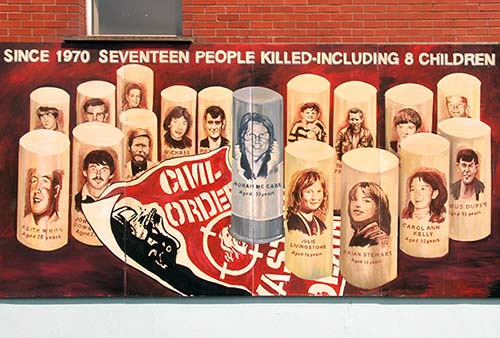
In the late 1960s, organized marches and demonstrations demanded equal treatment for Catholics. Protestant Orangemen countered by marching through Catholic neighborhoods, provoking riots. In 1969, Britain sent troops to help Northern Ireland keep the peace.
From the 1970s to the 1990s, the north was a low-level battlefield, with the IRA using terrorist tactics to advance their political agenda. The Troubles, which claimed some 3,500 lives, continued with rock-throwing, marches, arrests, hunger strikes, bombings, and riots (notably Derry’s Bloody Sunday in 1972).
Finally, after a string of failed peace agreements, came the watershed 1998 settlement known as the Good Friday Agreement. This accord gives Northern Ireland the freedom to leave the UK if ever the majority of the population approves a referendum to do so. At the same time, the Republic of Ireland withdrew its constitutional claim to the entire island of Ireland. Northern Ireland now has limited autonomy from London, with its own democratically elected, power-sharing government.
After years of negotiation, in 2005 the IRA officially ended its military actions. In 2007, London returned control of Northern Ireland to the Northern Ireland Assembly. Perhaps most important, after almost 40 years, the British Army withdrew most of its forces from Northern Ireland that summer.
Britain’s decision to leave the European Union (Brexit) brought new uncertainties to Ireland—sparking worries that it could even re-ignite old conflicts underlying the Troubles. However, in the end, it was much ado about nothing. Ireland remains stable (and without internal border checks), hopefully suggesting just how much it prizes its hard-won peace.
IRELAND TODAY
Divisions persist in Ireland—between Irish and English culture, and between Catholic and Protestant. Northern Ireland remains part of the UK, while the Republic owes allegiance to the EU. But rather than focusing on differences, it’s cooperation that most marks Ireland today.
The Republic and Northern Ireland are working hard to create common policy on everything from trade to food safety to energy grids. With each passing year, the two countries are trading a little more with each other than with the UK and the EU. The Republic (whose economy is bigger and stronger) has an interest in boosting the less-prosperous North. They both recognize that an all-Irish economy makes them stronger in the global economy. Together the two Irelands are finding their place in the wider world of nations.
Today’s Irish embrace their common heritage—that unique mix of Celtic and English that’s evolved over the centuries. At the Olympic Games, the two countries unite to send a single “Irish” team. Thanks to their emigrant legacy, the Irish can walk into any of the thousands of Irish pubs around the world, order a Guinness, and feel at home.
Ireland has emerged from its turbulent past to become prosperous and progressive. And even after 2,000 years, ancient Celtic culture still thrives. You can see it on any given weekend, when fully modern Irish people come together with friends—to have a drink, enjoy “trad” music, touch base with their long history, and toast their future.
Irish Art
Most people can’t name a single Irish painter or sculptor. Ireland’s creativity is best known by its music, dance, and literature. But the island has a rich heritage of visual art, rooted in its lush landscape, complex history, and proud people. In your travels, you’ll come across great beauty, from exquisitely wrought jewelry to mysterious petroglyphs, stately architecture, glittering glassware, whimsical statues, and provocative murals.
Early Irish Art: Five thousand years ago, Stone Age inhabitants of the island built huge tombs and carved the stones with intriguing spiral and bull’s-eye patterns (3,000 BC). Their descendants began a long tradition of high-quality metalworking, forging gold necklaces they buried with their honored dead (2,000 BC). Centuries later, the Celts continued the tradition even into Christian times, with the stunning Tara Brooch (eighth century AD). Ireland’s artistic metalworkers produced everything from 1,000-year-old Viking swords and war trumpets to jewel-encrusted Christian crosses, chalices, and reliquaries.
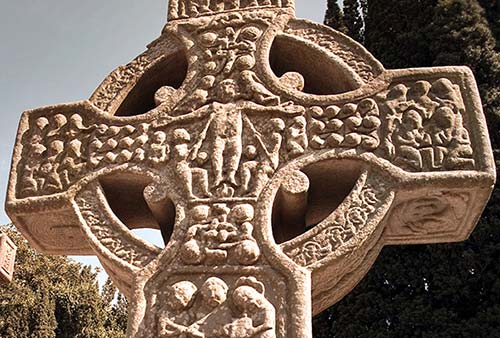
Throughout medieval times (c. 500-1200), Irish artists enjoyed a golden age of creativity by combining Christian themes with pagan styles. The colorfully illustrated Book of Kells features Latin calligraphy, icon-like pictures, and whimsical creatures from folklore, woven into intricate Celtic designs. Even the Cross of Murdock, a towering 18-foot-tall stone symbol of Christianity’s triumph over paganism, combines biblical figures with decorative Celtic spirals and circles.
English Influence: These distinctively Irish styles were suppressed when the English conquered the island (from c. 1200 on). But the English brought their own brand of beauty. Cities got a Georgian makeover of majestic white buildings with Neoclassical columns (like Dublin’s Trinity College, City Hall, and Parliament House). Irish sculptors stayed employed cranking out busts and statues of the English ruling class, while painters glorified great moments in English history. Thanks to English industry, Dublin got the elegant ironwork arch of the Ha’ Penny Bridge. And Ireland’s long tradition of crafts set a world standard with Waterford crystal—high-lead glass that’s blown, shaped, and etched with patterns.
Celtic Revival: By the late 19th century, Ireland’s artists—like society as a whole—were rediscovering the Irishness of their language, folklore, music, and long-dormant art styles. As Ireland fought for independence, statues of its heroes and martyrs were suddenly in great demand to decorate public buildings and boulevards (such as on Dublin’s O’Connell Street).
The homegrown Irish Arts and Crafts movement (c. 1890-1930) brought a burst of creativity. Adopting Art Nouveau and Art Deco styles, artists like Harry Clarke created glorious stained-glass windows (e.g., Bewley’s Oriental Café in Dublin).
Painters looked to traditional Irish subjects for inspiration. Sean Keating (1889-1977) used a Realist style to portray the working-class champions of independence. Jack B. Yeats (1871-1957, brother of the poet W. B. Yeats) painted country scenes in a colorful Impressionist/Modernist style, and Belfast-born Paul Henry (1876-1958) captured towering cloudscapes.
Contemporary Art: In more recent times, Ireland has produced many talented artists, though their “Irishness” often gets lost in the globalized art scene. (Francis Bacon, for example, was born and raised in Ireland, but made his fame abroad.)
The 30-year conflict of the Troubles (1968-1998) birthed a distinctively Irish specialty: large political murals painted on public buildings, as each side in the struggle memorialized its heroes, martyrs, triumphs, and tragedies (Belfast and Derry have many).
In your travels, you’ll come across numerous small art galleries where local artists sell their pleasant Irish-tinged paintings of landscapes, seascapes, and country scenes.
The long tradition of fine crafts lives on, with shops selling Irish specialties such as fine crystal, Aran knits, hand-crafted ceramics, and the Celtic-inspired metalwork of Claddagh rings.
Finally, Ireland’s metalworking heritage continues in the many public statues—by talented if not necessarily famous sculptors—that grace the island. Accessible, inspirational, and sometimes funny, these statues memorialize all things Ireland: from emigrants and laundry workers to hurlers and football stars to folk legends like Molly Malone to a once-beloved local dolphin. And in Dublin, a 400-foot-tall Spire made of steel rises up as a symbol of Ireland’s promising future.
Irish Literature
Ireland’s greatest contribution to the arts is in literature. Compared with its tiny size, the island’s place in the literary world is enormous, with writers and themes of universal appeal. Perhaps that’s because Ireland has been home to so many diverse languages, faiths, and cultures. It’s produced a body of literature rich in mythology, poetry and wordplay, theatricality, and working-class pride in the face of oppression.
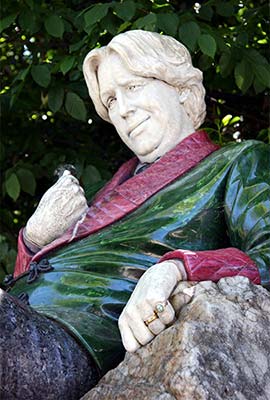
Early Irish Literature (prehistory to AD 1500): The island’s fascination with words began before the advent of writing, when harp-playing Celtic poets and druids passed down timeless tales of the pagan gods and superhuman chieftains. These myths—of warrior queens like Maeve and heroic hunters like Finn MacCool—were later written down by Christian monks. Unlike in other lands, the pagan culture wasn’t suppressed, just augmented with Christian elements, becoming part of the fabric of Ireland. St. Patrick was Ireland’s first “name” author, with his Confession—a riveting first-person account (in Latin) of his turbulent life and conversion. “My name is Patrick,” it begins. “I am a sinner and a simpleton.”
Throughout medieval times, Ireland was one of Europe’s most literate lands, thanks to scholarly monks who produced exquisitely illustrated manuscripts like the famed Book of Kells. Using Celtic motifs, these scribes helped develop minuscule writing, the forerunner of today’s lowercase script.
English Domination (1500-1900): As England came to dominate the isle politically, English became the language of writers and the publishing world. Meanwhile, the indigenous Irish language was still spoken in the countryside, and poets continued to pass down the old folk tales in spoken-word performances and hand-copied manuscripts.
From this point, it gets increasingly difficult to distinguish purely “Irish” literature from “English,” because so many writers were born in Ireland but wrote exclusively in English for an English audience. Still, there are some elements that mark writers as distinctly Irish:
The satirist Jonathan Swift (Gulliver’s Travels, 1726) and playwright Oliver Goldsmith (She Stoops to Conquer, 1773) were all the rage in England, but their keen insight into English society may have roots in their outsider status as Irishmen. Irish novelists were instrumental in exploring new genres: Maria Edgeworth’s tales of country aristocrats in the manor house (Castle Rackrent, 1800) influenced stories from Jane Austen’s novels to the Downton Abbey series. With Dracula (1897), Bram Stoker helped put the Gothic horror tale on the map. Dublin-born Oscar Wilde (who once dated the same girl as Bram Stoker) wowed London with his quick wit, outrageous clothes, and flamboyant personality. With his darkly fascinating The Picture of Dorian Gray (1890) and satiric The Importance of Being Earnest (1895), this Irishman skewered upper-class English life.
Ireland Comes of Age (1900-present): As Ireland was reviving its national identity, its writers were reclaiming traditional Irish culture. The poet W. B. Yeats mined Celtic mythology and rustic imagery from Ireland’s countryside. The playwright J. M. Synge (Playboy of the Western World, 1907) celebrated small-town Irish characters speaking in their traditional brogue. It was staged at Dublin’s Abbey Theater, a place that celebrated all things Irish and sprouted a bumper crop of Irish playwrights. In politics, even some of Ireland’s greatest champions of independence were writers, including the poet Patrick Pearse, who gave his life for the cause.
Once-provincial Ireland now boasted some of the greatest writers in the English-speaking world. Their work has such wide appeal, people tend to forget their deep Irish roots. James Joyce wove Ireland’s many languages—English, Irish, and Latin—into his groundbreaking stream-of-consciousness modernist novel Ulysses, set on a single day in Dublin (June 16, 1904). George Bernard Shaw’s highly political plays (Man and Superman) reflect the same working-class struggles he grew up with in his homeland. Another playwright, Samuel Beckett (Waiting for Godot) took the Irish love of wordplay to absurd extremes.
As the 20th century progressed, Irish authors became even more confident in the universality of Irish themes. Seán O’Casey’s plays (at the Abbey Theater) brought everyday Irish characters and politics to life. Brendan Behan introduced the world to Irish accents, rebelliousness, and drinking habits. (“I’m a drinker with a writing problem,” he once said.) Ireland’s political Troubles inspired hundreds of popular novels and plays. More recently, Roddy Doyle (The Commitments, 1987) and Frank McCourt (Angela’s Ashes, 1996) memorialized that all-too-common feature of Irish life—a bleak working-class upbringing.
Bringing Irish literature full circle, the poet Seamus Heaney appealed to modernists and traditionalists alike, with his imagery rooted in the rocks, hills, and bogs of the timeless Irish countryside. Twenty-five centuries of Irish myth, language, poetry, political strife, and hardscrabble pride live on.
Irish Language
The Irish have a rich oral tradition that goes back to their ancient fireside storytelling days. Part of the fun of traveling here is getting an ear for the way locals express themselves.
Irish Gaelic is one of four surviving Celtic languages, along with Scottish Gaelic, Welsh, and Breton. Some proud Irish choose to call their native tongue “Irish” instead of “Gaelic” to ensure that there is no confusion with the language spoken in parts of Scotland.
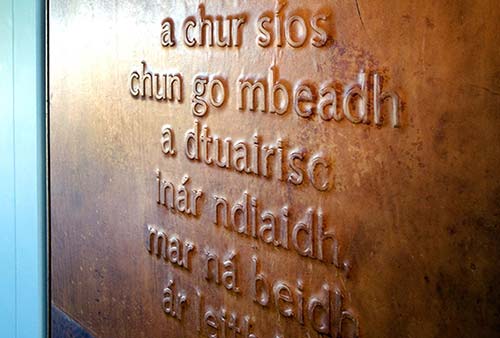
Only 165 years ago, the majority of the Irish population spoke Irish Gaelic. But most of the speakers were of the poor laborer class that either died or emigrated during the Famine. After the Famine, parents and teachers understood that their children would be better off speaking English if they emigrated to the US, Canada, Australia, or England. Children in schools wore a tally stick around their necks, and teachers cut a notch each time a child was caught speaking Irish. At the end of the day, the child received a whack for each notch in the stick. It wasn’t until a resurgence of cultural pride in the late 19th century that an attempt was made to promote the language again.
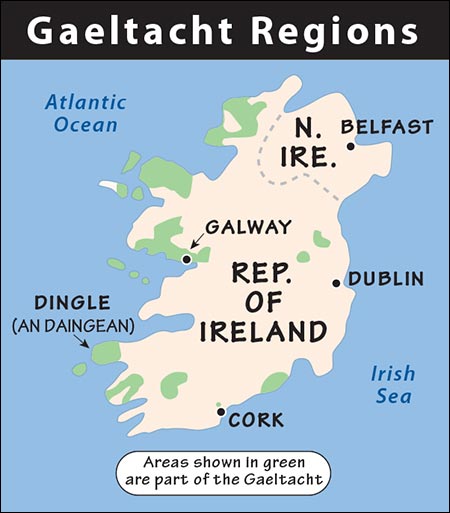
These days, less than 5 percent of the Irish population is fluent in their native tongue. However, it’s taken seriously enough that all national laws must first be written in Irish, then translated into English. Irish Gaelic can be heard most often in the western counties of Kerry, Galway, Mayo, and Donegal. You’ll know you’re entering an Irish Gaelic-speaking area when you see a sign saying Gaeltacht (GAIL-takt).
Irish Gaelic has no “th” sound—which you can hear today when an Irish person says something like “turdy-tree” (thirty-three). There are also no equivalents of the simple words “yes” and “no.” Instead, answers are given in an affirmative or negative rephrasing of the question. For example, a question like “Did you mail the letter today?” would be answered with “I did (mail the letter),” rather than a simple “yes.” Or “It’s a nice day today, isn’t it?” would be answered with “It is,” or “’Tis.”
IRISH WORDS IN PLACE NAMES
Here are a few words that appear in Irish place names. You’ll see these on road signs or at tourist sights.
IRISH PLEASANTRIES
When you reach the more remote western fringe of Ireland, you’re likely to hear folks speaking Irish. Although locals can readily converse with you in English, it’s fascinating to hear their ancient Celtic language spoken. Here are some basic Irish phrases:
| Irish | English |
| Fáilte. (FAHLT-chuh or FAHLT-uh) | Welcome. |
| Conas tá tú? (CONN-us A-ta too) | How are you? |
| Go raibh maith agat. (guh rov mah UG-ut) | Thank you. |
| Slán. (slawn) | Bye. |
| Dia dhuit. (DEA-gwitch) | God be with you. |
IRISH POLITICS
Politics is a popular topic of conversation here. Whether you pick up a local newspaper or turn on your car radio, you’re likely to encounter these Irish political terms in the media:
| Irish | English |
| Taoiseach (TEE-shock) | prime minister of Irish Republic |
| Seanad (SHAN-ud) | Irish Senate |
| Dáil (DOY-ill) | Irish House of Representatives |
| Teachta Dála (TD) (TALK-tah DOLL-ah) | member of Irish Parliament |
| Fine Gael (FEE-nuh GWAIL) | political party “Clan of the Gaels” |
| Fine Fáil (FEE-nuh FOIL) | political party “Soldiers of Destiny” |
| Sinn Féin (shin FAIN) | political party “We Ourselves” |
IRISH PUB AND MUSIC WORDS
The Irish love to socialize. Pubs are like public living rooms, where friends gather in a corner to play tunes and anyone is a welcome guest. Here are some useful pub and music words:
| Irish | English |
| poitín (po-CHEEN) | moonshine, homemade liquor |
| craic (crack) | fun atmosphere, good conversation |
| bodhrán (BO-run) | traditional drum |
| uilleann (ILL-in) | elbow (uilleann pipes are elbow bagpipes) |
| trad (trad) | traditional Irish music |
| ceilidh (KAY-lee) | Irish dance gathering |
| fleadh (flah) | music festival |
| Slainte! (SLAWN-chuh) | Cheers! (To your health!) |
| Táim súgach! (taw im SOO-gakh) | I’m tipsy! |
| lei thras (LEH-hrass) | toilets |
| mná (min-AW) | women’s room |
| fír (fear) | men’s room |
IRISH NAMES
Here are some of the most common Celtic first names. Amaze your new Irish friends by pronouncing them correctly, or at least not mangling them.
| Irish | English |
| Aoife (EE-fuh) | Ava |
| Áine (ON-yuh) | Anna |
| Eammon (AY-mun) | Edmond |
| Gráinne (GRAWN-yuh) | Grace |
| Liam (LEE-um) | William |
| Mairéad (mahr-AID) | Margaret |
| Michael (MEE-hall) | Michael |
| Niall (nile) | Neil |
| Pádraig (POD-rig) | Patrick |
| Peadar (PAD-er) | Peter |
| Roisín (ROW-sheen) | Rosaleen |
| Seamus (SHAME-us) | James |
| Sean (shawn) | John |
| Sinéad (shin-AID) | Jane |
| Siobhán (shiv-AWN) | Joan |
Irish-Yankee Vocabulary
If some of these words seem more British than Irish, those are ones you’re likely to hear more often in Northern Ireland (part of the UK).
advert: advertisement
anticlockwise: counterclockwise
aubergine: eggplant
banger: sausage
bang on: correct
banjaxed: messed up
bank holiday: government holiday
bar: except
beer mat: coaster
bespoke: custom
billion: a thousand of our billions (a trillion)
biro: ballpoint pen
biscuit: cookie
Black Mariah: police van
black pudding: sausage made from pig’s blood
black stuff: Guinness
blather: rambling, empty talk
blinkered: narrow-minded
bloody: damn (from medieval blasphemy: “Christ’s blood”)
blow off: fart
boffin: nerd
bog: slang for toilet
boho: bohemian
bolshy: argumentative
bonnet: car hood
boot: car trunk
braces: suspenders
bridle way: path for walkers, bikers, and horse riders
brilliant: cool
bum: bottom or “backside”
busker: street musician
cacks: trousers, underpants
candy floss: cotton candy
caravan: trailer
car boot sale: temporary flea market, often for charity
car park: parking lot
carry on: nonsense
casualty: emergency room
cat’s eyes: road reflectors
ceilidh (pronounced “KAY-lee”): dance, party
champ: mashed potatoes and onions
chicory: endive
chipper: fish-and-chips shop
chips: french fries
chock-a-block: jam-packed
chuffed: pleased
cider: alcoholic apple cider
clearway: road where you can’t stop
coach: long-distance bus
concession: discounted admission
cos: romaine lettuce
cotton buds: cotton swabs
courgette: zucchini
craic (pronounced “crack”): fun, good conversation
crèche (pronounced “creesh”): preschool
crisps: potato chips
Croker: Croke Park (GAA Dublin sports stadium)
crusties: New Age hippies
culchie: hick, country yokel
cuppa: cup of tea
CV: résumé (curriculum vitae)
Da: father
deadly: really good
dear: expensive
digestives: round graham crackers
dinner: lunch or dinner
diversion: detour
dodgy: iffy, risky
dole: welfare
done and dusted: completed
donkey’s years: until the cows come home, forever
draughts (pronounced “drafts”): checkers
draw: marijuana
dual carriageway: divided highway (four lanes)
Dubs: people from Dublin
Dutch courage: alcohol-induced bravery
eejit: moron
Emergency, The: World War II
en suite: bathroom attached to room
face flannel: washcloth
fair play (to you): well done, good job
fanny: vagina
fiddler’s fart: worthless thing
first floor: second floor (one floor above ground)
fiver: five-euro note
flat: apartment
flutter: a bet
football: Gaelic football
fortnight: two weeks
full monty: the whole shebang, everything
GAA: Gaelic Athletic Association
gallery: balcony
gammon: ham
gangway: aisle
gaol: jail (same pronunciation)
Garda: police
gargle: to have an alcoholic drink
gasman: the life of the party
give way: yield
giving out: chewing out, yelling at
glen: valley
gob: mouth
gobsmacked: astounded
grand: good, well (“How are you?” “I’m grand, thanks”)
guards: police (Garda)
gurrier: hooligan
half eight: 8:30 (not 7:30)
hen night: bachelorette party
homely: likable or cozy
hooley: party or informal shindig
hoover: vacuum cleaner
hurling: Irish field hockey
iced lolly: popsicle
interval: intermission
ironmonger: hardware store
jacket potato: baked potato
jacks: toilet
jars: drinks (alcohol)
jelly: Jell-O
Joe Soap: dim stranger
jumble: sale, rummage sale
jumper: sweater
just a tick: just a second
kipper: smoked herring
knackered: exhausted
knickers: ladies’ panties
knocked: torn down (buildings)
knocking shop: brothel
knock up: wake up or visit
ladybird: ladybug
lash: a try (“give it a lash”)
let: rent
lift: elevator
listed: protected historic building
lorry: truck
Ma, Mam, Mammy: mother
mac: mackintosh (trench) coat
mangetout: snow peas
mate: buddy (boy or girl)
mean: stingy
mental: crazy
minced meat: hamburger
minerals: soft drinks
mobile (MOH-bile): cellphone
mod cons: modern conveniences (not convicts in bell-bottoms)
naff: dorky, tacky
nappy: diaper
natter: talk and talk
“Norn Iron”: Northern Ireland
nought: zero
noughties: the decade from 2000-2009
noughts & crosses: tic-tac-toe
OAP: old-age pensioner (qualified for senior discounts)
off-license: liquor store
Oirish: exaggerated Irish accent
on offer: for sale
paddywhackery: exaggerated Irish accent
paralytic: passed-out drunk
pasty (PASS-tee): crusted savory (usually meat) pie
pavement: sidewalk
pear-shaped: messed up, gone wrong
petrol: gas
pissed (rude), paralytic, bevvied, wellied, popped up, ratted, pissed as a newt: drunk
pitch: playing field
plaster: Band-Aid
publican: pub manager
pull: to attract romantic attention
punter: partygoer, customer
put a sock in it: shut up
quay (pronounced “key”): waterside street, ship offloading area
queue: line
queue up: line up
quick smart: immediately
quid: pound (currency in Northern Ireland, worth about $1.40)
ramps: speed bumps
rat run: shortcut
redundant, made: laid off
return ticket: round-trip
ride: have sex with
ring up: call (telephone)
ROI: Republic of Ireland
roundabout: traffic circle
RTE: Irish Republic’s broadcast network
rubber: eraser
runners: tennis shoes
sanitary towel: sanitary pad
sat-nav: satellite navigation technology
sausage roll: sausage wrapped in a flaky pastry (like a pig in a blanket)
scarlet: embarrassed
Scotch egg: hard-boiled egg wrapped in sausage meat
self-catering: apartment with kitchen
sellotape: Scotch tape
serviette: napkin
session: musical evening
shag: have sex with
shag all: hardly any
shebeen: illegal drinking hole
single ticket: one-way ticket
skint: broke, poor
skip: Dumpster
slag: to ridicule, tease
smalls: underwear
snogging: kissing, making out
solicitor: lawyer
sort out: figure out, organize
spanner: wrench
spend a penny: urinate
splash out: splurge
stag night: bachelor party
starkers: buck naked
starters: appetizers
stick: criticism
stone: 14 pounds (weight)
strand: beach
stroppy: bad-tempered
subway: underground pedestrian passageway
sultanas: golden raisins
surgical spirit: rubbing alcohol
swede: rutabaga
tatty: worn out or tacky
taxi rank: taxi stand
tenner: 10-euro note
theatre: live stage
tick: a check mark
tight as a Scotsman (derogatory): cheapskate
tights: panty hose
Tipp: County Tipperary
tipper lorry: dump truck
tin: can
to let: for rent
top up: refill a drink or your mobile-phone credit
torch: flashlight
towpath: path along a river
trad: traditional music
Travellers: itinerants, once known as Tinkers
turf accountant: bookie
twee: corny, too cute
twitcher: bird-watcher
verge: grassy edge of road
victualler: butcher
wain: small child
way out: exit
wee (v.): urinate
wee (n.): tiny
Wellingtons, wellies: rubber boots
whacked: exhausted
whinge (rhymes with hinge): whine
witter on: gab and gab
woolies: warm clothes
your man: that guy, this guy
zebra crossing: crosswalk
zed: the letter Z