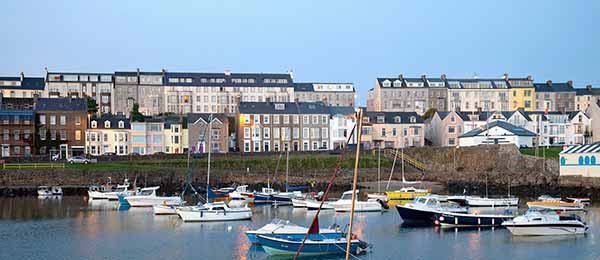
THE ANTRIM COAST
Giant's Causeway • Old Bushmills Distillery • Carrick-a-Rede Rope Bridge • Portrush
Extending 20 miles eastward from Portrush to Ballycastle, the Antrim Coast—the northern fringe of Northern Ireland—is one of the most interesting and scenic coastlines of the Emerald Isle. Within a few miles, you can visit the evocative Dunluce Castle ruins, tour Old Bushmills (the world’s oldest distillery), catch a thrill on the bouncy Carrick-a-Rede Rope Bridge, and scramble across the jagged basalt stairsteps of the famous Giant’s Causeway. An evocative avenue of beech trees known as the Dark Hedges and the seabird colony on Rathlin Island are also within reach.
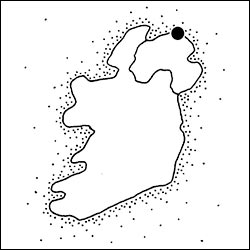
While other Northern Ireland destinations come with some hefty history, the Antrim Coast is simply about enjoying wild Irish nature. Portrush, a faded resort town, is a handy base for exploring the highlights of the Antrim Coast—or you can sleep in the countryside.
PLANNING YOUR TIME
You need a full day to explore the Antrim Coast. With a car, all the main sights are within reach. (The Dark Hedges are an easy and worthwhile add-on, if time allows.) Without a car, you can home-base in Portrush and connect the sights by bus and/or taxi (see “Getting Around the Antrim Coast,” next), but time will be tight; you’ll have to be selective.
Many visitors see the Antrim Coast as a side trip from Belfast or Derry (about an hour’s drive from either); it’s also efficient to visit the coast on the way between those two cities. (If driving on to Belfast, consider the slower but scenic coastal route via the Glens of Antrim; see here.) It can be worth adding an overnight if you’d like to do more hiking or visit the bird cliffs on Rathlin Island.
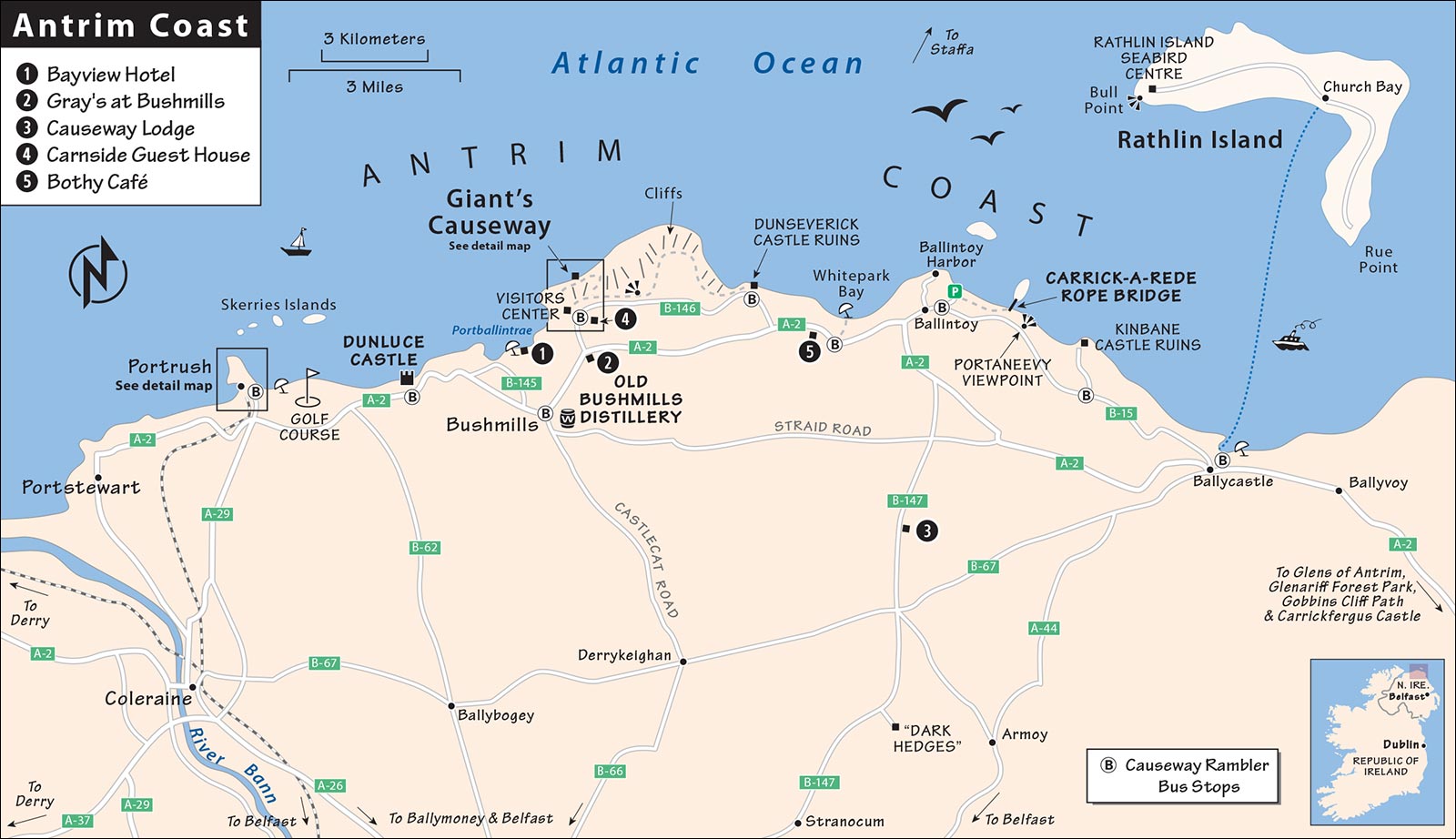
In peak season (mid-June to mid-September), booking ahead is important if you want to cross the Carrick-a-Rede Rope Bridge, tour Old Bushmills Distillery, and do the official Giant’s Causeway Visitor Experience. To fit it all in, select entry/tour times strategically when booking. You’ll need at least two hours at the Giant’s Causeway and about 1.5 hours each at Bushmills and Carrick-a-Rede, plus travel time. From the Giant’s Causeway, it’s about 5 minutes to Bushmills and 20 minutes to Carrick-a-Rede.
Here’s one possible schedule:
You could also reverse this plan to finish up at the Giant’s Causeway with plenty of time to linger (last entry to visitors center is at 15:30 in summer, but the coastline is open until dusk).
Even without reservations, you can experience these sights and still maintain some flexibility in your day. You can hike to the Giant’s Causeway on your own and walk the scenic cliff-top path to see the Carrick-a-Rede Rope Bridge (but if it’s sold out, you won’t be able to cross it). Dunluce Castle is the least crowded of the sights and doesn’t require reservations.
GETTING AROUND THE ANTRIM COAST
It’s easy to weave the coastal sights together by car, but connections are patchy by public transportation. Bus service is viable only in summer, and taxi fares are reasonable only for the sights closest to Portrush.
By Car: A car is the best way to explore the charms of the Antrim Coast. Distances are short and parking is easy.
By Bus: The Causeway Rambler (Ulsterbus #402) links Portrush with Dunluce Castle (10 minutes), Bushmills (15 minutes), Giant’s Causeway (20 minutes), Dunseverick Castle (25 minutes), Carrick-a-Rede Rope Bridge (stopping at the nearby town of Ballintoy, 40 minutes), and Ballycastle (Rathlin Island ferry, 50 minutes). The bus runs roughly 9:00-18:00 (8/day, fewer on Sun, check schedule at www.translink.co.uk). You can buy individual tickets on board or invest £17.50 in the all-day Zone 4 iLink smartcard, which covers all trains and buses throughout Northern Ireland. In Portrush, the Rambler stops at Dunluce Avenue, near the train station.
By Taxi: Groups (up to four) can reasonably visit most sights by taxi (except the more distant Carrick-a-Rede and Rathlin Island sailings from Ballycastle). From Portrush, expect to pay approximately these one-way prices: £10 (Dunluce Castle), £12 (Old Bushmills Distillery), £15 (Giant’s Causeway), and £25-30 (Carrick-a-Rede). Try Andy Brown’s Taxi (with a fleet of drivers, +44 28 7082 2223, https://andybrowntaxis.co.uk), Hugh’s Taxi (+44 77 0298 6110), Gaz Cabs (+44 77 0909 2737), or S B Taxis (multiple drivers but based in Coleraine, so rides may be longer and pricier, +44 28 7035 6560).
By Bus Tour: If you’re based in Belfast, you can visit most of the sights on the Antrim Coast with a McComb’s tour (see here).
EATING ALONG THE ANTRIM COAST
Both Old Bushmills Distillery and the Giant’s Causeway visitors center have cafés (the latter is only for those with a ticket); Carrick-a-Rede has a basic coffee window selling light lunches. The town of Bushmills has a handful of places for an easy lunch. The café $ Bothy, on the main road a five-minute drive east of the Giant’s Causeway, has good breakfast and lunch offerings and quality coffee in a relaxing cabin-like space; a “bothy” is a rustic, communal shelter open to anyone (Mon-Sat until 17:00, closed Sun, +44 28 2073 2311, www.bothycoffee.com).
Sights on the Antrim Coast
▲▲Giant’s Causeway
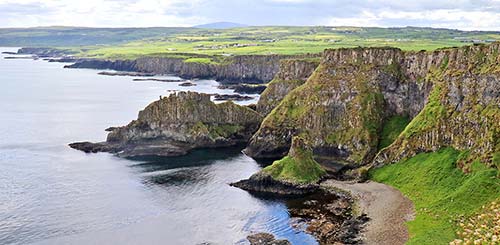
This five-mile-long stretch of coastline is famous for its bizarre basalt columns. The shore is covered with largely hexagonal pillars that stick up at various heights. It’s as if the earth were offering God a choice of 37,000 six-sided cigarettes. A visit here includes a stroll along this rocky coastline—with rolling green hills and fanciful cliffs, sea stacks, and pinnacles stretching in both directions—as well as a chance to scramble across the deliriously uneven basalt formations of the causeway itself.
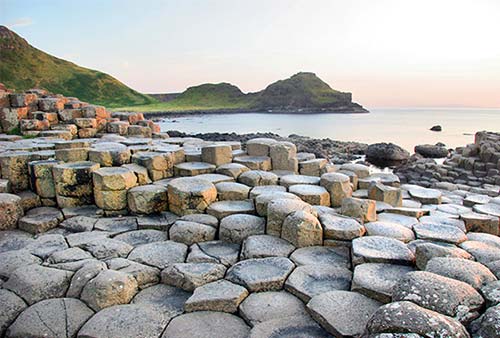
Geologists claim the Giant’s Causeway was formed by volcanic eruptions more than 60 million years ago. As the surface of the lava flow quickly cooled, it contracted and crystallized into columns (resembling the caked mud at the bottom of a dried-up lakebed, but with far deeper cracks). As the rock later settled and eroded, the columns broke off into the many stair-like steps that now honeycomb the Antrim Coast.
Of course, in actuality, the Giant’s Causeway was made by a giant Ulster warrior named Finn MacCool, who knew of a rival giant living across the water in Scotland. Finn built a stone bridge over to Scotland to spy on his rival and found out that the Scottish giant was much bigger. Finn retreated to Ireland and had his wife dress him as a sleeping infant, just in time for the rival giant to come across the causeway to spy on Finn. The rival, shocked at the infant’s size, fled back to Scotland in terror of whoever had sired this giant baby, and knocked down the bridge behind him. Today, proof of this encounter exists in the geologic formation that still extends undersea and surfaces in Scotland, at the Isle of Staffa.
Orientation to the Giant’s Causeway
You can enjoy the Giant’s Causeway on your own (park in a pay lot and choose one of the hikes described later) or with a Visitor Experience ticket (comes with parking and a guide/audioguide).
Cost and Hours: It’s free to visit the Giant’s Causeway, and the coastline is open and accessible to visitors from dawn till dusk.
Visitor Experience Ticket: Many visitors happily pay £13.50 (or £15 in July-Aug) for this timed-entry ticket, which includes reserved premium parking, your choice of an audioguide or one-hour guided walk to the causeway, and entry to the visitors center. In summer, prebooking is recommended for the Visitor Experience (bookings open up four weeks in advance).
Information: +44 28 2073 1855, www.nationaltrust.org.uk/giantscauseway.
When to Go: If visiting on your own in summer, it’s best to go first thing in the morning or late in the afternoon, when crowds are fewer and parking is easier. It’s generally busiest between 11:00 and 15:30, when most big bus tours roll through.
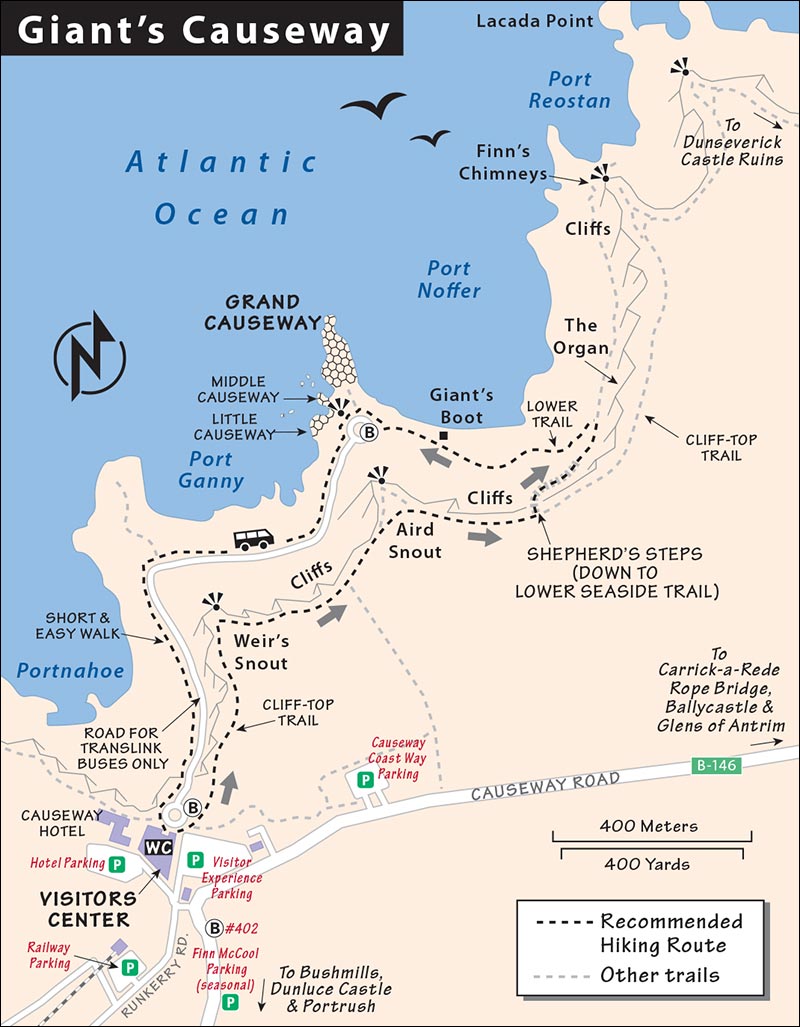
Getting There: The causeway is a short drive off the main A-2 highway, seven miles east of Portrush (and 1.5 miles from Old Bushmills Distillery). Parking can be tricky at busy times; the main advantage of a Visitor Experience ticket is that it includes convenient parking. Otherwise, try the Causeway Coast Way lot or the Railway lot (£10; for locations, see the “Giant’s Causeway” map). In August, the field across the road from Finn McCool’s Hostel may open for overflow parking. Without a car, you can take the Rambler bus or a taxi (see “Getting Around the Antrim Coast,” earlier).
Giant’s Causeway Visitors Center: If you have a Visitor Experience ticket, you have access to the visitors center, which has a small exhibit, plus a shop, café, and WCs (open daily 9:00-17:00, off-season 10:00-16:00, last entry 1.5 hours before closing). Its interactive exhibits give a worthwhile history of the Giant’s Causeway and its evolution. A large 3-D model offers a bird’s-eye view of the region and helps you get your bearings. Guided walks down to the causeway typically depart hourly, at :30 past the hour; otherwise, you can borrow a lightly informative audioguide. (Both are included in your ticket.)
Visiting the Giant’s Causeway
The journey from the bluff down to sea level is a joy and part of the experience. (There are no WCs once you leave the visitors center area.) Most visitors choose the quickest walk, an easy there-and-back from the visitors center. Or extend your walk with a two-mile causeway loop—or an even longer cliff hike.
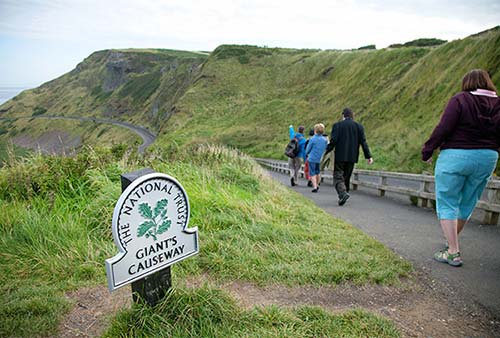
Short and Easy Walk (or Bus Ride): The most direct and easy route to the causeway is via the blue trail, a gentle, half-mile, downhill walk along a paved road. If you don’t want to walk, you can take a Translink bus (4/hour, £1 each way), which zips tourists from the visitors center down the same road to the causeway. Many choose to walk down and take the bus back up.
Orient yourself when you reach the causeway at the base of the cliff. From the bus stop area, you can see that there are three causeways (left to right): the flatter Little Causeway, with many of its hexes filled with water; the little promontory called the Middle Causeway (you may see adventurous visitors walking around on this); and finally the main Grand Causeway, jabbing far out to sea.
Just below the bus stop is a fine place to explore the uneven, wave-splashed rock terraces. Look for “wishing coins”—rusted and bent—that have been jammed into the cracks of rock just behind the turnaround (where the trail passes through a notch in the 20-foot-high rock wall).
If you’re up for it, head out toward the tip of the Grand Causeway. Watch your step on the uneven, stairstep surface, which can be very slippery when wet—especially the black areas nearest the water. Find a steady place to stand and look down at the endless polygon patterns splaying out in every direction from beneath your feet.
Look out to sea. See any land? On a clear day, you can spot Scotland. The Isle of Staffa—which is two boat trips away from the Scottish mainland—has hex-basalt formations that are eerily similar to the ones you’re standing on...it’s the “other end” of the Giant’s Causeway (supposedly the place to which the bigger giant fled).
Pan to the right, where rocky headlands extend over Port Noffer. Notice the cliffs striped red and black, perched on a chunky black basalt foundation. Higher up, spiky formations soar into the air—the tallest is more than 300 feet high. Nicknamed Finn’s Chimneys, this is supposedly where our protagonist lived.
Now scan the cliffs between here and there. About halfway between the water and the mainland, and halfway up the hill, spot the patch of vertical basalt formations nicknamed The Organ—supposedly a gigantic pipe organ played by Mr. MacCool. (You can get a much closer look at these from the red trail that switchbacks up to the cliff top.)
When you’re ready, head back to the bus stop area. If you step through the gap in the rock, then look back, you’ll understand why this is called the Giant’s Gate. Farther along the coastline here is one more “Giant” artifact: the Giant’s Boot, an eerily shoe-like rock perched along the coast...supposedly left behind by the fleeing giant.
Causeway Loop Hike: For a longer but still manageable hike and a more varied dose of causeway views, consider a rewarding loop connecting the red trail (along the cliffs and down to the causeway) with the blue trail (back up to the visitors center)—about two miles total.
Find the cliff-top red trail, just up the stairs from the bus stop near the visitors center. Follow this path gently uphill, enjoying sweeping views up and down the coast. After about 15 minutes, watch for an unmarked side path to the left; this little Aird Snout loop detour yields excellent views directly down over the causeway. Just a few minutes after rejoining the main trail, you come to the Shepherd’s Steps. Head down the 162 steep (and slippery-when-wet) stairs that switchback down toward the water. At the T-junction, go 100 yards right for a closer look at the towering basaltic pipes of The Organ. (You can detour another 500 yards east around the headland, but the trail dead-ends there.) Then retrace your steps west on the trail (don’t go up the steps again), continuing down to the tidal zone, where you’ll pass the Giant’s Boot (on the right along the shoreline).
The causeway is just ahead (for a causeway description, see the “Short and Easy Walk,” earlier). The more gradual blue path (or the bus) will return you back up to the visitors center when you’re ready to go.
Longer Cliff Hike (One-Way): Hardy hikers can walk the one-way five-mile route (yellow trail) that runs along a scenic section of the causeway coast, starting at the meager ruins of Dunseverick Castle (east of Giant’s Causeway on B-146) and ending at the Giant’s Causeway visitors center. Expect undulating grass and gravel paths (no WCs, no shelter from bad weather). Note that occasional rock falls and slides can close this trail (ask first at Portrush TI or call ahead to visitors center).
With a Guide: One way to do this hike is with the guided Clifftop Experience. Hikers meet their guide at the Giant’s Causeway visitors center and bus to the Dunseverick trailhead (£39, includes parking and visitors center access, daily at 12:15, must book online by 16:00 a day ahead, allow 4 hours, no kids under 12, +44 78 3770 3643, www.awayaweewalk.com).
On Your Own: The trails here are all a public right-of-way, so you are welcome to hike on your own. A good plan is to take the Causeway Rambler bus or a taxi from Portrush to Dunseverick Castle and the trailhead (there’s also limited parking at the Dunseverick Castle trailhead). From the castle, hike west, following the cliff-hugging contours of Benbane Head back to the visitors center. You’ll generally have a fence on your left and the cliff on the right, so there’s little doubt about the route. For details, see VisitCausewayCoastandGlens.com and search for “North Antrim Cliff Path.”
▲▲Old Bushmills Distillery
Bushmills claims to be the world’s oldest distillery. Though King James I (of Bible translation fame) only granted Bushmills its license to distill “Aqua Vitae” in 1608, whiskey has been made here since the 13th century. Distillery tours waft you through the process, making it clear that Irish whiskey is triple distilled—and therefore smoother than Scotch whisky (distilled merely twice). To see the distillery at its lively best, visit when workers are staffing the machinery—Monday morning through Friday noon. The distillery (now owned by José Cuervo) recently doubled output by opening a second production facility, called the Causeway Distillery, that uses the same age-old methods and techniques.
Cost and Hours: Book ahead online for one-hour guided tour (£15, includes one tasting); tours run Mon-Sat from 10:00 until 15:00 or 16:00 (last tour), Sun from 11:00, 2-4/hour in summer, 1-2/hour off-season; tours can fill up in advance; if sold out, keep checking, as additional tours are sometimes added last-minute; for about a week in September, the distillery machinery is shut down for annual maintenance (though tours still run); cafeteria, bar, and shop open to all visitors; +44 28 2073 3218, https://bushmills.com.
Premium Tastings: If you’re serious about your whiskey, consider booking a more in-depth experience. Premium tastings—scheduled after the tour in a special, atmospheric tasting room—last about an hour and include six different Bushmills whiskeys (£40 including the tour, book on website).
Shoppers: The distillery cannot ship purchases.
Visiting the Distillery: Bushmills is made of only three ingredients: malted barley, water (from the tributary that runs through the distillery), and yeast. Tours start with the mash tun, which is filled with a barley porridge to extract natural sugars. (The leftovers are fed to the county’s particularly happy cows.) Next you’ll see some impressive equipment, including giant washbacks—where yeast is added to the sugar water to induce fermentation, producing alcohol—and copper pot stills, where the triple distillation gradually increases the alcohol content.
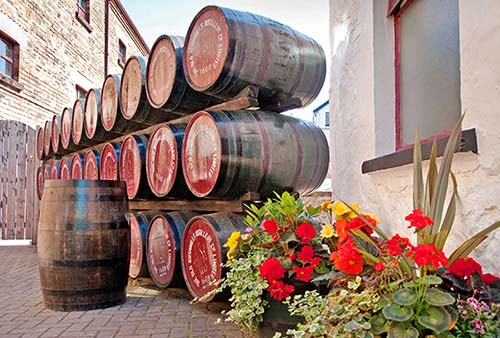
Next up is the casking factory, where whiskey ages in oak casks previously used to make Madeira wine, sherry, port...and Kentucky bourbon. (US law dictates that casks can only be used once, so they’re resold internationally.) Whiskey picks up its color and personality from this wood, which breathes and has an effective life of 30 years. It’s only after three years in oak that the spirit legally becomes “whiskey.”
Before bottling, Bushmills shapes its whiskey by blending from a variety of casks to achieve the desired flavor profile. You’ll get a lesson in the bottling room in how the various whiskeys differ—a handy exercise, as you’re about to head into the bar for your sample. In the 1608 Bar—the former malt barn—visitors get a single glass of their choice. Those who don’t want straight-up whiskey can ask for a cocktail, a hot toddy, or a nonalcoholic beverage.
Nearby: The distillery is just outside Bushmills town, with a few places to eat, groceries, fuel, and other services along the main drag. If you wander into the side streets, you’ll see some red, white, and blue flags and other signs of Unionist loyalty.
▲▲Carrick-a-Rede Rope Bridge
For 200 years, using just wooden planks, rope, and wire, fishermen strung a narrow, 100-foot-high bridge across a 60-foot-wide chasm between the mainland and the tiny island of Carrick-a-Rede. Today, the bridge (not the original) gives access to the sea stack—and induces a giddy sensation in anyone afraid of heights. (Don’t b-b-b-bounce!) Even if you don’t have a ticket to cross, the easy walk to the bridge provides fine views of the gorgeous coastline and bridge.
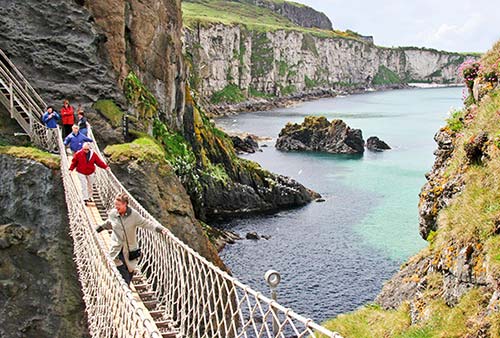
Cost and Hours: Bridge crossing—£13.50, includes parking, book timed-entry ticket online in advance; trail access—free, but you’ll pay £10 to park in the lot (or park for free up the road in Ballintoy and walk 30 minutes in); bridge open daily at 9:00, last crossing at 16:00, parking closes at 18:30, shorter hours off-season; coffee shop and WCs near the parking lot, +44 28 2076 2178, www.nationaltrust.org.uk/carrick-a-rede. Note that the bridge can close in windy weather.
Visiting the Bridge: A pleasant, 15-minute, half-mile walk from the parking lot takes you down to the rope bridge—with scenic bays stretching below and grassy hills above. Be prepared for some steep stone steps down to the bridge entrance. You’ll show your ticket, then climb steeply down the metal stairs. When it’s busy, you may have to wait in line to actually cross the bridge.
Once across on the wee island, explore. The bridge was built so fishermen could set salmon nets during summer months to catch the fish turning and hugging the coast’s corner. (With the salmon run depleted, the fishery itself shut down in 2002.) Below you, very busy (and smelly) seabird cliffs face the mainland and bay; they’re especially active during the summer nesting season. Out at the quiet and blustery tip of the island, you can look out to see Rathlin Island in the foreground and, beyond it, Scotland’s Isle of Islay.
Crossing back over the bridge to the mainland, you could head back the way you came. But to extend your walk just a bit, it’s rewarding to carry on beyond the bridge. This path offers more views back on the bridge and island, then loops up to the hill above, before rejoining the main path back to the parking lot.
Views and Picnicking Nearby: There are a couple of fine spots nearby to enjoy the views and, if you brought one, to have a picnic lunch.
First, leaving the bridge’s parking lot, turn left (east) and head about a mile steeply uphill (on B-15 to Ballycastle), to the parking lot and viewpoint at Portaneevy. This grassy area offers one of the best picnic vistas in Northern Ireland (tables but no WCs). Feast on bird’s-eye views of the rope bridge, nearby Rathlin Island, and the not-so-distant Scottish Isle of Islay.
The other option is back toward the Giant’s Causeway and Portrush. Less than a mile west of Carrick-a-Rede, watch for signs on the right down to Ballintoy Harbor. This narrow and twisty road winds down to a rocky harbor with benches and tranquil sea views. (Or maybe not so tranquil—as this was one of the many locations in the area used in Game of Thrones.) The harbor has no real services or eateries, but the setting is picturesque.
▲Dunluce Castle
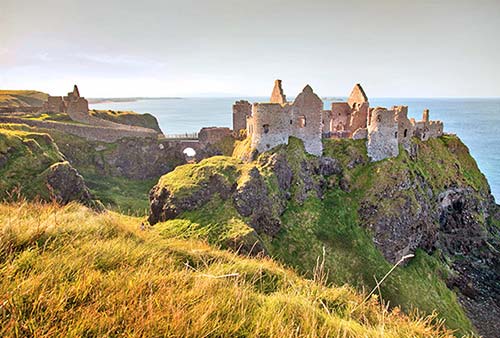
These romantic ruins, perched dramatically on the edge of a rocky headland, are a testimony to this region’s turbulent past. During the Middle Ages, the castle was a prized fortification. But on a stormy night in 1639, dinner was interrupted as half of the kitchen fell into the sea, taking the servants with it. That was the last straw for the lady of the castle. The countess of Antrim packed up and moved inland, and the castle began its slow submission to the forces of nature.
Cost and Hours: £6, daily 9:30-17:00, until 16:00 in winter, +44 28 2073 1938.
Visiting the Castle: While it’s one of the largest castles in Northern Ireland and beautifully situated, there’s precious little left to see among Dunluce’s broken walls. Look for distinctively hexagonal stones embedded in the castle walls, plucked straight from the unique pillars of rock making up the nearby Giant’s Causeway.
Before entering, catch the eight-minute video about the history of the castle (across from the ticket desk). From there, follow the stops laid out on the map that comes with your admission. The ruins themselves are dotted with plaques that show interesting artists’ renditions of how the place would have looked 400 years ago.
There were primitive fortifications here hundreds of years before the castle was built. But the 16th century saw the biggest expansion of the castle, financed by treasure salvaged from a shipwreck. In 1588, the Spanish Armada’s Girona—overloaded with sailors and the valuables of three abandoned sister ships—sank on her way home after the aborted mission against England. More than 1,300 drowned, and only five survivors washed ashore. The shipwreck was more fully salvaged in 1967, and a bounty of golden odds and silver ends wound up in Belfast’s Ulster Museum.
Rathlin Island
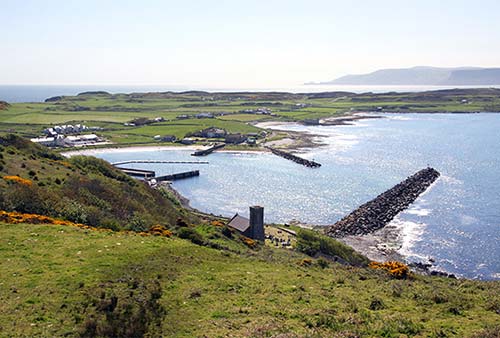
The only inhabited island off the coast of Northern Ireland, Rathlin is a quiet haven for hikers, seal spotters, and birdwatchers—perhaps your best opportunity in the area to spot puffins and other seabirds during the summer nesting season. Less than seven miles from end to end, this L-shaped island is reachable by ferry from the town of Ballycastle. Plan on spending about a half-day for your visit.
Getting There: The Rathlin Island passenger-only ferry departs from Ballycastle, just east of Carrick-a-Rede; as it can sell out in summer, book in advance (25 minutes by fast ferry, 40 minutes by cargo ferry, +44 28 2076 9299, https://rathlin-ferry.com).
Visiting Rathlin Island: Rathlin’s population of 110 islanders clusters around the ferry dock at Church Bay, with a visitors center/TI (+44 28 2076 0054), shops, and eateries. You can rent a bike, hike, or ride a shuttle bus (which meets arriving boats) four miles out to the Rathlin Island Seabird Centre, at the west end of the island. Here you can see a sheer drop of more than 300 feet to craggy sea stacks just offshore, draped with thousands of breeding seabirds: puffins, razorbills, and guillemots (bird-watching season runs from about early May to early August). You can also tour the adjacent, unique, “upside-down” lighthouse—called Rathlin West Light—which extends down the cliff with its beacon at the bottom (open daily in summer, closed off-season, www.rspb.org.uk, search for “Rathlin Island”).
▲The Dark Hedges
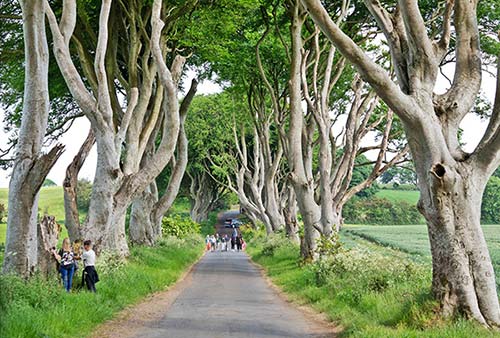
Many visitors to the Antrim Coast take the short detour to stroll up this evocative, haunting rural road lined with 250-year-old beech trees. Always an impressive site, the Dark Hedges soared in popularity after appearing as the “Kingsroad” on Game of Thrones. It’s still worth a visit—whether or not you’re a GoT fan—but you can’t just drive or park along the road and go for a walk (signs strictly forbid through traffic). Rather, an entrepreneur has set up a large parking lot about a 10-minute walk away. You’ll pay £4 to park, then walk through forests and fields to the road and its towering trees—though it can get quite crowded, undermining some of the mysterious ambience.
Getting There: The road is officially called Bregagh Road; the nearest major road—where you’ll find the parking lot—is Ballinlea Road, about a 30-minute drive southeast of Portrush, or 15 minutes south of Carrick-a-Rede. From the Ballintoy area, head south on B-147.
▲Antrim Mountains and Glens
Not particularly high (never more than 1,500 feet), the Antrim Mountains are cut by a series of narrow valleys (or glens, as they’re known here) running northeast to the sea. Glenariff, with its waterfalls—especially the Mare’s Tail—is the most beautiful of the nine glens (described next). Car travelers can take a pleasant drive from Portrush or the Giant’s Causeway area to Belfast, sticking to the scenic but less direct A-2 road; it stays near the coast and passes parts of all the Glens of Antrim. Taking the scenic coastal route all the way from Belfast to Portrush adds 45 to 60 minutes to your drive, but it’s a tempting trip if you have the time and the weather’s good.
Glenariff Forest Park: This ▲ park offers scenic picnic spots and lush hiking trails as well as a cozy tea shop. The parking lot alone has a lovely view down the glen to the sea. You’ll find more spectacular scenery on the two-mile waterfall walkway trail along the river gorge, while an easygoing half-mile stroll on the viewpoint trail via the ornamental gardens also provides lovely views (£5 parking, daily 8:00-dusk, trail map available at café onsite, +44 28 7034 0870, www.nidirect.gov.uk).
Getting There: The entry is off A-43 (via A-26; eight miles south of Cushendall, follow signs).
Nearby: Continue along the A-2 scenic coastal route and take a short jog up to Cushendall, where there’s a nice beach for a picnic, or just head south on A-2 toward the Gobbins Cliff Path and the castle at Carrickfergus (see listings in the Belfast chapter).
Sleeping on the Antrim Coast
The past-its-prime beach town vibe of Portrush (described in the next section) isn’t everyone’s cup of tea. For a more rural and charming home base for this region, consider one of these countryside places—nestled in villages or farmlands near the main A-2 highway between Portrush and Carrick-a-Rede (for locations, see the “Antrim Coast” map, earlier).
$$$$ Bayview Hotel, in the seafront village of Portballintrae (directly below the town of Bushmills), is a modern haven with 25 rooms (restaurant, spa, 2 Bayhead Rd, +44 28 2073 4100, https://bayviewhotelni.com, info@bayviewhotelni.com).
$$$$ Gray’s at Bushmills is a plush roadside lodge with 17 rooms and fine public spaces right along the A-2 highway, about a mile from Old Bushmills Distillery, facing the turnoff for the Giant’s Causeway (restaurant, 306 Whitepark Road, Bushmills, +44 28 2073 1577, https://graysbushmills.com, reception@grayshotel.co.uk).
$$$ Causeway Lodge, a guesthouse perched a mile above the main coastal road (a 10-minute drive from the Giant’s Causeway or Carrick-a-Rede), has five rooms and a suite, all with modern style (family room, 52 Moycraig Road, Lisnagunogue, +44 28 2073 0333, www.causewaylodge.com, stay@causewaylodge.com).
$ Carnside Guest House is a simpler choice, with 12 dated, cheap-and-cheery rooms in farmlands just above the Giant’s Causeway (family rooms, +44 28 2073 1337, mobile +44 77 4394 3119, www.carnsideguesthouse.co.uk, Danielle).
Portrush
Homey Portrush used to be known as “the Brighton of the North.” It first became a resort in the late 1800s, as railroads expanded to offer the emerging middle class a weekend by the shore. Victorians flocked here, believing that swimming in saltwater would cure many common ailments.
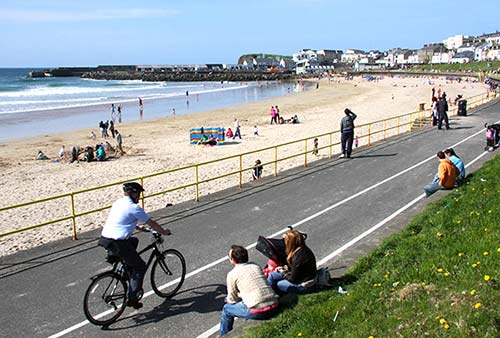
Today’s Portrush retains the architecture of a once-genteel seaside resort but is far from its previous glory. Its peninsula is filled with lowbrow, family-oriented amusements, fun eateries, B&Bs, and more than its share of empty storefronts and abandoned old townhouses. It’s the kind of place where the grocery store has more aisles of chocolate bars and potato crisps than actual groceries. Even so, Northern Ireland fun seekers happily come here in summer to promenade along the tiny harbor and tumble down to the sandy beaches that extend in sweeping white crescents. Portrush doesn’t offer much more, but for those wanting an early start on the Antrim Coast, it’s a convenient overnight stop.
Orientation to Portrush
The walkable town center of Portrush (pop. 7,300) features sea views in every direction. On one side are the harbor and many restaurants, and on the other are mostly vacant Victorian townhouses and vast, salty vistas. The tip of the peninsula features a breezy and rugged recreational park area, and the whole town is flanked by broad, sandy beaches.
The town is busy with students during the school year. Summer (around mid-June to mid-September) is beach-resort boom time. There’s a brief but intense spike in visitors in mid-May for a huge annual motorcycle race and on Easter weekend (see “Crowd Alert” later). Families pack Portrush on Saturdays, and revelers from Belfast crowd its hotels on Saturday nights.
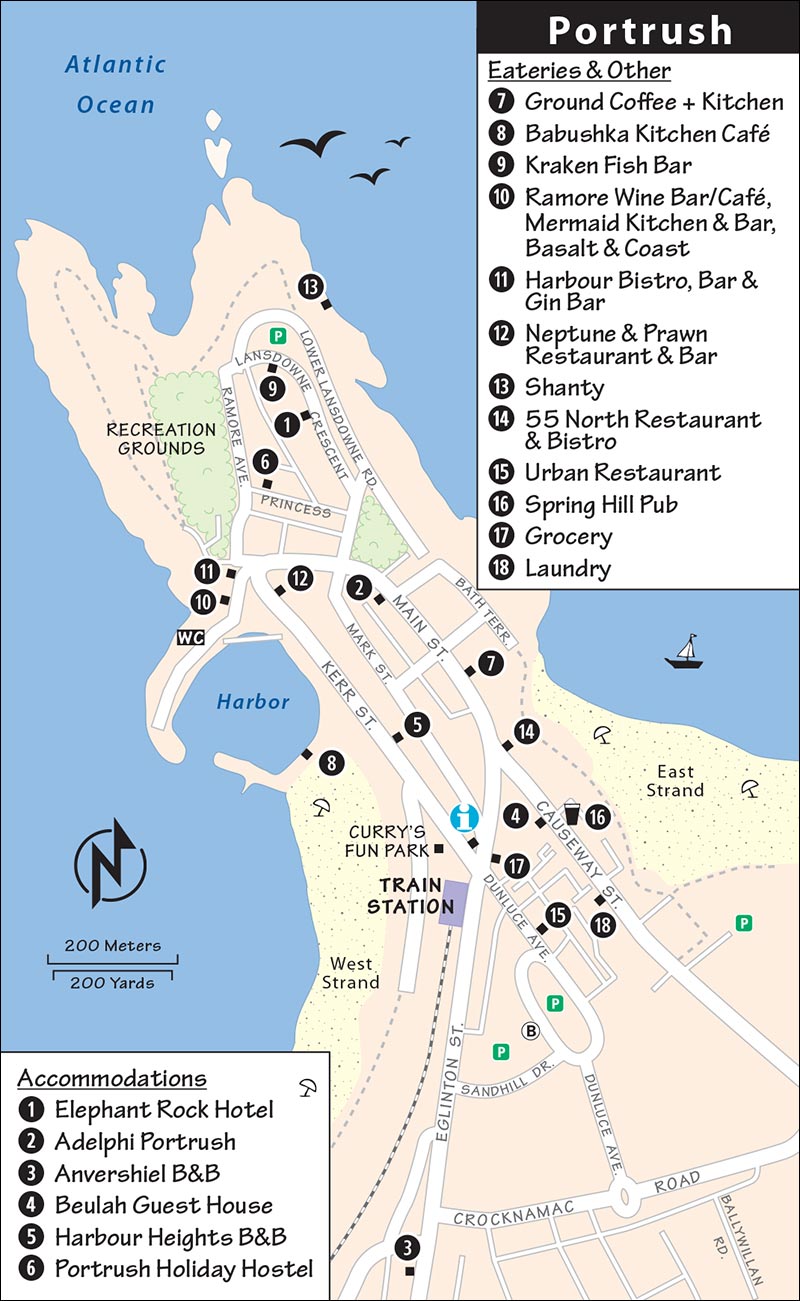
Tourist Information: The TI is located underneath the central, red-brick Town Hall, facing the beach (Mon-Sat 9:00-17:00, Sun 12:00-16:00, closed off-season, Kerr Street, +44 28 7082 3333).
Arrival in Portrush: The train tracks stop at the base of the tiny peninsula that Portrush fills (there’s a small modern station, but no baggage storage). Turn left out of the station, and you’re just a half-block from the heart of town (with the TI)—within a 10-minute walk of all my recommended accommodations.
Drivers circle through town on a one-way, clockwise loop (which begins at the intersection in front of the TI). All the way around, watch for free street parking spaces; there’s also the gigantic and free Lansdowne parking lot near the tip of the peninsula, facing the sea.
Crowd Alert: Over a four-day weekend in mid-May, thousands of die-hard motorcycle fans converge on Portrush, Portstewart, and Coleraine to watch the Northwest 200 Race. Fearless racers scorch the roads at 200 miles per hour on the longest straightaway in motorsports. Accommodations fill up a year ahead, and traffic is the pits (dates and details at www.northwest200.org). Also avoid visiting during the crowded Easter weekend.
Laundry: Full service is available at Causeway Laundry (Mon-Tue and Thu-Fri 9:00-12:00 & 13:00-16:30, Wed and Sat 10:00-13:00, closed Sun, drop off in the morning for same-day service, they can deliver to nearby hotels, 68 Causeway Street, +44 28 7082 2060).
Activities in Portrush
Curry’s Fun Park
Located just below the train station on the harbor, this lively, lowbrow arcade and amusement park offers a chance to see Northern Ireland at play. Older locals visit for the nostalgia, as many of the rides and amusements go back 50 years. Inside the main hall you’ll find a carousel, rides that spin and tilt, bumper cars, arcade games, and plenty of other ways to spend your money. The surrounding area has a giant Ferris wheel, a log-flume ride (“You will get wet,” the sign promises), and much more. Ride prices are listed at the door; everything runs with tokens. Try some “candy floss” (cotton candy) or other sweet treat (daily until late in summer, weekends only in shoulder season, closed off-season, www.currysfunpark.com).
Portrush Recreation Grounds
This park, at the tip of the peninsula, has a low-key assortment of activities and services: a bowling green, great playground for kids, skate park, and public WCs. Public footpaths lead up over the grassy headlands to the tip of Ramore Head.
Beaches
Portrush’s beautiful sandy beaches are tempting for sunbathing, swimming (if you can handle the bracing Irish Sea), or just a long walk. West Strand—directly below the amusement park and hemmed in by the harbor—is more protected; you can walk from one end to the other (either on the sand or along the promenade above) in about 10 minutes. East Strand, on the other side of the peninsula, is even longer and wilder.
Royal Portrush Golf Club
Irish courses, like those in Scotland, are highly sought-after for their lush greens in glorious settings. Serious golfers can get a tee time at the Royal Portrush, a links course that hosted the British Open in 1951 and 2019 (it’s next set to host in 2025). Check out the trophy case and historic photos in the clubhouse (green fees for the main course—Dunluce Links—are about £340 in high season, less off-season). The adjacent, slightly shorter Valley Course is a bit more budget-friendly (green fees £140, +44 28 7082 2311, www.royalportrushgolfclub.com).
Sleeping in Portrush
Portrush accommodations tend to be funky and casually run. Summer can be crowded (and loud) with young party groups, as are Saturday nights the rest of the year. Weeknights can be very sleepy.
$$$$ Elephant Rock Hotel adds a punch of color to the Portrush landscape. The 18 rooms—all done up in colorful versions of the hotel’s “Art Deco glam” style—are spacious, and some have sea views. They try hard to bring a touch of class to their surroundings (air-con, elevator, restaurant/bar, 17 Lansdowne Crescent, +44 28 7087 8787, https://elephantrockhotel.co.uk, info@elephantrockhotel.co.uk).
$$$$ Adelphi Portrush is one of the larger hotels in town, with 28 tastefully furnished rooms conveniently located right along the main drag, plus a hearty bistro downstairs (elevator, family rooms, 67 Main Street, +44 28 7082 5544, www.adelphiportrush.com, stay@adelphiportrush.com).
$$ Anvershiel House, with seven nice rooms, is a great value and well cared for. It’s a pleasant 10-minute walk from the main part of town (RS%, family rooms, parking in front, 16 Coleraine Road, +44 75 1426 6821, www.anvershielhouse.co.uk, anvershiel154@outlook.com, brother and sister Ian and Joanne).
$$ Beulah Guest House has 13 modern, clean-cut rooms in a fine central location (family room, parking at rear, 16 Causeway Street, +44 28 7082 2413, www.beulahguesthouse.com, teresa@urbanhospitalityni.com, Lorraine and Teresa).
$$ Harbour Heights B&B rents nine homey, well-worn rooms, each named after a different town in County Antrim. Its breakfast room, overlooking the harbor, is supervised by two cats. Friendly South African hosts Sam and Tim Swart manage the place with a light hand (family rooms, 17 Kerr Street, +44 28 7082 2765, harbourheightsportrush@gmail.com).
¢-$ Portrush Holiday Hostel offers clean, well-organized, economical lodgings—both hostel bunks and nice private rooms. With 11 rooms and no more than 35 guests, this is a small, intimate hostel (+44 28 7082 1288, 24 Princess Street, https://portrushholidayhostel.com, portrushholidayhostel@gmail.com).
Eating in Portrush
As a family getaway and a beach escape for students, Portrush has more than enough takeaway lunch joints. In addition to fish-and-chips, you’ll see “chicken goujons”—deep-fried chicken fingers—on every menu. In recent years, the refined tastes of affluent golfers and urban professionals out for a weekend have prompted the town to up its culinary game.
LUNCH SPOTS
Most of these are open daily until about 17:00; Kraken also has dinner.
$ Ground Coffee + Kitchen, an appealing space that provides a bit of urbane sanity right along the main drag, serves breakfast all day, plus fresh sandwiches and paninis, soup, and great coffee (daily, may stay open later in summer, 52 Main Street, +44 28 7082 5979).
$ Babushka Kitchen Café owns a priceless location along the pier in the middle of the waterfront, with indoor and outdoor tables looking over the West Strand beach. They offer a small, creative menu of breakfast, lunch, baked treats, and good coffee. Take a seat, or order at the counter for takeaway (daily, West Strand Promenade, +44 77 8750 2012, www.babushkakitchencafe.co.uk).
$$ Kraken Fish Bar has outdoor tables near the tip of the peninsula, facing the sea and recreation area, with seating bunny-hopping across a few funky terraces. Choose from tacos, burgers, and loaded fries (lunch and dinner, closed Mon-Tue, 25 Lansdowne Crescent, www.krakenfishbar.co.uk).
Groceries: For picnic supplies, the only real choice in the center is Spar Market (daily until late, across from Curry’s Fun Park on Main Street, +44 28 7082 5447).
HARBORSIDE EATERIES
Overlooking the harbor is a lively cluster of restaurants, all with the same owner and a creative, fun energy. Most serve dinner only, and reservations are important in peak season (book ahead at RamoreRestaurant.com). The most walk-in-friendly are Ramore Wine Bar and Coast. Closed days may shift depending on staffing and demand (call ahead to check).
Ramore Wine Bar/Café, Mermaid, and Basalt: These three share one big building, at the corner of the harbor, and are accessed by the same stairwell—survey your options before settling in. $$$ Ramore Wine Bar is a salty, modern place, with an inviting menu ranging from steaks to vegetarian items—it’s casual, but with serious cuisine (daily, +44 28 7082 4313); the attached Ramore Café has drinks and cakes. One floor up, $$$$ Mermaid Kitchen & Bar is all about fresh fish dishes with a Spanish twist, plus harbor views (closed Mon-Wed, +44 28 7082 6969). And on the top floor, $$$ Basalt has a sophisticated hotel-bar vibe, a Spanish- and Italian-influenced menu, views over the harbor, and an outdoor terrace (closed Mon-Wed, +44 28 7082 6969).
$$ Coast is down below in the same building—but accessed from the harbor level. This youthful place serves up pizzas, pastas, and burgers (closed Mon-Wed, +44 28 7082 4313).
$$$ Harbour Bistro, just down the way (closer to the harbor), is noisy, wood-grained, and sprawling with a sloppy crowd enjoying chargrilled meat and fish (daily, +44 28 7082 2430).
$$$ Neptune & Prawn, just across the inlet from the others (along the main road), feels the most yacht-clubby of the bunch, serving mostly Asian and Asian-inspired dishes (daily, +44 28 7082 2448).
OTHER DINING OPTIONS
$$$ Shanty owns a delightful location in a freestanding shed at the edge of the big parking lot on the quiet back side of town, jutting out over the water with grand views. The menu is advertised as “bites and brews,” but that undersells the elevated pub grub. It’s smart to book ahead, especially for a view table (closed Mon-Tue, +44 759 443 2677, https://shantyportrush.com).
$$$ 55 North (named for the local latitude), on the other side of the peninsula from the harbor-facing eateries, has the best sea views, with windows on three sides. The filling fish dishes, along with some Asian plates, are a joy (daily, reservations smart, 1 Causeway Street, +44 28 7082 2811, www.55-north.com). Down below, their simpler $ bistro serves lunch and drinks with nice views.
$$$ Urban Restaurant is not on the water and has no views, but the industrial modern dining room has good energy, and the food—burgers, seafood, meat, and Asian-influenced dishes—is solid (open daily for lunch and dinner, reservations smart, 26 Dunluce Avenue, +44 28 7051 1332, https://urbanportrush.com).
The Romans called the Irish the “Scoti” (meaning pirates). When the Scoti crossed the narrow Irish Sea and invaded the land of the Picts 1,500 years ago, that region became known as Scoti-land. Ireland and Scotland were never conquered by the Romans, and they retained similar clannish Celtic traits. They share the same Gaelic branch of the linguistic tree.
On clear summer days from Carrick-a-Rede, the Isle of Islay in Scotland—only 17 miles away—is visible. Much closer on the horizon is the boomerang-shaped Rathlin Island, part of Northern Ireland. Rathlin is where Scottish leader Robert the Bruce (a compatriot of William Wallace) retreated in 1307 after defeat at the hands of the English. Legend has it that he hid in a cave on the island, where he observed a spider patiently rebuilding its web each time a breeze knocked it down. Inspired by the spider’s perseverance, Robert gathered his Scottish forces once more and finally defeated the English at the decisive Battle of Bannockburn.

Flush with confidence from his victory, Robert the Bruce decided to open a second front against the English...in Ireland. In 1315, he sent his brother Edward over to enlist their Celtic Irish cousins in an effort to thwart the English. After securing Ireland, Edward hoped to move on and enlist the Welsh, thus cornering England with their pan-Celtic nation. But Edward’s timing was bad—Ireland was in the midst of famine. His Scottish troops had to live off the land and began to take food and supplies from the starving Irish. He might also have been trying to destroy Ireland’s crops to keep them from being used as a colonial “breadbasket” to feed English troops. The Scots quickly wore out their welcome, and Edward the Bruce was eventually killed in battle near Dundalk in 1318.
This was the first time in history that Ireland was used as a pawn by England’s enemies. Spain and France saw Ireland as the English Achilles’ heel, and both countries later attempted invasions of the island. The English Tudor and Stuart royalty countered these threats in the 16th and 17th centuries by starting the “plantation” of loyal subjects in Ireland. The only successful long-term settlement by the English was here in Northern Ireland, which remains part of the United Kingdom today.
It’s interesting to imagine how things might be different today if Ireland and Scotland had been permanently welded together as a nation 700 years ago. You’ll notice the strong Scottish influence in this part of Ireland when you ask a local a question and he answers, “Aye, a wee bit.” The Irish joke that the Scots are just Irish people who couldn’t swim home.
PUBS
Harbour Bar is an old-fashioned pub next to the Harbour Bistro (see earlier). Harbour Gin Bar (above Harbour Bar) is a rustic, spacious, and inviting place with live acoustic folk music at night and a fun selection of Irish gins.
Neptune & Prawn Cocktail Bar (above the restaurant by the same name; see listing earlier) has great views over the harbor and is the classiest yet most inviting place in town for a drink (they also serve small plates).
Spring Hill Pub is a good bet for its friendly vibe and occasional live music, including traditional sessions Thursdays around 21:00 (17 Causeway Street, +44 28 7082 3361).
Portrush Connections
The £17.50 Zone 4 iLink smartcard covers all trains and buses within Northern Ireland for an entire day (www.translink.co.uk).
From Portrush by Train to: Coleraine (hourly, 12 minutes), Belfast (hourly, 1.5 hours, transfer in Coleraine), Dublin (7/day, 5 hours, transfer in Belfast). On Sundays, service is greatly reduced.
By Bus to: Belfast (12/day, 2 hours; scenic coastal route, 2.5 hours), Dublin (4/day, 5.5 hours).