IRELAND
Welcome to Rick Steves’ Europe
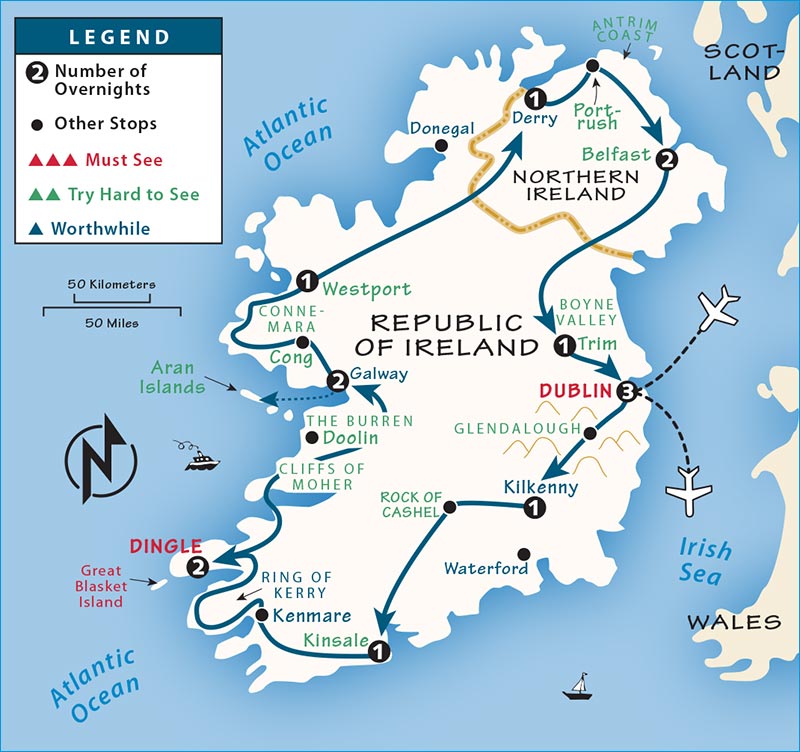
Map: Ireland’s Top Destinations
Flung like a mossy millstone onto the foggy fringe of the Atlantic pond, Ireland drips with mystery, drawing you in for a closer look. You may not find the proverbial pot of gold, but you’ll treasure your encounters with the engaging, endearing Irish people. The Irish culture—with its intricate art and mesmerizing music—is as intoxicating as the famous Irish brew, Guinness.
The Irish revere their past and love their proverbs, such as “When God made time, he made a lot of it.” Ireland is dusted with prehistoric ring forts, burial mounds, and standing stones...some older than the pyramids. While much of Europe has buried older cultures under new, Ireland still reveals its cultural bedrock. It’s a place to connect with our Neolithic roots…even if you’re not Irish.
This 300-mile-long island is home to the Republic of Ireland, an independent nation with 5.3 million people and 80 percent of the land; and Northern Ireland, a province of the United Kingdom (like Scotland or Wales), with 1.8 million people. No visit here is complete without a look at both.
Ringed by scenic coastal cliffs and about the size of Maine, Ireland is only about 150 miles across at its widest point. No matter where you go here, you’re never more than 75 miles from the sea. Despite being as far north as Newfoundland, Ireland has a mild maritime climate, thanks to the Gulf Stream.
Rainfall ranges from more than 100 inches a year in soggy, boggy Connemara to about 30 inches a year in Dublin. Summer or winter, bring your rain gear. As Ireland’s own Oscar Wilde once quipped, “There is no bad weather...only inappropriate clothing.”
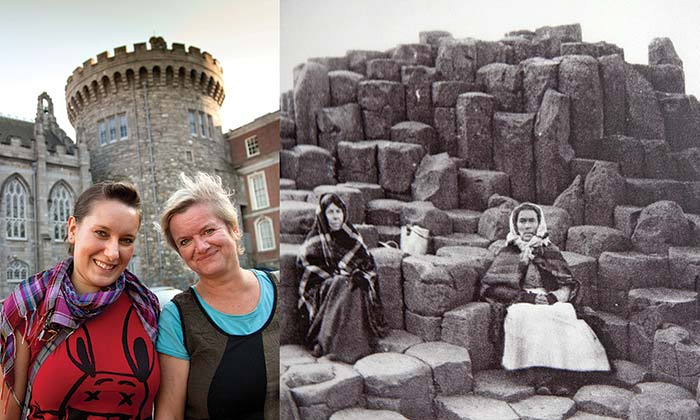
Faces of Ireland now and then (at Dublin Castle and the Giant’s Causeway)
Ireland’s people are its best attraction—which says as much about them as it does about the island’s sights, some of which can underwhelm at first (judging on a European scale). But even an initially “dull” sight can be made captivating by a great tour guide with a talent for spinning tales. Most sights offer regular guided tours; it’s worth planning your visit to include them.
The Irish people are legendary for their “gift of gab,” which has its roots in the ancient Celtic culture. With no written language (until the arrival of Christianity), the ancient Celts passed their history, laws, and folklore orally from generation to generation. Even today, most transactions come with an ample side-helping of friendly banter. As an Irishman once joked, “How can I know what I think until I hear what I say?”
Listening to the thick Irish brogue, you’ll enjoy the sensation you’re understanding a foreign language. But if you can’t understand a thing, you’re probably hearing Irish Gaelic, spoken in a Gaeltacht. These government-subsidized cultural preserves are found mostly in far western coastal regions (yet everyone there speaks English, too).
Though a small island, Ireland has had a large impact on the rest of the world. Geographically isolated in the damp attic of early medieval Europe, Christian Irish monks tended the flickering flame of literacy, then bravely reintroduced it to the barbaric Continent. Ireland later turned out some of modern literature’s greatest authors, including W. B. Yeats, George Bernard Shaw, Samuel Beckett, James Joyce, and Oscar Wilde. The Irish also seem born with a love of music. Live traditional music is a weekly (if not nightly) draw at any pub worth its salt.
A céilí (KAY-lee) is an evening of music and dance—an Irish hoedown—and can be one of the great Irish experiences. You’ll find traditional (“trad”) Irish music in pubs all over Ireland. “Sessions” (musical evenings) may be advertised events or impromptu, and quality can be hit or miss. Things get going at about 21:00 (and often on weekend afternoons, too), though Irish punctuality is unpredictable. Last call for drinks is just before midnight.
Pub music ranges from traditional instrumentals (merry jigs and reels) to ballads (songs of tragic love lost or heroic deeds done) to sing-along strummers. Sessions usually feature some combination of these key instruments: fiddle, flute or tin whistle, guitar, and bodhrán (BO-run, goatskin drum), which can be joined by an accordion, mandolin, or uilleann (ILL-in, arm-squeezed bagpipes). Instruments from other regions have also become staples, including bouzoukis (from Greece) and banjos (from the Southern US); in the hands of a skilled Irish musician, the sounds and particularly the rhythms made by these instruments become distinctively Irish.
The music often comes in sets of three songs. The wind and string instruments embellish melody lines with tight ornamentation. Percussion generally stays in the background. The bodhrán is played with a small, two-headed club; the performer stretches its skin by hand to change tone and pitch. More rarely, you’ll hear the crisp sound of a set of bones: two cow ribs (boiled and dried) that are rattled in one hand like spoons or castanets, substituting for the sound of dancing shoes in olden days.
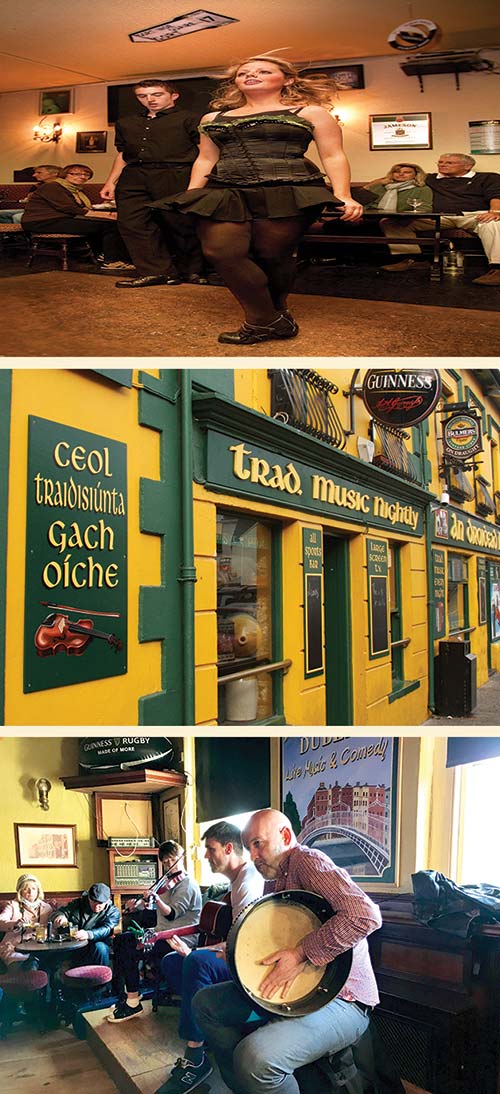
Irish dancing at a pub, accompanied by a bodhrán player
The Irish cousin of Scottish Highland bagpipes, the uilleann pipes are played by inflating the airbag (under the left elbow) with a bellows (under the right elbow) rather than with a mouthpiece. Uilleann is Irish Gaelic for “elbow,” and its sound is more melodic, with a wider range than Highland pipes. The piper fingers the chanter to create individual notes, and taps the chanter on the thigh to close the end and raise the note one octave. The piper uses the heel of the right hand to play chords on one of three regulator pipes. It takes amazing coordination to play this instrument well, and the sound can be haunting.
Most numbers are instrumental, but some have sing-along lyrics. It’s worth staying until the wee hours for the magical moment when a rare sean nós (Irish for “old style”) lament is sung to a hushed and attentive pub crowd. This slightly nasal vocal style may be a remnant of the ancient storytelling tradition of the bards whose influence died out when Gaelic culture waned 400 years ago. Stories—often of love lost, emigration to a faraway land, or a heroic rebel death struggling against English rule—are always heartfelt.
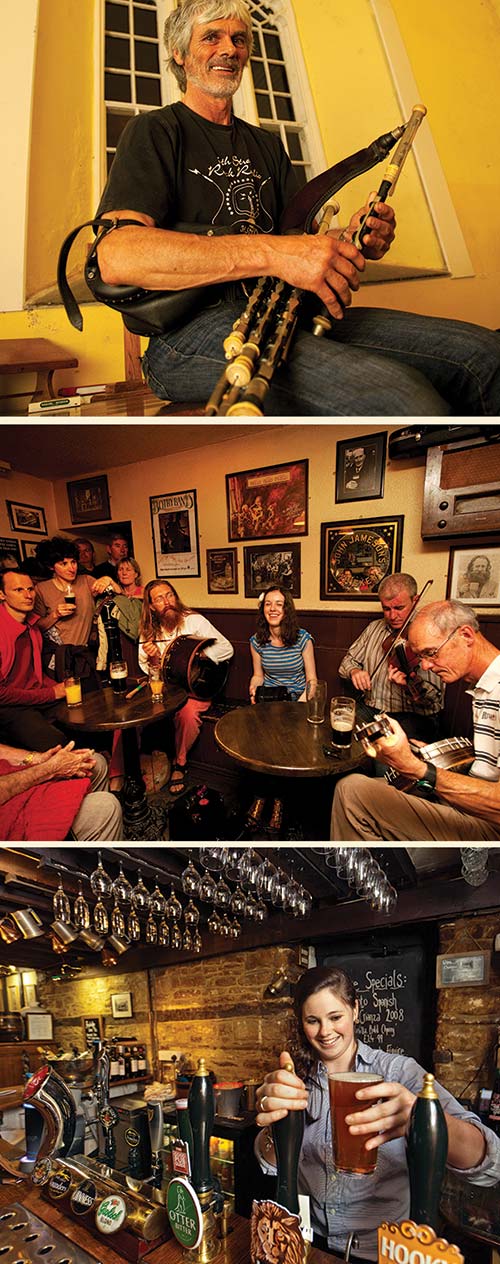
An uilleann player, entertaining a pub crowd, fueled by beer
Sometimes a session hits all the right notes and the atmosphere is spellbinding. The drummer dodges the fiddler’s playful bow. Sipping their pints, the musicians skillfully maintain a faint but steady buzz. The floor on their platform is stomped paint-free, and servers scurry artfully through the commotion, gathering towers of empty, cream-crusted glasses. Make yourself right at home, “playing the boot” (tapping your foot) under the table in time with the music.
In the 1800s, great waves of Irish emigrants fled famine and British colonial oppression, seeking new opportunities abroad and making their mark in the US and beyond. (Every Irish family seems to have a relative in America; about 50 million people claim Irish descent in North America alone.) And although peace now prevails in Northern Ireland, the religious and political conflict of the Troubles held the world’s attention from the late 1960s to 1998.
The Republic of Ireland takes up the southern two-thirds of the island, bordered by green hilly peninsulas, craggy islands, and sheer cliffs rising up from the crashing waves of the Atlantic. With urban Dublin as its capital, the Republic boasts a wide variety of sights: from the famous Book of Kells manuscript (in Dublin), prehistoric ruins, and Celtic artifacts, to evocative monastic settlements, Iron Age ring forts, and much more.
The shamrock—used by St. Patrick to explain the concept of the Holy Trinity—is the most recognizable symbol of the Republic of Ireland. Another national symbol is the harp (on the back of Irish euro coins and—reversed—on every pint of Guinness).
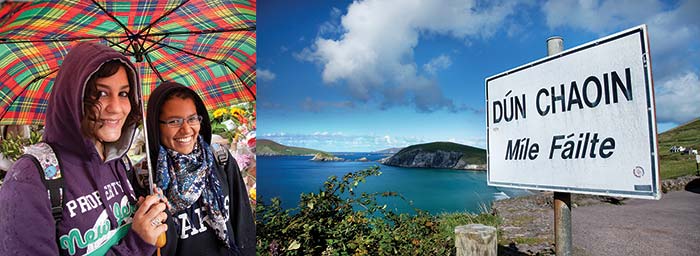
Prepared for rain; an Irish Gaelic sign for Dunquin, featuring Míle Fáilte (“A Thousand Welcomes”)
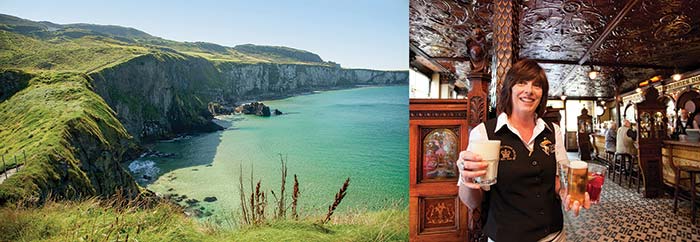
On the island’s northeast tip, Northern Ireland is an underrated and often overlooked region that surprises visitors with its striking scenery and urban vitality. Its coast boasts the alligator-skin volcanic geology of the Giant’s Causeway and the lush Glens of Antrim, while its interior is dominated by pastoral hills and the UK’s biggest lake, Lough Neagh.
A fascinating hybrid of Irish and Scottish cultures, Northern Ireland is only 12 miles from Scotland at its closest point. The accents you’ll hear in the north are distinctly different from their counterparts south of the border, and may sound closer to Glasgow’s.
Very broadly speaking, most Northern Irelanders fall into two categories: those who feel they’re British (Unionists) and those who feel they’re Irish (Nationalists). Those born in the north can choose which of the two passports they want. But the turmoil of the Troubles is now, fortunately, in the past.
Taken together, today’s Ireland is vibrant and cosmopolitan, yet warm and down to earth. Want to really get to know Ireland? Belly up to the bar in a neighborhood pub and engage a local in conversation. The Irish people have a worldwide reputation as witty, musical, moody romantics with a quick laugh and a ready smile. Come join them.
Ireland’s Top Destinations
There’s so much to see in Ireland, and so little time. This overview categorizes the country’s top destinations into must-see places (to help first-time travelers plan their trip) and worth-it places (for those with extra time or special interests). I’ve also suggested a minimum number of days to allow per destination.
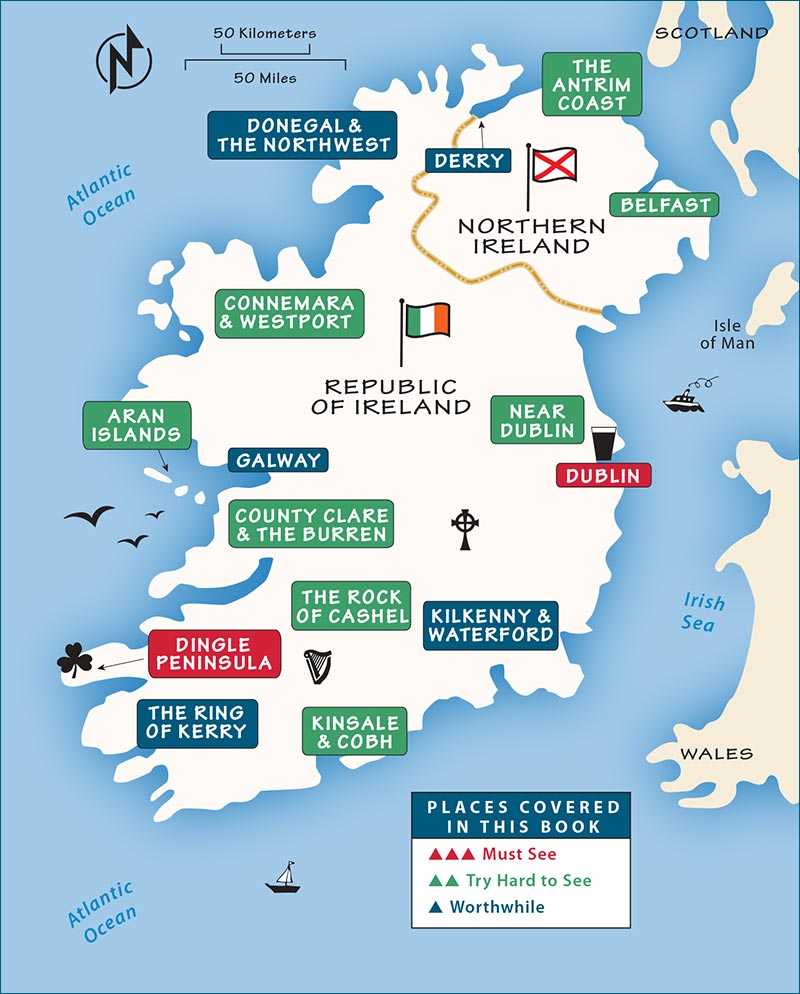
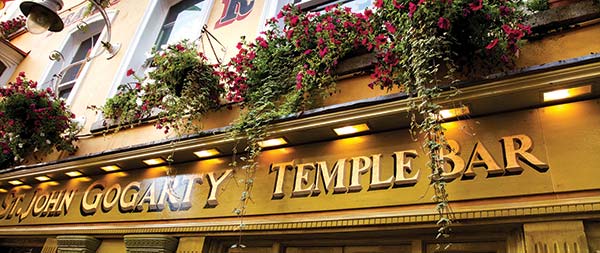
MUST-SEE DESTINATIONS
The island’s top two destinations are the best mix of big city, charming small town, and scenic countryside: Dublin, the capital city of the Republic of Ireland; and the lush Dingle Peninsula, with its charming namesake town and a rugged peninsula studded with historic sights.
▲▲▲Dublin (allow 2 days)
The bustling Irish capital offers fascinating tours (historical, musical, and literary), passionate rebel history (Kilmainham Gaol), treasured medieval gospels (starring the monk-illustrated Book of Kells), and intricate Celtic artifacts (National Museum of Archaeology). Other top-notch sights include statue-studded O’Connell Street, a library filled with literary treasures, and museums on emigration and the 1916 Easter Rising. For evening fun, check out the thriving food scene or go pub-hopping, cocking your ear to seek out traditional music.
▲▲▲Dingle Peninsula (1-2 days)
My favorite fishing village, Dingle town, is a traditional Irish music pub paradise. It’s also a launchpad for a gorgeous loop drive (or bike ride) around Slea Head—the tip of the Dingle Peninsula—awash with striking scenery and a wealth of Celtic and early Christian sites. Hovering just offshore are the rugged Blasket Islands, empty but for seals, birds, and hikers.
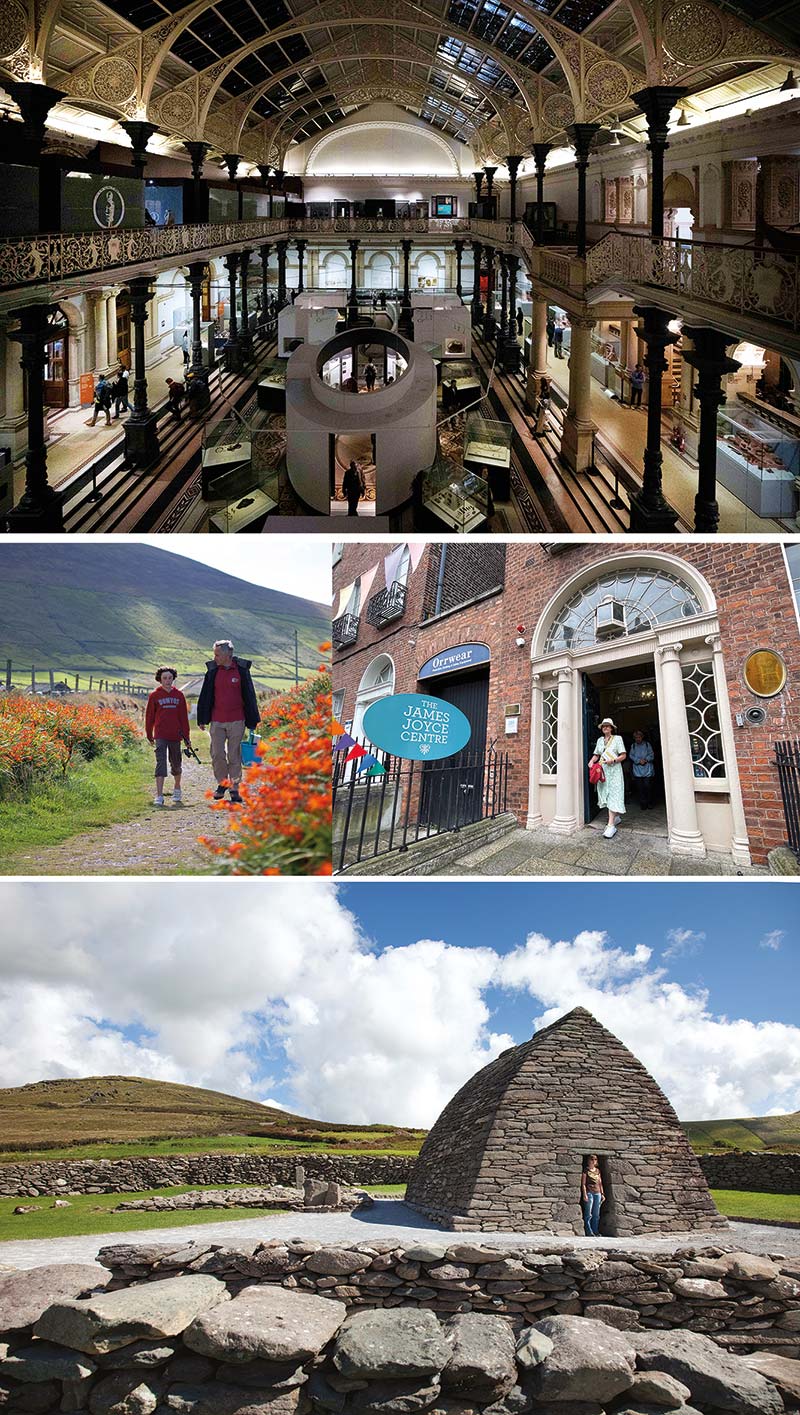
National Museum of Archaeology and Bloomsday in Dublin; Gallarus Oratory on the Dingle Peninsula; hikers on Great Blasket Island
WORTH-IT DESTINATIONS
You can weave any of these destinations—rated ▲ or ▲▲—into your itinerary. It’s easy to add some destinations based on proximity, but some out-of-the-way places can merit the journey, depending on your time and interests.
▲▲Near Dublin (1 day)
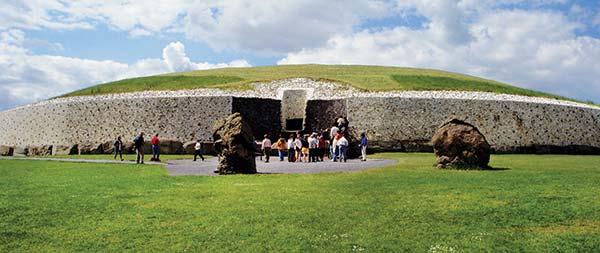
Of the varied sights near Dublin, the best is the Boyne Valley’s pre-Celtic burial mounds of Brú na Bóinne, with a majestic Norman castle in nearby Trim. Other choices are the green horse-racing pastures of the Irish National Stud, the graceful Gardens of Powerscourt, and the evocative monastic ruins of Glendalough in the Wicklow Mountains.
▲Kilkenny and Waterford (1-3 days)
The best town in Ireland’s interior, historic yet workaday Kilkenny has a fine castle and numerous tempting side-trips: gritty and historic Waterford (with crystal factory demos and excellent museums), the Dunbrody Famine Ship replica, JFK’s ancestral homestead, a 12th-century lighthouse, and poignant stony ruins.
▲▲The Rock of Cashel (1-2 hours)
Easy to see on the drive between Dublin and points west or south, this dramatic hilltop of church ruins overlooks the Plain of Tipperary.
▲▲Kinsale and Cobh (1-2 days)
County Cork has two quaint harbor towns: colorful and urbane Kinsale, beloved by foodies, fun for strolling, and guarded by the beefy Charles Fort; and the emigration hub of Cobh—the Titanic’s final port of call.
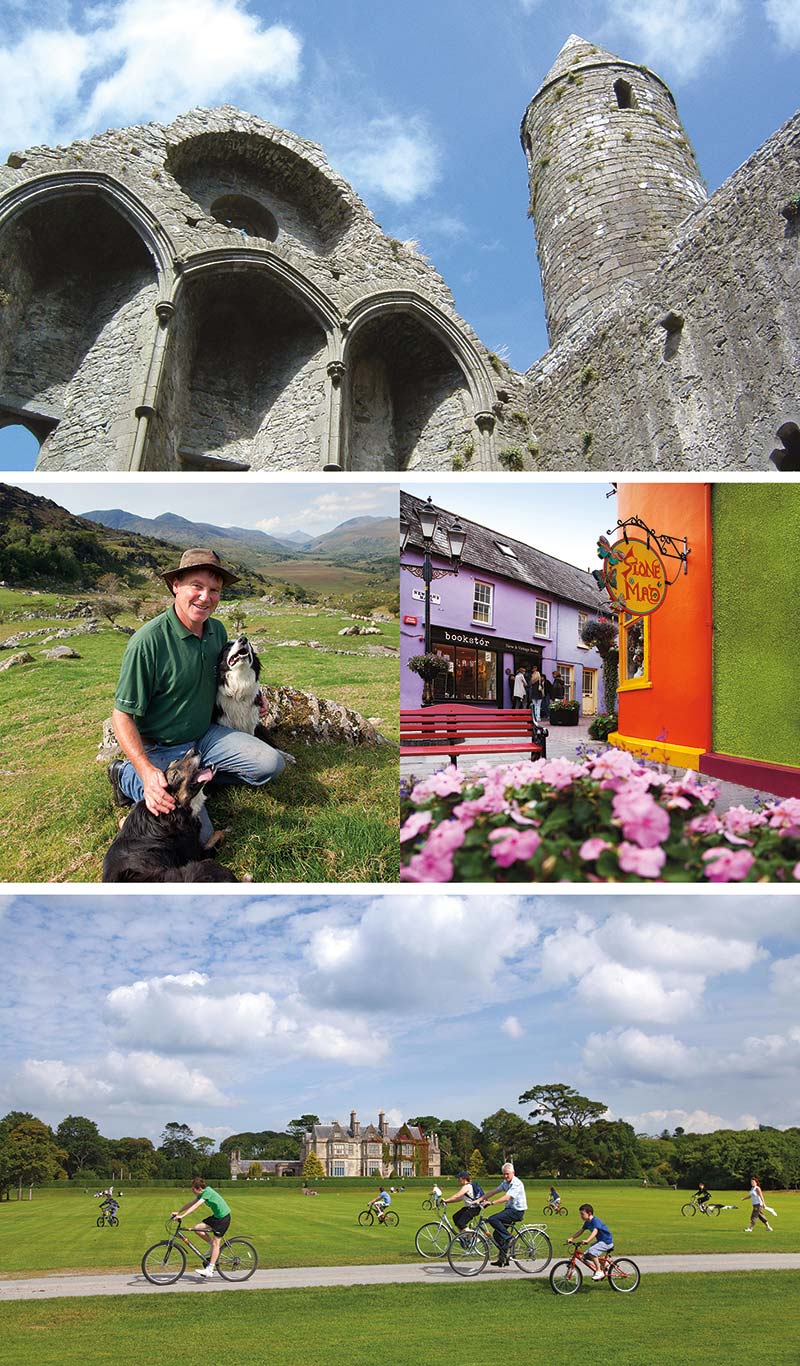
Brú na Bóinne (opposite); Rock of Cashel ruins; colorful Kinsale; bikers at Muckross House; shepherd with border collies
▲The Ring of Kerry (1 day)
Ireland’s most famous peninsula features a scenic loop drive that connects fairy forts, big views, and humble villages, plus a possible side-trip by boat to the hermitage island of Skellig Michael. Kenmare is a charming home base for driving the Ring.
▲▲County Clare and the Burren (1-2 days)
Ireland’s western fringe has the breathtaking Cliffs of Moher, the stony prehistoric landscape of the Burren, the trad music crossroads of cozy Doolin, and the friendly town of Ennis.
▲Galway (1 day)
This energetic university city has a thriving pedestrian street scene and great people-watching pubs. For tourists, it’s the west coast’s best home base for reaching the Burren, Aran Islands, and Connemara.
▲▲Aran Islands (1 day)
Three windswept, treeless islands in the Atlantic are ringed by cliffs, crowned by striking ruins, and home to sparse villages of hardy fisherfolk. The island of Inishmore hosts the star attraction: the 2,000-year-old Dun Aengus fort, perched precariously at the edge of a sheer cliff.
▲▲Connemara and Westport (1 day)
This region is a lushly green, hilly Irish outback of cottages, lakes, and holy peaks, and dotted with photogenic settlements such as Cong, Kylemore Abbey, and the leafy riverside town of Westport.
▲Donegal and the Northwest (half-day to 1 day)
Drivers will enjoy this far-flung section of the Republic and its ruggedly beautiful landscape. The region’s main town, Donegal, has a striking castle.
▲Derry (half-day to 1 day)
This Northern Ireland town, which became a 17th-century British settlement encircled by stout town walls, is infamous as the powder keg that ignited Ireland’s tragic Troubles. Vivid murals and thoughtful museums tell the sobering tale, while Derry Girls fans give the city a modern vitality.
▲▲The Antrim Coast (1 day)
This short, stunning stretch of coastline offers one of Ireland’s best days out: the geologic wonderland of the Giant’s Causeway, the Old Bushmills Distillery, the cliff-edge ruins of Dunluce Castle, and the exhilarating Carrick-a-Rede Rope Bridge. The faded beach resort of Portrush is a handy home base.
▲▲Belfast (1-2 days)
The no-nonsense capital of Northern Ireland has a hardscrabble “second city” appeal, a walkable downtown core, a hip food and music scene, stirring sectarian neighborhoods with murals and memorials, and a state-of-the-art museum about the Titanic (which was built here). Nearby are various countryside sights and the charming Victorian seaside retreat of Bangor.
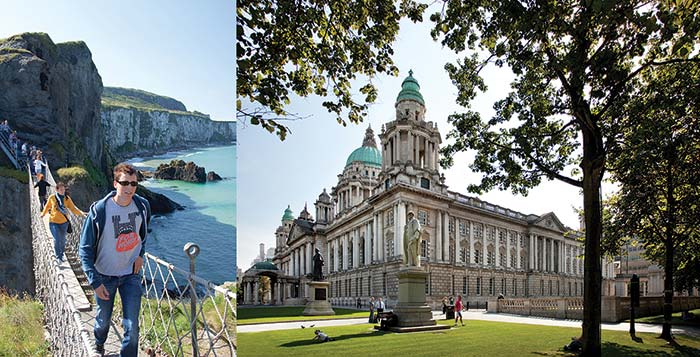
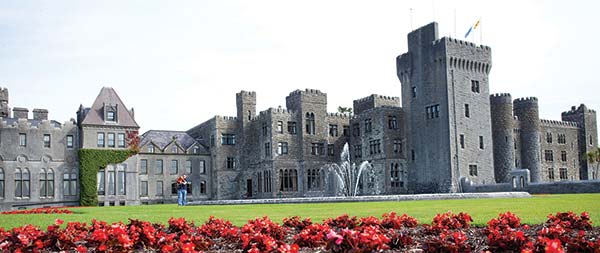
Ashford Castle in Cong (opposite); Carrick-a-Rede Rope Bridge; Belfast’s City Hall
Planning Your Trip
To plan your trip, you’ll need to design your itinerary—choosing where and when to go, how you’ll travel, and how many days to spend at each destination. For general advice on sightseeing, accommodations, restaurants, and more, see the Practicalities chapter.
DESIGNING AN ITINERARY
As you read this book and learn your options...
Choose your top destinations.
My recommended itinerary (see the sidebar) gives you an idea of how much you can reasonably see in two weeks; adapt it to fit your own interests and time frame.
If you like what big cities have to offer—museums and nightlife—linger longer in Dublin. If trad music strikes a chord, your top stops are—in this order—Dingle, Doolin, Galway, Westport, and Dublin. Food lovers savor Kinsale.
If you’re partial to prehistory, you can go back in time in the Burren, Brú na Bóinne burial tombs, and Aran Islands. Modern historians appreciate Belfast. If you’re researching Irish roots, Cobh’s a great place to start. Nature lovers find inspiration at the Cliffs of Moher, the grander and less-touristed cliffs of Inishmore (one of the Aran Islands), and the distinctive rock formations of the Giant’s Causeway.
Drivers like to joyride around two west coast peninsulas—Dingle (quick, easy, and satisfying) and Kerry (longer and more dramatic)—and to explore sights scattered throughout County Clare, Connemara, and the Antrim Coast.
Decide when to go.
Peak season (June through early September) is my favorite time to visit because of the longer days (with daylight from 4:30 until 22:30). Note, however, that summer crowds affect Dublin, the Cobh/Cork region, and Belfast, partly due to cruise-ship traffic. In summer, everything (accommodations, major sights, quality restaurants, experiences) can book up well in advance—it’s wise to reserve far ahead for anything you’d like to do.
Travel during shoulder season (mid-April through May, plus late September through October) offers fewer crowds, less competition, and all the tourist fun, but increased odds of crummy weather. Smaller sights (in the countryside and small towns) may be closed at the edges of shoulder season.
Winter travelers experience no crowds and soft room prices, but also stiffer winds, colder rain, and shorter sightseeing hours (sights open only on weekends, or closed entirely). Live music and pub crawls are limited to weekends. Winter weather can be chilly, dreary, and blustery, dampening the island’s rural charm, though city sightseeing is fine.
No matter when you go, expect rain. Just keep on traveling and take full advantage of “bright spells.” For weather specifics, see the climate chart in the appendix.
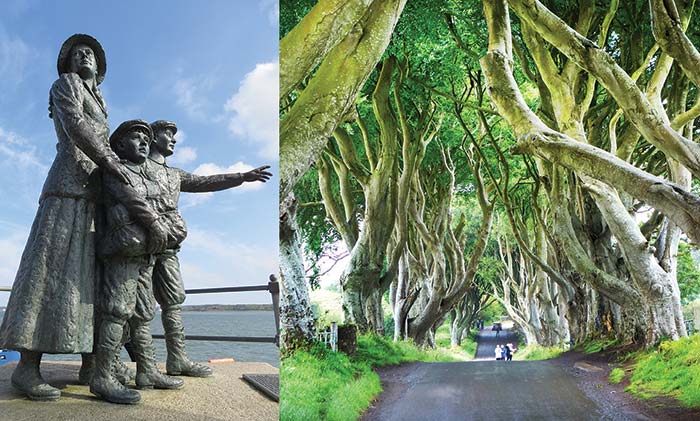
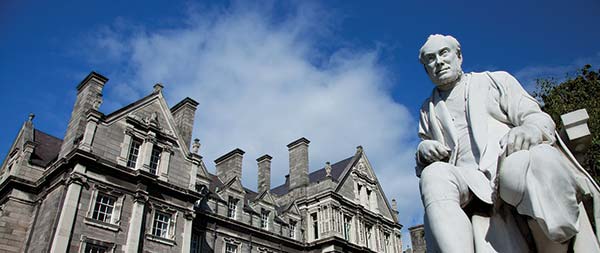
Trinity College in Dublin (opposite); Cobh statue of US-bound emigrants, including teenager Annie Moore; “Dark Hedges,” near Northern Ireland’s Antrim Coast
| Day | Plan | Sleep |
| 1 | Fly into Dublin | Dublin |
| 2 | Dublin | Dublin |
| 3 | Dublin | Dublin |
| 4 | Pick up car, drive to your choice of southern Ireland sights (near Waterford), end in Kilkenny | Kilkenny |
| 5 | To Rock of Cashel, Kinsale | Kinsale |
| 6 | Either linger this morning in Kinsale, then drive direct to Dingle (3 hours); or get an early start for the long but scenic Ring of Kerry drive via Kenmare (6 hours plus sightseeing stops) | Dingle |
| 7 | Morning: Dingle town; afternoon: Slea Head loop drive | Dingle |
| 8 | Cliffs of Moher and the Burren (5 hours plus sightseeing stops) | Galway |
| 9 | Side-trip by boat or plane to Inishmore or Inisheer, Aran Islands | Galway |
| 10 | Cong and Connemara to Westport | Westport |
| 11 | To Derry; see Derry this afternoon/evening | Derry |
| 12 | Drive to Antrim Coast, see Giant’s Causeway and nearby sights, to Belfast this evening | Belfast |
| 13 | Belfast | Belfast |
| 14 | Drive to Boyne Valley sights | Trim |
| 15 | Return car and fly home from Dublin |
Arrival and Departure Strategies: Small-town Trim, reasonably close to Dublin Airport, makes a mellow first- or last-night stop.
With One Week: Split your time between Dublin; a charming coastal town (Dingle, Kinsale, or Doolin); and countryside sights (Rock of Cashel, Boyne Valley, possibly Cliffs of Moher or a boat trip to Inisheer).
With Three Weeks or More: Follow the suggested itinerary but spend two nights in Kilkenny, giving you ample time for the area (Glendalough on the way down; countryside stops near Kilkenny; side-trip to Waterford and nearby). Spend two nights in Kinsale, then one night in Kenmare to allow more time for the Ring of Kerry (en route to Dingle the next day). Consider three nights in Dingle to catch your breath and enjoy more pub music. A night or two in Doolin allows more time for the Burren and Aran Islands (an easy side-trip by boat). Add a night or two in Northern Ireland, either in Derry (near County Donegal) and/or in Portrush (closer to the Antrim Coast).
Without a Car: Skip places with frustrating public transportation (Kilkenny and Waterford, the Ring of Kerry, the Burren, Connemara, and the Boyne Valley) or book a day tour by bus. Taxis—though expensive—can work in a pinch (e.g., Cork to Kinsale).
Connect the dots.
Link your destinations into a logical route. Determine which cities you’ll fly into and out of. Begin your search for transatlantic flights on Google Flights.
Decide if you’ll travel by car or public transportation. You won’t need a car in big cities (park it), but a car is ideal for exploring Ireland’s countryside and charming villages.
If relying on public transportation, you’ll likely use a mix of trains and buses, and fill in transit gaps by taking bus tours to outlying sights. Taxis can be practical, if pricey.
For approximate travel times, study the driving map in the Practicalities chapter or check Google Maps; for train and bus schedules, visit TransportforIreland.ie.
Write out a day-by-day itinerary.
Figure out how many destinations you can comfortably fit in your time frame. Don’t overdo it—few travelers wish they’d hurried more. Allow enough days per stop (see estimates in “Ireland’s Top Destinations,” earlier). One-night stands can help you squeeze in a few more sights, but doing several in a row can be exhausting; try to find a balance. It can be worth taking a late-afternoon drive or train ride to settle into a town for two consecutive nights—and gain a full uninterrupted day for sightseeing. Include sufficient time for transportation; driving times may initially seem short, but rural roads can be slow, and you’ll be tempted by many worthy stops en route.
Happy travels!
Take sight closures into account. Avoid visiting a city on the one day a week its must-see sights are closed. Check if any holidays or festivals fall during your trip—these attract crowds and can close sights (for the latest, see DiscoverIreland.ie). Note major sights where advance tickets are required (or recommended) or a free Rick Steves audio tour is available.
Give yourself some slack. Every trip, and every traveler, needs downtime for doing laundry, picnic shopping, people-watching, and so on. Pace yourself. Assume you will return.
Run a reality check on your dream trip. You’ll have major transportation costs in addition to daily expenses.
Flight: A round-trip flight from the US to Dublin costs about $900-1,500, depending on where you fly from and when.
Car Rental: Allow $350-500 per week (booked well in advance), not including tolls, gas, parking, and insurance.
Public Transportation: For a two-week trip, allow $250 per person for buses and trains. Because Ireland’s train system has gaps, a rail pass probably won’t save you money, but buying train tickets online in advance can save as much as 50 percent.
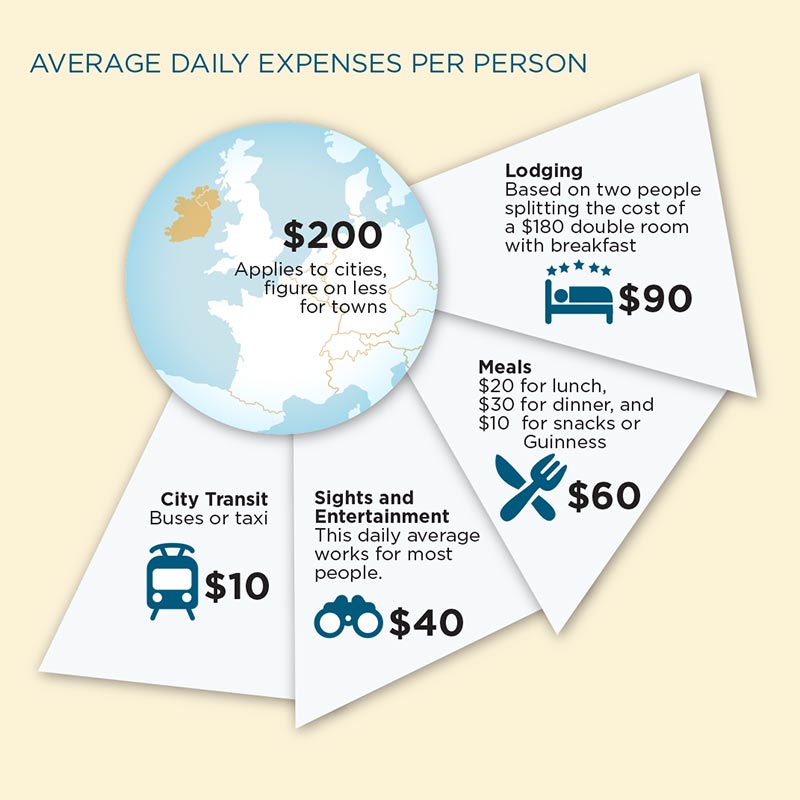
To cut your daily expenses, take advantage of the deals you’ll find throughout Ireland and mentioned in this book.
City transit passes (for all-day or multiple-day usage) decrease your cost per ride. In Dublin and Belfast, using a hop-on, hop-off bus to get around isn’t cheap, but may be worthwhile for the sightseeing commentary, big-city orientation, and as an efficient way to reach far-flung sights (cheaper than taxis and more targeted than city buses).
Avid sightseers consider the Heritage Card sightseeing pass, which covers dozens of monuments, parks, and gardens across Ireland (see “Sightseeing Pass,” in the Practicalities chapter). On a smaller scale, some cities offer combo-tickets or passes that cover multiple museums. If a town doesn’t offer deals, visit only the sights you most want to see, and seek out free sights and experiences (people-watching counts).
Some businesses—especially hotels and walking-tour companies—offer discounts to my readers (look for the RS% symbol in the listings in this book).
Reserve your rooms directly with the hotel. Some hotels offer a discount if you pay in cash and/or stay three or more nights (check online or ask). Rooms can cost less outside of peak season (June-early Sept). And even seniors can sleep cheaply in hostels (most have private rooms) for about $30 per person. Or consider short-term apartment rentals (at Airbnb or similar sites).
It’s no hardship to eat inexpensively in Ireland. You can get hearty, affordable meals at pubs and early-bird dinner deals at nicer restaurants. Cultivate the art of picnicking in atmospheric settings.
When you splurge, choose an experience you’ll always remember, such as a falconry show, a musical pub crawl, or a flight to the Aran Islands. Minimize souvenir shopping; focus instead on collecting wonderful memories.
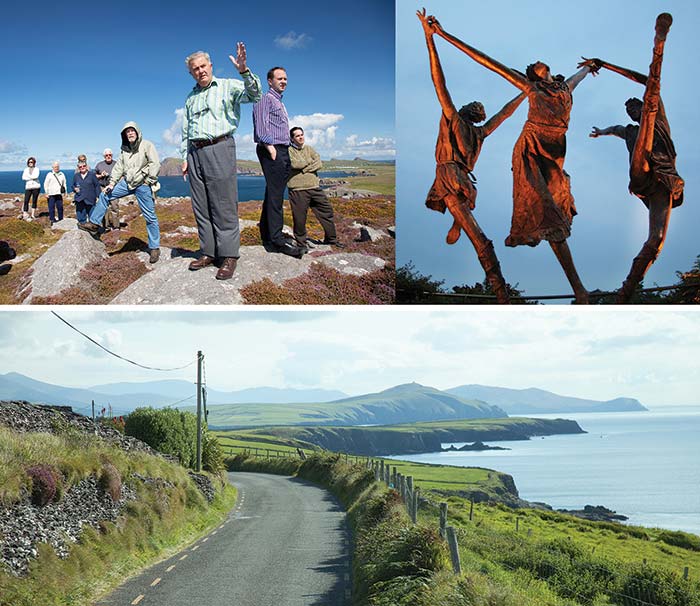
Touring the Burren; a soaring sculpture at the Rock of Cashel; a Dingle drive
BEFORE YOU GO
You’ll have a smoother trip if you tackle a few things ahead of time. For more details on these topics, see the Practicalities chapter and RickSteves.com, which has helpful travel-tip articles and videos.
Make sure your travel documents are valid. If your passport is due to expire within six months of your ticketed date of return, you need to renew it. Allow 12 weeks or more to renew or get a passport. Be aware of any entry requirements; get passport and country-specific travel info at Travel.State.gov.
Arrange your transportation. Book your international flights. Overall, Google Flights is the best place to start searching. Figure out your transportation options: It’s worth thinking about buying train tickets online in advance, renting a car, or booking cheap European flights if traveling outside Ireland. (You can wing it once you’re there, but it may cost more.)
Book rooms well in advance, especially if your trip falls during peak season or any major holidays or festivals.
Reserve ahead for key sights. Make reservations or buy tickets in advance for major sights. In peak season, it’s smart to book online for Dublin’s Book of Kells, Guinness Storehouse, and Kilmainham Gaol; Brú na Bóinne (near Dublin); and Carrick-a-Rede Rope Bridge, Old Bushmills Distillery tour, and the Giant’s Causeway Visitor Experience on the Antrim Coast. Boat trips to Skellig Michael can sell out months in advance—reserve well ahead.
Consider travel insurance. Compare the cost of insurance to the cost of your potential loss. Understand what protections your credit card might offer and whether your existing insurance (health, homeowners, or renters) covers you and your possessions overseas.
Manage your money. “Tap-to-pay” or “contactless” cards are widely accepted and easy to use. You may need your credit card’s PIN for some purchases—request it if you don’t have one. Alert your bank that you’ll be using your debit and credit cards in Europe. You don’t need to bring euros or pounds for your trip; you can withdraw local currency from ATMs in Europe.
Use your smartphone smartly. Sign up for an international service plan or rely on Wi-Fi instead. Download any apps you’ll want on the road, such as maps, translators, and Rick Steves Audio Europe (see sidebar).
Pack light. You’ll walk with your luggage more than you think. I travel for weeks with a single carry-on bag and a day pack. Use the packing checklist in the appendix as a guide.
Rick Steves Audio Europe, a free app, makes it easy to download my audio tours and listen to them offline as you travel. For this book, the app includes a free audio tour covering my two-part Dublin City Walk (look for the  ) and many interviews relating to Ireland from my public radio show. Scan the QR code to find it in your app store, or visit RickSteves.com/AudioEurope.

Rick Steves Classroom Europe, a powerful tool for teachers, is also useful for travelers. This video library contains about 600 short clips excerpted from my public television series. Enjoy these videos as you sort through options for your trip and to better understand what you’ll see in Europe. Check it out at Classroom.RickSteves.com.

Travel Smart
If you have a positive attitude, equip yourself with good information (this book), and expect to travel smart, you will.
Read—and reread—this book. To have an “A” trip, be an “A” student. Note opening hours of sights, closed days, crowd-beating tips, and whether reservations are required or advisable. Check the latest at RickSteves.com/update.
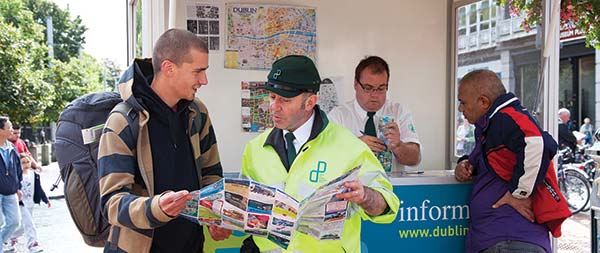
Be your own tour guide. As you travel, get up-to-date info on sights, reserve tickets and tours, reconfirm hotels and travel arrangements, and check transit connections. Visit local tourist information offices (TIs). Upon arrival in a new town, lay the groundwork for a smooth departure; confirm the road, train, or bus you’ll take when you leave.
Outsmart thieves. Although pickpockets aren’t prevalent in most of Ireland, it’s wise to be cautious in crowded places. Keep your passport and backup cash and cards secure in a money belt tucked under your clothes; carry only a day’s spending money and a single card in your front pocket or wallet. Don’t set valuable items down on counters or café tabletops, where they can be quickly stolen or easily forgotten.
Minimize potential loss. Keep expensive gear to a minimum. Bring copies or take photos of important documents (passport and cards) to aid in replacement if they’re lost or stolen. Back up photos and devices to the cloud as you travel.
Guard your time and energy. Taking a taxi can be a good value if it saves you a long wait for a cheap bus or an exhausting walk across town. To avoid long lines, follow my crowd-beating tips, such as buying tickets in advance or sightseeing early or late.
Be flexible. Even if you have a well-planned itinerary, expect changes, closures, sore feet, bad weather, and so on. Your Plan B could turn out to be even better.
Connect with the culture. Interacting with locals carbonates your experience. Enjoy the friendliness of the Irish people. Ask questions; most locals are happy to point you in their idea of the right direction. Set up your own quest for the best pub, traditional music, ruined castle, or ring fort. When an opportunity pops up, make it a habit to say “yes.”
Ireland...here you come!