KINSALE & COBH
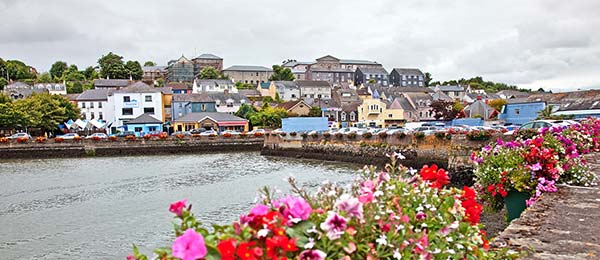
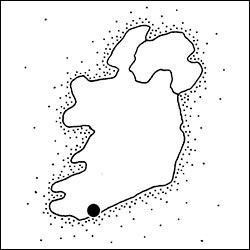
County Cork, on Ireland’s south coast, is fringed with historic port towns and scenic peninsulas. The typical tour-bus route here includes Blarney Castle and Killarney—places where most tourists wear nametags. But rather than waiting in an interminable line just to kiss the spit-slathered Blarney Stone, spend your time in County Cork enjoying the bustling, historic maritime towns of Kinsale and Cobh. Cobh, famous for its ties to the Titanic, is increasingly popular with big cruise ships—many of which skip right past that town’s own charms en route to day excursions that clog iconic stops like Blarney Castle. Kinsale, meanwhile, doesn’t have a port suitable for big cruises—keeping it small and pleasantly bustling (rather than painfully crowded).
PLANNING YOUR TIME
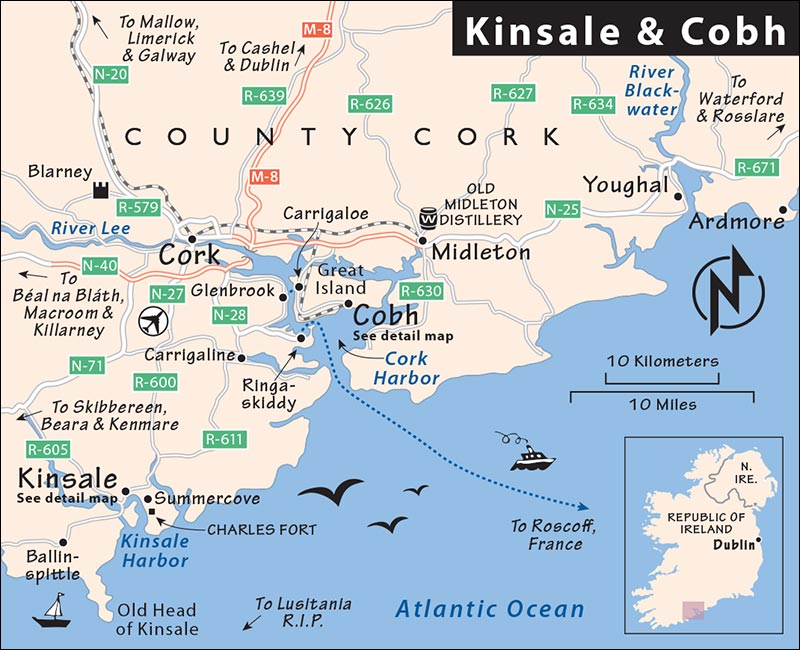
Kinsale is worth two nights and a relaxed day and makes a great home base for a visit to the coast of County Cork. Cobh—about 45 minutes northeast of Kinsale—is worth a couple of hours to walk the town and tour the Titanic Experience.
Drivers approaching this region from the northeast (such as Kilkenny, Waterford, or Dublin) can visit Cobh en route to Kinsale (it can also make sense to see the Rock of Cashel on the way to Kinsale; see the previous chapter). Drivers coming from Waterford can easily visit the Old Midleton Whiskey Distillery along the coastal route (covered near the end of this chapter). Without a car, you can take the train from Dublin to Cobh (via Cork city). For Kinsale (about 15 miles south of Cork), you’ll have to take a bus or taxi from Cork’s train station.
With a full day in Kinsale, spend the morning poking around town, and make sure to take Don and Barry’s excellent Kinsale walking tour. After lunch, head out to Charles Fort for great bay views and insights into British military life in colonial Ireland. Finish the day with a good dinner and live music in a pub. If you get to Kinsale later in the day, consider doing the walking tour the next morning, before you head out.
Those blitzing Ireland can give Kinsale four hours—see the fort, wander the town, and enjoy a nice lunch—before driving on.
Kinsale
While Cork is the biggest city in southern Ireland, nearby Kinsale is actually more historic and certainly cuter. Pint-sized, colorful, and friendly, it’s a delightful place to visit and relax, with about 5,000 residents (though the population swells to 9,000 with the many “blow-ins” who live here each summer). Thanks to the naturally sheltered bay barbed by a massive 17th-century star fort, you can submerge yourself in maritime history, from the Spanish Armada to the sailor who inspired Daniel Defoe’s Robinson Crusoe to the Lusitania (torpedoed by the Germans just off the point in 1915). Apart from all the history, Kinsale has a laid-back feel and an artistic, artisanal aura...with a touch of wine-sipping class.
Orientation to Kinsale
Kinsale has a great natural harbor and is older than Cobh (Cork’s harbor town). While the town is prettier than the harbor itself, that harbor was its reason for being. The town’s long and skinny old center is part modern marina (attracting wealthy yachters) and part pedestrian-friendly medieval town (attracting scalawags like us). It’s an easy 15-minute stroll from end to end.
TOURIST INFORMATION
The TI is centrally located at the head of the harbor (daily 9:00-17:00, shorter hours off-season, www.kinsale.ie [URL inactive]).
ARRIVAL IN KINSALE
Kinsale doesn’t have a train station. The bus stop is just behind the TI, across from the waterfront parking lot.
Drivers should park and walk—Kinsale’s mazelike medieval lanes are stressfully narrow and congested. A big, central, pay-and-display parking lot is at the head of the harbor, behind the TI (free on Sun). A big, safe, free parking lot is across the street from St. Multose Church at the top of town, a five-minute walk from most recommended hotels and restaurants. An even larger free lot is east of town by the fire station (10-minute walk). Street parking is pay-and-display. Outlying streets, a 10-minute stroll from the action, have wide-open parking.
HELPFUL HINTS
Crowds: The Kinsale Rugby Sevens Tournament draws dozens of teams and hundreds of loud-and-proud, rowdy rugby fans on the first weekend in May (with its associated Bank Holiday Monday). If you’re not up for the scrum, then scram.
Market: An open-air market enlivens the town square (on Market Quay) on Wednesdays in summer (9:00-14:00).
Bookstore: The Bookstór is at a colorful corner in the center of town (daily, Newman’s Mall #1, +353 21 477 4966).
Bike Rental and a Good Ride: Run by helpful Julian, Mylie Murphy’s rents bikes from a handy spot near the Centra Market (closed Sun except by appointment, 8 Pearse Street, +353 21 477 2703, MylieMurphyShop@hotmail.com). They can recommend paths good for biking or walking that stretch around the harbor.
For a good short-and-scenic route, bike south on Pier Road past the marina for a couple of miles, then turn left across the first bridge. Turn left again at the far end of the bridge to reach the dead end of the road marked by The Dock Bar. Jump off your bike and explore the great views from the grassy ruins of James Fort, uphill behind the pub. Or head out to Kinsale’s only beach, a couple hundred yards south of James Fort on the east side of its peninsula (over the hill, behind The Dock Bar).
Tours in Kinsale
▲▲Don & Barry’s Kinsale Historic Stroll
To understand the important role Kinsale played in Irish, English, and Spanish history, join gentleman Barry Moloney and his colleagues on a fascinating 1.5-hour walking tour (€8, daily mid-March-mid-Oct at 11:15, also Mon-Sat at 9:15 in May-Sept, no reservation necessary, by appointment only off-season, meet outside the TI, private tours possible, +353 87 250 0731, www.historicstrollkinsale.com). Barry and crew are a joy, creatively bringing to life Kinsale’s past, placing its story in the wider sweep of history, and making the stony sights more than just buildings. Don’t get hijacked by imitation tours—go with the original. This walk is Kinsale’s single best attraction.
Ghost Walk Tour
This is not just any ghost tour; it’s more slapstick comedy than horror. Two high-energy actors (Brian and David) weave funny stunts and stories into a loose history of the town, offering 75 minutes of entertainment on Kinsale’s after-dark streets (€12, April-Sept Sun-Fri at 21:00, no tours Sat, leaves from the recommended Tap Tavern, call ahead to confirm, +353 87 948 0910, www.corkhenparty.ie/services/ghost-tours). You’ll spend the first 15 minutes in the back of the tavern. This tour doesn’t overlap with Don and Barry’s more serious historic town walk described above.
Kinsale Harbour Cruise
Enjoy a 50-minute voyage around the historic harbor aboard the nimble little 50-passenger Spirit of Kinsale. The voyage offers sea-level views of both Charles and James forts, as well as seal and seafowl sightings with informative commentary from captain/historian/naturalist Jerome (€14; check website for schedule—generally 3-4/day in summer, 1-2/day in spring and fall, no cruises Nov-March; departs from Pier Road in front of Acton’s Hotel at the marina roughly 200 yards south of the TI, +353 86 250 5456, www.kinsaleharbourcruises.com).
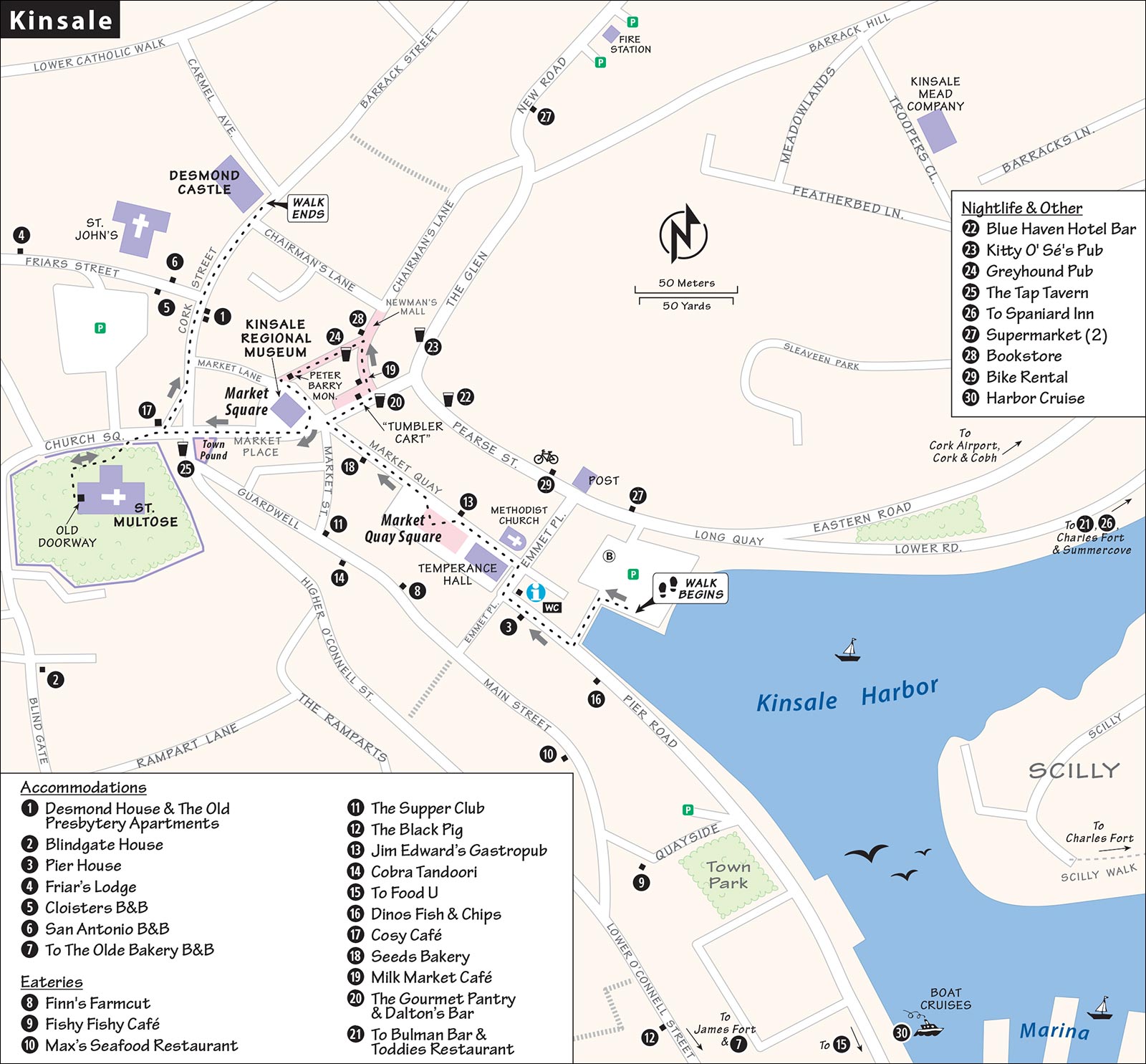
Kinsale Walk
Kinsale’s top attraction is the town walking tour with Barry and his colleagues (listed earlier, under “Tours in Kinsale”). My 30-minute orientation walk, worth ▲▲, helps you get your historical and geographical bearings in this small town, without all the in-depth stories and insights.
• Start at the corner of the harbor, just behind the TI and across from Dinos Fish & Chips.
Harborfront
The medieval walled town’s economy was fueled by its harbor, where ships came to be stocked. The old walls defined the original town and created a fortified zone that facilitated the taxation of goods. In the 17th and 18th centuries, this small and easily defended harbor was busy with rich and hungry tall ships getting provisions and assembling into convoys for the two-month trip to America, mostly for military transport and establishing colonies.
Look for the memorial shaped like the mast of a tall ship, farther out toward the marina. It’s a reminder that this was also a port of military consequence. Dozens of ships from the Spanish Armada could moor here, threatening England. Since Spain and Ireland had a common religion and common enemy (Catholicism and England), Kinsale had a more prominent place in history than its size might suggest.
Clear-cutting of the once-plentiful oak forest upriver (for shipbuilding and barrel-making) hastened erosion and silted up the harbor. (Notice the mudflats in the harbor at low tide.) By the early 1800s—when British ships needed lots of restocking for the Napoleonic Wars—ships were bigger, Kinsale’s port was slowly dying, and nearby Cobh’s deep-water port took over the lion’s share of shipping. Therefore, most Irish emigrants fleeing famine departed for America from Cobh rather than from Kinsale. Kinsale settled into a quieter existence as a fishing port. And to this day, while Cobh is dwarfed by giant cruise ships and deluged with passengers, Kinsale remains a more easygoing backwater...just far enough from the cruise port to keep the crowds at bay.
• From the TI, walk inland (between the Temperance Hall and the old Methodist church) up Market Quay. After one short block, pause where the street opens up into a small square.
Market Quay Square
This charming, colorful square feels far from the harbor. But if you stood here a few centuries ago, you’d be under water. Much of the town center of Kinsale is on reclaimed land. The small lanes on the left side of this square were originally quays—stone piers where boats could ride in on the high tide, tie up, and load or unload. When this inner harbor began to silt up, they moved the port farther out and filled in this area with rubble from the old town walls, plus shale that was quarried locally. The shale was abundant and easy to cut, but brittle and porous. To this day, low-lying areas like this are vulnerable to flooding.
• Continue out the top end of the square, the rest of the way up the street called Market Quay. On the right just before the cross street, notice the mural showing Kinsale with water-filled streets (a reminder of the days before land reclamation).
Turn right on Market Street and find an old vehicle on big wheels at the Milk Market Café, across from Dalton’s Bar.
Town Center
Parked like a big flowerbox here is a 19th-century “tumbler cart.” This rolled through town like a garbage service collecting sewage from the townsfolk, then spread the human waste as fertilizer on the fields outside of town.
Study the green medieval-era Kinsale model (c. 1381) and the information panel on the wall with another map. It shows the narrow confines of the town, hiding behind its once-proud walls, before much of the bay was reclaimed. You can see how the wall lined the main street along the tidal flats. The subtle curves of Main Street trace the original coastline. (Walking this street, you’ll see more tiny lanes leading to today’s harbor. These originated as piers—just wide enough to roll a barrel down to an awaiting ship.) Notice the town wall had three “water gates.” One was called “World’s End,” which felt true in the 14th century.
Dalton’s Bar, across the street, is one of many inviting pubs in this small but never-thirsty town. Many feature live folk and traditional music. (See “Nightlife in Kinsale,” later.)
• Head up the street on the right side of Milk Market Café to enter Kinsale’s most colorful corner. Pause at the top of this street called...
Newman’s Mall
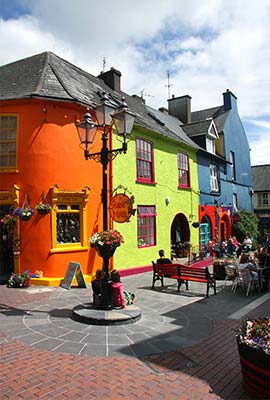
Like many Irish towns, Kinsale is painted in a rainbow of vivid colors. This is a fairly recent trend, and it’s largely thanks to the Tidy Towns competition. This creates incentive and money (through fundraising and sponsorships) for towns across Ireland to make big and small improvements. Kinsale won the whole shebang in 1986.
Turn left. At the end of the street is a bust of Peter Barry, “Truly a Man for All Seasons”—an Englishman who opened The Spaniard Inn in nearby Scilly in 1963. He’s credited with seeing the potential in transforming Kinsale into the tourist showcase that it is today.
• Just past Barry, you’ll pop out at...
Market Square
You’re standing at the convergence of seven streets—a natural hub for commerce in this trading town. Directly in front of you looms a building that first went up around 1600 as the market house; wares could be bought, sold, and traded in the big, arched arcade on the ground floor. Around 1700, it was turned into the courthouse and renovated in a Dutch style—a tip of the hat to 1690’s Battle of the Boyne, which brought a new, Dutch-born king to Ireland (William of Orange).
This courthouse was the site of the inquest into the sinking of the Lusitania. Nine months into World War I, 12 miles off the coast of Kinsale, the Germans torpedoed the Lusitania—a civilian passenger steamer with 1,959 souls on board (including 128 Americans). The ship sank within 20 minutes, and more than half of the passengers drowned. This tragedy, along with German U-boat attacks on passenger ships and merchant vessels in 1917, led to the United States going “over there” and joining “The Great War.” Kinsale had maritime jurisdiction over the waters where the sinking occurred. Hearings held upstairs in the courthouse investigated the causes of the disaster and painted the “German Hun” as a bloodthirsty villain. Claims by Germany that the Lusitania was illegally carrying munitions (and using innocent passengers as human shields) may have been inspired by the mysteriously huge double-explosion and rapid sinking of the vessel. Today, as the wreck slowly succumbs to more than a century of gravity and rust, it’s collapsing on itself. Investigations are still ongoing, seeking the truth of its cargo before it’s forever lost in the ocean-floor muck.
Today, this building houses the Kinsale Regional Museum, with exhibits on the Lusitania and other local oddities (see “Sights in Kinsale,” later). Even if you’re not going inside, step under the arcade to read the fun 1788 tax code for all Kinsale commercial transactions (outside at the front door).
• Go around the left side of the building, then proceed straight for one block up the street behind it. At the end of the block, look left for a walled, vacant little lot across from The Tap Tavern.
Town Pound
This small enclosure was where goods and livestock used to be impounded until the owner could pay the associated tax. After the James and Charles forts were built in the 1600s, the town wall became obsolete—and also boxed in the town, preventing further expansion. So the townspeople disassembled the wall and used its ready-cut stones for building projects like this. These days, the enclosure displays plaques trumpeting Kinsale’s various accomplishments in the Tidy Towns competition.
• Walk uphill past The Tap Tavern to the church. Head through the gate into the churchyard, then enter...
St. Multose Church
This Anglican church comes with a fortress-like tower. While rebuilt in recent centuries, it goes back to the Middle Ages. Stepping through the door at the base of the tower, look right to find a list of vicars going back to 1377. The very proper Anglican interior feels humble, but it has some interesting details. At the start of the nave, the base of the baptismal font dates from the sixth century. And in the left transept, find the stained-glass window that illustrates the Tennyson poem “Crossing the Bar”—referring to the challenge of sailing past a sandbar: “For tho’ from out our bourne of Time and Place / The flood may bear me far, / I hope to see my Pilot face to face / When I have crost the bar.” This is a poignant sentiment for a seafaring town, whose fortunes (and people’s lives) have always been tied to the sea.
Exiting the church and turning left, walk around the outside of it to the west end (facing most of the graves). Check out the old doorway into the church. These days, this door is always locked, but it was once the main entrance. Notice the worn lines scratched into the stone around eye level. Oliver Cromwell’s soldiers garrisoned in the church in the mid-1600s and sharpened their swords on the doorway. Facing this door, you can tell there were (not surprisingly) more right-handed swordsmen.
• Leave the churchyard through the gate where you entered. Backtrack downhill 20 paces (past the sweet “sea garden” in the church wall), then turn left up the street next to the Cosy Café. Head uphill on this colorful and narrow street; you’ll see the stately Catholic church on your left. Note that along this walk we’ve passed churches belonging to three different denominations—Methodist, Anglican, and Catholic. Given Kinsale’s complex history, as both a Spanish/Catholic stronghold and an English/Protestant garrison town, its makeup has always been eclectic.
At the crest of the hill, a giant stony tower looms on your left.
Desmond Castle
This 15th-century fortified customs house has had a long and varied history. It was the Spanish armory during Spain’s 1601 occupation of Kinsale. Nicknamed “Frenchman’s Prison,” it served as a British prison and once housed 600 cramped prisoners of the Napoleonic Wars (not to mention earlier American Revolutionary War prisoners captured at sea—who were treated as rebels, not prisoners, and chained to the outside of the building as a warning to any rebellion-minded Irish). In the late 1840s, it was a famine-relief center.
During its days as the customs house, this evocative little tower was an important cog in Ireland’s little-known connection to the international wine trade. In the late Middle Ages, Kinsale was renowned for its top-quality wooden casks. Developing strong trade links with Bordeaux and Jerez, local merchants traded their dependable empty casks for casks full of wine. Later, Kinsale became a “designated wine port” for tax-collection purposes.
• You’ve hiked from Kinsale’s port at its bottom to the castle at its top—”conquering” the town. From here, wander back down into the heart of town and enjoy Kinsale.
Sights in Kinsale
In Town
Kinsale Regional Museum
Filling the former courthouse on Market Square, this modest museum is worth a quick visit for its fun mishmash of domestic and maritime bygones.
Cost and Hours: €5; variable hours but likely Tue-Sat 10:00-17:00, may close at lunchtime, closed Sun-Mon; Market Square.
Visiting the Museum: Among its exhibits, the museum gives a good perspective on the controversial Lusitania tragedy. The museum displays are sparse, but include Lusitania flotsam such as a wicker deck chair and a US mail bag. A flickering black-and-white film shows the last happy glory days of the vessel in port. Apart from the Lusitania footage, you’ll find a gritty little model of medieval Kinsale surrounded by its once-proud walls. Perhaps even more memorable, in the side room is the boot of the 8-foot-3-inch “Kinsale Giant,” an actual person who lived here in the late 1700s.
Kinsale Mead Company
A tour of this working “meadery” in a modern warehouse on the outskirts of Kinsale offers a rare opportunity to learn about (and taste) mead—a beverage famed in ancient times but these days mostly served at medieval castle banquets. A wine made with honey, mead is the world’s oldest alcoholic drink and the original ambrosia (or “nectar of the Gods”). Thought to bring bravery to ancient Greek warriors, mead was also part of cultures as diverse as the Egyptians, Mayans, and Vikings. The hour-long tour explains the distilling process and helps you appreciate honeybees and the fragile place they occupy in nature’s increasingly embattled web.
Cost and Hours: €16, best to book in advance; Tue-Sun tours at 12:00, 14:00, and 16:00, closed Mon; Nov-March by appointment only; 12-minute walk east of town center, located at Unit 5, Barracks Lane, Troopers-Close, +353 21 477 3538, www.kinsalemeadco.ie.
Near Kinsale
Aside from the town walk, most of Kinsale’s best sights lie just outside of town. On a nice day, it’s enjoyable to walk or ride a bike, but these are also a quick drive away.
▲▲Charles Fort
Strategically situated to be the gatekeeper for this critical harbor, Kinsale’s star-shaped Charles Fort is a testimony to the importance of this little town in the 17th century.
Cost and Hours: €5; daily 10:00-18:00, Nov-mid-March until 17:00, last entry one hour before closing; ask about guided walks, +353 21 477 2263.
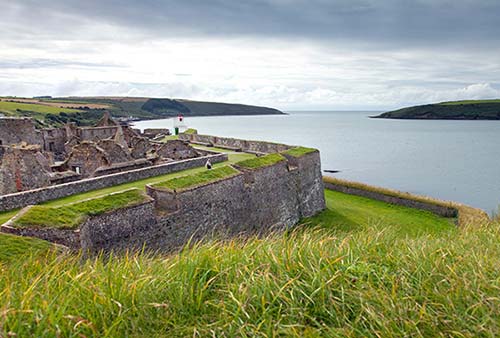
Getting There: The fort is a half-mile southeast of town. You can drive, taxi, walk (see the “Scilly Walk,” later), or take bus #253, which runs a few times daily from the bus stop near the TI. If driving, you can take the (tighter, more challenging) route along the water (right fork as you leave town), or the easier route up over the headlands. If you take the seaside route, pull over at the grand harbor viewpoint at the high point on the road (between The Spaniard Inn and Summercove).
Visiting the Fort: When built, Charles Fort was Britain’s biggest star-shaped fort—a state-of-the-art defense when artillery made the traditional castle obsolete (low, thick walls were tougher for cannons to breach than the tall, thinner walls of older castles). The star design made defending any attack on its walls safer and more effective. Notice how the strongest walls face the sea, and how the oldest buildings are crouched down below the potential cannon fire of attacking ships.
Red buoys mark the navigable lane for shipping in this shallow harbor—making any ship entering or leaving well within cannon range.
The British occupied this fort until Irish independence in 1922. Its interior buildings were torched in 1923 by anti-treaty IRA forces to keep it from being used by Free State troops during the Irish Civil War. Guided tours (free with admission) engross you in the harsh daily life of 18th-century British soldiers and the few “lucky” wives allowed to live in the fort and earn their keep doing laundry for an army.
Kinsale’s remarkable harbor has made this an important port since prehistoric times. The bay’s 10-foot tide provided a natural shuttle service for Stone Age hunter-gatherers: They could ride it, at two miles per hour twice a day, for the eight miles up and down the River Bandon. In the Bronze Age, when people discovered that it takes tin and copper to make bronze, tin came from Cornwall (in southwest England) and copper came from this part of Ireland. From 500 BC to AD 500, Kinsale was a rich trading center. The result: Lots of Stonehenge-type monuments are nearby. The best is Drombeg Stone Circle (a one-hour drive west, just off R-597/Glandore Road).
Kinsale’s importance peaked during the 16th, 17th, and 18th centuries, when sailing ships ruled the waves, turning maritime countries into global powers. Kinsale was Ireland’s most perfect natural harbor and the gateway to both Spain and France—potentially providing a base for either of these two powers in cutting off English shipping. Because of this, two pivotal battles were fought here in the 17th century: in 1601 against the Spanish, and in 1690 against the army of William of Orange. Two great forts were built to combat these threats from the Continent. England couldn’t rule the waves without ruling Kinsale.
To understand the small town of Kinsale, you need to understand the big picture: In about 1500, the pope divided newly discovered lands outside Europe between Spain and Portugal. With the Reformation breaking Rome’s lock on Europe, maritime powers such as England were ignoring the pope’s grant. This was important because trade with the New World and Asia brought huge wealth in spices (necessary for curing meat), gold, and silver.
England threatened Spain’s New World piñata, and Ireland was Catholic. Spain had an economic and a religious reason to defend the pope and Catholicism. The showdown between Spain and England for mastery of the seas (and control of all that trade) was in Ireland. The excuse: to rescue the dear Catholics of Ireland from the terrible treachery of Protestant England.
So the Irish disaster unfolded. The powerful Ulster chieftains Hugh O’Neill and Red Hugh O’Donnell and their clans had been on a roll in their guerilla battles against the English on their home turf up in Ulster. With Spanish aid, they figured they could actually drive the English out of Ireland. In 1601, a Spanish fleet dropped off 3,000 soldiers, who established a beachhead in Kinsale. After the ships left, the Spaniards were pinned down in Kinsale by the English commander (who, breaking with martial etiquette, actually fought in the winter). In harsh conditions, virtually the entire Irish-clan fighting force left the north and marched to the south coast, thinking they could liberate their Spanish allies and win freedom from England.
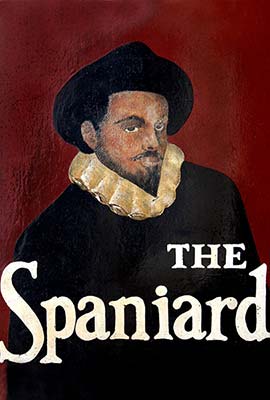
The numbers seemed reasonable (8,000 Englishmen versus 3,000 Spaniards with 7,000 Irish clansmen approaching). The Irish attacked on Christmas Eve in 1601. But, holding the high ground around fortified and Spanish-occupied Kinsale, a relatively small English force kept the Spaniards hemmed in, leaving the bulk of the English troops to rout the fighting Irish, who were adept at ambushes but not at open-field warfare. (Today’s visitors will be reminded of this crucial battle as they wander past pubs with names like “The 1601” and “The Spaniard”—see photo.)
The Irish resistance was broken, and its leaders fled to Europe (the “flight of the Earls”). England made peace with Spain and began the “plantation” of mostly Scottish Protestants in Ireland (the seeds of the long-running Troubles in Northern Ireland). England ruled the waves, and it ruled Ireland.
The lesson: Kinsale is key. England eventually built two huge, star-shaped fortresses to ensure control of the narrow waterway, a strategy it would further develop in later fortifications built at Gibraltar and Singapore.
Kinsale’s maritime history continued. Daniel Defoe used the real-life experience of Scottish privateer Alexander Selkirk, who departed from Kinsale in 1703 and was later marooned alone on a desert island, as the basis for his book Robinson Crusoe. (Selkirk was lucky to have been marooned when he was—his ship and all aboard later perished in a hurricane off Costa Rica.)
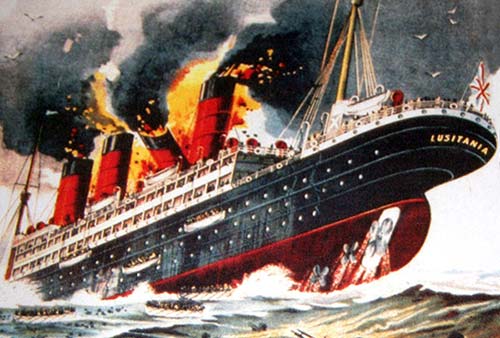
It was just 10 miles offshore from Old Kinsale Head that the passenger liner Lusitania was torpedoed by a German submarine in 1915. At the time, the liner was the fastest vessel on the seas (with a top speed of 25 knots). The primitive U-boats of the day were much slower (8 knots), giving Lusitania’s crew a false sense of security. Because World War I was the first conflict to employ submarine warfare, evasion tactics were largely untested. As the Lusitania sank, nearly 1,200 people were killed. This, along with deliberate U-boat attacks on passenger and merchant ships in 1917, sparked America’s eventual entry into the war.
While most of the fort is just ruined buildings with nice views, exhibits fill two floors of the Barracks Stores building (the tall intact building, just below and to the right of the entry). You’ll find models of the fort, thoughtful explanations, a film about its history, and—upstairs—vintage uniforms, cannonballs, rifles, and so on. The small fire engine shed next door has additional exhibits.
But the real attraction here is simply to climb around the lonely and evocative ramparts to enjoy the view, marvel at the cleverness of a “star-designed fort,” and gaze out to Kinsale Head to see where, in 1915, the Lusitania was torpedoed by Germans.
Eating: You’ll likely see some food trucks in the parking lot; Shirley’s has excellent, fresh fish-and-chips. Or, for a beer or meal nearby, try the recommended Bulman Bar in Summercove, 100 yards downhill where the road runs low near the water on the way back to town (with small parking lot).
Scilly Walk (Kinsale to Charles Fort)
The 45-minute walk between Kinsale and Charles Fort offers a delightful chance to connect the town with its top historic attraction. Along the way you’ll pass great harbor views, quaint cottages, dry-stone walls, and the recommended Bulman Bar. While the couple hundred yards at the beginning and end are along roads without sidewalks, the middle 80 percent of the walk is along a peaceful, pedestrian-only trail through lush vegetation. From Kinsale, follow the Lower Road east until you wind around onto Scilly peninsula. From the fort, look for Scilly Walk signs on the left when walking toward town (near top of hill, 100 yards beyond Bulman Bar).
James Fort
With its earthen formations overgrown with yellow gorse, James Fort is Kinsale’s other (older) star fort, filling a forgotten peninsula and guarding the bay opposite Charles Fort. Built in the years just after the famous 1601 battle of Kinsale (when a Spanish force disembarked here—see the “Kinsale’s History” sidebar), this fort is more ruined, less interesting, and less visited than Charles Fort. Its military usefulness ended with a bang in 1690 when the magazine containing the fort’s ammunition was hit by a direct and fatal shell fired by King William’s besieging army. Check out the satellite blockhouse (down a straight, 75-yard trail from the main walls), which sits below the fort at the water’s edge opposite Summercove. It controlled a strong chain boom that could be raised to block ships from reaching Kinsale’s docks (free, always open).
Getting There: Easily accessible by car or bike, it’s two miles south of town along Pier Road on the west shore of the bay (cross the bridge and turn left; you’ll dead-end at Castle Park Marina, where you can park or leave your bike). When facing The Dock Bar, the trailhead up to the fort is at the far-left end of the buildings, where the parking lot ends.
Shopping in Kinsale
This town tends to turn browsers into buyers. It’s jammed with fun-to-explore bookshops, intriguing art galleries, and crafty souvenir stores. Shoppers enjoy strolling Main Street, with stores like Canvasworks (at #20, vintage travel posters and prints of Kinsale and Ireland, www.thecanvasworks.ie) and Kinsale Leather (at #46, stylish handbags designed in Kinsale and made in Spain, www.kinsaleleather.com). Farther up into town at the start of Main Street, Mamukko sells “upcycled” handbags made from reused materials (www.mamukko.ie).
Nightlife in Kinsale
Live Folk and Traditional Music
Kinsale’s pubs are packed with atmosphere and live music (more likely folk, but plenty of traditional Irish, too). Rather than target a certain place, simply walk the area between Guardwell, Pearse Street, and the Market Square. Music starts up after 21:00—you’ll hear it as you wander. The Blue Haven Hotel Bar and Kitty Ó Sé’s often have something on. Dalton’s Bar sometimes hosts informal amateur sessions with locals.
Pubs for Craic Rather than Music
For conversation or an introspective pint, I like the Greyhound (off Newman’s Mall, behind the Milk Market Café)—no live music, just a scruffy, multichambered throwback with no pretense. Another joint filled with characters who haven’t changed in decades is The Tap Tavern (corner of Church Street and Guardwell). It’s presided over by Mary O’Neill, the unofficial godmother of Kinsale, and her slyly humorous son Brian, who runs the town’s recommended ghost tours. Check out the ancient holy well that came to light when they built their appealing back patio.
Outside of Town: Spaniard Inn is a 10-minute walk out to the Scilly peninsula across the harbor from town. This place is about atmosphere: The dark interior is roughly the size of a rail car, with the long bar taking up half the space.
Sleeping in Kinsale
Kinsale is a popular place in summer for yachters and golfers (who are happy to pay through the nose to golf on the exotic Old Head of Kinsale Golf Course). It’s wise to book your room in advance. These places are all within a 15-minute walk of the town center.
$$$$ Desmond House has four spotless, tastefully furnished rooms and tons of space to stretch out in a 1760s Georgian townhouse that’s within walking distance of many restaurants and shops. Top-notch hosts Gràinne and Paddy prepare a fine breakfast that includes delicious baked treats (2-night minimum, parking, 42 Cork Street, enter P17 PW22 if using GPS, +353 21 477 3575 or +353 87 205 5566, www.desmondhousekinsale.com, grainne@desmondhousekinsale.com).
$$$ Blindgate House, high up on the fringe of town behind St. Multose Church, offers 11 pristine and modern rooms, though with a less personal atmosphere than most of the other listings (6 Blind Gate, +353 21 477 7858 or +353 87 237 6676, www.blindgatehouse.com, info@blindgatehouse.com, Maeve Coakley).
$$$ Pier House sports a winning location right by the waterfront, plus inviting public spaces including a garden and several lounges. Some of its 10 rooms have sea views, and most have small balconies (2-night minimum, no breakfast, Pier Road, +353 21 477 4475, www.pierhousekinsale.com, info@pierhousekinsale.com, Ann and Pat Hegarty).
$$$ Friar’s Lodge is a slate-shingled hotel perched on the hill past St. John’s Catholic Church (and frequently booked up by Rick Steves tours). What its 17 spacious rooms lack in Old World character, they make up for in dependable quality in a central yet peaceful location (family rooms, private parking, 5 Friars Street, +353 21 477 7384, www.friars-lodge.com, maureenjtierney@gmail.com).
$$$ Cloisters B&B has four snug but bright and inviting rooms with a friendly atmosphere fostered by Orla Kenneally and Aileen Healy (2 Friars Street, +353 86 822 8437, www.cloisterskinsale.com, info@cloisterskinsale.com).
$$ The Old Presbytery Apartments rents an entire four-bedroom house with a meandering floor plan and plush lounge, a three-bedroom penthouse apartment, and three two-bedroom apartments, all on the same grounds, and all with full kitchens and washer/dryers. The rooms are stocking-feet cozy, and Noreen McEvoy runs the place with a passion for excellence (2-night minimum, RS%, 10 percent discount with cash, no breakfast, private parking, 43 Cork Street, +353 21 477 2027, www.oldpres.com, oldpres@gmail.com).
$$ San Antonio B&B is a 200-year-old house with five rooms and a funky feel, lovingly looked after by gentleman Jimmie Conron (cash only, closed Nov-March, 1 Friars Street, +353 21 477 2341 or +353 86 878 9800, jimmiesan@yahoo.ie).
$ The Olde Bakery B&B makes you feel at home with three quilt-bedded rooms and charmingly chatty hostess Chrissie Quigley. This friendly tech-free gem can only be booked by phone (cash only, 56 Lower O’Connell Street, +353 21 477 3012).
Eating in Kinsale
Kinsale has long been the island’s self-proclaimed gourmet capital. Restaurants offer creative and tempting menus, dinner tends to be pricey, and seafood is king. With so many options in the ever-changing scene, it’s worth a short stroll to assess your choices. Reservations are smart, especially if eating late or on a weekend. Restaurant connoisseurs can check the menu details of Kinsale’s top restaurants at https://kinsalegoodfoodcircle.ie.
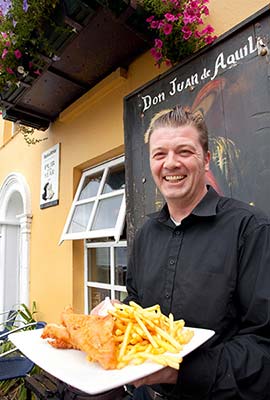
GOOD DINNERS IN THE OLD CENTER
These places are generally open for dinner only, unless otherwise noted.
$$$$ Finn’s Farmcut is dressy, refined, and romantic, with white tablecloths, candles, and elegant service. John Finn cooks and Julie Finn serves enticing dinner plates ranging from lamb to lobster. Meat is their passion—John comes from a long line of butchers and still gets the best cuts from his dad’s butcher shop (closed Sun-Mon, 6 Main Street, +353 21 470 9636, www.finnsfarmcut.com).
$$$$ Fishy Fishy Café, a high-energy destination seafood restaurant with spacious seating (indoor, balcony, and terrace) and a wonderful menu, is run by Martin and Maria Shanahan. When I asked, “What’s your secret?” they pointed to the portraits of fishermen on the wall and said, “Local, local, local.” Martin’s culinary prowess has led him to host a weekly cooking show on Irish TV (daily for lunch and dinner, reservations recommended, Pier Road, +353 21 470 0415, www.fishyfishy.ie).
$$$$ Max’s Seafood Restaurant is spacious and stylish, but not overly romantic. There’s no pretense—the focus is simply on great seafood. Chef Olivier Queva from France offers a fresh and classic selection and a French flair (nice wines by the glass), while wife Anne Marie serves (closed Thu and Sun, 48 Main Street, +353 21 477 2443, https://maxs.ie).
$$$ The Supper Club is a linen-and-leather upmarket joint with a meat smoker, strong cocktails, and creative desserts (closed Sun-Mon, 2 Main Street, +353 21 470 9233).
$$$ The Black Pig, a tapas-style wine bar, offers high-quality cooking with a low-key atmosphere—witness the mismatched furniture. The menu is Spanish-influenced but ranges widely, and usually includes some appealing vegetarian options (closed Mon-Tue, reservations smart, 66 Lower O’Connell Street, +353 21 477 4101, www.theblackpigwinebar.com).
$$$ Jim Edward’s Gastropub is an energetic place that’s clearly a local favorite for its steaks, seafood, and vegetables. Choose between the restaurant’s maritime setting and the more intimate, pub-like bar (same menu, bar also open for lunch, on the colorful little square at Market Quay, +353 21 477 2541).
$$ Cobra Tandoori is good for tasty Punjabi/Indian cuisine (daily, 69 Main Street, +353 21 477 7911).
CHEAP AND CHEERY
These are typically open for lunch, though some may work for an early dinner, too.
$$ Food U is a short walk out of town along the water, overlooking Kinsale’s marina. With a tight interior and lots of outdoor seating, it’s a window selling fresh-catch lobster, crab, and prawn rolls. Nothing fancy...just fresh (daily, Pier Road).
$ Dinos Fish & Chips, with big windows overlooking the harbor, is a fun and family-friendly chain for budget fish-and-chips. It’s modern and spacious, with a nautical theme (daily until late, 4 Pier Road, +353 21 477 4561).
$ Cosy Café is popular for its breakfasts, soups, and sandwiches (closed Sun, Church Square, +353 21 470 0865).
$ Seeds Bakery, along Market Quay in the town center, has fresh-baked, French-style pastries and good coffee (closed Mon, 4 Market Quay).
$ Milk Market Café is a hit with kids, offering burgers, pizza, and fish-and-chips (daily, 3 Market Street).
$ The Gourmet Pantry is an above-average takeout option (daily, 4 Market Street, +353 21 470 9215).
Groceries: For a few (pricey) groceries, the Centra in the heart of town is easy and well stocked (daily, on Long Quay). To stock up more affordably, it’s a five-minute walk out of the town center to the big SuperValu supermarket (daily, New Road, +353 21 477 2843).
NEAR CHARLES FORT
$$$ Bulman Bar and Toddies Restaurant serves seafood with seasonal produce. The mussels are especially tasty; on a balmy day or evening, diners take a bucket and a beer out to the seawall. This is the only way to eat on the water in Kinsale (Wed-Sat lunch and dinner, Sun lunch only, drinks only Mon-Tue evening). The $$ pub, strewn with fun decor and sporting a big fireplace, is also good for a coffee or beer after visiting Charles Fort (pub closed Tue, 200 yards toward Kinsale from Charles Fort in hamlet of Summercove, +353 21 477 2131, www.thebulman.ie).
Kinsale Connections
BY PUBLIC TRANSPORTATION
The closest train station is in Cork, 15 miles north. But buses run frequently between Kinsale (stop is near the TI, at the harbor) and Cork’s bus station (hourly Mon-Sat, fewer on Sun, 50 minutes).
In Cork, the bus station and train station are a 10-minute walk apart. The bus station (corner of Merchant’s Quay and Parnell Place) is on the south bank of the River Lee, just over the nearest bridge from the train station (north of the river on Lower Glanmire Road).
From Cork by Train to: Dublin (hourly, 2.5 hours, www.irishrail.ie).
From Cork by Bus to: Dublin (every 2 hours, 3.5 hours), Galway (hourly, 4.5 hours), Tralee (hourly, 2.5 hours), Kilkenny (7/day, 2.5 hours, www.dublincoach.ie). Bus info: +353 21 450 8188, www.buseireann.ie.
BY PLANE
Cork Airport is handy for travelers starting or ending their trip in southern Ireland (code: ORK, www.corkairport.com). It’s located four miles south of Cork city, about a 30-minute drive from Kinsale (on N-27/R-600; bus #226 runs about hourly between Cork Airport and Kinsale, 30 minutes, www.buseireann.ie).
Cobh
If your ancestry is Irish, there’s a good chance that this was the last Irish soil your ancestors had under their feet. Cobh (pronounced “cove”) was the major port of Irish emigration in the 19th century. Of the six million Irish who have emigrated to America, Canada, and Australia since 1815, nearly half left from right here.
The first steam-powered ship to make a transatlantic crossing departed from Cobh in 1838—cutting the journey time from 50 days to 18. When Queen Victoria came to Ireland for the first time in 1849, Cobh was the first Irish ground she set foot on. Giddy, the town renamed itself “Queenstown” in her honor. It was still going by that name in 1912, when the Titanic made its final fateful stop here before heading out on its maiden (and only) voyage. To celebrate their new independence from British royalty in 1922, locals changed the town’s name back to its original Irish moniker. Today the town’s deep harbor attracts more than a hundred cruise ships per year (with their large packs of eager visitors).
Orientation to Cobh
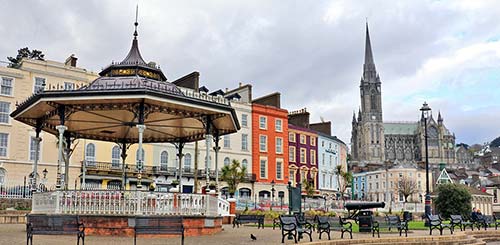
Cobh (pop. 13,000) sits on a large island in Cork Harbor, connected to the mainland via a short bridge (on the north shore) and a drive-on ferry (between Glenbrook on the mainland and Carrigaloe, on the west shore of the island). The town’s inviting waterfront is colorful yet salty, with a playful promenade. The butcher’s advertisement reads, “Always pleased to meet you and always with meat to please you.”
TOURIST INFORMATION
The TI is in the old town hall at the base of Westview Street, inside the arch on the left (Mon-Fri 9:00-16:45, Sat until 16:00, Sun until 14:00, shorter hours off-season, +353 21 481 3301, www.cobhtouristoffice.ie).
HELPFUL HINTS
Parking: For a quick visit, pay-and-display street parking is around the city center. To park for free, follow the Heritage Centre signs to The Queenstown Story museum, which has a few free spaces out front; if those are full, drive around behind the museum to a long, free, narrow waterfront lot (car entry at farthest west end, pedestrian entry just to left when facing museum).
Walking Tours: Michael Martin and his staff lead one-hour Titanic Trail walking tours that give you unexpected insights into the tragic Titanic and Lusitania voyages, Cork Harbor, and Cobh’s maritime history (€19.50, RS%—use code “JB41” when booking online, daily at 11:00, also 14:00 in summer with required advance booking, call ahead to confirm tour times in winter, private tours available, meet in lobby of the recommended Commodore Hotel, +353 21 481 5211 or +353 87 276 7218, www.titanic.ie, info@titanic.ie). Seriously interested travelers should look for his book, RMS Lusitania: It Wasn’t and It Didn’t.
Cobh Town Walk
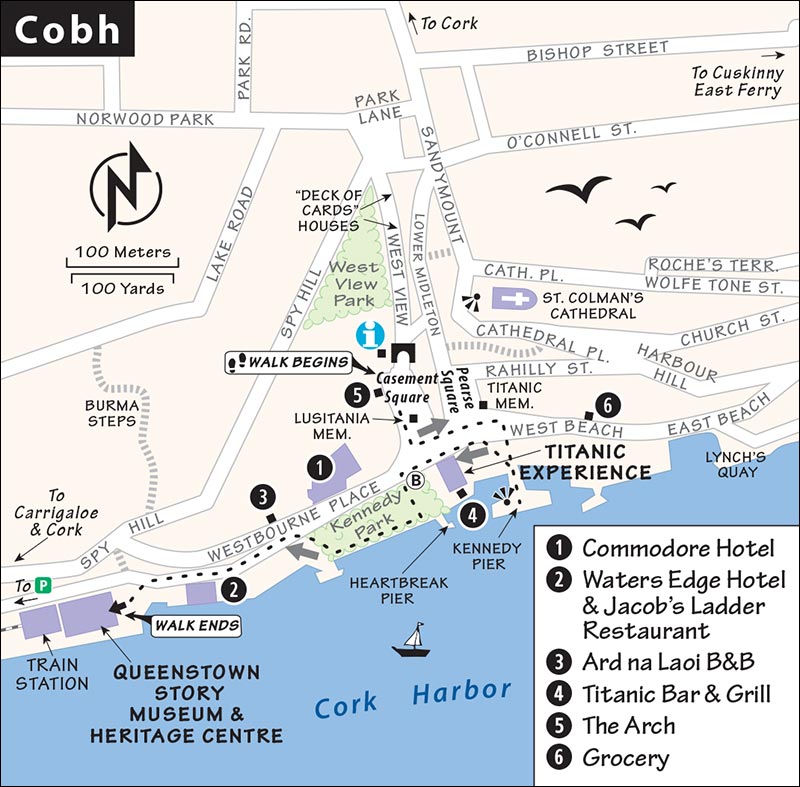
This brief walk orients you to this town and its epic history. It takes only about 15 minutes.
• Begin on the main square in the heart of town.
Casement Square: Look around. You’re surrounded by cheerfully painted storefronts, and the TI is at the top of the square (tucked under the arch of the former town hall, on the left). The square is dominated by the Lusitania Memorial—a pillar with two sad-looking men at the base and an angel watching over them. The Lusitania, a passenger steamer en route from New York City to Liverpool, was sunk by a German U-boat just offshore from nearby Kinsale on May 7, 1915. More than a thousand perished; survivors, and the bodies of victims, were brought ashore here in Cobh. (For more on the Lusitania, see here of the “Kinsale” section, earlier.)
• Now walk toward the water, crossing the street and veering left to go out on the concrete pier between two small harbors. Along the way, you’ll pass a statue of Sonia O’Sullivan (a record-breaking track-and-field athlete from Cobh) and a good gelato stand.
John F. Kennedy Pier: Head out to the tip of this pier and look back for the classic Cobh town view: The oversized, Neo-Gothic St. Colman’s Cathedral towers over a rainbow of colorful housefronts and bobbing boats. Until the late 1700s, this was a humble fishing settlement called simply “The Cove” (which is how you pronounce “Cobh”). But when Kinsale’s strategic harbor began to silt up, Cobh was developed rapidly to accommodate transatlantic steamships.
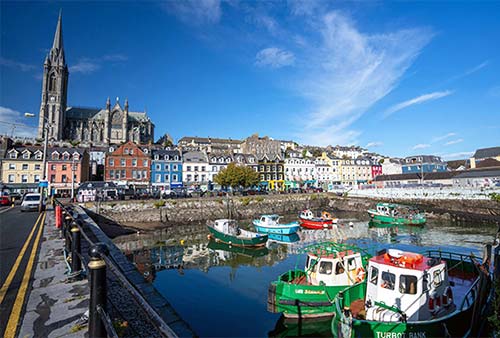
Queen Victoria’s visit in 1849 cemented this boomtown’s newfound status; work on the giant cathedral—which seems to assert Cobh’s worthiness as a major city—began less than two decades later. (For a closer look at the cathedral, it’s a steep 10-minute walk up from here; see “Sights in Cobh,” later.) Around the same time the cathedral was being built, the Cunard Line and the White Star Line both established offices here, specializing in transporting Irish emigrants to the New World.
Cobh was also militarily strategic, as the British navy fortified several offshore islands. From this pier, sightseeing boats head to Spike Island, which over its 1,300-year history has held a monastery, a military fortress, and a prison (www.spikeislandcork.ie).
• Head back down the pier, turn left, and walk to the...
White Star Line Building: On the morning of April 11, 1912, 123 passengers checked in at this building and boarded tenders to the Titanic on her fateful maiden voyage to New York. Today the building houses the Titanic Experience (described later under “Sights in Cobh”). As you can only visit the museum on a guided tour, check in at the ticket desk now to see when the next one’s leaving. The recommended Titanic Bar, below the museum, is a good spot for a drink or meal (see “Sleeping and Eating in Cobh,” later).
• Continue past the museum and through the white gate into the big, beautiful, flag-lined waterfront park.
John F. Kennedy Park: Before strolling around the park, head out to its left corner, overlooking the water. Directly in front of the Titanic Experience are decayed pilings surviving from Heartbreak Pier—where tenders ferried those final passengers to the Titanic before she set out. It also represents the passengers’ last chance to turn back. One lucky surviving crewman with a premonition did just that. Another passenger—a priest—got off the Titanic at Cobh, as scheduled. His photos of the early legs of the voyage are a priceless historical reference.
Now stroll the length of this beautiful park. Like many other places in Ireland—including the pier we were just on—this was renamed for the first Irish Catholic US president, who earned great loyalty here when he visited Ireland just months before his assassination. The park is filled with memorials, kid-friendly gurgling fountains, old cannons, and ample benches. Its centerpiece is a giant bandstand, originally built in 1900.
• Feel free to finish your walk right here. But to see one more sight, go to the far end of the park, head up the staircase, and follow the street with the water on your left (taking the downhill fork in front of the old Methodist church). After just two minutes, you’ll emerge at Cobh’s antique Victorian Age train station, right along the water.
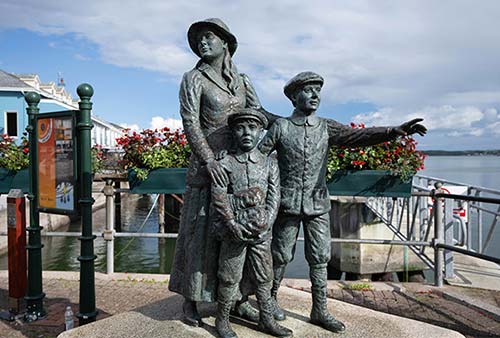
Cobh Heritage Centre: Before heading inside the station, look for the statue of Annie Moore and her two young brothers (along the water, 25 yards from the front door). She emigrated from Cobh and was the first person to be processed through Ellis Island when it opened on January 1, 1892—yet another reminder of how this small port city was Ireland’s gateway to the world.
To finish our walk, step into the Heritage Centre, filling the old train station (c. 1890). Inside, you’ll find a tourist information point (with free maps), WCs, a café, and the entrance to The Queenstown Story, a somewhat jumbled collection of exhibits about this city’s interesting history (described later, under “Sights in Cobh”).
Sights in Cobh
▲The Titanic Experience
It’s stirring to think that this modest little port town was the ship’s final anchorage—and the last chance to get off. Occupying the former White Star Line building where the Titanic’s final passengers boarded, this compact museum packs a decent punch as it recounts the story of the ship and its final moments. The exhibit can only be visited on a one-hour guided tour.
Cost and Hours: €12, daily 9:00-18:00, Oct-April 10:00-17:30, tours typically depart 2-4/hour, last tour departs one hour before closing, Casement Square, +353 21 481 4412, www.titanicexperiencecobh.ie.
Visiting the Museum: On the tour, you travel room to room with your host, the ship’s fourth mate, in audiovisual form. He meets you at the boarding dock, full of pride in the new vessel. He joins you in replicas of a posh first-class cabin and a no-frills third-class cabin before his commentary is interrupted by the sound of ice tearing at the hull. You then enter an exhibition room featuring an animation that silently depicts the ship sinking in its steel-twisting, slow-motion ballet to the bottom (settling as two crunched hulls 600 yards apart and 12,000 feet deep).
The last stop is a room highlighting the luxurious ship’s innovative firsts. It was one of the first equipped with a wireless “Marconi room” to send messages from sea to shore—or to other ships. Titanic was the first ever to issue an SOS message by Morse code. Another wall explains in grim detail the effects of hypothermia on the human body.
Before you leave, check out the list of 123 passengers who boarded the Titanic in Cobh. Your entry ticket has one of these passenger’s names on it. See if you survived (you’ve got about a one-in-three chance).
St. Colman’s Cathedral
A hike up to this gigantic, Neo-Gothic landmark rewards you with a fine view over the town and its port. Completed in 1919, it sits upon a massive, buttressed terrace, dominating the town’s skyline. From in front of the church, you’ll see the colorful, pointy housefronts of West View street, climbing steeply up the hill—nicknamed “the deck of cards.” Higher up perches the genteel, white, curved row of houses from the 1860s, called “The Crescent.” While the view is the main draw, it’s also worth stepping inside the soaring interior to appreciate the grand architecture.
Cost and Hours: Free, daily 8:00-18:00.
Getting There: For the most direct route from Casement Square (in the heart of town), head a block over to Pearse Square. At its top-left corner, go steeply up narrow Midleton Street, and watch for the cathedral stairs on your right. Climbing these, you’ll twist around the bottom of the terrace, then back up to the church level.
The Queenstown Story
Filling a harborside Victorian train station, this museum is an attempt to make the city’s history come to life. While it’s overpriced and a bit dated, it does cover some interesting topics—the famine, Irish emigration, Australia-bound prison ships, the sinking of the Lusitania, and the ill-fated voyage of the Titanic. That said, the museum is weak on actual historical artifacts. It reminds me of a big history picture book with the pages expanded and tacked on the wall.
Cost and Hours: €13.50, includes audioguide, daily 9:30-18:00, shorter hours Oct-May, last entry one hour before closing, Cobh Heritage Centre, handy café, +353 21 481 3591, www.cobhheritage.com.
Nearby: Those with Irish roots to trace can use the Heritage Centre’s genealogy search service, located right across from the Queenstown Story ticket booth. Since Cobh was the primary Irish emigration port, this can be a great place to start your search (€80/hour consultation and research assistance by appointment only, must book ahead at www.cobhheritage.com). See the “Irish Genealogy” sidebar in the Practicalities chapter for more tips on researching your Irish heritage.
Sleeping and Eating in Cobh
Sleeping: These hotels are all centrally located near the harbor, a five-minute walk from the Queenstown Story.
$$$ Commodore Hotel is a grand 170-year-old historic landmark with 46 rooms. This place was once owned by the Humbert family, wealthy Germans who opened it up to Lusitania refugees after the 1915 sinking. Its high-ceilinged rooms creak with Victorian character (elevator, Westbourne Place, +353 21 481 1277, www.commodorehotel.ie, info@commodorehotel.ie).
$$$ Waters Edge Hotel, located 50 yards from the Queenstown Story, has 19 bright, modern rooms and a pleasant harbor-view restaurant (Yacht Club Quay, +353 21 481 5566, www.watersedgehotel.ie, info@watersedgehotel.ie).
$$ Ard na Laoi B&B (meaning, roughly, “Overlooking the River Lee”) is a friendly place with five fresh rooms in a great central location (cash only, 15 Westbourne Place, +353 21 481 2742, www.ardnalaoi.ie, info@ardnalaoi.ie, Michael O’Shea).
Eating: $$ Titanic Bar & Grill, sunken under the Titanic Experience, has fun outdoor seating on fine days (daily). I also like $$ Jacob’s Ladder restaurant in the Waters Edge Hotel, with another great outdoor deck option (daily). For something trendier, $$ The Arch is a hip café/wine bar right on the main square, serving good sandwiches at lunch, and wine and charcuterie boards at dinner (daily, 5 Casement Square, www.thearch-cobh.com). For picnic fixings, there’s the Centra Market, facing the water on West Beach Street (daily).
Cobh Connections
BY TRAIN
Cork’s Kent Station has frequent short-hop service to Cobh and Midleton, which are on separate lines (hourly, usually departs on the hour and returns on the half-hour, 25 minutes, www.irishrail.ie).
ROUTE TIPS FOR DRIVERS
Between Cobh and Cork or Waterford: If you’re driving to Cobh from either Cork or Waterford, exit N-25 about 8 miles (13 km) east of Cork, following little R-624 over a bridge, onto the Great Island, and directly into Cobh.
Between Cobh and Kinsale: The 30-mile (50 km) drive takes 45 minutes and involves navigating Cork city traffic on well-marked roads. Driving from Cobh to Kinsale, you’ll head north out of Cobh on R-624 and get on N-25 heading west, then follow the airport signs (with a little jet airplane icon) the whole way. You’ll pass Cork Airport, which is conveniently located on R-600 leading south straight into Kinsale.
Near Kinsale and Cobh
The following sights are north of Kinsale and Cobh in various directions; all are under an hour’s drive and are possible stops if you’re on your way to another destination. For locations, see the “Kinsale & Cobh” map near the beginning of this chapter.
BETWEEN WATERFORD AND KINSALE
If you’re driving from Waterford (see the Kilkenny & Waterford chapter) to Cobh and Kinsale, you can easily visit this sight just off N-25.
▲Old Midleton Distillery
Sometime during your Ireland trip, even if you’re not much of a drinker, you’ll want to tour a whiskey distillery. Of the major distillery tours (this one, Bushmills in Northern Ireland, or one of the distilleries in Dublin), the Midleton experience is the most interesting (the “Experience” tour offers the best overview; skip the overpriced “Behind the Scenes” option). After a 10-minute video, you’ll walk with a guide through a great old 18th-century plant on a 45-minute tour, see waterwheel-powered crankshafts and a 31,000-gallon copper still—the largest of its kind in the world, and learn the story of whiskey. Predictably, you finish in a tasting room and enjoy a free, not-so-wee glass.
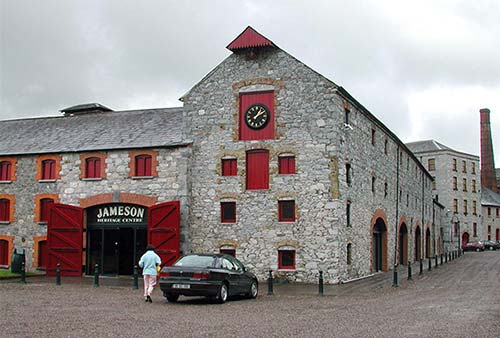
Cost and Hours: €26, daily 10:00-18:00, tours run regularly 11:00-16:00 in summer, fewer in winter, cafeteria, +353 21 461 3594, www.jamesonwhiskey.com.
Getting There: It’s 12 miles (19 km) east of Cork in Midleton, about a mile off N-25, the main Cork-Waterford road. There’s easy parking at the distillery lot.
BETWEEN KINSALE AND KILLARNEY
If you’re driving between Kinsale or Cobh and the Ring of Kerry (see next chapter), you can easily visit these sights (listed from east to west).
Blarney Stone and Castle
The town of Blarney is of no importance, and the 15th-century Blarney Castle is an empty hull. It’s only famous as the place of tourist pilgrimage, where busloads line up to kiss a stone on its top rampart and get “the gift of gab.”
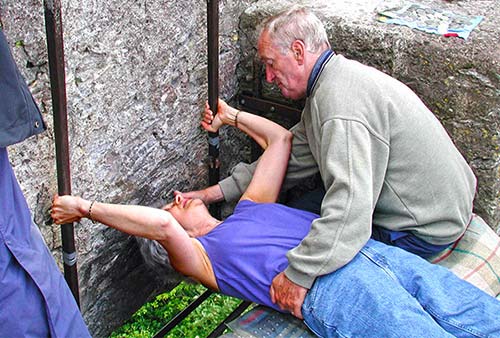
Let me stress: This sight is not recommended. There are far better, less crowded, less tacky ways to spend your time and money. The best thing about coming here is the opportunity to watch a cranky staffer lower lemming tourists over the edge—belly up and head back—to kiss the stone while a camera snaps a photo (available for purchase). After a day of tour groups climbing up here to perform this ritual, the stone can be literally slathered with spit and lipstick.
Cost and Hours: €20 (plus pay parking), daily 9:00-18:00, shorter hours Oct-April, 5 miles (8 km) northwest of Cork, +353 21 438 5252, www.blarneycastle.ie.
Background: The stone’s origin is shrouded in myth (perhaps brought back from the Holy Land by crusaders). The tradition goes back to the late 16th century, when Queen Elizabeth I was trying to plant loyal English settlers in Ireland to tighten her grip on the rebellious island. She demanded that the Irish clan chiefs recognize the Crown, rather than the clan chiefs, as the legitimate titleholder of all lands.
One of those chiefs was Cormac MacCarthy, Lord of Blarney Castle (who was supposedly loyal to the queen). He was smart enough never to disagree with the queen—instead, he would cleverly avoid acquiescing to her demands by sending a never-ending stream of lengthy and deceptive excuses, disguised with liberal doses of flattery (while subtly maintaining his native Gaelic loyalties). In her frustration, the queen declared his endless words nothing but “blarney.”
Visiting the Castle: From the ticket desk (with a queue of its own), it’s about a 10-minute walk through a pretty park, past WCs and a café, to the castle itself—perched on a rocky bluff. Along the trail up to the castle, signs indicate the wait time from that point to the Stone. Even if you don’t care about kissing the Stone, you still have to wait in line to get inside the castle (which, while somewhat striking from afar, is just an empty shell).
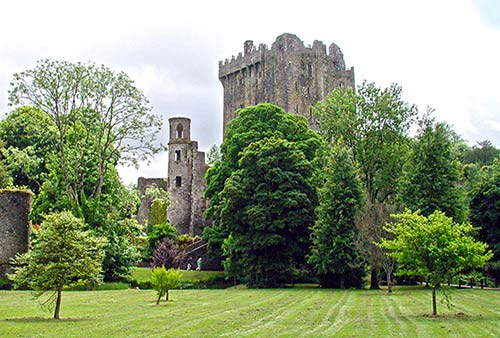
On the plus side, the surrounding grounds, including the fine gardens and lush forested Rock Close, are beautiful and well kept. So if you do get dragged here against your will—by a tour guide or travel partner—then skip the Stone, and instead enjoy the lush gardens.
Béal na Bláth: Michael Collins Ambush Site
Irish history fans may want to make a brief detour en route from Kinsale to Macroom to visit nearby Béal na Bláth (BALE-nuh-BLAH), where dynamic Irish rebel leader Michael Collins was assassinated on August 22, 1922, during the Irish Civil War. The site is not much more than a bend in a country road, with an Irish high cross on a raised platform to mark the spot. But it’s Ireland’s equivalent of Dallas’ infamous “grassy knoll.” (For an engrossing view of this and Collins’ life, see the 1996 Liam Neeson movie Michael Collins.)
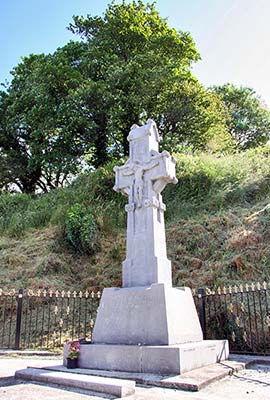
Take a moment to step out of the car and climb the steps onto the fenced platform. Next to the high cross, a plaque with a photo shows the road as it appeared in 1922, with arrows approximating the position of the Collins convoy and the spots from which the ambushers fired.
Dusk was falling as the convoy carrying Collins to Cork came under attack. Collins could have ordered his driver to speed off, but chose instead to stand and fight. The identity of the anti-treaty IRA guerilla who fired the fatal shot (thought to have been an errant ricochet) remains in dispute. Following his death, Collins’ body lay in state for three days at Dublin City Hall, drawing massive crowds. Although his pro-treaty Free State army later won the civil war, it’s likely that modern Irish history would have been much different had Collins lived. While Éamon de Valera directed his country down the “comely maiden at the crossroads” vision, had Collins survived and taken power, Ireland likely would have been more secular and more integrated into the European economy—richer and more mainstream European.
Getting There: Béal na Bláth is just off N-22. About halfway between Cork and Macroom, take R-585 south through the tiny village of Crookstown. From Crookstown, follow Béal na Bláth signs south for about a mile to the ambush site.
Macroom
This busy, one-street market town makes a convenient coffee or lunch stop for those driving between Cork or Kinsale and Killarney. The romanticized gateway where its ruined castle once stood was owned by the father of William Penn (who founded Pennsylvania). It overlooks an entertaining main square, where you’ll find limited parking. The weekly market fills the square with “casual trading” each Tuesday.
Lynch’s Bakery and Coffee Shop (the bright-yellow storefront at the far end of the square) is a welcoming place, with cheap and cheery food and drink—and historic town photos on the walls. The Lynch family has run the bakery since 1869 (say “hi” to Humphrey and his wife Pat; closed Sun). The Next Door Café, in the Castle Hotel (a block from the square on the main street), serves good, fast lunches and made-to-order sandwiches (closed Sun).
Nearby: If Macroom parking is challenging, continue driving west on N-22 another 10 miles to the little hamlet of Ballyvourney, where you’ll find a friendly lunch at the Mills Inn (on right with easy parking behind, daily).