THE ROCK OF CASHEL
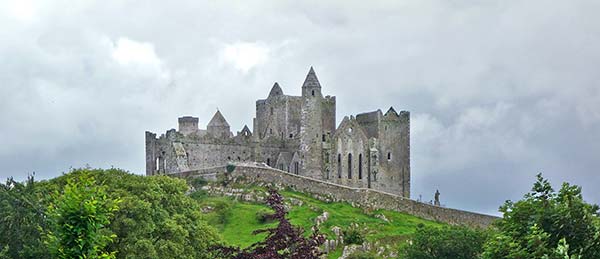
Crowning the fertile Plain of Tipperary, the Rock of Cashel is one of Ireland’s most historic and evocative sights. If you’re heading from Dublin to points west and south, this is the most worthwhile stop—easily rated ▲▲. Not only is it perhaps the most striking and cohesive of Ireland’s many ruined old settlements—it’s also compact, quick to see, and easy for a satisfying visit.
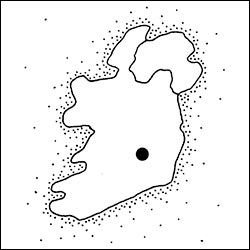
Seat of the ancient kings of Munster (c. AD 300-1100; “Cashel” comes from the word for “castle”), this is where St. Patrick baptized King Aengus in about AD 450. Strategically located and perfect for fortification, the Rock was fought over by local clans for hundreds of years. Finally, in 1101, clever Murtagh O’Brien gave the Rock to the Church. His seemingly benevolent donation increased his influence with the Church, while preventing his rivals, the powerful McCarthy clan, from regaining possession of the Rock. As Cashel evolved into an ecclesiastical center, Iron Age ring forts and thatch dwellings gave way to the majestic stone church buildings enjoyed by visitors today.
The low-key, modern town of Cashel, at the base of the Rock, has some good restaurants and accommodations (see the end of this chapter). While most people stop off at the Rock on their way through, romantics enjoy sleeping here for after-dark views of the floodlit site; you can then tour the Rock early in the morning before it gets crowded.
GETTING THERE
Visiting the Rock of Cashel is easiest for drivers, as it’s just off the M-8 expressway between Dublin and Cork. By public transportation, it’s trickier. Cashel has no train station; the closest one is 10 miles away in the town of Cahir. Buses run from Cashel to Dublin (6/day, 2.5 hours) and Waterford (6/day, 2 hours; bus-train combination also possible via Cahir). Bus info: www.buseireann.ie.
PLANNING YOUR TIME
The Rock of Cashel makes an easy stop about two hours from Dublin if you’re heading toward Kinsale or Kenmare (for the Ring of Kerry); if you’re heading to Dingle, it’s a minor and worthwhile detour (adds about 30 minutes of driving). Or you can side-trip here from Kilkenny (less than an hour each way). If you’re coming from Dublin, note two other sights you’ll drive right past on the way: the Irish National Stud (worthwhile for horse lovers) and the Rock of Dunamase (a “poor man’s Cashel” that’s fun for a quick scramble). Both are covered at the end of the Near Dublin chapter.
A visit to Cashel is quick and can be done in one to two hours. Though there’s a lot to see, the Rock’s five distinct buildings are just a few steps apart. You can get the whole picture in about an hour (best on the official tour, included in your ticket). While pleasant, the town of Cashel is nothing special. Linger before or after your visit, maybe have a meal—or just move on.
Orientation
Cost and Hours: €8, includes guided tour; daily 9:00-17:30, winter until 16:30, last entry 45 minutes before closing; additional €3 ticket required to see the interior of Cormac’s Chapel (as an add-on to the guided tour).
Information: +353 62 61437, https://heritageireland.ie.
Crowd-Beating Tips: Summer crowds flock to the Rock (worst June-Aug 11:00-15:00). Try to plan your visit for early or late in the day. Although you can book tickets online in advance (https://rockofcashel.admit-one.eu), you’re generally fine if you wait to buy them on-site.
Dress Warmly: Bring a coat—the Rock is exposed and often cold and windy.
Tours: The included tour (1-2/hour) offers a good, thorough introduction to the site in 45 minutes; if you pay extra for the interior of Cormac’s Chapel, it adds 15 minutes. Otherwise, set your own pace with my self-guided tour, which covers most of the same information.
Parking: Pay for parking at the machine under the shelter next to the parking lot exit before returning to your car.
Services: Basic WCs are at the base of the Rock next to the parking lot (there are none up on the Rock).
OVERVIEW
From the parking lot, it’s a steep 100-yard walk up to the Rock itself. On this 200-foot-high outcrop of limestone, the first building you’ll pass is the 15th-century Hall of the Vicars Choral, where you can view a few historic rooms. You’ll go on to see an early-Christian cross, a delightful Romanesque chapel, a round tower, and a ruined Gothic cathedral, all surrounded by my favorite Celtic-cross graveyard with views for miles.
The Tour Begins
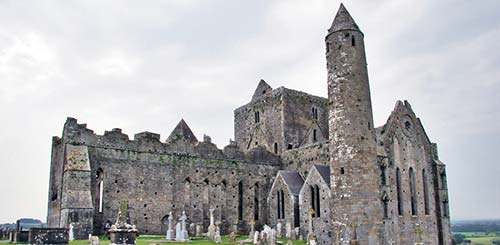
Nowhere else in Ireland can you better see the evolution of Irish devotion expressed in stone. This large lump of rock is a pedestal supporting a compact tangle of three dramatic architectural styles: early Christian (round tower and St. Patrick’s high cross), Romanesque (Cormac’s Chapel), and Gothic (the main cathedral).
• Follow this tour counterclockwise around the Rock. After buying your ticket, hook right and head uphill to the heart of the complex. On your right-hand side, the long stone building is the...
1 Hall of the Vicars Choral
This is the youngest building on the Rock (early 1400s). Step into the great hall, with the big brown tapestry. Vicars were granted nearby lands by the archbishop and lived comfortably here, with a large fireplace and white, lime-washed walls (to reflect light and act as a natural disinfectant that discouraged bugs). Window seats gave the blessedly literate vicars the best light to read by. The furniture is original, but the colorfully ornamented oak timber roof is a reconstruction, built to medieval specifications using wooden dowels instead of nails. The tapestry shows King Solomon with the Queen of Sheba.
The vicars, who formed a sort of corporate body to assist the bishop with local administration, used a special seal to authorize documents such as land leases. You can see an enlarged wooden copy of the seal (hanging above the fireplace), depicting eight vicars surrounding a seated organist. It was a good system—until some of the greedier vicars duplicated the seal for their own less holy purposes, forcing the archbishop to curtail its use.
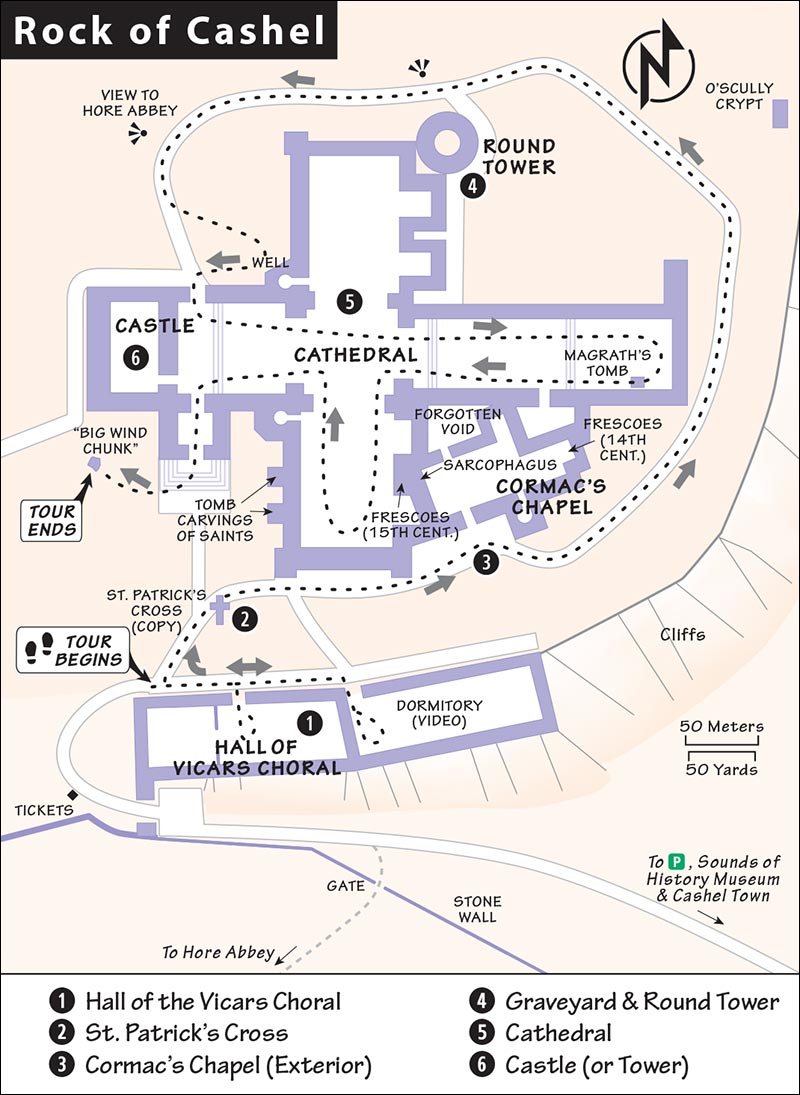
• Exit the hall and head right to the former dormitory, with a 20-minute video (2/hour). The museum, in the cellar of this building, is closed indefinitely; when it reopens, it will likely display the original St. Patrick’s Cross. Assuming it’s closed, you’ll have to settle for a replica of that landmark. It’s standing outside, among all these half-ruined buildings. Leaving the dormitory, veer left to find...
2 St. Patrick’s Cross
St. Patrick baptized King Aengus on the Rock of Cashel in about AD 450. This is a copy of the 12th-century cross carved to celebrate the handing over of the Rock to the Church 650 years after St. Patrick’s visit. Typical Irish high crosses use a ring around the cross head to support its arms and to symbolize the sun (making Christianity more appealing to the sun-worshipping Celts). But instead, this cross uses the Latin design: The weight of the arms was supported by two vertical beams on each side of the main shaft, perhaps representing the two criminals who were crucified beside Christ (today only one of these supports remains). The massive stone base of the original cross is hollow. Was it a hiding place for valuable religious objects during raids? Or just too heavy to move otherwise?
• Walk about 100 feet slightly uphill along the gravel path beside the cathedral. Roughly opposite the far end of the Hall of the Vicars Choral is...
3 Cormac’s Chapel (Exterior)
As the wild Celtic Christian Church was reined in and reorganized by Rome 850 years ago, new architectural influences from continental Europe began to emerge on the remote Irish landscape. This small chapel—Ireland’s first and finest Romanesque church, constructed in 1134 by King Cormac MacCarthy—reflects this evolution. Imagine being here in the 12th century, when this chapel and the tall round tower were the only stone structures sprouting from the Rock (among a few long-gone, humble wooden structures).
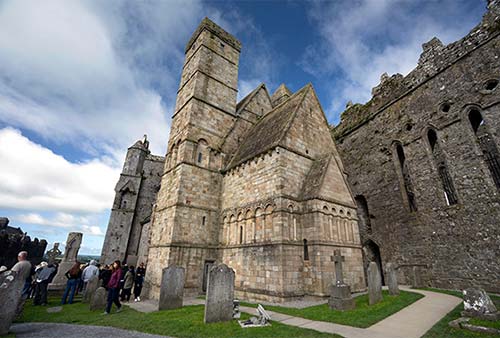
The “new” Romanesque style reflected the ancient Roman basilica floor plan. Its columns and rounded arches created an overall effect of massiveness and strength. Romanesque churches were like dark fortresses, with thick walls, squat towers, and few windows. Irish stone churches of this period (like the one at Glendalough in the Wicklow Mountains) were simple rectangular buildings emphasizing function.
Notice the pointy, steep roof, which is typical of Celtic churches. The filled-in, arched windows make the church appear taller without compromising stability (a technique called “blind arcading”). The horizontal lines, called stringcourses, enhance this effect by suggesting multiple stories.
The two square towers resemble those in Regensburg, Germany, further suggesting that well-traveled medieval Irish monks brought back new ideas from the Continent.
Notice the weathered tympanum above the door. The carved “hippo” is actually an ox, representing Gospel author St. Luke.
The chapel, made of porous local sandstone, had been severely compromised by centuries of soggy Irish climate. After an extensive process to dry it out, it’s now open to visitors only as an add-on to the regular guided tour. If you didn’t buy this at the ticket desk when you arrived, you can ask about it now. Otherwise, peek in the glass door of the chapel, and move on.
• Facing the door of the chapel, turn right and tiptoe through the tombstones around the east end of the cathedral to the base of the round tower.
4 Graveyard and Round Tower
This graveyard is nearly full. (The three remaining slots were promised to local families in a lottery decades ago.) The 20-foot-tall stone shaft at the edge of the graveyard, marking the O’Scully family crypt, was once crowned by an elaborately carved Irish high cross—destroyed during a lightning storm in 1976. (One of the O’Scully descendants in the US is currently fundraising to rebuild it.) The fortified wall dates from the 15th century, when the riches of this outpost merited a little extra protection.
Look out over the Plain of Tipperary. Its rich soil makes it Ireland’s most fertile farmland and earns it the nickname “Golden Vale.” In St. Patrick’s time, it was covered with oak forests. From the corner of the church, beyond the fortified wall on the left, you can see the ruined 13th-century Hore Abbey dominating the fields below (free, always open and peaceful).
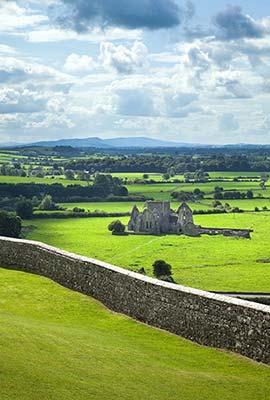
Gaze up at the 90-foot-tall round tower, the first stone structure built on the Rock after the Church took over in 1101. The shape of these towers is unique to Ireland, and they always sit apart from buildings (never attached). Though many visitors assume that these towers served as a “keep”—a place to hide in case of invasion—they were instead used primarily as bell towers and lookout posts. The tower stands 92 feet tall, with walls more than three feet thick. The doorway, which once had a rope ladder, was built high up, not only for security, but also because having it at ground level would have weakened the foundation of the top-heavy structure. The interior once contained wooden floors connected by ladders, and served as safe storage for the monks’ precious sacramental treasures. The tower’s stability is impressive when you consider its age, the winds it has endured, and the shallowness of its foundation (only five feet below present ground level).
Continue walking around the cathedral’s north transept, noticing the square “put-log” holes in the exterior walls. During construction, wooden scaffolding was anchored into these holes. After the structure was completed, the builders simply sawed off the scaffolding, leaving small blocks of wood embedded in the walls, which were plastered over. With time, the blocks rotted away, and the holes became favorite spots for birds to build their nests.
Continue walking around behind the building. When you’re almost to the cathedral entrance, find the small well (in the corner on the left, built into the wall). Its stone lip is groovy from ropes after centuries of use. Without this essential water source, the Rock could never have withstood a siege and would not have been as valuable to clans and clergy. In 1848, a chalice was dredged from the well, likely thrown there by fleeing medieval monks intending to survive a raid. They didn’t make it. (If they had, they would have retrieved the chalice.)
• Now enter the...
5 Cathedral
Traditionally, churches face east toward Jerusalem and the rising sun. Because this cathedral was squeezed between the preexisting chapel, round tower, and drinking well, the builders were forced to improvise by giving it a cramped nave and an extra-long choir (where the clergy gathered to celebrate Mass).
Built between 1230 and 1290, the church features pointed arches and high, narrow windows that proclaim the Gothic style of the period (and let in more light than earlier Romanesque churches). Walk under the central bell tower and look up at the rib-vaulted ceiling. The hole in the middle was for a rope used to ring the church bells. The wooden roof is long gone. When the Protestant Lord Inchiquin (who became one of Oliver Cromwell’s generals) attacked the Catholic town of Cashel in 1647, hundreds of townsfolk fled to the sanctuary of this cathedral. Inchiquin packed turf around the exterior and burned the cathedral down, massacring those inside. (The roof was rebuilt, but not for long; by 1740, after the bishop had moved out and the building was barely in use, it was removed to avoid paying a “roof tax.”)
Ascend the terraces at the choir end of the cathedral, where the main altar once stood. Stand on the gravestones (of the 16th-century rich and famous) with your back to the east wall (where the narrow windows have crumbled away) and look back down toward the nave. The right wall of the choir is filled with graceful Gothic windows, while the solid left wall hides Cormac’s Chapel (which would have blocked most sunlight). The line of stone supports on the left wall once held the long, wooden balcony where the vicars sang. Closer to the altar, high on the same wall (directly above the pointed doorway), is a small, rectangular window called the “leper’s squint”—which allowed unsightly lepers to view the altar during Mass without offending the congregation. (Notice that this opening becomes invisible as you move to the back of the nave.)
The grand wall tomb on the left contains the remains of archbishop Miler Magrath, the “scoundrel of Cashel,” who lived to be 100. From 1570 to 1622, Magrath was the Protestant archbishop of Cashel who simultaneously profited from his previous position as Catholic bishop of Down. He married twice, had lots of kids, confiscated the ornate tomb lid here from another bishop’s grave, and converted back to Catholicism on his deathbed.
• Walk back down the nave and turn left into the south transept.
Peek into the modern-roofed wooden structure against the wall on your left. It’s protecting 15th-century frescoes of the Crucifixion of Christ that were rediscovered during renovations in 2005. Frescoes are rare in Ireland because of the perpetually moist climate. (Mixing pigments into wet plaster worked better in dry climates like Italy’s.) Once vividly colorful, then fading over time, these frescoes were further damaged during and after the Reformation, when Protestants piously whitewashed them. Today, these scant echoes are patchy and hard to make out.
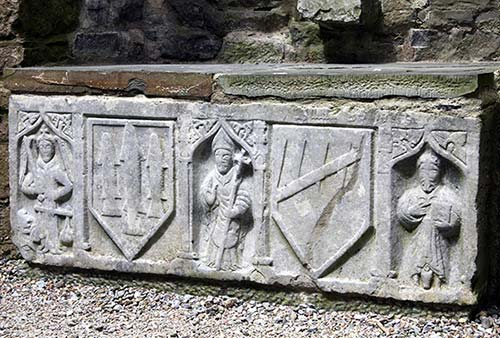
On the opposite side of this transept, in alcoves built into the wall, enjoy the wonderful carvings of early-Christian saints lining the outside walls of tombs (look down at shin level).
• Exit the cathedral opposite where you entered. You’ll pop out near St. Patrick’s Cross.
6 Castle (or Tower)
Stand beside the huge chunk of wall debris. (No, this is not “the rock” of Cashel.) Try to picture where it might have perched in the ragged puzzle of ruins above. This end of the cathedral was converted into an archbishop’s castle in the 1400s (shortening the nave even more). Looking high into the castle’s damaged top floors, you can see the bishop’s residence chamber and the secret passageways that were once hidden inside the thick walls. Lord Inchiquin’s cannons weakened the structure during the 1647 massacre, and in 1848, a massive storm (known as “Night of the Big Wind” in Irish lore) flung the huge chunk next to you from the ruins above.
In the mid-1700s, the Anglican Church transferred cathedral status to St. John’s in town, and the archbishop abandoned the drafty Rock for a more comfortable residence, leaving the ruins that you see today. But the Rock of Cashel stands as a testament to the rich and complicated history of Ireland.
Town of Cashel
The huggable town at the base of the Rock affords a good break on the long drive from Dublin to Dingle (TI open daily 9:30-17:30, closed Sat-Sun off-season, may be closed at lunch). The Heritage Centre, next door to the TI, presents a modest six-minute audio explanation of Cashel’s history around a walled town model. Parking is pay-and-display.
SIGHTS IN CASHEL
Sounds of History Museum
Fans of Irish music will enjoy this small museum dedicated to the story of Ireland’s ancient and traditional sounds. (It’s in the Brú Ború Cultural Centre, below the Rock of Cashel parking lot; look for the stairs by the statue of the three blissed-out dancers.) The exhibit starts with a video tracing the physical evolution of Cashel from ancient ring fort to grand religious complex. Then come displays about ancient wind instruments. At the end, a small theater shows a 15-minute film introduction to Ireland’s beloved traditional music scene.
Cost and Hours: €5, Mon-Fri 9:00-17:00, closed Sat-Sun—except open Sat in summer, +353 62 61122, www.bruboru.ie.
Performances: If sleeping in Cashel in the summer, ask about musical performances in the Brú Ború Centre’s theater (2/week).
SLEEPING IN CASHEL
The town of Cashel has a small number of high-quality, well-run accommodations. If you spend the night, you’ll be treated to beautifully illuminated views of the ruins.
$$$ Bailey’s Hotel is Cashel’s best boutique hotel, in a fine Georgian townhouse (from 1709) right in the town center. Its 20 refurbished rooms are large, inviting, and well appointed—and perched above a great cellar-pub restaurant (parking, 42 Main Street, +353 62 61937, www.baileyshotelcashel.com, info@baileyshotelcashel.com).
$$ Cashel Lodge is a well-kept rural oasis housed in an old stone grain warehouse, a 10-minute walk from the Rock near the Hore Abbey ruins. Its seven comfortable rooms combine unpretentious practicality with Irish country charm. Guests have a ringside seat for beautiful views of the Rock lit up at night (camping spots, parking, likely no breakfast, Dundrum Road R-505, +353 62 61003, https://cashel-lodge.com, info@cashel-lodge.com, Tom and Brid O’Brien).
$ Rockville House, 100 yards from the Rock, is a traditional place run by gentleman owner Patrick Hayes. The house itself has six fine rooms, and its old stable house, lovingly converted by Patrick, has five more (family room, 10 Dominic Street, +353 62 61760, rockvillehse@eircom.net).
EATING IN CASHEL
Reserve ahead for dinner in high season—as options are limited, restaurants tend to book up.
Lunch near the Rock: For basic soup-and-sandwich lunches, try $ Granny’s Kitchen, a tiny place just past the end of the parking lot at the base of the Rock (daily).
Fine Dining: $$$$ Chez Hans, filling an old stone church, is good for a splurge dinner (reserve ahead, open Fri-Sun for dinner only, closed Mon-Thu, a block below the Rock, +353 62 61177, www.chezhans.net).
In Town: Next door to the TI, $ Feehan’s Bar is a convenient stop for a pub grub lunch or dinner (daily, +353 62 61929). $$ Cellar Bar hides beneath Bailey’s Hotel and serves satisfying dishes (daily, +353 62 61937). SuperValu is the town’s supermarket (daily, 30 Main Street).