REPUBLIC OF IRELAND
The resilient Irish character was born of dark humor, historical reverence, and a scrappy, “We’ll get ’em next time” rebel spirit. The Irish people maintain an unsinkable and optimistic belief in the future.
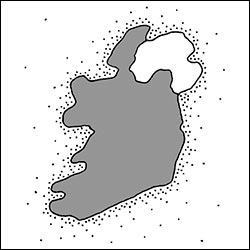
The modern Irish state has existed since 1922, but its inhabitants proudly claim their nation to be the only contemporary independent state to sprout from purely Celtic roots (sprinkled with a few Vikings, Anglo-Normans, and shipwrecked Spanish Armada sailors to spice up the gene pool). The Romans never bothered to come over and organize the wild Irish. Through the persuasive and culturally enlightened approach of early missionaries such as St. Patrick, Ireland is one of the very few countries to have initially converted to Christianity without much bloodshed. The religious carnage came a thousand years later, with the Reformation. Irish culture absorbed the influences of Viking raiders and Norman soldiers and traders, eventually enduring the 750-year shadow of English domination (1169-1922).
English rule (many Irish would say “oppression”) looms large over much of the Irish experience. It caused Ireland to miss some pivotal European events, including the Industrial Revolution (which, ironically, began in England). And the legacy of that time continued to the modern day: For most of the 20th century, Ireland was an isolated, agricultural economic backwater. Things began to turn around when Ireland joined the European Community (precursor to the EU) in 1973, and really took off during the Celtic Tiger boom years (1995-2007), when American corporations saw big tax and labor advantages in locating here. Ireland’s “Silicon Bog” became the European base for companies like IBM, Intel, Microsoft, Apple, Facebook, and Google.
Today, the Republic of Ireland attracts both expatriates returning to their homeland and new foreign investment. As an officially English-speaking eurozone country, Ireland makes an efficient base from which to access the European marketplace (especially with the UK’s departure from the EU). About a third of the Irish population is under 25 years old, leading many high-tech and pharmaceutical firms to locate here and take advantage of this young, well-educated labor force. More Viagra is made in Ireland than in any other country.
Other famous exports from the Republic of Ireland include rock and contemporary music (U2, Thin Lizzy, Hozier, Imelda May, the Corrs, Sinéad O’Connor, Enya), traditional Irish music (the Chieftains, Dubliners, the Clancy Brothers), opera (the Irish Tenors and John McCormack), dance (Riverdance), trivia (Guinness World Records), crystal (Waterford), beer (Guinness), iconic authors (Jonathan Swift, W. B. Yeats, James Joyce, George Bernard Shaw, Samuel Beckett, and Oscar Wilde), and a slew of remarkable actors (Saoirse Ronan, Colin Farrell, Cillian Murphy, Brendan and Domhnall Gleeson, Michael Fassbender, Pierce Brosnan, Peter O’Toole, and many more).
Until recently, Ireland was one of the most ethnically homogenous nations on earth. But the Celtic Tiger economy changed all that, when the country became a destination for immigrants—mostly from Africa, Asia, and the newer EU nations. Central and Eastern Europeans (especially Poles) came in search of higher pay...a reversal from the days when many Irish fled to start new lives abroad. A recent census found that more than 12 percent of Ireland’s population was born elsewhere.
Everyone here speaks English, though you’ll encounter Irish Gaelic (commonly referred to as “Irish”)—especially if you venture to the western fringe of the country. The Irish love of conversation shines through wherever you go. All that conversation is helped along by the nebulous concept of Irish time, which never seems to be in short supply. Small shops post their hours as “9:00ish ’til 5:00ish.” The local bus usually makes a stop at “10:30ish.”
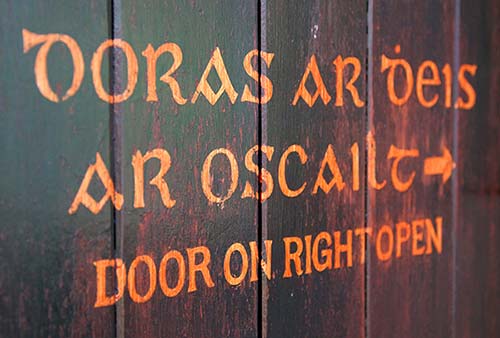
The warm welcome you’ll receive has its roots in ancient Celtic laws of hospitality toward stranded strangers. You’ll see the phrase “Céad míle fáilte” in tourism brochures and postcards throughout Ireland—it translates as “a hundred thousand welcomes.”
Founded in the late 1800s to preserve and promote Gaelic culture, the Gaelic Athletic Association (GAA) operates popular Irish hurling and football (not to be confused with soccer) leagues. Other sports that people closely follow in the Republic of Ireland include rugby, bike racing, horse racing, and dog racing. And it’s hard to go 25 miles in Ireland without running into a golf course (there are more than 300 on the island).
Long a predominant cultural force, the influence of the Catholic Church is less apparent these days. Thirty percent of Irish weddings are now civil ceremonies, and weekly church attendance in Ireland is below the US average, having decreased dramatically over the years. (It would be even lower if not for the influx of devout Catholic Poles.)
But the Church certainly still plays a part in Irish life. Most Irish are culturally Catholic, and shrines to the Virgin Mary still grace rural roadsides. The average Irish family spends almost €500 on lavish celebrations for the First Holy Communion of each child. And the national radio and TV station, RTE, pauses for one minute at 18:00 to broadcast the chimes of the Angelus bells—signaling the start of Catholic devotional prayers. The Irish say that if you’re phoning heaven, it’s a long-distance call from the rest of the world, but a local call from Ireland.
Official Name: The Republic of Ireland (a.k.a. “Ireland” or, in Irish, Éire).
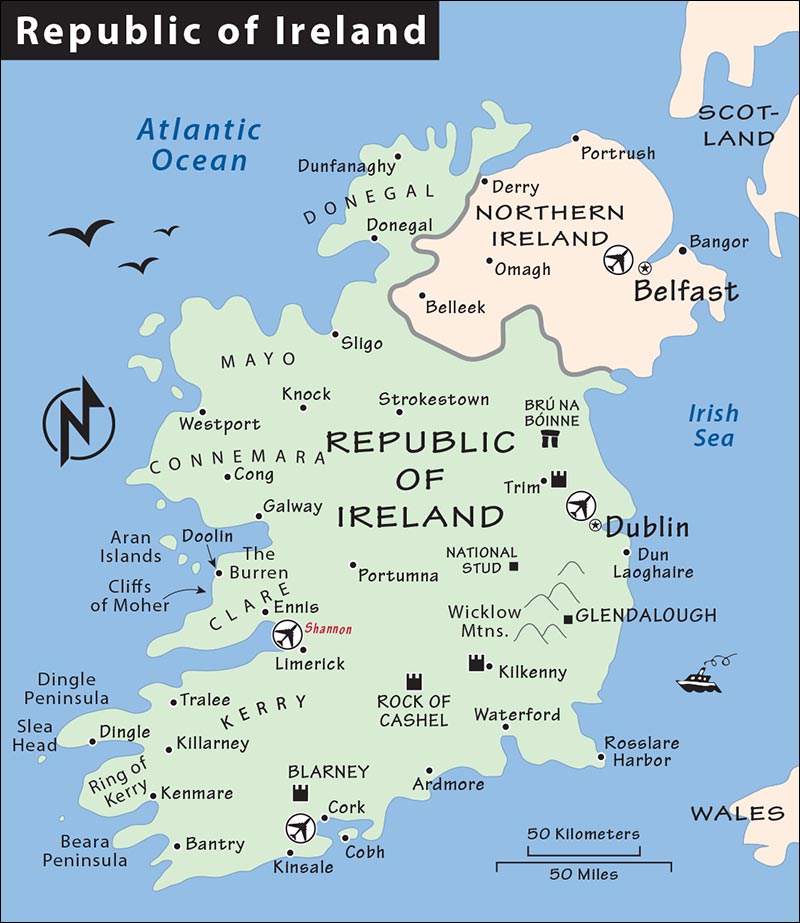
Size: 27,000 square miles—half the size of New York State—it occupies the southern 80 percent of the island of Ireland. The country is small enough that radio broadcasts cover traffic snarls nationwide.
Population: 5.3 million people.
Geography: The isle is mostly flat, ringed by a hilly coastline. The climate is moderate, with cloudy skies about every other day.
Latitude and Longitude: 53˚N and 8˚W. The latitude is equivalent to Alberta, Canada.
Biggest Cities: The capital of Dublin (593,000 people) is the only big city; about two in five Irish live in the greater Dublin area (1.3 million). Cork has about 220,000 people, Limerick 100,000, Galway 80,000, and Waterford 55,000.
Economy: The gross domestic product is $516 billion, and the GDP per capita is $102,500—one of Europe’s highest. Major moneymakers include tourism and exports (especially to the US and UK) of machines, medicine, Guinness, glassware, crystal ware, and software. Traditional agriculture (potatoes and other root vegetables) is fading fast, but dairy still does well.
Government: The elected president appoints the Taoiseach (TEE-shock), or prime minister, who is nominated by Parliament. The Parliament consists of the 60-seat Senate, chosen by an electoral college, and the House of Representatives, with 160 seats apportioned after the people vote for a party. Major parties include Fianna Fáil, Fine Gael, and Sinn Féin—the political arm of the (fading) Irish Republican Army. Ireland is divided into 30 administrative counties (including Kerry, Clare, Cork, Limerick, and so on).
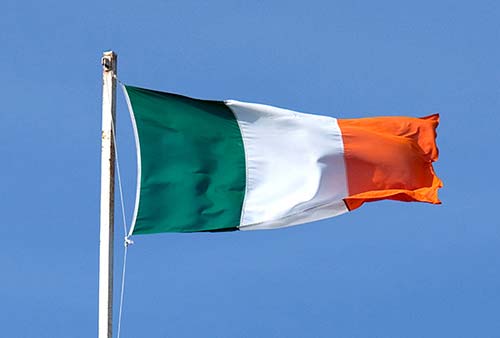
Flag: The Republic of Ireland’s flag has three vertical bands of green, white, and orange.
The Average Irish: A typical Irish person is 5'7", 38 years old, has 1-2 kids, and will live to be 81. An Irish citizen consumes nearly 5 pounds of tea per year and spends $6 on alcohol each day. Irish Gaelic is spoken by 40 percent (but only 5 percent of Irish people are fluent in the Irish language, mostly in pockets called Gaeltachts along the country’s west coast). Nearly 70 percent are nominally Catholic, though only one in three attends church.
But modern sensibilities have come to once-traditional Ireland. In 2004, smoking was banned in all Irish workplaces (including pubs). The Irish were the first nation in the world to enact such a comprehensive law. In the past decade, the Irish Department of Health has reported a 30 percent reduction in strokes and a 25 percent reduction in heart disease.
Keeping up this progressive trend, in 2015 Ireland became the first country to legalize marriage equality by popular vote. The Republic in 2017 selected as its prime minister (known as the Taoiseach, meaning “Chieftain”) the 38-year-old Leo Varadkar, a first-generation son of an Indian immigrant. A medical doctor, the openly gay Varadkar led a nation that, only a generation earlier, officially considered homosexuality unlawful as well as immoral. A 2018 referendum legalized abortion in limited cases, and a 2019 referendum made it easier to get a divorce, further distancing Ireland from its conservative, Catholic past.
Over time, relations between Ireland and former colonial master Britain have improved. In 2011, Queen Elizabeth II became the first British monarch to visit the Republic of Ireland since Ireland’s 1921 split from the United Kingdom, which occurred during her grandfather’s reign. Her four-night visit (to Dublin, Cashel, and Cork) unexpectedly charmed the Irish people and did much to repair old wounds between the two countries, establishing them, in the words of the Queen, as “firm friends and equal partners.”
Brexit, the 2016 referendum in which the UK decided to depart the European Union, presented another hurdle. Many feared that Brexit would require a hard border to separate Ireland, potentially even rekindling the Troubles. But after Brexit was implemented in 2020, free movement throughout the island was allowed to continue. (However, you’ll be asked to show your passport when leaving Ireland by plane or boat, even if going from the Republic to a fellow EU member.)
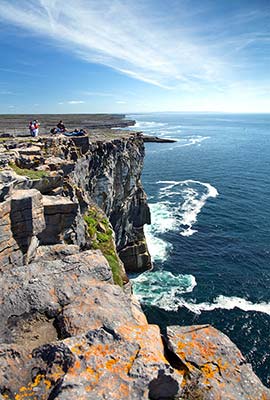
At first glance, most of Ireland’s landscape seems unspectacular, with few mountains higher than 3,000 feet and an interior consisting of grazing pastures and peat bogs. But its seductive beauty slowly grows on you. The gentle rainfall, called “soft weather” by the locals, really does create 40 shades of green—and quite a few rainbows as well. Ancient, moss-covered ring forts crouch in lush valleys, while stone-strewn monastic ruins and lone castle turrets brave the wind on nearby hilltops. Charming fishing villages dot the coast near rugged, wave-battered cliffs.
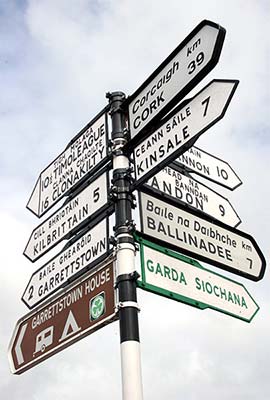
Ireland’s roads have improved—with many slick expressways cutting across the green landscape. But the country is still laced with plenty of humble country lanes, perfect for getting lost in the wonders of Ireland. Slow down to contemplate the checkerboard patterns created by the rock walls outlining the many fields. Examine the colorful small-town shop fronts that proudly state the name of the proprietor. Embrace the laid-back tempo of Irish life.