MUSEUMS NEAR ARNHEM
Netherlands Open-Air Museum • Kröller-Müller Museum
Map: Arnhem Area Transportation
GETTING AROUND HOGE VELUWE NATIONAL PARK
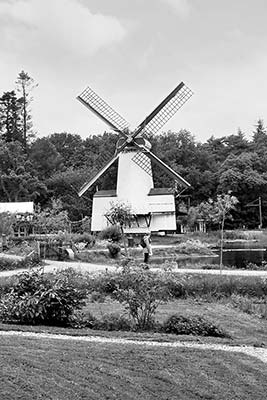
While the city of Arnhem itself is nothing special, it’s close to a pair of fun and worthwhile side trips: the Netherlands Open-Air Museum and the exceptional Kröller-Müller Museum. Of all open-air folk museums in the Netherlands, Arnhem’s—set just within the city limits—feels the most authentic. Its classically Dutch buildings sprawl across rolling hills, with rich details around every corner. Nearby, the Kröller-Müller Museum, located in the middle of Hoge Veluwe National Park, displays a world-class collection of modern art (including rooms full of Van Goghs). It’s also a delight to pedal through the park on free loaner bikes.
PLANNING YOUR TIME
Arnhem, an hour southeast of Amsterdam by train, is doable as a side trip from Amsterdam. Unfortunately, the two nearby museums are far from each other and far from Arnhem’s Centraal station. Both are superb and worth the time and effort, but to see both, either spend the night in the town of Otterlo (recommended) or be prepared for a long day of somewhat rushed sightseeing. Note that the Kröller-Müller Museum is closed on Monday.
By Car: Drivers can visit both museums within a day...and might have time left to park the car and go for a pedal through the national park. Figure just over an hour’s drive from Amsterdam to Arnhem, then about a 20-minute ride into the national park, and an hour back to Amsterdam. For driving directions, see the “Getting There” section for each museum.
By Public Transportation: You can day-trip to either museum by taking a train and bus ride; for specifics, see “Getting There” in the individual sight listings and the “Arnhem Area Transportation” map on the next page.
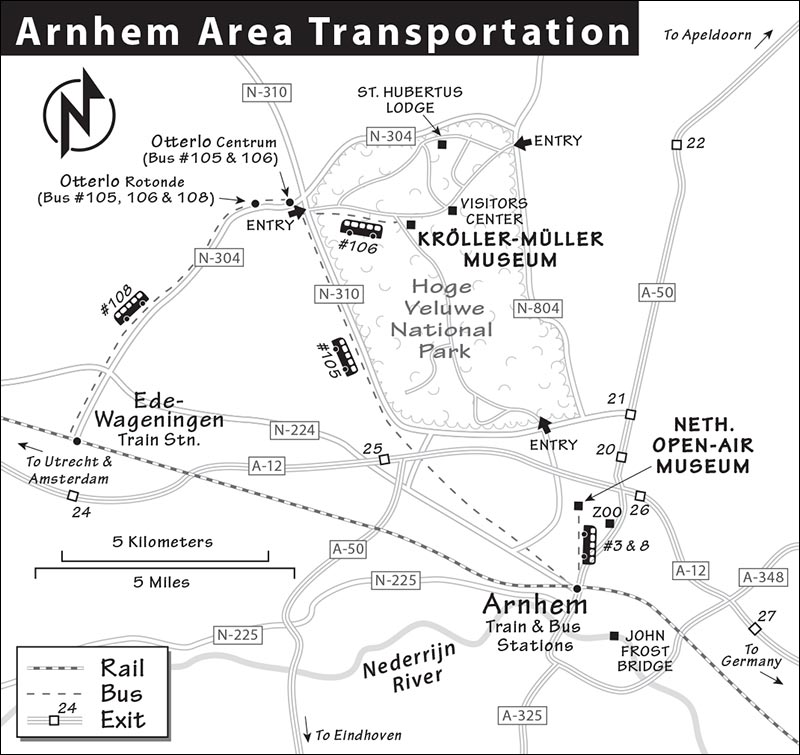
To combine both museums in one long day of sightseeing, you must get an early start. Here’s a basic outline: From Amsterdam Centraal station, catch the train at about 8:00 for the one-hour ride to Arnhem. In Arnhem, hop a bus to the open-air museum to arrive when it opens at 10:00. Leave the museum by 13:00 and catch a bus via Arnhem to Otterlo, near Hoge Veluwe National Park and the Kröller-Müller Museum. In the park, do the museum first, then the visitors center, then wind down your day by biking around the park. Plan on a late return train to Amsterdam from the Ede-Wageningen station (the station nearest the park).
For Overnight Visitors: If you’re spending the night in Otterlo, you can get a later start from Amsterdam, linger at the open-air museum (having left your things in a locker at Arnhem station), relax that evening in Otterlo, and tour the art museum and national park at a leisurely pace the next morning.
Arnhem
Tourists view dreary Arnhem as a transit hub useful only for reaching the open-air museum on its outskirts and the nearby Kröller-Müller Museum and national park. A few hotels line up across from the train station, but I’d rather sleep in charming little Otterlo, near the park entrance (see “Sleeping in Otterlo,” later). Arnhem’s old town—nowhere near as charming as similar towns in the Netherlands—is just across the busy ring road from the train and bus stations. The train station has a helpful transit-information office. Restaurants with outdoor seating cluster around the square called Korenmarkt and, a few steps deeper into the old town, around Jaansplaats.
Tourist Information: Arnhem’s TI is about a 15-minute walk from the train station. Easiest for drivers, it sells city guides and a tourist map that includes the national park and Kröller-Müller Museum (Mon-Sat 10:00-17:00, closed Sun, Kerkplein 1, +31 8 8540 5805, www.visitarnhem.nl).
Sightseeing Pass: The Museumkaart sightseeing pass (see here) covers entry to the Netherlands Open-Air Museum and Kröller-Müller Museum.
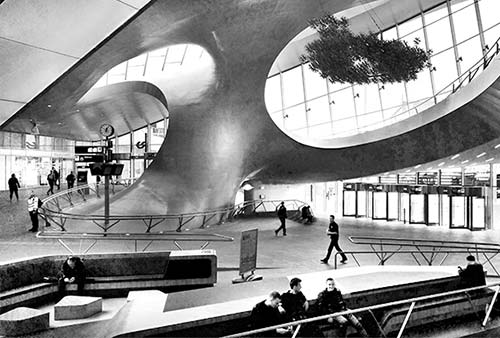
Arrival in Arnhem: Arnhem’s stunning modern train station took nearly 20 years to complete; shipbuilding techniques were used to create an undulating roof with almost no visible supports.
The station has pay WCs and lockers just off the main hall, along with a transit-info office (OV Services) with helpful personnel and kiosks where you can look up bus connections (Mon-Sat 7:00-21:30, Sun from 8:00, www.ns.nl, +31 30 751 5155). You’ll also find a bike-rental shop in the basement near the front of the station (long hours daily).
The bus station, with connections to Otterlo, the Netherlands Open-Air Museum, and the Kröller-Müller Museum and national park, is to the right as you exit the train station in a large parking garage along the busy street. Check the sign near the entry to the bus area to find the departure bay for your bus.
Arnhem Connections: By train to Amsterdam (2/hour, 1 hour, more with transfer in Utrecht), The Hague (4/hour, 1.5 hours, transfer in Utrecht; then another 15 minutes if continuing to Delft).
Netherlands Open-Air Museum
Arnhem has the Netherlands’ first and biggest open-air folk museum, and it’s also one of the best, rated ▲▲. You’ll enjoy a huge park of windmills, old farmhouses and other buildings relocated from throughout the Netherlands, traditional crafts in action, and a pleasant education-by-immersion in Dutch culture. It’s great for families.
GETTING THERE
From Arnhem train station to the museum (called “Nederlands Openluchtmuseum” in Dutch), take either direct and fast bus #8 (direction: Velp Ziekenhuis) or slower bus #3 (direction: Burgers Zoo/Openluchtmuseum—both buses run about 2/hour, 10-25 minutes, get off at the Openluchtmuseum stop). You can also ride a bike (strenuous 20-minute uphill ride) or take a taxi (about €20).
By car from Amsterdam, take A-2 south to Utrecht, then A-12 east to Arnhem. Just before Arnhem, take the Arnhem Nord exit (#26) and follow Openluchtmuseum signs to the museum (pay parking, buy parking ticket when you buy entrance ticket). If driving from Haarlem, skirt Amsterdam to the south on A-9, take A-2 south to Utrecht, and then follow the previous instructions (via A-12).
ORIENTATION
Cost and Hours: €14-22, depending on season and day—best prices online; daily 10:00-17:00, buildings closed Nov-March but village strollable for a reduced fee.
Information: +31 26 357 6111, www.openluchtmuseum.nl.
Getting Around: A free, old-fashioned tram does a lazy counterclockwise circle around the museum grounds, making six stops (marked on park maps).
Eating: The museum has scattered eateries and covered picnic areas. The € café in the entrance pavilion offers the best variety of lunch options (soups, salads, and sandwiches). The rustic € Pancake House (a.k.a. “De Hanekamp Inn”) serves hearty and sweet splittable Dutch flapjacks and more. € Brabant Bar–Café Budel, in the “village” of Budel, resembles an old-fashioned farmhouse café and offers soft drinks and museum-brewed beer.
 SELF-GUIDED TOUR
You could spend the whole day exploring this wonderful open-air museum. But to hit a few highlights, follow this tour. Because the layout of the grounds can be confusing, pick up the good free map at the entry—I’ve used the numbers on that map to help you navigate this tour. Don’t hesitate to dip into any buildings that intrigue you, even if they’re not on this tour—most have brief English explanations outside, and some have English-speaking docents inside. (Ask them questions...that’s their job.) Especially with kids, it would be a shame to do this place in a rush—there’s so much to experience.
• Start in the...
Entrance Pavilion: Consider buying the in-depth English guidebook, and ask about special events and activities, especially for kids. To hit the park, exit the entrance pavilion and cross the tram tracks to walk up the path. You’re likely to see animals in the pasture on your right—if so, take a closer look: They’re rare Dutch breeds, not the high-yield animals used in modern farms. No longer cost-effective, these special animals are raised by the museum as part of its mission to preserve a piece of Dutch history.
• After a few buildings on the left, step inside the one-story...
Staphorst Farmhouse (#1.17, just before the pond): The cows lived on one side of this house from 1750 and the people on the other (notice the claustrophobic cupboard-beds). Along the cow stalls, see the patterns the farmwife would make with fresh sand and seashells each summer to show off family status.
• Nearby, cross the...
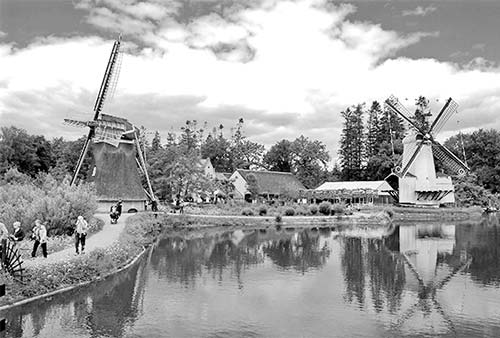
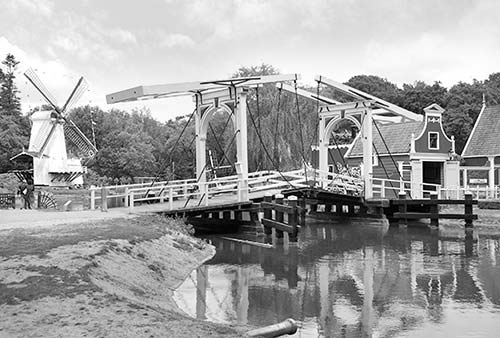
Yellow Drawbridge (#2.13): This 19th-century double drawbridge takes you to perhaps the most scenic part of the park: a pond surrounded by windmills and cabins (inspired by the Waterland area around the town of Marken). Pause on the bridge to look toward the sawmill. You might see kids playing with a small rope-pulled ferryboat.
Continue across the drawbridge into the little village. Along the way are some tempting shops where you can pick up a sweet snack, including a bakery and a Venetian gelato parlor from 1920s Utrecht.
• At the center is the...
Village Square: Here’s your chance to play with toys from the 1800s. See if you can make the “flying Dutchman” fly, or try to ride an original “high-wheeled velocipede” without falling off. On the square is a restaurant (#2.8) specializing in poffertjes (puffy mini pancakes dusted with powdered sugar).
• Behind the poffertje shop, cross the little bridge toward the windmills, pass the boat workshop, and enter the...
Fisherman’s Cottage (#2.6): The black-tarred exterior hides a bright and colorful interior. Notice it has a rope-controlled smoke hatch, rather than a chimney. Wooden cottages like these were nicknamed “smokehouses.” In front of the cottage is the boatyard, where vessels could be pulled out of the water to scrape off the barnacles.
• Backtrack through the village square, then continue on to the...
Laundry (#2.23, on the right): Inside, an industrial-strength agitator furiously pounds stubborn stains to smithereens. (There was no “delicate cycle” back then.) On nice days, the clean sheets are spread out on the lawn to dry.
• For an optional detour (best for train buffs), hook around through the little cottages across the street, then turn right to reach the...
Tram Depot (#2.31): Inside, you can actually walk underneath a tram to check out its undercarriage. The adjacent goods shed (#2.30) holds a virtual-reality postal carriage.
• Head back past the laundry, then through the village square to reach the small yellow windmill. At the Deventer urinal (#2.19), turn left and walk up the path, watching for the low-profile brown building through the trees on your right, near the bridge.
Paper Mill (#6.13): At this building, dating from around 1850, you’ll learn that farmers often made paper in their spare time to help make ends meet. Inside, you might see a demonstration of linen rags being turned into pulp and then into paper. Peek upstairs at the finished paper hanging to dry.
• Leaving the mill the way you came, walk straight ahead on the brick path, passing various buildings on your right until you reach the...
Herb Garden (#4.7): This tranquil, hedge-lined garden is worth exploring. The map at the entry explains the various parts of the garden, each growing herbs for different purposes: dyes, food, medicine, and so on. Listen for the squeals of lively children from the playground behind the garden.
• Continue past the garden and cross the tram tracks to the...
Freia Steam-Dairy Factory (at #3.1, with the big smokestack): Named after Freia, the Norse goddess of fertility, this was the Netherlands’ first privately owned cheese-and-butter factory. Learn all about the cheese-making process, from the farmer’s milk drop-off to the home delivery—by bike, of course. Rooms of equipment and artifacts are well described in English, and a smattering of videos helps you envision the operation in action.
Leaving the factory, loop around to the right—past the little black-and-green windmill—then turn right again, down the path just before the brick-and-thatch woodland cottage (#3.7).
• On the right, look for the...
Peat Hut (#3.9): As late as the early 20th century, humble little huts like these were used by day laborers and covered with the same turf that those laborers were paid so poorly to gather.
• Continue to a big, thatched-roof...
Farmhouse (#3.10): Step into the vast and rough 1700s interior, listen to recorded animal noises, and scope out the layout: grain stored up above, cows along the main room, and at the far end, a (no doubt smelly) residential zone for people.
• Cross the tram tracks in front of the farmhouse to reach the tiny...
Village School (#4.10): Aside from its brick construction (most were made of clay), this is typical of village schoolhouses from around 1750. Only kids from 6 to 12 years old, mostly boys, attended school, with an emphasis on reading and writing, with summers off to help on the farm. Imagine the schoolhouse back then, fragrant with smoke from the peat fire. Notice the slates used to follow along with lessons (stored in the wooden “lockers” on the walls). An underperforming student would have to wear the donkey picture around his neck.
Just beyond the schoolhouse is the Pancake House (#B; good for a snack or meal), with an adjacent playground.
• Go back toward the school and cross the tram tracks. If it’s not crowded, cut through the playground; otherwise follow the path past a farmhouse (#3.10) and turn right to find the…
Dutch Reformed Chapel (#5.1): In the typical Dutch style, the church has an austere white interior, a central pulpit, and wooden pews. Men sat in the pews along the side, while women used the chairs in the center section.
• Then continue along the tracks through the village, past the Brabant Bar–Café Budel (#5.5), and follow the smell of hops to the modern, working brewery (#5.8, on the left; you can buy the brew at eateries around the museum).
Just beyond, on the left, look for the...
Four Laborers’ Houses (#5.9): These houses offer a fascinating glimpse into the lifestyles of four generations of workers: from 1860, 1910, 1954, and 1970. See how home fashion and amenities—most interestingly, bathrooms—progressed from the rustic 1860s to the garish 1970s.
Continuing through the village, the 1954 health center on the left (#5.13) really does smell like a hospital. Follow the sound of a man singing in the shower: There’s a bathhouse inside where those who didn’t have a bath or shower at home could wash themselves once a week. Just beyond the long building with temporary exhibits is a formal hedge garden (#5.17).
• Finally, cross the tram tracks and walk to the big, white...
Platform Windmill (#6.11): Hike up the steep steps of the park’s centerpiece for an aerial view over the museum. From this perch, the flour miller who worked inside could keep an eye on the weather and adjust the mill’s sails.
• Our tour is over. Head back to the entrance or continue exploring to your heart’s content.
Kröller-Müller Museum
This memorable museum of top-notch modern art shows off the collection of Helene Kröller-Müller (1869-1939), a wealthy fan of avant-garde art. The ▲▲ museum seamlessly blends artistic beauty and its own peaceful park setting. Stroll through the delightfully landscaped sculpture garden and spend some time with virtually all the top artists of the late 19th and early 20th centuries.
The highlight is the outstanding collection of Van Goghs. But because it’s difficult to get to, the Kröller-Müller Museum doesn’t suffer from the hordes that descend on the Van Gogh Museum in Amsterdam. This is your best chance to get up close and personal with Vincent.
The museum is located within Hoge Veluwe National Park, the Netherlands’ largest at 13,000 acres (also rated ▲▲). To visit the museum, you must also buy a ticket for the park. With limited time, a short pedal on one of the loaner bikes and a visit to the museum are enough; with more time, also swing by the park visitors center.
GETTING THERE
By Train
Visitors coming from Amsterdam can take the train to either Arnhem or the Ede-Wageningen station near Otterlo (2/hour, 1 hour, more with transfer in Utrecht). If you’re combining your visit here with the open-air museum, head to Arnhem first. If you’re not visiting the open-air museum, the Ede-Wageningen station is the better choice.
Either way you’ll need to go through the town of Otterlo, near the northwest entrance of the park, just over a mile from the museum. Its Rotonde bus stop is at a roundabout on the edge of town; its Centrum stop is in the center. See specifics below and the map on here.
Getting Between Ede-Wageningen Station and the Museum: Exit the station toward signs marked Centrum to find the bus stops, where you can catch bus #108 to Otterlo (bus marked Apeldoorn, runs hourly about :40 past the hour, 20 minutes, www.9292.nl [URL inactive]). Hop off the bus at the Otterlo Rotonde roundabout, about a five-minute walk from the center (buses return from Rotonde to Ede-Wageningen station at the top of the hour). The #106 bus, which goes to the museum, usually meets the #108 at this stop. When the #106 enters the park, the driver will stop at the ticket booth so that you can buy tickets for the park and the museum (if you didn’t purchase in advance). Ask the driver to let you off at the museum; turn right at the giant blue trowel and follow the road for a few minutes past the parking lot with all the white bikes; the museum entrance is on the left.
If you miss the #106, walk five minutes into the town center and then hang a left to the park entrance (about 20 minutes total), where you can buy your museum and park tickets and hop on a free white bike to ride to the Kröller-Müller Museum. A taxi from the Ede-Wageningen station to the museum costs about €45 one-way.
Getting Between Arnhem Centraal Station and the Museum: There’s no direct bus to the museum, so you’ll go via Otterlo. From Arnhem’s bus station (right next to the train station), take bus #105 marked Barneveld/Syntus and get off at Otterlo Centrum (1-2/hour, 30 minutes). Once in Otterlo, you can take bus #106 or walk to the park (both options described above). A taxi from Arnhem’s station costs about €50.
By Car
From Amsterdam, take A-1 southeast, then exit on N-310 to Otterlo. From Arnhem, follow A-12 north, then pick up N-310 to Otterlo. Parking inside the park costs about €10, or you can pay €5 to park at the entrance (then bike or walk in).
GETTING AROUND HOGE VELUWE NATIONAL PARK
Once at Hoge Veluwe, you have various options for connecting the attractions. My favorite plan: Bus from Otterlo directly to the Kröller-Müller Museum and view the collection, then pick up a free white bike to pedal to the park’s visitors center, then bike back to the park entrance (or, with more time, bike around the park).
By Bike: The park has 1,700 loaner bikes—an endearing remnant of Holland’s hippie past. The one-speed bikes with no hand brakes (just pedal brakes) are good enough to get around on, but not good enough to get stolen. Pick up or drop off wherever you see a bike rack, including at park entrances, the visitors center, or at any attraction. While riding through the vast green woods, make a point of getting off your bike to climb an inland sand dune.
By Bus: For a convenient circuit around the park, hop on bus #106, which links the Otterlo Rotonde and Otterlo Centrum stops, the entrance to the park, a stop 200 yards from the museum, and the park’s visitors center (1-2/hour, last bus around 20:00 May-Aug, earlier in off-season). It can be a handy way to connect the dots if you’re tired or in a hurry.
ORIENTATION
Cost: €13 for timed-entry museum ticket. Since the museum is within Hoge Veluwe National Park, you must also pay a separate €13 park fee.
Hours: Museum open Tue-Sun 10:00-17:00 (sculpture garden until 16:30) year-round and Mon from 12:00 May-Aug. Park open daily 8:00-20:00 (later in summer), shorter hours Oct-April, last entry one hour before closing. Park visitors center open daily 9:30-17:30.
Information: Museum—+31 31 859 1241, www.krollermuller.nl. Park—+31 55 378 8100, www.hogeveluwe.nl/en.
Advance Tickets: It’s unlikely you’ll have trouble getting tickets for the museum, but if you want to tour the park’s St. Hubertus Lodge (see later), you need to book a time slot in advance (via the park website above) for the required 45-minute tour. Pick an early or late tour so you have plenty of time to enjoy the Kröller-Müller Museum and its sculpture garden. (You can book museum tickets in advance, too, but it’s not necessary.)
Tours: A €2.50 museum audioguide is available at the entry.
Visitor Information: Maps and brochures are available at the park entrances or at the visitors center.
Eating: The museum has restaurants indoors and outside in the sculpture garden. They’re both called Monsieur Jacques and serve soups, sandwiches, salads, and sweets. The good €€ Parkrestaurant at the park visitors center has surprisingly tasty self-service cafeteria food, with indoor and outdoor seating.
VISITING THE MUSEUM AND PARK
The south end of the park is just outside Arnhem, while the opposite end is near the town of Otterlo. Start at the museum, buried deep in the forest close to the Otterlo side.
The Museum
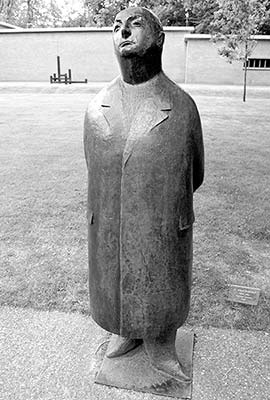
A stern-looking statue of Monsieur Jacques (the museum’s mascot) greets you on the entry path. Once inside, pick up the informative booklet-guide, drop your bag at the mandatory bag check (or stash it in a small locker), and rent an audioguide if you wish.
There are two parts to the museum: the outside sculpture garden and the interior art collection. Since the garden closes earlier, head there first if you’re arriving later in the day.
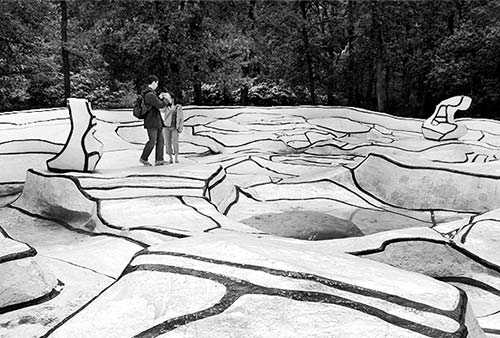
Sculpture Garden: More than 150 sculptures are displayed on 60 rolling acres of lawn. Appreciate works by Auguste Rodin, Barbara Hepworth, Christo, and many others—or just enjoy this excuse for a walk in a pretty park with something fun to look at. Look for Jean Dubuffet’s beloved Garden of Enamel (Jardin d’émail), a giant, psychedelic, black-and-white roller rink you can climb around on spring through fall.
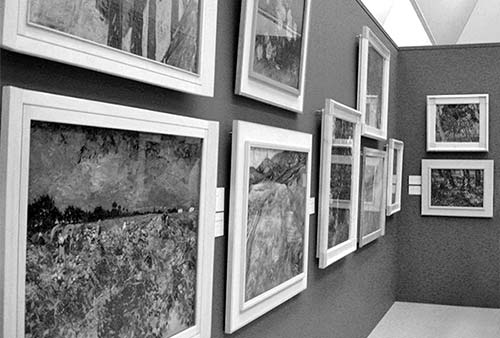
Art Collection: Inside is like a Who’s Who of modern art. The works are displayed chronologically and grouped by movement, in keeping with Helene Kröller-Müller’s wishes to foster understanding and appreciation of new art styles. You’ll go from the hazy landscapes of the Impressionists (Monet, Manet, Renoir), to the intricate compositions of the Pointillists (Seurat, Pissarro), to the bold innovations of the Post-Impressionists (Gauguin, Van Gogh), to the slinky scenes of Art Nouveau (Toulouse-Lautrec), to the shattered-glass canvases of the Cubists (Picasso, Braque, Gris), and, finally, to the colorful grids of Dutchman Piet Mondrian. All artwork labels and descriptions have good English translations.
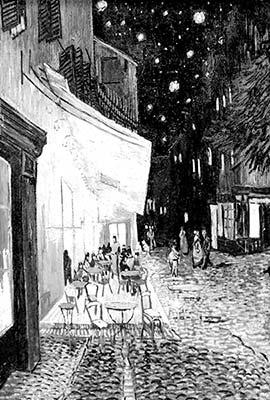
The museum’s highlight is its Vincent van Gogh collection, the second largest in the world (after Amsterdam’s Van Gogh Museum; Kröller-Müller usually displays about 50 of their 87 Vincent canvases). The collection boasts some famous pieces, including various self-portraits, some Sunflowers, and Café de Nuit, the famous scene of an al fresco café on a floodlit Arles square. Notice how thickly the paint is caked on to create the almost-3-D lamp, the work’s focal point.
The Park
Once you’re done touring the museum, head out into the park and explore it on one of the free bikes. The visitors center is a good first stop. You can also visit the hunting lodge, the former residence of the Kröller-Müller family (by guided tour only, see later). If you head deeper into the park, you’ll find a surprising diversity of terrain, from inland sand dunes to lakes to peat bogs to moorland. Combining the Kröller-Müller Museum, the visitors center, and the lodge makes for a fun 6.5-mile biking loop.
Visitors Center (Bezoekerscentrum): This is a good place to get your bearings in the park, with a helpful information desk, a nature exhibit, WCs, a playground, and a restaurant.
The nature exhibit features interactive, kid-oriented exhibits, well explained in English. It’s divided into two parts: An above-ground section focuses on the parks’ various landscapes and the animals that live here; then you’ll go through a tunnel to reach the second section, called the “Museonder,” which shows life underground (animals, fossils, the water table), with conservation-themed displays. Ask for an English showing of the nature films when you enter (a favorite is the 30-minute movie about park deer).
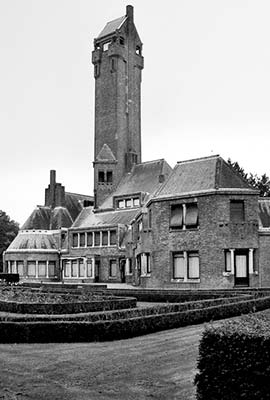
St. Hubertus Lodge: This dramatic hunting lodge at the north end of the park is another popular excuse for a bike ride, although the inside can only be viewed on a 45-minute tour (€6, tour in Dutch but English audioguide available, online booking required, tours typically run daily April-Oct 11:30-15:30, fewer off-season, www.hogeveluwe.nl./en). Once the countryside residence of the modern art-collecting Kröller-Müller family, it’s perched on the edge of a lake with a tower looming overhead. Designed to resemble the antlers of a stag, this structure evokes the story of St. Hubert, who supposedly discovered a crucifix miraculously dangling between a deer’s antlers. The adjacent lake is dotted with sculptures.
NEAR THE MUSEUM: OTTERLO
The tiny village of Otterlo is located just outside the northwest entrance to the park, which is the closest one to the Kröller-Müller Museum. Though not exciting, it’s a good place to spend the night near the park. The town has tandem-bike tourists zipping through on their way to the park, cafés, and a meager TI (within a variety store in the town center; Mon-Sat 8:00-17:00, closed Sun; Dorpsstraat 9, +31 318 614 444, www.otterlo.nl).
Sleeping in Otterlo: Both of these are on the road between Otterlo and the northwest entrance to the park; Sterrenberg is about a half-mile from the park entrance, and Kruller is closer to the town center. Two-night minimum stays may apply in summer.
€€ Hotel de Sterrenberg is a Dutch designer’s take on a traditional hunting lodge. With woodsy touches and modern flair in its 33 rooms, it’s pleasant but pricey, with a destination restaurant featuring “surprise” fixed-price menus (outstanding breakfast extra, swimming pool, sauna, pay laundry service, rentable bikes and e-bikes for guests, no children under 16, about 1.5 miles to Kröller-Müller Museum, Houtkampweg 1, +31 318 591 228, www.sterrenberg.nl, info@sterrenberg.nl).
€€ Hotel Kruller has 17 stylishly simple rooms over a busy restaurant (family rooms, Dorpsstraat 19, +31 318 591 231, www.kruller.nl, info@kruller.nl).
Eating in Otterlo: The hotels listed above both offer good-quality food in their restaurants. Another option, €€€ De Waldhoorn is a cozy restaurant with an outside terrace centrally located in a characteristic village inn that’s been open since 1812. The changing seasonal menu features classic and regional dishes such as beef stew, grilled salmon, and pork tenderloin (daily 10:00-22:00, Dorpstraat 2, +31 318 591 239). The little Otterlo town center also has a Spar grocery store for picnic provisions (Mon-Sat 8:00-20:00).