KEUKENHOF AND AALSMEER
ORIENTATION TO THE FLOWER AUCTION
Of all the day trips mentioned in this book, these are all about flowers: a lovely garden show (open only in spring) and a businesslike flower warehouse (open weekday mornings year-round). Both are an easy half-day trip from Amsterdam or Haarlem.
Keukenhof
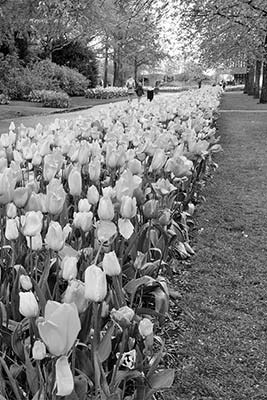
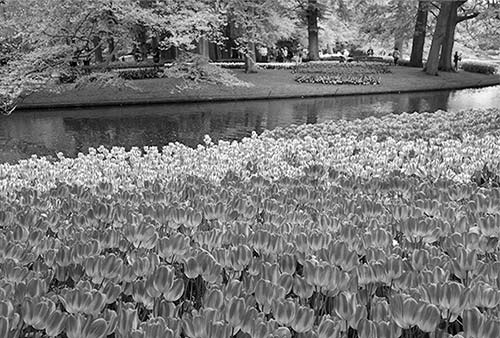
This ▲▲▲ garden is the greatest bulb-flower patch on earth, open for only two months each spring. Every year, seven million flowers (mostly tulips and other bulbs), enjoying the sandy soil of the Dutch dunes and polder land, conspire to thrill even the most horticulturally challenged. Along with flowers, you’ll enjoy all the Dutch icons, with a working windmill, merrily chiming carillons, canal boat rides, warm-off-the-griddle stroopwafels, and wooden shoes galore. It’s flat-out fun and impressive for both its grand scale (sprawling over 80 acres) and its intimacy—you can get up close to see petals of every color imaginable. To bone up on tulips before you visit, see here.
GETTING THERE
Keukenhof is located at the northern tip of the town of Lisse, at the center of the “Dune and Bulb Region.”
By Bus: You have various ways to reach Keukenhof by bus (with several different lines called the “Keukenhof Express”). All these options are detailed on the official website.
From Amsterdam: Take the Metro to the Amsterdam RAI (convention center area south of the center). Take the M52 on the north-south line—from Centraal station or Rokin—to the Europaplein stop, then catch bus #852 directly to Keukenhof (10/hour, 35-minute trip). Or, you could ride airport bus #397 from Amsterdam’s Leidseplein to Schiphol Airport, then catch bus #858 from there, but this option generally takes longer than the Metro and bus journey via Amsterdam RAI described above.
From Schiphol Airport: Bus #858 offers a direct route (6/hour, 30 minutes).
From Haarlem: Take the direct bus #850 to Keukenhof (2/hour, 40 minutes).
From Leiden: Catch bus #854 (6/hour, 30 minutes).
By Car: Drivers will find Lisse well marked from the A-4 expressway south of Amsterdam (€8 for parking).
ORIENTATION TO KEUKENHOF
Cost: €19.50 (purchase on Keukenhof website—it costs more to buy on-site); a combo-ticket covers park entry and round-trip bus transport from Amsterdam (€36.50), or from Haarlem, Leiden, or Schiphol Airport (€31.50).
Hours: Late March-mid-May daily 8:00-19:30, last entry at 18:30.
Information: +31 252 465 555, www.keukenhof.nl.
Avoiding Lines: The park is packed with tour groups daily; for fewer crowds and the best light, go early or late in the day. (It’s quietest Mon-Wed). The canal boat ride and bike rental tend to sell out, so prebook well in advance (details later). But if you miss out them, it’s no great loss.
Visitor Information: To check the status of the blooms, use VisitDuinenBollenStreek.nl, which shows recent photographs of different areas around the gardens. The peak bloom periods change from year to year. While the gardens are in bloom for a good long time, the surrounding fields are cut promptly and don’t last as long.
Baggage Check: It’s free to store small suitcases and backpacks in lockers just outside the park’s entrance.
Eating: There are lots of cafeterias and snack stands throughout the gardens where you can buy hot dogs, herring, sandwiches, and both stroopwafels and Belgian-style waffles. There are also areas for picnics. The biggest pavilions (Oranje Nassau and Willem-Alexander) have huge cafeterias.
Boat Trips: A 45-minute “whisper boat” ride (with audioguide commentary) quietly takes visitors past the blooming fields that surround the gardens. While relaxing, you can get a sense of the same scenery on the trip to and from Keukenhof. As this often sells out, it’s smart to book your ticket online well in advance of your trip (€10, daily 9:30-17:00, departs on the hour and half-hour from the big windmill to the far-right as you enter the gardens).
Bike Rental: Another way to get out into the blooming fields is to rent a bike from Rent-a-Bike Van Dam. Bikes often sell out on busy days, so it’s wise to prebook (€11/3 hours, daily 9:30-18:00, look for the kiosk across the parking lot from the main entrance, +31 252 284 075, www.rentabikevandam-keukenhof.com). While you can’t take bikes into the gardens themselves, Van Dam has mapped out four different routes (between 3 and 15 miles long) that circle alongside nearby flower fields; the longest route goes to a lake, the dunes, and the sea.
VISITING THE GARDENS
Get the map at the entrance and begin exploring the 80-acre park filled with pavilions linked by garden paths. These gardens were designed in the 1800s by the same people who created Amsterdam’s Vondelpark. In 1949 it became a showcase for varieties of tulips. Today 100 growers and 40 full-time gardeners plant some seven million bulbs each fall to please the 1.5 million visitors who show up here each spring for a tiptoe through the tulips. While taking photos of the multicolored splashes all around you, make a point to also zoom in from time to time, focusing on individual flowers and details. You’ll notice some unusual varieties, including some with a fuzzy fringe around each petal.
From the entrance, here are a few general areas to explore (use the gardens’ free map to dig into the details):
A bit to your left is a charming, walled historical garden. Poke in here and find the table illustrating the garden layout—with beds of tulip bulbs from different historical periods, including some dating back 400 years. (These older varieties are much smaller and more restrained than today’s over-the-top hybrids.) Overlooking the garden is a stone statue of Carolus Clusius, who first studied and introduced tulips to Holland in the 16th century.
Straight ahead and slightly to the right of the entrance is a regimented, French-style garden that leads toward two big pavilions. The first of these, the Oranje Nassau Pavilion, features displays related to the festival’s annual theme. Beyond that (across the canal), the Willem-Alexander Pavilion is full of greenhouse flowers—endless varieties of tulips. Beyond the Willem-Alexander Pavilion, the gardens grow a bit rougher, English-style.
To the far right as you enter—about a 10-minute stroll away, past a hedge maze and a giant playground—you’ll find a charming tableau of Dutch clichés: a giant, spinning windmill, a cheerful carillon tower, snack stands selling all things Dutch, and giant wooden shoes to pose in. This area is also the starting point for the canal boat trips through the surrounding fields (described earlier). If the fields are in bloom, it’s worth climbing up to the top of the windmill for a slightly higher-altitude view overlooking the grand stripes of red, yellow, and orange.
The far corner of the gardens (beyond the windmill) is where you’ll find the Beatrix Pavilion, which showcases a flower that actually—gasp!—isn’t a tulip. The specific flower changes yearly.
To the left of where you enter is a Japanese-style section of the gardens that’s a bit more serene than the rest. This is anchored by the Juliana Center, where you can learn about the history of the tulip, understand how they grow, and see how the 40 gardeners here plant the bulbs in “lasagna” layers four deep so flowers bloom all spring. Friendly and helpful park employees and volunteers mingle around this pavilion to answer any questions about the 800 varieties of tulips. Nearby, via a series of boardwalks over rocky streams (just follow the hurdy-gurdy music) is a large fountain ringed with snack stands.
Aalsmeer Flower Auction
Get a bird’s-eye view of the huge Dutch flower industry at the Aalsmeer location of Royal FloraHolland, where the world’s flower prices are set. You’ll wander on elevated walkways (through what’s claimed to be the biggest commercial building on earth) over literally trainloads of freshly cut flowers.
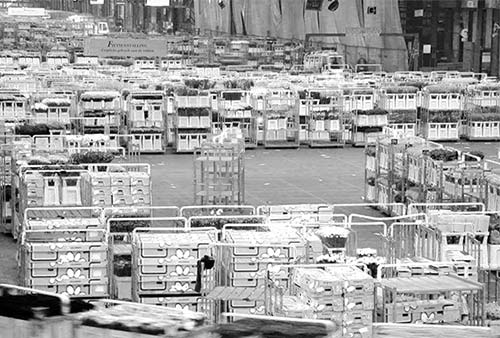
About half of all the flowers exported from Holland are auctioned off through this building. The flowers are shipped here overnight (for maximum freshness), auctioned at the crack of dawn, and distributed as quickly as possible. Historically buyers jammed into big auditoriums, watched a giant “Dutch auction” clock tick down prices, and placed their bids as carts of fresh flowers trundled through. Today, those auction halls are usually empty, and most of the buying is done online. While some travelers are disappointed that you can no longer watch a live flower auction, it’s a reminder that FloraHolland isn’t a tourist attraction: It’s a busy industrial facility that also welcomes curious visitors. The big draw here is the gigantic space, the bustle of global commerce, and colorful flowers as far as the eye can see.
ORIENTATION TO THE FLOWER AUCTION
Cost and Hours: €11.50, €9 for kids under 12; Mon-Fri 7:00-11:00, Thu until 9:00, closed Sat-Sun and holidays—check website; gift shop, cafeteria.
Tours: Download the IZI Travel app to access the Royal FloraHolland audio tour, with a narrated 30-minute walking route along the elevated walkway. Private tours can also be booked online.
Information: +31 297 398 050, www.royalfloraholland.com.
Getting There: You have two options for reaching the flower auction from Amsterdam. Connexxion bus #357 leaves from the Elandsgracht bus station at the western edge of the Jordaan, an easy walk from some of my recommended accommodations in West Amsterdam (4/hour, 1 hour). Or you can ride Metro line 51 (from Centraal station or Waterlooplein) to the suburban Amstelveenseweg, where you then transfer to bus #357 (4/hour, 45 minutes). Take bus #357 to the FloraHolland/FloriWorld stop. From Haarlem take bus #340 to the Aalsmeer Busstation stop and transfer to bus #357 (4/hour, 1 hour).
Aalsmeer, which is close to Schiphol Airport, makes a handy last fling for drivers before dropping off your car at the airport and catching a late-morning weekday flight out. From the A-4 expressway south of Amsterdam, drivers take the Aalsmeer exit (#3) and follow signs for Aalsmeer, then FloraHolland. Once you reach the complex, follow the P Tourist signs to park on top of the garage, then take the elevator downstairs and follow Tourist signs to the visitors center.
VISITING THE FLOWER AUCTION
Things get rolling quickly after the 7:00 opening time; for peak floral variety, the earlier, the better (best before 9:30; things get much quieter later in the morning).
Standing above all those blooms, take a deep, fragrant breath and hold it in. Follow the audio tour on your mobile device to listen to information at two dozen stops (marked with pink signs). You’ll see the busy beehive of the distribution process as workers scurry to load carts of flowers onto little tractors to zip to awaiting buyers. Up along the ceiling, look for the suspended orange trams. This “Aalsmeer Shuttle” zips loads of flowers over the workers’ heads to the distribution center across the street, far more quickly and efficiently than trucks.
Most of the flowers are purchased by wholesalers and exporters. You may see some big auction halls—likely empty these days, as most bidders log in remotely (or work from little cubicles). The auction here works in a unique way. Keep an eye out for big clock-like dials: This is a “Dutch auction,” meaning that the price starts high and then ticks down, until buyers push the button at the price they’re willing to pay. Think about the high stakes and the need for decisiveness...there’s no time to think things over as the auctioneer calls, “Going once, going twice...”
Exhibits (which include an old auction clock) explain the process and let you try it out for yourself. You may also get to peek into the company’s testing lab, where they create and test new varieties of flowers.