SHOPPING IN AMSTERDAM
The Nine Little Streets (De Negen Straatjes)
Haarlemmerstraat/Haarlemmerdijk
Spiegelkwartier—Near the Rijksmuseum
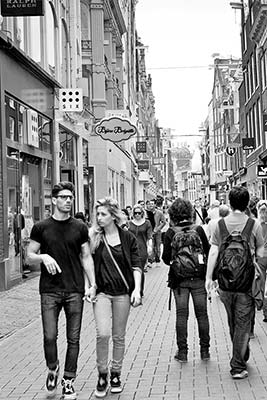
Amsterdam brings out the browser even in those who were not born to shop. The city has lots of one-of-a-kind specialty stores, street markets, and specific streets and neighborhoods worthy of a browse. Poke around and see what you can find.
A variety of general markets, open six days a week (generally 9:30-17:00, closed Sun), keep folks who brake for garage sales pulling U-turns. Markets include Waterlooplein (the flea market), the huge Albert Cuyp street market (described on here), and various flower markets (such as the very touristy Singel canal Flower Market near the Mint Tower).
Store Hours: Most shops in the center are open 9:00-17:00 or 18:00 (some later on Thu—typically until 20:00 or 21:00). The businesslike Dutch know no siesta, but many shopkeepers often take Sundays and Monday mornings off. Supermarkets are generally open daily from 8:00 or 9:00 until 20:00 (and sometimes later).
Tax Refunds, Shipping, and Red Tape: To find out how to get a VAT (Value-Added Tax) refund on merchandise, see here. To mail your purchases home, ask your hotelier for the nearest ersatz post office, or use Service Point, a shipping service at Centraal station and Schiphol Airport. If you want to bring home edibles and drinkables, see here for restrictions.
WHAT TO LOOK FOR
Souvenir Ideas
Good consumable souvenirs include cheese (many travel well), chocolates, or a bottle of jenever (traditional Dutch gin, sold in traditional stone bottles and carefully wrapped in your checked luggage). The city’s many small shops are fun for browsing for items of unique design (both clothes and housewares) and vintage. If you’re seeking Dutch clichés (such as wooden shoes), make a surgical strike at any souvenir stand, or at the shops at the airport. Tulip bulbs and flower seeds are another popular item, but they need to be certified to bring into the US (see later). Art lovers enjoy packing home a postcard or print of their favorite artwork from the Van Gogh or other museums. For something higher end, consider Delftware or diamonds.
Bad Idea: Don’t try to bring home anything drug-related—smartshop herbal supplements, marijuana, or even bongs or marijuana pipes (yes, even to states where it’s legal). American laws are written so that—technically—even importing an unused pipe could get you arrested. If you want to take that chance, make sure the pipe is clean and unused, because even a little residue can get you busted at US Customs.
Dutch Design
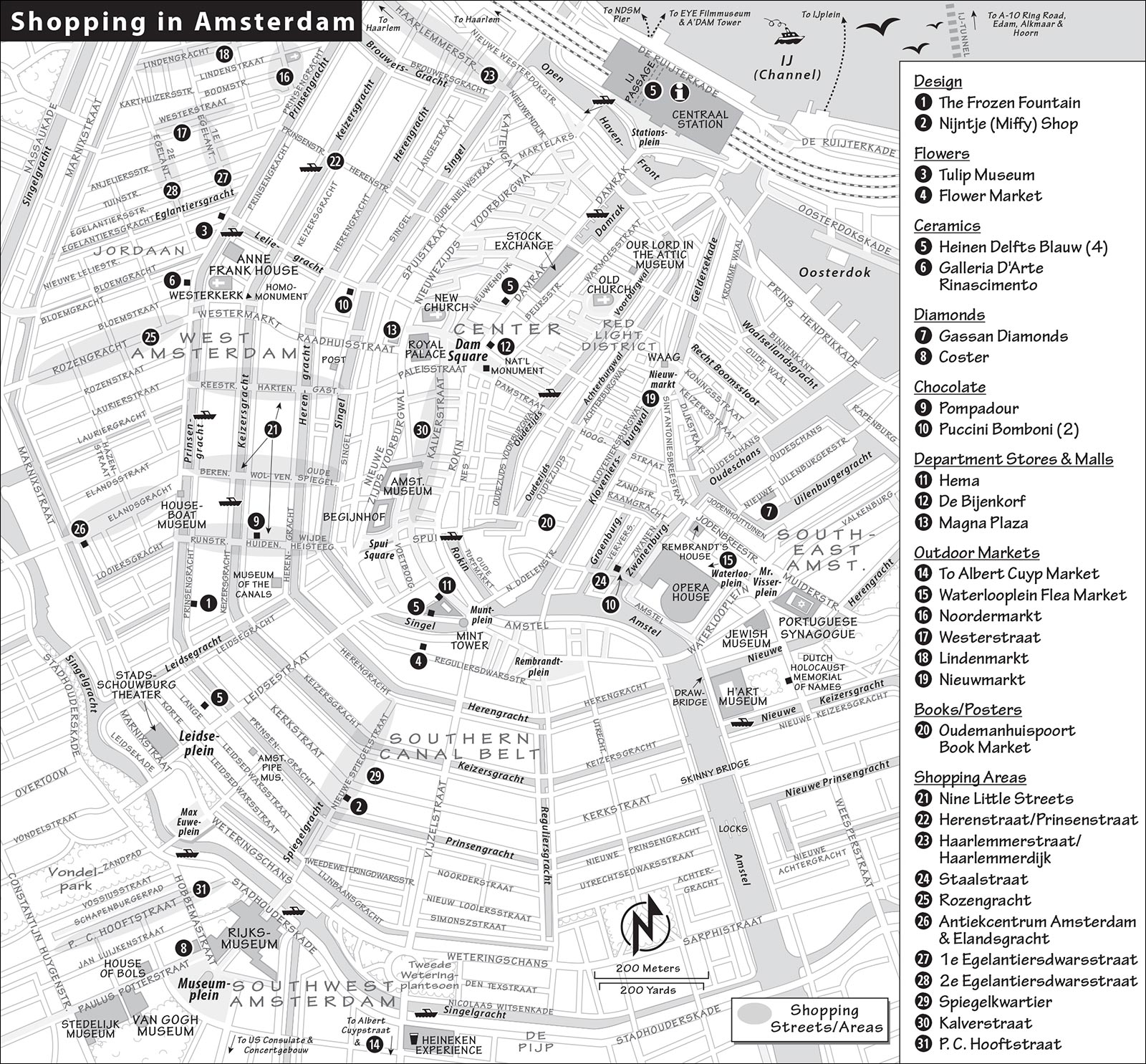
Like their Belgian neighbors, the Dutch have a knack for practical and eye-pleasing design. Think Piet Hein, the 20th-century jack-of-all-trades known for everything from scientific theory to designing housewares to creating beloved games. Amsterdam has a variety of worth-a-detour shops that showcase both established and emerging designers in the Dutch tradition. The Frozen Fountain is an extremely fun warehouse of innovative creations, from kitchen gadgets and furniture to textiles and bold wallpaper. Drop in here to explore, and don’t miss the upstairs (closed Sun-Mon, just south of the Nine Little Streets shopping zone—described later—at Prinsengracht 645, +31 20 622 9375, www.frozenfountain.nl).
Nijntje (Miffy)
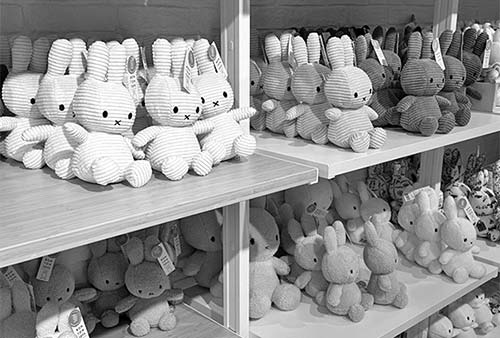
One example of “Dutch design” is a stylized rabbit called Nijntje (literally “little bunny”). You’ll notice this cute rabbit, often in stuffed-animal form, being sold in gift shops. Known as “Miffy” internationally, this beloved children’s character was created in 1955 by Dick Bruna. She has gone on to be featured in dozens of books that have sold tens of millions of copies, as well as a TV show and a 2013 feature film. You can find Nijntje sold all over town, but for the best selection, head for the Nijntje shop on Nieuwe Spiegelstraat, a short walk in front of the Rijksmuseum (daily, at #61; for more on this street, see later).
Tulips and Other Flowers
Many visitors—especially in the spring—find themselves in the throes of “tulip mania,” and might like to take home some bulbs for their own gardens. There are a few issues with this. First, US Customs allows in only bulbs that are specifically certified for import (look for a paper certificate in the package). Second, the springtime months when the city is in full bloom are actually the wrong time to buy tulip bulbs; any self-respecting bulb seller will tell you that they’re a fall product. (Consider making a note of your favorites, then mail-ordering them at the right time of year.)
Flower shops are common around town, and bulbs and seeds are sold at souvenir shops and the famous Flower Market (see below). For more reliable quality, skip those options and head to the Tulip Museum, across the canal from the Anne Frank House. They have a fine selection, including those certified for the US and Canada, along with all manner of tulip decor (daily 10:00-18:00, Prinsengracht 116, +31 20 421 00 95, www.amsterdamtulipmuseum.com).
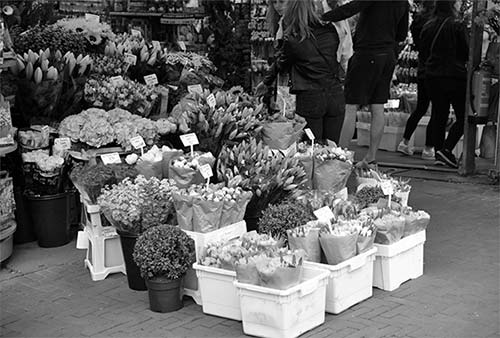
The Flower Market (Bloemenmarkt): It’s enjoyable to browse the Flower Market, a floating row of barges which stretches along Singel canal between the Mint Tower and Koningsplein. The Flower Market boasts a well-stocked cornucopia of pretty petals tucked under canopies (Mon-Sat 9:00-17:30, Sun from 11:00). While pretty and fun to stroll, be aware that this market caters entirely to tourists, not locals. And recent studies (including exposé-type shows on Dutch TV) have found that at least some of the bulbs sold here are not the best quality. It’s fine to buy a bouquet to brighten up your hotel room, but if you’re looking for bulbs or seeds, locals recommend shopping elsewhere.
Delftware
Ceramic plates, vases, and tiles decorated with a fake Chinese blue-and-white design were all the rage in the 1600s. Only a few licensed places sell the real stuff (expensive) and antiques (very expensive). You can find fireplace tiles (cheap) at most gift shops.
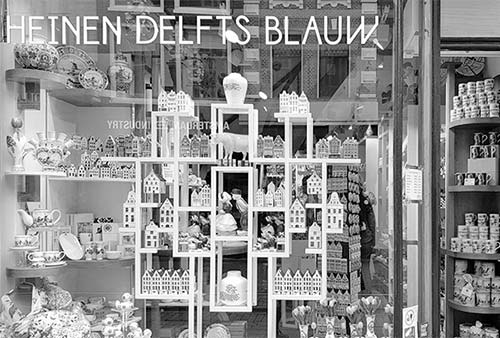
Pricey, authentic Delftware shouldn’t be an impulse buy, so do your homework before committing. Ideally, you’d hop on the train to the town of Delft (an hour away), where you can tour the official Royal Delft Museum and buy directly from its shop (see the Delft chapter). In Amsterdam, reputable vendors include Heinen Delfts Blauw, with locations between the museum neighborhood and Rokin (at Prinsengracht 440); at the Mint Tower (Muntplein 12); near the Old Church (Damrak 65); and in the IJpassage at Centraal station (www.heinendelftsblauw.nl); and Galleria D’Arte Rinascimento, in the Jordaan (Prinsengracht 170, www.delft-art-gallery.com).
Diamonds
Diamonds have been a big Dutch commodity ever since golden age traders first exploited the mines of Africa. In Amsterdam, you can get them cut or uncut, expensive or really expensive. Diamond dealers offer free cutting and polishing demos at their shops. Gassan Diamonds, near Rembrandt’s House, is best (here); Coster is on Potterstraat, behind the Rijksmuseum (here).
Chocolate
While neighboring Belgium is famous for its chocolates, the Dutch dabble as well. Dutch Verkade and Droste cocoa are sold in tins. Pompadour chocolate-and-pastry shop is elegant and decadent (Huidenstraat 12 in the Nine Little Streets). Or you can stop by a branch of the premium Dutch chocolatier Puccini Bomboni, which sells an enticing array of pralines in various flavors, all made on the premises. This can be a tasty souvenir or a splurgy gift—especially if you’re not also going to Belgium (locations at Staalstraat 17 and between Dam Square and the Jordaan at Singel 184; open daily, www.puccinibomboni.com).
WHERE TO GO
Beyond the recommendations above, Amsterdam is awash in shopping options, from modern department stores to centuries-old neighborhood markets.
Department Stores and Malls
Hema is handy for everything from inexpensive clothes and notebooks to cosmetics. Stores are in the Kalvertoren shopping mall at Kalverstraat 212 and at Centraal station.
The De Bijenkorf department store, towering high above Dam Square, is Amsterdam’s top-end option and worth a look even if you’re not shopping. The entire fifth floor is a ritzy self-service cafeteria with a rooftop terrace.
The Magna Plaza Shopping Mall was formerly the main post office. This grand 19th-century building has been transformed into a stylish mall with 40 boutiques. You’ll find fashion, luxury goods, and gift shops galore. It’s just behind the Royal Palace a block off Dam Square (www.magnaplaza.nl).
Albert Cuyp Market
Amsterdam’s biggest open-air market, stretching for several blocks along Albert Cuypstraat, bustles daily (roughly 9:00-17:00) except Sunday. You’ll find fish, exotic vegetables, bolts of fabric, bargain clothes, native Dutch and international food stands, and great people-watching. It’s located a 10-minute walk east of Museumplein and a block behind the Heineken Experience (the north-south M52 Metro line zips you right there, De Pijp stop; https://albertcuyp-markt.amsterdam).
Oudemanhuispoort Book Market
Book lovers will want to seek out this rustic book market, tucked down a hidden corridor between two big university buildings east of Spui (Mon-Sat 9:00-17:00, closed Sun). To find it from the canalside Oudezijds Achterburgwal, just east of Rokin, look for the stone gate marking a passage next to #229. (You can also enter through the other end, next to Kloveniersburgwal 82.) The gallery is lined with stalls and tables stacked high with secondhand books (many in English), surrounded by university bustle. Vendors at the Kloveniersburgwal end specialize in prints and posters. The tranquil courtyards just off this hallway are jammed with students enjoying a sunny escape from the classrooms and clogged streets.
Museum Shops
Shops at major museums (such as the Rijksmuseum and Van Gogh Museum) are well stocked with posters, postcards, and gorgeous glossy books showing off masterpieces. They also sell protective mailing tubes for carrying or shipping your posters home.
TOP SHOPPING ZONES
This section focuses on four of the city’s top shopping areas—all equally good, but each with a different flavor: the Nine Little Streets (touristy, tidy, and central), Haarlemmerstraat/Haarlemmerdijk (emerging, borderline-edgy neighborhood of creative, unpretentious shops), Staalstraat (postcard-cute, short-and-sweet street tucked just away from the tourist crowds), and the Jordaan (mellow residential zone with a smattering of fine shops).
The Nine Little Streets (De Negen Straatjes)
This handy central zone—hemmed in by a grid plan between Dam Square and the Jordaan—is home to a diverse array of shops mixing festive, inventive, nostalgic, practical, and artistic items. Trendy cafés dot the area. While ubiquitous chain stores are sneaking in and it’s not quite as artsy or funky as it once was, this zone remains a very convenient place to browse. Walking west from the Amsterdam Museum/Spui Square or south from the Anne Frank House puts you right in the thick of things. For a preview, see https://de9straatjes.nl.
The cross streets make a tic-tac-toe with a couple of canals and bicycle-friendly canalside streets just west of Kalverstraat. Because each street changes names when it crosses a canal, this small area really does include nine separate little streets (hence the name). Here are a few pointers on what you can expect to find on each street, from south to north (but visit them in any order you like):
South Strip: Starting from Spui and heading west, Wijde Heisteeg is the shortest of the little streets, with a deli, a cheese store, and some clothes shops. Huidenstraat is more clothes-oriented, from fancy and vintage-fashion boutiques to bags, jewelry, and shoes, as well as the recommended Pompadour chocolate/pastry shop. Runstraat has a line down the block—and sometimes stretching across the bridge—for Fabel Friet (at #1), which serves Dutch fries topped with Parmesan or cheddar cheese and a variety of sauces (most popular is the truffle mayo with shaved Parmesan). You’ll also find yet more clothes and an excellent, well-stocked cheese shop (De Kaaskamer van Amsterdam, ideal for stocking a memorable picnic, at #7). From where Runstraat hits Prinsengracht canal, it’s a short stroll south to The Frozen Fountain design shop, described earlier.
Center Strip: In general, this zone feels a bit more yuppie/posh than the others. From east to west, first you’ll come to Oude Spiegelstraat, a short stretch with some fashion boutiques. Wolvenstraat has some upscale clothing shops (including international chains) and several eateries, plus an upscale supermarket called Jumbo. Berenstraat is a bit younger and more dynamic, with a large vintage-clothes store and some stylish boutiques.
North Strip: The funkiest of the nine streets, Gasthuismolensteeg has vintage shops and a hole-in-the-wall selling world folk art. Hartenstraat is loaded with upscale clothes, shoes, and accessories shops, as well as a game shop and hip home decor (at DR Wonen, #27). Reestraat has yet more clothing stores, as well as a bit more variety—including vintage shops.
North of the Nine Little Streets: The area just north of the Nine Little Streets and Anne Frank House—particularly the Herenstraat/Prinsenstraat corridor between Damrak and the Jordaan—is another fine place to browse. If you’re looking for jewelry, accessories, trendy clothing, and fancy delicatessens, this may be an expensive but rewarding stroll. Herenstraat feels relatively local-oriented, with upscale clothes, home decor, and shops that ooze creativity and charm. Prinsenstraat is a bit more youthful, with more fashion galleries and eateries.
Haarlemmerstraat/Haarlemmerdijk
The area just west of Centraal station has morphed from a bit gritty into a thriving and trendy string of shops, cafés, and restaurants. It’s edgier and more in-your-face than the sleepy Jordaan, but still more accessible than the Red Light District. It’s the kind of place where you’ll see “coffeeshops” (selling green “coffee,” a.k.a. marijuana, to tourists) mixed in with coffee shops (selling gourmet black coffee to residents). And it has arguably the most inspired and eclectic assortment of shops in Amsterdam—a browse here is a fun chance to spot new trends, and maybe to pick up some local clothes and goods (vintage and casual young fashions abound). The former dike along what was Amsterdam’s harborfront provides the high spine of this neighborhood. From Singel canal near Centraal station, this lively drag leads a half-mile west along a colorful string of lanes all the way to Haarlem Gate, a triumphal arch built in the 1840s.
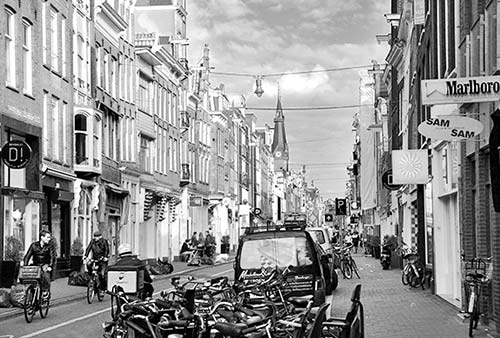
From the train station, follow the canal west, then use the underpass to go beneath the busy traffic bridge. Emerging, turn right across the smaller bridge (passing my favorite herring stand—Stubbe’s Haring, on the bridge—then a cluster of coffeeshops on the left) and continue straight down Haarlemmerstraat. Near the start of the street, on the left, is Wini Vintage (at #29), with well-curated finds that may tempt even those turned off by their hometown Salvation Army. This boutique sets the tone for the street, which features secondhand shops, ironic T-shirts, young and casual fashion, international takeaway joints, internationals taking away joints, hair salons, nail parlors, launderettes, and more, all under leaning gables.
After crossing the canal, you’ll continue on Haarlemmerdijk. Things get even more artsy and eclectic along here, and it feels a bit less seedy (more urbane/Jordaan, less touristy/Red Light District). As you browse, keep an eye out for some beautiful Art Nouveau facades (on the left, at #39, #43, and #51) shuffled among the brick gables. The street ends at The Movies, an art-house cinema with a built-in eetcafé. You’ll pop out at the relaxing Haarlemmerplein, with its wannabe-Brandenburg Gate.
Staalstraat
This lively street, just east of the university zone, boasts an array of creative design shops, whimsical doodads, and vintage shops. It’s a quick walk from the bustling Rokin zone. From where the canal hits Rokin (by the boat-tour kiosk), head east (with the canal at your back, turn right) down Langebrugsteeg/Grimburgwal. At the second canal you cross, when you dead-end at the university buildings, jog left and go through the stone arch of the Oudemanhuispoort Book Market (described earlier in this chapter). Halfway through the market, duck through the student-filled courtyard on the right; when you pop out onto Vendelstraat, turn left, then jog right to go over the bridge. This marks the start of Staalstraat.
Keep an eye out for Mario Shop (at #5), a smartshop selling intense, sometimes mind-bending herbal supplements (for more on smartshops, see here). Puccini Bomboni (#17) is an outpost of the top-of-the-line local chain selling varied and expensive Belgian-style pralines (described earlier in this chapter).
The street ends at yet another bridge (with Frenzi Café). Crossing this and turning left (at the “Stopera” music center), you’ll follow the canal up to the bustling Waterlooplein flea market. The somewhat sketchy-feeling streets just north of Waterlooplein—past the colorful tattoo parlors—are fertile breeding grounds for smart young designers; poking around here you’ll discover some shops on the cutting edge of Amsterdam’s young fashion scene.
The Jordaan
Once a working-class district, this colorful old neighborhood is now upscale—a veritable wonderland of funky shops. But they’re not as concentrated in the Jordaan as they are along Staalstraat, Haarlemmerdijk, or the Nine Little Streets (described earlier). Here are a few areas to focus on:
On Monday mornings and Saturdays until 16:00, you’ll find the busy Noordermarkt market in front of the Noorderkerk. Located in the adjacent square, this market is full of food, crafts, antiques, and other items (www.noordermarkt-amsterdam.nl). Also on Mondays, a few blocks west along Westerstraat, a clothing market—traditionally known as the “textile market”—runs from 9:00 to 13:00. And on Saturdays, on nearby Lindengracht, the Lindenmarkt offers fresh fish, cheese, and vegetables (9:00-16:00).
Rozengracht, the wide street just southwest of the Anne Frank House, has several eclectic shops (though the busy traffic makes lingering in the area less enticing).
Antiekcentrum Amsterdam isn’t just an antique mall—it’s a sprawling warren of display cases crammed with historic bric-a-brac (including lots of smaller items, easily packed home), and all of it for sale. You’ll find everything from old helmets and medals to vintage blue tiles (Mon and Wed-Fri 11:00-18:00, Sat-Sun until 17:00, closed Tue, Elandsgracht 109, +31 20 624 9038). While you’re in the neighborhood, browse Elandsgracht’s many specialty food stores (high-end butcher, bakery, and so on). The cross street Hazenstraat has a fine assortment of art galleries and other shops.
Eerste and Tweede Egelantiersdwarsstraat, both lined with great restaurants and recommended in the Eating in Amsterdam chapter, also have some fun shops mixed in.
Spiegelkwartier—Near the Rijksmuseum
Located just a couple of blocks in front of the Rijksmuseum, this is the place for art, antiques, and a picturesque stroll. You’ll find 70 dealers offering 17th-century furniture, old Delftware, Asian art, clocks, jewelry, and Art Nouveau doodads.
The main drag of this area is called Nieuwe Spiegelstraat. Approaching from the Rijksmuseum, the first couple of (short) blocks—while prettily lined up along a canal—feel generic. But then you’ll reach a more interesting array of shops. Starting with the Nijntje shop (selling various versions of every Dutch child’s favorite bunny—described earlier), you’ll find a stretch of boutiques selling hip fashion, handbags, vintagewear, and shoes, plus some art galleries and antiques. The next block has more in the way of fun-to-browse antiques shops, as well as the Spiegel Amsterdam 100% Dutch design shop.
Other Shopping Areas
Kalverstraat-Heiligeweg-Spui
This is the busiest shopping corridor in town. Kalverstraat, a pedestrian street, is a human traffic jam of low-end shoppers. It’s clogged with cheap and midrange international chains—Forever 21, Pull and Bear, Desigual, Urban Outfitters, Mango, Zara, Bershka, and so on, along with the big Hema department store (described earlier). It feels soulless, but some interesting shops can be found if you explore the fringes.
P. C. Hooftstraat
The city’s most expensive shopping street, with a storefront for nearly every top-name designer, is between Museumplein and Vondelpark.