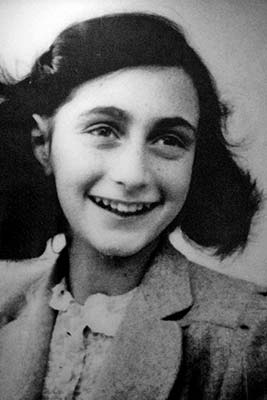
ANNE FRANK HOUSE TOUR
Anne Frank Huis
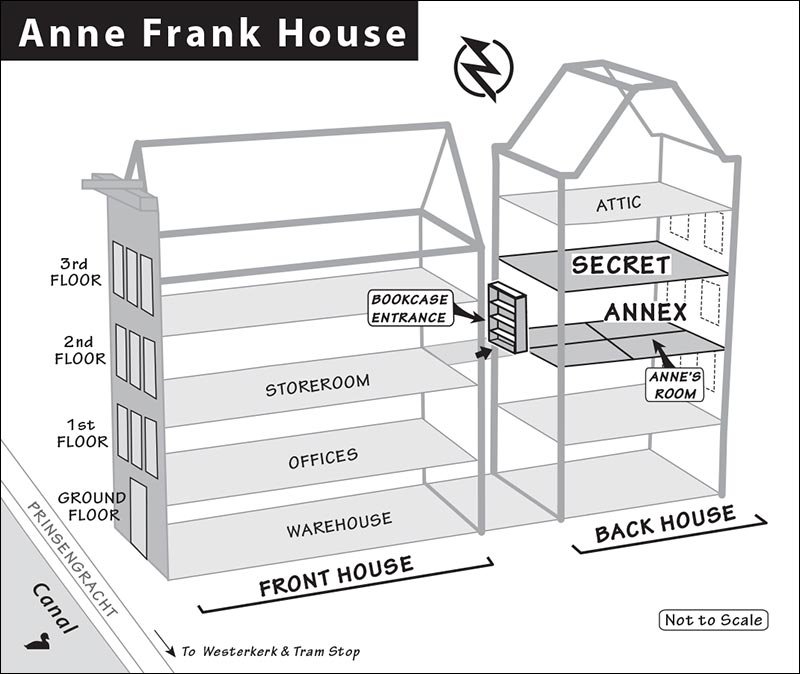
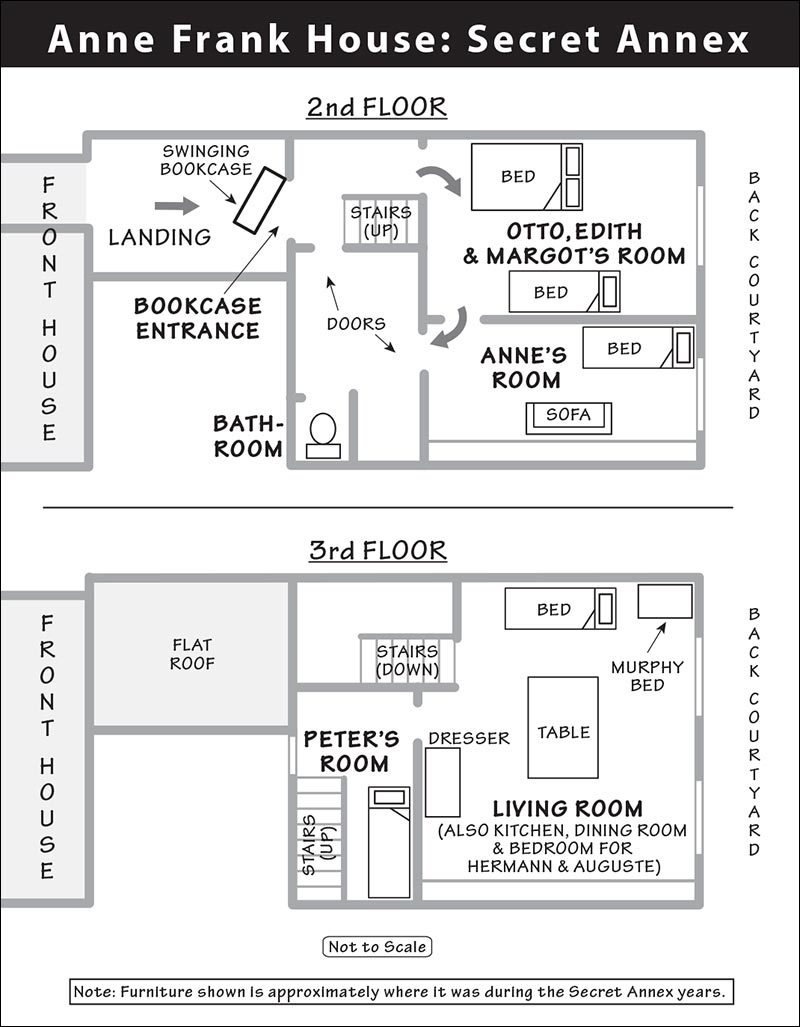
Map: Anne Frank House: Secret Annex
On May 10, 1940, Germany’s Luftwaffe began bombing Schiphol Airport, preparing to invade the Netherlands. The Dutch army fought back, and the Nazis responded by leveling Rotterdam. Within a week, the Netherlands surrendered, Queen Wilhelmina fled to Britain, and Nazi soldiers goose-stepped past the Westerkerk and into Dam Square, where they draped huge swastikas on the Royal Palace. A five-year occupation began. The Netherlands had been neutral in World War I, and Amsterdam—progressive and modern, but a bit naive—was in for a rude awakening.
The Anne Frank House immerses you, in a very immediate way, in the struggles and pains of the war years. Walk through rooms where, for two years, eight Amsterdam Jews hid from Nazi persecution. You’ll see actual artifacts: the secret bookcase entry, Anne’s movie-star cutouts on the wall, and her diaries.
Though the eight Jews were eventually discovered and all but one died in concentration camps, their story has an uplifting twist—the diary of Anne Frank, an affirmation of the human spirit that cannot be crushed.
Orientation
Cost: €16, must book timed-entry ticket online in advance, includes excellent audioguide; €23 with 30-minute introduction in English; €7 for ages 10-17, €1 for kids under 10.
Hours: Daily 9:00-22:00. Open every day except Yom Kippur (Oct 1 in 2025, Sept 20 in 2026, Oct 10 in 2027).
Information: +31 20 556 7105, www.annefrank.org.
Advance Reservations Required: The Anne Frank House is both very popular and very small—and tickets sell out quickly. Tickets are only sold online; there are no tickets sold at the museum. Plan to buy tickets six weeks before your trip. Tickets are released online every Tuesday (at 10:00 Amsterdam time) for visits six weeks later. You’ll choose between a standalone museum visit or a visit with a 30-minute introduction in English (the intro program tickets are easier to get). Even with a Museumkaart, you must reserve a time slot in advance.
Scam Alert: Don’t buy tickets from scalpers. Tickets are only available at www.annefrank.org. Beware of third-party companies offering “Anne Frank House tours”—these do not include access to the house.
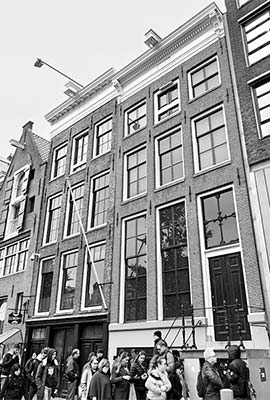
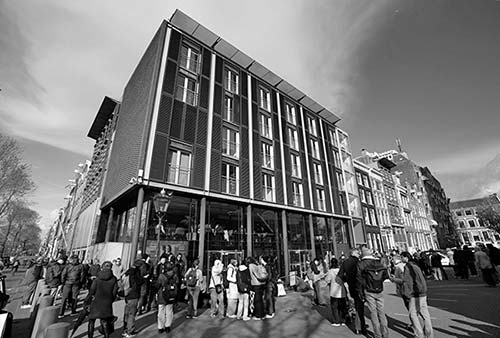
Getting There: It’s at Prinsengracht 267, near Westerkerk and about a 20-minute walk from Centraal station. The museum entrance is around the corner, in the modern building at Westermarkt 20. You can also take tram #13 or #17 to the Westermarkt stop, about a block south of the museum’s entrance.
Visitor Information: In addition to the excellent audioguide, descriptions are posted in English, with excerpts from Anne’s diary throughout.
What to Expect: You’ll snake your way through the museum and point your audioguide at an activation point in each room. The house has many steep, narrow stairways that can be difficult for mobility-impaired visitors or the very young.
Length of This Tour: Allow one hour.
Baggage Check: Cloakroom for coats and small bags. No large bags are allowed.
Eating: The €€ museum café, at the exit of the exhibit, serves simple fare and has good views.
The Tour Begins
We’ll walk through the rooms where Anne Frank, her parents Otto and Edith, her sister Margot, and four other Jews hid for 25 months. The front half of the building, facing the canal, remained the offices and warehouses of an operating business. The back half, where the Franks and others lived in a tiny apartment, was the Secret Annex, its entrance concealed by a swinging bookcase.
• After scanning your ticket, enter the ground-floor exhibit. Start with the important five-minute video (or 30-minute introduction). Then continue through a few more ground-floor rooms, which set the stage for how the Franks arrived in Amsterdam from Germany and established their business on these premises.
Now go upstairs to the offices of the Franks’ business.
FIRST FLOOR
Offices
From these rooms, Otto Frank ran a successful business called Opekta, selling spices and pectin for making jelly. When the Nazis gained power in Germany in 1933, Otto moved his family from Frankfurt to tolerant Amsterdam, hoping for a better life.
As the Nazis swarmed over the Netherlands, they were at first lenient toward, even friendly with, the vanquished Dutch. But soon they began imposing restrictions that affected one in 10 Amsterdammers—that is, Jews. Jewish people were banned from movie theaters and trams, and even forbidden to ride bikes, along with dozens of other stifling laws.
In February 1941, the Nazis started rounding up Amsterdam’s Jews, shipping them by train to “work camps,” which in reality were transit stations on the way to death camps in the east. Outraged, the people of Amsterdam called a general strike that shut down the city for two days...but the Nazis responded with even harsher laws.
Photos and artifacts bring to life the growing anxiety the Frank family endured. Jews were required to register with the police and wear a yellow-star patch. A map made in spring 1941 shows where Jews lived; each dot represents 10 Jews. School photos from December 1941 show Anne and Margot after they were forced to go to an all-Jewish school, leaving their Christian friends behind.
• Go upstairs to the...
SECOND FLOOR
Storeroom
In the space where spices were once stored, think about the circumstances that forced the Franks to move in here.
In July 1942, Margot got her call-up notice for a “work-force project.” Otto could see where this was headed. He handed over the keys to the business to his “Aryan” colleagues, sent a final postcard to relatives, gave the family cat to a neighbor, spread rumors that they were fleeing to Switzerland, and prepared his family to “dive under” (onderduik, as it was called) into hiding.
Photos put faces on the brave people who kept Otto’s business running while the Frank family hid in the back of the building. Johannes Kleiman helped Otto set up the annex hiding place. During the Nazi occupation, Miep Gies, Otto’s secretary, brought food to the Frank family every few days, while bookkeeper Victor Kugler cheered up Anne with the latest movie magazines.
Videos show interviews with Otto, Miep, and Victor from the 1960s and ’70s, describing how they organized the concealment, got supplies, and set up the Secret Annex.
• It’s now time to enter the hiding place. At the back of the second-floor storeroom is the clever hidden passageway into the Secret Annex.
SECRET ANNEX
The Secret Annex hid eight people in a tiny apartment smaller than 1,000 square feet. First were the Frank family—Otto and Edith and their daughters, 13-year-old Anne and 16-year-old Margot. A week later, they were joined by the Van Pels (called the “Van Daans” in Anne’s diary), with their teenage son, Peter. A few months later, Fritz Pfeffer (called “Mr. Dussel” in the diary) was invited in.
Though its furniture was ransacked during the arrest, the rooms of the annex remained virtually untouched, and we see them today much as they were.
Bookcase Entrance
On a rainy Monday morning, July 6, 1942, the Frank family—wearing extra clothes to avoid carrying suspicious suitcases—breathed their last fresh air, took a long look at the Prinsengracht canal, and disappeared into the back part of the building, where they spent the next two years. Victor Kugler concealed the entrance to the annex with this swinging bookcase, stacked with business files.
Though not exactly a secret (since it’s hard to hide an entire building), the annex was a typical back-house (achterhuis), a common feature in Amsterdam buildings, and the Nazis had no reason to suspect anything on the premises of the legitimate Opekta business.
• Pass through the bookcase entrance into...
Otto, Edith, and Margot’s Room
The family carried on life as usual. Edith read from a prayer book in their native German, Otto read Dickens’ Sketches by Boz, and the children continued their studies, with Margot taking Latin lessons by correspondence course. They avidly followed the course of the war through radio broadcasts and news from their helpers. As the tides of war slowly turned and it appeared they might one day be saved from the Nazis, Otto tracked the Allied advance with colored pushpins on a map of Normandy.
By day, it’s enforced silence, so no one can hear them in the offices. They whisper, tiptoe, and step around squeaky places in the floor. The windows are blacked out, so they can’t even look outside. They read or study, and Anne writes in her diary.
At night and on weekends, when the offices close, one or two might sneak downstairs to listen to Winston Churchill’s BBC broadcasts on the office radio. Everyone’s spirits rise and sink with news of Allied victories and setbacks.
Anne’s diaries make clear the tensions, petty quarrels, and domestic politics of eight people living under intense pressure. Mr. Van Pels annoys Anne, but he gets along well with Margot. Anne never gets used to Mr. Pfeffer, who is literally invading her space. Most troublesome of all, pubescent Anne often strikes sparks with her mom. (Anne’s angriest comments about her mother were deleted from early editions of the published diary.)
Despite their hardships, the group feels guilty: They have shelter, while so many other Jews are being rounded up and sent off. As the war progresses, they endure long nights when the house shakes from Allied air raids, and Anne cuddles up in her dad’s bed.
Boredom tinged with fear—the existentialist hell of living in hiding is captured so well in Anne’s journal.
The room is very small, even without the furniture. Imagine yourself and two fellow tourists confined here for two years.
Pencil lines on the wall track Margot’s and Anne’s heights, marking the point at which these growing lives were cut short.
Anne Frank’s Room
Pan the room clockwise to see some of the young girl’s idols in photos and clippings she pasted there herself: American stars Robert Stack and Deanna Durbin from the Cinderella-story film First Love, the future Queen Elizabeth II as a child, matinee idol Rudy Vallee, figure-skating actress Sonja Henie, and, on the other wall, actress Greta Garbo, actor Ray Milland, Renaissance man Leonardo da Vinci, and actress Ginger Rogers. Photos of flowers and landscapes gave Anne a window on the outside world she was forbidden to see.
Out the window (which had to be blacked out) is the back courtyard, which had a chestnut tree and a few buildings. (In 2010, the tree, which Anne had greatly enjoyed, toppled in a storm.) These things, along with the Westerkerk bell chiming every 15 minutes, represented the borders of Anne’s “outside world.” Imagine Anne sitting here at a small desk, writing in her diary.
In November 1942, the Franks invited a Jewish neighbor to join them, and Anne was forced to share the tiny room with Fritz Pfeffer, a middle-aged dentist. Pfeffer wrote a farewell letter to his German fiancée, who lived nearby and continued to receive news of him from Miep Gies without knowing his whereabouts.
Bathroom
The eight inhabitants shared this bathroom. During the day, they didn’t dare flush the toilet.
• Ascend the steep staircase—silently—to the...
Common Living Room
This was the kitchen (note the remains of the stove and sink) and dining room. Otto Frank was well off, and early on, the annex was well stocked with food. Miep Gies would dutifully take their shopping list, buy food for her “family” of eight, and secretly lug it up to them. Buying such large quantities in a coupon-rationed economy was highly suspect, but she knew a sympathetic grocer (a block away on Leliegracht) who was part of a ring of Amsterdammers risking their lives to help the Jews.
The menu for a special dinner lists soup, roast beef, salad, potatoes, rice, dessert, and coffee. Later, as war and German restrictions plunged Holland into poverty and famine, they survived on canned foods and dried kidney beans.
The inhabitants spent their days reading and studying in this room. At night, it became sleeping quarters for Hermann and Auguste van Pels.
Peter van Pels’ Room
On Peter’s 16th birthday, he got a Monopoly-like board game called “The Broker” as a present. Initially, Anne was cool toward Peter, but after two years together, a courtship developed, and their flirtation culminated in a kiss.
The staircase (no visitor access) leads up to where the inhabitants stored their food. Anne loved to steal away here for a bit of privacy. At night they’d open a hatch to let in fresh air.
One hot August day, Otto was in this room helping Peter learn English, when they looked up to see a man with a gun. The hiding was over.
• From here we leave the Secret Annex, returning to the Opekta storeroom and offices in the front house. As you work your way downstairs, you’ll see a number of exhibits—photos, video testimonials, and memorabilia—on the aftermath of this story.
AFTERMATH
Arrest, Deportation, and Auschwitz Exhibits
On August 4, 1944, a German policeman accompanied by three Dutch Nazis pulled up in a car, politely entered the Opekta office, and went straight to the bookcase entrance. No one knows who tipped them off. The police gave the surprised hiders time to pack. They demanded their valuables and stuffed them into Anne’s briefcase...after dumping her diaries onto the floor.
Taken in a van to Gestapo headquarters, the eight were processed in an efficient, bureaucratic manner, then placed on a train to Westerbork, a concentration camp northeast of the city. You’ll see the transport list, which includes “Anneliese Frank.”
From there they were locked in a car on a normal passenger train and sent to Auschwitz, a Nazi extermination camp in Poland. On the platform at Auschwitz, they were “forcibly separated from each other” (as Otto later reported) and sent to different camps. Anne and Margot were sent to Bergen-Belsen.
Under the map illustrating their deportation, you’ll see the 3-by-5-inch registration cards for each of the eight.
If it’s playing, don’t miss the video of one of Anne’s former neighbors, Hannah Goslar, who, by chance, ended up at Bergen-Belsen with Anne. In English she describes their reunion as they talked through a barbed-wire fence shortly before Anne died. She says of Anne, “She didn’t have any more tears.”
Anne and Margot both died of typhus in March 1945, only weeks before the camp was liberated. The other Secret Annex residents—except Otto—were gassed or died of disease.
The Franks’ story was that of Holland’s Jews. The seven who died were among the more than 100,000 Dutch Jews killed during the war years. (Before the war, 140,000 Jews lived in the Netherlands.) Of Anne’s school class of 87 Jews, only 20 survived.
• Downstairs you come to...
The Otto Frank Room
After the war, Otto returned to Amsterdam. The displayed newspaper notice he placed in August 1945 seeking information about his daughters is heartbreaking. In November of that year he received confirmation that they had died in Bergen-Belsen.
Miep Gies gave him Anne’s diaries, which she had found on the floor of the annex after the arrest. Listen to a 1967 video, in which Anne’s father talks about his reaction as he read the diaries. He was struck by the enormous power of Anne’s ideas and emotions—a secret world he’d never known inside his daughter. Determined to make her writings available to a wider audience, he set about contacting publishers (you may see his letters or notebooks or early typed-up drafts of the diaries). In 1947, the diaries were first published in Dutch as De Achterhuis.
• Continue downstairs to the ground-floor exhibits.
The Diaries
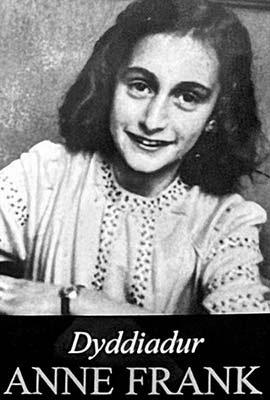
Anne wrote three different diaries. (You may see one, two, or all three of them, as well as individual pages that she copied over later.) She received the first diary (with a red-plaid binding) as a birthday present when she turned 13, shortly before the family went into hiding. The other two were written in school-exercise books. Anne wrote the diaries in the form of a letter to an imaginary friend named Kitty.
As she wrote more and more, Anne began to recognize the uniqueness of her situation. She set about improving and revising the diaries, hoping that one day she’d see them published. You may see some loose-leaf pages on which she reworked parts of her diary. You may also see a book of Anne’s short stories and a notebook in which she compiled “beautiful sentences” from books she’d read.
When the diaries were published, the book quickly became a best-seller. De Achterhuis, “The Back House” in Dutch, soon became The Diary of a Young Girl in English (1952), followed by translations in many other languages. The book became a popular play, The Diary of Anne Frank, and then a Hollywood movie.
Anne’s Legacy
These displays (which change often) capture the Anne Frank legacy.
You may see video interviews of people who knew Anne, such as childhood friends or Miep Gies (who passed away in 2010 at the age of 100). You may see memorabilia of the Franks and their friends (or even the Oscar statuette won by Shelley Winters for the 1959 movie). Scale models of the annex with furniture created in the early 1960s were based on details from Otto and used as a source for multiple film sets. You may learn about Otto’s struggles to save the house from demolition and turn it into a museum. Or you may see an exhibit about the Franks’ time in Frankfurt before they emigrated to Amsterdam—illustrating the creeping radicalization that leads to fascism.
Everyone attests to what a radiant spirit Anne was. Otto wanted the Anne Frank House to be, in his words, “more than a museum.” Its displays do not try to sum up “the moral” of the story. Instead, they recognize that World War II presented many gray areas and ethical dilemmas, and different people had different responses. The point? To keep visitors from leaving the museum with pat feelings of easy moral clarity.
The Anne Frank Foundation is obviously concerned that we learn from Europe’s Nazi nightmare. The thinking that made the Holocaust possible still survives. Even today, some groups promote the notion that the Holocaust never occurred and contend that stories like Anne Frank’s are only a hoax. It was Otto Frank’s dream that visitors come away from the Anne Frank House with hope for a better world. He wrote: “The task that Anne entrusted to me continually gives me new strength to strive for reconciliation and for human rights all over the world.”