ESTONIA
Eesti
A crossroads between Scandinavia and Central Europe, Estonia is shaped by its eclectic past and inspired by the prospect of an ever-brighter future. In the European Union, only three microstates (Cyprus, Luxembourg, and Malta) have a smaller population than Estonia. But like its Baltic neighbors Latvia and Lithuania, Estonia has an enthusiasm for the things that make it unique—proving that you don’t have to be big to have a clear cultural identity.
Estonians are related to the Finns and have a similar history—first Swedish domination, then Russian (1710-1918), and finally independence (after World War I). In 1940, Estonians were at least as affluent and as advanced as the Finns, but they could not preserve their independence from the USSR during World War II. As a result, Estonia sank into a nearly 50-year period of Soviet domination and communist stagnation.
Since regaining its independence in 1991 with the collapse of the Soviet Union, the country has made great strides. It joined the EU and NATO in 2004, adopted the euro currency in 2011, and today feels pretty much as “Western” as its Nordic neighbors.
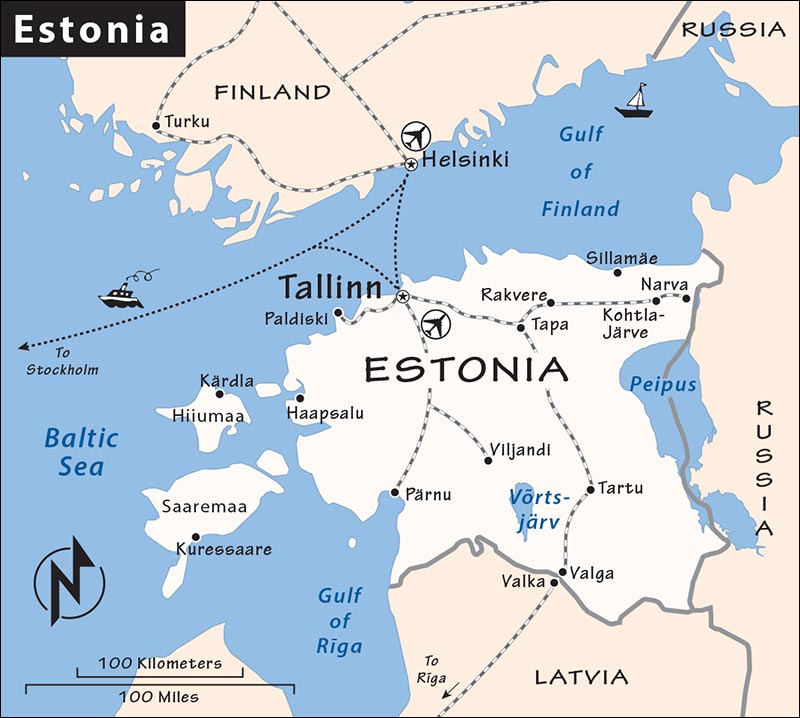
EU membership seemed like a natural step to many Estonians; they already thought of themselves as part of the Nordic world (Stockholm is just an overnight boat ride away). Language, history, religion, and frequent ferries connect Finns and Estonians. Only 50 miles separate Helsinki and Tallinn. Finns visit Tallinn to eat, drink, and shop more cheaply than at home, and the city tends to become a Finnish nightclub on summer weekends.
Thanks to visionary and aggressive development policies implemented soon after independence—including the designation of internet access as a basic human right—Estonia is a global trendsetter in technology. By 1998, every school in Estonia was already online. The country has some of the fastest broadband speeds in the world, Estonians vote and file their taxes online, and the software for Skype was invented here. The multibillion-dollar windfall from Skype’s 2005 sale to eBay kickstarted a whole new venture-capital industry that is still paying dividends today.
Official Name: Eesti Vabariik—the Republic of Estonia—or simply Estonia.
Size: At 17,500 square miles, Estonia is about the size of New Hampshire and Vermont combined. It’s home to over 1.3 million people (80 per square mile).
Geography: Between Latvia and Russia, Estonia borders the Baltic Sea and Gulf of Finland. It includes more than 1,500 islands and islets, and has the highest number of meteorite craters per land area in the world.
Latitude and Longitude: 59°N and 26°E, similar latitude to Juneau, Alaska.
Biggest City: Tallinn, the capital of Estonia, has about 450,000 people.
Economy: Estonia’s transition to a free-market system included joining the World Trade Organization and the European Union. In recent years, it’s had one of the highest per-capita income levels in Central Europe and today boasts a per-capita GDP of about $28,000. Its four major trading partners are Finland, Sweden, Russia, and Germany, and it’s especially strong in electronics and telecommunications.
Government: Estonia is a parliamentary democracy, with a president elected by parliament and a prime minister. The 101-member parliament (Riigikogu) is elected by popular vote every four years.
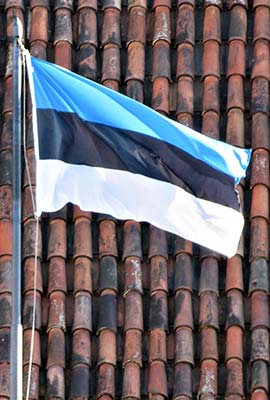
Flag: The pre-1940 Estonian flag was restored in 1990. It has three equal horizontal bands with blue at the top, black in the middle, and white on the bottom. The blue represents Estonia’s lakes and sea, and the loyalty and devotion of the country to its people. The black symbolizes the homeland’s rich soil and the hardships the people have suffered. The white represents hope and happiness.
The Average Estonian is 42 years old and has 1.6 children. Among the quarter-million Estonians age 65 and older, about two-thirds are women. When an Estonian sings the national anthem, it has the same tune—but different words—as that of Finland.
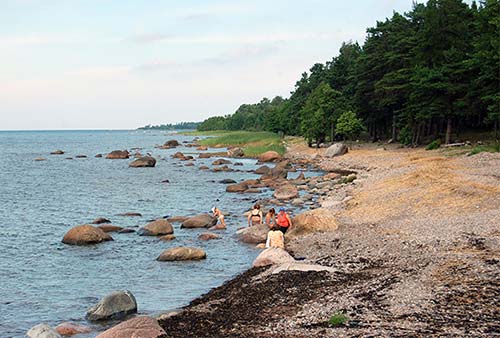
This little land has a long, jagged, hauntingly beautiful coastline, over 1,000 lakes, and more than 1,500 (mostly uninhabited) islands. About 50 percent of the landscape is forest, while marshlands and bogs cover another 20 percent.
Traditional folk music buoys the national spirit—especially at the Song Festival held every five years, when a significant portion of the population convenes to pour out their souls in song. Some of Estonia’s traditions may strike you as quirky. Estonians snack on nearly black rye bread slathered in garlic and bury their dead in evocative pine forests. And they’re among the least religious people in the world—the majority of Estonians are unaffiliated with any religion (about 10 percent are Lutheran and 16 percent are Eastern Orthodox).
Even as Estonia will always face West, across the Baltic, it also faces East, into the Russian hinterlands. While nearly seven in ten residents are of Estonian heritage, about one-quarter are of Russian descent (a legacy of Estonia’s Soviet experience). Many Estonian Russians still hold Russian passports. There are smaller minorities of Ukrainians, Belarusians, and Finns. About 70 percent speak the official language—Estonian—and nearly 30 percent speak Russian.
The size of Estonia’s Russian population has created some interesting challenges. In the past, to bridge what many see as divided loyalties, the Estonian government has worked to better integrate its Russian minority, making it easier for them to acquire Estonian citizenship and addressing high unemployment in the border areas where many ethnic Russians live. But with the Estonian government’s hardline stance against Russia’s 2022 invasion of Ukraine, tensions and distrust have heightened.
Most Estonians speak English—it’s the first choice these days at school. Estonian is similar to Finnish and equally difficult; only a million people speak it worldwide. Two useful phrases to know are Tänan (TAH-nahn; Thank you) and Terviseks! (TEHR-vee-sehks; Cheers!). For more helpful words, see the Estonian survival phrases on the next page. The farther you go beyond the touristy zones, the more you see that Russian is still Estonia’s second language. If you know some Russian, use it.
Estonian Survival Phrases
Estonian has a few unusual vowel sounds. The letter ä is pronounced “ah” as in “hat,” but a without the umlaut sounds more like “aw” as in “hot.” To make the sound ö, purse your lips and say “oh”; the letter õ is similar, but with the lips less pursed. Listen to locals and imitate. In the phonetics, ī sounds like the long i in “light,” and bolded syllables are stressed.
| Hello. (formal) | Tervist. tehr-veest |
| Hi. / Bye. (informal) | Tere. / Nägemist. teh-reh / nah-geh-meest |
| Do you speak English? | Kas te räägite inglise keelt? kahs teh raah-gee-teh een-glee-seh kehlt |
| Yes. / No. | Jah. / Ei. yah / ay |
| Please. / You’re welcome. | Palun. pah-lohn |
| Thank you (very much). | Tänan (väga). tah-nahn (vah-gaw) |
| Can I help you? | Saan ma teid aidata? saahn mah tayd ī-dah-tah |
| Excuse me. | Vabandust. vaw-bahn-doost |
| (Very) good. | (Väga) hea. (vah-gaw) hey-ah |
| Goodbye. | Hüvasti. hew-vaw-stee |
| zero / one / two | null / üks / kaks nuhl / ewks / kawks |
| three / four | kolm / neli kohlm / nay-lee |
| five / six | viis / kuus vees / koos |
| seven / eight | seitse / kaheksa sayt-seh / kaw-hehk-sah |
| nine / ten | üheksa / kümme ew-hehk-sah / kew-meh |
| hundred | sada saw-daw |
| thousand | tuhat too-hawt |
| How much? | Kui palju? kwee pawl-yoo |
| local currency: (Estonian) crown | (Eesti) krooni (eh-stee) kroh-nee |
| Where is...? | Kus asub...? koos ah-soob |
| ...the toilet | ...tualett too-ah-leht |
| men | mehed meh-hed |
| women | naised nī-sehd |
| water / coffee | vesi / kohvi vay-see / koh-vee |
| beer / wine | õlu / vein uh-loh / vayn |
| Cheers! | Terviseks! tehr-vee-sehks |
| The bill, please. | Arve, palun. ahr-veh pah-lohn |