SCANDINAVIA
Welcome to Rick Steves’ Europe
Scandinavia’s Top Destinations
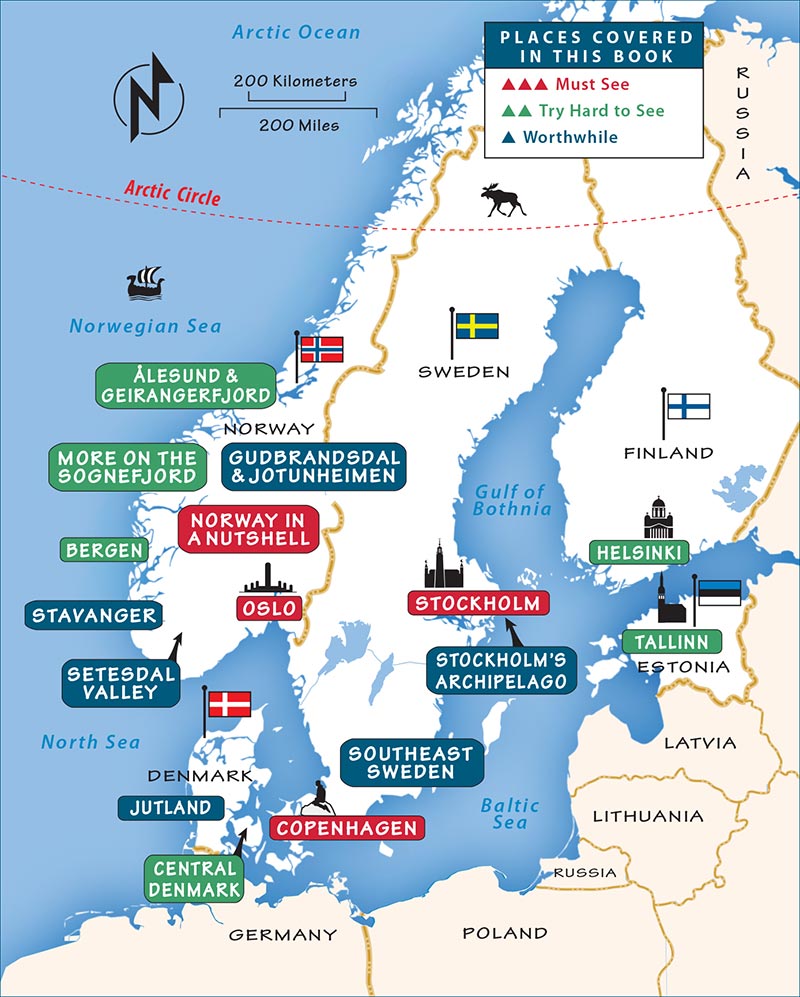
Map: Top Destinations in Scandinavia
Map: Scandinavia’s Best Three-Week Trip by Car, Train, Boat, and Plane
Scandinavia—known for its stunning natural beauty, fun-loving cities, trendsetting design, and progressive politics—is one of Europe’s most enjoyable corners. A visit here connects you with Viking lore, immigrant roots, modern European values, and the great outdoors like nowhere else. You’ll gasp at breathtaking fjords, glide on a ferry boat among picturesque islands, and marvel at the livability of bustling capitals.
What exactly is Scandinavia? It’s Denmark, Norway, and Sweden. Finland is a Nordic country (like its Scandinavian neighbors), while Estonia is a Baltic state. Together yet distinct, these five countries offer a fascinating look at northern Europe. Here’s a snapshot per country:
Denmark, a flat peninsula with small islands and long bridges, is the smallest and most densely populated. Simply put, Denmark is cute. It feels like a mini-golf course inhabited by happy blond gods and goddesses. Sights include lively Copenhagen, a passel of castles, Viking ships, Legoland, inviting towns, and adorable islands. Danes embrace the concept of hygge, which means enjoying the cozy simplicity of everyday life, like walking along the beach, or sharing a picnic of smørrebrød (open-faced sandwiches) with a friend.
Norway is a land of intense beauty, with steep mountains and deep fjords carved out and shaped by an ancient ice age. This sparsely populated country is long: Oslo, the capital, is as far from the northern tip of Norway as it is from Rome. Along with its personable capital, the country’s highlights include the salty port of Bergen, colorful villages, and wildly scenic routes over the mountains and through the fjords. Norway’s icons are all things Viking, wooden stave churches, knitted sweaters, and lutefisk (imagine fish Jell-O).
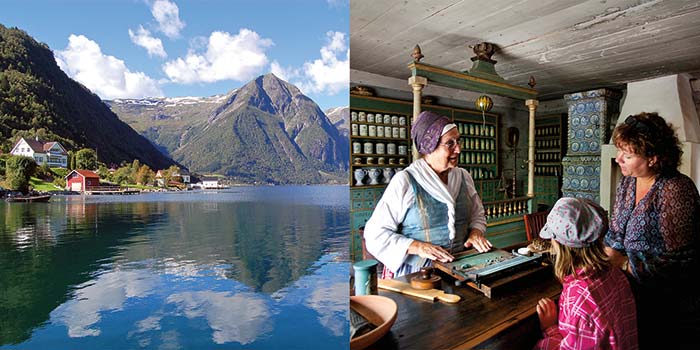
The village of Balestrand on Norway’s unforgettable Sognefjord; craft demonstration at Stockholm’s Skansen folk museum
Sweden, a forested land of clear lakes and island chains, is the largest Scandinavian country and has the grandest capital. Stockholm is a public-service announcement for good living, and its Skansen open-air folk museum is Europe’s oldest and best. Sweden’s attractions are an archipelago cruise, historic castles, glassworks tours, pleasant cities, and exceptional museums. Though industrious, Swedes always make time for fika—a coffee break with pastry—a habit you’ll quickly adopt.
Finland is flat, friendly, and underrated. Its capital city, Helsinki, holds its own among the Nordic capitals for its bustling waterfront, modernist architecture and sophisticated design, and steamy saunas. The European Union’s youngest capital city, it carries an east-meets-west mix of cultures. Helsinki is a popular port, connected to Stockholm by overnight cruise and with Tallinn, Estonia by quick ferries.
Estonia, a small Baltic country, has islands, marshlands, and patriotic singers. Estonians achieved independence from Russia in 1991 through their peaceful Singing Revolution. They specialize in global technology, while folk music remains dear to their hearts. The photogenic Old World capital of Tallinn makes for an engaging visit—by ferry from Helsinki or overnight cruise from Stockholm.
The Swedish smörgåsbord (known in Denmark and Norway as the koldtbord) is a Scandinavian culinary tradition. While the word smörgåsbord originally meant a “bread-and-butter table” and koldtbord means “cold table,” today’s smorgasbords are an abundant feast of appealing appetizers, hot and cold dishes, and desserts.
Seek out a smorgasbord at least once during your trip, just for the experience of seeing so much wholesome and tasty Nordic food spread out before you.
Locals indulge in a smorgasbord mainly at festive times such as the Christmas season, but anyone can dig into this all-you-can-eat buffet any time of the year at bigger hotels and on overnight ferries. It’s always smart to reserve a smorgasbord in advance. You’ll generally pay one set price for the meal, though fancier drinks may cost extra (confirm before imbibing).
Follow the simple steps below to make the most of your smorgasbord experience.
Skäl! Smaklig måltid! Cheers! Enjoy your meal!
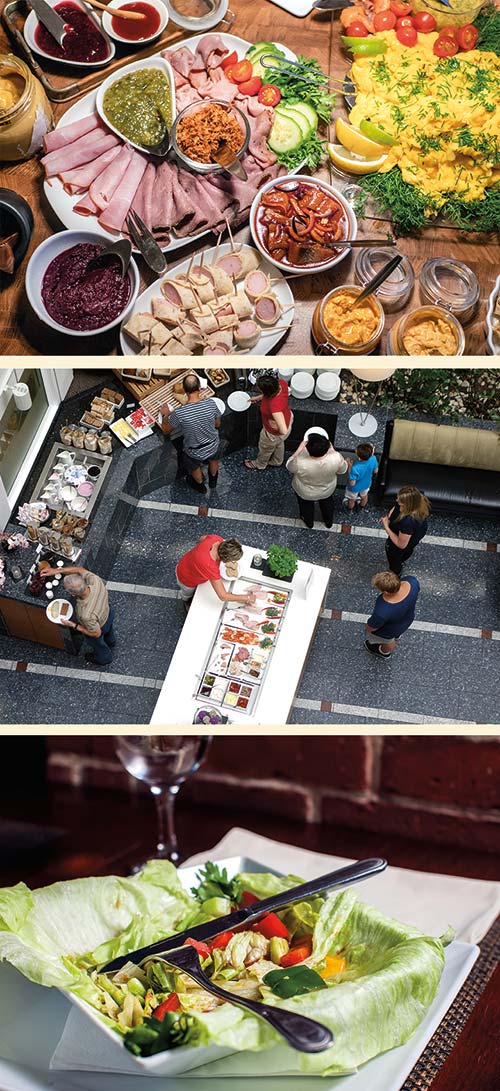
A smorgasbord is all-you-can-eat, so survey your options before taking your portions, then return for more of your favorites; cross your fork and knife to signal that you’re not yet done.
1. Arrive hungry and take time to browse through the buffet before you begin, so you can budget your stomach space. Think of the smorgasbord as a five- or six-course meal.
2. Don’t overload your plate. Instead make multiple trips, taking a fresh plate and cutlery each time. Dish up small servings and pace yourself.
3. To signal to the waiter that you’re finished with each round, lay your fork and knife side by side on the plate. If you’re getting up but are not finished with your plate, cross your fork and knife in an X shape on the plate.
4. Begin with the herring dishes (pickled, smoked, and in white cream sauce, to name several), along with small boiled potatoes and crispbreads.
5. Next, sample the other fish dishes and more potatoes. Warm dishes include baked trout and salmon, poached fish, and shellfish. You’ll likely see gravlax—salt-cured salmon served on crisp rye crackers with sweet mustard sauce.
6. Move on to salads (greens, coleslaw, potato salad, beets, and marinated or pickled veggies), egg dishes (omelets and deviled, topped with caviar or shrimp), and various cold cuts.
7. Now for the hearty main dishes—it’s meatball time! Reindeer, other roasted meats, sausages, casseroles, stews, and pâtés vie for your attention. Add mashed potatoes, dumplings, pasta, or rice, and ladle on gravy. Condiments include jams (such as lingonberry and gooseberry), mustard, and horseradish.
8. Sample Nordic cheeses: semisoft Danish Havarti, creamy-yet-tangy Castello (a blue cheese), mild Jarlsberg (with holes), and Norwegian geitost (sweet, brown goat cheese that looks like earwax).
9. Room for dessert? Enjoy seasonal fruits and peruse racks of traditional pastries, cakes, and custards.
10. Cap your meal with coffee or tea, or go with beer, wine, or spirits such as vodka or akvavit.
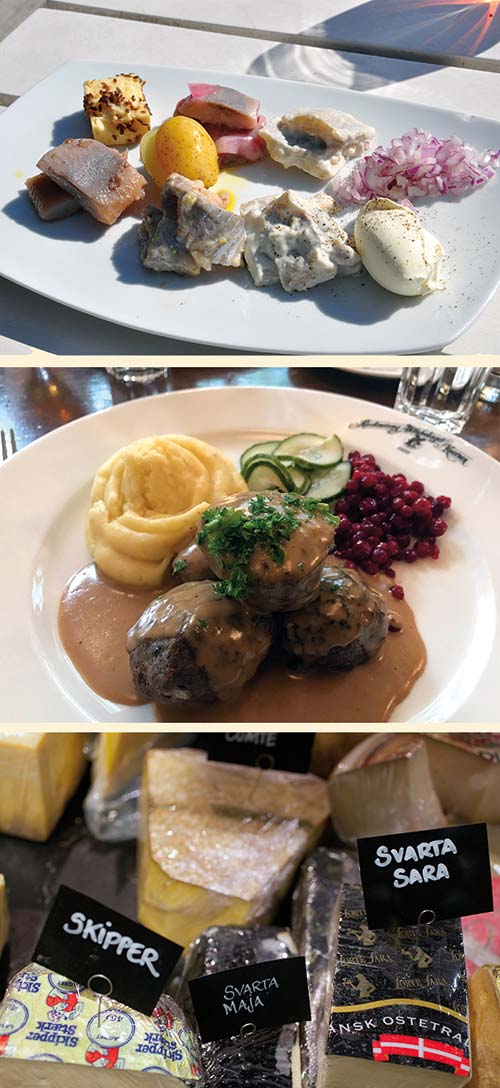
A typical smorgasbord includes a tempting herring sampler, Swedish meatballs with lingonberries, and cheeses.
Politically, Denmark, Norway, and Sweden are constitutional monarchies, each with a figurehead monarch who cuts ribbons, works with a democratically elected parliament and a prime minister, and tries to stay out of the tabloids. As for royalty, talk about keeping it all in the family: Each of Scandinavia’s current monarchs is descended from Oscar I, king of Sweden and Norway (ruled 1844-1859). In contrast, Finland and Estonia have democratically elected presidents.
Of the five countries, all but Norway are in the European Union, though only Finland and Estonia use the euro. Norway, with the world’s second-longest coastline (after Canada), resists EU membership, unwilling to share its offshore oil and fishing rights (and give up hunting for minke whales).
Scandinavia is rich, with a high standard of living, as American tourists learn the hard way. Residents pay hefty taxes but receive cradle-to-grave security in return. Generally speaking, citizens willingly share the burden for the common good. Studies consistently show that Scandinavians lead longer, healthier, and happier lives than the rest of the world. They’re well educated, well traveled, and generally content. Talk with the people you meet; just about everyone speaks English. They tend to speak their minds frankly and have a good sense of humor.
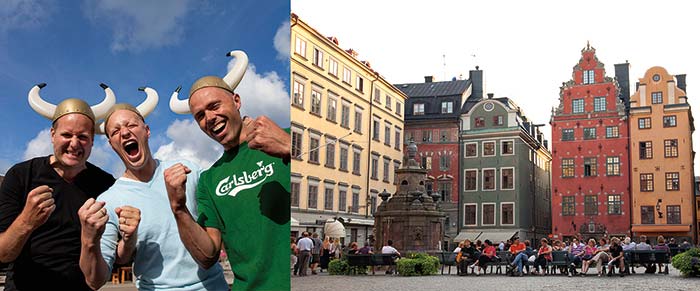
Danes win the happiness race; colorful buildings in Stortorget, Stockholm’s oldest square
Everything about Scandinavia feels well designed, from its governments and transportation systems down to everyday objects. Furniture and appliances are both functional and beautiful: sleek, appealing, and efficient.
Summertime is Scandinavia’s time to shine, when this “land of the midnight sun” enjoys 18 hours of daylight. Everyone finds a reason to be outside. Scandinavians love nature and outdoor activities: cycling, hiking, boating, and fishing. Given their pristine natural surroundings, they’re environmentalists—valuing hydroelectric and wind power—and are committed to preserving resources for future generations.
Despite their ultramodern, progressive outlook, Scandinavians still honor their traditions. Parents tell their kids old folktales about grumpy, clever trolls, and gardeners dot their yards with ornamental gnomes. At midsummer, locals in traditional clothing dance around maypoles to the tunes of folk bands. At winter solstice and Christmas, they enjoy Yule cakes and winter beer. Scandinavia is sailing confidently into the high-tech future on the hardy ship of its Viking past.
Scandinavia’s Top Destinations
This overview categorizes Scandinavia’s top destinations into must-see places (to help first-time travelers plan their trip) and worth-it places (for those with extra time or special interests). I’ve also suggested a minimum number of days to allow per destination.
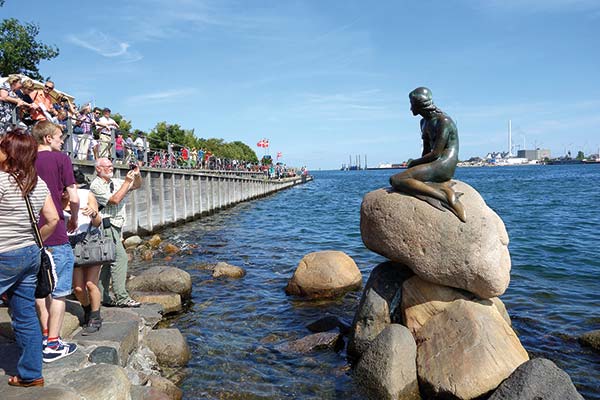
DENMARK
▲▲▲Copenhagen (allow 2 days)
This vibrant capital hosts the Little Mermaid sculpture, the old-time Tivoli Gardens amusement park, and Renaissance King Christian IV’s Rosenborg Castle. Wander from the irresistible, shop-lined pedestrian street called Strøget to the colorful little harbor of Nyhavn. Gawk at the eye-opening hippie enclave at Christiania and get an earful of the city’s thriving jazz scene.
▲Near Copenhagen (1-2 days)
You have four good options: Roskilde, west of Copenhagen, has the excellent Viking Ship Museum and Denmark’s royal cathedral. To the north of Copenhagen, opulent Frederiksborg Castle is the “Danish Versailles”; plainer Kronborg Castle has a dramatic waterfront setting; and the Louisiana Art Museum features lush sculpture gardens and modern art galleries.
▲▲Central Denmark (2 days)
The peaceful isle of Ærø harbors Denmark’s best-preserved 18th-century village, Ærøskøbing. This small island is perfect to explore on a loop tour by bike or car. Between Ærø and Copenhagen is the busy town of Odense, with the slick, engaging Hans Christian Andersen House on the site of his birthplace.
▲Jutland (1-2 days)
Denmark’s second-largest city, Aarhus, has an appealing-to-stroll center, the impressive ARoS art museum, a prehistory museum (with a well-preserved Iron Age “bog man”), and an open-air museum of bygone Danish life. This family-friendly region also hosts the Legoland amusement park and the village of Jelling with its historic rune stones.
NORWAY
▲▲▲Oslo (2 days)
The compact core of Norway’s capital holds an inspiring City Hall, inviting harborfront promenade, striking Opera House, and outstanding National Museum (with Munch’s The Scream). A quick ferry takes you to the Bygdøy district and museums dedicated to famous ships—Viking, Fram, and Kon-Tiki—plus the Norwegian Folk Museum. Just beyond the center, hundreds of bronze and granite statues adorn majestic Vigeland Sculpture Park.
▲▲Bergen (1 day)
The historic port town has a lively fish market, harborfront Bryggen quarter (with colorful buildings), interesting museums, and a funicular up a little mountain for sea-and-city views. Activities from Bergen include fjord cruises (plus an express boat to Balestrand) and bus tours to composer Edvard Grieg’s home at Troldhaugen.
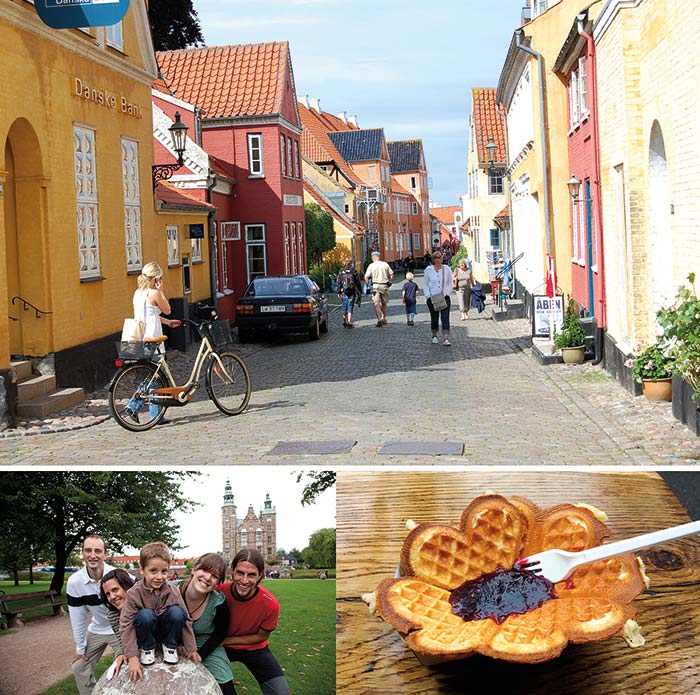
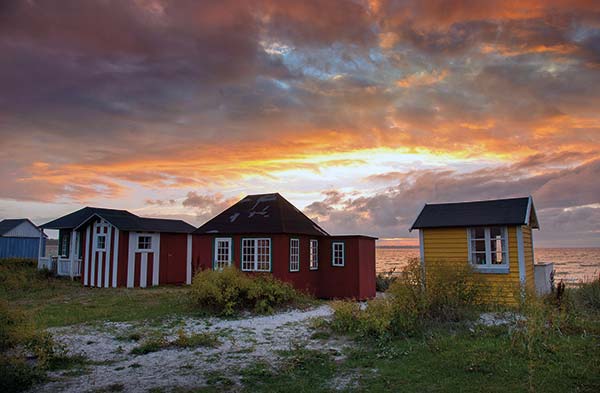
Ærøskøbing town; Danish waffles; Rosenborg Castle in Copenhagen
▲▲▲Norway in a Nutshell (1-2 days)
This popular route connects Oslo and Bergen via train, bus, and ferry in a wonderfully scenic journey brimming with pristine waterfalls, verdant forests, steep mountains, and Norway’s best fjord (the Sognefjord). To break the journey, you can overnight here and side-trip to Borgund Stave Church.
▲▲More on the Sognefjord (1-2 days)
The hamlet of Balestrand makes a cozy fjordside home base, with a cidery and glacier excursions, and the Hopperstad Stave Church nearby. An hour east, the serene Lustrafjord (best seen by car) features the lovable hamlet of Solvorn, another stave church (Urnes), and the chance to walk on a glacier.
▲Gudbrandsdal Valley and Jotunheimen Mountains (1-2 days, best for drivers)
This lush valley northwest of Oslo has Lillehammer, with its Olympics heritage and Maihaugen open-air folk museum. The rugged Jotunheimen Mountains offer the Lom Stave Church, rustic log-cabin accommodations, fine hikes, sweeping vistas, and the Sognefjellsvegen scenic drive to the Lustrafjord.
▲▲Ålesund and the Geirangerfjord (2 days)
Scenically scattered across islands, and with a colorful Art Nouveau core, Ålesund may be Norway’s prettiest city. A drive over the twisty Trollstigen road takes you to the Geirangerfjord, popular for its panoramic viewpoints, scenic drives, and lonesome shelf farms.
▲Stavanger (1 day)
Norway’s “oil town” and third-biggest city, with a charming shiplap old town and vivid street art, is a popular springboard for nearby Pulpit Rock—a dramatic promontory that attracts hikers and view seekers.
▲Setesdal Valley (2 days)
A worthwhile deep dive into rural Norway, this time-passed valley is lined with remote villages, sod-roofed cabins, and rich traditions; it’s a scenic, low-impact drive for connecting Bergen or the fjords to Stavanger or Kristiansand (with its ferry to Denmark).
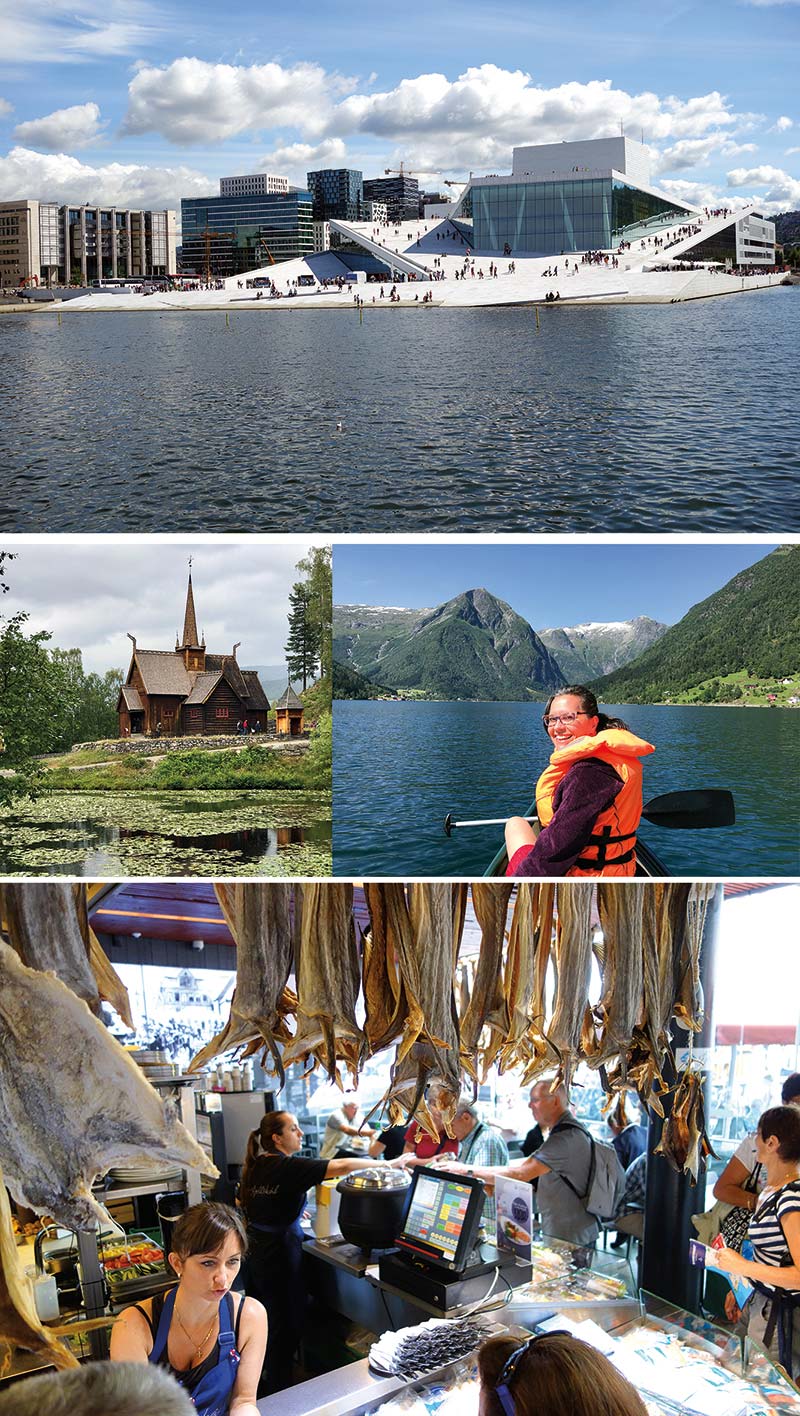
(Clockwise from top) Oslo’s Opera House; kayaking on the Sognefjord; Bergen fish market; stave church in Lillehammer’s Maihaugen open-air folk museum
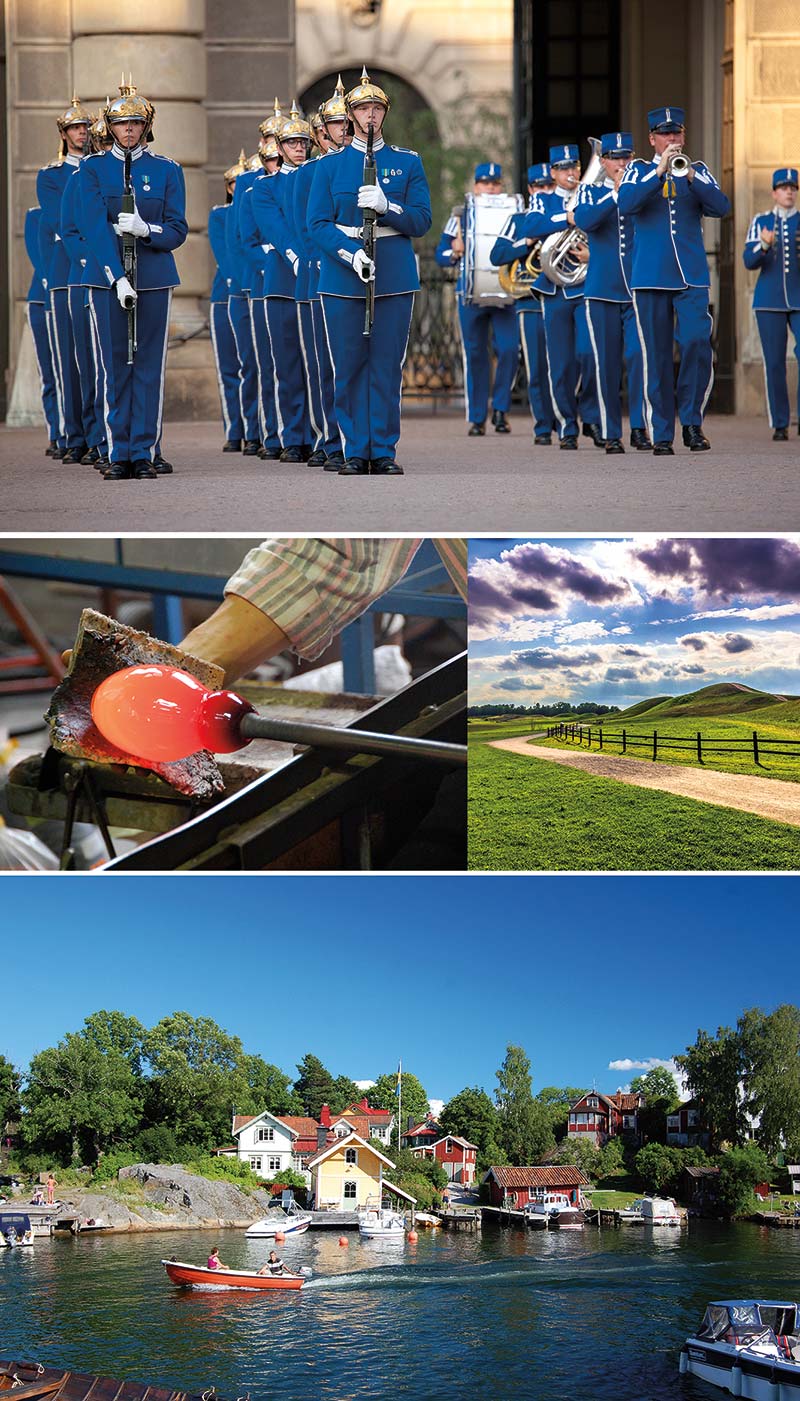
(Clockwise from top) Royal pomp and circumstance in Stockholm; ancient burial mounds near Uppsala; Stockholm’s tranquil archipelago; glassblowing in southeast Sweden
SWEDEN
▲▲▲Stockholm (2 days)
This splendid capital has charming Gamla Stan (historic Old Town island), a fun changing of the guard, and a stately City Hall with tower views. Sights include the superb Skansen open-air folk museum, astonishing Vasa Museum (17th-century warship), and fan-pleasing ABBA museum. The sleek port offers an archipelago cruise and overnight boats to Helsinki and to Tallinn.
▲Near Stockholm (1 day)
Choose among three good day trips: the lavish, royal Drottningholm Palace with its Baroque-era theater; the cute town of Sigtuna with rune stones and 18th-century buildings; and the university town of Uppsala, with its historic cathedral, Linnaeus Garden and Museum, and ancient burial mounds.
▲Stockholm’s Archipelago (1 day)
Sweden’s rocky garden of more than 30,000 islands is best seen by boat. You’ll catch a glimpse from the overnight boat to Helsinki or Tallinn, but it’s better if you get up close via the ferries that connect Stockholm’s islands. You can visit multiple islands in one day and even stay overnight.
▲Southeast Sweden (2 days)
This sleepy region features two top towns. Lively Kalmar boasts a massive 12th-century castle and the nearby island of Öland, with sandy beaches and Iron Age monoliths. Pleasant Växjö has fine museums on Swedish emigration and glass making. Sweden’s Glass Country, between the two towns, is dotted with glassblowing hotshops among endless forest-and-lake scenery (easiest with a car).
FINLAND
▲▲Helsinki (1-2 days)
Finland’s attractive capital is fun to reach on a scenic overnight cruise from Stockholm. Helsinki is a delight for its striking architecture, particularly its unusual churches and rival cathedrals. Other top sights are the bustling waterfront market, grand pedestrian boulevard, and museums ranging from art and design to history and folk culture. The fortress island guarding the harbor is a huge park—a joy on a sunny day.
ESTONIA
▲▲Tallinn (1 day)
This lively Baltic capital adds spice to a Nordic itinerary. Its quaint, fun-to-explore Old Town core is corralled by intact medieval walls. Sights include the Russian Orthodox Alexander Nevsky Cathedral, Nordic Europe’s best market, a fascinating Nazi and Soviet occupation museum, and Kadriorg Park, with a contemporary art museum. Tallinn is connected by boat to Helsinki (two-hour ferry) and Stockholm (overnight cruise).
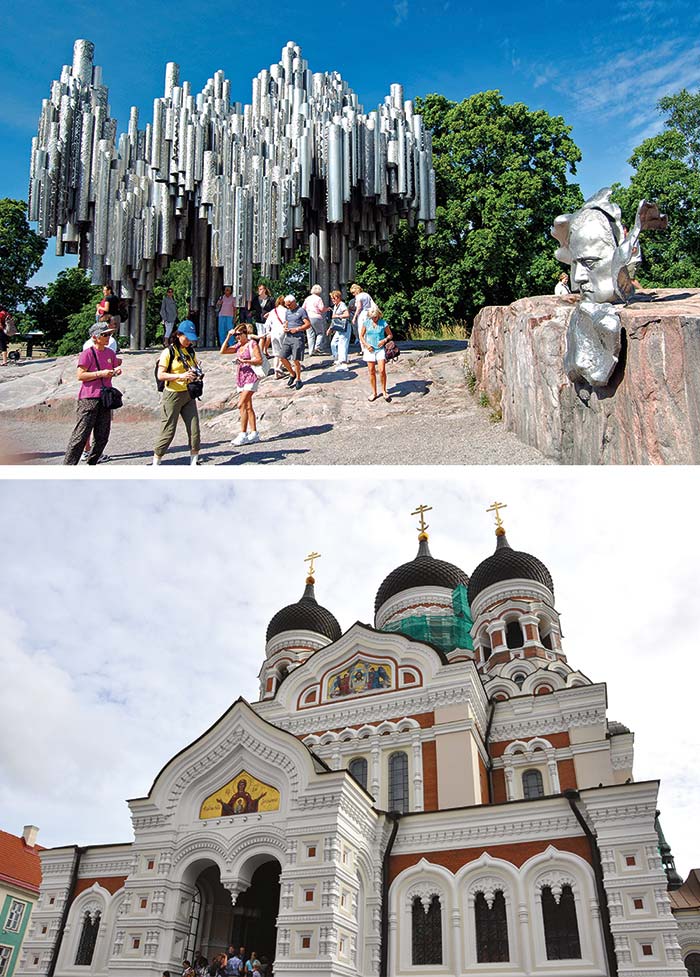
Helsinki’s Sibelius Monument—a forest of organ pipes in a forest of trees; Tallinn’s Alexander Nevsky Cathedral
Planning Your Trip
To plan your trip, you’ll need to design your itinerary—choosing where and when to go, how you’ll travel, and how many days to spend at each destination. For general advice on sightseeing, accommodations, restaurants, and more, see the Practicalities chapter.
DESIGNING AN ITINERARY
As you read this book and learn your options...
Choose your top destinations.
My recommended itineraries (see the sidebars) give you an idea of how much you can reasonably see in 21 days, but you can adapt them to fit your own interests and time frame.
If you like to keep busy day and night, spend more time in the capitals, which offer plenty of sights, activities, and evening excitement. If you’d rather focus on smaller cities, the best ones—with enough sights to keep you entertained for a longer stay—are Aarhus (Denmark), Kalmar (Sweden), and Bergen (Norway). For tranquil villages, relax in Denmark’s Ærøskøbing or Norway’s Balestrand or Solvorn.
Nature lovers linger in Norway, basing in a mountain lodge or fjordside town to enjoy hikes, cruises, and scenic drives. If regal palaces and medieval castles thrill you, Denmark and Sweden deliver royally. And throughout this seafaring region, the maritime museums are excellent (and Oslo has the most).
For a stroll through traditional Old World culture, seek out an open-air folk museum. Every country has at least one; these are even more meaningful if you have ancestral ties to the region.
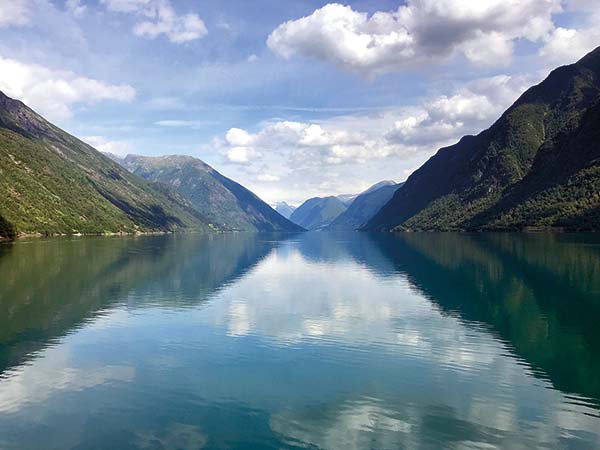
Cruisers enjoy scenic fjord excursions and overnight boats (which connect Stockholm with Helsinki and Tallinn; and Oslo with Copenhagen). If cruising doesn’t appeal, consider taking budget flights to Helsinki and Tallinn.
Connoisseurs of relaxation will find the most saunas per capita in Sweden and Finland. For family fun, Denmark’s Legoland and Tivoli Gardens are tops.
In this land of attractive cities, colorful towns, and eye-popping natural beauty, photographers want to go everywhere.
Decide when to go.
Summer is a great time to visit. Scandinavia bustles and glistens under the July and August sun; all the major sights are open and in full swing. At these northern latitudes, the days are long—in Oslo, on June 21 the sun comes up around 4:00 and sets around 23:00. In many places, things don’t kick into gear until about June 20, when Scandinavian schools let out. You’ll notice crowds in July and August, but up here “crowds” mean fun and action rather than congestion. It quiets down when the local kids go back to school, around August 20.
Travel in May, early June, and September lacks the vitality of summer but offers occasional good weather and minimal crowds. In Norway, the weather can remain pleasant from late May to mid-June, and late August through mid-September but—especially in fjord- and mountain-towns—quite a few sights, restaurants, and services close outside of the summer school break.
Unless winter sports are high on your agenda, winter is a bad time to explore Scandinavia. The region’s metabolism slows down like a hibernating bear’s, and many sights and accommodations close or keep a limited schedule. The weather can be cold and dreary, and the days are short. Christmastime activities, such as colorful markets and Copenhagen’s festively decorated Tivoli Gardens, offer some warmth during this chilly season.
For weather specifics, see the climate chart in the appendix.
Connect the dots.
Link your destinations into a logical route. Determine which cities you’ll fly into and out of. Begin your search for transatlantic flights on Google Flights.
Decide if you’ll travel by car, public transportation, or a combination. The public transit system is sleek and reliable; in general, trains are faster and pricier than buses.
A car is fun for exploring the countryside, but is useless in big cities. Scandinavian regions best suited for a car are Norway’s scenic fjord-and-mountain country, Denmark’s Jutland region (rune stones and Legoland park), and southeast Sweden (to visit glassworks).
Overnight cruises can be a fun and efficient way to link Scandinavian cities. A cruise sounds pricey, but keep in mind you’re paying for accommodations and transportation, combined with a memorable experience.
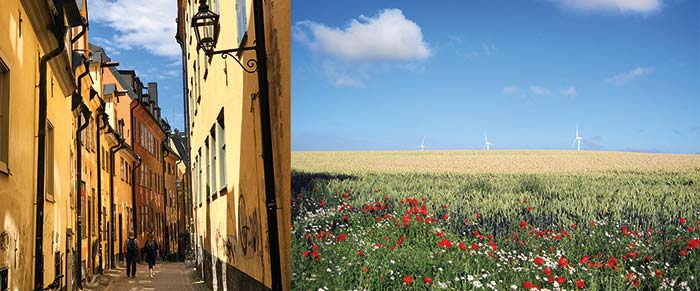
Gamla Stan, Stockholm’s old town; wildflowers in the Danish countryside near Roskilde
| Day | Plan | Sleep |
| 1 | Arrive in Copenhagen | Copenhagen |
| 2 | Copenhagen | Copenhagen |
| 3 | Copenhagen | Copenhagen |
| 4 | Pick up car, visit Roskilde and Odense | Aarhus |
| 5 | Aarhus | Aarhus |
| 6 | Choose more time in Aarhus, a stop in Legoland, or earlier arrival in Ærø | Ærøskøbing |
| 7 | Ærø loop tour | Ærøskøbing |
| 8 | To Copenhagen, drop car, take direct train to Kalmar | Kalmar |
| 9 | Kalmar | Kalmar |
| 10 | Train to Stockholm (optional stop in Växjö) | Stockholm |
| 11 | Stockholm | Stockholm |
| 12 | Stockholm, night boat to Helsinki | Boat |
| 13 | Helsinki | Helsinki |
| 14 | Day trip to Tallinn by ferry | Helsinki |
| 15 | Morning flight to Oslo | Oslo |
| 16 | Oslo | Oslo |
| 17 | Pick up car, visit Lillehammer and Gudbrandsdal Valley | Jotunheimen Mountains area |
| 18 | Jotunheimen Mountains, Sognefjellsvegen scenic drive to Lustrafjord | Lustrafjord area or Aurland |
| 19 | Fjord cruise, drive to Bergen, drop car | Bergen |
| 20 | Bergen | Bergen |
| 21 | Fly home |
Notes: Flying into Copenhagen and out of Bergen (with a likely transfer in Copenhagen) can be wonderfully efficient. If you’d rather end your trip in Oslo, fly from Helsinki to Bergen, and explore Norway by car east to Oslo.
To see more of southeast Sweden, rent a car in Kalmar on Day 10 and tour the Glass Country and Växjö, where you can catch the train for Stockholm. Or stop in Växjö en route when you train from Kalmar to Stockholm.
With less time, instead of renting a car to link Oslo and Bergen, take the one-day Norway in a Nutshell train/fjord cruise/train trip between the two cities, trimming two overnights.
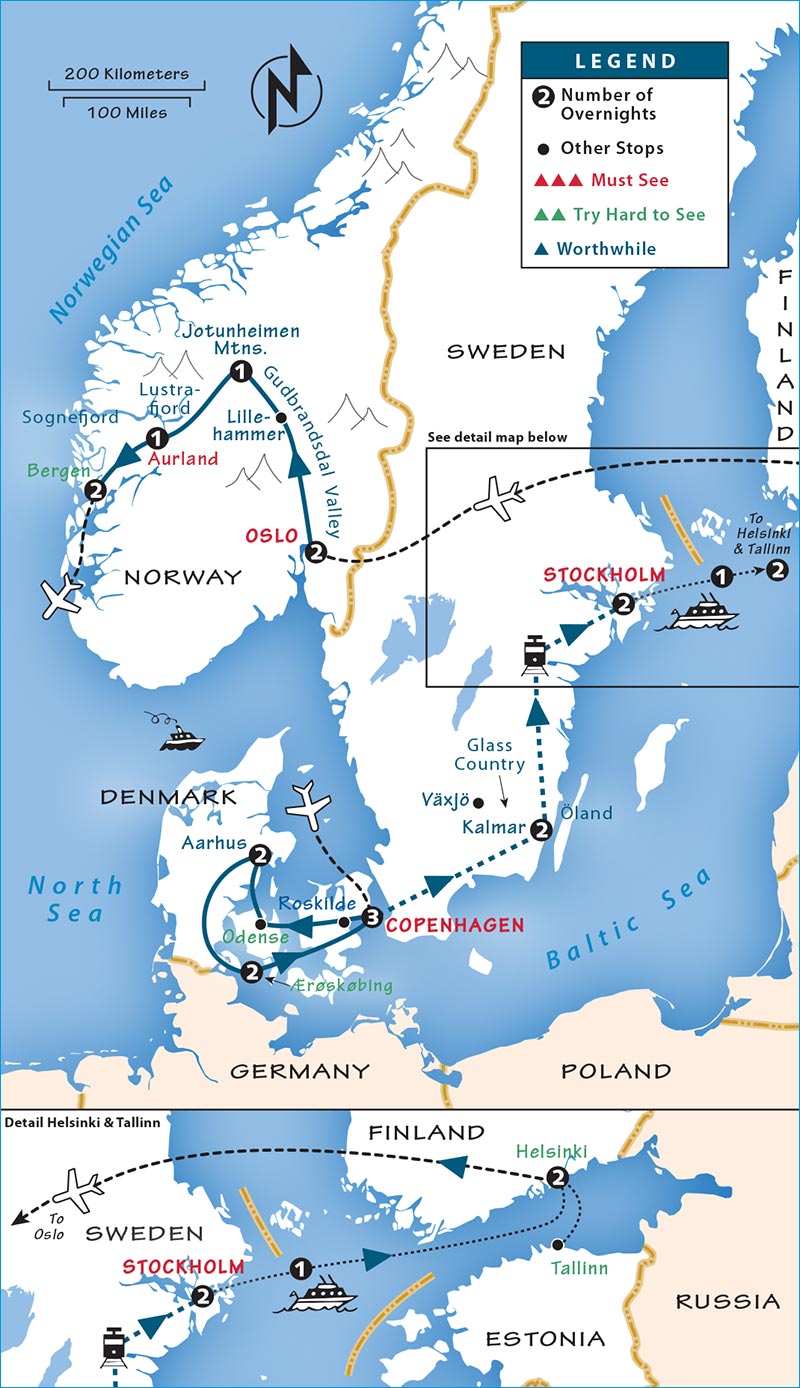
Flights are relatively inexpensive, given the time you’ll save (check SkyScanner.com for intra-European flights; just keep in mind air travel’s larger carbon footprint). For example, a two-hour flight connects Helsinki and Oslo, but it’s approximately 22 hours by overnight boat (Helsinki to Stockholm) and bullet train (Stockholm to Oslo). Instead of taking a round-trip cruise, consider taking a leisurely boat one-way, then a quick flight back (or to your next destination).
To determine approximate travel times between destinations, study the driving map in the Practicalities chapter or check Google Maps; visit Bahn.com for train schedules.
Write out a day-by-day itinerary.
Figure out how many destinations you can comfortably fit in your time frame. Don’t overdo it—few travelers wish they’d hurried more. Allow enough days per stop (see estimates in “Scandinavia’s Top Destinations,” earlier). Minimize one-night stands. It can be worth taking a late-afternoon drive or train ride to settle into a town for two consecutive nights—and gain a full uninterrupted day for sightseeing. Include sufficient time for transportation; whether you travel by car or train, it’ll take you a half-day to get between most destinations.
Staying in a home base (like Copenhagen) and making day trips can be more time-efficient than changing locations and hotels.
Take sight closures into account. Avoid visiting a town on the one day a week its must-see sights are closed. Check if any holidays or festivals fall during your trip—these attract crowds and can close sights (for the latest, visit that country’s national tourist website).
Give yourself some slack. Every trip, and every traveler, needs downtime for doing laundry, picnic shopping, people-watching, and so on. Pace yourself. Assume you will return.
| Day | Plan | Sleep |
| 1 | Arrive in Copenhagen | Copenhagen |
| 2 | Copenhagen | Copenhagen |
| 3 | Copenhagen | Copenhagen |
| 4 | Train to Aarhus with stops in Roskilde and Odense | Aarhus |
| 5 | Aarhus | Aarhus |
| 6 | Train to Svendborg (via Odense), then ferry to Ærø | Ærøskøbing |
| 7 | Ærø | Ærøskøbing |
| 8 | Train to Kalmar | Kalmar |
| 9 | Kalmar | Kalmar |
| 10 | Morning train to Stockholm | Stockholm |
| 11 | Stockholm | Stockholm |
| 12 | Stockholm, night boat to Helsinki | Boat |
| 13 | Helsinki | Helsinki |
| 14 | Helsinki, afternoon ferry to Tallinn | Tallinn |
| 15 | Tallinn | Tallinn |
| 16 | Morning flight to Oslo | Oslo |
| 17 | Oslo | Oslo |
| 18 | Train and boat (via “Nutshell” route) to the Sognefjord | Aurland or Flåm |
| 19 | Sognefjord to Bergen via express boat | Bergen |
| 20 | Bergen | Bergen |
| 21 | Fly home |
Notes: To add Legoland, visit it between Ærø and Aarhus (and overnight in Billund). If tight on time, you can link Oslo to Bergen without an overnight on the Norway in a Nutshell trip.
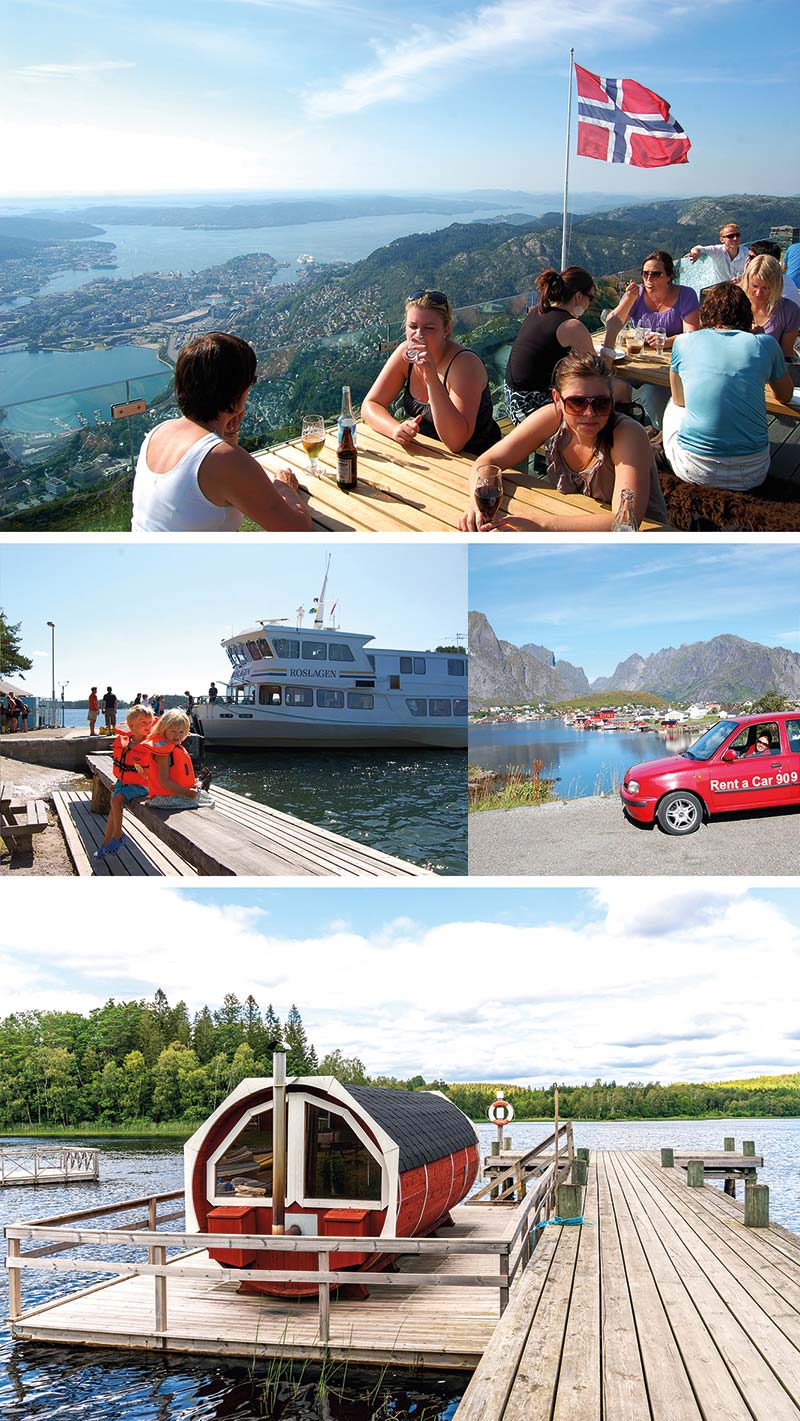
(Clockwise from top) Drinks and a view above Bergen; driving in Norway; floating wooden sauna in Sweden; ferries to Stockholm’s archipelago
Run a reality check on your dream trip. You’ll have major transportation costs in addition to daily expenses.
Flight: A round-trip flight from the US to Copenhagen costs about $900-1,500, depending on where you fly from and when.
Public Transportation: For a three-week trip by public transportation, allow $650 per person. This covers a second-class Eurail Scandinavia pass (4-country, 6 days in 1 month), plus the cost of boat rides that aren’t covered or discounted by the pass (such as Norway’s Flåm-Aurland-Bergen route). The pass includes a discount on boat fares in the Stockholm-Helsinki-Tallinn triangle (without using a counted travel day). Consider the value of your time: Taking a short flight can beat taking a day-long train ride.
Car Rental: Allow $350-500 per week (booked well in advance; daily rates vary), not including tolls, gas, parking, and insurance.
Ferries: For the overnight cruises between Stockholm and Helsinki or Tallinn, allow about $100-125 per person for a one-way fare. The short Helsinki-Tallinn ferry costs $30-40 one-way. Look for discounts for rail-pass holders, students, families, seniors, and round-trip fares.
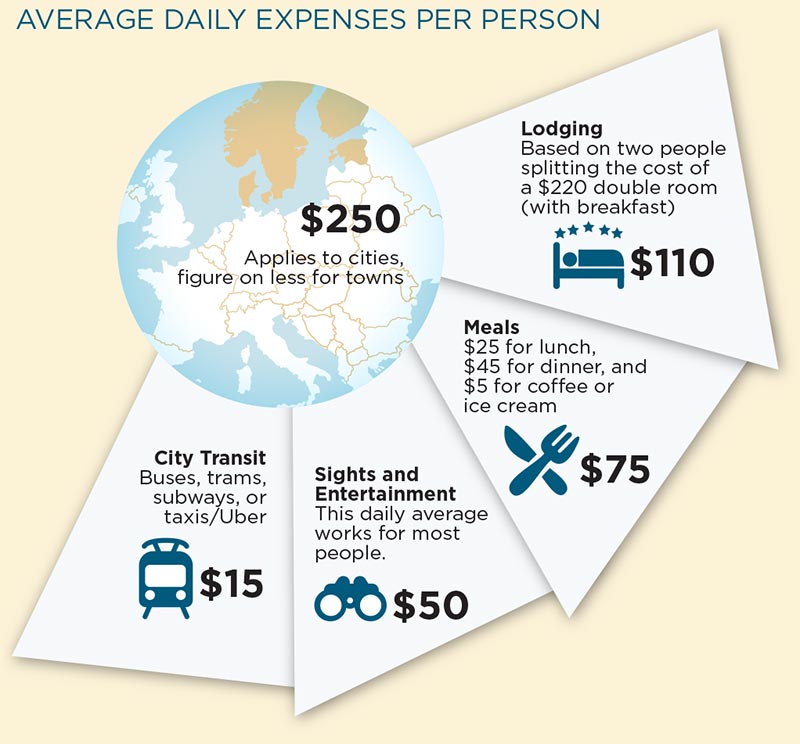
To cut your daily expenses, take advantage of the deals you’ll find throughout Scandinavia and mentioned in this book.
A Eurail Scandinavia rail pass will save you money on train travel. City transit passes (for multiple rides or all-day usage) decrease your cost per ride.
Avid sightseers buy combo-tickets or passes that cover multiple museums. At sights, ask about discounted admissions, as many aren’t posted. (Legoland offers discounted tickets online.) If a town doesn’t offer deals, visit only the sights you most want to see, and seek out free sights and experiences (people-watching counts).
Some businesses—especially hotels and walking-tour companies—offer discounts to my readers (look for the RS% symbol in the listings in this book).
Reserve your rooms directly with the hotel. Some hotels offer a discount if you pay in cash and/or stay three or more nights (check online or ask).
Midsummer hotel discounts are possible but are generally offered only by the more expensive hotels. To save money, do as the Scandinavians do and stay in hostels (most have private rooms and great breakfasts). Or check Airbnb-type sites for deals.
It’s no hardship to eat inexpensively in Scandinavia. The breakfasts offered at your lodgings are all-you-can-eat and so hearty that you’ll need only a sandwich for lunch. Many restaurants offer reasonably priced lunch specials. Convenience and grocery stores sell a broad array of affordable to-go dishes, rescuing travelers shell-shocked by sit-down restaurant prices. Cultivate the art of picnicking in atmospheric settings.
When you splurge, choose an experience you’ll always remember, such as a glacier walk or a smorgasbord. Minimize souvenir shopping; focus instead on collecting wonderful memories.
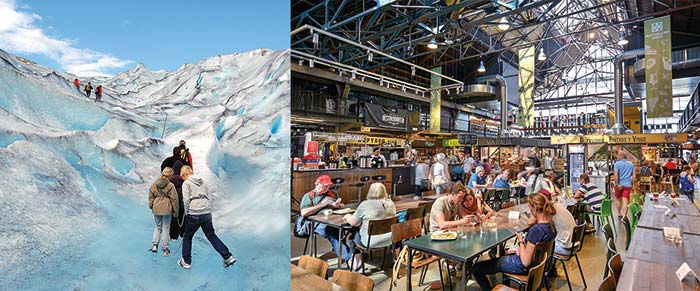
Hiking the Nigard Glacier in Norway’s Lustrafjord; foodie paradise in Oslo’s Mathallen food hall
BEFORE YOU GO
You’ll have a smoother trip if you tackle a few things ahead of time. For more details on these topics, see the Practicalities chapter and RickSteves.com, which has helpful travel-tip articles and videos.
Make sure your travel documents are valid. If your passport is due to expire within six months of your ticketed date of return, you need to renew it. Allow 12 weeks or more to renew or get a passport. Be aware of any entry requirements; you may need to register with the European Travel Information and Authorization System (ETIAS) before you travel (quick and easy process; check https://travel-europe.europa.eu/etias_en). Get passport and country-specific travel info at Travel.State.gov.
Arrange your transportation. Book your international flights. Overall, Google Flights is the best place to start searching for flights.
Figure out your transportation options: It’s worth thinking about buying train tickets online in advance, getting a rail pass, renting a car, or booking cheap European flights. (You can wing it once you’re there, but it may cost more.) If you plan to take an overnight boat between major cities in summer or on weekends, book it in advance (see “Connections” sections in destination chapters for details).
Reserve long-distance rail travel in advance. If you’re doing the Norway in a Nutshell route in July or August, make reservations for the Oslo-Myrdal and Myrdal-Flåm trains (see the Norway in a Nutshell chapter). If you want to take your car on Denmark’s Svendborg-Ærø ferry, reserve at least a week in advance.
Book rooms well in advance, especially if your trip falls during peak season or any major holidays or festivals.
Consider travel insurance. Compare the cost of insurance to the cost of your potential loss. Understand what protections your credit card might offer and whether your existing insurance (health, homeowners, or renters) covers you and your possessions overseas.
Manage your money. “Tap-to-pay” or “contactless” cards are widely accepted and simple to use. You may need your credit card’s PIN for some purchases—request it if you don’t have one. Alert your bank that you’ll be using your debit and credit cards in Europe. You don’t need to bring the local currency for your trip; you can withdraw cash from ATMs in Europe (though you won’t need much in Scandinavia).
Use your smartphone smartly. Sign up for an international service plan, or rely on Wi-Fi instead. Download any apps you’ll want on the road, such as maps, translators, and Rick Steves Audio Europe (see sidebar).
Pack light. You’ll walk with your luggage more than you think. I travel for weeks with a single carry-on bag and a day pack. Use the packing checklist in the appendix as a guide.
The Rick Steves Audio Europe app makes it easy to download audio content to enhance your trip. Use the app to listen to audio tours of Europe’s top sights, plus my public radio show interviews with travel experts from around the globe. Scan the QR code to find it in your app store, or visit RickSteves.com/AudioEurope.


Rick Steves Classroom Europe, a powerful tool for teachers, is also useful for travelers. This video library contains about 600 short clips excerpted from my public television series. Enjoy these videos as you sort through options for your trip and to better understand what you’ll see in Europe. Check it out at Classroom.RickSteves.com.

Travel Smart
If you have a positive attitude, equip yourself with good information (this book), and expect to travel smart, you will.
Read—and reread—this book. To have an “A” trip, be an “A” student. Note opening hours of sights, closed days, crowd-beating tips, and whether reservations are required or advisable. Check the latest at RickSteves.com/update.
Be your own tour guide. As you travel, get up-to-date info on sights, reserve tickets and tours, reconfirm hotels and travel arrangements, and check transit connections. Visit local tourist information offices (TIs). Upon arrival in a new town, lay the groundwork for a smooth departure; confirm the train, bus, boat, or road you’ll take when you leave.
Outsmart thieves. Pickpockets abound in crowded places where tourists congregate. Treat commotions as smokescreens for theft. Keep your passport and backup cash and cards secure in a money belt tucked under your clothes; carry only a day’s spending money and a card in your front pocket or wallet. Don’t set valuable items down on counters or café tabletops, where they can be quickly stolen or easily forgotten.
Minimize potential loss. Keep expensive gear to a minimum. Bring copies or take photos of important documents (passport and cards) to aid in replacement if they’re lost or stolen. Back up photos and devices to the cloud as you travel.
Guard your time and energy. Taking a taxi can be a good value if it saves you a long wait for a cheap bus or an exhausting walk across town. To avoid long lines, follow my crowd-beating tips, such as sightseeing early or late.
Prepare for border crossings. Border security between Norway, Sweden, Denmark, Finland, and Estonia may be a wave-through, but be prepared to show your passport. When you change countries, you change languages and currency (except between Finland and Estonia, which both use the euro).
Be flexible. Even if you have a well-planned itinerary, expect changes, strikes, closures, sore feet, bad weather, and so on. Your Plan B could turn out to be even better.
Attempt the language. Most Scandinavians—especially in the tourist trade and in cities—speak English, but if you learn some of the local language, even just a few pleasantries, you’ll get more smiles and make more friends. Apps such as Google Translate work for on-the-go translation help, but you can get a head start by practicing the survival phrases in this book.
Connect with the culture. Interacting with locals carbonates your experience. Enjoy the friendliness of the Scandinavian people. Ask questions; most locals are happy to point you in their idea of the right direction. Set up your own quest to discover the perfect fjord view, the tastiest pastry, and the coziest hyggelig experience. When an opportunity pops up, make it a habit to say “yes.”
Scandinavia...here you come!