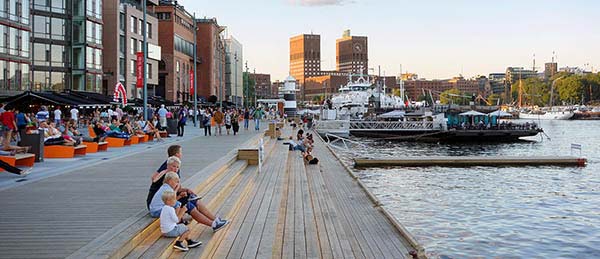
OSLO
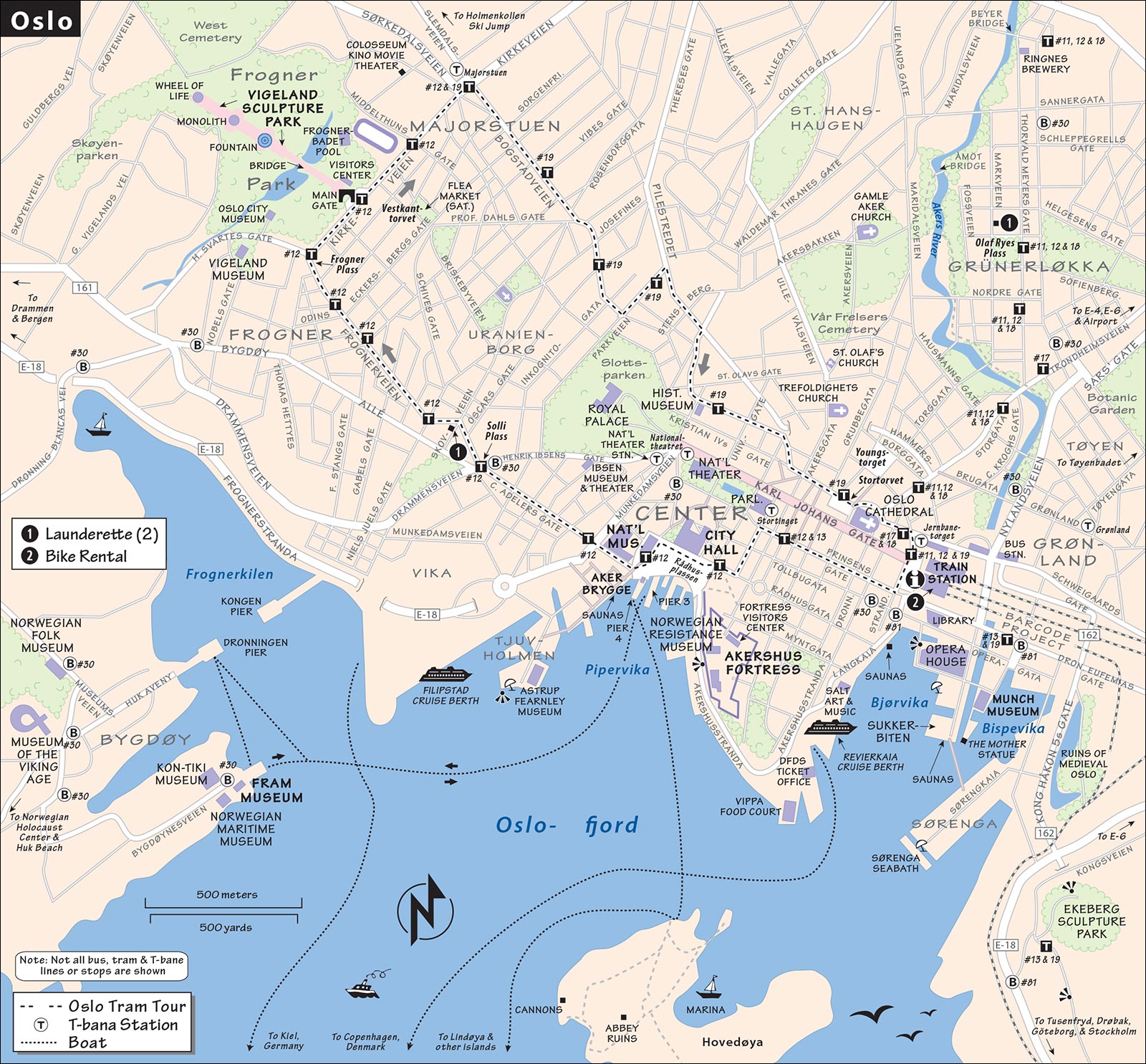
Map: Oslo Harbor Promenade Bike Tour
Map: National Museum—First Floor
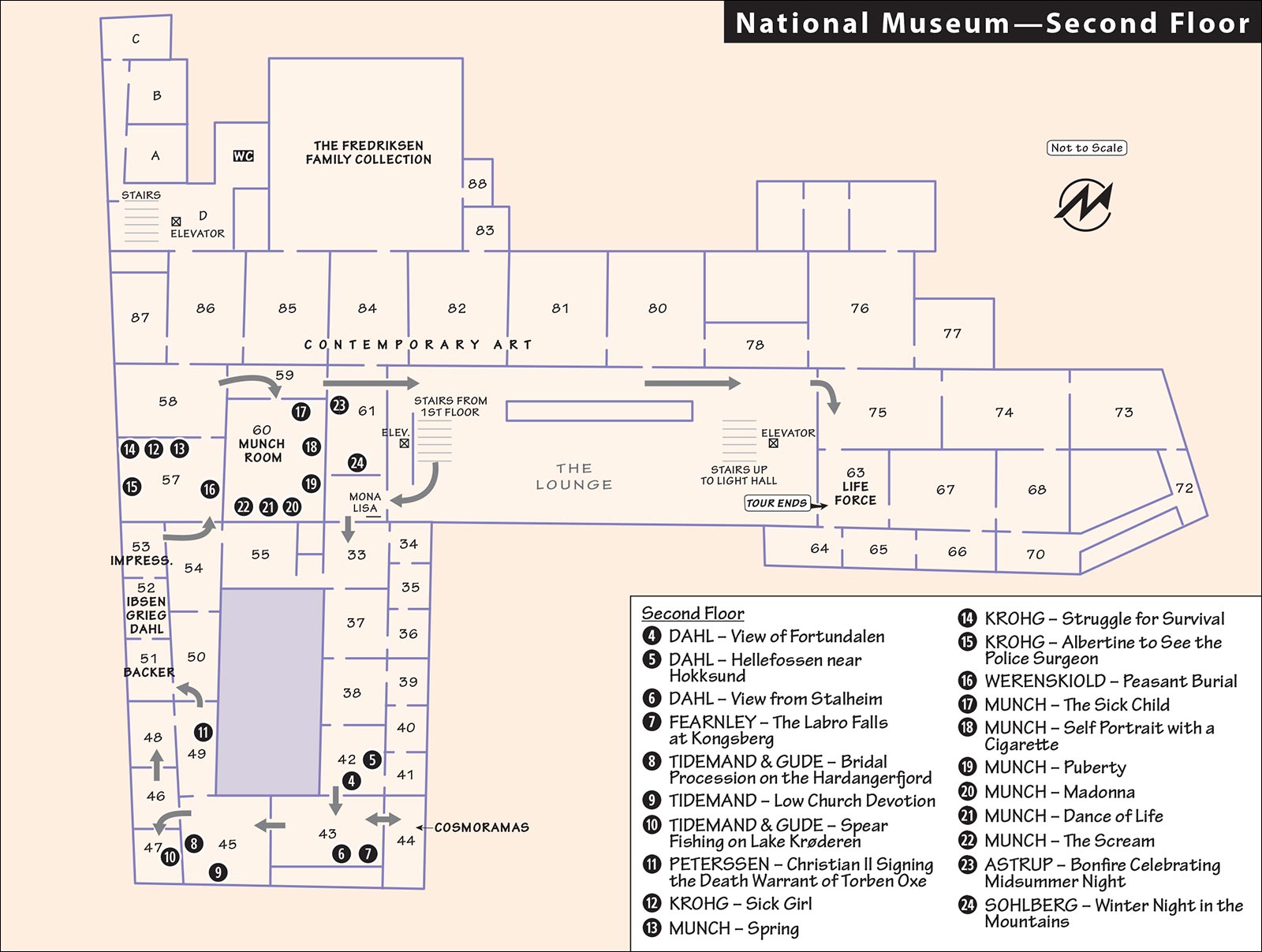
Map: National Museum—Second Floor
Map: Grünerløkka & Grønland Area
NEAR THE TRAIN STATION AND KARL JOHANS GATE
BETWEEN THE ROYAL PALACE AND FROGNER PARK
HARBORSIDE DINING IN AKER BRYGGE
NEAR THE SKI JUMP, HIGH ON THE MOUNTAIN
Though Oslo is the smallest of the Scandinavian capitals, this brisk little city offers more sightseeing thrills than you may expect. Get ready to be inspired—Oslo simply has its act together.
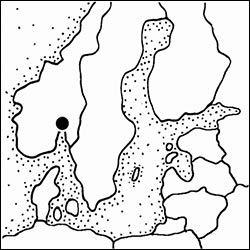
Situated at the head of a 60-mile-long fjord, surrounded by forests, and populated by more than a half-million people, Oslo is Norway’s cultural hub. For 300 years (1624-1924), the city was called Christiania, after Danish King Christian IV. With Norwegian independence, the city reverted to the Old Norse name of Oslo. As an important port facing the Continent, Oslo has been one of Norway’s main cities for a thousand years and the de facto capital since around 1300. Still, Oslo has always been small by European standards; in 1800, Oslo had just 10,000 people—one-fiftieth the size of Paris or London.
But Oslo experienced a growth spurt with the Industrial Age, and in 50 years (from 1850 to 1900) its population exploded to about 250,000. Most of “old Oslo” dates from this period, when the city’s many churches and grand buildings were built of stone in the Historicism styles (neo-Gothic and neo-Romanesque) of the late 19th century.
Today the city sprawls out from its historic core to encompass nearly a million people in its metropolitan area (about one in five Norwegians). Oslo’s onetime industrial area, along the Akers River, has been reclaimed as a lush green zone, filled with spiffed-up brick warehouses and (on a sunny day) countless sunbathing Norwegians. The city’s port hums with international shipping and a sizeable cruise industry.
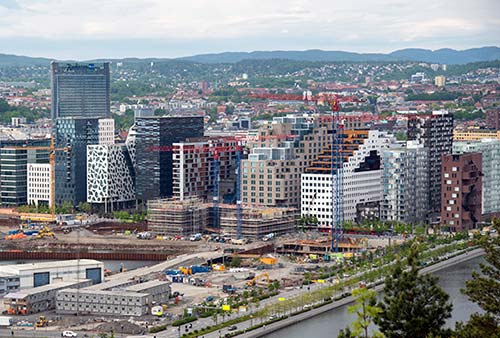
But these industries are moving farther and farther away from the city center as Oslo reclaims its fjord and leverages its geography for the people. Its waterfront has undergone an extreme urban makeover, and today sports ultramodern yet people-friendly residential zones and the inviting Harbor Promenade—a pedestrian walkway stretching the length of the harbor. Just in the last few years, an inspirational library, the biggest art museum in Europe dedicated to a single artist (Edvard Munch), and a dazzling new National Museum have all become must-sees for any visit to the Norwegian capital.
In Oslo, sights of Norway’s salty maritime spirit—past and present—tell an exciting story. Prowl through the remains of an ancient Viking ship, and marvel at more peaceful but equally gutsy modern boats (the Kon-Tiki, Ra II, Fram, and Gjøa). Dive into traditional folk culture at the Norwegian open-air folk museum and get stirred up by the country’s heroic spirit at the Norwegian Resistance Museum. For a look at modern Oslo, tour the striking City Hall, peek at sculptor Gustav Vigeland’s people pillars, walk all over the Opera House, and celebrate the world’s greatest peacemakers at the Nobel Peace Center.
Even with all of Oslo’s modernization, it’s delightfully easy to escape the urban downtown and harbor area to the small vacation islands of Oslofjord or into the sprawling countryside to ascend the exhilarating Holmenkollen Ski Jump. For the visitor, Oslo is an all-you-can-see smorgasbord of historic sights, nature, art, and Nordic fun.
PLANNING YOUR TIME
Oslo offers an exciting slate of sightseeing thrills. It deserves a minimum of three nights and two well-organized days. Keep in mind that the National Museum and the Vigeland Museum are closed on Monday. Spend the two days like this:
Day 1: Take my self-guided Oslo Walk. Tour the City Hall and National Museum. Then follow my bike tour of the Harbor Promenade and enjoy my ferry tour of Oslofjord.
Day 2: Ferry across the harbor to Bygdøy and tour the Fram and Kon-Tiki museums. When the Museum of the Viking Age opens, likely in 2027, add it to your day 2 itinerary. Spend the afternoon at the Norwegian Folk Museum. Finish the day at Vigeland Sculpture Park, enjoying Gustav Vigeland’s statues.
With More Time: You could easily fill a third day: Slow things down, tour more sights, visit the Holmenkollen Ski Jump, or go for a lazy hike along the Akers River.
In the evening, you could enjoy dinner by the harbor. Or venture to the less touristy dining zones around Grünerløkka, Youngstorget, and Grønland.
Orientation to Oslo
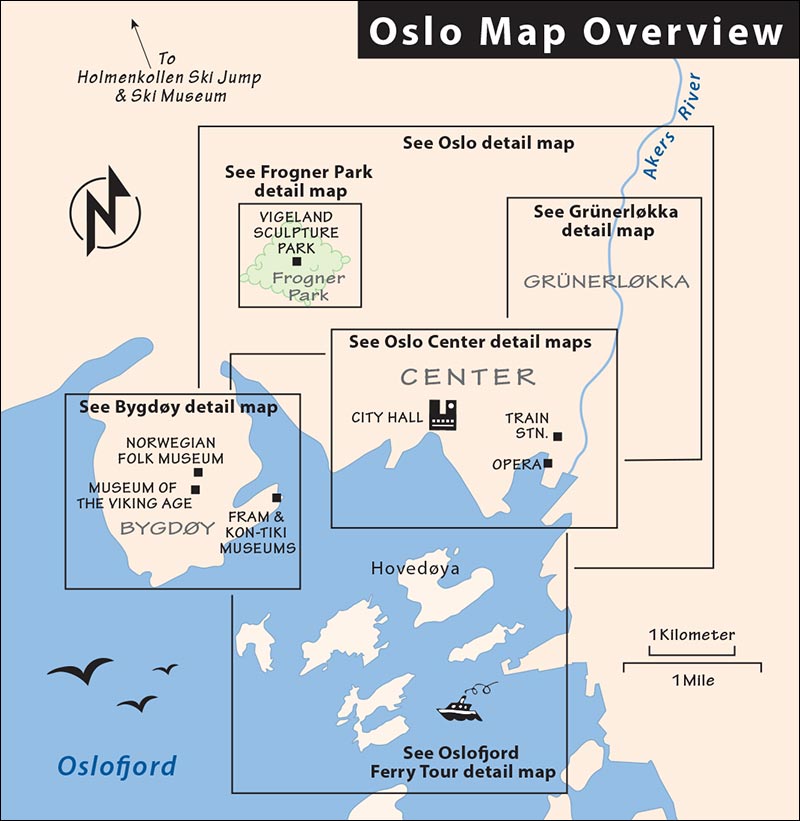
Oslo (pop. 710,000) is easy to manage. Most sights are contained within the city center. Much of what you’ll want to see clusters in three easy-to-connect zones: downtown, from the Harbor Promenade to the main boulevard, Karl Johans Gate (with the Royal Palace and City Hall at one end and the train station at the other); the Bygdøy district, a 10-minute ferry ride across the harbor; and Frogner Park (with the Vigeland Sculpture Park), about a mile behind the palace.
Beyond the core are more colorful neighborhoods: Majorstuen and Frogner feel “uptown,” with chic boutiques, elegant homes, and lots of parks. Grünerløkka and the adjacent Akers River greenbelt is a trendy area that extends to Grønland, the multiethnic immigrants’ zone behind the train station.
TOURIST INFORMATION
The Oslo Visitor Centre is in the Østbanehallen—the original old train station next to today’s modern central train station (just inside the front door, open daily 8:30-18:00; +47 23 10 62 00, www.visitoslo.com).
At the TI, pick up these freebies: an Oslo city/transit map; the annual Oslo Guide (overview of museums, eating, and nightlife); and the What’s On Oslo monthly (museum and event listings). They have a fine Oslo biking map, too. They also sell the handy Oslo Pass, tickets for the express train to the airport, walking tours, and events. If you’re traveling beyond Oslo, you can purchase Norway in a Nutshell tickets here. For the best events calendar, see VisitOslo.com.
Sightseeing Pass: The Oslo Pass covers the city’s public transit, ferry boats, and entry to nearly every major sight (495 NOK/24 hours, 720 NOK/48 hours, 895 NOK/72 hours, big discounts for kids ages 6-17 and seniors 67 and over). While you can buy the pass from the TI upon arrival in Oslo, it’s quick and easy to download the Oslo Pass app and buy and use the pass digitally.
ARRIVAL IN OSLO
By Train
The central train station (Oslo Sentralstasjon, or “Oslo S” for short) is slick and helpful. You’ll find ATMs, two exchange desks, luggage storage, a well-stocked Co-op Prix grocery store (long hours, closed Sun), a small Joker supermarket (long hours daily), and a Vinmonopolet liquor store (Oslo’s most central place to buy wine or liquor—which is sold only at Vinmonopolet stores, Mon-Fri 10:00-18:00, Sat until 16:00, closed Sun). The station is plugged into a lively modern shopping mall called Byporten (Mon-Fri 10:00-20:00, Sat until 18:00, closed Sun), where just inside the entrance you’ll find a cheap bakery called Bit.
For tickets and train info, go online to VY.no, or head to the station’s ticket office between tracks 8 and 9 (Mon-Fri 7:30-20:00, Sat-Sun 10:00-18:00). Here, you can buy domestic tickets, get information on the Flåm and Bergen Railway (Bergensbanen), and buy international train tickets. Domestic train tickets (but not international tickets) can also be bought at ticket machines.
By Plane or Boat
For details on arriving in Oslo by plane or boat, see the end of this chapter.
HELPFUL HINTS
Book Ahead: Reserve ahead to experience Oslo’s trendy floating saunas or to splurge at one of the city’s many upscale restaurants, reserve a table in advance. For those traveling on the overnight DFDS cruise ship from Oslo to Copenhagen, book ahead.
Theft Alert: Pickpockets are a problem in Oslo, particularly in crowds on the street and on subways and buses. Oslo’s street population loiters around the train station; steer clear of aggressive panhandlers there and along Karl Johans Gate.
Money: Locals rarely use cash. Credit cards and payment apps rule, and good bank-run ATMs are hard to find.
Pharmacy: Jernbanetorgets Vitus Apotek is open 24 hours daily (across from train station on Jernbanetorget, +47 23 35 81 00). For location, see the map on here.
Laundry: Clean Kokos has self-service launderettes in two handy neighborhoods: Frogner (at Skovveien 6) and Grünerløkka (at Markveien 28). To operate the machines, you’ll first need to download the Miele appWash app and create an account, then follow the in-app instructions (self-service only, daily 6:00-22:00, +47 40 03 79 00, www.cleankokos.rent).
Pronouncing Norwegian Vowels: Sure, nearly everyone you meet will speak English, but the Norwegians do have three unique and confusing vowels in their alphabet: œ is pronounced ah (as in “ant”); ø is said oe (as in “early”); and, to impress your Norsk friends, pronounce å like awe.
GETTING AROUND OSLO
By Public Transit
Oslo is a big city, and taxi fares are exorbitant. Take advantage of the excellent transit system, made up of buses, trams, ferries, and a subway (Tunnelbane, or T-bane for short). The system is run by Ruter, which has a transit-information center below the skinny glass tower in front of the central train station (Mon-Fri 7:00-20:00, Sat-Sun 8:00-18:00, www.ruter.no).
Schedules: The system runs like clockwork, with schedules clearly posted and followed. Download the RuterBillett app for schedules at your fingertips, or check reader boards at stops for the next tram’s arrival time (usually every 10 minutes during the day).
Tickets: Individual tickets work on buses, trams, ferries, the T-bane, and Vy trains (within Oslo) for one hour (40 NOK). Other ticket options include a 24-hour ticket (121 NOK; good for unlimited rides in 24-hour period) and the Oslo Pass (free run of entire system, including Bygdøy boats; described earlier under “Tourist Information”).
Buying Tickets: You can buy tickets via the RuterBillett app and at the Ruter transit office, ticket machines, Narvesen and Deli De Luca kiosks, and some convenience stores. Note that boats to Bygdøy require a separate, more expensive ticket. If you buy a paper transit ticket, you’ll need to validate it on board (for bus, tram, or ferry rides) or at the T-bane station (for subway rides).
Handy T-Bane Stops: These subway stops are near Oslo’s top attractions: Jernbanetorget (central station, bus and tram hub, express train to airport); Stortinget (top of Karl Johans Gate, near Akershus Fortress); Nationaltheatret (National Theater, also a train station, express train to airport; near City Hall, National Museum, Aker Brygge, Royal Palace); Majorstuen (walking distance to Vigeland Sculpture Park); Grønland (cheap and fun restaurant zone, bottom of Grünerløkka district); Holmenkollen (famous ski jump, city view); Frognerseteren (highest point in town, jumping-off point for forest walks, bike rides, and sledding in winter); and Sognsvann (idyllic lake in forest outside of town).
Tram and Bus Lines: Nearly all of Oslo’s trams stop at Oslo S. Trams #12 and #19 jointly make a ring around the city (with stops at the train station, fortress, harborfront, City Hall, National Museum, Aker Brygge, Vigeland Sculpture Park, Bogstadveien, and Stortorvet).
Trams #13 and #19, and bus #81 stop at Bjørvika—near the Opera House and Munch Museum, and the Ekeberg Sculpture Park, south of downtown.
Trams #11, #12, and #18 run to Olaf Ryes Plass (center of Grünerløkka district).
Bus #30 covers Olaf Ryes Plass in Grünerløkka, the train station, near Karl Johans Gate, National Theater, and Bygdøy, with stops at each Bygdøy museum).
By Taxi or Uber
Taxis come with a 150-NOK drop charge (yes, that’s $15 just to get in the car) that covers you for three or four kilometers—about two miles (more on evenings and weekends). Taxis are a good value only if you’re with a group. If you use a minibus taxi, you can negotiate an hourly rate. To get a taxi, wave one down, find a taxi stand, or call +47 22 38 80 90. Uber, which works in Oslo just like in the US, is less expensive.
By Bike
Faced with a six-block walk with my backpack to get to the airport shuttle train at 6:00 one morning, it occurred to me, “No problem; I’ll grab a bike, ride, park, and I’m there!” Oslo’s near-complete ban on cars in the city core and the addition of bike lanes have made it an increasingly good city for cycling, despite its hills. Tunnels take cars under the city while trams, buses, pedestrians, and bikes rule the streets. Still, bikers are expected to follow the same rules a driver would. Just use common sense (and be very careful when crossing treacherous tram tracks).
Oslo City Bike (Oslo Bysykkel): This is one of the best city bike systems I’ve encountered and makes zipping around town a breeze. (My guided harbor promenade tour assumes you’ll be using one of these bikes.) You must be at least 13 years old to rent and ride.
Download the free Oslo City Bike app and pay 99 NOK for a three-day membership. The app is smart and intuitive and shows all the racks in town with real-time counts of available bikes and spaces. With your membership, you can use a bike for up to an hour for free—then pay 15 NOK for every 15 minutes after that. (You can game the system a bit by simply swapping out bikes at any rack to restart your hour clock.)
Bikes (which come with cute names) are solid 3-speeds but have no helmets and no locks (the idea is to pedal from rack to rack and rarely use the kick-stand, so a lock is unnecessary).
To rent a bike, go to the rack and open the Oslo City Bike app on your phone. Tap “release a bike,” and the app will indicate which number stall has a bike unlocked and ready for you. To return your bike, roll it into an open rack stall and make sure it clicks and latches. The app should confirm that the bike has been returned properly.
Bike Rental: You can also rent from Oslo Bike Rental at the Østbanehallen complex, next to the train station (e-bikes, kids’ bikes available, helmet included, daily 09:00-17:00, July-Aug until 19:00, Jernbanetorget 1—for location, see the map on here, +47 24 00 00 04, www.oslobikerental.no).
Tours in Oslo
ON FOOT
Walking Tours
Oslo Guidebureau runs several city walks in English, led by licensed local guides: “In the Heart of Oslo” (Sat at 14:00), “Historic River Walk” (Sun at 14:00), “City of Contrasts” (Mon at 17:00), and a tour of Vigeland Sculpture Park (Wed at 18:00). These walks are a great way for the curious traveler to spend two hours (200 NOK, free with Oslo Pass, 2 hours, tours start at visitors center in the train station, private tours available, +47 22 42 28 18, www.osloguide.no).
Local Guides
Licensed guide Pål Johansen offers Oslo walking tours when not leading Rick Steves groups. He has also helped considerably with this guidebook ($300/half-day, $550/full-day, www.norwaywithpal.com, pal@norwaywithpal.com). If Pål’s not available, Oslo Guidebureau can tailor a tour to meet your interests (3-hour private tours-2,850 NOK, +47 22 42 28 18, www.osloguide.no, see listing above).
Hiking Tours
For hiking in the forest and urban green spaces of Oslo, check out Oslo Hiking, which offers both group and private hikes. They also run bike tours (hiking tours start at 1,000 NOK, tours depart from outside the TI at Østbanehallen, +47 22 20 80 00, www.oslohiking.no).
BY BUS
While a bus tour can help you get your bearings, most of Oslo’s sightseeing is concentrated in a few discrete zones and well-connected by public transit. Consider my self-guided tram tour (later) instead. If a bus tour appeals, HMK offers several city tour itineraries (“Panorama” bus tour-500 NOK, 3 hours; “Discovery” bus tour-890 NOK, 5.5 hours; bus-and-ferry tours range from 890 NOK to 1,250 NOK, tours depart from Haakon VIIs Gate 1—next to Sprell toy store, +47 48 08 31 02, https://sightseeingoslo.com).
BY BIKE AND ON THE WATER
Bike and Ferry Tours
Viking Biking and Hiking is a hard-working and creative company offering tours by bike and ferry. You’ll feel like you’re being shown around by a friend—and gain a deeper understanding of Norwegian culture. Their most popular bike tour is their “Highlights” itinerary. It covers Akershus Castle, City Hall, the Royal Palace gardens, Vigeland Sculpture Park, Frogner neighborhoods, and Aker Brygge (480 NOK, 3 hours, May-Sept daily at 10:00 and 14:00, Oct-April daily at 14:00 only, up to 13 people). Their popular “Island Hopping” tour—on foot and by ferry—explores Oslofjord, visits three islands, and offers the chance to swim in the fjord (495 NOK, includes 24-hour transit pass, 4 hours, June-Aug daily at 11:00, no departures off-season, up to 13 people). Most tours depart from the DFDS ticket office near Akershus Fortress, +47 41 26 64 96, www.vikingbikingoslo.com).
Kayak Tours
Mad Goats leads kayak tours on Oslofjord and the Akers River. No experience is needed, and all kayak gear is included (Oslofjord tour—899 NOK, 2 hours, departs from Bispevika next to the Munch Museum, see the “Oslo Walk” map on here; Akers River tour—890 NOK, 1.5 hours, departs from Nedre Foss Park across from Mathallen food hall, see the “Grünerløkka & Grønland Area” map on here, +47 40 08 04 40, https://madgoats.no).
Oslofjord Cruises
A fascinating world of idyllic islands sprinkled with charming vacation cabins is minutes away from the Oslo harborfront. For locals, the fjord is a handy vacation getaway. Tourists can get a glimpse of this island world by public ferry or tour boat. Cheap ferries (covered by public transit tickets and Oslo Pass) regularly connect downtown with nearby islands. While the Oslofjord is easy to explore with my self-guided ferry tour (see here), you could quintuple your cost with an organized cruise.
Båtservice Sightseeing (run in partnership with local company Norway Yacht Charter) has a relaxing and scenic 2-hour cruise with recorded multilingual commentary. It departs from the City Hall dock, and you can hop off at Bygdøy at the end (439 NOK, 15 percent discount with Oslo Pass; mid-June-Aug 5/day, fewer departures in winter; +47 23 35 68 90, www.nyc.no). They also offer a three-hour “Summer Evening Cruise” (595 NOK, late-June-Sept 1/day) and more expensive jazz, rock, or blues cruises (649 NOK; June-Aug Tue, Fri, and Sat at 19:00).
Oslo Walk
5 Crest of Karl Johans Gate (Egertorget)
8 Parliament Building (Stortinget)
12 Harbor
13 View of Aker Brygge and Tjuvholmen
14 Nobel Peace Center and Peace Bench
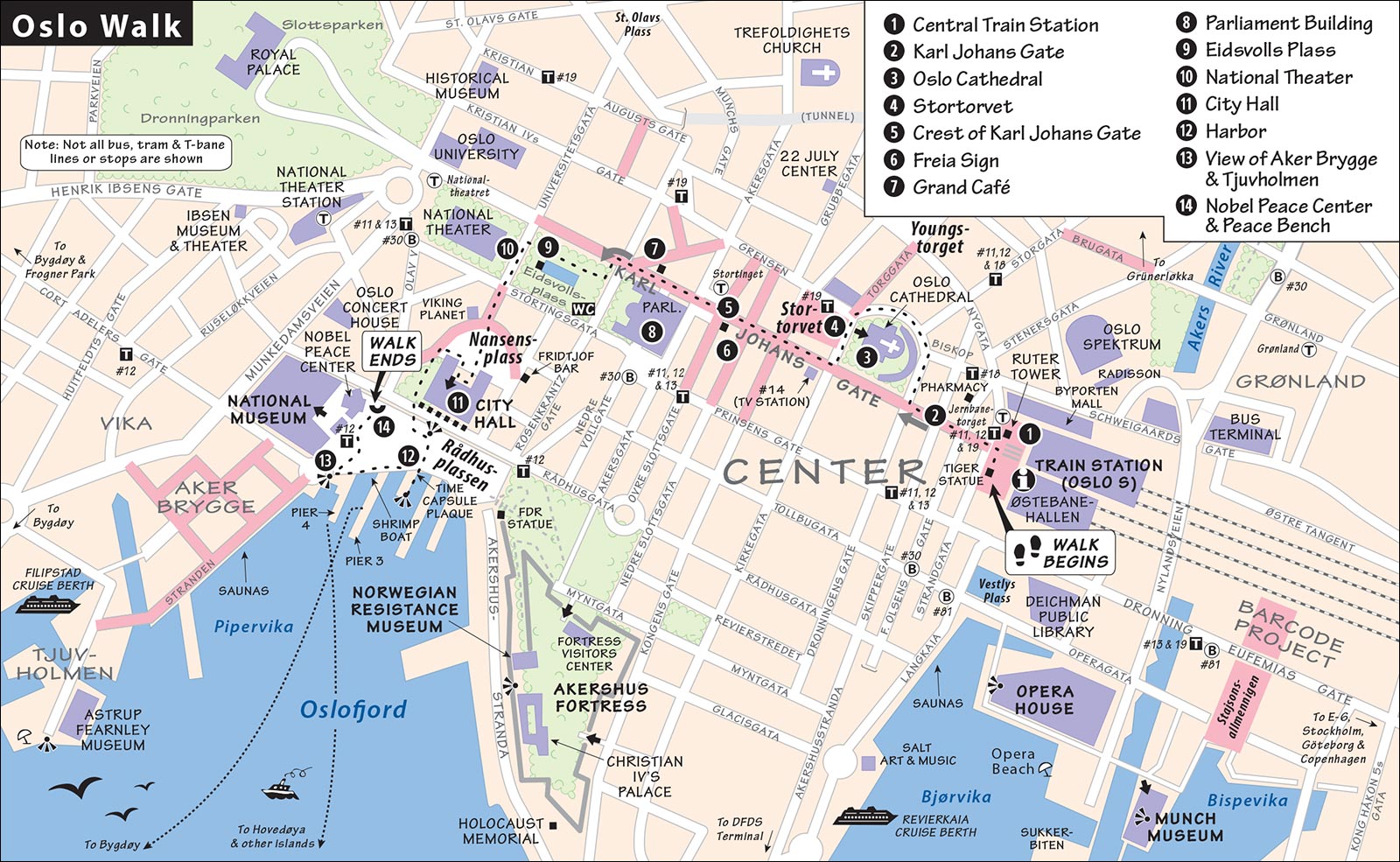
This self-guided stroll, worth ▲▲, covers the tourist-friendly walking zone in the heart of Oslo—from the train station, up the main drag, and past City Hall to the harborfront. Allow an hour without stops.
1 Central Train Station
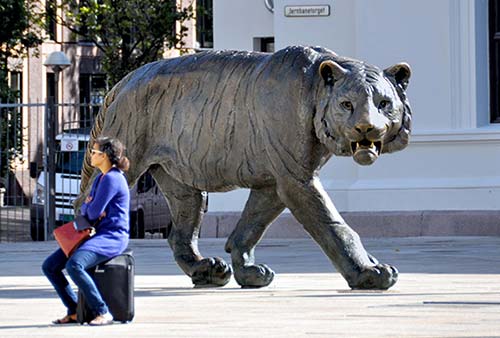
Start at the statue of the tiger (under the glass tower) prowling around in front of the train station. The statue alludes to Oslo’s nickname, Tigerstaden (“Tiger Town”), and commemorates the 1,000th birthday of Oslo’s founding, celebrated in the year 2000. In the 1800s, Oslo was considered an urban tiger, leaving its mark on the soul of simple country folk who ventured into the wild and crazy New York City of Norway. It could eat a simple country boy alive.
The stately white building to the right of the train station is Østbanehallen. A hundred years ago, Østbanehallen was a simple train station (in fact, it was in operation until 1980). The building has since been restored and today houses a good-value food court and the TI. Oslo’s modern train station (Oslo Sentralstasjon, or “Oslo S”) is just up the steps.
In the middle of the plaza, look for the tall, skinny, glass Ruter tower that marks the public transit office. From here, trams zip to City Hall (harbor, boat to Bygdøy), and the T-bane subway (look for the T signs around town) goes to Vigeland Sculpture Park and Holmenkollen. Tram #12—described in my self-guided tram tour, later—leaves from directly across the street.
The modern building upstairs and behind the Ruter tower is a shopping mall called Byporten (literally, “City Gate”). Oslo’s 37-floor pointed-glass skyscraper, the Radisson Blu Plaza Hotel, pokes up behind that. The hotel’s 34th-floor SkyBar welcomes the public with air-conditioned views and pricey drinks. The area behind the Radisson—the lively and colorful “Little Karachi,” centered along a street called Grønland—is home to immigrant communities, offering a fun contrast to the predictable Norwegian cuisine and culture. It’s now evolving with gentrification and has become a vibrant nightspot.
Until recently, the area around the train station was populated by a down-and-out crowd of people struggling with alcohol and drug addiction. Development and affluence has pushed them farther afield. Still, the cameras near the top of the Ruter tower continue to roll, and signs warn that this is a “monitored area.” (In other words, zip up your valuables.)
• The Opera House and the Munch Museum are very near; you could side-trip there now. (The Opera House is through the park to the right of the station, and the Munch Museum is just a few minutes’ walk beyond that.) Otherwise, turn your back to the station. You’re looking up Norway’s main drag, called...
2 Karl Johans Gate
This grand boulevard leads directly from the train station to the Royal Palace. The street is named for the French general Jean-Baptiste Bernadotte, who took the Swedish name Karl Johan when he was elected the crown prince of Sweden in 1810. He ruled as a popular king (1818-1844) during the period after Sweden took Norway from Denmark. For more on Bernadotte, see here.
Walk three blocks up Karl Johans Gate. This bustling stretch is crowded with street musicians, sidewalk artists, and shops greedily devouring tourists’ money. Notice the bikes on a rack on the left. This is part of a fun and efficient city program that lets people pick up and drop off bikes around town for cheap (see here.)
• Hook right around the curved old brick structure (once a butchers’ market) and walk to the...
3 Oslo Cathedral (Domkirke)
This Lutheran church is the third cathedral Oslo has had, built in 1697 after the second one burned down. It’s where Norway commemorates its royal marriages and deaths, and national tragedies. In the grass in front of the cathedral, the Iron Roses memorial remembers the victims of Norway’s 2011 bombing and mass shooting. The roses—one for each of the 77 victims—were forged by smiths from around the world.
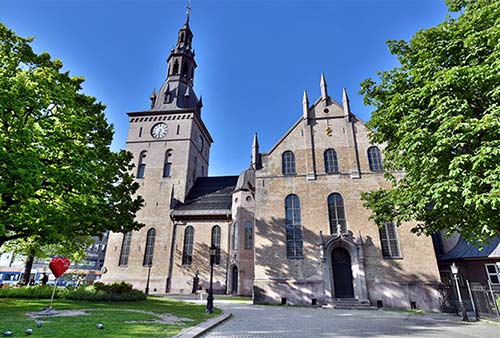
Look for the cathedral’s cornerstone (eight feet up, near the base of the steeple), a thousand-year-old carving from Oslo’s first and long-gone cathedral showing how the forces of good and evil tug at each of us. Look high up on the tower. The tiny square windows midway up the copper cupola were once the lookout quarters of the fire watchman. At the church door, look for schedule of worship services and concerts—including pipe organ concerts (www.oslodomkirke.no).
Step inside (Mon-Thu 10:00-16:00, Fri 16:00-23:00) beneath the red, blue, and gold seal of Oslo and under an equally colorful ceiling (late Art Deco from the 1930s). The box above on the right is for the royal family. The fine Baroque pulpit and altarpiece date from 1700. The chandeliers are from the previous cathedral (which burned in the 17th century). The colorful windows in the choir (leading up to the altar) were made in 1910 by Emanuel Vigeland (Gustav’s less famous brother).
The church courtyard (to the right as you face the entrance) is lined with a circa-1850 circular row of stalls from an old market. Rusty meat hooks now decorate the lamps of a peaceful Italian restaurant, which has quaint tables around a fountain.
• The square that faces the cathedral is called...
4 Stortorvet
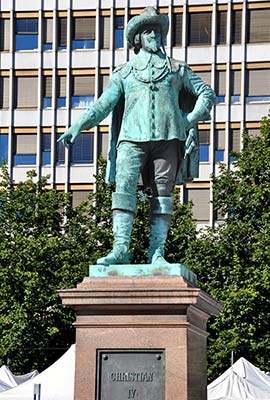
In the 17th century, when Oslo’s city wall was located about here, this big square was the point where farmers sold their goods. Today it’s still lively as a flower and produce market (Mon-Fri). The statue shows Christian IV, the Danish king who ruled Norway around 1600, dramatically gesturing at some geraniums. He named the city, rather immodestly, Christiania. Christian was serious about Norway. During his 60-year reign, he visited it 30 times (more than all other royal visits combined during 300 years of Danish rule). The big GlasMagasinet department store is a landmark on this square.
• Return to Karl Johans Gate and continue up the boulevard past cafés, shops, and throngs of people. Street musicians used to be a big part of this scene. But as Norway goes essentially cashless, it puts buskers—as well as beggars and pickpockets—in a financial crisis. None take credit cards. (But thieves figure a tourist’s wallet is more likely to have cash than a local’s, so be on guard.) Near the crest of the hill, Øvre Slottsgate leads left, past the 17th-century grid-plan town to Akershus Fortress (described in “Sights in Oslo,” later). But we’ll continue hiking straight through this zone of flashy international brand stores. Pause at the wide spot in the street (near the T-bane stop) to appreciate the...
5 Crest of Karl Johans Gate (Egertorget)
Look back at the train station. A thousand years ago, old Oslo was located at the foot of the wooded hill beyond the station. Now look ahead to the Royal Palace in the distance, which was built in the 1830s “with nature and God behind it and the people at its feet.”
Karl Johans Gate, a parade ground laid out in about 1850 from here to the palace, is now the axis of modern Oslo. Each May 17, Norway’s Constitution Day, an annual children’s parade turns this street into a sea of marching school bands and young flag-wavers in national costumes, while the royal family watches from the palace balcony. Since 1814, Norway has preferred peace. Rather than celebrating its military on the national holiday, it celebrates its children.
In the middle of the small square, the T sign marks a stop of the T-bane subway. W. B. Samson’s bakery is a good place for a quick, affordable lunch, with a handy cafeteria line (good sandwiches, salads, coffee, outside seating available, and a WC in back)—duck inside and be tempted by the pastries. Two traditional favorites are kanelboller (cinnamon rolls) and skolebrød (“school bread,” with an egg and cream filling).
6 Freia Sign
High overhead, a big neon sign dating from over a century ago trumpets another sweet Norwegian treat. Norway’s answer to Cadbury, the Norwegian chocolatier Freia is beloved...or it was, until an American company bought it. Still, the local factory is partly operational, and nostalgic Norwegians will always think of Freia as “a little piece of Norway.”
Continuing down Karl Johans Gate: People-watching is great along Karl Johans Gate. If it’s summer, half of the city’s population is gone—vacationing in their countryside cabins or farther away—and the people you’ll see in the city center are mostly visitors.
Carry on, passing the big brick Parliament building (on the left, described later). On your right, seated in the square, is a bearded, tubby statue of the 19th-century painter Christian Krohg.
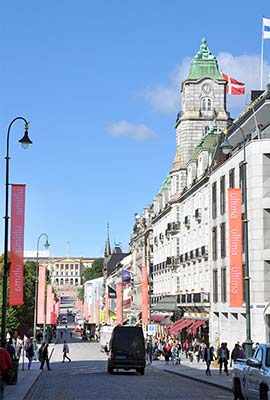
A few doors down on Karl Johans Gate is the Freia shop selling that favorite Norwegian chocolate since 1913. (Step in and chat with the staff; you can get a little mix of chocolate for about 35 NOK.) Just ahead, the venerable Grand Hotel (Oslo’s celebrity hotel—Nobel Peace Prize winners sleep here) overlooks the boulevard.
• Politely ask the waiter at the Grand Café—part of the Grand Hotel—if you can pop inside for a little sightseeing.
7 Grand Café
This historic café was for many years the meeting place of Oslo’s intellectual and creative elite (playwright Henrik Ibsen was a regular here). It still has some beautiful old artwork—including (at the far back) a wall-length mural showing Norway’s literary and artistic clientele from a century ago enjoying this fine hangout. On the far left, find Ibsen, coming in as he did every day at 13:00. Behind the waiter on the right, Edvard Munch leans against the window, apparently dozing. (Names are on the sill beneath the mural.)
• Continue to the next corner (at the intersection of Karl Johans Gate and Rosenkrantz Gate). To your left, a little park sprawls in front of Norway’s...
8 Parliament Building (Stortinget)
Norway’s parliament meets here (along with anyone participating in a peaceful protest outside). Stortinget—from an old Viking word—basically means “Big Gathering.” Built in 1866, the building seems to counter the Royal Palace at the other end of Karl Johans Gate. If the flag’s flying, parliament’s in session. Today the king is a figurehead, and Norway is run by a unicameral parliament and a prime minister. Guided tours of the Stortinget are offered for those interested in Norwegian government (free, July-Aug Mon-Fri at 10:15, 1 hour, no need to book ahead—just show up, check schedule at www.stortinget.no, enter on Akersgata—on the back side of the building).
• Cross over into the long median park, called...
9 Eidsvoll Plass
This land was once the front yard of big wigs who wanted to live close to the king, so their mansions originally lined the boulevard. Their sprawling front yards were eventually purchased by the city to create this delightful park.
On your left, notice the red, white, and blue public WCs. (The French, American, and Norwegian flag colors are a reminder that Norwegians were inspired by both the US Constitution and the French Revolution while winning their freedom.) While you have to pay with your credit card to use the WC, it’s super-clean and comes with your choice of musical soundtrack. (Be warned, the unit showers down after each use. If your travel partner tries to sneak a free visit after you’ve paid, someone’s bound to get all wet.) Free WCs are nearby, inside the Paleet shopping mall, on the right side of the boulevard.
Enjoying the park, stroll toward the palace, past the fountain. Pause at the statue of poet Henrik Wergeland, who helped inspire the national resurgence of Norway during the 19th century. Norway won its independence from Denmark in 1814 but within a year lost its freedom to Sweden. For nearly a century, until Norway regained independence in 1905, Norwegian culture and national spirit was stoked by artistic and literary patriots like Wergeland. In the winter, the pool here is frozen and covered with children happily ice-skating.
• Across the street behind Wergeland, stand in front of the...
10 National Theater
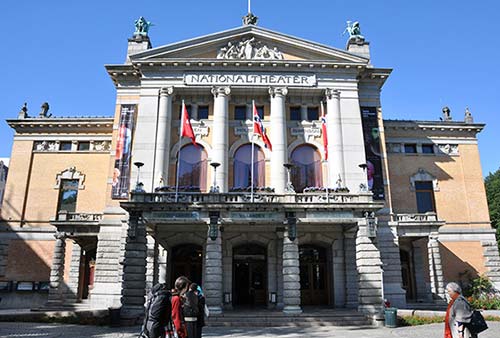
In front of the theater are statues of Norway’s favorite playwrights, Henrik Ibsen and Bjørnstjerne Bjørnson. Across Karl Johans Gate, the pale yellow building is the first university building in Norway, dating from 1854.
This is a good place to do a quick 360-degree spin and notice how quiet and orderly everything is. People seem content—and, according to most surveys, Norwegians are among the happiest people on earth. If you ask them why, their hunch is that it’s because they live collectively. The Vikings would famously share one large bowl of mead, passing it around the circle. Nobody—no matter how big, angry, hairy, or smelly—gulped more than his share. They all made sure that everyone got some.
In modern times, Norwegians at the dinner table are still mindful when helping themselves not to take too much: They mentally ration enough for the people who come after them. It’s a very considerate—and a very Norwegian—way of thinking. (Similarly, Upper Midwesterners in the US are familiar with the “Minnesota Slice”: The Scandinavian-American tendency to carve off a little sliver of the last slice of pie, rather than take the entire thing.)
• Facing the theater, turn left and follow Roald Amundsens Gate to the towering brick...
11 City Hall (Rådhuset)
Built mostly in the 1930s with contributions from Norway’s leading artists, Oslo’s City Hall is full of great art and is worth touring (see listing later, under “Sights in Oslo”). The mayor’s office is here (at the base of one of the two 200-foot towers), and every December 10, this building is where the Nobel Peace Prize is presented. The semicircular square facing the building, called Fridtjof Nansensplass, was designed to evoke Il Campo, the iconic main square in Siena, Italy, that’s also dominated by its City Hall.
To see the City Hall’s best exterior art, step up into its U-shaped courtyard and circle it clockwise, savoring the colorful woodcuts in the arcade. Each shows a scene from Norwegian mythology, well explained in English: Thor with his billy-goat chariot, Ask and Embla (a kind of Norse Adam and Eve), Odin on his eight-legged horse guided by ravens, the swan maidens shedding their swan disguises, and so on.
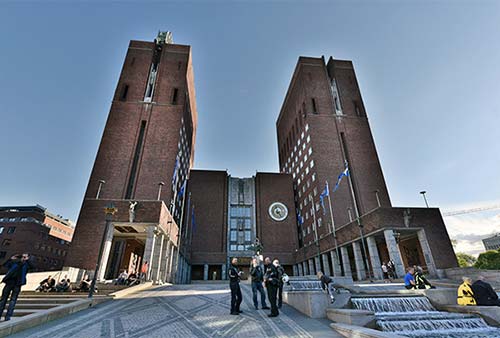
Facing City Hall, circle around its right side (through a lovely garden) until you reach the “front.” Cross the street and look back at the building. Like all of the statues adorning City Hall, the six figures facing the waterfront—dating from a period of Labor Party rule in Norway—celebrate the nobility of the working class. Norway, a social democracy, believes in giving respect to the workers who built their society and made it what it is, and these laborers are viewed as heroes.
If City Hall was built today, it would have fronted the fjord. But back then, this stretch of land was just a noisy zone of traffic and industry. In 1991, the city drilled a tunnel, and the east-west traffic went underground. Next, the city instituted a “congestion fee” for cars entering the city center, and today you see the relatively car-free happy result. Birds love it.
• Now walk across the plaza towards the...
12 Harbor
Oslo’s long-anticipated vision is complete: The city’s harborfront has been reclaimed for the citizens and the city once again embraces its fjord. At the water’s edge, find the shiny metal plaque (just left of pier 3) listing the contents of a sealed time capsule that lies in the little Kavringen lighthouse, straight ahead in the harbor. The time capsule was created to celebrate the city’s 1,000th birthday in 2000 and is to be opened in 1,000 years—God willing.
Head to the end of the stubby pier. This is the ceremonial “entrance to the city” for momentous occasions. On June 7, 1905, Norway gained its independence from Sweden, and later that year a Danish prince, elected by referendum, sailed in from Copenhagen to become the first modern king of Norway. Another milestone event occurred at the end of World War II, after the country was liberated from the Nazis: When the king returned to Norway, he stepped ashore here...on June 7.
Survey the harbor, Oslofjord. It’s one big playground, with 40 city-owned, parklike islands. To the left, big cruise ships—a large part of the local tourist economy—may be docked just under the Akershus Fortress. (In a final stage of the harborfront shuffle, the main cruise terminal is being relocated out of view.) The big, boxy building clinging to the top of the fortress—just under the green steeple—is the excellent Norwegian Resistance Museum. Just this side of the fort’s impressive 13th-century ramparts, you’ll see a statue of FDR. He’s here in gratitude for the safe refuge the US gave to members of the Norwegian royal family (including the young prince, Harald, who is now Norway’s king) during World War II—while the king and his government-in-exile waged Norway’s fight against the Nazis from London.
Walk back to shore, and look up at the Untuned Bell (by Norwegian artist A. K. Dolven), hanging from a wire. Then turn left and find the pedal at the base of the rusty pole. Tap the pedal to give the bell a ring. (Read the story on the nearby info board.)
Walk along the harborfront toward the sleek new National Museum (with City Hall on your right), with an impressive collection of Norwegian and international art (described on here). You’ll pass sightseeing boats, the shuttle ferry to Bydgøy, and—with a little luck—a shrimp boat. This is the spot where fishermen have long sold their catch fresh off the boat directly to locals. If a fisherman’s there, ask about his shrimp (he’ll give you a sample in hopes of selling you a small can for around 85 NOK).
Nearby is a big, orange, cube-shaped shipping container. This is #6 of 14 such info boxes celebrating the transformation of Oslo’s once-industrial harborfront into a playful and inviting people zone. The info boxes posted all along the 10-kilometer Harbor Promenade illustrate the area’s transformation (with photos, text, and a cartoon set in 1964). This promenade is delightful to see by bike (see my self-guided bike tour, later). You can see the bike rack where you’ll pick up your bike nearby. But let’s finish this tour first.
To your left is the ferry dock (dock E), where you can catch the boat for the islands of the Oslofjords. (In fact, you can make this scenic ferry ride into a one-hour loop with my self-guided tour, described later.)
• For now, we’ll stay on land and survey the area to your right as you face the water.
13 View of Aker Brygge and Tjuvholmen
The Aker Brygge development, which stretches before you along the harbor, kicked off the transformation of Oslo’s harborfront. Oslo’s thriving restaurant, shopping, and nightclub zone has now completely replaced the industrial buildings that were the heart of Norway’s once-important shipbuilding industry.
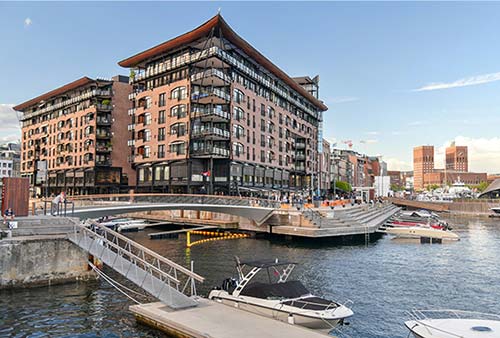
Just past the end of Aker Brygge is Tjuvholmen, an arts district and housing development with some of Norway’s most expensive real estate. With outdoor art installations, water sculptures, and plentiful galleries, it’s anchored by the Astrup Fearnley Museum, a modern art complex designed by renowned architect Renzo Piano (most famous for Paris’ Pompidou Center).
These flourishing urban spaces are all part of Oslo’s ambitious “Fjord City” (Fjordbyen) urban renewal project, which kicked off years ago with Aker Brygge and more recently with Oslo’s dramatic Opera House. The city has made remarkable progress in turning the formerly industrial waterfront into an appealing gathering place.
• Walk back toward City Hall, passing the National Museum. Continue to the Nobel Peace Museum (on your left), with the curved aluminum bench sitting like a Nike swoosh in front of it. Have a seat.
14 Nobel Peace Center and Peace Bench
This end of the harbor was once the site of Vestbanen—the old Oslo West train station for trains heading across Norway’s southern coast all the way to Stavanger. Today the old station building houses the Nobel Peace Center, which celebrates the work of Nobel Peace Prize winners.
This bench is a symbol of the value of dialogue and diplomacy. The plaque on the ground reminds us that Nelson Mandela said, “The best weapon is to sit down and talk.” It pays tribute to the Nobel Peace Prize laureates who have done just that to make our world more peaceful.
Take a moment here to consider how Oslo’s cityscape illustrates its story: City Hall shows a respect for workers; the Norwegian Resistance Museum highlights the valiant Nazi resistance and the Norwegian respect for freedom; the inspiring Nobel Peace Center behind you touts peaceful innovation; and the newly transformed harborfront before you represents a city designed for people, public transit, and bikes rather than cars. Breathe in the fresh sea breeze, recognize the fragile environment, and appreciate a moment of tranquility in the center of a capital city. Oslo, let’s talk!
• Our walk is over. From here, you could stroll out through Aker Brygge and Tjuvholmen to a tiny public swimming pier at the far end; visit nearby sights mentioned in this walk; hike up to Akershus Fortress; ride a bike along the harbor; or catch a ferry—either around the islands or across the harbor to the museums at Bygdøy.
Self-Guided Tours in Oslo
These three self-guided tours—by bike, by ferry, and by tram—illuminate the city’s rich history and modern culture, all while taking advantage of Oslo’s convenient public transit.
HARBOR PROMENADE BIKE TOUR
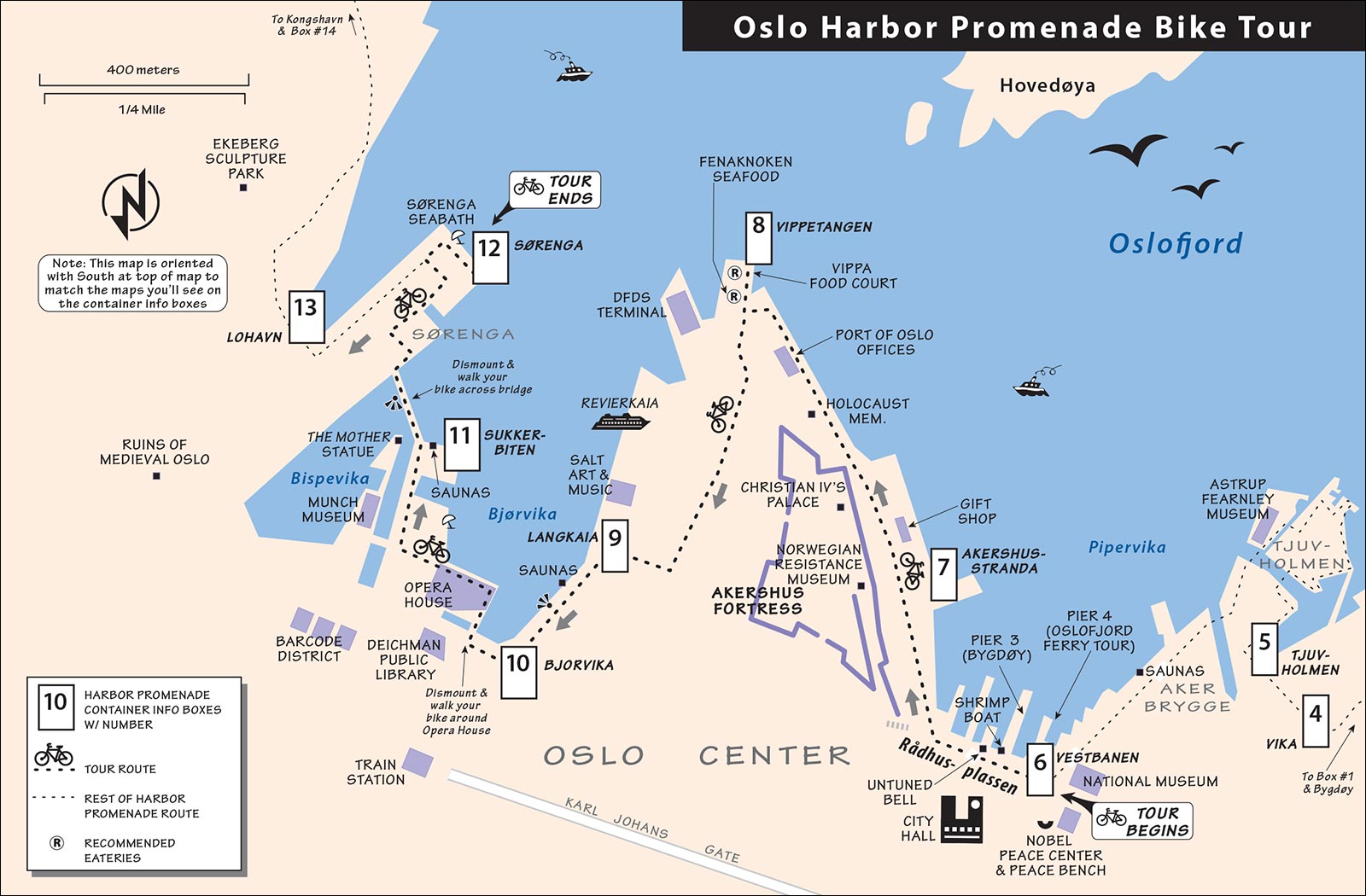
This tour of the Harbor Promenade (Havnepromenaden) is all about nature, exercise, the fresh fjord breeze, and embracing the city bike-rental system—an example of new tech that makes our world more accessible. While you could certainly walk this 1.75-mile route, if you’re comfortable on two wheels, initiating yourself to Oslo’s shared bike program is part of the fun (for details on how to use Oslo City Bike and its app, see “Getting Around Oslo: By Bike,” earlier).
Tour Tips: The route follows the harborfront’s orange info boxes—repurposed shipping containers. We’ll ride from boxes #6 to #12 (there are 14 in total). Facing the water, we’ll simply follow the harborfront to the left.
Each box has a map, illustrations of what that spot looked like in 1964, and blurbs about the spot’s history and development. A smattering of plaques provides further historical context. The route is also a parade of stop-worthy sights. If you choose to enter any sights along the way, remember that your bike does not come with a lock. It’s best to find a nearby Oslo City Bike rack and return your bike until you’re ready to ride again.
• Start in front of the National Museum at orange shipping container #6, between City Hall and Aker Brygge.
Box 6 (Vestbanen): In about 1950, City Hall turned its U-shaped back on the industrial harbor. Where you’re standing now, between the water and City Hall, was once the middle of a traffic tangle. If the shrimp boat is in, chat up the fisherman, and try a sample (he’d love to sell you a small tin). Head to the rusty pole holding up the Untuned Bell, and step on the pedal to ring the bell. A few steps away, the “Dock of Honor” plaque describes the historical significance of this dock.
• Rent your bike and you’re off, pedaling with the water on your right. You’ll pass old boats moored on the historic city wharf and ride beneath Akershus Fortress to reach...
Box 7 (Akershusstranda): The wharf is lined with old ships and warehouses (some now housing restaurants, including two I recommend, just up ahead). Look up at the fortress ramparts: In the 17th century, state of the art fortifications were built stout to survive cannon bombardment.
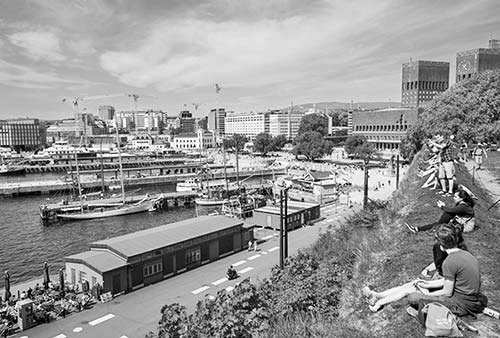
At the end of the fortress, you’ll reach a cruise berth and gift shop. (While designed for cruisers, it’s a good option if you’re in the market for trolls and sweaters.) Locals casting lines are angling for mackerel and sea trout. Look up at Christian IV’s Renaissance castle, which also serves as a burial place for Norwegian monarchs.
As you ride, on the left you’ll see rusty, empty chairs in the grass. These are a memorial for the 773 Jews taken by Nazis from Norway to concentration camps during the Holocaust. Only 38 survived. Ahead, the large green building was once the terminal of the Norwegian America transatlantic line (now Port of Oslo offices). It was right here that many Norwegian Americans (including three of my grandparents) said goodbye forever to their homeland and loved ones. Next stop: New York City.
• At the tip of the peninsula, you’ll reach an industrial area called Vippetangen.
Box 8 (Vippetangen): Behind the tall factory with silos (an agricultural plant), you’ll see a colorful warehouse. This space has been transformed into a frolicking, recommended food court called Vippa. It’s a fun scene with a tasty array of international street food, a great drink counter, a clutter of folding tables inside, and wonderful view seating outside.
Continuing around the point, look for Fenaknoken, a father-son fish and seafood depot that’s evangelical about samples. They’ll fill you up with bites of smoked salmon, reindeer sausage, brown cheese, and shrimp—in hopes of getting you to buy a picnic or sit down and eat more (confirm price before being swept away, closed Sun, Akershusstranda 23, +47 22 42 34 57, www.fenaknoken.no).
• From here, follow the red bike lane through the industrial peninsula, past the DFDS cruise terminal, and turn right to reach...
Box 9 (Langkaia): This is SALT Art and Music, a “nomadic art project” marked by its steep A-frame buildings and the hippie vibes that waft from its temptations. Performance spaces, food stalls, bars—you name it, SALT has it. Just past SALT are examples of the latest rage in Oslo: floating saunas. (We’ll stop by the original later in this ride.)
• Ride to the base of the peninsula to find box #10.
Box 10 (Bjorvika): You now have a good view of the sloping features of Oslo’s iconic Opera House. You’ll also notice the modern Deichman Public Library, across the street from the Opera House. Head to the little pedestrian walkway on the right, dismount your bike, and walk it to the Opera House.
As you walk your bike, circle around the Opera House and peek through its windows to see the stage set and opera wardrobe workshop in action. As you get to the back of the building, you’ll see the towering Munch Museum ahead—the largest museum devoted to a single artist anywhere in Europe. Edvard Munch was prolific enough—and has a story engaging enough—to merit it. Like the National Museum, the Opera House, and the Deichman Public Library, this museum is jaw-droppingly state-of-the-art and is an inspiration to architects around the world. All these sights are worth visiting for their collections as well as their architecture.
• Get back on your bike and turn right toward the water, pedaling with the Munch Museum to your left (across the small waterway). Around here, you may find sections of the harbor still under construction. We’re heading south (toward the fjord) to...
Box 11 (Sukkerbiten): On your right, you’ll come upon a woody huddle of saunas, spas, sunbathing platforms, and locals relaxing Norwegian-style over the water at a spot called Sukkerbiten (the Sugar Cube). The floating sauna tradition started here at the Oslo Sauna Association. Walk through this steamy village of floating saunas and learn from an attendant. While spa-goers generally book a time online in advance, the saunas often take drop-ins (see “Activities in Oslo,” later).
Look back at the Munch Museum and notice The Mother, a 30-foot tall bronze sculpture of a mother hunched over an invisible child. Munch lost his mother at the age of five, and in 2022, artist Tracey Emin gave Norway’s favorite painter the mother he never had. Emin was quoted as saying, “The Mother sits like a Sphinx. Waiting for the tide. Looking out to sea, protecting the home of Munch. Her legs open towards the Fjord. She is welcoming all of nature. She is the companion of the Ghost of Munch.”
• From this view of The Mother sculpture, walk your bike over the pedestrian bridge and enjoy the best angle of the Munch Museum. Marvel at how the skyline of Oslo looks like some sort of Nordic Dubai. The bridge leads to a development known as Sørenga (the South Meadow). We’ll ride that way and jog through the area (see map) to...
Box 12 (Sørenga): This residential area—generously integrated with public space—is not accidental. From ground floor retail shops and restaurants, to residential homes in floors above, to serious real estate dedicated to playgrounds, to public swimming...it’s all designed to create a vibrant community—a place where art and water come together. This is urban life on the Oslofjord.
• Our tour is over. From here you could retrace your route or circle inland, past small vegetable-patch gardens and the ruins of medieval Oslo.
OSLOFJORD FERRY TOUR
It’s beautiful to look at Oslo’s fjord from the city, but it’s exciting, easy, and even more scenic to actually sail it. Just hop on a public (and fully electric) ferry for an hour, sailing through a handful of care-free and car-free islands and hopping off where you like. Allow 50 minutes to cruise around the islands without stops (munch a picnic lunch or dinner on board as you sail). Add more time if you decide to get off and explore. If you’re very short on time, just go out to Hovedøya and back (all ferries stop at Hovedøya).
Harbor Ferry Tips: Catch ferry #B1 Øyene at pier 4, dock E, in front of City Hall. Boats leave at least every half hour in summer (roughly 7:30-17:00). A ferry ticket costs 40 NOK (free with Oslo Card and included in 24-hour transit ticket; see “Getting Around Oslo: By Public Transit” on here for details). A single-use ferry ticket is valid for one hour, so keep an eye on the time if you disembark at one of the islands on this tour. If an hour has passed since you first boarded the ferry, you’ll need to buy another ticket (buy onboard or on the Ruter app; ferries have Wi-Fi).
Your boat is fully electric, and the instant propulsion and fast speed makes the cruise efficient and smooth without any diesel fumes. Notice how the captain has a 360-degree view from the bridge (above). In Oslo, ferries go both ways. This ability to motor in and then motor out without turning around at each dock makes the journey about 30 percent quicker.
Ferry Route: Ferries make a clockwise scenic dance around five main islands. Talk with the friendly crew to confirm your plans as your board. Hovedøya, the first stop and major island, is by far the most interesting island to explore. The rest are what the Norwegians call “cabin islands” (each with either a tiny kiosk, general store, or café).
Aker Brygge to Hovedøya: This five-minute ride affords great views of Oslo’s harbor, cruise ships, and the DFDS ferry to Copenhagen. Notice how Oslo’s industrial port has been pushed ever further from the center by people-oriented development.
Hovedøya: This is the best island to explore. (As you get off, note what time the next #B1 Øyene ferry leaves.) The island is managed like a state park, with a charming café (in a former Nazi barracks) and the ruins of a 12th-century Cistercian Abbey (ruins free and always open). In medieval times, monks were the biggest landowners and, before the Reformation, competed with kings for power and land. After the dissolution of monasteries, in 1536 this abandoned abbey became a quarry for the construction of Akershus Fortress. At the far side of the island (a 10-minute walk from the ferry landing) are 10 cannons on a bluff. These were positioned here in 1808 to face any oncoming navy (damn Swedes!). Around the corner—just a 5-minute walk from the ferry landing—is a family-friendly beach with a shower, picnic tables, WC, and a co-op marina for local boat owners.
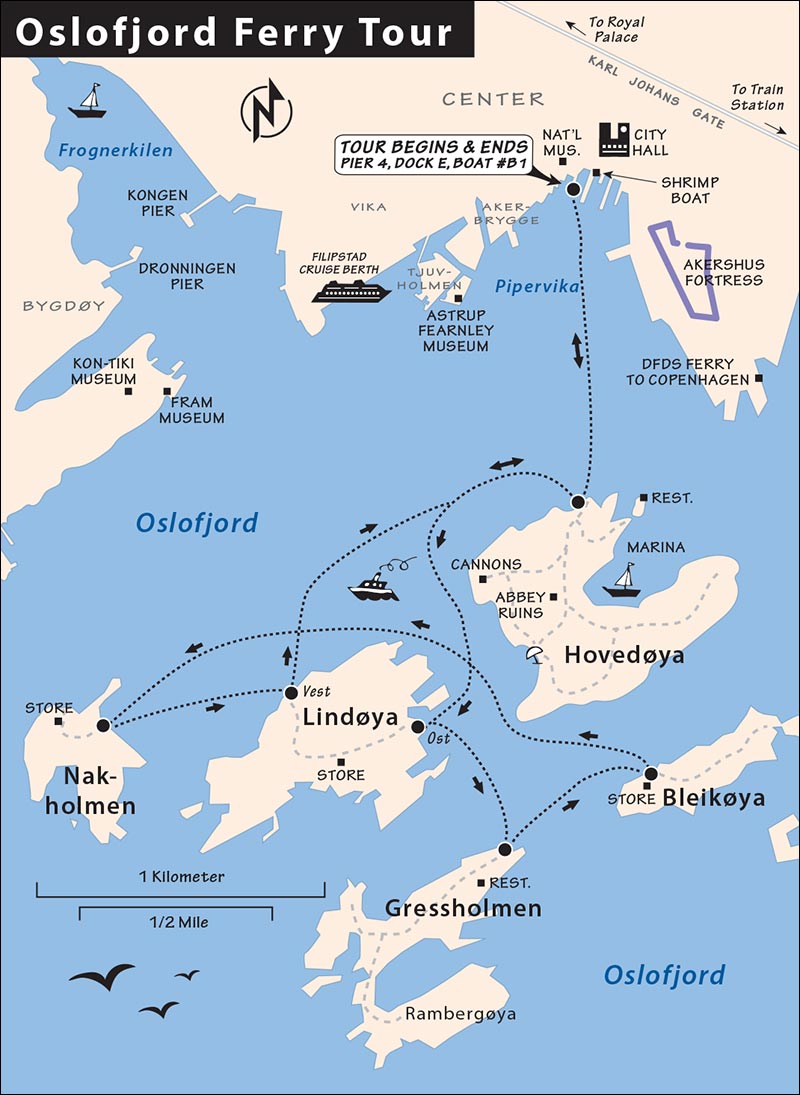
“Cabin Islands”—The Rest of the Ride: Hopping on the next #B1 Øyene ferry, you’ll sail past the ten cannons (on the left...duck!) and see the steep A-frames of the Fram and Kon-Tiki Museums on Bygdøy (in the distance to the right).
It’s a five-minute ride to Lindøya, with its tight-knit summer cabin communities. These little islands come with small, colorful cabins that were built decades ago to house workers. These very simple cabins (with no plumbing) are now pricey little city escapes. Next, Gressholmen is a park-like island with a café. These islands are all protected, so there can be no development. You’ll also stop at Bleikøya before continuing on to...
Nakholmen: As you approach Nakholmen (“Neck-shaped island”), you’ll see winter storage racks for boats and lots of vimpels (skinny pennant-shaped flags). Vimpels are popular here because they can be left up overnight without breaking respect-the-flag protocol, and they can fly in heavy winds without tattering.
Back to Oslo: After several more quick stops and a final stop at Hovedøya (again), you’ll return to Aker Brygge in Oslo. Passing a sightseeing boat, you can feel good about enjoying even more scenery at a tiny fraction of the commercial tour price. Sailing back downtown, you’ll see Bygdøy again on the left and the swooping Holmenkollen Ski Jump high above. Even higher, notice how the thick forest grows right up to the borders of its protected zone. Scandinavian politicians don’t win by promising fewer regulations and lower taxes. They win by protecting the environment: The people of Oslo wanted trees rather than more development, and they got it.
As you disembark, turn around to see the “whale tail” descend to plug in and recharge the electric ferry for its next loop.
OSLO TRAM TOUR
A fun and cheap way to make a big sightseeing loop around Oslo is to hop on tram #12. Tram #12 (which becomes tram #19 halfway through its loop, at Majorstuen) circles the city from the train station, lacing together many of Oslo’s main sights. The tram finishes at Stortorvet (the cathedral square, a three-minute walk from where you begin this tour). Apart from the practical value of being able to hop on and off as you sightsee your way around town (trams depart at least every 10 minutes), this 40-minute trip gives you a fine look at parts of the city you wouldn’t otherwise see. Refer to the “Oslo” map on here or the color map of Oslo at the back of this book to trace the route.
Here’s what you’ll see and places where you might want to hop out:
Start near the train station, immediately in front of the Ruter transit office tower at the traffic-island tram stop (Jernbanetorget). Hop on tram #12 as it leaves from track B (the second set of tracks), direction: Majorstuen). From Jernbanetorget, you’ll ride through the old grid streets of 16th-century Christiania, King Christian IV’s planned Renaissance town. After the city’s 17th fire, in 1624, the king finally got fed up. He decreed that only brick and stone buildings would be permitted in the city center, with wide streets to serve as fire breaks.
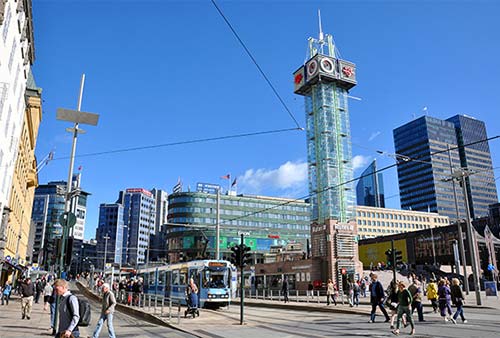
If you’re heading for Akershus Fortress, get off at the Øvre Slottsgate stop, cross the road, and walk down Øvre Slottsgate street toward the water (for complete walking directions, see the fortress listing under “Sights in Oslo,” later).
The tram continues to City Hall (Kontraskjæret stop), then onto the harbor and upscale Aker Brygge waterfront neighborhood (Aker Brygge stop for the National Museum, harbor, and restaurant row).
The tram goes uphill into a district of ugly 1960s buildings (when elegance was replaced by “functionality”), then heads onto the street Norwegians renamed Henrik Ibsens Gate in 2006 to commemorate the centenary of Ibsen’s death, honoring the man they claim is the greatest playwright since Shakespeare.
After Henrik Ibsens Gate (Lapsetorvet stop), the tram follows Frognerveien through the chic Frogner neighborhood. Behind the fine old facades are fancy shops and spendy condos. Here and there you’ll see 19th-century mansions built by aristocratic families who wanted to live near the Royal Palace; today, many of these house foreign embassies. Turning the corner, get off at the Frogner Plass stop for the Vigeland Museum, or continue along the edge of Frogner Park (which includes Vigeland Sculpture Park). To visit the park, disembark opposite its grand gate (Vigelandsparken stop).
A bit farther along, on the left, a statue of 1930s ice queen Sonja Henie marks the arena where she learned to skate. (Inside the stadium here is a skating museum.) Turning onto Bogstadveien, at the Majorstuen stop, either tram #12 becomes #19, or you’ll step out and hop on the next tram #19 that comes (confirm at the stop).
Bogstadveien is lined with trendy shops, restaurants, and cafés—it’s a fun place to stroll, window-shop, and enjoy the neighborhood energy. I like to get out here and walk along this street (following the tram tracks) to the next stop (Bogstadveien). From there, I jump onto tram #19 or walk all the way to the Royal Palace park and the top of Karl Johans Gate.
If you decide to ride, get off at Stortorvet (the stop on the big square filled with flower stalls and fronted by the cathedral and the big GlasMagasinet department store). From here, you’re a three-minute walk from the station, where this tour began.
Sights in Oslo
CITY HALL AND THE CENTRAL HARBOR
▲▲▲National Museum (Nasjonalmuseet)
Map: National Museum—First Floor
Landscape Paintings and Romanticism
Map: National Museum—Second Floor
▲Nobel Peace Center (Nobels Fredssenter)
▲▲Norwegian Resistance Museum (Norges Njemmefrontmuseum)
Akershus Castle (Akershus Slott)
▲Oslo Opera House (Operahuset Oslo)
Deichman Public Library (Deichman Bjørvika)
Historical Museum (Historisk Museum)
▲▲▲Vigeland Sculpture Park (Vigelandsparken)
Oslo City Museum (Oslo Bymuseum)
▲▲Norwegian Folk Museum (Norsk Folkemuseum)
▲▲Museum of the Viking Age (Vikingtidsmuseet)
▲▲Kon-Tiki Museum (Kon-Tiki Museet)
▲Norwegian Maritime Museum (Norsk Maritimt Museum)
Norwegian Holocaust Center (HL-Senteret)
GRÜNERLØKKA AND GRØNLAND DISTRICTS
▲Akers River and Grünerløkka Walk
Map: Grünerløkka & Grønland Area
▲Ekeberg Sculpture Park (Ekebergparken)
▲Holmenkollen Ski Jump and Ski Museum
CITY HALL AND THE CENTRAL HARBOR
▲▲▲City Hall (Rådhuset)
City halls, rather than churches, are the dominant buildings in Scandinavian capitals. In 1931, Oslo tore down a slum and began constructing its richly decorated City Hall. It was finally finished—after a WWII delay—in 1950 to celebrate the city’s 900th birthday. Norway’s leading artists all contributed to the building, which was an avant-garde thrill in its day. The prominence of this building on the harborfront makes sense in this most humanistic, yet least churchgoing, northern end of the Continent. Up here, people pay high taxes, have high expectations, and are generally satisfied with what their governments do with their money.
Cost and Hours: Free, daily 9:00-16:00, free and fine WC in basement, +47 23 46 12 00, www.oslo.kommune.no/radhuset. Cruise ship groups and slow security checks can make for long lines in peak times.
Tours: Free 45-minute guided tours generally run daily at 10:00, 12:00, and 14:00. Tours may not operate Sept-May, so check ahead.
 Self-Guided Tour: For descriptions of the building’s exterior features and symbolism, see the City Hall section of my Oslo Walk, earlier. This tour focuses on the interior.
The visitor entrance is on the Karl Johans Gate side (away from the harbor). You’ll step into a cavernous main hall, which feels like a temple to good government, with its altar-like murals celebrating “work, play, and civic administration.” It’s decorated with 20,000 square feet of bold and colorful murals celebrating a classless society, with everyone—town folk, country folk, and people from all walks of life—working harmoniously for a better society. The huge murals take you on a voyage through the collective psyche of Norway, from its simple rural beginnings through the scar tissue of the Nazi occupation and beyond. Filled with significance and symbolism—and well described in English—the murals become even more meaningful with the excellent guided tours.
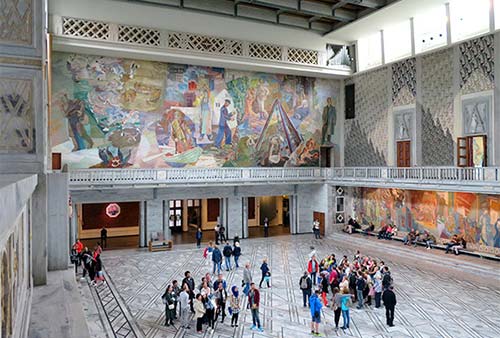
First, turn around and face the mural over the door you came in, which celebrates the traditional industries of Norway (from left to right): the yellow-clad fisherman (standing in his boat, glancing nervously at a flock of seagulls), the factory worker (with his heavy apron), the blue-clad sailor (he’s playing with exotic beads acquired through distant trade), the farmer (in a striped dress, with a bushel under her arm), and the miner (lower right, lifting a heavy rock). Flanking these figures are portraits of two important Norwegians: On the far right is Bjørnstjerne Bjørnson (1832-1910), a prominent poet and novelist whose works pluck the patriotic heartstrings of Norwegians. And on the far left is Fridtjof Nansen (1861-1930), the famous Arctic explorer (you can learn more about him at the Fram Museum on Bygdøy). Here Nansen sheds the heavy coat of his most famous endeavor—polar exploration—as he embarks on his second act: Once retired from seafaring, he advocated for the dissolution of Norway’s union with Sweden—which took place in 1905, making Norway fully independent.
Now turn 180 degrees and face the hall’s main mural, which emphasizes Oslo’s youth participating in community life—and rebuilding the country after Nazi occupation. Across the bottom, the slum that once cluttered Oslo’s harborfront is being cleared out to make way for this building. Above that, scenes show Norway’s pride in its innovative health care and education systems. Left of center, near the top, Mother Norway stands next to a church—reminding viewers that the Lutheran Church of Norway (the official state religion) provides a foundation for this society. (Scandinavians joke that they may not go to church much these days, but they always have Luther on their shoulder.) On the right, four forms represent the arts; they illustrate how creativity springs from children. And in the center, the figure of Charity is surrounded by Culture, Philosophy, and Family.
The Mural of the Occupation lines the east side of the hall, tucked under the balustrade. Scan it from left to right to see the story of Norway’s WWII experience: First, the German blitzkrieg overwhelms the country. Men head for the mountains to organize a resistance movement. Women huddle around the water well, traditionally where news is passed, while Quislings (traitors named after the Norwegian fascist who ruled the country as a Nazi puppet) listen in. While Germans bomb and occupy Norway, a family gathers in their living room. As a boy clenches his fist (showing determination) and a child holds the beloved Norwegian flag, the Gestapo steps in. Columns are toppled to the ground, symbolizing how Germans shut down the culture by closing newspapers and the university. Two resistance soldiers stand up against a wall—about to be executed by firing squad. A cell of resistance fighters (wearing masks and using nicknames, so if tortured they can’t reveal their compatriots’ identities) plan a sabotage mission. Finally, prisoners are freed, the war is over, and Norway celebrates its happiest day, May 17, 1945: the first Constitution Day after five years under Nazi control.
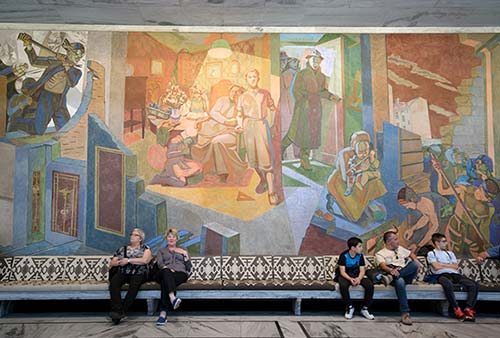
While gazing at these murals, keep in mind that the Nobel Peace Prize is awarded in this central hall each December (though the general Nobel Prize ceremony occurs in Stockholm’s City Hall). You’ll see photos of this event in the little foyer with the strollers (on the right from where you entered).
At the base of the grand marble staircase is a mural of the 11th-century St. Hallvard, the patron saint of Oslo. Above his head, he holds his symbol—three arrows—and he rests a millstone on his knee. As the story goes, Hallvard took pity on a pregnant woman (the naked woman in front of him) who had been wrongly accused of theft by three men. They attempted to escape, but the accusers killed the woman, shot Hallvard with three arrows, tied a millstone around his neck, and tossed him into the fjord. Miraculously, he survived (or perhaps rose from the dead). This story of compassion in the face of injustice swayed Norwegians at a time when Christianity was making its bid to be the country’s main religion.
In front of the mural is a bell from the ship that brought Norway’s royal family back home after World War II—landing at the pier right in front of City Hall.
Now head up the stairs and explore several ceremonial rooms, each well described in English. The wood-paneled Munch Room, dominated by the artist’s oil painting Life, is where civil weddings are held. Circle around the gallery to the City Council Assembly Room, where Oslo’s leadership steers the agenda of this impressive city. Notice the “three arrows and millstone” motif, recalling St. Hallvard. The city council acts collectively as a virtual “mayor”—a system, originating here in Oslo in 1986, called “parliamentary metropolitan government.” Notice how this room evokes the semicircular shape of the square where you entered. Out in the hall, you’ll pass gifts from visiting heads of state (gave fra means “gift from”).
Nearby: Fans of the explorer Fridtjof Nansen might enjoy breaking for a drink across the street at Fridtjof, an atmospheric bar filled with memorabilia from Nansen’s Arctic explorations. A model of his ship, the Fram, hangs from the ceiling, and 1894 photos and his own drawings are upstairs (Mon-Sat 15:00-24:00, closed Sun, Nansensplass 7, +47 93 25 22 30). On the opposite side of Nansensplass, The Viking Planet is a high-tech, high-priced stand-in for the under-construction Museum of the Viking Age (see sidebar). For locations see the map on here.
▲▲▲National Museum (Nasjonalmuseet)
Just steps off the waterfront is Oslo’s new and strikingly modern National Museum, bringing together art that had previously been scattered in three branches. The permanent collection is installed chronologically over two floors. With 6,500 items spread throughout more than 90 rooms, you’ll need to be selective. To make the most of a visit here, focus on what’s uniquely Norwegian—the dramatic beauty of Norway’s landscape and the resourcefulness of the Norwegian people. An extensive collection of paintings from the 1800s and the National Romantic era highlights the natural beauty of Norway. You’ll also see modern classics by Impressionists and international 20th-century masters, and the moody canvases of Norway’s most renowned artist, Edvard Munch—including the 1893 version of his iconic Scream.
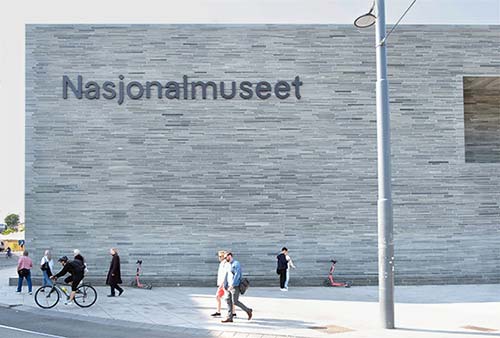
The boxy top floor of the museum is dubbed the Light Hall (Lyshallen) for its translucent, illuminated profile. Don’t miss the roof terrace with its views of Akershus Fortress, Rådhusplassen, and the inner Oslofjord.
Cost and Hours: 200 NOK; Tue-Wed 10:00-20:00, Thu-Sun until 17:00, closed Mon; download app to access audioguide and map; Brynjulf Bulls Plass 3, +47 21 98 20 00, www.nasjonalmuseet.no.
Tours: Free 45-minute tours are available most days at 12:00. Check the schedule online or in the app.
Cloakroom: Bags larger than a sheet of paper are not allowed into the museum. Jackets are also not allowed. Find free wardrobe and storage lockers downstairs.
Eateries: The museum has three eateries: The $$ Café, on the ground floor by the entrance, serving waffles, open-face sandwiches, and a dinner of the day; $ The Lounge, on the second floor inside the museum, with pastries and Norwegian waffles; and $ The Bollebar Café, on the museum square, a child-friendly option specializing in sweet rolls.
Self-Guided Tour
After a chronological blitz through the story of Norway on the first floor, we’ll head to the second floor to focus on Norwegian painters, mostly from the Romantic period. These artists allow us to travel both back in time and across Norway’s most beautiful valleys, mountains, and fjords.
Entrance Hall: A provocative and contemporary piece greets you as you enter. This installation of reindeer skulls is called 1 Pile o’Sápmi, by Sami artist Máret Ánne Sara. In Norway, the indigenous Sami people have traditionally herded reindeer, a practice now strictly regulated by the Norwegian government. The four hundred skulls before you, each pierced by a bullet hole, symbolize the struggle of the artist’s brother: The Norwegian government deemed his herd of reindeer too large, and he was forced to slaughter many of them, eventually leading to his bankruptcy.
• Head into Room 3 (just a few steps away, on the same floor) to begin our quick sweep through the...
Ground Floor: Find the treasured medieval 2 Baldishol Tapestry (the oldest in Norway), then explore an aristocratic Norwegian home through the ages, with artfully displayed exhibits, all well-described in English. Follow the rooms in numerical order to track the evolution of Norwegian life over time. Notice the French and Danish influences on the culture and how artistic and political trends reached Norway from the rest of Europe. You’ll see the “Home Sweet Home, 1870” display, and a decade-by-decade review of clothing, furniture, and fine arts. Enjoy Norwegian Art Nouveau in Room 15, the advent of the department store, a national awakening leading to independence from Sweden in 1905, and displays on World War II.
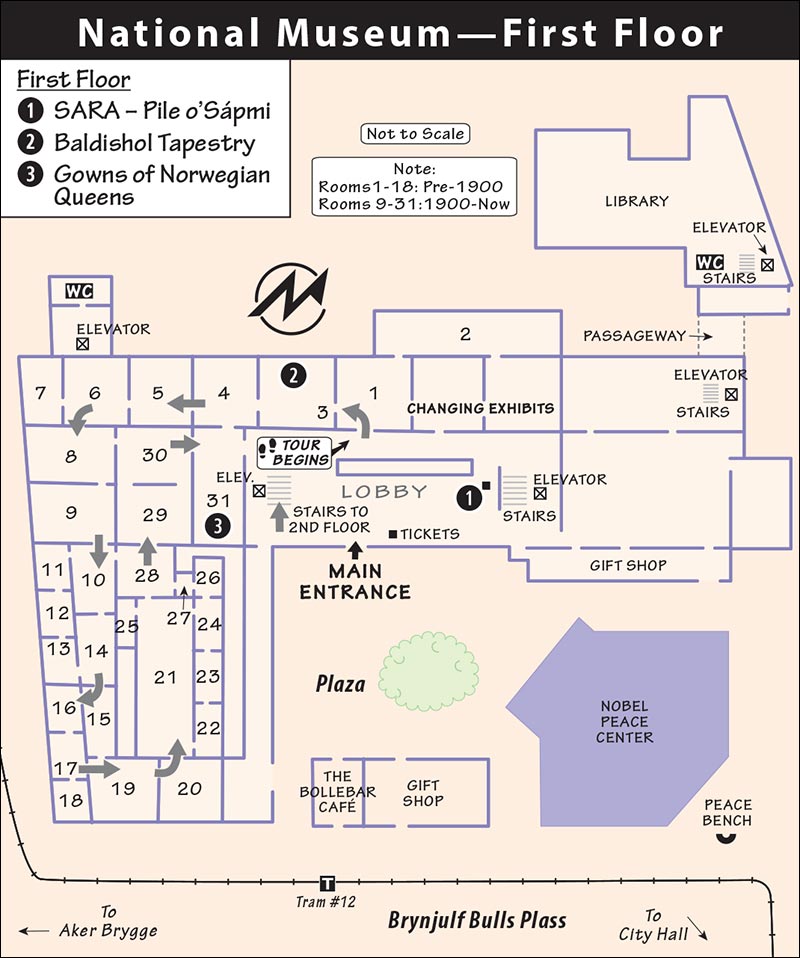
The “In Search of Modernity” exhibit tracks Norwegian design in the early 20th century, including the “rational kitchen” of the 1920s. The displays on Norwegian fashion shows from 1970 to 1990 come with dozens of mannequin-models on the museum runway. And the final room is filled with glamourous 3 gowns of two Norwegian queens (one from 1905 and the other 2010).
• Head up to the second floor, where we’ll get into the meat of this tour. Walk past the copy of Mona Lisa in Room 61, take a left, and walk through Rooms 33-38, leading you to...
Landscape Paintings and Romanticism
A tour of these galleries gives travelers bound for the mountains and fjord country a chance to pack along a little of Norway’s cultural soul. Landscape painting has always played an important role in Norwegian art, perhaps because Norway provides such an awesome and varied landscape to inspire its artists. The style reached its peak during the Romantic period in the mid-1800s, an era that emphasized the beauty of unspoiled nature. (This passion for landscapes sets Norway apart from Denmark and Sweden.) After 400 years of Danish rule, the soul of the country was almost snuffed out. But with semi-independence and a constitution in the early 1800s, there was a resurgence of national pride. Even though Norway’s cities and palaces still felt foreign (which is why you’ll rarely see those depicted in the country’s art), Norwegians could claim their countryside as their own. Romantic paintings featuring the power of Norway’s natural wonders, and the toughness of its salt-of-the-earth folk, came into vogue.
• Step into Room 42. Ahead of you is...
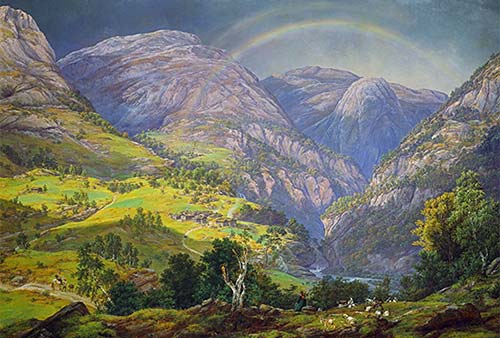
4 Johan Christian Dahl, View of Fortundalen, 1836: This painting epitomizes the Norwegian closeness to nature. It shows a view similar to the one that 21st-century travelers to Norway’s fjords enjoy: mountains, rivers, and a waterfall. Painted in 1836, it’s textbook Romantic style. Find the farm buildings huddled near the cliff’s edge, smoke rising from chimneys. It reminds us that these farmers are hardworking, independent, small landowners. There was no feudalism in medieval Norway. People were poor...but they owned their own land. You can almost taste the goat cheese.
Dahl (1788-1857) is considered the father of Norwegian Romanticism. Romantics such as Dahl (and his European contemporaries J.M.W. Turner, Beethoven, and Lord Byron) put emotion over rationality. They reveled in the power of nature—death and pessimism ripple through their work. The birch tree—standing boldly front and center—is a standard symbol for the politically downtrodden Norwegian people: hardy, cut down, but defiantly sprouting new branches. In the mid-19th century, Norwegians were awakening to their national identity. Throughout Europe, nationalism and Romanticism went hand in hand.
• Also in Room 42, to the left is...
5 Dahl, Hellefossen near Hokksund, 1838: Another typical Dahl setting: romantic nature and an idealized scene. A fisherman checks on wooden baskets designed to catch salmon migrating up the river. In the background, a water-powered sawmill slices trees into lumber. Note another Dahl birch tree at the left, a subtle celebration of the Norwegian people and their Protestant work ethic.
• Head into Room 43 to see other works by Dahl and his Norwegian contemporaries.
6 Johan Christian Dahl, View from Stalheim, 1842: Painted in 1842, this is quintessential Romantic style. Nature rules—the background is as detailed as the foreground, and you’re sucked in.
The pieces in room 43 show heavy clouds and glaciers, repeating similar themes—drama over rationalism, nature pounding humanity. Human figures are melancholy. Norwegians, so close to nature, are fascinated by those plush, magic hours of dawn and twilight. The dusk makes us wonder: What will the future bring?
• To the left is...
7 Thomas Fearnley, The Labro Falls at Kongsberg, 1837: Man cannot control nature or his destiny. The landscape in this painting is devoid of people. The only sign of humanity is the jumble of sawn logs in the foreground. A wary eagle perched on one log seems to be saying, “You can cut these trees, but they’ll always be mine.”
• Take a short detour into Room 44 to enjoy some cosmoramas. This peep-hole technology—sort of like today’s virtual reality headsets—gave a society that didn’t travel much a chance to see natural wonders in “as-if-you’re-there” vividness...pretty cool back in 1820. The landscapes in these cosmoramas were painted by Johannes Flintoe, who established the Norwegian mountains as an artistic motif. Next, pass through Room 43 again and into Room 45. Straight ahead is...
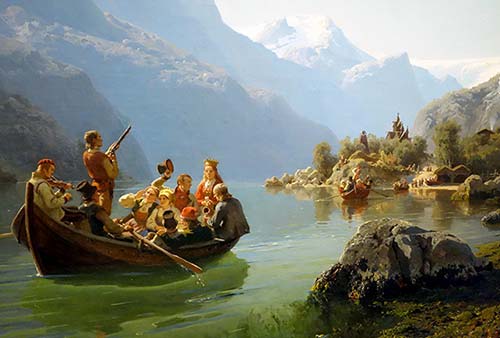
8 Adolph Tidemand and Hans Gude, Bridal Procession on the Hardangerfjord, 1848: This famous painting shows the ultimate Norwegian scene: a wedding party with everyone decked out in traditional garb, heading for the stave church on the quintessential fjord (Hardanger). It’s a studio work and a collaboration: Hans Gude painted the landscape, and Adolph Tidemand painted the people. Study the wedding finery (in the painting and in the adjacent glass case). This work trumpets the greatness of both the landscape and Norwegian culture.
• Also in Room 45, to the left, find...
9 Tidemand, Low Church Devotion, 1848: This scene shows a dissenting Lutheran church group (of which there were many in the 19th century) worshipping in a smokehouse. The light of God powers through the chimney, illuminating salt-of-the-earth people with strong faiths. Rather than accept the Norwegian king’s “High Church,” they worshipped in their homes in a more ascetic style. Later, many of these people emigrated to America for greater religious freedom.
• Exit Room 45 opposite where you entered, and follow the sounds of music and nature into Room 47. The classic and mystical soundtrack makes the landscape in these paintings come alive with trolls, elves, and other mythological creatures believed to exist in Norwegian nature. To the left is...
10 Adolph Tidemand and Hans Gude, Spear Fishing on Lake Krøderen, 1851: Another collaboration by these two artists shows the old way of fishing with a spear (a method which is no longer allowed in Norway). With the help of a burning flame, fish were spotted and speared with a large iron fork. You can almost hear the elves whispering in the background. From underwater, the Nøkken (a shapeshifting water spirit) might be staring back.
• Backtrack into Room 46, which focuses on Norway’s seafaring past. Continue through Room 48 (with paintings of motifs from Africa and the Middle East) before taking a right into Room 49.
The Photographic Eye
At the end of the 19th century, Norwegian painters traded the emotions of Romanticism for more slice-of-life detail. This was the end of the Romantic period and the beginning of Realism. With the advent of photography, painters transitioned to a more hyperrealistic style.
11 Eilif Peterssen, Christian II Signing the Death Warrant of Torben Oxe, 1875: The Danish king signs the execution order for the man who’d killed the king’s beloved mistress. With camera-like precision, the painter captures the whole story of murder, anguish, anger, and bitter revenge in the king’s set jaw and steely eyes.
• Head through Room 50 and take a left into Room 51, where you can admire paintings by female painter and pioneer Harriet Backer. Room 52 features portraits of famous Norwegians such as playwright Henrick Ibsen, composer Edvard Grieg, and painter Johan Christian Dahl. Next we’ll visit...
Rooms 53-54: Take a break from Nordic gloom and doom with these works by Impressionist and Post-Impressionist artists. Even Munch got into the spirit with his Parisian painting, Rue Lafayette (1891). You’ll also see lesser known, but still beautiful, paintings by non-Norwegian big names such as Picasso, Modigliani, Monet, Manet, Van Gogh, Gauguin, Renoir, and Cézanne.
• Enter Room 57 and...
Stand Up for Justice
Death, disease, and suffering were themes seen again and again in art from the late 1800s. The most serious disease during this period was tuberculosis. It was also a period of social unrest, when people fought for their rights as workers—an early start to what later became the welfare system and the Norwegian model of society.
• On the far wall, find...
12 Christian Krohg, Sick Girl, 1880: Christian Krohg (1852-1925) is known as Edvard Munch’s inspiration, but to Norwegians, he’s famous in his own right for his artistry and giant personality. This extremely realistic painting shows a child dying of tuberculosis, as so many did in Norway in the 19th century. The girl looks directly at you. You can almost feel the cloth, with its many shades of white.
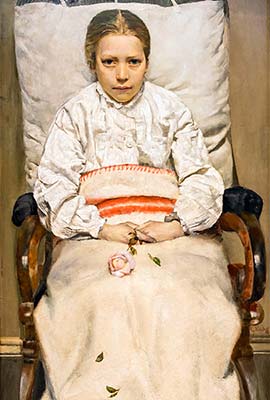
• Just to the right of that is...
13 Edvard Munch, Spring, 1889: Munch was haunted by the deaths of his mother and sister, caused by tuberculosis. His grief inspired him throughout his career; several of his paintings involve the theme of death.
• To the left of Sick Girl, find...
14 Christian Krohg, Struggle for Survival, 1889: Desperately poor, grubby, almost animal-like Norwegian children and mothers clamor for a scrap of food. This is the context of much of the art you’re about to see: Norway was part of Denmark for four centuries, then part of Sweden for nearly a century. Norwegians felt like second-class citizens in their own homeland.
• On the wall to your left, find...
15 Krohg, Albertine to See the Police Surgeon, c. 1885-1887: Krohg had a sharp interest in social justice. In this painting, Albertine, a sweet girl from the countryside, has fallen into the world of prostitution in the big city. She’s the new kid on the Red Light block in the 1880s, as Oslo’s prostitutes are pulled into the police clinic for their regular checkup. Note her traditional dress and the disdain she gets from the more experienced girls. Krohg has buried his subject in this scene. His technique requires the viewer to find her, and that search helps humanize the prostitute.
• On the opposite wall, near where you entered the room is...
16 Erik Werenskiold, Peasant Burial, 1883-1885: While Monet and the Impressionists abandoned Realism, Norwegian artists continued to embrace it. In this painting, you’re invited to participate. A dead man’s funeral is attended by a group of famers and peasants, but only one is a woman—the widow. Their faces speak volumes about their life of toil. A common thread in Norwegian art is the cycle of life—however difficult it may be.
• Continue through rooms 58 and 59, following the crowds into the adjoining “Munch Room”—Room 60.
Turmoil
Room 60 is filled with works by Norway’s single most famous painter, Edvard Munch (see sidebar). Norway’s long, dark winters and social isolation have produced many gloomy artists, but none gloomier than Munch. He infused his work with emotion and expression at the expense of realism. I’ve described a few pieces here (listed in clockwise order).
17 Munch, The Sick Child, 1896: The 1877 death of Munch’s sister likely inspired this painting. The girl’s face melts into the pillow. She’s becoming two-dimensional, halfway between life and death. Everything else is peripheral, even her despairing mother saying good-bye. You can see how Munch scraped and repainted the face until he got it right.
Edvard Munch (pronounced “moonk”) is Norway’s most famous and influential painter. His life was rich, complex, and sad. His father was a doctor who had a nervous breakdown. His mother and sister both died of tuberculosis. He knew suffering. And he gave us the enduring symbol of 20th-century pain, The Scream.
Munch was also Norway’s most forward-thinking painter, a man who traveled extensively through Europe, soaking up the colors of the Post-Impressionists and the curves of Art Nouveau. Living in Germany in the years before World War I, he helped pioneer a radical new style—Expressionism—in which raw emotion was the subject. Jarring colors and wavy lines “expressed” inner turmoil and the angst of the modern world.
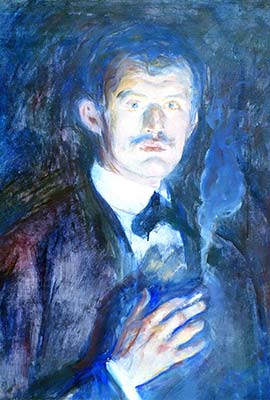
After a nervous breakdown in late 1908, followed by eight months of rehab in a clinic, Munch emerged less troubled—but a less powerful painter. His late works were big, bright, less tormented...and less noticed.
Munch painted several versions of The Scream: You can see the 1910 version and much more of the artist’s work at the Munch Museum (see here). The version at the National Museum is from 1893.
18 Munch, Self Portrait with a Cigarette, 1895: In this self-portrait, Munch is haunted—a working artist immersed in an oppressive world. Indefinable shadows engulf him from the background. His hand shakes as he considers his uncertain future (ironic, considering he created his greatest masterpieces during this depressed period.) After eight months in a Danish clinic, he found peace—and lost his painting touch. From then on, Munch strayed from the gripping expressionism we appreciate most about his art.
19 Munch, Puberty, 1894-1895: One of the artist’s most important works (other than The Scream) reveals his ambivalence about women (see also his Madonna, next). This adolescent girl, grappling with her emerging sexuality, covers her nudity self-consciously. The looming shadow behind her—frighteningly too big and amorphous—threatens to take over the scene. The shadow’s significance is open to interpretation—is it phallic, female genitalia, death, an embodiment of sexual anxiety...or Munch himself?
20 Munch, Madonna, 1894-1895: Munch had a tortured relationship with women. He never married. He dreaded and struggled with love, writing that he feared if he loved too much, he’d lose his painting talent. This painting is a mystery: Is she standing or lying? Is that a red halo or some devilish accessory? Munch wrote that he would strive to capture his subjects at their holiest moment. His alternative name for this work: Woman Making Love. What’s more holy than a woman at that moment?
21 Munch, Dance of Life, 1899-1900: In this scene of five dancing couples, we glimpse Munch’s notion of femininity. To him, women were a complex mix of Madonna and whore. We see Munch’s take on the cycle of women’s lives through these depictions: a virgin (discarding the sweet flower of youth), a prostitute (a jaded temptress in red), and a widow (having destroyed the man, she is finally alone, aging, in black). With the phallic moon rising on the lake, Munch demonizes women as they turn men into green-faced, lusty monsters.
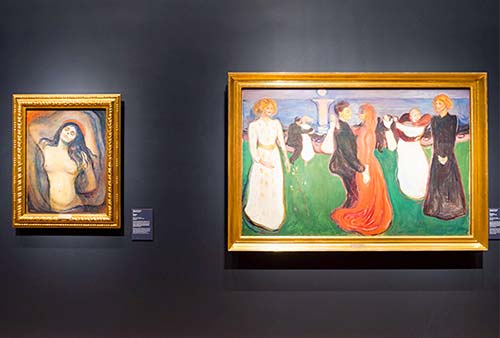
22 Munch, The Scream, 1893: Munch’s most famous work shows a man screaming, capturing the fright many feel as the human “race” does just that. The figure seems isolated from the people on the bridge—locked up in himself, unable to stifle his scream. Munch made four versions of this scene, which has become the textbook example of Expressionism. On one, he graffitied: “This painting is the work of a madman.” He explained that the painting “shows today’s society, reverberating within me...making me want to scream.” He’s sharing his internal angst. In fact, this Expressionist masterpiece is a breakthrough painting; it’s angst personified.
• Exit the Munch room back through Room 59, then turn right to enter Room 61.
Moods and Emotions
Landscape painters were often fascinated by the phenomena of nature and light, and the artwork in this room takes us back to this ideal from the Romantic Age. Painters were challenged by capturing atmospheric conditions at a specific moment, with quick sketches outdoors before the weather changed yet again.
• On the right just as you enter is...
23 Nikolai Astrup, Bonfire Celebrating Midsummer Night, 1912-1926: While Swedes celebrate Midsummer with a smörgåsbord and a midsummer pole, Norwegians have a big bonfire and gather around with friends and family. Astrup, known for his modernist style and vivid use of colors, here depicts the traditional bonfire in a valley in Jølster, set in a typical fjord landscape.
• In the center of the room you’ll find...
24 Harald Sohlberg, Winter Night in the Mountains, 1914: Harald Sohlberg was inspired by this scene while skiing in the mountains in the winter of 1899. Over the years, he attempted to re-create the memory of that night, saying: “The mountains in winter reduce one to silence. One is overwhelmed, as if in a mighty, vaulted church, only a thousand times more so.”
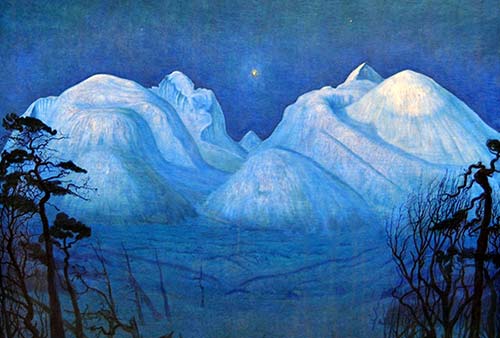
In the same room, you’ll also see several sculptures by Gustav Vigeland (1869-1943). These pieces were created early in Vigeland’s career. Can you detect the similarities between these and his later iconic works, such as Monolith of Life, that would later occupy Frogner Park?
• Walk down the grand hall with The Lounge café on your right, passing through Room 75 and into Room 63.
Life Force
This colorful room, with a few more paintings by Munch and a sculpture by Vigeland, bursts with life and vitality. Naked bodies, the power of nature, and a healthy lifestyle inspired Munch during the later stages of his life. After years of roaming through Europe, drinking and struggling with severe mental problems, Munch returned to Norway in 1909. He eventually settled in Oslo and adopted a new painting style. He now used powerful brush strokes and vivid colors to create works filled with life and nature.
• Our tour is over. You’re just a few steps away from lots of contemporary art (Rooms 80-89) and, one flight up, the Light Hall (Lyshallen) and terrace with grand views of Oslo’s waterfront.
Near the National Museum
▲Nobel Peace Center (Nobels Fredssenter)
This museum, housed in a former train station, celebrates the 800-some past and present Nobel Peace Prize winners and poses the question, “What is the opposite of conflict?” Temporary exhibits relate to the Peace Prize ideals. The permanent collection includes profiles of past prizewinners (from Teddy Roosevelt to Mother Theresa) and a look at the life and work of Alfred Nobel, the Swedish inventor of dynamite, who initiated the prizes.
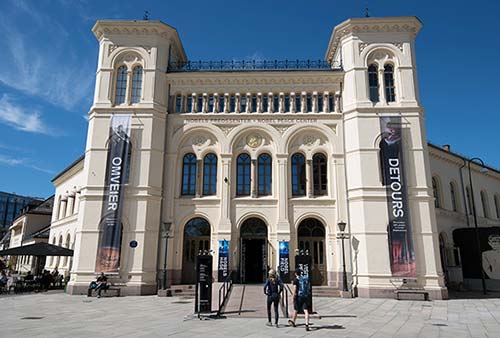
Cost and Hours: 100 NOK, Tue-Sun 11:00-17:00, closed Mon, mid-June-July daily from 10:00, Brynjulfs Bulls Plass 1, +47 48 30 10 00, www.nobelpeacecenter.org.
▲Aker Brygge and Tjuvholmen
Oslo’s harborfront was dominated by the Aker Brygge shipyard until it closed in 1986. In the late 2000s, it became the first finished part of the Fjordbyen (Fjord City) urban renewal project to convert Oslo’s harborfront into the people-friendly zone you see today. Aker Brygge is now a stretch of yacht-clubby waterfront restaurants facing a fine promenade—just the place to join in on a Nordic stroll on a balmy summer’s eve.
The far end of Aker Brygge is marked by a big black anchor from the wreck of the German warship Blücher, sunk by Norwegian forces near Drøbak while heading for Oslo during the Nazi invasion on April 9, 1940. From there, a bridge crosses over onto Tjuvholmen (“Thief Island,” where Oslo hung thieves back in the 17th century). This planned community boasts the costliest apartments in town, private moorings for luxury jet boats, boardwalks with built-in seating, elegant shops and cafés, and the striking, wood-clad and glass-roofed Astrup Fearnley Museum (good temporary modern art exhibits, closed Mon, www.afmuseet.no). On the harbor side of the museum, a grassy little knob of land sports an appealing sculpture park; nearby there’s a spot for swimming in the fjord. This area is well worth a wander, including the back lanes away from the water. As you stroll here, admire how, while the entire complex feels cohesive, each building has its own personality.
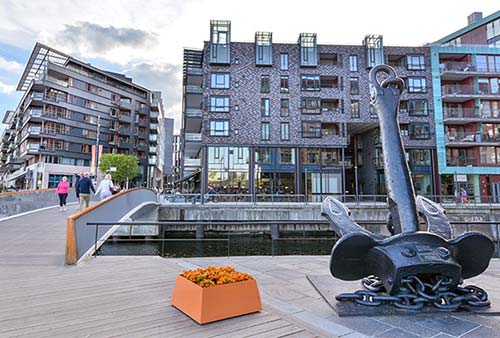
Eating: Dining here is appealing but pricey. Choose from a slew of restaurants, or picnic on a budget at one of the many public benches, tables, or lounge chairs that offer the best seats of all (grocery stores are a block away from the harborfront views). For recommendations, see “Eating in Oslo,” later.
AKERSHUS FORTRESS COMPLEX
This parklike complex of sights, worth ▲, is scattered over Oslo’s fortified old center. It’s also a military base, and you’ll see uniformed members of the Royal Guard keeping watch over the royal mausoleum here. But the public is welcome, and as you dodge patrol guards and vans filled with soldiers, you’ll see the castle, war memorials, the Norwegian Resistance Museum, and cannon-strewn ramparts affording fine harbor views and picnic perches. Expect bumpy cobblestone lanes and steep hills.
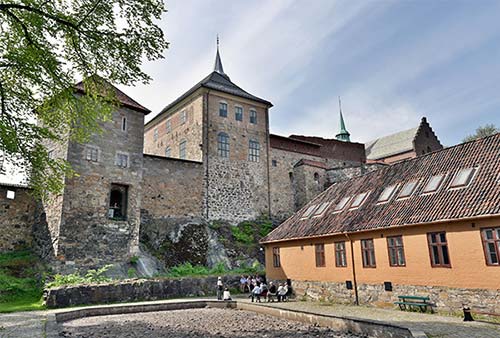
Hours: The complex is generally open daily 6:00-21:00 (until 18:00 in winter).
Getting There: From the harbor, you can hike up the stairs by the FDR statue or (less steeply) from the grid of streets just east of City Hall. If you’re doing my tram tour, get off at the Øvre Slottsgate stop, cross the road, and head down Øvre Slottsgate street toward the water. After two blocks, you’ll head right through Christiania Torv, the area’s main square, with a sculpture of Christian IV’s gloved hand pointing out where to rebuild the city in 1624. Turn left toward the harbor and jog south a few blocks.
As you hike up toward the ramparts, go through the gate smack in the middle of the complex (rather than hooking up around to the right). You’ll enter an inner courtyard. A signpost at the gate directs you to the three attractions to visit: the visitors center, Resistance Museum, and Akershus Castle. The visitors center is to the left, and the other sights are through the gate on the right. Heading through this gate, you’ll curl up along a tree-lined lane, then pass the Norwegian Resistance Museum on your right (capping the ramparts). The entrance to the castle is dead ahead. Enjoy terrific harbor views from the rampart alongside the Resistance Museum.
Fortress Visitors Center: Stop here to pick up the fortress trail and site map, quickly browse through a modest exhibit tracing the story of Oslo’s fortifications from medieval times, use the free WCs, and consider catching a tour (May-Aug daily 10:00-17:00, shorter hours off-season, +47 23 09 39 17, www.akershusfestning.no).
Fortress Tours: Hour-long English walking tours of the grounds help you make sense of the most historic piece of real estate in Oslo (100 NOK, July-mid-Aug daily in English at 12:00 and 14:00, off-season Sat-Sun only at 13:00; departs from Fortress Visitors Center, call ahead to confirm tour is running).
▲▲Norwegian Resistance Museum (Norges Hjemmefrontmuseum)
This fascinating museum tells the story of Norway’s WWII experience: appeasement, Nazi invasion (they made Akershus one of their headquarters), resistance, liberation, and, finally, the return of the king. This is an inspirational look at how the national spirit can endure total occupation by an evil force. While the exhibit is becoming old-fashioned, for those with an appetite for WWII history and the patience to read the displays, it’s both riveting and stirring. Norway had the fiercest resistance movement in Scandinavia, and this museum shows their (hard-earned) pride.
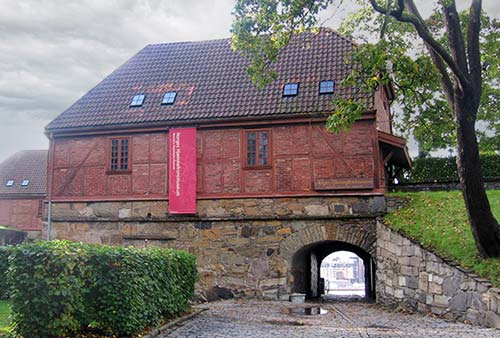
Cost and Hours: 100 NOK; daily 10:00-17:00, Sept-April until 16:00; next to castle, overlooking harbor, +47 23 09 31 38, www.forsvaretsmuseer.no.
Visiting the Museum: The one-way chronological route begins in 1940. A commotion of rifles aimed at you comes with the German notice proclaiming, “You will submit or die.” After a couple months of skirmishes, the Norwegian government officially capitulates.
You’ll see the German ultimatum to which King Haakon VII gave an emphatic “No.” A video screen plays the radio address by Vidkun Quisling, the fascist Norwegian politician who declared himself ruler of Norway on the day of the invasion. (Today, Quisling’s name remains synonymous with “traitor”—the Norwegian version of Benedict Arnold.)
Head downstairs to explore the exhibits. Displays show secret radios, transmitters, and underground newspapers and explain wartime challenges and austerity in Norway. Red knit caps were worn by civilians to show solidarity with the resistance—until the hats were outlawed by Nazi officials. With the Nazi occupation, Norway lost its trade partners, and had to improvise (shoes were made of fish skin).
You’ll also learn about Norway’s underground guerilla military. British-trained special forces famously blew up a strategic heavy water plant, a key part of the Nazis’ atomic bomb program. (The event is immortalized in the 1965 Kirk Douglas film The Heroes of Telemark.) You’ll see a case of crude but effective homemade weapons and the German machine used to locate clandestine radio stations. Exhibits explain how the country coped with 350,000 occupying troops; how airdrops equipped a home force of 40,000 so they were ready to coordinate with the Allies when liberation was imminent; and the happy day when the resistance army finally came out of the forest, and peace and freedom returned to Norway. Liberation day was May 8, 1945...but it took a few days to pull together the celebration, which coincided neatly with the 17th of May—Constitution Day. (That’s partly why May 17 is celebrated with such gusto today.)
Back upstairs, notice the propaganda posters trying to recruit Norwegians to the Nazi cause and “protect the eastern border” from the Soviets and communism.
The museum is particularly poignant because many of the patriots featured inside were executed by the Germans right outside the museum’s front door; a stone memorial marks the spot. (At war’s end, the traitor Vidkun Quisling was also executed at the fortress, but at a different location.)
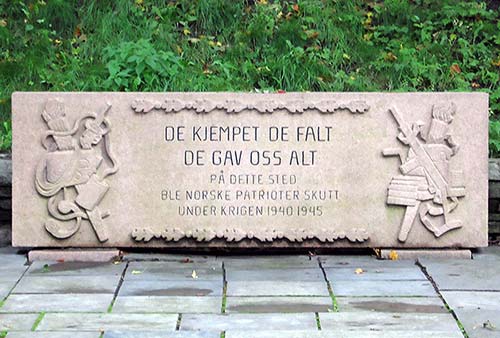
Akershus Castle (Akershus Slott)
One of Oslo’s oldest buildings, the castle overlooking the harbor, with big, empty rooms, recalls Norway’s medieval poverty. Norwegians built the first fortress here in 1299; later, in 1649, the Danes made it stronger so the Danish king Christian IV would have a suitable and safe place to stay during his many visits. When Oslo was rebuilt in the 17th century, many of the stones from the first Oslo cathedral were reused here, in the fortress walls.
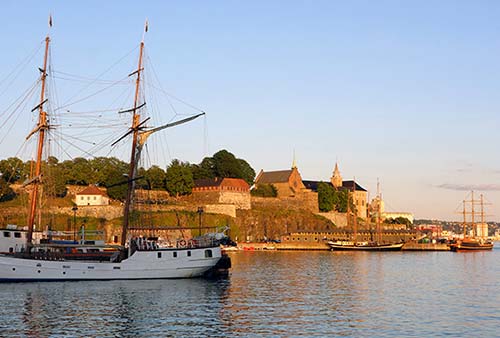
Cost and Hours: 100 NOK, includes essential audioguide; Mon-Sat 10:00-16:00, Sun from 12:00; Sept-April Sat-Sun 12:00-17:00 only, closed Mon-Fri; +47 23 09 35 53. The castle’s rooms are meaningful only with the included audioguide.
Visiting the Castle: From the old kitchen, where the ticket desk and gift shop are located, you’ll follow a one-way circuit of rooms. Descend through a secret passage to the dungeon, crypt, and royal tomb. Notice the non-stop list of pastors since the 1537 Reformation in Norway. Emerge behind the altar in the chapel, then walk (past a WC) through echoing rooms including the Daredevil’s Tower, Hall of Christian IV (with portraits of Danish kings of Norway on the walls), and Hall of Olav V.
Old Christiania
In the mid-1600s, the ruling Danes leveled the original Oslo and built a more modern grid-planned city named Christiania, after their king. They located it just below the castle for easier control and defense, and built with stone so it wouldn’t burn. The checkerboard neighborhood between the castle and the cathedral—named Kvadraturen (“the Quadrature”)—marks that original Christiania town. There’s little from that period to see, but curious tourists can wander through this sleepy zone (between the castle and Karl Johans Gate) and look for some 17th-century buildings. Bits of Christiania’s original Dutch Renaissance-style buildings survive. (Norwegian builders, accustomed to working with wood, lacked skill with stone, so the Danes imported Dutch builders.) The area’s main square, Christiania Torv (near the recommended Café Skansen), is marked by a modern fountain called “The Glove.” The sculpture of Christian IV’s glove points as if to indicate, “This is where we’ll build my city.” The old City Hall, now the Gamle Raadhus restaurant, survives.
EAST HARBORFRONT
▲Oslo Opera House (Operahuset Oslo)
Oslo’s striking Opera House angles up from the water on the city’s eastern harbor, across from the train station. Its boxy, low-slung glass center holds a state-of-the-art 1,400-seat main theater with a 99-piece orchestra “in the pit,” which can rise to put the orchestra “on the pedestal.” The jutting white marble planes of the Opera House’s roof double as a public plaza. You feel a need to walk all over it (and you can).
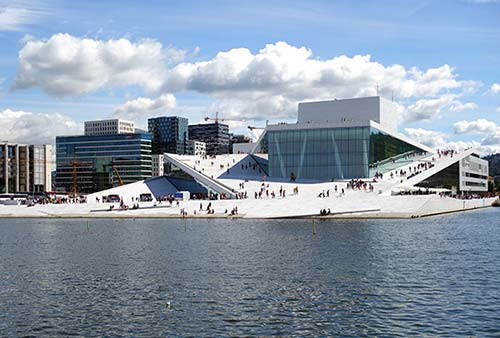
Cost and Hours: Foyer and café/restaurant open daily roughly 11:00-18:00, open longer hours during performances.
Tours: Fascinating 50-minute guided tours of the stage, backstage area, and architecture run year-round (130 NOK; usually 1-2 tours/day in English—generally at 13:00 and 14:00; reserve online at www.operaen.no or by phone, +47 21 42 21 21).
Getting There: You’ll find it on Bjørvika, the next harbor over from City Hall and Akershus Fortress—just below the train station.
Visiting the Opera House: Information-packed tours explain what makes this one of the greenest buildings in Europe and why Norwegian taxpayers helped foot its half-billion-dollar construction cost—to make high culture (ballet and opera) accessible to the younger generation and a stratum of society who normally wouldn’t care. The season is split between opera, ballet, and concerts. You’ll see a workshop employing 50 people who hand-make costumes, and learn how a foundation of 700 pylons set some 150 feet deep support the jigsaw puzzle of wood, glass, and 36,000 individual pieces of marble. The construction masterfully integrates land and water, inside and outside, nature and culture.
Outside, the Opera House plaza is now part of the harborfront promenade, busy with walkers and sightseers. If you hike all the way to the top of the building (watch your footing—it’s slippery when wet), you can peek over the back railing to see the high-rise development known as the Barcode Project. This sleek and distinctive collection of high-rise office buildings resembles the bars in a universal product code. The Munch Museum resides in the futuristic building on the adjacent pier.
▲▲Munch Museum (Munchmuseet)
The only Norwegian painter to have had a serious impact on European art, Edvard Munch (pronounced “moonk”) developed an international reputation during the 16 years he lived and worked in Germany (1892-1908)—an especially prolific period during which he created many of his most well-regarded works. But a nervous breakdown in 1908 sent him back to Oslo, where he would spend the rest of his life working quietly at his property just outside the city. At his death in 1944, he left all the artwork still in his possession—thousands of paintings, drawings, photographs, and prints—to the city of Oslo.
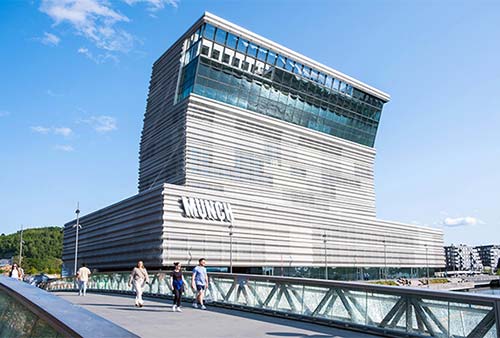
The Munch Museum is the largest art museum in the world dedicated to a single artist. Munch’s works are displayed here across six floors and seven galleries. In addition to the permanent Munch collection, you’ll find temporary, often thematic, exhibits by other artists (sometimes displayed alongside selected Munch works). This is the place to appreciate in depth the emotional, disturbing, and powerfully Expressionistic work of this strange and perplexing man, including three versions of his most famous painting, The Scream. The museum is fun and engaging for kids, too. For more about Munch, see the sidebar on here.
Cost and Hours: 160 NOK, free entry Wed 18:00-21:00; open daily 10:00-18:00, Wed-Sat until 21:00, shorter hours in winter; café and restaurant, on the harbor at Edvard Munchs Plass 1, +47 23 49 35 00, www.munchmuseet.no.
Audioguide: The 49-NOK audioguide is worthwhile to fully understand Munch’s art.
Baggage Check: Free lockers are on site. Backpacks and larger handbags are not allowed inside the galleries.
Eateries: $$ Munch Deli & Café sits on the ground floor with dining both inside and out. $$$ Bistro Tolvte serves lunch, dinner, and light snacks with a view on the 12th floor. $$ Kranen Bar, the museum’s “Skybar” one floor up, is a fancy spot for a drink (to get there, use the glass elevator by the ground-floor café). You can visit any of these eateries without a museum ticket.
Visiting the Museum: The museum’s main fourth-floor exhibition is called Infinite, showcasing a wide range of Munch works divided into twelve thoughtfully described themes. Here you’ll find his best-known paintings such as Madonna, Love and Pain, Puberty, Sick Girl, The Girls on the Bridge, and many more. His most famous work, The Scream, is on display in three versions: a drawing, a painting, and a lithographic print. They are shown one at a time (rotating every 30 minutes) to minimize their exposure to light.
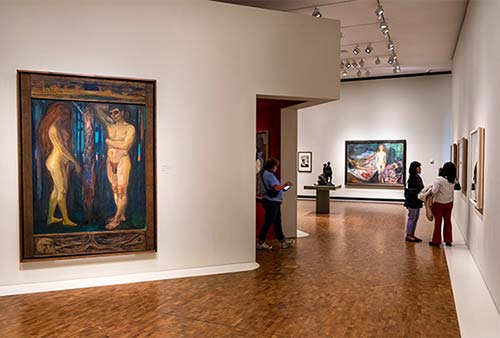
In the sixth floor Monumental gallery, you’ll marvel at some of Munch’s most ambitious and largest works. Many of them are versions of paintings he made for the University of Oslo Aula in 1911. These include The Sun and The Researchers, and the rejected painting, The Human Mountain. (Looking at this, you can see how he may have inspired Gustuv Vigeland and his iconic Monolith of Life sculpture).
Munch experimented with many techniques throughout his career. In the Up Close gallery on the seventh floor, you’ll see some of his woodcuts. A window at the far end offers a panorama view over the Monumental gallery.
The nearby Shadows gallery is a virtual and artistic reconstruction of Munch’s Oslo home, giving a glimpse of how Munch lived and worked the last years of his life.
On the upper floors, you’ll likely find temporary exhibits thematically related to Munch. Head to the rooftop patio (Kranen Bar) to enjoy grand views of the city and its fjord.
Nearby: South of the museum facing the fjord is a small green area called Inger Munch Pier (named after Edvard’s younger sister). Punctuating this space is the nine-meter-high bronze sculpture The Mother by British artist Tracey Emin (for more on the sculpture, see here).
Deichman Public Library (Deichman Bjørvika)
This building, between the Opera House and train station, is another pillar of Oslo’s revitalized harborfront. Oslo’s award-winning library, founded in 1785, was transformed in 2020 into a modern and welcoming creative commons. This new space has already become a beloved fixture in this community. Let it swallow you up as you ride the escalators through the amazing architecture into the futuristic library and up to the top for sweeping harbor views.
Cost and Hours: Free to enter; open Mon-Fri 8:00-22:00, Sat-Sun 10:00-18:00; across the street from the Opera House at Anne-Cath. Vestlys Plass 1, +47 23 43 29 00, https://deichman.no.
CITY CENTER
Royal Palace (Slottet)
Sitting at the top of Karl Johans Gate, the Neoclassical Royal Palace is home to Norway’s King Harald V and Queen Sonja. Completed in 1849, it was extensively renovated in 2001. Visits are by one-hour guided tour only (several English tour departures daily in summer). But most just come to the palace to see the daily changing of the guard at 13:30 (occasionally with some additional fanfare or parades). The ritual takes place right in front of the palace, on Slottsplassen. While tourists gather at the center of the square, the action is mostly at the far right, in front of the small yellow guard’s house (palace entry and tour-175 NOK, check website for tour times, Slottsplassen 1, +47 220 48700, www.kongehuset.no).
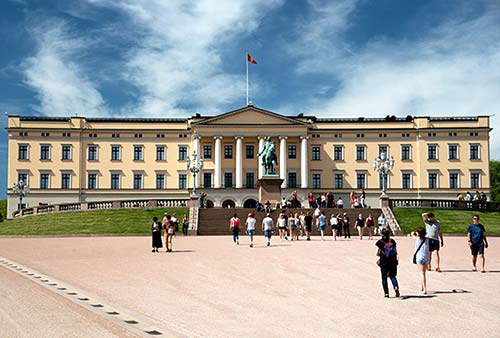
Historical Museum (Historisk Museum)
Just below the palace is a fine, purpose-built Art Nouveau building with exhibits about the history of humankind—from the Stone Age to modern times. The biggest draw here is the collection of Viking artifacts.
Cost and Hours: 120 NOK; Tue-Sun 10:00-17:00, Thu until 18:00, Oct-April Tue-Sun 11:00-16:00, Thu until 20:00; closed Mon year-round; Frederiks Gate 2, +47 22 85 19 00, www.historiskmuseum.no.
Visiting the Museum: The ground floor has a school-group-friendly exhibit on cultural heritage, focusing on the relationship between people, their heritage, and their legacies. In another exhibit, you’ll trace ancient times to the arrival of Christianity, and stand under a 700-year-old painted stave church ceiling—with Bible stories starring blond Norwegians. Ogle other stave church artifacts, including several gorgeous carved doors with filigree details. On the third floor, you’ll find items from antiquity and ancient Egypt. Across the hall is the museum’s highlight: a collection of iron swords, a rare intact helmet, a runestone, and other fascinating artifacts from the Viking age.
Ibsen Museum and Theater
This small museum celebrates the greatest Norwegian playwright, Henrik Ibsen. While the museum is a hit with Norwegians who appreciate Ibsen and chuckle at his wit and wisdom, it’s of little interest to most. Admission includes a guided tour—the only way to see the apartment where Ibsen spent his last 11 years.
Cost and Hours: 180 NOK; daily July-Sept 11:00-18:00, shorter hours in winter; 30-minute guided tours leave on the hour, last tour at 17:00; near the Royal Palace at Henrik Ibsens Gate 26, +47 400 23 580, https://ibsenmt.no.
FROGNER PARK
The sprawling Frogner Park anchors an upscale neighborhood of the same name, 1.5 miles west of the city center. Here you’ll find the breathtaking Vigeland Sculpture Park, the wonderful Vigeland Museum, and the humble Oslo City Museum. The Frognerbadet swimming pool is nearby.
Getting There: Tram #12—which leaves from the central train station, Rådhusplassen in front of City Hall, Aker Brygge, and other points in town—drops you off right at the park gate (Vigelandsparken stop). Tram #19 (with stops along Karl Johans Gate) takes you to Majorstuen, a 10-minute walk to the gate (or you can change at Majorstuen to tram #12 and ride it two stops to Vigelandsparken).
▲▲▲Vigeland Sculpture Park (Vigelandsparken)
Within Oslo’s vast Frogner Park is Vigeland Sculpture Park, containing a lifetime of work by Norway’s greatest sculptor, Gustav Vigeland (see sidebar). In 1921, Vigeland made a deal with the city. In return for a great studio and state support, he’d spend his creative life beautifying Oslo with this sculpture garden. From 1924 until his death in 1943, he worked on-site, designing 192 bronze and granite statue groupings—600 figures in all, each nude and unique. Vigeland even planned the landscaping.
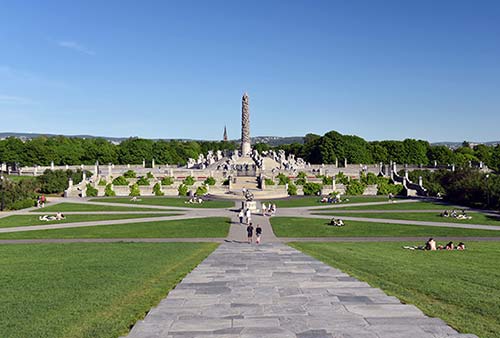
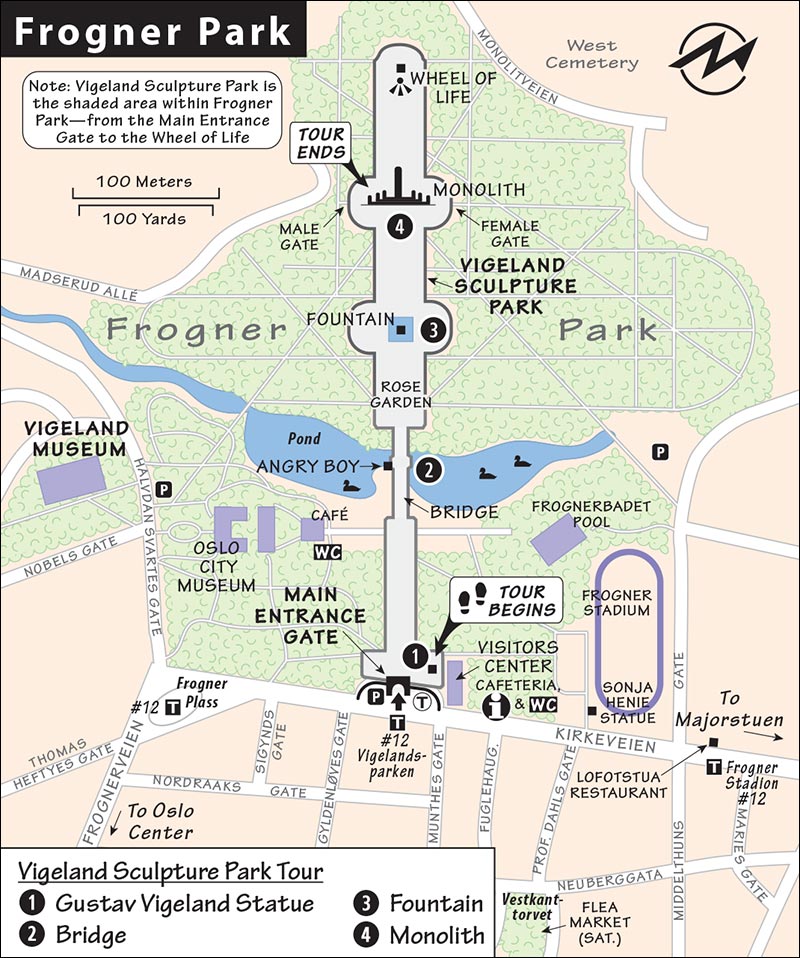
Today the park is loved and respected by the people of Oslo (no police, no fences—and no graffiti). At once majestic, hands-on, entertaining, and deeply moving, I find this park to be one of Europe’s top artistic sights. In summer, this is a tempting destination in the late afternoon—after the museums have closed and there’s still plenty of daylight. The sculpture park is more than great art: It’s a city at play. Appreciate its urban Norwegian ambience.
Cost and Hours: The garden is always open and free. The park is safe and lit in the evening. (Note that the nearby Vigeland Museum closes at 17:00 in summer, at 16:00 in winter, and is closed Mon year-round.)
Visitor Information and Services: For an illustrated guide and fine souvenir, consider the 100-NOK book in the visitors center (besøkssenter), on your right as you enter. The modern $$ cafeteria has sandwiches and light meals (indoor/outdoor seating, daily 9:00-18:00 in summer, shorter hours off-season), plus books, gifts, and pay WCs.
Self-Guided Tour: Frogner Park is huge, but this visit up its central spine, the Vigeland Sculpture Park, is a snap. Here’s a quick, straight-line, gate-to-monolith tour.
• Begin by entering the park through the grand gates, from Kirkeveien (with the Vigelandsparken tram stop). In front of the visitors center, look at the...
1 Gustav Vigeland Statue: Vigeland has his hammer and chisel in hand...and is drenched in pigeon poop. Consider his complicated life. He lived with his many models. His marriages failed. His children entangled his artistic agenda. He didn’t age gracefully. He didn’t name his statues, and he refused to explain their meanings. While those who know his life story can read it clearly in the granite and bronze, I’d forget Gustav’s troubles and see his art as observations on the bittersweet cycle of life in general—from a man who must have had a passion for living.
• Now walk 100 yards toward the fountain and the pillar.
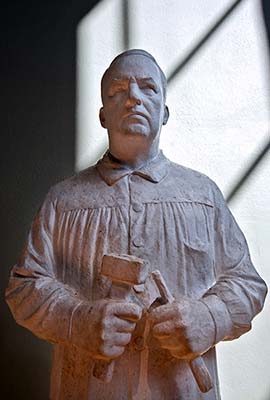
2 Bridge: The 300-foot-long bridge is bound by four granite columns: Three show a man fighting a lizard, and the fourth shows a woman submitting to the lizard’s embrace. Hmmm. (Vigeland was familiar with medieval mythology, where dragons represent man’s primal—and sinful—nature.)
But enough lizard love; the 58 bronze statues along the bridge are a general study of the human body. They capture the joys of life (and, on a sunny day, so do the Norwegians and tourists filling the park around you). Many deal with relationships between people. In the middle, on the right, find the circular statue of a man and woman going round and round—perhaps the eternal attraction and love between the sexes. But directly opposite, another circle feels like a prison—man against the world, with no refuge.
On your left, see the famous Angry Boy (Sinnataggen), the hot-headed little boy and a symbol of the park. (Notice his left hand is worn shiny from too many hand-holdings.) It’s said Vigeland gave a boy chocolate and then took it away to get this reaction. Look below the angry toddler, to the lower terrace—with eight bronze infants circling a head-down fetus.
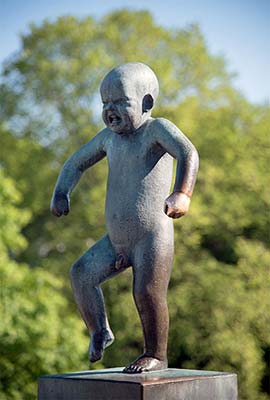
• Continue through a rose garden to the earliest sculpture unit in the park.
3 Fountain: Six giants hold a fountain, symbolically toiling with the burden of life, as water—the source of life—cascades steadily around them. Twenty tree-of-life groups surround the fountain. Four clumps of trees (on each corner) show humanity’s relationship to nature and the seasons of life: childhood, young love, adulthood, and winter.
Take a quick swing through life, starting on the right with youth. In the branches you’ll see a swarm of children (Vigeland called them “geniuses”): A boy sits in a tree, boys actively climb while most girls stand by quietly, and a girl glides through the branches wide-eyed and ready for life...and love. Circle clockwise to the next stage: love scenes. In the third corner, life becomes more complicated: a sad woman in an animal-like tree, a lonely child, a couple plummeting downward (perhaps falling out of love), a man desperately clinging to his tree, and finally an angry man driving away babies. The fourth corner completes the cycle, as death melts into the branches of the tree of life, and you realize new geniuses will bloom.
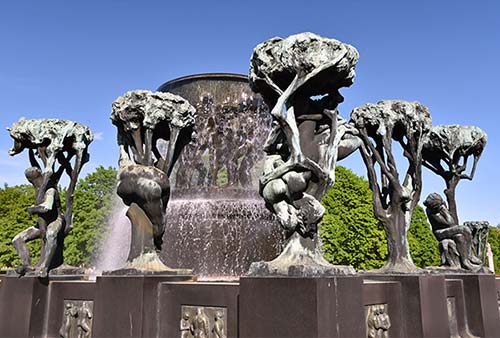
The 60 bronze reliefs circling the basin develop the theme further, showing man mixing with nature and geniuses giving the carousel of life yet another spin. Speaking of another spin, circle again and follow these reliefs.
The pattern in the pavers surrounding the basin is a maze—life’s long and winding road with twists, dead ends, frustrations, and, ultimately, a way out. If you have about an hour to spare, enter the labyrinth (on the side nearest the park’s entrance gate, there’s a single break in the black border) and follow the white granite path until (on the monolith side) you finally get out. (Tracing this path occupies older kids, affording parents a peaceful break in the park.)
• Or you can go straight up the steps to the...
4 Monolith: The centerpiece of the park—a teeming monolith of life surrounded by 36 groups of granite statues—continues Vigeland’s cycle-of-life motif. The figures are hunched and clearly earthbound, while Vigeland explores a lifetime of human relationships. At the center, 121 figures carved out of a single block of stone rocket skyward. Three stone carvers worked daily for 14 years, cutting Vigeland’s full-size plaster model into the final 180-ton, 50-foot-tall erection.
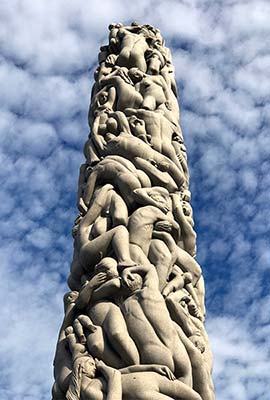
Circle the plaza, once to trace the stages of life in the 36 statue groups, and a second time to enjoy how Norwegian kids relate to the art. The statues—both young and old—seem to speak to children. Note the two wrought iron gates flanking each side of the plaza with their themes of male and female.
Vigeland lived barely long enough to see his monolith raised. Covered with bodies, it seems to pick up speed as it spirals skyward. Some people seem to naturally rise. Others struggle not to fall. Some help others. Although the granite groups around the monolith are easy to understand, Vigeland left the meaning of the monolith itself open to interpretation. Like life, it can be experienced many different ways.
From this summit of the park, look a hundred yards farther, where four children and three adults are intertwined and spinning in the Wheel of Life sculpture. Now, look back at the entrance. If the main gate is at 12 o’clock, the studio where Vigeland lived and worked—now the Vigeland Museum—is at 2 o’clock (see the green copper tower poking above the trees). His ashes sit in the top of the tower in clear view of the monolith. If you liked the park, visit the Vigeland Museum (described next), a delightful five-minute walk away, for an intimate look at the art and how it was made.
▲▲Vigeland Museum
This palatial city-provided studio was Gustav Vigeland’s home and workplace for the last two decades of his life. The high south-facing windows provided just the right light. Vigeland, who had a deeply religious upbringing, saw his art as an expression of his soul. He once said, “The road between feeling and execution should be as short as possible.” Here, immersed in his work, Vigeland supervised his craftsmen like a father, from 1924 until his death in 1943.
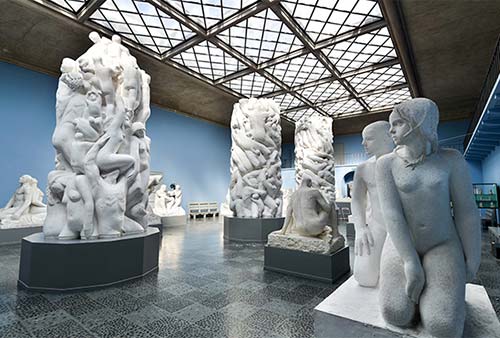
Today it’s filled with plaster casts and studies of many of the works you’ll see in the adjacent park—shedding new light on that masterpiece and allowing you to see familiar pieces from new angles. It also holds a few additional works and explains Vigeland’s creative (and technical) process. While his upstairs apartment is usually closed to the public, it may be open for guided tours—check the website.
Cost and Hours: 100 NOK; May-Aug Tue-Sun 10:00-17:00, Sept-April 12:00-16:00, closed Mon year-round; bus #20 or tram #12 to Frogner Plass, Nobels Gate 32, +47 23 49 37 00, www.vigeland.museum.no.
Visiting the Museum: It’s all on one floor, roughly arranged chronologically, which you’ll see in an easy clockwise loop. Rooms I-III explain Vigeland’s development, including his early focus on biblical themes. In Accused (1891), Cain flees with his family, including their dog. But gradually, Vigeland grew more interested in the dynamics between families, and those between men and women. In these first rooms, look for two particularly touching sculptures in marble (a medium he didn’t often use): Mother and Child (1909) and Young Man and Woman (1906).
Room IV is a long hall of portrait busts, which Vigeland often created without payment—he considered this task an opportunity to practice. While most of the busts don’t depict famous people, you’ll see King Oscar II and Arctic explorer Fridtjof Nansen. Room V continues this theme, with a few portraits (mostly full-body) of more recognizable figures: Beethoven, playright Henrik Ibsen, poet Henrik Wergeland, and writer Bjørnstein Bjørnson.
Room VI, with a 1942 self-portrait, explains the process by which Vigeland created his statues. See his tools displayed in a case and read the explanation: Using the “sand casting” method, Vigeland would make a small plaster model, which guided his workers in creating a metal “skeleton.” Vigeland would then bring the skeleton to life with soft clay—which he enjoyed using because its pliability allowed him to be spontaneous in his creativity. Once the clay piece was finished, plaster and sand were used to create a cast, used for the final bronze piece. For his stone works, they used a “pointing machine” to painstakingly measure the exact nuances of Vigeland’s contours. Examples of using both methods (including five different versions of the famous “angry baby” bronze) are displayed around the room.
Room VII holds temporary exhibits, while Room VIII features the full-sized plaster models for the park’s bronze fountain. The large Room IX has more pieces from the park, including a one-fifth-scale model of the fountain (used to win the Oslo City Council’s support for the project) and the four dragon statues that top the bridge’s pillars (high up and difficult to see in the park, but fascinating up close).
Room X is the dramatic climax of the museum, with a model of the entire park, and the life-size plaster models for the Monolith—in three pieces, making it easy to scrutinize the details. You’ll also see wrought-iron chained dragons—originally designed as a feature for the park gates—and several plaster models for the statues that surround the Monolith. Notice the many little “freckles” on these statues, left behind by the pointer used by craftsmen to replicate Vigeland’s work. The museum finishes with more temporary exhibits (in Rooms XI and XII).
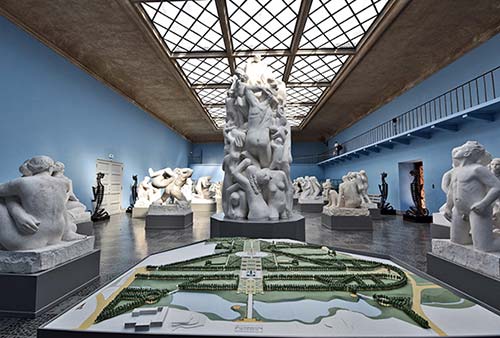
Oslo City Museum (Oslo Bymuseum)
This modest, hard-to-be-thrilled-about exhibit tells the story of Oslo. For a quick overview of the city, watch the 15-minute English video.
Cost and Hours: 100 NOK, free entry on Thu, download museum app to access free audioguide; open Tue-Sun 11:00-16:00, Thu until 19:00, closed Mon; across street from the Vigeland Museum in Frogner Manor Farm, +47 23 28 41 70, www.oslomuseum.no.
Frognerbadet Pool
Located near Vigeland Sculpture Park, the Frognerbadet complex has three outdoor pools, a waterslide, high dives, a cafeteria, and lots of young families (open mid-May-late Aug, closed off-season, Middelthunsgate 28, +47 23 27 54 50).