BERGEN
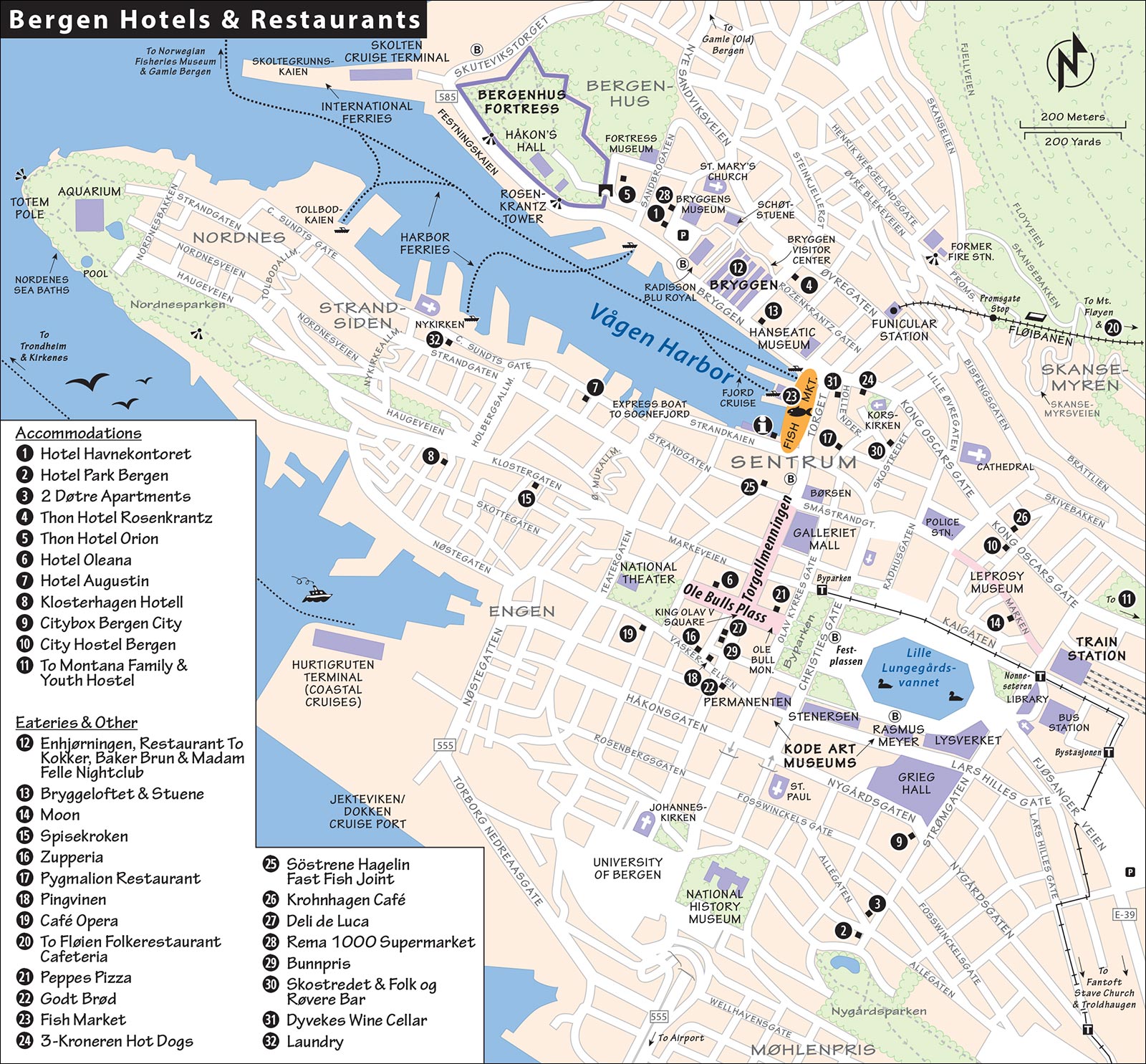
Map: Bergen Hotels & Restaurants
CHARACTERISTIC PLACES NEAR OLE BULLS PLASS
BUDGET BETS NEAR THE FISH MARKET
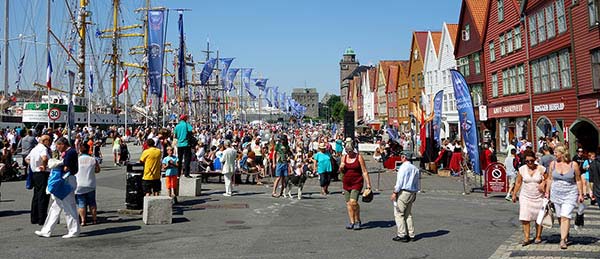
Bergen is permanently salted with robust cobbles and a rich sea-trading heritage. Norway’s capital in the 13th century, Bergen gained wealth and importance thanks to its membership in the heavyweight medieval trading club of merchant cities called the Hanseatic League. Bergen still wears her rich maritime heritage proudly—nowhere more scenically than at the picture-perfect Bryggen district, where colorful wooden warehouses line the harbor.
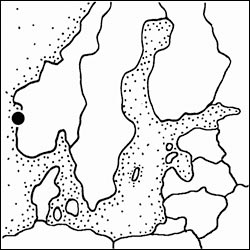
Protected from the open sea by a lone sheltering island, Bergen is a place of refuge from heavy winds for the giant working boats that serve the North Sea oil rigs. (Much of Norway’s current affluence is funded by the oil it drills just offshore.) Bergen is also one of the most popular cruise-ship ports in northern Europe, hosting over 300 ships a year and up to five ships a day in peak season. Each morning is rush hour, as cruisers hike past the imposing Bergenhus fortress and into town.
Bergen gets an average of 80 inches of rain annually (compared to 30 inches in Oslo). A good year has 60 days of sunshine. The natives aren’t apologetic about their famously lousy weather. In fact, they seem to wear it as a badge of pride. “Well, that’s Bergen,” they’ll say matter-of-factly as they wring out their raincoats. When I complained about an all-day downpour, one resident cheerfully informed me, “There’s no such thing as bad weather—just inappropriate clothing”...a local mantra that rhymes in Norwegian.
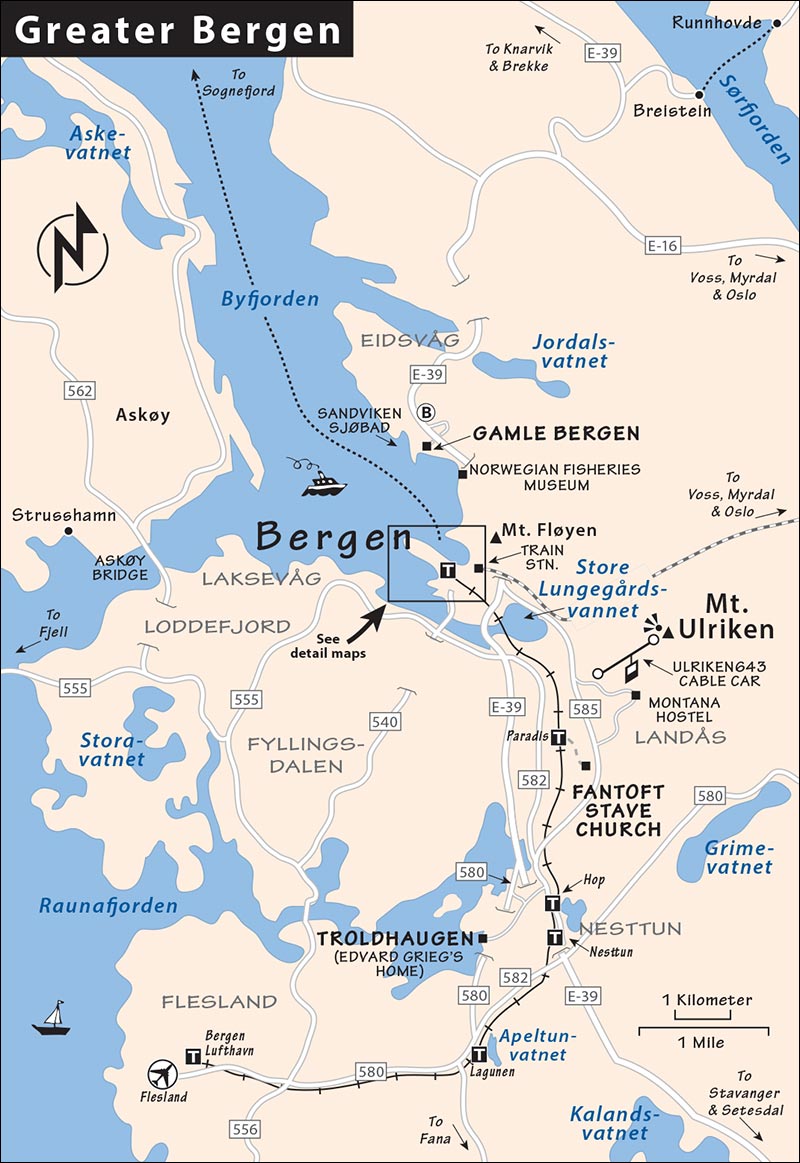
With about 280,000 people, Bergen has big-city traffic and high prices, but visitors sticking to the old center find it charming. Enjoy Bergen’s salty market, then stroll the easy-on-foot old quarter, with cute lanes of delicate old wooden houses. From downtown Bergen, a funicular zips you up a little mountain for a bird’s-eye view of this sailors’ town. A short foray into the countryside takes you to a variety of nearby experiences: a dramatic cable-car ride to a mountaintop perch (Ulriken643); an evocative stave church (Fantoft); and the home of Norway’s most beloved composer, Edvard Grieg, at Troldhaugen.
PLANNING YOUR TIME
Bergen is worth at least one full day. It can even be enjoyed on the tail end of a day’s scenic train ride from Oslo before returning on the overnight train. But that teasing taste will make you wish you had more time.
Bergen in One Day
For a busy day, you could do this:
| 9:00 | Take my self-guided Bergen Walk and stroll through the Bryggen shops and the Fish Market. |
| 11:00 | Take the Bryggen Walking Tour (mid-May-mid-Sept; reserve ahead), then grab lunch. Consider returning to the Bryggens Museum using your tour ticket while you’re in the area. |
| 14:00 | Visit Håkon’s Hall and Rosenkrantz Tower. |
| 15:00 | Stroll through Torgallmenningen square to the KODE Art Museums to see works by famous Norwegian landscape artists and Edvard Munch. |
| 17:00 | Enjoy some free time in town, or catch the bus out to Gamle Bergen. |
| 18:00 | Ride up the Fløibanen funicular (see my ticket-buying tips to avoid the line). |
More Bergen Planning Tips
Although Bergen has plenty of charms of its own, it’s most famous as a springboard for fjord country. I like these three options: Pick up a rental car here (fjords are a 3-hour drive away); take the express boat down the Sognefjord (about 4 hours to Balestrand, 5.5 hours to Flåm/Aurland); or do “Norway in a Nutshell” as a scenic loop from Bergen. The Nutshell option also works well as a detour midway between Bergen and Oslo (hop the train from either city to Voss or Myrdal, then take a bus or spur train into the best of the Sognefjord; scenic ferry rides depart from there).
Also note that Bergen, a geographic dead-end, is an efficient place to begin or end your Scandinavian travels. Consider flying into Bergen and out of another city, such as Helsinki (or vice versa).
Orientation to Bergen
Bergen clusters around its harbor—nearly everything listed in this chapter is within a few minutes’ walk. The busy Torget (the square with the Fish Market) is at the head of the harbor. As you face the sea from here, Bergen’s TI is at the left end of the Fish Market. The town’s historic Hanseatic Quarter, Bryggen (BRUHY-gun), lines the harbor on the right. Express boats to the Sognefjord (Balestrand and Flåm) dock at the harbor on the left.
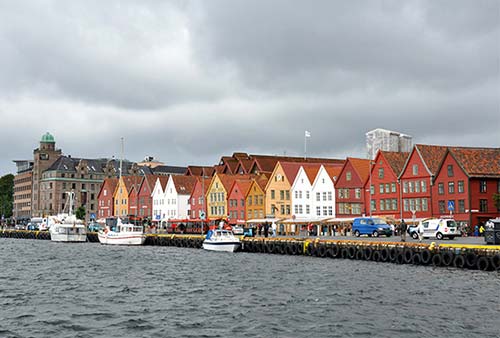
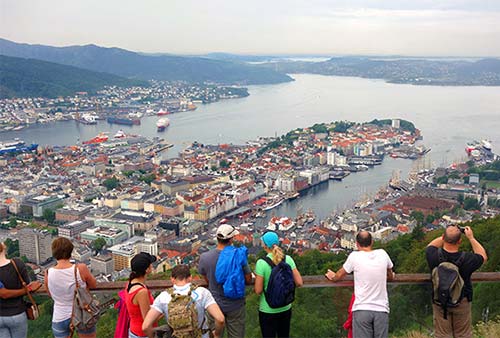
Charming cobbled streets surround the harbor and climb the encircling hills. Bergen’s popular Fløibanen funicular climbs high above the city to the top of Mount Fløyen for the best view of the town. Surveying the surrounding islands and inlets, it’s clear why this city is known as the “Gateway to the Fjords.”
TOURIST INFORMATION
The centrally located TI is upstairs in the long, skinny, modern Torghallen market building, next to the Fish Market (daily June-Aug 8:30-21:00, May and Sept 9:00-20:00; Oct-April 9:00-16:00; handy eateries downstairs and in Fish Market; +47 55 55 20 00, www.visitbergen.com).
The TI covers Bergen and western Norway, provides tour info and tickets, has a fjord info desk, books rooms, will exchange currency, and maintains a handy events board listing tours, concerts, and other events. Pick up the free Bergen Guide (also likely at your hotel), which includes a fine map.
Bergen Card: You have to work hard to make this greedy little card pay off (380 NOK/24 hours, 460 NOK/48 hours, 540 NOK/72 hours; sold at the TI and online at www.visitnorway.com/listings/bergen-card/4935). It gives you free use of the city’s tram and buses, half off the Fløibanen funicular, and free or discounted admission to many sights.
ARRIVAL IN BERGEN
By Train or Bus: Bergen’s train and bus stations are on Strømgaten, facing a park-rimmed lake. The small, manageable train station is open long hours for booking all your train travel in Norway (Mon-Fri 6:45-19:15, Sat-Sun 7:30-16:00). You’ll find the usual train station amenities, baggage lockers (daily 6:00-23:30), and pay WCs. To get to the bus station, follow the covered walkway behind the Narvesen newsstand via the Storsenter shopping mall.
Taxis wait to the right (with the tracks at your back); a tram stop is to your left, just around the corner. From the train station, it’s a 10-minute walk to the TI: Cross the street (Strømgaten) in front of the station and take Marken, a cobbled street that eventually turns into a modern retail street. Continue walking in the same direction until you reach the water.
By Plane: Bergen’s sleek and modern Flesland Airport is 12 miles south of the city center (code: BGO, www.avinor.no/bergen). The airport bus runs between the airport and downtown Bergen, stopping at the Radisson Blu Royal Hotel in Bryggen, the harborfront area near the TI (if you ask), Festplassen (in the modern part of town, near Ole Bulls Plass), and the bus station (149 NOK online, more on the bus, 6/hour at peak times, fewer in slow times, 45-minute ride, www.flybussen.no). A taxi for up to four people costs about 650 NOK for the 20-minute ride (depending on time of day). Agree on a price before you get in.
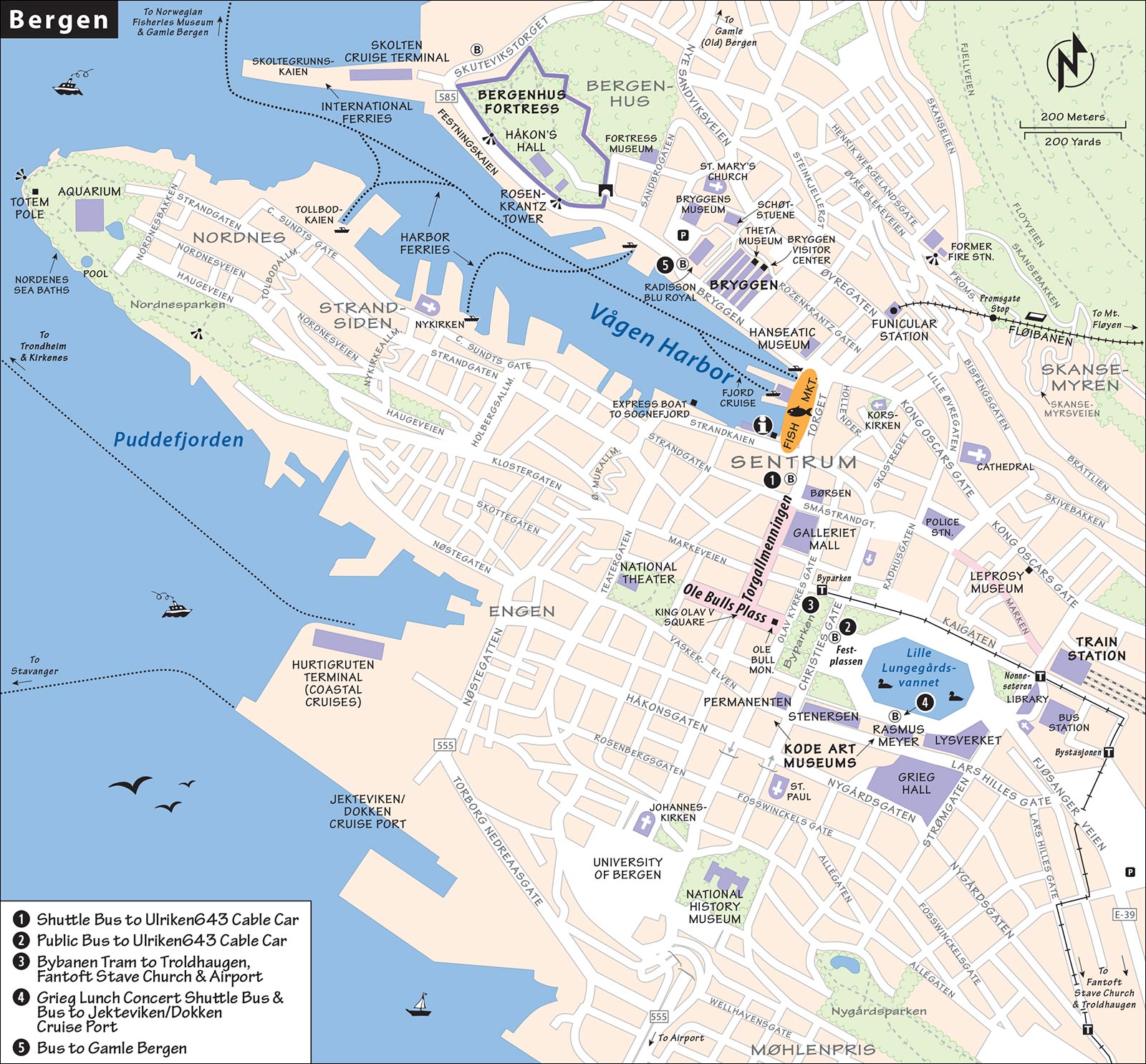
The cheapest option is to take the Bybanen tram to the end of the line at Byparken (40 NOK, departs every 5-10 minutes, 45-minute trip, schedule at www.skyss.no). This stop—on Kaigaten, between Bergen’s little lake and Ole Bulls Plass—is several blocks from most of my recommended hotels. For tram ticket details, see “Getting Around Bergen,” later.
By Car: Driving is a headache in Bergen; avoid it if you can. Approaching town on E-16 (from Voss and the Sognefjord area), follow signs for Sentrum, which spits you out near the big, modern bus station and parking garage. Parking is difficult and costly—ask your hotelier for tips. Note that Bergen collects a congestion toll on cars entering the city (28 NOK, 58 NOK during rush hour; fee collected via transponder—your car-rental company will bill you).
By Cruise Ship: Bergen’s ports are easy for cruise passengers. The Skolten cruise terminal is on the main harborfront road, a 15-minute walk from the Fish Market. On the way, you’ll pass the Bergenhus fortress—the starting point for my self-guided walk. The Hurtigruten Terminal (for coastal cruises) and the Jekteviken/Dokken cruise port are farther out, south of the center. From Jekteviken/Dokken, a free shuttle bus drops you off along Rasmus Meyers Allé in front of the KODE Art Museums (and near the end of my self-guided walk). For port information see www.bergenhavn.no.
HELPFUL HINTS
Book Ahead: It’s smart to book ahead for the Bryggen Walking Tour and the Edvard Grieg lunch concert package (see details in each listing), and for some restaurants (see “Eating in Bergen,” later.
Museum Tours: Many of Bergen’s sights are hard to appreciate without a guide. Fortunately, several offer wonderful and intimate guided tours. Make the most of the following sights by taking advantage of their tours: Bryggens Museum, Leprosy Museum, Gamle Bergen, and Edvard Grieg’s Home. When it’s open, the Hanseatic Museum also offers good tours (closed through 2028).
Crowd Control: In high season, cruise-ship passengers mob the waterfront between 10:00 and 15:00; to avoid the crush, consider visiting an outlying sight during this time, such as Gamle Bergen or Edvard Grieg’s Home.
Laundry: Drop your laundry off at Absolute Cleaning & Laundry and pick it up the next day (no self-service; Mon-Fri 10:00-17:00, Thu until 18:00, Sat until 15:00, closed Sun; a 10-minute walk beyond the TI, facing the harbor at C. Sundts Gate 42, +47 55 96 19 33). For location, see the map on here.
GETTING AROUND BERGEN
Most in-town sights are no more than a 10-minute walk from the TI. But buses and trams come in handy for reaching the aquarium, Norwegian Fisheries Museum, Gamle Bergen, and farther-flung sights such as the Fantoft Stave Church, Edvard Grieg Museum at Troldhaugen, and the Ulriken643 cable car. For schedules and a travel planner, see Skyss.no or get the Skyss app.
By Bus: City buses cost 60 NOK per ride (pay driver with cash or card), or 40 NOK per ride if you buy a single-ride ticket from a machine or in the Skyss app. The best buses for a Bergen joyride are #3, #4, #12, #16E, and #19 (north along the coast) and #10 (into the hills).
By Tram: Bergen’s Bybanen light-rail line is a convenient way to visit Edvard Grieg’s home and the Fantoft Stave Church, or to get to Flesland Airport. The tram begins next to Byparken (on Kaigaten, between the lake and Ole Bulls Plass), then heads to the train station and continues south, ending at the airport. Buy your 40-NOK ticket from the machine before boarding (accepts card) or use the Skyss app. For Fantoft Stave Church, ride about 20 minutes to the Paradis stop (don’t get off at the “Fantoft” stop, which is farther from the church); continue to the next stop, Hop, to hike to Grieg’s home at Troldhaugen.
By Ferry: The Beffen, a little orange ferry, chugs across the midpoint of the harbor every 10 minutes, from near the Bryggens Museum (Bradbenken dock) to the Nykirken church (Nykirkekaien dock; single ride-35 NOK, buy tickets onboard or at the dock, Mon-Fri 7:30-16:00, none Sat-Sun, 4-minute ride). Another Beffen ferry runs from the Fish Market to the aquarium (Tollbodkaien dock), the Norwegian Fisheries Museum (Sandviken), and, less reliably, Gamle Bergen (details in those sight listings, later). Either of these “poor man’s cruises” offer good harbor views.
By Bike: Placed all around the city, bright green Bergen City Bikes let you see more in less time. Download the Bergen Bysykkel app and pay 69 NOK for 24 hours of unlimited access or 99 NOK for a three-day pass. For rides of an hour or longer you’ll be charged an additional 15 NOK per 15 minutes, but you can park the bike and pick up another to reset the timer (www.bergenbysykkel.no).
By Taxi: For a local taxi, which can be pricey, call +47 55 99 70 00.
Tours in Bergen
▲▲▲Bryggen Walking Tour
This tour of the historic Hanseatic district is one of Bergen’s best activities. Local guides take visitors on a 1.5-hour walk in English through 900 years of Bergen history via the old Hanseatic town. You’ll spend 20 to 30 minutes at each of the following: Bryggens Museum, medieval Hanseatic Assembly Rooms (Schøtstuene), the Bryggen quarter, a medieval wine cellar, and the Hanseatic Museum (when it reopens—closed until 2028). Tours leave from inside the Bryggens Museum (next to the Radisson Blu Royal Hotel). The tour price includes sight entries, making it an especially good value (280 NOK, small discount with Bergen Card; daily at 11:00 and 13:00; no tours mid-Sept-mid-May, +47 55 30 80 30, www.bymuseet.no). While the museum visits are a bit rushed, your tour ticket allows you to re-enter the museums for the rest of the day. The tours are popular and can sell out, especially in July; to be safe, buy tickets in advance online. Tickets are also sold at the reception desk at the Bryggens Museum.
Local Guide
Sue Lindelid is a British expat who has spent more than 25 years showing visitors around Bergen (1,350 NOK/2-hour tour, 1,850 NOK/3-hour tour; +47 90 78 59 52, suelin@hotmail.no).
▲Bus Tours
The 3.5-hour Grieg Lunch Concert tour goes to Edvard Grieg’s Home at Troldhaugen—a handy way to reach that distant sight (400 NOK, see the listing under “Sights Near Bergen,” later). Buses are comfy, with big views and a fine recorded commentary. There are also several full-day tour options from Bergen, including bus/boat tours to nearby Hardanger and Sogne fjords. The TI is packed with brochures describing all the excursions.
Hop-On, Hop-Off Buses
City Sightseeing Bergen links most of Bergen’s major sights, but doesn’t go to the Fantoft Stave Church, Troldhaugen, or Ulriken643 cable car. If your sightseeing plans don’t extend beyond the walkable core of Bergen, skip it (450 NOK/24 hours, mid-April-Oct 9:30-16:00, every 30 minutes, www.stromma.no). It also stops in front of Fish Market, at the Skolten cruise terminal, and on Nøstegatten near the Hurtigruten and Jekteviken/Dokken cruise ports.
Fjord Cruises
A modern catamaran leaves from Bergen twice a day (10:00 and 14:00) for a popular three-hour cruise to nearby Mostraumen, a picturesque narrow strait. Along the way you’ll see waterfalls and fjords, along with much of Bergen’s harbor (790 NOK, discount with Bergen Card, buy at TI or book online, departs from in front of the Fish Market, www.fjordtours.com).
Bergen Walk
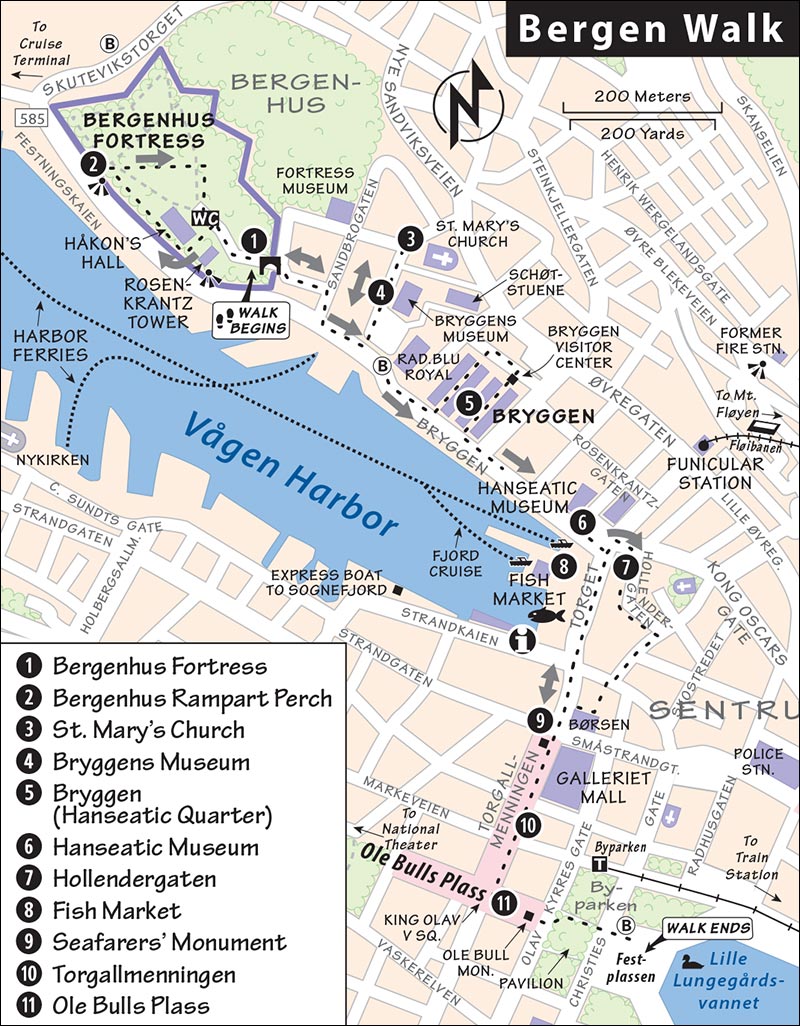
For a quick self-guided orientation stroll through Bergen, follow this walk from the city’s fortress, through its old wooden Hanseatic Quarter and Fish Market, to the modern center of town. This walk is also a handy sightseeing spine, passing most of Bergen’s best museums; ideally, you’ll get sidetracked and check out the museums you’ll pass en route—all are described in greater detail later, under “Sights in Bergen.”
• Begin where Bergen did, at its historic fortress. To get there from the harborfront road, 50 yards before the stone tower with the water on your left, veer up the ramp behind the low stone wall on the right, through a gate, and into the fortress complex. Stand before the stony skyscraper.
1 Bergenhus Fortress
In the 13th century, Bergen became the Kingdom of Norway’s first real capital. (Before then, kings would circulate, staying on royal farms.) This ▲ fortress complex—built in the 1240s—was a garrison, containing a tower for the king’s residence (Rosenkrantz Tower) and a large hall for his banquets (Håkon’s Hall).
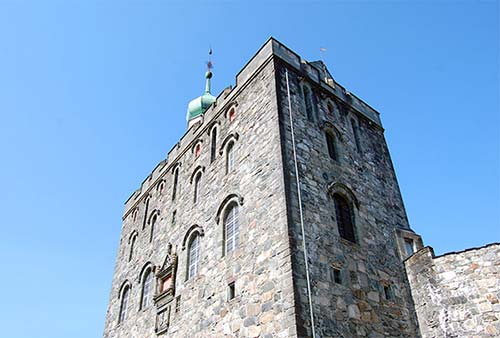
This south end of the fortress complex is marked by Rosenkrantz Tower, the keep of the 13th-century castle. It was expanded in the 16th century by the Danish-Norwegian king, who wanted to exercise a little control over the German merchants who dominated his town. He was tired of the Germans making all the money without paying taxes. This tower—with its cannon trained not on external threats but toward Bryggen—while expensive, paid for itself many times over as Germans got the message and paid their taxes.
• Find the gate 20 yards to the right of the tower, marked 1728. Head through this gate and into the courtyard of the Bergenhus Fortress. In front of you stands Håkon’s Hall with its stepped gable. Tours for both the hall and the tower leave from the building to the right of Håkon’s Hall.
Pop into the museum lobby to enjoy a free exhibit about the massive 1944 explosion of a German ammunition ship in the harbor. For the best view of Håkon’s Hall, walk through the gate to the left of the building and onto the grassy ramparts between the hall and the harbor.
Håkon’s Hall is the largest secular medieval building in Norway. When the pope sent a cardinal to perform Håkon’s coronation there was no suitable building in Norway for such a VIP. King Håkon fixed that by having this impressive banqueting hall built in the mid-1200s. When Norway’s capital moved to Oslo in 1299, the hall was abandoned and eventually used for grain storage. For a century it had no roof. In the 19th century, it was appreciated and restored. It’s essentially a giant, grand reception hall used today just as it was eight centuries ago: for banquets.
• Continue walking along the rampart (climbing some steps and going about 100 yards past Håkon’s Hall) to the far end of Bergenhus Fortress, where you’ll find a statue of a king and a fine harbor view.
2 Bergenhus Rampart Perch and Statue of King Håkon VII
The cannon on the ramparts here illustrates how the fort protected this strategic harbor. The port is busy with both cruise ships and supply ships for the nearby North Sea oil rigs. Long before this modern commerce, this is where the cod fishermen of the north met the traders of Europe. Travelers in the 12th century described how there were so many trading vessels here that “you could cross the harbor without getting your feet wet.” Beyond the ships is Askøy, the island protecting Bergen from the open sea.
Look left and right at the dangerous edge with no railing. If someone were to fall and get hurt here and then try to sue, the Norwegian judge’s verdict would be: stupidity—case dismissed. Around you in the distance are Bergen’s “seven mountains.” One day each summer, locals race to climb each of these in rapid succession, accomplishing the feat in less than 12 hours.
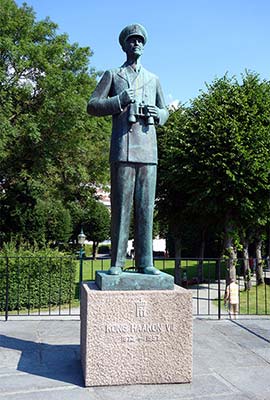
The statue is of the beloved King Håkon VII (1872-1957), grandfather of today’s king. While exiled in London during World War II, King Håkon kept up Norwegian spirits through radio broadcasts. The first king of modern Norway (after the country won its independence from Sweden in 1905), he was a Danish prince married to Queen Victoria’s granddaughter—a savvy monarch who knew how to play the royalty game.
A few steps behind the statue (just right of tree-lined lane) is the site of Bergen’s first cathedral, built in 1070. A hedge grows where its walls once stood. The statue of Mary marks the place of the altar, its pedestal etched with a list of 13th-century kings of Norway crowned and buried here.
These castle grounds (notice the natural amphitheater on the left) host cultural events and music festivals; Elton John, Paul McCartney, Bob Dylan, and Norwegian DJ Kygo have all packed this outdoor venue.
Continuing around Håkon’s Hall, follow the linden tree-lined lane. On the left looms a massive concrete structure disguised by ivy. It was a German bunker built during the Nazi occupation—easier now to ignore than dismantle.
Twenty yards ahead on the right is a rare set of free public toilets. Notice they come with blue lights to discourage heroin junkies from using these WCs as a place to shoot up. The blue lights make it hard to see veins.
• You’ve now returned to the tower and circled the castle grounds. Before leaving, consider taking a guided tour of the hall and tower. Otherwise, head back down the ramp, out to the main road, and continue with the harbor on your right. (After a block, history buffs could follow Bergenhus signs, up the street to the left, to the free and fascinating Fortress Museum—with its collection of Norwegian military history and Nazi occupation exhibits.) Proceed one more block along the harbor until you reach an open, parklike space on your left. Walk 100 yards (just past a handy Rema 1000 supermarket) to the top of this park to reach...
3 St. Mary’s Church (Mariakirken)
Dating from the 12th century, this is Bergen’s oldest preserved building. This stately church of the Hanseatic merchants has a dour stone interior, but it’s enlivened by a colorful, highly decorated pulpit.
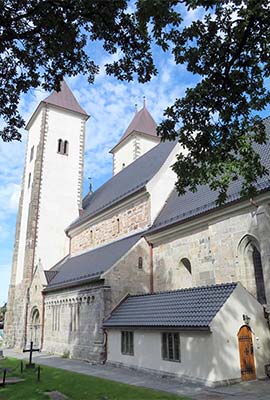
In the park below the church, find the statue of Snorri Sturlason. In the 1200s, this Icelandic scribe and scholar wrote down the Viking sagas. Thanks to him, we have a better understanding of this Nordic era.
• A few steps to the right, the big modern building is the excellent...
4 Bryggens Museum
This museum houses the oldest remains of Bergen—stubs of the 12th-century trading town’s streets tumbling to the harbor before land reclamation pushed the harbor farther out. Modern exhibits and compelling artifacts from an archaeological dig help provide historical context for the Hanseatic Quarter we’re about to visit. For details on visiting the Bryggens Museum, see the listing on here. The museum’s outstanding Bryggen Walking Tour is your best bet for seeing this area (see “Tours in Bergen,” earlier).
• Continue down to the busy harborfront. On the left is the most photographed sight in town, the Bryggen quarter. To get your bearings, first read the “Bryggen’s History” sidebar; if it’s nice out, cross the street to the wharf and look back for a fine overview of this area. (Or, in the rain, huddle under an awning.)
5 Bryggen (Bergen’s Hanseatic Quarter)
Bergen’s fragile wooden old town is its iconic front door. The long “tenements” (rows of warehouses) hide atmospheric lanes that creak and groan with history.
While we think of Bergen as “Norwegian,” Bryggen was German—the territory of Deutsch-speaking merchants and traders. (The most popular surname in Bergen is the German name Hanson—“son of Hans.”) From the front of Bryggen, look back at the Rosenkrantz Tower. The little red holes at its top mark where cannons once pointed at the German quarter, installed by Norwegian royalty who wanted a slice of all that taxable trade revenue. Their threat was countered by German grain—without which the Norwegians would’ve starved.
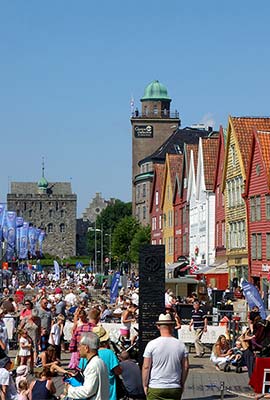
Notice that the first six houses are perfectly straight; they were built in the 1980s to block the view of a modern hotel behind. The more ramshackle stretch of 11 houses beyond date from the early 1700s. Each front hides a long line of five to ten businesses.
Bit by bit, Bryggen is being restored using medieval techniques and materials. As you explore, you may stumble upon a rebuilding project in action.
• To wander into the heart of this woody medieval quarter, head up Bredsgården, the lane a couple of doors before the shop sign featuring the anatomically correct unicorn.
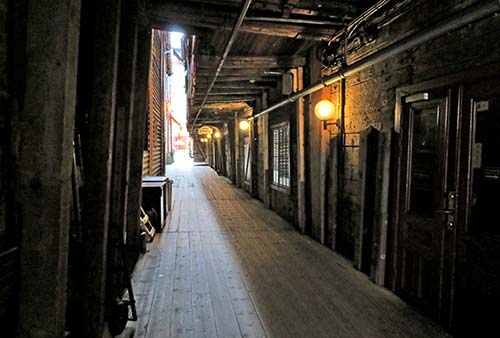
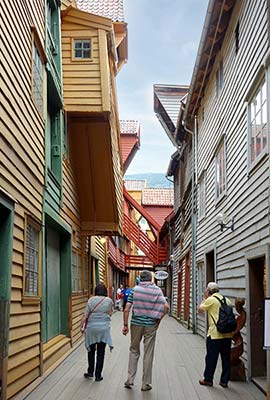
Strolling through Bryggen, you feel swallowed up by history. Long rows of planky buildings (medieval-style double tenements) lean haphazardly across narrow alleys. The last Hanseatic merchant moved out centuries ago, but this is still a place of (touristy) commerce. You’ll find artists’ galleries, T-shirt boutiques, leather workshops, atmospheric restaurants, fishing tackle shops, sweaters, sweaters, sweaters...and trolls.
Look up at the winch-and-pulley systems on the buildings. These connected ground-floor workrooms with top-floor storerooms. Notice that the overhanging storerooms upstairs were supported by timbers with an elbow created by a tree trunk and its root—considered the strongest way to make a right angle in construction back then.
• Turn right at the top of the lane, entering a lively cobbled square with a vibrant outdoor restaurant. On the far side is an original well.
Some of the wooden buildings surrounding the well were once filled with dried cod. The economic foundation of Bergen—the biggest city in Scandinavia until 1650 and the biggest city in Norway until 1830—was this fish. The white stone building behind the well, today housing the Bryggen Visitor Center and worth peeking into, was one of many fireproof storage houses for anything merchants could not afford to lose. The walls are three feet thick, and in between the floors are three feet of sand and stone to keep fires from spreading. In Bergen, it was never a question of if, but when there would be a fire.
Facing the visitor center, the red building to the left was a cookhouse that served the line of buildings stretching to the harbor. Today it’s a restaurant called Bryggen Tracteursted. Stick your head inside to get an impression of what it looked like in the past.
• Enjoy the surrounding shops. Then return downhill to the harborfront, turn left, and continue the walk.
Half of Bryggen (the brick-and-stone stretch to your left between the old wooden facades and the head of the bay) was torn down around 1900. Today the stately buildings that replaced it—far less atmospheric than Bryggen’s original wooden core—are filled with tacky trinket shops and touristy splurge restaurants. They do make a nice architectural cancan of pointy gables, each with its date of construction indicated near the top.
• Head to the lone wooden red house at the end of the row, which houses the...
6 Hanseatic Museum
The man who owned this building recognized the value of the city’s heritage and kept its 18th-century interior intact. Once considered a nutcase, today he’s celebrated as a visionary, as his decision has left visitors with a fine example of an old merchant house. The museum, worth ▲▲, is closed through 2028 for renovation.
Pretty as Bryggen is today, it has a rough-and-tumble history. A horrific plague decimated the population and economy of Norway in 1350, killing about half of its people. A decade later, German merchants arrived and established a Hanseatic trading post.
For the next four centuries, from 1370 to 1754, the port of Bergen was essentially German territory, with German merchants controlling the city’s trade. In 1550, Bergen was a Germanic city of 1,000 workaholic merchants—surrounded and supported by some 5,000 Norwegians.
This wasn’t a military occupation, but a mutually beneficial economic partnership. The Norwegian fishermen of the far north shipped their dried cod to Bergen, where the Hanseatic merchants marketed it to Europe. Norwegian cod, an easy-to-preserve protein, provided much of Europe with food, and cod oil lit European lamps until about 1850.
In its earlier heyday, Bergen was one of the largest wooden cities in Europe (the original town dates from 1070). But those jammed-in wooden buildings, heated with lots of hearth fires, spelled disaster for Bergen. Over the centuries, the city suffered countless fires, with major blazes every 20 or so years. Each time the warehouses burned, the merchants would toss the refuse into the bay and rebuild. Gradually, the land crept out, and so did the buildings. Looking at the Hanseatic Quarter from the harborfront, you can see how the buildings have settled as the fire debris decomposed.
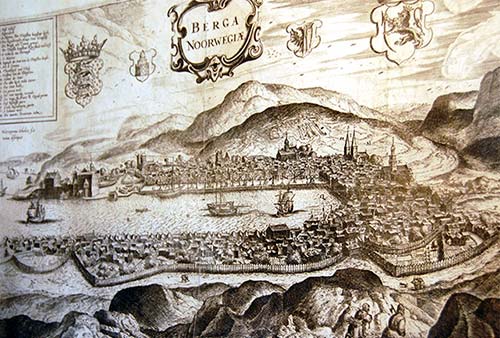
After the last big fire in 1702, the city rebuilt using more stone and brick, and suffered fewer fires thereafter. But one small wooden quarter—Bryggen—was built after the fire, in the early 1700s. To prevent future blazes, the Germans forbade all fires and candles for light or warmth except in isolated and carefully guarded communal houses behind each tenement. It was in these communal houses that apprentices studied, people dried out their soggy clothes, hot food was cooked, and the men drank and partied. When there was a big banquet, one man always stayed sober—a kind of designated fire watchman.
Flash forward to the 20th century. One of the biggest explosions of World War II occurred in Bergen’s harbor on April 20, 1944. An ammunition ship loaded with 120 tons of dynamite blew up just in front of the fortress. The blast leveled entire neighborhoods on either side of the harbor (notice the ugly 1950s construction opposite the fortress) and did serious damage to Håkon’s Hall and Rosenkrantz Tower. How big was the blast? There’s a hut called “the anchor cabin” a couple of miles away in the mountains. That’s where the ship’s anchor landed. The blast is considered to have been accidental, despite the fact that April 20 happened to be Hitler’s 55th birthday and the ship blew up about 100 yards away from the Nazi commander’s headquarters (in the fortress).
After World War II, Bryggen was slated for destruction. Most of the locals wanted it gone—it reminded them of the Germans who had occupied Norway for the miserable war years. Then excavators discovered rune stones indicating that the area predated the Germans. This boosted Bryggen’s approval rating, and the quarter was saved. Today this picturesque and historic zone is the undisputed tourist highlight of Bergen.
• The Fish Market is just across the street. But first, we’ll circle a few blocks inland and around to the right to see a characteristic neighborhood centered on...
7 Hollendergaten
The red-brick building (with frilly white trim, stepped gable, and a Starbucks) is the old meat market. It was built in 1877, after the importance of hygiene was recognized and the meat was moved inside from today’s Fish Market. At the intersection just beyond, look left (uphill past the meat market) to see the Fløibanen station. Ahead, on the right, is an unusually classy McDonald’s in a 1710 building that was originally a bakery. A few steps uphill on Kong Oscars Gate, the tiny red shack flying the Norwegian flags is the popular, recommended 3-Kroneren hot-dog stand.
Turn right to wander the length of Hollendergaten, a cute, narrow lane of 200-year-old buildings. Its name comes from a time when the king organized foreign communities of traders into various neighborhoods; this was where the Dutch lived. The curving street marks the former harborfront—these buildings were originally right on the water.
Hooking left, you reach the end of Hollendergaten, then turn right onto Nedre Korskirkeallmenningen. After about a block, you’ll reach a square with the grand, red stone Børsen building, once the stock exchange and now a hotel with a few trendy restaurants. Step inside to enjoy its 1920s Art Deco-style murals celebrating Bergen’s fishing heritage.
• Exiting the Børsen, head toward the harborfront, then cross the street (Torget) and immerse yourself in Bergen’s beloved Fish Market.
8 Fish Market (Fisketorget)
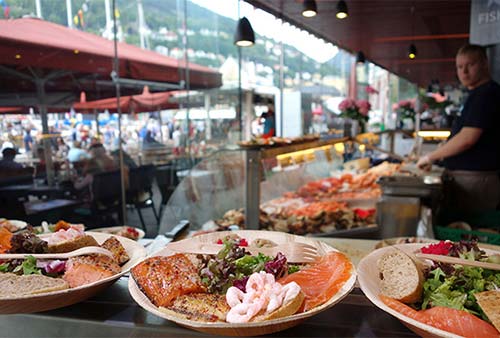
A fish market has thrived here since the 1500s, when fishermen rowed in with their catch and haggled with hungry residents. While it’s now a food circus of eateries selling fishy treats to tourists—no local would come here to actually buy fish—this famous market is still worth ▲, offering lots of smelly photo fun and free morsels to taste (daily 8:00-23:00, but vendors may close earlier if they’re not busy, shorter hours Oct-April). Watch your wallet: If you’re going to get pickpocketed in Bergen, it’ll likely be here.
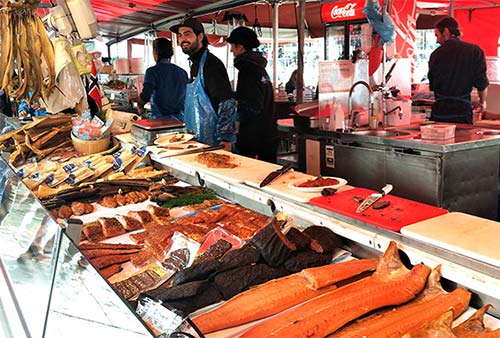
Many stands sell premade smoked-salmon (laks) sandwiches, fish soup, and other snacks ideal for a light lunch (confirm prices before ordering). To try Norwegian jerky, pick up a bag of dried cod snacks (tørrfisk). The red meat is minke (pronounced mink-ee) whale, caught off the coast of northern Norway. Norwegians, notorious for their whaling, defend it as a traditional livelihood for many of their people. They point out that they only harvest the minke whale, which is not on an endangered list. In recent years, Norway has assigned itself a quota of nearly 1,000 minke whales a year, with the actual catch coming to a bit over half of that.
• When done exploring, with your back to the market, hike a block to the right (note the pointy church spire in the distance and the big blocky stone monument dead ahead) into the modern part of town and a huge wide square. Pause at the intersection just before crossing into the square, about 20 yards before the blocky monument. Look left to see Mount Ulriken with its TV tower. A cable car called Ulriken643 takes you to its 2,110-foot summit (shuttle buses to the cable car station leave from this corner; for summit details, see here.) Now, walk up to that big square monument and meet some Vikings.
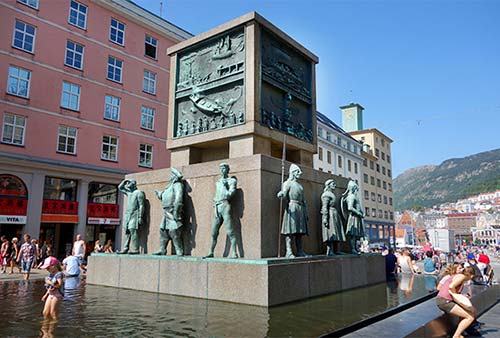
9 Seafarers’ Monument
Nicknamed “the cube of goat cheese” for its shape, this 1950 monument celebrates Bergen’s contact with the sea and remembers those who worked on it and died in it. Study the faces: All social classes are represented. The statues relate to the scenes depicted in the reliefs above. Each side represents a century (start with the Vikings and work clockwise): 10th century—Vikings, with a totem pole in the panel above recalling the pre-Columbus Norwegian “discovery” of America; 18th century—equipping Europe’s ships; 19th century—whaling; 20th century—shipping and war. For the 21st century, see the real people—a cross-section of today’s Norway—sitting at the statue’s base. Major department stores (Galleriet, Xhibition, and Telegrafen) are all nearby.
• The monument marks the start of Bergen’s main square...
10 Torgallmenningen
Allmenningen means “for all the people.” Torg means “square.” While this is the city’s main gathering place, it was actually created as a firebreak. The residents of this wood-built city knew fires were inevitable. The street plan was designed with breaks, or open spaces like this square, to help contain the destruction. In 1916, it succeeded in stopping a fire, which is why it has a more modern feel today.
At the far end of Torgallmenningen you’ll find the square named after King Olav V, who died in 1991. On it is a low angled slab of blue by artist Asbjørn Andersen. The blue stone was a gift to Bergen from the Kavli Trust in 1993, marking the foundation’s 100th anniversary of funding culture, science, and charity. This stone is also a popular meeting point: Locals like to say, “Meet you at the Blue Stone.”
• You’re at the center of a parklike swath known as...
11 Ole Bulls Plass
This drag leads from the National Theater (above on right) to a little lake (below on left).
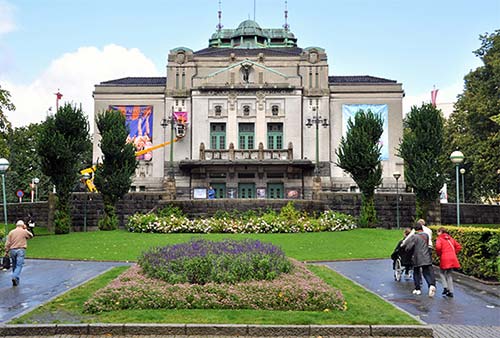
Detour a few steps up for a better look at the National Theater, built in Art Nouveau style in 1909. Founded by violinist Ole Bull in 1850, this was the first theater to host plays in the Norwegian language. After 450 years of Danish and Swedish rule, 19th-century Norway enjoyed a cultural awakening, and Bergen became an artistic power. Ole Bull collaborated with the playwright Henrik Ibsen. Ibsen commissioned Edvard Grieg to compose the music for his play Peer Gynt. These three lions of Norwegian culture all lived and worked right here in Bergen.
Head downhill on the square to a delightful fountain featuring a statue of Ole Bull in the shadow of trees. Ole Bull was an 1800s version of Elvis. A pop idol and heartthrob in his day, Ole Bull’s bath water was bottled and sold by hotels, and women fainted when they heard him play violin. Living up to his name, he fathered over 40 children. Speaking of children, I love to hang out here watching families frolic in the pond, oblivious to the waterfall troll (see the statue with the harp below Ole Bull). According to legend, the troll bestows musical talent on anyone—like old Ole—who gives him a gift (he likes meat).
From here, the park spills farther downhill to a cast-iron pavilion given to the city by Germans in 1889, and on to the little man-made lake (Lille Lungegårdsvannet), which is circled by an enjoyable path.
• If you’re up for a lakeside stroll, now’s your chance. Alongside the lake (to the right as you face it from here) is a row of buildings housing the enjoyable KODE Art Museums. And to the left of the lake are some fine residential streets (including the picturesque, cobbled Marken); within a few minutes’ walk is the Leprosy Museum and the cathedral.
Sights in Bergen
Fortress Museum (Bergenhus Festningmuseum)
▲St. Mary’s Church (Mariakirken)
▲▲Hanseatic Museum and Schøtstuene (Det Hanseatiske Museum og Schøtstuene)
Bergen Cathedral (Bergen Domkirke)
▲KODE Art Museums (KODE Kunstmuseer)
▲Bergen Aquarium (Akvariet i Bergen)
Norwegian Fisheries Museum (Norges Fiskerimuseum)
▲▲Edvard Grieg Museum, Troldhaugen
Fantoft Stave Church (Fantoft Stavkirke)
Several museums listed here—including the Bryggens Museum, Håkon’s Hall, Rosenkrantz Tower, Leprosy Museum, and Gamle Bergen—are part of the Bergen City Museum (Bymuseet) organization. If you buy a ticket to any of them, you’ll pay half-price at any of the others simply by showing your ticket. In summer, note that many of these sights are included in the recommended Byrggen Walking Tour (see “Tours in Bergen,” earlier).
BRYGGEN AND NEARBY
▲Bergenhus Fortress
The fortress, dominated by the blocky Rosenkrantz Tower and step-gabled Håkon’s Hall, sits boldly on the harbor just beyond Bryggen and is a reminder of Bergen’s importance as the first permanent capital of Norway.
Cost and Hours: Hall and tower—200 NOK for both, 120 NOK for the hall, 140 NOK for the tower; daily 10:00-16:00, mid-Sept-mid-May 11:00-15:00; free WC; +47 55 30 80 30, www.bymuseet.no.
Tours: Worthwhile guided tours that include both buildings are sometimes offered—ask at the ticket office.
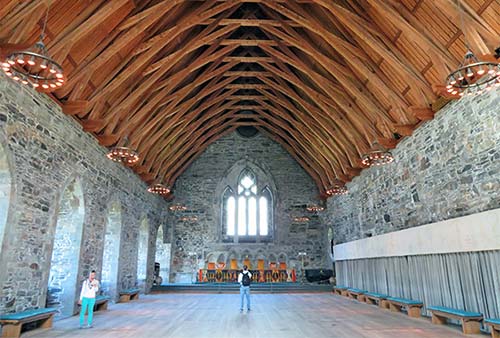
Visiting the Hall and Tower: Dating from the 13th century, Håkon’s Hall was built as a banqueting hall, and that’s essentially what it still is today. It was restored in the early 20th century but was heavily damaged in World War II when a munitions ship exploded in the harbor, leaving nothing but the walls standing. In the 1950s it was restored with a grand wooden ceiling and roof modeled after the medieval roof on a church in northern Norway. Beneath the hall is a whitewashed cellar likely used for storage.
Rosenkrantz Tower, the keep of a 13th-century castle, is today a stack of barren rooms connected by tight spiral staircases, with a good history exhibit on the top two floors and a commanding view from its rooftop. In the 16th century, the ruling Danish-Norwegian king enlarged the tower and trained its cannon on the German-merchant district, Bryggen, to remind the merchants of the importance of paying their taxes.
Fortress Museum (Bergenhus Festningmuseum)
This humble museum (which functioned as a prison during the Nazi occupation), set back a couple of blocks from the fortress, will interest historians with its thoughtful exhibits about military history, especially Bergen’s WWII experience (look for the Norwegian Nazi flag). You’ll learn about the resistance movement in Bergen (including its underground newspapers), the role of women in the Norwegian military, and Norwegian troops who have served with UN forces in overseas conflicts.
Cost and Hours: Free, daily 11:00-17:00, ask to borrow a translation of the descriptions, just behind Thon Hotel Orion at Koengen, +47 55 54 63 87.
▲▲Bryggens Museum
Built over the 12th-century rubble of medieval Bergen, this modern museum displays artifacts from the ruins and explains the 1950s archaeological dig that uncovered the earliest bits of the city (1050-1500). A trove of artifacts, including ceramics, rune inscriptions, and a 1,000-year-old tunic, shed light on the everyday lives of the medieval people who inhabited Bergen and western Norway.
Cost and Hours: 100 NOK; in summer, entry included with Bryggen Walking Tour (see “Tours in Bergen,” earlier); daily 10:00-17:00, mid-Sept-mid-May 11:00-15:00; inexpensive cafeteria; in big, modern building just beyond the end of Bryggen and the Radisson Blu Royal Hotel, +47 55 30 80 30, www.bymuseet.no.
Middlemen in trade, the clever German merchants of the Hanseatic League, or Hanse, ruled the waves of northern Europe for 500 years (c. 1250-1750). These sea traders first banded together in a merchant guild to defend themselves against pirates. As they spread out from Germany, they established trading posts in foreign lands, cut deals with local leaders for trading rights, built boats and wharves, and organized armies to protect ships and ports.
By the 15th century, these merchants had organized more than a hundred cities into the Hanseatic League, a free-trade zone that stretched from London to Russia. The league ran a profitable triangle of trade: Fish from Scandinavia was exchanged for grain from the eastern Baltic and for luxury goods from England and Flanders. Everyone benefited, and the German merchants—the middlemen—reaped the profits.
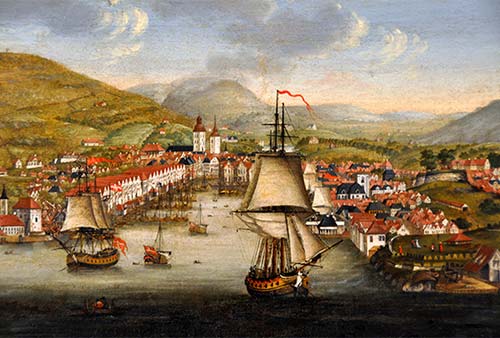
At its peak in the 15th century, the Hanseatic League was the dominant force—economic, military, and political—in northern Europe. This was a chaotic age when much of Europe was fragmented into petty kingdoms and dukedoms. Revenue-hungry kings and robber-baron lords levied extortionist tolls. Pirates plagued shipments. It was the Hanseatic League that brought the stability that allowed trade to flourish.
Bergen’s place in this Baltic economy was all about cod—a form of protein that could be dried, preserved, and shipped anywhere. Blessed with a good harbor conveniently located between the rich fishing spots of northern Norway and the markets of Europe, Bergen shipped dried cod and fish oil southward and imported grain, cloth, beer, wine, and ceramics.
Bryggen, along with London, Bruges, and Novgorod, was one of four principal Hanseatic trading posts known as “kontors.” It was the last kontor opened (c. 1360), the least profitable, and the final one to close. Bryggen had warehouses, offices, and living quarters. Ships docked here were unloaded by counterpoise cranes. At its peak, as many as a thousand merchants, journeymen, and apprentices lived and worked here.
Bryggen was a self-contained German enclave within the city. The merchants came from Germany, worked a few years here, and retired back in the home country. They spoke German, wore German clothes, and attended their own churches. By law, they were forbidden to intermarry or fraternize with the Bergeners, except on business.
The Hanseatic League peaked around 1500, then slowly declined. Rising nation-states were jealous of the German merchants’ power and wealth. The Reformation tore apart old alliances. Dutch and English traders broke the Hanseatic monopoly. Cities withdrew from the league and kontors closed. In 1754, Bergen’s kontor was taken over by the Norwegians. When it closed its doors on December 31, 1899, a sea-trading era was over, but the city of Bergen had become rich…by the grace of cod.
Tours: It’s best to visit as part of the Bryggen Walking Tour. From mid-September through mid-May, when there is no tour, consider buying the good museum guidebook to supplement the brief English explanations.
Visiting the Museum: The manageable, well-presented permanent exhibit occupies the ground floor. First up are the foundations from original wooden tenements dating back to the 12th century (displayed right where they were excavated). Next, an exhibit (roughly shaped like the long, wooden double-tenements outside) shows off artifacts and explains life in medieval Bryggen. Look for large chunks of the hull of a 13th-century ship that were found here. A screen shows how fires have shaped Bryggen throughout history. You’ll finish with exhibits about the church in Bergen and a rich collection of over 100 wooden sticks with runic inscriptions.
▲St. Mary’s Church (Mariakirken)
The oldest parish church and preserved building in Bergen dates to between 1130 and 1170 and is said to be one of the best-decorated medieval churches in Norway. For many years, St. Mary’s Church was known as the “German Church,” as it was used by German merchants of the Hanseatic League from 1408 to 1766. The last service in German was held in 1906. The stony interior is accented with a golden altarpiece, a Baroque pulpit of Dutch origin partly made from exotic materials (such as turtle skin), and artworks from various time periods.
Cost and Hours: 75 NOK; mid-May-Aug Mon-Fri 10:00-16:00; Sept-mid-May Tue and Fri 12:00-14:00, closed Mon and Wed-Thu; closed Sat-Sun year-round; 25-minute English guided tour (25 NOK) runs June-Aug Mon-Fri at 15:30, +47 55 59 71 75, http://bergendomkirke.no.
Theta Museum
This small museum highlights Norway’s resistance movement. You’ll peek into the hidden world of a 10-person cell of courageous students, whose group—called Theta—housed other fighters and communicated with London during the Nazi occupation in World War II. It’s located in Theta’s former headquarters—a small upstairs room in a wooden Bryggen building.
Cost and Hours: 80 NOK; June-Aug Tue, Sat, and Sun 14:00-16:00; closed Mon, Wed-Fri, and Sept-May; Enhjørningsgården.
▲▲Hanseatic Museum and Schøtstuene (Det Hanseatiske Museum og Schøtstuene)
The Hanseatic Museum is closed until at least 2028 for an extensive renovation. When it’s open, it offers the best look inside the trademark wooden houses of Bergen. The creaky old rooms—with hundred-year-old cod hanging from the ceiling—provide a time-tunnel experience back to Bryggen’s glory days. The museum is located in an atmospheric old merchant house furnished with antique ropes, an old oxtail (used for wringing spilled cod-liver oil back into the bucket), sagging steps, and cupboard beds from the early 1700s—one sporting what some claim is a medieval pinup girl.
During the museum’s closure, you can still visit the nearby Hanseatic Assembly Rooms at Schøtstuene, where Hanseatic merchants would cook and gather to feast, hold court, conduct ceremonies, be schooled, and get warm. The rooms are in a building near St. Mary’s Church (follow Øvregaten behind Bryggen—Schøtstuene is on your left). Fires were allowed in this building only because it was separate from the other (highly flammable) Bryggen offices. A glass floor reveals medieval ruins of Bergen that predate the Hanseatic era. Until the Hanseatic Museum reopens, Schøtstuene is displaying some of the Hanseatic collection and runs a short film about the ongoing restoration project.
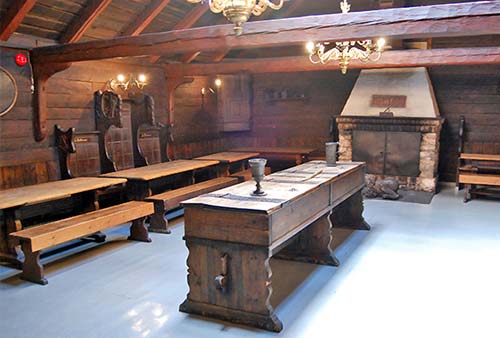
Cost and Hours: 150 NOK (includes Hanseatic Museum when it reopens), entry included with Bryggen Walking Tour; open daily 10:00-18:00, May and Sept 11:00-17:00, Oct-April until 15:00; Øvregaten 50, +47 53 00 61 10, www.museumvest.no.
Tours: Included with your ticket is a 40-minute guided tour of Schøtstuene (check online to confirm tour schedule, generally daily at 11:00 and 16:00). If you won’t make this tour, your best alternative is joining the Bryggen Walking Tour, which includes a 25-minute visit inside Schøtstuene.
▲▲Fløibanen Funicular
Bergen’s popular funicular climbs 1,000 feet in seven minutes to the top of Mount Fløyen for the best view of the town, surrounding islands, and fjords all the way to the west coast. The top is the perfect picnic spot for enjoying the sunset. The $$ Fløien Folkerestaurant, the white building at the top of the funicular, offers affordable self-service food all day in season. Behind the station, you’ll find a playground and a fun giant troll photo op. The top is also the starting point for many peaceful hikes.
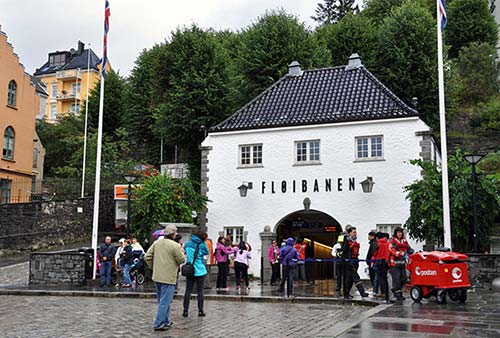
Cost and Hours: 160 NOK round-trip, 85 NOK one-way, cheaper off-season; daily 7:30-23:00, departures on the quarter-hour most of the day, continuously if busy; a few blocks inland from the Hanseatic Museum, +47 55 33 68 00, www.floyen.no.
Ticket Tips: To skip the ticket-window line, buy tickets online or at the ticket machine in the station at the base of the Fløibanen (notice the photos in the entry hall of the construction of the funicular and its 1918 grand opening).
Hiking Down: If you plan to hike down from the top, buy a one-way ticket and ask for the Fløyen hiking map. From the top, walk behind the station and follow the signs down to the city center. The top half of the 30-minute hike is a gravelly path through a forest with fine views. The bottom is a paved lane passing charming old wooden homes. It’s a steep descent. To save your knees, you could ride the lift most of the way down and get off at the Promsgate stop to wander through the delightful cobbled and shiplap lanes (note that only the :00 and :30 departures stop at Promsgate—and this option requires a round-trip ticket).
CENTRAL BERGEN
Bergen Cathedral (Bergen Domkirke)
Bergen’s main church, dedicated to St. Olav (the patron saint of Norway), dates from 1301. Drop in to enjoy its stoic, plain interior with stuccoed stone walls and a giant wooden pulpit. Sit in a hard, straight-backed pew and just try to doze off. Like so many old Norwegian structures, its roof makes you feel like you’re huddled under an overturned Viking ship. The church is oddly lopsided, with just one side aisle. Before leaving, look up to see the gorgeous wood-carved organ over the main entrance. In the entryway, you’ll see portraits of each bishop dating all the way back to the Reformation.
Cost and Hours: Free, Mon-Fri 10:00-14:00, Sun open only for worship at 11:00, closed Sat, shorter hours mid-Aug-mid-June, Domkirkeplassen 1, www.kirken.no.
Leprosy Museum (Lepramuseet)
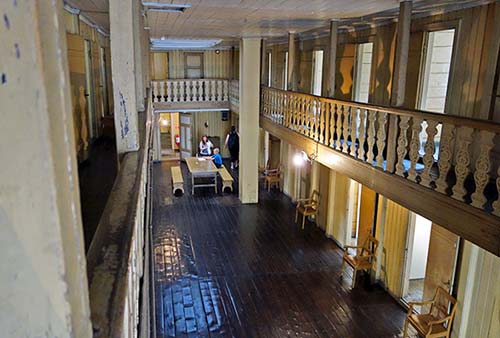
Leprosy is also known as “Hansen’s Disease,” because in the 1870s a Bergen man named Armauer Hansen did groundbreaking work in understanding the ailment. This unique museum is in St. Jørgens Hospital, a leprosarium that dates to about 1700. Until the 19th century, as much as 3 percent of Norway’s population had leprosy. This hospital—once called “a graveyard for the living” (its last patient died in 1946)—has a meager exhibit in a thought-provoking dorm for the dying. It’s most worthwhile if you read the translation of the exhibit (borrow a copy at the entry) or take the 20 NOK tour (normally at 11:30 and 14:30). If you’re interested, ask as you leave if you can see the old church dating back to 1707.
Cost and Hours: 140 NOK; daily 11:00-17:00, closed mid-Sept-mid-May; between train station and Bryggen at Kong Oscars Gate 59, +47 55 30 80 37, www.bymuseet.no.
▲KODE Art Museums (KODE Kunstmuseer)
If you need to get out of the rain, check out this collection, filling four neighboring buildings facing the lake along Rasmus Meyers Allé. Most visitors focus on the Rasmus Meyer building, which specializes in Norwegian artists and has an especially good Munch exhibit. The nearby Stenersen building has installations of contemporary art. The Permanenten building at one end has decorative arts, while the Lysverket building at the opposite end houses temporary art exhibitions (both might be closed or under renovation when you visit).
Cost and Hours: 150 NOK; daily 10:00-17:00 (Rasmus Meyer and Stenersen buildings Thu until 20:00), closed Mon mid-Sept-mid-May; Rasmus Meyers Allé 3, +47 53 00 97 04, www.kodebergen.no.
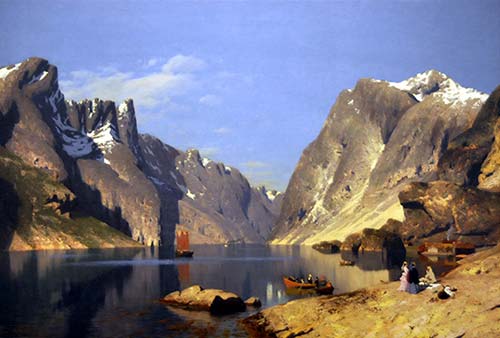
Visiting the Rasmus Meyer Building: This building has a collection from Norway’s golden age of painting (1880-1905), including highlights from the careers of Romantic landscape painters such as Hans Gude, Adolph Tidemand, and Christian Krogh, as well as some portraits by Harriet Backer and scenes of everyday life by Frits Thaulow. You can also find an extensive display of works by Nikolai Astrup, who depicts Norway’s fjords with bright colors and expressionistic flair. Also look for paintings by J. C. Dahl, who captured the majesty of Norway’s natural wonders. Don’t miss Adelsteen Normann’s impressive, photorealistic view of Romsdalsfjord.
One flight up, you’ll find a fine collection of work by Norway’s Edvard Munch, including masterpieces like Jealousy, Melancholy, Woman in Three Stages, and Evening on Karl Johan.
ON THE COAST
▲Bergen Aquarium (Akvariet i Bergen)
Small but fun, this aquarium claims to be the second most-visited sight in Bergen. It’s wonderfully laid out and explained in English. Check out the view from inside the “shark tunnel” in the tropical shark exhibit.
Cost and Hours: Adults-345 NOK, kids-220 NOK; daily 9:00-18:00, Sept-April from 10:00, feeding times at the top of most hours in summer; cheery cafeteria with light sandwiches, Nordnesbakken 4, +47 55 55 71 71, www.akvariet.no.
Getting There: It’s at the tip of the peninsula on the south end of the harbor—about a 20-minute walk or short ride on bus #11 from the city center. Or hop on the handy little Beffen harbor ferry that sails from the Fish Market to near the aquarium (85 NOK one-way, 180 NOK day pass, less for kids, show ferry ticket for 20 percent discount on aquarium entry, June-Aug hourly Mon-Fri 11:00-16:30, 7-minute ride to the Tollbodkaien dock).
Nearby: The lovely park behind the aquarium has views of the sea and a popular swimming beach (described later, under “Activities in Bergen”). The totem pole erected here was a gift from Seattle, Bergen’s sister city in the US.
Norwegian Fisheries Museum (Norges Fiskerimuseum)
Just up the coast from Bryggen is the Norwegian Fisheries Museum, located in a well-preserved wharfside warehouse with exhibits about life along and on the sea. Antique boats are displayed in the harbor just outside.
Cost and Hours: 150 NOK; June-Aug daily 10:00-18:00, May and Sept until 17:00, Oct-April 11:00-15:00; Sandviksboder 23, +47 55 69 96 01, www.museumvest.no.
Getting There: From the Bryggen Museum, it’s a 15- to 20-minute walk along curving Nye Sandviksveien. Follow Øvregaten—which becomes Nye Sandviksveien—north for about 10 minutes. The street soon splits with Ladegårdsgaten—but keep straight, then turn left onto Johan Mohrs Gate. After Johan Mohrs Gate joins Sjøgaten, the museum is two minutes ahead, on the left.
You can also catch a bus from the Bryggen stop (in front of the Radisson Blu Royal Hotel; bus #3, #4, #12, #16E, or #19) and ride 5 minutes to the museum (stop: Sandvikstorget). Or, in summer, cruise 20 minutes aboard the Beffen ferry to the Sandviken dock (85 NOK one-way, 180 NOK day pass, less for kids, show ticket for 20 percent discount on museum entry, June-Aug hourly 11:00-16:30, departs from near the Fish Market).
▲Gamle Bergen (Old Bergen)
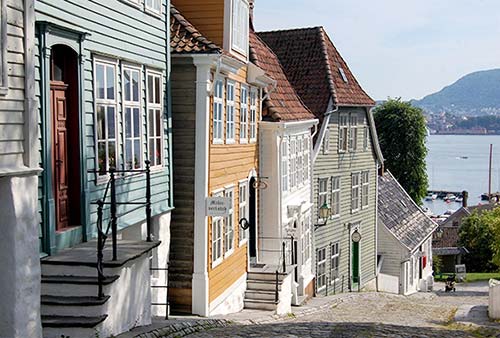
This Disney-cute open-air gathering of 50-some 18th- through 20th-century homes and shops was founded in 1946 to save them from destruction as Bergen modernized. Each wooden building was moved from elsewhere in Bergen and reconstructed in a park-like setting a short bus ride north of the center. Together, they create a virtual town that offers a cobbled look at the old life. It’s free to wander through parts of the town and park to enjoy the facades of the historic buildings, but to enter the worthwhile 20 or so museum buildings, some with costumed docents inside, you’ll have to pay an entrance fee.
Cost and Hours: 140 NOK, daily 10:00-16:00, closed Sept-mid-May, +47 55 39 43 04, www.bymuseet.no.
Tours and Theater: Guided tours are offered on weekdays only (ask at the museum). Short plays are presented on the main square (daily at 11:00, 12:00, and 14:00).
Getting There: From the harborfront at Bryggen, catch a bus heading west from platform B in front of the yellow Radisson Blu building (bus #3, #4, #12, #16E, or #19). The Gamle Bergen stop is just after the tunnel. When you get off, backtrack a few steps before peeling left downhill (look for signs to Gamle Bergen). Follow the sidewalk as it curves under the highway. At the fork under the highway, cross the road and turn left, then head right down the hill. When you reach the apartment building on your right, take a hairpin turn left down the small road (signs should direct you). You’ll see the museum’s white arch ahead of you. Any bus heading back into town takes you to the center (buses come by every few minutes).
The more scenic (but sometimes less reliable) option is to take the Beffen harbor ferry from the Fish Market, aquarium, or Norwegian Fisheries Museum to the Gamle Bergen stop (85 NOK one-way, 180 NOK day pass, less for kids, show ferry ticket for 20 percent discount on Gamle Bergen entry, generally June-Aug hourly Mon-Fri 11:00-16:30).
ACTIVITIES IN BERGEN
▲Strolling
Bergen is a great town for wandering. Enjoy a little Norwegian paseo. On a balmy Norwegian summer evening, I’d stroll from the castle, along the harborfront, up the main square to Ole Bulls Plass, and around the lake.
For a slightly more strenuous yet rewarding walk, head up the zig-zagging road behind the Fløibanen funicular station to a viewpoint in front of a white building with a lookout tower. The building was once a fire station (which explains the tower). The lake next to it used to be a reservoir. Firefighters built the white houses beyond the lake on land given to them so that they could live close to the station. After enjoying the city views, you can either return to town the way you came, or follow Øvre Blekeveien down past the lake and white houses; then take any road to the left off Blekeveien back down to the harbor.
Shopping
Most shops are open Monday through Friday 9:00-17:00, Thursday until 19:00, and Saturday 9:00-15:00, and are closed Sunday. Many touristy shops along the harborfront strip are open daily—even during holidays—until 20:00 or 21:00. You’ll see the same products offered at different prices, so shopping around can be a good idea.
Ting (Things) offers a fun alternative to troll shopping, with contemporary housewares and quirky gifts (daily 9:00-22:30, at Bryggen 13, a block past the Hanseatic Museum, +47 55 21 54 80).
Nilssen på Bryggen, next to the Hanseatic Museum, is one of the oldest shops in Bergen. You’ll find Norwegian yarn for knitting and modern-style Sandnes wool sweaters, along with souvenirs and hand-embroidered Christmas items (Mon-Sat 10:00-18:00, closed Sun, Bryggen 3, +47 55 31 67 90).
Husfliden is popular for its handmade goodies and reliably Norwegian sweaters (fine variety and quality but expensive, just off Torget at Vågsallmenninge 3, +47 55 54 47 40).
The Galleriet Mall, a shopping center on Torgallmenningen, holds six floors of shops, cafés, and restaurants. You’ll find a pharmacy, clothing, sporting goods, bookstores, mobile-phone shops, and a basement grocery store (Mon-Fri 9:00-21:00, Sat until 18:00, closed Sun).
Swimming
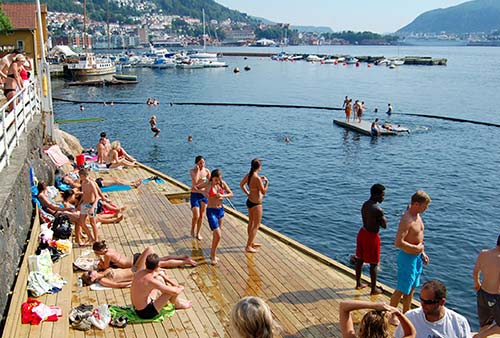
On a hot sunny day you’ll find a great local scene at Bergen’s public swimming areas. Nordnes Sjøbad, near the aquarium, offers swimmers an outdoor heated pool and a protected area of the sea (95 NOK, kids-35 NOK; mid-May-Aug Mon-Fri 7:00-19:00, Sat 9:00-14:00, Sun 10:00-14:00, Sat-Sun until 19:00 in good weather; off-season hours vary—check the website, Nordnesparken 30, +47 53 03 91 90 https://nordnessjobad.no). Sandviken Sjøbad, at Gamle Bergen, is free and open all summer. It comes with changing rooms, a roped-off bit of the bay (no pool), a high dive, and lots of sunbathing space.
SIGHTS NEAR BERGEN
▲Ulriken643 Cable Car
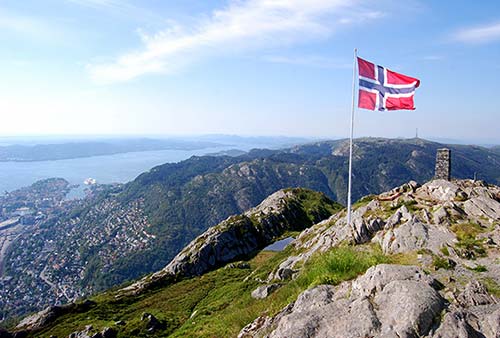
It’s amazingly easy and quick to zip up six minutes to the 643-meter-high (that’s 2,110 feet) summit of Ulriken, the tallest mountain near Bergen. Stepping out of the cable car, you enter a different world, with views stretching to the ocean. A chart clearly shows the many well-marked and easy hikes that fan out over the vast, rocky, grassy plateau above the tree line (circular walks of various lengths, a 40-minute hike down, and a 4-hour hike to the top of the Fløibanen funicular). For less exercise, you can simply sunbathe, unpack a picnic, or enjoy the Ulriken restaurant.
Cost and Hours: 210 NOK one-way, 365 NOK round-trip; about 8/hour, daily 9:00-23:00, off-season Sun and Tue-Wed until 19:00, Thu-Sat until 23:00, closed Mon; +47 53 64 36 43, www.ulriken643.no.
Getting There: It’s about three miles southeast of Bergen. From the Fish Market, you can take a blue double-decker shuttle bus that includes the cost of the cable-car ride (465 NOK, ticket valid 24 hours; April-Sept daily 9:00-18:00, 2/hour; departs from the corner of Torgallmenningen and Strandgaten, buy ticket online or as you board). Alternatively, public buses #5 and #6 run from Festplassen in the city center and stop at Haukeland Sykehus Nord. From there, follow Haukelandsbakken up for about 5-10 minutes to the lift station.
▲▲Edvard Grieg Museum, Troldhaugen
Norway’s greatest composer spent his last 22 summers (1885-1907) at his country home, soaking up inspirational fjord beauty and composing many of his greatest works. Grieg fused simple Norwegian folk tunes with the bombast of Europe’s Romantic style. In a dreamy Victorian setting, Grieg’s Troldhaugen (“Hill of the Trolls”) is pleasant for anyone and essential for diehard fans.
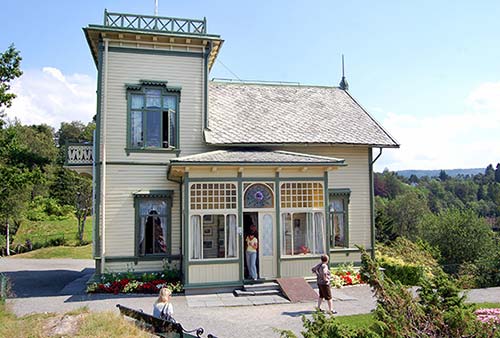
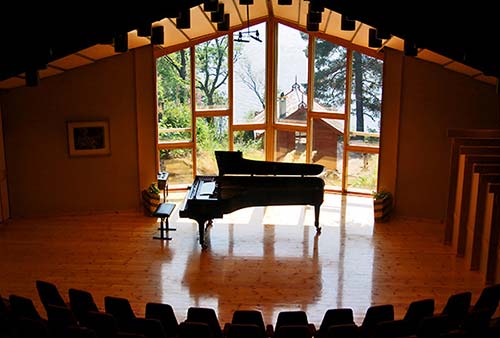
The house can only be visited with an enjoyable 20-minute tour (runs at the top of each hour). The house and adjacent museum are full of memories and artifacts, including the composer’s Steinway. The walls are festooned with photos of the musical and literary superstars of his generation. When the hugely popular Grieg died in 1907, 40,000 mourners attended his funeral. His little studio hut near the water makes you want to sit down and modulate.
Cost and Hours: 130 NOK, includes guided tour in English at top of each hour; Tue-Fri 11:00-16:00, Sat-Sun until 17:00, closed Mon; café, +47 55 92 29 92, https://griegmuseum.no.
Grieg Lunch Concert: Troldhaugen offers a great guided tour/concert package that includes a shuttle bus from Rasmus Meyers Allé 7 (in front of the Rasmus Meyer Museum) to the doorstep of Grieg’s home on the fjord (departs 11:00), an hour-long tour of the home, a half-hour concert (Grieg’s greatest piano hits, at 13:00), and the ride back into town (you’re back in the center by 14:30). Your guide will narrate the ride out of town as well as take you around Grieg’s house (400 NOK, daily mid-June-Aug, includes free admission to all KODE museums, www.kodebergen.no). Lunch isn’t included, but there is a café, or you could bring a picnic. You can skip the return bus ride and spend more time in Troldhaugen. The tour can sell out, so it’s wise to book ahead online. You can also get your ticket at the KODE Museum.
Getting to Troldhaugen: It’s six miles south of Bergen. The Bybanen tram drops you a long 20- or 30-minute walk from Troldhaugen. Catch the tram in the city center at its terminus near Byparken (between the lake and Ole Bulls Plass), ride it for about 25 minutes (stop: Hop). Walk in the direction of Bergen (about 25 yards), cross at the crosswalk, and follow signs to Troldhaugen. Part of the way is on a pedestrian/bike path; you’re halfway there when the path crosses over a busy highway. If you want to make the 13:00 lunchtime concert, leave Bergen at 12:00.
To avoid the long walk from the tram stop, consider the Grieg Lunch Concert package (described earlier). If you’re driving into Bergen from the east (such as from the Sognefjord), you’ll pass Troldhaugen on your way into town.
Fantoft Stave Church (Fantoft Stavkirke)
Situated in a quiet forest next to a mysterious stone cross, this replica of a huge, preserved-in-tar 12th-century stave church is bigger, though no better, than others covered in this book. But it’s worth a look if you’re in the neighborhood, even after-hours, for its atmospheric setting. The original wooden church burned down in 1992. It was rebuilt and reopened in 1997, but it will never be the same (for more on stave churches, see here).
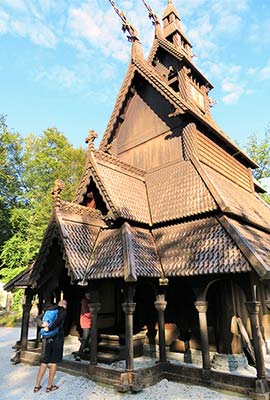
Cost and Hours: 75 NOK (card only); daily 10:30-18:00, interior closed mid-Sept-mid-May; no English information, +47 55 28 07 10.
Getting There: It’s three miles south of Bergen on E-39 in Paradis. Take the Bybanen tram (from Byparken, between the lake and Ole Bulls Plass) or bus #83 (from Torget, by the Fish Market) to the Paradis stop (not the “Fantoft” stop). From the Paradis tram stop, take the stairs, then turn right and walk uphill to the parking lot on the left. From there, take the steep footpath on the right to the church.
Nightlife in Bergen
At such a high latitude, Bergen stays light until 23:00 in the summer. On warm evenings, people are out enjoying the soft light and the mellow scene.
For a selection of cool nightspots, visit the Pingvinen and Café Opera (both described in “Eating in Bergen,” later) and explore the neighboring streets.
For something a little funkier, Skostredet (“Shoe Street,” recalling the days when cobblers set up shop here) is the hip, bohemian-chic area. You’ll sort through cafés, pubs, and retro shops. There’s even an American-style ’50s diner. Folk og Røvere (“People and Robbers”) is an unpretentious bar with cheap beer (nightly until late, Skostredet 12).
For candlelit elegance, enjoy a drink at the historic Dyvekes Wine Cellar. Named for the mistress of King Christian II of Denmark (her portrait is on the signboard hanging above the door), the atmosphere of the ground-floor bar and the cellar downstairs is hard to beat (daily from 15:00, wine by the glass, beer on tap, Hollendergaten 7).
For live music, try Madam Felle Nightclub (on the Bryggen strip), which usually has musicians on the weekends (sometimes without a cover). And if you’re really drunk at 3:00 in the morning and need a spicy hotdog, the 3-Kroneren pølse stand on Kong Oscars Gate is open.
Sleeping in Bergen
Busy with business travelers and popular with tourists, Bergen can be jammed any time of year. Even with this crush, proud and pricey hotels may be willing to make deals. Bergen also has some fine budget alternatives that can save you money.
HOTELS
$$$$ Hotel Havnekontoret, with 113 rooms and the best location in town, fills a grand old shipping headquarters dating from the 1920s. It’s an especially fine value on weekends and in summer for those who eat the included dinner. While part of a chain, it has a friendly spirit. Guests are welcome to climb its historic tower (with a magnificent view) or enjoy its free sauna and exercise room downstairs. The room price includes virtually all your food—a fine breakfast, self-service waffles in the afternoon, fruit and coffee all day, and a light dinner buffet each evening. If you take advantage of them, these edible extras are easily worth 600 NOK per day per couple, making the cost of this fancy hotel little more than a hostel (facing the harbor across the street from the Radisson Blu Royal Hotel at Slottsgaten 1, +47 55 60 11 00, www.strawberry.no, cc.havnekontoret@strawberry.no).
$$$ Hotel Park Bergen is classy, comfortable, and in a fine residential neighborhood a 15-minute uphill walk from the town center (10 minutes from the train station). It’s tinseled in Old World, lived-in charm, yet comes with all of today’s amenities. The 35 rooms are split between two buildings, with 22 in the old-fashioned hotel and 13 in the modern annex across the street. (Harald Hårfagres Gate 35, +47 55 54 44 00, www.hotelpark.no, booking@hotelpark.no). They also offer eight fully furnished studio apartments nearby at 2 Døtre. Reception is at the hotel (Allégaten 20, +47 45 80 00 20, www.hotelpark.no/apartments, booking@2dotre.com).
$$ Thon Hotel Rosenkrantz, with 129 rooms and an included light dinner, is one block behind Bryggen, between the Bryggens Museum and the Fløibanen funicular station—right in the heart of Bergen’s appealing old quarter. Ask for a room with a double bed even if you’re traveling alone—they go for the same price as a single (elevator, Rosenkrantzgaten 7, +47 55 30 14 00, www.thonhotels.com, rosenkrantz@olavthon.no).
$$ Thon Hotel Orion, beyond Bryggen near Håkon’s Hall, has 219 rooms. But be aware that many face the fortress grounds, which sometimes host summer evening concerts. If you love music, ask for a room on the concert side and enjoy the show; otherwise, ask for a room on the quiet side and bring earplugs—or stay somewhere else (elevator, Bradbenken 3, +47 55 30 87 00, www.thonhotels.com, orion@olavthon.no).
$$ Hotel Oleana is a boutique hotel conveniently located just a half-block up from Torgallmenningen. The 97 colorful rooms are inspired by the 19th century superstar from Bergen, Ole Bull. They have designer baths, some with bathtubs, and all with waterfall showers. The ground-floor restaurant serves lunch, dinner, and afternoon tea (Ole Bulls Plass 5, +47 55 21 58 73, www.hoteloleana.com, seeyou@hoteloleana.no).
$ Hotel Augustin has basic and well-priced rooms just a few blocks away from the fish market. A separate laundry room with a washer and dryer is available to guests (elevator, C. Sundts gate 18, +47 55 30 40 00, www.augustin.no, booking@augustin.no).
$ Klosterhagen Hotell is located in a quiet residential area a 10- to 15-minute uphill walk from the city center. The building dates to the late 1800s, and the 15 rooms are clean and bright. The hotel serves a hearty breakfast buffet and offers free waffles in the afternoon that you can enjoy in the lounge or the courtyard. There are no elevators, but the staff is helpful carrying your luggage up the stairs (Strangehagen 2, +47 53 00 22 00, www.klosterhagenhotell.no, post@klosterhagenhotell.no).
¢ Citybox Bergen City is a unique, no-nonsense hotel concept: plain, white, clean, and practical. You’ll book one of their 122 rooms online or by phone and receive a confirmation number. Check-in is automated—just punch in your number and get your room key card. The call-in reception is staffed 24 hours daily (family room, no breakfast, elevator, rooftop terrace, self-service laundry, just away from the bustle in a mostly residential part of town at Nygårdsgaten 31, +47 55 31 25 00, www.citybox.no, bergen@citybox.no).
DORMS AND HOSTELS
¢ City Hostel Bergen is a quiet, tidy, and conveniently positioned 100-bed place between the station and the harborfront. Its rooms, while spartan, are modern and cheery. Prices can rise with demand, especially in summer (private rooms available, elevator, laundry room, kitchen, open all year but with limited reception hours, fourth floor at Kong Oscars Gate 45, +47 55 31 44 04, www.cityhostel.no, post@cityhostel.no).
Away from the Center: ¢ Montana Family & Youth Hostel (IYHF), while one of Europe’s best, is high-priced for a hostel and way out of town. Still, the bus connections (#12, 20 minutes from the center) and the facilities—modern rooms, classy living room, no curfew, huge free parking lot, and members’ kitchen—are excellent (private rooms available; 30 Johan Blytts Vei—for location, see the “Greater Bergen” map on here; +47 55 20 80 70, www.montana.no [URL inactive], bergen.montana@hihostels.no).
Eating in Bergen
Bergen has numerous choices: restaurants with rustic, woody atmosphere, candlelight, and steep prices; trendy pubs and cafés that offer good-value meals; cafeterias, chain restaurants, and international eateries with less ambience but better value; and takeaway sandwich shops, bakeries, and cafés for a light bite.
You can always get a glass or pitcher of water at no charge, and fancy places give you free seconds on potatoes—just ask. And if you get your food to go, it’s taxed at a lower rate.
SPLURGES AT BRYGGEN
You’ll pay a premium to eat at these restaurants, but you’ll have a memorable meal in a pleasant setting.
$$$$ Enhjørningen (“The Unicorn”) is the place in Bergen for fish. With thickly painted walls and no right angles, this dressy yet old-time wooden interior wins my “Bryggen Atmosphere” award. The dishes, while not hearty, are close to gourmet and beautifully presented (small plates, main dishes, multicourse meals, Mon-Sat from 16:00, closed Sun, reservations smart, #29 on Bryggen harborfront—look for anatomically correct unicorn on the old wharf facade and dip into the alley and up the stairs, +47 55 30 69 50, www.enhjorningen.no).
$$$$ Restaurant To Kokker, down the alley from Enhjørningen (and with the same owners), serves more meat and game. The prices and quality are equivalent, but even though it’s also in an elegant old wooden building, I like The Unicorn’s atmosphere much better (small plates, main dishes, multicourse meals, Mon-Sat from 17:00, closed Sun, +47 55 30 69 55, www.tokokker.no).
$$$ Bryggeloftet & Stuene Restaurant, in a brick building just before the wooden stretch of Bryggen, is a vast eatery serving seafood, vegetarian, and traditional meals. To dine memorably yet affordably, this is your best Bryggen bet. Upstairs feels more elegant and less touristy than the main floor—if there’s a line downstairs, just head on up (daily, try reserving a window table upstairs—no reservations for outside seating, #11 on Bryggen harborfront, +47 55 30 20 70, www.bryggeloftet.no, restaurant@bryggeloftet.no).
CASUAL EATERIES
If you want to rub elbows with more locals, look into these options.
$$$ Moon, run by friendly French twin brothers Jules and Nicholas, is an inviting place with a cozy atmosphere. They offer a seasonal menu rotating every two months complimented by an extensive wine list (Mon-Sat from 17:00, closed Sun, reservations smart, close to the train station at Marken 33, +47 48 24 65 54, www.moonrestaurantbergen.com, booking@moonrestaurantbergen.com).
$$$ Spisekroken is a charming and intimate restaurant in the Nordnes neighborhood, a 5- to 10-minute uphill walk from the Fish Market. The creative menu consists of local ingredients, with the specialty being veal. You can order à la carte, or try the trippel menu with three small starters, one main dish, and three small desserts (daily from 17:00, reservations smart, Klostergata 8, +47 55 23 01 15, www.spisekroken.no, post@spisekroken.no).
$$$ Zupperia is a lively, popular chain eatery that offers Norwegian fare and Asian dishes—their Thai soup is a local favorite—along with burgers and salads. For a lighter (and cheaper) meal, order off the lunch menu any time of day (daily, near the National Theater at Vaskerelven 12, +47 55 55 81 14).
$$ Pygmalion Restaurant has a happy salsa vibe, with local art on the walls and a fun, healthy international menu. It’s run with creativity and passion by Sissel. Her burgers are a hit, and there are always good vegetarian options, hearty salads, and pancakes (wraps, burgers, daily, two blocks inland from the Fish Market at Nedre Korskirkealmenning 4, +47 55 31 32 60).
CHARACTERISTIC PLACES NEAR OLE BULLS PLASS
Bergen’s “in” cafés are stylish, cozy, small, and open very late. Around the cinema on Neumannsgate, there are numerous Italian, Middle Eastern, and Chinese restaurants.
$$$ Pingvinen (“The Penguin”) is a homey place in a charming neighborhood, serving traditional Norwegian home cooking to an enthusiastic local clientele. The pub has only indoor seating, with a long row of stools at the bar and a handful of charming, living-room-cozy tables—a great setup for solo diners. After the kitchen closes, the place stays open very late as a pub. For Norwegian fare in an untouristy atmosphere, this is a good, affordable option. Their seasonal menu (reindeer in the fall, whale in the spring) is listed on the board (daily, Vaskerelven 14 near the National Theater, +47 55 60 46 46).
$$$ Café Opera, with a playful, slacker vibe and chessboards for the regulars, is the hip budget choice for its loyal, youthful following. With two floors of seating and tables out front across from the theater, it’s a winner for its lunch specials, filling dinners, and bar scene (food served daily until 21:45, bar open later, Engen 18, +47 55 23 03 15).
ATOP MOUNT FLØYEN
$$ Fløien Folkerestaurant Cafeteria, at the top of the funicular, offers meals indoors and out with a panoramic view. It’s self-service, with cheap sandwiches and a soup buffet (May-Aug daily, Sept-April Sat-Sun only, +47 55 33 69 99).
GOOD CHAIN RESTAURANTS
You’ll find these chain restaurants in Bergen and throughout Norway. All are open long hours daily. In good weather, enjoy a takeout meal with sun-worshipping locals in Bergen’s parks.
$$$ Peppes Pizza on Ole Bulls Plass has cold beer and good pizzas—consider the Thai chicken, with satay-marinated chicken, pineapple, peanuts, and coriander (daily until late, seating inside or takeaway, Olav Kyrres Gate 11, +47 22 22 55 55).
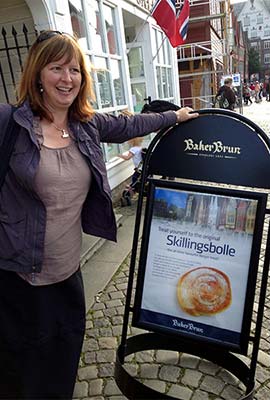
$ Baker Brun makes 75-100-NOK sandwiches, including wonderful shrimp baguettes, and pastries such as skillingsboller—Bergen’s version of cinnamon rolls—warm out of the oven. Their shop at Bryggen is a prime spot for a simple, inexpensive bite (daily, seating inside or takeaway, Bryggen 41).
$ Godt Brød has several branches spread out across downtown Bergen, but my favorite is at Vestre Torggaten 2 because of the outdoor seating on the square. The bakery serves well-priced organic sandwiches, salads, pastries, and a decent selection of gluten-free options (daily).
BUDGET BETS NEAR THE FISH MARKET
The Fish Market has lots of stalls bursting with salmon sandwiches, fresh shrimp, fish-and-chips, and fish cakes. For a tasty, memorable, and inexpensive Bergen meal, assemble a seafood picnic here (ask for prices first; vendors may close early if they’re not busy; daily, Jan-April only Sat until 15:00). Also be sure to peruse the places next door on the ground floor of the TI building, Torghallen.
$ 3-Kroneren, a classic hot-dog stand, sells a wide variety of sausages (including reindeer) served with a free little glass of fruit punch. The well-described English menu makes it easy to order your choice of artery-clogging guilty pleasures (open daily late, a block away from the harbor on Kong Oscars Gate).
$ Söstrene Hagelin Fast Fish Joint is an easygoing eatery that’s cheerier than its offerings—a pale extravaganza of Norway’s white cuisine. It’s all fish here: fish soup, fish burgers, fish balls, fish cakes, fish wraps, and even fish pudding (Mon-Sat, closed Sun, Strandgaten 3, +47 55 90 20 13).
$ Krohnhagen Café, a humble community center next to a retirement home, is run by the church and partly staffed by volunteers. While it’s designed to give Bergen’s poor (and the retired) an inviting place to enjoy, everyone’s welcome (the dinner buffets are a favorite of local guides). The dining area is bright and spacious, the staff friendly, and the menu is simple yet tasty waffles, salads, soups, and sandwiches (Mon-Fri until 14:45, closed Sat-Sun, Kong Oscars Gate 54, +47 45 22 07 95).
PICNICS AND GROCERIES
For putting together picnics, Deli de Luca is a cut above other takeaway joints, adding sushi, noodle dishes, and calzones to the normal lineup of sandwiches. While a bit more expensive, the variety and quality are appealing. The chain’s most convenient location is near Ole Bulls Plass (daily until late, Torggaten 5, +47 55 23 11 47).
While you’ll be tempted to drop into 7-Eleven-type stores, you’ll pay for the convenience. Pick up your groceries for half the price at a real supermarket. The Rema 1000 supermarket, just across from the Bryggens Museum and St. Mary’s Church, is particularly handy (closed Sun). For groceries on Sunday or after hours, check out Bunnpris, just off Ole Bulls Plass, between the National Theater and Festplassen (open 24/7, Torggaten 7).
Bergen Connections
Bergen is conveniently connected to Oslo by plane and train (trains depart Bergen daily at around 8:00, 12:00, 15:00, 17:00, and 23:00—but no night train on Sat, arrive at Oslo 7.5 scenic hours later, additional departures in summer and fall, confirm times at station, 60-NOK seat reservation with second-class rail pass required—but free with first-class rail pass, book well in advance if traveling mid-July-Aug—there may be advance purchase discounts, buy tickets at Vy website). From Bergen, you can take the Norway in a Nutshell train/bus/ferry route—see the Norway in a Nutshell chapter. Train info: +47 61 05 19 10 (9 for English), Vy.no.
To get to Stockholm or Copenhagen, you’ll go via Oslo (see “Oslo Connections” on here). Before buying a ticket for a long train trip from Bergen, look into cheap flights.
By Express Boat to Balestrand and Flåm (on Sognefjord): A handy express boat links Bergen with Balestrand (4 hours) and Flåm (5.5 hours). For details, see here.
By Boat to Denmark: Fjordline runs a boat from Bergen to Hirtshals, Denmark (18.5 hours; departs daily at 13:30; boat from Hirtshals departs daily at 20:00, +47 51 46 40 99, www.fjordline.com [URL inactive]).
By Boat to the Arctic: Coastal cruises run by Hurtigruten depart nearly daily for the seven-day trip north up the scenic west coast to Kirkenes on the Russian border. For most travelers, this makes a great one-way trip, with a flight back south as a logical last leg (rather than returning to Bergen by boat—a 12-day round-trip).
This route was started in 1893 as a postal and cargo delivery service along the west coast of Norway. Although no longer delivering mail, their ships still fly the Norwegian postal flag by special permission and deliver people, cars, and cargo from Bergen to Kirkenes. A lifeline for remote areas, the ships call at over 30 fishing villages and cities.
For the seven-day trip to Kirkenes, allow $1,700 and up per person based on double occupancy (includes three meals per day, taxes, and port charges). Prices vary greatly depending on the season (highest June-July), cabin, and type of ship. The fleet includes those with a bit of brass built in the 1960s, but most of the ships in service were built in the mid-1990s and later. Shorter voyages are possible (including even just a day trip to one of the villages along the route). Cabins should be booked well in advance. Ship services include a 24-hour cafeteria, a launderette on newer boats, and optional port excursions. Check online for discounts and off-season (Oct-March) specials at www.hurtigruten.com or call Hurtigruten (US +1 888 967 9810, Norway +47 77 59 71 60).
Similar to Hurtigruten, Havila Voyages offers a comparable seven-day trip to Kirkenes. They can be worth checking out to compare prices (US +1 833 210 9067, Norway +47 70 00 70 70, www.havilavoyages.com).
Route Tips for Drivers: For tips on connecting Bergen to Denmark via the Kristiansand ferry, see the Setesdal Valley chapter.