GLASGOW
Map: Central Glasgow Hotels & Restaurants
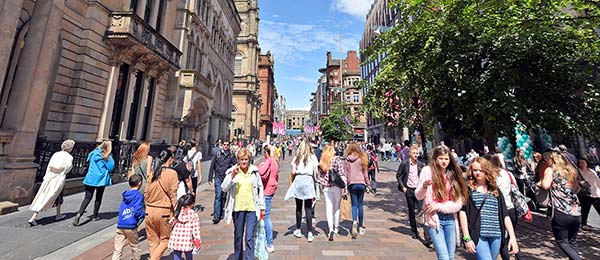
Glasgow (GLAZ-goh)—astride the River Clyde—is a surprising city. In its heyday a century ago, Glasgow was one of Europe’s biggest cities and Britain’s second largest, after London. It had 1.2 million people, twice the size (and with twice the importance) of today. An industrial powerhouse, it produced 25 percent of the world’s oceangoing ships. But in the mid-20th century, tough times hit Glasgow, giving it a rough edge and a run-down image.
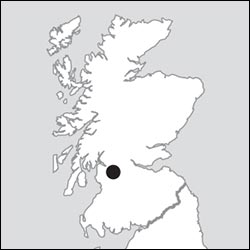
At the city’s low point during the Margaret Thatcher years (1980s), its leaders embarked on a systematic rejuvenation designed to again make Glasgow appealing to businesses, tourists...and locals. Today this revitalized city goes out of its way to offer a warm welcome. Glaswegians (rhymes with “Norwegians”) are some of the chattiest people in Scotland—with the most entertaining (and impenetrable) accent.
Many travelers give Glasgow a miss, but that’s a shame: I consider it Scotland’s most underrated destination. Glasgow is a workaday Scottish city as well as a cosmopolitan one, with an unpretentious friendliness, an energetic dining and nightlife scene, top-notch museums (most of them free), and a unique flair for art and design. It’s also a pilgrimage site for architecture buffs, thanks to a cityscape packed with Victorian facades, early 20th-century touches, and bold and glassy new construction. Most beloved are the works by hometown boy Charles Rennie Mackintosh, the visionary—and now trendy—architect who left his mark on Glasgow at the turn of the 20th century.
Many more tourists visit Edinburgh, a short train trip away. But for a more complete look at urban Scotland, be sure to stop off in Glasgow. Edinburgh may have a more royal aura, but Glasgow has down-to-earth appeal. In Glasgow, there’s no upper-crust history, and no one puts on airs. In Edinburgh, people identify with the quality of the school they attended; in Glasgow, it’s their soccer team allegiance. One Glaswegian told me, “The people of Glasgow have a better time at a funeral than the people of Edinburgh have at a wedding.” Locals are happy to introduce you to their fun-loving, laid-back Glaswegian way of life.
PLANNING YOUR TIME
While many visitors blitz Glasgow as a day trip from Edinburgh or Stirling (and a single day in Glasgow is certainly more exciting than a fourth day in Edinburgh), the city can easily fill two days of sightseeing.
Regardless of how long you stay, consider the 1.5-hour hop-on, hop-off bus tour, which is convenient for getting the bigger picture and reaching three important sights away from the downtown core: the Cathedral Precinct, the Riverside Museum, and the Kelvingrove Museum.
On a quick visit, follow my self-guided Downtown Walk, tying together the most important sights in the city’s core. The museums most worth considering are the Tenement House and the Kelvingrove Museum (the latter is a quick bus ride or 25-minute walk from downtown).
With additional time, your options open up. Follow my West End Walk through Glasgow’s appealing residential zone, which has most of the city’s best restaurants and several worthwhile sights. Fans of Art Nouveau and Charles Rennie Mackintosh can lace together a busy day’s worth of sightseeing: Visit the Mackintosh House at the Hunterian Gallery and the Mackintosh exhibit at the Kelvingrove Museum (both in the West End), then tour and/or have afternoon tea at the Mackintosh at the Willow tearoom. (The Mackintosh page on the visitglasgow.com website has good information.)
Day Trip from Edinburgh: For a full day, catch the morning train to Glasgow (departs at least every 10 minutes; the first discounted off-peak express usually departs around 9:15); it arrives at Queen Street Train Station just after 10:00. To use your Glasgow hours smartly, I’d do the entire hop-on, hop-off bus tour circuit (1.5 hours), then follow my self-guided Downtown Walk (finishing with the Tenement House). Next, check out the Kelvingrove Museum and have dinner nearby (in the Finnieston area). Catch an evening train back to Edinburgh (evening trains depart every 10-20 minutes).
Orientation to Glasgow
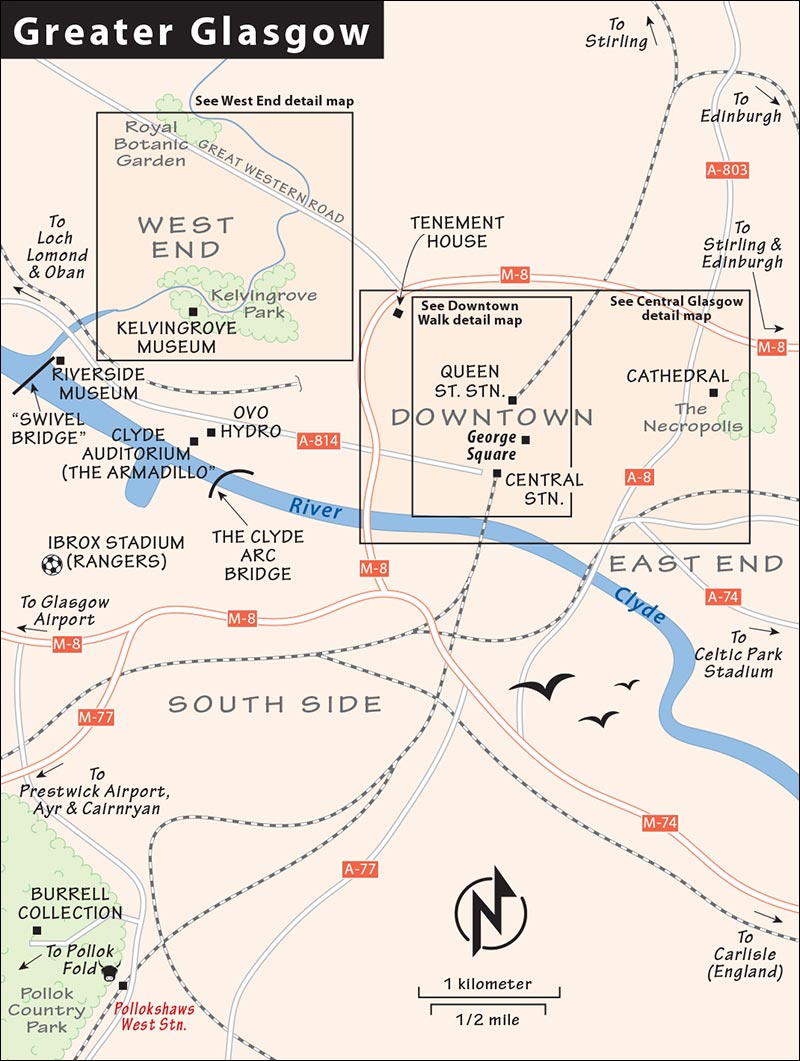
Although it’s often thought of as a “second city,” Glasgow is actually Scotland’s biggest (pop. 621,000, with 1.2 million within greater Glasgow—that’s one out of every five Scots).
The tourist’s Glasgow has two parts: the businesslike downtown (train stations, commercial zone, and big main shopping area) and the residential West End (B&Bs, restaurants, and nightlife). Both areas have good sights, and I’ve covered both with self-guided walks.
Glasgow’s downtown is a tight grid of boxy office buildings and shopping malls, making it feel more like a midsize American city than a big Scottish one—think Cincinnati or Pittsburgh, but with shorter skyscrapers made of Victorian sandstone rather than glass and steel. The walkable, pedestrian-friendly city center has three main drags, lined with shops and crawling with shoppers: Sauchiehall Street (pronounced “Sockyhall”) and Argyle Street (running west to east) and Buchanan Street (running north to south). These three streets—part of a shopping zone nicknamed the Style Mile—make a big zig and zag through the heart of town.
The West End is a posh district, with big homes, upscale apartment buildings, and lots of green space. It has three pockets of interest: near the Hillhead subway stop, with a lively restaurant scene and the inviting Botanic Gardens; the University of Glasgow campus, with its stately buildings and fine museums; and, just downhill through a sprawling park, the area around the Kelvingrove Museum, with a lively nearby strip of trendy bars and restaurants (Finnieston).
Tourist Information: While Glasgow has no official tourist information office, you can find good information about Glasgow (and other Scottish destinations) at visitscotland.com. Another useful website is visitglasgow.com.
ARRIVAL IN GLASGOW
By Train: Glasgow, a major Scottish transportation hub, has two main train stations just a few blocks apart: Central Station (with a grand, genteel interior under a vast steel-and-glass Industrial Age roof; to reach the heart of town, exit toward Gordon Street and turn right) and Queen Street Station (more functional, with better connections to Edinburgh; to reach the main shopping drag, take the exit marked West George Street and walk one block). Both stations have pay WCs and baggage storage. If going between stations to change trains, you can walk about 10 minutes or take the roundabout “Station Link” bus #398 (free with train ticket, 5/hour; also goes to the bus station). Either way, I’d allow at least 30 minutes to comfortably make a connection between stations. If you’re heading straight from Edinburgh to the West End, you can buy a ticket directly to the Glasgow Charing Cross station, which is a 20-minute walk from the lively Finnieston neighborhood, the Kelvingrove Museum, and some of my recommended hotels.
By Bus: Buchanan bus station is at Killermont Street, two blocks up the hill behind Queen Street Station (baggage lockers available long hours daily, Citylink ticket office daily 9:00-18:00).
By Car: Glasgow’s downtown streets are mostly one-way (with some steep sections), congested with buses and pedestrians, and a horrible place to drive. Ideally, do Glasgow without a car—for example, tour Edinburgh and Glasgow by public transit, then pick up your rental car on your way out of town. If you are stuck with a car in Glasgow, sleep in the West End, where driving and parking are easier (and use public transit or taxis as necessary). Parking downtown is a hassle: Metered street parking is expensive (nearly £5/hour) and limited to two hours during the day; garages are expensive (figure at least £25/24 hours). Carefully avoid driving in the “bus gates”—bus-only lanes that are painted red; if you do, a ticket may be mailed to your home.
The M-8 motorway, which slices through downtown Glasgow, is the easiest way in and out of the city and connects well with other highways.
By Plane: See “Glasgow Connections” at the end of this chapter.
HELPFUL HINTS
- Sightseeing Tips: It can be wise to make reservations for a tasting event at The Good Spirits Company, to tour or eat at the Mackintosh at the Willow tearoom, and for a special dinner out in the West End. Several sights are closed on Mondays: Tennent’s Brewery Tour, the Hunterian Gallery and Mackintosh House, and the Hunterian Museum.
- Safety: The city center, which is packed with ambitious career types during the day, can feel deserted at night. As in any big city, use common sense and don’t wander alone down dark alleys. While the area between Argyle Street and the River Clyde has been cleaned up, parts can still feel sketchy. But much of the Style Mile shopping drag and the West End bustle with crowded restaurants well into the evening and feel well populated in the wee hours.
If you’ve picked up a football (soccer) jersey or scarf as a souvenir, don’t wear it in Glasgow; passions run very high, and most drunken brawls in town are between supporters of Glasgow’s two rival soccer clubs: Celtic in green, and Rangers in blue and red. (For more on the soccer rivalry, see my Downtown Walk.)
- Sunday Travel: Bus and train schedules are dramatically reduced on Sundays and off-season. (Forget trying to get to the Highlands by bus on a Sun in winter.)
- Laundry: Call ahead to have Majestic Launderette pick up and drop off at your B&B or hotel; they also have a launderette near the Kelvingrove Museum in the West End (self-serve or full service; Mon-Fri 9:00-17:00, Sat until 16:00, closed Sun; 1110 Argyle Street—see map on here, +44 141 334 3433).
GETTING AROUND GLASGOW
By City Bus: Glasgow’s sights are spread out. To connect them, its bus system works beautifully, with most city-center routes run by the First Bus Company. Buses run every few minutes down Glasgow’s main thoroughfares (such as Hope Street) to the downtown core (train stations, shopping drag). Get used to the ease and convenience of hopping on a bus; use the First Bus app or Google Maps to access real-time information on which bus to take, where to get off, and how soon it departs. A single ride costs £2.10. It’s easiest to pay by “tapping in” with a contactless credit card or smartphone payment app, then “tapping out” as you leave the bus; the fare is charged to your card. If you insist on paying cash, exact change is required. An all-day ticket is £5.90, which is also the maximum you’ll be charged on any given day through tap payment. You can also get around the city via hop-on, hop-off bus (see “Tours in Glasgow,” next).
By Taxi or Uber: Taxis are affordable, plentiful, and often come with nice, chatty cabbies (if your driver has an impenetrable Glaswegian accent, just smile and nod). Most taxi rides within the downtown area cost about £8; to the West End is £10-12. Uber works well in Glasgow, often costing a couple of pounds less than a taxi.
By Subway: Glasgow’s elegantly simple single-line subway system makes a 10-mile circle with 15 stops. Trains run clockwise on the outer circle, counterclockwise on the inner circle—just choose the direction that gets you to your next stop the quickest (upcoming stops are clearly posted). While almost quaint today, when it opened in 1896 it was a wonder (it’s the world’s third-oldest subway system, after those in London and Budapest). Though the subway is useless for city-center sightseeing (Buchanan Street and St. Enoch are the only downtown stops), it’s handy for connecting to West End sights (like the Kelvingrove Museum; Kelvinhall stop) and restaurants and nightlife (Hillhead stop). It’s £1.85 for a single trip or £4.45 for an all-day ticket. If you’ll be taking lots of rides, consider getting a Smartcard, which reduces the per-ride cost (subway runs Mon-Sat 6:30-23:40, Sun 10:00-18:15, spt.co.uk/subway). Buy a ticket from machines in the station and scan to enter (the system is being upgraded to allow riders to “tap to pay” with a credit card or mobile device). Another convenient option is the “roundabout ticket,” good all day on the subway and above-ground ScotRail trains that run in the city center (£7.70, buy at station).
Tours in Glasgow
▲Hop-On, Hop-Off Bus
City Sightseeing connects Glasgow’s far-flung historic sights in a 1.5-hour loop and lets you hop on and off as you like. Buses run every half-hour (daily 9:30-18:00, last departure at 16:30) and alternate between live guides and recorded narration (both are equally good). The route covers the city very well—it’s a handy way to reach distant sights like the Riverside Museum—and the guide does a fine job of describing activities at each stop. (However, it does not reach the Burrell Collection or Pollok Fold.) While the first stop is on George Square (where you can buy your ticket from City Sightseeing staff), you can hop on and pay the driver anywhere along the route (one day-£18, two days-£24, +44 141 204 0444, citysightseeingglasgow.co.uk).
Walking Tours
Walking Tours in Glasgow was started by Jenny and Liv, two University of Glasgow graduates who love their city. Their guides offer a Glasgow City Centre tour (£12, 1.5 hours, daily at 10:30, 14:00, and 17:00), a Street Art tour (£12, 1.5 hours, daily at 14:00), and others—check online for details and to book (walkingtoursin.com).
Trainspotters may enjoy the guided, behind-the-scenes tours of Central Station, including a spooky, abandoned Victorian train platform (£15, book ahead, glasgowcentraltours.co.uk).
Local Guides
Joan Dobbie, a native Glaswegian and registered Scottish Tourist Guide, will give you the insider’s take on Glasgow’s sights (£220/half-day, £320/full day, tours on foot or by public transit—no tours by car, +44 7773 555 151, joan.leo100@gmail.com).
Rita Harrison, a Blue Badge Tour Guide, grew up in Glasgow and is a University of Glasgow alum. She enjoys sharing her in-depth knowledge of her hometown and also leads tours in Edinburgh and St. Andrews (£220/half-day, £330/full day, tours on foot or by public transit, +44 7542 495 620, rritaharrison@hotmail.com).
Highlands Day Trips
Most of the same companies that do Highlands side trips from Edinburgh also operate trips from Glasgow. If you’d like to spend an efficient day away from the city, skim the descriptions and listings on here, and check each company’s website for details.
Walks in Glasgow
These two self-guided walks introduce you to Glasgow’s most interesting (and very different) neighborhoods: the downtown zone, and the residential area and university sights of the West End.
DOWNTOWN WALK
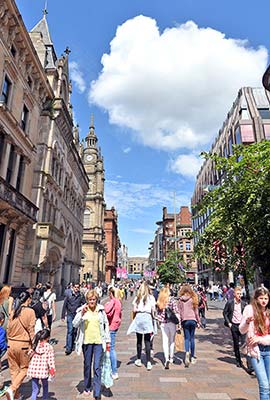
Glasgow isn’t romantic, but it has an earthy charm, its people are a joy to chat with, and architecture buffs love it. The more time you spend here, the more you’ll appreciate the edgy, artsy vibe and the quirky, fun-loving spirit. Be sure to look up—above the chain restaurants and mall stores—and you’ll discover a wealth of imaginative facades, complete with ornate friezes and expressive sculptures. These buildings transport you to the heady days around the turn of the 20th century—when Victorianism enthralled the rest of Britain, but Glasgow set its own course, thanks largely to the artistic bravado of Charles Rennie Mackintosh, his wife Margaret Macdonald, and their Art Nouveau friends (creating the “Glasgow Style”). This walking tour takes about 1.5 hours (plus sightseeing stops along the way).
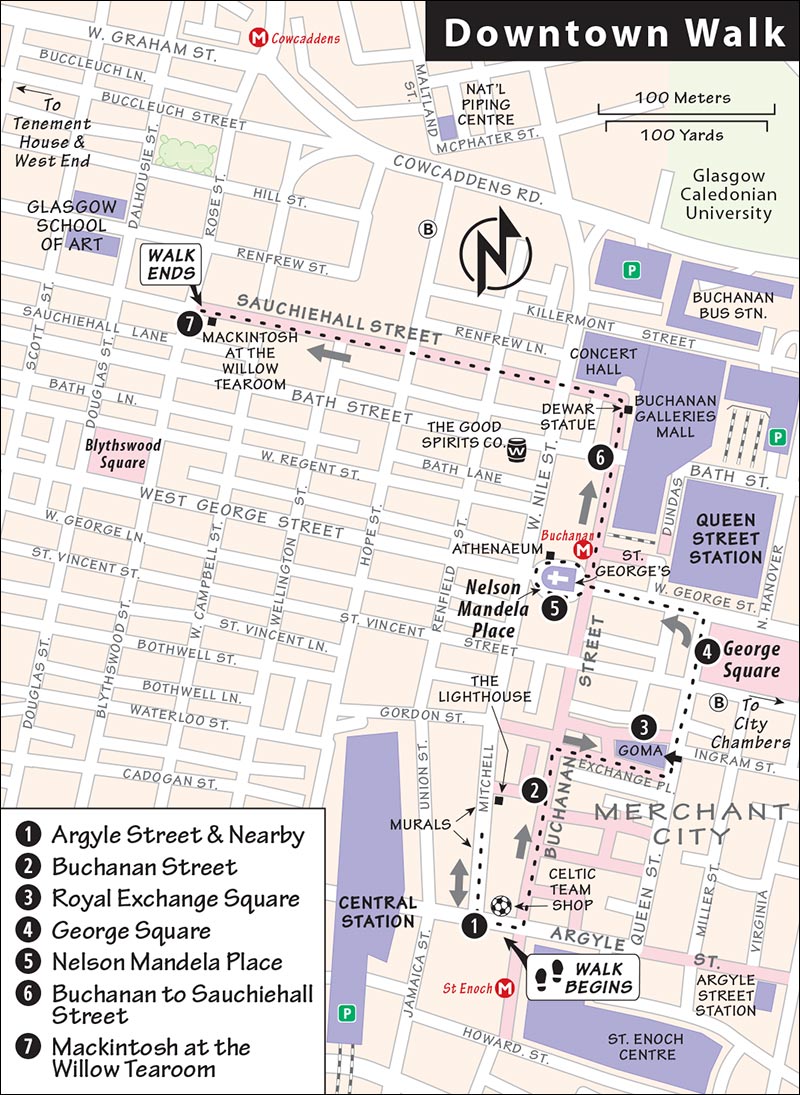
• Start at the St. Enoch subway station, at the base of the pedestrian shopping boulevard, Buchanan Street. (This is a short walk from Central Station, or a longer walk or quick cab ride from Queen Street Station.) Stand at the intersection of Argyle and Buchanan, where the square hits the street (with your back to the glassy subway entry). Take a moment to get oriented.
1 Argyle Street and Nearby
The grand pedestrian boulevard, Buchanan Street, leads uphill to the Royal Concert Hall. This is the start of the “Style Mile”—the nickname for a Z-shaped pedestrian shopping zone made of three streets: Sauchiehall, Buchanan, and Argyle. A major redevelopment is planned over the next few years as the city enacts a master plan to incorporate housing and greener public spaces into this “Golden Z.” Look left (a long block away) to where Central Station (with its huge glass facade) makes a bridge over Argyle Street. This bridge was nicknamed “The Highlanders’ Umbrella” from the days when poor Highlanders, who came to Glasgow to find work, would gather here to connect with their community.
Before heading up Buchanan Street, take a quick detour down Argyle to see a couple of slices of Glasgow life. About halfway to the Highlanders’ Umbrella, on the right, step into the extremely green sports shop, the Celtic FC Store (at #154).
Green is the color of Glasgow’s Celtic soccer team, one of two city teams (the other is the Rangers). It’s hard for outsiders to fathom the intensity of the rivalry between Glasgow’s Celtic and Rangers teams. Celtic, founded by an Irish Catholic priest to raise money for poor Irish immigrants in the East End, is—naturally—green and favored by Catholics. Rangers, with team colors of the Union Jack (red, white, and blue), are more likely to be supported by Unionist and Protestant families.
Wander into the shop (minimizing or hiding any red or blue you might be wearing). Check out the energy in the photos and shots of the stadium filled with 60,000 fans. You’re in a world where red and blue don’t exist. Upstairs, tucked in a back room, is a gallery with photos celebrating the team’s successes through the years. (For reasons no one can explain, the Celtic team name is pronounced “sell-tic”—like it is in Boston; in all other cases, such as when referring to music, language, or culture, this word is pronounced “kell-tic.”)
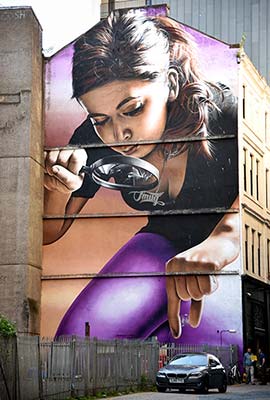
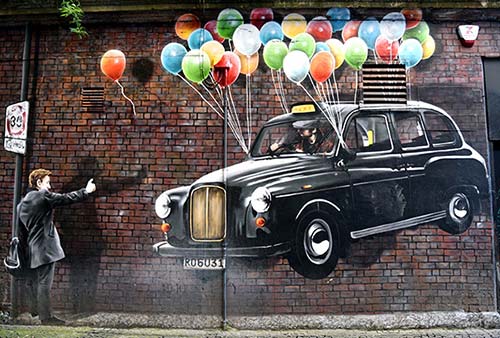
Now head right around the corner from the Celtic shop and walk a few steps down the alley (Mitchell Street). While it’s usually deserted and can seem a bit seedy, it should be safe...but look out for giant magnifying glasses and taxis held aloft by balloons. City officials have cleverly co-opted street artists by sanctioning huge, fun, and edgy graffiti murals like these. (You’ll see even more if you side-trip down alleys along the Style Mile.) The woman with the magnifying glass was painted by graffiti artist Smug (see her necklace). In the taxi painting, the driver is actually the artist and the license plate alludes to his tag name: Rogue-One. (By the way, there are no actual bricks on that wall.) The interactive map at citycentremuraltrail.co.uk explains all this fun art around town. Some local companies offer tours of the murals (see “Tours in Glasgow,” earlier).
• Now return to the base of...
2 Buchanan Street
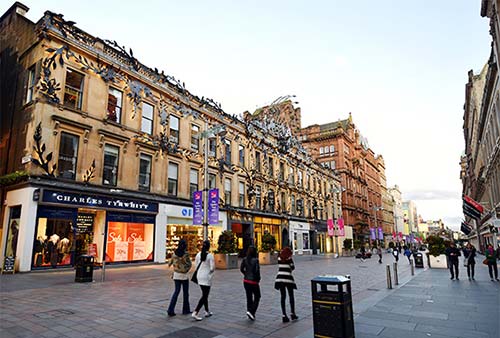
Buchanan Street has a friendly vibe with an abundance of street musicians. As you stroll uphill, keep an eye out for a few big landmarks: Immediately on your left, Frasers (#45) is a vast and venerable department store, considered the “Harrods of Glasgow.” The Argyll Arcade (#30, opposite the upper end of Frasers), dating from 1827 with a proud red-sandstone facade and lots of jewelry merchants, is the oldest arcade in town. Princes Square (at #48, just past Argyll Arcade) is a classic old building topped with a modern steel peacock and foliage. Step inside to see the delightfully modernized Art Nouveau atrium.
Back on Buchanan Street, at your next left, peer down Mitchell Lane at The Lighthouse. This building was Charles Rennie Mackintosh’s first public commission (built in 1895, when Mackintosh was in his late twenties). It was originally built to house the Glasgow Herald newspaper; these days, it sometimes hosts design exhibitions, possibly including a small exhibit on Mackintosh’s contributions to Glasgow architecture (renovations are planned, and it may be closed when you visit). The Lighthouse’s water tower (also designed by Mackintosh) has 135 spiral steps inside, which you may be able to climb to reach a wraparound balcony for 360-degree views of the city (check locally).
• Continuing along Buchanan, just beyond Mitchell Lane look for Exchange Place on the right. Head through the large archway into...
3 Royal Exchange Square
The centerpiece of this square—which marks the entrance to Merchant City, a jumble of retail amid remnants of medieval Glasgow—is a stately, Neoclassical, bank-like building. This was once the private mansion of one of Glasgow’s tobacco lords, the super-rich businessmen who reigned here through the 1700s, stomping through the city with gold-tipped canes. During the port’s heyday, these entrepreneurs helped Glasgow become Europe’s sixth-biggest city—number two in the British Empire.
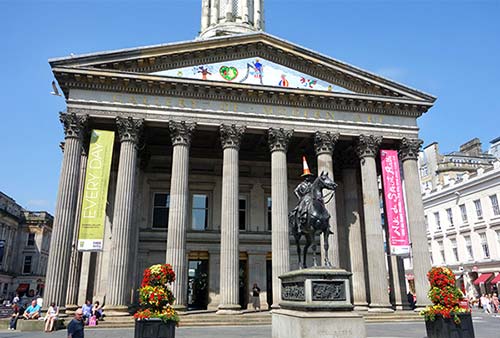
Today the mansion houses the Glasgow Gallery of Modern Art, nicknamed GoMA. Circle around the building to the main entry (at the equestrian statue of the Duke of Wellington, often creatively decorated as Glasgow’s favorite conehead), and step back to take in the full Neoclassical facade. On the pediment, notice the funky, mirrored mosaic celebrating the miracles of St. Mungo—an example of how Glasgow refuses to take itself too seriously. The temporary exhibits and installations inside GoMA are generally forgettable, but they occasionally show works by well-known artists such as Andy Warhol, or engaging topics such as Black artists in Scotland (free, Mon-Thu and Sat 10:00-17:00, Fri and Sun from 11:00, glasgowlife.org.uk).
• Facing the fanciful GoMA facade, turn right up Queen Street. Within a block, you’ll reach...
4 George Square
This large plaza is lined with notable buildings, such as the Queen Street Station and the Glasgow City Chambers (it’s the big Neoclassical building standing like a secular church to the east; pop in to see its grand ground floor). The monument in front of the City Chambers honors Glaswegians killed fighting in the two world wars.
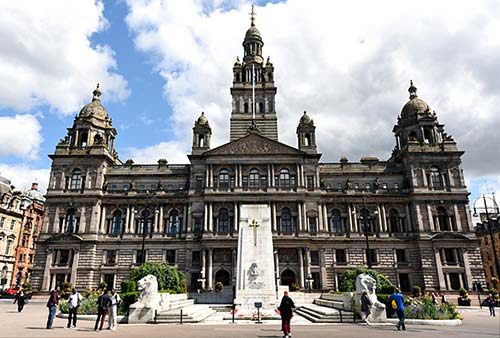
As with other downtown areas, George Square has been slated for improvement for many years—in this case, creating a more parklike space. During the project, the square’s statues were removed for cleaning and stored—a plan that generated some controversy. The square may still be closed off for construction when you visit, but the pedestrian area along the perimeter is expected to remain open.
Historically, the square has been decorated with a Who’s Who of statues depicting great Glaswegians—James Watt (sitting in a chair; he perfected the steam engine that helped power Europe into the Industrial Age), as well as two of Scotland’s top literary figures: Robert Burns and Sir Walter Scott (capping the tallest pillar in the center). You may also see twin equestrian statues: Prince Albert and a youthful Queen Victoria.
• If the square is closed off, you can continue on Queen Street along the west side of the square, turn left onto West George Street, and cross Buchanan Street to the tall church in the middle of...
5 Nelson Mandela Place
This first public space named for Nelson Mandela honors the man who, while still in prison, helped bring down apartheid in South Africa. The square was renamed in the 1980s while apartheid was still in place—and when the South African consulate was here. Anyone sending the consulate a letter had to address it with the name of the man who embodied the anti-apartheid spirit: Mandela. (Glasgow, long nicknamed Red Clydeside for its socialist politics and empathy for the working class, is quick to jump on progressive causes.)
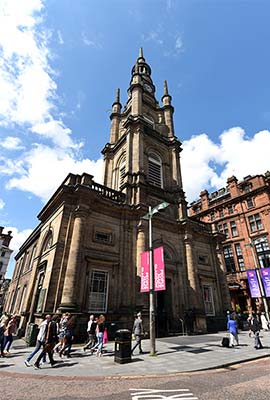
The area around St. George’s Church features some interesting bits of architectural detail. Facing the church’s left side are four arches and three circular friezes of the former Stock Exchange (with a Neo-Gothic facade, built in 1875). These idealized heads represent the industries that made Glasgow prosperous during its prime: building, engineering, and mining. (Two more, around the corner on Buchanan, represent art and science.)
Around the back of the church, find the Athenaeum, the sandy-colored building at #8 (notice the low-profile label over the door). Now an office building, this was founded in 1847 as a school and city library during Glasgow’s golden age. (Charles Dickens gave the building’s inaugural address.) Like Edinburgh, Glasgow was at the forefront of the 18th-century Scottish Enlightenment, a celebration of education and intellectualism. The Scots were known for their extremely practical brand of humanism; all members of society, including the merchant and working classes, were expected to be well educated. Look above the door to find the symbolic statue of a reader sharing books with young children, an embodiment of this ideal.
• Return to the big, pedestrianized Buchanan Street in front of the church. Head uphill.
6 Buchanan Street to Sauchiehall Street (More of the Style Mile)
A short distance uphill is the glass entry to Glasgow’s subway. Soon after, on the right, you’ll pass the Buchanan Galleries, a mall that sprawls across several city blocks. (It may be closed for redevelopment when you visit.)
If you’re interested in whisky, you could take a detour to your left to The Good Spirits Company—see “Shopping in Glasgow,” later (to find it, a block before the top end of the Buchanan Galleries, head left down Bath Street a block and a half to #23, where stairs on the left lead down into the shop).
• Continue uphill along Buchanan Street to the top.
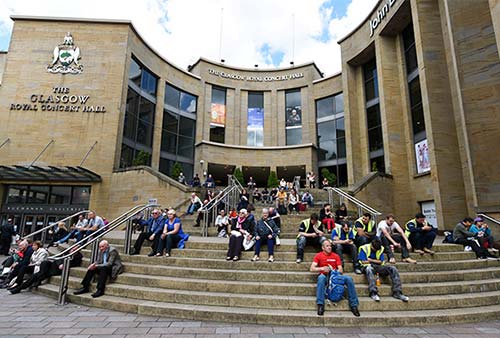
At the top of Buchanan Street stands the Glasgow Royal Concert Hall. Its steps are a favorite perch where local office workers munch lunch and enjoy the street scene. The statue is of Donald Dewar, who served as Scotland’s first-ever “First Minister” after the Scottish Parliament reconvened in 1999 (it had been part of the British Parliament—since 1707).
• From here, the Style Mile zags left onto Sauchiehall Street. Our last stop, the Mackintosh at the Willow tearoom, is six blocks ahead. This part of the Style Mile is struggling, with vacant storefronts and down-and-out people, although an effort is underway to improve the pedestrian experience along Sauchiehall and other nearby streets with benches, trees, and the like. As you walk, you’ll pass “pound shops” (the equivalent of “dollar stores”), bulk candy stores, panhandlers, buskers, souvenir shops, and a bookstore. Just before the end of the pedestrian zone, on the left side (at #217), is the...
7 Mackintosh at the Willow
Tearooms were hugely popular during the industrial boom of the late 19th century. As Glasgow grew, more people moved to the suburbs, meaning that office workers couldn’t easily return home for lunch. And during this age of Victorian morals, the temperance movement was trying to discourage the consumption of alcohol. Tearooms were designed to be an appealing alternative to eating in pubs.
This tearoom is in the old Willow Tea Rooms building, an Art Nouveau masterpiece designed by Charles Rennie Mackintosh. The Scottish architect made his living from design commissions, including multiple tearooms for businesswoman Kate Cranston. He took his theme for this 1903 café from the name of the street it’s on—saugh is Scots for willow—and the restored version you see today is an exact replica of the original. While you can stop in to peruse the gift shop or see an exhibit, reservations are a must for a tour or teatime; see “Sights in Glasgow,” later, for details on how to visit. (You’ll see another “Willow Tea Rooms” inspired by Mackintosh on Buchanan Street, but it is not associated with the original tearooms.)
• Our walk ends here. Two additional sights lie within a 10-minute stroll (in different directions). The remarkably preserved Tenement House offers a fascinating glimpse into Glasgow lifestyles in the early 1900s. And the National Piping Centre goes beyond the clichés and provides a better appreciation for the history and musicality of Scotland’s favorite instrument. Both are described later, under “Sights in Glasgow.”
WEST END WALK
Glasgow’s West End—just a quick subway, bus, or taxi ride from downtown—is the city’s top residential neighborhood. As in so many British cities, the western part of town—upwind of industrial pollution—was historically the most desirable. Today this area has great restaurants and nightlife, and fine accommodations. The main streets are Byres Road, running north-south, and Great Western Road, running east-west.
This walk begins at the Hillhead subway stop, meanders through dining and residential zones, explores some grand old university buildings (and related museums), and ends with a wander through the park to the Kelvingrove Museum—Glasgow’s top museum (to trace the route of this walk, see the “Glasgow’s West End” map, later). Since this walk is most worthwhile as a scenic way to connect several important museums, it’s best when they’re open.
• Start at the Hillhead subway station. Pop in for a moment to enjoy the...
Hillhead Subway Mural: This delightful mural, created by the respected Glasgow artist and writer Alasdair Gray, celebrates the fun-loving, artistic, Sesame Street spirit of the neighborhood you’re about to explore. You’ll see a giant cartoon “map” illustrating many of the landmarks we’re about to walk by, flanked by creative depictions of the “folks of all kinds” who inhabit those buildings. This is worth lingering over—its many details reward close inspection, and it puts you in the right frame of mind for our West End ramble. Gray, a colorful character who lived and worked in the West End for many decades, left a few murals around the Hillhead neighborhood, including some in the Òran Mór performance space (see next) and several on the walls of Ubiquitous Chip (see listing in “Eating in Glasgow,” later).
• Exiting the station, turn right and walk four short blocks up...
Byres Road: A byre is a cowshed. So, back when this was farmland outside the big city, cattle were housed along here. Today, Byres Road is a lively thoroughfare through this trendy district. A block before the big intersection, notice the Waitrose supermarket on the left. In Britain, this upscale grocery is a sure sign of a posh neighborhood.
Approaching the corner with Great Western Road, you’ll see a church spire on the right. Dating from 1862, this former church has been converted into a restaurant and performance space called Òran Mór (Gaelic for “The Great Music”). Ask to see the colorful murals by Alasdair Gray on the ceiling of the upstairs auditorium; one of the staff will be happy to direct you if the space isn’t occupied with an event. Consider a drink or meal in their pub (try some whisky—they have more than 300 varieties). Also check what’s on while you’re in town, as this is a prime music and theater venue (or time your walk to take advantage of “a play, a pie, and a pint” for lunch, described later under “Eating in Glasgow”—smart to book ahead).
• If the weather’s decent, cross Great Western Road and head into the...
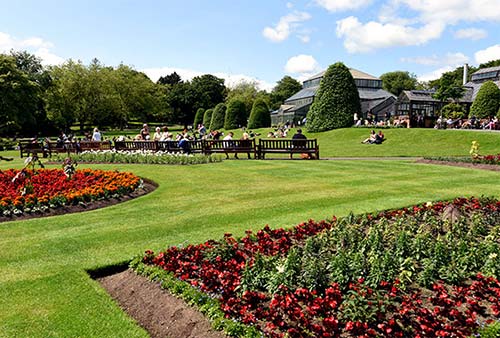
Glasgow Botanic Gardens: This inviting parkland is Glaswegians’ favorite place to enjoy a break from the bustling city. And, like many things in Glasgow, it’s free. Locals prize their generous parklands, which offer a needed break from Glasgow’s heavy industry. After all, even the city’s name comes from the Gaelic for “the dear green place.”
Before going into the park, pause at the red-brick and iron entrance gate. On the gate on the left, look for Glasgow’s quite-busy city seal, which honors St. Mungo, the near-legendary town founder. The jumble of symbols (a bird, a tree, a bell, and a salmon with a ring in its mouth) recalls Mungo’s four key miracles. Ask any Glaswegian to tell you the tales of St. Mungo—they learn it all by heart. The city motto, “Let Glasgow Flourish,” is apt—particularly given its rejuvenation following a long, crippling period of industrial rot. Glasgow’s renaissance kicked off with an ambitious 1989 garden festival in a disused former shipyard. Now the city is one of Europe’s trendiest success stories. Let Glasgow flourish, indeed.
Head into the park. If it’s sunny, the grass will be jammed with people enjoying some rare rays. Scottish lads wait all winter for the day when they can cry, “Sun’s oot, taps aff!” and pull off their shirts to make the most of it.
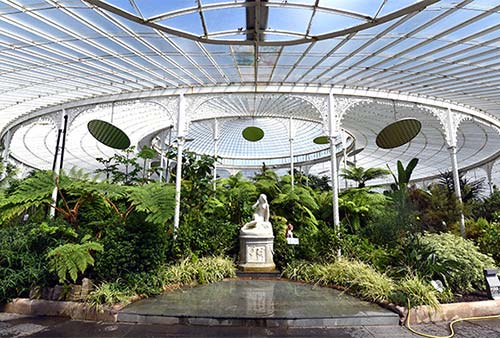
In addition to the finely landscaped gardens, the park has two inviting greenhouse pavilions—both free and open to the public. When the clouds roll in and the weather turns rotten—which is more the status quo—these warm, dry areas become quite popular. The big white one on the right (known as Kibble Palace, from 1873) is the most elegant, with a classical statue welcoming you among the palm fronds (but beware the killer plants, enclosed by a door to the left as you enter). If your timing is right, join garden volunteers for a free guided tour starting at the Kibble Palace front entrance (Tue, Thu, and Sat at 11:00, Thu also at 14:00). A short walk behind the Kibble Palace takes you to public WCs and an inviting path leading down into the river valley and over a footbridge.
When you’re done in the park, head back out the way you came in. Back on the street, before crossing Great Western Road, go right a few steps to find the blue police call box. Once an icon of British life, these were little neighborhood mini offices where bobbies could store paperwork and equipment, use the telephone, and catch up with each other. These days, some of the call boxes are being repurposed as coffee shops, ice cream stands, and time machines.
• Cross back over Great Western Road and backtrack (past the Òran Mór church/restaurant) one block down Byres Road. Turn left down Vinicombe Street (across from the Waitrose). Now we’ll explore...
Back Streets West End: Peek inside the Hillhead Bookclub—a former cinema that’s been converted into a hipster bar/restaurant serving affordable food (on your right; described later, under “Eating in Glasgow”). A half-block after that, turn right (on poorly marked Cranworth Street) and walk along the row of red-sandstone tenements. While that word has negative connotations stateside, here a “tenement” is simply an apartment building. And judging from the grand size, bulging bay windows, and prime location of these, it’s safe to say they’re far from undesirable. Many are occupied by a single family, while others are subdivided into five or six rooms for students (the university is right around the corner). Across the street from this tenement row (at #12) is a baths club—a private swimming pool, like an exclusive health club. Historically, most people couldn’t afford bathing facilities in their homes, so they came to central locations to get clean every few days (or weeks). Today, it’s the wealthy—not the poor—who come to places like this.
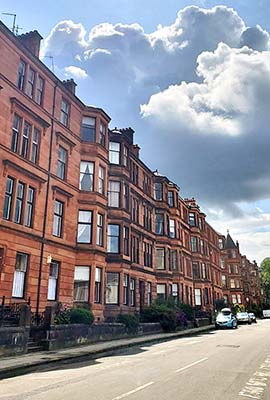
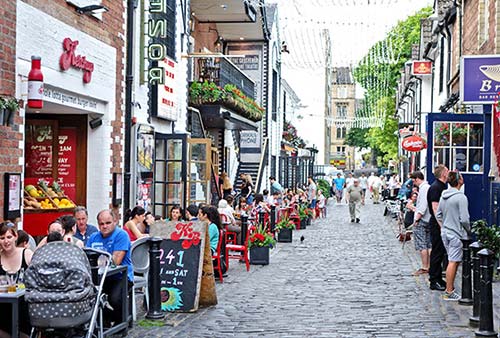
After the baths, turn right down Cresswell Street. A half-block later, turn left down Cresswell Lane—an inviting, traffic-free, brick-lane shopping and dining zone. While the Style Mile downtown is packed with chain stores, here you’ll find charming one-off boutiques.
Browse your way to the end of the lane, cross the street, and continue straight to the even more appealing Ashton Lane, strung with fairy lights. Scout this street and pick a place to return for dinner tonight. Fancy a film? Halfway down the street on the right, the Grosvenor Cinema shows both blockbusters and art-house fare (see “Entertainment in Glasgow,” later).
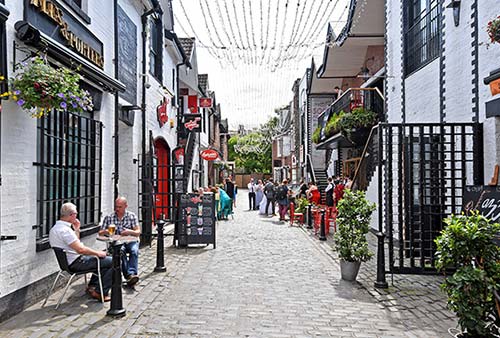
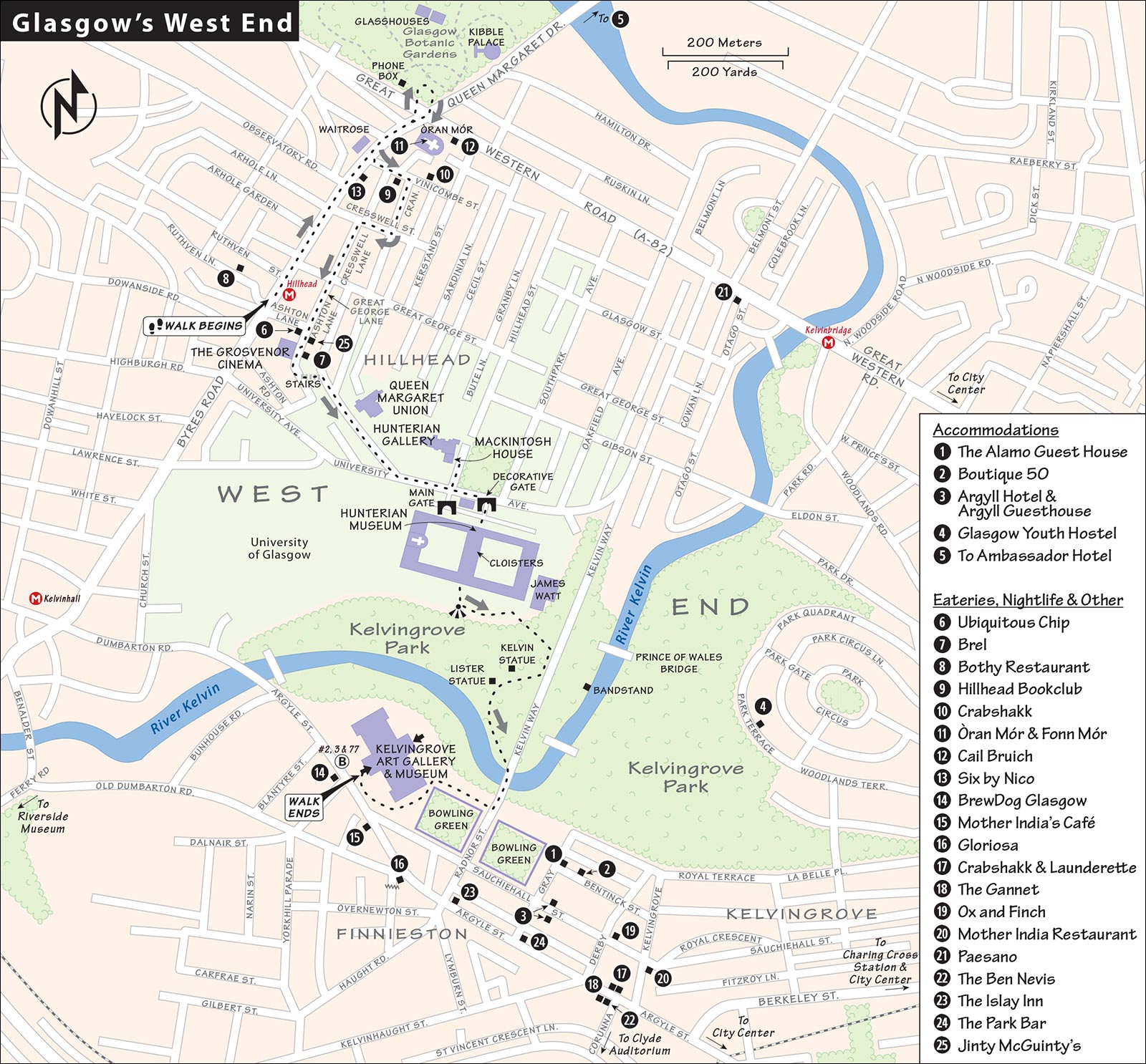
• When you reach the end of the cobbled lane, take a very sharp left and follow the path that leads along the idyllic (and recommended) Brel beer garden (on your left). This path leads to some stairs. Take them, and at the top, turn right along the road. You’re now walking through the modern part of the...
University of Glasgow Campus: Founded in 1451, this is Scotland’s second-oldest university (after St. Andrews). Its 28,000 students sprawl through the West End. Unlike the fancy “old university” buildings, this area is gloomy and concrete. The ugly, gray building on your left is the Queen Margaret Union, with a music venue that has hosted several big-name bands before they were famous—from Nirvana to the Scottish alternative-rock band Franz Ferdinand.
• Eventually you’ll reach a wide cross street, University Avenue. Turn left up this street and walk two more blocks uphill. At the traffic light, the Hunterian Gallery and Mackintosh House are just up the hill on your left, and the Hunterian Museum is across the street on the right.
Hunterian Gallery and Mackintosh House: First, stop in at the Hunterian Gallery and ask about touring the Mackintosh House. Usually you can walk right in, but if there’s a wait, you can kill time by touring the Hunterian Gallery (which shares an entry lobby). Both of these are worthwhile if you have the time and energy (and are described under “Sights in Glasgow,” later).
• When you’re done here, head for the Hunterian Museum in the university’s big, old, main building across University Avenue. Instead of going through the main gate, go to the left end of the building facing the street to find a more interesting decorative gate.
University of Glasgow Main Building: Take a good look at the gate, which is decorated with the names of illustrious alumni. Pick out the great Scots you’re familiar with: James Watt, King James II, Adam Smith, Lord Kelvin, William Hunter (the namesake of the university’s museums), and Donald Dewar, a driving force behind devolution who became Scotland’s first “First Minister” in 1999.
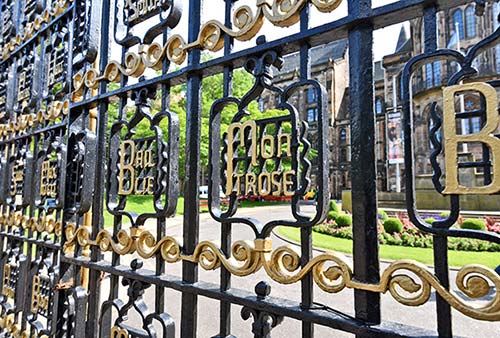
Go through the gate and face the main university building. Stretching to the left is Graduation Hall, where commencement takes place. Head straight into the building through the entrance to the right of the university gift shop, ride the elevator to floor 4, and enjoy the Hunterian Museum (for visiting information, see here).
When you’re done at the Hunterian Museum, find the grand staircase down (just off the main hall housing the Antonine Wall exhibit). You’ll emerge two floors down into the atmospheric, Neo-Gothic cloisters that support the wing separating the two quads. These are modeled after the Gothic cloisters in the lower chapel of Glasgow Cathedral, across town. This is flanked by twin quads, enclosed by the enormous ensemble of university buildings. Take a moment to explore the inviting lawns and grand architecture, and enjoy pretending you’re a student for a few minutes. Then head out the door at the bottom of the cloisters (at the opposite end from where you entered; if that’s closed, find a door at the bottom of either one of the quads).
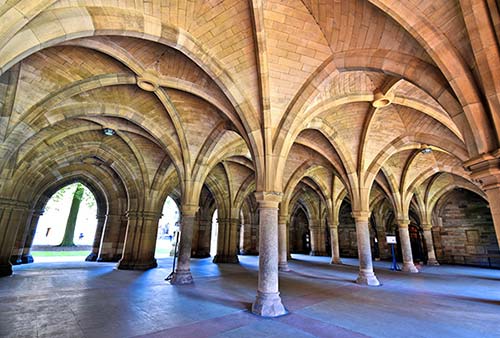
Leaving the university complex, head to the tall flagpole on a bluff overlooking a grand view. The turreted building just below is the Kelvingrove Museum, where this walk ends. (If you get turned around in the park, just head for those spires.)
• From the flagpole, turn left and walk past the end of the big old building and then past a newer building named after James Watt. Head down the stairs leading through the woods on your right. When you reach the road with some car traffic, turn right along it for a few yards, then—as soon as you can—angle to the right back into the green space of...
Kelvingrove Park: Another of Glasgow’s favorite parks, this originated in the Victorian period, when there was a renewed focus on trying to get people out into green spaces. One of the first things you’ll come to is a big statue of Lord Kelvin (1824-1907). Born William Thomson, he chose to take the name of the River Kelvin, which runs through Glasgow (and gives its name to many other things here, including the museum we’re headed to). One of the most respected scientists of his time, Kelvin was a pioneer in the field of thermodynamics, and gave his name (or, actually, the river’s) to a new, absolute unit of temperature measurement designed to replace Celsius and Fahrenheit.
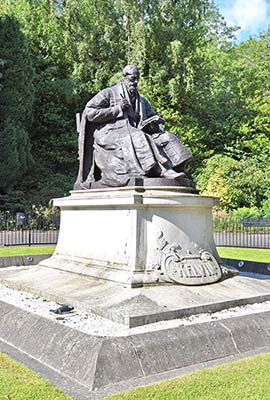
Just past Kelvin, bear left at the statue of Joseph Lister (1827-1912, of “Listerine” fame—he pioneered the use of antiseptics to remove infection-causing germs from the surgical environment). Head in the direction Lister’s left toe is pointing, and you’ll wind up crossing the bridge over the River Kelvin. Once across the bridge, turn right toward the museum. You’ll walk along a pleasant bowling green that was built for the Commonwealth Games that Glasgow hosted in 2014. They keep it free and open to anyone—hoping to create popular interest in this very old and genteel sport (see here).
Now take some time to explore the Kelvingrove Museum, described on here.
• When you’re finished at the museum, exit out the back end, toward the busy road. Several recommended restaurants are ahead and to the left, in the Finnieston neighborhood (see here). Or, if you’d like to hop on the subway, just turn right along Argyle Street and walk five minutes to the Kelvinhall station.
Sights in Glasgow
CATHEDRAL PRECINCT, WITH A HINT OF MEDIEVAL GLASGOW
▲St. Mungo Museum of Religious Life and Art
▲Hunterian Gallery and Mackintosh House
▲▲Kelvingrove Art Gallery and Museum
Highland Cattle at Pollok Country Park
DOWNTOWN
▲▲Tenement House
Here’s a chance to drop into a perfectly preserved 1930s-era middle-class residence. The National Trust for Scotland bought this otherwise ordinary row home, located in a residential neighborhood, because of the peculiar tendencies of Miss Agnes Toward (1886-1975). For five decades, she kept her home essentially unchanged. The kitchen calendar is still set for 1935, and canisters of licorice powder (a laxative) still sit on the bathroom shelf. It’s a time-warp experience, where Glaswegians can learn how their forebears grew up.
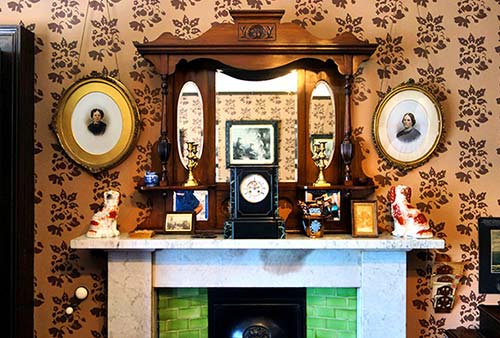
Cost and Hours: £10, daily 10:00-17:00, guidebook-£3, 145 Buccleuch Street (pronounced “ba-KLOO”), down from the top of Garnethill, +44 141 333 0183, nts.org.uk/visit/places/the-tenement-house.
Visiting the House: Buy your ticket on the main floor, and poke around the little museum. You’ll learn that in Glasgow, a “tenement” isn’t a slum, it’s simply an apartment house. Tenements like these were typical for every class except the richest. Then head upstairs to the apartment, which is staffed by caring volunteers. You may need to ring the original brass doorbell to be let in.
Explore the four little rooms once inhabited by Agnes, a typist, and her mother, a dressmaker (you’ll see her old sewing machine and the flexible metal corsets she used to make for women who actually needed to move). Imagine a world without electricity (those are gas lights): Miss Toward was a late adopter, making the leap to electricity only in 1960. Ask about the utility of the iron stove. Ponder the importance of that drawer full of coal and how that stove heated her entire world. Ask why the bed is in the kitchen. As you look through the rooms laced with Victorian trinkets—such as the ceramic dogs on the parlor’s fireplace mantle—consider how different they are from Mackintosh’s stark, minimalist designs from the same period. Miss Toward’s clothes and trinkets are switched up throughout the year to match the changing of the seasons. Across the hall from the apartment is a room with an interesting sampling of Miss Toward’s letters. You may be able to try writing something yourself using an old dip pen and ink pot.
▲National Piping Centre
If you consider bagpipes a tacky Scottish cliché, think again. At this small but insightful museum, you’ll get a scholarly lesson in the proud history of the bagpipe. For those with a healthy attention span for history or musical instruments—ideally both—it’s fascinating. April through early August, on Fridays and Saturdays at 12:00, a kilt-clad piper is often on hand to perform, answer questions, and show you around the collection (confirm these times before you go). He or she will even give you a lesson on how to play. At other times, if it’s quiet, ask the ticket sellers to tell you more—some are bagpipe students at the music school across the street. The center also offers a shop, lessons, a restaurant, and accommodations.
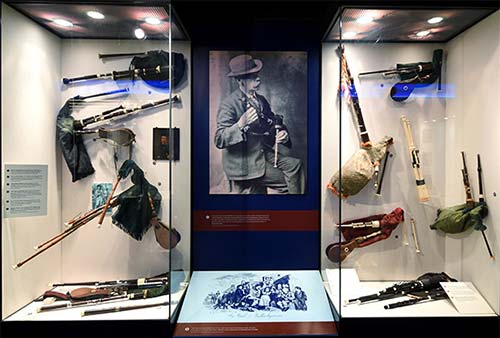
Cost and Hours: £5, Mon-Fri 9:00-17:00, Sat until 15:00, closed Sun, 30 McPhater Street, +44 141 353 0220, thepipingcentre.co.uk.
Visiting the Museum: The collection is basically one big room packed with well-described exhibits, including several historic bagpipes. You’ll learn that bags were added to pipes during Roman times in order to sustain the sound, and bagpipes appeared in Scotland by around 1400; that Lowlands bagpipes were traditionally bellows-blown rather than lung-powered; and that Scottish bagpipes played a role not only in warfare and dance but even in high-society chamber music. The craft of bagpipemaking also gets its due—notice the mid-20th-century photos of a Glasgow bagpipe workshop. You’ll also learn about the tradition of bagpipe competitions around Scotland, and see bagpipes from countries across Europe and northern Africa. The 15-minute film shown at the end of the room sums up the collection helpfully. They also have chanters and a practice set of bagpipes in case you want to try your hand.
Mackintosh at the Willow
Famed architect Charles Rennie Mackintosh made his living from design commissions, including these tearooms in an Art Nouveau building he designed. Now beautifully restored, the Willow is a major sight for Mackintosh fans. Sign up for a tour, have lunch or tea, peruse the gift shop, or visit the excellent connected exhibit.
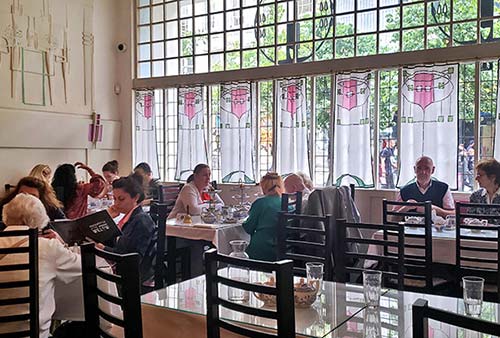
Cost and Hours: Tearoom daily 9:00-17:00; exhibit-£10, daily from 9:00; £15 tours available daily in summer at 9:00, 10:00, and 11:00, less often off-season; +44 141 204 1903, mackintoshatthewillow.com [URL inactive].
Visiting the Tearoom: In the design of these tearooms, there was a meeting of two (very modern) minds—those of Mackintosh and entrepreneur Kate Cranston. In addition to giving office workers an alternative to pubs, Cranston wanted a place where women could gather while unescorted—in a time when traveling solo could give a woman a less-than-desirable reputation. An ardent women’s rights supporter, Cranston requested that the rooms be bathed in white, the suffragettes’ signature color. For real aficionados, the upstairs Salon de Luxe dining room is accessible by guided tour or by reserving a 14:00 teatime. Consider how, after World War I, this space fell into a series of less glamorous uses, including as a department store; the Willows Trust spent four years meticulously restoring it. Now, it appears just as it did in Mackintosh’s day, though most features (such as the chairs and the doors) are reproductions of the fragile originals.
Visiting the Exhibit: The concise, smartly presented multimedia exhibit is worth the price of admission. And, now that Mackintosh’s masterpiece School of Art building has burned down, the exhibit’s role in telling his story is even more important. Displays cover the history of this place, the tradition of afternoon tea, and Mackintosh’s work for Cranston. First, the stage is set for 1903 Glasgow, explaining the role of tea in a changing society. (At the time, the average person steeped six pounds worth of tea in their cups per year.) You can even dress up in turn-of-the-20th-century garb for a photo op. Upstairs, you learn more about Cranston and Mackintosh. The excellent short film uses virtual architectural plans to explain how Mackintosh’s genius found expression in this project.
CATHEDRAL PRECINCT, WITH A HINT OF MEDIEVAL GLASGOW
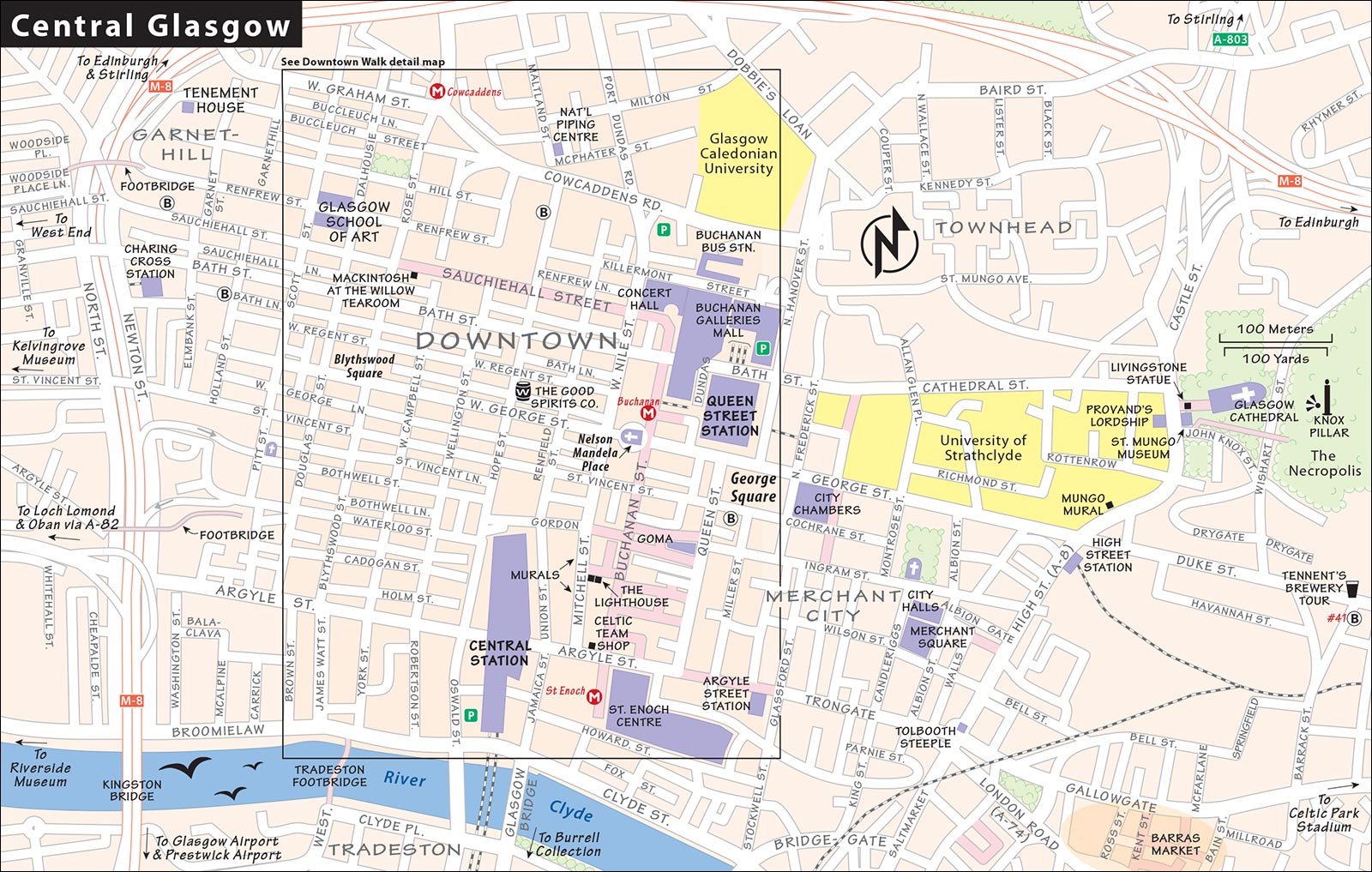
Very little remains of medieval Glasgow, but a visit to the cathedral and the area around it—to the east of downtown—is a visit to the birthplace of the city (see the “Central Glasgow” map, earlier).
The first church was built here in the seventh century. Today’s towering cathedral is mostly 13th-century—the only great Scottish church to survive the Reformation intact. Nearby, the Provand’s Lordship is Glasgow’s sole secular building dating from the Middle Ages. The St. Mungo Museum of Religious Life and Art, built on the site of the old Bishop’s Castle, covers the spectrum of religions. And the Necropolis, blanketing the hill behind the cathedral, provides an atmospheric walk through a world of stately Victorian tombstones. From there you can scan the city and look down on the brewery where Tennent’s Lager (a longtime Glasgow favorite) has been made since 1885. And, if the spirit moves you, hike on down and tour the brewery (described later).
As you face the cathedral, the St. Mungo Museum is on your right (with handy public WCs), the Provand’s Lordship is across the street from St. Mungo, and the Necropolis is behind the cathedral and to the right. The brewery is a 10-minute walk away.
Getting Here: From Buchanan Street, turn east on Bath Street, which soon becomes Cathedral Street, and walk about 15 minutes (or hop a bus along the main drag—try bus #19, #38 or #57, confirm with driver). To head to the Kelvingrove Museum after your visit, from the cathedral, walk two blocks up Castle Street and catch bus #19 (on the cathedral side).
▲Glasgow Cathedral
This blackened, Gothic church is a rare example of an intact pre-Reformation Scottish cathedral. (It was once known as “the Pink Church” for the tone of its stone, but with Industrial Age soot and modern pollution, it blackened. Cleaning would damage the integrity of the stone structure, so it was left black.) The zealous Reformation forces of John Knox ripped out the stained glass and ornate chapels of the Catholic age, but they left the church standing. The cathedral is aching to tell its long and fascinating story and volunteers are standing by to do just that.
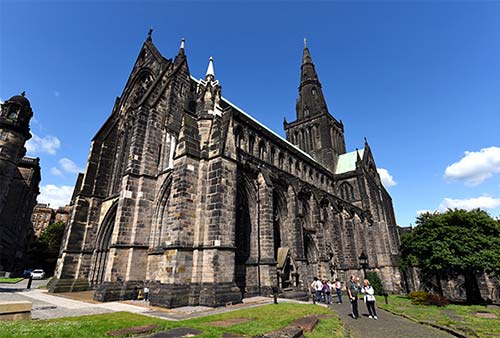
Cost and Hours: Free; Mon-Sat 9:30-17:00, Sun from 13:00, shorter hours Oct-March; ask about their free volunteer-led tours and/or rent the £3 audioguide (£2 if downloaded to your smartphone in advance); near junction of Castle and Cathedral Streets, +44 141 552 6891, historicenvironment.scot.
Visiting the Cathedral: Inside, look up to see the wooden barrel-vaulted ceiling, which becomes even more beautiful as it extends over the choir (“quire”).
In the middle of the church, the burly stone barrier is a choir screen—the only pre-Reformation screen surviving in Scotland. It divided the common people from the priests and big shots of the day, who got to worship closer to the religious action.
Continue straight ahead into the choir and take a good look at the stained glass, which dates mostly from the 19th century. The second window on the right side of the choir, celebrating the 14 trades of Glasgow (try to find them), dates from 1951. Left of that, a set of three windows tells the story of St. Mungo retrieving a ring from the mouth of a fish (it’s a long story).
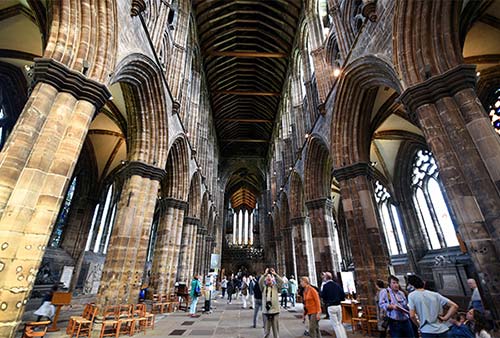
Walk to the middle of the choir and appreciate the east end (over the main altar), with the four evangelists presiding high above in stained glass. Two seats (with high backs, right of altar) are reserved for the British monarchs.
Head back out of the choir and take either set of stairs down into the lower church, where the central altar sits upon St. Mungo’s tomb. Mungo was the seventh-century Scottish monk and founder of Glasgow who established the first wooden church on this spot and gave Glasgow its name. Notice the highly decorative ceiling bosses (caps where the ribs come together), some with dragon carvings.
Nearby: In front of the cathedral (near the street), you’ll see an attention-grabbing statue of David Livingstone (1813-1873). Livingstone—the Scottish missionary/explorer/cartographer who discovered a huge waterfall in Africa and named it in honor of his queen, Victoria—was born eight miles from here.
▲St. Mungo Museum of Religious Life and Art
This secular, city-run museum, just in front of the cathedral, aims to promote religious understanding. Built in 1990 on the site of the old Bishop’s Castle, it provides a handy summary of major and minor world religions, showing how each faith handles various rites of passage across the human life span: birth, puberty, marriage, death, and everything in between and after. Start with the 10-minute video overview on the first floor, marvel at angel depictions from cultures around the world on the second floor, and finish with a great view from the top floor of the cathedral and Necropolis. Ponder the Zen Buddhist garden out back as you leave.
Cost and Hours: Free; Mon-Thu and Sat 10:00-17:00, Fri and Sun from 11:00; free WCs downstairs, 2 Castle Street, +44 141 276 1625, glasgowlife.org.uk/museums.
Nearby: To view a modern-day depiction of St. Mungo, walk two minutes down High Street from the museum to a building-sized mural by the artist Smug.
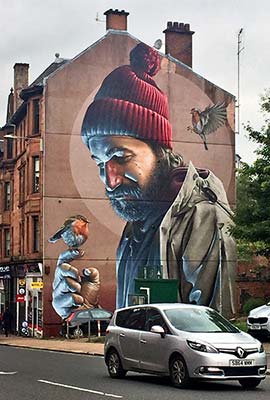
Provand’s Lordship
With low beams and medieval decor, this creaky home—supposedly the oldest house in Glasgow—is the only secular building surviving in Glasgow from the Middle Ages. On three floors it displays the Lifestyles of the Rich and Famous...circa 1471. A recent restoration to preserve the structure has left the exterior with a lighter, smoother surface than visitors might expect of a medieval building. The site’s caretakers will explain that that’s how it likely looked when it was built; the stones that gave it its Old World finish were added some time later. To begin, sit down and watch the 10-minute video (ground floor). The interior, while sparse and stony, shows off a few pieces of furniture from the 16th, 17th, and 18th centuries. Be sure to check out the paintings of historic Glasgow on the second floor. Out back, explore the St. Nicholas Garden, which was once part of a hospital that dispensed herbal remedies. Look for carved stones in each section that show the part of the body each plant is used to treat (brain, heart, and so on).
Cost and Hours: Free; Mon-Thu and Sat 10:00-17:00, Fri and Sun from 11:00; across the street from St. Mungo Museum at 3 Castle Street, +44 141 552 8819, glasgowlife.org.uk/museums.
▲Necropolis
From the cathedral, a lane leads over the “bridge of sighs” into the park filled with grand tombstones. Glasgow’s huge burial hill has a wistful, ramshackle appeal. A stroll among the tombstones of the eminent Glaswegians of the 19th century gives a glimpse of Victorian Glasgow and a feeling for the confidence and wealth of the second city of the British Empire in its glory days. You won’t be alone—the Necropolis draws locals and tourists alike to roam among the stones.
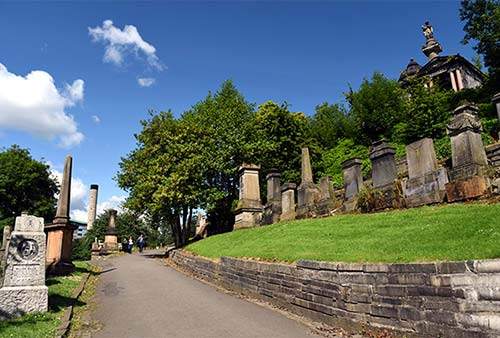
With the Industrial Age (in the early 1800s), Glasgow’s population tripled to 200,000. The existing churchyards were jammed and unhygienic. The city needed a beautiful place in which to bury its beautiful citizens, so this grand necropolis was established. Because Presbyterians are more into simplicity, the statuary is simpler than in a Catholic cemetery.
The highest pillar in the graveyard is a memorial to John Knox. The Great Reformer (who’s actually buried in Edinburgh) looks down at the cathedral he wanted to strip of all art, and even tear down. (The Glaswegians rallied to follow Knox but saved the church.) The cemetery’s main black gates are open 8:00-16:30; after that, you may be able to get in and out through a gate down on John Knox Street.
▲▲Tennent’s Brewery Tour
Tennent’s, founded in 1740, is now the biggest brewery in Scotland, spanning 18 acres. They give serious 1.5-hour tours showing how they make “Scotland’s favorite pint,” and how they fill 750 kegs per hour and 2,000 cans per minute (you’ll see more action Mon-Fri). It’s hot and sweaty inside, with 100 steps to climb on your tour. When you’re done (surrounded by “the Lager Lovelies”—cans from 1965 to 1993 that were decorated with cover girls), you’ll enjoy a pint.
Cost and Hours: £21; tours run several times a day Tue-Sun—book online, closed Mon; 161 Duke Street, tennents.com/uk/experience/tours. To head back downtown, bus #41 stops across from the brewery just off Duke Street and goes to George Square.
Nearby: If you’re still thirsty after your tour, head around the corner to Drygate Brewing, with good pub food and a wider selection of craft beers (85 Drygate—see the “Central Glasgow Hotels & Restaurants” map, later).
THE WEST END
These sights are linked by my West End Walk, earlier.
▲Hunterian Gallery and Mackintosh House
Here’s a sightseeing twofer: an art gallery offering a good look at some Scottish artists relatively unknown outside their homeland, and the chance to explore the reconstructed home of Charles Rennie Mackintosh, decorated exactly the way he liked it. For Charles Rennie Mack fans—or anyone fascinated by the unique habitats of artists—it’s well worth a visit.
Cost and Hours: Gallery—free, Tue-Sun 10:00-17:00, closed Mon, across University Avenue from the main university building, +44 141 330 4221, gla.ac.uk/hunterian; Mackintosh House—£10, same hours as gallery, last entry 45 minutes before closing. Only 12 people are allowed at a time, so there may be a short wait.
Visitor Information: First, stop by the reception desk to buy your ticket for the Mackintosh House and see if there’s a wait to get in. You’ll also need to check bags, even small ones (free lockers available). If you have time to kill, you can tour the art gallery (never a wait). When ready, step inside the house, where you’ll pick up the laminated guide before proceeding through the building.
Mackintosh House: In 1906, Mackintosh and his wife, Margaret Macdonald, moved into the end unit of a Victorian row house. Mackintosh gutted the place and redesigned it to his own liking—bathing the interior in his trademark style, a mix of curving, organic lines and rigid, proto-Art Deco functionalism. They moved out in 1914, and the house was demolished in the 1960s—but the university wisely documented the layout and carefully removed and preserved all of Mackintosh’s original furnishings. In 1981, when respect for Mackintosh was on the rise, they built this replica house about 80 yards away from the original location and reinstalled everything just as Mackintosh had designed it. You’ll see four floors: the dining room, lounge, bright-white bedroom, and—at the very top—a small exhibit of works by the artists (including a guest room commissioned for a different house) and their disciples. Each space offers glimpses into the minds of these great artists. You’ll see original furniture and decorations by Mackintosh and Macdonald, providing insight into their creative process. Be sure to ask the docents for insights—they love to share stories.
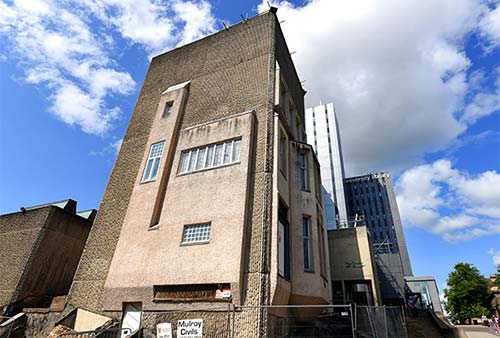
Hunterian Art Gallery: The adjacent gallery is manageable and worth exploring. Circling one floor, you’ll enjoy thoughtfully described sections organized by theme. It’s especially rewarding to seek out the modern Scottish art, focusing on two groups: the “Glasgow Boys,” who traveled to France to study just as Impressionism was coming on the scene (1880s); and, a generation later, the Scottish Colourists, who found a completely different inspiration in circa-1910 France—bright, bold, with an almost Picasso-like exuberance. The gallery has added to its collection of landscapes—look for Glasgow Green, an early 19th-century oil painting by John Knox (the artist, not the 16th-century minister) that offers a different view of the city—from the east side.
The Hunterian also has an extensive collection of portraits by American artist James Whistler—Whistler’s wife was of Scottish descent, as was Whistler’s mother. (Hey, that has a nice ring to it.) The painter always found great support in Scotland, and his heir donated his estate to the University of Glasgow. Representative pieces from each of these artists are usually on display somewhere in the gallery’s current configuration (which often includes special exhibits, too)—if you can’t find something, just ask.
▲Hunterian Museum
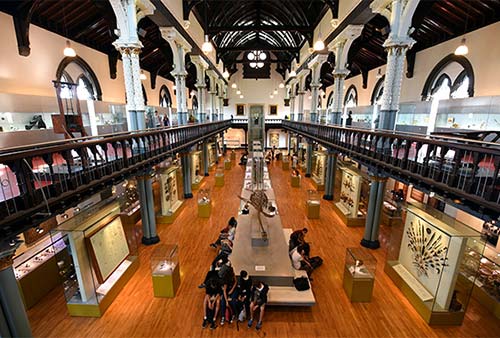
The oldest public museum in Scotland was founded by William Hunter (1718-1783), a medical researcher. Today his natural science collection is housed in a huge and gorgeous space inside the university’s showcase building. Everything is well presented and well explained. Many of the exhibits are framed with the theme “curating discomfort”: The museum (with its very old collection, historically supported in part by wealthy people who participated in the slave trade) is making a concerted effort to reevaluate how a museum presents itself—often in ways that reinforce antiquated views. To that end, the Hunterian assembled a panel of community members from diverse backgrounds to curate exhibits of their own.
Cost and Hours: Free, Tue-Sun 10:00-17:00, closed Mon, Gilbert Scott Building, University Avenue, +44 141 330 4221, gla.ac.uk/hunterian.
Visiting the Museum: The first room is filled with a perceptive exhibit on the Antonine Wall (the lesser-known cousin of Hadrian’s Wall), built in AD 142 to seal off the Picts from the Roman Empire. Ancient Roman artifacts on display include leather shoes, plumbing, weapons, and carved reliefs. But to some, the most fascinating (along the left side of this hall) are the many morbid examples of deformities—two-headed animals, body parts in jars, and so on. Ever the curious medical researcher, Hunter collected these for study, and they intrigue, titillate, and nauseate visitors to this day.
From here, proceed into the grand main hall, with two levels of thought-provoking exhibits. You’re greeted by a fossilized skeleton of the aquatic dinosaur called a plesiosaur, which resembles the Loch Ness Monster (except that the plesiosaur was real). The eclectic collection includes many more fossils, along with rocks and minerals, a large display of early medical and scientific instruments, anatomical specimens and models, archaeology exhibits, and much more. Don’t miss the fun display about—and fragment of—the meteorite that landed on the north side of Glasgow in 1804.
▲▲Kelvingrove Art Gallery and Museum
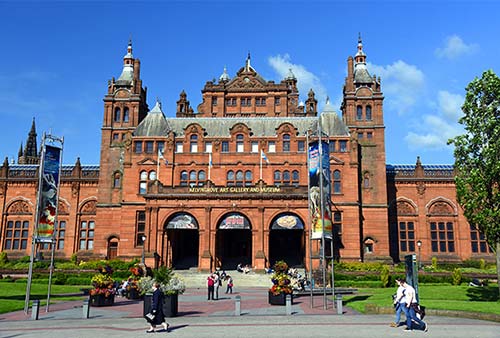
This “Scottish Smithsonian” displays everything from a stuffed elephant to paintings by the great masters and what, for me, is the city’s best collection of work by Charles Rennie Mackintosh. The well-described contents are impressively displayed in a grand, 125-year-old, Spanish Baroque-style building. The Kelvingrove claims to be one of the most-visited museums in Britain, presumably because of all the field-trip groups you’ll see here. Watching all the excited Scottish kids—their imaginations ablaze—is as much fun as the collection itself.
Cost and Hours: Free; Mon-Thu and Sat 10:00-17:00, Fri and Sun from 11:00, free tours usually at 11:00 and 14:00; Argyle Street, +44 141 276 9599, glasgowlife.org.uk/museums. A ££ cafeteria in the basement serves breakfast and lunch.
Getting There: My self-guided West End Walk leads you here from the Hillhead subway stop, or you can ride the subway to the Kelvinhall stop (when you exit, turn left and walk five minutes). Buses #2 and #3 (among others) run from Hope Street downtown to the museum. It’s also on the hop-on, hop-off bus route. No matter how you arrive, just look for the huge, turreted red-brick building.
Organ Concerts: At the top of the main hall, the huge pipe organ booms with a daily 30-minute recital at 13:00 (15:00 on Sun, 45 minutes).
Visiting the Museum: Built in 1901 to house the city collection, the museum is divided into two sections: Art (“Expression”) and Natural (“Life”), each with two floors. The symmetrical floor plan can be confusing. Pick up a map and plan your strategy.
As you walk through the museum, you might notice signs with the phrase “museum of empire.” Like the Hunterian Museum, the Kelvingrove is acknowledging the role of colonialism and the slave trade in assembling the museum’s collections—and expanding ideas of who and what should be featured in a museum. You’ll see placards around the Kelvingrove pointing out the sources of a collection or the historical context of a painting. The effort hasn’t been without its critics, but the museum so far has held fast in being up-front about its history.
The “Expression” section, in the East Court, is marked by a commotion of sculpture heads—each with a different expression—raining down from the ceiling. This half of the museum focuses on artwork, including Dutch, French, and Scottish Romanticism from the late 19th century. I’d zero in on the Scottish stuff: In the rooms on the right side of the hall, you can find an exhibit by the “Glasgow Boys,” about 20 Glaswegians who traveled to and painted in France starting in the 1880s—exposing them to the burgeoning Impressionism movement. Also look for the painting by Alasdair Gray—creator of the Hillhead subway mural featured on my West End Walk—portraying a different Glasgow neighborhood in Cowcaddens Streetscape in the Fifties. (If you visited the National Piping Centre, you were in the Cowcaddens area.)
Perhaps most interesting—straight ahead from the main hall, under the grand staircase—is the exhibit on Mackintosh and the Glasgow Style, featuring this city’s unique brand of Art Nouveau. Here you’ll see works not only by Mackintosh, but also by his collaborators—including his wife, Margaret Macdonald.
Upstairs, above the “Glasgow Boys,” is a thoughtful collection featuring “Scottish Identity in Art,” which tours the country’s scenic wonders, history, objects (including many elegant old pistols), and iconography on canvas. Also up here are the Scottish Colourists, French art, Dutch art, and a display of works by the “Glasgow Girls,” a group of women artists who studied or taught at the Glasgow School of Art in the 1890s through the early 20th century. Some were painters, while others worked with metal, embroidery, or ceramics.
Before crossing over to the “Life” section, don’t miss—in a small room upstairs, close to where the two halls meet (South Gallery)—the museum’s most famous painting, Salvador Dalí’s Christ of St. John of the Cross, which brought visitors to tears when it was first displayed here in the 1950s.
The “Life” section, in the West Court, features a menagerie of taxidermied animals (including a giraffe, kangaroo, ostrich, and moose) with a WWII-era Spitfire fighter plane hovering overhead. Branching off are halls with exhibits ranging from Ancient Egypt to prehistoric animals to “Scotland’s First Peoples” to weaponry (“Conflict and Consequence”).
Kelvingrove Lawn Bowling
For a fun and free activity surrounded by relaxed locals, try your hand at lawn bowling. There’s a mission behind the perfectly manicured greens next to the Kelvingrove Museum: Keep young people interested in the traditional sport. Lawn bowling is a lot like pétanque (popular in France); the object and scoring are the same. The balls are bigger and “biased” (lopsided on purpose to let experts throw curves).
It’s all free and tourists are welcome—and though it’s a club, they’re happy to sign you in as a nonmember. They’ll provide balls (4 per person), a court time, and a demo if you need one. While sunny weekends may be busy, you’ll always find a court on a cloudy weekday, and it’s a fine evening pastime (April-Sept Mon-Fri 9:00-21:00, Sat-Sun until 17:00, last reservation 1.5 hours before closing, +44 0141 287 5314).
AWAY FROM THE CENTER
For general locations, see the “Greater Glasgow” map, near the beginning of this chapter.
▲▲Riverside Museum
Located along the River Clyde, this high-tech, kid-friendly museum dedicated to all things transportation-related is nostalgic and modern at the same time. Visiting is a must for anyone interested in transportation and how it has shaped society.
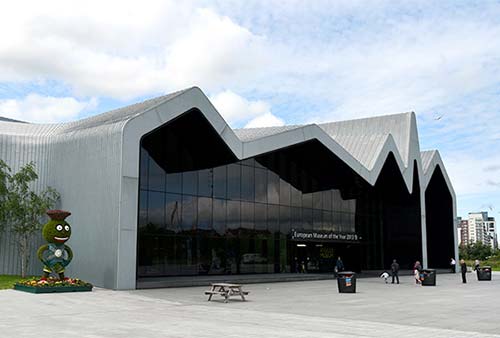
Cost and Hours: Free; Mon-Thu and Sat 10:00-17:00, Fri and Sun from 11:00; ground-floor £ café, upstairs coffee shop with basic drinks and snacks, 100 Pointhouse Place, +44 141 287 2720, glasgowlife.org.uk/museums.
Getting There: It’s on the riverfront promenade, two miles west of the city center. Bus #100 runs between the museum and George Square (1-2/hour, operated by Community Transport Glasgow), it’s about a 10-minute walk from the Partick subway stop, or you can take a taxi (£11-14, 10-minute ride from downtown). The museum is also included on the hop-on, hop-off sightseeing bus route (described earlier, under “Tours in Glasgow”).
Visiting the Museum: Most of the collection is strewn across the huge, wide-open ground floor. Upon entering, visit the info desk (to the right as you enter, near the shop) to ask about today’s free tours and activities. Also pick up a map from the info desk, as the museum’s open floor plan can feel a bit like a traffic jam at rush hour.
Diving in, explore the vast collection: stagecoaches, locomotives, double-decker trolleys, an entire wall stacked with vintage automobiles, and another with motorcycles. The city pride is almost palpable as you learn about the opening of Glasgow’s old-timey subway (Europe’s third oldest) and get an up-close look at a series of subway cars through the years, including its most recent 21st-century iteration. (Appreciate the humor of the nickname for the orange paint job introduced in the late 1970s: “A Clockwork Orange.”) Explore the collections of old toys and prams and watch a film about 1930s cinema. Stroll the re-creation of a circa-1900 main street, with video clips bringing each shop to life (there’s one about a little girl who regularly delivers her daddy’s suit to the pawn shop so the family can make ends meet). There’s also a small display, with a model of a ship and other artifacts, recognizing the significant contributions of (and discrimination against) South Asian laborers in the shipbuilding industry of the 19th and early 20th centuries.
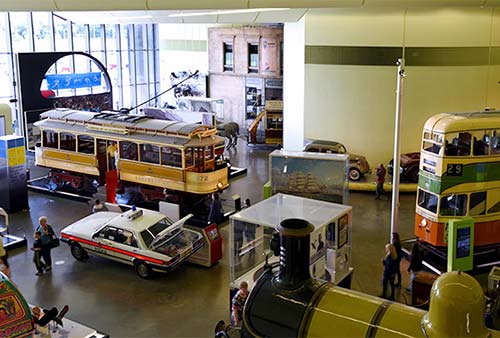
The much-smaller upstairs section has great views over the River Clyde (cross the footbridge over the trains), additional exhibits about ships built here in Glasgow (see the sidebar)—including models of two centuries’ worth of ships on a rotating conveyor—and what may be the world’s oldest bicycle. The description explains how two different inventors tried to take credit for the bike—and both were Scottish.
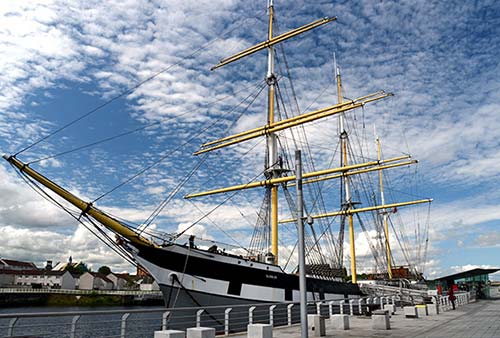
Nearby: Be sure to head to the River Clyde directly behind the museum (just step out the back door). The Glenlee, one of five remaining tall ships built in Glasgow in the 19th century (1896), invites visitors to come aboard (£5.50, daily 10:00-17:00 except Tue from 11:00, +44 141 357 3699, thetallship.com). Good exhibits illustrate what it was like to live and work aboard the ship. Explore the officers’ living quarters, then head below deck to the café and more exhibits. Below that, the cargo hold has kids’ activities and offers the chance to peek into the engine room. As you board, note the speedboat river tour that leaves from here each afternoon (£20, roughly every half-hour, 20 minutes, seaforcepowerboats.co.uk). While you’re out there, take a short detour up to the new (and already well-used) swivel pedestrian bridge over the river, just behind the Riverside Museum, near the Glenlee.
▲Burrell Collection
This eclectic art collection of the wealthy Burrell shipping family (pronounced “burl”) includes sculpture from Roman to Rodin, tapestries, furniture, Asian and Islamic works, lesser-known art by Degas and Manet, plus Cézanne, Renoir, a Rembrandt self-portrait, and an extensive collection of stained glass. The gorgeously refurbished space is an enjoyable browse—for art lovers and museum aficionados, it ranks ▲▲. Just don’t come here looking for Scottish works; the Burrells’ tastes tended more Continental.
Cost and Hours: Free; Mon-Thu and Sat 10:00-17:00, Fri and Sun from 11:00; ask about free volunteer-led tours, +44 141 287 2550, burrellcollection.com.
Getting There: It’s three miles outside the city center in Pollok Country Park (pay parking). Trains run from Glasgow Central Station to Pollokshaws West (10 minutes); from there a free shuttle bus connects to the museum (check the museum website to make sure it’s running). It’s also possible to walk from Pollockshaws West to the museum in about 15 minutes. Buses #57, #57A, and McGill’s bus #3 also get you close.
Visiting the Museum: This is an enjoyable place to simply get lost, go with the flow, and wander and discover. The collection is a little bit of this and a little bit of that—based on the tastes and whims of the people who collected it: Sir William Burrell (1861-1958) and Lady Constance Burrell (1875–1961). Further, the collection is exhibited by theme and concept, rather than chronologically—allowing disparate works, from paintings and sculpture to applied art, to be in unexpected and delightful conversation with one another. Touchscreens and video presentations throughout help to weave the story together, regardless of the order in which you’re seeing it.
Highland Cattle at Pollok Country Park
A short walk from the Burrell Collection (above), the Pollok Fold offers a rare opportunity to see adorable Highland cattle (aka hairy coos) without a trek into the countryside. Around 50 of these fluffy, horned creatures (all with individual names) roam the park’s pastures looking like they could use a bang trim. They are the prizewinning descendants of a fold established in the early 19th century by the Maxwell family, owners of the Pollok Estate. (The term “fold,” used instead of “herd,” comes from the stone structure that kept them safe in times of danger.) You may be able to join a guided walk or watch a grooming demonstration (glasgow.gov.uk/pollokcountrypark). To reach the park from central Glasgow, see the “Getting There” instructions for the Burrell Collection, earlier.
Shopping in Glasgow
The downtown center looks like one big shopping zone. The “Style Mile”—especially the stretch along Buchanan Street—has all the predictable chain stores, with a few Scottish souvenir stands mixed in. Sauchiehall Street, also part of the Style Mile, has been in decline and is less satisfying for shoppers. However, Mackintosh at the Willow has an engaging gift shop—including usable reproductions of the dishes originally used there.
For more on this area, see my Downtown Walk, and bear in mind that redevelopment plans may limit access. If you need to escape a shower, duck into Princes Square, which has four floors of shops, restaurants, and a cinema. A short detour from the Style Mile, the Glasgow Gallery of Modern Art (GoMA) has a quirky gift shop that’s fun to browse. Merchant City, just east of the downtown shopping district, has some interesting boutique and vintage stores. For vintage goods with a flea market vibe, locals like the Barras Market in the East End (Sat-Sun 10:00-16:00, roughly between Gallowgate and London Road, from Bain Street to Glasgow Cross).
In the West End’s Hillhead neighborhood, there are plenty of boutiques and shops for gifts, books, and clothing, as well as charity thrift shops. Just off Cresswell Lane (covered in my West End Walk), it’s worth poking around in De Courcy’s Arcade, a two-part warren of tiny offbeat shops.
Whisky: Get immersed in the happy world of whisky at The Good Spirits Company, a downtown shop run by two friendly young aficionados (Shane and Matthew) and their booze-geek staff. They’ll help you choose just the right whisky, or you can sign up online for one of their tasting events, though these can sell out weeks in advance (Mon-Fri 10:00-19:00, Sat until 18:00, Sun 12:00-17:00, downstairs at 23 Bath Street—a block and a half off Buchanan, +44 141 258 8427, thegoodspiritsco.com). For location, see the map on here.
Entertainment in Glasgow
Glasgow has a youthful vibe, and its nightlife scene is renowned. The city is full of live music acts and venues. Walking through the city center, it seems like you pass a club or bar on every block.
PUBS AND CLUBS
West End: You’ll find fun bars and music venues in Hillhead, on Ashton Lane and surrounding streets. Finnieston, just below the Kelvingrove Museum, is packed with trendy bars and restaurants. But it also has an old-school selection of spit-and-sawdust Gaelic pubs, some of which have live music in the evenings (see “Live Music,” later).
Downtown: Glasgow’s central business and shopping district is pretty sleepy (and can be a little unsavory) after hours, but there are a few pockets of upbeat activity—each with its own personality. Bath Street’s bars and clubs are focused on young professionals as well as students; the recommended Pot Still is a perfect place to sample Scotch whisky. Nearby, Sauchiehall Street—especially farther west, near the Glasgow School of Art—is younger, artsier, and more student-oriented. The Merchant City zone, stretching just east of the Buchanan Street shopping drag, has a slightly older crowd and a popular gay scene.
LIVE MUSIC
Glasgow has a great music scene, on its streets (talented buskers) and in its bars and clubs (including trad sessions). At many places, music begins around 21:00, though there are earlier sessions. For the latest, The Skinny is Scotland’s information-packed arts and culture magazine (theskinny.co.uk). Or check out the Gig Guide (gig-guide.co.uk, also available in print) or The List (list.co.uk).
Finnieston
The following pubs line up along Argyle Street. For locations, see the “Glasgow’s West End” map, earlier. To confirm live music schedules, check each pub’s website, consider the sources listed above, or just drop by and ask.
The Ben Nevis hosts lively, toe-tapping sessions a few times a week. It’s a good scene—full of energy but crowded. Show up early to grab a seat in this tiny pub, or be ready to stand (Wed, Thu, and Sun at 20:00, no food service—just snacks, #1147, thebennevisbar.com).
The Islay Inn has bands twice weekly—some traditional, some doing contemporary covers in trad style. On other nights you’ll find televisions blasting sports (trad sessions Mon at 20:00, music Fri and Sat at 21:00, #1256, at corner with Radnor, islayinnglasgow.com).
At The Park Bar, you’ll find live music several nights a week, mostly traditional Scottish bands and sessions (Wed-Sun around 21:00, no food, #1202, parkbarglasgow.com).
Hillhead
For locations, see the “Glasgow’s West End” map, earlier.
The Òran Mór (a former church, oran-mor.co.uk) and Hillhead Bookclub (a former cinema, hillheadbookclub.co.uk) are popular live music venues (both recommended later, under “Eating in Glasgow”).
Jinty McGuinty’s has acoustic music most nights, ranging from chart hits to Irish classics to soul and blues (cash only, daily at 21:30, 29 Ashton Lane, jintys.co.uk).
Downtown
For locations, see the “Central Glasgow Hotels & Restaurants” map, later.
Two Sundays a month at Babbity Bowster, jazz musicians take over a corner of this cute, simple, and bright pub (under a recommended B&B). The music, energy, and atmosphere are top-notch (13:00-17:00, solid pub grub, 16 Blackfriars Street, babbitybowster.com).
Sloans, hidden away through a muraled tunnel off Argyle Street, is a fun pub and eatery with outdoor tables filling an alley (see listing in “Eating in Glasgow,” later). They have ceilidh dancing instruction on Fridays in their gorgeous ballroom (£18, starts at 20:30, book ahead, 108 Argyle Street, sloansglasgow.com).
Waxy O’Connor’s is a massive, almost Disneyesque, multilevel Irish bar featuring a maze of dark, atmospheric rooms, a tree climbing up a wall, and lots of live music (usually acoustic—check their website for days/times, food available, 44 West George Street, waxyoconnors.co.uk).
MOVIES IN THE WEST END
The Grosvenor Cinema, right on Ashton Lane in the heart of the bustling West End restaurant scene, is an inviting movie theater, with cushy leather seats in two theaters showing films big and small, and with lots of special events and deals. Wine and beer are available at the theater, or you can order cocktails and warm food at the bar next door and have it delivered to your seat (21 Ashton Lane, +44 141 339 8444, grosvenorpicturetheatre.co.uk).
Sleeping in Glasgow
For accommodations, choose between the West End (neighborhoody, best variety of restaurants, easier parking, easy access to West End sights and parks but a bus or subway ride from the center and train station) and downtown (bustling by day, nearly deserted at night, close to main shopping zone and some major sights, expensive parking and one-way streets). Note many B&Bs and smaller hotels, especially in older buildings, don’t have elevators and often lack air-conditioning. If either of these are a priority, confirm before you book.
IN THE WEST END
For a more appealing experience, bunk in the West End—the upper-middle-class neighborhood just a few subway stops (or a 15-minute, £10-12 taxi ride) from downtown. As this is also one of the city’s best dining zones, you’ll likely come here for dinner anyway—so why not sleep here? My favorite in this area is the Alamo, which has the most personality. For locations, see “Glasgow’s West End” map on here.
Finnieston
These places are in an inviting residential area near the Kelvingrove Museum (not as handy to the subway, but easy by bus). They’re close to the lively Argyle Street scene, with good restaurants and fun Gaelic pubs.
££££ The Alamo Guest House faces the bowling green and tennis court. It has rich, lavish public spaces and nine delicately decorated rooms with stylish bathrooms, including three luxury suites with bathtubs (family rooms, one room with a private external bathroom, 2- or 3-night minimum preferred on weekends in peak season, 46 Gray Street, +44 141 339 2395, alamoguesthouse.com, info@alamoguesthouse.com, Tehmeena and Morad).
£££ Boutique 50 has 10 trendy, artsy rooms in a fine townhouse just off the bowling green. It has a nice “boutiquey” vibe (each room has a record player and LPs, with plenty of snacks and teas) and is well priced for the location and quality. Manager John loves to help guests with their plans (family room, hearty continental breakfast, 50 Bentinck Street, +44 141 338 6666, boutique50.co.uk, info@boutique50.co.uk).
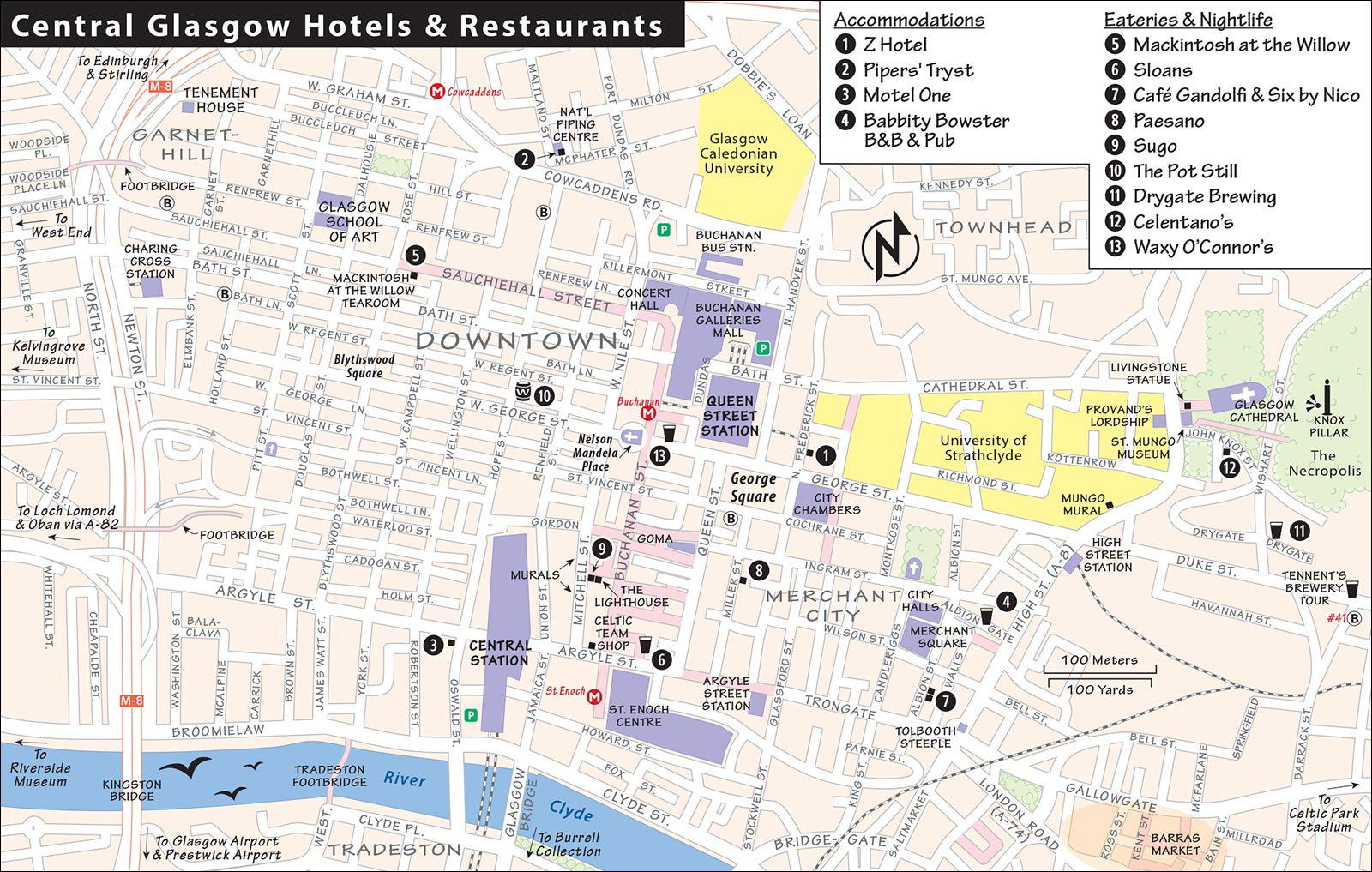
££ Argyll Hotel, with 40 rooms, and ££ Argyll Guesthouse, with 20 rooms across the street, is simple and a bit worn. Some rooms are accessorized with Scottish decor, while the halls are adorned with symbols of Scotland (bagpipes, thistle, local landmarks, etc.). The hotel has an elevator and breakfast room, while guesthouse customers must cross the street for breakfast and deal with stairs. Otherwise the rooms are comparable but a bit larger in the guesthouse (family rooms, save money by skipping breakfast, 973 Sauchiehall Street, +44 141 337 3313, argyllhotelglasgow.co.uk, info@argyllhotelglasgow.co.uk).
¢ Glasgow Youth Hostel, open to all ages, is in a beautiful Victorian building overlooking Kelvingrove Park (private rooms available, some rates include “wee breakfast,” no air-con, 7 Park Terrace, +44 141 332 3004, hostellingscotland.org.uk, glasgow@hostellingscotland.org.uk).
Hillhead
This neighborhood is a 10-minute walk to the Hillhead subway stop (or you can catch a bus to the center from Great Western Road).
££ Ambassador Hotel, with 28 rooms (including seven apartments) on a side street just behind the Botanic Gardens, is part of the small, professional-feeling McQuade Group chain (family rooms, breakfast extra, 7 Kelvin Drive, +44 141 946 1018, ambassador-hotel.net, ambassador@mcquadehotels.com). The McQuade portfolio has other hotels of similar price and quality in the area (including the Kelvingrove Hotel and the Acorn Hotel, both in Finnieston, near some of the places described earlier; see glasgowhotelsandapartments.co.uk).
DOWNTOWN
These accommodations are scattered around the city center. For locations, see the “Central Glasgow Hotels & Restaurants” map, earlier. Glasgow also has all the predictable chains—Ibis, Premier Inn, Travelodge, Novotel, Millennium, Mercure, and Leonardo Hotel.
££ Z Hotel, part of a small “compact luxury” chain, offers 104 sleek, stylish rooms (some are very small and don’t have windows). It’s impersonal but handy to Queen Street Station, just a few steps off George Square (breakfast extra, air-con, elevator, 36 North Frederick Street, +44 141 212 4550, thezhotels.com [URL inactive], glasgow@thezhotels.com).
££ Pipers’ Tryst has eight simple rooms enthusiastically done up in good tartan style above a restaurant in the National Piping Centre. It’s in a grand, old former church building overlooking a busy intersection, across the street from the downtown business, shopping, and entertainment district. The location is handy, if not romantic, and it’s practically a pilgrimage for bagpipe fans (includes breakfast, no air-con, 30 McPhater Street, +44 141 353 5551, thepipingcentre.co.uk, hotel@thepipingcentre.co.uk).
££ Motel One, part of a stylish German budget hotel chain, has a modern, stylish lobby, 374 cookie-cutter rooms, and a convenient location right next to Central Station (breakfast extra, corner of Oswald and Argyle streets at 78 Oswald Street, +44 141 468 0450, motel-one.com).
££ Babbity Bowster, named for a traditional Scottish dance, is a pub and restaurant renting six simple, mod rooms up top. It’s in the Merchant City area on the eastern fringe of downtown, near several clubs and restaurants (continental breakfast, cooked breakfast extra, no air-con, no elevator, 10-minute walk from either station, 16 Blackfriars Street, +44 141 552 5055, babbitybowster.com, info@babbitybowster.com). The ground-floor ££ pub serves good traditional Scottish grub (daily 12:00-23:00) and has live jazz twice a month (see “Entertainment in Glasgow”).
Eating in Glasgow
The West End has, by far, the best concentration of worthwhile eateries in town. Even if you’re staying downtown, it’s worth venturing out to the West End for dinner. I’ve also listed a few downtown places.
IN THE WEST END
This hip, lively residential neighborhood/university district is worth exploring, particularly in the evening. The restaurant scene focuses on two areas (at opposite ends of my West End Walk): near the Hillhead subway stop and, farther down, in the Finnieston neighborhood near the Kelvingrove Museum. It’s smart to book ahead at any of these places—and for the finer places, it’s essential. Some of the higher-end restaurants (including Cail Bruich and the more affordable Six by Nico) have only set-price, multicourse meals (no à la carte), which can get very pricey...but may be worth it for foodies.
For locations, see the “Glasgow’s West End” map on here.
Near Hillhead
There’s a fun concentration of restaurants on the streets that fan out from the Hillhead subway stop (£10-12 taxi ride from downtown). If it’s a balmy evening, several have convivial gardens designed to catch the evening sun. Before choosing a place, take a stroll and scout the Ashton Lane scene, which has the greatest variety of places (including Ubiquitous Chip and Brel, recommended next). Tucked away on Ruthven Lane (opposite the subway station) is Bothy Restaurant. And a couple blocks away (near the Botanic Gardens) are Hillhead Bookclub, Òran Mór, and Cail Bruich.
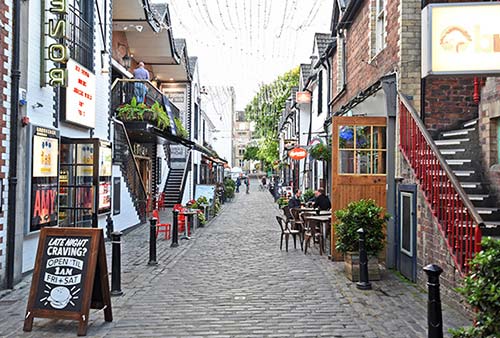
Ubiquitous Chip, aka “The Chip,” is a beloved local landmark with three inviting pubs (one with “the only rooftop terrace in the West End”) and two great restaurant options: On the ground floor is their fine ££££ restaurant, with beautifully presented contemporary Scottish dishes in a garden atrium (closed Mon-Tue, Wed-Thu dinner only, reserve ahead). Upstairs and looking down on the scene is the less formal, less expensive, but still very nice £££ brasserie (daily). The pubs are also open daily (12 Ashton Lane, +44 141 334 5007, ubiquitouschip.co.uk).
££ Brel is a fun-loving bar with a happy garden and a menu with burgers, mussels, and other quality pub food. On a nice evening, its bustling backyard beer garden is hard to beat (daily, 37 Ashton Lane, +44 141 739 4830, brelbar.com).
££££ Bothy Restaurant is a romantic place offering tasty, traditional Scottish fare served by waiters in kilts. Sit outside in the inviting graveled alleyway or in the rustic-contemporary dining room. Reservations are recommended (daily, two- and three-course early bird deals before 18:00—or 17:00 Fri-Sat; down the lane opposite the subway station to 11 Ruthven Lane, +44 141 334 4040, bothyglasgow.co.uk).
££ Hillhead Bookclub is a historic cinema building cleared out to make room for fun, good food, and lots of booze. It’s a youthful and quirky art-school scene, with lots of beers on tap, creative cocktails, retro computer games, Ping-Pong, and theme evenings like “lady balls bingo” night and “spoken word” night. The menu features international-inspired dishes, from katsu to bibimbap to Cuban pork, plus burgers, salads, and many veggie options (daily, 17 Vinicombe Street, +44 141 576 1700, hillheadbookclub.co.uk). Across the street is an affiliate of the recommended £££ Crabshakk seafood splurge restaurant (a larger location than its Finnieston spot, listed later).
££ Òran Mór fills a converted church from the 1860s with a whisky bar, two restaurants, and performance spaces (check their website’s “What’s On” page). They offer somewhat upscale pub grub either inside their John Muir Room or in the front-porch beer garden—and have a good-value lunch deal (“a play, a pie, and a pint”) for theater performances (daily, across from the Botanic Gardens at 731 Great Western Road, +44 141 357 6200). Around the side of the building (facing Great Western Road), the smaller £££ Fonn Mór has a more refined ambience and more elegant food (smart to reserve online, Thu 18:00 until late, Fri from 14:00, Sat-Sun from 11:00, closed Mon-Wed, oran-mor.co.uk).
££££ Cail Bruich serves Michelin-starred classic Scottish dishes with an updated spin in an elegant and romantic setting. As this is one of the city’s most well-regarded restaurants, reservations are essential (fixed-price meals only: lunch-£100, dinner-£170; Tue-Thu dinner only, Fri-Sat lunch and dinner, closed Sun-Mon; book 2-3 weeks in advance for a weekend dinner, 725 Great Western Road, +44 141 334 6265, cailbruich.co.uk).
£££ Six by Nico offers high-end fixed-price meals that are similar to the famous places...but cheaper, for about £45. Every six weeks, they introduce a new six-course menu—no choices or substitutions (though there is a vegetarian option). With an inviting, unpretentious, yet classy dining room, this is a good spot to splurge on a fine meal without blowing your budget (check website for the latest theme and to book a table; open Mon and Wed-Sun for lunch and dinner, closed Tue; 358 Byres Road, +44 141 473 6666, sixbynico.co.uk). Six by Nico is now a small UK chain. Another branch is at 86 Albion Street in Merchant City.
Near the Kelvingrove Museum
The first two places are immediately across from the Kelvingrove Museum (which is likely to leave you hungry), and the third is just a block farther along Argyle Street at the start of the trendy Finnieston neighborhood (described below).
££ BrewDog Glasgow is an outpost of the now-global brewery that started in Aberdeen. Simply a solid beer-and-burgers joint, this is a handy place for a post-museum meal and to sample their microbrews in an industrial-mod setting reminiscent of American brewpubs (daily, 1397 Argyle Street, +44 141 334 7175, brewdog.com).
£ Mother India’s Café is a busy joint with a line out the door on most nights (no reservations). It serves tasty Indian fare and is a good stop if you crave Scotland’s national dish: “a good curry.” Try the smoked eggplant, sweet potatoes, and green beans. The menu features small plates designed to enjoy family-style (about two plates per person makes a meal, open daily, 1355 Argyle Street, +44 141 339 9145). This café’s “mother ship”—the fancier original location—is a few short blocks farther down Argyle Street, in Finnieston (see later).
£££ Gloriosa is Mediterranean-inspired fun for foodies, serving artistically presented plates for sharing in a modern, airy interior with big windows—bright even on a rainy Glasgow evening—or outside on its own little piazza. The food is fancy but the atmosphere is casual and upbeat (daily, reservations smart Fri-Sat for dinner, vegetarian options, 1321 Argyle, +44 141 334 0594, gloriosaglasgow.com).
Finnieston Eateries on and near Argyle Street
This neighborhood—with a hipster charm in this hipster city—stretches east from in front of the Kelvingrove Museum (a 10-minute walk from the Kelvinhall or Kelvinbridge subway stops). Each of these is likely to require a reservation.
£££ Crabshakk, specializing in fresh, beautifully presented seafood, is a foodie favorite, with a very tight bar-and-mezzanine seating area and tables spilling out onto the sidewalk. It’s casual but still respectable. If you can’t reserve a table, ask to sit at the bar (closed Tue, 1114 Argyle Street, +44 141 334 6127, crabshakk.co.uk). A second location is in the Hillhead neighborhood (listed earlier).
££££ The Gannet offers multicourse set menus of beautifully prepared Scottish ingredients with a modern spin. It’s relaxed and stylish, but the owners/chefs are serious about the food, earning a nod from the Michelin Guide (two- or three-course lunches, six-course dinners, à la carte choices offered some evenings; Wed dinner only, Thu-Sat lunch and dinner, closed Sun-Tue; 1155 Argyle Street, +44 141 204 2081, thegannetgla.com).
£££ Ox and Finch is a trendy, bustling, Michelin-recommended place with an open kitchen and an upscale, rustic, wood-meets-industrial atmosphere, plus a few outdoor tables. They serve modern international dishes—most with a Mediterranean influence—in small, shareable portions (daily, reservations smart, 920 Sauchiehall Street, +44 141 339 8627, oxandfinch.com).
£££ Mother India Restaurant is one of Glasgow’s most well-regarded Indian eateries—and that’s saying something for the city that purportedly invented chicken tikka masala. It has a sophisticated dining room just a few steps away from the funkier side of this strip and, of course, great food (reservations wise; Mon-Tue 17:00-22:00, Wed-Sun from 13:00; 28 Westminster Terrace, +44 141 221 1663, motherindia.co.uk). They also run a simpler café near the Kelvingrove Museum (see listing, earlier).
DOWNTOWN
In addition to these more local places, the downtown core is where you’ll find branches of many UK-wide restaurants. For locations, see the “Central Glasgow Hotel & Restaurants” map, earlier.
££ Mackintosh at the Willow, designed by Charles Rennie Mackintosh, serves breakfast, light lunches, and afternoon tea (£32, anytime after 11:30) in several dining areas spread across three floors. Each room comes with a unique feel. Book ahead to have afternoon tea in the classy Salon de Luxe dining room upstairs (£43, Thu-Sun at 14:00, includes entry to attached exhibit—see “Sights in Glasgow,” earlier), and reservations are smart at all times on weekends (tearoom open daily 9:00-17:00, 217 Sauchiehall Street, +44 141 204 1903, mackintoshatthewillow.com [URL inactive]).
££ Sloans, just off Argyle Street near the start of my Downtown Walk, prides itself on being Glasgow’s oldest restaurant (established 1797). It serves good pub grub (including “legendary” mac ’n’ cheese) in a boisterous interior and at festive outdoor tables under umbrellas strung with lights (see also listing under “Entertainment in Glasgow,” cards only—no cash, open daily until late, 62 Argyll Arcade, +44 141 221 8886).
£££ Café Gandolfi, a Glasgow institution since the early 1980s, is worth trekking a few blocks into Merchant City. The owner, a photographer, transformed a former cheese market into an aesthetic space with wooden tables and chairs designed in the tradition of Charles Rennie Mackintosh. Their take on the traditional “Cullen skink” fish stew—which they don’t serve as a stew—is a winner (reservations smart for dinner; daily for breakfast and lunch, plus dinner Tue-Sat; 64 Albion Street, +44 141 552 6813, cafegandolfi.com).
££ Paesano is the city’s favorite pizza place, serving authentic and reasonably priced Neapolitan-style pizzas at jam-packed, convivial communal tables (daily, 94 Miller Street, +44 141 258 5565). There’s a second location on Great Western Road, near my recommended West End accommodations (see the “Glasgow’s West End” map on here). The same owners operate the busy and efficient ££ Sugo pasta eatery a few blocks away on Mitchell Street (at #70, daily, +44 141 258 1650, sugopasto.co.uk [URL inactive]).
For Your Whisky: Dating from 1835, The Pot Still is an award-winning malt whisky bar that’s also proud of its meat pies. You’ll see locals of all ages sitting in its leathery interior, watching football (soccer) and discussing their drinks. Give the friendly bartenders a little background on your beverage tastes, and they’ll narrow down a good choice for you from their list of more than 1,000 whiskies; you can do a six-whisky flight for £17 (daily 11:00-24:00, food served 11:00-17:00, 154 Hope Street, +44 141 333 0980, Frank has the long beard).
Trendy Eateries near the Cathedral: For a meal not far from Glasgow Cathedral and the Necropolis, you can head south to ££ Drygate Brewing, a big, modern, industrial-feeling place with a wide selection of craft beers and good pub grub (daily, 85 Drygate, +44 141 212 8815). £££ Celentano’s is popular for its high-quality, authentic Italian cuisine. Reservations are smart (Wed-Sat lunch and dinner, Sun lunch only, closed Mon-Tue; 28 Cathedral Square, +44 141 552 3519, celentanosglasgow.com).
Glasgow Connections
Traveline Scotland’s journey planner is linked to all of Scotland’s train and bus schedule info (travelinescotland.com). The other websites listed below also have journey planners. If you’re connecting with Edinburgh, note that the train is faster but the bus is cheaper.
BY TRAIN
Train info: +44 345 748 4950, nationalrail.co.uk.
From Glasgow’s Queen Street Station by Train to: Oban (6/day, fewer on Sun, 3 hours), Fort William (3/day, 4 hours), Inverness (6/day direct, 3 hours, more with change in Stirling), Edinburgh (about 7/hour, 50 minutes), Stirling (4/hour, 35 minutes), Pitlochry (5/day direct, 1.75 hours).
From Glasgow’s Central Station by Train to: Keswick in England’s Lake District (train to Penrith, nearly hourly, 1.5 hours; then bus to Keswick, 40 minutes), Cairnryan for ferry to Belfast (train to Ayr, 2/hour, 1 hour; then bus to Cairnryan, 3/day, 2 hours), Liverpool (2/hour, 3.5 hours, change in Wigan or Preston), Durham (2/hour, 3.5 hours, may require change in Edinburgh), York (2/hour, 4 hours, more with change in Edinburgh), London (2/hour, 5 hours direct).
BY BUS
Glasgow’s Buchanan bus station is a hub for reaching the Highlands. If you’re coming from Edinburgh, you can take the bus to Glasgow and transfer here. Or, for a speedier connection, zip to Glasgow on the train, then walk a few short blocks to the bus station. (Ideally, try to arrive at Glasgow’s Queen Street Station, which is closer to the bus station.) For more details on these connections, see “Getting Around the Highlands” on here. Connections below are on Citylink buses (citylink.co.uk).
From Glasgow by Bus to: Edinburgh (#900, 4/hour, 1.5 hours), Oban (#975/#976/#977; 5/day, 3 hours), Fort William (#914 and #915; 8/day direct, 3 hours), Glencoe (#914 and #915; 8/day, 2.5 hours), Inverness (#M10, 5/day, 3.5 hours), Portree on the Isle of Skye (#915, 4/day, 7 hours), Pitlochry (#M10, 6/day direct, 2 hours; more with transfer in Perth), Stirling (#M8, hourly, 45 minutes—train is better).
BY PLANE
Glasgow International Airport: The city’s main airport (code: GLA) is eight miles west of the city center (glasgowairport.com). Taxis connect downtown to the airport for about £30-35; a transfer service arranged through your hotel, or an Uber, can be significantly cheaper.
Bus #500 zips to central Glasgow (every 15 minutes, £11 one-way, 25 minutes to both train stations and the bus station, catch at bus stop #1). Slower bus #77 goes to the West End, rolling through workaday Glasgow, stopping at the Kelvingrove Museum and along Argyle Street (departs every 30 minutes, £6.70 one-way, 50 minutes).
Prestwick Airport: A hub for Ryanair, this airport is 30 miles southwest of the city center (code: PIK, glasgowprestwick.com). The best connection is by train, which runs between the airport and Central Station (4/hour, 40 minutes, half-price with airline ticket, trains also run to Edinburgh Waverley Station—about 2/hour, 2 hours). Stagecoach buses link the airport with Buchanan Bus Station (£8.90, hourly, 50 minutes, stagecoachbus.com).
ROUTE TIPS FOR DRIVERS
From England’s Lake District to Glasgow: From Keswick, take the A-66 for 18 miles to the M-6 and speed north nonstop (via Penrith and Carlisle), crossing Hadrian’s Wall into Scotland. The road becomes the M-74 just north of Carlisle. To slip through Glasgow quickly, leave the M-74 at Junction 4 onto the M-73, following signs to M-8/Glasgow. Leave the M-73 at Junction 2, exiting onto the M-8. Stay on the M-8 west through Glasgow, exit at Junction 30, cross Erskine Bridge, and turn left on the A-82, following signs to Crianlarich and Loch Lomond. (For a scenic drive through Glasgow, take exit 17 off the M-8 and stay on the A-82 toward Dumbarton.)