SCOTLAND
One of the three countries that make up Great Britain, rugged, feisty, colorful Scotland stands apart. Whether it’s the laid-back, less-organized nature of the people, the stony architecture, the striking landscape, or simply the haggis, go-its-own-way Scotland is distinctive.
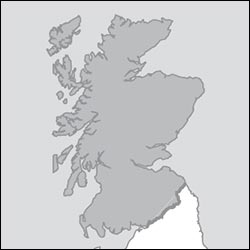
Scotland encompasses about a third of Britain’s geographical area (30,400 square miles) but has less than a tenth of its population (about 5.5 million). This sparsely populated chunk of land stretches to Norwegian latitudes. Its Shetland Islands, at about 60°N (similar to Anchorage, Alaska), are the northernmost point of the British Isles. You may see Scotland referred to as “Caledonia” (its ancient Roman name) or “Alba” (its Gaelic name). Scotland’s fortunes were long tied to the sea; its leading cities are located along firths (estuaries), where major rivers connect to ocean waters.
The southern part of Scotland, called the Lowlands, is relatively flat and urbanized. The northern area—the Highlands—features a wild, severely undulating terrain, punctuated by lochs (lakes) and fringed by sea lochs (inlets) and islands.
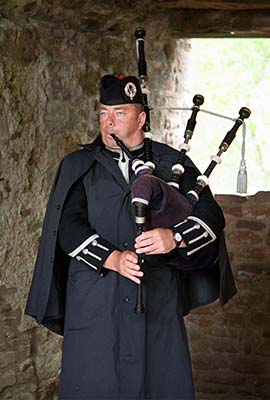
The geologic fault line that divides the Highlands from the Lowlands also divides Scotland culturally. Historically, the country had two distinct identities: rougher Highlanders in the northern wilderness and the more refined Lowlanders in the southern flatlands. Highlanders represented the stereotypical image of “true Scots,” speaking Gaelic, wearing kilts, and playing bagpipes, while Lowlanders spoke languages of Saxon origin and wore trousers. After the 16th-century Scottish Reformation, the Lowlanders embraced Protestantism, while most Highlanders stuck to Catholicism. Although this Lowlands/Highlands division has faded over time, some Scots still cling to it.
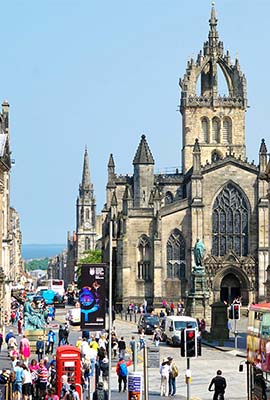
Today the Lowlands are dominated by rival cities: bustling Edinburgh (on the east coast’s Firth of Forth) and friendly Glasgow (on the west coast’s Firth of Clyde). Edinburgh, the old royal capital, teems with Scottish history and is the country’s most popular tourist attraction. Glasgow, once gloomy and industrial, is now a trendy, laid-back city of art, music, and architecture. In addition to these two cities—both of which warrant a visit—the Lowlands’ highlights include the medieval university town and golf mecca of St. Andrews, the small city of Stirling (with its castle and many nearby historic sites), and pleasant countryside stopovers.
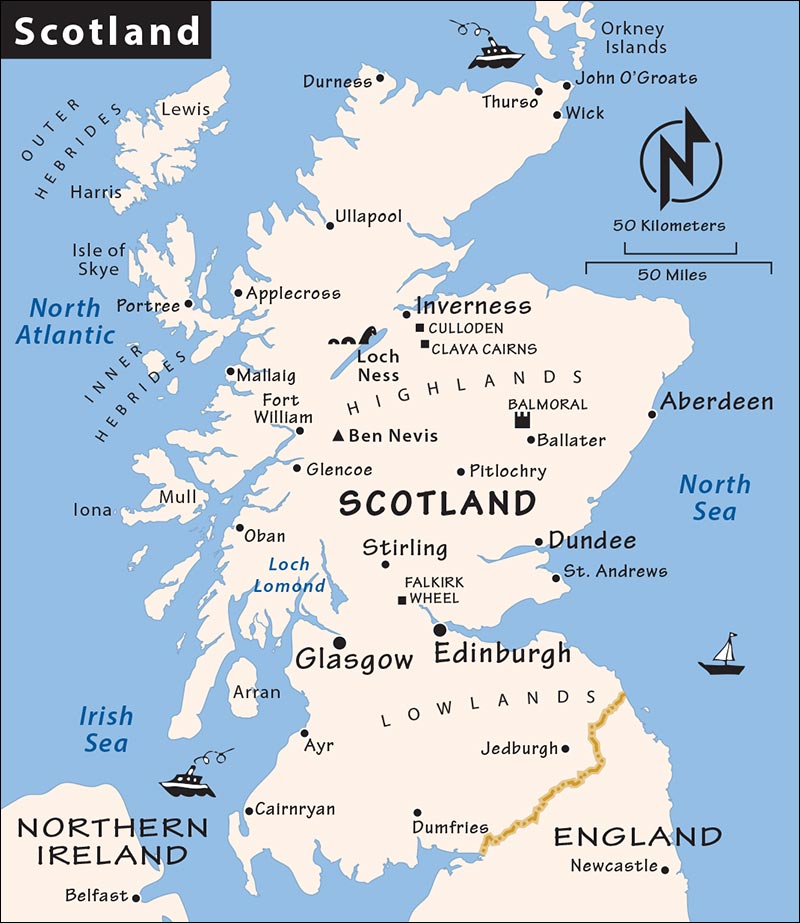
The Highlands provide your best look at traditional Scotland. The sights are subtle, but the vivid traditional culture and friendly people are engaging. The Highlands are rockier and harsher than other parts of the British Isles. Most of the “Munros”—Scotland’s 282 peaks over 3,000 feet—are concentrated in the Highlands. Keep an eye out for shaggy Highland cattle (adorable “hairy coos,” with their bangs falling in their eyes); bring bug spray in summer to thwart the tiny bugs called midges, which can make life miserable; and plan your trip around trying to attend a Highland game.
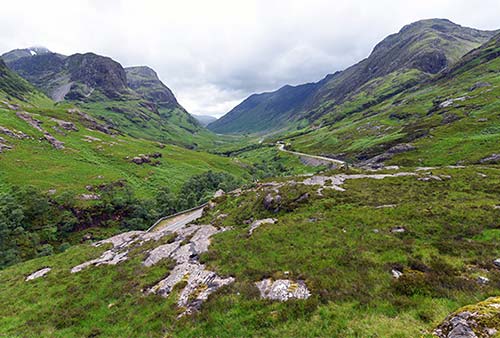
Generally, the Highlands are hungry for the tourist dollar, and everything overtly Scottish is exploited to the kilt; you need to spend some time here to get to know the area’s true character. You can get a feel for the Highlands with a quick drive to Oban, through Glencoe, then up the Caledonian Canal to Inverness. With more time, the isles of Iona, Staffa, and Mull (an easy day trip from Oban) and countless brooding countryside castles will flesh out your Highlands experience.
At these northern latitudes, cold and drizzly weather isn’t uncommon—even in midsummer. Blue skies and sun can quickly be covered over by black clouds and howling wind. Your B&B host will warn you to prepare for “four seasons in one day.” Because Scots feel personally responsible for bad weather, they tend to be overly optimistic about forecasts. Take any Scottish promise of “sun by the afternoon” with a grain of salt—and bring your raincoat, just in case.
The major theme of Scottish history is the drive for independence, especially from England. (Scotland’s rabble-rousing national motto is Nemo me impune lacessit—“No one provokes me with impunity.”) Like Wales, Scotland is a country of ragtag Celts sharing an island with wealthy and powerful Anglo-Saxons. Scotland’s Celtic culture is a result of its remoteness—the invading Romans were never able to conquer this rough-and-tumble people and even built Hadrian’s Wall to lock off this distant corner of their empire. The Anglo-Saxons, and their descendants the English, fared little better than the Romans did. Even King Edward I—who so successfully dominated Wales—was unable to hold on to Scotland for long, largely thanks to the relentlessly rebellious William Wallace (see here).
Failing to conquer Scotland by the blade, England eventually absorbed it politically. In 1603, England’s Queen Elizabeth I died without an heir, so her closest royal relative—Scotland’s King James VI—took the throne, becoming King James I of England. It took another century or so of battles, both military and diplomatic, but the Act of Union in 1707 definitively (and controversially) unified the Kingdom of Great Britain. Meanwhile, the English parliament overthrew the grandson of James I when he became a Catholic, replacing him with a line of Protestant monarchs. In 1745, Bonnie Prince Charlie attempted to reclaim the throne on behalf of the deposed Stuarts, but his army was slaughtered at the Battle of Culloden (near Inverness). This cemented English rule over Scotland and is seen by many Scots as the last gasp of the traditional Highlands clan system. Bagpipes, kilts, the Gaelic language, and other symbols of the Highlands were briefly outlawed.
Scotland has been joined to England ever since, and the Scots have often felt oppressed by their English countrymen (see sidebar). During the violent Highland Clearances in the 18th and 19th centuries, the government and landowners (mostly English) decided that vast tracts of land were more profitable as grazing land for sheep than as farmland for people. Many Highlanders were forcibly evicted from their traditional homes (many of which were burned to the ground). Over 100,000 Highlanders were displaced; large numbers ended up in North America, especially parts of eastern Canada, such as Prince Edward Island and Nova Scotia (literally, “New Scotland”).
Travelers of Scottish descent enjoy coming “home” to Scotland. If you’re Scottish, your surname will tell you which clan your ancestors likely belonged to. The prefix “Mac” (or “Mc”) means “son of”—so “MacDonald” means the same thing as “Donaldson.” Tourist shops everywhere are happy to help you track down the distinctive plaid pattern of your clan’s tartan. For more on how these “clan tartans” don’t go back as far as you might think, see the sidebar on here.
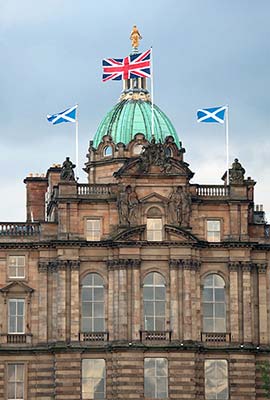
Scotland shares a monarchy and is ruled by King Charles III along with the rest of the United Kingdom. Scotland is not a sovereign state, but it is a “nation” in that it has its own traditions, ethnic identity, languages (Gaelic and Scots), and football league. To some extent, it also has its own government.
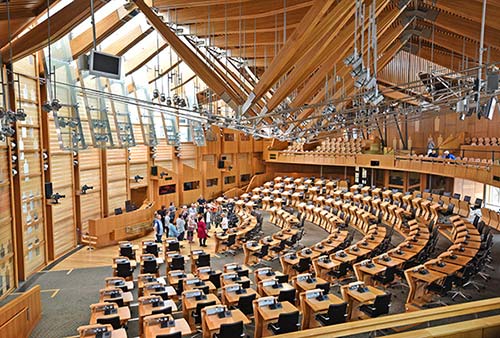
Scotland is enjoying its greatest measure of political autonomy in centuries. The Scottish parliament convened in Edinburgh in 1999 for the first time in almost 300 years; in 2004, it moved into a modern building near the foot of the Royal Mile. Though its powers are limited (most major decisions are still made in London), the Scottish people are increasingly governing themselves. In a 2014 independence referendum, the Scots favored staying in the United Kingdom by a margin of 10 percent. The question of independence will likely remain a pivotal issue in Scotland for many years to come.
Scotland even has its own currency...sort of. The country uses the same coins as England, Wales, and Northern Ireland, but Scotland also prints its own bills (featuring Scottish, rather than English, people and landmarks). Just to confuse tourists, three different banks print Scottish pound notes, each with a different design. In the Lowlands (around Edinburgh and Glasgow), you’ll receive both Scottish and English pounds from ATMs and in change. But in the Highlands, you’ll almost never see English pounds. Bank of England notes are legal and widely used; Northern Ireland bank notes are legal but less common.
The Scottish flag—a diagonal, X-shaped white cross on a blue field—represents the cross of Scotland’s patron saint, the Apostle Andrew (who was crucified on an X-shaped cross). You may not realize it, but you see the Scottish flag every time you look at the Union Jack: England’s flag (the red St. George’s cross on a white field) superimposed on Scotland’s (a blue field with a white diagonal cross). The diagonal red cross (St. Patrick’s cross) over Scotland’s white one represents Northern Ireland. (Wales gets no love on the Union Jack.)
Here in “English-speaking” Scotland, you may still encounter a language barrier. First is the lovely, lilting Scottish accent—which may take you a while to understand. You may also hear an impenetrable dialect of Scottish English that many linguists consider to be a separate language, called “Scots.” You may already know several Scots words: lad, lassie, wee, bonnie, glen, loch, aye. On menus, you’ll see neeps and tatties (turnips and potatoes). And in place names, you’ll see ben (mountain), brae (hill), firth (estuary), and kyle (strait). And about one percent of the population, particularly in the Highlands, speaks the ancient Celtic language of Gaelic (pronounced “gallic”).
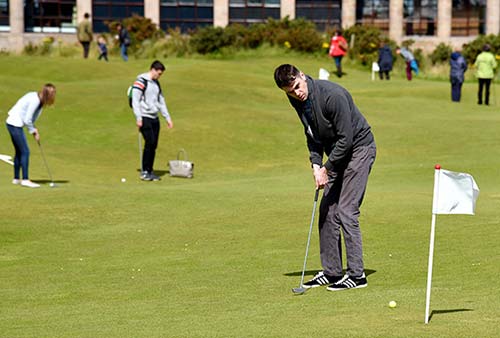
While soccer (“football”) is as popular here as anywhere, golf is Scotland’s other national sport. But in Scotland, it’s not considered an exclusively upper-class pursuit; you can generally play a round at a basic course for about £20. While Scotland’s best scenery is along the west coast, its best golfing is on the east coast—home to many prestigious golf courses. Most of these are links courses, which use natural sand from the beaches for the bunkers. For tourists, these links are more authentic, more challenging, and more fun than the regular-style courses (with artificial landforms) farther inland. If you’re a golfer, St. Andrews—on the east coast—is a pilgrimage worth making.
Scottish cuisine is down to earth, often emphasizing local produce. Both seafood and “land food” (beef, chicken, lamb, and venison) are common. One Scottish mainstay—eaten more by tourists than by Scots these days—is the famous haggis, tastier than it sounds and worth trying...even before you’ve tucked into the whisky. Also look for cullen skink, a satisfying, chowder-like cream soup with smoked fish.
The “Scottish breakfast” is like the English version, but they often add a potato scone (like a flavorless, soggy potato pancake) and haggis (best when served with poached eggs and HP brown sauce).
Breakfast, lunch, or dinner, the Scots love their whisky—and touring one of the country’s many distilleries is a sightseeing treat. The Scots are fiercely competitive with the Irish when it comes to this peaty spirit. Scottish “whisky” is typically distilled twice, whereas Irish “whiskey” adds a third distillation (and an extra e). Some distilleries roast their barley over peat fires, giving many Scottish whiskies a smokier flavor than their Irish cousins. Also note that what we call “scotch”—short for “scotch whisky”—is just “whisky” here.
Some of Scotland’s sights are subtle, but its misty glens, brooding countryside castles, and warm culture are plenty engaging. Whether toasting with beer, whisky, or Irn-Bru (Scotland’s favorite bright-orange soft drink), you’ll enjoy meeting the Scottish people. It’s easy to fall in love with the irrepressible spirit and beautiful landscape of this faraway corner of Britain.