WALES
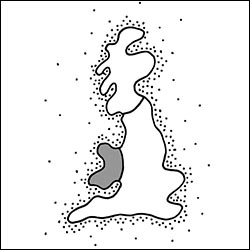
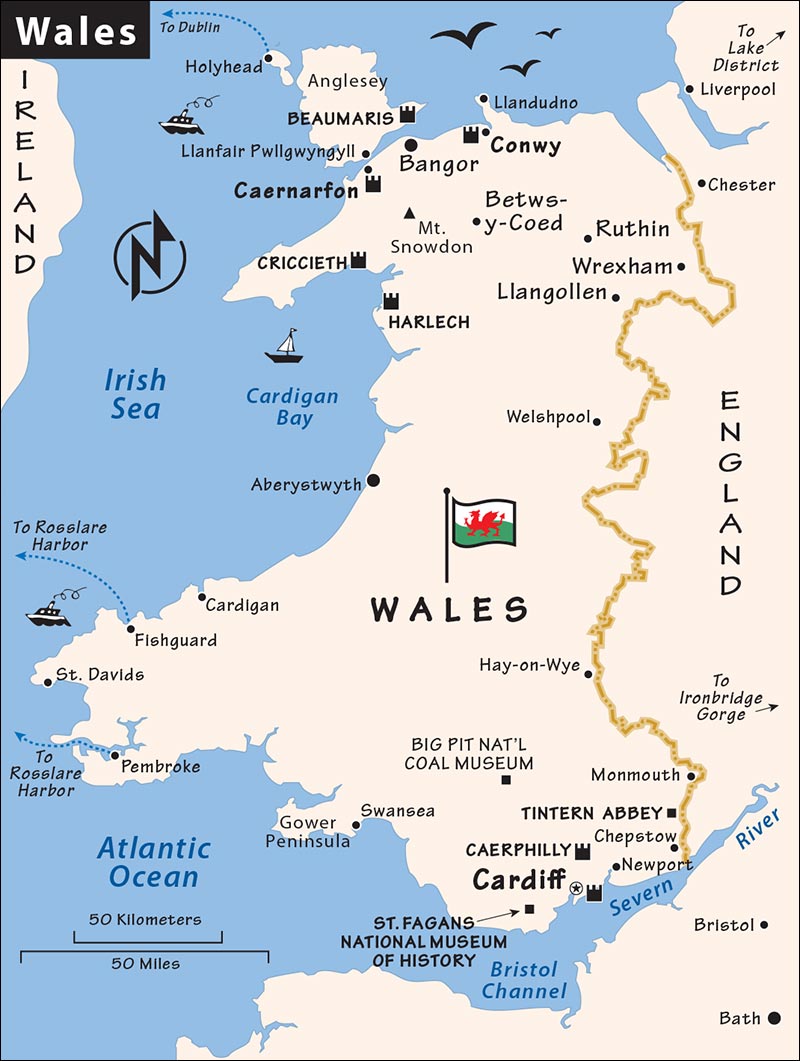
Croeso! Welcome to Wales, a country with 750 miles of scenic, windswept coastline jutting out of the west coast of the Isle of Britain into the Irish Sea. Shaped somewhat like a miniature Britain, Wales is longer than it is wide (170 miles by 60 miles) and is roughly the size of Massachusetts. The north is mountainous, rural, and sparsely populated. It’s capped by 3,560-foot Mount Snowdon, taller than any mountain in England. The south, with a less rugged topography, is where two-thirds of the people live (including 350,000 in the capital of Cardiff).
The Welsh are proud of their, well, Welshness. Despite centuries of English imperialism, the Welsh language (aka Cymraeg, pronounced “kum-RAH-ig”) remains alive and well—more so than its nearly dead Celtic cousin in Scotland, Gaelic. Though everyone in Wales speaks English, one in five can also speak the native tongue; for many, it’s their first language. In the northwest, well over half the population is fluent in Welsh and uses it in everyday life. Listen in.
Most certainly not a dialect of English, the Celtic Welsh tongue sounds to foreign ears like Elvish from The Lord of the Rings. One of Europe’s oldest languages, Welsh has been written down since about AD 600, and it was spoken 300 years before French or German. Today, the Welsh language is protected by law from complete English encroachment—the country is officially bilingual, and signs display both languages (e.g., Cardiff/Caerdydd). In schools, it’s either the first or the required second language; in many areas, English isn’t used in classes at all until middle school.
Though English has been the dominant language in Wales for many years (and most newspapers and media are in English), the Welsh people cherish their linguistic heritage as something that sets them apart. In fact, a line of the Welsh national anthem goes, “Oh, may the old language survive!”
You can psychoanalyze the English-Welsh relationship through the word for Wales. The Anglo-Saxon word for “enemy” is “wealas” (which became “Wales”), and that’s what they called this wild and historically unrulable part of their island (from their point of view). By contrast, the Celtic word for Wales, “Cymru,” means “comrade” in Welsh—the opposite of what eventually became the English name for this region.
Wales has some traditional foods worth looking for, particularly lamb dishes and leek soup (cawl). In fact, the national symbol is the leek, ever since medieval warriors—who wore the vegetable on their helmets in battle—saved the land from Saxon invaders. Melted cheese on toast—kind of an open-faced grilled-cheese sandwich—is known as “Welsh rarebit” (or “Welsh rabbit”; the name is a throwback to a time when the poor Welsh couldn’t afford much meat in their diet). At breakfast, you might get some “Welsh cakes,” basically a small, squashed scone. Cockles and seaweed bread were once common breakfast items—but don’t expect your B&B to serve them.
Wales’ three million people are mostly white and Christian (Presbyterian, Anglican, or Catholic). Like their English and Scottish counterparts, they enjoy football (soccer), but rugby is the unofficial Welsh sport, more popular in Wales than in any country outside of New Zealand. Other big sports are cricket and snooker (similar to billiards).
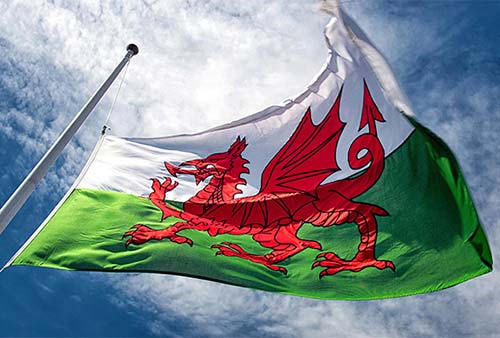
The Welsh flag features a red dragon on a field of green and white. The dragon has been a symbol of Wales since at least the ninth century. According to legend, King Arthur’s men carried the dragon flag to battle.
Welsh history stretches back into the mists of prehistoric Britain. In AD 43, Romans invaded Britain. Arriving in Wales about AD 50, they met stiff resistance from indigenous Welsh guerrillas who harassed the Romans for 30 years. The Romans built a string of forts (each 12 miles—or a half-day’s march—apart) along a military road, today’s A-48 highway. You’ll notice towns along this route that are still 12 miles apart.
The Welsh in South Wales ultimately became Romanized and Christian. When Rome checked out as the Empire fell, the Celts assumed power, adopting the Roman style of defense and the fortifications they left behind. (The dragon on the Welsh flag may originally have been a Roman military symbol.)
Saxon (Germanic) tribes like the Angles then stepped into the power vacuum, conquering what they renamed “Angle-land”—but they failed to penetrate Wales. Brave Welsh warriors, mountainous terrain, and the 177-mile man-made ditch-and-wall known as Offa’s Dyke helped preserve the country’s unique Celtic/Roman heritage.
A fixed border dividing England and Wales was established in about AD 780. Behind that border, Wales was a mosaic of small independent kingdoms. When the Normans beat the English at the Battle of Hastings in 1066, they moved rapidly to consolidate greater Norman rule, and Wales sank into three centuries of war with generations of Norman warlords.
In 1216, Wales’ medieval kingdoms unified under Llywelyn Fawr (“the Great”). But in 1282, King Edward I of England invaded and conquered, putting an end to Wales’ one era as a unified, sovereign nation. To solidify his hold on the country, Edward built a string of castles (see sidebar on here). He then named his son and successor the “Prince of Wales,” starting the tradition of granting that ceremonial title to the heir to the English throne.
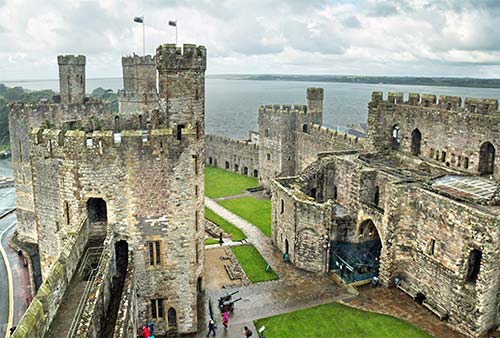
This was the age of castles—man-made earthen mounds crowned by wooden forts, eventually becoming the evocative stone wonders we climb through today. The big castles you can see throughout Wales were designed to keep the angry Welsh locals under control. Just as the Normans built the Tower of London in their capital, they built castles in Cardiff, Conwy, and Caernarfon to protect their foothold in Wales. English settlers were imported to live within the walls of the garrison town (with gardens behind their houses) and to give the place a tax base. The indigenous Welsh people, outside the walls, were called “piss poor”—back then, very poor people sold their own urine (used to soak leather in Norman tanneries) to earn a few pennies.
Despite an unsuccessful rebellion in 1400, led by Owen Glendower (Owain Glyndwr), Wales has remained under English rule ever since Edward’s invasion. In 1535, the annexation was formalized under Henry VIII.
By the 19th century, Welsh coal and iron stoked the engines of Britain’s Industrial Revolution, and its slate was exported to shingle roofs throughout Europe. Wales became the first country on earth with the majority of its people working in industry. That’s why the Welsh didn’t emigrate to North America in droves like the Scottish and Irish. Rather, the big people movement here during that era was from villages and farms to mining valleys and seaports.
While this was a lucrative boom time for wealthy industrialists, the common working people of Wales toiled under very difficult conditions. The stereotype of the Welsh as poor, grimy-faced miners continued into the 20th century. Their economy has been slow to transition from mining, factories, and sheep farming to the service-and-software model of the global world.
In recent decades, the Welsh have consciously tried to preserve their local traditions and language. In 1999, Wales was granted its own parliament, the National Assembly, with powers to distribute its portion of the UK’s national budget. Though still ruled by the UK government in London, Wales now has a measure of independence and self-rule. The Plaid Cymru party, which advocates for Welsh independence, has a small percentage of Welsh seats in parliament.
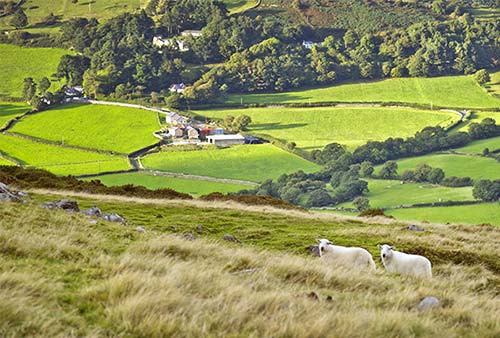
Less urbanized and less wealthy than England, Wales consists of miles of green land where sheep graze (because the soil is too poor for crops). It makes for wonderful hillwalking, but hikers should beware of midges. From late May through September, these tiny biting insects are very interested in dawn, dusk, dampness, and you—bring insect repellent along on any hike.
Because Wales is an affordable weekend destination for many English, the country is popular among avid English drinkers, who pour over the border on Friday nights for cheap beer before stumbling home on Sunday. Expect otherwise-sleepy Welsh border towns to be rowdy on Saturday nights.
I’ve focused most of my coverage of Wales on the north, which has the highest concentration of castles, natural beauty, and attractions. But I’ve also covered a few important sights in South Wales that are easy to combine with a visit to Bath or the Cotswolds (or as a quick stopover between them), including the Welsh capital of Cardiff, its nearby top-notch open-air museum, and the picturesque Tintern Abbey.
Try to connect with Welsh culture on your visit. Clamber over a castle, eat a leek, count sheep in a field, catch a rugby match, or share a pint of bitter with a baritone. Open your ears to the sound of words as old as the legendary King Arthur. “May the old language survive!”