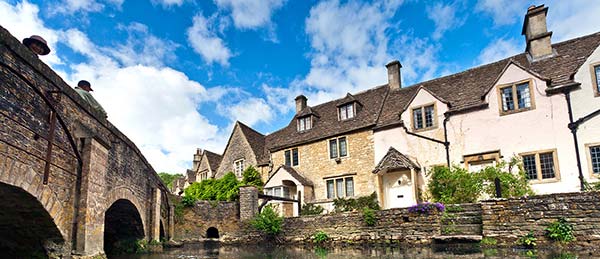
THE COTSWOLDS
Chipping Campden • Stow-on-the-Wold • Moreton-in-Marsh • Blenheim Palace
Orientation to Chipping Campden
Orientation to Stow-on-the-Wold
Orientation to Moreton-in-Marsh
The Cotswold Hills, a 25-by-90-mile chunk of Gloucestershire, are dotted with enchanting villages and graced with Britain’s greatest countryside palace, Blenheim. As with many fairy-tale regions of Europe, the present-day beauty of the Cotswolds is the result of an economic disaster. Wool was a huge industry in medieval England, and Cotswold sheep grew the best wool. (The famed Cotswold Lion breed goes back to ancient times when Romans bred one of their sheep with the indigenous breed to make a hybrid version that was big, bad for meat, and great for wool.) A 12th-century saying bragged, “In Europe the best wool is English. In England the best wool is Cotswold.” The region prospered. Wool money built fine towns and houses. Local “wool” churches are called “cathedrals” for their scale and wealth. Stained-glass slogans say things like, “I thank my God and ever shall, it is the sheep hath paid for all.”
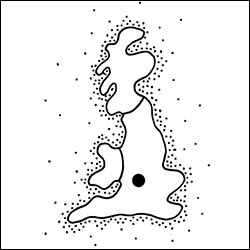
But with the rise of cotton and the Industrial Revolution, the woolen industry collapsed. The wealthy Cotswold towns fell into a depressed time warp; the homes of impoverished nobility became gracefully dilapidated. Today, visitors enjoy a harmonious blend of man and nature—the most pristine of English countrysides decorated with time-passed villages, rich wool churches, tell-me-a-story stone fences, and “kissing gates” you wouldn’t want to experience alone.
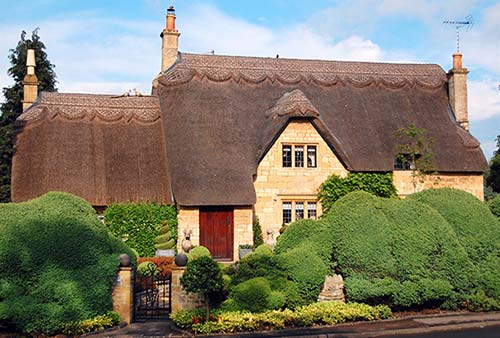
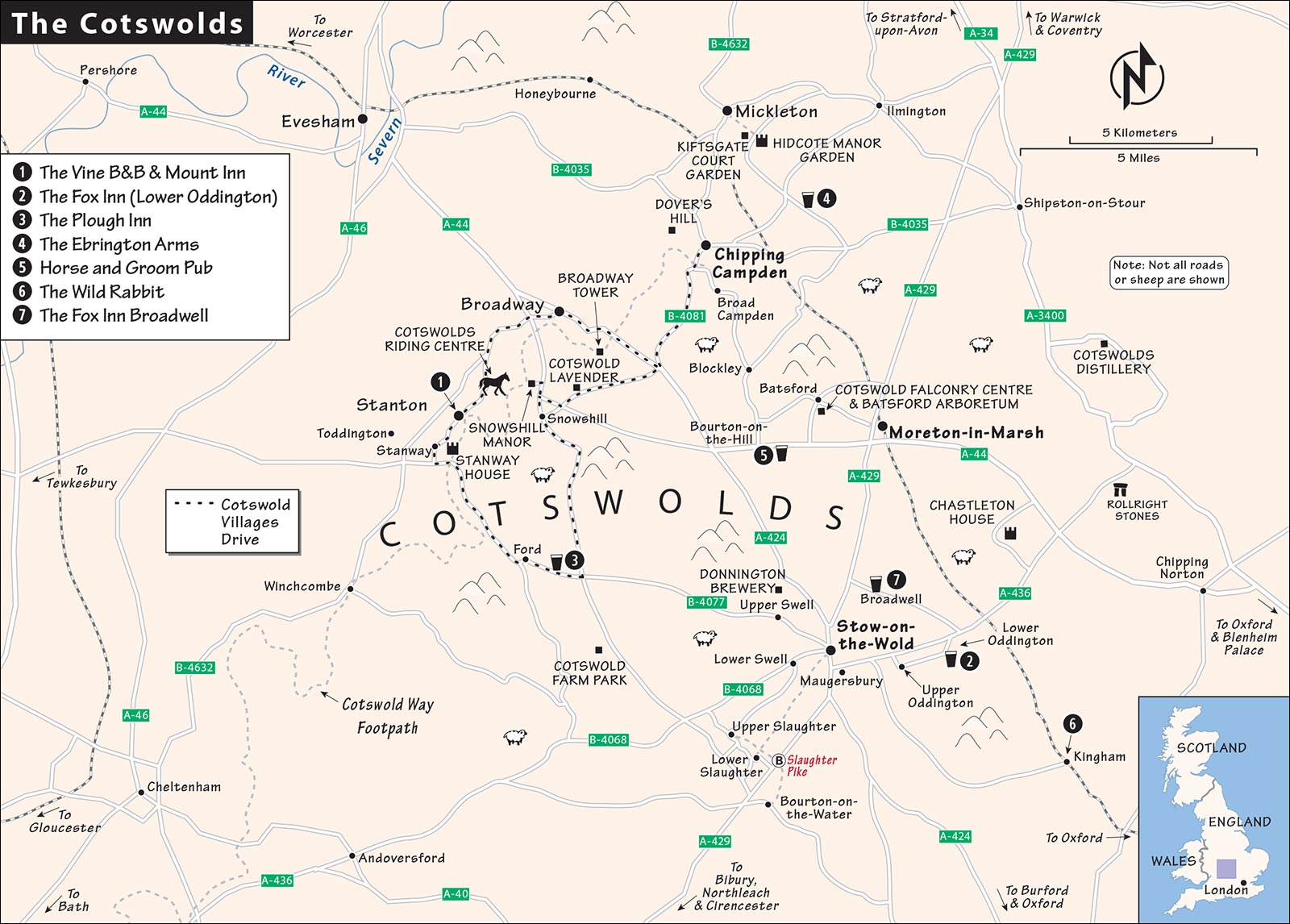
The north Cotswolds are best. Two of the region’s coziest towns, Chipping Campden and Stow-on-the-Wold, are eight and four miles, respectively, from Moreton-in-Marsh, which has the best public transportation connections. Any of these three towns makes a fine home base for your exploration of the thatch-happiest of Cotswold villages and walks.
PLANNING YOUR TIME
The Cotswolds are an absolute delight by car and, with a well-organized plan—and patience—are enjoyable even without one. Do your homework in advance; read this chapter carefully. Then decide if you want to rent a car, rely on public transportation (budgeting for an inevitable taxi ride), or reserve a day with a tour company or private driver. Whatever you choose, on a two-week countrywide trip, I’d spend at least two nights and a day in the Cotswolds—its charm has a softening effect on many uptight itineraries. You could enjoy days of walking from a home base here.
Home Bases: Quaint without being overrun, Chipping Campden and Stow-on-the-Wold both have good accommodations. Stow has a bit more character for an overnight stay and offers the widest range of choices. The plainer town of Moreton-in-Marsh is the only one of the three with a train station, and only worth visiting as a transit hub or for a stop at the town’s excellent TI—the best in the Cotswolds. While Moreton has the most convenient connections, nondrivers could home-base in Chipping Campden or Stow—especially if you don’t mind sorting through bus schedules or springing for the occasional taxi to connect towns. (This becomes even more challenging on Sundays, when there is limited bus service.) These three towns are a 10-to-15-minute drive apart from each other.
Tourist Traps (Broadway, Bourton-on-the-Water, and Bibury): Mass tourism is channeled to a handful of towns that cater to big buses and their groups. Known as “The Bs,” this trio of village cuteness has invested in convenient coach lots (the terra firma equivalent of cruise ship docks), and they’re capitalizing on their over-the-top quaintness and fame. Expect traffic congestion and lots of crowds during the day, as most visitors are day-tripping from London or Stratford. If flexible, enjoy these towns at the end of the day when they’re relaxed and quiet.
Nearby Sights: Britain’s top countryside palace, Blenheim, is located at the eastern edge of the Cotswolds, between Moreton and Oxford (see end of this chapter). For drivers, Blenheim fits well on the way into or out of the region. If you want to take in some Shakespeare, note that Stow, Chipping Campden, and Moreton are only a 30-minute drive from Stratford, which offers a great evening of world-class entertainment (see next chapter).
One-Day Driver’s Cotswold Blitz: Use a good map and reshuffle this plan to fit your home base:
| 9:00 | Browse through Chipping Campden, following my self-guided walk. |
| 10:30 | Joyride through Snowshill, Stanway, and Stanton, sightseeing at your choice of several worthwhile stops in the area. (For a full-day joyride, follow my Cotswold Villages Drive, which covers this area.) |
| 13:00 | Have lunch in Stow-on-the-Wold, then follow my self-guided walk there. |
| 16:00 | Drive to the Slaughters and Bourton-on-the-Water or Northleach; or, if you’re up for a hike instead of a drive, walk from Stow to the Slaughters to Bourton, then catch the bus back to Stow (confirm the last bus time). |
| 19:00 | Have dinner at a countryside gastropub (make a reservation), then head home; or drive 30 minutes to Stratford-upon-Avon for a Shakespeare play. |
With More Time: If you have a second day to explore the area by car, consider this plan for day 2:
| 10:00 | Visit Hidcote Manor, then meander through Broad Campden, Blockley, and Bourton-on-the-Hill on the way to Moreton-in-Marsh. |
| 12:00 | Have a quick lunch in Moreton-in-Marsh, then consider nearby Chastleton House. |
| 15:00 | Drive a loop south to explore anything you missed on day 1: Upper and Lower Slaughter, Bourton-on-the-Water (visit the Cotswold Motoring Museum), Northleach, and Bibury. |
| 19:00 | Enjoy another atmospheric gastropub dinner (make reservations) before returning to your home base. |
Two-Day Plan by Public Transportation: This plan is best for any day except Sunday—when buses are limited—and assumes you’re home-basing in Moreton-in-Marsh.
Day 1: In the morning, take bus #1 to Chipping Campden (likely departing around 9:25) to explore that town. Hike up Dover’s Hill and back (about one-hour round-trip), or take bus #1 to Mickleton and walk (uphill, 45 minutes) to Hidcote Manor Garden for a visit there. Eat lunch in Chipping Campden, then squeeze in either bus #2 to Broad Campden or bus #1 to Broadway before returning directly from Broadway (bus #1 only) or Chipping Campden (bus #1 or #2) to Moreton.
Day 2: Take a day trip to Blenheim Palace via Hanborough (train to Hanborough, bus to palace). Or take the morning bus (#801, departing around 8:05 or 8:50—confirm locally) to Stow. After poking around the town, hike from Stow through the Slaughters to Bourton-on-the-Water (about 3 hours at a relaxed pace), then return by bus or taxi to Moreton for dinner.
TOURIST INFORMATION
The only real TIs in the towns in this chapter are in Moreton-in-Marsh and Chipping Campden; smaller ones are in Stow-on-the-Wold and Cirencester. They sell Ordnance Survey maps produced by the British government (ideal for hiking). The “OS Maps” app has free basic maps of the region, and some paper OS maps come with a code for a free digital version through the app.
It’s also worth consulting Cotswold Lion, the online biannual magazine (cotswoldsaonb.org.uk/about-us [URL inactive]).
GETTING AROUND THE COTSWOLDS
By Car
Joyriding here truly is a joy. Winding country roads seem designed to spring bucolic village-and-countryside scenes on the driver at every turn. Distances are wonderfully short and easily navigable with GPS. As a backup, you could invest in the Ordnance Survey map of the Cotswolds, sold locally at TIs (the £13 Explorer OL #45 map is excellent but geared toward hiking and is too detailed for drivers; the OS Tour £7 map covers a wider area in less detail). Here are driving distances from Moreton: Stow-on-the-Wold (4 miles), Chipping Campden (8 miles), Broadway (10 miles), Stratford-upon-Avon (17 miles), Warwick (23 miles), Blenheim Palace (20 miles).
The only headache can be parking, which is hard to come by in some of the more crowded towns. I’ve made suggestions in some towns, but most have well-marked short-stay and long-stay lots.
Car hiking is great. In this chapter, I cover the postcard-perfect (but discovered) villages. With a car and a good map (either GPS or the local Ordnance Survey), you can easily ramble about and find your own gems.
By Bus
The Cotswolds are so well preserved, in part, because public transportation to and within this area has long been underdeveloped. Fortunately, trains link the region to larger towns, and a few key buses connect the more interesting villages. Centrally located Moreton-in-Marsh is the region’s transit hub—with a train station and several bus lines.
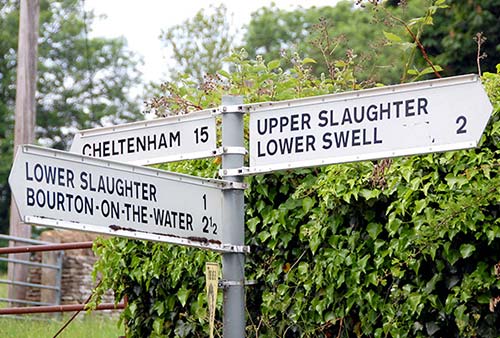
To explore the towns, use the bus routes that hop through the Cotswolds about every 1-1.5 hours, lacing together main stops and ending at train stations. Put together a one-way or return trip by public transportation, making for a fine Cotswold day. Individual fares are around £3. If you’re here for several days, consider a weekly pass (download the Pulhams Coaches and Stagecoach Bus apps, or check pulhamscoaches.com or stagecoachbus.com for ticket options and prices).
Local TIs hand out easy-to-read bus schedules for the key lines described here (or check the apps or websites above). Note that some schedules omit stop names for simplicity. When in doubt, ask at the TI if the bus stops at your destination, or check with the driver before boarding.
If you’re traveling one-way between two train stations, remember that the Cotswold villages have no official baggage-check services. You’ll need to improvise; ask sweetly at the nearest TI or business.
Note that no single bus connects the three major towns described in this chapter (Chipping Campden, Stow, and Moreton); to get between Chipping Campden and Stow, you’ll have to change buses in Moreton. Since buses can be unreliable and connections aren’t timed, it may be better to call a driver or taxi to go between Chipping Campden and Stow.
Buses #1 and #2 run from Moreton-in-Marsh to Bourton-on-the-Hill and Blockley (#1 also stops in Broadway, while #2 stops in Broad Campden, 3/day) on their way to Chipping Campden, and pass through Mickleton before ending at Stratford-upon-Avon (operated by Stagecoach, stagecoachbus.com). Bus #51 runs between Moreton-in-Marsh and Stratford-upon-Avon (Mon-Sat 5-7/day, none on Sun, run by Stagecoach, stagecoachbus.com).
The #8XX bus lines are operated by Pulhams Coaches (+44 1451 820 369, pulhamscoaches.com): Bus #801 runs hourly in both directions from Moreton-in-Marsh to Stow-on-the-Wold to Bourton-on-the-Water (connecting towns in about 15 minutes); most continue to Northleach and Cheltenham (service on Sun in summer only). To get to Bibury and Cirencester, take bus #801 to Northleach or Bourton-on-the-Water, then transfer to bus #855 toward Cirencester. Bus #802 connects the Kingham train station (rail connections to Oxford) with Bourton-on-the-Water (50 minutes) and Stow-on-the-Wold (15 minutes).
Warning: Schedules change frequently, so always confirm details locally and check the last return bus before setting out. Leave yourself plenty of time if using buses to make another connection (such as a train to London). Keep in mind that bus service is extremely limited on Sundays (and sometimes nonexistent outside high season).
Hop-On, Hop-Off Vintage Bus: On weekends between May and September, a cute little vintage, open-top double-decker bus runs between Moreton-in-Marsh and Northleach (and a few points beyond), with stops in Stow-on-the-Wold and Bourton-on-the-Water (£20, buy from driver—cash preferred, 4/day, signal to the driver to board, cotswoldvintagebushire.com/service11).
By Bike
Despite narrow roads, high hedgerows (blocking some views), and even higher hills, bikers enjoy the Cotswolds free from the constraints of bus schedules. For each area, TIs have fine route planners that indicate which peaceful, paved lanes are particularly scenic for biking. In summer, it’s smart to book your rental bike a couple of days ahead.
TY Cycles in Chipping Norton rents hybrid and e-bikes and can deliver them to your hotel for a fee if it’s within 15 miles of their shop (includes Stow, Chipping Campden, and Moreton-in-Marsh; closed Sun, +44 1608 238 150, tycycles.co.uk [URL inactive], enquiries@tycycles.co.uk, Tom and Rob Yeatman).
For e-bike rentals, All Cotswolds is based in Moreton-in-Marsh (no office for walk-up rentals) and can deliver throughout the region (includes helmet, lock, and map; guided tours available; +44 7506 618 729, allcotswolds.co.uk, allcotswolds@gmail.com).
If you make it to Bourton-on-the-Water, you can rent bicycles through Hartwells on High Street (see here).
By Foot
If you have a few hours to spare, consider venturing across the pretty hills and meadows of the Cotswolds. Each of the home-base villages I recommend has several options. Stow-on-the-Wold, immersed in pleasant but not-too-hilly terrain, is within easy walking distance of several interesting spots and is probably the best starting point. Chipping Campden sits along a ridge, which means that hikes from there are extremely scenic, but also more strenuous. Moreton—true to its name—sits on a marsh, offering flatter and less picturesque hikes.
Information: Walking guidebooks and leaflets abound, giving you a world of choices for each of my recommended stops. If you’re doing any hiking whatsoever, get the excellent Ordnance Survey Explorer OL #45 map, which shows every road, trail, and ridgeline (sold at local TIs). Nearly every hotel and B&B offers hiking advice and has a box or shelf of local walking guides and maps, including Ordnance Survey #45. Don’t hesitate to ask for a loaner. The Cotswold National Landscape’s website is an excellent resource for walkers. It has an interactive map, downloadable walk routes and info sheets, and a list of available guided walks that range in distance and often involve a stop at a pub or tearoom (cotswoldsaonb.org.uk [URL inactive]).
Organized Walking Packages: For long-distance walkers connecting towns, Cotswold Walking Holidays is an appealing option. They can help you design a walking vacation, provide route instructions and maps, transfer your bags, and even arrange lodging. They also offer multiday walking tours that come with a local guide. Walking through the towns allows you to slow down and enjoy the Cotswolds at their very best—experiencing open fields during the day and arriving in towns just as the day-trippers depart (cycling options available, cotswoldwalks.com).
Routes: There are many options for hikers, ranging from the “Cotswold Way” path that leads 100 miles from Chipping Campden all the way to Bath, to easy loop trips to the next village. Serious hikers enjoy doing a several-day loop, walking for several hours each day and sleeping in a different village each night. Also see my recommended day-hikes, later.
One popular route is the “Cotswold Ring”: Day 1—Moreton-in-Marsh to Stow-on-the-Wold to the Slaughters to Bourton-on-the-Water (12 miles); Day 2—Bourton-on-the-Water to Winchcombe (13 miles); Day 3—Winchcombe to Stanway to Stanton (7 miles), or all the way to Broadway (10.5 miles total); Day 4—On to Chipping Campden (just 5.5 miles); Day 5—Chipping Campden to Broad Campden, Blockley, Bourton-on-the-Hill, or Batsford, and back to Moreton (7 miles).
Navigation Tips: On any walk between towns, stick to the walking/hiking trails, and avoid the busier (if more direct) main roads. It’s much safer—and more scenic—to take the longer footpaths and trails (which veer away from roads, cutting through fields and adding time and distance). Villages are generally no more than three miles apart, and most have pubs that would love to feed and water you. Wear sturdy shoes, pack an extra layer, and get details locally before heading out.
Town Walks: While none of the Cotswold towns offers regularly scheduled walks, many have voluntary warden groups who love to meet visitors and give walks for a small donation (see specific contact information listed in Chipping Campden’s “Helpful Hints,” later).
Recommended Hikes
Here are a few hikes to consider, in order of difficulty (easiest first). I’ve selected these for their convenience to the home-base towns and because the start and/or end points are on bus lines, allowing you to hitch a ride back to where you started (or on to the next town) rather than backtracking by foot.
Stow, the Slaughters, and Bourton-on-the-Water: Walk from Stow to Upper and Lower Slaughter, then on to Bourton-on-the-Water (which has bus service back to Stow on #801 or #802). One big advantage of this walk is that it’s mostly downhill (4.5 miles, about 2-3 hours one-way). For details, see here.
Chipping Campden, Broad Campden, Blockley, and Bourton-on-the-Hill: From Chipping Campden, it’s an easy one-mile walk into charming Broad Campden, and from there, a more strenuous two-mile hike to Blockley and two more miles to Bourton-on-the-Hill (Blockley and Bourton-on-the-Hill are connected by buses #1 and #2 to Chipping Campden and Moreton). For more on these towns, see here.
Winchcombe, Stanway, Stanton, and Broadway: You can reach the charming villages of Stanway and Stanton by foot, but it’s tough going—lots of up and down. The start and end points (Winchcombe and Broadway) have limited bus connections, and in a pinch some buses do serve Stanton (but carefully check schedules before you set out).
Broadway to Chipping Campden: The hardiest hike of those I list here, this takes you along the Cotswold Ridge. Attempt it only if you’re a serious hiker (5.5 miles).
By Taxi or Private Driver
Two or three town-to-town taxi trips can make more sense than renting a car. While taking a cab cross-country seems extravagant, the distances are short (Stow to Moreton is 4 miles, Stow to Chipping Campden is 10), and one-way walks are lovely. If you call a cab, confirm that the meter will start only when you are actually picked up. Consider hiring a private driver at the hourly “touring rate” (generally around £35), rather than the meter rate. For a few more bucks than taking a taxi, you can have a joyride peppered with commentary. Whether you book a taxi or a private driver, expect to pay about £25 between Chipping Campden and Stow and about £20 between Chipping Campden and Moreton.
Note that the drivers listed here are not typical city taxi services (with many drivers on call), but mostly individuals—it’s best to call ahead if in high season, since they can be booked in advance on weekends. Local TIs can also provide taxi information.
To scare up a taxi in Moreton, try Taxi4U (+44 7565 521 833) or Cotswold Taxis (+44 7710 117 471, cotswoldtaxis.com; see also the taxi phone numbers posted outside the Moreton train station office). In Chipping Campden, call James at Cotswold Chauffeur Services (+44 7980 857 833 cotswoldchauffeurservices.co.uk), or Les Proctor, who offers village tours and station pickups (+44 7580 993 492, Les also co-runs Cornerways B&B—see here). Peter Shelley at Cotswolds by Car offers custom tours in a comfy Range Rover (+44 7968 330 485, cotswoldsbycar.com).
By Minibus Tour
Go Cotswolds offers a fast blitz of the most famous stops. Your energetic guide (from a team led by Tom and Colin) can pick you up from Stratford-upon-Avon or Moreton-in-Marsh for a jam-packed day including about an hour each in Chipping Campden, Stow-on-the-Wold, and Bourton-on-the-Water. They also offer a “Secret Cotswolds” tour that gets off the beaten path to some less crowded towns (£70/person, private tours also available—from 6 hours to 3 days, +44 1789 224 492, gocotswolds.co.uk, info@gocotswolds.co.uk). Handy option: Check out of your hotel, stow your bag on the bus, and catch the evening train in Moreton for your next stop.
Cotswolds Guided Tours, run by Lucy and Richard, offers fun and informative private tours that hit both must-see towns and hidden villages. Their carefully curated private tours can range from six hours to up to three days. They also run two-day shared tours that visit 15 locations (tours from £250/person, up to seven people, March-Nov Tue-Sat, no tours Sun-Mon, local transfers also available, +44 7756 513 150, cotswoldsguidedtours.co.uk, hello@cotswoldsguidedtours.co.uk).
Chipping Campden
Just touristy enough to be convenient, the north Cotswold town of Chipping Campden (CAM-den) is a ▲▲ sight. This market town, once the home of the richest Cotswold wool merchants, has some incredibly beautiful thatched roofs. Both the great British historian G. M. Trevelyan and I call Chipping Campden’s High Street the finest in England.
Orientation to Chipping Campden
TOURIST INFORMATION
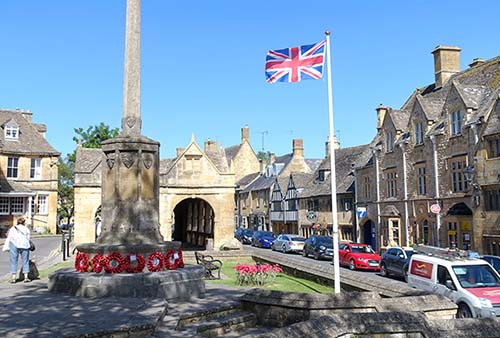
Chipping Campden’s TI is tucked away in the old police station on High Street. Buy the cheap town guide with map or the local Footpath Guide (daily 9:30-17:00; +44 1386 841 206, chippingcampdenonline.org, info@campdenonline.org).
HELPFUL HINTS
- Book Ahead: For peak season visits, book your accommodation as early as possible. Many of the area’s best gastropubs get booked up in the evenings; reserve ahead if you have your heart set on a place (see the “Great Country Gastropubs” sidebar, later in the chapter).
- Market Day: A small country market fills the lower room of the Town Hall with arts, crafts, and homemade baked goods nearly year-round on Friday mornings (Fri 9:00-11:00, no market in Jan). Check for a heartier, more modern market on some Fridays in the Market Hall (Fri 10:00-17:00).
- Taxi: Try Cotswold Chauffeur Services or Les Proctor (see here), check with the TI, or ask your hotel for recommendations.
- Parking: Find a spot anywhere along High Street and park for free with no time limit. There’s also a pay lot on High Street, next to the Town Hall (2-hour maximum). If those are full, there is free parking on the street called Back Ends. On weekends, you can also pay to park at the school at the north end of town (see map).
- Tours: The local members of the Cotswold Voluntary Wardens are happy to show you around town for a small donation to the Cotswold Conservation Fund (cash or via website below, 8 people max, 1.5-hour walks run late May-Sept Tue at 14:00 and Thu at 10:00, meet at Market Hall; +44 7761 565 661, cotswolds-nl.org.uk/get-involved/make-a-donation, Vin Kelly).
- Walks and Hikes from Chipping Campden: Since this is a particularly hilly area, long-distance hikes are challenging. The easiest and most rewarding stroll is to the thatch-happy hobbit village of Broad Campden (about a mile, mostly level). From there, you can walk or take the bus (#2) back to Chipping Campden.
Or, if you have more energy, continue from Broad Campden up over the ridge and into picturesque Blockley (2 miles)—and, if your stamina holds out, all the way to Bourton-on-the-Hill (another 2 miles; both are connected by buses #1 and #2 to Chipping Campden and Moreton).
Alternatively, you can hike up to Dover’s Hill, just north of the village. Ask locally about this easy, circular one-hour walk that takes you on the first mile of the 100-mile-long Cotswold Way (which goes from here to Bath).
For more about hiking, see “Getting Around the Cotswolds—By Foot,” earlier.
Chipping Campden Walk
This self-guided stroll through “Campden” (as locals call their town) takes you from the Market Hall west to the old silk mill, and then back east the length of High Street to the church. It takes about an hour.
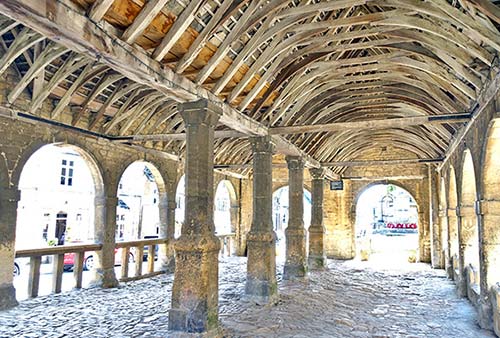
Market Hall: Begin at Campden’s most famous monument—the Market Hall. It stands in front of the TI, marking the town center. The Market Hall was built in 1627 by the 17th-century Lord of the Manor, Sir Baptist Hicks. (Look for the Hicks family coat of arms on the east end of the building’s facade.) Back then, it was an elegant shopping hall for the townsfolk who’d come here to buy their produce. In the 1940s, it was almost sold to an American, but the townspeople heroically raised money to buy it first, then gave it to the National Trust for its preservation.
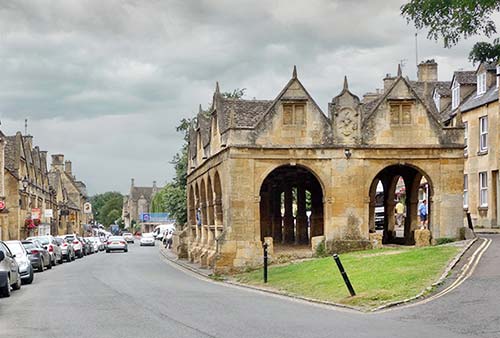
The timbers inside are true to the original. Study the classic Cotswold stone roof, still held together with wooden pegs nailed in from underneath. (Tiles were cut and sold with peg holes, and stacked like waterproof scales.) Buildings all over the region still use these stone shingles. Today, the hall, which is rarely used (except for some locals selling crafts), stands as a testimony to the importance of trade to medieval Campden.
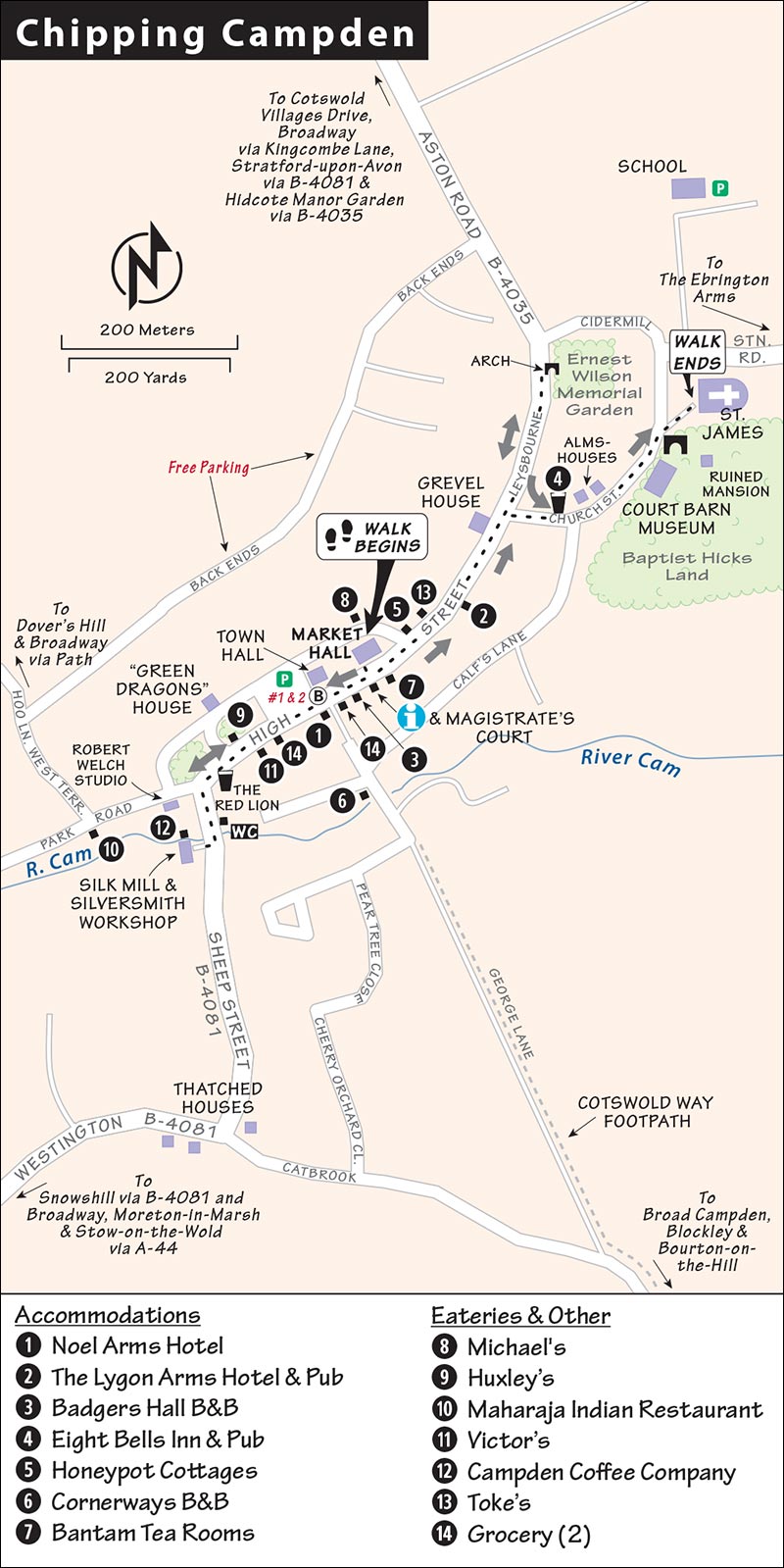
Adjacent to the Market Hall is the sober WWI monument—a reminder of the huge price paid by nearly every little town. Walk around it, noticing how 1918 brought the greatest losses.
Between the Market Hall and the WWI monument you’ll find a limestone disc embedded in the ground marking the ceremonial start of the Cotswold Way.
The TI is across the street, in the old police courthouse. If it’s open, you’re welcome to climb the stairs and peek into the Magistrate’s Court (free, same hours as TI, ask at TI to go up). Under the open-beamed courtroom is a humble little exhibit on the town’s history.
• Walk southwest, passing the Town Hall (with the cute little bell tower) and the parking lot that was originally the sheep market, toward the Red Lion Inn. At the small park with three trees, look to the right, across High Street, for the house with a sundial and sign over the door reading...
“Green Dragons”: The house’s decorative, black cast-iron fixtures (originally in the stables) once held hay and functioned much like salad bowls for horses. Fine-cut stones define the door, but “rubble stones” make up the rest of the wall. The pink stones are the same limestone but have been heated, and likely were scavenged from a house that burned down.
• At the Red Lion, leave High Street and walk a block down Sheep Street. At the little creek just past the public WC, a little lane on the right leads to an old Industrial Age silk mill (and the Hart silversmith shop).
Silk Mill: The tiny River Cam powered a mill here since about 1790. Today it houses the handicraft workers guild and some interesting history. In 1902, Charles Robert Ashbee (1863-1942) revitalized this sleepy hamlet of 2,500 by bringing a troupe of London artisans and their families (160 people in all) to town. Ashbee was a leader in the romantic Arts and Crafts movement—craftspeople repulsed by the Industrial Revolution who idealized handmade crafts and preindustrial ways. Ashbee’s idealistic craftsmen’s guild lasted only until 1908, when it ran into financial difficulties and the individual artisans were left to run their own businesses.
Today, the only shop surviving from the originals is that of silversmith David Hart. His grandfather came to town with Ashbee, and the workshop (upstairs in the mill building) is an amazing time warp—little has changed since 1902. Hart is a gracious elderly man as well as a fine silversmith, and he, his son William, and his nephew Julian welcome browsers six days a week (ask to sign their guest book and join a century’s worth of visitors, including Frank Lloyd Wright). They’re proud that everything they make is a “one-off” (Mon-Fri 9:00-16:00, Sat until 12:00, closed Sun, +44 1386 841 100).
• While you could continue 200 yards farther to see some fine thatched houses, this walk instead returns to High Street. On the corner (to your left as you return to High Street) is the studio shop of Robert Welch, a local industrial designer who worked in the spirit of the Arts and Crafts movement. His son and daughter carry on his legacy in the fine shop with sleek tableware, glassware, and bath fittings (with a little museum case in the back). Now turn right and walk through town.
High Street: Chipping Campden’s High Street has changed little architecturally since 1840. (The town’s street plan and property lines survive from the 12th century.) As you now walk the length of England’s finest historic High Street, study the skyline, see the dates on the buildings, and count the sundials. Notice the harmony of the long rows of buildings. While the street comprises different styles through the centuries, everything you see was made of the same Cotswold stone—the only stone allowed today.
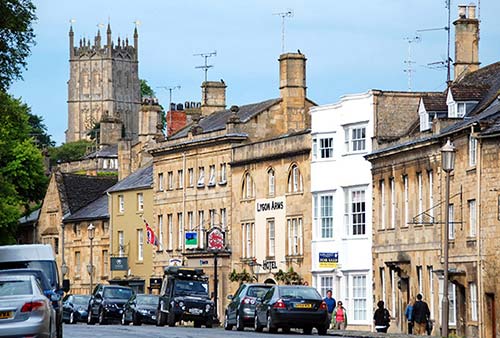
To remain level, High Street arcs with the contour of the hillside. Because it’s so wide, you know this was a market town. In past centuries, livestock and packhorses laden with piles of freshly shorn fleece would fill the streets. Campden was a sales and distribution center for the wool industry, and merchants from as far away as Italy would come here for the prized raw wool.
High Street has no house numbers: Locals know the houses by their names. In the distance, you’ll see the town church (where this walk ends). Notice that the power lines are buried underground, making the scene delightfully uncluttered.
As you stroll High Street, you’ll find the finest houses on the uphill side. Decorative features (like the Ionic capitals near the TI) are added for nonstructural touches of class. Most High Street buildings are half-timbered, but with cosmetic stone facades. You may see some exposed half-timbered walls. Study the crudely beautiful framing, made of hand-hewn oak (you can see the adze marks) and held together by wooden pegs.
Peeking down alleys, you’ll notice how the lots are narrow but very deep (33 x 330 feet). Called “burgage plots,” this platting goes back to 1170. In medieval times, rooms were lined up long and skinny like train cars: Each building had a small storefront, followed by a workshop, living quarters, staff quarters, stables, and a garden at the very back. Now the private alleys that still define many of these old lots lead to comfy gardens.
• Hike the length of High Street toward the church. After a couple hundred yards, just before Church Street, there’s a fine mansion on the left with a sundial and coats of arms adorning stained-glass windows.
Grevel House: In 1367, William Grevel built what’s considered Campden’s first stone house. Sheep tycoons had big homes. Imagine back then, when this fine building was surrounded by humble wattle-and-daub huts. It had newfangled chimneys, rather than a crude hole in the roof. (No more rain inside!) Originally a “hall house” with just one big, tall room, it got its upper floor in the 16th century. The finely carved central bay window is a good early example of the Perpendicular Gothic style. The gargoyles scared away bad spirits—and served as rain spouts.
• Continue up High Street for about 100 yards, passing Church Street (which we’ll walk up later). On the right, at a big tree behind a low stone wall, you’ll find a small Gothic arch leading into a garden.
Ernest Wilson Memorial Garden: Once the church’s vegetable patch, this small and secluded garden is a botanist’s delight today. Pop inside if it’s open. The garden is filled with well-labeled plants that the Victorian botanist Ernest Wilson brought back to England from his extensive travels in Asia. There’s a complete history of the garden on the board to the left of the entry.
• Backtrack to Church Street. Turn left, walk past the recommended Eight Bells pub, and hook left with the street. Along your right-hand side stretches...
Baptist Hicks Land: Sprawling adjacent to the town church, the area behind the wall, known as Baptist Hicks Land, held Hicks’ huge estate and manor house. This influential Lord of the Manor was from “a family of substance,” who were merchants of silk and fine clothing as well as moneylenders. Hicks housed the poor, making a show of his generosity, adding a long row of almshouses (with his family coat of arms) for neighbors to see as they walked to church. These almshouses (lining Church Street on the left) house pensioners today, as they have since the 17th century. Across the street is a ditch built as a “cart wash”—it was filled with water to soak old cart wheels so they’d swell up and stop rattling.
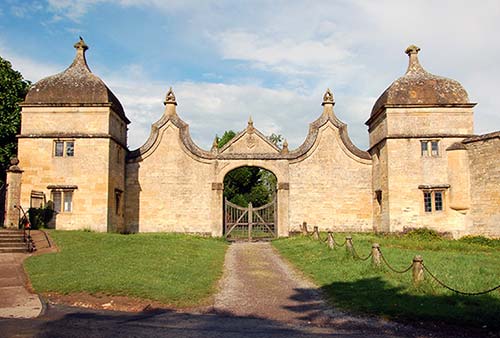
On the right, filling the old Court Barn, is a small, fussy museum about crafts and designs from the Arts and Crafts movement, with works by Ashbee and his craftsmen (£7, Tue-Sun 10:00-16:00, closed Mon, +44 1386 841 951, courtbarn.org.uk).
Beyond the ornate gate (to the right of the church), you can see the few outbuildings and the charred corner of Hicks’ mansion (you may have to back up across the street to get a good view). The mansion was burned by royalists in 1645 during the Civil War—notice how Cotswold stone turns red when burned.
• Next to the Hicks gate, a scenic lane leads to the front door of the church. It’s lined with 12 linden trees: All but one were planted in about 1760, representing each of the apostles (one since died, but another has been planted in its place).
St. James Church: This is one of the finest churches in the Cotswolds. Both the town and the church were built by wool wealth. Go inside. The church is Perpendicular Gothic, with lots of light and strong verticality. Notice the fine vestments and altar hangings (intricate c. 1460 embroidery) behind protective blue curtains (near the back of the church). Tombstones pave the floor in the chancel (often under protective red carpeting)—memorializing great wool merchants through the ages.
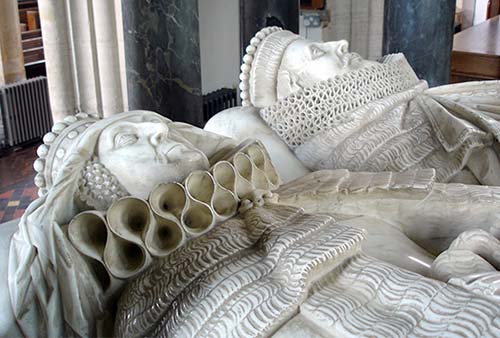
At the altar is a brass relief of William Grevel, the first owner of the Grevel House (described earlier), and his wife. But it’s Sir Baptist Hicks who dominates the church. His huge canopied tomb is the ornate final resting place for Hicks and his wife, Elizabeth. Adjacent—as if in a closet—is a statue of their daughter, Lady Juliana, and her husband, Lutheran Yokels. Juliana commissioned the statue in 1642, when her husband died, but had it closed up until she died in 1680. Then, the doors were opened, revealing these two people holding hands and living happily ever after—at least in marble. On a nearby wall is a memorial to their daughter, Lady Penelope Noel, who suffered a most unfortunate sewing mishap.
Just outside as you leave the church, look immediately around the corner to the right of the door. A small tombstone reads, “Thank you Lord for Simon, a dearly loved cat who greeted everyone who entered this church. RIP 1986.”
Sights near Chipping Campden
The first sights are within a 10-minute drive of Chipping Campden, while Broad Campden, Blockley, and Bourton-on-the-Hill lie roughly between Chipping Campden and Stow (or Moreton)—handy if you’re connecting those towns. Walkers can connect the towns for a pleasant if challenging stroll, then bus back to Chipping Campden.
▲Hidcote Manor Garden
The 10-acre grounds around this manor house, recently restored to their original 1930s splendor, are well worth a visit if you like gardens. Hidcote is where garden designers pioneered the notion of creating a series of outdoor “rooms,” each with a unique theme (such as maple room, red room, and so on) and separated by a yew-tree hedge. The garden’s design, inspired by the Arts and Crafts movement, is most formal near the house and becomes more pastoral as it approaches the countryside. Follow your nose through a clever series of small gardens that lead delightfully from one to the next. Among the best in England, Hidcote Gardens are at their fragrant peak from May through August. But don’t expect much indoors—the manor house has only a few rooms open to the public.
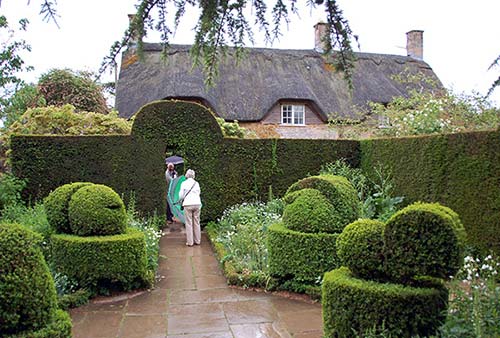
Cost and Hours: £19, daily 10:00-17:00, Nov Fri-Sun 11:00-16:00, closed Mon-Thu; closed Dec-Feb; last entry one hour before closing; talks and tours offered most days—check the schedule at “The Barn” when you arrive; café; +44 1386 438 333, nationaltrust.org.uk/hidcote.
Getting There: If you’re driving, it’s four miles northeast of Chipping Campden—roughly toward Ilmington. The gardens are accessible by bus, then a 45-minute country walk uphill. Buses #1 and #2 take you to Mickleton (one stop past Chipping Campden), where a footpath begins next to the churchyard. Continuing more or less straight, the path leads through sheep pastures and ends at Hidcote’s driveway.
▲Broad Campden, Blockley, and Bourton-on-the-Hill
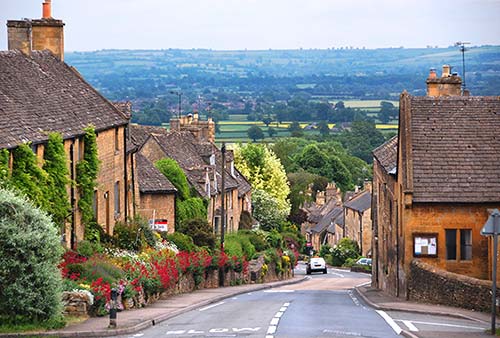
This trio of pleasant villages lines up along an off-the-beaten-path road between Chipping Campden and Moreton or Stow. Broad Campden, just on the outskirts of Chipping Campden, has some of the cutest thatched-roof houses I’ve seen. Blockley, nestled higher in the picturesque hills, is a popular setting for films. The same road continues to Bourton-on-the-Hill (pictured), with fine views looking down into a valley and an excellent gastropub (Horse and Groom, described on here). Blockley and Bourton-on-the-Hill are connected to Chipping Campden by buses #1 and #2, or you can walk (easy to Broad Campden, more challenging to the other two).
Sleeping in Chipping Campden
In Chipping Campden—as in any Cotswolds town—B&Bs offer a better value than hotels. Most of my listings are centrally located on or near the main street (where it’s easy and free to park). Book well in advance, as rooms are snapped up early in the spring and summer by happy hikers heading for the nearby Cotswold Way. Rooms are also generally tight on Saturdays (when many charge a bit more and rarely rent to one-nighters) and in September, another peak month.
£££ Noel Arms Hotel, the characteristic old hotel on the main square, has welcomed guests for 600 years. Its lobby was remodeled in a medieval-meets-modern style, and its 27 rooms are well furnished with antiques (some ground-floor doubles, attached restaurant/bar and café, High Street, +44 1386 840 317, noelarmshotel.com, reception@noelarmshotel.com).
£££ The Lygon Arms Hotel (pronounced “lig-un”), attached to the popular pub of the same name, has small public areas and 10 cheery, open-beamed rooms (family rooms, High Street, go through archway and look for hotel reception on the left, +44 1386 840 318, lygonarms.co.uk, sandra@lygonarms.co.uk, Sandra Davenport).
£££ Badgers Hall rents four beautiful rooms with antique furnishings beneath wooden beams. Charming hosts Karen and Paul offer a warm welcome and a much-raved-about breakfast (2-night minimum, no kids under 18, High Street, +44 1386 840 839, badgershall.com [URL inactive], badgershall@gmail.com).
£££ Eight Bells Inn rents six modern rooms that maintain the old building’s character. Two rooms are on the ground level, and four are above the recommended pub. Because the pub closes at 22:30, noise isn’t typically a problem (pleasant garden and courtyard, Church Street, +44 1386 840 371, eightbellsinn.co.uk, info@eightbellsinn.co.uk, prefers reservations through Booking.com).
£££ Honeypot Cottages, run by helpful Andy and Sarah, supply home-away-from-home modern amenities in a handful of cottages sprinkled across Chipping Campden (including one next to the silk mill and another on High Street) and other Cotswold towns like Broad Campden and Ebrington (cottages sleep 2-8, Sheep Street, +44 1386 849 097, mobile +44 7951 225 177, honeypotcottages.co.uk, info@honeypotcottages.co.uk). Andy and Sarah are happy to chat on the phone to find you the best cottage match.
££ Cornerways B&B is a fresh, bright, and comfy home a block off High Street. It’s run by the delightful Carole and Les, who can “look out the window and see the church where we were married.” The two huge, light, airy loft rooms are great for families and couples (2-night minimum, no kids under 11, cash only, off-street parking, George Lane—walk through the arch beside Noel Arms Hotel, +44 1386 841 307, cornerways.info, carole@cornerways.info). For a fee, Les can pick you up from the train station, or take you on village tours.
££ Bantam Tea Rooms, in the center of town, rents eight cottage-cute rooms befitting of their charming Cotswolds surroundings. Cheerful Carolyn and her staff make you feel at home, and the attached tearoom is a tempting place to linger (free parking, High Street, +44 1386 840 386, bantamtea-rooms.co.uk, info@bantamtea-rooms.co.uk).
Eating in Chipping Campden
Chipping Campden has several good places to eat; I’ve listed some local favorites below. Only a couple of places are open for dinner, so reservations are smart. If you have a car, consider driving to one of the excellent countryside pubs mentioned in the sidebar on here (also worth reserving ahead, especially on weekends).
£££ Eight Bells pub is a charming 14th-century inn. It’s the best deal going for top-end pub dining in town, with English dishes both classic and modern. They serve summer salads, “Fishy Friday” lunch specials, and always have a good vegetarian dish. The restaurant, classy pub, and terrace out back all have the same menu (daily, Church Street, +44 1386 840 371, eightbellsinn.co.uk).
£££ Michael’s, a fun Mediterranean restaurant on High Street, serves hearty portions in a tight, convivial space. Michael, from Cyprus, runs his place with a contagious love of life. He serves a variety of mezes—small dishes—and larger mains with Greek flavors. “The Meze” special gives you the works, with a hearty selection of small plates (long hours daily, +44 1386 840 826, michaelsmediterranean.co.uk).
££ Huxley’s, a family-run place, occupies a beautiful spot on High Street, with a relaxing terrace under a weeping willow. It’s a great spot to just relax with a coffee and pastry (or a full brunch) in the morning, but they also offer lunch and dinner in their romantic stone-walled interior. The Italian- and Mediterranean-leaning menu changes with what’s in season (Mon 10:00-17:00, Tue-Thu until 18:00, Fri-Sat until 22:00, closed Sun, +44 1386 840 537, cafehuxleys.co.uk). They also have a little coffee shop and bakery downstairs (Mon-Sat from 9:30 until they’re tired).
££ Maharaja Indian Restaurant, filling the back end of the down-and-dirty Volunteer Inn pub, serves decent Indian dinner standards (daily for dinner only, grassy courtyard out back, Lower High Street, +44 1386 849 281, maharajacatering.net).
LIGHT MEALS
Most of these spots close by late afternoon.
£ Victor’s is a practical little eatery offering full English breakfasts, salads, tasty sandwiches, and wraps made to order (Tue-Fri until 14:30, Sat until 12:00, closed Sun-Mon, Lower High Street, +44 1386 840 401).
£ Campden Coffee Company is a cozy little café and shop serving salads, sandwiches, and homemade sweets (Mon-Fri 9:00-16:00, closed Sat-Sun, on the ground floor of the silk mill, +44 1386 849 251).
£ Toke’s has a tempting selection of deli salads, cheeses, meats, and wine for a make-your-own hamper lunch (closed Sun, just past the Market Hall, +44 1386 382 060).
Afternoon Tea: The Bantam Tea Rooms, a scone’s throw from the Market Hall, is a sweet and pastel place popular for their cakes, bakery goods, lunches, and afternoon tea (daily). They also rent several rooms for overnighters (see “Sleeping in Chipping Campden,” earlier).
Picnic and Groceries: The Co-op grocery is handy for a picnic, with a good selection of sandwiches and takeaway items (daily, next to TI on High Street). For more upscale choices, Fillet & Bone on High Street has lots of local specialties (Mon-Sat 9:00-17:00, shorter hours Sun).
Cotswold Villages Drive
COSTWOLDS LOOP FROM CHIPPING CAMPDEN
The hilly countryside west of Chipping Campden is particularly scenic and a rewarding area to explore little thatched villages, including the famous and touristy town of Broadway. Just south of that, you’ll find my nominations for the most charming Cotswold villages, Stanton, Stanway, and Snowshill, nestled side by side.
This drive loops counterclockwise around these villages, passing impressive manors, colorful gardens, and narrow lanes, for a quintessential day of Cotswolds cuteness—exactly what you came here for. Most of these places are difficult to reach by public transportation (except Broadway, which you can reach on bus #1). To do this drive without your own car, contact one of my recommended drivers on here.
Planning Your Drive
This 30-mile loop starts and ends in Chipping Campden. While distances are short, allow 6-8 hours for the entire drive (depending on how long you linger in each place).
Sights can have limited, seasonal opening hours, so it might not be possible to do everything (for example, Stanway House is likely only open June-Aug Tue and Thu afternoons, and Snowshill Manor has a last entry time of 15:30). Read through this drive carefully in advance to establish your priorities.
Proper lunch options are limited. Consider Stanton’s charming Mount Inn or The Plough Inn in Ford, or assemble a gourmet picnic in Chipping Campden and find a scenic spot to eat along your drive.
From Chipping Campden to Broadway Tower
Begin by driving north out of Chipping Campden, on Aston Road. Notice the handful of B&Bs and newly constructed houses—all with a nod to the classic Cotswold stone design—lining the street as you work your way toward the town’s more residential neighborhoods. The Cotswolds’ popularity has created a real estate boom over the past decade, turning the area into a playground for the rich and famous.
• After about a mile, turn left onto Kingcombe Lane. A half-mile up the hill, you’ll see a sign (and path) on the left for the...
Cotswolds Way: This 100-mile-long path starts in Chipping Campden and ends in Bath. Just beyond the Cotswold Way sign, a green public way sign on the right points across open fields overlooking Chipping Campden. These walking paths, trodden by visitors and Brits alike, cover 50,000 miles across the entire country. I get a thrill out of cutting across privately owned pastures like these. While it may seem like trespassing, landlords are prohibited from blocking or fencing off access.
• Farther ahead, you’ll reach an intersection with a brown sign pointing right for Dover’s Hill. Turn right, and soon, right again into the parking lot for...
Dover’s Hill: This spot is named after Robert Dover, founder of the 17th-century Cotswolds Olympick Games—a series of physical contests meant to “positively channel some of the more competitive traits of the local people.” The location, chosen for its proximity to Chipping Campden (yet far enough away to avoid any potential competition-induced rioting), sits less than 1,000 feet above the village, overlooking the patchwork countryside. Take in the classic Cotswolds vantage point of sheep, fields, and mountains (look for the stone pedestal with the map that points out locations in the distance).
• Head back to the main road and turn right. As you drive, try spotting the public ways that weave through the pastoral fields. In about 2 miles, cross busy Fish Hill Road, passing through stone gates.
Continue along the road until you see a tower emerge on your right. Skip the first paid parking lot in the field to the right and continue to the main lot just ahead. (Along the way, keep an eye out for free spots along the road; if the main lot is busy, follow the road downhill past the visitors center and park at the Tower Barn Café.)
Broadway Tower
Ornamenting a hill above Broadway, this tower looks like a turreted castle fortification stranded in the countryside without a castle in sight. An eccentric mash-up of architectural features, this 55-foot-tall observation tower is a “folly”—a uniquely English term for a quirky, outlandish novelty erected as a giant lawn ornament by an aristocrat with more money than taste. British landscaper Lancelot “Capability” Brown (of Blenheim Palace fame) masterminded the setting for this purely decorative structure. Climbing to the top affords you views over the pastures, but the view from the tower’s parklike perch is almost as impressive. Nearby, an underground Cold War bunker is open to visitors on weekends. Returning to this hill just before sunset for a short hike beyond the tower can be unforgettable.
Cost and Hours: Tower grounds and climb-£15, grounds only-£5, daily 10:00-17:00, shorter hours Nov-March, free audioguide for tower; Cold War-era bunker—£13, April-Oct Sat-Sun 10:00-16:00, closed Mon-Fri, closed Nov-March, no kids under 11; +44 1386 852 390, broadwaytower.co.uk.
Cafés and Shops: The tower ticket office has the simple Morris & Brown café and shop. A path downhill from the ticket office leads to the much slicker Tower Barn Café, with a shop selling fine Cotswolds goods (daily, same contact info as tower).
• Head back to Fish Hill Road and take a left. Wind your way 2 miles downhill back to the valley toward the village of Broadway. As you near it, you’ll approach two roundabouts: At the first roundabout, take the first exit (left); at the second, take the third exit (right) into town.
Broadway
Dominated by a wide, tree-lined “broad way” running through its middle, Broadway is one of the bigger towns in the area (and a favorite of locals). Once an important stagecoach stop on the way to London, Broadway has long attracted travelers, artists, and writers. Today, the town is a charming collection of teahouses, inviting shops, a handful of museums, and day-tripping tourists snapping photos. Check out the top end of High Street (which is a dead end, residential, and a classic/modern Cotswolds neighborhood). Consider pausing here for a snack or lunch before continuing on.
• Leaving the bustle of Broadway, drive past The Swan Inn and turn left onto Cheltenham Road toward Winchcombe. After 2 uneventful miles, you’ll see a sign for Stanton. Turn left here, continuing on a pleasant country lane. You’ll soon pass Jill Carenza’s Cotswolds Riding Centre (see “Horse Riding,” later) and a few houses, and then you’ll reach a little free parking lot on the right. From here, it’s a short walk to...
▲Stanton
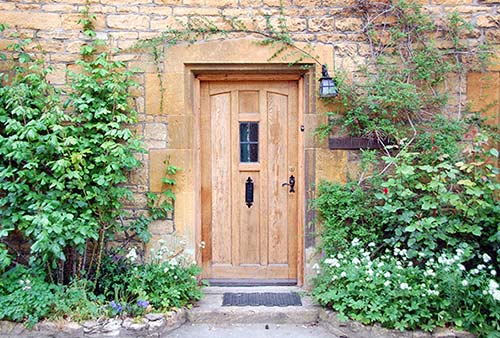
Pristine Cotswold charm cheers you as you head up the main street of the village of Stanton, served by a few scant buses. Go on a photo safari for stone cottages, thatched roofs, and flower-bedecked doorways and windows—some of the best in the region.
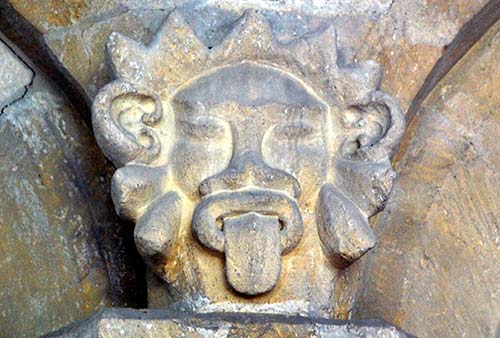
Stanton’s Church of St. Michael (with the pointy spire) betrays a pagan past. It’s safe to assume any church dedicated to St. Michael (the archangel who fought the devil) sits upon a sacred pagan site. Stanton is actually at the intersection of two ley lines (a line connecting prehistoric or ancient sights). You’ll see St. Michael’s well-worn figure (and, above that, a sundial) over the door as you enter. Inside, above the capitals in the nave, find the pagan symbols for the sun and the moon (see photo). While the church probably dates to the ninth century, today’s building is mostly from the 15th century, with 13th-century transepts. On the north transept (far side from entry), medieval frescoes show faintly through the 17th-century whitewash. Original medieval glass is behind the altar. The list of rectors (at the very back of the church, under the organ loft) goes back to 1269. Finger the grooves in the back pews, worn away by sheepdog leashes. (A man’s sheepdog accompanied him everywhere.)
Horse Riding: Jill Carenza’s Cotswolds Riding Centre, which you passed on the way into town, is in the most scenic corner of the region. The facility’s horses can take anyone from rank beginners to more experienced riders on a scenic “hack” through the village and into the high country (per-hour prices: £49/person on a group hack, £59/person semiprivate hack, £70 private one-person hack; lessons, longer/expert rides, and “pub rides” available with a lunch stop; +44 1386 584 250, cotswoldsriding.co.uk, info@cotswoldsriding.co.uk).
Sleeping in Stanton: ££ The Vine B&B has four rooms in a lovingly worn family home near the center of town, next to the cricket pitch (ask if any matches are on if you’re there on a Saturday in summer). While it suffers from absentee management, the Vine is convenient if you want to ride all day (most rooms share a WC but have a private shower, one room en suite, family room available, some stairs; for contact info, see listing for riding center, earlier).
Eating in Stanton: High on a hill at the far end of Stanton’s main drag, the aptly named £££ Mount Inn serves upscale meals on its big, inviting terrace with grand views of Stanton rooftops and the Cotswold hills. It’s a lovely 10-minute stroll through town past the church—you may even see horses and riders clopping through town along the way (Tue-Sat for lunch and dinner, Sun lunch only, closed Mon, Old Snowshill Road, +44 1386 584 316).
• Hop back in the car and leave the village at its south end (on Stanway Road); skirt the thatched-roof, half-timbered white house; and keep left toward Stanway and Stow-on-the-Wold. Not long after, you’ll enter a picturesque lane connecting...
Stanton to Stanway
These two communities are separated by a mile-long row of oak trees and grazing land, with parallel waves echoing the furrows plowed by medieval farmers. Centuries ago, farmers were allotted long strips of land called “furlongs” (one square furlong equals 10 acres). The idea was to dole out good and bad land equitably. Over centuries of plowing these, furrows were formed.
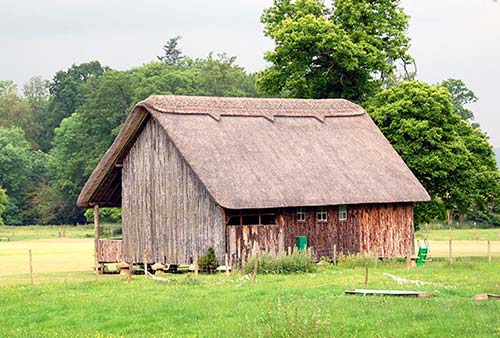
• As you approach the next quaint village, the first building you’ll see (on the right) is a thatched cricket pavilion overlooking the village cricket green. Originally built for Peter Pan author J. M. Barrie, it dates from 1930 and is raised (as medieval buildings were) on rodent-resistant staddle stones. Continue into...
Stanway
Stanway, or “Stone Way,” sits alongside the old Roman road (now the A-12) on the path of today’s Cotswold Way. Rather than cluster around a village green, its houses trickle like a lazy creek toward Stanton. More of a humble crossroads community than a true village, sleepy Stanway is worth a visit mostly for its distinguished Stanway House, with its aristocratic grounds and centuries-old Tithe Barn. But the house has limited hours, so you’ll need to plan ahead if you intend to visit.
▲▲Stanway House
The Earl of Wemyss (pronounced “Weemz”), whose family tree charts relatives back to 1202, opens his melancholy home and grounds to visitors two days a week in the summer. Walking through his house offers a unique glimpse into the lifestyles of England’s eccentric and fading nobility.
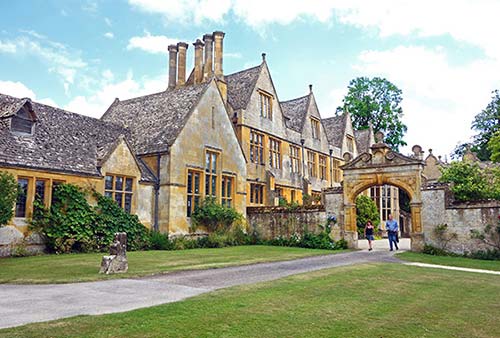
Cost and Hours: £12, June-Aug Tue and Thu only 14:00-17:00, closed Sept-May; free wonderful and intimate audio-guide narrated by the lordship himself; private tours can sometimes be arranged—call +44 1386 584 469 or +44 7398 712 743, stanwayfountain.co.uk, office@stanwayhouse.co.uk.
Visiting the Manor: The 14th-century Tithe Barn (near where you enter the grounds) predates the manor. It was originally where monks—in the days before money—would accept one-tenth of whatever the peasants produced. Peek inside: This is a great hall for village hoedowns. While the Tithe Barn is no longer used to greet motley peasants and collect their feudal “rents,” the lord still gets rent from his vast landholdings, and hosts village fêtes in his barn.
You’re free to wander around the manor house pretty much as you like, but keep in mind that a family does live here. His lordship is often roaming about as well. The place feels like a time warp. Ask a staff member to demonstrate the spinning rent-collection table. In the great hall, marvel at the one-piece oak shuffleboard table and the 1780 Chippendale exercise chair (a half-hour of bouncing on this was considered good for the liver).
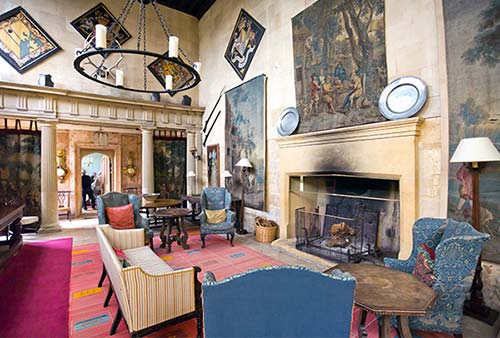
The place has a story to tell. And so do the docents stationed in each room—modern-day peasants who, even without family trees, probably have relatives going back just as far in this village. Talk to these people. Probe. Learn what you can about this side of England.
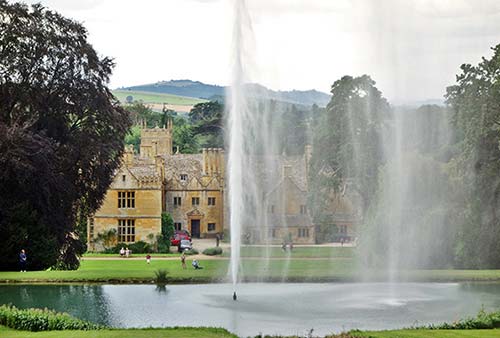
Wandering through the expansive backyard, you’ll see the earl’s pet project: restoring “the tallest fountain in Britain”—300 feet tall and gravity-powered.
Signs lead to a working watermill, which produces flour from wheat grown on the estate (about 100 yards from the house).
• We’re on our way to Snowshill. Heading south from Stanway House, turn left onto the B-4077. Continue about 4 miles, passing the town of Ford (and its recommended Plough Inn), then take a left at the sign for Snowshill (pronounced “SNAH-zul”). From there, head north for another 4 miles, following signs to Snowshill and then Snowshill Manor. Park in the free lot up the hill from the ticket office.
▲Snowshill Manor
Dark and mysterious, this old manor house is stuffed with the lifetime collection of Charles Paget Wade. It’s one big, musty celebration of craftsmanship, from finely carved spinning wheels to frightening samurai armor to tiny elaborate figurines carved by prisoners from the bones of meat served at dinner. Nothing is labeled; instead, the displays are intended to tell their own stories. Taking seriously his family motto, “Let Nothing Perish,” Wade dedicated his life and fortune to preserving things finely crafted.
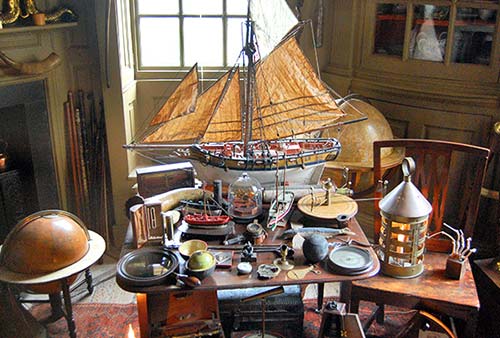
Cost and Hours: £15, manor house open daily 11:30-16:30; Nov Sat-Sun 11:00-14:30, closed Mon-Fri; closed Dec-mid-March; gardens and ticket window open at 11:00; last entry to manor one hour before closing; café, +44 1386 852 410, nationaltrust.org.uk/snowshillmanor.
Visiting the Manor: From the ticket office, it’s a pleasant 10-minute walk to the manor, along a path that cuts through an apple orchard (a golf-cart-type shuttle to the house is available for those who need assistance). At the entrance and throughout the house, helpful docents are happy to share their knowledge of specific items and about the cheeky man himself. The one-way route starts with the newest part of the house (c. 1720), then winds up the stairs to the oldest section, with rooms dating to the early 16th century.
A trained architect, artist, poet, and lover of fashion (and “playing dress-up”), Wade purchased the manor after seeing it featured in Country Life magazine. He lovingly restored the house and gardens—previously little more than muddy farmland—filling rooms with anything he thought displayed fine craftmanship.
As Wade grew ill, knowing his family had no interest in the collection and fearing it would be sold off (or given away) in pieces, he donated the house to the National Trust to preserve exactly as he intended.
• Our final stop is five minutes away (a fragrant drive in the summer). Exiting the Snowshill Manor parking lot, turn right onto the main road, eventually reaching a fork. To first take a wander through Snowshill village, head right (downhill) and you’ll soon reach Snowshill, with its photogenic triangular square and characteristic pub at its base.
Back in the car, retrace your steps back to the fork, and turn right (uphill). At the next intersection, turn left, following the brown Snowshill Lavender sign. At the intersection after that, turn left at the green Cotswold Lavender sign. The parking lot is just ahead, on your left.
Cotswold Lavender
In 2000, farmer Charlie Byrd realized that tourists love lavender. He planted his farm with 250,000 plants, and now visitors come to wander among his 45 acres, which burst with gorgeous lavender blossoms from mid-June through late August. His fragrant fantasy peaks late each July. Lavender—so famous in France’s Provence—is not indigenous to this region, but it does well in the local climate and limestone soil. Farmer Byrd produces lavender oil (an herbal product valued since ancient times for its healing, calming, and fragrant qualities) and sells it at the farm, along with many other lavender-themed items. If you’re here during harvest, ask about peeking into the distillery to watch the process.
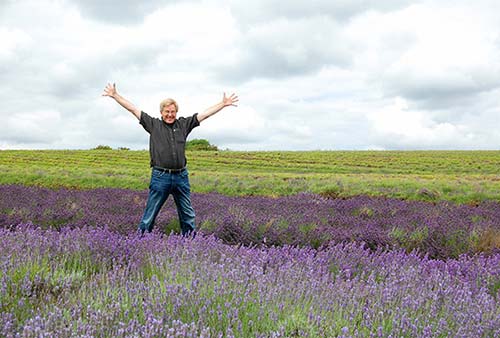
Cost and Hours: £8 to walk through the fields and the distillery; generally open mid-June-Aug daily 10:00-17:00, closed Sept-mid-June, schedule changes annually depending on when the lavender blooms—call ahead or check their website; +44 1386 854 821, cotswoldlavender.co.uk.
• From here, it’s an easy 5 miles back to Chipping Campden. Leaving the lavender farm, turn left onto the main road, continuing straight onto Buckle Street. From there, follow the B-4081 all the way back into town, enjoying a nice view of Chipping Campden as you drop down the hill onto the south end of Lower High Street.
Our drive is over, but there’s plenty more Cotswolds to enjoy. Consider a hearty dinner at your choice of the area’s countryside gastropubs—if you made reservations (the recommended Horse and Groom Pub is about a 10-minute drive away from either the lavender farm or Chipping Campden; the Plough Inn, in Ford, is 10-15 minutes away).
Stow-on-the-Wold
Located 10 miles south of Chipping Campden, Stow-on-the-Wold—with a name that means “meeting place on the uplands”—is the highest town in the Cotswolds. It was strategically built on this spot to control trade along the old Roman road—Fosse Way. Despite its crowds, the town retains its charm, and it merits ▲▲. Most of the tourists are day-trippers, so nights—even in the peak of summer—are peaceful. Stow has no real sights other than the town itself, some good pubs, antique shops, and cute shops draped seductively around a big town square. Visit the church, with its evocative old door guarded by ancient yew trees and the tombs of wool tycoons.
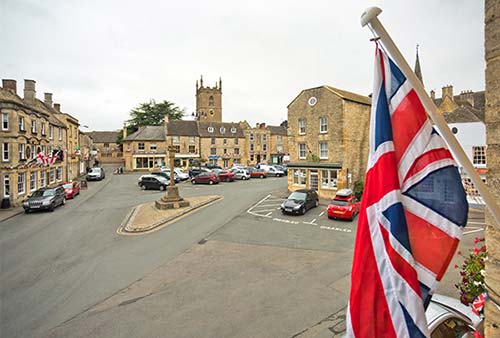
Orientation to Stow-on-the-Wold
TOURIST INFORMATION
A small visitor information center is run out of the library in St. Edwards Hall on the main square (Mon and Wed 10:00-17:00, Tue and Fri until 19:00, Thu and Sat until 14:00, closed Sun; Oct-April Sat 10:00-14:00 only, +44 1451 870 998). The TI in Moreton-in-Marsh is more serious (see here).
HELPFUL HINTS
- Services: A pay WC (signed public convenience; cards accepted) is at the far end of Market Square, just past the recommended Queen’s Head pub.
- Taxi: See “Getting Around the Cotswolds—By Taxi or Private Driver,” earlier in the chapter.
- Parking: Park anywhere on Market Square free for two hours, and overnight between 18:00 and 9:00 (combining overnight plus daily 2-hour allowances means you can park for free 16:00-11:00—they note your license plate, so you can’t just move to another spot after your time is up; £50 tickets for offenders). There is free, unlimited parking on some streets farther from the center (such as Park Street and Well Lane). A convenient pay lot is at the bottom of town (toward the Oddingtons), and there’s free long-stay parking adjacent to the lot at Tesco Supermarket—an easy five-minute walk north of town (follow the signs).
- Sunday Morning Town Walk: Volunteers give charming guided town walks once a week to raise a little money for community projects. It’s fun to mix with English visitors as a local tells the town’s story (£5, April-Sept Sun at 10:30, just show up at the stocks on Market Square).
- Brewery Visit: The area’s local beer, Donnington, is brewed just a five-minute drive away in a pretty lakeside mill that still uses a waterwheel to power production (1-hour guided tours Fri only, check online for times, book in advance, +44 1451 830 603, donnington-brewery.com).
Stow-on-the-Wold Walk
This six-stop self-guided walk covers about 500 yards and takes about 45 minutes. We’ll start in the small park on the main square.
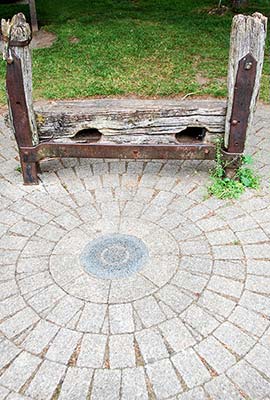
The Stocks on Market Square
Imagine this village during the 17th century when people were publicly ridiculed in stocks like this as a punishment. Stow was born in pre-Roman times; it’s where three trade routes crossed at a high point in the region (altitude: 800 feet). This square was the site of an Iron Age fort, and then a Roman garrison town. Starting in 1107, Stow was the site of an international fair, and people came from as far away as Italy to shop for wool fleeces on this vast, grassy expanse. Picture it in the Middle Ages: a public commons and grazing ground, paths worn through the grass, and no well. Until the late 1800s, Stow had no running water; women fetched water from the “Roman Well” a quarter-mile down the hill.
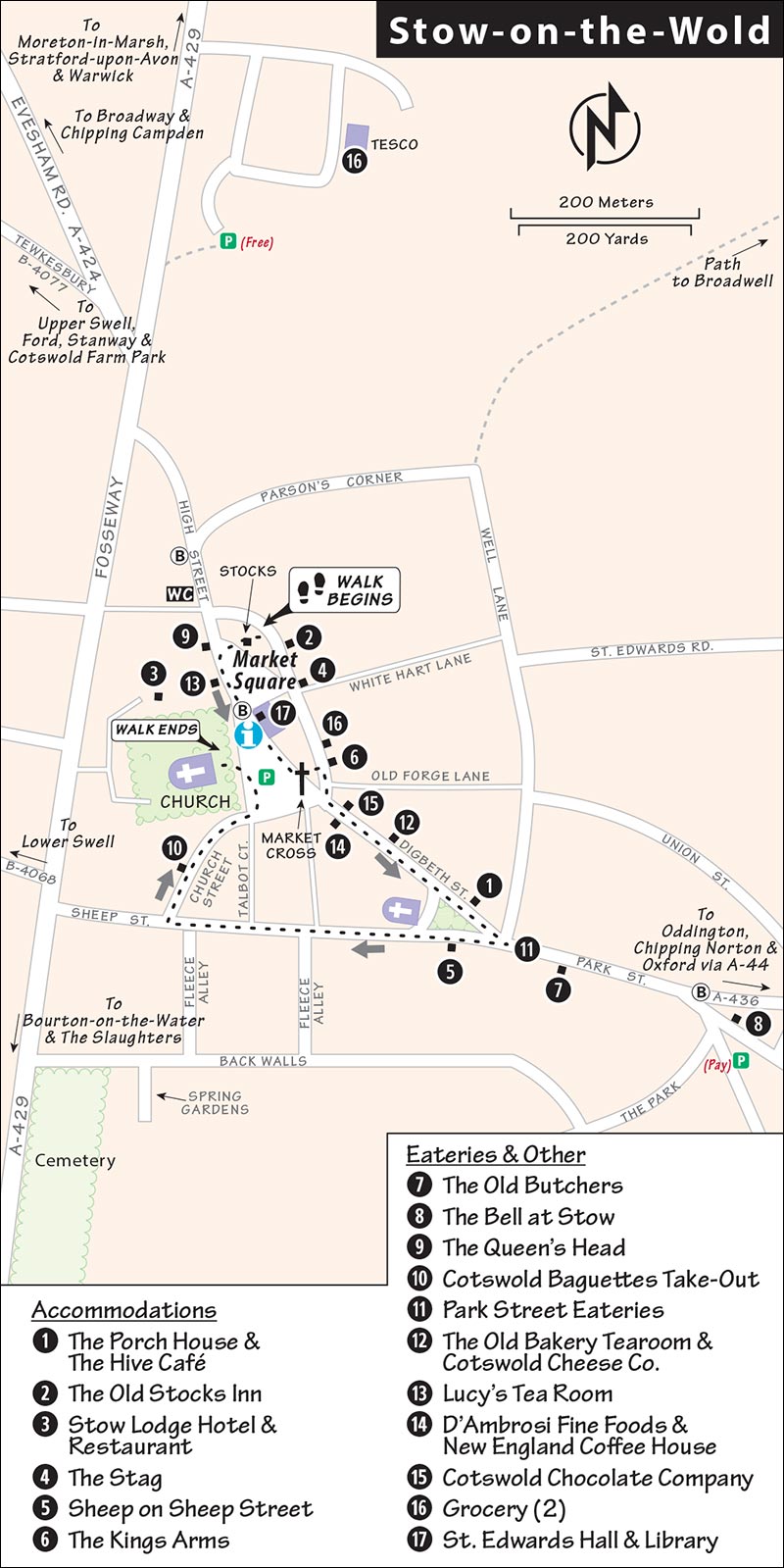
With as many as 20,000 sheep sold in a single day, this square was a thriving scene. And Stow was filled with inns and pubs to keep everyone housed, fed, and watered.
Most of the buildings you see date from the 17th and 18th centuries. A thin skin of topsoil covers the Cotswold limestone, from which these buildings were made. The local limestone is easy to cut, hardens after contact with the air, and darkens with age. Many buildings were made of stone quarried right on site—with the mini quarries becoming their cellars.
That’s why the Stow Lodge (next to the church) lies a little lower than the church. It sits on the spot where locals quarried stones for the church. That building, originally the rectory, is now a hotel. The church (where we’ll end this little walk) is made of Cotswold stone and marks the summit of the hill upon which the town was built.
Enjoy the stonework and the crazy rooflines. Observe the cheap signage on solid stone facades and think about how shops have been coming and going for centuries in buildings that never change.
The Stag (one of my recommended accommodations), ahead on the left, was a typical coaching inn from a time before trains and cars, when land transport was literally horsepower. As horses could manage about 25 miles without a rest, coaches stopped at coaching inns to swap teams of horses. Taking advantage of such a relay of horses, travelers could go from London to Liverpool in 10 days.
As you walk, notice how locals stop to chat with each other to catch up on local news: This is a tight-knit little community.
• Walk around the right of the building in the middle of the square and enter the library.
St. Edwards Hall
The stately building in the square with the wooden steeple is St. Edwards Hall. Back in the 1870s, a bank couldn’t locate the owner of an account containing a small fortune, so it donated the funds to the town to build this civic center. It serves as a City Hall, library, TI, and meeting place. When it’s open, you can wander around upstairs to see the largest collection of Civil War portrait paintings in England—well described and an education in local 17th-century history.
• Beyond the library, at the far end of the square find the free-standing stone cross.
The Market Cross
For 500 years, the Market Cross stood in the market reminding all Christian merchants to “trade fairly under the sight of God.” Notice the stubs of the iron fence in the stone base—a reminder of how countless wrought-iron fences were cut down and given to the government to be melted down during World War II. One of the plaques on the cross honors the Lord of the Manor, who donated money back to his tenants, allowing the town to finally finance running water in 1878. Panels at the top of the cross depict St. Edward, the Crucifixion, the wool trade, and a memorial to the Battle of Stow.
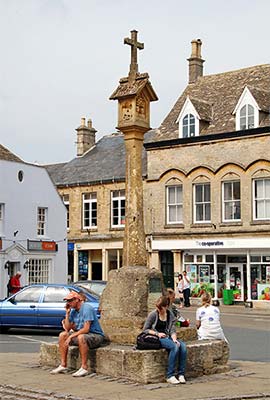
This is the site of the 1646 Battle of Stow. During the English Civil Wars, which pitted Parliamentarians against Royalists, Stow-on-the-Wold remained staunchly loyal to the king. The final battle of England’s first Civil War was fought on this square as about 3,000 troops loyal to the king made their last stand. About 200 Royalist troops were killed (and survivors were locked up in the church). Ultimately, this cleared the way for the beheading of King Charles I and the rise of Oliver Cromwell.
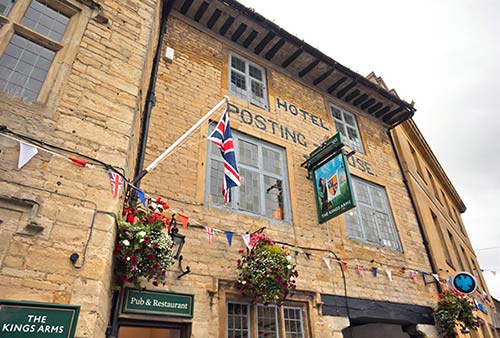
Scan the square for The Kings Arms, with its great gables and spindly chimney. This square was where travelers parked their horses before spending the night at the inn. In the 1600s, this inn was considered the premium “posting house” between London and Birmingham. Because of its allegiance to the king, the town has an abundance of pubs with royal names (King’s This and Queen’s That). Today, The Kings Arms cooks up pub grub and rents rooms upstairs (see listing under “Sleeping in Stow,” later).
• Continue with The Kings Arms on your left, and walk down Digbeth Street.
Digbeth Street
This street is lined with workaday shops, cute gift shops, many good little eateries, and beautiful Cotswold stone. From top to bottom you’ll find: D’Ambrosi Fine Foods (chef-prepared takeaway food, owners Jesse and Andrew), Cotswold Chocolate Company (pop in to watch Tony working in the back kitchen and his wife, Heidi, decorating his concoctions), the New England Coffee House (with cozy lounge rooms upstairs), a “saddlery” for the many local horse enthusiasts, Lambournes (a traditional butcher), Cotswold Cheese Company (with old milk churns flanking the door), and the Old Bakery Tearoom (good for a cream tea or lunch; see “Eating in and near Stow,” later).
Digbeth ends at a little triangular park in front of the former Methodist Church and across from the recommended Porch House hotel, with timbers that date from 947 (it claims—along with about 20 others—to be the oldest in England).
Just beyond the small grassy triangle was the place where locals gathered for bloody cockfights and bearbaiting (watching packs of hungry dogs tear at bears).
Today this is where—once a year, typically in May—the Stow Horse Fair attracts thousands of nomadic Roma (still called Gypsies by some less politically correct locals) and Travellers from far and wide. Thousands of people, who are determined not to be “miserable clock punchers,” congregate down the street on the Maugersbury Road. Locals paint a colorful picture of the Roma, Travellers, and horses inundating the town. The young women dress up to distract the men because the horse fair—with its “grabbing” ritual—also functions as a marriage market.
• Hook right and hike up the wide street.
Sheep Street
As you head up Sheep Street, you’ll pass a boutique-filled former brewery yard (on the left). Notice the old brewery’s fancy street-front office, with its striking Welsh flint facade. This was the bad side of town (with the “smelly trades”). Across the street from the brewery was the slaughterhouse. And Sheep Street was originally not a street, but a staging place for medieval sheep markets. The sheep would be gathered here, then paraded into the market on the main square.
You’ll notice narrow lanes on either side of the street. There are two explanations: one I like to believe (paths just wide enough for a single file of sheep to walk down, making it easier for merchants to count them) and another that’s more likely true (practical walks between the long, narrow, medieval strips of land allotments). You’ll see several of these so-called “fleece alleys” as you walk up the street.
• Walk a couple of blocks until you’re one block from the traffic light and the highway, then make a right onto cute little Church Street, which leads to the church.
St. Edwards Church
Before entering the church, circle it. On the back side, a wooden door is flanked by two ancient yew trees. While many see the door and think of the Christian scripture, “Behold, I stand at the door and knock,” J. R. R. Tolkien fans see something quite different. Tolkien hiked the Cotswolds and had a passion for sketching evocative trees such as this. Lord of the Rings enthusiasts are convinced this must be the inspiration for the Doors of Durin, leading into Moria.
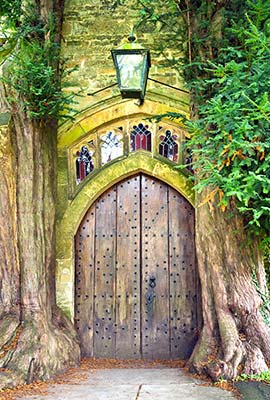
Notice the two “bale tombs” (10 steps to the right of the door). Wool-merchant gravestones were topped with a carved image of a tightly bound bale of wool.
Enter the church (usually open 9:00-17:00, except during services). While a wooden Saxon church stood here in the 10th century, today’s structure is mostly from the 15th century. The floor is paved with the tombs of big shots who made their money from wool and are stil boastful in death. Most of the windows are traditional Victorian (19th century) designs, but the two sets high up in the clerestory are from the dreamier Pre-Raphaelite school.
On the right wall, as you approach the altar, a monument remembers the many boys from this small town who were lost in World War I (50 out of a population of 2,000). There were far fewer in World War II. The biscuit-shaped plaque remembers an admiral from Stow who lost four sons defending the realm.
During the English Civil Wars in the mid-1600s, the church was ransacked, and hundreds of soldiers were imprisoned here. The tombstone on the floor in front of the altar remembers the Royalist Captain Haystings Keyt. His long hair, lace, and sash indicate he was a “cavalier,” and true-blue to the king (Cromwellians were called “round heads”—named for their short hair). Study the crude provincial art—childlike skulls and (in the upper corners) symbols of his service to the king (armor, weapons).
Finally, don’t miss the kneelers tucked in the pews. These are made by a committed band of women known as “the Kneeler Group.”
Hiking from Stow
Stow/Lower Slaughter/Bourton Day Hike
Stow is made to order for day hikes. The most popular is the downhill stroll to Lower Slaughter (3 miles), then on to Bourton-on-the-Water (about 1.5 miles more). It’s a two-hour walk if you keep up a brisk pace and don’t stop, but dawdlers should allow three to four hours. At the end, from Bourton-on-the-Water, a bus can bring you back to Stow. While those with keen eyes can follow this walk by spotting trail signs, it’s always smart to download or bring a map (ask to borrow one at your B&B). Note that Lower Slaughter and Bourton are described in more detail starting on here.
To reach the trail from Stow, walk to the top of Sheep Street. At the busy A-429 highway, turn left. Head south of town on a footpath alongside the busy highway. About 500 yards past the gas station, leave the highway on a well-marked trail (on the right) at Quarwood Cottage. You’ll see a gravel lane with a green sign noting Public Footpath/Gloucestershire Way/Monarch’s Way).
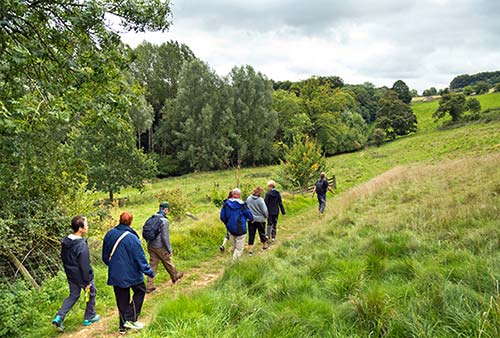
Follow this trail for a delightful hour across farms, through romantic gates, across a fancy driveway, and past Gainsborough-painting vistas. You’ll enjoy an intimate backyard look at local farm life. Although it seems like you could lose the trail, tiny easy-to-miss signs (yellow Public Footpath arrows—sometimes also marked Gloucestershire Way or The Monarch’s Way—usually embedded in fence posts) keep you on target—watch for these very carefully to avoid getting lost. Finally, passing a cricket pitch, you reach Lower Slaughter, with its fine church and a mill creek leading up to its mill.
From Lower Slaughter, you could first detour 30 minutes (round-trip) to Upper Slaughter (see here), then continue 30 minutes on The Monarch’s Way (follow green signs) into touristy Bourton-on-the-Water. Enjoy some time in Bourton itself and—when ready—catch the bus from in front of the Edinburgh Woolen Mill back to Stow (bus #801 departs hourly, fewer on Sun in summer, no Sun buses off-season, 15-minute ride; bus #802 also connects to Stow).
Sleeping in Stow
££££ The Porch House is posh as can be, with 13 luxurious rooms with stone-wall and wood-beam accents. Claiming to be England’s oldest inn, it elegantly mixes history, class, and charm (Digbeth Street, +44 1451 870 048, porch-house.co.uk, info@porch-house.co.uk).
£££ The Old Stocks Inn rents 16 stylish rooms next to the stocks on Market Square. The rooms are crisp and updated, and the reception is colorfully funky, but the place still retains its 17th-century Cotswold charm. In the evening, the breakfast room becomes a bar and restaurant that serves seasonal British cuisine (family room, large garden, The Market Square, +44 1451 830 666, oldstocksinn.com, info@oldstocksinn.com).
££ Stow Lodge Hotel fills the historic church rectory with lots of old English character. Facing the town square, with its own sprawling and peaceful garden, this lavish old place offers 21 large, thoughtfully appointed rooms; stately public spaces; and a cushy-chair lounge (closed Jan, free parking, The Square, +44 1451 830 485, stowlodge.co.uk, info@stowlodge.co.uk, helpful Hartley family).
££ The Stag has an upscale cabin-in-the-woods feel despite its location just off the main square. The 22 rooms are spread over two adjacent buildings: “the inn” (above the restaurant and pub) and “the lodge” (a restored Georgian townhouse). The nine rooms in the inn are generally cheaper and smaller, but feel plush and cozy (+44 1451 830 674, thestagatstow.com, stay@thestagatstow.com).
££ Sheep on Sheep Street mixes modern comfort and quaint Cotswold style, with 22 well-appointed rooms and a friendly staff. They have a nice restaurant that turns into a convivial pub in the evenings, and a relaxing courtyard out back (free parking, Sheep Street, +44 1451 830 344, thesheepstow.co.uk, book@thesheepstow.co.uk).
££ The Kings Arms, with seven rooms above a pub, manages to keep its historic Cotswold character while still feeling fresh and modern in all the right ways (steep stairs, three additional and slightly shabby “cottages” out back, free parking, Market Square, +44 1451 830 364, kingsarmsstow.co.uk, info@kingsarmsstow.co.uk, Chris).
Eating in and near Stow
While Stow has several good dining options, consider venturing out of town for a meal. You can walk to the pub in nearby Broadwell, or—better yet—drive to one of several enticing gastropubs in the surrounding villages (but make a reservation in advance; see sidebar, later in this chapter).
IN STOW
These places are all within a five-minute walk of each other, either on the main square or downhill on Queen and Park streets.
Restaurants and Pubs
££££ The Old Butchers, named for its location rather than its menu, specializes in fish. Serving oysters, scallops, and fish along with steak and burgers, they offer both indoor and outdoor tables and a good wine list (closed Sun-Mon, 7 Park Street, +44 1451 831 700).
£££ Stow Lodge is the choice of the town’s proper ladies and gents. The formal but friendly restaurant feels like a step back in time—from the decor to the music to the clientele. The staff is earnest and the upscale pub grub is good (daily, open late, veggie options, good wines, just off main square, +44 1451 830 485). On a sunny day, the pub serves lunch in the well-manicured garden, where you’ll feel quite aristocratic.
£££ The Bell at Stow, at the end of Park Street (on the edge of town), has a youthful pub energy for a drink or a meal. They serve up classic English dishes with seasonal, locally sourced ingredients (long hours daily, reservations recommended for dinner, +44 1451 870 916, thebellatstow.com).
££ The Queen’s Head faces Market Square, near Stow Lodge. With a classic pub vibe, it’s a great place to watch the eccentrics while you eat pub grub and drink the local Cotswold brew, Donnington ale. They have a meat pie of the day and good fish-and-chips (beer garden out back, closed Mon, +44 1451 830 563).
Cheaper Options
The grassy triangle where Digbeth hits Sheep Street has takeout fish-and-chips, Chinese, and Indian food. You can picnic at the triangle, on the nearby churchyard benches, or on the benches by the stocks on Market Street.
£ Cotswold Baguettes Take-Out often has a line out the door for tasty takeout jacket potatoes, pasties, made-to-order sandwiches, and soup (Mon-Sat until 15:00, closed Sun, Church Street, +44 1451 831 362).
Of several options on Park Street, £ Greedy’s Fish and Chips is the go-to place for takeout. There’s no seating, but they have benches out front (Wed-Thu for dinner, plus Fri-Sat for lunch, closed Sun-Tue, +44 1451 870 821). ££ The Prince of India, with a pleasant dining room, offers good Indian dinners to take out or eat in (daily for dinner only, 5 Park Street, +44 1451 830 099).
£ The Old Bakery Tearoom is a local favorite hidden away in a tiny mall at the bottom of Digbeth Street. Come here for traditional cakes, soup, salad, sandwiches, or their £9.95 cream tea (Mon-Wed and Fri 10:30-16:00, Sat until 17:00, closed Thu and Sun, Digbeth Street, Alan and Jackie).
£ The Hive is a quality modern café, where Jane and Sally offer breakfast, lunch, and tea with a warm welcome (Thu-Mon until 15:00, closed Tue-Wed, Digbeth Street, +44 1451 831 087).
£ Lucy’s Tea Room is a nice option if you fancy a light lunch or cream tea on Market Square (daily until 16:00, next to Stow Lodge).
Groceries: The small Co-op grocery store faces the main square next to the Kings Arms (daily 7:00-22:00), and a big Tesco supermarket is 400 yards north of town.
PUB DINNER HIKE FROM STOW
From Stow, consider taking a half-hour countryside walk to the village of Broadwell, where you’ll find a traditional old pub facing the village green that serves good basic grub in a convivial atmosphere.
££ The Fox Inn Broadwell serves pub dinners (including fish and meat pies) and draws traditional ales—including the local Donnington ale. It’s a classic, family-friendly pub with a roaring fire (closed Mon-Tue, outdoor tables in garden out back, reservations smart, +44 1451 870 909, thefoxbroadwell.com).
Getting There: It’s a 30-minute stroll downhill from Stow. One-third of the walk is on a paved lane, and the rest is on an arrow-straight bridle path. To find the trail, marked The Monarch’s Way, head north on Well Lane (near The Porch House hotel and restaurant) and head through the neighborhood. The path slopes downhill, goes past the town well, and eventually becomes the bridle path. Follow this until you hit the next road, then turn right and walk downhill into the village of Broadwell (the pub is to the left).
Near Stow-on-the-Wold
These sights are all south of Stow: Some are within walking distance (the Slaughters and Bourton-on-the-Water), and one is 20 miles away (Cirencester). The Slaughters and Bourton are tied together by the countryside walk described on here.
▲Lower and Upper Slaughter
“Slaughter” has nothing to do with lamb chops. It likely derives from an Old English word, perhaps meaning sloe tree (the one used to make sloe gin).
Lower Slaughter is a classic village, with ducks, a charming little church, a picturesque water mill, and usually an artist busy at their easel somewhere. Just behind the mill, find the path on the left (marked Wardens Way) that goes to nearby Upper Slaughter, a 15-minute walk (or two-minute drive) away. And if you follow the mill creek downstream, a bridle path leads to Bourton-on-the-Water (described next).
In Upper Slaughter (walkers emerge from the path just below town—head uphill a short distance to the main square), find the gate across from the square and walk through the yew trees (sacred in pagan days) down a lane through the raised graveyard to the peaceful church. In the far back of the fine cemetery, hidden behind trees, the statue of a wistful woman looks over the tomb of an 18th-century rector (sculpted by his son). Notice the town is missing a war memorial—that’s because every soldier who left Upper Slaughter for World War I and World War II survived the wars.
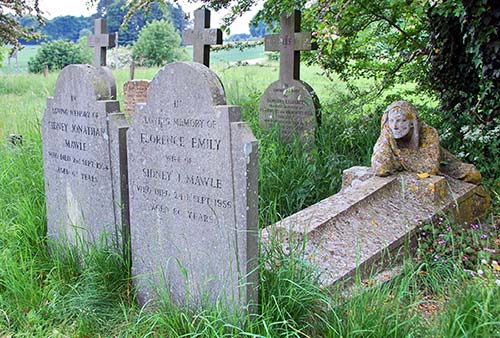
Getting There: These towns are hard to reach by bus, but you can take bus #801 (from Moreton or Stow) and request the “Slaughter Pike” stop (along the main road, near the villages). From here, it’s a 10-minute walk to Lower Slaughter (or 30 minutes to Upper Slaughter). If driving, the small roads from Upper Slaughter to Ford and Kineton (and the Cotswold Farm Park, described later) are some of England’s most scenic. Roll your window down and joyride slowly.
▲Bourton-on-the-Water
I can’t figure out whether they call this “the Venice of the Cotswolds” because of its quaint canals or its miserable crowds. Either way, this town—four miles south of Stow and a mile from Lower Slaughter—is very pretty. But it can be mobbed with tour groups during the day: Sidewalks become jammed with disoriented tourists wearing nametags.
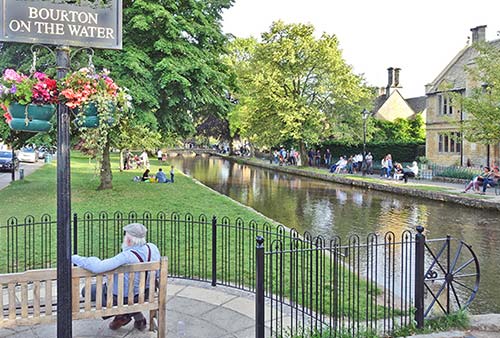
If you can avoid the crowds, it’s worth a drive-through and maybe a short stop. It’s pleasantly empty in the early evening and after dark.
Except for the Cotswold Motoring Museum (described next), Bourton is filled with tacky tourist traps. Bourton does have a nice leisure center (big pool and sauna, a five-minute walk from town center off Station Road; Mon-Fri 6:30-22:00, Sat-Sun 8:00-20:00; shared with the school—which gets priority for use, +44 1451 824 024, freedom-leisure.co.uk).
Getting There: It’s conveniently connected to Stow and Moreton by bus #801.
Parking: Finding a spot here can be tough. If you arrive early or late, you can drive right into town and try to snag a spot on High Street just past the village green (there’s a long row of free 1.5-hour spots starting just past the brook in front of the Edinburgh Woolen Mills Shop). After 18:00 you can park free just along the brook. If it’s busy, head to the large Rissington Road pay lot.
Bike Rental: Hartwells on High Street rents bikes by half-day or day and includes a helmet, map, and lock (smart to book ahead, daily, +44 1451 820 405, hartwellscotswoldcyclehire.uk, hartwells@supanet.com).
▲Cotswold Motoring Museum
Lovingly presented, this good, jumbled museum shows off a lifetime’s accumulation of vintage cars, old lacquered signs, threadbare toys, prewar memorabilia, and sundry British pop culture knickknacks. If you appreciate old cars, this is nirvana. Wander the car-and-driver displays, which range from the automobile’s early days to slick 1970s models, including period music to set the mood. Talk to an elderly Brit who’s touring the place for some personal memories.
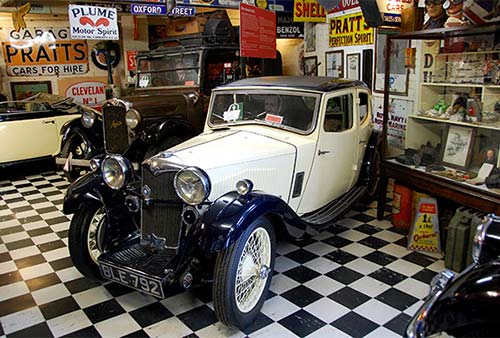
Cost and Hours: £9.50, daily 10:00-18:00, last entry 45 minutes before closing, closed mid-Dec-mid-Feb, in the mill facing the town center, +44 1451 821 255, cotswoldmotoringmuseum.co.uk.
Walk to the Slaughters
From Bourton-on-the-Water, it’s about a 30-minute walk (or a two-minute drive) to Upper and Lower Slaughter (described previously); taken together, they make for an easy two-hour round-trip walk from Bourton. (You could also walk from Stow through the Slaughters to Bourton—hike described on here.)
▲Cotswold Farm Park
This park, located between Stow and Stanway, is the private venture of the Henson family, who are passionate about preserving rare and endangered breeds of native British animals. While it feels like a kids’ zone, it’s a fascinating chance for anyone to get up close and (very) personal with piles of mostly cute animals, including the sheep that made this region famous—the big and woolly Cotswold Lion. The “listening posts” deliver audio information on each rare breed.
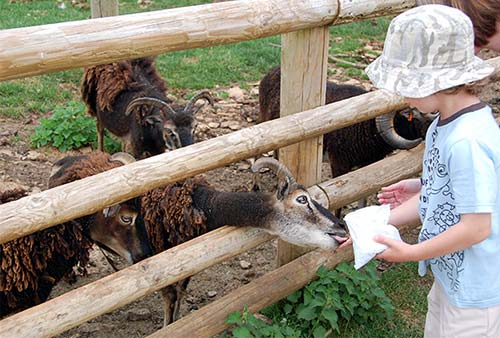
Check the events board for seasonal demonstrations of farm life—such as milking, bottle-feeding (generally March-Sept), shearing, sheep shows (meet the seven local breeds), and more. Buy a bag of seed upon arrival, or have your map eaten by munchy goats as I did. Tykes love the maze and the “discovery barn,” where they can (carefully) handle wee chicks and bunnies.
Cost and Hours: £20, kids-£15, cheaper online—advance tickets recommended for weekends; daily 9:30-17:00, Nov-Dec until 16:00, last entry 1.5 hours before closing, closed Jan-mid-Feb, restaurant and café, +44 1451 850 307, cotswoldfarmpark.co.uk.
Getting There: It’s well signposted about halfway between Stow and Stanway (15 minutes from either). A visit here makes sense if you’re traveling from Stow to Chipping Campden.
Northleach
While other towns may be cuter with more tourist-oriented sights, Northleach (nine miles south of Stow-on-the-Wold) is the best of the “untouched and untouristed” Cotswold villages. Officials made sure the main road didn’t pass through town back in the 1980s, and today there’s no TI and no place to park a big bus.
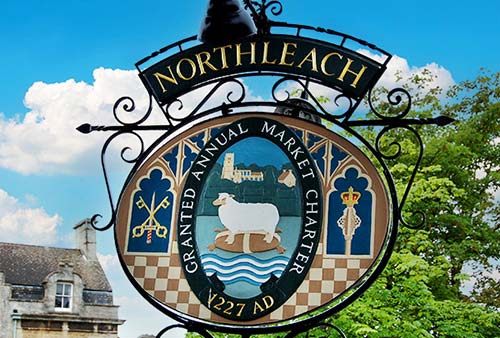
The town’s impressive main square (Market Place) and church attest to its position as a major wool center in the Middle Ages. Along with the Cotswolds Discovery Centre (on the big road at the edge of town), the town mostly consists of a main street leading to a fine old square with a glorious church towering behind.
Drivers can park in the square called The Green or the adjoining Market Place. Bus #801 (with good Stow and Moreton connections) stops in front of the square, while the #855 (to Bibury and Cirencester) stops on the square, where there’s an outdated map posted by the WC. For better information, find the nicely done Northleach map/guide (free at the church). Information is also online (northleach.gov.uk [URL inactive]). Your best bet for a friendly and knowledgeable local might be the volunteer greeters at the church.
Eating: Two good options are on or near Market Place. Facing the square is the ££ Sherborne Arms pub. It’s a classic, family- and pet-friendly locale, with a big fireplace, traditional ales and pub grub, and outdoor seating (daily, +44 1451 828 186).
£££ The Wheatsheaf Inn is the foodie’s favorite for fine dining. With a pleasantly traditional dining room and a gorgeous sprawling garden, they offer modern English cuisine (long hours daily, reservations smart, on the main street into town one block before Market Place, +44 1451 539 889, cotswoldswheatsheaf.com).
Market Place
Standing on the main square, you sense this was a fine medieval town. In fact, Northleach is a good example of a medieval “New Town.” Hundreds of planned market towns like this were “planted” around England after the Norman conquest in 1066. Part of the Norman vision of creating a strong and centralized England was a land of logical towns, each with a triangular market place (likely symbolic of the Trinity) and a long High Street lined with standard and skinny “burgage plots”—parcels of land (from front to back: storefront, warehouse, living quarters, servants’ quarters, stables, garden) all 33 feet wide and reaching back to a service lane 330 feet behind the High Street. The Northleach economy got a boost in 1227 when it was granted a market charter by the king. Back then, traders came from far and wide...you could hear Italian-speaking wool importers in the streets. Nine centuries later, you can still see these skinny units (now either 33 or 66 feet wide) surviving.
Church of Saints Peter and Paul
This fine Perpendicular Gothic church has been called the “cathedral of the Cotswolds.” It’s one of the Cotswolds’ two finest “wool” churches (along with Chipping Campden’s), paid for by 15th-century wool tycoons.
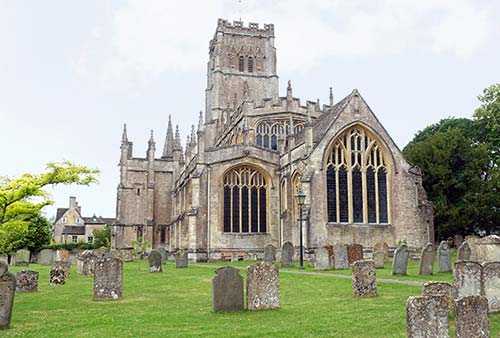
Pick up the fine town map/guide and find the laminated sheet for some history on the church. Find the baptismal font (in the back as you enter), with carved devils being crushed at its base (which dates from the 14th century and was part of the previous church). Ponder the brass plaques on the floor that memorialize big shots, showing sheep and sacks of wool at their long-dead feet, and inscriptions mixing Latin and Old English. Imagine the stained glass filling the windows before being destroyed—likely in the 17th-century civil war. And don’t miss the wonderful little exhibit about planned towns throughout medieval England in the north transept (daily 9:00-17:00 or until dusk, +44 1451 861 132).
Cotswolds Discovery Centre at the Old Prison
This 18th-century building hosts displays about Cotswolds geology and history; preindustrial farming, including two shepherds’ huts; and cell blocks and a courtroom from the building’s previous uses (free, daily 9:00-16:00, on the A-429—Fosse Way—at the edge of Northleach, +44 1451 862 000). Also on-site is the modern and glassy Old Prison Kitchen and Café, serving up brunch, homemade cakes, and afternoon tea (indoor and outdoor seating).
▲Bibury
Six miles northeast of Cirencester, this village—long a favorite with British fond of strolling and fishing—is now so touristy I’d only visit after hours. Bibury (BYE-bree) caters to tour buses, and lately has become a stop on the Instagram circuit and can be overwhelmed by selfie-taking tourists. After about 18:00, the light is warm and the masses are mostly gone. The town offers some relaxing sights, including a row of very old weavers’ cottages, a trout farm, and a church surrounded by rosebushes. A protected wetlands area on the far side of the stream is home to newts and water voles.
The town is a loop of too-cute sights: Walk the main street, enjoying achingly beautiful homes and cafés with tidy gardens; cross the wooden bridge and wander along the old weavers’ Arlington Row; and finally, amble along the made-for-tour-groups paved path on the far side of the marsh, peeking into the rushes for wildlife.
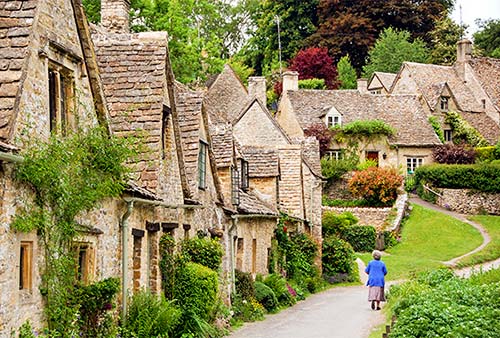
For a closer look at fish, head to the 15-acre Trout Farm, where you can feed them—or catch your own and barbecue them on-site (£10 to walk the grounds, fish food extra; daily 9:00-17:00; catch-your-own daily 10:00-16:00 weather permitting—call ahead if unsure, £3 for equipment, £12/kilogram, +44 1285 740 215, biburytroutfarm.co.uk).
Getting There: Take bus #801 from Moreton-in-Marsh or Stow to either Northleach or Bourton-on-the-Water, then change to #855 (hourly, 1 hour total).
Parking: Parking in town is limited and, understandably, locals have blocked off their driveways to tourists trying to park or turn around. Unless you’re arriving after the crowds have dissipated, aim to park in the Trout Farm’s parking lot or in the overflow lot nearby, and make the short walk into town (there’s also some free parking near St. Mary’s Church).
▲Cirencester
Almost 2,000 years ago, Cirencester (SIGH-ren-ses-ter) was the ancient Roman city of Corinium. Today it’s the largest town of the Cotswold district. It’s less cute and feels more bustling than surrounding towns but has a pleasant and pedestrianized historic center. It’s 20 miles from Stow down the A-429, which was called Fosse Way in Roman times. The TI, in the shop at the Corinium Museum, answers questions and sells a town map and a town walking tour brochure (same hours as museum, +44 1285 655 611).
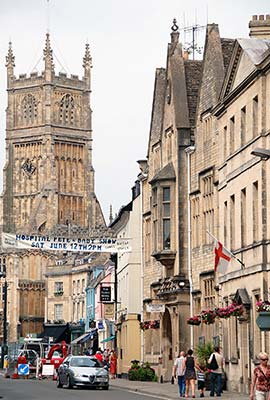
Getting There: By bus, take #801 from Moreton-in-Marsh or Stow to Northleach or Bourton-on-the-Water, then change to #855 for Cirencester (hourly, 1.5 hours total). Drivers follow Town Centre signs and find parking right on the market square; if it’s full, retreat to the Waterloo pay lot (a 5-minute walk away).
Visiting Cirencester: Stop by the impressive Corinium Museum to find out why they say, “If you scratch Gloucestershire, you’ll find Rome.” The museum chronologically displays well-explained artifacts from the town’s rich history, with a focus on Roman times—when Corinium was the second-biggest city in the British Isles (after Londinium). You’ll see column capitals and fine mosaics before moving on to the Anglo-Saxon and Middle Ages exhibits (£8.40, Mon-Sat 10:00-17:00, Sun from 14:00, shorter hours off-season, Park Street, +44 1285 655 611, coriniummuseum.org).
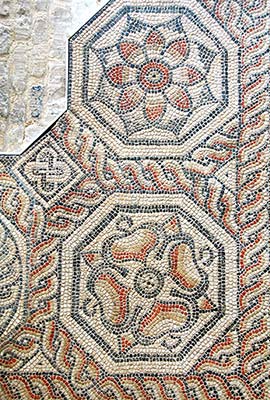
Cirencester’s church, built in about 1490, is the largest of the Cotswold “wool” churches. The cutesy New Brewery Arts crafts center entertains visitors with traditional weaving and potting, workshops, an interesting gallery, and a good coffee shop (newbreweryarts.org.uk). Monday and Friday are general-market days, Friday features an antique market, and a crafts market is held every Saturday.
Moreton-in-Marsh
This workaday town—worth ▲—is like Stow or Chipping Campden without the touristy sugar. Rather than gift and antique shops, you’ll find streets lined with real shops: ironmongers selling cottage nameplates and carpet shops strewn with the remarkable patterns that decorate B&B floors. A traditional market of 100-plus stalls fills High Street each Tuesday, as it has for the last 400 years (8:00-15:00, handicrafts, farm produce, clothing, books, and people-watching; best if you go early). The Cotswolds has an economy aside from tourism, and you’ll feel it here.
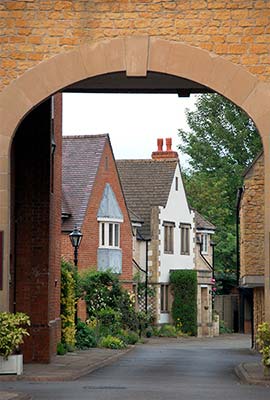
Orientation to Moreton-in-Marsh
Moreton has a tiny, sleepy train station two blocks from High Street (with good local information plastered on the walls), lots of bus connections, and the best TI in the region. Peruse the racks of fliers, maps, and hiking info; confirm rail and bus schedules; and consider the cheap Town Trail self-guided walking tour leaflet. Ask about rail and bus ticket discounts for Blenheim Palace, easily visited between here and Oxford (TI open Mon-Fri 8:45-17:00, closed Sat-Sun, good public WC, on High Street in the District Council building, +44 1608 650 881, cotswolds.com, moreton@costwold.gov.uk).
HELPFUL HINTS
- Laundry: The handy launderette is a block in front of the train station on New Road (daily 7:00-19:00, last self-service wash at 18:00, drop-off service options available—call ahead to arrange, may also store bags for a small fee, +44 1608 650 888).
- Bike Rental and Taxis: See “Getting Around the Cotswolds,” earlier.
- Parking: It’s easy—anywhere on High Street is fine any time, as long as you want, for free (though there is a 2-hour parking limit for the small lot in the middle of the street). On Tuesdays, when the market makes parking tricky, try the Co-op supermarket, where you can park for two hours.
- Hikes and Walks from Moreton-in-Marsh: As its name implies, Moreton-in-Marsh sits on a flat, boggy landscape, making it a bit less appealing for hikes; I’d start from Chipping Campden or Stow, both described earlier, for a better hike (this is easy for nondrivers, since Moreton is a transit hub).
Sleeping in Moreton-in-Marsh
££££ Manor House Hotel is Moreton’s big old hotel, dating from 1545 but sporting such modern amenities as toilets and electricity. Its 34 classy rooms and its garden invite relaxation (elevator, on-site restaurants, free parking, on far end of High Street away from train station, +44 1608 650 501, cotswold-inns-hotels.co.uk, manorhouse.reception@cotswold-inns-hotels.co.uk).
£££ White Hart Royal Hotel is full of history (it once hosted King Charles I during the English Civil War). While the place retains much of its traditional feel (some rooms have four-poster beds), each of the 28 rooms is uniquely decorated with modern amenities. Eight rooms surround a quiet private garden in converted stables. They also have a recommended restaurant (family room, breakfast extra, High Street, +44 1608 650 731, whitehartroyal.co.uk, whr@innmail.co.uk).
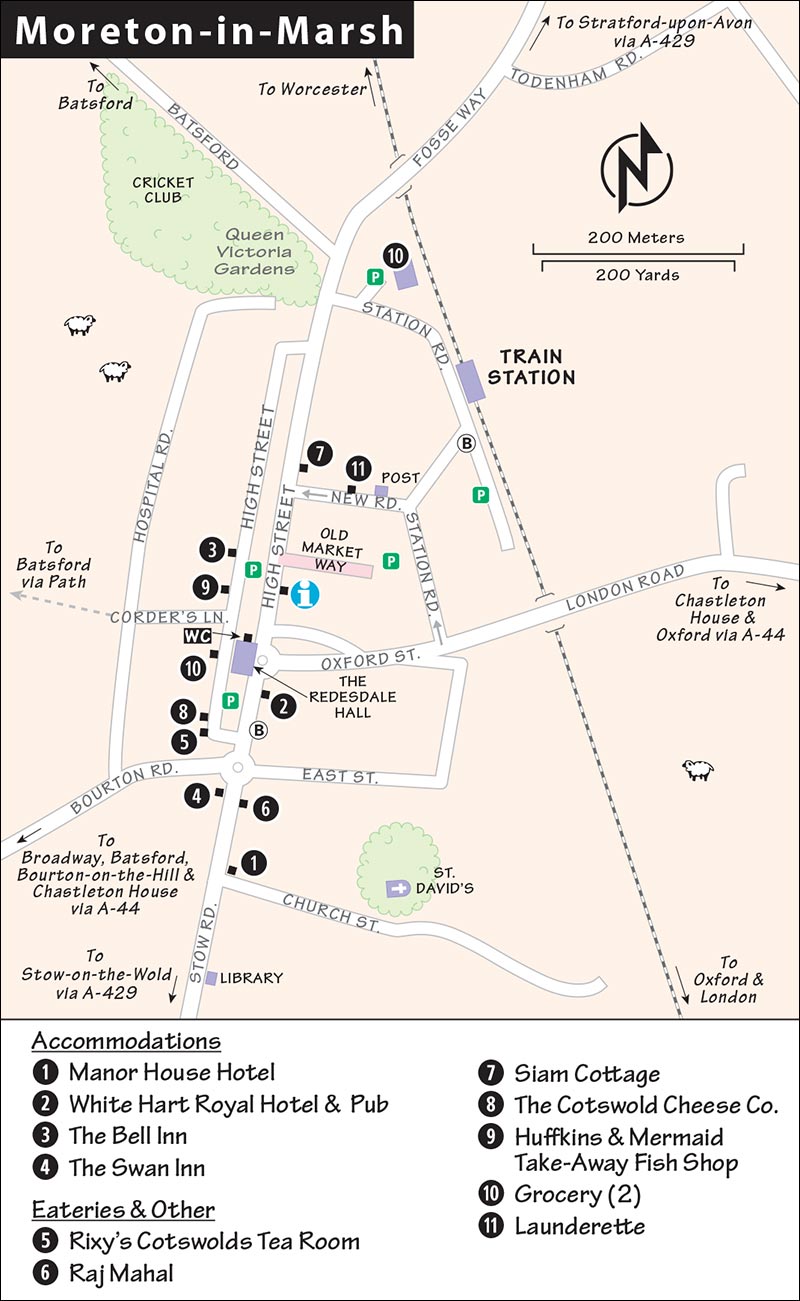
£££ The Bell Inn rents five en suite rooms—some with stone walls and wood beams—in a 300-year-old building a short walk from the train station. Their pub has live music and outdoor seating (High Street, +44 1608 651 887, thebellinnmoreton.co.uk, stayatbellinn@icloud.com).
££ The Swan Inn is wonderfully perched on the main drag, with nine en suite rooms. You enter through a bar/restaurant that can be noisy on weekends, but the rooms themselves are classy and the bathrooms modern (free parking, High Street, +44 1608 650 711, swanmoreton.co.uk, stay@theswanatmoreton.com).
Eating in Moreton-in-Marsh
Nobody travels to Moreton for its restaurants, but you won’t go hungry here. All of these options are on High Street.
£££ White Hart Royal, part of the recommended hotel, is a solid bet for pub grub with a characteristic bar, finer restaurant seating, and a terrace out back—all with the same menu. They also offer a £25 afternoon tea from 12:00-17:00 (daily, reservations required for afternoon tea, +44 1608 650 731, whitehartroyal.co.uk).
££ Rixy’s Cotswolds Tea Room specializes in comfort food, served either in the homey café or outside in the garden. They also offer afternoon tea most days—check online and book in advance (Mon-Tue and Thu-Sun until 15:30 or 16:00, closed Wed, gluten-free options, +44 1608 651 799, rixyscotswoldtearoom.co.uk).
££ Raj Mahal, on High Street just past the White Hart, serves good-value Indian food in a rustic and cozy dining room (daily for dinner only).
££ Siam Cottage serves up tasty Thai dishes, including excellent lunch specials. Sit inside or out back in their shaded garden (closed Mon, +44 1608 651 117).
£ The Cotswold Cheese Company’s friendly staff sells local products that make for an easy, upscale picnic. Try their Stow blue cheese, made exclusively for their shop (Mon-Sat until 17:00, Sun until 16:00, +44 1608 652 862).
£ Huffkins serves salads, sandwiches, and toasties for lunch, plus pastries and a good cream tea, in a cheerful spot across from the TI (Mon-Fri until 16:00, Sat-Sun until 16:30, weekday lunch specials, +44 1608 650 000).
£ Mermaid Take-Away Fish Shop is popular for its takeout fish and tasty selection of traditional savory pies (closed Sun, cash only, +44 1608 651 391).
Picnic: There’s a small Tesco Express on High Street (long hours daily). The big Co-Op supermarket is at the far end of High Street (Mon-Sat until 22:00, Sun until 16:00). You can picnic across the street in pleasant Victoria Park (with a playground).
Nearby: The excellent ££££ Horse and Groom gastropub in Bourton-on-the-Hill is two miles away on the A-44 toward Chipping Campden (see here).
Moreton-in-Marsh Connections
Moreton, the only town in this chapter with a train station, is also the best base for exploring the region by bus (see “Getting Around the Cotswolds,” on here).
From Moreton by Train to: London’s Paddington Station (every 1-2 hours, 1.5 hours), Bath (hourly, 2.5 hours, 1-2 transfers), Oxford (hourly, 35 minutes), Ironbridge Gorge (hourly, 3 hours, 2 transfers; arrive in Telford, then catch a bus or cab 5 miles to Ironbridge Gorge—see here), Stratford-upon-Avon (hourly, 3 hours, 2 transfers, slow and expensive, better by bus). Train info: +44 345 748 4950, nationalrail.co.uk.
From Moreton by Bus to: Stratford-upon-Avon (#1 and #2 go via Chipping Campden: Mon-Sat 5-7/day, fewer on Sun, 1.5 hours; bus #51 runs Mon-Sat 5/day, none on Sun, both run by Stagecoach Midlands, stagecoachbus.com).
Near Moreton-in-Marsh
▲Chastleton House
This stately home, located about five miles southeast of Moreton-in-Marsh, was lived in by the same family from 1607 until 1991. It offers a rare peek into a Jacobean gentry house. (Jacobean, which comes from the Latin for “James,” indicates the style from the time of King James I—the early 1600s.) Built, like most Cotswold palaces, with wool money, it gradually declined with the fortunes of its aristocratic family, who lost much of their wealth in the war—not World War II, but the English Civil Wars in the 1640s. They stuck it out for centuries until, according to the last lady of the house, the place was “held together by cobwebs.” It came to the National Trust on the condition that they would maintain its musty Jacobean ambience. Wander on creaky floorboards, many of them original; chat with the knowledgeable volunteer guides; and understand this frozen-in-time relic revealing the lives of nobles who were land rich but cash poor. The docents are proud to play on one of the best croquet teams in the region (the rules of croquet were formalized in this house in 1868—if the weather’s good, you’ll see courses set up on the lawn; ask about playing if you fancy a round). Page through the early 20th-century family photo albums in the room just off the entry.
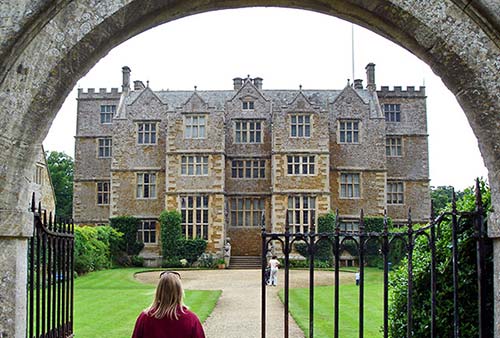
Cost and Hours: £14; Wed-Sun 13:00-17:00, closed Nov-mid-March and Mon-Tue year-round; last entry one hour before closing, +44 1608 674 355, nationaltrust.org.uk/chastleton.
Getting There: Chastleton House is well signposted (be sure to follow signs to the house, not the town), about a 10-minute drive southeast of Moreton-in-Marsh off the A-44. It’s a five-minute hike to the house from the free parking lot.
Blenheim Palace
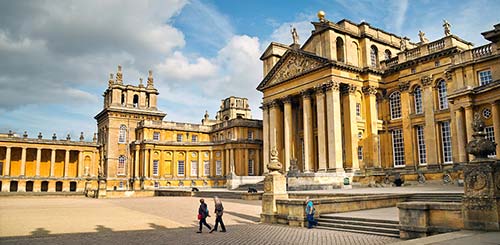
Just 30 minutes’ drive from Oxford (and convenient to combine with a drive through the Cotswolds), Blenheim Palace is one of England’s best—worth ▲▲▲. Too many palaces can send you into a furniture-wax coma, but as a sightseeing experience and in simple visual grandeur, this palace is among Europe’s finest. The Duke of Marlborough’s home—one of the largest in England—is still lived in, which is wonderfully obvious as you prowl through it. The 2,000-acre yard, well designed by Lancelot “Capability” Brown, is as majestic to some as the palace itself. Note: Americans who pronounce the place “blen-HEIM” are the butt of jokes. It’s “BLEN-em.”
John Churchill, first Duke of Marlborough, achieved Europe-wide renown with his stunning victory over Louis XIV of France’s armies at the Battle of Blenheim in 1704. This was a major turning point in the War of the Spanish Succession—one of Louis’ repeated attempts to gain hegemony over the continent. A thankful Queen Anne rewarded Churchill by building him this nice home, perhaps the finest Baroque building in England. Eleven dukes of Marlborough later, the palace is as impressive as ever. In 1874, a later John Churchill’s American daughter-in-law, Jennie Jerome, gave birth at Blenheim to another historic baby in that line...and named him Winston.
GETTING TO BLENHEIM PALACE
Blenheim Palace sits at the edge of the cute cobbled town of Woodstock. Public buses servicing the palace stop twice near the estate: at the Blenheim Palace Gates stop along the main road, about a half-mile walk to the palace itself; and at the Woodstock/Marlborough Arms stop at the start of the dedicated pedestrian approach to the palace in the village of Woodstock (handy if you want to poke around town before heading to the palace; this adds just a few more minutes’ walking). The Woodstock stop also offers the most spectacular view of the palace and lake.
From the Cotswolds by Train: Your easiest train connection is from Moreton-in-Marsh to Long Hanborough station—just 1.5 miles from the palace (£12.90, hourly, 30 minutes). From Long Hanborough station, walk up the main road, cross the street, and head right to take an Oxford-bound bus #S7 and use one of the palace stops (£2, buy on bus, 2/hour, 10 minutes). On summer weekends, a free shuttle bus operates between the train station and the palace (2/hour, 9:00-18:00). Taxis don’t wait at the station, but you can book one in advance (try A2B Cars, +44 1844 208 125; or Cabs 4U, +44 7919 675 150).
From the Cotswolds by Car: Head for Woodstock (from the Cotswolds, follow signs for Oxford on the A-44); the palace is well signposted once in town, just off the main road. Buy your ticket at the gate, then drive up the long driveway to park near the palace.
ORIENTATION TO BLENHEIM PALACE
- Cost: £41, buy ticket online in advance, includes audioguide; 20 percent discount when you travel to Blenheim via train, bus, bike, or electric car—discount code on website; tickets also available at TIs in surrounding towns—including Moreton-in-Marsh; family ticket available, £7.95 guidebook.
- Hours: Daily 10:30-17:30, Oct-March until 16:30, last entry 45 minutes before closing. Late in the afternoon the palace is relaxed and quiet (even on the busiest of days).
- Information: +44 1993 810 530, blenheimpalace.com.
- Visitors Center: At the palace entrance you’ll find the official shop, a handy café, fine WCs, and an information desk with a friendly and helpful staff who can help book a tour or plan your visit. A handful of free lockers are available (barely large enough to fit carry-on bags, near the WCs, ask for a key).
- Tours: Audioguides are available for the state rooms (included in admission). Guided tours are available for the palace’s private apartments, kitchen, and staff’s quarters—aka the “Duke’s Tour” (£8, 4/day, 45 minutes), and the gardens—aka “Buggy Tours of the Formal Gardens” (also £8, 4-5/day, about 45 minutes).
- Eating and Sleeping near the Palace: The fancy £££ Orangery Restaurant, serving afternoon tea and lunch, should be reserved in advance at the palace website. There’s also a £ café with lighter fare in the East Courtyard visitors center and a £ pizza café at the Walled Gardens.
In the pleasant, posh town of Woodstock just outside the palace gates, £ Hampers Deli is a good place to pick up provisions for a picnic on the palace grounds (31 Oxford Street, +44 1993 811 535, hampersfoodandwine.co.uk). If you need a bed, consider a room in the characteristic old half-timbered ££ Blenheim Buttery (7 Market Place, +44 1865 811 950, theblenheimbuttery.co.uk, info@theblenheimbuttery.co.uk).
VISITING THE PALACE
From the parking lot, you’ll enter through the visitors center. Pick up a free map, ask about the daily events, and consider signing up for one of the tours (if you didn’t book a spot online in advance). Then head through the small courtyard. You’ll emerge into a grand courtyard in front of the palace’s columned yellow facade.
Facing the palace’s steps, consider your five options: the state rooms, the apartments tour, the Churchill Exhibition, a skippable equine-focused exhibit called The Stables, and the gardens. The palace state rooms and Churchill Exhibition are substantial and most important (allow 1.5 hours total for both). The apartments tour, an excellent behind-the-scenes peek at the palace, requires a special ticket and meets in the corner of the courtyard to the left. The gardens, through the wing on the right, are simply enchanting. And the Stables exhibit is in the West Courtyard (farther to the right).
State Rooms: The state rooms are the fancy halls the dukes use to impress visiting dignitaries. These most sumptuous rooms in the palace are ornamented with fine porcelain, gilded ceilings, portraits of past dukes, photos of the present duke’s family, “chaperone” sofas designed to give courting couples just enough privacy...but not too much, and the room and bed in which Sir Winston was born in 1874 (prematurely...his mother suddenly went into labor while attending a party here).
Enjoy the series of 10 Brussels tapestries that commemorate military victories of the First Duke of Marlborough, including the Battle of Blenheim. After winning that pivotal conflict, he scrawled a quick note on the back of a tavern bill notifying the queen of his victory (you’ll see a replica in the First State Room, just after the Saloon). The tour offers insights into the quirky ways of England’s fading nobility—for example, in exchange for this fine palace, the duke still pays “rent” to the monarch in the form of one ornamental flag per year.
Finish with the remarkable Long Library—with its tiers of books and stuccoed ceilings—before exiting near the entrance to the gardens. Looping back around into the courtyard (to the right) you’ll find the entrances to the chapel (under the colonnade) and the Churchill Exhibition at the bottom of the staircase on your right.
Churchill Exhibition: This is a fascinating display of letters, paintings, and other artifacts tracing the origins and history of the great statesman who was born here. A palace highlight, the exhibit gives you an appreciation for this amazing leader and how blessed Britain was to have him when it did. (Winston Churchill fans can visit his tomb, just over a mile to the south in the churchyard of St. Mary’s in Bladon—the church is faintly visible from inside the palace. Look for the footpath across from the White House pub.)
Private Apartments (“Duke’s Tour”): For a more extensive visit, book a spot to tour the duke’s private digs (see “Tours,” earlier). You’ll see the chummy billiards room, luxurious china, 18th-century Flemish tapestries, family photos, and the downstairs staff quarters—with 47 bells, one for each room to call for assistance.
The Stables: Under the gateway to the right as you face the main palace entrance (on the way to the gardens) is a small and unimportant exhibit celebrating Churchill’s love of horses. If you’ve ever wanted to try sitting in a side-saddle, this is your chance.
Gardens: The palace’s expansive gardens stretch nearly as far as the eye can see in every direction. From the main courtyard follow signs through a little door (to the right as you face the main palace entrance). You’ll emerge into the Water Terraces; from there, you can loop around to the left, behind the palace, to see (but not enter) the Italian Garden. Or, head down to the lake to walk along the waterfront trail; going left takes you to the rose gardens and arboretum, while turning right brings you to the Grand Bridge.
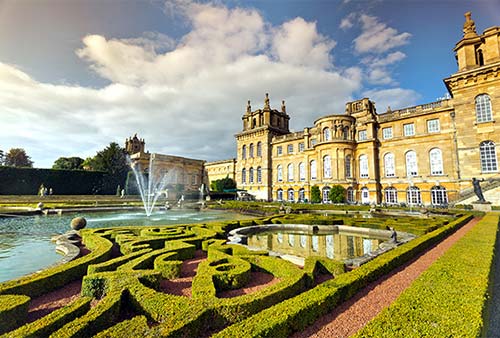
On the way out of the palace complex, stop in at the Walled Gardens, where a lush and humid greenhouse flutters with butterflies. A kid zone with the “world’s largest symbolic hedge maze” is worth a look if you haven’t seen one and want some exercise. If driving, you’ll pass these gardens on the way to the exit; otherwise, you can take the tiny train from the palace parking lot (£1, 2/hour, 11:00-15:30).