PIRAN
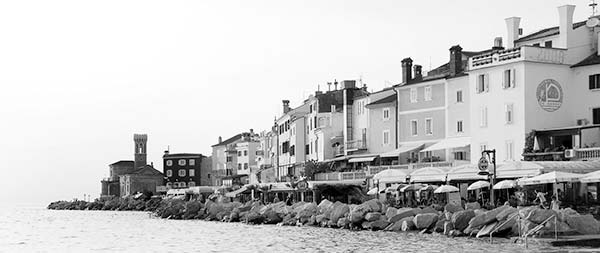
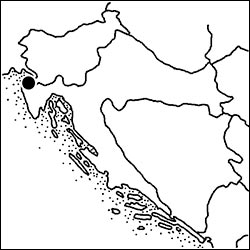
Croatia’s 3,600-mile-long coast gets all the acclaim, but don’t overlook Slovenia’s 29 miles of Adriatic coastline. The Slovenian coast has only a handful of towns: big, industrial Koper; lived-in and crumbling Izola; and the swanky but soulless resort of Portorož. But the gem of the Slovenian Adriatic is Piran (pee-RAHN). Most Adriatic towns are all tourists and concrete, but Piran has kept itself charming and shipshape while holding the tourist sprawl at bay. Its glassy square feels tugged at the top by a stout Venetian-style bell tower—as if without this anchor, the whole thing might just slide off into the tidy, picturesque harbor. Even though the town can be crowded with a United Nations of vacationers (especially Italians) in peak season, as you get to know it, Piran becomes one of the most pleasant and user-friendly seaside towns this side of Dubrovnik.
PLANNING YOUR TIME
You can see everything in Piran (including a pop into the Maritime Museum and a climb up the bell tower) in just a couple of hours. Then simply bask in the town’s ambience. Enjoy a gelato or a kava (coffee) on the sleek, marbled Tartini Square, surrounded by Neoclassical buildings and watched over by the bell tower. Go for a swim at one of the rocky beaches. Wander Piran’s piers and catch its glow at sunset. Note that on Mondays, almost all sights are closed (except the bell tower).
Notice that Piran is conveniently on the way between Ljubljana/the Karst and Croatia’s Istria (see “Route Tips for Drivers” under “Piran Connections,” later). From a traveler’s perspective, Piran is effectively redundant with Rovinj, in Istria. If your time is tight, pick one or the other. Piran is a bit smaller, is easier to reach from Slovenia, comes with a nice Slovenian tidiness, and is a good home base for the sights of Slovenia’s Karst (caves, horses); Rovinj is best as a jumping-off point for touring Croatia’s Istria (hill towns, Roman sights in Pula, truffles, wine). But for a simple beach-break getaway, they’re equally good.
Orientation to Piran
Piran is small; everything is within a few minutes’ walk. Crowded onto the tip of its peninsula, the town can’t grow. Its population maxed out at over 12,000 a century ago and has dropped to about one-third that today, as many young people find more opportunity in bigger cities. In the winter, only about 1,000 souls inhabit its little peninsula. Known as “Pirano” in Italiano, the town is home to a long-standing Italian community—so it’s legally bilingual, with signs in two languages.
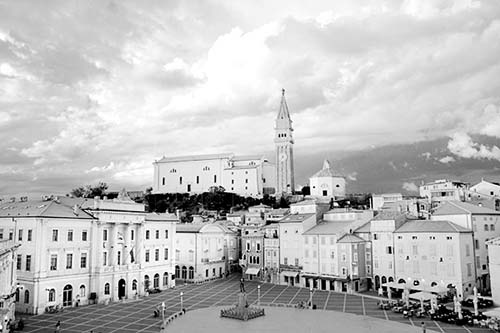
Piran clusters around its boat-speckled harbor and showpiece piazza, Tartini Square (Tartinijev Trg). Up the hill behind Tartini Square is the landmark bell tower of the Cathedral of St. George. A few blocks toward the end of the peninsula from Tartini Square is the heart of the Old Town, May 1 Square (Trg 1 Maja).
From Tartini Square and the nearby marina, a concrete promenade—lined with rocks to break the storm waves, and with expensive tourist restaurants to break your budget—stretches along the town’s waterfront, inviting you to stroll.
TOURIST INFORMATION
The helpful TI is inside the grand Venetian-style Town Hall on Tartini Square (daily 9:00-13:00 & 13:30-17:00, July-Aug 9:00-20:00, at #2, +386 5 673 4440, www.portoroz.si).
ARRIVAL IN PIRAN
By Car: Driving and parking in Piran is a headache; park your car as quickly as possible and forget about it. Fortunately, the city makes this easy by offering a free shuttle bus connecting the main parking garage with downtown (4/hour).
If you’re overnighting in town and don’t want to haul your bags from the garage, take a ticket at the parking barrier and drive into the Old Town to drop off your bags; as long as you leave town within 15 minutes, you won’t be charged. Then park at the big garage described next. If you’re day-tripping to Piran, simply park at the garage when you arrive.
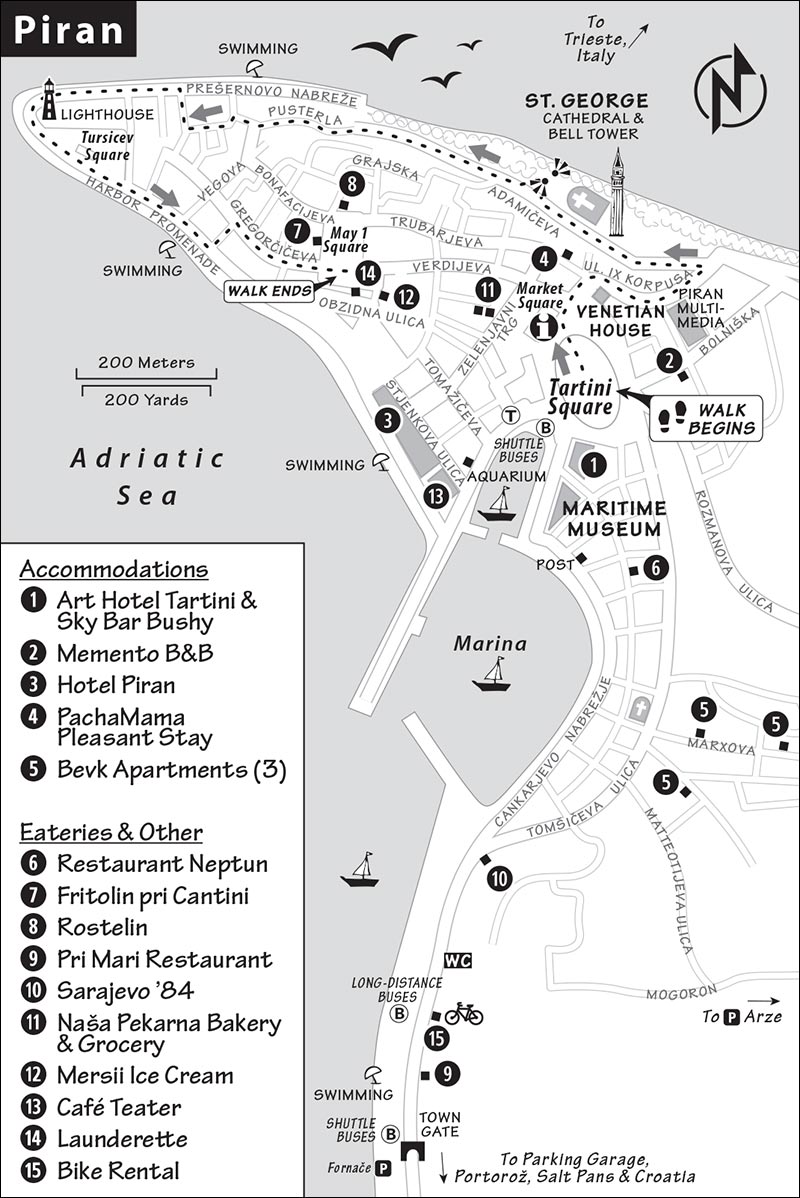
As you drive into town, you’ll pass the big parking garage when you come down the hill (€3/hour, €24/day, typically discounted with a voucher from your hotel). From the garage, ride the elevator down to floor 1, exit, and walk about 50 yards to the waterfront parking lot for locals (called Fornače), where you’ll see a stop for the free shuttle bus that zips you right to Tartini Square. (Or, if you’ve packed light, you can walk to Tartini Square in about 15 minutes—just follow the water.)
A second garage, called Arze (higher up, near the town cemetery), is slightly cheaper (€1.50/hour, €15/day)—but the shuttle bus from here into town only runs 4/day (though you could use the “electric car” shuttle service—see next). Park here only if you want to save money and don’t mind a longer walk.
By Bus: Piran has two bus stops. Shuttle buses from the parking garage stop right at Tartini Square; intercity buses (such as those from Ljubljana or Portorož) use the low-profile main bus station along the water, near the entrance to town—an easy walk to the center.
HELPFUL HINTS
Festivals: Piran packs its summers with a wide variety of festivals, including many musical events, both al fresco and in historic buildings. Ask for the latest at the TI (or check their website for “Events in Piran”).
Getting Around: The city provides a free “electric car” shuttle service in summer (May-Oct daily 9:00-17:00); just call Maestro (+386 31 288 574 or +386 31 391 992) and tell them where you want to go, ideally an hour before you need them. This is handy for reaching the cheaper Arze garage.
Laundry: The Speed Queen self-service launderette is conveniently located right on May 1 Square (daily 7:00-23:00, Oct-April 8:00-21:00, +386 40 771 773).
Walking Tour: Likable local guide Jan Pirnat leads affordable, informative, enjoyable walks around town: A 1.5-hour morning tour (€9, July-Sept Mon, Wed, and Fri at 11:00) and a longer evening tour, which catches the sunset and ends with a tasting of local wines and foods (€25, July-Aug at 19:00, Sept at 18:00). These offer a good introduction to Piran and are a great use of your time. Both tours leave from in front of the TI, near the statue of Tartini (+386 31 871 801, https://piranwalkingtour.com, feel.piran@gmail.com). You can also hire Jan for a private food and wine tour.
Bike Rental: Try Luma Šport, across the street from the intercity bus station (daily in good weather, Dantejeva 3, +386 41 781 414, www.lumasport.com, Magda). Jan Pirnat also rents bikes. The TI hands out a free map illustrating ambitious rides in the region.
Piran Walk
This brief (45-minute) orientation walk will help you get your bearings. Begin on the main square.
▲▲Tartini Square (Tartinijev Trg)
Centuries ago, today’s Tartini Square was underwater—part of a protected harbor ringed by a busy market zone just outside the walled core of Piran. Over time, the threat of invasion subsided, Piran thrived, and the harbor (filled with waste from the 12,000 people who lived here) began to stink. So as the city tore down most of its walls, it used some of the material to fill in this harbor—creating Tartini Square in 1894. Today, rather than fishing boats, it’s filled with kids riding bikes and skateboards and kicking around soccer balls. Be sure to nurse a coffee while you’re here; survey the many café vantage points and take your pick.
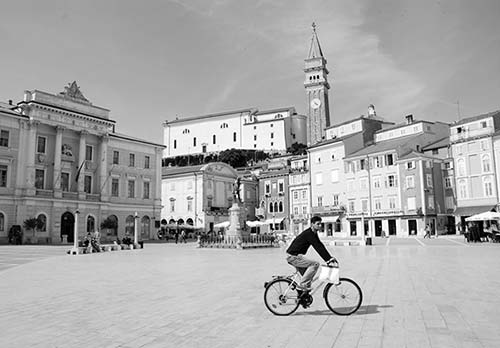
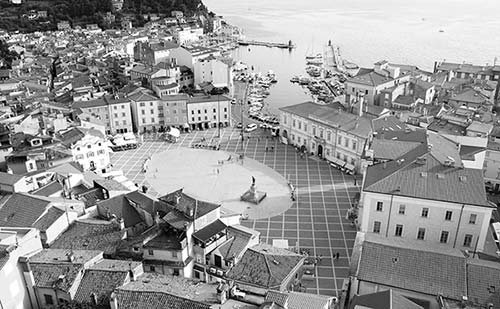
The square’s shiny marble oval is surrounded by a tidy geometrical grid pattern. This evokes the salt pans that were the basis for Piran’s historical success. Between here and the Croatian border (basically, in the direction of the square’s opening to the harbor) sprawls a vast checkerboard-like swath of pools that fill with seawater, then are sealed off to evaporate in the hot sun—leaving behind deposits that were as precious as gold back in Piran’s heyday. (Drivers can visit the salt pans and their fascinating museum on the way to Croatia—see “Sečovlje Salina Nature Park,” later.)
The dynamic statue in the middle honors Giuseppe Tartini (1692-1770), a composer and violinist once known throughout Europe. He was born in the pale-pink house (marked by banners) at the top of the square.
Behind Tartini, the Neo-Renaissance Town Hall (housing the TI) dates from the 1870s. Notice the winged lion of St. Mark on its facade: This symbol of Venice (which you’ll see all over the Adriatic) holds an open book, indicating that Piran’s relationship with the maritime republic was a peaceful one. (In towns conquered by Venice’s military, the book is closed.) Also notice that the Town Hall flies four different flags: Slovenia, the European Union, Italy, and Piran. On the town’s flag, the red cross on the little blue shield symbolizes St. George, Piran’s patron (and namesake of the giant cathedral overhead).
Why an Italian flag? When this area officially became part of Slovenia (then Yugoslavia) in 1954, most Italians fled to Italy proper. Slowly, the region was repopulated with people from other parts of Yugoslavia—including large numbers of Dalmatians—who carried on the abandoned farming, fishing, and salt-harvesting industries. But this part of Slovenia still retains a large minority of residents (perhaps 5 or 10 percent) who are culturally and linguistically Italian. Piran and neighboring communities are officially bilingual—as we’ll see on street signs around town.
The nice little sand-colored palace in the corner (at #4, where Tartini’s left hand is gesturing) is the “Venetian House” (c. 1450), the oldest preserved house on the square. Classic Venetian Gothic with its telltale pointed arches, it comes with a legend: A visiting wealthy Venetian merchant fell in love with a simple local woman. The townsfolk felt it was inappropriate for the woman to marry above her station, and humiliated her with relentless gossip and threats. She was mortified, but the defiant Venetian built her this fine house. Between the two top windows, the relief of a lion holds a pointed message: Lassa pur dir (“Let them talk”).
Today the Venetian House’s ground floor hosts a branch of the enticing Piranske Soline shop, selling a classy range of culinary and health products made using the salt that’s gathered just around the bay from here.
Now let’s head up—gradually—to the top of town. Go up the street next to the salt shop, then bear right as it curves uphill. Notice the street signs in two languages, Slovene and Italian: Ul. (ulica) IX. Korpusa is also labeled as Via IX. Corpo d’Armita. Head up this narrow street, imagining the time when cars used it (one direction at a time) and enjoying the endearing art galleries.
• Near the top of the street, take the wide stairs on the left and continue up to the towering campanile.
St. George’s Cathedral and View Terrace
Piran is dominated by the bell tower of St. George’s Cathedral. This is a miniature version of the Campanile—the famous, gigantic bell tower on St. Mark’s Square in Venice. Notice, also, how—as is typical for Italian churches—the bell tower, baptistery (the squat, white building on the right), and cathedral are physically separated. Why such a big church for such a little town? So that would-be invaders, surveying Piran from the sea, would spot a huge church and assume it marked a big city, making it not worth the risk to plunder.
If the weather’s good, consider hiking up the 146 stairs to the top of the tower for a grand view. On weekends, you can also tour the cathedral museum and interior (both described later, under “Sights in Piran”).
Look to the very top of the tower, where you’ll see a statue of the Archangel Michael. This is actually a weathervane; Michael’s wings swing him around to face the prevailing winds, providing locals with a constantly updating weather report. When he faces Croatia, it means the hot, muggy, wet Jugo (south) winds will create unpleasant weather. When he’s facing north, to Italy, it indicates that the cool, refreshing, brisk Burja winds are blowing. With one glance at this tower, locals know the best places to fish, swim, or simply have a drink at a café. Piran is a skinny and steep peninsula, so it can be blustery and miserable on one side of town, and beautiful on the other.
Even if you don’t ascend the tower, head to the grassy terrace at the far side of the cathedral for sweeping views of the bays that flank Piran. From this point, you can see three different countries.
First, looking south over the rooftops of Piran (with Tartini Square partially visible below you), you’ll see a long peninsula jutting out. This is the northern edge of Croatia’s Istria. Many of these homes were built (on the then-undeveloped waterfront) by Slovenes during the Yugoslav period, and to this day they’re mainly vacation homes for non-Croats.
Then, looking in the opposite direction (north), you’ll see a huge port city in the distance: Trieste, Italy. The Habsburgs of Vienna developed Trieste as their primary shipping port—the maritime outlet of their vast holdings to the Adriatic, the Mediterranean, and (via the Suez Canal) the rest of the world. While architecturally Trieste feels Austrian, historically it was predominantly Italian, with a large contingent of Slovenes as well as other groups. In short, it was the multicultural hub of a sprawling, multiethnic, powerful empire—a true melting pot and an international city. Its 20th-century history was complicated: After World War I, it went to Italy, then to Yugoslavia, and finally back to Italy. Today, a large Slovene-speaking minority still lives there (mostly in the city’s rural outskirts). And the Triestini still eat Slovenian dishes like jota (turnip-and-bean stew) and potizze (potica, layered spice cake) as if they were their own. By the way, Venice is just about 55 miles away, as the crow flies, but is not quite visible from here.
Between here and Trieste, the mostly wooded peninsula is Slovenia; the country’s two biggest coastal cities—Izola and the big port of Koper—hide behind those hills. But you can see more of Slovenia in this direction than you realize: The mountains looming above Trieste, visible on a clear day, are Slovenia’s Julian Alps. If you look at a map, you’ll see how Trieste occupies a long, narrow, coastal finger of Italy that pokes deep into Slovenian territory.
Looking farther right, to the base of Piran’s peninsula, you’ll get a good view of the hill-capping, crenellated castle that protected this strategic location and fortified Piran against Ottoman horsemen. You can pay a small fee to climb the ramparts for a view over town (especially nice at sunset).
• If you’re pooped and just want to enjoy the town, you can knock off early from our walk and head back down to Tartini Square. But if you stick with me, we’ll extend our stroll around the tip of Piran’s peninsula.
Ready? Go straight ahead from the cathedral, with Italy on your right, walking down the hill along an artfully graffiti-slathered wall. From here, meander your way down the twisting lanes; you’ll generally bear right at any intersection to find your way to the waterfront embankment. I’ll meet you there.
Embankment Stroll
You’ll hit the water along the much quieter side of Piran’s peninsula. There’s less activity here partly because this side endures the worst battering from passing storms. Facing the water, look left to see the lighthouse that marks the tip of Piran—and is the origin of the town’s name (for the pyres that ancient Greek settlers lit here to signal passing ships). Walk toward the lighthouse along the chunky breakwater. Getting closer, notice how the tower part of the lighthouse is actually the bell tower of a church that’s attached to it. As you walk, look closely at the breakwater, and you might begin to see giant sculptures carved into some of the rocks. This is the ongoing project of local artists, who enjoy giving Piran a little personality.
Rounding the bend at the end of the peninsula, swing left and head back along the Croatia-facing side. Enjoy this stroll: There’s almost no pesky mopeds or cars, and few American tourists—mostly Slovenes and Italians. Children sell seashells on cardboard boxes. Husky sunbathers lie like large limpets on the rocks. Just offshore, notice the perimeter of yellow buoys marking off the water that’s reserved for swimmers rather than boats. Along the way, check out the cafés and fish restaurants—overpriced and not as memorable food-wise as my recommendations deeper in the town, but potentially worth a splurge...especially at sunset.
• After strolling for a few minutes, watch carefully for the big Morski ice-cream parlor tucked among the fish restaurants. Just beyond it is a gap; turn left (away from the water) into the covered passageway here, then turn right along the narrow lane. Follow this a few short, atmospheric blocks to...
May 1 Square (Trg 1 Maja)
This square, deep in a warren of cobbled lanes in the middle of the Old Town’s peninsula, marks the center of medieval Piran, where its main streets converged. Back when Tartini Square was a smelly harbor outside the city walls, this was the administrative center of town.
The stone rainwater cistern dominating the square’s center (notice the two wellheads on the raised platform) was built in 1775 after a severe drought. Rainwater was captured here with the help of drains from roofs. The water was filtered through sand and stored in the well, clean and ready for townspeople to draw—or, later, pump—for drinking. Notice the pump at the downhill corner of the square, now offering water with the push of a button.
This square is also home to some of the town’s most appealing restaurants (see “Eating in Piran,” later), a handy self-service launderette, and Piran’s best gelato.
• Our walk is over. From here, it’s fun to simply explore the back streets of Piran. Or, to return to Tartini Square, keep following the street you used to enter the square (past the bottom of the cistern). Notice this lane is called Verdijeva Ulica, a.k.a. Via Giuseppe Verdi—named for the patriotic Italian composer. (You’ll even pass a Verdi Restaurant.)
In just a few minutes, this lane takes you to a small market square where you’ll find produce vendors in the morning, plus a handy bakery and supermarket (see “Eating in Piran,” later). There’s also a tiny meat hall (mesnica/macelleria) and fish hall (ribarnica/pescheria). Tartini Square is just ahead.
Sights in Piran
▲Cathedral and Bell Tower of St. George (Stolna Cerkev Sv. Jurija)
Piran is proud of its many churches, which historically numbered more than 20. While none is of any real historic or artistic importance, the Cathedral of St. George—dominating the town from the hilltop just above Tartini Square—is popular for its bell tower climb; on weekends, it’s also worth a visit for its beautiful interior and striking crucifix. This cathedral dates from the 14th century and was decorated by Venetian artists in the 17th century.
Cost and Hours: Bell tower—€2 to go up and “€0 to go down,” variable (weather-dependent) hours, typically daily June-Aug 10:00-20:00 or later, May and Sept until 19:00, April and Oct until 18:00, closed Nov-March. Museum and church interior—separate €2 ticket, limited hours, May-Oct Sat 10:00-14:00, Sun from 11:00, closed Mon-Fri but may open when it’s busy, closed Nov-April.
Bell Tower: The tower (with bells dating from the 15th century) welcomes tourists willing to climb 146 steps for the best view in town.
Church and Museum: You can peek into the church through a grate at the far end. To enter (usually weekends only), you’ll buy a ticket and enter at the museum, through the side door facing town.
The modest museum contains treasury items (including an elaborately decorated silver-and-gold statue of the church’s namesake, St. George, slaying a dragon) and a little crypt displaying some early foundations of the church building along with archaeological finds.
Head up the stairs into the church interior, which is serenely decorated in Venetian Renaissance and Baroque style. You’ll see several dynamic interpretations of George and his dragon-slaying (including a giant statue along the left side of the nave, and a painting on the ceiling).
But the church’s prized possession hides in the presbytery: Stand behind the main altar, facing the wall behind it, and look right. This Piran Crucifixion, dating from the 14th century, is powerful and emotive. Nailed to a Y-shaped cross, Christ is at once expressionistic (with gnarled toes, awkwardly disjointed shoulders, and an elongated frame that exaggerates his agony) and gruesomely medieval. When the crucifix was restored recently, historians found countless layers of additions and modifications (including 10 layers of paint), suggesting how its appearance has flexed with the tenor of the times. Now protected in its glass box from the fickle seaside air, the crucifix is explained in detail by a free brochure available in the museum.
Sergej Mašera Maritime Museum (Pomorski Muzej Sergej Mašera)
This humble museum—worth considering only on a rainy day—faces the harbor and the square, filling three floors of an elegant old building with faintly endearing exhibits. Don’t confuse this with the tacky private attraction called the Museum of Underwater Activities, which is along the same waterfront road back toward the entrance of town.
Cost and Hours: €5; Tue-Sun 9:00-17:00, July-Aug 9:00-12:00 & 17:00-21:00, closed Mon year-round; Cankarjevo nabrežje 3, +386 5 671 0040, www.pomorskimuzej.si.
Visiting the Museum: The ground floor, where you’ll buy your ticket, hosts changing exhibits. Upstairs are two more floors of exhibits, including a collection of amphorae from antiquity (viewed through the floor), exhibits on Slovenian seamen, loads of model ships and nautical uniforms, displays on shipbuilding, and an ethnological fishing collection.
Piran Multimedia (Mediadom Pyrhani)
This modern exhibit, midway up through town on the way to the cathedral, also lends itself to rainy days. The ground floor has a variety of informative touchscreens on local topics, and the cellar has the remains of an old church and the town’s 1,000-year-old “pillory of shame.” But the main attraction is a 15-minute 3-D movie telling the history of Piran through virtual re-creations of the town through history (request English showing as you enter).
Cost and Hours: €5; July-Aug Tue-Sat 9:00-12:00 & 18:00-22:00; May-June Tue-Sat 9:00-12:00 & 16:00-19:00; April and Sept Tue-Sat 10:00-17:00; off-season Thu-Sun 10:00-16:00, closed Tue-Wed; closed Mon year-round; Kumarjeva 3, +386 30 703 110, www.mediadom-piran.si.
Aquarium
Piran’s small, modern aquarium is well presented, convenient (right off Tartini Square), and yet another decent rainy-day activity. You’ll stroll through a few rooms with tanks clearly labeled in English and filled with Adriatic sea life.
Cost and Hours: €5, July-Aug Tue-Sun 9:00-21:00, shorter hours off-season, closed Mon year-round, Kidričevo nabrežje 4, +386 5 673 2572, www.aquariumpiran.si.
Swimming
Piran has clear, warm, enticing water. And, though the town is too small and skinny to have a conventional “beach,” tourists find plenty of ways to go for a swim. Here are a few ideas, listed in geographical order from Tartini Square:
The big concrete pad in front of Hotel Piran, with a half-dozen ladders descending directly into the deep, may be the easiest choice. Free showers, two nearby cafés (one in the hotel, and one in the adjacent Teater Café), and rentable beach chairs make this spot especially handy. It’s a public beach, so you can spread out a towel on the concrete and lounge for free.
If you continue past Hotel Piran along the embankment promenade (lined with restaurants), you’ll see plenty of swimmers and sunbathers trying to get comfortable on the big breakwater; try to find a flat rock to spread out on. (A few sunbathers scramble for space along the walkway, but this can get crowded.) Along here, several ladders provide easy access to the sea. While there’s no shower on the promenade, it’s a quick walk to the others noted here.
If you continue to the end of the promenade and hook around the lighthouse at the tip of town, you’ll soon come to an even bigger concrete pad. A bit less inviting than the one in front of Hotel Piran, it’s quite large, making this a good choice if the first two options are crowded. Cafés and free showers are nearby.
Other options are a bit farther afield. Right near the traffic gate and parking lot at the entrance to town, you’ll find a small pebbly beach (with free showers); beyond that is a long stretch—basically the entire length of the Fornače parking lot—of concrete pad with ladders providing easy access into the sea. While not exactly serene, it’s rarely crowded. To get to this area quickly, just hop on the free shuttle bus from Tartini Square.
If you walk about 10 minutes past the Fornače parking lot and garage, you’ll reach a public beach in front of the Bernardin hotel complex.
With a car, you can drive to the town center of Portorož, which has a pleasant boardwalk and a sandy beach that’s arguably more appealing than anything in Piran itself.
Sleeping in Piran
Piran’s accommodations options are limited, but I’ve listed the best in each price range. Many accommodations offer discounted rates at the town parking garage—ask.
$$$ Art Hotel Tartini faces Piran’s gorgeous main square. The hotel fills a stately old building with 46 rooms that are bright white, minimalist, and borderline industrial, with distressed concrete floors and open white shelving. The hotel works hard to inject style into its public spaces, from the glittering glass-filled atrium to the inviting winter garden breakfast room. Some rooms face the sea, but the best views here are from the rooms over Tartini Square (with good windows but some nighttime noise, especially on weekends). Be sure to head up to the rooftop terrace—the best place to enjoy those square views (air-con, elevator, Tartinijev Trg 15, +386 5 671 1000, www.arthoteltartini.com, info@arthoteltartini.com).
$$$ Memento B&B, just a block up a narrow street from Tartini Square, is a delightful alternative to the big hotels. Run by conscientious Anže, its 10 rooms fill adjacent townhouses with a treehouse floor plan and a small rooftop deck (the elevator makes things easier). They enjoy giving their guests occasional freebies (like museum entrances or boat rides) as a “memento” of a fun trip (includes breakfast and free garage parking, air-con, Bolniška 8, +386 51 394 432, https://mementopiran.com, info@mementopiran.com).
$$$ Hotel Piran, the waterfront grande dame of Piran, owns the best sea views in town, couldn’t-be-simpler water access via the popular concrete pad out front, and 103 upscale rooms. The nonview rooms face a gloomy street; all of the seaview rooms come with a little balcony—pricey, but worth paying extra for (air-con, elevator, rooftop terrace, Stijenkova 1, +386 5 666 7100, www.hotel-piran.si, piran@eh.si).
$ PachaMama Pleasant Stay is a vibrant guesthouse run with a youth-hostel mentality by well-traveled Mitja (who named the place for “Mother Earth” in an Incan language). The 12 rooms, just a block off Tartini Square, are modern, woody, sleek, small, straightforward, and well priced. They share a multilevel terrace out back, in the shadow of the town bell tower (shared kitchen, air-con, lots of stairs, Trubarjeva 8, +386 5 918 3495, mobile +386 51 214 518, www.pachamama.si, info@pachamama.si).
$ Bogdan and Jana Bevk rent 10 good apartments in three different buildings; all are buried in a quiet part of the Old Town, and some come equipped with a roof terrace. They also have a bigger, pricier apartment right on Tartini Square. You can review the options on their website. As they live elsewhere, call when you arrive so Bogdan can meet you and take you to the apartment (no breakfast, air-con, some units have lots of stairs; buildings at Marxova 13, Prežihova 4, and Gradnikov Trg 3; +386 51 623 682, www.apartments-piran.com, info@bevk.si).
Eating in Piran
Pricey tourist bars and restaurants face the sea (figure about €20-30/main course). For a far better value, seek out the laid-back, funky, and colorful local joints that hide out from both the tourists and the sun in the back lanes. Piran’s menus include lots of Istrian specialties (such as truffles); for a primer, see the “Istrian Food and Wine” sidebar on here.
$$$ Restaurant Neptun, with fresh seafood and pastas served in a fishnet-strewn dining room, is my longtime favorite. I find it far classier than the tacky tourist fish joints. The Grilj family works hard to please six tables of diners (plus two more outside in the nondescript alley in good weather). Everything’s made to order with fish straight out of the Adriatic—nothing’s frozen. I can’t resist their gnocchi with scampi. Consider splurging on a whole fish, grilled to perfection (Wed-Mon 12:00-15:00 & 18:00-22:00, closed Tue except in Aug, Župančičeva 7, +386 5 673 4111). Don’t confuse this with the Caffe Neptun at the waterfront bus station.
$$ Fritolin pri Cantini is a popular spot for simple but tasty fried and grilled fish dishes on the atmospheric May 1 Square. Order at the counter, then watch for the fish with your number to be posted on the wall—meaning it’s time to go reel in your catch. The same people own the next-door Cantina Klet bar, with table service for drinks, plus ham-and-cheese nibble plates; if ordering a drink, you’re welcome to use their table as a home base for the fish window (daily 11:00-23:00, Prvomajski Trg 10, +386 41 873 872).
$$ Rostelin, next door and owned by the same family, is the destination for pasta and landfood (rather than seafood). The menu, featuring a variety of handmade pastas that combine Italian know-how with Istrian ingredients, is simply enjoyable to peruse—and you can watch them making the pasta in the little storefront facing the square. Aim for an outdoor table, especially one up on the elevated cistern platform in the middle of the square (Mon-Tue and Thu-Fri 13:00-23:00, Sat-Sun from 12:00, closed Wed, Gallusova 2, +386 82 005 987).
$$$ Pri Mari Restaurant is about a 10-minute walk from Tartini Square, near the entrance to town. Gregarious Mara and Tomaž will welcome you into their cheery dining room like an old friend, then treat you to tasty Venetian-style cooking. It’s smart to reserve ahead in summer (Tue-Thu 17:00-22:00, Fri-Sun from 12:00, closed Mon, Dantejeva 17, +386 5 673 4735, www.primari-piran.com).
$ Sarajevo ’84, part of a small Slovenian chain, oozes Yugo-nostalgia for the year that the Bosnian capital hosted the Olympics. This is the spot for a break from fish and pasta—the menu features gigantic, splittable portions of inexpensive, stick-to-your-ribs Bosnian grilled meats. Sit in the Bosnian-themed interior, or out on the terrace, overlooking a busy street and the sailboat harbor (daily 11:00-23:00, Tomšičeva 43, +386 5 923 5044).
Quick Bites and Picnics: For food on the go, duck behind the Town Hall (which houses the TI). You’ll find an outdoor market (Mon-Sat 7:00-13:00); the Naša Pekarna bakery selling pizza slices, sandwiches, and burek to go (daily 6:30-20:00); a Mercator supermarket (Mon-Sat 7:00-20:00, closed Sun); and a WC.
Ice Cream: Mersii, just below May 1 Square (and Fritolin and Rostelin, described above), has gelato that’s higher quality and more interesting than the mostly interchangeable other places in town; they also have Sicilian-style granite (closed Tue).
Drinks: Café Teater is the place for drinks with Adriatic views and a characteristic old interior. Catching the sunset here is a lovely way to kick off your Piran evening (pricey cocktails, open long hours daily, Stjenkova 1). A few other bars huddle at the end of the embankment “restaurant row” closest to the Hotel Piran. Or consider Tartini Square—either one of the many cafés right on the square (take your pick of views), or Sky Bar Bushy, serving pricey cocktails from the rooftop deck of the Art Hotel Tartini, with fantastic views down over the square (evenings only, closed Mon).
Piran Connections
BY BUS
Piran has a small, unstaffed bus station, right along the water near the entrance to town. For local buses (such as to Portorož), buy your tickets on board. Some long-distance connections (especially Flixbus) require purchasing tickets online; for others, you can usually buy your ticket from the driver. Schedules are changeable; ask at the TI or check online. Helpful sites for sorting through your options include www.ap-ljubljana.si and https://getbybus.com. Many buses are operated by Arriva (https://arriva.si) or Flixbus (www.flixbus.com).
To Ljubljana: The best connection is by bus (5/day Mon-Fri, 2/day Sat, 4/day Sun, 2.5 hours). By train, the trip takes four hours (bus between Piran and Koper, then train between Koper and Ljubljana).
To Croatia’s Istria by Bus: Buses to Croatian Istria—including Rovinj, Poreč, and Pula—are frustratingly sparse and can change from year to year. There is usually not a direct bus to any of these, but you can typically reach them with a change in Portorož (Flixbus often serves this route, www.flixbus.com).
Bus Alternative: Since most long-distance connections from Piran require a change in Portorož, this is a good place to consider the GoOpti shared transfer service described on here, which can be easier and not much more expensive. Especially for getting to Istria on days the boat isn’t running (see next), GoOpti can be a great option.
BY BOAT
Liberty Lines runs boats from Trieste (Italy) to Piran, Poreč, and Rovinj—potentially handy for connecting Piran to those Istrian destinations (www.libertylines.it). Top Line sails from Piran once or twice weekly to Venice—designed for day-trippers, but also workable for one-way transport (www.benetke.com).
ROUTE TIPS FOR DRIVERS
Piran is a natural stopover between Ljubljana and Croatia’s Istria. You can do the Karst sights on the way down (lined up conveniently along the A-1 expressway), sleep in Piran, then continue to Istria; or simply make a beeline to Piran and see the town before moving on to sleep in Istria.
From Ljubljana to Piran: Piran is about 1.5 hours from Ljubljana, barring traffic. From Ljubljana, take the A-1 expressway south to Koper; when the expressway ends at the outskirts of Koper, follow Portorož/Portorose signs—enjoying grand views over the bay to Trieste on your right, and passing the charming old town of Izola—then Piran/Pirano signs. For arrival and parking instructions, see “Arrival in Piran,” earlier.
From Piran to Croatia’s Istria: Leaving Piran, go through Portorož, then Lucija, then follow signs to Pula. Just after you enter Seča, signs on the right point to the salt pans of Sečovlje Salina Nature Park (described next). The border is just a few minutes straight ahead. (If you want to see the salt museum, remember that it’s between the Slovenian and Croatian border posts—just after leaving Slovenia, keep an eye on the right for the very easy-to-miss gravel road.) Once in Croatia, follow Pula signs to get on the ipsilon highway that zips you down through the middle of Istria.
Near Piran
While Piran is easily the most worthwhile destination on Slovenia’s coast, the historic and well-presented salt pans at Sečovlje Salina Nature Park—a short drive to the south—are interesting and convenient, especially if you’re heading to Croatia. The big city of Koper is skippable, but unavoidable if you’re visiting this region by cruise ship. Fortunately, if you do come to Koper on a ship, it’s easy to get to Piran, and possible to reach other attractions in Slovenia.
Sečovlje Salina Nature Park
A few miles south of Piran, a literal stone’s throw from the Croatian border, the Sečovlje Salina Nature Park (Krajinski Park Sečoveljske Soline) features enormous salt pans, which have been used since the Middle Ages for harvesting this precious mineral. Back in the days before refrigeration, salt’s preservative powers made it more valuable than gold. As you drive by on the way to Croatia, you’ll wonder what this massive complex is...so why not stop for a visit?
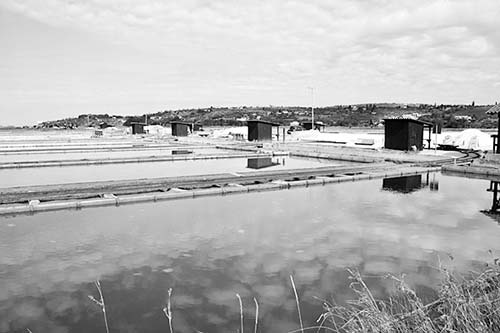
The “nature park” has two parts: Lera, to the north, harvests salt using 700-year-old techniques and has a good visitors center and a saltwater spa; Fontanigge, to the south (closer to Croatia), has a good museum to explain traditional salt-harvesting methods. I never thought salt could be so interesting. The only catch is that, in order to preserve the unique landscape around the salt pans, visitors aren’t allowed to drive all the way to the attractions; you’ll have to walk (20 minutes to Lera; at Fontanigge, it’s a 2-mile walk or bike ride on a gravel road).
Cost and Hours: €7, €6 Nov-March; covers entry to the entire salt fields complex, including the visitors center at Lera (daily June-Aug 7:00-21:00, April-May and Sept until 19:00, Oct-March 8:00-17:00) and the museum at Fontanigge (daily June-Aug 9:00-19:00, April-May and Sept-Oct until 17:00, closed Nov-March). Info: +386 5 672 1350, www.kpss.si.
Getting There: The nature park is between Piran and the Croatian border. For drivers heading south toward Croatia (see “Route Tips for Drivers,” earlier), you’ll pass the entrance to the Lera salt field on your right, just after entering the town of Seča (watch for Sečoveljske soline signs). To visit Lera, go down a steep cobbled stretch, then cross a bridge over a channel to reach the ticket booth (from here, it’s a 20-minute walk—described later). For Fontanigge—farther along the main road—it’s more complicated: You’ll cross the Slovenian border, then a few feet later, just before you reach the Croatian border post, you’ll see a poorly marked gravel road on the right, leading you to the salt field. It’s a five-minute drive to the gate, where you’ll park and walk about 30-40 minutes to the museum (or borrow a bike to ride there).
Fit cyclists can bike from Piran all the way to the salt fields in about an hour (for bike-rental information, see “Helpful Hints,” earlier).
Visiting the Park: Remember, there are two parts to the nature park, which are a drive, bike ride, or long hike away from each other. If you’re choosing just one, make it Lera, which is easier to reach (it’s a shorter walk). Fontanigge is for die-hards.
Lera: The Lera section has a multimedia visitors center, small café, and salt-products shop, and gives you a good look at the salt pans themselves.
Buy your ticket at the small wooden kiosk near the parking lot (with WCs). From here, it’s just over a mile (20-minute walk) to the attractions, passing a shop selling products made with the salt harvested here. If it’s not too hot, it’s enjoyable to walk through the neat patchwork of vast, wood-framed salt pans, connected by a series of canals with little doors. Keep an eye out for workers harvesting salt just as it was done from medieval times up until the Austrians arrived in 1904. Museum docents do it the way their ancestors did: First, they fill up the shallow pans with seawater, then they seal them off and allow the water to naturally evaporate, leaving behind those precious deposits. Once most of the water is gone, they use large rake-like tools to sweep the salt into big piles. You’ll most likely see salt gatherers at work during the peak of summer (July-Aug), when the hot sun speeds evaporation. (Be warned that the walk can be blazing hot, with nearly no shade—perfect conditions for harvesting salt.)
The multimedia center shows a mesmerizing 30-minute film (with English subtitles) of modern-day locals harvesting salt the same way their ancestors did. “In 700 years,” the movie notes, “only the clothing has changed.” Traditional tools decorate the walls. In the adjoining hall, you can see a model of the entire area of the salt pans, learn more about the history and ecology of salt-gathering, and watch short video clips about local birds (which thrive in this salty ecosystem). Everything is nicely presented and well described in English.
Next to the multimedia center is a small $ café (selling affordable meals and drinks—all those piles of salt just seem to make people thirsty). Climbing the spiral staircase on the adjacent building, you’ll reach a rooftop viewpoint offering panoramic views. Also nearby are WCs.
To get the most out of your visit, consider booking an affordable guided tour (€40 for a small group plus entrance tickets, 1.5-hour guided walk through the salt fields, reserve 3 days ahead at www.kpss.si).
In a different part of Lera (about a mile from the ticket booth) is the Thalasso Lepa Vida Spa, where you can soak in salty water and order a range of other treatments, such as salt-pan mud wraps and other salty exfoliations (€22/up to 2 hours, includes museum ticket and free golf-cart ride from ticket booth to the spa, other treatments cost extra; June-Aug daily 10:00-20:00, Sept until 18:00, closed Oct-May, can be weather-dependent even in high season; +386 5 672 1360, www.thalasso-lepavida.si).
Fontanigge: This part of the park—within a few feet of the Croatian border, which is just over the little river—is home to the Salt-Making Museum. From the parking lot, it’s nearly two miles along a bumpy gravel road to the museum. You can walk, or you can borrow a bicycle to pedal yourself out to the exhibit. Well explained by posted English information and a knowledgeable docent, the museum demonstrates tools and methods, illustrating the lifestyles of the people who eked out a hard living on these salty marshes (for example, because they all shared a communal oven, each family had their own stamp for marking their loaves of bread).
Koper Cruise Port
The big city a half-hour to the north of Piran, Koper, is a gloomy industrial burg (pop. 25,000) that is emerging as a popular cruise port. I wouldn’t bother coming here unless you’re arriving by cruise ship—in which case, you can follow my instructions here.
Ships put in right in front of the Old Town. You’ll exit the terminal building into a tidy collection of tourist stalls and a small TI kiosk (TI +386 5 664 6403, www.koper.si). Across the street, you’ll see fragments of Koper’s stout town wall. The bus stop directly in front of the port gate serves a hop-on, hop-off tourist train that does a pointless loop around the Old Town perimeter. Free Wi-Fi is available in the port area.
While Koper is worth a quick stroll, most cruisers will want to move on to more enticing destinations farther afield. The easiest (and probably best) choice is Piran, well connected by bus; also consider riding a bus to Trieste, or hiring a guide for a busy day driving all over Slovenia (Ljubljana, Lake Bled, the famous caves, and more). Each option is described next.
Koper: While this big city lacks charm, its main square is worth a quick peek, and it has a great harborfront promenade. To explore, turn right as you exit the port, then turn left at the speed bump just past the big, blocky wall. Climbing up the stairs and turning left, you can walk to the view terrace overlooking the cruise port. From here, do a 180 and follow brown Center/Centro signs directly away from the port. After a long block, you’ll pop out in Koper’s main square, Titov Trg. On this square, you’ll find a climbable, 204-step bell tower; a TI (inside the crenellated castle, Praetorian Palace/Pretorska Palača); a loggia with café tables; and a Mercator supermarket with an ATM by the front door. After exploring here, head to the most scenic stretch of Koper’s waterfront: Facing the palace with the TI, turn right down Kuričeva Ulica. You’ll head through the atmospheric Old Town until you reach a little square with a loggia. Just beyond this is the waterfront; if you follow it to the left, you’ll find a broad, nicely manicured promenade.
From Koper To Piran: Slovenia’s most charming coastal town is easily reached by bus (2-3/hour Mon-Fri, fewer Sat-Sun, 45 minutes). To reach the bus stop, exit your ship to the right, walking with the sea on your right side. Just follow the road as it curves to the right. After about 10 minutes, you’ll reach the big market hall (tržnica), surrounded by a giant parking lot. At the roundabout, turn right and head for the Koper Tržnica bus stop on the right side of the street (next to the parking lot), where you can catch the Piran-bound bus.
To Trieste or Ljubljana: While the bus to Piran leaves from Koper’s town center, other connections depart from Koper’s adjacent train and bus stations, which sit beyond the far end of the Old Town. To avoid the long walk, you can hop on any public bus, all of which head for this station. From the main bus station, you can ride the bus into the nearby Italian port city of Trieste (6/day, none on Sun, 45-60 minutes)—the historic port of the Austro-Hungarian Empire, with a nice Old Town and a romantic harbor. To go farther afield, you can head north to Ljubljana. Reaching the capital takes about 2.5 hours by bus or by train, but connections are sparse (about 4/day on either, though the only times convenient for cruisers are the 10:03 train, which runs daily, or the 10:50 bus, which runs Mon-Fri only).
To Elsewhere in Slovenia: As the drive to Ljubljana takes an hour less (about 1.5 hours each way), hiring your own guide/driver is a smart splurge to efficiently link several worthwhile Slovenian stopovers. A popular round-trip from Koper is to visit both Ljubljana and Lake Bled before returning to your ship; if you skip Bled, you’ll have time to tour one of the great caves (Škocjan or Postojna) or other sights (such as the Lipica Stud Farm) between the coast and Ljubljana.