CROATIA
The Yugoslav Era, World War II, and the Ustaše
With thousands of miles of seafront and more than a thousand islands, Croatia’s coastline is Central Europe’s Riviera. Holiday makers love its pebbly beaches, balmy summer weather, and dramatic mountains. Croatia is also historic. From ruined Roman arenas and Byzantine mosaics to Venetian bell towers, Habsburg villas, and even Yugoslav concrete, past rulers have left their mark.
Especially along its coast, Croatia feels more Mediterranean than “Eastern European.” Historically, the Croatia that most tourists visit has more in common with Venice than with Vienna or Budapest. If you’ve become accustomed to the Germanic efficiency of Slovenia, Croatia’s relaxed style can come as a shock.
Despite its fun-in-the-sun status, three decades ago Croatia was one of the battlegrounds of the most violent European conflict since World War II. While we refer to “the Yugoslav Wars,” locals call it “The Homeland War” or “The Last War” (though it’s unclear whether they mean “final” or “most recent”). Thankfully, the bloodshed is now well in the past—a distant memory even to those who actively participated. But trying to understand the war, its causes, and its effects provides thoughtful travelers with a perspective-broadening and poignant dimension to their trip.
Adding to the country’s fame are high-profile media appearances—from serving as a major location for Game of Thrones, to a wildly popular South Korean dating/reality show. Croatia is ready for its close-up.
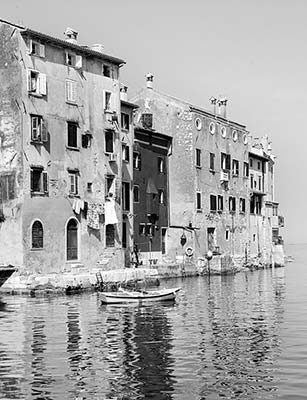
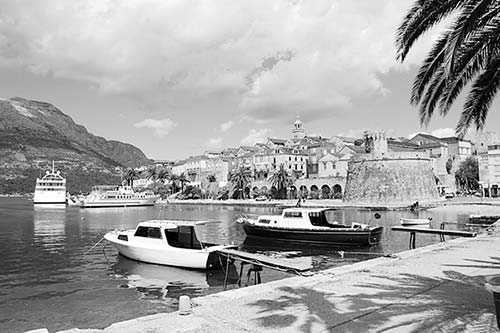
Croatia’s 3,600 miles of coastline—its main draw for tourists—is loosely divided into three regions. Most people flock to the Dalmatian Coast, in the south, where dramatic limestone cliffs rise from the watery deep and islands are scattered just offshore (the most appealing are Hvar and Korčula). Here you’ll find Croatia’s top tourist town, Dubrovnik, and the big city of Split, with its impressive Roman ruins. Up in the northern corner of the country is the flatter, wedge-shaped, Italian-flavored peninsula called Istria, with a rolling interior blanketed with vineyards and topped with hill towns, Roman ruins in the city of Pula, and my favorite seaside town between Dubrovnik and Venice: Rovinj. Wedged between Dalmatia and Istria is the Kvarner Gulf, a windy, arid no-man’s-land that has few worthwhile attractions but ample rugged scenery and a few fine islands offshore.
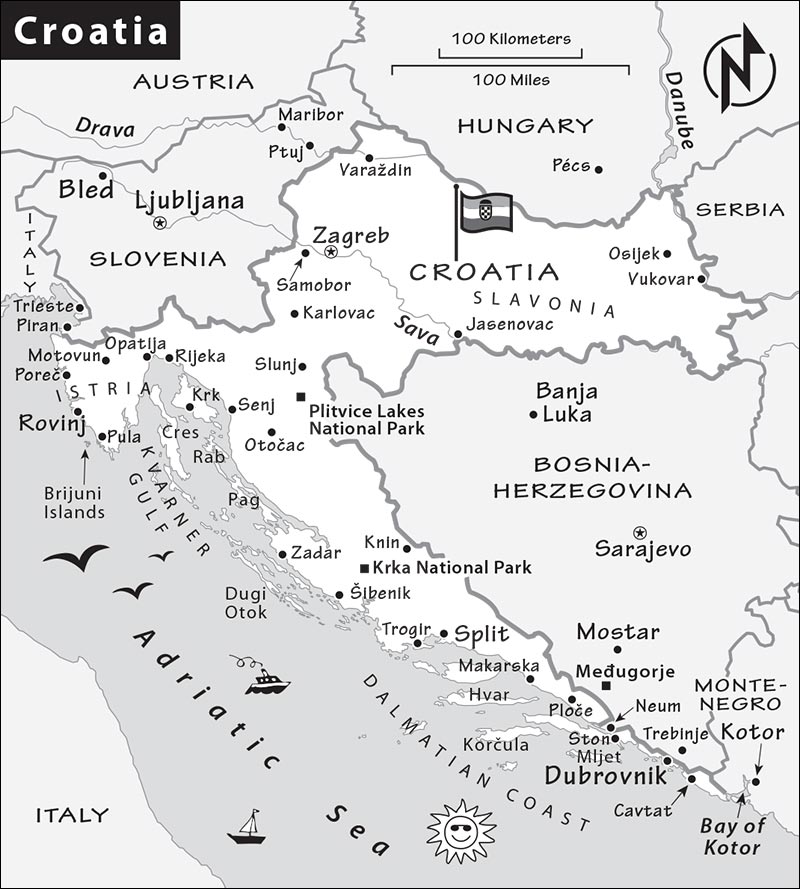
Enjoy the coast, but don’t ignore the interior. The bustling capital of Zagreb is urban, engaging, and full of great museums and foodie restaurants. And Croatia’s single best natural wonder (in this country that’s so full of them) are the stunning waterfalls at Plitvice Lakes National Park.
Not that long ago, Croatia was thought of as a budget destination. But those days are gone. Prices have increased exponentially due to a number of factors—from simple inflation, to increased popularity, to the financial hardship of the pandemic, to Croatia’s adoption of the euro in January 2023. The tourist season here is short—roughly mid-May through mid-October—and during those five months, many in the tourist trade aim to make enough profit to last them the full year...and that often means charging prices that seem out of scale.
But it is still possible to travel in Croatia on a low budget. The country has an abundance of basic, very affordable rented rooms—look for the word sobe, which you’ll see advertised all over the country (an apartman—“apartment”—is similar but usually has a kitchen). For more on Croatian sobe, see the “Sleeping” section in the Practicalities chapter. Minimizing restaurant meals and opting instead for takeout food and picnics can also help you control costs.
What’s more challenging is touring Croatia on a midrange budget, as many eats and sleeps skew either very cheap or very expensive. Choosing between a modest-but-comfortable €80 rented room in a private home or a €350 boutique hotel just up the lane, you’ll wish there were something in the middle...but often, there just isn’t.
My advice for the midrange traveler: Set your sights on the high-end “budget” choices, and adjust your expectations. Many of the €100-120 rooms and apartments are quite hotelesque: air-conditioned, with decent Wi-Fi, a private bathroom, and often a private entrance and other amenities like minifridges. This is a much better value than paying triple for a regular hotel, though of course you are sacrificing some degree of cushy comfort and services.
Europeans are reverent sun worshippers, and on clear days it seems every square inch of coastal Croatia—beaches, rocks, and even promenades—is occupied by a sunbather on a beach towel. Nude beaches are a big deal, especially for vacationing Germans and Austrians. If you want to work on an all-around tan, seek out a beach marked FKK (from the German Freikörper Kultur, or “free body culture”). First-timers get comfortable in a hurry, finding they’re not the only novices on the rocks.
Perhaps because sunshine and fishing are so important to the economy, Croatians are particularly affected by the weather. They complain that the once-predictable climate has become erratic, with surprise rainy spells or sweltering heat waves in the once-perfectly consistent summer months. Locals—and, often, tourists—find that their mood can be noticeably affected by which way the wind is blowing (for more, see here). The Croatian weather report includes a biometeorološka prognoza that indicates how the day’s weather will affect your mood. Weather maps come with smiley or frowny faces, and forecasts predict that “people will be tired in the afternoon and not feel like working.”
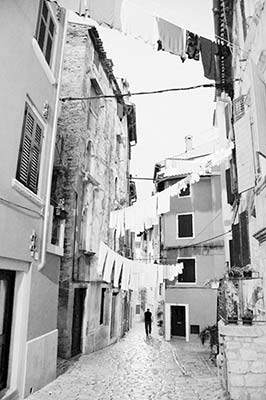
Every Croatian coastal town has two parts: the time-warp old town, and the obnoxious resort sprawl. Main drags are clogged with gift shops selling shell sculptures and tasteless T-shirts. Fortunately, it’s relatively easy to ignore the touristy scene and instead poke your way into twisty, old medieval lanes, draped with drying laundry and populated by gossiping neighbors, humble fishermen’s taverns, and soccer-playing kids.
Croatian popular music, the mariachi music of Europe, is the ever-present soundtrack of a Dalmatian vacation. The late Oliver Dragojević—who sang soulful Mediterranean ballads with a gravelly, passionate voice—was the Croatian Tom Jones. Known simply as “Oliver,” this beloved crooner still gets airplay across Europe and has spawned many imitators (such as the almost-as-popular Gibonni).
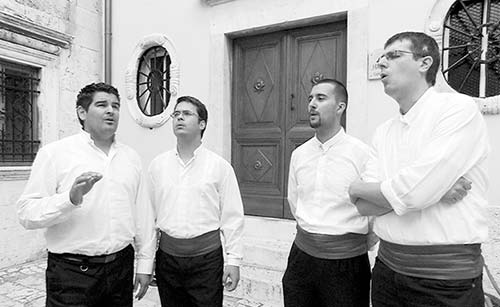
More traditional is the hauntingly beautiful klapa music—men’s voices harmonizing a cappella, like a barbershop quartet with a soothing Adriatic flavor. Typically the leader begins the song, and the rest of the ensemble follows behind him with a slight delay. You’ll see mariachi-style klapa groups performing in touristy areas; a CD of one of these performances is a fun souvenir.
Many Croatians place a lot of importance on their Catholic faith. In Tito’s Yugoslavia, religion was de-emphasized, and many people gave up the habit of attending Mass regularly. But as the wars raged in the early 1990s, Croatians rediscovered religion (which was also tied to surging nationalism). Though religious commitment here doesn’t match levels in Italy or Poland, you’ll often see locals worshipping inside Croatia’s many churches.
During those Yugoslav years, Croatia was a vacation hotspot for both Europeans and Americans; at its peak, Croatia hosted about 10 million visitors a year, who provided the country with about a third of its income. Of course, the war decimated tourism, and recovery was gradual. But these days there’s no question that Croatia has rebounded, becoming more popular than ever on the world tourism scene. About 15 million visitors flock here each year, to the tune of more than $10 billion. In fact, some worldly Croatians are now pursuing a more sustainable approach to tourism—a concern that will certainly grow alongside the number of visitors.
Official Name: Republika Hrvatska, or just Hrvatska for short.
Size: 22,000 square miles (similar to West Virginia). Of the country’s 4.5 million people, 90 percent are ethnic Croats (Catholic) and 4.5 percent are Serbs (Orthodox). (The Serb population was more than double that before the ethnic cleansing of the 1991-1995 war.) The population also includes ethnic Bosniaks (Muslims), Hungarians, and Slovenes. “Croatians” are citizens of Croatia; “Croats” are a distinct ethnic group made up of Catholic South Slavs. So Orthodox Serbs living in Croatia are Croatians (specifically “Croatian Serbs”)...but they aren’t Croats.
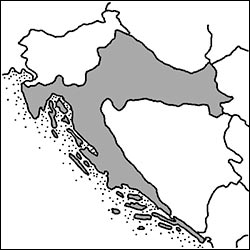
Geography: This boomerang-shaped country has two terrains: Stretching north to south is the long, rugged Mediterranean coastline (3,600 miles of beach, including more than 1,100 offshore islands), which is warm and dry. Rising up from the sea are the rocky Dinaric Mountains. To the northeast, beginning at about Zagreb, Croatia’s flat, inland “panhandle” (called Slavonia) is an extension of the Great Hungarian Plain, with hot summers and cold winters.
Latitude and Longitude: 45˚N and 15˚E (similar latitude to Venice, Italy, and Portland, Oregon).
Biggest Cities: The capital, Zagreb (in the northern interior), has 790,000 people; Split (along the Dalmatian Coast) has 178,000; and Rijeka (on the northern coast) has 129,000.
Snapshot History: After losing their independence to Hungary in 1102, the Croats watched as most of their coastline became Venetian and their interior was conquered by Ottomans. Croatia was “rescued” by the Habsburgs (eventually becoming part of Austria-Hungary). After World War I, it became part of Yugoslavia, which splintered apart in the early 1990s, when Croatia fought a bitter war to become a modern, independent state.
Economy: Much of the country’s wealth (about $95 billion GDP, or $24,700 GDP per capita) comes from tourism, banking, and trade with Italy.
Currency: Croatia uses the euro: €1 = $1.10.
Government: The single-house assembly (Sabor) of 151 legislators is elected by popular vote. The country’s prime minister (the head of the majority party in parliament, the center-right HDZ party) is currently Andrej Plenković; the directly elected (but more figurehead) president is Zoran Milanović, from the center-left Social Democratic Party (SDP).
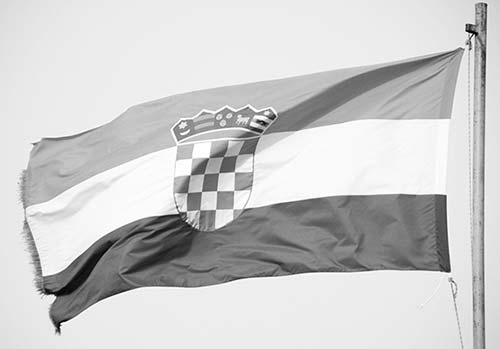
Flag: The flag has three horizontal bands (red on top, white, and blue) with a traditional red-and-white checkerboard shield in the center.
The Average Croatian: The average Croatian will live to age 76 and have 1.4 children. They absolutely adore the soccer team Dinamo Zagreb and absolutely despise Hajduk Split...or vice versa.
Notable Croatians: A pair of big-league historical figures were born in Croatia: Roman emperor Diocletian (AD 245-313) and—supposedly (though unlikely)—explorer Marco Polo (1254-1324). More recently, many Americans whose names end in “-ich” have Croatian roots, including actor John Malkovich and Ohio politicians Dennis Kucinich and John Kasich, not to mention baseball legend Roger Marich...I mean, Maris. More Croatian athletes abound: tennis star Goran Ivanišević is internationally known; NBA fans might recognize Toni Kukoč, Gordan Giricek, and Dražen Petrović (who died tragically in 1993); and at the 2002 and 2006 Winter Olympic Games, the women’s downhill skiing events were dominated by Janica Kostelić (her brother Ivica Kostelić medaled in 2006, 2010, and 2014). Actor Goran Višnjić (from TV’s ER) was born and raised in Croatia, and served in the army as a paratrooper. You may not yet know the beloved Croatian sculptor Ivan Meštrović...but you will soon, as his expressive works are all over the country (as well as in the United States). Inventor Nikola Tesla (1856-1943)—who, as a rival of Thomas Edison’s, invented alternating current (AC)—was a Croatian-born Serb. And a band of well-dressed 17th-century Croatian soldiers stationed in France gave the Western world a new fashion accessory—the cravat, or necktie. (For the full story, see here.)
Service in Croatia can be...relaxed. Maybe too relaxed. This is partly thanks to the local philosophy of malo po malo, “little by little”—the easygoing, no-worries, mañana Dalmatian lifestyle. Another key Dalmatian word is laganini, which conveys a lack of urgency or rushing...simply taking your time.
This approach sometimes challenges visitors who aren’t quite ready to downshift to that same degree. And, while you’ll meet plenty of wonderfully big-hearted Croatians, some of my readers characterize Croatian servers or hotel receptionists as “gruff” or even “rude.” Be prepared for what I call the “Croatian Shrug”—a simple gesture meaning, “Don’t know, don’t care.” I chalk this up in part to the intensity of Croatia’s short tourist season—and the fact that many visitors can be clueless and demanding. (If you don’t believe me, just sit and observe tourists and locals interacting for a few minutes.)
Today’s Croatia is crawling with a Babel of international guests speaking German, French, Italian, every accent of English...and a smattering of Croatian. And yet, despite the tourists, this place remains distinctly and stubbornly Croatian. You’d have to search pretty hard to find a McDonald’s.
HELPFUL HINTS
Telephones: For details on how to dial to, from, and within Croatia, see here.
Addresses: Addresses listed with a street name and followed by “bb” have no street number. In most small towns, locals ignore not only street numbers but also street names—navigate with a map or by asking for directions.
Slick Pavement: Old towns, with their well-polished pavement stones and many slick stairs, can be quite treacherous, especially after a rainstorm. (One time, one of your co-authors nearly broke his arm slipping down a flight of stairs.) Tread with care.
Pack Smart: Croatia is known for its glimmering beaches. However, most are pebbly or rocky rather than sandy—and spiny sea urchins are not uncommon. In addition to your swimsuit, pack (or buy in Europe) a pair of water shoes for wading, as well as a beach towel (many of my recommended accommodations don’t provide these). Good sunscreen, a sun hat, and bug spray can also be handy. And if you’ll be hiking on Croatia’s many scenic coastal trails, which can be rugged, pack sturdy shoes.
Landmine Warning: Certain parts of the Croatian interior were once full of landmines. Most of these mines have been removed, and fields that may still be dangerous are usually clearly marked. As a precaution, if you’re in a former war zone, stay on roads and paths, and don’t go wandering through overgrown fields and deserted villages.
CROATIAN HISTORY
For nearly a millennium, bits and pieces of what we today call “Croatia” were batted back and forth between foreign powers: Hungarians, Venetians, Ottomans, Habsburgs, and Yugoslavs. Only in 1991 did Croatia regain its independence.
Early History
Croatia’s first inhabitants were the mysterious Illyrians. While they left behind a few scant artifacts, little is known about this group, who were likely the ancestors of today’s Albanians.
During antiquity, the Greeks and Romans sailed ships up and down the strategic Dalmatian Coast. They founded many towns that still exist today, introduced winemaking and other agriculture, and littered the Adriatic seabed with shipwrecks. Romans built larger settlements on the Dalmatian Coast as early as 229 BC, and in the fourth century AD, Emperor Diocletian—who was born in what’s now Croatia and rose through the military ranks to become the most powerful man on earth—built his retirement palace in Split.
As Rome fell in the fifth century, many different peoples migrated across Europe—including the Slavs (the ancestors of today’s Croatians). They moved into deserted Roman settlements (Diocletian’s Palace, in Split, is a prime example) and made them their own. The northern part of Croatia’s coast fell briefly under the Byzantines, who slathered churches with shimmering mosaics (the best are in the Euphrasian Basilica in Poreč, Istria).
Beginning in the seventh century, Slavic Croats began to control most of the land that is today’s Croatia. In AD 925, the Dalmatian duke Tomislav united the disparate Croat tribes into a single kingdom. By consolidating and extending Croat-held territory and centralizing power, Tomislav created what many consider to be the first “Croatia.”
Loss of Independence
By the early 12th century, the Croatian kings had died out, and neighboring powers (Hungary, Venice, and Byzantium) threatened the Croats. For the sake of self-preservation, Croatia entered into an alliance with the Hungarians in 1102—and for the next 900 years, the Croats were ruled by foreign states. The Hungarians gradually took more and more power from the Croats, exerting control over the majority of inland Croatia. Meanwhile, the Venetian Republic conquered most of the coast and peppered the Croatian Adriatic with bell towers and the winged lion of St. Mark.
The Ottomans (from today’s Turkey) conquered most of inland Croatia by the 15th century and challenged the Venetians—unsuccessfully—for control of the coastline. Most of the stout walls, fortresses, and other fortifications you’ll see all along the Croatian coast date from this time, built by the Venetians to defend against Ottoman attack.
Through it all, the tiny Republic of Dubrovnik (or Ragusa) flourished—paying off whomever necessary to maintain its independence and becoming one of Europe’s most important shipbuilding and maritime powers. Although it was surrounded by the Ottoman threat, Dubrovnik persisted as a plucky rival to powerful Venice.
In the 17th century, the Habsburgs forced the Ottomans out of inland Croatia. Then, after Venice and Dubrovnik fell to Napoleon in the early 19th century, the coast also went to the Habsburgs—beginning a long tradition of Austrians basking on Croatian beaches.
The Yugoslav Era, World War II, and the Ustaše
When the Austro-Hungarian Empire broke up at the end of World War I and the map of Europe was redrawn, the Croats banded together with the Serbs, Slovenes, and Bosniaks in the union that would become Yugoslavia. But virtually as soon as the Kingdom of Yugoslavia was formed, many Croats began to fear that the Serbs would steer the new state to their own purposes.
The parliamentarian Stjepan Radić spoke out passionately for Croat rights within the kingdom—until he was assassinated by a Serb during a parliamentary session on the morning of June 20, 1928. This outbreak of violence alarmed Yugoslavia’s Serb king, Alexander Karađorđević, who abolished the parliament and declared himself absolute ruler of the kingdom—squelching the Croats’ fervently desired autonomy.
It was in this political climate, during the 1930s, that the Ustaše (“Uprisers”)—a nationalistic, fascist movement bent on creating an ethnically pure “Greater Croatia”—gained popularity. On September 9, 1934, Ustaše operatives assassinated King Alexander. The Kingdom of Yugoslavia—so young and fragile—was already unraveling.
But even larger concerns loomed on the horizon. On April 6, 1941, Hitler’s Luftwaffe began aerial bombardment of Belgrade; less than two weeks later, Nazi Germany controlled Yugoslavia. Hitler divvied up the territory among his Italian, Hungarian, and Bulgarian allies. He created the misnamed “Independent State of Croatia”—encompassing much of today’s Croatia and Bosnia-Herzegovina, and parts of Serbia—to be led by Ante Pavelić and the Croatian Ustaše Party. But Pavelić took his orders from Hitler, and the Ustaše operated one of the most brutal Nazi puppet states during World War II. Ustaše concentration camps—including the notorious Jasenovac extermination camp—were used to murder tens of thousands of Jews and Roma (Gypsies), as well as hundreds of thousands of Serbs.
The Croatian Catholic leader Cardinal Alojzije Stepinac was one Croat who made the mistake of backing the Ustaše. By most accounts, Stepinac was a mild-mannered, devout man who didn’t agree with the extremism of the Ustaše...but also did little to oppose it. Following the war, Stepinac was arrested, tried, and imprisoned, dying under house arrest in 1960. In the years since, Stepinac has become a martyr both for Catholics and for Croat nationalists.
As the war raged, a charismatic war hero named Josip Broz—who went by the nickname “Tito”—assembled a fearsome Partisan Army in the mountains of Bosnia-Herzegovina. Tito’s Partisans fought fiercely against the Ustaše and other foes, reclaiming the country and earning the right for Yugoslavia to set its own course after the war’s end. Tito became “president for life” of the reconstituted Socialist Federal Republic of Yugoslavia, in which Croatia was one of six member republics. This union would hold together for more than 40 years, until it broke apart amid attempts by Serbian president Slobodan Milošević and Croatian president Franjo Tuđman to redraw ethnic boundaries.
For more details on Yugoslavia and its breakup, see the Understanding Yugoslavia chapter.
Independence Regained
Croatia’s declaration of independence from Yugoslavia in 1991 was met with fear and anger by many of its more than half-million Serb residents. Even before the declaration, the first volleys of a bloody war had been fired, as nationalist leaders stoked tensions. The conflict had two phases: First, Croatian Serbs declared independence from the new nation of Croatia, forming their own state and forcing out or murdering any Croats in their newly claimed territory (with thinly disguised military support from Slobodan Milošević). In 1992, a tense cease-fire fell over the region, and in 1995 the second phase of the war ignited: Croatia pushed back through the Serb-dominated territory, reclaiming it for Croatia and forcing out or murdering Serbs living there.
Imagine becoming an independent nation after nine centuries of foreign domination. Croatians seized their hard-earned freedom with a nationalistic fervor. It was a heady and absurd time, which today’s Croatians recall with a mix of excitement, nostalgia...and maybe some regret.
In the Croatia of the early 1990s, even the most bizarre notions seemed feasible. Croatia’s first post-Yugoslav president, the nationalist Franjo Tuđman (see sidebar), proposed bold directives for the new nation—such as privatizing all of the nation’s resources and handing them over to 200 super-elite oligarchs. While this never quite happened, privatization relied heavily on nepotism, and Tuđman’s highly placed allies enjoyed a windfall.
The government rechristened the language “Croatian” (to distinguish it from “Serbo-Croatian”) and created new words from Croat roots. Some outside-the-box thinkers even briefly considered replacing the Roman alphabet with the ninth-century Glagolitic script to invoke Croat culture and further differentiate Croatian from Serbia’s Cyrillic alphabet. (Fortunately for tourists, this plan didn’t take off.)
After Tuđman’s death, in 1999, Croatia began the new millennium with a more truly democratic leader, Stipe Mesić. The popular Mesić, who was once aligned with Tuđman, had split off and formed his own political party when Tuđman’s politics grew more extreme. Tuđman spent years amending the constitution to give himself more and more power, but when Mesić took over, he reversed those changes and handed more authority back to the parliament.
After a successful decade as president, the term-limited Stipe Mesić stepped down in 2010. Ivo Josipović, running on a strong anti-corruption platform, won by a landslide.
Croatia Today
In 2013, Croatia joined the European Union—a benchmark of the progress the nation has made since Tuđman. But the road to EU membership has been a rocky one, and several thorny issues face contemporary Croatians.
The legacy of the Yugoslav Wars has yet to fully resolve itself in Croatia. As evidence of Croat war crimes has emerged, many Croatians feel regret and shame, while others maintain that their fledgling country did what was necessary to survive. Several Croatian officers were indicted for war crimes by the International Criminal Tribunal for the Former Yugoslavia (ICTY) in The Hague, Netherlands. The highest-profile of these—Lieutenant General Ante Gotovina—was discovered hiding in Spain in 2005, arrested, extradited, tried, convicted...and then acquitted on appeal in 2012. To this day, many Croatians feel that the soldiers branded as “war criminals” by The Hague are instead heroes of their war of independence.
Croatia’s relations with its neighbors—many of whom were involved in the Yugoslav Wars—remain strained. While Croatia and Slovenia shared the same goal (separating from Yugoslavia), many Croatians resent Slovenia’s lack of military support for Croatian independence. For example, Slovenia briefly blocked Croatia’s EU membership bid in an effort to resolve a long-standing border dispute. (Ironically, even many Croatians who were vehemently opposed to EU membership were outraged that Slovenia tried to prevent it.) Sometimes when I show people the cover of this book, people in both countries express displeasure about being grouped together.
A similar dispute with Bosnia-Herzegovina led to the construction of the Pelješac Bridge, completed in 2022 to allow cars to drive from the Dubrovnik area to the rest of Croatia without passing through Bosnia’s short stretch of coastline (for more on this bridge, see here).
Many Croatians—and especially expats living here—report that the country is excessively bureaucratic and can be a tough place to do business. Laws tend to be implemented, then quickly overturned. In the past few years, a ban on shops being open on Sundays, a smoking ban, and a zero blood-alcohol limit for drivers have all come and gone.
In 2012, two-thirds of Croatians voted in favor of joining the EU. But the reality of EU membership rocked Croatia in the fall of 2015, when a wave of immigrants from war-torn Syria (as well as many other Middle Eastern and Balkan nations) began to flood into Europe. When neighboring Hungary closed its borders to refugees, many began to spill into northern Croatia. While refugees camped out at the borders, Croatian government agencies and NGOs alike scrambled to deal with simultaneous humanitarian and diplomatic crises.
Despite struggles and setbacks, over time, signs of progress—and of further integration with Europe—are evident. On January 1, 2023, Croatia did away with its traditional kuna currency and adopted the euro. On the same day, Croatia joined the Schengen open-borders agreement. As with all big changes, this benchmark came with some angst—Croatians fretted that the euro transition would lead to big price hikes. But it appears that Croatia is on the right track.
Meanwhile, the filming of Game of Thrones here and the increased popularity of Croatian destinations on cruise itineraries have only bolstered the country’s status as a red-hot destination. As crowds (and prices) increase, and with some of the growing pains of new nationhood behind it, the future in Croatia seems very strong indeed.
CROATIAN FOOD
While Croatia is not quite the ultimate foodie destination that its tourist board would have you believe, visitors can eat well here. Until quite recently, local cuisine was simply functional and filling. But a new generation of chefs is introducing new techniques and a more cosmopolitan sensibility to Croatian cooking.
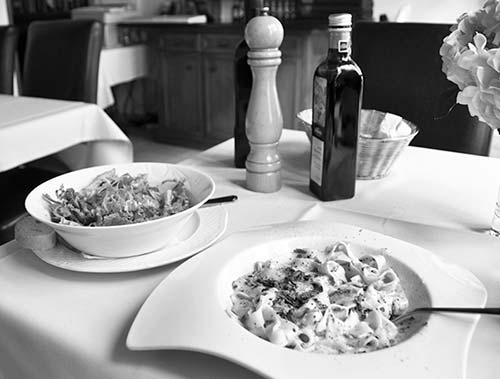
While it’s still easy to fall into a predictable rut of pizza, pasta, and no-frills seafood (especially along the coast), if you care about good food it’s worth seeking out more interesting alternatives. These can be rare in smaller tourist towns, but cities have a better variety. (My restaurant listings highlight the best of both functional and memorable eateries.)
Two staples in Croatia, as in most Mediterranean lands, are wine and olive oil. You’ll see vineyards and olive groves blanketing the Croatian countryside and islands. Another major part of the local diet is the air-dried ham called pršut (a.k.a. prosciutto—see sidebar on here).
While you’ll find places called restaurant, you’ll more often see the name konoba—which means an unpretentious traditional restaurant, like an inn or a tavern. To request a menu, say, “Meni, molim” (MEH-nee, MOH-leem; “Menu, please”). To get the attention of your waiter, say “Konobar” (KOH-noh-bahr; “Waiter”). When the waiter’s ready to take your order, they’ll say, “Izvolite.” When they bring your food, they’ll likely say, “Dobar tek!” (“Enjoy your meal!”). When you’re ready for the bill, ask for the račun (RAH-choon).
Main Dishes
On the coast, seafood is a specialty, and the Italian influence is obvious. According to Dalmatians, “Eating meat is food; eating fish is pleasure.” They also say that a fish should swim three times: first in the sea, then in olive oil, and finally in wine—when you eat it.
For gourmands, one of the most pleasant surprises about a trip to Croatia is the quality of the wines. While much of the industry was state-run and focused on mass production during Yugoslav times, today vintner families are returning to their roots—literally—and taking a renewed pride in Croatian wines. Thanks partly to the interest and investment of American vintners, Croatian wines are gaining respect worldwide. Because very few Croatian wines are exported, a visit here is a good chance to sample some new tastes.
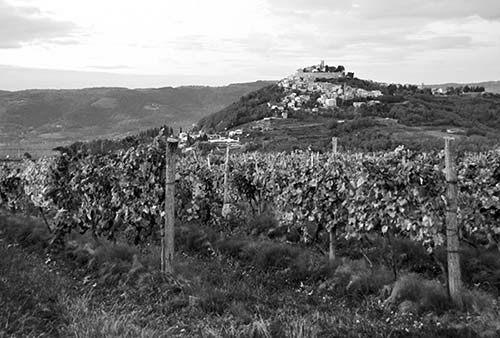
Croatian winemaking may have old roots, but the industry is quite young. There’s a lot of experimentation to revive forgotten traditions, or to import new grapes and methods from other places. When fresh oysters became trendy, can-do Croatian vintners created a sparkling white wine, for the very first time, to wash them down. One thirtysomething vintner feels a lot of generational pressure: “I’ve only got about 25 vintages in my life,” he told me. “That really only gives me a few years to experiment and figure out how to make the best possible wine. Then I’ll spend the rest of my life making it.” Taking a very long, generational view, the same vintner said: “The best vines, you plant for your kids and your grandkids.”
The northern part of the country primarily produces whites (bijelo vino, bee-YEH-loh VEE-noh), usually dry (suho, SOO-hoh) but sometimes semi-dry (polusuho, POHL-soo-hoh) or sweet (slatko, SLAHT-koh). The sunny mountains just north of Zagreb are covered with vineyards producing whites. From Slavonia (Croatia’s inland panhandle), you’ll find graševina—crisp, dry, and acidic (like a dry Riesling). Istria corks up some good whites, including malvazija, a very popular, light, midrange wine. (Muscat is also popular.) The best reds from this region are made from the teran grape, though you’ll find some cabernet sauvignon and merlot as well.
As you move south, along the Dalmatian Coast, the wines turn red—which Croatians call “black wine” (crno vino, TSUR-noh VEE-noh). The dominant grape here is plavac mali (“little blue”)—a distant relative of Californian zinfandel and Italian primitivo. Another Dalmatian red that’s making a comeback is crljenak kaštelanski, a close cousin to plavac mali, which is grown mainly in the Kaštela region near Split.
Many of the best coastal reds are produced on the Pelješac Peninsula, about an hour north of Dubrovnik. The most well-respected (and expensive) regions are Dingač—which literally means “donkey,” for the beasts of burden who had to haul the grapes over the hills—and Postup. Both of these have steeply angled grape terraces over the sea, which lavishes them with sunlight.
The big name on Pelješac is Miljenko Grgić, a Croatian American vintner who brought his California know-how back to his homeland and helped establish a new wave of Croatian wines. But there are many other excellent wines here as well; Potomje and Ponikve are two other wine-growing areas that are easy for wine lovers to visit. The Near Dubrovnik chapter includes detailed coverage of several excellent, user-friendly Pelješac wineries.
Each island also produces its own good wines. Korčula (especially near the villages of Čara and Smokvica) makes excellent white wine from pošip grapes, as well as grk (“Greek” grapes that grow only around Lumbarda) and korčulanka. Hvar’s wines tend to be fruitier and less tannic; they specialize in pošip (described next), as well as bogdanuša (“from the gods”)—which has low alcohol and high acidity.
Pošip is perhaps the most classic and distinctive white grape in Dalmatia, producing wines that are high in alcohol and low in acidity. Pošip was, according to local legends, discovered about 160 years ago by a local farmer who was clearing his fields. There are two stories for how it got its name: One possibility is that he discovered it po šipak (“behind the pomegranate”). The other is that pošip roughly means “piss on it” in local dialect; according to this version of the story, the discoverer went to relieve himself, then realized he’d done so on a new grape. (While a bit gross, this story suggests the earthiness and lack of pretense in Croatian winemaking.) Other popular Dalmatian whites include the light, limey rukatac, and dubrovačka malvazija, from Konavle south of Dubrovnik.
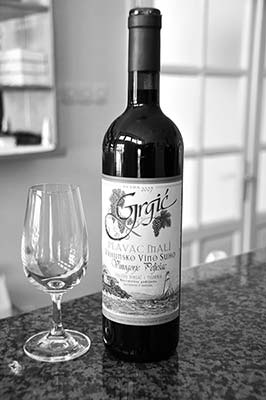
Other wines to look for include the heavenly, sweet dessert wine called prošek (similar to port wine or Italian Vin Santo). While rosés aren’t a big business here, some producers make them to keep up with winemaking trends; you may see them called Opolo (pol means “half”). Other recent trends include amber wines (which are more popular, and traditional, in Slovenia) and sparkling wines.
When looking at wine labels, watch for these three official classifications: stolno (“table,” the lowest grade), kvalitento (“quality,” actually midrange), and vrhunsko (top-quality). In general, if only the grape is listed (e.g., mali plavac), the quality isn’t as good as when the region is prominently noted (e.g., Dingač or Postup). You may also see the words vinogorje (vineyard), položaj (location), and barrique (barrel-aged).
While Croatian wines are impressive, don’t overlook their neighbors’ vintages. Slovenia corks up some excellent bottles (especially in the western and eastern reaches of the country), and Montenegro has some of the best wines in the region.
You can get all kinds of seafood: fish, scampi, mussels, squid, octopus, you name it. Keep in mind that prices for fish dishes are listed either by the kilogram (1,000 grams) or by the 100-gram unit (figure about a half-kilo, or 500 grams—that’s about one pound—for a large portion). Frozen fish is not uncommon—if you want something fresh from the market, ask. If you get a whole fish, you can usually ask the server to delicately separate its fillets from its backbone (a difficult task if you’ve never done it).
Interpreting menus can be tricky. For example, škampi (shrimp) often come still in their shells (sometimes with claws), which can be messy and time-consuming to eat. Before you order shrimp, ask if it’s shelled. The menu item called “small fried fish” is generally a plate of deep-fried minnows. If you see something described as “Dalmatian-style,” it usually means with lots of olive oil, parsley, and garlic.
Don’t shy away from unusual menu items—they can be surprisingly delicious. Jump at the chance to sample a good, fresh anchovy—which, when done right, has a pleasant flavor and a melt-in-your-mouth texture that’s a world away from the salty, withered little fish you might find topping a pizza back home. Those not accustomed to eating octopus might want to try octopus salad: a flavorful mix of octopus, tomatoes, onions, capers, and spices. In the interior, trout is popular. Foodies seek out oysters, pulled straight from the Adriatic and slurped right from their shells. These are easiest to get—and freshest—on the Pelješac Peninsula (north of Dubrovnik), which is also one of Croatia’s top wine-growing areas.
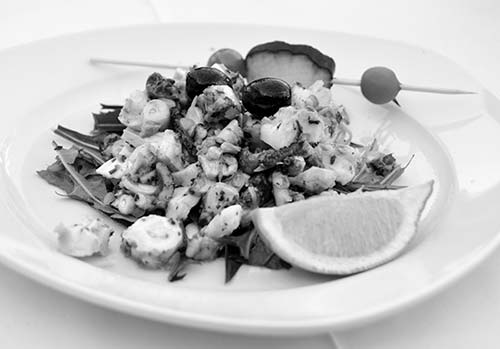
Croatia also has plenty of meat options. A delicious Dalmatian specialty is pašticada—braised beef in a slightly sweet wine-and-herb sauce, usually served with gnocchi. Dalmatia is also known for its mutton. Since the lambs graze on salty seaside herbs, the meat—often roasted on a spit—has a distinctive flavor. Throughout Croatia, look for the spicy, flavorful stewed pork-and-vegetables dish called mućkalica. The most widely available meat dish is the “mixed grill”—a combination of various Balkan grilled meats, best accompanied by the eggplant-and-red-pepper condiment ajvar (see the “Balkan Flavors” sidebar on here).
The best meat dish in Croatia is veal or lamb prepared under a peka—a metal baking lid that’s covered with red-hot coals, to allow the meat to cook gradually to tender perfection. (Ispod peka means “under the bell.”) Available only in traditional restaurants, this dish typically must be ordered in advance and for multiple people. You’ll also find a break from seafood in the north (Zagreb) and east (Slavonia), where the food has more of a Hungarian or Austrian flavor—heavy on meat served with cabbage, noodles, or potatoes.
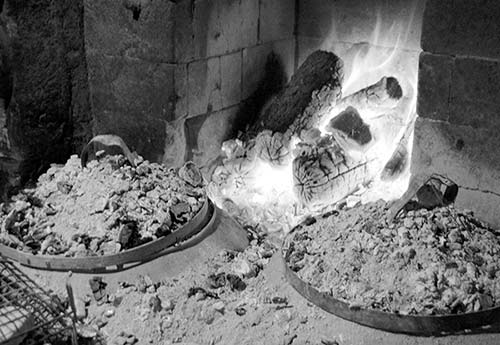
Budget-conscious tourists reserve meat and fish for splurge dinners and dine mostly on cheaper and faster pastas and pizzas. You’ll see familiar dishes, such as spaghetti Bolognese and spaghetti carbonara, gnocchi (njoki), and lasagna. Risotto (rižoto) is popular here; most common is “black risotto,” mixed with squid ink and various kinds of seafood. In Dalmatia, you’ll see a special noodle called makaruli; not quite “macaroni,” these are thick but relatively short, chewy, and hand-rolled. They originated on Korčula but have now spread throughout much of Dalmatia. One popular preparation is šporki (“dirty”) makaruli—smothered in a cinnamon-flavored meat stew.
Side Dishes
There are many good local varieties of cheese made with sheep’s or goat’s milk. Pag, an island in the Kvarner Gulf, produces a famous, very salty, fairly dry sheep’s-milk cheese (paški sir), which is said to be flavored by the herbs the sheep eat.
A common side dish is boiled potatoes and mangold (bltiva); sometimes identified as “Dalmatian chard,” this green is similar to Swiss chard.
When ordering salad, choose between mixed (julienned cabbage, carrots, and turnips, often with some tomatoes or beets, and occasionally with a bit of lettuce) or green (mostly lettuce). Throughout Croatia, salad is typically served with the main dish unless you request that it be brought beforehand.
Dessert and Beverages
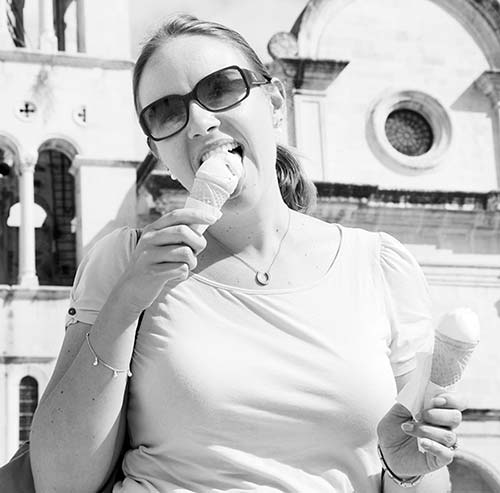
For dessert, look no further than the mountains of ice cream (sladoled) that line every street in coastal Croatia. While most sladoled isn’t quite gourmet (don’t expect the artigianale brilliance of Italian gelaterias), I’ve worked hard to sample and recommend the best ice-cream parlors in each town. (Someone has to do it.) Dalmatia’s traditional dessert is a flan-like, crème caramel custard called rozata.
Water is voda, and mineral water is mineralna voda. Jamnica is the main Croatian brand of bottled water, but you’ll also see Bistra, Studenac, and Römerquelle. Many restaurants—especially fancier ones—might not want to bring you a glass of tap water, but you can try asking for voda iz slavine. For coffee (kava), the easiest choice is bijela kava (BEE-yeh-lah KAH-vah)—“white coffee,” or espresso with lots of milk (similar to a caffè latte). For black coffee, ask for crna kava (TSUR-nah KAH-vah).
The biggest brands of Croatian beer (pivo) are Ožujsko and Karlovačko, but you’ll also see the Slovenian brand Laško (which is also brewed here in Croatia). Fans of dark beer (crno pivo) enjoy Tomislav. Most places also serve nonalcoholic beers (bezalkoholno pivo); most common are Ožujsko Cool and Stella Artois NA.
Even more beloved in Croatia is wine (vino; see “Croatian Wine” sidebar, earlier). Along the coast, locals find it refreshing to drink wine mixed with mineral water (called špricer—pronounced “spritzer”). When toasting with some new Croatian friends, raise your glass with a hearty “Živjeli!” (ZHEE-vyeh-lee).
CROATIAN LANGUAGE
Croatian was once known as “Serbo-Croatian,” the official language of Yugoslavia. Most Yugoslav republics—including Croatia, Serbia, and Bosnia-Herzegovina—spoke this same language. And while each of these countries has tried to distance its language from that of its neighbors since the war, the languages spoken are still very similar. The biggest difference is in the writing: Croatians and Bosniaks use our Roman alphabet, while Serbs use Cyrillic letters.
Since independence, Croatia has actively differentiated its vocabulary from Serbian. In Yugoslav times, you’d catch a plane at the aerodrom. Today, you’ll catch that same flight at the zračna luka—a new coinage that combines the old Croatian words for “air” and “port.” When created, these new words are injected into the lexicon. Croatians watching their favorite TV show will suddenly hear a character use a word they’ve never heard before...and think, “Oh, we have another new word.” In this way, Croatian really is becoming quite different from Serbian (in much the same way Norwegian evolved apart from Swedish a century ago).
Remember, c is pronounced “ts” (as in “bats”). The letter j is pronounced as “y.” The letters č and ć are slightly different, but they both sound more or less like “ch”; š sounds like “sh,” and ž sounds like “zh” (as in “leisure”). One Croatian letter that you won’t see in other languages is đ, which sounds like the “dj” sound in “jeans.” This letter is often replaced with “dj” in English.
When attempting to pronounce an unfamiliar word, remember that the accent is often on the first syllable (and never on the last). But this guideline is extremely loose and often violated. Confusingly, Croatian pronunciation—even of the same word—can vary in different parts of the country. This is because modern Croatian has three distinct dialects—called Kajkavian, Shtokavian, and Chakavian—based on how you say “what?” (kaj?, što?, and ča?, respectively). That’s a lot of variety for a language with just five million speakers.
Attentive travelers will frequently hear two Croatian phrases that are used as enthusiastic affirmatives, like “sure” or “OK”: može (MOH-zheh; can do) and ajde (EYE-deh; let’s go).
For a smoother trip, take some time to learn a few key Croatian phrases (see the Croatian survival phrases on the next page).
Croatian Survival Phrases
In the phonetics, ī sounds like the long i in “light,” and bolded syllables are stressed.
| Hello. (formal) | Dobar dan. doh-bahr dahn |
| Hi. / Bye. (informal) | Bok. bohk |
| Do you speak English? | Govorite li engleski? goh-voh-ree-teh lee ehn-glehs-kee |
| Yes. / No. | Da. / Ne. dah / neh |
| I (don’t) understand. | (Ne) razumijem. (neh) rah-zoo-mee-yehm |
| Please / You’re welcome. | Molim. moh-leem |
| Thank you (very much). | Hvala (ljepa). hvah-lah (lyeh-pah) |
| Excuse me. / I’m sorry. | Oprostite. oh-proh-stee-teh |
| No problem. | Nema problema. neh-mah proh-bleh-mah |
| Good. | Dobro. doh-broh |
| Goodbye. | Doviđenija. doh-veed-jayn-yah |
| one / two / three | jedan / dva / tri yeh-dahn / dvah / tree |
| four / five / six | četiri / pet / šest cheh-teh-ree / peht / shehst |
| seven / eight / nine / ten | sedam / osam / devet / deset seh-dahm / oh-sahm / deh-veht / deh-seht |
| hundred / thousand | sto / tisuća stoh / tee-soo-chah |
| How much? | Koliko? koh-lee-koh |
| local currency | kuna koo-nah |
| Write it? | Napišite? nah-peesh-ee-teh |
| Is it free? | Da li je besplatno? dah lee yeh beh-splaht-noh |
| Is it included? | Da li je uključeno? dah lee yeh ook-lyoo-cheh-noh |
| Where can I buy / find…? | Gdje mogu kupiti / pronaći…? guh-dyeh moh-goo koo-pee-tee / proh-nah-chee |
| I’d like / We’d like… | Želio bih / Željeli bismo zheh-lee-oh bee / zheh-lyeh-lee bees-moh |
| …a room. | …sobu. soh-boo |
| …a ticket to ____. | …kartu do ____. kar-too doh ____ |
| Is it possible? | Da li je moguće? dah lee yeh moh-goo-cheh |
| Where is…? | Gdje je…? guh-dyeh yeh |
| …the train station | …kolodvor koh-lohd-vor |
| …the bus station | …autobusni kolodvor ow-toh-boos-nee koh-lohd-vor |
| …the tourist information office | …turističko informativni centar too-ree-steech-koh een-for-mah-teev-nee tsehn-tahr |
| …the toilet | …vece (WC) veht-seh |
| men / women | muški / ženski moosh-kee / zhehn-skee |
| left / right / straight | lijevo / desno / ravno lee-yeh-voh / dehs-noh / rahv-noh |
| At what time does this open / close? | U koliko sati otvara / zatvara? oo koh-lee-koh sah-tee oht-vah-rah / zaht-vah-rah |
| (Just) a moment. | (Samo) trenutak. (sah-moh) treh-noo-tahk |
| now / soon / later | sada / uskoro / kasnije sah-dah / oos-koh-roh / kahs-nee-yeh |
| today / tomorrow | danas / sutra dah-nahs / soo-trah |
In a Croatian Restaurant
| I’d like / We’d like… | Želio bih / Željeli bismo… zheh-lee-oh bee / zheh-lyeh-lee bees-moh |
| I’d like to reserve / We’d like to reserve… | Rezervirao bih… / Rezervirali bismo… reh-zehr-vee-row bee / reh-zehr-vee-rah-lee bees-moh |
| …a table for one / two. | …stol za jednog / dva. stohl zah yehd-nog / dvah |
| Is this table free? | Da li je ovaj stol slobodan? dah lee yeh oh-vī stohl sloh-boh-dahn |
| The menu (in English), please. | Jelovnik (na engleskom), molim. yeh-lohv-neek (nah ehn-glehs-kohm) moh-leem |
| service (not) included | posluga (nije) uključena poh-sloo-gah (nee-yeh) ook-lyoo-cheh-nah |
| cover charge | couvert koo-vehr |
| to go | za ponjeti zah pohn-yeh-tee |
| with / without | sa / bez sah / behz |
| and / or | i / ili ee / ee-lee |
| breakfast / lunch / dinner | doručak / ručak / večera doh-roo-chak / roo-chak / veh-cheh-rah |
| fixed-price meal (of the day) | (dnevni) meni (duh-nehv-nee) meh-nee |
| specialty of the house | specijalitet kuće speht-see-yah-lee-teht koo-cheh |
| daily special | jelo dana yeh-loh dah-nah |
| fixed-price meal for tourists | turistički meni too-ree-steech-kee meh-nee |
| appetizers | predjela prehd-yeh-lah |
| bread / cheese | kruh / sir kroo / seer |
| sandwich | sendvič send-veech |
| soup / salad | juha / salata yoo-hah / sah-lah-tah |
| meat / poultry | meso / perad may-soh / peh-rahd |
| fish / seafood | riba / morska hrana ree-bah / mor-skah hrah-nah |
| fruit / vegetables | voće / povrće voh-cheh / poh-vur-cheh |
| dessert | desert deh-sayrt |
| (tap) water | voda (od slavine) voh-dah (ohd slah-vee-neh) |
| mineral water | mineralna voda mee-neh-rahl-nah voh-dah |
| milk | mlijeko mlee-yeh-koh |
| (orange) juice | sok (od naranče) sohk (ohd nah-rahn-cheh) |
| coffee / tea | kava / čaj kah-vah / chī |
| wine / beer | vino / pivo vee-noh / pee-voh |
| red / white | crno / bijelo tsehr-noh / bee-yeh-loh |
| sweet / dry / semi-dry | slatko / suho / polusuho slaht-koh / soo-hoh / poh-loo-soo-hoh |
| glass / bottle | čaša / boca chah-shah / boht-sah |
| Cheers! | Živjeli! zhee-vyeh-lee |
| More. / Another. | Još. / Još jedno. yohsh / yohsh yehd-noh |
| The same. | Isto. ees-toh |
| Bill, please. | Račun, molim. rah-choon moh-leem |
| tip | napojnica nah-poy-neet-sah |
| Delicious! | Izvrsno! eez-vur-snoh |