THE KARST
Caves, Castles, and Horses
Sleeping and Eating in the Karst
Škocjan Caves and Lipica Stud Farm
▲▲▲Škocjan Caves (Škocjanske Jame)
▲▲Lipica Stud Farm (Kobilarna Lipica)
Postojna Caves and Predjama Castle
▲▲Postojna Caves (Postojnska Jama)
▲Predjama Castle (Predjamski Grad)
In Slovenia’s Karst region, about an hour south of Ljubljana on the A-1 expressway, you’ll find some of the most impressive cave systems on the planet, get to know the famous Lipizzaner stallions up close and personal (for a fraction of what you’d pay in Vienna), and see one of Europe’s most dramatically situated castles—burrowed into the face of a mountain.
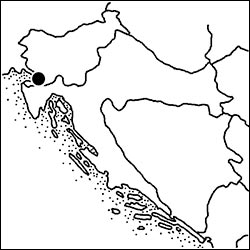
The word “karst” is used worldwide to refer to an arid limestone plateau, but Slovenia’s is the original. In fact, that term comes from the Slovenian Kras—the name of a specific region near the Italian border. Because this limestone terrain is easily dissolved by water, karstic regions are punctuated by remarkable networks of caves and underground rivers.
Your top Karst priority is a cave visit. Choose between Slovenia’s two best caves, Škocjan or Postojna—each with a handy side trip nearby (to help you pick, see the sidebar later in this chapter). In the neighborhood of Škocjan is Lipica, where the Lipizzaner stallions strut their stuff. Just up the road from Postojna is Predjama Castle, picturesquely nestled into the side of a cliff.
I’ve listed public-transit possibilities, but most recommended destinations are challenging to reach without a car. To efficiently hit several in one day, consider taking a guided excursion from Ljubljana (see here).
Sleeping and Eating in the Karst
Majerija is the region’s most enticing splurge, filling an 18th-century farmhouse in the Vipava Valley, about a 30-minute drive from either cave. They have both a fine $$$$ restaurant focusing on top-quality updated Slovenian fare (Thu-Sat 12:00-15:00 & 18:00-22:00, Sun 12:00-17:00, closed Mon-Wed year-round and Thu off-season) and 10 modern, stylish, comfortable $$ rooms (breakfast extra, Slap 18, in Vipava, +386 5 368 5010, mobile +386 41 405 903, www.majerija.si, info@majerija.si).
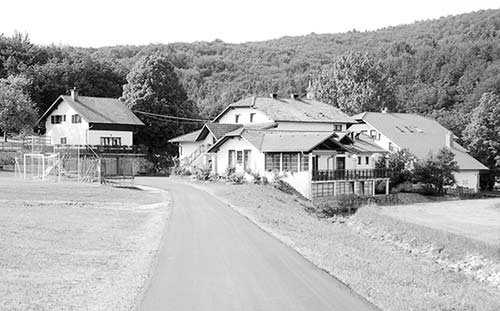
$ EkoTurizem Hudičevec (hoo-DEE-cheh-vets), midway between Škocjan and Postojna (15 minutes from either), is a simpler option. This kid-friendly complex, with seven rooms and five apartments, is run by the farming Simčič family (dinner available, ask about larger apartments, +386 31 390 203, www.hudicevec.si, info@hudicevec.si). Idyllic and remote as this place sounds, it’s actually right next to the expressway (which makes it easy to reach, but also comes with some road noise, and large tour groups may show up for dinner). Take the Razdrto exit from the expressway, turn right toward Postojna, then start looking right away for the low-profile sign directing you back under the road.
Škocjan Caves and Lipica Stud Farm
Drivers can easily combine these two attractions, which are just a short distance from each other. By public transportation, it’s more challenging (see the “Getting To” sections).
▲▲▲Škocjan Caves (Škocjanske Jame)
Škocjan (SHKOHTS-yahn) offers fantastical cave formations and a spectacularly vast canyon with a raging underground river. The main attraction is a guided hike through the caves; this hike is about two miles long, goes up and down more than 500 steps, lasts about two hours, and is mostly underground. After the guided portion, you can extend your visit by following one of two possible routes. While anyone in good shape can enjoy Škocjan, those who have trouble walking or tire easily are better off touring the Postojna Caves instead (described later).
Cost and Hours: €24 in July-Aug, €22 in May-June and Sept, €18 in April and Oct, €16 in Nov-March. Guided tours depart at the top of each hour July-Aug 10:00-16:00 (plus an additional tour at 11:30), May-June and Sept-Oct 10:00-15:00; off-season less frequently (typically at 10:00, 13:00, and sometimes also at 12:00 and/or 15:00). Check online (www.park-skocjanske-jame.si), call (+386 57 082 110), or pick up the current brochure—which you’ll find everywhere in Slovenia—to confirm the schedule before you make the trip. It’s wise to prebook a ticket online (especially in high season).
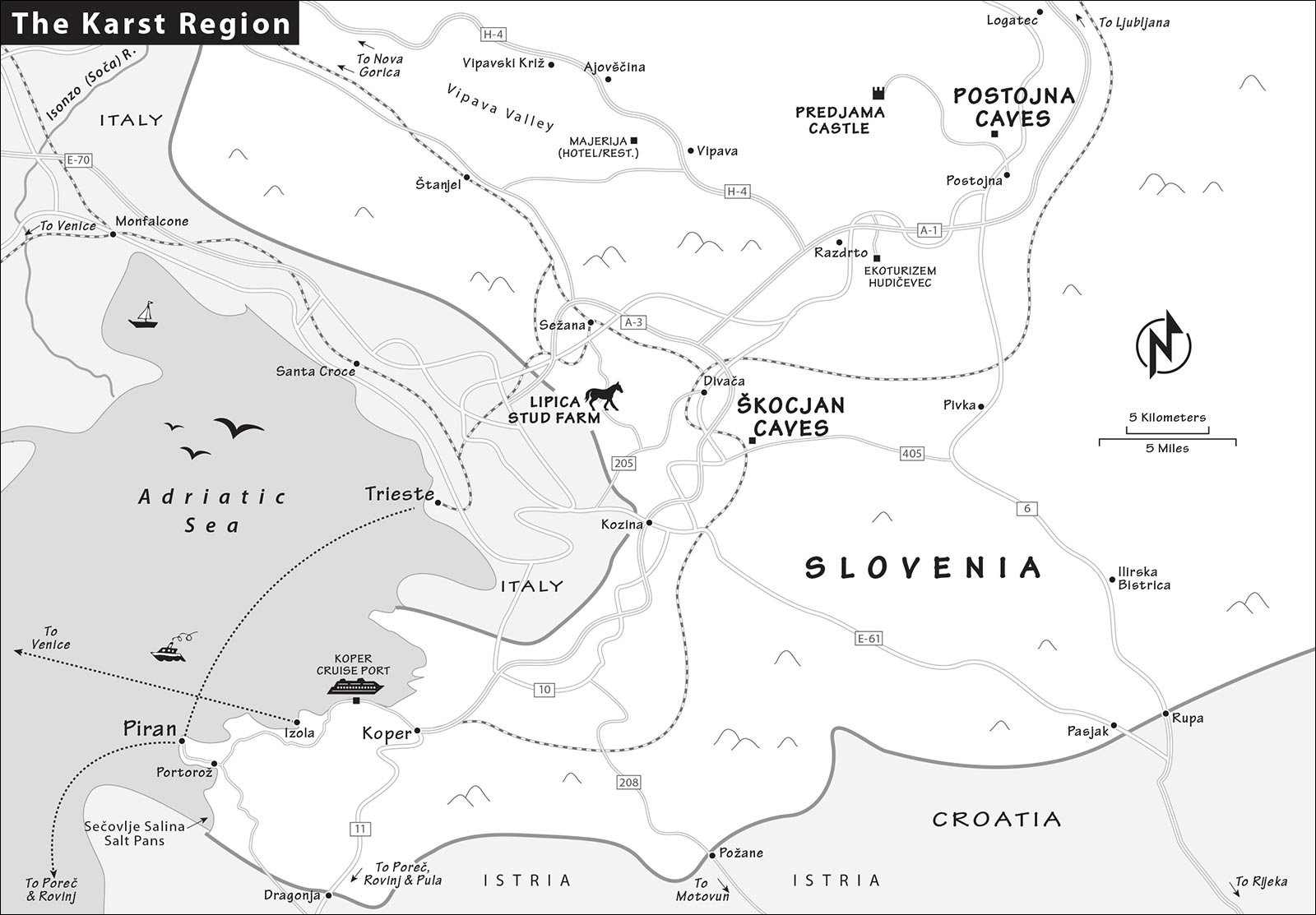
Getting to Škocjan: By car, take the A-1 expressway south from Ljubljana about an hour and get off at the Divača exit (also marked with brown signs for Lipica and Škocjanske jame) and follow signs for Škocjanske jame. (Before or after Škocjan, drivers can easily visit the Lipica Stud Farm, described next.) The caves have free and easy parking.
By public transportation, take the train or bus to Divača (see “Ljubljana Connections” on here), which is about three miles from the caves. To get from the Divača train station to the caves, you can either take the free local shuttle bus (5/day May-Oct, none Nov-April, 10 minutes, coordinated to meet some trains—check schedules at Ljubljana TI); walk about 45 minutes; or take a taxi (around €10-15, try calling Taxi Šeki, +386 41 621 347).
Services: You’ll find WCs at the ticket office, but none in the caves. The ticket office has free lockers.
Eating: A $ snack bar at the cave ticket office sells basic, overpriced sandwiches and other snacks.
Visiting the Caves: Upon arrival, get a ticket for the next tour (if you haven’t booked ahead). You’ll pass waiting time at a covered terrace with an info kiosk, gift shop, café, and interactive educational center with exhibits about the caves.
At tour time, your guide (toting an industrial-strength flashlight) calls everyone together, and you march silently for 10 minutes to the cave entrance. There you split into language groups and enter the cave.
The first part of the experience is the “Silent Caves” (so called for the lack of running water), with a wide array of wondrous formations and what seem like large caverns. The experience builds and builds as you go into ever-more-impressive grottoes, and you think you’ve seen the best.
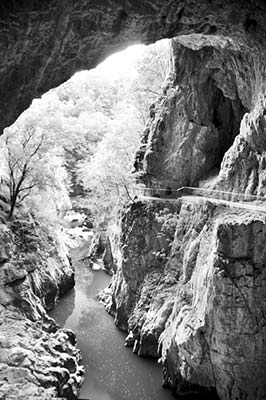
But then you get to the truly colossal final cavern—the “Murmuring Cave”—with a mighty river crashing through the bottom. You feel like a bit player in a sci-fi thriller. It’s a world where a thousand evil Wizard of Oz monkeys could comfortably fly in formation. You hike high above the river for about a mile, crossing the breathtaking (but stable) footbridge 150 feet above the torrent. Far below, the scant remains of century-old trails from the early days of tourism are evocative. The cave finally widens, sunlight pours in, and you emerge—like lost creatures seeking daylight—into a lush canyon. This is the Big Collapsed Valley, which used to be part of the Škocjan network until its roof fell in.
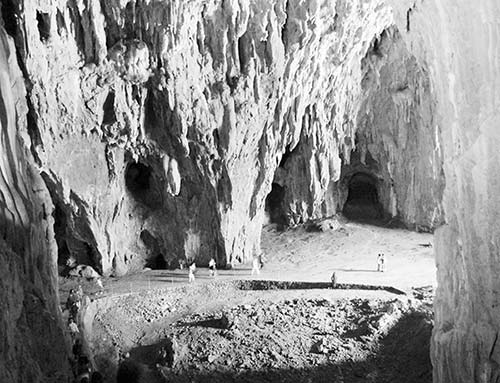
The guided tour ends here; at this point, you have a few options. (Your guide, or other staff standing by, can point you in the right direction.) You’ve already seen the best parts of the cave network, so if you’re tired, simply huff up the hill to return to the ticket office and entrance. This is marked as Route 1 (green); there may be a rickety funicular running to take you up the steepest part, but it’s often broken down, so don’t count on it.
If you’d like to continue exploring, you have two options (though these are typically not allowed Oct-April): Route 2 (yellow) loops around the perimeter of the Big Collapsed Valley, then across a natural bridge on your way back up and out of the gorge.
At a certain point, this path veers off (to the left) for Route 3 (pink)—more challenging, adding another hour and a half (plus 1.5 miles and 700 more steps). This takes you from the Big Collapsed Valley to the Small Collapsed Valley; you’ll wind down to the entrance to Mahorčič Cave, where you’ll walk just above the Reka River. Compared with the main cave you’ve already seen, Mahorčič is smaller, but very atmospheric, as it’s short enough to let in evocative rays of natural light—and you’re much closer to the river. Exiting this cave, you’ll hike uphill about a half-mile, across farm fields, to return to the ticket office.
Museums: Two small, skippable museums sit high on the hill in the village of Škocjan, a 15-minute, mostly uphill walk from the Škocjan Caves ticket office or a 10-minute uphill walk on a gravel path straight ahead from the top of the funicular—just follow the church icon and Muzej signs. First, in the thatched stone house, is an ethnological collection—one small, rustic room with primitive local farming tools and a video re-creating hand scythes. Second, in the white house across the way, is an exhibit on the biology, geology, and archaeology of the caves (admission to both parts covered by cave ticket). A bit higher is the humble Škocjan village church, boldly perched on a bulb of land that overlooks cliffs in all directions.
Back in the entrance building, you can also explore the free museum about the history of cave exploration. You’ll see a model of the valleys and villages of the region, along with a cutaway model of the caves, plus lots of old photographs.
▲▲Lipica Stud Farm (Kobilarna Lipica)
The Lipica (LEE-peet-suh) Stud Farm, a 10-minute drive from the Škocjan Caves, was founded in 1580 to provide horses for the Habsburg court in Vienna. Today you can tour the Lipizzaner stables to visit these magnificent animals, whose stalls are labeled with their purebred bloodlines. While the stuffy Viennese cousins of Slovenia’s Lipizzaners perform under chandeliers, a visit to Lipica is a more intimate experience: You can get nose to nose with the stallions, learn how they’re raised and trained, and—on most days—watch them train or perform. The Lipizzaners’ clever routine—stutter-stepping sideways to the classical beat—thrills visitors. Horse lovers will be in heaven here; even those who don’t know a mare from a gelding will find it interesting.
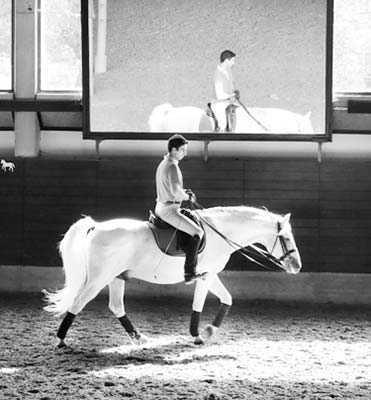
There are three activities at Lipica. You can tour the farm for a look at the horses, watch a training session, and, on some days, see a more elaborate performance of the prancing stallions. No matter when you come, the tour is a must to really understand the horses. Whether you view a training session or a performance depends on the day of the week; plan your day carefully to ensure that you get to see one or the other.
Cost and Hours: Stud farm tour only—€18, tour plus training session—€22, tour plus performance—€25. The grounds are open to the public 10:00-17:00 (see “Tours” and “Training Sessions, ” next, for details). In summer, Monday is the only day you can’t see the horses training or performing (but the tour still runs). It’s always smart to double-check schedules online; you can also prebook tickets for a small discount and to ensure a space—+386 5 739 1696, www.lipica.org.
Getting to Lipica: The Lipica Stud Farm is in Slovenia’s southwest corner (within sight of the Italian border). By car, exit the A-1 expressway at Divača and follow brown Lipi signs. As you drive into the farm, you’ll go through pastures where the stallions often roam. Park in front of the hotel/casino, then walk through the trees, following signs to the ticket office.
It’s a hassle by public transportation. You can take the train or bus from Ljubljana to Divača (about six miles from Lipica) or to Sežana (about four miles from Lipica). From those places, you can hire a taxi (about €20 from Divača, €15 from Sežana).
Tours: The essential 50-minute guided tour gives you a firm background to help you understand just how special these beasts are. You’ll learn about the breed’s history, walk through some of the gelding and mare stables, enjoy a visit to the museum (described later), and then—as a grand finale—see the very best stallions, who live in luxurious, spacious stables. In the stables, you’ll notice that each stallion has three names: its own name (created by combining its father’s line with its mother’s) followed by the names of its father and mother. Males have only six bloodlines (and females 17), so many names are recycled—which is why many horses have numbers after their names. English tours run daily April-Oct at 10:00, 12:00, 14:00, and 16:00 (no tours Nov-March).
Training Sessions: These 45-minute sessions run three times weekly in May-Oct (Wed, Thu, and Sat at 11:00; additional session on Tue in May and Oct). Off-season (Nov-April), sessions are only on Saturdays at 11:00. Time your visit to do the training session and tour back-to-back. These are not performances—they are true training sessions, with young, gray-mottled stallions (and red-shirted jockeys) mixing in with more mature, pure-white stallions, whose jockeys wear black vests. While you likely won’t see a complete routine, the sessions are narrated in English by an expert, so they’re more educational than performances. For maximum information, get close to the expert and don’t be afraid to ask questions.
Performances: The choreographed performances take place several afternoons a week, always at 15:00: June-Sept Tue, Fri, and Sun; May and Oct Fri and Sun; Easter to end of April Sun only; no performances Nov-Easter. As with the training sessions, it’s smart to precede a performance with the tour, which gives you background information to better appreciate the horses’ moves.
Lipikum Museum: Included in your tour ticket is this small, state-of-the-art museum. Succinct, insightful, and all in English, the museum uses informative panels, video screens, and interactive components to illustrate all aspects of the Lipizzaner. Notice that, like the horses themselves, the museum rooms begin black, then turn gray, and end white as you proceed through the exhibit. A Lipizzaner skeleton shows anatomy, and 18th-century paintings illustrate how the breed used to vary in color (until a mutation crept into the bloodline, turning all of them white).
Eating: There’s a small self-service $ café just above the ticket booth, and a $$$ restaurant inside the hotel.
Postojna Caves and Predjama Castle
These two sights are easy for drivers to connect, since they’re along the same road. If you’re using public transportation, it’s not too difficult to reach the caves, and in summer there’s a shuttle between the caves and the castle included in the combo-ticket for both sights.
▲▲Postojna Caves (Postojnska Jama)
Postojna (poh-STOY-nah) is the most accessible—and most touristy—cave experience in the region. It’s the biggest cave system in Slovenia, with more than 12 miles of explored caves (three of which you’ll see on the tour). It’s also the easiest to visit, since much of the tour is on a fast-moving train and the rest is well paved, well lit, and not too steep. All of this makes it Slovenia’s single most popular tourist attraction.
Cost and Hours: €29, €41 combo-ticket covers caves, castle, and summer-only shuttle between them; for a few euros more, you can add the Expo and Vivarium exhibits described later; tours leave daily at the top of most hours July-Aug 9:00-18:00 (with additional tours at :30 past during these peak summer months), Sept 9:00-17:00, April-June and Oct 10:00-16:00, fewer tours off-season—check website for times; tours last 1.5 hours, confirm schedule ahead, Jamska Cesta 30, +386 5 700 0100, www.postojnska-jama.eu.
Crowd Control: The caves can be busy. If you’re set on a specific time, it’s wise to book your ticket online at least one day ahead (especially in summer). Without a prebooking, try to arrive 30-40 minutes early for the morning tours (popular with tour buses); at other times, aim for 15 minutes ahead.
Adventure Tours: If you’d like to do some more adrenaline-fueled spelunking in Postojna, check their website for details on booking one of the more adventurous routes through the caves.
The recipe for creating a cave is simple: Begin with limestone. Then, just add water and wait two million years. (Serves half a million tourists each year.)
The Karst has two big cave systems: Postojna and Škocjan. Each one is massive. Stalagmites and stalactites—in a slow-motion love story—silently work their way toward each other, a third of an inch per century, until that last drip never drops. Minerals picked up by the water as it seeps through various rocks create the different colors (iron makes red, limestone makes white, and so on). Both caves were excavated and explored in the mid-19th century.
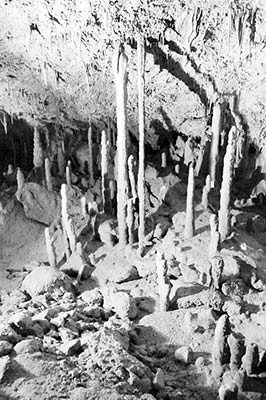
However, what you’ll see inside each cave system—and how you’ll see it—is quite different. Slovenes debate long and hard about which cave system is better. The formations at Postojna are slightly more abundant, varied, and colorful, with stalagmites and stalactites as tall as 100 feet. Postojna is easier to reach by public transportation and far less strenuous to visit than Škocjan—of the three-mile route, you’ll walk only about a mile (the rest of the time, you’re on a speedy underground train). But Postojna is also more expensive and much more touristy (they get a half-million visitors each year, five times as many as Škocjan)—you’ll wade through tour buses and tacky souvenir stands on your way to the entrance, and be pushed to add on mediocre exhibits for more money. Most importantly, Postojna lacks Škocjan’s spectacular, massive-cavern finale. Škocjan also comes with a fairly strenuous hike, leaving you feeling like you really did something adventurous. Finally, the choice of a likely side trip might help you decide: Near Postojna is the cliff-hanging Predjama Castle, whereas Škocjan is closer to the Lipica Stud Farm.
No matter which cave you visit, you’ll find it chilly but not really cold (a light sweater is fine). Both caves technically forbid photography (a laughable rule that nobody takes seriously).
These caves are also home to a unique cave-dwelling creature—the so-called “human fish” (a.k.a. olm or Proteus anguinus), which is a long, skinny, pale-pink salamander-like creature with fingers and toes. The world’s biggest cave-dwelling animal, these amphibians can grow up to a foot long, live for about a century, and survive up to a decade without eating (the live specimens on display in Postojna are never fed during the four months they’re on view). As they’re endemic to Slovenia, the “human fish” are celebrated as a sort of national mascot.
Getting to Postojna: The caves are just outside the town of Postojna, about 45 minutes south of Ljubljana on the A-1 expressway. By car, take the expressway south from Ljubljana and get off at the Postojna exit. Leaving the expressway, turn right and follow the jama/grotte/cave signs through town until you see the tour buses. Drivers pay to park a third of a mile from the cave entry. There are direct buses from Ljubljana to the caves (3/day). By train, you’ll arrive at the train station in the town of Postojna; from here, you can walk to the caves in about 30 minutes or pay for a taxi (+386 41 959 037).
Visiting the Caves: A visit here is basically an easy, lightly guided stroll through an amazing underground cavern. The optional audioguide offers more information than the official tour guide spiel. Whether you arrive by car, tour bus, or on foot, you’ll walk past a paved outdoor souvenir mall to the gaping hole in the mountain. Buy your ticket, then climb up the stairs and wait with the mob to board the little open-air train, which slings you deep into the mountain, whizzing past wonderful formations. (The ride alone is exhilarating.) Then you get out, assemble into language groups, and follow a guide on a well-lit, circular, paved path through more formations.
First you’ll hike uphill into the “Big Mountain”—the highest point inside the caves, and (surprisingly) actually higher than where you entered. You’re surrounded by a sea of fairy-chimney stalagmites and stalactites, some of them a hundred feet tall. Then you’ll hike downhill and cross a bridge over a canyon into “Spaghetti Hall,” named for the long, skinny stalactites that seem to be dripping from the ceiling. Also in this area are some amazing, translucent “curtains” of rock. Circling down beneath the bridge you just crossed, you’ll come to some huge, white, melting-ice-cream formations (including one called “The Organ,” for obvious reasons). You’ll wind up in the impressively vast cavern called the “Concert Hall,” peering into an aquarium with the strange “human fish.” Then you’ll load back onto the train and return to the bright daylight. Exiting the train, notice that the ceiling of this part of the cavern is charred black. The only coloring in the cave caused by humans, this is residue from a huge WWII explosion; the Partisan Army blew up a fuel and ammo depot the Nazis kept here.
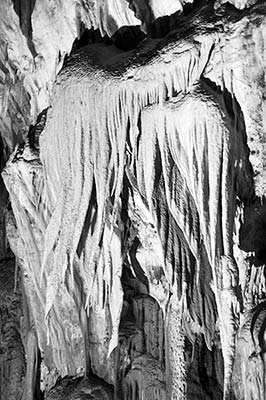
Add-On Exhibits: The caves are definitely the main attraction; a few euros apiece buys you admission to a couple of optional add-ons, which are basically an attempt to wring a little more cash out of gullible tourists. But if you have time and money to spare, you could consider splurging on one or both of them. The high-tech Expo Cave Karst, in the adjacent hotel complex, explains the geology of the Karst and of Postojna Caves, with several exhibits specifically designed for kids. The Vivarium Proteus, which fills a smaller cave next to the ticket booth, promises to educate you more about speleobiology (the study of cave-dwelling animal life). You’ll be given a flashlight and sent to look for 17 different species of animals—but since the cave dwellers (naturally) hide from view, you just wind up squinting into empty aquariums most of the time. One interesting feature is a wall with graffiti signatures from past visitors—some dating all the way back to the 13th century. Either of these also includes the Butterflies of the World collection—two dozen frames filled with samples of butterflies.
▲Predjama Castle (Predjamski Grad)
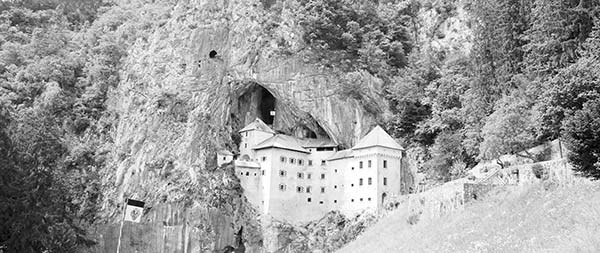
Burrowed into the side of a mountain close to Postojna is dramatic Predjama Castle (prehd-YAH-mah), one of Europe’s most scenic castles (despite its dull interior). Predjama is a hit with tourists for its striking setting, exciting exterior, and romantic legend.
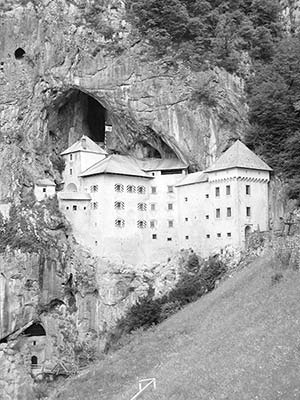
Notice as you approach that you don’t even see Predjama—crouching magnificently in its cave—until the last moment. The first castle here was actually a tiny ninth-century fortress embedded deep in the cave behind the present castle. Over the centuries, different castles were built here, and they gradually moved out to the mouth of the cave. While the original was called “the castle in the cave,” the current one is pred jama—“in front of the cave.”
While enjoying the view, ponder this legend: In the 15th century, a nobleman named Erasmus killed the emperor’s cousin in a duel. He was imprisoned under Ljubljana Castle and spent years nursing a grudge. When he was finally released, he used his castle—buried deep inside the cave above this current version—as a home base for a series of Robin Hood-style raids on the local nobility and merchants. (Actually, Erasmus stole from the rich and kept it for himself—but that was good enough to make him a hero to the peasants, who hated the nobles.)
Soldiers from Trieste were brought in to put an end to Erasmus’ raids, laying siege to the castle for over a year. Back then, the only way into the castle was through the cave in the valley below—then up, through an extensive labyrinth of caves, to the top. While the soldiers down below froze and starved, Erasmus’ men sneaked out through the caves to bring in supplies. (They liked to drop their leftovers on the soldiers below to taunt them, letting them know that the siege wasn’t working.)
Eventually, the soldiers came up with a plan. They waited for Erasmus to visit the latrine—which, by design, had to be on the thin-walled outer edge of the castle—and then, on seeing a signal by a secret agent, blew Erasmus off his throne with a cannonball. Erasmus is supposedly buried under the huge linden tree in the parking lot.
As the legend of Erasmus faded, the function of the castle changed. By the 16th century, Predjama had become a castle for hunting more than for defense, which explains its current picturesque-but-impractical design.
After driving all the way here, it seems a shame not to visit the interior—but it’s truly skippable. The management (which also runs the nearby Postojna Caves) is very strict about keeping the interior 16th-century in style, so there’s little inside except 20th-century fakes of 16th-century furniture, plus a few forgettable paintings and cheesy folk displays. English descriptions are sparse, and the free English history flier is not much help. But for most, the views of the place alone are worth the drive. Also skip the “cave under Predjama Castle”—it’s redundant if you’re going to Postojna or Škocjan.
Cost and Hours: Free to view the outside, €18 to go inside; daily July-Aug 9:00-19:00, Sept 9:00-18:00, April-June and Oct 10:00-17:00, shorter hours off-season; +386 5 751 6015, www.postojnska-jama.eu.
Getting to Predjama: Predjama Castle is on a twisty rural road 5.5 miles beyond Postojna Caves. By car, just continue on the winding road past Postojna, following signs for Predjama and Predjamski Grad (coming back, follow signs to Postojna). If using public transportation, you can take the train to the town of Postojna; in the summer, you can buy a combo-ticket that includes the caves, the castle, and a shuttle-bus trip between them (departs about hourly). If you’re in a pinch, consider paying for a taxi (figure €30 for the trip there and back, including some wait time)...or hitching a ride with a friendly tour bus or tourist’s car, as most visitors do both sights.