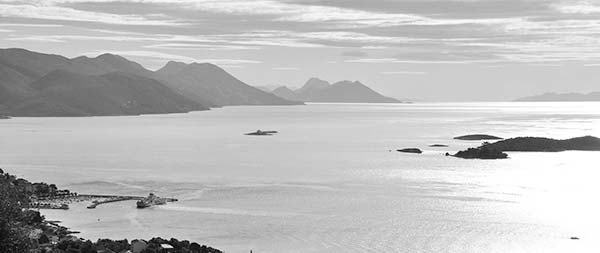
NEAR DUBROVNIK
Excursions from Dubrovnik’s Old Port • Cavtat • Trsteno Arboretum • Pelješac Peninsula • Mljet National Park
Dubrovnik Day Trips at a Glance
Excursions from Dubrovnik’s Old Port
Sights on the Pelješac Peninsula
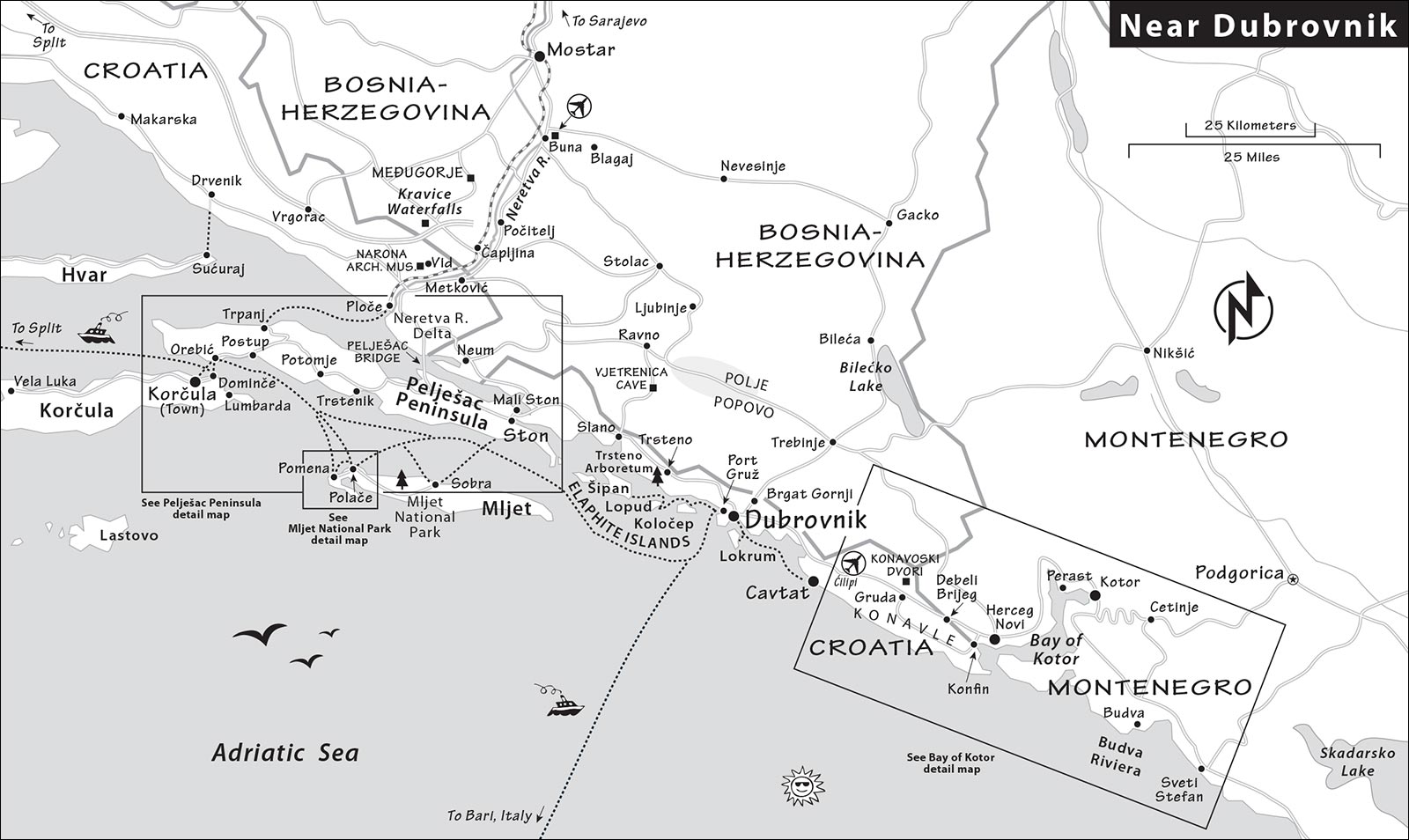
The longer you linger, the clearer it becomes: Dubrovnik isn’t just a town, it’s an entire region. And stretching up and down the glimmering Dalmatian Coast from Dubrovnik are a variety of worthwhile getaways.
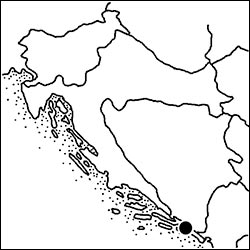
Just offshore from the city’s Old Town—and accessible by scenic boat trip from its historic port—are enticing islands and villages where time stands still for lazy vacationers: the playground islet of Lokrum and the archipelago of the Elaphite Islands. The serene resort town of Cavtat, just south of Dubrovnik, has some of the best art treasures of this part of Dalmatia (including a stunning mausoleum designed by Ivan Meštrović). Nearby, the medieval canals and waterwheels of the Konavoski Dvori area offer a welcome and refreshing escape from sunbaked coastal towns.
To the north is a lush arboretum called Trsteno, with a playful fountain, a 600-year-old aqueduct, a villa, a chapel...and, of course, plants galore. Poking into the Adriatic is the vineyard-covered Pelješac Peninsula, where friendly vintners are eager to impress you with their wines, where dreamy bays are filled with slurpable oysters, and where the mighty little town of Ston lures you to climb its sprawling fortifications. And out at sea is the sparsely populated island called Mljet, a third of which is carefully protected as one of Croatia’s most appealing national parks, where you can hike, bike, kayak, and swim to your heart’s content.
Best of all, there’s no better place to “come home to” than Dubrovnik. After a busy day exploring the coastline, strolling the Stradun to unwind is particularly sweet.
The international excursions to Bosnia-Herzegovina and Montenegro—which are worth considering for overnight stops—are covered in their own chapters.
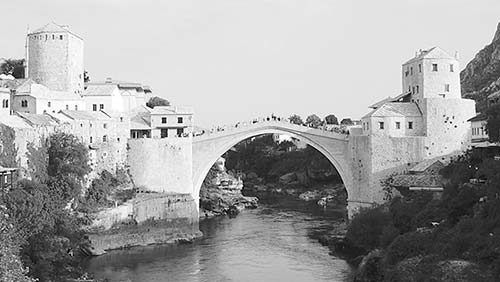
▲▲▲Mostar The side trip with the highest degree of cultural hairiness—but, for many, also the greatest reward—lies to the east, in Bosnia-Herzegovina. With its iconic Old Bridge, intriguing glimpse of European Muslim lifestyles, and still-vivid war damage, Mostar is unforgettable. Allow a full day or more (best reached by bus or car).
▲Kravice Waterfalls These small but striking waterfalls offer a refreshing spritz of nature in an arid landscape; they’re only worthwhile as a brief add-on to Mostar (car or tour).
Međugorje This Catholic pilgrimage site in Bosnia-Herzegovina has a holy hill that some believe is visited regularly by an apparition of the Virgin Mary. Allow a full day or more (car or bus).
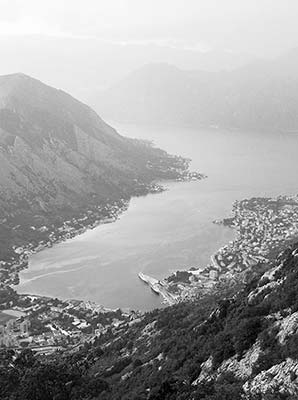
▲▲The Bay of Kotor For rugged coastal scenery that rivals anything in Croatia, head south of the border to Montenegro. The Bay of Kotor is a dramatic, fjord-like inlet crowned by the historic town of Kotor, with twisty Old World lanes and one of Europe’s best town walls. Allow a full day or more (car or bus).
The Montenegrin Interior A visit to Montenegro’s scruffy but historic former capital, Cetinje, comes with a twisty drive up a mountain road and across a desolate plateau; if the weather’s perfect and time allows, go even higher to the mountaintop mausoleum at Lovćen. Allow a few hours to side-trip from Kotor (car).
Budva Riviera Montenegro’s best stretch of sandy beaches, including the famed resort peninsula of Sveti Stefan, is only worthwhile if you have time to spare. Allow a few hours from Kotor (car).
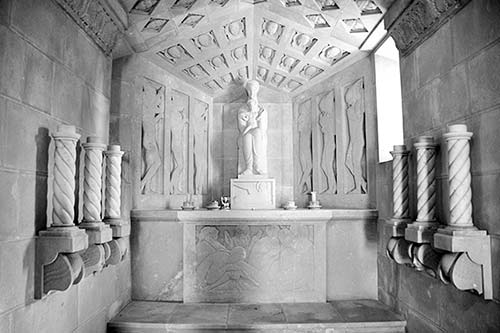
▲Cavtat A charming resort/beach town, unassuming Cavtat holds an elaborate mausoleum designed by the sculptor Ivan Meštrović and the house and museum of modern painter Vlaho Bukovac. Allow a few hours (boat or bus).
▲Pelješac Peninsula This long spit of land is worth ▲▲ for wine lovers who enjoy visiting wineries while savoring both the top-quality local wines and the scenery. Allow a half-day to a full day (car).
▲Trsteno Arboretum A classical-style fountain and aqueduct punctuate this engaging botanical garden. Allow a half-day (bus or car).
Konavoski Dvori This rugged, forested landscape of ancient canals and still-spinning waterwheels is a refreshing spot for a countryside meal. Allow a few hours (car).
Ston A small town with giant fortifications, Ston (on the Pelješac Peninsula) is worth a short stop to scramble up its walls and see its salt pans. Nearby Mali Ston has fresh oysters. Allow an hour (car or bus).
▲Mljet National Park This largely undeveloped island offers an opportunity for nature lovers to explore a scenic corner of Dalmatia without tacky tourist towns; you can go for a hike, swim, or kayak. Allow a full day (boat).
Lokrum Island Just a short hop offshore from Dubrovnik’s Old Port, this little island is a convenient escape from (some of) the tourists. Allow a few hours (boat).
Elaphite Islands This inviting archipelago offers a variety of island experiences without straying too far from Dubrovnik. With more time, Korčula (for a small town) or Mljet (for a back-to-nature experience) are better, but the “Elafiti” are more convenient. Allow a half-day to a full day (boat).
PLANNING YOUR TIME
Give yourself at least two nights (one full day) to experience Dubrovnik. But if you can spare the time, set up in Dubrovnik for several nights and use your extra days for some of the excursions described in this chapter. (This also gives you the luxury of keeping an eye on the weather reports and saving the most weather-dependent activities for the sunniest days.) For suggestions on how much time to allow per destination, see the “Dubrovnik Day Trips at a Glance” sidebar. Use a map to strategically line up these attractions—for example, you can easily do Trsteno, Ston, and the Pelješac Peninsula on a drive between Dubrovnik and Korčula, while Cavtat pairs nicely with a trip to the airport or Montenegro.
I’ve listed day trips in this chapter roughly in order of ease from Dubrovnik—the further down the list, the more difficult they are to reach (Montenegro and Mostar, the most time-consuming, are covered in their own chapters).
GETTING THERE
Cavtat and the Elaphite Islands are easy to reach by private excursion boat from Dubrovnik’s Old Port; Cavtat also works by bus. A city-run boat links the Old Port to nearby Lokrum. Public ferries connect Dubrovnik’s Port Gruž to the Elaphite Islands (the most appealing is Lopud)—though taking a “three-island tour” by boat is efficient and generally affordable. The other destinations are farther afield, best reached by boat (Mljet) or by car or bus (Montenegro, Mostar, Trsteno, Pelješac Peninsula).
I’ve listed public transportation options for each, but consider renting a car for the day. Or you can splurge for your own private driver (see here); to make it more affordable, rally other travelers to accompany you and split the cost.
Alternatively, a variety of travel agencies in Dubrovnik offer guided excursions (by bus and/or boat) to nearby destinations. Popular itineraries include everything mentioned in this chapter, plus Korčula (in its own chapter) and others. While these excursions can be a convenient way to see otherwise difficult-to-reach destinations, the quality can be hit-or-miss. The biggest companies are efficient mass-tourism machines—you’ll be jammed into buses and boats until every seat is filled, and the guides typically do their spiel (mostly a memorized script) in several languages. Smaller outfits offer a more casual experience with more personal attention, but lack the polish of the big players. This scene is constantly evolving, so check online reviews, look around for fliers, and ask locals for tips. (Be aware that many small travel agencies simply sell seats on the big companies’ trips.)
Excursions from Dubrovnik’s Old Port
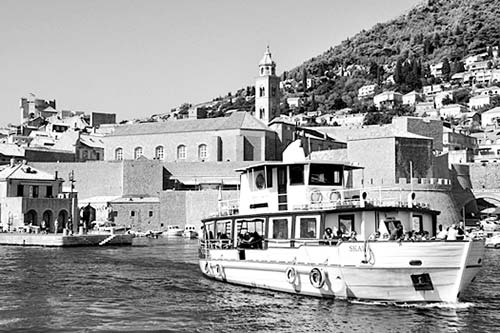
At Dubrovnik’s salty Old Port, captains set up tiny booths to hawk touristy boat trips. It’s fun to chat with them, page through their sun-faded photo albums, and see if they can sell you on a short cruise. In addition to the islands I describe next, you can also take a boat from the Old Port to Cavtat (described later).
PANORAMA CRUISE
The basic option is a 50-minute “panorama cruise” out on the water and back again (€15, departures about every hour). You’ll loop around the City Walls—which offer a unique view on Dubrovnik’s stout defenses—and do a circuit around Lokrum Island as well. Understandably, these cruises are most popular at or shortly before sunset, when they’re typically marked up to €20. Or join a kayak tour, which offers similar views and a more active experience (see here in the Dubrovnik chapter).
LOKRUM ISLAND
This island, a protected natural area just offshore from the Old Town, provides a handy escape from the city. When the Old Town gets too jam-packed with tourists, locals hop a boat out here for some peace and quiet. They call it the “Island of Love,” because it offers many secluded spots popular with courting couples. The main attractions here are hiking (on shaded paths that curl up, over, and around the thickly wooded island) and sunbathing (on jagged, rocky beaches—many of which are designated nude beaches).
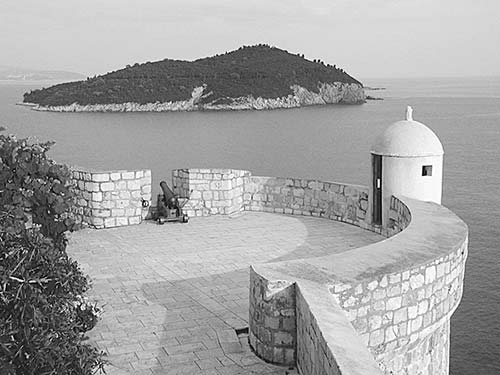
Getting There: Lokrum is reachable only by an official city-run boat, which departs twice hourly from the end of the pier in Dubrovnik’s Old Port. The hefty boat-ticket price also includes admission to the island (€28 round-trip, 15-minute crossing, runs daily mid-June-Aug 9:00-20:00, shorter hours in shoulder season, stops running Nov-March).
Visiting the Island: From the Lokrum boat dock, walk up to the pink building—the visitors center—to buy a map of the island. Continuing up, you’ll reach a fork: To head across the narrow middle of the island, continue straight ahead, where you’ll find a monastery-turned-Habsburg-palace. Today this is a free museum with exhibits on Richard the Lionheart (who, according to legend, was shipwrecked on his way back from the Third Crusade and landed safely on Lokrum); it also has exhibits about Game of Thrones. (For more GOT-related sights, see the sidebar on here.)
Nearby is a small botanical garden. Just beyond this area, uneven rocks lead to ladders where you can ease yourself into the sea. There’s also a small lake (fed by an underwater canal from the sea) called the “Dead Sea” (Mrtvo More) that’s suitable for swimming.
Another option from the boat dock is to hook left and curl around the cove to the island’s most popular beach, on the Bay of Portoč, that’s famous for its nude sunbathing. If you’d like to (carefully) subject skin that’s never seen the sun to those burning rays, follow the FKK signs from the boat dock for about five minutes to the slabs of waterfront rock, where naturists feel right at home. Continuing past this beach, you can work your way up and over to the other side of the island (on very rocky trails).
For an even more serious hike, head right from the boat dock for the two-hour hike that goes all the way around the island, and consider a detour to its highest point (at 315 feet above sea level), capped by Fort Royal, an old Austro-Hungarian military fortification.
You can bring your own picnic, but you’ll find a few cafés and restaurants scattered around the island, mostly along the main path from the boat dock to the monastery/museum complex. The island also has WCs and showers for swimmers.
ELAPHITE ISLANDS (ELAFITI)
This 13-island archipelago just north of Dubrovnik is popular among day-trippers because it allows you to hit three different islands in a single day: Koločep, Lopud, and Šipan. These “Deer Islands” (supposedly named for their shape—though I don’t see it) are a bit overhyped and can’t hold a candle to some of the more distant Dalmatian islands such as Mljet, Korčula, and Hvar. But they’re a decent choice if you need a break from Dubrovnik’s crowds and want a lazy day cruising Dalmatia. Along the way, you’ll discover fishing ports, shady forests, inviting beaches, and forgotten escape mansions of old Dubrovnik aristocracy. The two smaller islands (Koločep and Lopud) are traffic-free, making them a restful backwater getaway. While there’s scant sightseeing on these islands, each church, beach, and walking path is well signed, making it easy to just wander. Bring decent footwear for hiking uneven trails and pack swimwear and a towel. Each island has some sort of beach relatively near the boat dock; on a hot day, you could just wear your swimsuit on the boat and take a dip at each stop.
Getting There: The easiest way to cruise the Elafiti is to buy an excursion at Dubrovnik’s Old Port, which usually includes a “fish picnic” cooked up by the captain as you cruise (about €50 with lunch, several boats depart daily around 9:30-11:00, return around 15:45-19:30—check specific schedule before you book; companies prefer you reserve and pay a small deposit the day before). For a bigger, more memorable ship, you can pay a few euros more to go on the Karaka, a modern replica of the traditional cargo ships once built here in Dubrovnik (advertised along with the others at the Old Port, or prebook at www.karaka.info).
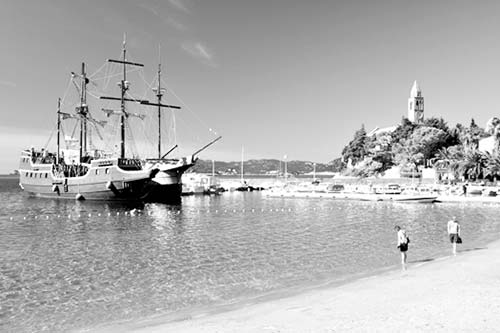
Regardless of which company you go with, you generally spend about two to three hours on Lopud and about an hour each on Koločep and Šipan, with about 2.5 hours on the boat. To get to the Elaphite Islands without a tour (on a cheap ferry), you’ll sail from Dubrovnik’s less convenient Port Gruž.
Koločep
The nearest island to Dubrovnik, and the sleepiest, Koločep’s harbor arcs away from its boat dock. Walking around it, you’ll quickly reach a small main square with al fresco cafés spilling out onto the seawall; beyond that is a sandy beach in front of a hotel, with rentable chairs. Near the boat dock, well-signed steps lead up into the hills, passing several small churches and Koločep’s little museum of ecclesiastical art (the only museum I saw on the Elafiti).
On a short visit, you’ll barely have time to stroll the harbor; if your excursion leaves you here a bit longer, consider a low-impact hike over the spine of the island to the village of Gornje Čelo, on the opposite side (about 1.5 miles away). You’ll climb up stairs past an old guard tower, pass a pink stucco church near a cemetery, then follow the narrow path between high stone walls and past olive groves. You’ll wind down to a little port town with an inviting beach; looping around to Placet takes you to a wall of dramatic cliffs. Donje Čelo signs lead you back to your boat.
▲Lopud
The main attraction of the Elaphite Islands, Lopud feels like a humbler Cavtat without all the great art. But Lopud’s trump card is its beaches, especially Šunj—one of the nicest beaches in southern Dalmatia (a long hike or short golf-cart ride from the main boat dock). Lopud feels bigger, more vital, and more inviting than the other two islands. Most excursions give it far more time than Koločep or Šipan; it’s also accessible by public ferry and may be worth considering for an all-day beach getaway.
Your boat docks near the stout Franciscan monastery, which pokes out into the sea, dominating the townscape. From there, a picturesque promenade winds past several beaches (sand, then pebbles, then sand) and the entrance to a lush garden, before stretching all the way to a luxury hotel. Near the boat dock, you’ll find a TI (Obala Iva Kuljevana 12, +385 20 322 322).
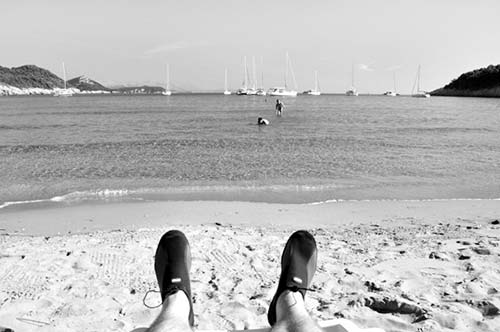
For beach bums, the main attraction on Lopud is at the other end of the island: Šunj Beach. This gorgeous, shallow, sandy beach—hemmed in on both sides by forested cliffs—splays serenely between beach bars and ritzy yachts that drop anchor to take a dip. The almost entirely sandy floor and gentle incline makes this beach ideal for waders and families. The catch is that it takes a bit of effort to reach: It’s a moderately strenuous 1.5-mile walk over the scraggly spine of the island. Otherwise, golf carts zip arriving tourists over to the beach for a small fee. To find the golf carts, follow the promenade as far as the abandoned Grand Hotel, then head inland (on a drab, poorly maintained concrete trail), following signs for Šunj Beach. From here, you can either flag down a golf cart or continue to hike the rest of the way. Given its distance from the main boat dock, it’s not worth attempting to visit Šunj if you’re on Lopud for less than two hours.
Šipan
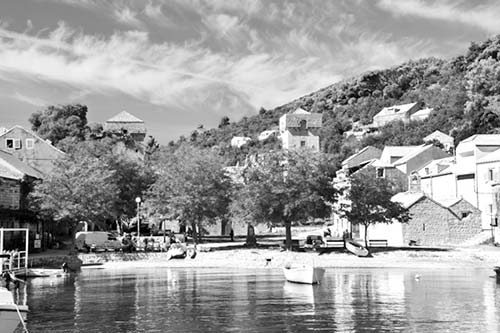
By far the biggest island (at just over six square miles), and the northernmost, Šipan has two different port towns. Your ship will most likely use the one facing Lopud, called Suđurađ (named for the local patron saint, George). Suđurađ’s harbor is watched over by the fortified, castle-like 16th-century villa of a local aristocrat. A beach beckons just across the bay from the boat dock. Next to the harbor, the small Church of St. George—with a large covered porch—has a vivid fresco over the altar of George slaying the dragon while being watched over by two other locally revered saints, Blaise (Dubrovnik’s protector) and Nicholas (the patron saint of sailors).
If you need an excuse for a short hike, head from the harbor straight up the street away from the water, following signs for the Church of Sv. Duh (Holy Spirit). After passing through a humble residential zone, you’ll arrive at a stout, fortress-like church with raw-stone walls. If it’s open, poke inside to see the rough-and-tumble interior. The stairs to the right of the altar lead up to the rooftop, where you can see the large, fertile valley that sits in the middle of this island. If you’re tempted to ring the bell, resist—locals ring it only when a member of their community dies.
South of Dubrovnik
A variety of worthwhile stopovers line up along the main road south of Dubrovnik, toward the border with Montenegro, in the region called Konavle.
Cavtat
This sleepy resort town—filling a wooded peninsula just 12 miles to the south and rated ▲—offers a milder alternative to bustling Dubrovnik. With its strategic location sheltered inside a nearly 360-degree bay, this settlement was thriving long before there was a Dubrovnik. The Greeks called it Epidaurus, and the Romans called it Epidaurum—but these days, it’s Cavtat (TSAV-taht). The town is best known as a handy spot to find a room when Dubrovnik’s booked up. But even those suffering from beach-resort fatigue will enjoy a side trip to Cavtat, which is home to two gems of Croatian art: a breathtaking hilltop mausoleum by the great Croatian sculptor Ivan Meštrović, and the former home-turned-museum of the Cavtat-born, early-20th-century painter Vlaho Bukovac.
GETTING TO CAVTAT
Boats to Cavtat leave about hourly from Dubrovnik’s Old Port (€20 round-trip, about 45 minutes each way, hourly return boats from Cavtat). The boat deposits you right along Cavtat’s main seafront promenade.
You can also reach Cavtat by public bus #10, which leaves from Dubrovnik’s main bus station and also stops at the “cable car” bus stop above the Old Town (1-2/hour, 30-40 minutes). The bus brings you to Cavtat’s parking lot. Returning by bus from Cavtat, hop off at the Dubrovnik bus stop that’s along the main road high above the Old Town—about a 5-10-minute walk down into town. (Note that the bus to or from Cavtat does not stop at Dubrovnik’s Pile Gate.)
Drivers find Cavtat an easy detour when heading to points south, including Montenegro or the airport; the town is well signed off the main road. The big parking lot is at the back of Cavtat’s peninsula, just around the corner from the main part of town and seafront promenade.
Orientation to Cavtat
Cavtat is set within an idyllic, horseshoe-shaped harbor hemmed in by a pair of peninsulas. Tucked around the back side of the peninsula are the parking lot and TI (Zidine 6, +385 20 479 025, www.visit.cavtat-konavle.com). Cavtat is basically a one-street town, but that street is a lively pedestrian promenade running along the harbor, with a few narrow, steep lanes winding up into the hill. Capping the hill above town is a cemetery with the Meštrović mausoleum.
Sights in Cavtat
Waterfront Wander
Strolling along Cavtat’s waterfront, you’ll be immersed in a wrap-around bay and surrounded by Europeans vacationing well. At the near end of the promenade, notice the big water polo court roped off in the bay; the core of the Croatian national water polo team comes from Cavtat and Dubrovnik. Across the street is St. Nicholas Church, with a humble, dull interior (though hanging high in the altar area are Vlaho Bukovac’s paintings of the four evangelists). About halfway along the drag, at the little square called Trg Tuđmana, one of the narrow lanes leading up the hill (appropriately named Bukovčeva) takes you to the fine Vlaho Bukovac House (described next). At the end of the main waterfront area is the Church of Our Lady of the Snows, commemorating a freak—and seemingly miraculous—midsummer snowstorm in ancient Roman times, believed to have been a sign sent by the Virgin Mary. Inside, above the altar, is a Vlaho Bukovac painting (from 1909) of Mary and the Baby Jesus watching over Cavtat.
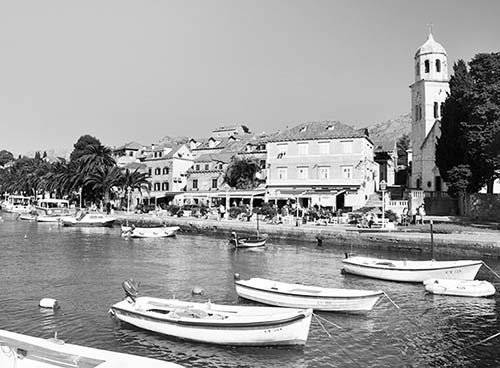
Climbing the steep steps up to the right of the church leads you up to Ivan Meštrović’s Račić Mausoleum (described later). With more time, consider continuing around the peninsula to its pointy tip for distant views of Dubrovnik’s Old Town. This is one of the favorite spots in this area for watching the sunset. (If you continue all the way around the point, in about 20 minutes you’ll wind up back at the parking lot at the start of town.)
▲Vlaho Bukovac House (Kuća Bukovac)
One of the joys of travel is learning about locally beloved artists who are little known outside their homelands. Cavtat proudly introduces you to native son Vlaho Bukovac (1855-1922), who grew up in this very house and went on to become the most important Croatian painter of the modern period. Bukovac moved to New York City with his uncle at age 11, beginning a life of great adventure. After a brief career as a sailor (traveling to Peru and San Francisco), he trained as an artist in Paris, then in Zagreb. For his last 20 years, Bukovac spent his summers in Prague and his winters here in Cavtat.
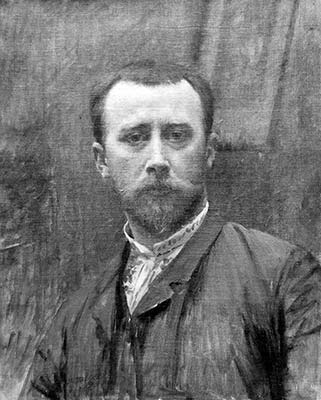
Cost and Hours: €5, Mon-Sat 9:00-19:00, Sun until 14:00, shorter hours and closed Mon in Nov-March, Bukovčeva 5, +385 20 478 646, www.migk.hr.
Visiting the Museum: Touring the collection (with good English explanations), you’ll get to know Bukovac’s life and his works. Bukovac’s paintings are mostly realistic (in accordance with his formal Salon training in Paris), but they shimmer with a hint of Post-Impressionism; his later works echo the slinky Art Nouveau Slavic pride of the Czech painter Alphonse Mucha, who was Bukovac’s contemporary.
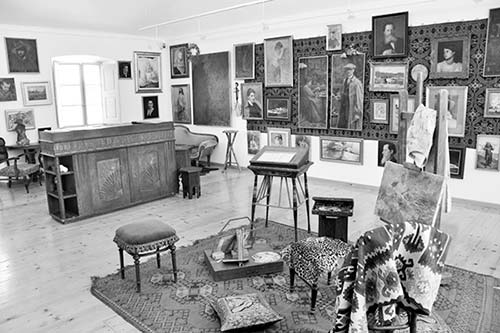
From the ground floor (with temporary exhibits), head up to find old furniture, early sketches, and portraits of Bukovac and his family. The top floor houses one big atelier room filled with canvases from various periods, allowing you to survey his impressive artistic development with a sweep of the head. Look for the painting of his children’s disembodied heads hanging on the wall—macabre but strangely tender. Throughout the house are murals painted by Bukovac in his early days, offering a glimpse of a burgeoning artist who would go on to make Cavtat very proud.
▲▲Račić Family Mausoleum (Mauzolej Obitelji Račić)
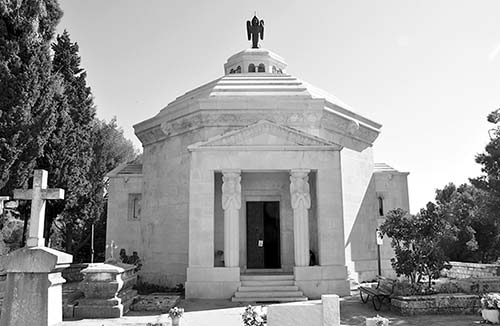
This harmonious masterwork of Croatia’s greatest artist is the gem of Cavtat, and worth ▲▲▲ to fans of Ivan Meštrović’s powerful sculptures. To learn more about Meštrović before you visit, read the sidebar on here.
Cost and Hours: €3, Mon-Sat 9:00-16:00, closed Sun and Nov-March, www.migk.hr.
Getting There: Capping the hill above town, it’s a steep 10-minute walk from the Cavtat waterfront. From the Church of Our Lady of Snows at the far end of the waterfront, climb up the stairs (following mauzolej signs). You can also wrap all the way around the waterfront promenade, to the back of the peninsula, and climb the stairs up near the restaurant and rocky beach.
Visiting the Mausoleum: Over the course of one tragic year, all four members of the wealthy Račić family—father, mother, son, daughter—died in the 1918-1919 flu pandemic. From 1920 to 1922, in accordance with their will, Ivan Meštrović was commissioned to craft their final resting place. He used the opportunity to create a cohesive meditation on Christian faith and death, made entirely of brilliant white stone from the island of Brač.
As you enter, take a moment to appreciate how the interior ponders birth, life, and death. The four inner walls of the octagonal hall hold the tombs of the departed; above each tomb, an angel lovingly carries their souls up to heaven—spiriting them into a cupola studded with angel heads. The floor has symbols for the four evangelists: Matthew (angel), Mark (lion), Luke (bull), and John (eagle). The chapel to the left holds a crucifix; to the right, an altar to St. Rok (the patron saint of illness, to whom the chapel is dedicated—the dog licking the wound in his leg is his symbol). Straight ahead is an altar with Mary holding the Baby Jesus above a relief of the Lamb of God, and below that, Jesus’ body being taken down from the cross. Flanking this altar, notice the bases of the twisting candelabras: Alternating angels, with agonized and mournful expressions, look down to honor the dead.
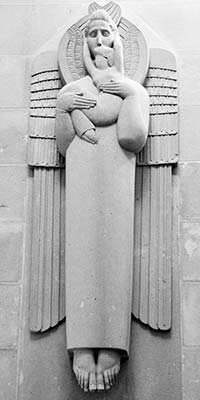
The chapel rewards those who linger over the details, such as the bronze doors, with four saints, Glagolitic inscriptions, and the 12 Apostles. The saints chosen for this door preach both ecumenism and Yugoslav unity: Cyril and Method (the Byzantine missionaries who first brought Christianity to this region), along with a Catholic bishop (Bishop Gregory of Nin) and an Orthodox saint (St. Sava). Taken together, the mausoleum is an astonishing display of talent, especially considering it was Meštrović’s first architectural work.
Nearby: The mausoleum sits in the middle of a tranquil cemetery that’s still used for the funerals of Cavtat residents. As you exit the mausoleum, bear left into the cemetery and look for five communal graves for the poor—with smaller markers and flowerpots lined up along large plinths. Also in this cemetery is the grave of the artist Vlaho Bukovac.
IN THE COUNTRYSIDE NEAR CAVTAT
Čilipi
This nearby village—five miles from Cavtat and the namesake for Dubrovnik’s airport—hosts a Sunday-morning folk festival through the summer (Easter-Oct, starting at 9:00). There’s a special Mass at the church, an open-air market, and—starting at 11:15—a costumed folk-dancing show (+385 20 771 007, www.cilipifolklor.hr).
Konavoski Dvori
The rugged terrain stretching south of Dubrovnik, toward the Montenegrin border, huddles under steep limestone peaks—a sure recipe for lots of rushing water. This area’s name—Konavle—comes from the ancient Roman word for “channels.” And since antiquity, these foothills have been a popular place for settlement and for primitive industry, with canals, aqueducts, and spinning millwheels designed to harness the constant flow of high-mountain runoff. Today, a short detour from the main highway takes you to Konavoski Dvori (Palaces of Konavle), where you can stroll through a well-preserved network of medieval canals and even step into a reconstructed 400-year-old mill (open sporadically).
As the road passes through Gruda (about 18 miles, or 30 minutes, south of Dubrovnik), turn off and head up into the village of Ljuta (whose name means “Angry,” for the fierce flow of the river by the same name). The steep, wooded terrain is laced with nature trails that follow gurgling canals—handy for a pre- or post-meal wander. The main reason most people come here is for a meal at one of two destination restaurants: the traditional, unpretentious $$$ Konoba Vinica Monković (+385 99 215 2459, www.konobavinica.com) and the fancier, more elaborate complex of $$$$ Restaurant Konavoski Dvori (huge terraces, trout ponds, +385 20 791 039, www.esculaprestaurants.com). At either place (both open long hours daily in good weather, closed off-season), it’s smart to reserve in advance for an outdoor table along the gurgling canals. Most locals come here for a peka meal—meat slow-simmered under a copper baking lid covered in glowing coals—which should also be preordered when you book your table. Though not worth a trip on its own, this experience works well with a visit to Cavtat or Montenegro, and offers you an opportunity to escape the crowds and heat of Dubrovnik’s Old Town and spend some time in the cool, refreshing countryside. For locations, see the “Bay of Kotor” map on here.
North of Dubrovnik
These attractions are on or near the northbound highway from Dubrovnik, on the way to Split or Mostar. (For more ideas along the back roads toward Mostar, see here.)
Trsteno Arboretum
Take a stroll through the shaded, relaxing botanical garden in Trsteno (worth ▲), just up the coast from Dubrovnik. Nongardeners may find it a bit dull, but Trsteno is a horticulturalist’s heaven.
Cost and Hours: €10, daily 7:00-19:00, Nov-April 8:00-16:00, +385 20 751 019.
Getting There: Trsteno is best reached by car, particularly if you’re taking your time driving to Dubrovnik from the north (the main coastal road goes through the town of Trsteno, right past the well-marked arboretum). You also have two bus options from Dubrovnik (20-30 minutes). Any long-distance northbound bus can drop you in Trsteno—ask about the next bus at the main station. However, many northbound buses leave Dubrovnik full and may not want to take you on such a short ride. The slower local buses #12, #15, and #22 also reach Trsteno. Coming back from Trsteno to Dubrovnik is trickier: Wait at the bus stop with the glass canopy by the park entrance and wave down any Dubrovnik-bound bus that passes (roughly hourly).
Visiting the Arboretum: Spread over 63 acres on a bluff overlooking the sea, this arboretum features hundreds of different Mediterranean, Asian, and American plants (each one labeled in six languages, including English). The whole complex is laced with easy footpaths and sprinkled with fun attractions—a column-studded Renaissance Garden, a desolate villa, a little chapel, an old mill and olive-oil press, and a seaview pavilion. Game of Thrones fans will recognize it as the backdrop for many park-set scenes at King’s Landing.
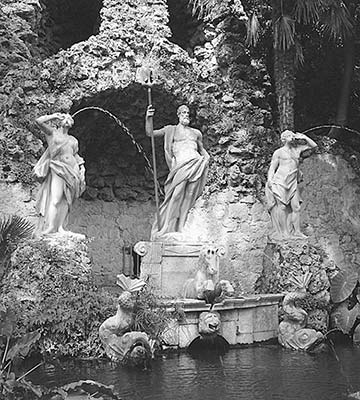
As you wander, the world melts away and you’re alone with the sounds of nature: wind, water, birds, and frogs. The garden’s centerpiece is the whimsical 18th-century Neptune Fountain, featuring the god of the sea flanked by water-spouting nymphs and fishes as he holds court over a goldfish-stocked, lily-padded pond. Circling around behind the fountain, you’ll discover that it’s fed by an impressive 230-foot-long aqueduct that was built in the 15th century.
Pelješac Peninsula
About an hour north of Dubrovnik, the skinny, 55-mile-long Pelješac (PEHL-yeh-shahts) Peninsula—rated ▲, or ▲▲ for wine aficionados—splits off from the Croatian coastline as if about to drift away to Italy. (The far tip of Pelješac comes within a stone’s throw of Korčula Island.) This sparsely populated peninsula is famous for its top-end wineries; grapes love the local climate, making Pelješac a magnet for wine lovers.
While the peninsula was once a remote detour from the Croatian mainstream, the new Pelješac Bridge (opened in 2022) now routes the main highway along the base of this formerly sleepy strip of land. Many more visitors will soon discover Pelješac, yet the farther reaches of the peninsula—off that main road—remain less known...for now.
Pelješac boasts some of the best-regarded wine-growing areas in Croatia, including Dingač and Postup. I’ve designed this section to put you in touch with family-run wineries offering both a taste and an education. Most of these are concentrated in two areas: Ponikve, just a short detour off the main highway; and Potomje, filling a broad valley in the middle of the peninsula, about 30 minutes away. I’ve also included the spectacularly scenic vineyards of Dingač, tucked between limestone peaks and churning seas, and two other excellent wineries (Grgić and Grgurević). It may be possible to drop in for a taste at some places, but to avoid disappointment, it’s better to call ahead.
While wine is the main draw here, other Pelješac attractions include the heavily fortified town of Ston, with its remarkable town wall and vast salt pans (one source of Dubrovnik’s historic wealth). Just over the hill is Mali (“Little”) Ston, a humble port town where foodies can slurp oysters fresh from the Adriatic. And the peninsula itself is also simply beautiful, with hills, valleys, vineyards, forests, bays, charming villages, and less development than along the mainland—giving it a certain time-passed charm.
Getting There: Buses between Dubrovnik and points north pass through Ston—and the rare bus to Korčula runs the full length of the peninsula—but those are not really designed for sightseers. If you’re here for the wine (as most visitors are), you’ll need to drive yourself, take a wine tour, or hire a driver. Figure about an hour to drive from Dubrovnik to Ston, then another 15 to 60 minutes to reach the wineries I recommend.
Drivers between Dubrovnik and Split (or Mostar, or other points north) can stop off at Ston and make an easy detour to the Ponikve wineries (the other wineries are farther). If you’re driving between Dubrovnik and Korčula, you’ll pass nearly everything mentioned in this section—give yourself extra time to linger and enjoy.
Given Croatia’s strict drunk-driving laws, taking a tour or hiring a private driver is a smart plan for those who are serious about their wine. I recommend some Dubrovnik-based drivers who do a good job here, especially Sasha Lušić, who runs the D’Vino Wine Bar and does lengthy, in-depth tours for aficionados. Other good choices are Robi Anđušić and Petar Vlašić. For more on all of these options, see here.
Sights on the Pelješac Peninsula
I’ve listed these in the order you’ll reach them as you approach this area from Dubrovnik, along with some driving instructions. The first few stops—Mali Ston, Ston, and the Ponikve wineries—are either along the main road, or a quick detour from it. The rest require a longer drive.
• Head north on the main highway out of Dubrovnik. You’ll cross the New/Tuđman Bridge, then curve around some beautiful bays as you leave the Dubrovnik sprawl behind. After about an hour, you’ll reach a fork. Rather than continuing north (marked for the Bosnian enclave of Neum), turn left—following signs for Split, Ston, Korčula, and Mljet. A few miles later, watch on the right for the tiny, blink-and-you’ll-miss it village of...
MALI STON
Literally “Little Ston”—the big one (described next) is just over the ridge, and connected by Ston’s extensive walls—this hamlet is known for one thing: shellfish. Look out on the Bay of Mali Ston. Here where the Neretva River (which runs under Mostar’s Old Bridge) empties into the sea, conditions are perfect for cultivating mussels, oysters, and clams. Driving along Pelješac, you’ll spot many such farms out in the bay—look for the areas roped off with buoys.
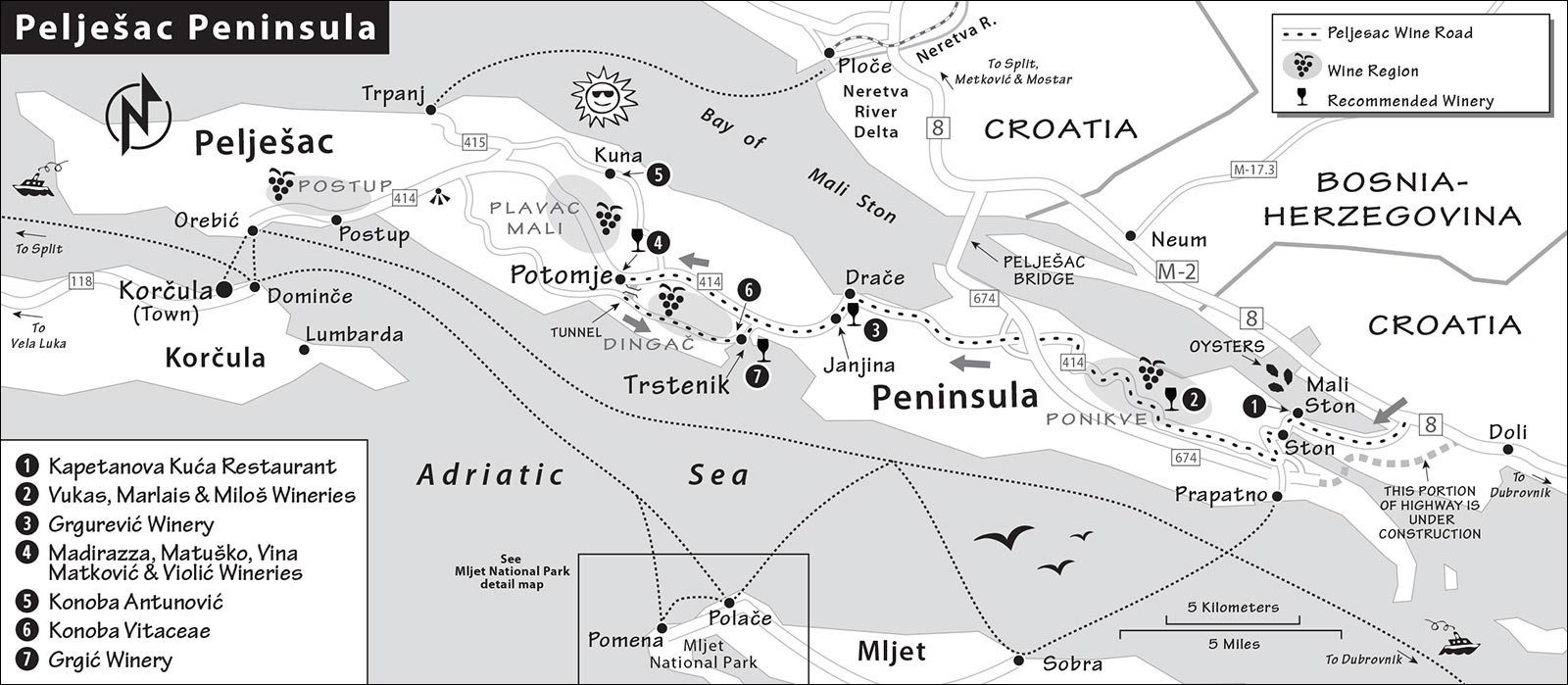
Thanks to its handy location along the main road and its abundant waters, Mali Ston is becoming known among international foodies, who come here to crack open and slurp down oysters plucked fresh from the deep. These are best accompanied by locally produced sparkling white wine. (Pelješac doesn’t have a tradition of sparkling wines, but smart local vintners have begun making them to accompany those beloved oysters.) Oyster Bar Bebek, at the entrance to town, is a humble shop where Lilijana sells fresh oysters from the adjacent bay, Pelješac wine decanted into plastic water bottles, and a wide range of other natural products—jams, brandies, and so on (long hours daily, +385 91 917 6267).
Eating in Mali Ston: Celebrity chef Lidija Kralj runs $$$$ Kapetanova Kuća, which has long had a good reputation. For dessert, it’s worth trying her unusual makaruli (macaroni) cake—tastier than it sounds (daily 11:00-23:00, +385 20 754 264).
• Just beyond the Mali Ston turnoff, the road goes right through the town of Ston. They’re building a bypass around Ston, however, so you may have to turn off to reach the town center.
STON
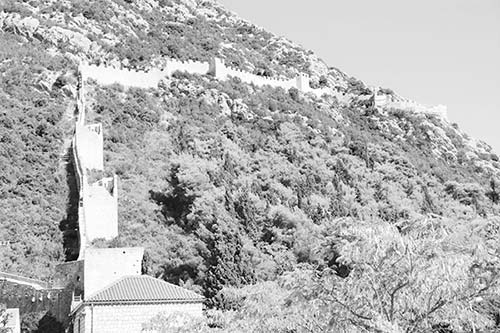
The town of Ston, at the base of the peninsula, is the gateway to Pelješac. This “Great Wall of Croatia” town is famous for the impressive wall that climbs up the mountain behind it (about a half-mile encloses the town itself, with another three miles clambering up the hillsides). The unassuming town was heavily fortified (starting in 1333) for two reasons: to defend its strategic location, where mountains and bays create a bottleneck along the road from Dubrovnik to Pelješac, near the Republic of Dubrovnik’s northern boundary; and to protect its impressive salt pans. Filling a low-lying plain that sprawls in front of Ston’s doorstep, these pans provided Dubrovnik with much of its wealth, back in the days when salt was worth more than its weight in gold. The pans would be flooded with saltwater, then sealed and left to evaporate—leaving the salt easy to harvest.
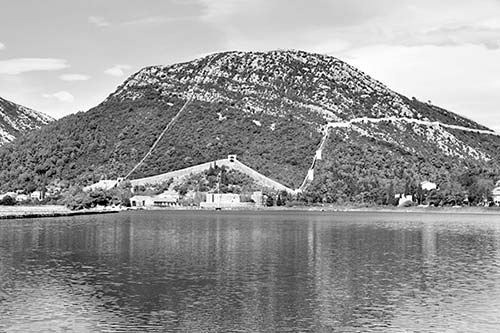
Today, the sleepy town—with more than its share of outdoor cafés and restaurants—is notable mainly for the chance to scramble up its massive fortifications (park your car in the big lot, then cross the street into town and look right; the entrance to the walls is in the big tower). For a short wall experience, you can just do a circle around the stout lower walls (about 30 minutes); for a more serious hike, you can climb all the way up and over to Mali Ston (figure an hour or more). Be warned that the walls can be blazing hot—with all that glistening limestone reflecting heat—and there’s little shade (€10 to enter walls regardless of how far you walk, daily June-July 8:00-19:30, Aug until 19:00, April-May and Sept until 18:30, shorter hours off-season).
Ston’s other sight is the historic Ston Saltworks. You can see the giant pans from the road. It’s easy to imagine how these vast, shallow enclosures could be opened by a series of channels to fill with saltwater, then closed off to evaporate in the hot summer sun. By harvest time, only those precious deposits remained—the coarse salt would be raked into little piles, then collected. If you’re curious, you can pay to enter and learn more (www.solanaston.hr).
While it’s busy along the road—where tour buses routinely stop for a coffee-and-WC break—the rest of Ston is quite sleepy, with a variety of inviting cafés for a lazy drink and various places to grab a sandwich or pizza slice. (For a serious meal, there are better places farther along.)
• Soon after Ston, the road forks. Going straight zips you on the fast road toward the Pelješac Bridge; turning off on the right on road 414—marked for Metohija—sends you past the Ponikve wineries listed next. If you’re just passing through on your way north, the Ponikve wineries are handy.
But if you’re here to delve into Pelješac, it’s worth bypassing these and staying on the main road. After about seven miles, you’ll reach another decision point: Staying on the highway (marked for Ploče and Split) takes you over the Pelješac Bridge to the mainland and points north. But to reach the wineries farther out along Pelješac (described later), turn off for Orebić and Korčula.
PELJEŠAC WINE COUNTRY
The sparsely developed but supremely beautiful Pelješac Peninsula is blanketed with vineyards. Pelješac is an overlooked gem and feels like a throwback to an age when wine tastings were relaxed, chatty, and fun, rather than corporate and rushed.
I’ve recommended a variety of wineries that run the length of the peninsula (described in the order you reach them, as you come from Dubrovnik and Ston). For convenience, most are concentrated in two main areas: Ponikve is an easy detour from the main road past Ston, and Potomje is farther along the peninsula.
All of my recommendations are staffed by friendly English speakers who love to introduce you to their wines. Their basic tastings are affordable, and you can add food pairings for a bit more. At most of these—unless otherwise noted—it’s unwise to show up unannounced. If they’re not busy, they may be willing to do an impromptu tasting...but more likely, you’ll either have to wait or will be turned away. It’s worth calling or emailing ahead (ideally a day before) to make sure they’re ready for you.
Unless otherwise noted, these places are open around 8:00-18:00 or 19:00, but close earlier in shoulder season and are generally closed in winter (Nov-March—but call ahead and they may be able to open for you).
Most wineries also have various brandies to try (including travarica, an herb-infused brandy) and also produce olive oils, which tend to be quite spicy in the throat.
For a primer, see the “Croatian Wine” sidebar on here and the “Sampling Pelješac Wines” sidebar in this section.
Ponikve Wineries
Ponikve, while less well established than Potomje (and far less visually thrilling than Dingač), produces good wines and is much closer to Ston—making this area an easy side trip from the main highway and an alternative to a full expedition deeper into Pelješac. Here are three wineries in this area to consider.
Vukas offers refined wines, thoughtfully engineered by Dubo, who loves explaining his methods. In addition to carrying on a proud Pelješac tradition, Dubo is also an innovator—he was the first in the area to do a sparkling white, with pošip grapes, ideal for pairing with oysters (with some notice Dubo can provide oysters to accompany your tasting). When it comes to reds, their everyday (but still excellent) Mato and the more refined, bigger Plerej reds are both a great value (Gornje Selo 13, +385 98 203 012, www.vinavukas.com, vinavukas@gmail.com).
Marlais is pleasantly unpretentious and low-key. In addition to a good lineup of reds, Ante, Marijana, and their family also do a light, refreshing, mineral-forward blend of three local white grapes, which they call Dišpet (Metohija 12, +385 98 936 1906, https://marlais-vinarija.hr, marlais.ante@gmail.com).
Miloš is the most polished option, with an impressive new tasting facility. Brothers Ivan and Josip are purists who pride themselves on carrying on the family tradition of classic European winemaking (their grandfather was the first to plant grapes high on the hillsides, back when his neighbors thought he was crazy). They do top-quality, tannic, earthy, acidic, gritty, big plavac mali wines; their Stagnum wines, aged at least 10 years, can get quite expensive (Boljenovići 15, +385 98 965 6880, www.milos.hr, info@milos.hr).
Between Ponikve and Potomje
It’s a very pretty 30-minute drive, more or less, between the Ponikve wineries and Potomje. Here are a few things to watch for as you make this journey—including another winery, Grgurević, that’s every bit as good as the others listed here.
From where you turn off the main highway, the road heads up and over the spine of the peninsula. Crest the hill and coming down toward the sweeping Bay of Mali Ston, keeping an eye out for the Pelješac Bridge on the horizon. The road drops along the edge of the water, where you’ll spot plenty of shellfish farms.
At the far end of this bay, you come to the pretty port town of Drače (literally “Fishbone”), with a big concrete harbor from which wines historically were shipped to Split and the rest of Dalmatia. Near the entrance to this town is the unassuming but excellent Grgurević winery, where Anto (who holds advanced degrees in viniculture) melds generations of family tradition with a deep understanding of the science, art, and current trends in winemaking. Anto loves to explain his wines, including a creamy, nutty pošip (white), aged in American oak barrels; Pelješac’s first orange wine, from a relatively new, naturally occurring “albino” or “gris” plavac mali grape (called Sivi); and a grand cru combining plavac mali with some vintages from its ancestor and cousin grapes (Janjina 30, +385 91 880 7427, www.grgurevicvina.com, anto.grgurevic@gmail.com).
Leaving Drače, the road climbs back up over the spine of the peninsula. You may be tempted by the vino signs in Janjina, but these are aimed mainly at Croatians buying table wine in bulk—100 liters at a time.
Reaching the south side of the peninsula, the road curves right and passes above the port town of Trstenik. For a good seafood lunch, or to go directly to the famous Grgić winery (both described in the Trstenik section, later), you can turn off here. Otherwise, carry on another 10 minutes or so to Potomje. (We’ll circle back to Trstenik—incredibly scenic, via Dingač—after our Potomje visit.)
Potomje Wineries
The abundant wine region of Potomje (POH-toh-myeh) fills a plateau surrounded by cliffs. The vines you’ll see in this so-called “continental” area are the same plavac mali grapes as in the better-known Postup and Dingač areas, but they receive less sun and are less sweet. Notice that many of the vines appear to be almost wild; these are older vineyards, which aren’t irrigated, so wine growers must let the vines grow this way to help them survive the hot summer months. This method maximizes yield but reduces quality. Newer vineyards are irrigated and use guide wires, and generally look more manicured.
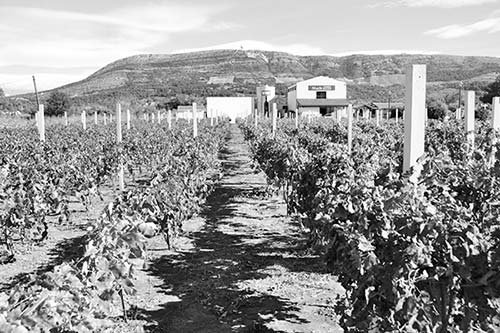
The hub of this area is the village of Potomje, where four wineries welcome visitors and offer a helpful introduction to Pelješac wines; taken together, they deliver a good range of experiences, from mom and pop to state of the art. I’ve listed them in order from the main road to the Dingač tunnel, connected by driving directions.
Madirazza, with a big, pink building, is the dominant outfit in this area. Notice the roses that line the vineyards—like a canary in a coal mine, these are more quickly affected by disease than the vines, offering an early-warning system in the event of an unwanted infestation. Madirazza wines are oaky and fairly acidic (Potomje 49a, +385 98 212 163, https://dingac.hr, Mina).
• Across the main road from Madirazza’s parking lot, follow the smaller road marked with Matuško and Tunel Dingač signs. This takes you to...
Matuško, a handsome winery with a library-like tasting room, makes finer, less coarse wines than Madirazza’s. The range of wines available to taste is impressive (including a chardonnay and tasty rosé, although red is what they do best and most). If you ask nicely, you can visit the sprawling network of atmospheric cellars where tour groups sip wines between aging barrels (Potomje 5a, +385 20 742 393, mobile +385 98 428 676, www.matusko-vina.hr).
• Leaving Matuško, it’s a two-minute drive to the next stop; make two lefts and a right on the country road, and your destination will be on the left.
At Vina Matković, gentle Željka or Petar can pour you a sample of their well-balanced and reasonably priced red wines. Don’t miss their Di Mare blend with marselan grapes (Gruda 5, +385 91 211 1230, https://vina-matkovic.business.site).
• Backtrack past Matuško to the road that leads to the tunnel. As you face the entrance to the tunnel, turn left, following Boris Violić signs.
Violić is an unassuming place offering a good contrast to the polished and more mainstream-feeling wineries just described. Chatty Boris Violić-Matuško and his charming wife, Marine, invite passing visitors to slow down and enjoy some home-style hospitality. In addition to sampling their wines (four reds and two whites made the “old-fashioned” way), consider buying some brandy, olive oil, or their delicious grandma-made treats (Potomje 6, +385 91 575 4422).
Eating near Potomje, in Kuna: The village of Kuna, less than a 10-minute drive from the Potomje wineries, has a good option for lunch or dinner. $$ Konoba Antunović, an agriturizam (tourist farm) in the middle of the village, is a rustic spot for a hearty meal. Climb the stairs up from the street to enter the country-cutesy dining rooms and dine on rib-sticking peasant food. Call ahead if you want a peka—veal under the bell (daily 10:00-23:00, +385 20 742 035, www.opgantunovic.hr). The family also raises donkeys for their milk, believed to promote good health, especially for growing children.
Dingač
When you’re done in Potomje, look for the tunnel through the mountain marked Tunel Dingač. This narrow, hand-dug, rough-walled, quarter-mile tunnel connects Potomje with the place where some of the best grapes in Croatia are grown: Dingač.
Dingač (DING-gatch) means “donkey.” And traditionally, the only way to bring these precious grapes to Potomje to be turned into wine was by hauling them up and over the mountains high above you—work that was done largely by beasts of burden. Finally, in the 1970s, local grape growers banded together and funded the construction of this tunnel, making their lives much easier.
Emerging from the tunnel on the far side, overlooking the shimmering sea, you’re in the heart of the Dingač—one of the best wine-growing regions of Pelješac. (The grapes grown here are processed elsewhere, so this little joyride is all about the vineyard views—not visits or tastings.)
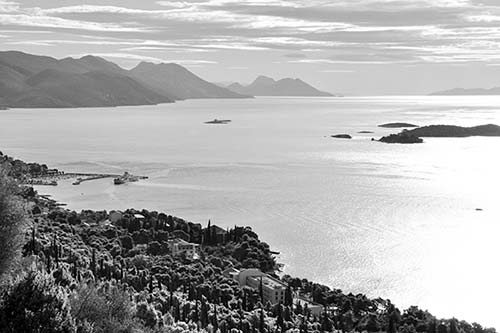
From where you exit the tunnel, turn left (toward Borak) and drive on the one-lane road above all those vines, with a green, jagged waterline that looks almost Celtic. Croatia’s best reds are lovingly raised right here, soaking up ample sunshine as they struggle against a very rocky soil (ideal for wine grapes). Locals explain that these grapes are bathed in sunlight from every angle—not just the sun above, but also the reflection of rays from both the sea and the white soil. Dingač never freezes (unlike the valley around Potomje), and rainfall runs off immediately through its porous limestone soil, making these plants very disease-resistant. And because high winds keep the bugs and other pests at bay here, no pesticides are needed.
By the time they are harvested, Dingač grapes are withered by the sun—halfway to raisins, packed with sugar, and ideal for producing top-quality and highly alcoholic wines. Dingač wine is very dark in color and has strong legs (or, as Croatians call them, “tears”).
At the fork, continue down to the right, toward Dingač/Borak; at the next fork, when the Borak road makes a sharp turn down and to the right, keep going straight onto the smaller road.
As you drive, keep enjoying dramatic views of Mljet Island. When you enter an area of trees, look across the harbor of Trstenik to see a building perched on a stony nub of land over the water—the famous Grgić winery.
Trstenik
This attractive harbor town feels rather posh, with yachts and small cruise ships tied up along its piers. The main reason people come here is to visit Grgić winery. But Trstenik is also a pleasant spot to stretch your legs and have a meal.
Eating in Trstenik: With a breezy terrace overlooking the sea and hills, $$$ Konoba Vitaceae is an excellent harborfront restaurant with fresh seafood. The chef/owner, whom you’ll just as likely see out fishing in his boat as manning the grill, uses only olive oil and light spices on his fish—he warns that garlic can be used to mask poor quality (long hours daily in high season, +385 98 428 675).
Grgić Winery: From Trstenik’s little waterfront, continue on the main road up the hill, watching on the right to enter the Grgić winery parking lot. Perhaps the best-known and best-regarded Croatian vintner, Miljenko Grgić was born in Croatia in 1923. His family emigrated from Yugoslavia to the US, where, as “Mike Grgich,” he worked at the Château Montelena winery in Napa Valley. In the famous “Judgment of Paris” in 1976, Grgić’s 1973 chardonnay beat out several well-respected French wines in a blind taste test. Considered a turning point in the winemaking world, this event brought new respect to American winemakers and put Napa on the map-a. Grgić next turned his sights on his Croatian homeland. He imported California know-how to the slopes of the Pelješac Peninsula, where he set about making some of Croatia’s first truly well-respected wines. While the wines are very expensive, the tasting room is surprisingly humble. Keeping things simple, the winery produces a white (pošip, with grapes grown on Korčula but produced here) and a red, which—in a break from convention—is named simply plavac mali partly to help promote this largely unknown and underappreciated grape (daily 9:00-19:00, +385 20 748 090, www.grgic-vina.com).

• From Trstenik (or Grgić), you can simply follow the road as it twists back up to the main road, where you can turn right to retrace your steps to Ston and onward to Dubrovnik.
Or, if you’re heading to Korčula, turn left to go back through Potomje toward Orebić. After Potomje, you’ll pass the turnoff for Trpanj (where ferries connect to the mainland town of Ploče) as you carry on straight toward Orebić. After cresting the hill, you’re greeted with smashing views over the Adriatic. As you coast downhill toward Orebić, keep an eye out on the left for a handy pullout, marked by a big bottle, with a striking panorama: the jagged cliffs of Pelješac and the islands of Mljet, Korčula, and Lastovo. Below and to the right, you can see some vineyards in the Postup area; to the left (not quite visible from here) are the vineyards of Dingač. From here, the road continues downhill into Orebić with its ferry across the strait to Dominče, a short drive from Korčula town.
Mljet National Park
Carefully protected against modern development, the island hideaway of Mljet National Park (rated ▲) offers a unique back-to-nature escape. With ample opportunities for hiking, swimming, biking, and kayaking—and without a nightclub, tacky T-shirt, or concrete “beach” in sight—Mljet (muhl-YAYT) is appreciated by active, outdoorsy travelers looking to escape some of the crowds and find their own pristine corner of Dalmatia.
Though Mljet Island is one of Dalmatia’s largest, it has fewer than 1,100 residents. Nearly three-quarters of the island is covered in forest, leaving it remarkably untamed. Aside from its beautiful national park, Mljet has inspired some of the most memorable tales of the Croatian coast—the poet Homer, his protagonist Ulysses, and the Apostle Paul all spent time here...or so the locals love to boast.
PLANNING YOUR TIME
While back-to-nature travelers invest an overnight here, it’s perfectly doable to visit Mljet as a day trip—most logically from either Dubrovnik or Korčula. If day-tripping from Dubrovnik, you’ll most likely use the TP Line connection into and out of Polače; if day-tripping from Korčula, you’ll use the Krilo connection into and out of Pomena. However, specific connections can change from year to year—and some run only in peak summer months—so confirm your options at https://getbyferry.com (for more details, see “Mljet Connections,” at the end of this chapter).
Note that by mixing and matching catamaran schedules, it’s also possible to get a taste of Mljet on the way between Korčula and Dubrovnik; you’ll have to check your boat connections carefully and store your bag while on the island (most likely at the Hotel Odisej in Pomena). You may need to arrive on the island at one port, and depart from another (by foot, or more conveniently with Hotel Odisej’s shuttle service).
Outside of peak summer—or from other home bases—you may find it easier to sign up for a package excursion through a local tour company.
No matter how you arrive, one day is plenty to get a nice taste of Mljet. There are three top experiences: the boat trip to the Island of St. Mary; the bike ride around the Great Lake (allow about 1 hour, plus photo and swimming stops); and swimming at the Small Bridge or at your choice of secluded coves around either of the park’s two lakes.
Hikers can also do the easy walk around the Small Lake or the more strenuous summit to the park’s highest point, Montokuc. If you enjoy kayaking, the Great Lake is a good place to do it. And if you have your own snorkeling gear (no rentals on the island), the coral reef near Soline (where the Great Lake meets the Adriatic) is a popular spot.
These activities can be done in any order. However, it can be smart to visit the Island of St. Mary first; that way, once back on the main island, you’ll know exactly how much time you have left to bike, swim, hike, or kayak before heading back to your boat.
Off-Season Visits: Be warned that everything here is very seasonal and weather-dependent, so visiting outside of peak season (June-Sept) will come with some frustration (and the park is officially closed Nov-Feb). However, locals say that off-season visitors particularly enjoy the island’s many orchids, which bloom only outside of summer.
Orientation to Mljet
The island of Mljet is long (23 miles) and skinny (less than two miles wide). The national park occupies the western third of the island. You’re likely to reach Mljet via one of three port towns: Polače (POH-lah-cheh) and Pomena (POH-meh-nah) are the main entry points into the national park, while Sobra (SOH-brah) is much less convenient (a 35-minute drive across the island from the park). The Krilo catamaran, one of the TP Line catamarans, and most excursions use Pomena; the other TP Line catamaran puts in at both Polače and Sobra; and car ferries to the mainland use Sobra. Day-trippers can ignore the rest of the island and focus on the national park.
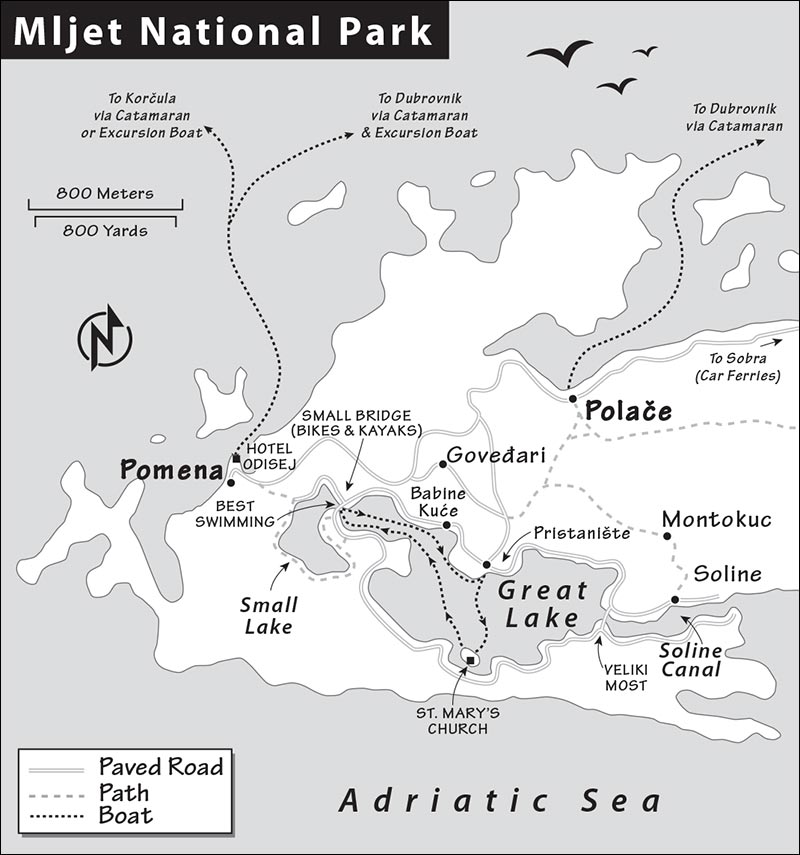
Polače and Pomena flank the heart of the national park—a pair of adjoining “lakes” (actually large saltwater lagoons fed by canals from the Adriatic) called Great Lake (Veliko Jezero) and Small Lake (Malo Jezero). These two bodies of water meet at the aptly named Small Bridge (Mali Most), where you can rent kayaks and bikes. A 15-minute walk or five-minute pedal along the Great Lake from the Small Bridge brings you to Pristanište (meaning, roughly, “transit hub”). In the middle of the Great Lake sits the Island of St. Mary, which is served by national park shuttle boats (included in your ticket) from both the Small Bridge and Pristanište. Everything’s well signed, and it’s hard to get lost if you use the free orientation map that comes with your ticket. But if you want to do some serious hiking, you can invest in a detailed park map (available at the entry kiosks).
Beyond Pomena and Polače, the national park has a few small settlements. Babine Kuće is on the lakeside path, between the Small Bridge and Pristanište; Soline, a lonely fishing village, sits along the channel where the Great Lake connects to the sea; and the cliff-climbing town of Goveđari is home to many of the people who work at the park, but is not interesting to tourists.
Cost and Hours: To enter the park, you’ll pay an entrance fee of €20 in June-Sept (€10 in shoulder season). This includes access to the park’s trails and beaches, plus the boat to the Island of St. Mary. The park is open daily June-mid-Sept 7:00-21:00, until 19:00 in shoulder season, and closed Nov-Feb.
TOURIST INFORMATION
The national park ticket kiosks, where you buy your ticket, can help you plan your day (+385 20 744 041, www.np-mljet.hr). The official TI is in Polače, across from where the TP Line catamaran docks (+385 20 744 186); there’s another branch in Sobra. The island’s lone hotel, the Hotel Odisej in Pomena, also acts as a tourist information point (+385 20 362 111). The island’s general-information website is www.mljet.hr.
ARRIVAL IN MLJET
At Polače: Exit to the right, pass the TI, and walk a few minutes up (through some scant ruins of what, at one time, was the third-largest Roman palace in Croatia) to the blue national park kiosk. Here you can buy your entry ticket and follow the old Roman trail about 30 minutes through the woods to Pristanište, where you can hop on the hourly boat to the Island of St. Mary. (In the past, an electric shuttle bus has made this journey quicker—keep an eye out in case this resumes.)
At Pomena: Exit the boat to the left (passing Hotel Odisej), hike uphill, and look for the national park kiosk on your left. Buy your ticket here, then continue up past some restaurants and grocery stores (last chance to stock up on water and snacks). Just after you leave town, a stepped path on your right leads through the woods to the Small Lake, about a 10-minute walk. When you reach the lake, turn left and follow the shore another five minutes to the Small Bridge. Use the Small Bridge as a home base for the rest of your day.
Note that there’s no official bus between Polače and Pomena, but Hotel Odisej operates a handy and comfortable shuttle to coincide with catamaran departures (€6 one-way; not covered by park ticket). The island also has some minibus-taxis (+385 98 505 654).
At Sobra: If you come on a car ferry into Sobra, it’s about a 35-minute drive on twisty roads to reach the Polače/Pomena tourist hub. If you’re not bringing a car to Mljet, don’t get off the boat in Sobra—there are no convenient bus connections to the national park, and a taxi will run you around €40-50. In a pinch, there’s typically an afternoon speedboat connecting Polače and Sobra.
Returning to Your Boat: At the end of the day, a Dubrovnik-bound TP Line boat departs from Polače. If you’re in the Small Bridge area, rather than hiking all the way to Polače, consider making the easier walk to Pomena and paying for the shuttle to Polače (just a few minutes in an air-conditioned van, book at Hotel Odisej). If you’re hiking up to Montokuc, you can hike from the summit all the way down to Polače.
HELPFUL HINTS
Bike Rental: At both Polače and Pomena, you’ll see companies advertising bike rentals, but these places are separated from the Great Lake’s beautiful bike path by hilly terrain. Unless you like hills, wait to rent your bike until you reach the Small Bridge.
Kayak Rental: You can rent basic kayaks next to the Small Bridge. Enjoy the calm waters: Motorized boats (beyond the official park boats and the occasional locally owned dinghy) are not allowed on the lakes.
Bag Storage: Pomena has no official baggage storage, but the Hotel Odisej or the national park ticket kiosk are generally willing to watch your bag for the day...if you ask sweetly.
Eating in the Park: You’ll find several small eateries in both Pomena and Polače. Once at the lakes, you may spot a very basic ice-cream truck at the Small Bridge (but nothing else there). The lakefront towns of Babine Kuće and Soline both have some nice eateries with great views. And the Island of St. Mary has the $$$$ Restaurant Melita, with a menu of overpriced typical Dalmatian dishes.
Services: Because the island has limited access to fresh water, there are no showers for swimmers here...so be prepared for a salty ride back to Dubrovnik. The Small Bridge has some pit toilets with no running water, and no formal changing areas for swimmers (wear your swimsuit under your clothes, brave the tight and smelly WCs, or discreetly change under a towel). The restaurant on the Island of St. Mary has a pay WC (with actual running water). In Pomena, you can discreetly use the bathroom in the lobby of Hotel Odisej.
What to Bring: With so many tempting swimming spots in the park, you’ll certainly want to bring a swimsuit and towel. If you have snorkel gear, this is a good place to use it (you can’t rent it on the island). There are a few lunch options on the island (see earlier), but packing a picnic gives you more flexibility. With limited refreshment available once inside the park, bring plenty of water.
Overnighting on Mljet: This chapter is designed for day-trippers, but if you’d like to spend the night, consider the island’s lone hotel. $$$ Hotel Odisej, with 157 rooms, sits right on Pomena’s waterfront. It’s a predictably comfortable home base, with helpful staff (closed late Oct-late April, +385 20 362 111, www.adriaticluxuryhotels.com). The park also has a variety of rustic $ sobe and apartments in its various villages; some are listed at www.mljet.hr.
Sights at Mljet National Park
▲▲The Lakes
The “Great Lake” and “Small Lake,” with shimmering turquoise waters, are saltwater bays—fed by the sea and affected by ocean currents. Scientists love these lakes, which contain various shellfish species unique to Mljet. One of them—the biggest shellfish in the Mediterranean, growing up to three feet long—is the noble pan shell, which naturally filters the water here, keeping it crystal-clear.
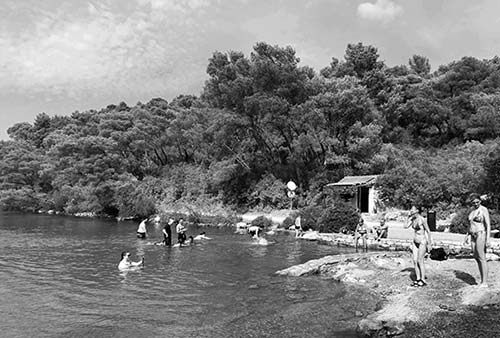
Swimmers love the lakes, too. There are two channels where it’s fun to see (and swim in) the tidal currents: at the Small Bridge, and at the footbridge (near Soline) where the Great Lake connects to the Adriatic. The most popular and most satisfying place to take a dip is at the little beach near the Small Bridge, with warm water, a mostly level and only slightly rocky bottom, and—best of all—a narrow channel where you can ride the current between the two lakes. Cross between them, and you’ll notice that the Small Lake is always a few degrees warmer than the Great Lake or the sea. Circling either lake, you’ll see plenty of other opportunities to take a dip.
▲The Island of St. Mary (Sv. Marija)
From the Small Bridge or Pristanište, you can hop on a boat for the 15-minute crossing to the Great Lake’s Island of St. Mary (included in park ticket, boats depart about hourly—schedule posted at park entrances and at boat docks). While this island-within-an-island isn’t too exciting, it’s a fun excuse for a boat ride and an easy hike.
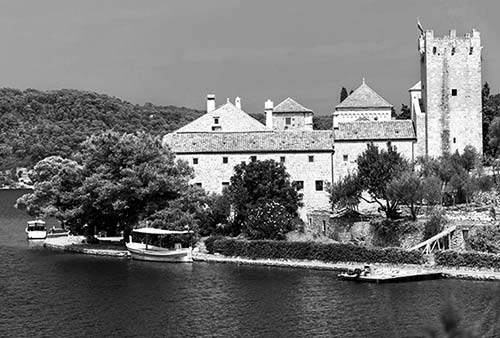
Benedictine monks lived on Mljet starting in the 12th century and founded a monastery on this island. Though the monastery complex has been modified over the ages, fragments of the original Romanesque structure still survive.
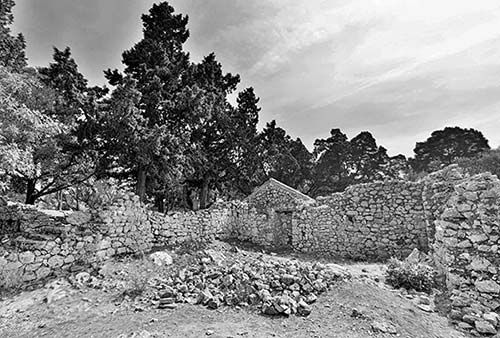
From the boat, turn left and find the stairs up to the tall, austere, limestone church interior, with its gracefully rounded arches, and peek into the adjoining cloister. From there, an easy stepped trail leads you up to the top of the island, passing remains of old fortifications, some Roman ruins, and a rugged stone stable with the island’s only permanent residents: a handful of donkeys. From the summit, you can hike down the other side—passing more tiny chapels and a miniature cemetery—to reach the inviting promenade at the back of the island, popular with swimmers. The promenade leads you back around to the boat dock.
You’ll have about an hour to explore between boats, but it only takes half that to see everything. So relax with an overpriced drink (or meal) at the restaurant by the boat dock.
▲Biking Around the Great Lake
The Great Lake is surrounded by a mostly paved, mostly level, five-mile path that’s enjoyable for a bike ride. You can do the entire loop in about an hour, not counting photo, swimming, or eating stops. The entire lakeshore is nicely manicured, with strategically placed information boards, benches, and places to get in the water. It’s all well signed and the ride is easy—just stay on the main path, which is almost always within sight of the lake.
Rent a bike at the Small Bridge, then head clockwise around the Great Lake (with the water on your right). You’ll curl along the lakeshore, through the charming waterfront village of Babine Kuće (with some appealing restaurants), then climb a little hill and continue around. At about the halfway point, you come to a little footbridge that crosses the channel where the Great Lake meets the sea; you’ll need to carry your bike across the bridge to continue the loop. Before crossing the footbridge, you can detour (about a half-mile) to the humble fishing village of Soline (with more restaurants); if you continue even farther, you’ll come to the popular snorkeling area of the largest coral reef in the Mediterranean Sea. (It’s a brown, not-too-striking “pillow coral”—less exciting than it sounds.)
Across the footbridge, the rough path curls around a gorgeous bay, overlooking the Island of St. Mary. Continuing on, the path gets better as it takes you back around to the Small Bridge.
Note: The unpaved path around the Small Lake is rough and rocky, making biking there more difficult, but it’s a pleasant walk (1.25 miles, about 30 minutes).
Hiking to Montokuc
The most rewarding hike takes you up to the national park’s highest point, Montokuc. At 830 feet above sea level, this is a serious hike—skip it unless you’re in good shape, and be sure to bring water. There are several trails up, including two along the lakeshore of the Great Lake, one in the village of Soline, and one in Polače. If you’re doing this or any other hike, the park map is essential (sold at park entry kiosks and other merchants).
Mljet Connections
By Catamaran: Two convenient passenger catamarans—one operated by Krilo (www.krilo.hr), the other by TP Line (www.tp-line.hr)—connect Mljet to other major destinations. Schedules vary from year to year, and both boats can sell out in peak season. Use https://getbyferry.com to figure out which boat works best, then book tickets in advance directly on that company’s website.
At Pomena, both Krilo and TP Line have catamarans that arrive from the north each morning and continue south to Dubrovnik (1.5 hours); in the afternoon, they stop again at Pomena on their way up to Korčula (1 hour), Hvar (2 hours), and Split (3 hours).
At Polače, in the summertime (June-Sept only), a second TP Line catamaran goes the opposite direction: northbound in the morning (originating in Dubrovnik), then southbound in the evening (terminating in Dubrovnik; 1.5 hours either way between Polače and Dubrovnik); in the peak of summer (July-Aug), on some days only, this line continues to Korčula (1 hour).
By Car Ferry: For drivers, a car ferry connects the town of Prapratno (near the base of the Pelješac Peninsula, not far from Ston) to Sobra on Mljet (for schedules, see www.jadrolinija.hr). Once at Sobra, it’s a 35-minute drive to the park.
By Excursion: Many destinations are more conveniently connected to Mljet by excursion than by public transit. While you don’t need a guide to enjoy the island, the simple convenience of round-trip transportation makes this worth considering—particularly if the catamarans are booked up.