PLITVICE LAKES NATIONAL PARK
Nacionalni Park Plitvička Jezera
Map: Plitvice Lakes National Park
ROADSIDE OPTIONS OUTSIDE THE PARK
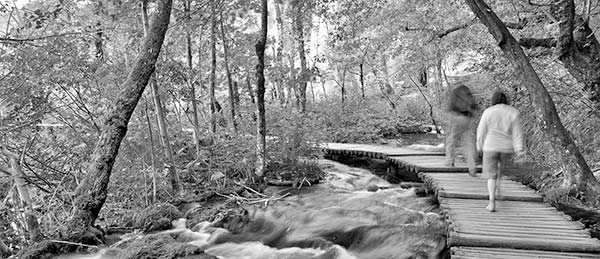
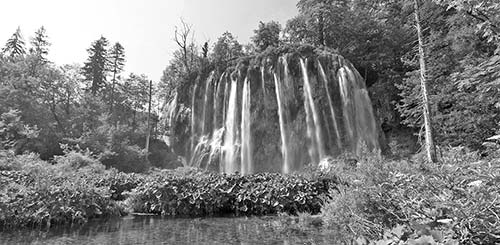
Plitvice (PLEET-veet-seh) is one of Europe’s most spectacular natural wonders. Imagine Niagara Falls diced and sprinkled over a heavily forested Grand Canyon. There’s nothing else like this lush valley of 16 terraced lakes, separated by natural travertine dams and laced together by waterfalls, boat rides, and miles of pleasant plank walks. Countless cascades and water that’s both strangely clear and full of vibrant colors make this park a misty natural wonderland. Over time, the water has simultaneously carved out and, with the help of mineral deposits, built up this fluid landscape. Decades ago, after eight or nine visits, I thought I really knew Europe. Then I discovered Plitvice and realized you can never exhaust Europe’s surprises. Best of all, Plitvice is blessedly compact: You can enjoy the best of its scenery in just a few hours.
Plitvice became Croatia’s first national park in 1949, and was a popular destination during the Yugoslav period. On Easter Sunday in 1991, the first shots of Croatia’s war with Yugoslavia were fired right here. In fact, the war’s first casualties were a Croat and a Serb, who died in a gunfight. The Serbs held Plitvice until 1995, and most of the Croats you’ll meet here were evacuated and lived near the coast as refugees. During those five years, the park saw virtually no tourists and grew wild—allowing the ecosystem to recover from the impact of so many visitors. Today, the park is again a hugely popular tourist destination, with more than a million visitors each year (and yet, relatively few are from the US).
While Plitvice never fails to amaze visitors, a trip here brings you through one of the poorest, remotest areas of inland Croatia. You’ll see physical evidence of the Yugoslav Wars: Some villages still have bombed-out churches and homes, most of which likely belonged to local Serbs who fled after the conflict. The national park represents the only real industry for miles around, which can make locals insular and a bit greedy. Prices here are much higher than they should be for such a remote area. But Plitvice is worth paying for. And although public transportation is workable, it requires some effort. This region is easiest by car.
PLANNING YOUR TIME
You can experience all the best scenery at Plitvice in a three-to-four-hour, mostly level hike. If your time or stamina is in short supply, you can see a lot even in just 90 minutes. More time is not necessary—the secondary trails pale in comparison to the convenient main route.
Plitvice slots naturally into an itinerary between Zagreb (or other points north) and Split (or other points south). The most sensible plan is to spend one night in the area: Arrive in the evening, get an early start in the park the next morning, and be underway after lunch (south to the coast, or north to Zagreb). Two nights and a full day at Plitvice is overkill.
Crowd-Beating Tips: The reservation system (described next) mitigates Plitvice’s ever-worsening crowd problems. However, it’s still most enjoyable to hit the trails when the park is quieter, and that means before or after day-trippers show up from other parts of Croatia. The most crowded time and place in the park is around noon at the Big Waterfall; early or late, it’s a completely different experience. The Upper Lakes are often particularly uncrowded later in the day. Being aware of crowd concerns is even more important during the peak month of August.
There are two basic strategies for avoiding the worst of the crowds: First, hit the trails in the morning—try to get started by about 8:30. (The farther outside of peak season you’re visiting, the later you can start.) Otherwise, arrive in midafternoon, when things are clearing out. Getting started around 15:00 can work very well (and lets you get an earlier start for your onward travel the next morning). However, especially outside of peak summer months (when opening and daylight hours are at their longest), check carefully when the park’s buses and boats stop running to make sure you won’t feel too rushed. The park website lists current last-departure times.
Rolling out of bed midmorning and hitting the trails after a leisurely breakfast is a recipe for frustration if you’re here at a busy time.
Reservations Strongly Recommended: Plitvice limits the number of daily visitors. Once your dates are set, book ahead on the park website (https://ticketing.np-plitvicka-jezera.hr). While reservations are not required (at least, not yet), tickets can sell out at busy times—particularly in summer and on weekends between 10:00 and 15:00. (In August, it’s smart to book two to three weeks ahead.) Online tickets are good for a one-hour entry window at a specific entrance. (My recommended route begins at Entrance 1.) You’ll be emailed a ticket that you can show on your phone to enter. If you don’t book ahead, you can still try to buy a ticket on arrival, if they’re not sold out—but to avoid lines (and disappointment), come before the rush arrives.
GETTING TO PLITVICE
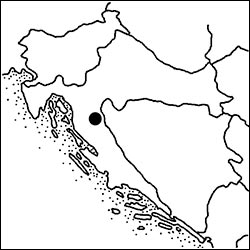
Plitvice Lakes National Park, a few miles from the Bosnian border, is located along the old D-1 highway between Zagreb and Split. Driving is the easiest option, but the park is also reachable by bus. There are three long-distance bus stops along the main road, each a 5-to-10-minute walk from the park’s hotels or entrances: near Entrance 1, Entrance 2, and in the village of Mukinje just beyond Entrance 2 (handy for hotels in that area, such as the recommended Plitvice Mirić Inn—described later). Ideally, if taking a bus to Plitvice, check schedules and book tickets for an express bus in advance (https://getbybus.com). If you catch a bus on the fly, be certain that it will actually stop at Plitvice.
From Zagreb and Points North
By car, Plitvice is two hours south of Zagreb on the D-1 highway (a.k.a. #1). Leaving Zagreb, take the A-1 expressway south for about an hour, exiting at Karlovac (marked for Plitvice). From here, follow yellow signs toward Split to get through Karlovac. Once you pop out the other side, you’ll track brown Plitvička Jezera signs along D-1. This takes you directly south about another hour to the park. If you’re staying at the official park hotels, you can park for free at the hotel lot; to park at the lots at Entrance 1 or Entrance 2, you’ll pay about €1.50/hour. For information about what you’ll see along the way, and when driving onward from Plitvice, see “Route Tips for Drivers” at the end of this chapter.
Buses leave from Zagreb’s main bus station in the direction of Plitvice (trip takes 2-2.5 hours, or longer on nonexpress buses). Various bus companies handle the route; the best option is the express bus operated by a Plitvice-based company, Prijevoz Knežević, in conjunction with Flixbus (buses may be marked as one or the other; https://prijevoz-knezevic.hr). Timetables can fluctuate with demand, but buses typically run 4/day June-Aug and 3/day in the shoulder season. Arriva/Autotrans also runs a few “semi-express” connections (slightly slower, with a few more stops) about 3-4/day in season. And yet another company, AP Varaždin, runs much slower, nonexpress buses that are best avoided—except in winter (Nov-mid-April), when they’re the only option. While this sounds complicated, it’s easy to check all of your options, and buy tickets, at https://getbybus.com.
It’s conceivable you could ride an early bus to Plitvice, store your bags at the entrance (baggage storage available at Entrance 1 and 2), hike the lakes, then move on that evening to your next destination—though it would be a very long day. But check connections carefully to make sure the timings work out, and prebook your bus tickets.
For details on moving on from Plitvice by bus, see “Plitvice Connections” at the end of this chapter.
From Split
Drivers head north on the A-1 expressway, exiting at Gornja Ploča; from here, follow highway D-1 about an hour north (passing Udbina and Korenica) through desolate scenery to the park.
Various buses run from Split to Plitvice; the best options are operated by Plitvice-based Prijevoz Knežević and Flixbus. These go directly to Plitvice in about three and a half hours; some also stop in Zadar and at Skradin (for Krka National Park) and take an hour longer (total connections to Plitvice: 5/day June-Aug, 4/day in shoulder season, none in winter). A few other companies also run this connection, but it can take much longer. Check https://getbybus.com to sort out the specific options for your journey and to book in advance.
Orientation to Plitvice
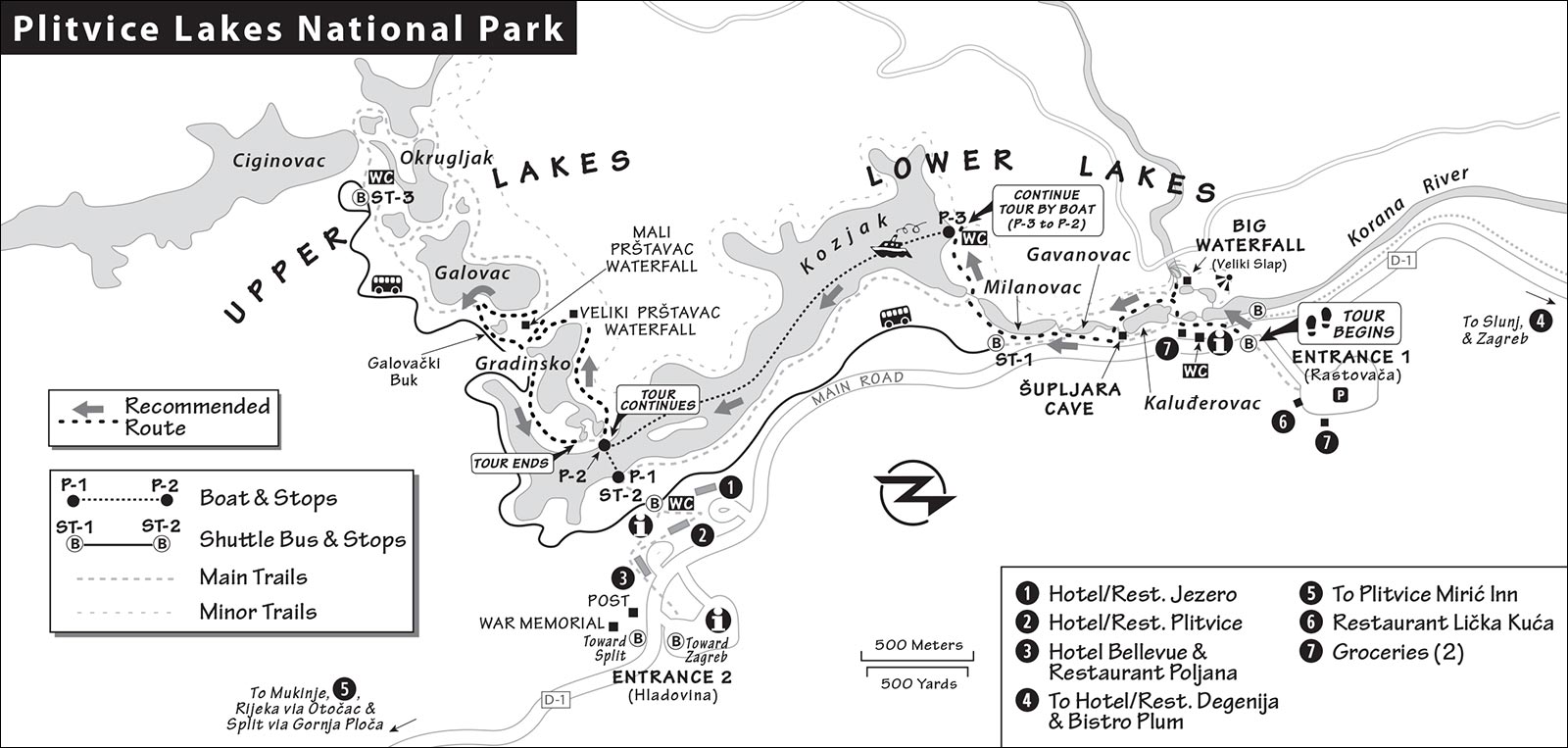
Plitvice’s 16 lakes are grouped into the Upper Lakes (Gornja Jezera) and the Lower Lakes (Donja Jezera). The park officially has two entrances (ulaz), each with ticket windows and snack and gift shops (see the sidebar and the map). There is no town at Plitvice. The nearest village, Mukinje, is a residential community mostly for park workers, with virtually no services for tourists; Rakovica, about a 10-minute drive north, has a small shopping mall with a supermarket.
Cost: In June-Sept, it’s €40 (or €27 after 16:00—after 15:00 in Sept). The price drops dramatically outside of peak season: €24 April-May and Oct, and €11 Nov-March. This ticket covers park entry, boats, and shuttle buses. A two-day ticket costs about 50 percent more (but most visitors can see plenty in a one-day visit).
Hours: Daily June-Aug 7:00-20:00, late March-May and Sept until 19:00, Oct 8:00-18:00, Nov-late March 8:00-15:00. The last entrance to the park is typically three hours before closing time, and the last boats and shuttle buses depart 30-60 minutes before the park closes (if hiking late in the day, check these schedules carefully before you head out). The quick boat ride between the P-1 dock (below the hotels) and P-2 (at the Upper Lakes) runs slightly later.
Getting Tickets: To better manage the crowds, the park allows visitors to book an entry time at least two days in advance (https://ticketing.np-plitvicka-jezera.hr). While not required, reserving is smart (and may become obligatory in coming years). Tickets can sell out, especially in summer (August is busiest) or on weekends during the midday rush (10:00-15:00). For details, see “Planning Your Time,” earlier.
Maps and Information: Big maps are posted all over the park. Unless you’re planning a more ambitious hike than the typical circuit I describe, there’s no need to buy a map or a guidebook. Park info: www.np-plitvicka-jezera.hr.
Services: While you’ll find WCs at both entrances, once you’re on the trails, they’re rare: The only convenient one is near the P-3 boat dock (the Kozjak Lake boat dock for the Lower Lakes). There is no WC at the P-2 boat dock—the only WC at the Upper Lakes is at the ST-3 bus stop, at the very top of these lakes.
GETTING AROUND PLITVICE
Plitvice is designed for hikers. But the park has a few other ways (included in entry cost) to help you connect the best parts. Use this chapter’s map and the “Park Signs and Symbols” sidebar to get oriented to your options.
By Shuttle Bus: These rubber-tired tourist trains are useful mostly for guests at the official park hotels, or for returning to your car at the end of the hike—saving you a 45-minute walk along a boring highway. Buses start running early and continue until late afternoon (frequency depends on demand—generally 3-4/hour; buses run from March until the first snow—often Dec).
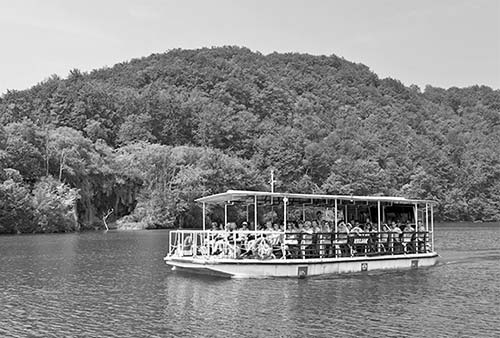
By Boat: Low-impact electric boats ply the waters of the biggest lake, Kozjak, with three stops: a steep hike below Entrance 2 and the park hotels (stop P-1); at the bottom of the Upper Lakes (P-2); and at the far end of Kozjak, at the top of the Lower Lakes (P-3). From Hotel Jezero to the Upper Lakes, it’s a quick five-minute ride; the boat goes back and forth continuously. The trip from the Upper Lakes to the Lower Lakes takes about 15 minutes, and the boat goes roughly twice per hour—typically at the top and bottom of every hour. (During very busy times, you may have to wait for a seat on this boat.)
By Taxi: If you’re in a pinch, a taxi can zip you along the highway between entrances (or to your outlying hotel); taxis are typically standing by at the entrances and hotels. (If not, ask the staff if they can call one for you.) Figure €8 for the short ride between entrances.
Plitvice Lakes Hike
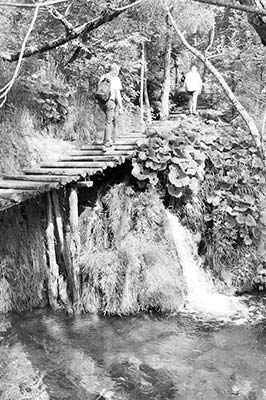
Plitvice’s system of trails and boardwalks makes it easy for visitors to immerse themselves in nature. Hiking here is easily worth ▲▲▲. In some places, the path leads literally right up the middle of a waterfall. The official park map and signage recommend a variety of hikes, but there’s no need to adhere strictly to these suggestions if you want to create your own route.
Planning Your Time: You can see everything—Upper Lakes and Lower Lakes—in a few hours. You can do these areas in either order. I prefer starting at Entrance 1 and doing the Lower Lakes first, which offers slightly better head-on views of the best scenery and saves the most picturesque stretch for last. (That’s the route I’ve described here.) Figure about an hour for the Lower Lakes, about an hour for the Upper Lakes, and a half-hour to connect them by boat—though it can take longer than this when the park is crowded, which it often is, or if you want to linger. Three to four hours total is a safe estimate.
Car Strategies: If following my suggested order, consider this plan: Park your car at Entrance 2, then ride the shuttle bus to Entrance 1 to begin your walk. That way, when you finish the loop—exiting at Entrance 2—your car will be there waiting for a quick getaway. (If you are doing the walk later in the day, pay careful attention to when the last shuttle bus returns to where you are parking. If you miss it, you’ll have to take a taxi or walk 45 dreary minutes along the highway.)
LOWER LAKES (DONJA JEZERA)
From Entrance 1, pause at the lip of the canyon for a thrilling postcard view over the Lower Lakes. From here, you’ll descend a steep path with lots of switchbacks. You’ll arrive at the shore of the big lake called Kaluđerovac. Then, you’ll simply follow signs for P-3 (and the letters A, B, C, and K) all the way to the boat dock at the end of the Lower Lakes. You’ll turn right and follow the first plank walks, across the middle of the lake, with up-close views of the travertine formations that make up Plitvice’s many waterfalls. (Also watch for the sunken canoe on the left, submerged as if to illustrate the incredible clarity of the water.)
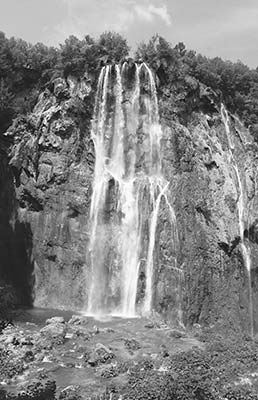
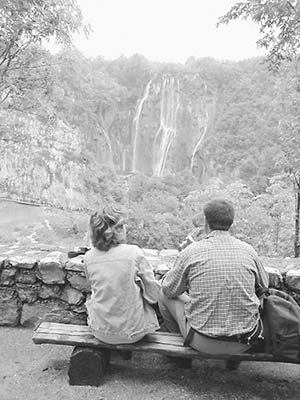
After you cross the path over the first lake, you’ll reach a T-intersection. The main route continues to the left (following signs for P-3). But to the right is an optional, and worthwhile, 10-minute detour down to the Big Waterfall (Veliki Slap). First you’ll walk along the smaller Novakovića Lake, then head down stairs with spectacular views over a canyon on your right. Reaching the bottom of these stairs, you’re face-to-face with the biggest of Plitvice’s waterfalls, where the Plitvica River plunges 250 feet over a cliff into the valley below. Depending on recent rainfall, the force of the Big Waterfall varies from a light mist to a thundering deluge. At the top of the Big Waterfall are the scant remains of a giant mill used to grind grains. (In this area, you may see an opportunity to climb up to a viewpoint at the top of the canyon; however, this trail has been closed for maintenance in recent years.)
When you’re done at the Big Waterfall, backtrack up to the main trail and continue along the boardwalks. You’ll cross Kaluđerovac Lake, passing another bank of waterfalls, to a point where a smaller trail branches off (on the left) toward Šupljara Cave. You can actually climb through this slippery cave—whose name means “bottomless”—all the way up to the trail overlooking the Lower Lakes (though it’s not recommended). This unassuming cavern is a big draw. In the 1960s, several German and Italian “Spaghetti Westerns” were filmed at Plitvice and in other parts of Croatia (which, to European eyes, has terrain similar to the American West). The most famous, Der Schatz im Silbersee (The Treasure in Silver Lake), was filmed here, and the treasure was hidden in this cave. The movie—complete with Deutsch-speaking “Native Americans”—is still a favorite in Germany, and popular theme trips bring German tourists to movie locations here in Croatia. (If you drive the roads near Plitvice, keep an eye out for strange, Native American-sounding names such as Winnetou or Old Shatterhand—fictional characters from these beloved stories of the Old West, by the German writer Karl May.)
After Šupljara Cave, stairs lead up over a churning waterfall, then follow the east side of Gavanovac Lake. After some more picturesque terraces, you’ll walk along the shore of Milanovac Lake (with some distant cascade views), before crossing over one more time to the west. Here you’ll cut through a comparatively dull forest, first going up the paved road, then branching off to the left (following the P-3 boat icon) to emerge at a pit-stop-perfect clearing with WCs, picnic tables, a souvenir shop, and a self-service restaurant.
From here you can catch the shuttle boat across Lake Kozjak (Jezero Kozjak) to the bottom of the Upper Lakes (usually every 30 minutes, 15-minute ride). The ride across Kozjak, the park’s biggest lake, offers a great chance for a breather.
UPPER LAKES (GORNJA JEZERA)
Focus on the lower half of the Upper Lakes, where nearly all the exotic beauty is (between P-2 and Lake Galovac). You’ll soon experience some of the most striking waterfalls in the whole park.
Climbing up steep, stepped boardwalks from the boat dock, bear to the right. You’ll basically follow signs with the P-2 boat icon (plus letters H and K) on a big loop all the way back to right here. You’ll pass deep pools with fallen trees stretching along the bottom, illustrating how magnificently clear the water is here. Soon you’ll curl along the waterline of Gradinsko Lake (where you come to the fork—stay on the level, lakeside path).
At the end of Gradinsko Lake, you’ll come to the park’s finest cascades, which tumble dramatically from Galovac into Gradinsko. You’ll hear the waterfalls, then you’ll see them, and finally you’ll feel them, as the spray pelts your face while you stroll the boardwalks. First you’ll pass by thundering Veliki (Big) Prštavac. From here, you’ll gradually curl to the right, including a tight-and-steep uphill bend, literally walking in the middle of a waterfall. In a few minutes, you’ll reach the nearly as spectacular Mali (Small) Prštavac.
It’s not over yet. Now you’ll stroll along a whole wall of other waterfalls. Continuing up, you’ll weave through another magnificent set of pools and falls, to a grand finale waterfall called Galovački Buk.
Soon after, you’ll head into a forest and come to a fork in the path. Here, you have two options:
Option 1: Make your hike a loop by turning left (following signs with the P-2 boat icon, plus letters H and K). This is the easiest and most enjoyable choice for most hikers. First, you’ll walk down a stepped boardwalk with gurgling water underfoot. Then you’ll circle back around the far (south) side of Gradinsko Lake and through a forest. Finally you’ll pass a small picnic shelter, then walk down past one last set of falls to the P-2 boat dock, where you can take the boat back over to the hotels (P-1 stop). From P-1, it’s a steep hike up to Entrance 2 and the ST-2 shuttle bus stop; if you left your car back at Entrance 1, you can hop on the shuttle bus to ST-1, then walk another 10 minutes.
Or...
Option 2: Turn right (following the icon for the shuttle bus ST-3 stop, and letters E and C) to continue hiking up to the top of the Upper Lakes. I’d choose this option only if you have energy and time to burn. This route leads you along the top of the best waterfalls (heard, but not seen), then loops you the long way around Galovac Lake and eventually to the ST-3 bus stop. From here on up, the scenery is less stunning, and the waterfalls are fewer and farther between. At the top, you’ll finish at shuttle bus stop ST-3 (with food stalls and a WC), where the bus zips you back to civilization (stop ST-2 for the hotels and Entrance 2, or stay on to stop ST-1 for the 10-minute walk to Entrance 1).
Nice work!
Sleeping in and near Plitvice
OFFICIAL HOTELS AT THE PARK
The most convenient place to sleep is at one of Plitvice’s official park lodges, which are all run by the same office (+385 53 751 015, www.np-plitvicka-jezera.hr). Due to renovation, only one of these is open in 2023, with more reopening in 2024. It’s best to book on their website (emails may go unanswered at busy times). They are all located a few minutes’ walk apart, along the main highway and just above the park’s Entrance 2. Note that none of these hotels has air-conditioning (which is rarely needed in this climate), and all of them include breakfast. You’ll also see a fourth location on the website, Hotel Grabovac; this is a workable choice but is not directly at the national park (it’s a short drive to the north).
$$ Hotel Jezero is big and modern, with all the comfort—and charm—of a Holiday Inn. It’s well situated right at the park entrance and offers 210 rooms; ones facing the park have big glass doors and balconies (elevator, reception +385 53 751 500).
These two are closed for renovation through 2023, likely reopening in 2024: $$$$ Hotel Plitvice offers 51 rooms and mod, wide-open public spaces on two floors; upon reopening, it’s planned to be the park’s highest-end hotel (reception +385 53 751 200). $$ Hotel Bellevue, just down the hill from the other hotels, is an older shell with 70 midrange rooms (reception +385 53 751 800).
ROADSIDE OPTIONS OUTSIDE THE PARK
Dozens of midsize hotels and small sobe line the highway in each direction from the national park. Prices here are also high, but these choices have a bit more personality. Some countryside accommodations have a half-board option; ask when you book.
North of the Park: $$$ Hotel Degenija offers all the big-hotel comforts in a homier package than the park lodges. Its 20 modern, stylish rooms are in a building behind the bustling roadside restaurant, and four more (simpler) rooms are in a house next door. They also have an outdoor pool with a poolside bistro (includes breakfast, air-con, elevator, bikes available, Selište Drežničko 57a, +385 47 782 143, www.hotel-degenija.com, info@hotel-degenija.com). Conveniently, there are two big restaurants on-site—Restaurant Degenija (traditional) and Bistro Plum (modern international)—both described later.
South of the Park: $$ Plitvice Mirić Inn is my favorite of the many accommodations lining the road near the park. The Mirić family—Božica, Milan, and daughter Lili—offer a warm welcome, 13 modern-chalet rooms, two apartments, lots of good travel advice, and a great homemade breakfast. Newer rooms in the annex cost a bit more; all come with a little road noise, so ask for a quieter room if that’s important to you (cash only, air-con, Jezerce 18/1, watch for it on the left as you head south from the park, +385 98 930 6508, www.plitvice-croatia.com, info@plitvice-croatia.com). While better for drivers, this hotel can work by bus: It’s 300 yards from the Mukinje bus stop and about a mile and a half from Entrance 2 (they may be able to give you a ride or pick you up—ask).
In Mukinje Village: Also just south of the park, close to the Plitvice Mirić Inn, is the village of Mukinje. It’s basically a planned workers’ town, where crumbling concrete apartment blocks mingle with newer chalet-style homes renting rooms to travelers. Unfortunately, most of the sobe I’ve inspected here are extremely expensive for what you get, and not worth recommending. In a pinch, you could drive into town and check a few options.
Eating in and near Plitvice
Cuisine from the Lika region—the inland, mountainous hunk of central Croatia that includes Plitvice—is hearty countryside grub, offering a nice change of pace from the seafood-heavy and Italian-flavored menus of most of Croatia’s tourist towns. You’ll see mushroom soups, soft spreadable sheep’s-milk cheeses, and grilled trout. But the big specialty here is lamb, served a variety of ways (including under a metal baking lid called a peka—this is a good place to sample this Croatian delicacy).
AT THE NATIONAL PARK
The park runs a variety of restaurants. If you’re staying at the hotels, you have the option of paying for half-board with your room (lunch or dinner). The half-board option is worth doing if you’re here for dinner, but don’t lock yourself in for lunch—you’ll want more flexibility as you explore Plitvice (memorable picnic spots and decent food stands abound inside the park). All of these eateries are open long hours daily.
Near Entrance 1, $$$ Restaurant Lička Kuća (“Lika House”) is the best of the park’s sit-down restaurants. Recently rebuilt, it has a nicely rustic character, with lots of stone and wood beams and a huge fireplace in the center of the dining room that does much of the cooking. The menu features Lika specialties, particularly lamb. Note that this is near the big parking lot for Entrance 1, across the highway (and pedestrian bridge) from the park entrance.
Near Entrance 2, most people opting for half-board dine at the $$ restaurants inside Hotel Jezero and Hotel Plitvice, but you can also use the voucher at other park eateries (you’ll pay the difference if the bill is more). Restaurant Poljana, behind Hotel Bellevue, has the same park-lodge atmosphere in both of its sections: self-service $ cafeteria or the sit-down $$ “national restaurant” with open wood-fired grill.
A variety of other humble, park-run eateries—with similar menus—are located near the various shuttle bus stops and boat docks (but there’s nothing at P-2, the boat dock at the bottom of the Upper Lakes).
For picnic fixings, there’s a tiny grocery store at Entrance 1 and another one with a larger selection across road D-1 (use the pedestrian overpass). If you’re driving in from the north, consider getting your provisions at the Tommy supermarket in the Plitvice Mall, a few minutes before reaching the national park. Once inside the park, at the P-3 boat dock, you can buy grilled meat and drinks. Friendly locals sell homemade goodies (such as strudel and hunks of cheese) throughout the park, including at Entrance 1.
OUTSIDE THE PARK
Roadside Restaurants
Many truck stop-type restaurants line the highway for miles in both directions from Plitvice. These cater primarily to tour buses—and their drivers, who dine like kings in exchange for bringing in so much business. Most of these places are unexciting, but $$$ Restaurant Degenija has an excellent reputation for its traditional local cuisine, served in a modern yet welcoming and unpretentious setting (no reservations except for hotel guests, daily 12:00-23:00). Their sister restaurant, $$$ Bistro Plum, is just a couple of doors down at the Hotel Degenija. At a similar price point and with similar class, Plum serves modern international cuisine for those less interested in Lika dishes (daily 18:00-23:00, Selište Drežničko 59 in Rakovica, +385 47 782 060).
Plitvice Connections
To reach the park, see “Getting to Plitvice,” earlier.
BY BUS
Bus Schedules and Options: Express buses run by Plitvice-based Prijevoz Knežević, in conjunction with Flixbus, zip Plitvice hikers directly to major destinations: north to Zagreb (4/day June-Aug, 3/day in shoulder season, none Nov-mid-April, 2-2.5 hours) and south to Split (5/day June-Aug, 4/day in shoulder season, none Nov-mid-April, 3.5 hours to Split, or 4.5 hours for buses that also stop en route at Zadar and Skradin, near Krka National Park; https://prijevoz-knezevic.hr). Note that a variety of other companies (including Arriva/Autotrans and AP Varaždin) also connect Plitvice to Zagreb and/or Split. However, these nonexpress buses take longer, make several stops en route, and can fill up with passengers to other destinations. This can be especially problematic in summer and on weekends, when Croatians heading to or from the coast tend to pack the buses. If at all possible, take the express options. To find schedules and book tickets in advance (which is recommended, especially in high season), visit https://getbybus.com.
Catching the Bus: All passing buses use the same three stops: near Entrance 1, near Entrance 2, and in the village of Mukinje just south of Entrance 2. Each bus stop is a small wooden shelter along the busy main road. It may take several minutes to walk to your bus stop from the park hotels or the official park entrances (look along the roadside near the pedestrian bridges). If you’re heading south, to Split, use the bus stops along the side of the road closest to the national park and hotels. If you’re northbound, use the bus stops on the opposite side of the road from the park. The bus shelters have little ticket windows that are staffed shortly before and after each express bus passes; you can buy tickets in person here, but it’s easy (and smart) to prebook your tickets online in advance (explained above).
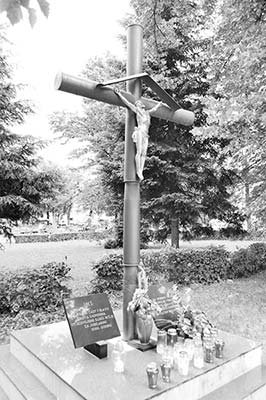
War Memorial near Entrance 2 Bus Stop: If you’re killing time waiting for a bus at Entrance 2, on the southbound side of the road, immediately behind the bus stop, is an elaborate memorial to “Bloody Easter”—when the first shots of Croatia’s “Homeland War” were fired right here in 1991. A series of plaques tells the story (with a proudly Croat slant): After Croatia declared independence, areas with large Serb populations seized control of pockets of territory. One of these was the national park. This offended the patriotism of the newly minted Croatian president, Franjo Tuđman. So one Saturday night, he gave the order that by the next day—Easter Sunday, March 31, 1991—Plitvice should be in Croatian hands. Early that morning, a gun battle broke out, and one Croat and one Serb were killed. These two men were the first battlefield casualties of the Yugoslav Wars. This monument pays homage to Josip Jović, the young park police officer who became Croatia’s first national martyr, though it does not mention the Serb who also died that day, Rajko Vukadinović.
ROUTE TIPS FOR DRIVERS
Plitvice is an hour away from the handy A-1 expressway that connects northern Croatia to the Dalmatian Coast. Here are some driving tips, and some notes on what you’ll see en route, depending on how you’re coming and going.
Between Zagreb and Plitvice
Coming from Zagreb, you’ll take the A-1 expressway south and exit at Karlovac. From here, you’ll head south on D-1, passing through the village of Turanj—part of the war zone in the 1990s. Notice the military museum (on the right as you drive through), with tanks, heavy artillery, and other war machines that saw action. You may spot a few destroyed, derelict houses that belonged to Serbs who have not come back to reclaim and repair them.
Farther along, about 25 miles before Plitvice, you’ll pass through the striking village of Slunj (pronounced “sloon”), perched picturesquely on travertine formations (like Plitvice’s) and surrounded by sparkling streams and waterfalls. The lower part of the town—buried deep amid all those cascades—is the old village of Rastoke (meaning roughly “Beautiful Water”). If you’re ready for a meal or a pit stop, it can be worth detouring down here for some atmospheric restaurants (after crossing the first bridge, turn right at the Rastoke sign, then park next to—and walk over—the old concrete bridge). At a minimum, it’s worth stopping along the main road over Rastoke for a photo.
After Slunj, it’s about another half-hour to Plitvice; if you need a meal before you reach the park, you’ll pass the recommended Degenija Restaurant as you approach.
If you’re going from Plitvice to points north, reverse this: Head north on D-1 through Slunj and Turanj and get on the A-1 expressway at Karlovac. From here, it’s less than an hour to Zagreb.
Note that this is also the quickest way to reach Rijeka, Opatija, and Istria—you’d simply hop on the A-1 in the opposite direction at Karlovac. However, there’s a more interesting alternative for reaching Istria, via the town of Otočac and the coastline near Slunj. This takes only slightly longer and comes with much better scenery. I described this alternative next.
Between Plitvice and Split
If you’re heading south (to Split and the rest of Dalmatia), you’ll want to catch the A-1 expressway at Gornja Ploča. To get there, it’s about an hour on country roads: Drive south from Plitvice on D-1—through Korenica, Pećane, and Udbina—then follow signs for the A-1 expressway (and Lovinac) via Kurjak to the Gornja Ploča on-ramp. Once on A-1, you’ll twist south through the giant Sveti Rok tunnel to Dalmatia.
Scenic Route Between Plitvice and Istria (or Opatija/Rijeka)
For those connecting Plitvice with Rijeka, Opatija, and Istria, here’s an alternative route that’s far more interesting. (If you just want to zone out and make good time, use the D-1 to A-1 route via Karlovac.)
From Plitvice, go south on D-1, then turn west on road #52 to the town of Otočac (about an hour through the mountains from Plitvice). After Otočac, you can get on A-1 (north to Zagreb, south to the Dalmatian Coast) or continue west and twist down the mountain road to the seaside town of Senj, on the main coastal road of the Kvarner Gulf. (Senj is described on here in the Istria chapter.) From Senj, it’s about an hour north along the coast to Rijeka, then on to Opatija or Istria.
During the Yugoslav Wars, the front line between the Croats and Serbs ran just east of Otočac (OH-toh-chawts). One building in the center of town is still marred by ugly bullet holes, as a sort of memorial to that time. Not that long ago, many homes here resembled this house, but Otočac has worked hard to put itself back together—and it’s a good place to drop in to a café for a coffee or pick up some produce at the outdoor market.
The Catholic church in the center of town, destroyed in the war but now rebuilt, displays its damaged church bells in a memorial out back. The crucifix nearby is made of spent artillery shells. Also in the churchyard are big, white blocks, each one honoring a Croatian hero; a character from Glagolitic script (the ancient Croatian alphabet) is carved in the top of each one.
Just up the main street, you’ll come to a lovely manicured park, dominated by a huge monument honoring the lives lost in the fight to create a free Croatian nation. It reads: “In order to make real the vision of a Croatian homeland, they laid upon the altar their dreams, their hopes, and their lives.” Noticing the giant block splintering into four pieces, it’s easy to imagine how this might illustrate the splitting up of the Yugoslav state...and might make you wonder how local Serbs feel about this provocative monument.
At the far end of the park is the Orthodox church. Otočac used to be about one-third Serb, but the Serbs were forced out during the war, and this church fell into disrepair. But, as Otočac and Croatia show signs of healing, about two dozen Serbs have returned to town and reopened their church.