SLOVENIA
Tiny, overlooked Slovenia is one of Europe’s most unexpectedly charming destinations. At the intersection of the Slavic, Germanic, and Italian worlds, Slovenia is an exciting mix of the best of each culture. Though it’s just a quick trip away from the tourist throngs in Croatia, Venice, Munich, Salzburg, and Vienna, Slovenia has stayed mostly off the tourist track—making it a handy detour for in-the-know travelers. Be warned: Everyone I’ve met who has visited Slovenia wishes they’d allotted more time for this endearing, underrated land.
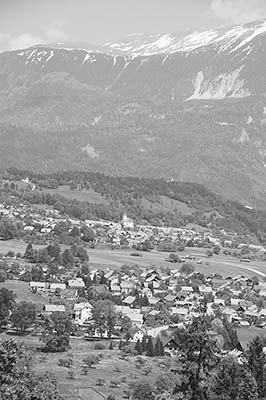
Today, it seems strange to think that Slovenia was ever part of Yugoslavia. Both in the personality of its people and in its landscape, Slovenia feels more like Austria. Slovenes are more industrious, organized, and punctual than their fellow former Yugoslavs...yet still friendly, relaxed, and Mediterranean. Locals like the balance. And it’s beautiful: Slovenia’s rolling countryside is dotted with quaint alpine villages and the spires of miniature Baroque churches, against a backdrop of snowcapped peaks.
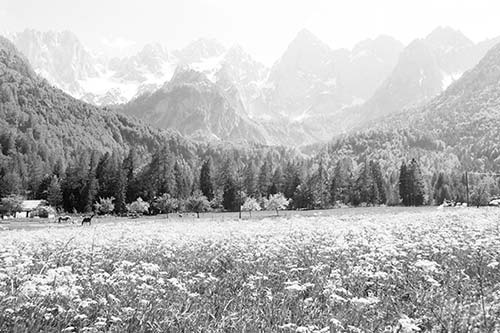
Only half as big as Switzerland, Slovenia is remarkably diverse for its size. Travelers can hike on alpine trails in the morning and explore some of the world’s best caves in the afternoon, before relaxing with a glass of local wine and a seafood dinner while watching the sun set on the Adriatic.
Slovenia enjoys a prosperity unusual for a formerly communist country. The Austro-Hungarian Empire left it with a strong work ethic and an impressive industrial infrastructure, which the Yugoslav government expanded. By 1980, 60 percent of all Yugoslav industry was in little Slovenia (which had only 8 percent of Yugoslavia’s population and 8 percent of its territory). Of the 13 new nations that have joined the European Union since 2004, Slovenia was the only one rich enough to enter as a net donor (with a higher per-capita income than the average), and the first one to join the euro currency zone (it adopted the euro in January 2007).
The country has a funny way of making people fall in love with it. Slovenes are laid-back, easygoing, stylish, and fun. They won’t win any world wars (they’re too well-adjusted to even try)...but they’re exactly the type of people you’d love to chat with over a cup of coffee.
The Slovenian language is as mellow as the people. While Slovenes use Serb, German, and English curses in abundance, the worst they can say in their native tongue is, “May you be kicked by a hen.” For “Darn it!” they say, “Three hundred hairy bears!” In bad traffic, they might mutter, “The street is white!” (If you want to get a local hopping mad—normally a difficult feat—all you have to do is mistake their beloved homeland for Slovakia.)
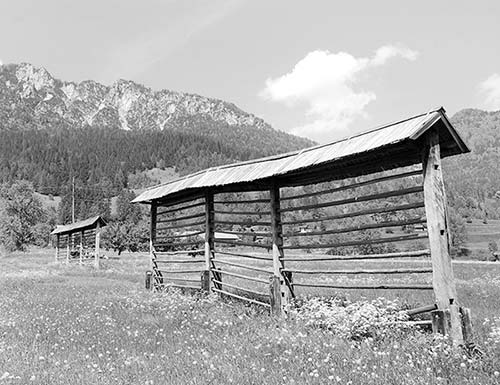
Coming from such a small country, locals are proud of the few things that are distinctly Slovenian, such as the roofed hayrack. Because of the frequent rainfall in the mountainous northwest, the hayracks are covered by a roof that allows the hay to dry thoroughly. The most traditional kind is the toplar, consisting of two hayracks connected by one big roof. It looks like a skinny barn with open, fenced sides. Hay hangs on the sides to dry; firewood, carts, tractors, and other farm implements sit on the ground inside; and dried hay is stored in the loft above. But these wooden toplarji are firetraps, and a stray bolt of lightning can burn one down in a flash. So in recent years, more farmers have been moving to single hayracks (enojni); these are still roofed, but have posts made of concrete rather than wood. You’ll find postcards and miniature wooden models of both kinds of hayracks (a fun souvenir).
Official Name: Republika Slovenija, or simply Slovenija.
Size: At 7,800 square miles, it’s about the size of New Jersey, but with one-fourth the population. Slovenia’s two million people are 83 percent ethnic Slovenes who speak Slovene, plus a smattering of Serbs, Croats, and Muslim Bosniaks. Almost 60 percent of the country is Catholic.
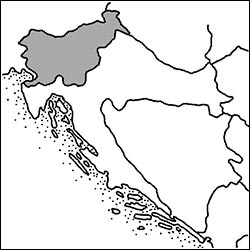
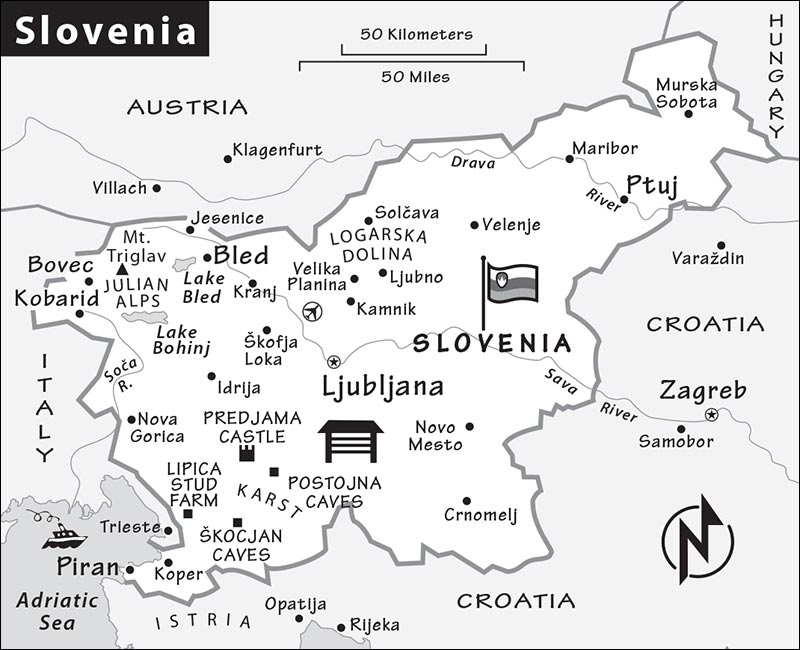
Geography: Tiny Slovenia has four extremely different terrains and climates: the warm Mediterranean coastline (just 29 miles long—about one inch per inhabitant); the snowcapped, forested alpine mountains in the northwest (including 9,400-foot Mount Triglav); the moderate-climate, central limestone plateau that includes Ljubljana and the cave-filled Karst region; and, to the east, a corner of the Great Hungarian Plain (the Prekmurje region, near Maribor and Ptuj). If you look at a map of Slovenia and squint your eyes a bit, it looks like a chicken running toward the east.
Latitude and Longitude: 46˚ N and 14˚ E (latitude similar to Lyon, France; Montreal, Canada; and Bismarck, North Dakota).
Biggest Cities: Nearly one in five Slovenes live in the two biggest cities: Ljubljana (the capital, pop. 280,000) and Maribor (in the east, pop. 158,000). Half the population lives in rural villages.
Snapshot History: After being dominated by the Germanic world for centuries, Slovenian culture proudly emerged in the 19th century. In the aftermath of World War I, Slovenia merged with its neighbors to become Yugoslavia, then broke away and achieved independence in 1991.
Economy: Slovenia has a gross domestic product of around $84 billion and a per-capita GDP of $40,000 (the highest, by far, of the former Yugoslavia). Slovenia’s economy is based largely on manufactured metal products (trucks and machinery), which are traded with a diverse group of partners.
Currency: Slovenia uses the euro (€1 = about $1.10).
Government: The country is led by the prime minister (currently Robert Golob, leader of the left-wing Freedom Movement), who heads the leading vote-getting coalition in legislative elections. He governs along with the figurehead president (the center-left Nataša Pirc Musar, the first woman to hold this position). The National Assembly consists of 90 elected legislators; a second house of parliament, the National Council, has much less power. This small country is divided into some 200 municipalities—creating a lot of bureaucracy that locals enjoy complaining about.
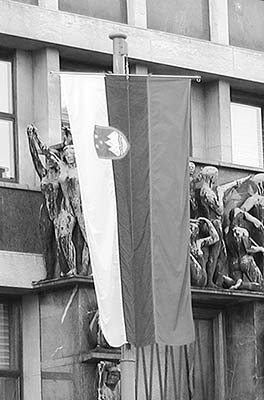
Flag: Three horizontal bands of white (top), blue, and red. A shield in the upper left shows Mount Triglav, with a wavy-line sea below and three stars above.
The Average Slovene: The average Slovene skis, in this largely alpine country, and is an avid fan of team handball (yes, handball). He or she lives in a 250-square-foot apartment, watches 16 hours of TV a week (much of it in English with Slovene subtitles), and enjoys a drink and a half of alcohol every day.
Notable Slovenes: Even if you haven’t heard of architect Jože Plečnik yet, you’ll hear his name a hundred times while you’re in Slovenia—especially in Ljubljana. Melanija Knavs was born in the Slovenian city of Novo Mesto, emigrated to the US to pursue a modeling career, and eventually married a future president; today we know her as Melania Trump. In 1910, Cleveland had the biggest Slovenian population of any city in the world—just ahead of Trieste and Ljubljana; more recently, two half-Slovene Cleveland political figures—Dennis Kucinich and George Voinovich—became nationally known. And classical musicians might know composers Giuseppe Tartini and Hugo Wolf.
Sporty Slovenes: If you follow alpine sports or team handball, you’ll surely know some world-class athletes from Slovenia. NBA fans might recognize basketball players Goran Dragić, Primož Brezec, Boštjan Nachbar, and Luka Dončić. Slovenian hockey player Anže Kopitar plays in the NHL, and skier Tina Maze won two gold medals at the 2014 Winter Olympics. The athletic Slovenes—perhaps trying to compensate for the minuscule size of their country—have accomplished astonishing feats: Davo Karničar has skied down from the “seven summits” (the highest points in each of the seven continents—that means the peaks of Everest, Kilimanjaro, Denali, and so on). Benka Pulko was the first person to drive a motorcycle around the world—that is, all seven continents, including Antarctica (also the longest solo motorcycle journey by a woman; total trip: 111,856 miles in 2,000 days). Dušan Mravlje ran across all the continents. And Slovenian ultramarathon swimmer Martin Strel has swum thousands of miles, including the entire length of several major rivers (among them the Danube, the Mississippi, the Yangtze, and the Amazon).
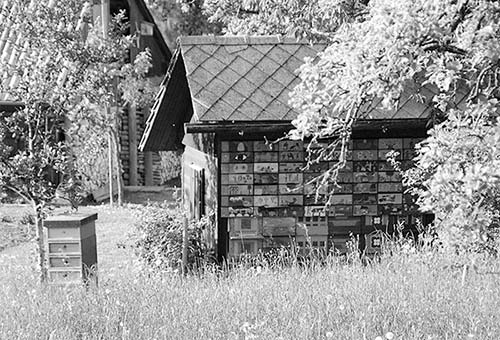
Another uniquely Slovenian memento is a creatively decorated front panel from a beehive (panjske končnice). Slovenia has a strong beekeeping tradition, and beekeepers believe that painting the fronts of the hives makes it easier for bees to find their way home. Replicas of these panels are available at gift shops all over the country. (For more on the panels and Slovenia’s beekeeping heritage, see here.)
Slovenia is also the land of polka. Slovenes boldly claim that polka music was invented here, and singer/accordionist Slavko Avsenik—from the village of Begunje near Bled—cranked out popular oompah songs that made him a superstar in Germany and other alpine lands. You’ll see the Avsenik ensemble (now led by Slavko’s grandson) and other oompah bands on Slovenian TV, where hokey Lawrence Welk-style shows remain an institution.
To really stretch your euros, try one of Slovenia’s more than 400 farmhouse B&Bs, called “tourist farms” (turistične kmetije)—similar to agriturismi in Italy. These are actual working farms (often organic) that sell meals and/or rent rooms to tourists to help make ends meet. You can use a tourist farm as a home base to explore the entire country—remember, the farthest reaches of Slovenia are only a day trip away. A comfortable, hotelesque double with a private bathroom—plus a traditional Slovenian dinner and a hearty breakfast—can cost as little as €60.
Most visitors to Slovenia are, in my experience, completely charmed by the place. And now, at long last, the country is slowly being discovered. Some of its biggest destinations (especially Lake Bled) can feel unpleasantly jammed in the summertime. And yet, it still feels untrampled compared to more famous stops, and there’s plenty of Slovenia to go around. Visit soon, before the cat is fully out of the bag. Give yourself enough time to go beyond the big-name “whistle-stop” destinations, and dig a little deeper into this wonderful land.
HELPFUL HINTS
Toll Sticker: To drive on Slovenia’s expressways (avtocesta), you’ll need to display a toll sticker (vinjeta, veen-YEH-tah; €15/week, €30/month). If renting your car in Slovenia, make sure it comes with a sticker; if you’re driving in from elsewhere, such as Croatia, you can buy one at a gas station, post office, or some newsstands (watch for vinjeta signs at gas stations as you approach the border). You can also buy a sticker online once you have your rental car’s license number (https://evinjeta.dars.si/en). Be warned: This rule is taken very seriously. If you’re found driving on expressways without the sticker, you’ll immediately be fined €300 or more.
Cruise Port: The Slovenian town of Koper (see here) is becoming a popular port of call for Mediterranean cruises. Given the country’s size, it’s possible to see just about any of the Slovenia destinations covered in this book in a day in port (provided you use your time efficiently and either drive yourself or hire a private driver).
SLOVENIAN HISTORY
Slovenia has a long and unexciting history as part of various larger empires. After Illyrian, Celtic, and Roman settlements came and went, this region became populated by Slavs—the ancestors of today’s Slovenes—in the late sixth century. Charlemagne’s Franks conquered the tiny land in the eighth century, and Slovenia became been a backwater of the Germanic world—first as a holding of the Holy Roman Empire, and later as part of the Habsburg Empire. But even as the capital, Ljubljana, was populated by Austrians (who called the city Laibach), the Slovenian language and cultural traditions survived in the countryside.
Through the Middle Ages, much of Slovenia was ruled by the Counts of Celje (highly placed vassals of the Habsburgs). In this era before modern nations—when shifting allegiances and strategic marriages dictated the dynamics of power—the Counts of Celje rose to a position of significant influence in Central and Eastern Europe. Celje daughters intermarried with some of the most powerful dynasties in the region: the Polish Piasts, the Hungarian Anjous, and the Czech Přemysls. Before long, the Counts of Celje had emerged as the Habsburgs’ main rivals.
In the 15th century, Count Ulrich II of Celje married into Serbia’s ruling family and managed to wrest control of Hungary’s massive holdings. Had he not been assassinated in 1456, this obscure Slovenian line—rather than an obscure Austrian one—might have emerged as the dominant power in the eastern half of Europe. (Instead, the Habsburgs consolidated their vanquished foe’s fiefdoms into their ever-growing empire.) In homage, the three yellow stars of the Counts of Celje’s seal still adorn Slovenia’s coat of arms.
Soon after, with Slovenia firmly entrenched in the Counter-Reformation holdings of the Habsburg Empire, the local Reformer Primož Trubar (1508-1586) strove both to put the Word of God into the people’s hands and to legitimize Slovene as a written language. This Slovenian answer to Martin Luther secretly translated the Bible into Slovene in Reformation-friendly Germany, then smuggled copies back into his homeland.
Over the next several centuries, much of Slovenia was wracked by Habsburg-Ottoman wars, as the Ottomans attempted to push north through this territory to reach Vienna. Slovenia also found itself caught in the crossfire between Austria and Venice. Seemingly exhausted by all this warfare—and by their own sporadic, halfhearted, and unsuccessful uprisings against Habsburg rule—Slovenia languished.
When the port city of Trieste (then in Slovenian territory) was granted free status in 1718, it boosted the economy of Slovenian lands. The Enlightenment spurred a renewed interest in the Slovenian culture and language, which further flourished when Napoleon named Ljubljana the capital of his “Illyrian Provinces”—Slovenia’s own mini empire, stretching from Austria’s Tirol to Croatia’s Dalmatian Coast. During this brief period (1809-1813), the long-suppressed Slovene language was used for the first time in schools and the government. This kicked off a full-throated national revival movement—asserting the worthiness of the Slovenian language and culture compared to the dominant Germanic worldview of the time. Inspired by the patriotic poetry of France Prešeren (1800-1849), Slovenian pride surged.
The last century saw the most interesting chapter of Slovenian history. Some of World War I’s fiercest fighting occurred at the Soča (Isonzo) Front in northwest Slovenia—witnessed by young Ernest Hemingway, who drove an ambulance there. During World War II, Slovenia was divided among Nazi allies Austria, Italy, and Hungary—and an estimated 20,000 to 25,000 Slovenes perished in Nazi- and Italian-operated concentration camps.
As Yugoslavia entered its golden age under war hero Marshal Tito, Slovenia’s valuable location where Yugoslavia meets Western Europe (a short drive from Austria or Italy)—and the diligent national character of the Slovenian people—made it a prime candidate for industrialization.
After Tito’s death, in 1980, the various Yugoslav republics struggled to redefine their role in the union. While many factions reverted to age-old, pre-Tito nationalistic fervor, the Slovenes increasingly focused on their own future...and began to press for real reforms of the communist system. Slovenia had always been Yugoslavia’s smallest, northernmost, most prosperous republic. Slovenes realized that Yugoslavia needed Slovenia much more than Slovenia needed Yugoslavia.
In 1988, the iconoclastic Slovenian magazine Mladina pushed the boundaries of Yugoslavia’s nominally “free” press, publishing articles critical of the Yugoslav People’s Army. Four young reporters (including Janez Janša, who would later become Slovenia’s prime minister) were tried, convicted, and imprisoned, spurring outrage among Slovenes. A few months later, the Slovenian delegation defiantly walked out of the Yugoslav League of Communists Congress.
The first-ever free elections in Slovenia on April 8, 1990, ended communist rule and swept reformer Milan Kučan into the presidency. Kučan pursued a Swiss-style confederated relationship with his fellow Yugoslav republics, but he met with resistance from his counterparts, who were more focused on their own ethnic self-interests. Later that year, in a nationwide referendum, 88 percent of Slovenes voted for independence from Yugoslavia.
And so, concerned about the nationalistic politics of Serbian strongman Slobodan Milošević and seeking the opportunity for true democracy and capitalism, Slovenia seceded. Because more than 90 percent of the people here were ethnic Slovenes—and because Slovenia was careful to respect the rights of its minority populations—the break with Yugoslavia was simple and virtually uncontested. Its war for independence lasted just 10 days and claimed only a few dozen lives. (For more details, see here in the Understanding Yugoslavia chapter.)
In May 2004, Slovenia became the first of the former Yugoslav republics to join the European Union. The Slovenes have been practical about this move, realizing it’s essential for their survival as a tiny nation in a modern world. But there are tradeoffs, and “Euroskeptics” are down on EU bureaucracy. As borders disappear, Slovenes are experiencing more crime. Traditional farms are grappling with strict EU standards. Slovenian businesses are having difficulty competing with big German and other Western European firms. Before EU membership, only Slovenes could own Slovenian land, but now wealthy foreigners are buying property, driving up the cost of real estate. Still, overall, most Slovenes feel that EU membership was the right choice.
After independence, Slovenia impressed its European neighbors with its powerhouse economy and steady growth. However, the 2008 global financial crisis revealed that some of the affluence was deceptive: Many of Slovenia’s biggest companies had been running up huge debts, which were assumed by Slovenia’s big banks, devastating the economy.
In recent years, Slovenes have grown weary of a string of corrupt and incompetent politicians. One case study is Janez Janša, sometimes called the “Slovenian Trump,” who became prime minister for the second time in 2011, was swept out of office amid a wave of protests, and eventually received a prison sentence for corruption. Janša returned as prime minister in 2020, but his party was soundly defeated in the 2022 elections. By contrast, a popular figure—at least in Ljubljana—is the visionary mayor Zoran Janković, who has reshaped the capital during his tenure (see here).
In 2015, Slovenia became the focal point of a Europe-wide debate when a flood of refugees from Syria and other nations showed up at its border. Like its neighbors Croatia and Hungary, Slovenia grappled with the challenge of caring for the new arrivals even as it facilitated their passage to wealthy northern European countries. News reports suggested that Slovenia responded to this humanitarian crisis with pragmatic compassion.
While many refugees expressed relief at what a friendly and competent place Slovenia was, those of us who already loved the country were hardly shocked. The Slovenes are adjusting to the 21st century with their characteristic sense of humor and easygoing attitude, just as they’ve done throughout their history.
SLOVENIAN FOOD
Slovenian cuisine offers more variety—and, often, better quality—than Croatian fare. Slovenes brag that their cuisine melds the best of Italian and German cooking—but they also embrace other international influences, especially French. Like Croatian food, Slovenian cuisine also features some pan-Balkan elements: The savory phyllo-dough pastry burek is the favorite fast food here, and when Slovenes host a backyard barbecue, they grill up čevapčići and ražnjići, topped off with the eggplant-and-red-bell-pepper condiment ajvar (see the “Balkan Flavors” sidebar on here). Slovenia enjoys Italian-style dishes, with a pizza or pasta restaurant on seemingly every corner. Hungarian food simmers in the northeast (where many Magyars reside). And in much of the country, particularly near the mountains, traditional Slovenian food has a distinctly Germanic vibe—including the “four S’s”: sausages, schnitzels, strudels, and sauerkraut.
Traditional Slovenian meals come with a hearty helping of groats—a grainy mush made with buckwheat, barley, or corn. Buckwheat, which thrives in this climate, often appears on Slovenian menus. You’ll also see plenty of štruklji, a dumpling-like savory layer cake that can be stuffed with cheese, meat, or vegetables. Repa is turnip prepared like sauerkraut. Among the hearty soups in Slovenia is jota—a staple for Karst peasants, made from repa, beans, vegetables, and often sausage.
In Slovenia, Croatia, and Montenegro, pršut (purr-SHOOT) is one of the essential food groups. This air-cured ham (like Italian prosciutto) is soaked in salt and sometimes also smoked. Then it hangs in open-ended barns for up to a year and a half, to be dried and seasoned by the howling Bora wind. Each region produces a slightly different pršut. In Dalmatia, a layer of fat keeps the ham moist; in Istria, the fat is trimmed, and the pršut is drier.
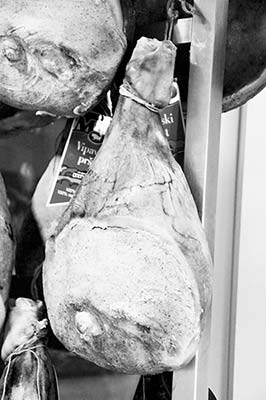
Since Slovenia and Croatia joined the European Union, strict new standards have been imposed. Separate rooms must be used for the slaughter, preparation, and curing of the ham. While this seems fair enough for large producers, small family farms that want to make just enough pršut for their own use—and maybe sell one or two ham hocks to neighbors—find they must invest thousands of euros to be compliant.
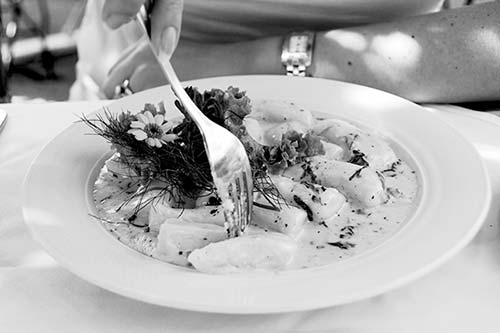
Slovenia also has some good pastas. In addition to the familiar Italian-style pastas you’d find anywhere (gnocchi, called njoki here, tend to be popular and good), you may see some regional variations. Fuži, from Istria in the southwest, are similar to penne but typically hand-rolled. Žlikrofi, from Idrija, are ravioli-like filled dumplings.
The cuisine of Slovenia’s Karst region (the arid limestone plain south of Ljubljana) is notable. The small farms and wineries of this region have been inspired by Italy’s Slow Food movement—their owners believe that cuisine is meant to be gradually appreciated, not rushed. The Karst’s tasty air-dried ham (pršut), available throughout the country, is worth seeking out (see sidebar). Istria (the peninsula just to the south of the Karst, in southern Slovenia and Croatia) produces truffles that, locals boast, are as good as those from Italy’s Piedmont region. And in the hills just northwest of the Karst, the Goriška Brda wine region—surrounded on three sides by Italy—is a magnet for in-the-know foodies seeking top-quality wines and affordable high cuisine.
Voda is water, and kava is coffee. Radenska, in the bottle with the three little hearts, is Slovenia’s best-known brand of mineral water—good enough that the word Radenska is synonymous with bottled water all over Slovenia. It’s not common to ask for (or receive) tap water, but you can try requesting voda iz pipe.
Adventurous teetotalers should forgo the Coke and sample Cockta, a Slovenian cola with an unusual flavor (which supposedly comes from berry, lemon, orange, and 11 herbs). Originally called “Cockta-Cockta,” the drink was introduced during the communist period, as an alternative to the difficult-to-get Coca-Cola. This local variation developed a loyal following...until the Iron Curtain fell, and the real Coke became readily available. Cockta sales plummeted. But in recent years—prodded by the slogan “The Taste of Your Youth”—nostalgic Slovenes are drinking Cockta once more.
The premier Slovenian brand of pivo (beer) is Union (OO-nee-ohn), but you’ll also see a lot of Laško (LASH-koh), whose mascot is the Zlatorog (or “Golden Horn,” a mythical chamois-like animal). For the full story on Slovenian wines, see the sidebar.
Regardless of what you’re drinking, to toast, say, “Na ZDROW-yeh!”—if you can’t remember it, think of “Nice driving!”
Slovenia’s national dessert is potica, a rolled pastry with walnuts and sometimes also raisins. Although traditionally eaten at Christmas, it’s available year-round. Slovenes eat it from the hard outer crust in, saving the nutty center for last. For more tasty treats, see the “Bled Desserts” sidebar on here. Locals brag that Ljubljana has the finest gelato outside Italy—which, after all, is just an hour down the road. And I agree.
SLOVENIAN LANGUAGE
While the casual tourist won’t notice, Slovene is markedly different from the languages spoken in the other former Yugoslav republics. Serbian and Croatian are mutually intelligible; Slovene is gibberish to Serbs and Croats. Most Slovenes, on the other hand, know Serbo-Croatian because, a generation ago, everybody in Yugoslavia had to learn it.
Linguists have identified some 46 official dialects of Slovene, and there are probably another 100 or so unofficial ones. Locals can instantly tell which city—or sometimes even which remote mountain valley—someone comes from by their accent.
The tiny country of Slovenia borders Italy and Austria, with important historical and linguistic ties to both. For self-preservation, Slovenes have always been forced to function in many different languages. All of these factors make them excellent linguists. Most young Slovenes speak flawless English effortlessly—then admit that they’ve never set foot in the United States or Britain, but love watching American movies and TV shows (which are always subtitled, never dubbed).
Slovene pronunciation is very similar to Croatian (see here). Remember, c is pronounced “ts” (as in “cats”). The letter j is pronounced as “y”—making “Ljubljana” easier to say than it looks (lyoob-lyee-AH-nah). Slovene only has one diacritical mark: the strešica, or “little roof.” This makes č sound like “ch,” š sound like “sh,” and ž sound like “zh” (as in “measure”). The letter v is pronounced like “u”—so the Slovenian word avto sounds like “auto,” and the mountain Triglav is pronounced “TREE-glau” (rhymes with “cow”).
The only trick: As in English, which syllable gets the emphasis is unpredictable. Slovenes use many of the same words as Croatians but put the stress in different places.
Learn some key Slovene phrases (see the Slovene survival phrases on the next page). You’ll make more friends and your trip will go more smoothly.
Slovene Survival Phrases
In the phonetics, ī sounds like the long i in “light,” and bolded syllables are stressed. The vowel “eh” sometimes sounds closer to “ay” (depending on the speaker).
| Hello. (formal) | Dober dan. doh-behr dahn |
| Hi. / Bye. (informal) | Živjo. zheev-yoh |
| Do you speak English? | Ali govorite angleško? ah-lee goh-voh-ree-teh ahn-glehsh-koh |
| Yes. / No. | Ja. / Ne. yah / neh |
| I (don’t) understand. | (Ne) razumem. (neh) rah-zoo-mehm |
| Please. / You’re welcome. | Prosim. proh-seem |
| Thank you (very much). | Hvala (lepa). hvah-lah (leh-pah) |
| I’m sorry. / Excuse me. | Oprostite. oh-proh-stee-teh |
| No problem. | Ni problema. nee proh-bleh-mah |
| Good. | Dobro. doh-broh |
| Goodbye. | Na svidenje. nah svee-dehn-yeh |
| one / two / three | ena / dve / tri eh-nah / dveh / tree |
| hundred / thousand | sto / tisoč stoh / tee-sohch |
| How much? | Koliko? koh-lee-koh |
| local currency | euro ee-oo-roh |
| Write it? | Napišite? nah-peesh-ee-teh |
| Is it free? | Ali je brezplačno? ah-lee yeh brehz-plahch-noh |
| Is it included? | Ali je vključeno? ah-lee yeh vuk-lyoo-cheh-noh |
| Where can I find / buy…? | Kje lahko najdem / kupim…? kyeh lah-koh nī-dehm / koo-peem |
| I’d like / We’d like… | Želel / Želeli bi… zheh-lehl / zheh-leh-lee bee |
| …a room. | …sobo. soh-boh |
| …a ticket to ____. | …vozovnico do ____. voh-zohv-neet-soh doh ____. |
| Is it possible? | Ali je možno? ah-lee yeh mohzh-noh |
| Where is…? | Kje je…? kyeh yeh |
| …the train station | …železniška postaja zheh-lehz-neesh-kah pohs-tī-yah |
| …the bus station | …avtobusna postaja ow-toh-boos-nah pohs-tī-yah |
| …tourist information | …turistično informacijski center too-rees-teech-noh een-for-maht-see-skee tsehn-tehr |
| …the toilet | …vece (WC) veht-seh |
| men / women | moški / ženski mohsh-kee / zhehn-skee |
| left / right / straight | levo / desno / naravnost leh-voh / dehs-noh / nah-rahv-nohst |
| At what time? | Ob kateri uri…? ohb kah-teh-ree oo-ree |
| …does this open / close | …se odpre / zapre seh ohd-preh / zah-preh |
| (Just) a moment. | (Samo) trenutek. (sah-moh) treh-noo-tehk |
| now / soon / later | zdaj / kmalu / pozneje zuh-dī / kuh-mah-loo / pohz-neh-yeh |
| today / tomorrow | danes / jutri dah-nehs / yoo-tree |
In a Slovene Restaurant
| I’d like to reserve… | Rezerviral bi… reh-zehr-vee-rahl bee |
| We’d like to reserve… | Rezervirali bi… reh-zehr-vee-rah-lee bee |
| …a table for one / two. | …mizo za enega / dva. mee-zoh zah eh-neh-gah / dvah |
| Is this table free? | Ali je ta miza prosta? ah-lee yeh tah mee-zah proh-stah |
| Can I help you? | Izvolite? eez-voh-lee-teh |
| The menu (in English), please | Jedilni list (v angleščini), prosim. yeh-deel-nee leest (vuh ahn-glehsh-chee-nee) proh-seem |
| service (not) included | postrežba (ni) vključena post-rehzh-bah (nee) vuk-lyoo-cheh-nah |
| cover charge | pogrinjek poh-green-yehk |
| to go | za s sabo zah sah-boh |
| with / without | z / brez zuh / brehz |
| and / or | in / ali een / ah-lee |
| fixed-price meal (of the day) | (dnevni) meni (duh-new-nee) meh-nee |
| specialty of the house | specialiteta hiše speht-see-ah-lee-teh-tah hee-sheh |
| half portion | polovična porcija poh-loh-veech-nah port-see-yah |
| daily special | dnevna ponudba duh-new-nah poh-nood-bah |
| fixed-price meal for tourists | turistični meni too-rees-teech-nee meh-nee |
| breakfast / lunch / dinner | zajtrk / kosilo / večerjo zī-turk / koh-see-loh / veh-chehr-yoh |
| appetizers | predjedi prehd-yeh-dee |
| bread / cheese | kruh / sir krooh / seer |
| sandwich | sendvič send-veech |
| soup / salad | juha / solata yoo-hah / sol-lah-tah |
| meat / poultry | meso / perutnina meh-soh / peh-root-nee-nah |
| fish / seafood | riba / morska hrana ree-bah / mor-skah hrah-nah |
| fruit / vegetables | sadje / zelenjava sahd-yeh / zeh-lehn-yah-vah |
| dessert | sladica slah-deet-sah |
| (tap) water | voda (iz pipe) voh-dah (eez pee-peh) |
| mineral water | mineralna voda mee-neh-rahl-nah voh-dah |
| milk | mleko mleh-koh |
| (orange) juice | (pomarančni) sok (poh-mah-rahnch-nee) sohk |
| coffee / tea | kava / čaj kah-vah / chī |
| wine / beer | vino / pivo vee-noh / pee-voh |
| red / white | rdeče / belo ahr-deh-cheh / beh-loh |
| glass / bottle | kozarec / steklenica koh-zah-rehts / stehk-leh-neet-sah |
| Cheers! | Na zdravje! nah zdrow-yeh |
| More. / Another. | Še. / Še eno. sheh / sheh eh-noh |
| The same. | Isto. ees-toh |
| Bill, please. | Račun, prosim. rah-choon proh-seem |
| tip | napitnina nah-peet-nee-nah |
| Delicious! | Odlično! ohd-leech-noh |