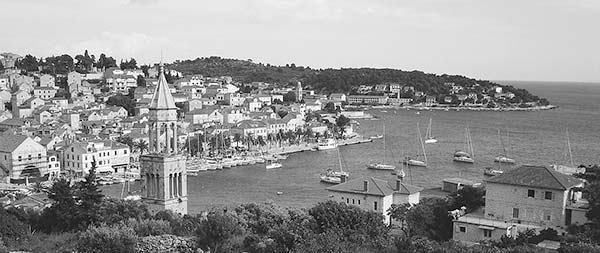
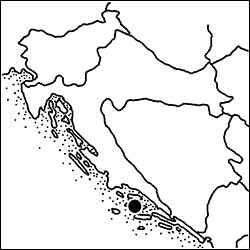
HVAR
EAST OF THE OLD TOWN, IN BUKAINKA
Hvar’s hip cachet, ritzy “Croatian Riviera” buzz, and easy proximity to Split have turned this tidy Dalmatian fishing village into one of the most popular destinations in the country. The island has, for better or for worse, been transformed into Croatia’s answer to Mykonos, Ibiza, or St-Tropez: Rows of luxury mini-cruise ships are tied up five-deep in the harbor; a steady stream of jet-set twentysomethings dress up for a night on the town; and hungover retirees lament that they haven’t had that much wine in decades. Budget-conscious travelers may be stymied by Hvar’s pervasive “quality is worth paying for” mantra. There’s a huge gulf between cheap sleeps and eats and splurges, with almost nothing in the middle. But the setting is undeniably gorgeous, and the island provides a cosmopolitan contrast to its humbler rival, Korčula.
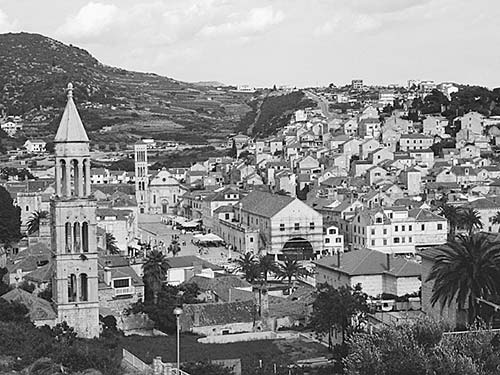
Hvar’s straightforward main town, also called Hvar, melts into the harbor rather than dominating it. Its quirky museums are enjoyable. The formidable fortress hovering above town provides restless beach bums with a good excuse for a hike—and rewards hikers with stunning views.
Happening Hvar becomes a rollicking party town after hours. In jam-packed August, the entire town seems to be hopping to the same thumpa-thumpa beat...much to the aggravation of those looking for a sleepy island getaway. Hvar has become popular for celebrity-spotting—from Beyoncé, Tom Cruise, and Bill Gates to Giorgio Armani, Ellen DeGeneres, and Prince Harry. Islanders brag that their laid-back attitude is perfect for high-profile visitors who just want to be left alone. (And if that’s not your scene, you should leave Hvar alone...at least, in summer.)
Despite Hvar’s newfound fame, it has plenty of history. Its tongue-twisting name comes from the ancient Greek settlement here: Pharos. Greeks from the island of Paros arrived in the fourth century BC, attracted by the fertile farmland. Since then, it’s been occupied by Slavs, Venetians, Habsburgs, and today’s tourists, all of whom have left their mark.
But Hvar town is just the beginning. Hvar Island—which insists it’s both the sunniest and greenest in Dalmatia—entertains those who stay here long enough to do some exploring. Known for its excellent wines (grapes love the island’s perfect combination of wind and sunshine), stony terraces, and fragrant lavender fields, Hvar Island’s gentle climate is appreciated by tourists and farmers alike. The small archipelago called the Pakleni Islands, just offshore, rounds out Hvar’s appeal.
PLANNING YOUR TIME
If you have a full day on Hvar, do your sightseeing—or hike to the fortress (with little shade)—in the morning, before the weather gets too hot and while the sights are open (many close for an afternoon siesta). Use the rest of the day to relax, swim at the beaches, explore the Old Town, do an excursion or a wine tasting in the island’s stony interior, or take a trip out to the Pakleni Islands. The cool of the early evening is another good time to hike up to the fortress, which is an ideal vantage point for watching the sunset.
Seasonal Tips: Be warned that July and especially August are peak-of-the-peak season. It can be literally impossible to find a room, and the “undiscovered” back lanes and “hidden” offshore islands are jam-packed with partying tourists. In summer, consider giving Hvar a miss. The ideal times for a visit—with the right balance of weather and crowds—are late May through the end of June, and mid-September through mid-October. Like other little coastal towns, Hvar is shut tight in winter.
Orientation to Hvar
“Hvar” is pronounced almost like it’s spelled, but the H is nearly silent. If you struggle with it, just say “far” (but don’t say “huh-var,” which just sounds silly to locals).
Hvar town (with about 3,600 residents) clusters around its harbor. The harbor’s eastern embankment (to the left, as you face the water) is where the big boats put in and is home to the boat ticket offices, most travel agencies and tourist services, and the post office. At the top of the harbor is Hvar’s generous main square, St. Stephen’s Square (Trg Svetog Stjepana). The Old Town scampers up the hills in either direction from this square. Overlooking the town and harbor is a mighty hilltop fortress. Sprawling in both directions from the Old Town are nondescript residential zones packed with good-value apartment rentals, many with sensational sea views.
TOURIST INFORMATION
Hvar’s generally helpful TI is in the big Arsenal building right on the main square, a few steps from the harbor (daily 8:00-21:30, may close earlier in shoulder season, much shorter hours off-season, Trg Svetog Stjepana, +385 21 741 059, www.tzhvar.hr).
ARRIVAL IN HVAR
If you’re staying at a private room or apartment outside the Old Town, clearly communicate your arrival time to your host and ask for directions. Some hosts may offer to come meet you, most likely at the bus station (a scenic five-minute stroll from the harbor).
By Boat: Passenger boats to Hvar town arrive on the harbor’s eastern embankment. Simply exit your boat and walk to the left along the water—you’ll run right into St. Stephen’s Square. If you’re being met at the town bus station, walk the length of St. Stephen’s Square (toward the cathedral), go up the street along the left side of the cathedral, and you’ll pop out at a little parking lot.
Car ferries to Hvar Island arrive just outside the town of Stari Grad, across the island from Hvar town. Buses are timed to meet arriving boats and take passengers over the island’s picturesque spine to Hvar town (25 minutes, €5; not every ferry is met by a bus, especially off-season—confirm).
By Bus: As you get off your bus, you can see the main tower of the cathedral, marking the town center, a two-minute walk away. The island’s few taxis usually hang out at the bus station.
By Car: Car ferries arrive at the town of Stari Grad. There are two ways to drive from Stari Grad to Hvar town: the speedy, newer road via Dubovica (and a long tunnel) to the south; or the slower, windy road (through prettier, less-traveled terrain) via Brusje to the north. In Hvar, you can park by the bus station. Be warned that the car ferries can be crowded in summer—waiting two hours or more is not unusual. (A newish reservation system for cars may make this better—book ahead at www.jadrolinija.hr—but the jury’s out on how well it works.)
A second ferry crossing is at the opposite tip of Hvar Island, connecting the island’s settlement of Sućuraj to the mainland town of Drvenik. But the road connecting Sućuraj to Hvar town is long, twisty, and challenging to drive—most visitors prefer arriving and departing at Stari Grad instead. If you do need to drive from Hvar town to Sućuraj, give yourself about 1.5 hours, and add about an hour to get to the boat dock before everyone else making the same trip.
HELPFUL HINTS
Boat Tickets: Tickets for the fast catamarans to Split, Korčula, and Dubrovnik (operated by Jadrolinija, Krilo, or TP Line) sell out quickly in peak season. Buy at least a day or two ahead online—potentially earlier if you’re going to Dubrovnik—or stop by the ticket office in Hvar to book. For details, see “Hvar Connections,” later.
Live Music: The Hvar Summer Festival fills the entire peak season (June-Sept) with frequent concerts, most of them hosted in the tranquil cloister of the Franciscan Monastery. Ask the TI for a Summer Festival program with the latest schedule. Other festivals include the Lavender Fest, which packs the little village of Velo Grablje with demonstrations and a general celebration of the traditional harvesting of the fragrant herb (mid-July).
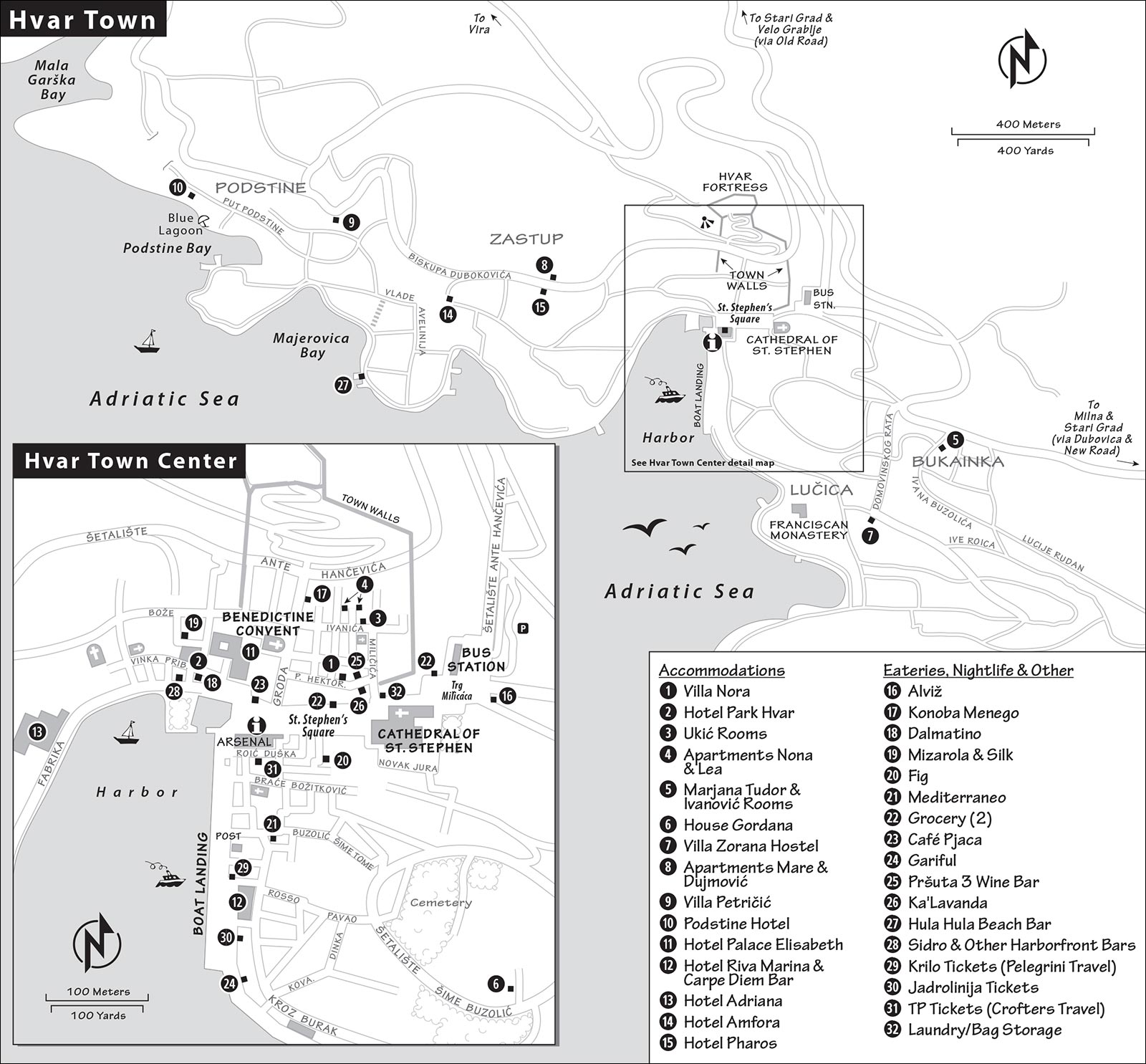
Addresses: Everyone in Hvar ignores house numbers (“bb” in an address means “without number”) and even street names. Navigate with maps—a good one is available free at the TI—and by asking locals for directions.
Laundry and Baggage Storage: A no-name, hole-in-the-wall outfit in the town center offers convenient but very expensive laundry, bag storage, and showers—handy if you’re day-tripping here and want to swim in the sea. It hides beneath the market at the cathedral end of the main square (unpredictable hours, but generally daily June-Aug 7:00-23:00, May and Sept until 21:00, Oct 8:00-13:30 & 16:00-19:00, shorter hours and no laundry off-season; to the left as you face the cathedral at Trg Svetog Stjepana 1—look for big, blue toillet sign).
There may be one or two additional luggage storage options (typically run by travel agencies) that are cheaper and closer to the catamaran landing. Watch for signs as you walk along the embankment between your boat and the square; confirm they’ll be open when you plan to return to claim your bag.
Summer Fun: You name it, Hvar has it. Various agencies in town rent cars, scooters, bikes, motorboats, and more—just check out signs in front of the many travel agencies (or wherever tourists congregate), or ask at the TI.
Tours in Hvar
▲▲Secret Hvar Island Tours
While the town of Hvar is beautiful, most tourists without a car never get to see the rest of this stunning island. For an insightful peek at the refreshingly unglitzy side of Hvar, take a tour with Secret Hvar. Can-do, well-connected owner Siniša prides himself on revealing undiscovered corners that most tourists miss and prioritizes authentic experiences over touristy stuff. He or one of his guides—guaranteed to be a long-term Hvaranin—can take you on a “Hvar off-road tour” that includes a peka lunch, a beach break, and several off-the-beaten-path sights, making use of old gravel farming roads that you wouldn’t want to drive yourself (€110/person, 8 hours, or available as private tour; 4-hour version that skips the lunch and beach is available only as a private tour—email to ask about pricing). They also offer a “Hvar Island tour” that focuses more on towns, including Hvar town, Jelsa, Stari Grad, Vrboska, and more (about €500-600 for a group of up to three people, tour lasts up to 5 hours); a wine-tasting trip with visits to two wineries, including eight tastings and enough finger food to call it dinner (€100/person for about 4 hours); or a private walking tour around Hvar town (€120/group for about a 2-hour walk). Siniša can also arrange hiking, biking, boating, and other trips. Contact him to sort out the details (+385 95 805 9075, www.secrethvar.com, info@secrethvar.com).
Boat Trips from Hvar
Hvar’s little harbor is its connection to the world. The churning waters here swarm with boats big and small: luxury yachts, rustic fishing boats, hulking passenger catamarans, small cruise ships that stack up against one another to offer their passengers a taste of that famed Hvar nightlife, sporty RIBs (rigid inflatable boats) offering a quick escape to offshore islets and coves, and cut-rate tour boats that slowly trundle 150 tourists on a sightseeing cruise.
Joining a day-trip excursion is a handy way to reach nearby destinations (generally available June-Oct). The best-selling options for getting off Hvar Island include the nearby Pakleni Islands (described later, under “Sights and Activities in Hvar”). Local companies also offer many of the same excursions as in Split: the Blue Cave, Green Cave, Bol beach on Brač, Mljet National Park, and Dubrovnik. Multiple companies around town offer these and other excursions, and salespeople along the embankment hawk various boat trips. To understand some of the more popular choices, see here in the Split chapter.
Sights and Activities in Hvar
▲▲St. Stephen’s Square (Trg Svetog Stjepana)
Cathedral of St. Stephen (Sv. Stjepan)
▲Benedictine Convent (Benediktinski Samostan) and Lace Museum
▲Franciscan Monastery (Franjevački Samostan)
▲▲Hvar Fortress (Fortica Hvar)
Hike from Velo Grablje to Milna
Pakleni Islands (Pakleni Otoci)
IN AND NEAR THE OLD TOWN
▲▲St. Stephen’s Square (Trg Svetog Stjepana)
Hvar’s main square is a relaxed and relaxing people zone surrounded by inviting cafés filled with deliriously sunbaked tourists. For a quick tour, begin by the harbor and face the cathedral. Sit on the stone wall with your back to the water.
To your right is the Arsenal building (housing the TI)—a reminder of Hvar’s nautical importance through history, thanks to its ideal location on the sailing route between Venice and the Mediterranean. During the town’s seafaring heyday, ships were repaired and supplied in this huge building. The beautiful barrel-vaulted space inside is used for special exhibits and private events (entrance at the end facing the harbor). Once inside, you can appreciate the medieval functionality of this vast, hangar-like space.
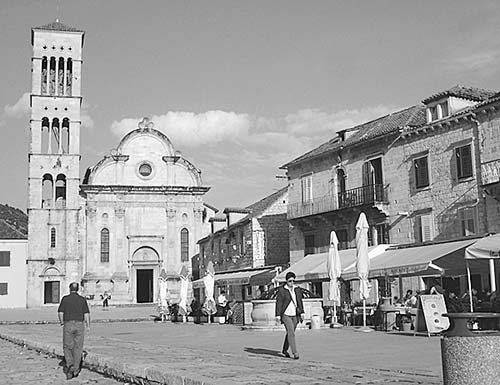
Many of Hvar’s buildings date from the 16th and 17th centuries, when it was an important outpost of the Venetian Republic. During the Venetian period, the population was segregated: To the left of the square lived the well-to-do patricians, protected within the city wall (from the fortress, crenellated walls reach down to embrace this neighborhood—not quite visible from here). To the right, outside the wall, dwelled the humble plebeians who worked hard and paid high taxes but had no say in government. In the 16th century, these two populations came to blows. The Venetians finally decided enough was enough and sent a moderator to restore peace. As a symbol of the reconciliation, a small but beautiful communal theater was built in the Arsenal’s attic. You can enter this newly refurbished, beautiful space by climbing up the stairs to the terrace on top of the Arsenal (there are great, free town views from up here, too; theater interior described later).
Looking left, the building with the arches and short tower is the Loggia, all that remains of a 15th-century palace for the rector (who ruled the island as a representative of Venice). This was the town’s court of justice, and important decisions were announced from the stepped pillar in front (with the flagpole). This pillar also served as the town pillory, for publicly humiliating prisoners. During Habsburg control in the early 20th century, most of the palace was torn down to build the town’s first resort hotel; today, the ritzy Palace Elisabeth Hotel still stands just behind the Loggia.
You can also pay to enter the small clock tower, just behind and next to the Loggia; you’ll climb about 85 metal steps for a view over the harbor, though it’s not high enough to be really thrilling (€4, also includes a chance to see the clock’s gears, daily in summer 10:00-22:00, progressively shorter hours off-season, closed in winter).
Now look behind you. Across the tiny, enclosed marina, a park fills a little pier. Standing in the park is a bust of Hvar native Ivan Vučetić, who moved to Argentina and pioneered the science of fingerprinting in the 1890s. Embedded in the pavement in the middle of the park is a giant fingerprint (not quite visible from here). This park is a delightfully green and shaded spot to escape the bustle of town.
Now turn back around, facing the square, and walk toward the cathedral, stopping at the first street on the left. You can see the top of a Venetian palace, with its distinctive Venetian-style windows. A descendant of the former owner recently bought back this palace and has been restoring it—but renovations have taken longer than expected as workers began to uncover layer after layer of Hvar’s history: blocks of stone from the Greek island of Paros, Illyrian coins, and Roman mosaics. If you were to head two blocks up this street, you’d run into the yellow Benedictine Convent and its lovable lace museum; if you continued beyond the convent, you’d reach the trailhead for the fortress up above (all described later). But before leaving the square, visit the cathedral (see below).
Then poke around Hvar’s back streets. As you wander, especially on the left (north) side of the square, look up to find more characteristic Venetian windows. You’ll also spot stone tabs jutting from house facades. The ones with holes were used to hang color-coded curtains: white for a birth, black for a death. Also notice the gleaming white limestone everywhere. It’s from a local quarry, and an often-repeated legend that the US White House was built of this same stone is false but temptingly plausible.
Cathedral of St. Stephen (Sv. Stjepan)
Hvar’s centerpiece is its Renaissance-era cathedral, with a distinctive three-humped gable (representing the Holy Trinity) and open-work steeple. The interior comes with a few tales from Hvar’s storied past; you can see the bronze doors (described next) without buying a ticket.
Cost and Hours: €2, daily 9:00-12:30 & 16:30-19:30 except closed to tourists during services and Sun 10:00-11:00.
Visiting the Cathedral: The bronze entrance doors combine religious themes with important elements of life on Hvar. On the left door, top to bottom, you’ll see the Creation; Madonna and Baby Jesus surrounded by the circle of stars (representing the European Union—reflecting Croatians’ desire to be considered part of Europe); vineyards (both literal and as a symbol of heaven); and a procession of penitence, a fixture of life among religious locals. On the right door, you’ll see a dove (representing peace and the Holy Spirit); the crucified Christ; fishermen (an actual part of Hvar life, but also representing the Church’s “fishers of men” evangelical philosophy); and a boat, sailing into the future.
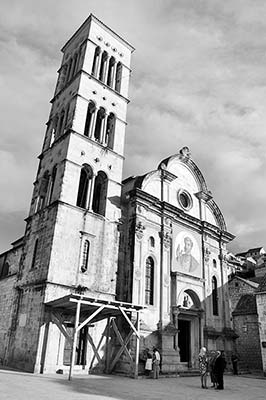
Inside, buy your ticket, pick up a free English information sheet, and work your way counterclockwise around the church interior. In the chapel to the right of the main altar, the tabernacle embedded in the yellow marble “cloth” (under the big crucifix) holds an important piece of Hvar history: a crucifix that supposedly shed tears of blood on the eve of a major 1510 uprising of the plebeians against the patricians. (This spooked the rebels enough to postpone the uprising a few months.)
Behind the main altar are wooden choir stalls rescued from an earlier Gothic church that was destroyed during an Ottoman attack in 1571. Notice the two pulpits: The right one, with St. Paul and his sword, is for reading or singing the Epistles; the left one, with the eagle (representing St. John), is used for reading the Gospels.
The chapel to the left of the main altar features the tomb of St. Prosperus, Hvar’s co-patron saint, who shares the credit with the more famous St. Stephen. People pray to Prosperus for good health. On his feast day, May 10, the lid is opened and you can actually see his preserved body. The figures flanking his tomb represent Faith and Strength.
▲Historic Hvar Theater
Head up the stone stairs right by the TI to the terrace on top of the Arsenal, where you can visit this beautiful jewel box of a theater. The oldest public theater in Europe—from 1612—it was built as a symbol of reconciliation between the town’s quarreling factions: Here, plebeians and patricians would (almost) mix and enjoy cultural events together. Notice the stone inscription over the entrance door, which suggests the aspiration behind the theater’s founding: Anno secundo pacis, the “second year of peace” after conflict. Today, the theater continues to host community events and changing art exhibitions.
Cost and Hours: €7, ask about combo-ticket with fortress (described later), daily 9:00-21:00, 10:00-18:00 in shoulder season, usually closed Nov-April, +385 21 741 009.
Visiting the Theater: The theater reopened in 2019 after a decade of renovations, and decorative touches are more vibrant than they’ve been in centuries. This small but beautiful and serene space is entirely contained within the stony upper level of the Arsenal. Step inside, and you’re swallowed up by the 17th century. Appreciate the finely restored ceiling painting, poke into the box seats, and maybe even head up on stage to belt an aria. From the double level of box seats, the upper crust could watch one another (which was often as entertaining as the performance), and they didn’t have to mix too much with the commoners, who sat in rows in front of the little stage. Much of the present appearance of the theater still dates from the early 1800s; look for the faded mural painted in 1819 on the wall at the back of the stage.
Also in the upper level of the Arsenal, take five minutes to watch the charming animated video about Hvar, which does an engaging job of narrating the town’s history. Your ticket also gets you into a space with temporary exhibits; often this displays clever commentary from the artistic community of Hvar regarding the mixed blessing of the island’s touristic fame.
▲Benedictine Convent (Benediktinski Samostan) and Lace Museum
Hvar’s most endearingly quirky sight is this nun-run attraction, inside a convent where 13 Benedictine sisters spend their lives. When they’re not praying, the sisters make lace by using fibers from the agava (a cactus-like plant with broad, flat, tapered, spiny leaves—see the sample just outside the door). First, they tease the delicate threads out of the plant, then they wash, bleach, and dry them. Finally, they weave the threads into intricate lace designs. The painstaking procedure is made even more challenging by Hvar’s unpredictable weather: The humid, southerly Jugo wind causes tangles, while the dry northern Bora wind makes the fibers stiff and difficult to work with.
Cost and Hours: €3, skimpy €2 multilingual booklet, extremely expensive samples for sale; Mon-Sat 10:00-12:00 & 14:00-19:00, closed Sun, can be unexpectedly closed at other times due to services; generally closed Oct-May, but try ringing the bell to the right of the main door during these same hours—use the door in the yellow building; +385 21 741 052.
Visiting the Convent: The museum is very small and skippable if you’re not interested in lace. But if you come, you’ll see astonishingly delicate samples of the nuns’ work, both new and old. Some yellowed specimens date from the late 19th century (the oldest ones are in the back room). The sisters are particularly happy to make lace for bishops and cardinals. And when the other Benedict—the XVI—became pope in 2005, they created a lace papal emblem for him as a gift.
Rounding out the museum are ecclesiastical gear, some bishops’ vestments (with the Baby Jesus below them wearing an agava-lace shirt), ancient kitchenware discovered in this house, a stone sink and baptismal font, an actual well, and some amphora jugs. Out in front of the building is a statue of St. Benedict, the patron saint of Europe, reading his daily routine in a book: ora et labora (pray and work).
▲Franciscan Monastery (Franjevački Samostan)
Starting in the 15th century, this monastery was a hospice for sailors who contracted illnesses on treacherous sea journeys. These days it’s worth the 10-minute stroll from the Old Town to visit its offbeat museum, Hvar’s most famous painting, an ancient tree, and a pair of monks.
Cost and Hours: €5, Mon-Sat 9:00-15:00 & 17:00-19:00, closed Sun, usually closed Nov-April.
Visiting the Monastery: Out front, notice the statue of a kneeling St. Francis—the twin of the prayerful St. Benedict, who stands in front of the Benedictine Convent.
As you enter, notice that the cloister’s floor is slanted inward to capture rainwater. Pipes took this pure water out to the waterfront, where ships could use it to replenish their supplies. This space is a popular venue for summer concerts.
Inside, the focal point of the monastery is its impressive painting of The Last Supper (c. 1640). The U-shaped table in the painting provides the framework for some bold experimentation with perspective. Facing Jesus, front and center, is Judas, identified by several clues. In his left hand (hard to see) is a bag of coins, and his right hand is dipping bread into wine (after Jesus had predicted that the one who did this would betray him). The yellow of his garment symbolizes betrayal, and the red indicates that the betrayal led to the spilling of blood. Under the table by Judas is a cat, representing lust. On the lower right, we see a beggar (accompanied by a dog, symbolizing fidelity)—likely a self-portrait by the artist, grateful to the monks who nursed him back to health.
Through the door to the right of The Last Supper, look for the little museum of currency from the fourth century BC (Greek coins with an image of Zeus) through today (see the rapid evolution of Croatia’s currency since the country’s independence), as well as a collection of amphora jugs.
Retrace your steps back out toward the entrance, and find the room filled with paintings by Venetian masters and modern Croatian artists (and see more interpretations of Jesus from medieval to modern times). Next, head into the relaxing garden to find the outside attraction: an enormous cypress tree whose gnarled branches are held up by big supports. Scientists believe this ancient tree—estimated at 250 years old—was struck by lightning, which caused the branches to spread out and become flatter than usual.
Wrap up your visit with a peek into the colorful and unusual little chapel off the cloister, with a separated choir.
▲▲Hvar Fortress (Fortica Hvar)
Visiting this mighty castle above the Old Town is a good excuse for a sturdy 30-minute hike to break up your lazy Hvar day. The views are grand, but it’s quite pricey and there’s very little to see inside. Still, it may be worth it—especially if you can time your visit for sunset.
Cost and Hours: €10, ask about combo-ticket with theater/Arsenal (described earlier); daily 9:00-20:00, June-mid-Sept until 22:00, can close earlier depending on weather, Nov-Easter much shorter hours and sometimes closed.
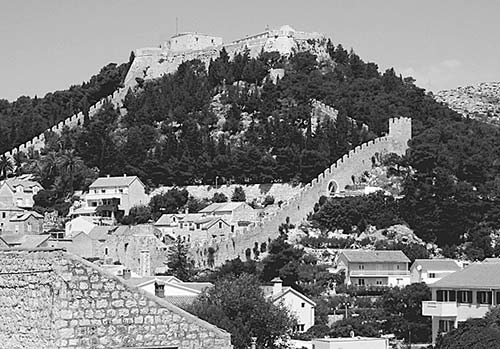
Getting There: From the Old Town, hike up the steep street called Groda to the road passing above town. Once on that road, look for the nearby gate with the picture of a castle for another steep hike up a switchback trail (stay on the main path—side paths that seem like shortcuts are actually dead ends). The entrance is around the back, but cheapskates enjoy the views for free from the little dirt mound on the seaward side of the fort.
Visiting the Fortress: This large fortification was built over several generations, beginning in the 13th century. In the 14th century, Spanish engineers did their part to bulk up the fortress (earning it the nickname “Španjola”). In 1571, the townspeople fled here for sanctuary during an attack by the Ottomans (prior to the famous Battle of Lepanto). Just a few years later, the fortress was devastated when lightning hit a gunpowder store. In the 19th century, the occupying Austrians put their own touches on the castle. Today it’s used as a catering facility and tourist attraction.
Inside the fort, there’s little in the way of posted descriptions, but the views over town are magnificent. You can also climb down into the prison, sip a drink at the café/bar, and visit the one-room marine archaeological collection: At the top of the boxy inner “keep” building, take the brown footbridge through the door to find a modest display of booty found at three different Dalmatian shipwrecks, including a collection of amphora jugs. According to the exhibit, one out of every 50 voyages in antiquity ended in a shipwreck.
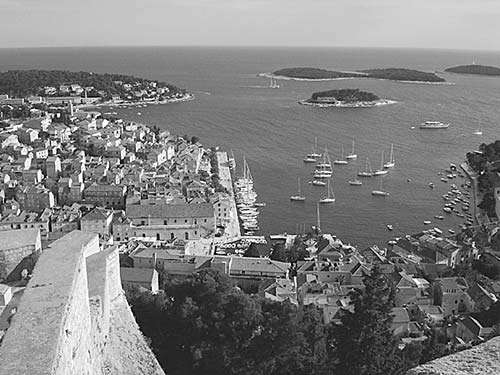
The complex on the higher hill nearby was built by Napoleon (which is also its nickname among locals). In the 1970s, it was converted into an astronomic and seismographic observatory.
Strolling and Swimming
With typically Dalmatian crystal-clear water, Hvar is a great place to swim. Also typically Dalmatian, virtually all of the swimming areas are rocky or pebbly. As you walk along the coastline in either direction from town, you’ll spot concrete pads and ladders trying to seduce you into the cool blue (these are generally open to the public; you may have the option of renting a beach chair). Whether or not you plan to swim, make a point of following either of the two paths along the waterfront for a while: The views of distant islands, the scents of Mediterranean forest, and the sun sparkling off the sea are reason enough to come to Hvar. In general, the walk to the left as you face the water (east) is a bit more rugged, and to the right (west) is more of a manicured promenade.
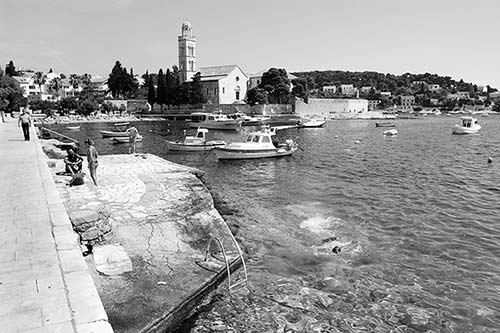
East of the Old Town: This delightful path leads you past swimmers, sunbathers, and boats bobbing just offshore. You’ll pass a tiny, crowded, pebbly beach in the cove just before the Franciscan Monastery. Farther along—after about a 20-minute walk—you’ll reach the town’s main beach, Pokonji Dol, which faces a small, barren island of the same name topped with a lonely little lighthouse. This is an easy choice, but because it’s close to town, this beach (which has showers) can be quite crowded, and it has large underwater rocks. Locals prefer to go a bit farther. However, after Pokonji Dol, the path becomes more challenging, offers little shade, and is not as well marked. Bring drinking water and wear good shoes if planning to venture this far. If you continue eastward along the coast, you’ll find more beaches—first the pleasant and peaceful beach nicknamed Robinson, after the beach restaurant that dominates it, and then the even better one at the charming resort village of Milna (2.5 miles from Hvar town). Beyond Robinson, the waterfront path to Milna is challenging and very poorly marked, so if you want to go to the beach there, consider taking a taxi, water taxi (about €8 one-way between Hvar and Milna), or the bus (any bus taking the road from Stari Grad to Hvar town stops at Milna).
West of the Old Town: This path leads past a cactus garden and children’s play area, then along a series of bays—one of them dominated by the huge Hotel Amfora (with a row of private cabanas, below the trail; public showers here). On the next bay over, the popular Hula Hula beach bar serves light meals and cocktails on platforms and rocks over the beach, with chill-out music all day and a live DJ in the evening (see “Nightlife in Hvar,” later). The farther you get from town, the more remote-feeling the beaches become, ending at the beach nicknamed the Blue Lagoon (not to be confused with the attraction off Drvenik Veli; see the Split chapter), near the mellow cocktail bar under Podstine Hotel. The hotel’s private beach is another inviting place for a swim; you’ll pay royally to rent a chair, but it’s comfortable and scenic and offers easy access to the water. The rocky floor here is perfect for snorkeling, and a nearby dive shop rents gear.
Many sun worshippers—especially the clothing-optional crowd—prefer to take a water taxi to the beaches of the nearby Pakleni Islands, across the bay from Hvar town (described later).
MORE SIGHTS ON HVAR ISLAND
If you have more time, Hvar is an interesting island to explore. The best way to efficiently hit several sights in a single day is to take a trip with Secret Hvar (listed earlier, under “Tours in Hvar”). Otherwise, consider one of these outings, which are best by car.
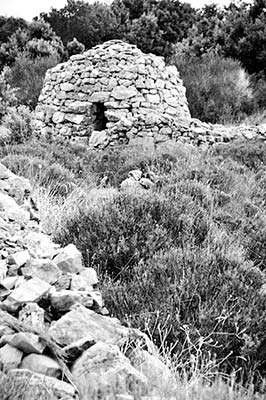
If you do leave town, you’ll quickly reach a dramatically mountainous landscape with rugged soil that has been carefully worked by centuries of Hvaranins. Heaps of stones big and small—like hundreds of giant molehills—pockmark the landscape. These piles of unwanted rocks were created when the land was cleared for farming. You’ll also see a few little stone huts (called trim), some of them centuries old. These provided farmers with shelter from sun or storms and gave them a cool place to take a nap during a hot day’s work.
Stari Grad
Literally “Old Town,” this was the island’s original settlement, dating back some 2,400 years. Today it’s a likably humble, workaday port town almost entirely lacking Hvar’s glamour-girl charm...and crowds. Simple fishing boats rather than luxury yachts bob in its harbor, and its flat, labyrinthine street plan disperses the few tourists who venture here.
From the harbor, head up through town to the tallest bell tower; it marks the Church of St. Stephen, which watches over its own quiet little square. Beyond that is the much smaller Church of St. John, the core of which likely dates from the fifth or sixth century. It offers great acoustics and displays a replica of a Roman mosaic that was discovered during excavations just behind the building. (Loop around behind the church to see the scant foundations.)
Closer to the harbor is a large square fronted by a long, stout fortress, which was the personal palace of local landowner and poet Petar Hektorović, who dominates much of the story of Stari Grad. Of the many covered canals leaving the harbor and twisting through town, one runs right into this palace.
Running parallel to the harbor is the street called Srinjo Kola, which means “Middle Street” in the local dialect. This was once the town’s main street for commerce—notice the display windows that abut many of the doorways. Many homes here are now abandoned.
Finally, back near the harbor, seek out the shop called Fantazam, where artist Zoran Tadić assembles various discarded organic materials (bones, hair, feathers, and other animal body parts) into wholly unique and grotesque statues of mythical beasts. Zoran hangs out in his courtyard working when the weather is good and invites the curious in to peek at his gallery (Ivana Gundulića 6, +385 98 953 2967, www.fantazam.com).
While many visitors to Hvar see only the main town and the road to Stari Grad (en route to the island’s main car-ferry port), drivers may enjoy heading east of Stari Grad to some nearby settlements. Driving eastbound on the main road from Stari Grad takes you into a plain with fertile farm fields. This unassuming patch of land is one of the only agricultural areas in Europe still divided according to its original plots, dating all the way back to the first ancient Greek settlers.
Eating near Stari Grad: For a memorable, very rustic, middle-of-nowhere meal, head for the village of Dol (a couple of miles beyond Stari Grad, just off the main road). $$ Konoba Kokot, run by the Pavičić family, sources almost everything they serve right here: They raise lambs, have a prolific produce garden, make their own sheep’s-milk cheeses, and—best of all—hunt wild boar in the surrounding countryside. You can call ahead to arrange a classic peka meal, but the highlight here is the “boar burger”—a perfectly seasoned patty of wild boar meat. If you’d like a meal out in the countryside, it’s worth the drive or taxi trip (reservations smart, May-Sept daily 18:00-24:00, closed off-season, +385 91 511 4288). To combine this with a wine tasting, the recommended Vinarija Braća Plančić is in the next village over (see “Hvar Wine and Lavender” sidebar).
Vrboska
On the opposite side of the farm fields from Stari Grad is the seafront village of Vrboska, nicknamed Little Venice (this endearing hyperbole is typical of local pride). While the name is a stretch, this appealing town does have a canal with picturesque bridges, the fortress/church of St. Mary’s (built during a time of Turkish naval threat), a good wine-tasting opportunity (at the recommended Vina Pinjata winery; see sidebar), and an island with a lone palm tree. Even better, there are no tourists here. This is where locals from the town of Hvar go to escape the crowds.
Hike from Velo Grablje to Milna
For a vigorous but mostly downhill hike in the interior of Hvar Island, you can take a taxi to a partially abandoned town, walk down through a ravine to a nearly empty village, then pop out along the sea at Milna for a bus ride back to Hvar. Allow about two hours for the hike. This is best for hardy hikers and those who enjoy getting away from touristy beaches to explore the artifacts of an earlier age of Hvar; most of the route is in a ravine without sea views. As this is a challenging trail with little shade, wear good shoes and load up on water, sunscreen, and anything else you might need before setting out.
The only way to reach the start of the hike is to take a taxi from Hvar town about five miles to the village of Velo Grablje (around €35). Another option is to ride the bus to Milna—at the bottom end of the hike—and then do a round-trip walk to Velo Grablje and back, first uphill then downhill.
Velo Grablje, once famous for its lavender-oil production, is now a near-ghost town on a rugged plateau with far-off views of the sea. Most people migrated to Hvar town in the 1970s and 1980s, though a handful of natives still reside here.
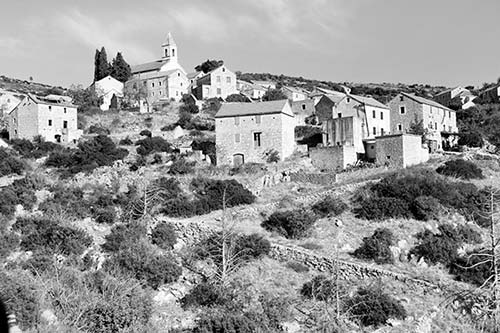
From Velo Grablje, follow the medieval footpath through the ravine downhill about two miles to the abandoned village of Malo Grablje. After the phylloxera epidemic, most people from this village moved down to Milna, on the sea (where tourism provided them with better prospects). The last holdout left in 1968. But the grandson of the first villager who left returned to Malo Grablje and opened a rustic restaurant called $$$ Konoba Stori Komin (open 16:00-23:00 only, run by Berti Tudor—the surname of virtually everyone who originated in this village, possible to call ahead to arrange a peka dinner, +385 91 527 6408; you can also take a taxi here just for dinner). Even if the konoba is closed, you can explore the streets of Malo Grablje. Poke into the ruined buildings to find a giant, still-functioning olive press. The humble church hosts a Mass twice per year, when people from Milna return to their ancestral village. Next to the church is a huge reservoir and cistern for catching rainwater.
Leaving Malo Grablje, follow the gravel road down into the beach town of Milna. This is a lovely retreat, favored by vacationers eager to swap the nightclubs and crowds of Hvar town for peace, quiet, and olive groves.
The seafront path from Milna back to Hvar (about 2.5 miles) is extremely rugged and can be nearly impossible to follow; unless you’re very adventurous, it’s best to walk along the main road (not very scenic) or take a public bus back to Hvar (any bus that goes between Stari Grad and Hvar stops along the road above Milna—confirm schedule at Hvar TI before heading out). You can also take a water taxi between Milna and Hvar for about €8 one-way.
Note: It’s possible to drive from Milna up to Malo Grablje and Velo Grablje, but the road consists of very rough gravel and rock, so it’s not advisable with a rental car.
NEAR HVAR
Pakleni Islands (Pakleni Otoci)
These islands, just offshore from Hvar town, are a popular and easy back-to-nature day-trip destination. The name means the “Devil’s Islands” in Croatian, but in the local dialect, pakleni refers to the resin used to seal the hulls of ships (which had to be boiled—hence the hellish connection). These days, the island of Jerolim and the bay of Stipanska (or is it Stripanska?) on the island of Marinkovac harbor a few particularly good places to spot—or sport—some bare skin. While the beaches used to be predominantly nude, local captains figured out that they get more business if they don’t advertise the nudist connection—so the beaches are now more mixed than they once were. For a bit more civilization, set your sights on the biggest island, known as Palmižana (pahl-mee-ZHAH-nah; sounds like “parmesan-a”) for its main settlement (the island’s official name is Svetog Klement, but nobody calls it that). The beach at Palmižana is a popular swim destination because it’s partly “sandy” (translation: smaller pebbles). The only real town on this island is also named Palmižana, basically a modest marina and a handful of cafés huddled around a beach. From there, you can hike through the woods and scramble your way to some postcard-perfect hidden coves.
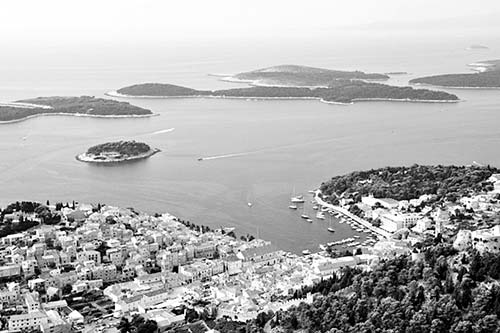
Getting There: Every summer morning, excursion boats ferry tourists out to the islands from the harbor in front of the Hvar TI—just look for signs to the specific island, beach, or cove that you want. It costs about €11 round-trip per person to Palmižana (about 20 minutes away), or about €8 to the nearer locales of Jerolim or Stipanska (closer to 15 minutes). Most boats take people over between 10:00 and 14:00, then go back to fetch them around 16:00 or 19:00. This works well, provided you want to spend the entire day stranded on a tropical island. Note that you need to come home with the same company that brought you—confirm their return options. There may be some private speedboat water taxis available to help you connect the dots on these islands, but they are extremely expensive (figure around €100 per ride—only worth considering if you’re in a pinch).
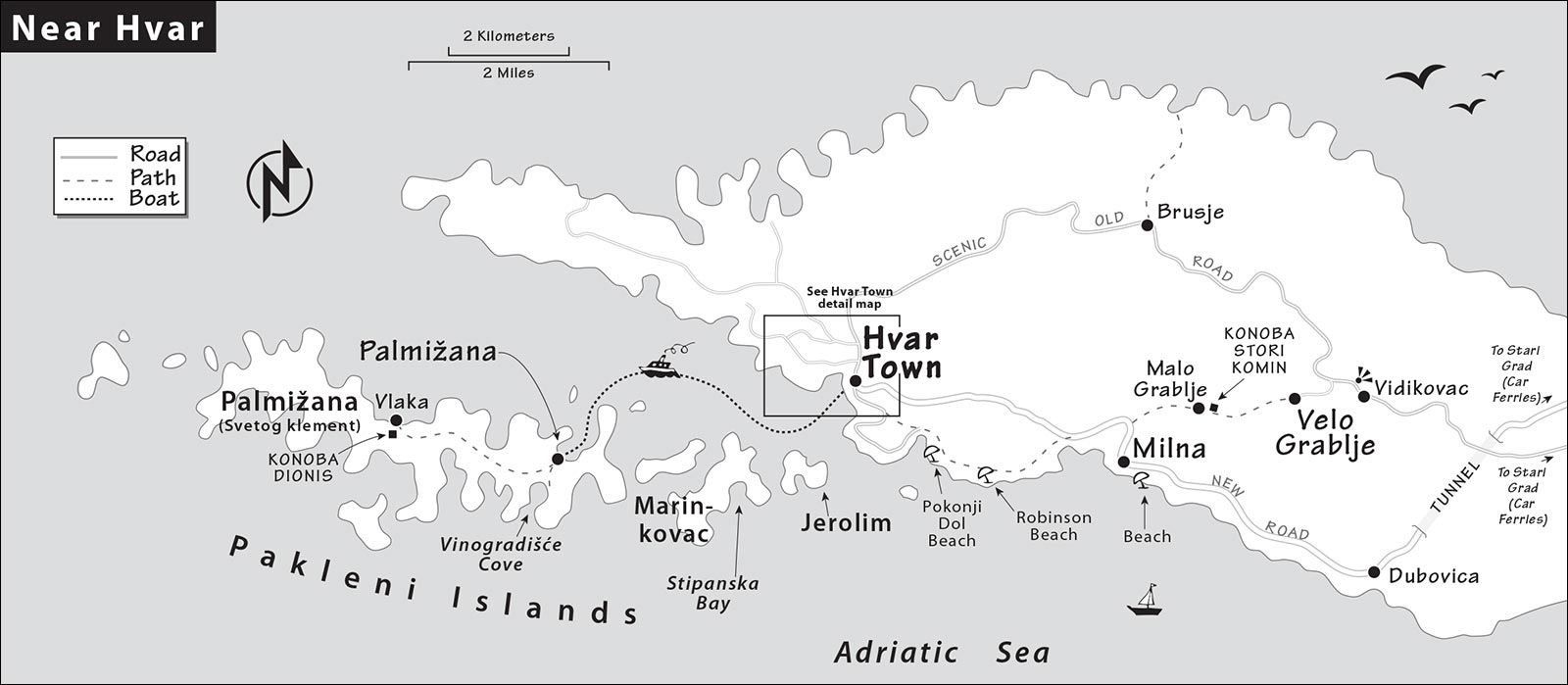
Visiting Palmižana: The most popular spot for swimming on the island is the beach at Vinogradišće (a short hike away and well signed from the dock). While it’s not as undiscovered as you might hope, Vinogradišće is picturesque, with a small patch of semi-sand surrounded by rocks and concrete pads for catching some rays. A smattering of sailboats on the horizon rounds out the idyllic Croatian scene. This cove is also home to the trendy Laganini, an exclusive-feeling lounge bar and fish house loaded with pretentious jet-setters. Higher up is Meneghello, a classic, borderline-funky terrace seafood restaurant, with a passel of rentable bungalows.
If you’re fit and looking for a hardy walk, one popular option is the 45-minute (2-mile) hike to Vlaka, across the spine of the island, on a rough trail with some pleasant views (wear good shoes, bring water, and get specific hiking tips from locals—this begins near Meneghello Restaurant). There’s not much to do at the tiny settlement of Vlaka, except for a meal at $$$$ Konoba Dionis, a charming stone hut with just six tables on a covered terrace overlooking vineyards, an olive grove, and the distant sea. The electricity comes from a generator, and the water comes from the sky—so the cuisine is straightforward, traditional Dalmatian dishes, and the focus is on relaxation. Their “aubergine pie” is a tasty eggplant lasagna (daily 12:00-23:00, closed mid-Oct-mid-May, +385 98 167 1016, www.dionis-hvar.com). Tourists often make the long journey over to Dionis, only to find it’s already full—calling for reservations (especially for lunch) is a must. When you’re done, plan on hiking back the way you came...or ask about paying royally for a private speedboat water taxi transfer back to Hvar town.
Shopping in Hvar
Little souvenir kiosks are everywhere on Hvar. The big item here is lavender, produced on the island for the last century or so (see “Hvar Wine and Lavender” sidebar, earlier). In addition to making things smell good, lavender is acclaimed by some locals for its medicinal properties: Massage some lavender oil on your temples to cure a headache, or rub it on your chest for asthma. You’ll see it sold in bottles or sachets—a fragrant souvenir that helps keep your luggage smelling fresh, too. Hvar town also has plenty of jewelry shops selling coral and other pieces made from semiprecious stones.
Nightlife in Hvar
This island town is known for its nightlife, so it teems with the young and the restless (that is, the loud).
Mellow Nightlife
Strolling the harbor, then continuing out of town along the waterfront promenade, is a nice way to pass a warm, starry evening. The best views are from the harbor’s east side.
Consider a pre- or post-dinner drink with the best view over the harbor from the fourth-floor bar/terrace at the recommended Hotel Adriana (on the waterfront at Obala Fabrika 28). Slip into your comfortable chair and watch the lights of the village glimmer below. Hotel Palace Elisabeth, the grande dame of the town at the top of the harbor, also has a fine rooftop bar; it feels plush and elegant, but the views are not as impressive as Adriana’s.
Pršuta 3 wine bar, along a tight restaurant-lined lane right in the heart of town, has an older clientele and seating outside and in. It’s a cozy and chill place to hang out, socialize, and sip some of the island’s wines with light food (about 25 wines available by the glass, cash only, nightly 18:00-late, Hektorovića 5, +385 98 969 6193).
Ka’Lavanda, a sophisticated cocktail bar, climbs the steps just inside the Old Town’s eastern wall, directly uphill from the cathedral tower. The atmosphere is magic: floodlit stone walls and cushy chairs under flowering trees (overpriced but creative cocktails, long hours daily, Dr. Mate Miličića 7, +385 99 447 7799).
Lively Nightlife
Hvar has Dalmatia’s most happening “après-beach” scene. Expect very high prices for drinks, and prepare to share the nightspots with a very flush, well-dressed, international jet-set crowd. On balmy summer evenings, partying is best enjoyed in three stages. (Note that almost all the suggested places are closed from about early October through early May.)
Stage 1: Watch the sunset from the groovy Hula Hula beach bar, with drinks—and tables—“on the rocks” (literally). Don’t expect a relaxed vibe here—in summer, it’s absolutely jam-packed with young partiers (drinks, meals, and snacks; open long hours daily with a live DJ and dance-club ambience in the evening, hopping until 22:00 sharp; for directions, see “Strolling and Swimming,” earlier in this chapter). When I asked if older guests would be comfortable here, they smirked and said, “When they come here, everybody feels young!”
Stage 2: Head for the rowdy bars in the center of town, along the harbor (including Sidro—known for its cheap drinks and friendly service—as well as Seven, Nautica Bar, Aloha, and so on). Each one has a few tall tables with skinny stools just across the promenade, perched over the harborfront. Just uphill from this strip of bars, on the ground floor of Hotel Park, is the big, spacious, and more upscale-feeling Central Park Club Bar, with Tuscan living-room ambience.
Stage 3: If you’re still going strong—and don’t mind paying dearly for the chance to rub elbows with a celebrity—continue to one of Hvar’s famous late-night clubs. The most established (and the one that put Hvar on the global nightlife heatmap) is Carpe Diem, an exclusive-feeling cocktail bar along the harbor, just past Hotel Riva Marina (rages nightly until about 2:00 in the morning; Carpe Diem also has its own beach bar on Stipanska Island, www.carpe-diem-hvar.com).
Sleeping in Hvar
In keeping with its posh reputation, Hvar has some of the most expensive accommodations in Croatia. It also has an unusually high number of very inexpensive (but far more basic) options. You’ll notice my recommendations gravitate to one extreme or the other; Hvar has essentially no midrange choices.
Book as far ahead as possible in July and especially August (when all accommodations boost their rates). As usual, sobe and apartments are more affordable than hotels, but there are relatively few in the center of town; you’ll have to walk 10 to 20 minutes to reach most of them. The ones I’ve listed are basic but cozy, well equipped, well run, and worth the walk.
Unlike Dubrovnik, Korčula, or Rovinj, Hvar is a place where sleeping in the Old Town can have more minuses than pluses. In July and August, it’s chaotic and extremely noisy, and you might actually prefer walking up out of town to escape the bustle. (The Old Town hotels I’ve listed suffer from the clamor, though my three recommended sobe manage to avoid the worst of it.) In shoulder season, the center of town becomes more desirable.
For most places I recommend, plan on climbing several steps and/or trudging up steep suburban streets. The farther and steeper you’re willing to walk, the better the price and views (some come with glorious seaview balconies, even on a tight budget). These can be tricky to find, so get clear directions from your host.
Unless otherwise noted, all of these listings have air-conditioning (essential in summer) and don’t offer breakfast. Except for some of the big Sunčani Hvar branches, assume all come with lots of stairs and no elevator. While pricier hotels accept credit cards, the sobe are cash only. Some sobe are run by old-timers who speak minimal English, but they typically have a younger relative standing by (often by phone) to translate.
IN THE OLD TOWN
The first two (along with Sunčani Hvar’s Hotel Palace Elisabeth, described later) are the only real hotels in the Old Town. The last three are a few short but steep blocks above the main square. Note that Sunčani Hvar’s Riva and Adria hotels, described later, are also relatively near the center, facing each other across the harbor.
$$$$ Villa Nora is as central as can be, with 12 spacious rooms filling an old townhouse squeezed between the two restaurant streets in the heart of Hvar. It’s fairly quiet after the restaurants close down around midnight. Natalija and her crew are helpful hosts, and the rooms strive to feel traditional—while still comfortable and well equipped—rather than glitzy (Frane Primija 2, +385 21 742 498, mobile +385 92 217 7466, www.villanora.eu, info@villanora.eu).
$$$ Hotel Park Hvar sits right in the heart of town, just above the harbor. Its 15 nicely furnished rooms (most of them very spacious suites, some with sea views for extra) offer a small-hotel alternative to the big boys, and its restaurant/breakfast terrace overlooking the harbor will slow your pulse. Despite its bottom-floor nightclub and locale near the harborfront disco zone, good windows try to minimize the noise (Sv. Marak 2, +385 21 718 337, http://hotelparkhvar.com, info@hotelparkhvar.com).
$$ Ivana and Paško Ukić offer four cozy, renovated apartments (with kitchens) and one double room. The house is wonderfully buried deep in the Old Town (a few steep blocks above the main square) and shares a quiet square with a little church (Matija Ivanića 10, daughter Lidija’s mobile +385 97 780 3700, ivanaukic@net.hr). From the cathedral, walk three blocks up toward the fortress, then look for the little church (Sv. Duh) to your left.
$ Apartments Nona (Grandma), filling the former home of Ivanka’s grandmother and run by great-granddaughter Marija, rents four small but comfortable apartments just high enough up to evade the downtown bustle. Some of the apartments have their own breezy private terrace—a rarity in the heart of Hvar (Nike Karkovića 18, +385 91 517 7038, ivanka.hvar@gmail.com).
$ Apartments Lea, across the lane from Nona, has three fresh, modern, well-equipped apartments (Nike Karkovića 7, +385 99 267 9916 or +385 91 914 7189, dragojevic.lea55@gmail.com).
EAST OF THE OLD TOWN, IN BUKAINKA
The quiet residential neighborhood called Bukainka sits on a high plateau just east of the harbor, hemmed in by the main road to Stari Grad. Most houses here have peek-a-boo water views—if you’d like one, ask. To reach this area, plan on a steep 10- to 15-minute uphill walk from the Old Town and waterfront. While I’ve located these carefully on the Hvar Town map, earlier, the streets here are confusing—especially for drivers—and online maps tend to be erroneous, though parking is relatively easy. Ideally, ask whether your host will meet you on arrival.
$ Marjana Tudor, a Slovene who married into Hvar, rents four nicely equipped apartments (some with views) in a new building high above town (Ivana Buzolića 11, +385 91 559 4977, marjanatudor@yahoo.com).
$ Ivanka Ivanović, next door, rents five pleasantly low-key apartments and two rooms in a big, modern house with view balconies (Ivana Buzolića 9, +385 21 741 332, mobile +385 91 517 7038, www.ivanovic-hvar.com, ivanka.ivanovic@gmail.com).
$ House Gordana sits above the little bay in front of the Franciscan Monastery. Kind Marija Barbarić’s five rooms are modest and old-fashioned, but also well-kept. All rooms come with balconies, and some have views (breakfast available for extra charge, small shared kitchen, Šima Buzolića Tome 49, +385 21 742 182, mobile +385 98 923 4823, www.visit-hvar.com/house-gordana-hvar).
¢ Villa Zorana Hostel is relatively civilized by Hvar’s party-hearty hostel standards, with six affordable private rooms in addition to its bunks. There’s an outdoor kitchen and a pleasant common space with views from the terrace (Domovinskog rata 20, +385 91 723 1737, www.villazorana.com, villazorana@gmail.com, Bartul).
WEST OF THE OLD TOWN
In Zastup
Several similar places line the street called Ulica Biskupa Jurja Dubokovića, the main road leading west of town, about a 10- to 15-minute walk from the Old Town (directly above and behind hotels Pharos and Amfora). I’ve listed my favorites in the order you’ll reach them. Pansion Petričić is a bit farther out and higher up.
$ Apartments Mare, warmly run by Marica and Đani (Gianni) Dujmović, has seven apartments with seaview terraces in the main building, plus four more freestanding cottages in a delightful, well-tended back garden. They make their own wine and grappa that you can sample in their atmospheric cellar (Biskupa Jurja Dubokovića 34, +385 21 741 454, mobile +385 91 552 2014, www.apartments-mare-hvar.com, maricadujmovic@gmail.com).
$ Ana Dujmović, a lesser value, has eight older but well-appointed apartments with balconies, all overlooking an olive grove and most with sea views (garden terrace, Biskupa Jurja Dubokovića 36, +385 98 838 434, www.visit-hvar.com/apartments-ana-dujmovic, ana.dujmovic@st.t-com.hr).
¢ Villa Petričić, high up in a residential zone, offers million-dollar views for an amazingly low price. Proudly run by raconteur and former sailor Živko (with wife Marija and big but friendly dog Vuki, “Wolf”), it has four simple, old-fashioned, small rooms plus two apartments, which all have fantastic sea views (Biskupa Jurja Dubokovića 25, +385 21 742 481, www.hvar-petricic.com, z.petricic@inet.hr).
In Podstine, Beyond Zastup
$$$$ Podstine Hotel (“Under Stones”) feels like the sunny hideout of a reclusive writer. At the edge of town overlooking a tiny arboretum and a beautiful cove, this small resort features smart contemporary decor, 51 upscale-feeling rooms, a cocktail terrace, a small pool, and a gorgeous, momentum-killing private beach. If you don’t mind the 20-minute walk along the waterfront promenade into town—which, if you’re truly on vacation, is more of a delight than a chore—it’s a far more intimate and enjoyable splurge than the big hotels. Particularly in July and August, when hotels closer to town can feel rowdy, its location is a refreshing escape (closed mid-Oct-April, elevator, free parking, free use of spa facilities including gym and swimming pool, good restaurant, Put Podstina 11, +385 21 740 400, www.podstine.com, hotel.podstine@gmail.com).
SUNČANI HVAR HOTELS
The big hotels in town are operated by the same company, Sunčani Hvar. Impersonal, extremely expensive, and often quite posh, these hotels come with handy locations and all the big-hotel amenities. Prices vary dramatically depending on the season, view, size, how recently the rooms were renovated, and the direction the wind is blowing: $$$$ Hotel Palace Elisabeth owns a prime location a few steps off the main square, overlooking the harbor; its 44 five-star rooms are the top of Hvar’s luxury ladder, and it comes with lavish public spaces—from the indoor swimming pool to a variety of bars and sun lounges—plus a spa, gym, restaurant, and more. $$$$ Hotel Riva Marina, along the embankment where the big boats dock, is only slightly less posh, with 54 rooms and artsy decor; this branch comes with serious disco noise from the adjacent Carpe Diem nightclub. $$$$ Hotel Adriana, across the harbor from Hotel Riva Marina, has 59 super-plush rooms, a spa, and killer views from many of its rooms (and from the rooftop bar). $$$$ Hotel Amfora has perhaps the best family-resort feel—not too fancy (like the Riva or Adriana), and with 324 rooms and a sprawling swimming pool complex that reaches down to the beach. $$ Hotel Pharos has a hip motel vibe, with 200 rooms circling an inviting swimming lagoon. You can check rates and book any of the Sunčani Hvar hotels through the same office (+385 21 750 555, www.suncanihvar.com, reservations@suncanihvar.com).
Eating in Hvar
Like everything else in Hvar, restaurants are expensive and touristy. My listings favor restaurants that are respected by locals and at least pretend that they’re trying to cultivate return business. You’ll notice the lower-priced options have one thing in common: They’re on the fringe of the tourist zone (rather than in the thick of things, where rip-off restaurants find creative ways to pad the bill; a cover charge is otherwise rare in Croatia, but commonplace here). But I also describe a few areas where you might feel OK getting ripped off, just a little, in exchange for a memorable setting. No matter where you dine, reservations are smart July through September.
$$$ Alviž is a lowbrow restaurant that owns Hvar’s most unromantic location—just outside the Old Town near the bus station—but the food and welcoming atmosphere make it every Hvaranin’s top recommendation for a satisfying, untouristy meal. Say hello to owner Katarina, then dine on affordable pizzas, pastas, and other dishes in a woody interior or on a welcoming terrace out back with a busy open grill. The food is simple but delicious, including one of the best pašticadas I’ve had (daily 18:00-24:00, closed mid-Oct-April, across parking lot from bus station, Hanibala Lucića 1, +385 21 742 797).
$$$ Konoba Menego, owned by the Kovačević family and run with the help of efficient Marijo, offers the chance to try typical cuisine from Dalmatia and throughout Croatia. (Owner Dinko stubbornly refuses to serve anything that’s not authentically Dalmatian—including Coca-Cola, spaghetti, or beer.) The user-friendly menu lists the town or region of origin for each specialty. Portions are small, so think of it as Croatian tapas: Two people can order three or four dishes to share, or they can split a larger combination plate—the fisherman’s plate is excellent. Dine on the cozy, cave-like terrace or in the atmospheric dining room, with prosciutto (pršut) hanging from the rafters. They don’t take reservations, so arrive early or be prepared to wait on the steps out front (Mon-Sat 11:30-14:00 & 18:00-23:00, closed Sun and mid-Oct-March, on the steep lane called Groda leading up to the fortress, +385 21 717 411, www.menego.hr).
$$$$ Dalmatino delivers on its promise of high-end Dalmatian cooking done very well. It has unusually attentive service, class without pretense, and a good sense of hospitality (with free local brandies to start and end the meal). With most of its tables tucked along a lane just a block off the harbor, it lacks sea views, but the good food helps compensate. It’s justifiably popular and important to reserve ahead using the form on the website (Mon-Sat 11:00-24:00, closed Sun and off-season, Sveti Marak 1, www.dalmatino-hvar.com).
$$ Mizarola is a classic, casual Hvar eatery hiding out at the top corner of town, behind some rollicking party bars. In a pleasant interior patio and up on a terrace, it serves pizzas, pastas, and simple main dishes at fair prices—a rarity here (daily 11:00-24:00, Ulica Vinka Pribojevića 2, +385 98 799 978). Next door is a branch of $$$ Silk, the Korčula-based Asian fusion restaurant.
$$ Fig was started by two friends who wanted to bring “culinary diversity” to Hvar, and it’s a good choice if you need a break from the Dalmatian standards. Nestled on a lane above the main square, its menu ranges from Mexican pulled pork to coconut curry soup, with several options for vegetarians (daily 9:00-22:00, Ivana Frane Biundovića 3, +385 21 717 203, www.figrestaurants.com).
$$$$ Mediterraneo isn’t cheap, but it delivers, with thoughtfully executed dishes that meld Dalmatian and international/Mediterranean influences. The service is knowledgeable, and the setting in its own little stairstep piazza is charming. It’s a block off the harbor, up the little lane by the post office. As with Dalmatino (listed above), its tucked-away location makes it a better value than most (daily 12:00-24:00, Braće Bibić 13, +385 91 949 7808).
Picnics: This may be the only truly budget option in town (other than some disappointing pizza-by-the-slice windows). A big, handy Konzum supermarket is near the bus station (daily 7:00-20:00, Sun 8:00-13:00) and a smaller Studenac grocery store is on the town square. There’s no shortage of scenic places to enjoy an al fresco munch: on a stone bench by the Arsenal, overlooking the main square, or on the embankment that runs along the harbor. But please be considerate and discreet; Hvaranins grow understandably irritated by tourists who sprawl out on the main square right in front of a grocery store, munching their picnic like it’s their own living room.
Breakfast: If you’re sleeping in a soba, you’re on your own for breakfast. Small $ bakeries are scattered around town. Many restaurants advertise breakfast deals—ask your soba host if they have a deal with anyone. For perhaps the most appealing setting—watching Hvar wake up while you eat—grab an outdoor table at $$ Café Pjaca, on the main square across from the TI (daily 7:00-23:00, cool modern decor).
Overpriced yet Memorable Dining Zones
I’ve listed some decent values above, but it’s understandable if you’re tempted to dine in a more high-profile location. Simply for informational purposes—so you can get ripped off in an informed way—here’s a rundown of the main zones for $$$$ super-expensive, variable-quality eateries in Hvar.
St. Stephen’s Square has quite a few cafés, but a few pricey restaurants are mixed in there as well. As you face the cathedral, if you were to go up the hill on your left and explore the narrow lanes that run parallel to the square, you’d discover Hvar’s “Restaurant Row” of high-end eateries serving similar Dalmatian and Mediterranean fare in an upscale atmosphere. Although I’ve eaten well here—there are a few genuinely good options mixed in—you’ll get a better meal for a lower price at the spots listed above. But if you have a healthy budget, you could do worse than surveying these streets for the place you like best.
And then there are the places along the harbor—either lining the embankment past Hotel Riva Marina, or opposite, beyond Hotel Adriana. Both zones have a variety of eateries with great waterfront views, very high prices, and middling quality. Among these, $$$$ Gariful (“Carnation”)—just past the Hotel Riva Marina—has appealing outdoor seating and good seafood (daily 10:00-23:00, +385 21 742 999). But beyond that, I’d skip most of the waterfront places here.
Hvar Connections
BY BOAT
For nondrivers, the handiest boat connections from Hvar are on speedy catamarans, which leave from the harbor in the heart of Hvar town. The big, slow car ferries depart from the port of Stari Grad, a 25-minute drive or bus ride from Hvar town. There are three boat companies (Jadrolinija, Krilo, or TP Line); it’s best to check the options for the day and route you’re using at https://getbyferry.com, then buy tickets directly from the boat company’s website. Note that schedules are subject to variation.
Buying Tickets: Purchase tickets for the catamarans at least a day or two ahead (or even earlier for summer weekends). The route to Dubrovnik is particularly popular and can sell out as much as three days ahead in peak season. You can book online for all three companies: Krilo (www.krilo.hr), TP Line (www.tp-line.hr), and Jadrolinija (www.jadrolinija.hr). Each company also has a ticket office in town. Krilo tickets are sold at the Pelegrini travel agency facing the harbor at the opposite end of Hotel Riva Marina (Riva 20, +385 21 742 743). The Jadrolinija ticket office is on the embankment where the catamarans dock (+385 21 741 132). TP Line tickets are sold at the Crofters travel agency, tucked down the side street alongside the Arsenal building (Jurja Matijevica 17, +385 91 897 3053). Note that Jadrolinija may restrict same-day ticket sales on their website; it’s best to book the day before, otherwise you’ll have to do it in person.
Fast Catamarans from Hvar Town: Frequent catamarans operated by all three companies connect Hvar town to Split in about an hour, departing several times each day (less off-season). Heading southbound, there are fewer options: A few catamarans each day head to Korčula (1 hour) and on to Dubrovnik (3 hours). To reach Mljet National Park directly, there are generally two catamarans departing Hvar each morning—an earlier one on Krilo and a midmorning one on TP Line—both using the Pomena dock (2 hours). If you’re looking for alternative ways to reach Korčula Island, Jadrolinija runs a different catamaran to Vela Luka, at the far end of the island from Korčula town (2.5 hours, plus a 1-hour bus ride to Korčula town, daily year-round).
Slower Car Ferries from Stari Grad: If you’re in a pinch, you can head to Stari Grad to catch a big Jadrolinija car ferry to Split (7/day in summer, 4/day in winter, 2 hours). Note that there are no inter-island car ferries—in other words, you can’t take a car on the ferry, for example, from Hvar Island to Korčula Island. Instead, you’ll have to go via the mainland—either through Split or Drvenik (listed next).
OVERLAND CONNECTIONS
Hvar’s buses only connect you to other parts of the island. For farther-flung destinations (such as Dubrovnik, Mostar, Sarajevo, or Zagreb), you’ll take a boat to Split, then connect by bus from there. In summer, frequent buses cross the island between Hvar town and Stari Grad, and there’s always a bus coordinated to meet the big ferries at Stari Grad (in which case you want Stari Grad’s “Trajekt” stop rather than its Old Town stop); off-season, not every boat is coordinated with a bus. Most of the Stari Grad buses use the main road and stop at Milna, while one per day uses the old road.
Drivers heading north can drive 25 minutes to Stari Grad and catch the car ferry right to Split. If you’re heading south (or to Mostar), you can also drive the very twisty roads (about 1.5 hours) down the length of Hvar Island to the town of Sućuraj, where you can catch the car ferry to Drvenik, which is about 1.5 hours south of Split (before making this trip, confirm ferry schedules at the Hvar TI and get advice about how long in advance you need to line up). From Drvenik, it’s just over 1.5 hours to Mostar or just over two hours to Dubrovnik.
If you’re continuing on to Korčula from Drvenik, there are two workable options: First, you can drive about 30 minutes south to Ploče, take the ferry from there to Trpanj on the Pelješac Peninsula, drive another 30 minutes to Orebić, then take the short ferry crossing to Dominče near Korčula town. Or you can drive to the base of the Pelješac Peninsula, then up to Orebić at its tip (close to a two-hour total drive) for the ferry crossing to Dominče. For an overview of these routes, see the “Dalmatian Coast” map on here.