BELGIUM: PAST & PRESENT
ROMANS AND INVASIONS (AD 1-1300)
BOOMING TRADE TOWNS (1300-1500)
PROTESTANTS VS. CATHOLICS AND SPANISH RULERS (1500s)
A TINY NATION BECOMES AN EMPIRE (1800s)
WORLD WARS, EUROPEAN UNION (1900-2000)
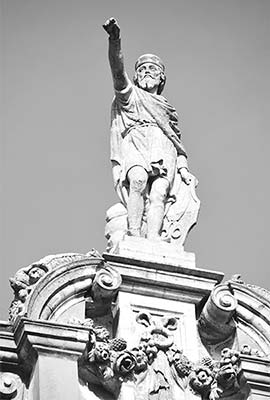
Belgium as a nation is less than 200 years old, but its history stretches back to Europe’s roots. Located where France, Germany, and the Netherlands meet, it’s a unique mix of all three.
ROMANS AND INVASIONS (AD 1-1300)
Julius Caesar invades (57 BC), conquering the Belgae people who gave the region its name. After Rome’s fall (c. AD 400), the Low Countries shatter into a patchwork of local dukedoms ravaged by invaders, from Franks to Vikings. By AD 1000, several self-governing cities begin to emerge, well located for trade along rivers that flow into the North Sea.
Sights
• Bruges: Original fort (ruins at Crowne Plaza Hotel), Basilica of the Holy Blood
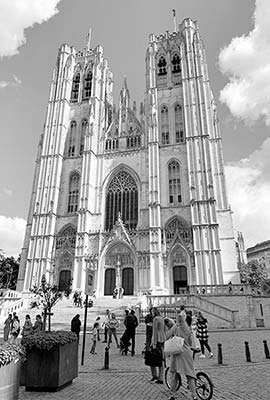
• Brussels: St. Michael and St. Gudula Cathedral, model in City Museum, Tour d’Angle (tower) from city wall
• Ghent: Castle of the Counts
BOOMING TRADE TOWNS (1300-1500)
Bruges, the midway port between the North Sea and Mediterranean trade routes, becomes Europe’s richest and most cosmopolitan city. English-grown wool is woven into cloth in Flanders factories, then shipped abroad by German merchants, all financed by Italian bankers.
As Bruges’ harbor silts up, trade shifts to industrious Ghent and to the bustling port city of Antwerp, which then becomes northern Europe’s greatest trading city. Meanwhile, the smaller town of Brussels sells waffles and beer to passing travelers along the Germany-Bruges highway.
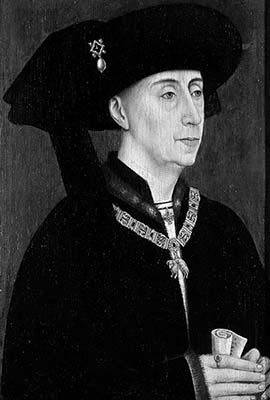
Politically, the Low Countries are united through marriage with the cultured, French-speaking dukes of Burgundy. Duke Philip the Good (c. 1450) rules an empire stretching from Amsterdam to Switzerland, and his cultured court is a center of art (Van Eyck, Memling, and Van der Weyden), literature, ideas, and pageantry.
But Belgium’s medieval golden age was threatened by events of the wider world.
Sights
• Bruges: Bell tower, Gothic Room in the City Hall, and Church of Our Lady; Flemish Primitive art in Groeninge and Sint-Janshospitaal museums; luxury goods and trade artifacts in Gruuthuse Museum
• Brussels: Grand Place, medieval street Rue des Bouchers, Notre-Dame du Sablon Church, Royal Museums of Fine Arts of Belgium
• Antwerp: Riverfront and Old Town
• Ghent: St. Bavo’s Cathedral and Van Eyck Adoration altarpiece
PROTESTANTS VS. CATHOLICS AND SPANISH RULERS (1500s)
Belgium’s economy stagnates after Columbus’ voyages shift trade to a global market. A much-celebrated royal marriage between the houses of Burgundy and Habsburg (1477) brings Burgundian Belgium under the rule of the Habsburgs in distant Austria and Spain.
Meanwhile, Protestantism spreads through the Low Countries. In 1566, angry Protestants rise up, vandalizing Catholic churches (“iconoclasm”). Belgium—ruled by the ultra-Catholic Habsburgs—becomes the main battleground, as Spanish troops arrive to brutally punish the heretic Protestants. The thriving city of Antwerp falls to Spanish troops (1585), causing that city’s best and brightest to flee to the Netherlands.
Ultimately, while the Netherlands wins independence from Spain, Belgium remains under the Catholic Habsburgs, ruled from their regional capital, Brussels.
Sights
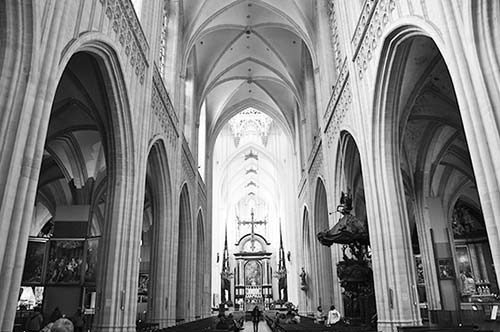
• Antwerp and Ghent: Church cathedral interiors stripped bare by Protestant iconoclasts and later redecorated in Baroque style
ELEGANT DECLINE (1600-1800)
Belgium languishes under foreign rule while the world moves on. The Netherlands enjoys a golden age of self-rule and global sea trade, and France and England rise to superpower status. The Belgians survive as bankers, small manufacturers, and lacemakers—but on a small scale fitting their geographical size. Antwerp rebounds to become a flourishing cultural center of publishing houses and the flamboyant art of Peter Paul Rubens.
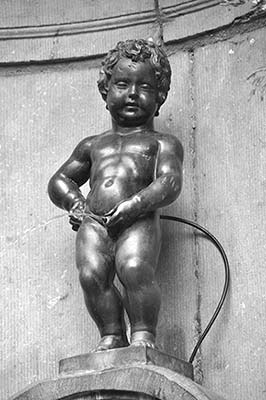
Whenever wars between nearby neighbors break out, tiny Belgium gets caught in the crossfire. Louis XIV of France bombs Brussels (1695) to punish the rest of Europe (his foes in the Nine Years’ War). Later, Napoleon invades Belgium and topples the monarchy, ending nearly two centuries of Habsburg rule. When the rest of Europe rallies against Napoleon, where do they send their troops? To Belgium, of course, where they finally defeat Napoleon at Waterloo. Belgium—now little more than a pawn in the game of larger powers—hits rock bottom.
Sights
• Bruges: Lace Center
• Brussels: Fashion and Lace Museum, Grand Place guildhalls, Manneken-Pis
• Near Brussels: Mémorial 1815 (museum) at Waterloo
• Antwerp: Rubens House (closed for a multiyear renovation), Rockox House, Museum Plantin-Moretus, Paleis op de Meir (Napoleon’s palace)
A TINY NATION BECOMES AN EMPIRE (1800s)
Europe’s nobles install a king to rule all the Low Countries. Belgians resist this Dutch-controlled government and, in August 1830, take to the streets of Brussels to battle Dutch soldiers. They win their independence and choose their own constitutional monarch, King Leopold I (the great-great-great-grandfather of today’s king).
Under Leopold I, Belgium rapidly becomes Europe’s leader in Industrial Revolution technology. Soon coal from Belgian mines is fueling Ghent factories to make cloth, which is shipped on Belgium’s state-of-the-art rail system.
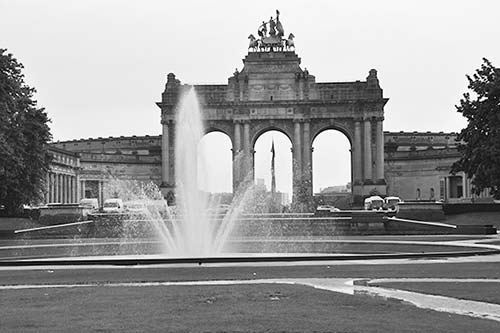
Under King Leopold II, tiny Belgium becomes a global empire. Leopold claims Africa’s Congo—a region 80 times bigger than Belgium—as his own private colony. The Belgians brutally exploit Congo’s rubber and ivory resources to finance massive building projects. Brussels becomes a world-class capital of broad boulevards and monumental buildings with columns and domes, all frosted with delicate Art Nouveau.
History comes to life when you visit a centuries-old church. Even if you wouldn’t know your apse from a hole in the ground, learning a few simple terms will enrich your experience. Note that not every church has every feature, and a “cathedral” isn’t a type of church architecture, but rather a designation for a church that’s a governing center for a local bishop.
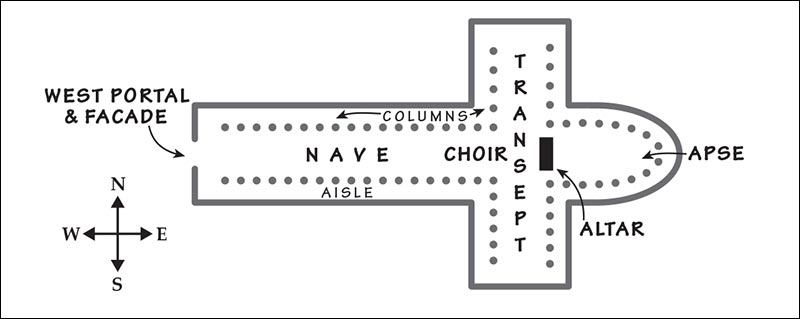
Aisles: Long, generally low-ceilinged arcades that flank the nave
Altar: Raised area with a ceremonial table (often adorned with candles or a crucifix), where the priest prepares and serves the bread and wine for Communion
Apse: Space behind the altar, sometimes bordered with small chapels
Barrel Vault: Continuous round-arched ceiling that resembles an extended upside-down U
Choir: Intimate space reserved for clergy and choir, located within the nave near the high altar and often screened off
Cloister: Covered hallways bordering a square or rectangular open-air courtyard, traditionally where monks and nuns got fresh air
Facade: Exterior of the church’s main (west) entrance, usually highly decorated
Groin Vault: Arched ceiling formed where two equal barrel vaults meet at right angles
Narthex: Area (portico or foyer) between the main entry and the nave
Nave: Long central section of the church (running west to east, from the entrance to the altar) where the congregation sits or stands during the service
Transept: One of the two parts forming the “arms” of the cross in a traditional cross-shaped floor plan; runs north-south, perpendicularly crossing the east-west nave
West Portal: Main entry to the church (on the west end, opposite the main altar)
Sights
• Brussels: Upper Town buildings, Parc du Cinquantenaire; Galeries Royales St. Hubert, BELvue Museum
• Antwerp: Central Station
• Bruges and Brussels: Choco-Story: The Chocolate Museum
WORLD WARS, EUROPEAN UNION (1900-2000)
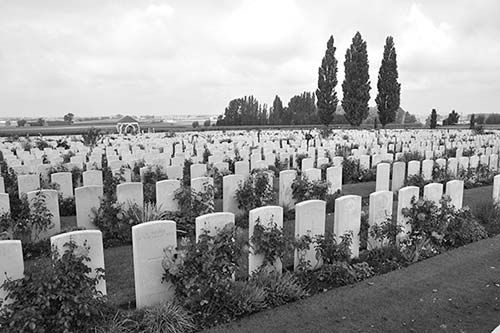
In 1914, prosperous Belgium is suddenly transformed into a horrific battle-scape as Germany dukes it out with England and France in World War I. Some of the worst fighting takes place at Flanders Fields near Ypres (Ieper).
As Belgium recovers in the 1920s, a new phenomenon appears—newspaper comics—and Hergé thrills Europeans with his tales of the adventurous young reporter, Tintin.
When World War II breaks out, Nazi Germany easily conquers Belgium, imposing five long years of brutal occupation. Late in the war, Belgium is the site of Germany’s last-gasp offensive, the Battle of the Bulge.
After the war, Brussels becomes the center of the budding movement toward European unity. It pioneers the Common Market (1957) and the Benelux economic union (1960) and is a stalwart of NATO. In 1992, Belgium—along with 11 other countries—becomes a founding member of the European Union.
Sights
• Near Bruges: Flanders Fields (near Ypres)
• Bruges: René Magritte paintings in Groeninge Museum
• Brussels: Atomium, European Parliament quarter, Magritte Museum, Belgian Comic Strip Center
• Antwerp: Sint-Andries fashion district, ModeMuseum, Little Island area, ’t Zuid district
• Ghent: Design Museum (closed for renovation until 2026)
BELGIUM TODAY
Brussels is the de facto capital of the European Union—a kind of “Washington, DC,” for this “United States of Europe.”
But, ironically, Belgium itself struggles to unite its own diverse population. Since 1970, it’s been a nation officially divided into three semiautonomous regions: Dutch-speaking Flanders, French-speaking Wallonia, and bilingual Brussels (for more on this divide, see the sidebar). It also strives to bring African immigrants (including from its former colony of Congo) into the diverse mix.
The Belgian political landscape is splintered into several parties, divided largely along language lines. Fortunately, Belgium has a popular (if symbolic) ruler—King Philippe and his charming family. In 2016, a terrorist attack in Brussels shocked the nation; since then, security has been tighter, but the country also seems more unified.
Belgium has seen many centuries of turbulence, but that hasn’t stopped it from becoming a forward-thinking nation with a long and rich cultural heritage. It welcomes you to come and make your own history.