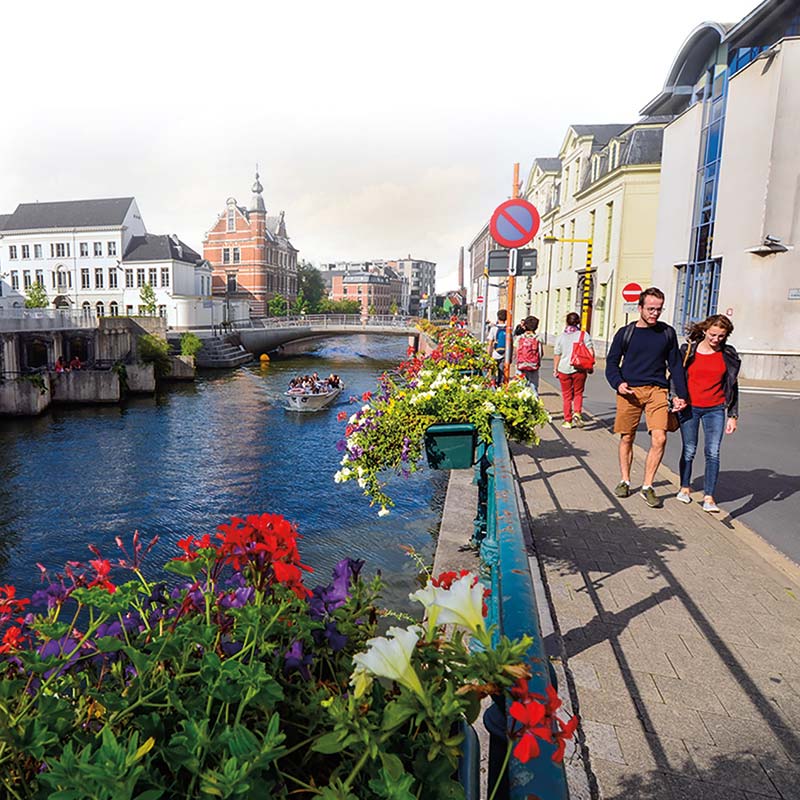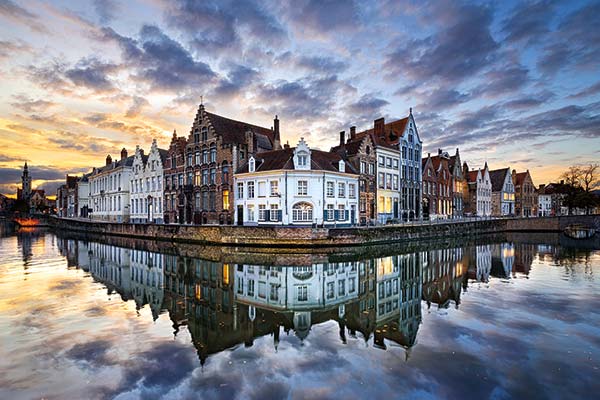
BELGIUM
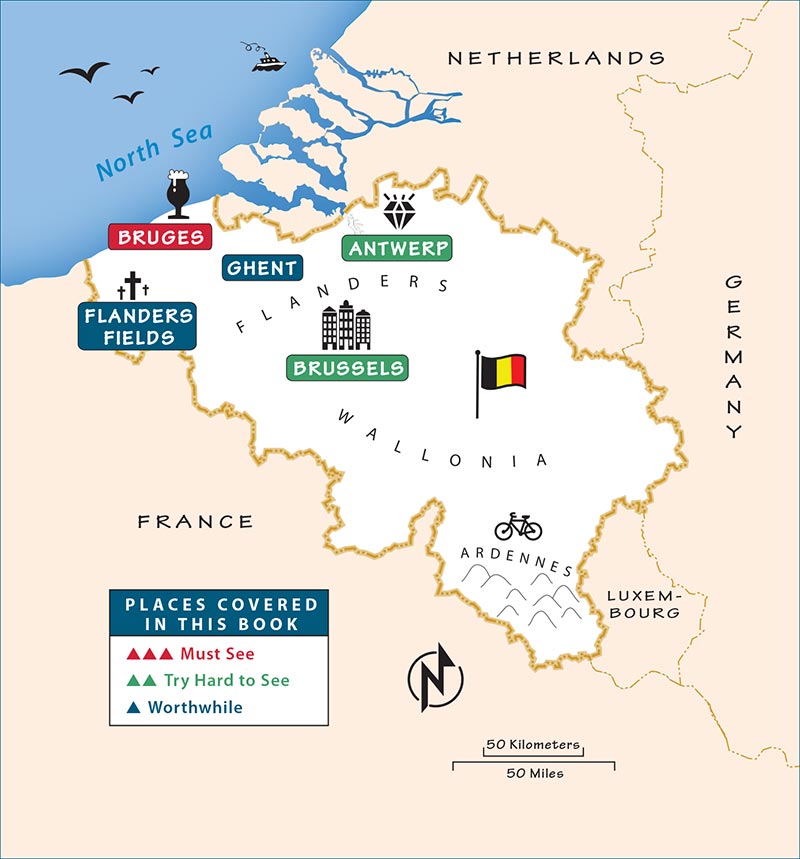
Map: Belgium’s Top Destinations
Map: Belgium’s Best One-Week Trip by Train
Belgium falls through the cracks. Wedged between Germany, France, and the Netherlands, and famous for waffles, Smurfs, and a statue of a little boy peeing, it’s no wonder it can get lost in the mix.
But Belgium rewards with richer sights than you might expect—and fewer tourist crowds. Five hundred years ago, a trade boom left it with dazzling art and architecture. And today it has reemerged as a trade capital of Europe.
For travelers, Belgium is a breeze—it’s well organized, there’s almost no language barrier, and the people are wonderful. Everything’s close together: My favorite Belgian cities—Bruges, Antwerp, Ghent, and Brussels—are within 90-minute train rides of one another.
Bruges is the Belgium of the past—a wonderfully preserved medieval gem that at one time was one of the largest cities in the world and a powerhouse in commerce and arts. Once mighty, now mighty cute, it comes with fancy beers in fancy glasses, lilting carillons, and filigreed Gothic souvenirs of a long-gone greatness.
The thriving towns of Antwerp and Ghent—also former medieval bigwigs—demonstrate how the country has rebounded to again be a global trendsetter. Design-forward Antwerp offers interesting contrasts, from its high-fashion couture scene to its racy red light district. In the university town of Ghent, you’ll find a richly detailed Renaissance altarpiece amid a vibrant urban landscape.
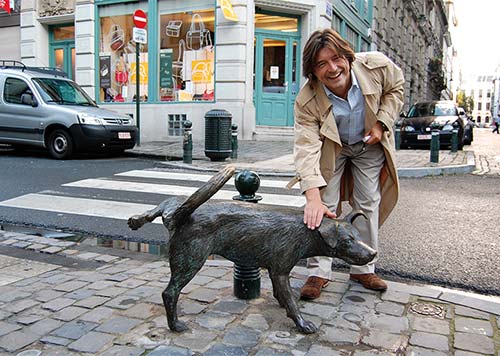
And finally, there’s Brussels: the unofficial capital of the European Union, with a low-rise Parisian ambience that exudes joie de vivre. With the finest town square in the country (if not the Continent), a chocolate shop on every corner, a French taste for class and cuisine, and a smattering of intriguing museums (including the Royal Museums of Fine Art, where you can view Flemish and Belgian masterpieces by Van der Weyden, Bruegel, Bosch, Rubens, and Magritte), it’s equally ideal for a quick stopover as it is for a multiday visit.
Belgium’s town squares bristle with soaring spires and warm-brick gables. Its museums house lush paintings celebrating the glories of everyday life. And away from the quaint-but-touristy central squares, the back streets host a Belgium that’s lived-in, a bit funky, and authentic.
A bit smaller than the state of Maryland and with nearly 950 people per square mile, Belgium is one of the most densely populated countries in Europe. Despite its small size, it’s divided—linguistically, culturally, and politically—between French-speaking Wallonia in the south and Dutch-speaking Flanders in the north, with the bilingual capital city Brussels in between and a small population of German-speakers in the east. (The Dutch spoken in Belgium is also called “Flemish.”) Because of Brussels’ international business and political connections, English is frequently spoken as a common language there.
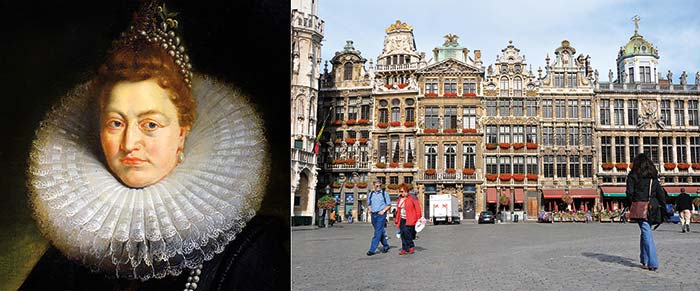
Baroque portrait by Peter Paul Rubens; gabled architecture in Brussels’ Grand Place
A waiter in Belgium once told me, “Belgians eat as hearty as the Germans and as fine as the French.” But Belgian fare has its own flair. For example, Belgians have perfected the art of cooking with their own unique beers, imbuing the cuisine with a hoppy sweetness.
If a dish is cooked Flemish-style (à la flamande), that usually means it’s either made with beer or smothered in a sauce of butter, chopped parsley, and a crumbled hard-boiled egg. Look for lapin à la flamande (konijn met pruimen in Dutch)—marinated rabbit braised in onions and prunes; meatballs (balletjes/boulets in Dutch/French) served Liège-style—with a dark syrup of apples, pears, and dates; and the warm Liège salad—green beans, potatoes, tomatoes, and bacon. Stews abound: Ghent’s creamy waterzooi (made with chicken, eel, or fish), stoofvlees/carbonnade (beef stew with onions, mustard, and beer)…and of course biersoep/soupe à la bière—beer soup.
Mussels are perhaps the most famous of Belgium’s signature dishes. The classic preparation is à la marinière: cooked in white wine, onions, celery, parsley, and butter (though some cooks use light Belgian beer for the stock). For a high-calorie version, moules à la crème is thickened with heavy cream. You’ll also find mussels served plain, with white wine, or in a tomato sauce (provençale). From about mid-July through April, you’ll get the big Dutch mussels (most are from the coastal Zeeland area to the north). Locals take a break from mussels in May and June, when only the puny Danish kind are available.
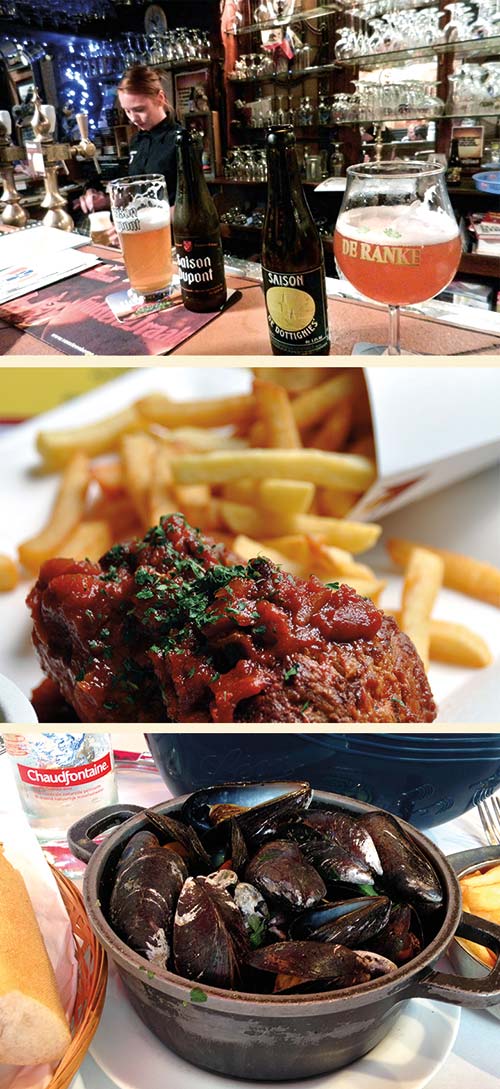
Belgium is known for its delicious cuisine, with German and French influences: Beer, meatballs, and mussels are specialties.
The mussels come with another Belgian specialty on the side, frieten—what we call “french fries” and the Dutch call “Flemish fries.” In Belgium, fries are an art form. The fries are extra-delicious because they’re deep-fried twice—once to cook them and once to brown them. The best fries are cooked to a crisp in flavorful ox fat.
Flemish fries are generously topped with sauces like mayonnaise (the most traditional), tartar sauce, curry ketchup, or currysaus (without the ketchup). Ketchup is sometimes available for the Yankees, but I encourage you to skip it and go on a sauce adventure. When I see a sauce that’s scary-sounding—maybe joppiesaus (sweet yellow curry and onion) or “samurai sauce” (mayo with spicy chili flavor and a hit of tomato)—I go for it.
Belgium is justifiably famous for its exquisite chocolates. But make sure to save room for another sweet Belgian specialty—waffles. You’ll see little windows, shops, and trucks selling them either plain (for Belgians and purists) or topped with fruit, jam, chocolate sauce, ice cream, or whipped cream (for tourists). Belgians recognize two general types of waffles. The common takeout version is the dense, sugar-crusted, and very sweet Liège-style waffle, usually served warm. Brussels-style waffles are lighter and fluffier, dusted with powdered sugar, and sometimes topped with marmalade. Though Americans think of waffles as a breakfast food, Belgians generally have them as a late-afternoon snack.
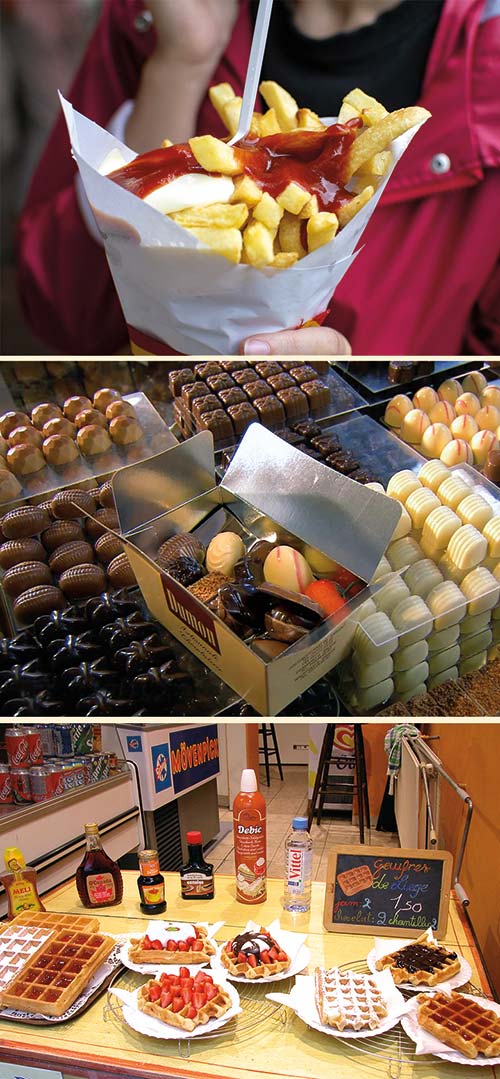
Save some calories for Belgium’s famous fries, chocolates, and waffles.
Of course, if you need something sudsy to wash down your meal, there’s beer aplenty: Belgium has hundreds of options (see the Practicalities chapter for guidance). Smakelijk! Enjoy!
In contrast to its own divisions, Belgium flies the unifying flag of Europe more vigorously than any other place on the Continent. There’s a feeling of being at the center of global events. The “Benelux” economic union joining Belgium, the Netherlands, and Luxembourg was established in London in 1944 (by the countries’ WWII governments in exile), planting the seed that sprouted into today’s European Union.
Belgium is at the crossroads of Western Europe, where Romance languages meet the German world, and where the Protestant north meets the Catholic south. It was born as a merchant entity in medieval times (c. 1300-1500), when energetic traders made it one of Europe’s richest, most cosmopolitan, and most sophisticated countries. On the other hand—located as it is in the crossfire between larger powers—Belgium has also been Europe’s battlefield. From Charlemagne to Napoleon, from the Habsburgs to Germany in two world wars, this country has paid a heavy price.
But even with a thousand years of history behind it, the country seems determined to write a new chapter in its long and illustrious tale. Tiny Belgium has survived by producing savvy businesspeople and excellent linguists, and by welcoming new trends. I recently asked a local, “What is a Belgian?” He said, “We are a melting pot. We’re a mix culturally: one-third English for our sense of humor, one-third French for our love of culture and good living, and one-third German for our work ethic.”
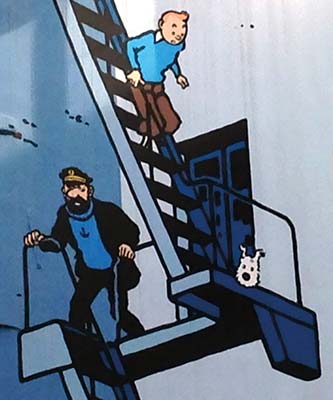
Belgians have a directness that some find refreshing (and others find brusque). They revel in their wry, sardonic sense of humor—it can be hard sometimes to tell whether they’re putting you on. The art of the comic strip is deeply respected: The Smurfs and Tintin were created by Belgians.
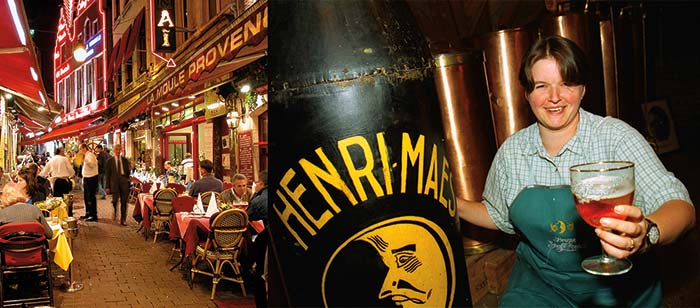
Outdoor dining in Brussels; beer tour in Bruges
Belgians are said to be born with a “brick in their stomach”—meaning they feel a deep-seated need to own a house, decorate it just so (hence the abundance of furniture and antique shops), and invite their friends for dinner. Belgians are social, meeting up at sidewalk cafés or cozy pubs after work. On a beautiful spring day, it might seem like nobody here has a job—they’re all outside drinking beer.
Belgians take their beers as seriously as the French do their wines, even pairing beer with food. When it comes to variety, Belgium has more than any other country—with hundreds of breweries and local brews, including a heavily fermented type brewed by Trappist monks. Belgium is also home to some of Europe’s finest cuisine, including the creamiest chocolates and tastiest french fries.
Go ahead: Indulge in Belgium’s many delights. Digging into a dish of mussels while seated on a sunny square beneath the outline of a lacy medieval spire...you’re in Belgium.
Belgium’s Top Destinations
It’s a small country, but there’s plenty to see in Belgium. This book presents the best of its four great cities: fine food, rich history, and sensuous art, as well as the modern scene that makes Belgium the face of Europe today.
To help you decide where and how to spend your valuable time, I’ve ranked Belgium’s top places and suggested a minimum number of days to allow for each.
▲▲▲Bruges (allow 2 days)
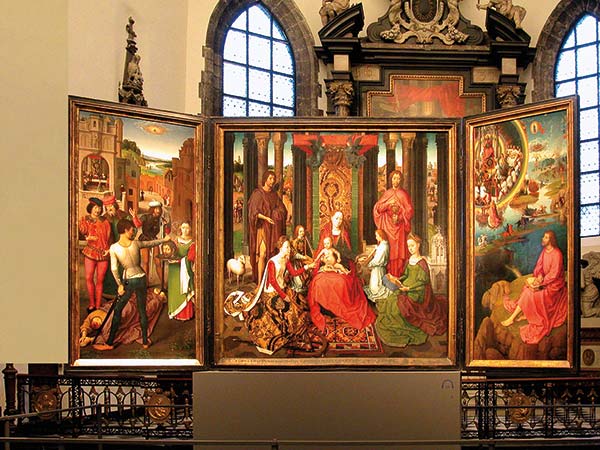
A perfectly pickled Gothic city of charming cobbles and cozy squares, Bruges has fanciful gilded architecture, serene Flemish masterpieces, and, according to locals, the best beer in the world. Here you can bike along a dreamy canal, savor heavenly chocolate, and see Flemish Primitives and a Michelangelo—all within earshot of a bell tower with a hyperactive carillon. Sights include a top collection of Flemish paintings at the Groeninge Museum, Hans Memling’s glowing Primitive masterpieces displayed in a medieval hospital, the mansion of a 15th-century wealthy Bruges merchant, and two fun brewery tours.
▲▲Brussels (2 days)
The urbane capital of Belgium, the European Union, and NATO, Brussels boasts one of Europe’s grandest squares, colorful urban zones, and a beloved statue of a little boy peeing. There’s lots to see, including the European Parliament and a wide array of museums (Old Masters and Magritte’s surrealism; musical instruments; Belgian history; fashion and lace; comic strips; and more).
▲▲Antwerp (1 day)
This gentrified port city offers Belgium’s best fashion and an engaging mix of urban grittiness and youthful trendiness. Among its top sights are a cathedral with paintings by Peter Paul Rubens, an Industrial Age train station, and interesting museums covering printing, emigration, aristocratic home life, and more.
▲Ghent (1 day)
A pleasant, lively university city, Ghent has a fine historic quarter and several worthwhile museums (including fine art and history). The vast St. Bavo’s Cathedral hosts the city’s top sight: the breathtaking Van Eyck altarpiece.
▲Flanders Fields (1 day)
An easy day trip from Bruges or Ghent, the infamous WWI battlefields near Ypres are filled with artillery craters, memorials, cemeteries, and fine museums, spread across what today is idyllic Belgian countryside.
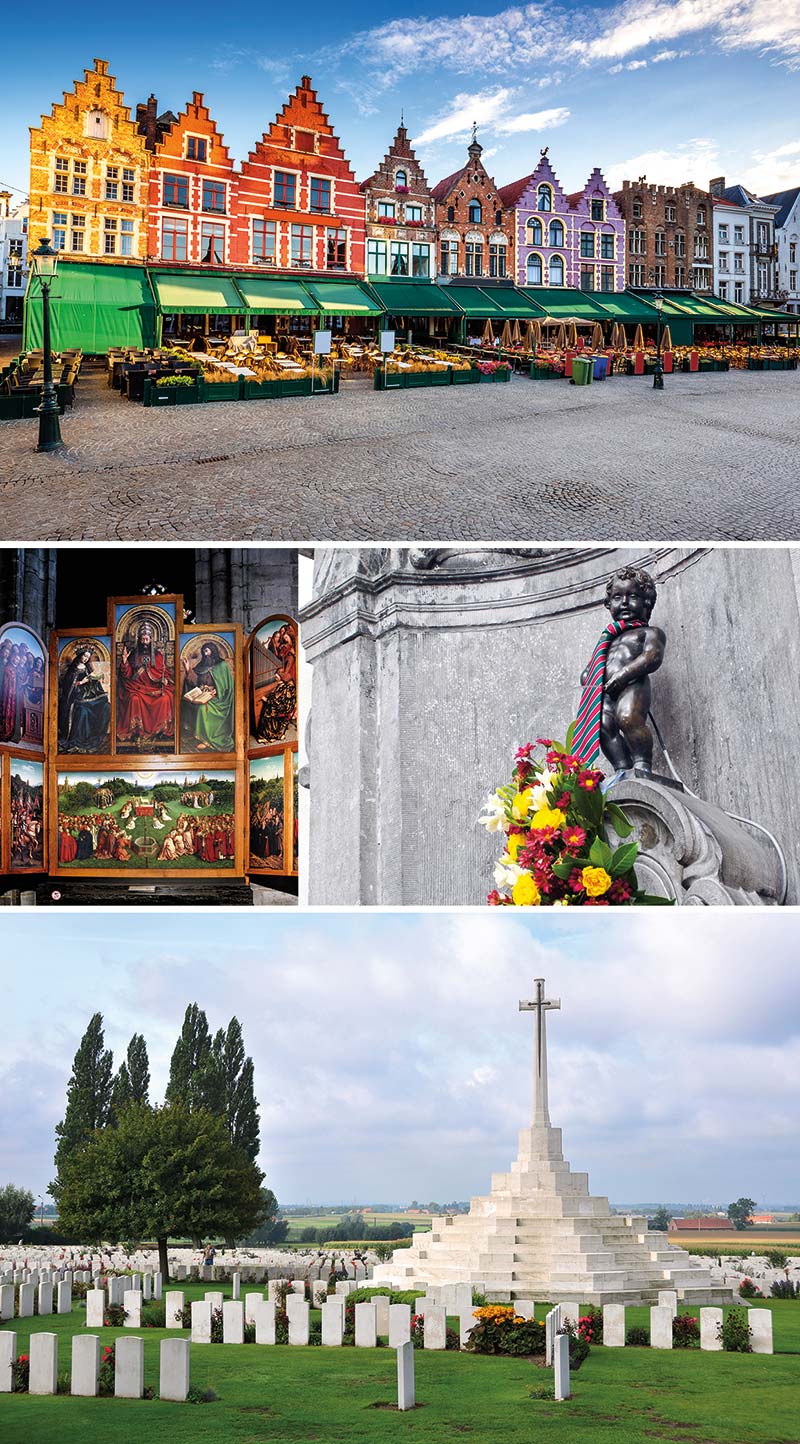
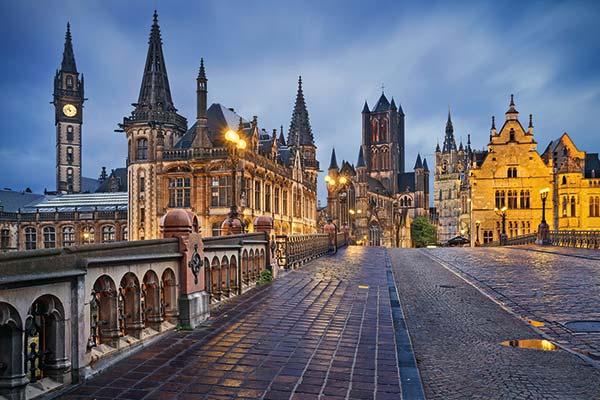
Colorful Market Square in Bruges; cheeky Manneken-Pis in Brussels; somber Flanders Fields; detail of Van Eyck’s altarpiece in Ghent
Planning Your Trip
To plan your trip, you’ll need to design your itinerary—choosing where and when to go, how you’ll travel, and how many days to spend at each destination. For general advice on sightseeing, accommodations, restaurants, and more, see the Practicalities chapter.
DESIGNING AN ITINERARY
As you read this book and learn your options…
Choose your top destinations.
My recommended itinerary (see the sidebar on here) gives you an idea of how much you can reasonably see in a week, but you can adapt it to fit your own interests and time frame.
Decide when to go.
For tourist hot spots like Bruges, peak season is summer, especially June and early July. Business towns like Brussels, Antwerp, and Ghent tend to be more crowded in spring and fall. With long days, lively festivals, and sunny weather, summer is a great time to visit despite the crowds in places like Bruges. It’s rarely too hot for comfort. Plus, Brussels’ fancy business-class hotels are discounted in the summer.
Late spring and fall are also pleasant, with generally mild weather and lighter tourist crowds (except during holiday weekends—see www.ricksteves.com/europe/festivals).
Travel from late October through mid-March is cold and wet, as coastal winds whip through the low, flat country. It’s fine for city visits, but smaller towns and countryside sights feel dreary. Some sights and tourist information offices (TIs) keep shorter hours, and many outdoor activities vanish altogether.
Connect the dots.
Link your destinations into a logical route. Decide if you’ll travel by car or public transportation. With Belgium’s short distances and excellent rail system, trains make it easy to connect Antwerp, Ghent, Bruges, and Brussels. Flanders Fields are easiest to explore by car, but you can also take a train from Bruges or Ghent to Ypres and join a tour (or get on a bike) there.
Begin your search for transatlantic flights at Google Flights. For a multicountry trip, decide which cities you’ll fly into and out of.
For approximate travel times between destinations, visit Bahn.com for train schedules or, if driving, check Google Maps.
Note that Brussels can splice neatly into a wider-ranging trip, with direct train connections to Amsterdam, Cologne, Paris, and London. Budget flights can be an alternative to long train rides; check Skyscanner.com for intra-European flights (but keep in mind air travel’s larger carbon footprint).
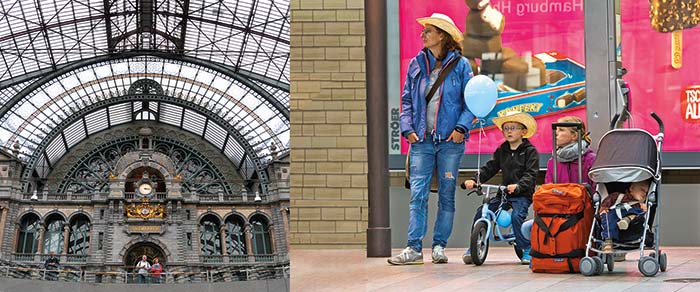
It’s easy to reach most destinations within Belgium by train; connections are fast and frequent.
Write out a day-by-day itinerary.
Figure out how many destinations you can comfortably fit in your time frame. Don’t overdo it—few travelers wish they’d hurried more. Allow enough days per stop (see estimates in “Belgium’s Top Destinations,” earlier).
Minimize one-night stands. It can be worth taking a late-afternoon train ride or drive to settle into a town for two consecutive nights—and gain a full uninterrupted day for sightseeing. Staying in a home base (like Bruges) and making day trips can be more time-efficient than changing locations and hotels.
Take sight closures into account. Avoid visiting a town on the one day a week its must-see sights are closed. Check if any holidays or festivals fall during your trip—these attract crowds and can close sights (for the latest, visit www.visitbelgium.com [URL inactive] or www.visitflanders.com). Note experiences where advance tickets are required (or recommended).
Give yourself some slack. Every trip, and every traveler, needs downtime for doing laundry, picnic shopping, people-watching, and so on. Pace yourself. Assume you will return.
| Day | Plan | Sleep |
| 1 | Arrive in Brussels, train to Bruges | Bruges |
| 2 | Bruges | Bruges |
| 3 | Bruges | Bruges |
| 4 | Day-trip to Ghent or Flanders Fields, late train to Antwerp | Antwerp |
| 5 | Antwerp | Antwerp |
| 6 | To Brussels | Brussels |
| 7 | Brussels | Brussels |
| 8 | Link to your next European destination, or fly home |
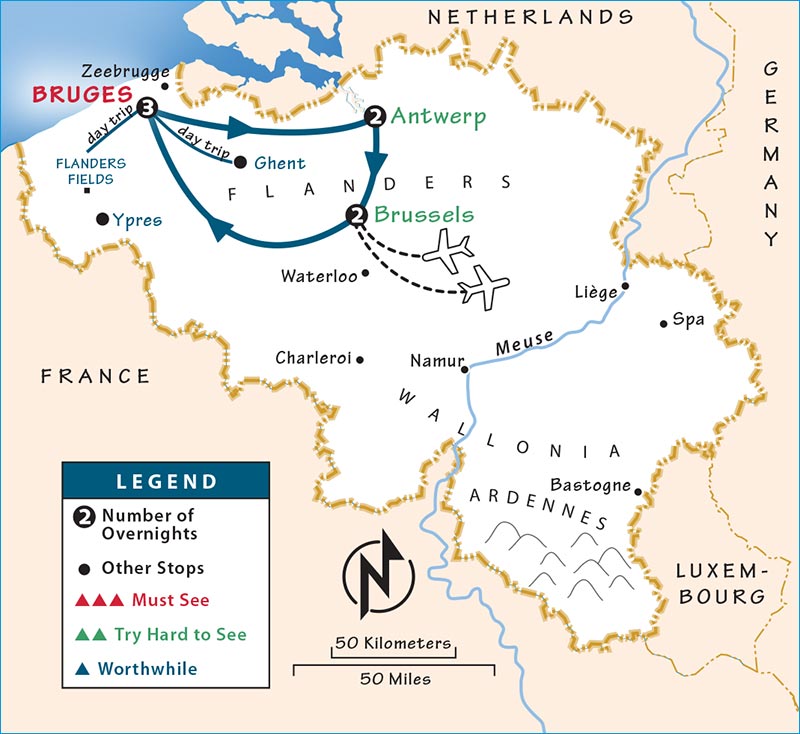
Notes: Trains travel several times hourly between Belgium’s major cities, with most connections under 1.5 hours. While I’ve outlined a loop trip, you could instead stay in a single home base (I prefer Bruges) and day-trip by train to Ghent (30 minutes), Brussels (1 hour), or Antwerp (1.5 hours). With less time, skip Flanders Fields. You’re never more than two hours by train from the main airport in Brussels.
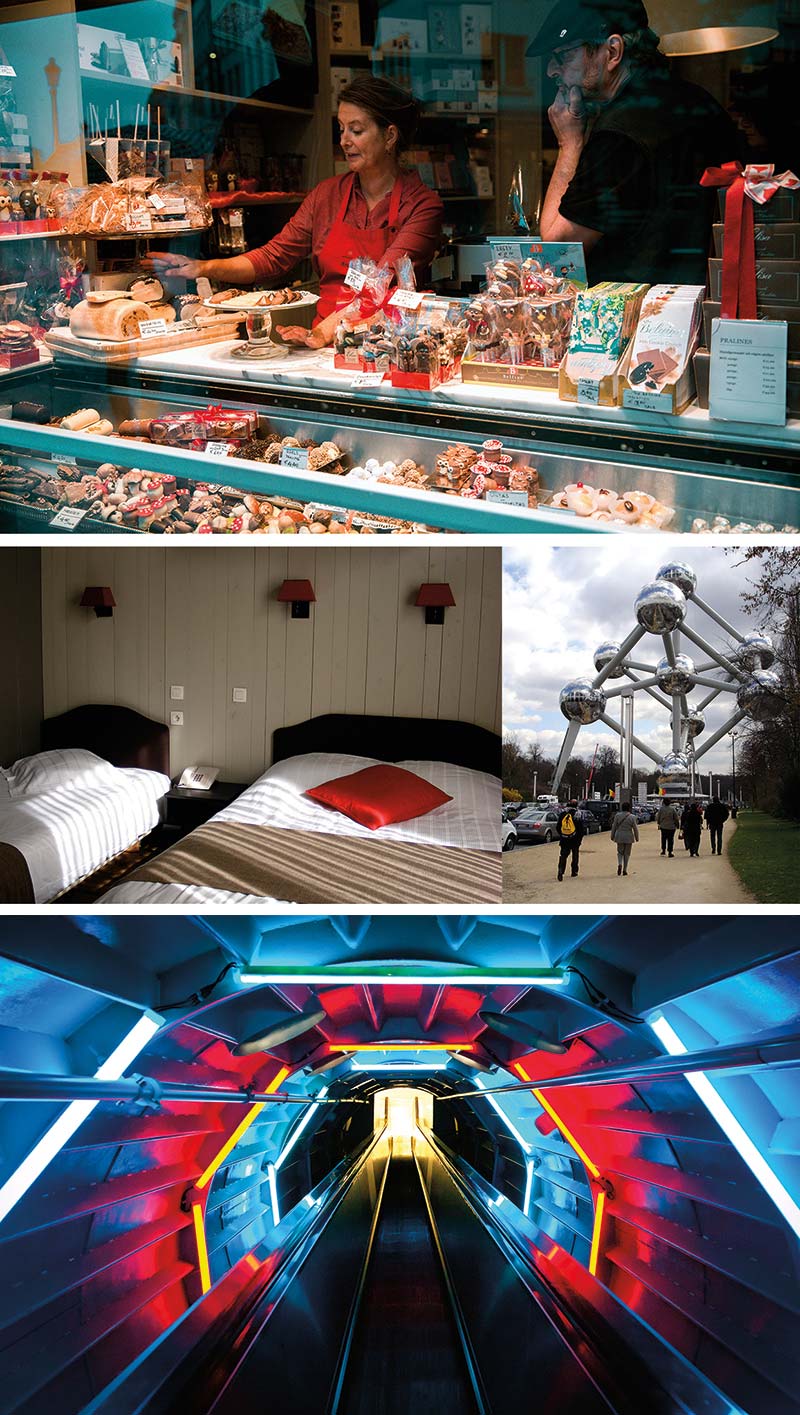
Chocolate confections in Antwerp; Brussels’ Atomium exterior (right) and interior (bottom); cozy Bruges hotel room
Run a reality check on your dream trip. You’ll have major transportation costs in addition to daily expenses.
Flight: A round-trip flight from the US to Brussels costs about $900-1,500, depending on where you fly from and when.
Transportation: For a one-week trip, allow about $55 per person for public transportation (train tickets).
Car Rental: Allow $350-500 per week (booked well in advance), not including tolls, gas, parking, and insurance.
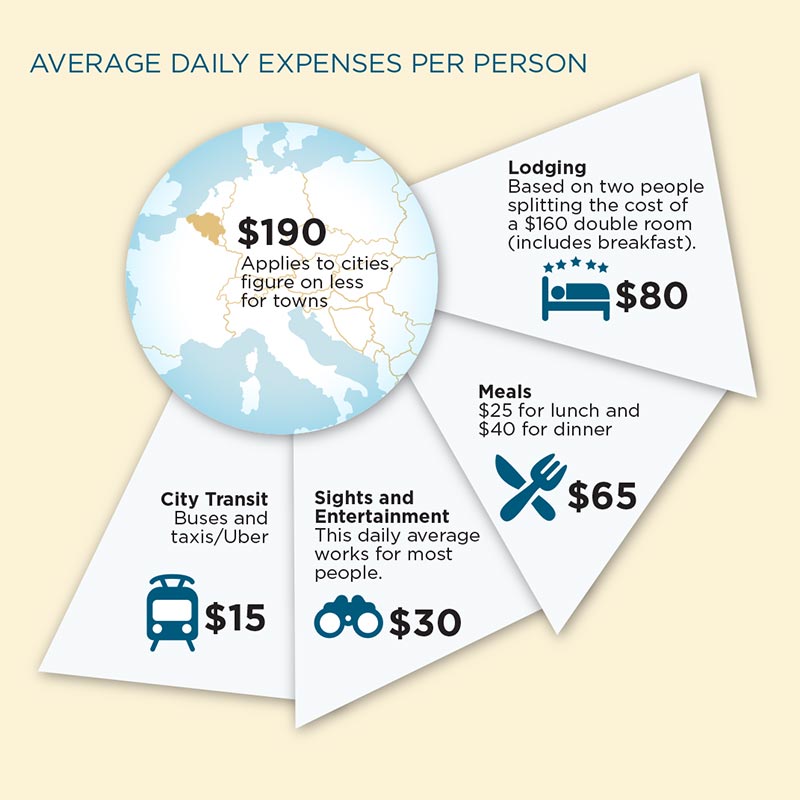
To cut your daily expenses, take advantage of the deals you’ll find throughout Belgium and mentioned in this book.
Avid sightseers buy combo-tickets that cover multiple sights. If a town doesn’t offer deals, visit only the sights you most want to see, and seek out free sights and experiences (people-watching counts).
Some businesses—especially hotels and walking-tour companies—offer discounts to my readers (look for the RS% symbol in the listings in this book).
Reserve your rooms directly with the hotel. Some hotels offer a discount if you pay in cash and/or stay three or more nights (check online or ask). Anyone can sleep cheaply in hostels (most have private rooms). Or check Airbnb-type sites.
It’s no hardship to eat inexpensively in Belgium. You can get tasty, affordable meals at chain restaurants, cafés, takeaway spots, and street vendors. Cultivate the art of picnicking in atmospheric settings.
When you splurge, choose an experience you’ll always remember, such as a concert or special art exhibit. Minimize souvenir shopping; focus instead on collecting wonderful memories.
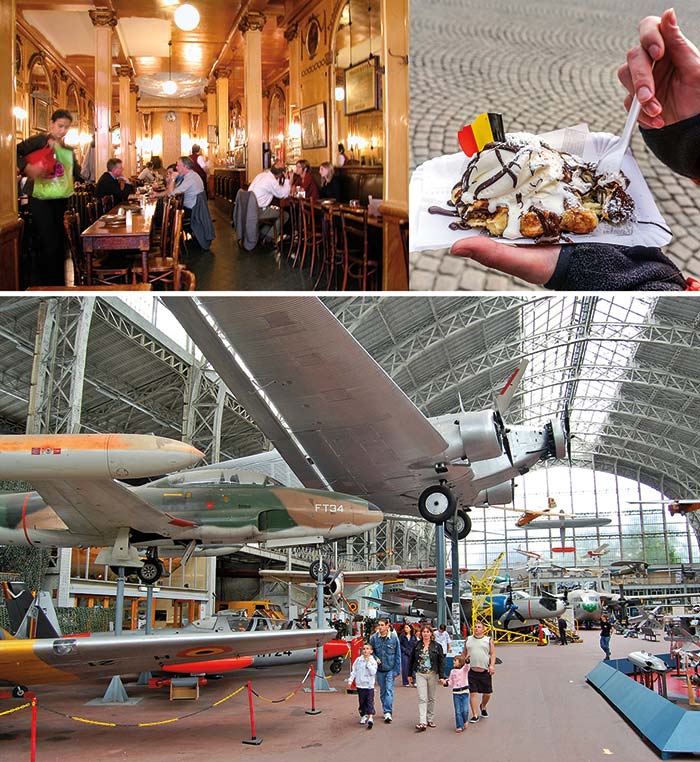
Belgian experiences: fine dining; Belgian waffles; Brussels’ Royal Museum of the Armed Forces and Military History
BEFORE YOU GO
You’ll have a smoother trip if you tackle a few things ahead of time. For more details on these topics, see the Practicalities chapter and RickSteves.com, which has helpful travel-tip articles and videos.
Make sure your travel documents are valid. If your passport is due to expire within six months of your ticketed date of return, you need to renew it. Allow 12 weeks or more to renew or get a passport. Be aware of any entry requirements; you may need to register with the European Travel Information and Authorization System (quick and easy process; check https://travel-europe.europa.eu/etias_en). Get passport and country-specific travel info at Travel.State.gov.
Arrange your transportation. Book your international flights. Overall, Google Flights is the best place to start your search. Figure out your transportation options: It’s worth thinking about renting a car, buying train tickets online in advance, getting a rail pass, or booking cheap European flights. (You can wing it once you’re there, but it may cost more.)
Book rooms well in advance, especially if your trip falls during peak season or any major holidays or festivals.
Reserve ahead for key sights and experiences. While most of Belgium’s sights do not require advance reservations, it’s smart to prebook online to view the Ghent Altarpiece on weekends and in July and August. It’s also smart to book ahead for experiences such as a food tour or hiring a local guide.
Consider travel insurance. Compare the cost of insurance to the cost of your potential loss. Understand what protections your credit card might offer and whether your existing insurance (health, homeowners, or renters) covers you and your possessions overseas.
Manage your money. “Tap-to-pay” or “contactless” cards are widely accepted and simple to use. You may need your credit card’s PIN for some purchases—request it if you don’t have one. Alert your bank that you’ll be using your debit and credit cards in Europe. You don’t need to bring euros; you can withdraw euros from ATMs in Europe.
Use your smartphone smartly. Sign up for an international service plan, or plan to rely on Wi-Fi. Download any apps you’ll want on the road, such as maps, translators, transit schedules, and Rick Steves Audio Europe (see sidebar).
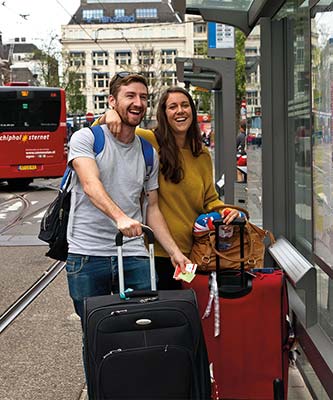
Pack light. You’ll walk with your luggage more than you think. I travel for weeks with a single carry-on bag and a day pack. Use the packing checklist in the appendix as a guide.
Rick Steves Audio Europe, a free app, makes it easy to download audio content to enhance your trip. Use the app to listen to audio tours of Europe’s top sights, plus my public radio show interviews with travel experts from around the globe. Scan the QR code to find it in your app store or visit RickSteves.com/AudioEurope.

Rick Steves Classroom Europe, a powerful tool for teachers, is also useful for travelers. This video library contains about 600 short clips excerpted from my public television series. Enjoy these videos as you sort through options for your trip and to better understand what you’ll see in Europe. Check it out at Classroom.RickSteves.com.

Travel Smart
If you have a positive attitude, equip yourself with good information (this book), and expect to travel smart, you will.
Read—and reread—this book. To have an “A” trip, be an “A” student. Note opening hours of sights, closed days, crowd-beating tips, and whether reservations are required or advisable. Check the latest at RickSteves.com/update.
Be your own tour guide. As you travel, get up-to-date info on sights, reserve tickets and tours, reconfirm hotels, and check transit connections. Upon arrival in a new town, lay the groundwork for a smooth departure; confirm the train, bus, or road you’ll take when you leave.
Outsmart thieves. Pickpockets abound in crowded places—especially where tourists congregate. Treat commotions as smokescreens for theft. Take common-sense precautions with your valuables, especially credit cards and cash (store them securely). Don’t set your phone or other important items down on counters or café tabletops, where they can be quickly stolen or easily forgotten.
Minimize potential loss. Keep expensive gear to a minimum. Bring copies or take photos of important documents to aid in replacement if they’re lost or stolen. Back up devices to the cloud as you travel.
Guard your time and energy. Taking a taxi (or Uber) can be a good value if it saves you a long wait for a cheap bus or an exhausting walk across town. To avoid long lines, follow my crowd-beating tips, such as sightseeing early or late.
Be flexible. Even if you have a well-planned itinerary, expect changes, strikes, closures, sore feet, bad weather, and so on. Your Plan B could turn out to be even better.
Attempt the language. Most Belgians speak English—especially young people and those in the tourist trade. And apps such as Google Translate work for on-the-go translation help. But if you memorize and use some French or Dutch, even just a few pleasantries, you’ll get more smiles and make more friends. The survival phrases near the end of this book are a good starting point.
Connect with the culture. Interacting with locals carbonates your experience. Enjoy the friendliness of the Belgian people. Ask questions; most locals are happy to point you in their idea of the right direction. Set up your own quest for the best local beer, tastiest fries, or most picturesque square. When an opportunity pops up, make it a habit to say “yes.”
Belgium...here you come!