SIGHTS IN VIENNA
SIGHTSEEING PASSES AND COMBO-TICKETS
▲▲▲Hofburg Imperial Apartments (Kaiserappartements)
▲▲▲Hofburg Treasury (Kaiserliche Schatzkammer Wien)
▲▲World Museum Vienna (Weltmuseum Wien)
▲Spanish Riding School (Spanische Hofreitschule)
▲Augustinian Church (Augustinerkirche)
State Hall (Prunksaal) of the Austrian National Library
Butterfly House (Schmetterlinghaus) in the Palace Garden (Burggarten)
CHURCH CRYPTS NEAR THE HOFBURG
▲▲Kaisergruft (Imperial Crypt)
▲St. Michael’s Church Crypt (Michaelerkirche)
▲▲▲St. Stephen’s Cathedral (Stephansdom)
▲▲▲Vienna State Opera (Wiener Staatsoper)
▲Dorotheum Auction House (Palais Dorotheum)
▲St. Peter’s Church (Peterskirche)
Jewish Museum Vienna (Jüdisches Museum Wien)
Austrian Postal Savings Bank (Österreichische Postsparkasse)
▲▲Natural History Museum (Naturhistorisches Museum)
▲Karlskirche (St. Charles Church)
▲Academy of Fine Arts Painting Gallery (Akademie der Bildenden Künste Gemäldegalerie)
▲▲Belvedere Palace (Schloss Belvedere)
▲Museum of Military History (Heeresgeschichtliches Museum)
Museum of Applied Arts (Museum für Angewandte Kunst, a.k.a. MAK)
▲Kunst Haus Wien and Museum Hundertwasserhaus
▲Vienna Furniture Museum (Möbelmuseum)
▲▲▲Schönbrunn Palace (Schloss Schönbrunn)
▲▲Cafés
A Walk in the Vienna Woods (Wienerwald)
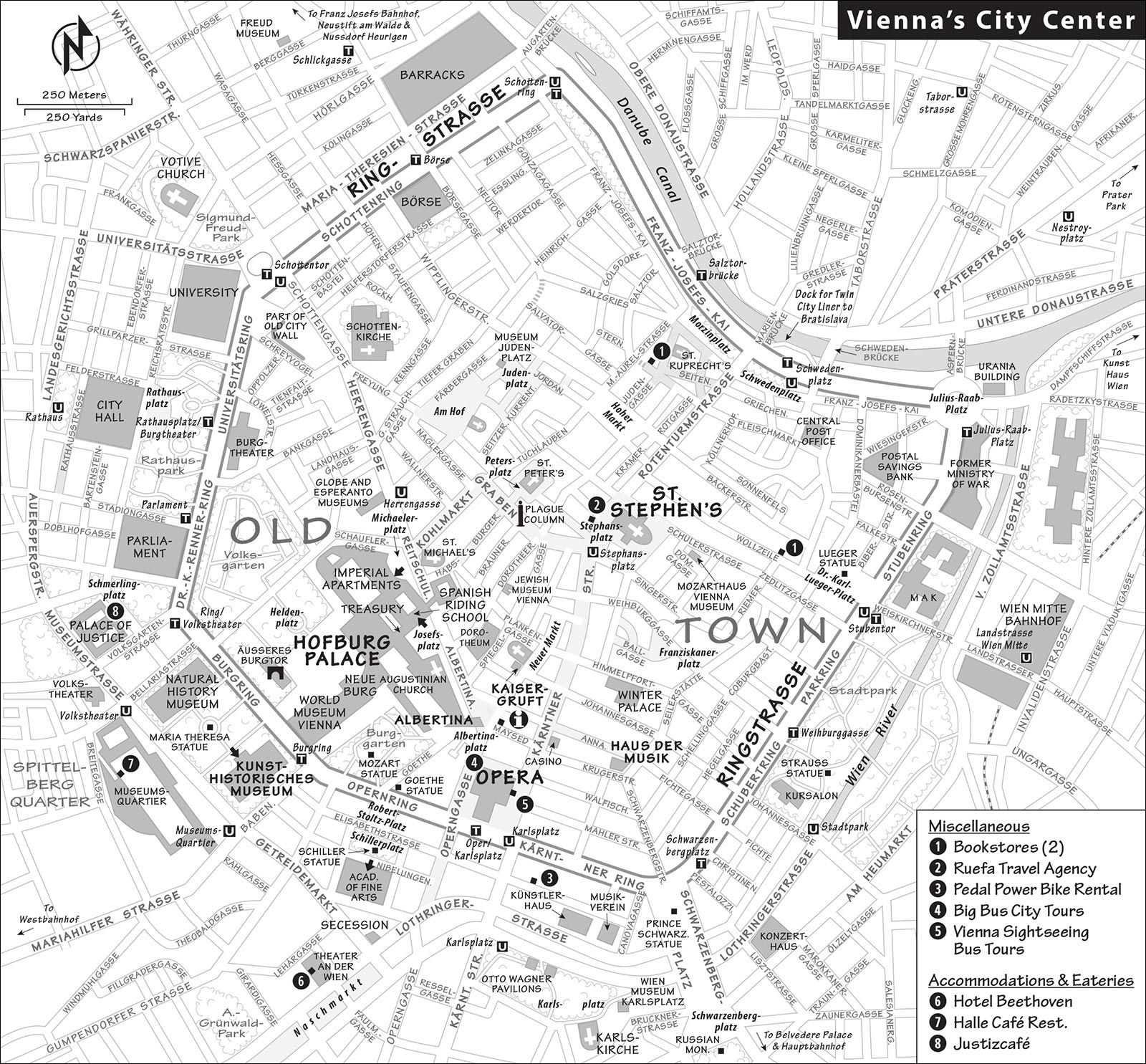
Vienna has a dizzying number of sights and museums, which cover the city’s rich culture and vivid history through everything from paintings to music to furniture to prancing horses. Just perusing the list on your TI-issued Vienna city map can be overwhelming. To get you started, I’ve selected the sights that are most essential, rewarding, and user-friendly, and arranged them by neighborhood for handy sightseeing.
When you see a  in a listing, it means the sight is covered in greater detail in my Vienna City Walk or one of my self-guided tours. A
  means the walk or tour is also available as a free audio tour (via my Rick Steves Audio Europe app—see here).
For more tips on sightseeing, see the Practicalities chapter.
SIGHTSEEING PASSES AND COMBO-TICKETS
Avid sightseers should consider a pass or combo-ticket, but do the math first. Add up the cost of all the sights you think you’ll see, then consider whether you’d like to use the hop-on, hop-off bus to get around (included with the Vienna Pass). If you prefer to walk or take public transportation, you may be better off with one or more of the combo-tickets described below.
Note that those under 19 get in free to state-run museums and sights.
Passes: The Vienna Card and the Vienna Pass are likely not worthwhile for most travelers (especially for youth and seniors over 65, who get a discount anyway). The Vienna Pass includes entry to the city’s top 70 sights and unlimited access to Vienna Sightseeing’s hop-on, hop-off tour buses (€85/1 day, €119/2 days, €149/3 days; purchase at TIs and several other locations around town—check at www.viennapass.com). It also lets you skip lines at some sights, but not at the Schönbrunn Palace where lines are the most frustrating.
Combo-Tickets: Some sights offer tickets that cover several venues at a single price; buy these at any participating sight, then skip ticket-buying lines at the next covered sight.
The €40 Sisi Ticket covers the Hofburg Imperial Apartments (with its Sisi Museum and Silver Collection—must see both on the same day), Schönbrunn Palace’s Grand Tour, and the Vienna Furniture Museum. At Schönbrunn, the ticket lets you enter the palace immediately, without a reserved entry time. Buy your Sisi Ticket in advance online (www.schoenbrunn.at or www.sisimuseum-hofburg.at) or at the Vienna Furniture Museum, where lines are shorter.
If you’re seeing the Hofburg Treasury (royal regalia and crown jewels) and the Kunsthistorisches (world-class art collection), the €24 combo-ticket saves you money.
The Haus der Musik (mod museum with interactive exhibits) has a combo deal with Mozarthaus Vienna (exhibits and artifacts about the great composer) for €20—saving a few euros for music lovers (though the Mozarthaus will likely disappoint all but the most die-hard Mozart fans).
HOFBURG PALACE SIGHTS
The imposing Imperial Palace, with 640 years of architecture, art, and history, demands your attention. This first Habsburg residence grew with the family empire from the 13th century until 1913, when the last “new wing” opened. The winter residence of the Habsburg rulers until 1918, the Hofburg is still home to the Austrian president’s office, 5,000 government workers, and several important museums.
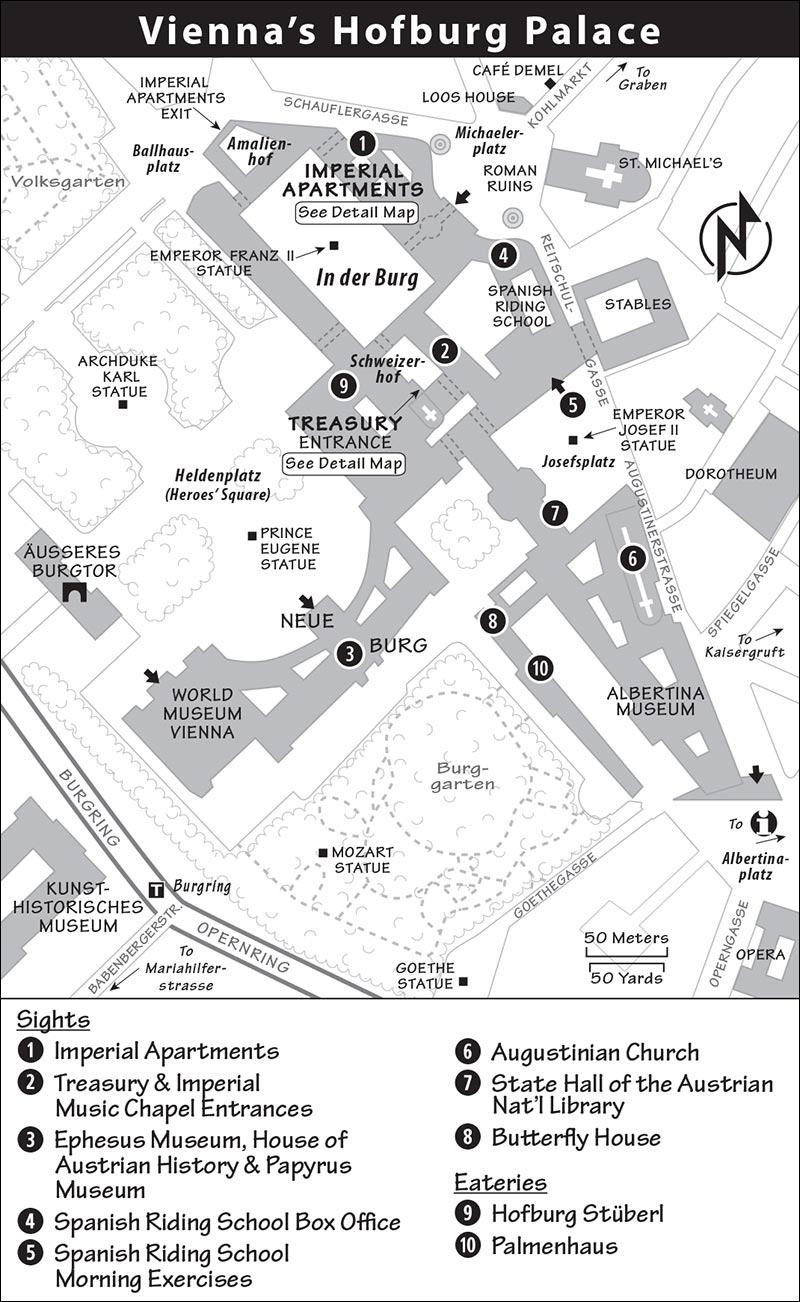
Planning Your Time: Don’t get confused by the Hofburg’s myriad courtyards and many museums. Focus on three sights: the Imperial Apartments, the Treasury, and the museums in the Neue Burg (New Wing). With more time, consider the Hofburg’s many other sights, covering various facets of the imperial lifestyle: Watch the famous Lipizzaner stallions prance at the Spanish Riding School; visit the Augustinian Church, which holds the Habsburgs’ hearts—in more ways than one (it was the site of royal weddings, and the actual Habsburg hearts are in its crypt); peruse the Habsburgs’ book collection at the Austrian National Library; stroll through the inviting imperial-turned-public Burggarten park; or ogle the great Habsburg art collection at the Albertina Museum.
Eating at the Hofburg: Down the tunnel between the In der Burg courtyard and Heldenplatz is the tiny but handy $ Hofburg Stüberl sandwich bar—ideal for a cool, quiet sit and a drink or snack (open daily). The recommended $$ Venuss Vegan Bistro is a vegan-gelical place that almost makes you a believer (closed Sun, half a block off Michaelerplatz at Herrengasse 6; for details and location see the listing and map in the Eating in Vienna chapter).
Hofburg Palace
▲▲▲Hofburg Imperial Apartments (Kaiserappartements)
These lavish, Versailles-type, “wish-I-were-God” royal rooms are the downtown version of the suburban Schönbrunn Palace. Palace visits are a one-way romp through three sections: a porcelain and silver collection, a museum dedicated to the enigmatic and troubled Empress Sisi, and the luxurious apartments themselves.
The Imperial Apartments are a mix of Old World luxury and modern 19th-century conveniences. Here, Emperor Franz Josef I lived and worked along with his wife Elisabeth, known as Sisi. The Sisi Museum traces the development of her legend, analyzing her fabulous but tragic life as a 19th-century Princess Diana. You’ll read bits of her poetic writing, see exact copies of her now-lost jewelry, and learn about her escapes, dieting mania, and chocolate bills.
Cost and Hours: €16, includes well-done audioguide, covered by Sisi Ticket; daily 9:00-17:30, July-Aug until 18:00, last entry one hour before closing; €4 guided English tours daily at 14:00; enter from under rotunda just off Michaelerplatz, through Michaelertor gate; +43 1 533 7570, www.sisimuseum-hofburg.at.
See the Hofburg Imperial Apartments Tour chapter.
▲▲▲Hofburg Treasury (Kaiserliche Schatzkammer Wien)
One of the world’s most stunning collections of royal regalia, the Hofburg Treasury shows off sparkling crowns, jewels, gowns, and assorted Habsburg bling in 21 darkened rooms. The treasures, well explained by an audioguide, include the crown of the Holy Roman Emperor, Charlemagne’s saber, a unicorn horn, and more precious gems than you can shake a scepter at.
Cost and Hours: €14, €24 combo-ticket with Kunsthistorisches; Wed-Mon 9:00-17:30, closed Tue; audioguide-€5 or €7/2 people; from the Hofburg’s central courtyard pass through the black, red, and gold gate, then follow Schatzkammer signs to the Schweizerhof; +43 1 525 240, www.kaiserliche-schatzkammer.at.
See the Hofburg Treasury Tour chapter.
Neue Burg (New Wing) Museums
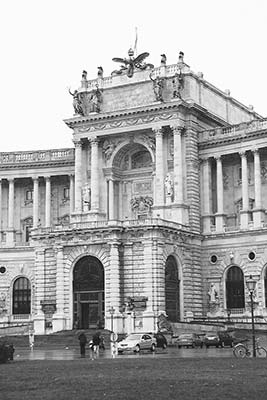
Lining one side of Heldenplatz (Heroes’ Square) and fittingly topped with the Habsburgs’ emblematic double-headed eagle, the Neue Burg was constructed beginning in 1900 to provide more space for additional imperial apartments. But with the collapse of the Austro-Hungarian Empire at the end of World War I, the need for more imperial housing evaporated. In 1938, Hitler announced from the balcony of this building that Austria had been annexed into the Third Reich. Over time, the Neue Burg wing was converted to house cultural institutions such as the National Library and several specialty collections, including those listed below.
▲▲World Museum Vienna (Weltmuseum Wien)
The World Museum Vienna houses several museums: They’re all part of one grand building and covered by one ticket. The World Museum is technically only the mezzanine level, which houses an expansive ethnology collection. The same ticket also grants you access to the Imperial Armory (with a killer collection of medieval weapons) and the impressive Collection of Historic Musical Instruments. An added bonus of the World Museum is a chance to wander among the royal Habsburg halls, stairways, and painted ceilings virtually alone.
Cost and Hours: €16; Thu-Mon 10:00-18:00, Tue until 21:00, closed Wed; +43 1 534 30 5052, www.weltmuseumwien.at. While there are short English descriptions throughout, investing in the €5 audioguide makes the armory and musical collections worthwhile and triples the value of your visit.
Visiting the Collections: Pick up a floor plan and ask for help finding the highlights. Begin in the elegant Hall of Columns (central courtyard, c. 1910, with an inviting café). Then climb the grand staircase: The museum’s ethnology exhibits fill the first floor up, and the wonderful armory and musical instruments collections are on the second floor up.
World Museum Vienna: This ethnology collection displays souvenirs from Habsburg expeditions around the world, all described in English. The first room shows off an early-16th-century Aztec feathered headdress purchased by Archduke Ferdinand II of Tirol. Look for the feather bust of a Hawaiian war god from one of Captain Cook’s voyages, and lamps from a nearly 700-year-old mosque in Cairo. Franz Ferdinand dreamed of establishing Vienna’s largest private museum, and many of his “exotic trophies” were purchased with that idea—and his self-preservation—in mind.
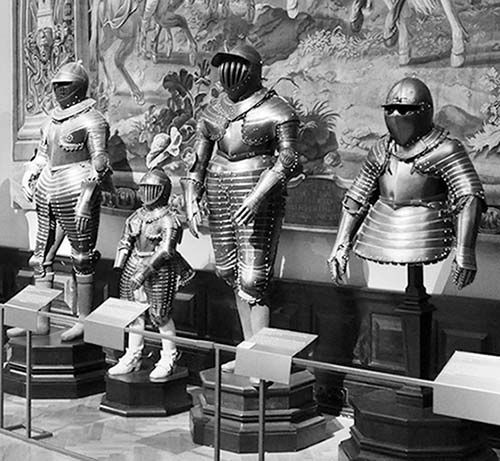
Imperial Armory: One floor up from the ethnology collection, you’re welcomed by colorful mannequins of knights on horseback. The adjoining rooms display weapons from all over the vast Habsburg Empire, including exotic Turkish suits of armor. Don’t miss the dark-blue-and-gold suit of armor designed for Emperor Maximilian II—hard to miss with its red feather and 87 changeable parts. Long after gunpowder had rendered medieval weaponry obsolete, the Habsburgs staunchly maintained the knightly code of chivalry and celebrated family events with tournaments and jousts.
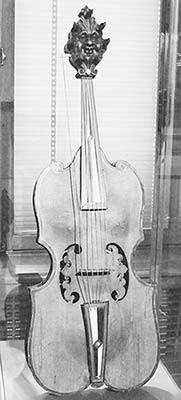
Collection of Historic Musical Instruments: This exhibit shows instruments through the ages, especially the rapid evolution from harpsichord to piano. In the 19th century, Vienna was the world’s musical capital. In the large hall, admire Beethoven’s (supposed) clarinet and a strange keyboard perhaps played by Mozart. Browse around to find Leopold Mozart’s violin (Room XIII) and a piano owned by Robert and Clara Schumann and later by Brahms (Room XVI). If you have a love of classical music, this collection—brought to life by the audioguide—is a Vienna highlight.
Ephesus Museum
This museum, also housed in the Neue Burg, is adjacent to the World Museum Vienna. Here you’ll see artifacts from Ephesus, the bustling ancient Greek (then Roman) city located on modern-day Turkey’s southwest coast.
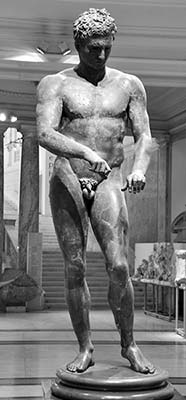
One bronze statue of an athlete is a jigsaw of 234 shattered pieces meticulously reassembled. Look at the scale model of the city of Ephesus: You can make out the theater, the stadium, and—in the middle of an open plain—the Temple of Artemis, which is now on display down the stairs from here. The temple’s statue of Artemis (goddess of fertility, among other things) is draped with round objects—which may have symbolized breasts, eggs, or bulls’ testicles.
Cost and Hours: €8; Tue-Sun 10:00-18:00, Thu until 21:00, closed Mon; www.khm.at/en/visit/collections/ephesos-museum. Your ticket also covers the House of Austrian History (described next; entrance for both collections is at the Ephesus Museum).
▲House of Austrian History
This one-floor museum covers the story of Austria from 1918 to 2018—starting with the declaration of the First Republic after World War I. Highlights include the tumultuous 1920s (when Austria was no longer a huge empire, but a small republic, and streets and squares were renamed for things other than Habsburg rulers); the fight for women’s rights; and a rotating special exhibit on Nazism in Austria. The museum’s mission is to encourage visitors (from local school groups to tourists) to learn, remember, and talk about 20th-century history in a candid and honest way. It’s well described in English, with lots of artifacts, videos, and a special focus on the power of media. The engaged staff cares about history and is available to answer questions. Your last stop: an exhibit on the bearded drag queen, Conchita Wurst, who won the 2014 Eurovision Song Contest for Austria (with a video you can’t unsee).
Cost and Hours: Same as Ephesus Museum (see earlier), www.onb.ac.at/museen/haus-der-geschichte-oesterreich.
Rest of the Hofburg
▲Spanish Riding School (Spanische Hofreitschule)
This stately 300-year-old Baroque hall at the Hofburg Palace is the home of the renowned Lipizzaner stallions. The magnificent building was an impressive expanse in its day. Built without central pillars, it offers clear views of the prancing horses under lavish chandeliers, with a grand painting of Emperor Charles VI on horseback at the head of the hall.
Lipizzaner stallions were a creation of horse-loving Habsburg Archduke Charles. Wanting to breed an intelligent and easily trainable animal, he imported Andalusian horses from his homeland of Spain, then mated them with a local line. Italian and Arabian bloodlines were later added to tweak various characteristics. The name “Lipizzaner” comes from Lipica, the Slovenian town where one of the earliest stud farms was located.
Lipizzaner stallions are known for their noble gait and Baroque profile. These regal horses have changed shape with the tenor of the times: They were bred strong and stout during wars, and frilly and slender in more cultured eras. But they’re always born black, fade to gray, and turn a distinctive white in adulthood.
Seeing the Horses and Buying Tickets: The school offers three ways to see the horses—performances, morning exercises, and guided tours of the stables (check the events list on the school’s website at www.srs.at). You can purchase tickets online or at the box office (opens at 9:00, located inside the Hofburg—go through the main Hofburg entryway from Michaelerplatz, then turn left into the first passage, +43 1 533 9031). Photos are not allowed at any events, nor are children under age 3.
To see the horses for free, you can just walk by the stables at any time of day when the horses are in town. From the covered passageway across from Josefsplatz, there’s a big window from where you can usually see the horses poking their heads out of their stalls.
Performances: The Lipizzaner stallions put on great 80-minute performances nearly year-round. The formal emcee introduces each number in German and English as horses do their choreographed moves to jaunty recorded Viennese classical music (in 4:4 meter rather than 3:4—I guess the horses don’t waltz). The pricey seats book up months in advance, but standing room is usually available the same day. With just a few rows of seats and close-up standing-room spots, there’s not a bad view in the house (seats about €50-160, standing room about €25, prices vary depending on the show; Feb-mid-June and mid-Aug-Dec usually Sat-Sun at 11:00, no shows Jan and mid-June-mid-Aug).
Morning Exercises: For a less expensive, more casual experience, morning exercises with music take place on weekday mornings in the same hall and are open to the public. Don’t have high expectations, as the horses often do little more than trot and warm up. Tourists line up early at Josefsplatz (the large courtyard between Michaelerplatz and Albertinaplatz). Tuesdays are busiest (€15, family discounts; tickets may be available at the door in high season, but best to buy in advance online or at the box office; can also buy at visitors center on Michaelerplatz; generally Tue-Fri 10:00-11:00, no exercises July-mid-Aug).
Guided Tours: One-hour guided tours in English are given almost every afternoon year-round. You’ll see the Winter Riding School with its grand Baroque architecture, the Summer Riding School in a shady courtyard, and the stables (€19; tours usually daily at 13:00, 14:00, 15:00, and 16:00; reserve ahead by emailing office@srs.at or calling the box office).
▲Augustinian Church (Augustinerkirche)
Built into the Hofburg, this is the Gothic and Neo-Gothic church where the Habsburgs got married. Today, the royal hearts are in the church vault.
Cost and Hours: Free, open long hours daily; at Augustinerstrasse 3, facing Josefsplatz, with its statue of the great reform emperor, Josef II, and the royal library next door.
Visiting the Church: Proceed up the main aisle as if you’re a bride or groom. In the front (above the altar on the right), notice the windows from which royals witnessed the Mass in private. Look back at what’s considered the finest pipe organ in Vienna (you’ll often hear someone practicing).
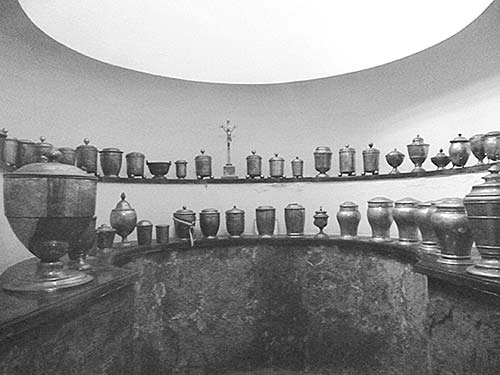
From the front, circle back to the right, walking up the aisle along the right wall to see three sights. A wooden door leads to a crypt with the hearts of 54 Habsburg nobles in urns (see photo of the loaded shelves by the door). The earliest dates from 1618; the last is the heart of Franz Josef’s father, who died in 1878. (Viewable by German tour only, €3, after Sunday Mass at about 12:45.)
Next is a chapel dedicated to Charles I, the last Habsburg emperor (r. 1916-1918). Pushed by present-day Habsburg royalists who worship here, Charles is beatified and on a dubious road to sainthood. (The Catholic Church requires that you perform three miracles before they’ll make you a saint. Charles I’s first miracle: He healed the varicose veins of a nun.)
Finally, don’t miss the exquisite, pyramid-shaped memorial (by the Italian sculptor Antonio Canova) to Maria Theresa’s favorite daughter, Maria Christina, with its incredibly sad, white marble procession. It’s made of Carrara marble from Italy. Notice her widow, Prince Albert, with sad angel wings, leaning on a lion.
Sunday Mass: The church’s 11:00 Sunday Mass is a hit with music lovers. It’s both a Mass and a concert, often with an orchestra accompanying the choir (acoustics are best in front). Pay by contributing to the offering plate or buying their music afterward. Check posters by the entry or www.hochamt.at to see what’s on—typically you’ll hear one of Mozart’s or Haydn’s many short Masses.
State Hall (Prunksaal) of the Austrian National Library
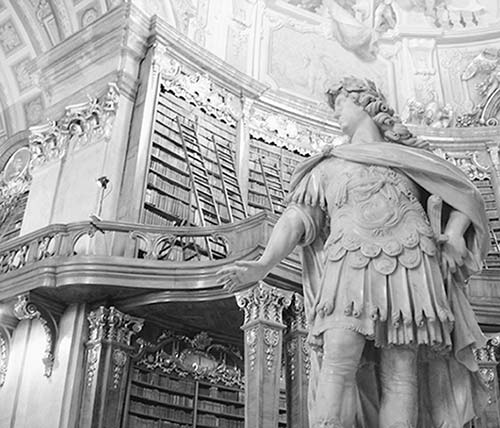
The National Library’s State Hall (Prunksaal) is a postcard-perfect Baroque library (entered from Josefplatz, next to the Augustinian Church). In this former imperial library, with a statue of Charles VI in the center, you’ll find yourself whispering. The setting takes you back to 1730 and gives you the sense that, in imperial times, knowledge of the world was for the elite—and with that knowledge, the elite had power. The glorious paintings (with impressive 3-D) celebrate high culture and the library’s patron, Charles VI. More than 200,000 old books line the walls, but patrons go elsewhere to read them—the hall is just for show these days. Special exhibits fill glass cases down the nave-like main aisle with literary treasures, all well described in English.
Cost and Hours: €10; Tue-Sun 10:00-18:00, may be open until 21:00 on Thu, closed Mon; +43 1 53 410, www.onb.ac.at.
Other National Library Museums: The library hosts three other minor museums (€5 combo-ticket covers all three, same hours as State Hall). Walk through the National Library’s main reading room on Heldenplatz to visit the Papyrus Museum in the basement of the Neue Burg building. This little collection tells the story of writing in Egypt from 3000 BC to AD 1000, with scant English descriptions.
A couple of blocks north of the Hofburg, in the building at Herrengasse 9 (across from the Herrengasse U-Bahn station), the library also runs the Globe Museum (the world’s largest, with 250 terrestrial and celestial spheres) and a modest two-room museum on Esperanto and other planned languages.
Butterfly House (Schmetterlinghaus) in the Palace Garden (Burggarten)
The Burggarten greenbelt, once the backyard of the Hofburg and now a people’s park, welcomes visitors to loiter on the grass. On nice days, it’s lively with office workers enjoying a break, and the popular statue of Mozart, facing the Ringstrasse, almost seems to flirt with passersby.
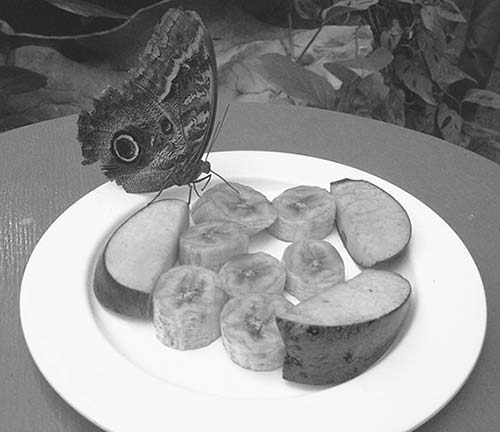
The iron-and-glass pavilion (c. 1910 with playful Art Nouveau touches) now houses the recommended Palmenhaus (see the Eating in Vienna chapter) and a small, fluttery butterfly exhibit. Watching the 400 free-flying butterflies is trippy any time of year, and on a chilly day, it feels great to step inside their delightfully muggy greenhouse. If you tour it, notice the butterflies hanging out on the trays with rotting slices of banana. They lick the fermented banana juice as it beads, and then just seem to hang out there in a drunken stupor...or fly giddy loop-de-loops.
Cost and Hours: €7; Mon-Fri 10:00-16:45, Sat-Sun until 18:15, daily until 15:45 in off-season; +43 1 533 8570, www.schmetterlinghaus.at.
▲▲Albertina Museum
This impressive museum has three highlights: the imposing state rooms of the former palace, noteworthy collections of classic modernist paintings and European graphic arts (sketches, etching, watercolors—especially Dürer), and excellent temporary exhibits. The building, at the southern tip of the Hofburg complex (near the opera), was the residence of Maria Theresa’s favorite daughter, Maria Christina, who was allowed to marry for love rather than political strategy. Her many sisters were jealous. (Marie-Antoinette had to marry the French king...and lost her head over it.) Maria Christina’s husband, Albert of Saxony, was a great collector of original drawings and prints, which he amassed to cover all the important art movements from the late Middle Ages until the early 19th century (including prized works by Dürer, Rembrandt, and Rubens). As it’s Albert and Christina’s gallery, it’s charmingly called the “Alber-tina.”
Cost and Hours: €17.90; daily 10:00-18:00, Wed and Fri until 21:00; overlooking Albertinaplatz across from the TI and opera, +43 1 534 830, www.albertina.at.
Visiting the Museum: After the turnstile, you’ll pass some temporary exhibits. Climbing the stairs you reach the main attractions (clearly labeled)—the state rooms (Prunkräume) on your left on level 1, and the Batliner Collection on your right on level 2. Excellent special exhibitions (generally featuring modern art and included in your ticket) are shown on level 2 and in the basement galleries.
State Rooms (Prunkräume, level 1): Wander freely under chandeliers and across parquet floors through a handful of rooms of 18th-century imperial splendor, unconstrained by velvet ropes. The exhibit spaces (never crowded, well described in English, and air-conditioned) are nearly as impressive as those at Schönbrunn Palace. Many rooms are often closed for special functions, but even a few rooms give a good look at imperial Classicism—this is the only post-Rococo palace in the Habsburg realm. It’s a kaleidoscope of colors, as each room’s damask walls and curtains are a different rich shade of red, yellow, or green. You may see the billiard room, the tea salon, the bedrooms, and the tiny Goldkabinett, with walls plated in 23-carat gold. Most impressive is the large Hall of Muses (in pastel yellow), lined with statues of the graceful demi-goddesses (plus Apollo) who inspire the arts.
Batliner Collection (level 2): This manageable collection sweeps you quickly through modern art history, featuring minor works by major artists. Though the collection is permanent, what’s on display rotates through about 100 works selected from the 300 in the archives.
Start with a room of classic Impressionism: Monet’s water lilies, Degas’ dancers, and Renoir’s cute little girls. By 1900, the modern world was approaching, as seen in Munch’s moody landscapes.
The next few rooms illustrate how art transitioned from Impressionism to abstraction. The Fauves (Matisse, Vlaminck, Derain) amped up the colors of Impressionism to surreal levels. Expressionists (Nolde, Kirchner) used their trademark thick paint, clashing colors, black outlines, and grotesque figures to capture the unsettled atmosphere of the WWI era. The subject matter becomes increasingly flat and two-dimensional, eventually dissolving into patterns of paint that would become purely abstract.
Another section features German, Russian, and Austrian art from between the wars. The Picasso room has canvases from various periods of his life: early Cubist experiments, portraits of the women in his life, and exuberant, colorful works from his last years on the sunny Riviera. Surrealism, paintings by Joan Miró, and big Abstract Expressionist canvases bring art up to the cusp of the 21st century.
CHURCH CRYPTS NEAR THE HOFBURG
Two churches near the Hofburg offer starkly different looks at dearly departed Viennese: the Habsburg coffins in the Kaisergruft and the commoners’ graves in St. Michael’s Church.
▲▲Kaisergruft (Imperial Crypt)
Visiting the imperial remains of the Habsburg family is not as easy as you might imagine. As bodies needed to lie in state to prove to nobility that they were actually dead (in an age of “seeing is believing”) the newly dead were gutted like a fish, with all the quick-to-go-bad parts removed (hearts and innards). These original organ donors left their bodies—about 150 in all—in the unassuming Kaisergruft, their hearts in the Augustinian Church (viewable Sun after Mass—see listing earlier), and their entrails in the crypt below St. Stephen’s Cathedral (described later).
Cost and Hours: €8, daily 10:00-18:00, free map includes Habsburg family tree and a chart locating each coffin, crypt is in the Capuchin Church at Tegetthoffstrasse 2 at Neuer Markt; +43 1 512 685 388.
Visiting the Kaisergruft: Descend into a crypt full of gray metal tombs. Start up the path, through tombs ranging from simple caskets to increasingly big monuments with elaborate metalwork ornamentation. Josef I (the tomb midway along on the right, with the trumpeting angel) was the Holy Roman Emperor who battled France’s Louis XIV to a standstill. (Joseph’s wife, Amalia, who wanted her heart to rest at her husband’s feet for eternity, is in the bosom of a double-headed eagle to the right.)
Maria Theresa was the only woman to officially rule the Habsburg Empire in that family’s 640-year reign. She was a strong and effective empress (r. 1740-1780), but Austrians are also quick to remember Maria Theresa as the mother of 16 children (10 survived into adulthood). Ponder the fact that the most powerful woman in Europe either was pregnant or had a newborn for most of her reign. Maria Theresa ruled after the Austrian defeat of the Ottomans, when Europe recognized Austria as a great power. (Her rival, the Prussian king, said, “When at last the Habsburgs get a great man, it’s a woman.”) For an abridged Habsburg family tree, see the Austria: Past & Present chapter.
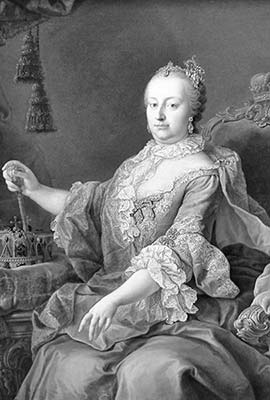
Maria Theresa’s reign marked the end of the feudal system and the beginning of the era of the grand state. The first of the modern rulers of the Age of Enlightenment, she was a great social reformer. During her reign, she avoided wars and expanded her empire by skillfully marrying her children into the right families. For instance, after daughter Marie-Antoinette’s marriage into the French Bourbon family (to Louis XVI), a country that had been an enemy became an ally. (Unfortunately for Marie-Antoinette, Maria Theresa’s timing was off.)
To stay in power during an era of revolution, Maria Theresa had to be in tune with her age. She taxed the Church and the nobility, provided six years of obligatory education to all children, and granted free health care to all in her realm. Maria Theresa also welcomed the boy genius Mozart into her court.
The empress’ legacy lived on in her son, Josef II, who ruled as emperor for a decade (1780-1790). He was an even more avid reformer, building on his mother’s accomplishments. An enlightened monarch, Josef mothballed the too-extravagant Schönbrunn Palace, secularized the monasteries, established religious tolerance within his realm, freed the serfs, made possible the founding of Austria’s first general hospital, and promoted relatively enlightened treatment of the mentally ill. Josef was a model of practicality (for example, he banned slow-to-decompose coffins and allowed no more than six candles at funerals)—and very unpopular with other royals. But his policies succeeded in preempting the revolutionary anger of the age, largely enabling Austria to avoid the antimonarchist turmoil that shook so much of the rest of Europe.
Two of the most beautiful tombs are next: the parents of Maria Teresa, Elisabeth Christine (died in 1750) and Karl VI (a few steps farther on the left, died in 1740). He was Josef’s little brother, best known for failing to father a male heir, but who arranged for his daughter Maria Theresa to take the throne.
You soon reach the massive pewter tomb of Maria Theresa under the dome, enjoying natural light. The only female Habsburg monarch, she had to be granted special dispensation to rule. Her 40-year reign was enlightened and progressive. She and her husband, Franz I, recline Etruscan-style atop their fancy coffin, gazing into each other’s eyes as a cherub crowns them with glory. They were famously in love (though Franz was less than faithful), and their numerous children were married off to Europe’s royal houses. Maria Theresa outlived her husband by 15 years, which she spent in mourning. Old and fat, she installed a special lift to transport herself down here into the Kaisergruft to visit her dear, departed Franz. At the four corners of the tomb are the Habsburgs’ four crowns: the Holy Roman Empire, Hungary, Bohemia, and Lombardy. At his parents’ feet lies Josef II, the patron of Mozart and Beethoven. Compare the Rococo splendor of Maria Theresa’s tomb with the simple coffin of Josef, who was known for his down-to-earth ruling style during the Age of Enlightenment.
Continuing to the right of Maria Theresa’s tomb, you’ll pass the tombs of Franz II (a.k.a. Francis I) and his son Ferdinand I. These two 19th-century rulers were forced to relinquish some of the Habsburg power in the face of Napoleon’s armies and democratic revolutions.
Head on through the next room—created in 1960—featuring Napoleon’s wife, Marie Louise, and a plaque to Franz Ferdinand (assassinated in 1914 in Sarajevo). Franz Ferdinand is not here because he chose to be buried with his wife, Sophie. (They were a love match and died together in the same assassination. As she was only a countess, she was not a high enough royal to be allowed in this crypt.) Then head down three steps to a room illustrating the Habsburgs’ fading 19th-century glory. There’s the appropriately austere military tomb of the long-reigning Franz Josef (ruled 1848 to 1916, see sidebar on here). Alongside is his wife, Elisabeth—a.k.a. Sisi (see here)—who always wins the “Most Flowers” award. Their son was Crown Prince Rudolf. Rudolf and his teenage mistress supposedly committed suicide together in 1889 at Mayerling hunting lodge...or was it murder? It took considerable ecclesiastical hair-splitting to win Rudolf this hallowed burial spot: After examining his brain, it was determined that he was mentally disabled and therefore incapable of knowingly killing himself and his girl. In the final room (with humbler copper tombs), you reach the final Habsburgs. Karl I (see his bust, not a tomb), the last of the Habsburg rulers, was deposed in 1918 and died in exile. His sons Crown Prince Otto and Archduke Karl Ludwig are entombed near their mother, Zita. (They’re holding a prime spot here for Karl Ludwig’s wife.)
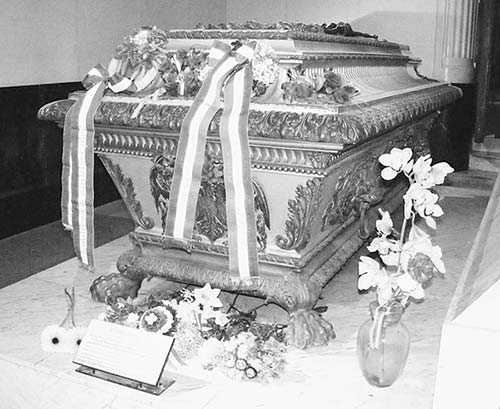
When Otto was laid to rest here in 2011, it was probably the last great Old Regime event in European history. The monarchy died hard in Austria. Today there are several hundred living Habsburg royals. When they die, they won’t be buried here. Body parts and ornate tombs aside, the real legacy of the Habsburgs is the magnificence of this city. Step outside. Pan up. Watch the clouds glide by the ornate gables of Vienna.
▲St. Michael’s Church Crypt (Michaelerkirche)
St. Michael’s Church, which faces the Hofburg on Michaelerplatz, offers a striking contrast to the imperial crypt. Tours take visitors underground to see a typical church crypt, filled with the rotting wooden coffins of well-to-do commoners.
Cost and Hours: €8 for 45-minute tour (crypt only accessible by tour), tours run Fri-Sat only, check website to confirm schedule and language—tours may be in German only, wait at church entrance at the sign advertising the tour and pay the guide directly, mobile +43 650 533 8003, www.michaelerkirche.at.
Visiting the Crypt: Climbing below the church, you’ll see about a hundred 18th-century coffins and stand on three feet of debris, surrounded by niches filled with stacked lumber from decayed coffins and countless bones. You’ll meet 18th-century mummies in their original clothes—one wearing lederhosen and a wig; another clutching a cross and wearing high heels painted with flowers. You’ll learn about death in those times, including how the wealthy—not wanting to end up in standard shallow graves—instead paid to be laid to rest below the church, and how, in 1783, Emperor Josef II ended the practice of cemetery burials in cities but allowed the rich to become the stinking rich in crypts under churches. You’ll also discover why many were buried with their chins strapped shut (because when your muscles rot, your jaw falls open and you get that ghostly, skeletal look that nobody wants).
St. Michael’s Church itself has an interesting history. In 1791, a few days after Mozart’s death, his Requiem was performed here for the first time. (See the small monument just inside the door on the right.) In the rear of the nave, in a small chapel on the right, is a small memorial to Austrian victims of the Nazis at the Dachau concentration camp (a wooden cross made in 1945 at Dachau by newly freed prisoners). Just to the left of the cross (amid the faint remains of 13th-century frescoes) is a niche with a relief of Austria’s Fascist chancellor Engelbert Dollfuss, who was murdered in 1934 by Austrian Nazis for opposing union with Germany. While he was a fascist, he was not a Nazi.
MORE SIGHTS WITHIN THE RING
▲▲▲St. Stephen’s Cathedral (Stephansdom)
This massive Gothic church with the skyscraping spire sits at the center of Vienna. Its highlights are the impressive exterior, the view from the top of the south tower, a carved pulpit, and a handful of quirky sights associated with Mozart and the Habsburg rulers.
Cost and Hours: Church foyer and north aisle—free, daily 6:00-22:00; main nave—€6, includes audioguide, Mon-Sat 9:00-11:30 & 13:00-16:30, Sun 13:00-16:30, July-Aug until 17:30; south and north towers and catacombs have varying costs and hours; +43 1 515 523 054, www.stephanskirche.at.
See the St. Stephen’s Cathedral Tour chapter or download my free audio tour.
▲▲▲Vienna State Opera (Wiener Staatsoper)
The opera house, facing the Ring and near the TI, is a central point for any visitor. Vienna remains one of the world’s great cities for classical music, and this building still belts out some of the finest opera, both classic and cutting-edge. While the critical reception of the building 130 years ago led the architect to commit suicide, and though it’s been rebuilt since its destruction by WWII bombs, it’s still a sumptuous place. The interior has a chandeliered lobby and carpeted staircases perfect for making the scene. The theater itself features five wraparound balconies, gold-and-red decor, and a bracelet-like chandelier.
Depending on your interest in opera, choose among several different ways to experience the building. You can simply admire its Neo-Renaissance charms from the outside (and maybe slip inside the lobby for a peek), or take a guided tour of the lavish interior (see below). Best of all, attend an opera performance, which can be surprisingly easy and cheap to do—and doesn’t have to take up a whole evening (see details in the Entertainment in Vienna chapter).
Opera House Tours: The only way to see the opera house interior (besides attending a performance) is with a guided 40-minute tour. You’ll see the opulent halls where operagoers gather at intermission, enjoying elaborate spaces with coffered ceilings, gold trim, and iron-work lamps. You’ll learn about the opera’s history and compare the old parts of the building (such as Emperor Franz Josef’s ornate reception room) with the postwar reconstruction. The highlight is the 2,000-seat theater itself—where the main floor is ringed by box seating, under a huge sugar-doughnut chandelier. If it seems busy, that’s because the Vienna State Opera puts on 60 different productions a year. And, with a policy of never performing the same opera on two successive nights, the stage is a hive of activity throughout the season. Your tour gives a backstage peek at the action.
Cost and Hours: €13, tour schedule varies depending on rehearsals and performances—generally more tours in the afternoon and in July-Aug (when there are no performances), fewer tours Sept-June; reserve your spot online or risk it and show up at the tour entrance 30 minutes in advance; current month’s tour schedule posted online, at the tour entrance (on Operngasse), and at the box office (on Kärntner Strasse); +43 1 514 444 2250, www.wiener-staatsoper.at/en/staatsoper/guided-tours.
▲▲Haus der Musik
Vienna’s “House of Music” is a fun and interactive experience that celebrates this hometown forte. The museum, spread over several floors and well-described in English, is unique for its effective use of touchscreen computers and headphones to explore the physics of sound. One floor is dedicated to the heavyweight Viennese composers (Mozart, Beethoven, and company) who virtually created classical music as we know it. Really experiencing the place takes time. It’s open late and is so interactive, relaxing, and fun that it can be considered an activity more than a sight—an evening of joy for music lovers.
Cost and Hours: €16, half-price after 20:00, €20 combo-ticket with Mozarthaus, daily 10:00-22:00, two blocks from the opera house at Seilerstätte 30, +43 1 513 4850, www.hausdermusik.com.
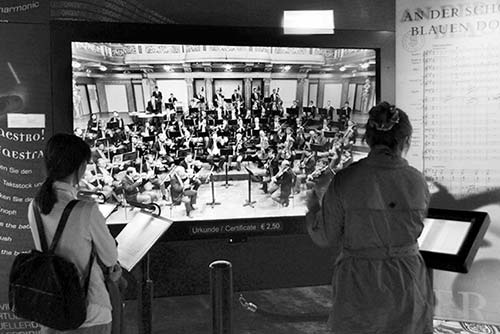
Visiting the Museum: It’s a one-way system; just follow the arrows on the floor. Scan the museum’s posted QR code for additional information to enhance your visit. The first floor highlights the Vienna Philharmonic Orchestra, known the world over for their New Year’s Eve concerts. (In a mini concert hall, a one-hour video—on a loop—lets you enjoy the event.) See Toscanini’s baton, Mahler’s cap, and well-used scores. Throw the dice to randomly “compose” a piece of music.
The second floor explores the physics of sound—inviting you to hear the world in new ways. Enjoy the dark space and stop to notice isolated sounds of things you encounter every day. Interactive touchscreens allow you to experiment with the perception of sound (like “sounds of the womb”), and a tube filled with pebbles demonstrates the power of sound waves...watch them bounce. At the “instrumentarium,” four giant instruments, including a drum, demonstrate the principles of sound generation. Through these interactive exhibits, you’ll explore the nature of sound and music; I could actually hear what I thought only a piano tuner could discern. You can twist, dissect, and bend sounds to make your own musical language, merging your voice with a duck’s quack or a city’s traffic roar.
The third floor celebrates the famous hometown boys. Haydn established the four-movement symphony and pioneered the sonata-form technique of repeating a brief melody throughout a longer work (and you’ll meet his parrot). Mozart was music’s first charismatic rock star. See the picture of the famous performing Mozart family, with little Wolfgang and his sister at the keyboard, their father on violin, and (a portrait of) their mom behind. Beethoven (see his “square piano,” a letter to his brother, and depictions of his many Vienna apartments) turned mere entertainment into serious art. His nine symphonies amped up the size of the orchestra and the emotional wattage, anticipating the powerful Romantic style. An exhibit allows you to hear what Beethoven did as he gradually lost his hearing. Schubert, who died in obscurity at 31, wrote 600 songs that are sung today and the brilliant Unfinished Symphony. The Strausses (father and son) created the dance craze that defines Vienna—the waltz. Mahler expanded the orchestra to its fullest range, and paved the way for atonal modernists like Schönberg, Webern, and Berg.
Before leaving, head to the top floor and pick up a virtual baton to conduct the Vienna Philharmonic. It really works—you can go fast or slow, and bring out the section to which you direct your baton; make it through the piece, and you’ll get a rousing round of applause.
▲Dorotheum Auction House (Palais Dorotheum)
For an aristocrat’s flea market, drop by Austria’s answer to Sotheby’s. The ground floor has shops, an info desk with a schedule of upcoming auctions (Sept-June only), and a few auction items. Some pieces are available for immediate sale (marked VKP, for Verkaufpreis—“sales price”), while others are up for auction (marked DIFF. RUF). Labels on each item predict the auction value. Serious bidders can review what’s on and even make bids via their website.
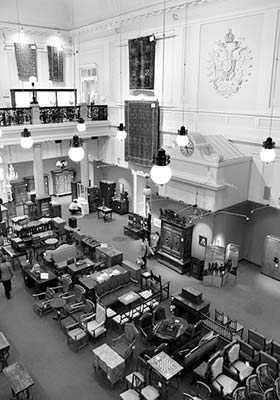
The first floor (above the mezzanine) has antique furniture and fancy knickknacks, many brought in by people who’ve inherited old things and don’t have room for them. The second floor has a showy antique gallery with fixed prices. Wandering through here, you feel like you’re touring a museum with exhibits you can buy. Afterward, you can continue your hunt for the perfect curio on the streets around the Dorotheum, which are lined with many fine antique shops.
Cost and Hours: Free, Mon-Fri 10:00-18:00, Sat 9:00-17:00, closed Sun, classy little café on second floor, between the Graben pedestrian street and Hofburg at Dorotheergasse 17, +43 1 515 60, www.dorotheum.com [URL inactive].
▲St. Peter’s Church (Peterskirche)
Baroque Vienna is at its best in this architectural gem, tucked away a few steps from the Graben.
Cost and Hours: Free, Mon-Fri 8:00-19:00, Sat-Sun from 9:00, free organ concerts daily at 15:00, just off the Graben between the Plague Monument and Kohlmarkt, +43 1 533 6433, www.peterskirche.at.
Visiting the Church: Admire the rose-and-gold, oval-shaped Baroque interior, topped with a ceiling fresco of Mary kneeling to be crowned by Jesus and the Father, while the dove of the Holy Spirit floats way up in the lantern. The church’s sumptuous elements—especially the organ, altar painting, pulpit, and coat of arms (in the base of the dome) of church founder Leopold I—make St. Peter’s one of the city’s most beautiful and ornate churches.
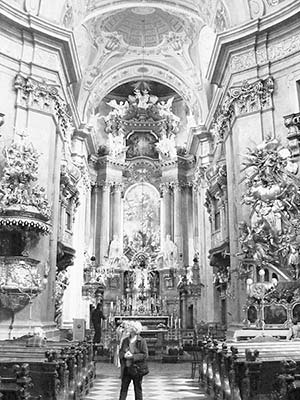
To the right of the altar, a dramatic golden statue shows the martyrdom of St. John Nepomuk (c. 1340-1393). The Czech saint defied the heretical King Wenceslas, so he was tossed to his death off the Charles Bridge in Prague. In true Baroque style, we see the dramatic peak of his fall, when John has just passed the point of no return. The Virgin Mary floats overhead in a silver cloud.
Looking down from above at the base of the dome is the Holy Roman Empire’s double-headed eagle, with halos around each head—a reminder to all that the Emperor was indeed holy.
The present church (from 1733) stands atop earlier churches dating back to the early Middle Ages; it was built quickly and therefore consists of one pure artistic style. On either side of the nave are glass cases containing skeletons of Christian martyrs from Roman times.
Mozarthaus Vienna Museum
In September 1784, 27-year-old Wolfgang Amadeus Mozart moved into this spacious apartment with his wife, Constanze, and their week-old son Karl. For the next three years, this was the epicenter of Viennese high life. It was here that Mozart wrote Marriage of Figaro and Don Giovanni and established himself as the toast of Vienna. Today, the actual apartments are pretty boring (mostly bare rooms), but the museum does flesh out Mozart’s Vienna years with paintings, videos, and a few period pieces.
Cost and Hours: €12, includes audioguide, €20 combo-ticket with Haus der Musik; Tue-Sun 10:00-18:00, closed Mon; a block behind the cathedral, go through arcade at #5a and walk 50 yards to Domgasse 5, +43 1 512 1791, www.mozarthausvienna.at.
Visiting the Museum: Start on the third floor, working your way down through museum displays to the actual apartment on the first floor. Exhibits set the scene: Vienna in the 1780s, population 50,000, was a blossoming music capital. It supported more than just the traditional church and court music. Mozart capitalized on this and profited greatly by organizing public concerts in concert halls and aristocratic homes, and he wrote crowd-pleasing pieces for the theater. Antonio Salieri, the emperor’s musical director, was supposedly jealous of Mozart’s God-given talent, but in reality he probably fostered the young man’s career (and Mozart eventually succeeded him). Mozart joined the Freemasons, whose symbolism would appear in his opera The Magic Flute. Mozart loved the good life—nice clothes, gambling at cards, even peepshows—and the three years he spent in this house were his champagne years.
The second floor delves into Mozart’s Musical World. The audioguide gives some background on his friendship with fellow-genius Haydn and his successful operas. But after 1787, the money dried up: He and Constanze moved to a cheaper place outside the city center and Wolfgang hit the road to raise money. He died just four years later at age 35 while writing his Requiem. His cause of death still remains a mystery.
The first-floor apartment consists of a half-dozen nondescript rooms, sparsely decorated with period pieces (but none of them Mozart’s). See the portraits of him and Constanze, and picture them here: raising their kids, playing billiards, perhaps jamming with Haydn (though there’s no evidence of that), or just gazing out the window as Mozart composed another masterpiece. Gaze out the window yourself and appreciate that the view is relatively unchanged since Mozart’s time. Unfortunately, the bare rooms themselves don’t quite succeed in capturing the joie de vivre of the exuberant young genius in his prime.
Jewish Museum Vienna (Jüdisches Museum Wien)
The museum operates two buildings a 10-minute walk apart. The main museum is on Dorotheergasse (near the Hofburg), and a smaller, more archaeological exhibit is at Judenplatz, which is also the site of a Holocaust memorial (near Am Hof).
Cost and Hours: €12 ticket includes both museums; Dorotheergasse location, at #11—Sun-Fri 10:00-18:00, closed Sat, multimedia guide-€3; Judenplatz location, at #8—Sun-Thu 10:00-18:00, Fri until 17:00, closed Sat; +43 1 535 0431, www.jmw.at.
Background: Jews settled in Vienna in the early Middle Ages, only to be brutally expelled in 1420 (similar events took place in other German-speaking towns). Another community formed in the 17th century, but was broken up in 1670. Even during the years when Jews were forbidden to live in Vienna, many settled in the small towns and cities of the Habsburg empire, and in the parts of Poland that the Habsburgs took over in the 1770s. In 1782, Josef II partially eased restrictions on his Jewish subjects, allowing them to own property, attend university, and even (if they paid a special tax) to live in Vienna. Still, it was not until the 1850s that the Jewish community in Vienna was allowed to build a synagogue, and it was only in 1867 that reforms allowed freedom of movement and residence for everyone in the empire.
After that, Jews moved from the small towns to Vienna in large numbers, attracted by educational and economic opportunities in the rapidly expanding and industrializing capital. Psychologist Sigmund Freud, writers Arthur Schnitzler and Stefan Zweig, and journalist Theodor Herzl were among the prominent Austrian Jews of the pre-WWI period. In 1910, almost 10 percent of Vienna’s two million inhabitants were Jewish. But the officially Catholic city was a hostile, anti-Semitic environment for them, with pressure to assimilate or emigrate, especially under the Christian Socialist Karl Lueger, who was mayor from 1897 to 1910. After the Nazi annexation of Austria in 1938, Jews were once again persecuted, expelled, or forced to emigrate. Those who did not were mostly sent to their deaths in the concentration camps in Poland. After the war, only a handful returned to their homes, and today the local Jewish community numbers just a few thousand.
Visiting the Museums: The Jewish Museum Dorotheergasse fills a four-story downtown building with exhibits, a bookstore, and a small, reasonably priced café serving Middle Eastern fare. It documents Vienna’s Jewish community from earliest times to the present.
The main part of the exhibit is on the second floor, covering the history of Vienna’s Jews up to World War II; a ground-floor exhibit carries the story forward to the present day. The first floor hosts temporary exhibits, and the evocative third floor is a “visible storage” archive with stacks of Judaica and works of art that once ornamented synagogues.
The smaller, less interesting Museum Judenplatz was built around the scant remains of the medieval synagogue that served Vienna’s 1,500 Jewish residents up until their massacre in 1420. Its main exhibit is an underground hall where you see the synagogue’s foundations. The museum also has brief displays on medieval Jewish life and a well-done video re-creating the neighborhood as it looked five centuries ago.
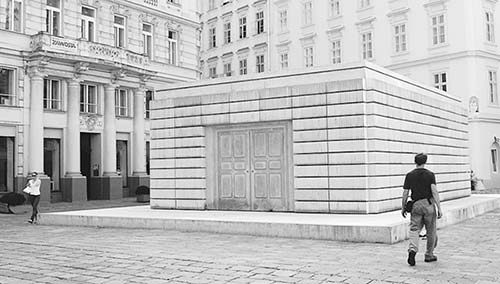
The classy square above the ruins, called Judenplatz, is now dominated by a blocky memorial to the 65,000 Viennese Jews killed by the Nazis. The memorial—a library turned inside out—invokes Jewish identity as a “people of the book” and asks viewers to ponder the huge loss of culture, knowledge, and humanity that took place between 1938 and 1945.
Austrian Postal Savings Bank (Österreichische Postsparkasse)
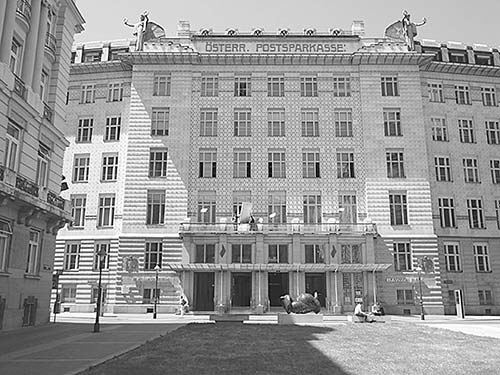
Built between 1904 and 1912, the Postal Savings Bank was one of the key buildings in the development of modern architecture. Today it’s a pilgrimage site for architects from all over the world. The bank was recently sold to a big developer with the caveat that it must remain open to the public. Just what that means for this sight remains to be seen.
Cost and Hours: Cost and opening hours may be in flux when you visit—check locally, located just inside the Ringstrasse at Georg-Coch-Platz 2, +43 1 502 440, www.ottowagner.com/oesterreichische-postsparkasse.
Background: The postal savings system was intended for working-class people, who didn’t have access to the palatial banks of the 19th century—but could walk to a post office. Secessionist architect Otto Wagner believed “necessity is the master of art,” and he declared that “what is impractical can never be beautiful.” Everything about his design—so gray, white, and efficient—is practical. It’s so clean that the service provided here feels almost sacred. This is a textbook example of form following function, and the form is beautiful.
The product of an age giddy with advancement, the building dignifies the technological and celebrates it as cultural. Study the sleek, yet elegantly modern exterior: Angles high above—made of an exciting new material, aluminum—seem to proclaim the modern age. The facade and its unadorned marble siding panels, secured by aluminum bolts, give the impression that the entire building is a safe-deposit box. The interior is similarly functionalist. The glass roof lets in light; the glass floor helps illuminate the basement. Fixtures, vents, and even the furniture fit right in—all bold, geometrical, and modern.
MUSEUM DISTRICT
In the 19th century, the Habsburgs planned to link their palace and museum buildings with a series of arches across the Ringstrasse. Although that dream was never fully realized, the awe-inspiring museums still face off across Maria-Theresien-Platz, with a monument to Maria Theresa at its center (for more on this monument, see the Vienna City Walk chapter).
▲▲▲Kunsthistorisches Museum
This exciting museum, across the Ring from the Hofburg Palace, showcases the grandeur and opulence of the Habsburgs’ collected artwork in a grand building (purpose-built in 1888 to display these works). While there’s little Viennese art here, you will find world-class European masterpieces galore (including canvases by Raphael, Caravaggio, Velázquez, Rubens, Vermeer, Rembrandt, and a particularly exquisite roomful of Bruegels), all well displayed on one glorious floor, plus a fine display of Egyptian, classical, and applied arts. Another highlight, filling a wing of the ground floor, is the Habsburg “Chamber of Wonders” (Kunstkammer), showing off the imperial collection of exquisite fine-art objects and exotic curios (the highlight being Cellini’s golden salt cellar).
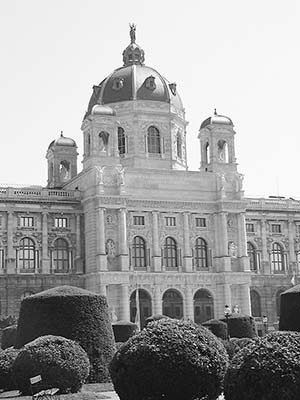
Cost and Hours: €18, €24 combo-ticket with Hofburg Treasury; daily 10:00-18:00, Thu until 21:00, closed Mon Sept-May; audioguide-€6 or €8/2 people; on the Ringstrasse at Maria-Theresien-Platz, U: Volkstheater/Museumsplatz, +43 1 525 240, www.khm.at.
See the Kunsthistorisches Museum Tour chapter.
▲▲Natural History Museum (Naturhistorisches Museum)
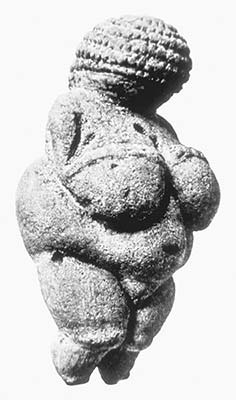
The twin building facing the Kunsthistorisches Museum still serves the exact purpose for which it was built: to show off the Habsburgs’ vast collection of plant, animal, and mineral specimens and artifacts. It’s grown to become an exceptionally well-organized and enjoyable catalogue of the natural world, with 20 million objects, including moon rocks, dinosaur stuff, and the fist-sized Venus of Willendorf (at 25,000 years old, the world’s oldest sex symbol). Even though the museum has kept its old-school charm, nearly everything on display is presented and described well enough to engage any visitor, from kids to scientifically inclined grown-ups.
Cost and Hours: €14; Thu-Mon 9:00-18:30, Wed until 21:00, closed Tue; €6 audioguide (“Top 100”) isn’t necessary but can help you hit the highlights; on the Ringstrasse at Maria-Theresien-Platz, U: Volkstheater/Museumsplatz, +43 1 521 770, www.nhm-wien.ac.at.
Visiting the Museum: For a quick visit, head first to the Venus of Willendorf—she’s on the mezzanine level, just off Room 11 (from the entrance lobby, climb the first 12 steps, swing left, and then right towards the dinosaur skeletons). The four-inch-tall, chubby stone statuette, found in the Danube Valley in 1908, is a generic female (no face or feet) resting her hands on her ample breasts. The statue’s purpose is unknown, but she may have been a symbol of fertility for our mammoth-hunting ancestors.
In Room 10 you can’t miss the very lifelike Allosaurus, the most dangerous predator of the Late Jurassic period. The gigantic Diplodocus (Diplodocus carnegii) skeleton cast, with its long neck and tail, is named after Andrew Carnegie, who purchased the original for a museum in Pittsburgh. The turtle skeleton on the far end is the largest ever discovered.
For a more chronological visit, start with the impressive exhibit on rocks (Rooms 1-5, to the right of entrance lobby), which includes precious gemstones (emeralds, opals, and an octahedral diamond from South Africa) and one of the world’s largest and oldest collections of meteorites. Rooms 7-9 cover the origins of organic life, with fossils from early microorganisms all the way to the complete skeleton of a prehistoric elephant. The timeline continues upstairs with Room 21, where you can follow hundreds of millions of years of evolution—from single cells to sea creatures, reptiles, birds, mammals, and primates. Finish with the hairless primate—man—also downstairs, in Rooms 11-14.
MuseumsQuartier
The vast grounds of the former imperial stables now corral a cutting-edge cultural center for contemporary arts and design. Among several impressive museums, the best are the Leopold Museum and the Museum of Modern Art. For many, the MuseumsQuartier is most enjoyable as a spot to gather in the evening for a light, fun meal, cocktails, and people-watching.
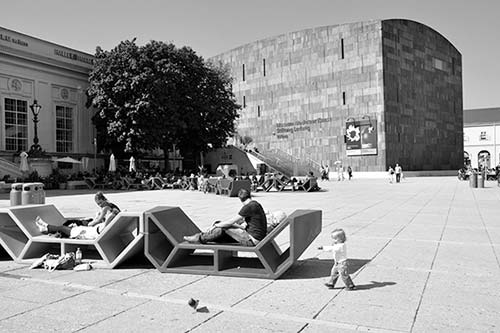
Cost and Hours: Leopold Museum—€15, Wed-Mon 10:00-18:00, some Thu until 21:00, closed Tue except in summer, audioguide-€4 or €7/2 people, +43 1 525 700, www.leopoldmuseum.org; Museum of Modern Art—€14, Tue-Sun 10:00-18:00, closed Mon, good multimedia guide-€4, +43 1 52 5000, www.mumok.at. The main entrance/visitors center is at Museumsplatz 1 (ask about combo-tickets here if visiting more than just the Leopold and Modern Art museums). U: Volkstheater/Museumsplatz, +43 1 523 5881, www.mqw.at.
Visiting the MuseumsQuartier: From the Hofburg side, the main entrance (with visitors center, shop, and ticket office) leads to a big courtyard with cafés, fountains, and ever-changing “installation lounge furniture,” all surrounded by the quarter’s various museums.
The Leopold Museum specializes in 20th-century Austrian modernists: Egon Schiele, Gustav Klimt, and Oskar Kokoschka, among others. Its Schiele collection is one of the largest in the world, though these works make some people uncomfortable—Schiele’s nudes are really nude. While this is a great collection, you can see even better works from these artists in the Belvedere Palace (described later in this chapter). The museum also hosts special exhibits of modern Austrian art.
The Museum of Modern Art (Museum Moderner Kunst, a.k.a. MUMOK) is Austria’s leading gallery for international modern and contemporary art. The striking lava-paneled building is three stories tall and four stories deep, offering seven floors of far-out art that’s hard for most visitors to appreciate. This state-of-the-art museum usually shows off its huge and rotating collection of works by classical 20th-century modernists (Paul Klee, Pablo Picasso, Pop artists), but check the website in advance as exhibits can change.
For a city known for opera, classical music, and art museums, Vienna is a surprisingly great place to take kids. Several of the most truly Viennese experiences are either inherently kid-friendly (the Prater amusement park, horse-and-buggy rides) or come in kid-friendly form if you seek it out (opera, art museums). On Sundays, holidays, and during local summer vacations, all kids under 15 ride free on public transit; otherwise they’re half-price (and kids under 6 always ride free). Even better, anyone 18 and under gets in for free at most of the city’s top museums. The TI (www.wien.info) has tons of advice on Vienna’s many family-friendly activities.
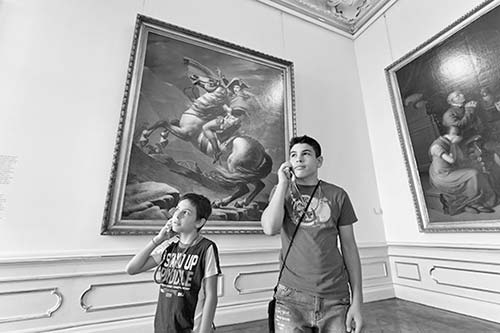
Prater Park: Besides the famous red Ferris wheel and roller coasters, there are jungle gyms, pony rides, a child-size steam train, and lots more (see here).
Haus der Musik: The exhibits take a playful approach to music; they also host occasional children’s concerts (see here).
Schönbrunn Palace: Families can find plenty of fun here without ever entering the palace proper. The grounds have a great maze and playground, a marionette theater, and a children’s museum with kid-centric displays (€10 for adults and kids over 5, consider combo-tickets with the garden features, family passes available in summer, daily 10:00-17:00, www.kaiserkinder.at). The world’s oldest zoo is adjacent to the palace grounds, and older kids may also like the nearby Imperial Carriage Museum (free for kids; see the Schönbrunn Palace Tour chapter).
Natural History Museum: Dinosaurs, rocks, and lots of interactive displays that keep kids’ interest (free for kids; see here).
Butterfly House: Free-flying butterflies in a classic Art Nouveau glasshouse (€5.50 for kids, see here).
Zoom Kindermuseum: Interactive fun for a wide range of ages, including hands-on history exhibits, art workshops, and science demonstrations—much of it available in English (free entry for kids but most activities cost €5-7/person, reserve entry time online at least an hour ahead; Tue-Fri 8:30-16:45, Sat-Sun from 9:15, closed Mon, in the MuseumsQuartier at Museumsplatz 1, www.kindermuseum.at).
Art Museums: Several of Vienna’s top art museums offer clever ways to engage younger visitors (along with free admission). For example, the Upper Belvedere sends kids on an “art detective” scavenger hunt around the museum; the Kunsthistorisches Museum rents an audioguide tailored for kids.
Children’s Operas: Operas, ballets, and concerts staged by the Vienna State Opera are performed at the Kinderoper, the world’s only just-for-kids opera venue sung in German (reasonable ticket prices, performances usually around midday and about an hour long, book as far ahead as possible, just down the street from the main opera house at Walfischgasse 4, www.wiener-staatsoper.at—click “Jung!”).
Spanish Riding School: The morning exercises (described earlier) are low-key enough to make sense, especially because it’s easy to arrive late and/or leave early (reduced price for kids ages 6-11, ages 3-5 are free if they’re on your lap, no kids under 3).
Donauinsel: Danube Island (described near the end of this chapter) is a great place to bike, boat, swim (in the river or at the city-run water park), or challenge the kids on a ropes course at the climbing park (www.donauinsel-kletterpark.at).
More Activities: The Stadtpark includes a good playground (see here). Horse-and-buggy (Fiaker) rides through the Old Town are a hit (see here).
Rounding out the sprawling MuseumsQuartier are an architecture center, design forum, children’s museum, contemporary dance space, and the Kunsthalle Wien—with temporary exhibits of contemporary art (www.kunsthallewien.at).
Cuisine Art: Across from the MUMOK, $$ Halle Café Restaurant is your best bet for food or drinks overlooking the courtyard (daily 10:00-24:00, shorter hours off-season, Museumsplatz 1—see “Vienna’s City Center” map earlier, +43 1 523 7001).
Eating Nearby: The charming Spittelberg neighborhood, just beyond the MuseumsQuartier, hosts a range of pleasant eateries, including a lovely wine garden just a five-minute walk away (see here). If you’re here on a weekday, consider a short walk to the $ Justizcafe, the cafeteria serving Austria’s Supreme Court, which offers a fine view, great prices, average food, and a memorable lunchtime experience. Your goal is the rooftop of the Palace of Justice: Enter through the grand front door, pass through security, say “wow” to the eye-popping Historicist courtyard, head to the back of the building and ride the elevator to the fifth floor, then walk back to the front past rows of judges’ chambers. You can sit inside or out on the roof, surrounded by legal beagles—go early or after the lunch rush to miss the crush (Mon-Fri 7:30-16:00, closed Sat-Sun, Schmerlingplatz 10, see the “Vienna’s City Center” map, earlier).
KARLSPLATZ AND NEARBY
These sights cluster around Karlsplatz, just southeast of the Ringstrasse (the Karlsplatz U-Bahn station, which spans a huge area underground—from the opera, to Karlsplatz, to the Naschmarkt—can be accessed at the opera house). If you’re walking from central Vienna, use the station entrance at the opera house and follow the passageways to avoid crossing busy boulevards.
Karlsplatz
This picnic-friendly square, with its Henry Moore sculpture in the pond, faces the imposing facade of Vienna’s Technical University. The gangly zone, considered just an undefined space rather than a “square,” was long little more than a no-man’s-land outside the city wall. The city has tried to make it more inviting, adding a playground, skateboard park, open-air summer cinema, cocktail bar (in what looks like a shipping container), and a pond meant to lend the square a beachy vibe (music festivals are hosted on a “lake stage”).
The massive, domed Karlskirche and its twin spiral columns dominate the square. The small green, white, and gold pavilions that line the street across the square from the church are from the late-19th-century municipal train system (Stadtbahn). One of Europe’s first transit systems, this precursor to today’s U-Bahn was built with a military purpose in mind: to move troops quickly in time of civil unrest—specifically, out to Schönbrunn Palace. With curvy iron frames, decorative marble slabs, and painted gold trim, these are pioneering works in the Jugendstil style, designed by the Modernist architect Otto Wagner, who influenced Klimt and the Secessionists (for more on this art movement, see the sidebar later in this chapter). One of the pavilions has a sweet little exhibit on Wagner that illustrates the Art Nouveau lifestyle around 1900. It also shows models for his never-built dreams and the grand expansion of Vienna (€5, Tue-Sun 10:00-18:00, closed Mon and Nov-March, near the Ringstrasse, +43 1 5058 7478 5180, www.wienmuseum.at).
▲Karlskirche (St. Charles Church)
This “votive church” was proposed by Emperor Charles VI and dedicated to his patron saint, St. Charles Borromeo, in 1713 when an epidemic spared Vienna. The church offers some over-the-top Baroque designs, with a unique combination of columns (showing scenes from Borromeo’s life, à la Trajan’s Column in Rome), a classic pediment, an elliptical dome, and a terrific close-up look at its frescoes, thanks to a construction elevator that’s open to the public. The entry fee is steep, but worth it if you visit the dome—but skip it if you’re even slightly afraid of heights.
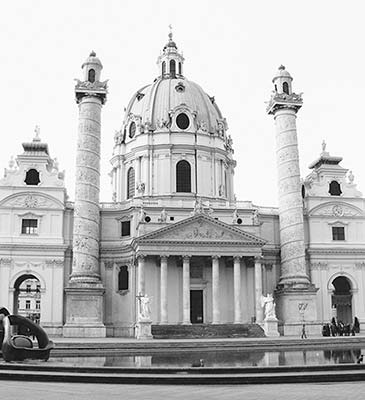
Cost and Hours: €8, Mon-Sat 9:00-18:00, Sun 11:00-19:00, dome elevator runs until 17:30, pick up the free info booklet, www.karlskirche.at. There are often classical music concerts performed here on period instruments (usually Thu-Sat, www.concert-vienna.info).
Visiting the Church: The dome’s colorful 13,500-square-foot fresco—painted in the 1730s by Johann Michael Rottmayr—shows Signor Borromeo (in red-and-white bishop’s robes) gazing up into heaven, spreading his arms wide, and pleading with Christ to spare Vienna from the plague.
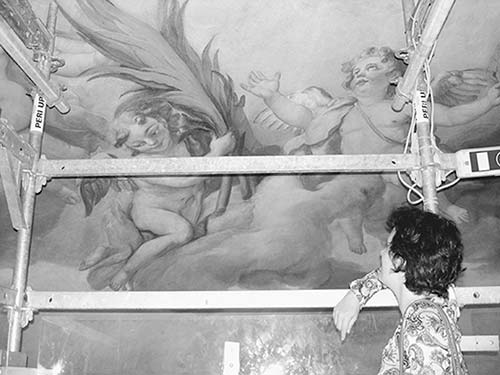
After studying the frescoes from far below, ride the industrial lift, which takes you to a platform at the base of the 235-foot dome. Consider that the church was built and decorated with a scaffolding system essentially the same as this one.
At that dizzying height, you’re in the clouds with cupids and angels. Many details that appear smooth and beautiful from ground level—such as gold leaf, paintings, and fake marble—look rough and sloppy up close. It’s surreal to observe the 3-D figures from an unintended angle—check out Christ’s leg, which looks dwarf-sized. Give yourself a minute to take it in: Faith, Hope, and Charity triumph and inspire. Borromeo lobbies heaven for relief from the plague. Meanwhile, a Protestant’s Lutheran Bible is put to the torch by angels.
▲Academy of Fine Arts Painting Gallery (Akademie der Bildenden Künste Gemäldegalerie)
Vienna’s art academy has a small but impressive collection of paintings to inspire and instruct its students. The gallery rotates temporary exhibits—everything from the masters to modern art—to illustrate contemporary themes. The highlights—a triptych by the master of medieval surrealism, Hieronymus Bosch, and works by Guardi, Titian, Rubens, and Van Dyck—are generally featured in the rotating themed exhibits.
Cost and Hours: €9, Tue-Sun 10:00-18:00, closed Mon, three blocks from the opera house at Schillerplatz 3, +43 1 588 162 201, www.kunstsammlungenakademie.at. There’s a fine and cheap cafeteria on the ground floor with hot lunches on weekdays.
Visiting the Museum: The art fills the top floor (follow signs up the stairs to the painting gallery). Though exhibits rotate, look for the captivating, harrowing Last Judgment triptych by Bosch (c. 1482). This is the polar opposite of his most famous work, The Garden of Earthly Delights (in Madrid’s Prado). Read the altarpiece from left to right, following the pessimistically medieval narrative about humankind’s fall from God’s grace: In the left panel, at the bottom, God pulls Eve from Adam’s rib in the Garden of Eden. Just above that, we see a female (representing the serpent) hold out the forbidden fruit to tempt Eve. Above that, Adam and Eve are being shooed away by an angel. At the top of this panel, God sits on his cloud, evicting the fallen angels (who turn into insect-like monsters). In the middle panel, Christ holds court over the living and the dead. Notice the jarring contrast between Christ’s serene expression and the grotesque scene playing out beneath him, where mutant demons slice-and-dice the damned. These disturbing images crescendo in the final (right) panel, showing an unspeakably horrific vision of hell that few artists have managed to top in the more than half-millennium since Bosch.
On your way out of the temporary exhibit, ponder how history might have been different if the academy had accepted a student who applied but was rejected twice—Adolf Hitler.
▲The Secession
This little building was created by the Vienna Secession movement, a group of nonconformist artists led by Gustav Klimt, Otto Wagner, and friends. (For more on the art movement, see the sidebar.)
Having turned their backs on the stuffy official art academy, the Secessionists used the building to display their radical art. The stylized trees carved into the exterior walls and the building’s bushy “golden cabbage” rooftop are symbolic of a cycle of renewal. Today, the Secession continues to showcase contemporary cutting-edge art, and it preserves Gustav Klimt’s famous Beethoven Frieze.
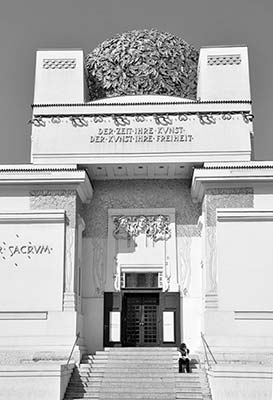
Cost and Hours: €9.50 includes special exhibits, Tue-Sun 10:00-18:00, closed Mon, audioguide-€3, Friedrichstrasse 12, +43 1 587 5307, www.secession.at.
Visiting the Museum: Start in the basement with the museum’s highlight—Klimt’s classic Beethoven Frieze. A masterpiece of Viennese Art Nouveau, this 105-foot-long fresco was the multimedia centerpiece of a 1902 exhibition honoring Ludwig van Beethoven. Klimt’s still-powerful work was inspired by Beethoven’s Ninth Symphony. Klimt embellished the frieze with painted-on gold (aided by his brother, a goldsmith) and by gluing on reflective glass and mother-of-pearl for the ladies’ dresses and jewelry. Working clockwise around the room, follow Klimt’s story as you listen to Beethoven’s Ninth Symphony on the headphones provided.
Left Wall: Floating female figures drift and weave and search—like we all do—for happiness. Unfortunately, their aspirations are dashed and brought to earth, leaving them kneeling and humble. They plead for help from heroes stronger than themselves—represented by the firm knight in gold, who revives their hopes and helps them carry on.
Center Wall: The women encounter many obstacles in their pursuit of happiness—the three dangerous Gorgons (naked ladies with snake hair), the gorilla-faced monster of fear, and the three seductive women of temptation. These obstacles can leave us bent over with grief (like the woman on the right), while our hopes pass by overhead.
Right Wall: But we can still find happiness through art, thanks to Lady Poetry (with the lyre) and the great hero of the arts: Beethoven. In the original 1902 exhibition, a statue of Beethoven appeared at this crucial turning point in the narrative, where the blank space is today.
Beethoven’s presence inspires the yearning souls to carry on. Swept up in a column of fire, they finally reach true happiness. At the climax of the frieze, a heavenly choir serenades a naked couple embracing in ecstasy, singing the “Ode to Joy”—Friedrich Schiller’s poem incorporated into the Ninth Symphony: “Joy, you beautiful spark of the gods...under thy gentle wings, all men shall become brothers.”
The Rest of the Secession: There’s a small exhibit of scale models and photos about the construction of this influential building. Don’t overlook the interesting temporary exhibits (included in your ticket). A committee mounts special contemporary exhibits every three months that highlight local art happenings. They illustrate how the free spirit of Vienna’s Secession survives a century after its founding.
▲Naschmarkt
In 1898, the city decided to cover up its Vienna River. The long, wide square they created was filled with a lively produce market that still bustles most days. The stalls of the Naschmarkt (roughly meaning “Nibble Market”) stretch along Wienzeile street, just a short stroll south of the opera house. This is where top chefs like to get their ingredients. And it’s long been known as the place to get exotic faraway foods. In fact, locals say, “From here start the Balkans.”
As Europe approached the dawn of a new (nouveau) century, artists began creating a truly new and free art style that left behind the stodginess of the 19th century. Though the Art Nouveau movement began in Paris and Belgium, each country gave it its own spin. In German-speaking lands, Art Nouveau was called Jugendstil (meaning “youth style”).
Art Nouveau was forward-looking and modern, embracing the new technology of iron and glass. But it was also a reaction against the sheer ugliness of the mass-produced, boxy, rigidly geometrical art of the Industrial Age. For inspiration, Art Nouveau artists embraced nature (which abhors a straight line) and the sinuous curves of organic plant forms. Art Nouveau street lamps twist and bend like flower stems. Ironwork fountains sprout buds that squirt water. Dining rooms are paneled with leafy garlands of carved wood. Advertising posters feature flowery typefaces and beautiful young women rendered in pure, curving lines. Art Nouveau was a total “look” that could be applied to furniture, jewelry, paintings, and even entire buildings.
Imagine being a cutting-edge artist in late-19th-century Vienna, surrounded by conformity. Take, for example, the Ringstrasse, with its Neo-Greek, Neo-Gothic, Neo-Baroque architecture. There was nothing daring or new—architects had simply redone what had already been done (Historicism). This drove Vienna’s impatient young generation of artists (Gustav Klimt, Otto Wagner, Egon Schiele, Oskar Kokoschka, and company) to escape, or “secede,” from all this conventionalism. They established the Secession and transcended into a world of pure beauty, hedonism, eroticism, and aesthetics.
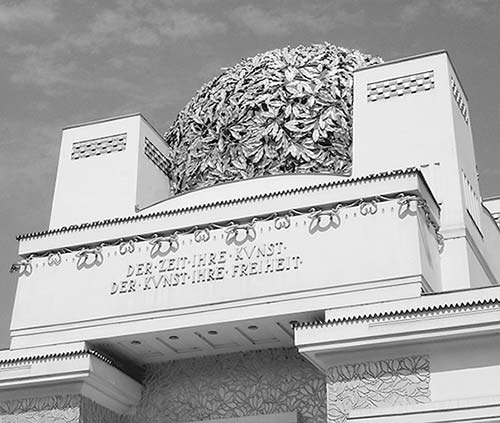
The Secession preferred buildings that were simple and geometrically pure, decorated with a few unadulterated Art Nouveau touches. Architects, painters, and poets had no single unifying style, except a commitment to what was natural and free of tradition. The Secessionist motto was: “To each age its art, and to art its liberty.”
Here are some of Vienna’s best Jugendstil sights:
The Secession: This clean-lined building was the headquarters of The Secession and where young artists first exhibited their “youth-style” art in 1897. It’s nicknamed the “golden cabbage” for its bushy gilded rooftop (actually, those are the laurel leaves of Apollo, the God of Poetry).
Belvedere Palace: This museum’s collection includes work by Klimt, who gained fame painting slender young women entwined together in florid embraces, exploring the same highly charged erotic terrain as his contemporary, Sigmund Freud. Klimt took the decorative element of Art Nouveau to extremes (for more about the palace, see here).
The Anchor Clock on Hoher Markt: This mosaic-decorated clock (1911-1917) was actually an advertisement for a life insurance company. Spanning two buildings, it’s full of symbolism, stretching from the butterfly on the left to the Grim Reaper on the right. The clock honors 12 great figures from Vienna’s history, from Marcus Aurelius to Joseph Haydn. While each gets his own top-of-the-hour moment, all parade by at high noon in a musical act. A plaque on the left names each figure. Notice the novel way the clock marks the time.
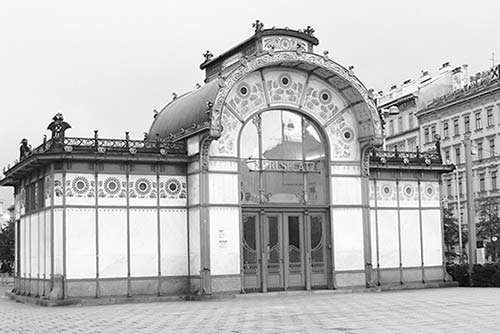
Karlsplatz: Otto Wagner designed several structures for Vienna’s subway system, including these original arched entrances (see here).
Austrian Postal Savings Bank: This early-20th-century building is a key example of Wagner’s modern work (see here).
Hours and Location: Mon-Fri 6:00-19:30, Sat until 18:00, closed Sun, closes earlier in winter; restaurants open until 23:00. The market stretches southwest from the opera to Kettenbrückengasse, between Linke Wienzeile and Rechte Wienzeile. I like to ride the U-Bahn to Kettenbrückengasse, then walk the length of the market back to the opera. Picnickers can grab their grub in the market and head over to Karlsplatz or the Burggarten.
Visiting the Naschmarkt: Let’s start at the very beginning: the delightful Jugendstil Kettenbrückengasse U-Bahn station. From here, you can envision how the river was covered up for this long, skinny market, and the start of the long Champs-Elysées-type boulevard. Emperor Franz Josef dreamed that this grand street would lead to his Schönbrunn Palace (a couple of miles farther out of the city center). Notice the elegant Art Nouveau style of the U-Bahn station and the fine buildings that line the street here.
Entering the “Belly of Vienna,” note the two parallel lanes. The right lane consists of market stalls, while the left lane is mostly eateries. In recent years, many stalls have been taken over by hip bars and eateries, bringing a youthful vibe and fun new flavors to the market scene. The city had to slow the invasion of restaurants to save the venerable produce market from becoming just a long, skinny food court. Food stalls make it clear that the Eastern European influences of the Habsburg times remain today. Wander through spices, exotic fruits, olives, cheeses, baklava, and more. From here, the market progresses from cheaper sausage stands and Turkish döner kebab stalls to trendier (and more expensive) eateries and upscale stalls. You’ll pass Zur Eisernen Zeit—the oldest Beisl (bistro) in the market. At the gourmet vinegar stall, you can sample the vinegar the way you would perfume—with a drop on your wrist (see photo).
Saturday Flea Market: Each Saturday, the Naschmarkt is infested with a huge flea market where, in olden days, locals would come to hire a monkey to pick little critters out of their hair. The flea market stretches southwest of the Kettenbrückengasse U-Bahn station (Sat 6:30-14:00).
▲Wien Museum Karlsplatz
This underappreciated city history museum walks you through the story of Vienna with well-presented artifacts and good English descriptions. While closed for a major renovation, the museum is slated to reopen in its refreshed quarters in 2024 (Karlsplatz 8, +43 1 505 8747, www.wienmuseum.at).
SIGHTS BEYOND THE RING
The following sights are located outside the Ringstrasse but inside the Gürtel, or outer ring road (see the “Vienna” map in the Orientation to Vienna chapter).
South of the Ring
▲▲Belvedere Palace (Schloss Belvedere)
This is the elegant palace of Prince Eugene of Savoy (1663-1736), the still much-appreciated conqueror of the Ottomans. Eugene, a Frenchman considered too short and too ugly to be in the service of Louis XIV, offered his services to the Habsburgs. While he was indeed short and ugly, he became the greatest military genius of his age, the savior of Austria, and the toast of Viennese society. When you conquer cities, as Eugene did, you get really rich. With his wealth he built this palace complex. Only Eugene had the cash to compete with the Habsburgs, and from his new palace he looked down on the Hofburg—both literally and figuratively. He lived in the lower palace and entertained in the upper one, which he built to rival Schönbrunn, with a similar layout and feel.
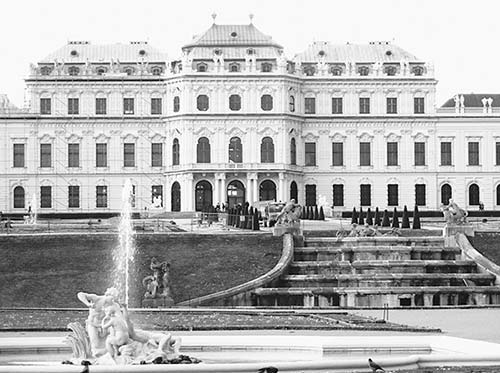
Prince Eugene had no heirs, so the state got his property, and Emperor Josef II established the Belvedere as Austria’s first great public art gallery. Today you can tour Eugene’s lavish palace, see sweeping views of the gardens and the Vienna skyline, and enjoy world-class art starring Gustav Klimt, French Impressionism, and a grab bag of other 19th- and early-20th-century artists. While Vienna’s other art collections show off works by masters from around Europe, this has the city’s best collection of homegrown artists.
The palace complex includes the Upper Palace (world-class art collection), smaller Lower Palace (historical rooms and temporary exhibits), the Belvedere 21 (modern pavilion mostly filled with contemporary art), and pleasantly beautiful Baroque-style gardens (free and fun to explore). For most visitors, only the Upper Palace is worth the entrance fee.
Cost and Hours: €18 for Upper Belvedere Palace only, €26 for Upper and Lower Palaces (and special exhibits), gardens-free; daily 10:00-18:00, grounds open until dusk; audioguide—€5; good English descriptions; entrance at Prinz-Eugen-Strasse 27, +43 1 795 570, www.belvedere.at.
Eating at the Belvedere: There’s a charming little sit-down café on the ground floor of the Upper Palace; in summer you can dine outdoors in the garden.
Getting There: The palace is a 20-minute walk south of the Ring. To get there from the center, catch tram #D at the opera house (direction: Absberggasse). Get off at the Schloss Belvedere stop (just below the Upper Palace gate), cross the street, walk uphill one block, go through the gate (on left), and look immediately to the right for the small building with the ticket office.
Visiting the Upper Palace: The two grand buildings of the Belvedere Palace are separated by a fine garden that slopes down from the Upper to Lower Palace. For our purposes, the Upper Palace is what matters. Go around to the front to enter.
The palace’s eclectic collection is tailor-made for browsing, but be aware that exhibits change frequently, so some of the things I mention here may not be on display during your visit. There are two grand floors, set around impressive middle halls, plus a third floor worth a peek. Throughout, look for small illustrations that show the rooms as they looked in Eugene’s day.
The entry floor displays a timeline of the Belvedere’s history (on the left past the gift shop) and medieval art (on the right). From the entrance, climb the staircase to the first floor and enter a grand red-and-gold, chandeliered room.
Marble Hall: This was Prince Eugene’s party room. The ceiling fresco shows Eugene (in the center, wearing blue and pink) about to be crowned with a laurel wreath for his military victories and contributions to Vienna. While it’s easy to think of the palace as a museum, see it also as a monument to a military hero. It’s strewn with images of war in which many of the adversaries wear turbans, as some of Austria’s adversaries were Ottoman Muslims.
Belvedere means “beautiful view,” and the view from the Marble Hall is the most iconic of the city (it’s notably captured in Canaletto’s painting displayed at the Kunsthistorisches Museum). Look over the Baroque gardens, the mysterious sphinxes (which symbolized solving riddles and the finely educated mind of your host, Eugene), the Lower Palace, and the city. Left to right, find the green dome of St. Peter’s Church, the spire of St. Stephen’s (where Eugene is buried, see here), and much nearer, the black dome of the Silesian Church. St. Stephen’s spire is 400 feet tall, and no other tall buildings are allowed inside the Ringstrasse. The hills beyond—covered with vineyards—are where the Viennese love to go to sample new wine. Behind the spire you can see Kahlenberg, a high hill in the Vienna Woods, from where you can walk down to several recommended Heurigen (wine gardens—see the Eating in Vienna chapter). These hills are the beginnings of the Alps, which stretch from here all the way to France.
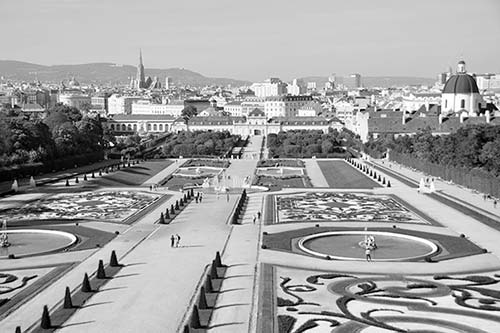
The square you’re overlooking was filled with people on May 15, 1955, as city leaders stood on the balcony just in front of you and proclaimed the famous words “Austria is free”—heralding Austrian independence after the decade-long Allied occupation following World War II. The Allied powers—France, Great Britain, the US, and the Soviet Union—signed the treaty re-establishing Austria as a sovereign country right here in the Marble Hall.
Now head to the East Wing—facing the garden, to the right.
Klimt, a noted womanizer, made a career painting the female form as beautiful, seductive, and dangerous. His erotic paintings scandalized official Vienna, and he was a founder of the Secessionist art group, whose members “seceded” from bourgeois constraints. He dedicated his later years to works commissioned by the liberal elite.
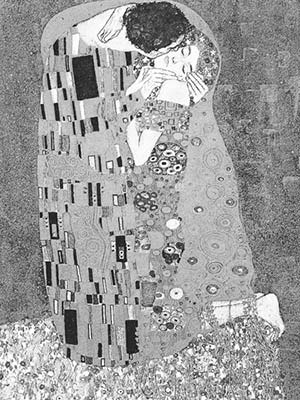
Klimt explored multimedia. Besides oil paints, he painted with gold leaf or applied bright objects to the canvas/panel for decorative effect. He often worked in a square-frame format. (Occasionally he and his brother, a gold engraver, made the frames as well.) There’s no strong perspective in his best-known paintings; the background and foreground are merged together into a flat decorative pattern. His women are clearly drawn, emerging from the complex design. With their come-hither looks and erotic poses, they capture the overripe beauty and edgy decadence of turn-of-the-century Vienna.
East Wing: Sumptuous paintings by Gustav Klimt and his contemporaries (including Monet) fill the rooms in the East Wing. You can get caught up in his fascination with the beauty and danger he saw in women. To Klimt, all art was erotic art. He painted during the turn of the 20th century, when Vienna was a splendid laboratory of hedonism. For him, Eve was the prototypical woman; her body, not the apple, provided the seduction. Frustrated by the censorship of his age, Klimt refused every form of state support. Even fully clothed, his women have a bewitching eroticism in a world full of pollen and pistils.
The famous painting Judith (1901) shows no biblical heroine—Klimt paints her as a high-society Viennese woman with an ostentatious dog-collar necklace. With half-closed eyes and slightly parted lips, she’s dismissive...yet mysterious and bewitching. Holding the head of her biblical victim, she’s the modern femme fatale.
At the far end of the East Wing you’ll find what is perhaps Klimt’s best-known painting, The Kiss, where two lovers are wrapped up in the colorful gold-and-jeweled cloak of bliss. Klimt’s woman is no longer dominating, but submissive, abandoning herself to her man in a fertile field and a vast universe. In a glow emanating from a radiance of desire, the body she presses against is a self-portrait of the artist himself. While Klimt’s works are seductive and otherworldly, Egon Schiele’s tend to be darker and more introspective. One of Schiele’s most recognizable works, The Embrace, shows a couple engaged in an erotically charged, rippling moment of passion. Striking a darker tone is The Family. This melancholy painting from 1918 is Schiele’s last major painting—he and his pregnant wife died in the influenza epidemic that swept through Europe after World War I.
Rest of the Upper Palace: The Belvedere’s collection goes through the whole range of 19th- and 20th-century art: Historicism, Romanticism, Impressionism, Realism, tired tourism, Expressionism, Art Nouveau, and early Modernism. In the West Wing of the first floor is the Belvedere’s collection of Austrian Baroque art, including a fascinating corner room of grotesquely grimacing heads by Franz Xaver Messerschmidt (1736-1783), a quirky 18th-century Habsburg court sculptor who left the imperial life to follow his own, somewhat deranged muse. After his promising career was cut short by mental illness, Messerschmidt relocated to Bratislava and spent the rest of his days sculpting a series of eerily lifelike “character heads” (Kopfstücke) whose unusual faces are contorted by extreme emotions. Strolling through this collection made my cheeks hurt. Messerschmidt served as his own model for these works, pinching himself to create a pain reaction he could replicate in stone.
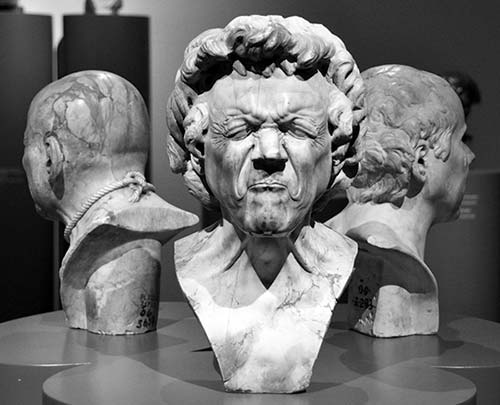
The second floor up shows off early-19th-century paintings in the Biedermeier style. This was the period (1815-1848) when conservative elements in Central Europe clamped down on Napoleon’s revolutionary ideas. The paintings here are realistic portraits, landscapes, and scenes from everyday life and from history. The style is soft-focus, hypersensitive, super-sweet, and sentimentally Romantic—the poor are happy, things are lit impossibly well, and folk life is idealized. (Then came the democratic revolutions of 1848, the invention of the camera, Realism and Impressionism...and all hell broke loose.) The final rooms display Renoir’s ladies and Van Gogh’s rough brushstrokes, from a time more concerned with light and native landscapes.
Visiting the Lower Palace: On the opposite end of the delightfully manicured gardens (and covered by a separate ticket) is the home where Prince Eugene actually hung his helmet. Today it contains a small stretch of three of his private apartments (relatively uninteresting compared to the sumptuous Habsburg apartments elsewhere in town). The Lower Palace also houses some generally good special exhibits, as well as the entrance to the privy garden and stables.
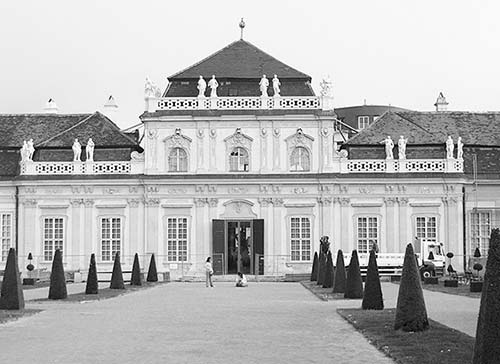
▲Museum of Military History (Heeresgeschichtliches Museum)
While much of the Habsburg Empire was built on strategic marriages rather than the spoils of war, a big part of Habsburg history is military. And this huge place, built about 1860 as an arsenal by Franz Josef, tells the story well with a thoughtful motto (apparently learned from the school of hard knocks): “Wars belong in museums.”
You’ll wander the wings of this vast museum nearly all alone. Its two floors hold a rich collection of artifacts and historic treasures from the times of Maria Theresa to Prince Eugene to Franz Josef. The particularly interesting 20th-century section on the ground floor includes exhibits devoted to Sarajevo in 1914 (with the car Franz Ferdinand rode in and the uniform he wore when he was assassinated), Chancellor Dollfuss and the pre-Hitler Austrian Fascist party, the Anschluss, and World War II.
Cost and Hours: €7, includes good audioguide, free first Sun of the month; daily 9:00-17:00, small café on site, on Arsenalstrasse, +43 1 795 6110, www.hgm.at. It’s a five-minute walk from the Quartier Belvedere tram/S-Bahn stop behind the Belvedere Palace.
East of the Ring
Museum of Applied Arts (Museum für Angewandte Kunst, a.k.a. MAK)
Facing the old town from across the Ring, the MAK, as it’s called, is a design museum best known for its collection of furniture and decorative art from Vienna’s artistic golden age, which is showcased in the permanent Vienna 1900 exhibit. The museum’s unique gift shop also makes for a fun diversion.
Cost and Hours: €15, €7 Tue after 18:00; open Wed-Sun 10:00-18:00, Tue until 21:00, closed Mon; multimedia guide-€2, classy restaurant with pleasant garden seating, Stubenring 5—take U-Bahn or tram #2 to Stubentor, +43 1 711 360, www.mak.at.
Visiting the Museum: Stepping into this museum is like stepping into a grand Italian Renaissance palace, but the contents inside tell of a different time. Fans of the graphic arts and furniture design should head to the top floor and the three-room Vienna 1900 exhibit. The display follows local designers as they moved from Historicism through Art Nouveau and on to Modernism and Internationalism. The walls are lined with a fine collection of period posters. The “less-is-more” approach is represented by Josef Hoffman’s functional chairs and desks, and a complete bedroom installation by Margaret Schütte-Lihotsky. A wooden relief of the goddess Diana, by Carl Otto Czeschka, is impressive. You’ll also find nine sketches by Gustav Klimt for a frieze for a mansion in Belgium (incorporating a version of The Kiss). Nearby is Margaret MacDonald Mackintosh’s Seven Princesses, a rare Art Nouveau frieze made for the music room of a turn-of-the-century Viennese collector.
In the basement, the MAK Design Lab (“MAK Design Labor” in German) is also worth seeing. It’s a big, up-to-date exhibit that’s partly conventional (you look at lots of old stuff)—but presented in a way that encourages visitors to think about the design challenges of everyday life, and the use and function of the objects we employ to sit, eat, clothe ourselves, communicate, and create things.
The remaining collections (Asian, Baroque, and carpets—on the ground floor) are skippable for most.
▲Kunst Haus Wien and Museum Hundertwasserhaus
This “make yourself at home” museum and nearby apartment complex are a hit with lovers of modern art, mixing the work and philosophy of local painter/environmentalist Friedensreich Hundertwasser (1928-2000), a.k.a. “100H2O.”
Cost and Hours: €11 for museum, €12 combo-ticket includes special exhibitions, open daily 10:00-18:00, audioguide-€3, +43 1 712 0491, www.kunsthauswien.com.
Cuisine Art: Don’t miss the leafy garden café that begs you to sit down and enjoy Hundertwasser’s creation.
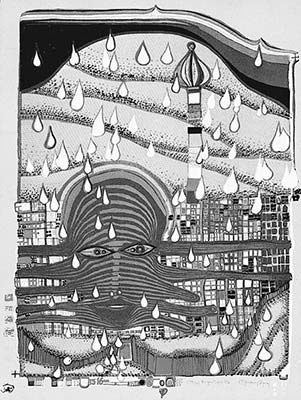
Getting There: It’s located at Untere Weissgerberstrasse 13, near the Radetzkyplatz stop on trams #O and #1 (signs point the way). Take the U-Bahn to Landstrasse and either walk 10 minutes downhill (north) along Untere Viaduktgasse (a block east of the station), or transfer to tram #O (direction: Praterstern) and ride three stops to Radetzkyplatz.
Visiting the Museum: Stand in front of the jaunty checkerboard building that houses the Kunst Haus Wien. Consider Hundertwasser’s style. He was against “window racism”: Neighboring houses allow only one kind of window, but 100H2O’s windows are each different—and he encouraged residents in his Hundertwasserhaus (see below) to personalize them. He recognized “tree tenants” as well as human tenants. His buildings are spritzed with a forest and topped with dirt and grassy little parks—close to nature and good for the soul.
Hundertwasser’s floors and sidewalks are irregular—to “stimulate the brain” (although current residents complain it just causes wobbly furniture and sprained ankles). Thus 100H2O waged a one-man fight—during the 1950s and 1960s, when concrete and glass ruled—to save the human soul from the city. (Hundertwasser claimed that “straight lines are godless.”)
Inside the museum, start with his interesting biography. His fun paintings are half psychedelic Jugendstil and half just kids’ stuff. Notice the photographs from his 1950s days as part of Vienna’s bohemian scene. Throughout the museum, keep an eye out for the fun philosophical quotes from an artist who believed, “If man is creative, he comes nearer to his creator.”
Hundertwasserhaus: The Kunst Haus Wien provides by far the best look at Hundertwasser, but for an actual lived-in apartment complex by the green master, walk 10 minutes to the one-with-nature Hundertwasserhaus (at Löwengasse and Kegelgasse). This complex of 50 apartments, subsidized by the government to provide affordable housing, was built in the 1980s as a breath of architectural fresh air in a city of boring, blocky apartment complexes. While not open to visitors, it’s worth seeing for its fun and colorful patchwork exterior and the Hundertwasser festival of shops nearby. Don’t miss the view from both streets to see the “tree tenants” and the internal winter garden that residents enjoy.
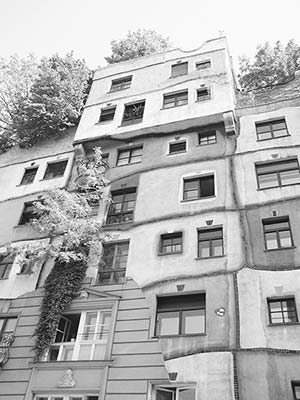
Hundertwasser detractors—of which there are many—remind visitors that 100H2O was a painter, not an architect. They describe the Hundertwasserhaus as a “1950s house built in the 1980s” that was colorfully painted with no real concern for the environment, communal living, or even practical comfort. Almost all of the original inhabitants got fed up with the novelty and moved out.
North of the Ring
Sigmund Freud Museum
Freud enthusiasts (and detractors) enjoy seeing the apartment and home office of the man who fundamentally changed our understanding of the human psyche. Dr. Sigmund Freud (1856-1939), a graduate of Vienna University, established his practice here in 1891. For the next 47 years, he received troubled patients who hoped to find peace by telling him their dreams, life traumas, and secret urges. It was here that he wrote his influential works, including the landmark Interpretation of Dreams (1899). The museum is narrowly focused on Freud’s life. If you’re looking for a critical appraisal of whether he was a cocaine-addicted charlatan or a sincere doctor groping toward an understanding of human nature, you won’t find it here.
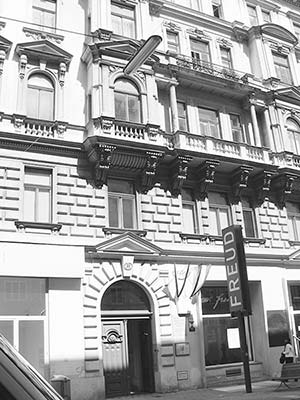
Cost and Hours: €14, Wed-Mon 10:00-18:00, closed Tue, tiny bookshop, half-block from the Schlickgasse stop on tram #D, Berggasse 19, +43 1 319 1596, www.freud-museum.at.
Visiting the Museum: Freud’s three-room office and apartment (where he lived with his family) have been turned into a permanent display on his life. Freud, who was Jewish, fled Vienna for England when the Nazis came to power. He took most of his possessions with him, including the famous couch that patients reclined on (now in a London museum). The waiting room is furnished with original furniture, books, and Freud’s collection of primitive fertility figurines.
Helpful displays in each room try to shed light on Freud’s roles as a father, husband, and young physician and neurologist. Old photos and documents trace his fascinating life: a happy childhood (first in a small Moravian town, then in Vienna); medical school in the then-pioneering field of psychology; research into the effects of cocaine; a happy marriage, large family, and wholesome middle-class lifestyle; use of hypnosis as therapy; years of self-analysis and first patients in analysis; publication of controversial works on dreams and sexuality; association with other budding psychologists such as the Swiss Carl Jung; and, finally, his hard-earned recognition and worldwide fame.
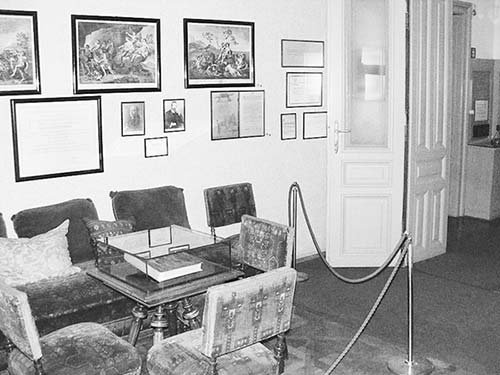
West of the Ring
▲Vienna Furniture Museum (Möbelmuseum)
Bizarre, sensuous, eccentric, or precious, this underappreciated collection (on four fascinating floors) is your peek at the Habsburgs’ furniture—from the empress’ wheelchair (“to increase her fertility she was put on a rich diet and became corpulent”) to the emperor’s spittoon—all thoughtfully described in English. Evocative paintings help bring the furniture to life.
The Habsburgs had many palaces, but only the Hofburg was permanently furnished. The rest were done on the fly—set up and taken down by a gang of royal roadies called the “Depot of Court Movables” (Hofmobiliendepot). When the monarchy was dissolved in 1918, the state of Austria took possession of the Hofmobiliendepot’s inventory—165,000 items. Now this royal storehouse is open to the public in a fine and sprawling museum. Don’t go here for the Jugendstil furnishings. The older Baroque, Rococo, and Biedermeier pieces are the most impressive and tied most intimately to the royals.
Cost and Hours: €11.50, includes audioguide, covered by Sisi Ticket, Tue-Sun 10:00-17:00, closed Mon, Mariahilfer Strasse 88, main entrance around the corner at Andreasgasse 7, U: Zieglergasse, +43 1 5243 3570, www.moebelmuseumwien.at.
Ticketing Tip: To avoid lines at the Schönbrunn Palace and the Hofburg Imperial Apartments, buy your Sisi Ticket here first or purchase in advance online (www.schoenbrunn.at).
Nearby: Combine a visit to this museum with a stroll down the lively shopping boulevard, Mariahilfer Strasse (described next).
▲Mariahilfer Strasse Stroll
While there are more stately and elegant streets in the central district, the best opportunity to simply feel the pulse of workaday Viennese life is a little farther out, along Mariahilfer Strasse. The street is mostly pedestrian-only and is fast becoming an attraction in itself. An easy plan is to ride the U-3 to the Zieglergasse stop, then stroll and browse your way downhill to the MuseumsQuartier U-Bahn station. For a map of this area, see here.
If you’re interested in how Austria handles its people’s appetite for marijuana, seek out this interesting shop: Bushplanet Headshop (Mon-Fri 10:00-19:00, Sat until 18:00, closed Sun, Esterhazygasse 32, near the Neubaugasse U-Bahn stop, www.bushplanet.at).
To add some fine-art culture to your stroll, drop in at the Vienna Furniture Museum (described above).
For a fine and free city view (along with reasonable eating), escalate to the top floor of the honeycombed Gerngross shopping center and find the Brandauer restaurant (at Mariahilfer Strasse #42).
Just off Mariahilfer Strasse #24 (across from Capistrangasse) is a passageway (sometimes closed) leading to a chilling bit of WWII history: a Nazi flak tower built in 1944. Mighty towers like this, which housed antiaircraft guns and doubled as bomb shelters, survive in Hamburg, Berlin, and Vienna (where six still stand). This bomb shelter is connected by tunnel to today’s Austrian government and still serves as a bunker of last resort. (Another former flak tower—now housing an aquarium and climbing wall—is nearby, in Esterházy Park.)
ON VIENNA’S OUTSKIRTS
▲▲▲Schönbrunn Palace (Schloss Schönbrunn)
The Habsburgs’ former summer residence, just a 10-minute subway ride from downtown Vienna, is second only to Versailles among Europe’s grand palaces. Originally built in the 16th century as a small hunting lodge near a beautiful spring (schön-brunn), the residence grew over the next 300 years into the palace you see today. The highlight of the vast complex’s many sights is a tour of the Imperial Apartments where the Habsburg nobles lived (including Maria Theresa and her 16 children, and Franz Josef and Sisi). You can also stroll the palace gardens, visit the world’s oldest zoo, and view royal transport from the 19th century at the Imperial Carriage Museum.
Cost and Hours: Visits to the palace are by timed-entry tour (prices vary, €22-31), daily 9:00-17:00, July-Aug until 17:30. Since the place can be mobbed with visitors, it’s smart to make reservations or buy a Sisi Ticket in advance (described near the beginning of this chapter); +43 1 811 130, www.schoenbrunn.at.
See the Schönbrunn Palace Tour chapter.
Activities in Vienna
These activities allow you to take it easy and enjoy the Viennese good life.
▲▲Cafés
A break for Kaffee und Kuchen (coffee and cake) in one of the city’s historical cafés is a must on any Viennese visit (see my recommended cafés in the Eating in Vienna chapter; for more on Austria’s sweet treats and its coffee, see the Practicalities chapter).
▲Heuriger Wine Gardens
Locals and tourists alike enjoy lingering in these rustic wine gardens in rural neighborhoods, easily accessible by public transportation from downtown Vienna (see the Eating in Vienna chapter).
▲Stadtpark (City Park)
Vienna’s major park, along the eastern edge of the Ring, is a waltzing world of gardens, memorials to local musicians, ponds, peacocks, music in bandstands, and Viennese escaping the city. Notice the Jugendstil entrance at the Stadtpark U-Bahn station. The faux-Renaissance Kursalon hall, where Johann Strauss was the violin-toting master of waltzing ceremonies, hosts touristy concerts daily, in three-quarter time (for details, see here). Find the famous golden statue of Strauss with his violin (next to the Kursalon, straight in from the Weihburggasse tram stop).
▲Prater Park (Wiener Prater)
Since the 1780s, when the reformist Emperor Josef II gave his hunting grounds to the people of Vienna as a public park, this place has been Vienna’s playground. For the tourist, the “Prater” is the sugary-smelling, tired, and sprawling amusement park (Wurstelprater). For locals, the “Prater” is the vast, adjacent green park with its three-mile-long, tree-lined main boulevard (Hauptallee). The park still tempts visitors with its huge 220-foot-tall, famous, and lazy Ferris wheel (Riesenrad), fun roller coasters, bumper cars, Lilliputian railroad, and endless eateries. Especially if you’re traveling with kids, this is a fun place to share the evening with thousands of Viennese and tourists.
Cost and Hours: Park is free and always open; amusement park—rides cost €2-8 and run May-Oct roughly 10:00-22:00, but often later in good weather in summer, fewer rides open in off-season; U: Praterstern, www.prater.at.
Eating at Prater Park: For a local-style family dinner, eat at $$ Schweizerhaus (good food, great Czech Budvar—the original “Budweiser”—beer, classic conviviality) at the back of the park near the green tower.
Danube Island (Donauinsel)
In the 1970s, as part of a flood protection program, the city dug a channel (the so-called “Neue Donau”—New Danube) parallel to the Danube River. With the dredged-out dirt, the engineers formed 12-mile-long Danube Island. Originally just an industrial site, it’s evolved into a much-loved idyllic escape from the city (easy U-Bahn access on U-1: Donauinsel).
The skinny island provides a natural wonderland. All along the pedestrianized, grassy park, you’ll find locals at play (especially recent immigrants and others who can’t afford their own cabin or fancy vacation). The swimming comes tough, though, with rocky entries rather than sand. The best activity here is a bike ride. If you venture far from the crowds, you’re likely to encounter nudists on inline skates.
Biking Danube Island: For a simple, breezy joyride, bike up and down the traffic-free and people-filled island. Weather permitting, you can rent a bike from Rad und Skaterverleih (€6/hour, €30/day, May-Aug daily 9:00-21:00, shorter hours spring and fall, closed off-season; Copa Cagrana 1, from Donauinsel U-Bahn station—head left up U-Bahn platform following signs to Am Hubertsdamm, then left again once outside to pass under the Reichsbrücke—the bridge spanning the island—and go straight ahead 70 yards; +43 1 263 5242, www.fahrradverleih.at).
Donau City (Donaustadt)
This modern part of town, just beyond Danube Island, is the skyscraping “Manhattan” of Austria. It was laid out as a potential Vienna-Budapest expo site in the 1990s. But Austrians voted down the fair idea, and eventually the real estate became today’s modern planned city: It’s quiet and traffic-free, with inviting plazas and a small church dwarfed by towering places of business. The high-rise DC Tower is the tallest office building in Austria. With business, residential, and shopping zones surrounded by inviting parkland, this corner of the city is likely to grow as Vienna expands. Its centerpiece is the futuristic UNO City, one of four United Nations headquarters worldwide. While it lacks the Old World character, charm, and elegance of the rest of Vienna, Donau City may interest travelers who are into contemporary glass-and-steel architecture (U: Kaisermühlen VIC).
Biking to Donau City and Beyond: Sightseers on bikes can cross the Danube to Donau City. From the opera house, it’s pretty much a straight pedal around the center via the Ringstrasse, past Prater Park, and across the river. The way is easy enough to find with the help of the basic tourist map from the TI. (Recommended local guide Wolfgang Höfler leads tours along this route, which he shared with me; see the Orientation to Vienna chapter.)
The route will take you over four stretches of water: the Danube Canal, the actual Danube, the New Danube, and the Old Danube. Along the way, you’ll gain a better understanding of the massive engineering done over the years to contain and tame the river.
As you leave the city center, you’ll first pedal over the Danube Canal, an arm of the river that brings river traffic into the city; then you hit the main part of the river and the man-made Danube Island (itself a part of the city’s flood barriers). From the Reichsbrücke bridge over the island, survey the river’s traffic. The cruise industry is booming, and Vienna’s river cruise port is hosting more boats than ever. Many of them sail from here all the way to Romania and the Black Sea coast.
In the distance, across the river, are the skyscrapers of Donau City. To reach it, continue across the bridge over Danube Island and cross the New Danube. From Donau City, the bike path leads across the Old Danube (Alte Donau)—one arm of the river but now a lake, which hosts a frolicking park with all the water fun a hot-and-tired city could hope for, including lakeside cafés and boat rentals. From here you can simply retrace your route, or you can make a big circle by following the delightful bike path southeast along the Old Danube to the next bridge (Praterbrücke). This leads to the vast Prater Park, where you’ll follow the breezy main boulevard (Hauptallee) back to the big Ferris wheel and ultimately to downtown.
A Walk in the Vienna Woods (Wienerwald)
For a quick side-trip into the woods and out of the city, catch the U-4 subway line to Heiligenstadt, then bus #38A to Kahlenberg, where you’ll enjoy great views and a café overlooking the city. From there, it’s a peaceful 45-minute downhill hike to the Heurigen of Nussdorf to enjoy some new wine. Your free TI-produced city map can be helpful...just go downhill. For an overview of this area, see the “Greater Vienna” map on here.