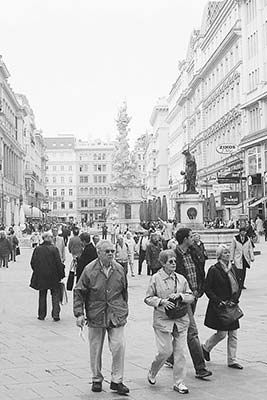
ORIENTATION TO VIENNA
Once the capital of the mighty Habsburg empire, the imperial city of Vienna has an enduring grandeur and an inviting livability. Anyone with an interest in painting, music, architecture, beautiful objects, or Sacher torte with whipped cream will feel right at home. Whether you’re lingering in a genteel café or enjoying Strauss in a park, Vienna is a class act.
This chapter offers an overview of Vienna’s neighborhoods, detailed day plans, helpful hints, and information on tourist services. It also covers your options for getting around, plus recommendations for organized tours.
VIENNA: A VERBAL MAP
Vienna sits between the Vienna Woods (Wienerwald) and the Danube River (Donau). To the southeast is industrial sprawl. The Alps, which arc across Europe from Marseille, end at Vienna’s wooded hills, providing a popular playground for walking and sipping new wine. This greenery’s momentum carries on into the city. More than half of Vienna is parkland, filled with ponds, gardens, trees, and statue-maker memories of Austria’s glory days.
Think of the city map as a target with concentric circles: The bull’s-eye is St. Stephen’s Cathedral, the towering spired church south of the Danube. Surrounding that is the old town, bound tightly by the circular road known as the Ringstrasse, marking what used to be the city wall. The Gürtel, a broader, later ring road, contains the rest of downtown. Outside the Gürtel lies the uninteresting sprawl of modern Vienna.
Addresses start with the Bezirk (district) number, followed by the street and building number. For example, the address “7, Lindengasse 4” is in the seventh district, #4 on Lindengasse. The Ringstrasse (a.k.a. the Ring) circles the first district. The Gürtel contains districts two through nine. Any address higher than the ninth Bezirk is far from the center.
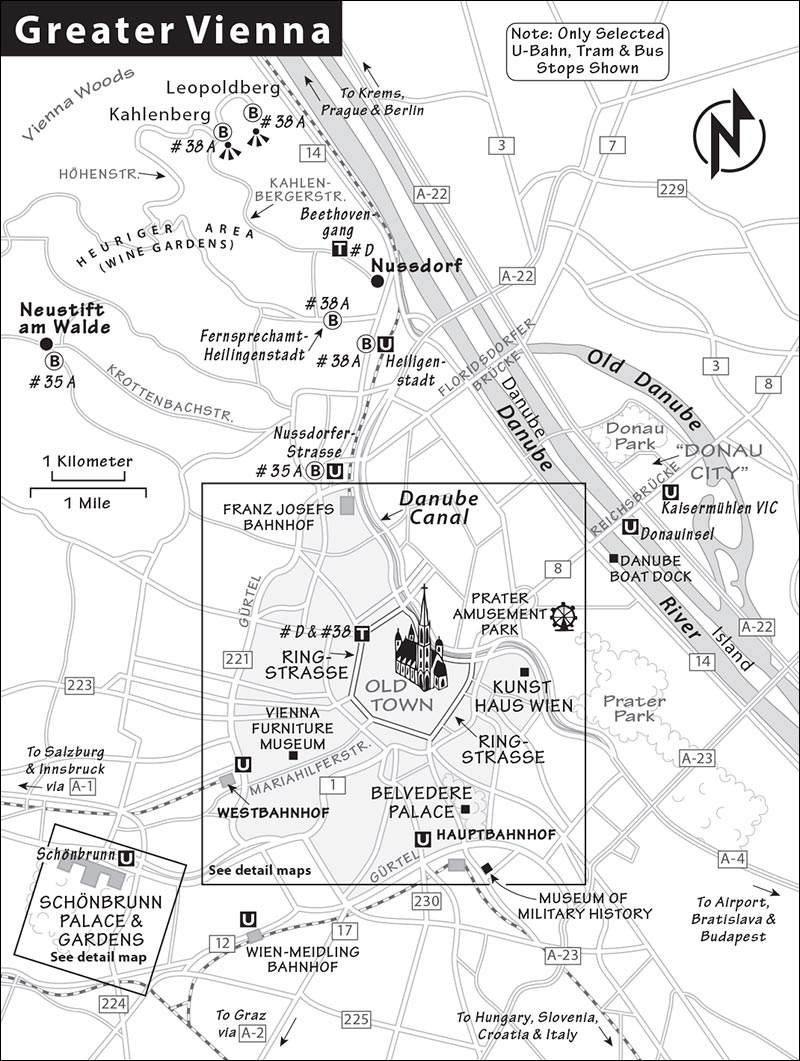
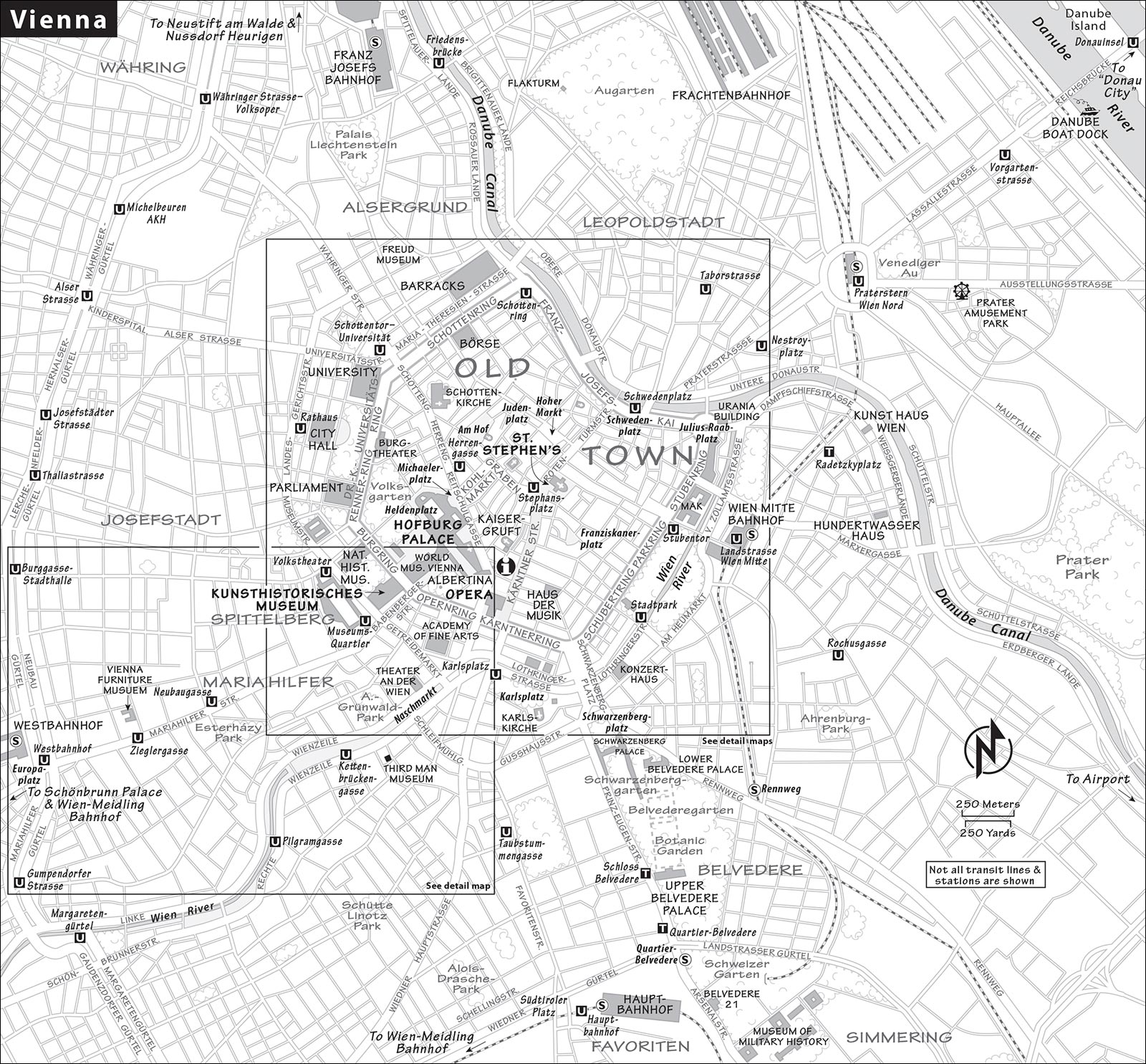
Much of Vienna’s sightseeing—and most of my recommended restaurants—are located in the old town (the first district, inside the Ringstrasse). Walking across this circular area takes about 30 minutes. St. Stephen’s Cathedral sits in the center, at the intersection of the two main (pedestrian-only) streets: Kärntner Strasse and the Graben.
Several sights sit along, or just beyond, the Ringstrasse: To the southwest are the Hofburg and related Habsburg sights, as well as the Kunsthistorisches Museum; to the south is a cluster of intriguing sights near Karlsplatz; to the southeast is Belvedere Palace. A branch of the Danube River borders the Ring to the north.
As a tourist, concern yourself only with this compact old center. When you do, sprawling Vienna becomes easily manageable.
PLANNING YOUR TIME
For a big city, Vienna is pleasant and laid-back. Packed with sights, it’s worth two days and two nights on even the speediest trip. If you have more time, Vienna can easily fill it; art and music lovers in particular won’t regret adding a third, fourth, or even more days.
If you’re visiting Vienna as part of a longer European trip, you could sleep on the train on your way in and out—Berlin, Paris, Kraków, Venice, Rome, and Frankfurt are each a handy night-train journey away.
Palace Choices: The Hofburg and Schönbrunn are both world-class palaces, but seeing both is redundant if your time or money is limited. If you’re rushed and can fit in only one palace, make it the Hofburg. It comes with the popular Sisi Museum, is adjacent to perhaps Europe’s best collection of crown jewels, and is right in the town center, making for an easy visit. With more time, a visit to Schönbrunn—set outside town amid a grand and regal garden—is also a great experience. (For efficient sightseeing, drivers should note that Schönbrunn Palace is conveniently on the way out of town toward Salzburg.)
Vienna in One to Four Days
Below is a suggested itinerary for how to spend your daytime sightseeing hours. Whenever you need a break, linger in a classic Viennese café.
Evenings: The best options for evenings are taking in a concert, opera, or other musical event; enjoying a leisurely dinner (and people-watching) in the stately old town; heading out to the Heuriger wine pubs in the foothills of the Vienna Woods; or touring the Haus der Musik interactive music museum (open nightly until 22:00). Plan your evenings based on the schedule of musical events. If you’ve downloaded my audio tours (see here), both the Vienna City Walk and Ringstrasse Tram Tour work wonderfully in the evening.
Day 1
| 9:00 | Circle the Ringstrasse by tram (following my self-guided tram tour). |
| 10:30 | Drop by the TI for planning and ticket needs. |
| 11:00 | Tour the Vienna State Opera (schedule varies, check online). |
| 14:00 | Follow my Vienna City Walk, including the Kaisergruft visit and St. Stephen’s Cathedral Tour (nave closes at 16:30, or 17:30 July-Aug). |
| 18:00 | Dinner and romantic stroll in the old center. |
Day 2
| 9:00 | Browse the colorful Naschmarkt. |
| 11:00 | Tour the Kunsthistorisches Museum. |
| 14:00 | Tour the Hofburg Palace Imperial Apartments and Treasury. |
| Evening | See options above. |
Day 3
| 8:00 | Tour Schönbrunn Palace to enjoy the imperial apartments and grounds (reserve in advance). |
| 14:00 | Visit Belvedere Palace, with its fine Viennese art and great city views. |
| Evening | See options above. |
Day 4
Depending on your interests, split your additional time between these activities: Enjoy the engaging Karlsplatz sights (Karlskirche, the Secession) or the Natural History Museum. Do some shopping along Mariahilfer Strasse. Or rent a bike and head out to the modern Donau City “downtown” sector, Danube Island (for fun people-watching), and Prater Park (with its amusement park).
With More Time...
Vienna itself can easily fill a longer visit. But a day trip can be more rewarding than spending extra time in town. For rustic pastoral beauty, head for Melk and the Danube Valley; for an offbeat detour into the Slavic world, hit the Slovak capital of Bratislava (about an hour away by train or riverboat).
Overview
TOURIST INFORMATION
Vienna’s main TI is a block behind the Vienna State Opera at Albertinaplatz (daily 9:00-18:00, includes theater box office, +43 1 24 553, www.vienna.info). It’s a rare example of a TI in Europe that is really a service (possible because tourists pay for it with a hotel tax). There’s also a TI at the airport (daily 9:00-18:00).
The box office at the main TI sells tickets to all the touristy concerts. You’ll get the same price here as you would at the venues or from the goofy salespeople on the street—the advantage here is that they have all the options, you can review them with a knowledgeable salesperson, and you can study the various venues (from glorious to boring), which can determine your experience. They also sell ferry tickets (to Bratislava, Slovakia) and intercity bus tickets.
Look for two good brochures: Walks in Vienna (with a schedule of walking tours—see “Tours in Vienna,” later) and Route (a helpful guide with seven self-guided city walks). The quarterly program Spot lists cultural highlights in town (including concerts).
ARRIVAL IN VIENNA
For a rundown on Vienna’s various train stations and its airport, as well as tips on arriving or departing by car or boat, see the Vienna Connections chapter.
HELPFUL HINTS
Music Sightseeing Priorities: Be wary of Vienna’s various music sights. Many “homes of composers” are disappointing. My advice to music lovers is to take in a concert, tour the Vienna State Opera or snare cheap standing-room tickets to see a performance there, enjoy the Haus der Musik, or scour the wonderful Collection of Historic Musical Instruments in the Neue Burg (New Wing) of the Hofburg (included in your World Museum Vienna ticket). If in town on a Sunday, don’t miss the glorious music at the Augustinian Church Mass (see here). For tips on the many ways to hear free music in Vienna, see the Entertainment in Vienna chapter.
Sightseeing Strategies: The Vienna Pass is pricey and only a good option for those who value the convenience of the hop-on, hop-off bus (generally not necessary in this walkable city). The Sisi Ticket makes sense for those wanting to see both Hapsburg palaces and the Treasury (for details, see the beginning of the Sights in Vienna chapter). In summer and on good-weather weekends, it’s smart to make a timed-entry reservation for major sights—particularly the Schönbrunn Palace (reserve online at each sight’s official website).
Skip This: The highly advertised Time Travel Vienna (just off the Graben on Habsburgergasse) promises “history, fun, and action.” In my opinion, it’s €20 and 50 minutes wasted in a tacky succession of amusement-park history vignettes (with much of the information in German only).
English Bookstore: Stop by the woody and cool Shakespeare & Co., in the historic and atmospheric Ruprechtsviertel district near the Danube Canal (Mon-Sat 9:00-21:00, closed Sun, north of Hoher Markt at Sterngasse 2, +43 1 535 5053, www.shakespeare.co.at). The biggest bookstore with a good English selection is Morawa (near the cathedral at Wollzeile 11). For locations, see the “Vienna’s City Center” map on here.
Keeping Up with the News: Yes, your phone has all the news—but you can also read it for free, in print, in Vienna’s marvelous coffeehouses. It’s much classier and atmospheric.
Travel Agency: Conveniently located on Stephansplatz, Ruefa sells tickets for flights and trains (Mon-Fri 9:00-18:30, closed Sat-Sun, Stephansplatz 10—see “Vienna’s City Center” map on here, +43 1 513 4524, Sandra speaks English).
Drinking Water: The Viennese are proud of their perfectly drinkable tap water from alpine springs. You’ll spot locals refilling their little bottles at fountains all over town. In response to global warming, the city has installed public water fountains with signs reminding people to stay hydrated. Most restaurants serve tap water—just ask for Leitungswasser—though some charge a nominal fee (about €0.50) for the service.
GETTING AROUND VIENNA
By Public Transportation
Take full advantage of Vienna’s efficient transit system, operated by Wiener Linien, which includes trams, buses, U-Bahn (subway), and S-Bahn (faster suburban trains). It’s fast, clean, and easy to navigate. The free Vienna city map, available at TIs and hotels, includes a small schematic transit map, but the Wiener Linien Info & Ticket offices (in major U-Bahn stations) have a simpler one.
I generally stick to the tram to zip around the Ring (trams #1, #2, #71, #D, and #O) and take the U-Bahn to outlying sights, hotels, and Vienna’s train stations (see color transit map at the end of this book). There are five color-coded U-Bahn lines: U-1 red, U-2 purple, U-3 orange, U-4 green, and U-6 brown. If you see a bus number that starts with N (such as #N38), it’s a night bus, which operates after other public transit stops running. Transit info: +43 1 790 9100, www.wienerlinien.at.
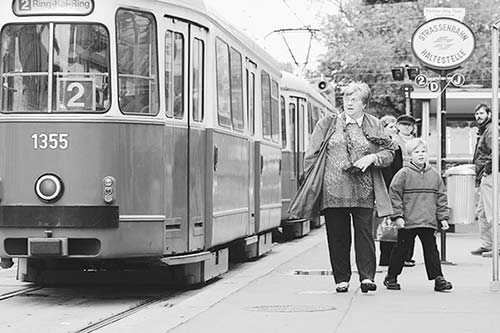
Tickets and Passes: Trams, buses, and the U-Bahn and S-Bahn all use the same tickets. Except on days spent entirely within the Ring, buying a single- or multiday pass is usually a good investment (and pays off if you take at least four trips). Many people find that once they have a pass, they end up using the system more.
Buy tickets from vending machines (easy and in English), ticket offices in stations, or at some tobacco shops. Not all trams have ticket machines, so it’s best to purchase tickets ahead of time. You cannot purchase tickets on buses.
You have lots of choices:
• Single tickets (€2.40, €2.60 on tram, good for one journey with necessary transfers)
• 24-hour transit pass (€8)
• 48-hour transit pass (€14.10)
• 72-hour transit pass (€17.10)
• 7-day transit pass (Wochenkarte, €17.10—the catch is that the pass runs from Monday to Monday, so you may get less than seven days of use)
• 8-day “Climate Ticket” (Acht-Tage-Klimakarte, €40.80, can be shared—for example, four people for two days each). With a per-person cost of €5.10/day (compared to €8/day for a 24-hour pass), this can be a real saver for groups, but you must stay together.
Transit Tips: To get your bearings on buses, trams, the U-Bahn, and the S-Bahn, you’ll want to know the end-of-the-line stop in the direction you’re heading. For example, if you’re in the city center at Stephansplatz and you want to take the U-Bahn to the main train station (Hauptbahnhof), you’d take U-1 going in the direction “Oberlaa.”
You must stamp your ticket at the barriers in U-Bahn and S-Bahn stations, and in the machines on trams and buses (stamp multiple-use passes only the first time you board). When purchasing tickets from vending machines, you can choose to have them validated before being printed. There are no formal checks, but you may see random stops; cheaters pay a stiff fine (about €115), plus the cost of the ticket.
On some trams, stop announcements are voice-only and easy to miss—carry a map and stay alert. Rookies miss stops because they fail to open the door. Push buttons, pull latches—do whatever it takes.
Before you exit a U-Bahn station, study the wall-mounted street map and choose the most efficient exit.
Cute little electric buses wind through the tangled old center (from Schottentor to Stubentor). Bus #1A is best for a joyride—hop on and see where it takes you.
By Taxi or Uber
Though the city has a great public transit system and most of your time will be spent in the essentially traffic-free old town, you may need the occasional taxi. You can try waving one down, but locals either go to a taxi stand (there’s generally one nearby) or call one. All Uber drivers in Vienna are also taxis—so, while Uber works here just like back home, it’s essentially a taxi call service. Uber rates are a bit cheaper than official taxi metered rates, and there’s no extra charge for the call.
By Bike
With more than 600 miles of bike lanes (and a powerful Green Party), Vienna is a great city on two wheels. Consider using a rental bike for the duration of your visit (Pedal Power is the best option—details below); you’ll go anywhere in town faster than a taxi can take you. Biking (carefully) through Vienna’s many traffic-free spaces is no problem. And bikes ride the U-Bahn for free (but aren’t allowed during weekday rush hours).
The bike path along the Ring is wonderfully entertaining (in fact, my Ringstrasse Tram Tour works even better by bike than by tram, especially if you use my audio tour)—you’ll enjoy the shady parklike ambience of the boulevard while rolling by many of the city’s top sights.
Besides the Ring, your best sightseeing by bike is along the Danube Canal, across Danube Island, and out to the modern Donau City business district (for more on biking on Danube Island and to Donau City, see here). These routes are easy to follow on the Radkarte bike map available from the TI. Bike lanes are usually marked with red-colored pavement, but some are marked just with white lines.
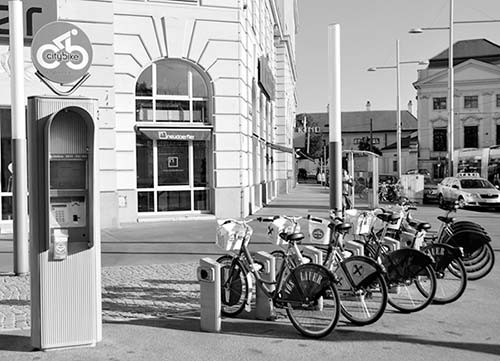
Borrowing a City Bike: WienMobil Rad (operated by Nextbike) has an app that lets you borrow bikes from public racks all over town. Before your trip, download the WienMobil Rad app and register with your credit card. To borrow a bike at a stand, open the app and enter the number of the bike you want; you’ll receive a code to unlock it (€0.60/30 minutes, €14.90/24 hours, +43 1 790 9100, www.wienerlinien.at/wienmobil-app).
Renting a Higher-Quality Bike: If you want to ride beyond the town center—or you simply want a better set of wheels—rent from Pedal Power (€6/hour, €19/4 hours, €30/24 hours, RS%—10 percent with this book, e-bikes available, daily May-Sept 9:00-18:00, shorter hours March-April and Oct-Nov, rental office near the opera house, a block beyond the Ring, at Bösendorferstrasse 5—see “Vienna’s City Center” map on here, +43 1 729 7234, www.pedalpower.at). For €17 extra, they’ll deliver a bike to your hotel and pick it up when you’re done. They also organize bike tours (described later).
Tours in Vienna
 To sightsee on your own, download my free audio tours that cover some of Vienna’s top sights and neighborhoods, including my Vienna City Walk, St. Stephen’s Cathedral Tour, and Ringstrasse Tram Tour (all produced from the chapters in this book). The city walk and tram tour start at the opera house and work nicely in the evening as well as during the day. The cathedral tour can be spliced into the city walk for efficiency (for more on these audio tours, see the sidebar on here). Once downloaded, you can listen to these offline.
ON FOOT
TI’s “Walks in Vienna” Program
The TI’s Walks in Vienna brochure lists more than a dozen walks—many given in English, all for €20. Their basic 1.5-hour “Vienna at First Glance” introductory walk is usually offered daily in English throughout the summer (leaves from in front of the TI, reservations smart, +43 664 260 4388, www.wienguide.at).
Good Vienna Tours
This company (one of several offering such walks) runs a “pay what you like” 2.5-hour, English-only walk through the city center. While my Vienna City Walk is much more succinct, this can be an entertaining ramble with a local telling stories of the city. (Unlike other countries offering “free” walks, Austria requires that such guides be trained and licensed.) Just show up (pay what you think it’s worth at the end—no coins, paper only, daily departures at 10:00 and 14:00, also at 17:00 July-Aug, maximum 35 people, meet at fountain at tip of Albertina across from TI, mobile +43 664 554 4315, www.goodviennatours.eu).
Food Tours
There are many good food tours capitalizing on the rich culinary heritage of Vienna and its “CCC” (Coffee, Cake, and Chocolate) culture. GTOUR (Genuss-Touren Food Tours) was among the first. Their 15 guides lead an array of small-group tours (4-8 people) in English, but their Naschmarkt tour is the bestseller (€50/person, RS%—10 percent discount, use code “RSbook”; 2.5 hours, 10 stops). Tours depart most mornings at 9:00 from Marktamt, near Naschmarkt, opposite the Kettenbrückengasse U-Bahn station. They also do a popular coffeehouse tour through the city, stopping to enjoy coffee and pastries at three coffeehouses—including one trendy coffee bar (€55/person, 3 hours, +43 699 1234 7000, www.gtour.at).
ON WHEELS
Consider a bus tour, bike tour, or even one by horse-and-buggy.
Hop-On, Hop-Off Bus Tours
Two companies (Big Bus—red, Vienna Sightseeing—yellow) offer a complicated and busy program of hop-on, hop-off bus tours—but I don’t recommend them. Both offer 24-, 48-, and 72-hour tickets, including a circular bus route (with departures every 20 minutes) and options to add river cruises and walking tours. Prices start at around €32 for 24 hours. You’ll see booths at major stops (including the opera house for Vienna Sightseeing and Albertinaplatz for Big Bus) with flyers and staff that lay out all the options. While the ride can be scenic, gets you from sight to sight conveniently, and offers a stress-free overview, the recorded narration is almost worthless and cluttered with instructions, warnings, and cross-promotions. If you’re adept at public transit, a good walker, and can read this guidebook, these hop-on, hop-off tours are not a good value.
Pedal Power
English tours cover the central district in three hours and run daily at 10:00 from May to September (€37/person, RS%—10 percent with this book, includes bike, €20 extra to keep bike for the day). They also rent bikes sans tour (for contact info, see listing under “Getting Around Vienna—By Bike,” earlier).
Horse-and-Buggy Tour
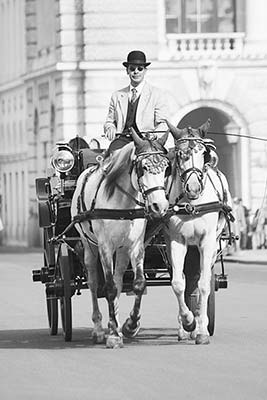
These traditional 19th-century horse-and-buggies, called Fiaker, take rich romantics on clip-clop tours lasting 20 minutes (Old Town—€55), 40 minutes (Old Town and the Ring—€95), or one hour (all of the above, but more thorough—€120). Before the advent of cars, one-horse versions of these served as Vienna’s taxis. You can share the ride and cost with up to four people (some may allow five). Because it’s a kind of guided tour, talk to a few drivers before choosing a carriage, and pick someone who’s fun and speaks English.
LOCAL GUIDES
Vienna becomes particularly vivid and meaningful with the help of a private guide. I’ve enjoyed working with these guides; any of them can set you up with another good guide if they are already booked.
Quality Conventional Guides
Lisa Zeiler is a good storyteller with years of guiding experience (€160/2 hours, mobile +43 699 1203 7550, lisa.zeiler@gmx.at). Adrienn Bartek-Rhomberg offers themed walks in the city as well as Schönbrunn Palace tours (€200/3 hours, €370/full day on foot, €360 “Panorama City Tour”—a 4-hour minibus and walking tour for up to six people, mobile +43 650 826 6965, www.experience-vienna.at, office@experience-vienna.at).
Philosopher Guides
Wolfgang Höfler, a generalist with a knack for having psychoanalytical fun with history, enjoys the big changes of the 19th and 20th centuries. He’ll take you around on foot or by bike (€180/2 hours, €50 for each additional hour, bike tours—€180/3 hours, mobile +43 676 304 4940, www.vienna-aktivtours.com, hofwolf@gmail.com). Gerhard Strassgschwandtner, who runs the Third Man Museum, is passionate about history in all its marvelous complexity (€160/2 hours, mobile +43 676 475 7818, www.special-vienna.com, gerhard@special-vienna.com).