THE CZECH REPUBLIC: PAST & PRESENT
CHARLES IV AND THE MIDDLE AGES (500s-1300s)
JAN HUS AND RELIGIOUS WARS (1300s-1600s)
CZECH NATIONAL REVIVAL (1800s-1918)
TROUBLES OF THE 20TH CENTURY (1918-1989)
“IT’S NOT YOU, IT’S ME”: THE PEACEFUL BREAKUP (1989-1993)
THE CZECH REPUBLIC TODAY (2000 to Present)
The Czechs have always been at a crossroads of Europe—between the Slavic and Germanic worlds, between Catholicism and Protestantism, and between Cold War East and West. As if having foreseen all of this, the mythical founder of Prague—the beautiful princess Libuše—named her city “Praha” (meaning “threshold” in Czech). Despite these strong external influences, the Czechs have retained their distinct culture...and a dark, ironic sense of humor to keep them laughing through it all.
CHARLES IV AND THE MIDDLE AGES (500s-1300s)
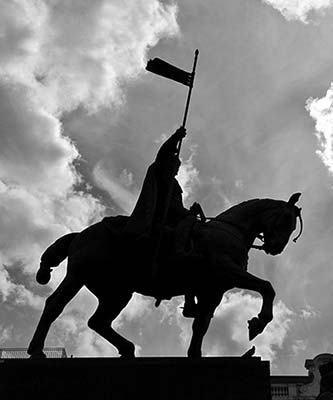
The pagan, Slavic tribes that arrived in this part of Europe in the sixth century AD were first united by the Prague-based Přemysl dynasty. The main figure of this era was Duke Václav (AD 907-935), who was later immortalized in a Christmas carol as “Good King Wenceslas.” He converted the Czechs to Christianity and founded a church at Prague Castle, on a bluff overlooking the Vltava River.
In 1004, Bohemia was incorporated into the Holy Roman Empire (an alliance of mostly German-speaking kingdoms and dukedoms). Within 200 years—thanks to its strategic location and privileged status within the empire—Prague had become one of Europe’s largest and most highly cultured cities.
The 14th century was Prague’s golden age, when Holy Roman Emperor Charles IV (1316-1378) ruled. Born to a Luxembourger nobleman and a Czech princess, Charles IV was an ambitious man on the cusp of the Renaissance. He lived and studied in France and Italy, spoke five languages, and counted Petrarch as a friend—but always felt a deep connection to his mother’s Czech roots.
Selecting Prague as his seat of power, Charles imported French architects to make the city a grand capital, founded the first university north of the Alps, and invigorated the Czech national spirit. (He popularized the legend of Wenceslas to give his people a near-mythical, King Arthur-type cultural standard-bearer.) Much of Prague’s history and architecture—including the famous Charles Bridge, Charles University, St. Vitus Cathedral, New Town, and Karlštejn Castle—can be traced to this dynamic man’s rule.
Under Charles IV, the Czech people gained esteem among Europeans. Charles was born under a lucky star: During his time, the dominance of divinely sanctioned monarchs peaked. A generation later, after a religious and social upheaval, his son faced much stronger opposition when trying to implement Charles-like absolute power.
JAN HUS AND RELIGIOUS WARS (1300s-1600s)
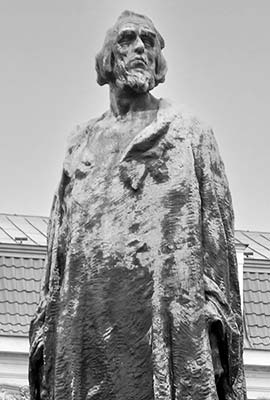
Jan Hus (c. 1369-1415) was a local preacher and professor who got in trouble with the Vatican a hundred years before Martin Luther. Like Luther, Hus preached in the people’s language rather than in Latin. To add insult to injury, he spoke out against Church corruption. Tried for heresy and burned in 1415, Hus became both a religious martyr and a national hero. While each age has defined Hus to its liking, the way he challenged authority while staying true to his beliefs has long inspired and rallied the Czech people. (For more on Hus, see sidebar on here.)
Inspired by Hus’ reformist ideas, the Czechs rebelled against both the Roman Catholic Church and German political control. This burst of independent thought led to a period of religious wars. Protestant Czech patriots, like the rough-and-rugged war hero Jan Žižka (often depicted in patriotic art with his trademark eye patch), fought to maintain Czech autonomy. But ultimately, these rebels were overwhelmed by their Catholic opponents. The result of these wars was the loss of autonomy to Vienna.
Ruled by the Habsburgs of Austria, Prague stagnated—except during the rule of King Rudolf II (1552-1612), a Holy Roman Emperor. With Rudolf living in Prague, the city again blossomed as a cultural and intellectual center. Astronomers Johannes Kepler and Tycho Brahe flourished, as did other scientists, and much of the inspiration for Prague’s great art can be attributed to the king’s patronage.
Not long after this period, Prague entered one of its darker spells. The Thirty Years’ War (1618-1648) began in Prague when Czech Protestant nobles, wanting religious and political autonomy, tossed two Catholic Habsburg officials out the window of the castle. (This was one of Prague’s many defenestrations—a uniquely Czech solution to political discord, in which offending politicians are literally thrown out the window.) The Czech Estates Uprising lasted two years, ending in a crushing defeat in the Battle of White Mountain (1620), which marked the end of Czech freedom. Twenty-seven leaders of the uprising were executed (today commemorated by crosses on Prague’s Old Town Square), most of the old Czech nobility was dispossessed, and Protestants had to convert to Catholicism or leave the country.
Often called “the first world war” because it engulfed so many nations, the Thirty Years’ War was particularly tough on Prague. During this period, its population dropped from 60,000 to 25,000. The result of this war was 300 years of Habsburg rule from afar, as Prague became a German-speaking backwater of Vienna. While the Austrian rule contributed to economic prosperity—and was fairly liberal compared to its Russian and Prussian neighbors—Czechs still tend to despise the Habsburgs. They see them as a pompous royal family that invented the concept of the modern zoo (at Vienna’s Schönbrunn Palace) and then tried to impose it on the people of their empire (before deciding it was better to turn them into cannon fodder).
CZECH NATIONAL REVIVAL (1800s-1918)
The end of Prague as a German city came gradually. During the centuries that the Czech language and culture were suppressed, “Prag” and other cities were populated mainly by German-speaking urbanites, while “backwards” peasants kept the old Czech ways alive in the countryside. But as the Industrial Revolution attracted Czech farmers and country folk to the cities, the demographics of the Czech population centers began to shift. Between 1800 and 1900—though it remained part of the Habsburg Empire—Prague went from being an essentially German town to a predominantly Czech one.
As in the rest of Europe, the 19th century was a time of great nationalism, when the age of divine kings and ruling families came to a fitful end. The Czech spirit was first stirred by the work of historian František Palacký, who dug deep into the Czech archives to forge a national narrative. During this time, Czechs were inspired by the completion of Prague’s St. Vitus Cathedral, the symphonies of Antonín Dvořák, and the operas of Bedřich Smetana, which were performed in the new National Theater.
History comes to life when you visit a centuries-old church. Even if you wouldn’t know your apse from a hole in the ground, learning a few simple terms will enrich your experience. Note that not every church has every feature, and a “cathedral” isn’t a type of church architecture, but rather a designation for a church that’s a governing center for a local bishop.
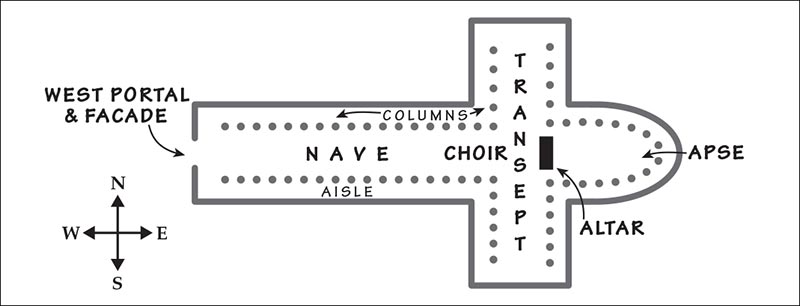
Aisles: Long, generally low-ceilinged arcades that flank the nave
Altar: Raised area with a ceremonial table (often adorned with candles or a crucifix), where the priest prepares and serves the bread and wine for Communion
Apse: Space behind the altar, sometimes bordered with small chapels
Barrel Vault: Continuous round-arched ceiling that resembles an extended upside-down U
Choir: Intimate space reserved for clergy and choir, located within the nave near the high altar and often screened off
Cloister: Covered hallways bordering a square or rectangular open-air courtyard, traditionally where monks and nuns got fresh air
Facade: Exterior of the church’s main (west) entrance, usually highly decorated
Groin Vault: Arched ceiling formed where two equal barrel vaults meet at right angles
Narthex: Area (portico or foyer) between the main entry and the nave
Nave: Long central section of the church (running west to east, from the entrance to the altar) where the congregation sits or stands during the service
Transept: One of the two parts forming the “arms” of the cross in a traditional cross-shaped floor plan; runs north-south, perpendicularly crossing the east-west nave
West Portal: Main entry to the church (on the west end, opposite the main altar)
Castles were fortified residences for medieval nobles. Castles come in all shapes and sizes, but knowing a few general terms will help you understand them.
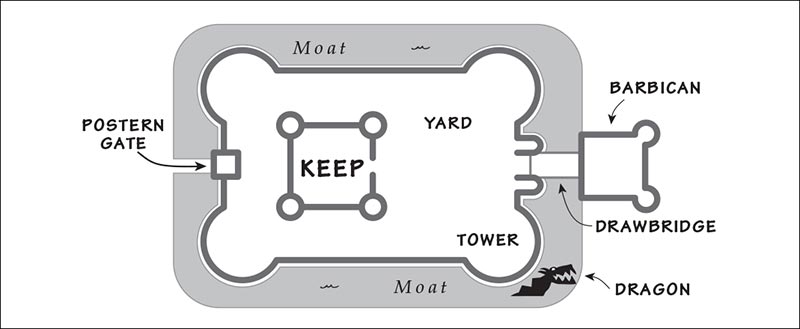
Barbican: Fortifed gatehouse, sometimes a standalone building located outside the main walls
Crenellation: Gap-toothed pattern of stones atop the parapet Drawbridge: Bridge that could be raised or lowered using counterweights or a chain and winch
Great Hall: Largest room in the castle, serving as throne room, conference center, and dining hall
Hoardings (or Gallery or Brattice): Wooden huts built onto the upper parts of the stone walls; served as watchtowers, living quarters, and fighting platforms
Keep (or Donjon): High, strong stone tower in the center of the complex; the lord’s home and refuge of last resort
Loopholes (or Embrasures): Narrow wall slits through which soldiers could shoot arrows
Machicolation: Stone ledge jutting out from the wall, with holes through which soldiers could drop rocks or boiling oil onto wall-scaling enemies below
Moat: Ditch encircling the wall, sometimes filled with water
Parapet: Outer railing of the wall walk
Portcullis: Iron grille that could be lowered across the entrance
Postern Gate: Small, unfortified side or rear entrance; in wartime, became a sally port used to launch surprise attacks or as an escape route
Towers: Square or round structures with crenellated tops or conical roofs serving as lookouts, chapels, living quarters, or the dungeon
Turret: Small lookout tower rising from the top of the wall
Wall Walk (or Allure): Pathway atop the wall where guards could patrol and where soldiers stood to fire at the enemy
Yard (or Bailey): Open courtyard inside the castle walls
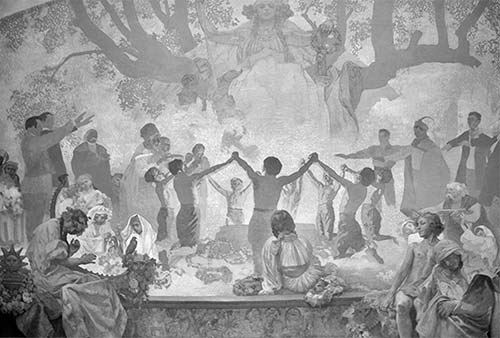
Alphonse Mucha, a prodigiously talented Czech artist who made a name for himself in the high society of turn-of-the-century Paris, embodied this wave of nationalism. When he could have lived out his days in the lap of luxury in Paris or New York City, Mucha chose instead to return to his homeland and spend decades painting a magnum opus celebrating the historical journey of the Czechs and all Slavs—the Slav Epic.
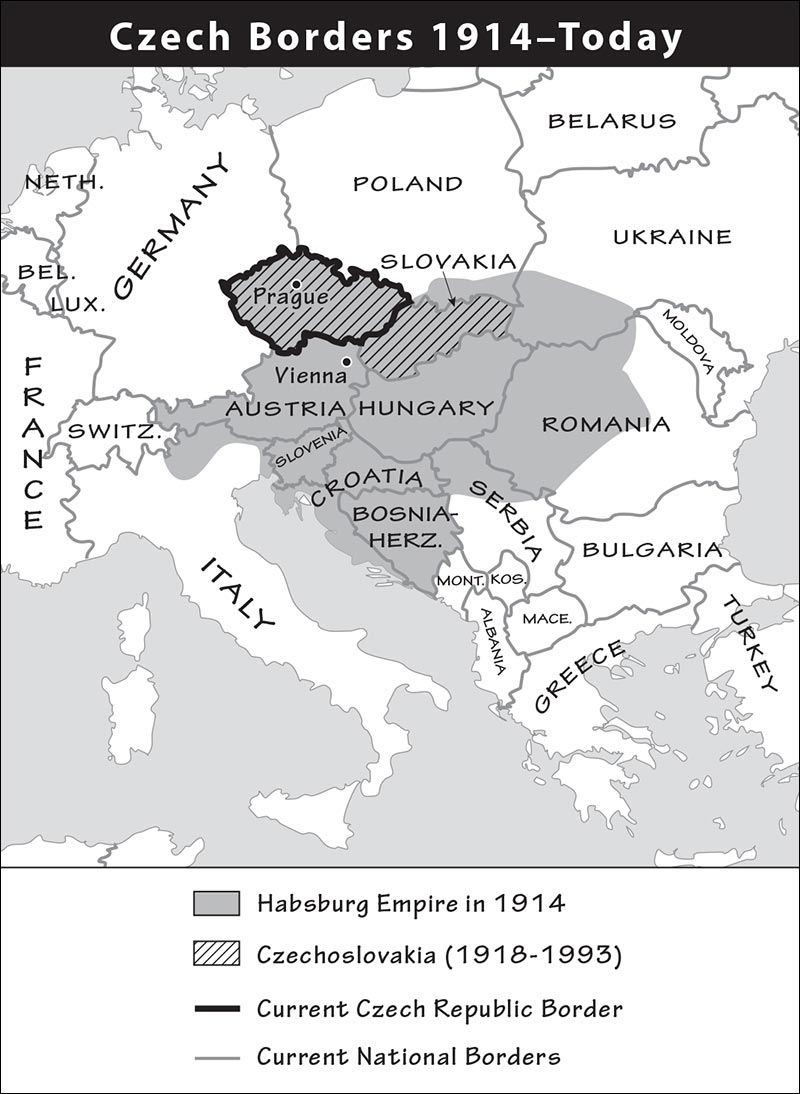
After the Habsburgs’ Austro-Hungarian Empire suffered defeat in World War I, their vast holdings broke apart and became independent countries. Among these was a union of Czechia, Slovakia, and Ruthenia, the brainchild of a clever politician named Tomáš Garrigue Masaryk (see sidebar on here). The new nation, Czechoslovakia, was proclaimed in 1918, with Prague as its capital.
TROUBLES OF THE 20TH CENTURY (1918-1989)
Independence lasted only 20 years. In the notorious Munich Agreement of September 1938—much to the dismay of the Czechs and Slovaks—Great Britain and France peacefully ceded to Hitler an area called the Sudetenland (a fringe around the edge of Bohemia, populated mainly by people of German descent; see sidebar on here). It wasn’t long before Hitler seized the rest of Czechia (Slovakia, overrun by local clerical-fascists, declared itself a puppet state) and the Holocaust began. Under the ruthless Nazi governor Reinhard Heydrich, tens of thousands of Jews were sent first to the concentration camp at Terezín, and later to Auschwitz and other death camps. After Heydrich was assassinated by a pair of British-trained Czech agents, the campaign of genocide grew even worse. Out of the 55,000 Jews living in Prague before the war, more than 80 percent perished during the Holocaust; throughout Czechoslovakia, an estimated 190,000 Jews were murdered. Percentagewise, the Roma fared even worse, with 90 percent of the prewar Roma population of Czechia perishing in the Holocaust (and unlike in Terezín, Czech policemen took an active part in running the lesser-known Lety concentration camp where the Roma were sent).
For centuries, Prague’s cultural makeup had consisted of a rich mix of Czech, German, and Jewish people—historically, they were almost evenly divided. With the Jewish population decimated, part of that delicate tapestry was gone forever. And after World War II ended, more than two million people of Germanic descent who lived in Czechoslovakia were pushed into Germany. Their forced resettlement—which led to the deaths of untold numbers of Germans (what some today might call “ethnic cleansing”)—was demanded by the public and carried out by Czechoslovak president Edvard Beneš, who had ruled from exile in London throughout the war. Today’s Czech Republic is largely homogenous—about 90 percent Czechs.
Although Prague escaped the bombs of World War II, it went directly from the Nazi frying pan into the communist fire. A local uprising freed the city from the Nazis on May 8, 1945, but the Soviets “liberated” them on May 9.
The period of 1945 to 1948 is a perfect case study of how, in trying times, a country can lose its freedom through its own folly. The popular perception that Czechoslovakia simply fell into the Soviet sphere of influence is only partly true. While the Soviets had special interest in controlling Czechoslovakia (particularly because of its uranium deposits), Czechoslovakia was represented by an internationally recognized exile government during the war. This government was allowed to come back and rule until the 1946 election. And up until 1948, Czechoslovakia was still a sovereign state (though it was under Soviet pressure) whose elected leaders were responsible for shaping its eventual orientation.
The first mistake was that the government in exile (despite Churchill’s warnings) signed a binding cooperation pact with the Soviet Union in 1943. Then the communists won the most seats in the 1946 election—garnering more than 40 percent of the vote in the Czech lands (in Slovakia, they came in second). In 1947, under Soviet pressure, parliament voted against the Marshall Plan. When the country’s leaders and electorate realized the communists weren’t playing according to any rulebook, it was too late. By 1948, the communists controlled all the powerful ministries and suppressed student-led protests calling for democracy. For more than 40 years, they would not hold a free election.
The early communist era (1948-1968) was a mixture of misguided zeal, Stalinist repressions, and attempts to wed socialism with democracy. The “Prague Spring” period of reform—initiated by a young generation of progressive communists in 1968, led by the charismatic Slovak politician Alexander Dubček—came to an abrupt halt under the treads of Warsaw Pact tanks (for details, see here). Dubček was internally exiled (and made a backwoods forest ranger), and the years of “normalization” following the unsuccessful revolt were particularly disheartening. A wave of protests spread through the country in 1969, as furious young Czechs lit themselves on fire to decry communist oppression. But the status quo would hold strong for another 20 years.
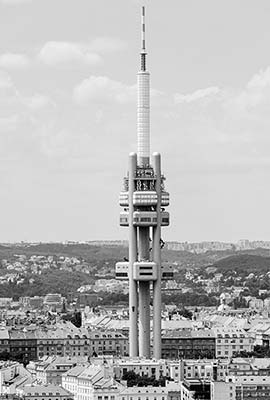
The underground Metro system, begun in the mid-1970s, was not just for mass transit, but was also designed to be a giant fallout shelter for protection against capitalist bombs. In the mid-1980s, the communists began constructing Prague’s huge Žižkov TV tower (now the city’s tallest structure)—not only to broadcast Czech TV transmissions, but also to jam Western signals.
Every small town had its own set of loudspeakers for broadcasting propaganda. (You’ll still see these if you look closely as you pass through the countryside.) Locals remember growing up with these mouthpieces of government boasting of successes (“This year, despite many efforts of sabotage on the part of certain individuals in service of imperialist goals, we have surpassed the planned output of steel by 195 percent”), calling people to action (“There will be no school tomorrow as all will join the farmers in the fields for an abundant harvest”), or quelling disturbances (“Some citizens may have heard about alien forces in our society taking advantage of this week’s anniversary to spread unrest. This is to reassure you that the situation is firmly under control and nothing is happening in Olomouc or in Prague. Nevertheless, for their own safety, we suggest all citizens stay home.”).
Eventually the Soviet empire crumbled, beginning with reforms in Hungary in the summer of 1989 and culminating in the fall of the Berlin Wall that November. A few weeks later, Czechoslovakia regained its freedom in the student- and artist-powered 1989 “Velvet Revolution,” so called because there were no casualties...or even broken windows (see here). Václav Havel, a poet, playwright, and philosopher who had been imprisoned by the communist regime, became Czechoslovakia’s first post-communist president (see here).
“IT’S NOT YOU, IT’S ME”: THE PEACEFUL BREAKUP (1989-1993)
In the post-communist age of new possibility, the two peoples of Czechoslovakia began to wonder if, in fact, they belonged together.
Ever since they joined with the Czechs in 1918, the Slovaks felt overshadowed by Prague (unmistakably the political, economic, and cultural center of the country). Slovakia, which in the preceding 50 years had been stripped by Hungarians even of the right to run schools in its own language, stood no chance of true independence after World War I. And over the years, the Czechs resented the financial burden of carrying their poorer neighbors to the east. In this new world of flux and freedom, longstanding trends and tensions came to a head. (You could argue that Austro-Hungary´s multiethnic successor states—such as Czechoslovakia and Yugoslavia—were miniature copies of the mother country. It was only a matter of time before those states, too, would subdivide into smaller national states.)
In communist times, it was routine to be married and start a family by age 22. Once a Czech finished training school and (for men) the compulsory two-year military service, there was little else to aspire to. Everyone was assigned essentially the same mediocre job (“They pretended to pay us, we pretended to work”), with little hope of career progress—unless you were willing to cut ties with your friends by entering the Communist Party or by working for the secret police. Children (and summer homes) were the only way for people to project their dreams. Parenting was subsidized. In the countryside, young families were guaranteed housing, and in cities, flats were allocated according to long waiting lists that gave priority to married couples with children.
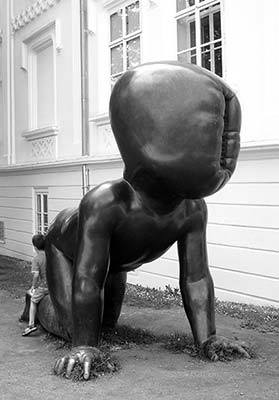
But after the fall of communism in 1989, many more options became available to young people who had not previously dreamed of such possibilities. Young Czechs embraced the new freedoms: Everyone wanted to travel—to the West to study law, or to the East to meditate. And everyone wanted to work—for big bucks at a multinational investment bank, or for pennies at a nonprofit organization in Afghanistan. Marriage was no longer the expected “next step.” And shacking up was no longer a problem; you needed money, rather than a marriage certificate, to get a place to live. More and more young adults waited until after 30 to get married, and those already married reconsidered their choices. Fewer Czechs had children, and many divorced.
By 2004, the falling birthrate was a regular topic in newspaper columns. To stimulate reproduction, the socialist government began paying new parents a baby bonus—one month’s wages—in addition to the standard three years of paid maternity leave already promised to one parent.
Ironically—as if to prove that Czechs will never listen to what the government tells them to do—as soon as the newly elected conservatives revoked the monthly baby bonus in 2006, everyone decided to have children. The biggest baby boom in a generation is still on: Maternity wards are overflowing, signs regulating stroller traffic are popping up in public parks, and politicians are blaming each other for imprudently closing down many state-run nurseries.
Yet, even though they’re faced with a bright and baby-filled future, some Czechs maintain a healthy dose of pessimism and seem reluctant to dive headlong into the Western rat race. Life still goes a little slower here, and people find pleasure in simple things.
The dissolution of Czechoslovakia began over a hyphen, as the Slovaks wanted to rename the country Czecho-Slovakia. Ideally, this symbolic move would come with a redistribution of powers: two capitals and two UN reps, but one national bank and a single currency. This idea was rejected, and in June 1992, the Slovak nationalist candidate Vladimír Mečiar fared surprisingly well in the elections—suggesting that the Slovaks were serious about secession. The politicians plowed ahead, getting serious about the split in September 1992. The transition took only three months from start to finish.
The split became official on January 1, 1993, and each country ended up with its own capital, currency, and head of state. For most, the breakup dissolved tensions, and three decades later, Czechs and Slovaks still feel closer to each other than to any other nationality. It is no surprise that an elected Czech president’s first official visit is to Bratislava, and vice-versa.
Since the split, the Czech Republic has had three significant turning points. In March 1999, it joined NATO. On May 1, 2004, the country joined the European Union. Three and a half years later, it entered the Schengen Agreement, effectively erasing its borders for the purposes of work and travel. The Czech Republic had become a fully integrated member of the European community.
THE CZECH REPUBLIC TODAY (2000 to Present)
After 14 years in office, a term-limited Václav Havel stepped down in 2003. He died in 2011. While he’s fondly remembered by Czechs as a great thinker, writer, and fearless leader of the opposition movement during the communist days, many consider him to have been less successful as a president.
The next president, Václav Klaus, had been the pragmatic author of the economic reforms in the 1990s. Klaus’ surprising win in the 2003 election symbolized a change from revolutionary times, when philosophers became kings, to modern humdrum politics, when offices are gained by bargaining with the opposition (Communist Party votes in parliament were the decisive factor in Klaus’ election).
Behind-the-scenes deals in parliament allowed Klaus to be reelected, drawing public outrage and eventually a change in the country’s constitution. This led, in January 2013, to the first election of a president directly by the people (rather than by parliament).
Co-author Honza Vihan’s grandmother, Bohumila Vihanová (1907-2008), was born in the Austro-Hungarian town of Prag (today’s Praha), which was then ruled from Vienna. In the 101 years of her life, she lived under seven different governments: Habsburgs, Masaryk’s interwar Czechoslovakia, Nazis, communists, post-communist Czechoslovakia, the Czech Republic, and the European Union. Wise beyond even her many years, she counseled family and visitors alike as follows:
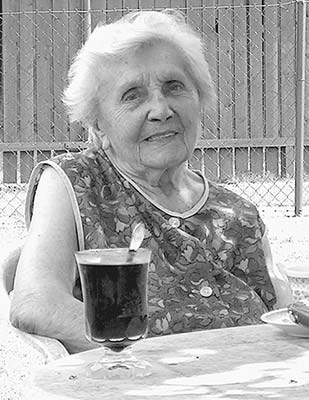
• “I liked each change, because it always brought something new.”
• “You must be able to take the best from whatever comes.”
• “Nothing good that you do is ever lost; it always stays somewhere and surfaces when needed.”
• “When the communists took over, that was bad—really bad. But then, my mother used to say, ‘There’s no point in crying over spilled milk. There’s enough water in it already.’ So I tried to get by, and somehow we managed to live through it all.”
• “The main thing is to keep your inner balance.”
• “You should never take yourself too seriously.”
• “Let everyone believe whatever they want, as long as they behave accordingly.”
• “Money will always be here. We won’t.”
• “Parents should never mix in their children’s lives.”
• “Good health and happy mind!”
The winner then (and again in 2018) was Miloš Zeman, the other political heavyweight of the 1990s. Zeman—a tobacco, pork, and Becherovka-powered man of the people—brought the Social Democratic Party back to dominance.
Zeman was a controversial figure with slippery politics. He began his career on the left, then abandoned the Social Democrats and swung hard to the right, and fired up his base with populist rhetoric. (If you’re thinking “the Czech Donald Trump,” you’re not far off.) Moreover, Zeman repeatedly courted Russian president Vladimir Putin (for which he publicly apologized immediately after Putin’s 2022 invasion of Ukraine). And, during the 2016 visit of Chinese president Xi Jinping, Zeman sent in police to put down a peaceful protest (which brought back painful memories of the oppressive 1980s).
But during the 2023 election, former army general Petr Pavel convincingly defeated the Zeman-backed candidate, marking a turn away from populism. Pavel started his military career pragmatically as a member of the Communist Party in the 1980s, but later transformed himself into a war hero (having saved a French contingent during the 1990s Yugoslav Wars). Eventually Pavel rose to second-in-command at NATO and became the Czech Republic’s chief-of-staff. After his predecessors’ attempts to bring the country closer to Russia and China, President Pavel promised a return to the Western-oriented, human-rights-first approach of Václav Havel. Pavel is also firmly committed to supporting Ukraine.
However, the Czech president is largely a figurehead. Power rests with the prime minister, who is chosen in the parliamentary elections. Recently, the traditional political parties were challenged by an antiestablishment candidate: food-industry mogul, second-wealthiest Czech, and former secret-police collaborator Andrej Babiš. He’s the founder and head of the populist Action of Dissatisfied Citizens party that’s considered by critics to be a cross between Vladimir Putin, Silvio Berlusconi, and Viktor Orbán.
Babiš served as prime minister between 2017 and 2021, a term that was plagued with mass public protests, mainly against his massive conflicts of interest. This inspired parties across the political spectrum to band together and eventually defeat Babiš at the polls. In 2022, the new government coalition strongly supported Ukraine and helped steer the rest of the EU to do the same. The government also opened the country’s borders—and its purse—to Ukrainian refugees, taking in over a half-million people. Many Czechs saw sharp parallels to the 1968 Soviet crackdown in their own country, so support for Ukrainian refugees came naturally (which contrasted sharply with the cold shoulder the Czechs gave Syrian refugees flooding Europe just a few years before). But the war also caused a surge in energy prices and an inflation rate of 15 percent, posing a major challenge for the government.
Yet despite recent turmoil, the trajectory of Czech history continues to trend positive. Both in the capital and in rural villages, the country feels more affluent than ever before, all while celebrating its inherent Czech-ness. And Prague is, quite justifiably, one of the most popular tourist destinations in Europe.