SHOPPING IN PRAGUE
SHOPPING STREETS IN THE CENTER
ORGANIC COSMETICS AND HANDMADE GIFTS
BOOKS, MAPS, POSTERS, AND MUSIC
Prague’s entire Old Town seems designed to bring out the shopper in visitors. Puppets, glass, crystal, and garnet gemstones are traditional; fashion and design (especially incorporating the city’s rich Art Nouveau heritage) are also big business.
Most shops are open on weekdays 9:00-17:00 or 18:00—and often longer, especially for tourist-oriented shops. Some close on Saturday afternoons and/or all day Sunday.
Naturally, a shop that sells several types of souvenirs (glass, garnets, puppets, T-shirts, magnets, and more, all under one roof) is probably more interested in making a sale than in quality. If you’re buying a big-ticket item, such as fine crystal or a garnet necklace, go to a place that specializes in doing one thing well. Quality glass or garnets should be packaged in the original box and marked with the date and item number (usually on a label on the bottom of the box).
For information on VAT refunds and customs regulations, see the Practicalities chapter.
SHOPPING STREETS IN THE CENTER
For easy shopping in the tourist zone, consider the following streets. (Keep in mind that any shop in the city center caters primarily to tourists—most locals do their shopping in the suburbs.)
The Ungelt, the courtyard tucked behind the Týn Church just off the Old Town Square, is packed with touristy but decent-quality shops. Material has a fine selection of contemporary-style bead jewelry, and Botanicus is an excellent herbal cosmetics shop. Fajans Majolica has traditional blue-and-white Czech pottery (www.fajans.cz), and V Ungeltu is a cluttered shop with wooden toys and marionettes. The other marionette shop here—Hračky, Loutky—is a step up in quality (but for even finer craftsmanship, see the shops mentioned in the “Czech Puppets” section, later).
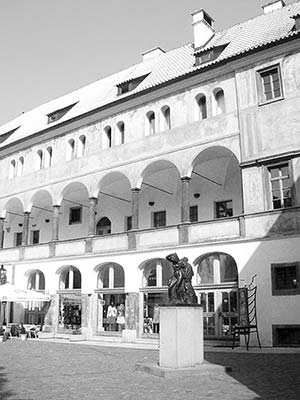
Michalská, a semihidden lane right in the thick of the tourist zone, has a variety of shops (from the Small Market Square/Malé Náměstí near the Astronomical Clock, go through the big stone gateway marked 459). After a gauntlet of tacky crystal shops, you’ll find a lane with Sanu Babu (a popular chain selling Nepalese, Tibetan, and Indian fashion—all the rage among young Czechs), Art Deco Galerie (with carefully selected secondhand vintage clothes and decor from the 1920s through 1960s), the Prague Gallery (with piles of starving-artist-type paintings of Prague), Leander (the factory shop for a prestigious Czech porcelain manufacturer), Coco Vintage, and De.Fakto [URL inactive] (a minimalist home-decor shop worth exploring for a glimpse at sleek Czech urban living).
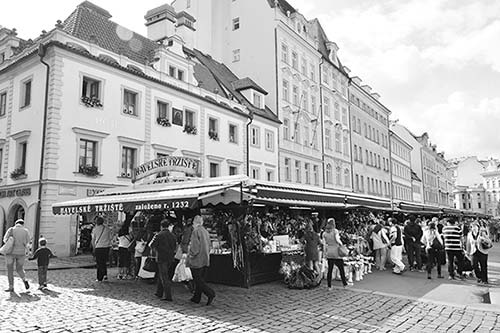
On Havelská street, you can browse the open-air Havelská Market, a touristy but enjoyable place to shop for inexpensive handicrafts and fresh produce (daily 9:00-18:00, two long blocks south of the Old Town Square).
Celetná, exiting the Old Town Square to the right of Týn Church, is lined with big stores selling traditional Czech goodies. Tourists wander here, mesmerized by the window displays. Several of my recommended shops have branches along Celetná, including Blue (contemporary glass, at #2), a store specializing in Turnov garnets (at #8), and Manufaktura (natural cosmetics and handmade souvenirs, at #12).
Na Příkopě, the mostly pedestrianized street following the former moat between the Old Town and the New Town, has the city center’s handiest lineup of modern shopping malls. The best is Slovanský Dům (“Slavic House,” at #22), where you’ll wander past a 10-screen multiplex deep into a world of classy restaurants and designer shops surrounding a peaceful, park-like courtyard. Černá Růže (“Black Rose,” at #12) has a great Japanese restaurant around a small garden; Moser’s flagship crystal showroom is also here (described later). The Galerie Myslbek, directly across the street, has fancy stores in a space built to Prague’s scale. Na Příkopě street opens up into Republic Square (Náměstí Republiky)—boasting Prague’s biggest mall, Palladium, hidden behind a pink Neo-Romanesque facade. Across the square is the communist-era brown steel-and-glass 1980s department store Kotva (“Anchor”), which has recently been remodeled inside.
Národní Třída (National Street), which continues past Na Příkopě in the opposite direction (toward the river), is less touristy and lined with some inviting stores. The big Máj department store in the middle (at #26) sells anything you might need (long hours daily).
Karlova, the tourist-clogged drag connecting the Old Town Square to the Charles Bridge, should be avoided entirely. Shops along here sell made-in-China trinkets at too-high prices.
CZECH PUPPETS
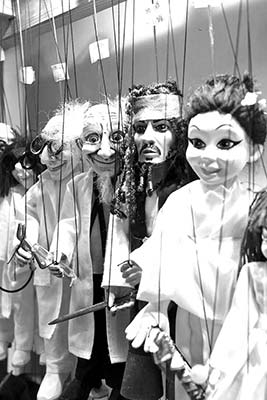
The first puppets were born on the Indian subcontinent and soon found their way to Europe and Southeast Asia. Czechs have treasured the art of puppets for centuries; at times of heavy German influence in the 18th century, traveling puppet troupes kept the Czech language and humor alive in the countryside. While the language of “legitimate theater” had to be German, Czech was tolerated if it came out of a puppet’s mouth. Others say that in the distant past, superstitious actors were afraid to take on another person’s personality—for fear they’d become possessed—so it was safer to act through a puppet.
For generations, Czech grandfathers bequeathed their linden-wood-carved puppets to their grandsons. (The power of puppetry peaked between 1938 and 1989, when the Czechs were ruled by a series of puppet governments.) Today, the puppet comedy duo Špejbl and Hurvínek, who have a permanent stage in Prague, are the greatest Czechs for kids from Japan to Patagonia. And Czech filmmaker Jan Švankmajer turned his wooden characters into award-winning film stars.
It takes a rare artist to turn pieces of wood into nimble puppets, and real ones can cost thousands of dollars. But even a simple jester, witch, or Pinocchio can make a thoughtful memento. You’ll see cheap trinket puppets at souvenir stands across town. A higher-quality puppet starts around $100. Here are a few better options to consider:
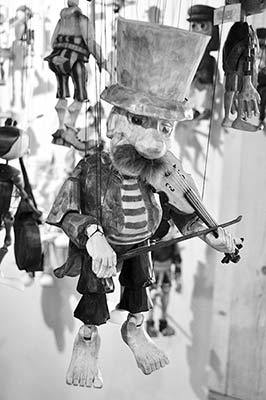
Galerie Michael, at U Lužického Semináře 7 in Lesser Town, has a wide range of wood, antique, and plaster puppets (www.buymarionettes.com). Another branch is in the Old Town at Jilská 22.
An excellent store is the no-name Loutky (“Puppets”) shop at the top of Nerudova, at #51. Here, the puppets are displayed by artist, with options ranging from cheap-but-working plastic and plaster creations (from 300 Kč) to professional mechanical wooden marionettes (starting at 4,000 Kč). The smaller puppets are packed into compact boxes and are easily transportable. They also have two more showrooms a few doors down at #45 and #47 (www.loutky.cz).
Closer to the Old Town Square, check out Hračky, Loutky (“Toys, Puppets”) in the Ungelt courtyard, just to the right as you are about to exit in the direction of the Church of St. James.
GLASS AND CRYSTAL
The Bohemian landscape is blessed with an abundance of just the right natural resources for making glass: heavily forested hills rich with deposits of certain minerals and timber for powering fires, and plenty of running water. Since the Renaissance, Prague has been known for its exquisite glass and crystal.
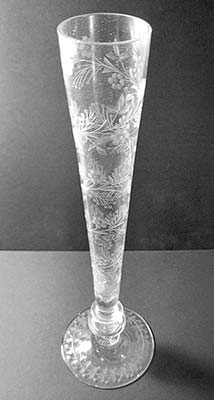
Legally, to be called “crystal” (or “lead crystal”), it must contain at least 24 percent lead oxide, which gives it that prismatic sparkle. The lead also adds weight, makes the glass easier to cut, and produces a harmonious ringing when flicked. (“Crystal glass” has a smaller percentage of lead.)
Historically, people used lead-crystal vessels to store and serve food and drink. But now we know that lead is a poison. It’s fine for short-term use, provided you wash it carefully beforehand, and don’t leave it in contact with food or drink for more than a few hours.
Some shops advertise “lead-free” glass (or “lead-free crystal”)—a different process that replaces the lead oxide with safer minerals while retaining the glittering qualities of true crystal.
Crystal or glass may be decorated in various ways. It may be cut with facets (like on a diamond), which are engineered to emphasize the glass’ reflective qualities. The most traditional Czech cut-glass pattern has starbursts in circles, set very close together in a lace-like pattern. (Naturally, a hand-cut item is much more expensive than machine-cut.) Or it can be engraved with an image or pattern—designed to showcase the image itself rather than the sparkle of the glass. Glass can be stained with a color—originally done to disguise impurities, but now considered desirable in itself. And sometimes a design is painted onto the glass with enamel.
Survey your choices if you’re serious about buying. Moser (described later) is the top of the top; Sklo Bohemia and Kavalier—sold around town—are good, midrange brands for everyday glassware. Items sold at tacky tourist shops without a clear label can be of lesser quality, and may be glass masquerading as crystal.
Moser, in business since 1857, is the most famous Czech brand—and one of the most expensive. You’ll see their shops all over Prague and throughout the country. Their flagship store, with a museum-quality showroom, is at the Černá Růže shopping mall at Na Příkopě 12. The Moser branch on the Old Town Square (in the row of shops in front of the Týn Church, near the start of Celetná street) has a small museum in the cellar (www.moser.com).
Artěl has a small but eye-pleasing selection of Art Nouveau- and Art Deco-inspired glassware, which they call “crystal couture” (for location, see listing, later).
Blue specializes in sleek, modern designs—many of them in the namesake hue. Locations include several near Old Town Square (at Malé Náměstí 13, Pařížská 3, Melantrichova 6, and Celetná 2), one near the Lesser Town end of Charles Bridge (Mostecká 24), and at the airport (www.bluepraha.cz).
Celetná street is lined with touristy glass shops selling a variety of crystal items. But for something a bit more refined and specialized, consider one of the shops listed earlier. Or consider venturing an hour beyond Prague to the Rückl Glassworks in Nižbor (see the Day Trips from Prague chapter).
JEWELRY
Bohemian Garnets (Granát): These blood-red gemstones have unique refractive—some claim even curative—properties. Garnets have long been mined in the mountainous north and northeast of Bohemia (particularly near the town of Turnov). This region was the major source of garnet gems from the Renaissance through the Victorian Age, but is now largely mined out. Much of the authentic Bohemian garnet jewelry you’ll see today is Victorian-era—these traditional handcrafted designs pack many small garnets together on one piece.
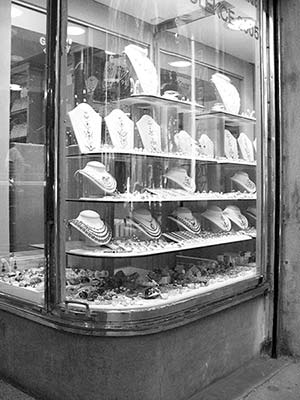
If you buy garnet jewelry, shop around, use a reputable dealer, and ask for a certificate of authenticity (glass imitations are common). A “granát Turnov” label is a good indicator of quality.
Of the many garnet shops, Turnov Granát Co-op has the largest selection. It’s refreshingly unpretentious, with a vaguely retro-communist vibe (shops at Dlouhá 28, Panská 1, and inside the Pánská Pasáž at Na Příkopě 23; www.granat.cz [URL inactive]). J. Drahoňovský’s Studio Šperk is an upscale-feeling shop with more creative designs (Dlouhá 19, www.drahonovsky.cz). Additional shops specializing in Turnov garnets are at Dlouhá 1, Celetná 8, and Maiselova 3.
Costume Jewelry and Beads: You’ll see bižutérie (costume jewelry) all over town. AleAle is run by a couple who use a 3,000-year-old lamp method to make beads, which they combine with silver to create unique jewelry (Lázeňská 2, www.aleale.cz). Round, glass beads—sometimes called Druk beads—are popular and range from large marble-sized beads to minuscule “seed beads.” The biggest producer of glass beads is Jablonex, from the town of Jablonec nad Nisou. A handy spot to check out some stylish, modern pieces is Material, in the Ungelt courtyard behind Týn Church. They have a fun selection of seed beads, as well as some finer pieces (www.i-material.com). Manumi, also called Koralky, one of the best-supplied bead shops in Prague, is a bit farther out; take the Metro’s green line to the Jiřího z Poděbrad stop (Vinohradská 76, www.manumi.cz).
ORGANIC COSMETICS AND HANDMADE GIFTS
Manufaktura is your classy, one-stop shop for good-quality Czech gifts, and sells a variety of organic cosmetics and bathroom products (lotions, perfumes, shampoos, soaps, potpourri), all made from ingredients produced locally. They also have a thoughtfully assembled selection of traditional items such as rustic ceramic cups and bowls, straw ornaments, painted eggs, wooden toys, and “blueprint” Moravian fabrics—all handmade in the Czech Republic. You’ll find many locations in Prague, including several near the Old Town Square (at Melantrichova 17, Celetná 12, and Karlova 26), at Republic Square (in the Palladium mall), near the Lesser Town end of the Charles Bridge (Mostecká 17), in the main train station, and even along Prague Castle’s Golden Lane (www.manufaktura.cz).
Botanicus is similar but a little smaller, with a range of all-natural, fragrant natural soaps, lotions, perfumes, and essential oils. Their Prague branch is in the Ungelt courtyard behind Týn Church (www.botanicus.cz).
FASHION AND DESIGN
Czechs have a unique sense of fashion. One popular trend is garments that are adorned with embroidery, leather, beads, hand-painted designs, or other flourishes—all handmade. Shops come and go, and in many cases several small designers work together and share a boutique—look for an “atelier.” Vintage clothes are also as popular among young Czech hipsters as they are with their American counterparts.
You’ll find the highest concentration of shops from high-class, international designers (Gucci, Prada, Bulgari, Louis Vuitton, Dolce & Gabbana, and the whole gang) along or near the elegant, Art Nouveau Pařížská street that runs through the Jewish Quarter. Several designer shops cluster at the intersection of Pařížská and Široká, with another clump farther down, at the big plaza in front of Hotel InterContinental.
For a look at high fashion with a Czech accent, focus on some of the side streets that run parallel to Pařížská in the Jewish Quarter. One block over, Elišky Krásnohorské street features boutiques selling local designs, including the young, hip La Gallery Novesta—a group of Czech and Slovak clothing and shoe designers (at #9); and Navarila, an atelier of Martina Nevařilová, who designs both casual and dressy clothes, jewelry, and handbags (at #4, www.navarila.cz). A block farther east, more boutiques line Dušní street.
A short walk away, Dlouhá street—which exits the Old Town Square near the Jan Hus statue—offers more Czech designers. In the block after the intersection with Dušní, you’ll see three upscale boutiques in a row: Natali Ruden, Klára Nademlýnská, and Beata Rajská. Farther along on Dlouhá, you’ll find a wider variety of shops: home decor (Nobis Life, Apropos), an old-fashioned cigar and pipe shop, and—at the far end of the street—the recently restored Palác Dlouhá (at #3a). This grand space features a trendy little warren of upscale food shops (butcher, open-face sandwiches, deli, wine, raw bar, and more).
On and Near Wenceslas Square: Fashionistas are sometimes surprised to learn that the famous and well-respected Baťa shoe brand is not Italian, but Czech (for the story, see here of my Wenceslas Square Walk); their seven-story flagship store, on Wenceslas Square (at #6), is nirvana for shoe lovers. Nearby, one of the pavilions inside the Franciscan Garden (hiding just off of Wenceslas Square) houses Bohemania, a fun and youthful boutique with clothes, jewelry, and other unique pieces (www.bohemania.com).
Funky Hipster Design: Benediktská, a tiny street tucked in a quiet corner of the Old Town, has a little cluster of creative boutiques. Kuráž is a small, fun-to-explore collection of Czech and Slovak designers, with jewelry, accessories, clothes, and home decor (at #7, https://eshop.kuraz.cz). Across the street, Eterno Moderno showcases fun, handmade design—very Czech chic (at #4). The ProVás vintage-poster store, described later, is nearby.
ART NOUVEAU DESIGN SHOPS
Prague is Europe’s best Art Nouveau city—and several shops sell Art Nouveau glassware, home decor, linens, posters, and other items.
Artěl, owned by an American (Karen Feldman) who fell in love with Prague and its unique sense of style, is thoughtfully curated. Specializing in glass with Art Nouveau, Art Deco, and floral motifs, her shop offers a range of other good-quality gifts, including jewelry by local designers (by Lesser Town end of Charles Bridge at U Lužického Semináře 7; www.artelglass.com). Karen also wrote a fun, insightful, design-oriented guidebook called Prague: Artěl Style.
Modernista, with locations downstairs inside the Municipal House and in the House of the Black Madonna, has a fine selection of Art Nouveau and Art Deco jewelry, glassware, wooden toys, books, and so on. They also have branches in the Rudolfinum and Museum of Decorative Arts, both near the river (north of the Charles Bridge). Their flagship store is in the Modernista Pavilon, a sleek, gorgeously restored former market hall that’s also home to a variety of trendy fashion and home-decor shops. It’s farther out, in the Vinohrady neighborhood, but it’s worth a visit if you appreciate their aesthetic (closed Sun, between the National Museum and Žižkov at Vinohradská 50, near the Vinohradská Tržnice stop on tram #11, www.modernista.cz).
Kubista, in the House of the Black Madonna, has a fun-to-peruse selection of Czech Cubist dishes, jewelry, furniture, books, and more (closed Mon, Ovocný Trh 19, www.kubista.cz).
BOOKS, MAPS, POSTERS, AND MUSIC
Try Shakespeare and Sons, with a big selection, in the Lesser Town (described on here). Kiwi Map Store, near Wenceslas Square, is Prague’s best source for maps and travel guides (Jungmannova 23).
ProVás stocks a wide array of unique posters—originals, reprints, and lots of vintage ads from the 1920s (closed Sat-Sun, Rybná 21).
For tips on buying Czech music, see the sidebar on here.
OTHER FUN SOUVENIRS
Far cheaper than fine Czech crystal is old-fashioned porcelain. The most traditional pattern has a blue design on a white base—often in the shape of an onion (cibulák).
Czechs love cartoons: You’ll see stuffed animals and other depictions of their favorite character, Krtek (a.k.a. Krteček, “Little Mole”), all over town.
If you enjoy a good brain-teasing puzzle, look for the “hedgehog in the cage” (ježek v kleci). The Czech answer to a Rubik’s cube, this is a spiny ball set inside a cylinder made of bars. Your challenge: Free the hedgehog. You can even find this as a garnet necklace.
Keep an eye out for a “fishlet” (sardine-shaped pocketknife). This is nostalgic for Czechs who grew up using them during communist times, when the Pioneers (similar to Boy and Girl Scouts) were a big part of their formative years. (If you buy one, pack it in your checked luggage when you fly home.)
Several shops and stands (e.g., at the Havelská Market) sell “kitchen witch” good-luck dolls for hanging in the kitchen. While not uniquely Czech (it’s a very old custom spanning much of Northern Europe), these can be a fun memento.
Pražská Čokoláda (Prague Chocolate) is a family business with a century-old tradition of producing all kinds of spiced-up munchies (served with a smile at branches including Nerudova 46, Thunovská 19 in the Lesser Town, Železná 2 in the Old Town, and at the airport).
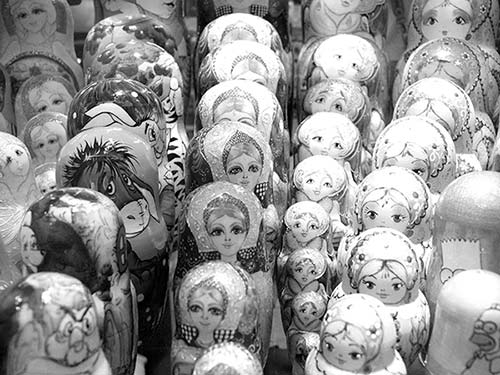
What Not to Buy: Many souvenir shops sell non-Czech (especially Russian) items, such as stacking dolls, fur hats, vodka flasks, and amber, which is found along the Baltic Sea coast and is mostly Russian and Polish.