ENTERTAINMENT IN PRAGUE
POPULAR NIGHTLIFE NEIGHBORHOODS
Národní Třída and the National Theater
Náplavka (“The River Landing”)
Sports on the Old Town and Wenceslas Squares
Prague booms with live and inexpensive theater, classical music, jazz, and pop entertainment. Everything is listed in several monthly cultural-events programs (free at TIs).
To understand your options (the street Mozarts are pushing only their own concerts), drop by the Via Musica box office next to Týn Church on the Old Town Square (daily 10:00-20:00, +420 224 826 440, www.viamusica.cz) or the Time Music shop in Lesser Town Square across from the Church of St. Nicholas (daily 10:00-20:00, +420 257 535 568). If you don’t see a posted list of today’s events, just ask for it.
Tips: Locals dress up for the more serious concerts, opera, and ballet, but many tourists wear casual clothes (avoid shorts, sneakers, or flip-flops). For church concerts, ticket prices at the door are often soft and negotiable.
Festivals: World-class musicians are in town during several music festivals. These include Prague Spring (mid-May-early June, https://festival.cz), Prague Proms (mid-June-late July, www.pragueproms.cz), and Dvořák Prague (Sept, www.dvorakovapraha.cz).
THEATER AND CONCERTS
Black Light Theater
A kind of mime/modern-dance variety show, Black Light Theater has no language barrier and is, for some, more entertaining than a classical concert. Unique to Prague, it originated in the 1960s as a playful and mystifying theater of the absurd. These days, aficionados and critical visitors lament that it’s either becoming a cheesy variety show or that its rudimentary special effects cannot compare with today’s technical possibilities. To appreciate this art form, think of the performance as a throwback rather than as a match for today’s spectacles, such as Cirque du Soleil. Shows last about an hour and a half. All shows are open seating, so arrive a few minutes early to avoid the first two rows, which are too close and can ruin the illusion. Each of these theaters has its own spin on Black Light. (The other Black Light theaters advertised around town aren’t as good.)
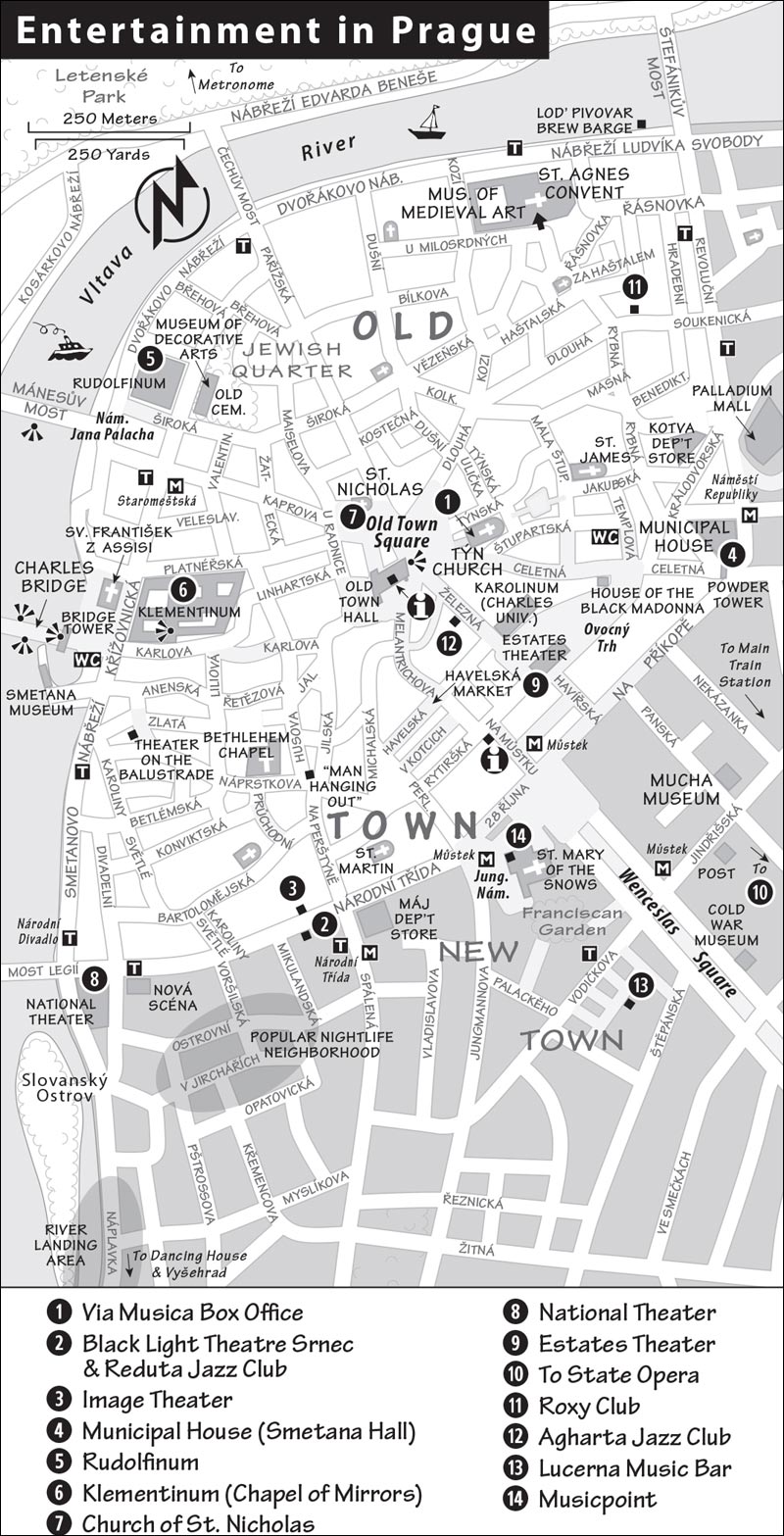
Black Light Theatre Srnec: Founded and still run by Jiří Srnec, a visual artist and music composer who invented the Black Light Theater concept in 1961, this troupe offers simple narratives and revels in the childlike, goofy wonder of the effects. The intimate size of the theater also allows for mimes to spontaneously engage with the audience—another aspect of the original concept. Their primary show, Anthology, traces the development of the art over the past 60 years; the opening “Laundry Girl” skit is the first-ever performed by Black Light (600 Kč, generally nightly, on Národní Třída in the same building as the Reduta Jazz Club, Národní 20, mobile +420 774 574 475, www.srnectheatre.com).
Image Theater: This show has more mime and elements of the absurd, and more dance along with the illusions. They offer the most diverse lineup of programs, including a “best of” and several short-term, themed shows—recent topics have been African safari and outer space. Some find Image’s shows to be a bit too slapsticky (580 Kč, nightly, off Národní Třída 25 in the Metro passageway, +420 222 314 448, www.imagetheatre.cz).
Classical Concerts
Each day, six to eight classical concerts designed for tourists fill delightful Old World halls and churches with crowd-pleasing music: Vivaldi, Best of Mozart, Most Famous Arias, and works by the famous Czech composer Antonín Dvořák. Concerts typically cost 400-1,000 Kč, start anywhere from 13:00 to 21:00, and last about an hour. Typical venues include two buildings on the Lesser Town Square (the Church of St. Nicholas and the Prague Academy of Music in Liechtenstein Palace), the Klementinum’s Chapel of Mirrors, the Old Town Square (in a different Church of St. Nicholas), and the stunning Smetana Hall in the Municipal House. Musicians vary from excellent to amateurish.
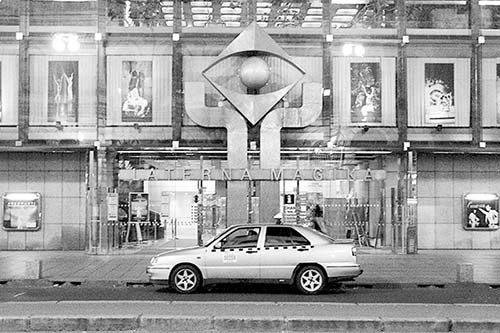
For a memorable venue and top-notch musicians, see a concert at Smetana Hall, the Rudolfinum, or the National Theater—featuring Prague’s finest ensembles (such as the Prague Symphony Orchestra or Czech Philharmonic).
The Prague Symphony Orchestra plays mainly in the gorgeous Art Nouveau Smetana Hall of the Municipal House. Their ticket office is inside the building, just to the left past the main glass-door entrance (Mon-Fri 10:00-18:00, +420 222 002 336, www.fok.cz).
The Czech Philharmonic performs in the classical Neo-Renaissance Rudolfinum across the street from the Pinkas Synagogue. Their ticket office is on the right side of the building, under the stairs (250-1,650 Kč, open Mon-Fri 10:00-18:00 and until just before showtime on concert days, on Palachovo Náměstí on the Old Town side of Mánes Bridge, +420 227 059 227, www.ceskafilharmonie.cz).
Both orchestras perform in their home venues about five nights a month from September through June. On most other nights these spaces are rented to agencies that organize tourist concerts of varying quality. Check first whether your visit coincides with either ensemble’s performance before settling for any of these substitutes.
You’ll find tickets for tourist concerts advertised and sold on the street in front of these buildings. Although the music may not be the finest, these concerts do allow you to experience music in one of Prague’s best venues on the night of your choice. This is especially worth considering if you want to enjoy classical music in the Municipal House when the Symphony Orchestra isn’t in town (but make sure your concert takes place in Smetana Hall rather than in the smaller and far less spectacular Grégr Hall).
Both the Municipal House and Rudolfinum also act as chief venues for the Prague Spring, Prague Proms, and Dvořák Prague music festivals.
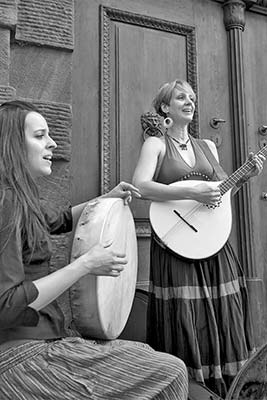
Buskers: The Prague Castle Orchestra, one of the city’s most entertaining acts, performs regularly on Castle Square. This trio—Josef on flute, Radek on accordion, and Jarda on bass—plays a lively Czech mélange of Smetana, swing, old folk tunes, and 1920s cabaret songs. Look for them if you’re visiting the castle, and consider buying their album (www.ourbeautifulprague.com/prague-castle-orchestra [URL inactive]).
Opera and Ballet
A handy ticket office for the following theaters (all part of the National Theater group) is directly across the street from the main entrance to the Estates Theater on Železná street.
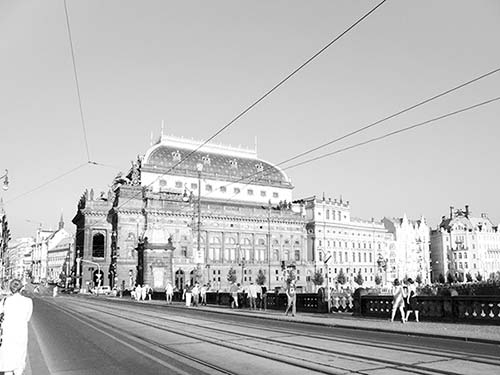
The National Theater (Národní Divadlo), on the New Town side of Legií Bridge, has a stunning Neo-Renaissance interior to match its status as the top venue in the country (300-1,000 Kč, shows from 19:00, weekend matinees also at 14:00, +420 224 901 448, www.narodni-divadlo.cz).
The Estates Theater (Stavovské Divadlo) is where Mozart premiered and directed many of his most beloved works. Don Giovanni, The Marriage of Figaro, and The Magic Flute are on the program a couple of times each month (800-1,400 Kč, shows from 20:00, between the Old Town Square and the New Town on a square called Ovocný Trh, +420 224 901 448, www.narodni-divadlo.cz).
The State Opera (Státní Opera), formerly the German Theater, recently underwent an expensive remodel to rival the National Theater. Ballets and operas by non-Czech composers are typically performed here (400-1,200 Kč, at 19:00 or 20:00, 4 Wilsonova, on the busy street between the main train station and Wenceslas Square, see map on here, +420 224 901 448, www.narodni-divadlo.cz).
MUSIC CLUBS
Young locals keep Prague’s many music clubs in business. Most clubs are neighborhood institutions, generally holding 100-200 people. You’ll find live rock, Bob Dylan-style folk, and world music (Roma bands, Moravian poets, African drummers, Cuban boleros, and Moroccan divas often sell out even the largest venues). If you like jazz, I’ve listed some fine options; avoid the Jazzboat (advertised by commission-hungry hotels), which has mediocre musicians and high prices.
The Old Town
Roxy, a few blocks from the Old Town Square, features live bands from outside the country twice a week—anything from Irish punk to Balkan brass. On other nights, the floor is taken over by experimental DJs spinning a healthy dose of Japanese pop (cover from 100 Kč, no cover on Mon, easy to book online and pick up tickets at the door, Dlouhá 33, www.roxy.cz).
Agharta Jazz Club showcases some of the best Czech and Central European jazz in a cool Gothic cellar just steps off the Old Town Square (250-300 Kč cover, shows nightly, Železná 16, +420 222 211 275 evenings only, www.agharta.cz).
The three major composers connected with Prague—Mozart, Smetana, and Dvořák—have museums that are dedicated to their lives and work.
During his three visits to Prague, Mozart lodged with his friends in the beautiful, small, Neoclassical Villa Bertramka, now the Mozart Museum. The Salzburg prodigy felt more appreciated in Prague than in his homeland, and this villa, set in a peaceful garden, provides a sense of the surroundings Mozart experienced. But there’s not much to see inside, as almost all the original interior furnishings are now housed at the Czech Museum of Music (where some are on display), and the place has long been closed for reconstruction. Unless you’re an absolute Mozart fan, there’s little reason to make the trek (check for latest updates regarding access, Metro: Anděl, then a 10-minute walk along a busy street to Mozartova 169; +420 241 493 547, www.bertramka.eu).
A statue of Smetana, the father of Czech classical music, is seated in front of the Smetana Museum, listening intently to the rapids of the Vltava River near the Charles Bridge (50 Kč, Wed-Mon 10:00-17:00, closed Tue, Novotného Lávka, Praha 1, +420 224 229 075). Like Richard Wagner in Germany, Smetana aimed to stir the Romantic nationalist spirit of the Czechs. His finest work, the cycle of symphonic poems called My Country (Má Vlast), was inspired by places and myths important to the Czech people. Vltava, the most beautiful of the poems, is played to get your attention as trains arrive in stations.
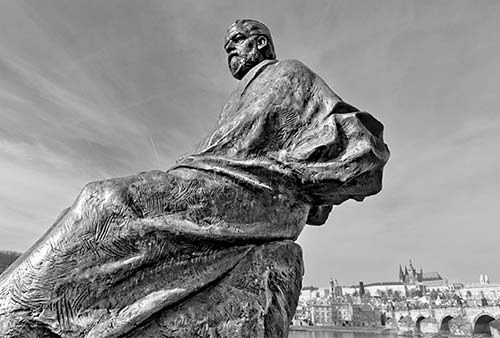
Dvořák is the Czech Republic’s best-known composer. For three years, Dvořák directed the National Conservatory in New York, during which time he composed his most famous work, the New World Symphony (Z Nového Světa). Dvořák’s advice to his students was to look for inspiration in America’s authentic melodies (African American spirituals and Native American music) rather than in European models. Dvořák’s gentle opera of a water nymph, Rusalka, is considered by many to be the best Czech opera and is often performed in Prague’s National Theater.
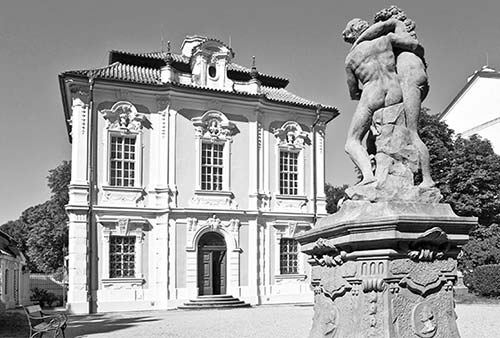
The Dvořák Museum is located in Villa America, a building designed by Prague’s most prolific Baroque architect, K. I. Dientzenhofer. It was the first of his structures to be built in the city and was purchased by the Dvořák Society in 1932 (50 Kč, Tue-Sun 10:00-17:00, closed Mon, Ke Karlovu 20, Praha 2, see map on here, +420 224 923 363).
Two other important composers from Czech lands are the moderns, Mahler and Janáček. Gustav Mahler (1860-1911), a Jew from Jihlava (see here), was a late-Romantic composer and a leading conductor of his time. Two of his best works are Symphony No. 1: Titan and The Song of the Earth, both inspired by the sounds of the Moravian woods and fields. Leoš Janáček (1854-1928), arguably the most original and least accessible Czech composer, was stimulated by language—its flow and abrupt pauses. He’s known for his Symphonietta and Lachian Dances (Lašské Tance), as well as the operas Cunning Little Vixen (Příhody Lišky Bystroušky) and my favorite, Jenůfa—both perennials in the National Theater’s repertoire.
The New Town
Lucerna Music Bar, at the bottom of Wenceslas Square, is popular for its ’80s and ’90s video parties on Friday and Saturday nights. The scene is a big, noisy dance hall with a giant video screen. Young and trendy, the Lucerna is cheap, and even older visitors mix in easily with the crowd of locals and tourists (about 150 Kč cover, in the basement of Lucerna Arcade, Vodičkova 36, +420 224 217 108, www.musicbar.cz). On other nights the Lucerna often hosts concerts (tickets 450-850 Kč).
The small Reduta Jazz Club, with cushioned brown sofas stretching along mirrored walls, launches you into the 1960s-era classic jazz scene (when jazz provided an escape for trapped freedom lovers in communist times). It features regular performances by top Czech jazz musicians Stivín and Koubková. US president Bill Clinton once played the sax here (about 400 Kč; live jazz, blues, swing, or big band every night; on Národní Třída next to Café Louvre, +420 224 933 487, www.redutajazzclub.cz).
The Lesser Town
Malostranská Beseda, in the Lesser Town, was known in the communist era for playing host to underground rock bands, semilegal bards, and daring jazzmen—a stark contrast to the regime-pampered pop stars. Beseda—with its tight, steamy, standing-room-only space—is the only club in the center with daily live performances. The crowd tends to be a bit older than at other clubs (250-500 Kč cover depending on band, Malostranské Náměstí 21—see map on here, www.malostranska-beseda.cz, +420 776 381 850). The building also houses a recommended restaurant and beer hall.
Žižkov
This popular neighborhood, described later, has Prague’s highest concentration of cool pubs.
Palác Akropolis is the home of Czech independent music. Originally a 1920s movie theater, in the 1990s it was turned into a chill-out lounge, a literary café, and two halls that offer a mix of concerts, disco, and theater. Nightly shows feature musicians from around the world (advance ticket sales at café, Mon-Fri 10:00-24:00, Sat-Sun from 16:00, corner of Kubelíkova and Fibichova, under Žižkov TV tower, Metro: Jiřího z Poděbrad, see map on here, +420 269 330 911, www.palacakropolis.cz).
POPULAR NIGHTLIFE NEIGHBORHOODS
Prague’s nightlife scene has evolved substantially from its origins in the Old Town/Wenceslas Square. In particular, these four neighborhoods have taken off in the last few years.
Národní Třída and the National Theater
The area around the Národní Třída Metro stop, Národní street, and the National Theater—centering on V Jirchářích street—comes alive with a mixture of modern wine and beer bars, as well as trendy bistros and restaurants.
Náplavka (“The River Landing”)
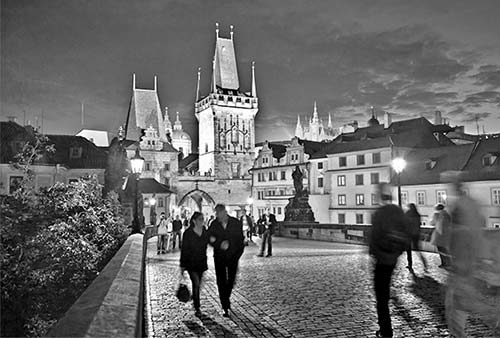
Just two blocks from the Národní area, the river landing has been transformed by open-air barges doubling as bars and dance halls. The atmosphere is particularly magical as the sun sets over the hills and buildings on the other side of the river.
Letná Beer Garden
North of the Old Town—across the river from St. Agnes Convent—this beer garden in Letná Park features superb views over the Gothic city towers, which are suddenly at eye level. Located in the area to the right of the 75-foot-tall Metronome (up on the hill overlooking the river at the end of Paris street), the garden has a mellow local vibe, with tables and benches shaded by horse-chestnut trees. There’s not much here beyond drinks and sausage, but if you cross the street at the far end of the park (by the technical and agricultural museums), you’ll find yourself in a popular dining-out neighborhood with particularly good international options. As you come back through the park at nightfall, the steps under the Metronome are transformed by bar stands with both live and recorded music.
Vinohrady-Žižkov
This cool, turn-of-the-19th-century neighborhood (east of the Old and New Towns, on the other side of the main train station) has become synonymous with nightlife and the expat community (to orient yourself, see map on here).
Take the green Metro line to Jiřího z Poděbrad. You’ll exit the subway into a leafy square with a modern church in the middle. This is Josip Plečnik’s Sacred Heart Church. This and two other churches in Plečnik’s hometown of Ljubljana, Slovenia, are unique both in how they mix modern and classical elements and in how they express the particular ascetic spirituality of their ingenious designer (peek in, church open daily from 17:30 until 19:00 for the 18:00 Mass).
The parklike square around it is a celebration of slow-paced life away from traffic. A farmers market operates here (Wed-Fri 8:00-18:00, Sat until 14:00), and the buildings along the park, filled with small cafés and bistros, are a celebration of creativity: Happy Bean feeds vegetarians, Le Caveau dishes out French wines and cheeses, Mama Coffee brews quality coffees, Antonínovo Bakery supplies breads and pastries, Donut Shop caters to homesick Americans, and the list goes on.
Milešovská street, at the corner of the square behind the church, leads to the Žižkov TV tower. This 1980s eyesore that resembles a rocket on a launchpad demonstrates its planners’ total lack of consideration for its surroundings (not only does it clash with the circa-1900 houses, but a large part of the New Jewish Cemetery had to be demolished to make way for it). But this space-age insertion into the history-obsessed city is precisely what makes the tower a worthwhile, unusual sight. Note the babies crawling up the columns. Locals joke that thanks to the babies, the tower ranks #3 among the world’s ugliest sights; without the babies it would land at #2 (250 Kč, daily 9:00-24:00, free if you eat at the recommended Oblaca restaurant—see listing on here).
One block north, Palác Akropolis (described earlier, under “Music Clubs”) is one of Prague’s top venues. One block west is quiet Škroupovo Square with Pivnice U Sadu, one of the most memorable pubs in Prague (see here). Continuing two more blocks west, you reach Rieger Park, which features a couple of open-air beer gardens with amazing views of the city. A walk down diagonally through the park leads you to Vinohradská street. From here it is just two blocks to the top of Wenceslas Square.
SPORTS
Prague’s top sports are soccer (that’s fotbal here) and hockey. Some 15 years ago the Czechs were a world power in both. The soccer season usually runs from February to May and August to November, with games held Saturday and Sunday afternoons. The hockey season runs from September to April on Tuesday, Friday, and Sunday nights. With the exception of matches between the three top soccer teams in the country (Sparta, Slavia, and Plzeň), soccer and hockey games rarely sell out—just show up at the stadium 30 minutes before the game starts. Attending a game is cheap and comes with a great fan vibe and a better understanding of professional sports in Europe (expect to pay around 300 Kč for a ticket).
Soccer
Although the Czech national soccer team regularly qualifies for the Euro Cup, World Cup qualification has long eluded it. Within the Czech Republic, the two oldest and most successful soccer clubs are the bitter Prague rivals AC Sparta and SK Slavia. Sparta’s 1970s-era stadium is at Letná (behind the giant Metronome ticking above the river in Letná Park). Slavia’s much newer Eden stadium (c. 2008) is in Vršovice (southeast of the center, 12 stops from the National Theater on tram #22). In the last several years, Slavia, with powerful Chinese financial backing, has been the stronger of the two (champions in 2017 and 2019-2021), which translates into more fans and better energy at home games. Slavia qualified for the highly lucrative 32-club European Champions League in 2019. Other Czech teams occasionally challenge the supremacy of the two S’s. FC Viktoria Plzeň (Pilsen) won the league title in 2022, when it also qualified for the Champions League.
In the National Hockey League he is a legend (second on the all-time scoring list); in the generally agnostic Czech Republic he is a near deity. His name is Jaromír Jágr.
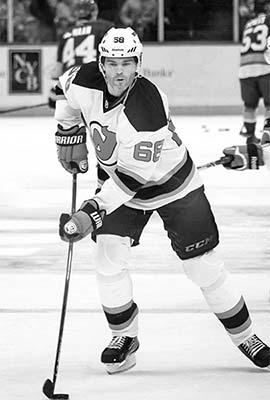
Born to a family of hardworking peasants, little Jágr dreamed of becoming a pop star or a great hockey player (like his dad). Discovering that he couldn’t sing, he stayed on the ice all day, playing against kids several years his senior. At 16 Jágr was already playing for the senior national team.
Three months before Jágr turned 18, the Iron Curtain fell, making him among the first Czech players eligible for the NHL draft without having to defect. He was drafted in 1990 by the Pittsburgh Penguins and chose “68” for his jersey number, to memorialize the 1968 Prague Spring crushed by the Soviets. After that invasion, the hockey rink became a substitute battlefield for the two nations. Not only was hockey the national game in both the land of Big Brother and its tiny satellite, it was also a hard-hitting sport that demanded strength, skill, and discipline from an early age.
In his first season with the NHL, Jágr linked up with American and Canadian hockey greats Ron Francis and Mario Lemieux, who became his mentors. In 1991, as the Pittsburgh Penguins battled the Minnesota North Stars for the Stanley Cup, the entire Czech nation stayed up all night to watch Jágr’s big win. A year later Jágr led his team to a repeat. In 1998 Jágr helped the Czech Republic win gold in the Nagano Olympics.
The good times didn’t last. Jágr was sold by the bankrupt Penguins and gained a reputation as a spoiled superstar as he bounced from team to team. But with age came maturity. As the oldest player in the NHL at the time, Jágr played two memorable seasons for the Florida Panthers, mentoring younger teammates. At age 44 he scored the most points of any player on a conference-winning team and was awarded the Bill Masterton Memorial Trophy for his dedication.
But time eventually caught up with Jágr. His last season in the NHL (2017-18 with the Calgary Flames) was marred by injuries. Jágr returned to Kladno, Czech Republic, and spent the last five seasons playing and coaching for his childhood team, which he now owns. At 51, he still scores goals in the top league.
Even now, Jágr sells out rinks around the country. Six-year-olds—who could be his grandchildren—ask their coaches to lace their skates “the same way Jágr does.”
Hockey
AC Sparta also fields a top-contending hockey team, which plays in the state-of-the-art O2 Arena (northeast of the center, Českomoravská Metro stop). While the Czech national hockey team was once a powerhouse (having won six world championships between 1996 and 2010, and an Olympic gold medal in 1998), Czech hockey’s golden generation has retired—and younger players have been slow to fill the gap.
Many players make a name for themselves in America’s National Hockey League, where more than two dozen native Czechs currently take the ice. Of these, you may recognize the names David Krejčí and David Pastrňák, and before them, Jaromír Jágr (see the sidebar) and Dominik “The Dominator” Hašek, a top goaltender in his 16 seasons in the NHL.
Back in the communist days, ice hockey was the only place where Czechoslovaks could mete out payback on their Soviet oppressors (ice hockey is also the most popular sport in Slovakia). The hockey rink is still where Czechs are proudest of their nationality. If you’re here in May during the hockey championships, join locals cheering their team in the pubs.
Sports on the Old Town and Wenceslas Squares
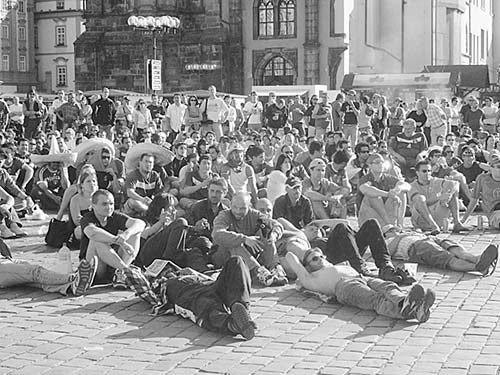
Major running and biking events (such as the Prague International Marathon at the beginning of May) finish in the Old Town Square. The bottom of Wenceslas Square is sometimes set up for soccer, basketball, and beach volleyball tournaments. Both squares are also used for pop and folk concerts and for political rallies. These events are fine opportunities to feel the pulse of the Czech capital.