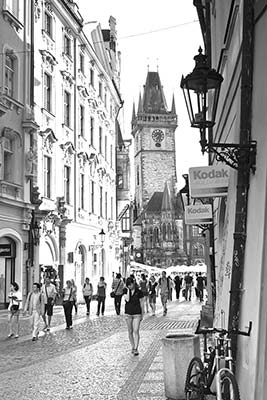
SIGHTS IN PRAGUE
THE OLD TOWN SQUARE AND NEARBY
▲▲▲The Old Town Square (Staroměstské Náměstí)
▲Church of St. James (Kostel Sv. Jakuba)
SOUTH AND EAST OF THE OLD TOWN SQUARE
Bethlehem Chapel (Betlémská Kaple)
BETWEEN THE OLD TOWN SQUARE AND THE RIVER
▲▲▲Charles Bridge (Karlův Most)
Jewish Museum in Prague (Židovské Muzeum v Praze)
Old-New Synangogue (Staronová Synagóga)
NORTH OF THE OLD TOWN SQUARE, NEAR THE RIVER
▲▲Museum of Medieval Art (Středověké umění v Čechách a Střední Evropě)
▲▲▲Wenceslas Square (Václavské Náměstí)
National Museum (Národni Muzeum)
▲Mucha Museum (Muchovo Museum)
Jerusalem Synagogue (Jeruzalémské Synagóga)
▲Museum of Communism (Muzeum Komunismu)
▲▲Municipal House (Obecní Dům)
Strolling National Street (Národni Třída)
National Theater (Národní Divadlo)
NEAR THE RIVER, SOUTH OF CHARLES BRIDGE
▲National Memorial to the Heroes of the Heydrich Terror (Národní Památník Hrdinů Heydrichiády)
Palacký Square (Palackého Náměstí)
Lesser Town Square (Malostranské Náměstí)
Church of St. Nicholas (Kostel Sv. Mikuláše)
Wallenstein Palace Garden (Valdštejnská Zahrada)
LESSER TOWN SIGHTS NEAR THE RIVER
SOUTH OF LESSER TOWN SQUARE, TO PETŘÍN HILL
Church of Our Lady Victorious (Kostel Panny Marie Vítězné)
SIGHTS AT PRAGUE CASTLE (PRAŽSKÝ HRAD)
Castle Square (Hradčanské Náměstí) and Ticket Offices
▲▲▲St. Vitus Cathedral (Katedrála Sv. Víta)
▲Old Royal Palace (Starý Královský Palác)
The Story of Prague Castle Exhibit (Příběh Pražského Hradu)
▲Basilica of St. George (Bazilika Sv. Jiří)
Sternberg Palace (Šternberský Palác) and Schwarzenberg Palace (Schwarzenberský Palác)
Royal Summer Palace (Královský Letohrádek)
Royal Gardens (Královská Zahrada)
▲Strahov Monastery and Library (Strahovský Klášter a Knihovna)
Loreta Square (Loretánské Náměstí)
These sights are arranged by neighborhood for handy sightseeing. Remember that Prague started out as four towns—the Old Town and New Town on the east side of the river, and the Castle Quarter and Lesser Town on the west—and it’s still helpful for sightseers to think of the city that way.
When you see a  in a listing, it means the sight is described in greater detail in one of my self-guided walks or tours. This is why Prague’s most important attractions get the least coverage in this chapter—we’ll explore them later in the book. The
  means the Prague City Walk is also available as a free audio tour (via my Rick Steves Audio Europe app—see here).
For general tips on sightseeing, see the Practicalities chapter.
Crowd-Beating Tips: Visit Prague Castle either first thing in the morning (be in the ticket line before 9:00, then visit St. Vitus Cathedral right when it opens—except Sun morning, when it’s closed for Mass) or in the afternoon (after 14:00, when crowds disperse). For more tips, see the Prague Castle Tour chapter. Hiring your own guide for a historic walk is relatively cheap and allows you to choose a time (evening or early morning) and route to avoid crowds.
Evening Activities: Prague Castle’s grounds stay open until 22:00 and provide a fanciful people-free zone to wander in the evening. Concerts in the National Theater, Smetana Hall at the Municipal House, and the Rudolfinum feature superb artists at bargain prices (see the Entertainment in Prague chapter).
The Old Town (Staré Město)
All the sights described here are within a 10-minute walk of the magnificent Old Town Square.
For in-depth descriptions of the Old Town Square and its main landmarks, the Týn and St. James churches, the sights along Celetná and Melantrichova streets, and the Charles Bridge, see the Old Town & Charles Bridge Walk chapter.
My Prague City Walk audio tour covers some of these sights.
THE OLD TOWN SQUARE AND NEARBY
▲▲▲The Old Town Square (Staroměstské Náměstí)
The focal point for most visits, Prague’s Old Town Square is one of the city’s top sights. This perfectly preserved living postcard boasts gorgeous showpieces of virtually every architectural era: stout Gothic towers and steeples, boisterous Baroque domes, and frilly Rococo palaces. The square’s centerpiece is the memorial to Jan Hus, the great Czech philosopher whose criticism of the Catholic Church sparked religious conflicts long before Martin Luther’s time (for more on Hus, see the sidebar on here). Hus gazes at the newly reinstalled Baroque column topped by the Virgin Mary. Dominating the square are the iconic twin towers of the Týn Church. Across the square stands the tower of the Old Town Hall, with another Prague symbol, the ludicrously complex Astronomical Clock, which uses revolving discs, celestial symbols, and sweeping hands to keep several versions of time.
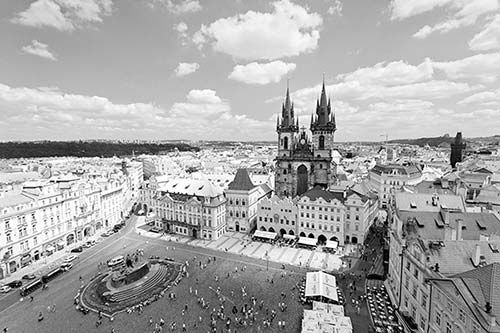
Old Town Hall Tower and Tour
While this building’s most popular feature is its Astronomical Clock, you can pay to see other sights inside. Enter to the left of the Astronomical Clock, where you’ll find a TI, pay WC, and a bank of elevators. One ticket (sold on floors 1 and 3) covers the tour of the Old Town Hall (you’ll see a few sterile rooms and the workings of the Astronomical Clock), as well as the trip up the tower by elevator (from floor 3) for the big view.
Cost and Hours: 300 Kč for Old Town Hall and tower ascent, discount for advance purchase online; open Tue-Sun 9:00-21:00, Mon from 11:00, shorter hours Jan-March; 45-minute Town Hall tours usually 4/day in English at 10:00, noon, 14:00, and 16:00—preregister at ticket office; +420 775 400 052, www.prague.eu.
▲Týn Church
The twin, multi-turreted, fairy-tale Gothic towers of the Church of Our Lady Before Týn (its full name) loom over the Old Town Square. While every tourist snaps a photo of this church, consider stepping inside, too. Due to its complex history—first Catholic, then the main Hussite (Protestant) church, then Catholic again—it has an elaborately decorated interior.
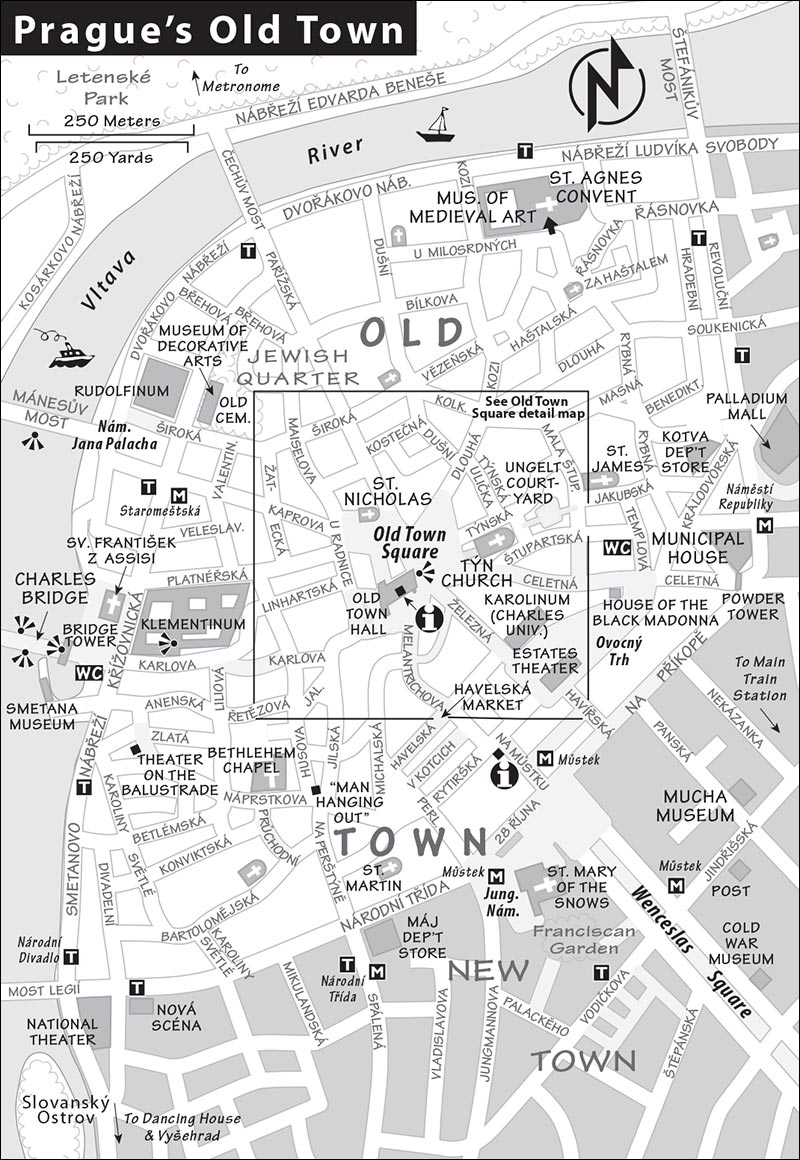
Cost and Hours: 40 Kč requested donation; Tue-Sat 10:00-13:00 & 15:00-17:00, Sun 10:30-12:00, closed Mon. If closed, you can generally look through the window at the front door.
The Ungelt
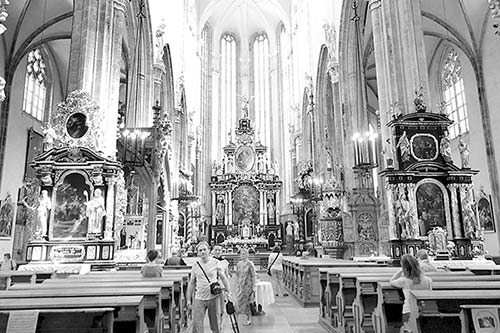
Tucked immediately behind Týn Church, the Ungelt courtyard is a welcome oasis of tranquility in the midst of the Old Town Square hubbub. Once the commercial nucleus of medieval Prague, it served as a hostel for foreign merchants, much like a Turkish caravanserai. It still bustles with commerce, but now serves mostly tourists (inviting outdoor restaurants, cafés, shops, and hotels). Pay particular attention to the House of the Golden Ring (through which you enter the courtyard) and the Granovský Palace (in the courtyard immediately on the left), with its fine, steel-rod-spanned second-floor arches. Both buildings showcase local 16th-century Renaissance architecture.
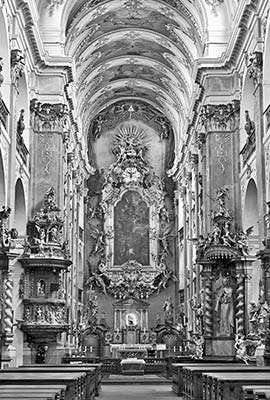
▲Church of St. James (Kostel Sv. Jakuba)
This fine old medieval church—tucked just behind the Ungelt courtyard—was redecorated head-to-toe in exuberant Baroque following a late-17th-century fire. Step inside to appreciate the gorgeous space, with its gilded woodwork and bombastic frescoes, and to see the church’s main relic, the Madonna Pietatis. The church also is home to Prague’s biggest pipe organ.
Cost and Hours: Free, Tue-Sun 9:30-12:00 & 14:00-16:00, closed Mon, corner of Malá Štupartská and Jakubská.
SOUTH AND EAST OF THE OLD TOWN SQUARE
Between the Old Town Square and the New Town, you’ll find several interesting sights.
On Celetná Street
Celetná, a pedestrian-only street, is a convenient if crowded way to get from the Old Town Square to the New Town. Along the way, near the square called Ovocný Trh (“Fruit Market”), you’ll find several interesting sights: the Cubist-style House of the Black Madonna, with bold and uniquely Czech architecture and a genteel turn-of-the-century café; the historic Estates Theater; the Karolinum—the main building of Charles University (see the sidebar on here); and the looming, Gothic-flavored Powder Tower, marking the course of the former wall that separated the Old Town from the New Town.
On Melantrichova Street
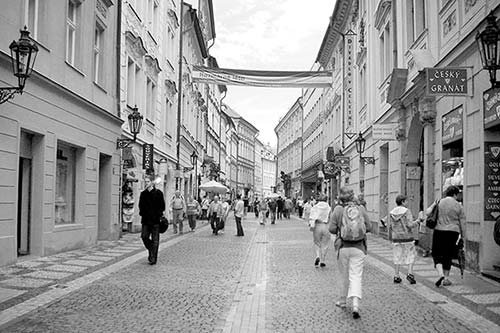
Skinny, tourist-clogged Melantrichova street leads directly from the bottom of Wenceslas Square to the Old Town Square’s Astronomical Clock. But even along this most crowded of streets, a genuine bit of Prague remains. Halfway along, don’t miss the Havelská Market, worth ▲, an open-air marketplace (daily 9:00-18:00). On one side you will find mostly fruit and candy, and on the other souvenirs, puppets, and toys.
Bethlehem Chapel (Betlémská Kaple)
This chapel—a 1950s reconstruction of the original 14th-century building—is located on the charming, relatively quiet Bethlehem Square (Betlémské Náměstí) in a pleasantly untouristy chunk of Old Town real estate. Holy Roman Emperor Charles IV founded the first university in Prague—and Central Europe—in 1348, and this was its chapel. In about 1400, priest and professor Jan Hus preached from the pulpit here (see the sidebar on here). While meant primarily for students and faculty, services were open to the public, and standing-room-only crowds of more than 3,000 were the norm when Hus preached.
Cost and Hours: 60 Kč; daily 9:00-18:30, Nov-March until 17:30; Betlémské Náměstí, +420 234 678 790.
Visiting the Chapel: Though today’s chapel is a 1950s version, the original was a space this size with a similar humble pulpit in front built to accommodate crowds of the faithful as Hus amped them up. The frescoes are modern scenes from a medieval prayer book that feature Hus and events from his time. You can see him preaching to rapt worshippers and being burned at the stake. (Notice the neighborhood well, which just happened to end up inside the expanded worship hall. They really needed an enlarged meeting space. And they needed water, too.) English info sheets are available for the big chapel. The tiny upstairs exhibit, while well explained in English, has no actual historical artifacts.
On the square in front of the chapel, look left and up to find the Man Hanging Out (by sculptor David Černý). The figure’s right hand agonizingly grips an iron bar jutting out from the wall, while his left hand is nonchalantly inserted into his pocket. The goateed face belongs to another revolutionary—of modern psychology—Sigmund Freud, who was born in what is now the Czech Republic.
Nearby: On quiet Anenské Náměstí (St. Anne Square), the avant-garde Theater on the Balustrade (Divadlo Na zábradlí, look for the embryo-shaped copper drainpipe) has a handy café inside (Mon-Fri 10:00-24:00, Sat-Sun from 16:00). It was here that future Czech president Václav Havel found a job as a stagehand in the early 1960s and wrote and staged the first Czech plays of the absurd.
BETWEEN THE OLD TOWN SQUARE AND THE RIVER
Karlova street winds through medieval Prague from the Old Town Square to the Charles Bridge (it zigzags—just follow the crowds and the Karlův Most signs). The touristy feeding frenzy of Prague is at its ugliest along this commercial gauntlet. But try to ignore all of that and appreciate this slice of medieval Prague. If you need an escape, duck into the Klementinum.
▲Klementinum
The Czech Republic’s massive National Library borders touristy Karlova street. The contrast could not be more stark: Step out of the most souvenir-packed stretch of Central Europe, and enter the meditative silence of high medieval culture. It’s only accessible by tour, which includes an 18th-century library, an observatory, and a tower climb for a great city view.
Cost and Hours: 300 Kč; English-language tours depart daily every half-hour 10:00-17:30, shorter hours off-season; +420 733 129 252, www.prague.eu/klementinum. Tickets are sold onsite and available online at a small discount. Strolling down Karlova, turn at the intersection with Liliová through an archway into the Klementinum’s courtyard (ticket booth is about 50 yards directly in from the gate, under the yellow tower).
Background: Jesuits built the Klementinum in the 1600s to house a new college; they had been invited to Prague by the Catholic Habsburgs to offset the influence of the predominantly Protestant Charles University nearby. The building was transformed into a library in the early 1700s, when the Jesuits took firm control of the university. Their books, together with the collections of several noble families, form the historic nucleus of the National and University Library, which is now six million volumes strong.
(Note that the Klementinum’s Chapel of Mirrors—a few steps farther into the courtyard—is an understandably popular venue for evening concerts.)
Touring the Klementinum: While much of the Klementinum building is simply a vast modern library, its magnificent original Baroque Library and Observatory Tower are open to the public by tour only (45 minutes, in English). You’ll belly up to a banister at the end of the ornate library with its many centuries-old books, fancy ceilings with Jesuit leaders and saints overseeing the pursuit of knowledge, and Josef II—the enlightened Habsburg emperor—looking on from the far end. This is a good place to ponder how, back then, information was rare, limited, and the source of great power—and strictly controlled by the Church and emperor. Then you’ll climb 172 steps up the Observatory Tower, learning how early astronomers charted the skies over Prague. The tour finishes with a grand Prague view from the top.
▲▲▲Charles Bridge (Karlův Most)
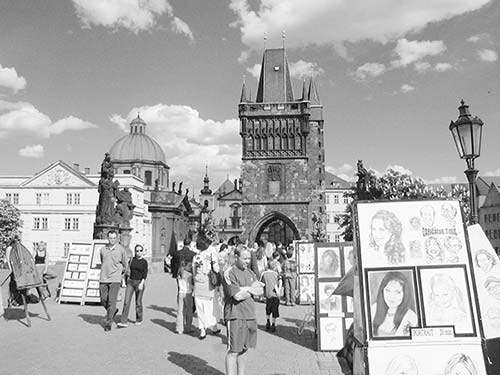
Prague’s landmark icon—connecting the two halves of the city across the Vltava River and lined with statues of Czech saints—is one of Europe’s most famous bridges and one of its best public spaces. Day and night, the bridge bustles with buskers, tourists, street vendors, school groups, impromptu concerts...and, occasionally, a few Czechs. Make it a point to do several laps across the Charles Bridge during your Prague visit, and be sure to slow down and linger as you stroll. Enjoy the street musicians. Get to know the stony saints who line the bridge. Take in the 360-degree views. Visually trace the hilltop horizon that hems in this gorgeous cityscape. Count spires and domes. Lose yourself in the magic of Prague.
Bridge Towers
You can climb the bridge towers on either end of the Charles Bridge. The tower on the Old Town side of the river (Staroměstská Mostecká Věž, 138 steps) rewards you with some of Prague’s best views: a stunning vista of the bridge, jammed with people heading for the castle; and 180 degrees away, a perfect panorama that reminds you why Prague is called the “Golden City of a Hundred Spires.” On the Lesser Town side (Malostranská Mostecká Věž), you can huff up 146 steps for fine views of the bridge, the neighborhood rooftops, and the castle. If you’re trying to decide which to climb, consider that for snapping photos, the light is better if you climb the Old Town tower early in the day, and the Lesser Town tower late in the day.
Cost and Hours: 150 Kč to climb each tower, daily 9:00-21:00, April-May and Sept 10:00-19:00, Oct-March until 18:00.
JEWISH QUARTER (JOSEFOV)
The Jewish Quarter, worth ▲▲▲, is the best place in Europe to learn about this important culture and faith interwoven in the fabric of Central and Eastern Europe. Within a three-block radius, several original synagogues, a cemetery, and other landmarks survive, today collected into one big, well-presented sight known as the Jewish Museum in Prague. The impressive Old-New Synagogue completes the picture. It can get crowded here, so time your visit carefully (early or late is best).
Tickets: The individual sights comprising the Jewish Museum in Prague (listed next) are all covered by the same ticket (valid for one week) and open the same hours. The Old-New Synagogue has its own ticket and schedule. There’s also a combo-ticket that covers both the Jewish Museum in Prague sights and the Old-New Synagogue. Tickets are sold in person and on the Jewish Museum and Old-New Synagogue websites.
For details, including tips on avoiding crowds, see the Jewish Quarter Tour chapter.
Jewish Museum in Prague (Židovské Muzeum v Praze)
The “museum” consists of four synagogues, a ceremonial hall, and a cemetery—each described below. To avoid lines, buy your ticket at a less-crowded sight (such as the Maisel, Klausen, or Spanish synagogues) instead of the most crowded one (the Pinkas Synagogue). You can also buy tickets at the Information Center at Maiselova 15 (near the intersection with Široká street).
Cost and Hours: 400 Kč, 550 Kč combo-ticket includes Old-New Synagogue; open Sun-Fri 9:00-18:00, Nov-March until 16:30, closed Sat—the Jewish Sabbath—and on Jewish holidays, website lists all closures; 300 Kč audioguide is overkill, +420 222 317 191, www.jewishmuseum.cz.
Maisel Synagogue (Maiselova Synagóga): This pastel-colored Neo-Gothic synagogue, originally built as a private place of worship, now houses an interactive exhibit on Jewish history in the Czech lands up until 1800 and a few precious medieval objects. During the Nazi occupation, employees of the Jewish Museum used this building as a warehouse for a vast collection of Judaica gathered from vanished communities around the country. Rumor had it that Hitler planned to turn this collection into a “Museum of the Extinct Race.”
Pinkas Synagogue (Pinkasova Synagóga): For many visitors, this house of worship—today used as a memorial to Holocaust victims—is the most powerful of the Jewish Quarter sights. The names of more than 77,000 Czech Jews who were murdered during the Holocaust are inscribed on the walls, and a somber voice reads those names on an endless recorded loop. Upstairs is an emotional collection of art created by child inmates at the Terezín concentration camp (outside of Prague). Most of these young artists perished in Nazi death camps.
Old Jewish Cemetery (Starý Židovský Hřbitov): Hiding behind a wall and sitting above the street level, this is where Prague’s Jews buried their dead. Because space in the ghetto was at a premium, and it’s against Jewish laws to disturb graves, residents had no choice but to bury bodies on top of bodies—raising the ground level several feet and squeezing several generations’ worth of grave markers onto the top level. A stroll through the crooked tombstones is a poignant experience.
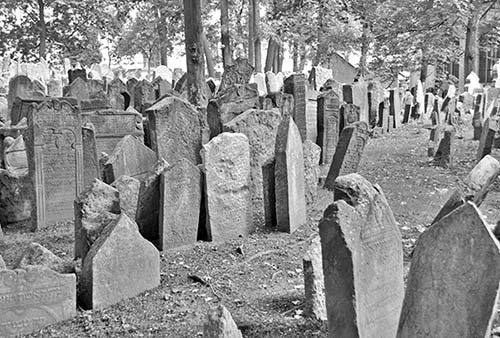
Ceremonial Hall (Obřadní Síň): Sitting at the edge of the cemetery, this small space has an exhibit focusing on Jewish burial rituals.
Klausen Synagogue (Klauzová Synagóga): This 17th-century synagogue is devoted to Jewish religious practices. Exhibits on the ground floor explain the Jewish calendar of festivals. Upstairs is an exhibit on the rituals of Jewish life (circumcisions, bar and bat mitzvahs, weddings, kosher eating, and so on).
Spanish Synagogue (Španělská Synagóga): Called “Spanish” though its design is Moorish (which was all the rage when this was built in the 19th century), this has the most opulently decorated interior of all the synagogues. It marked a time of relative wealth and importance for Prague’s Jews, who in this era were increasingly welcome in the greater community and (in many cases) adopted a reformed approach to worship. Exhibits explain the lives of Czech Jews in the 19th and early 20th centuries, when they believed they were living their best days yet...unaware that the Holocaust was looming.
Old-New Synagogue (Staronová Synagóga)
The oldest and most important building in the Jewish Quarter, the Old-New Synagogue goes back at least seven centuries. While the exterior seems simple compared to ornate neighboring townhouses, the interior is atmospherically 13th-century.
Cost and Hours: 220 Kč, 550 Kč combo-ticket includes Jewish Museum in Prague; Sun-Thu 9:00-18:00, off-season until 17:00, Fri closes one hour before sunset, closed Sat and on Jewish holidays; +420 222 317 191, www.synagogue.cz.
NORTH OF THE OLD TOWN SQUARE, NEAR THE RIVER
Stray just a couple of blocks north of the Old Town Square and you’ll find a surprisingly tourist-free world of shops and cafés, pastel buildings with decorative balconies and ornamental statues, winding lanes, cobblestone streets, and mosaic sidewalks. It’s also home to this fine, underrated museum.
▲▲Museum of Medieval Art (Středověké umění v Čechách a Střední Evropě)
Prague flourished in the 14th century, and the city has amassed an impressive collection of altarpieces and paintings from that age. Today this art is housed in the tranquil former Convent of St. Agnes, which was founded in the 13th century by a Czech princess-turned-nun as the first hospital in Prague. A visit here is your best chance to see exquisite medieval art in Prague.
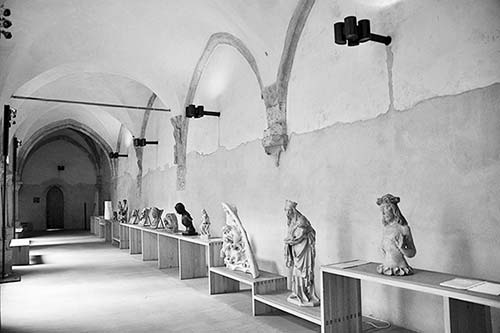
Cost and Hours: 250 Kč; 680 Kč combo-ticket also covers Sternberg Palace, Schwarzenberg Palace (see listing later), and Veletržní Palace (modern art); open Tue-Sun 10:00-18:00, closed Mon; two blocks northeast of the Spanish Synagogue, along the river at Anežská 12; +420 224 810 628, www.ngprague.cz.
See the Museum of Medieval Art Tour chapter.
The New Town (Nové Město)
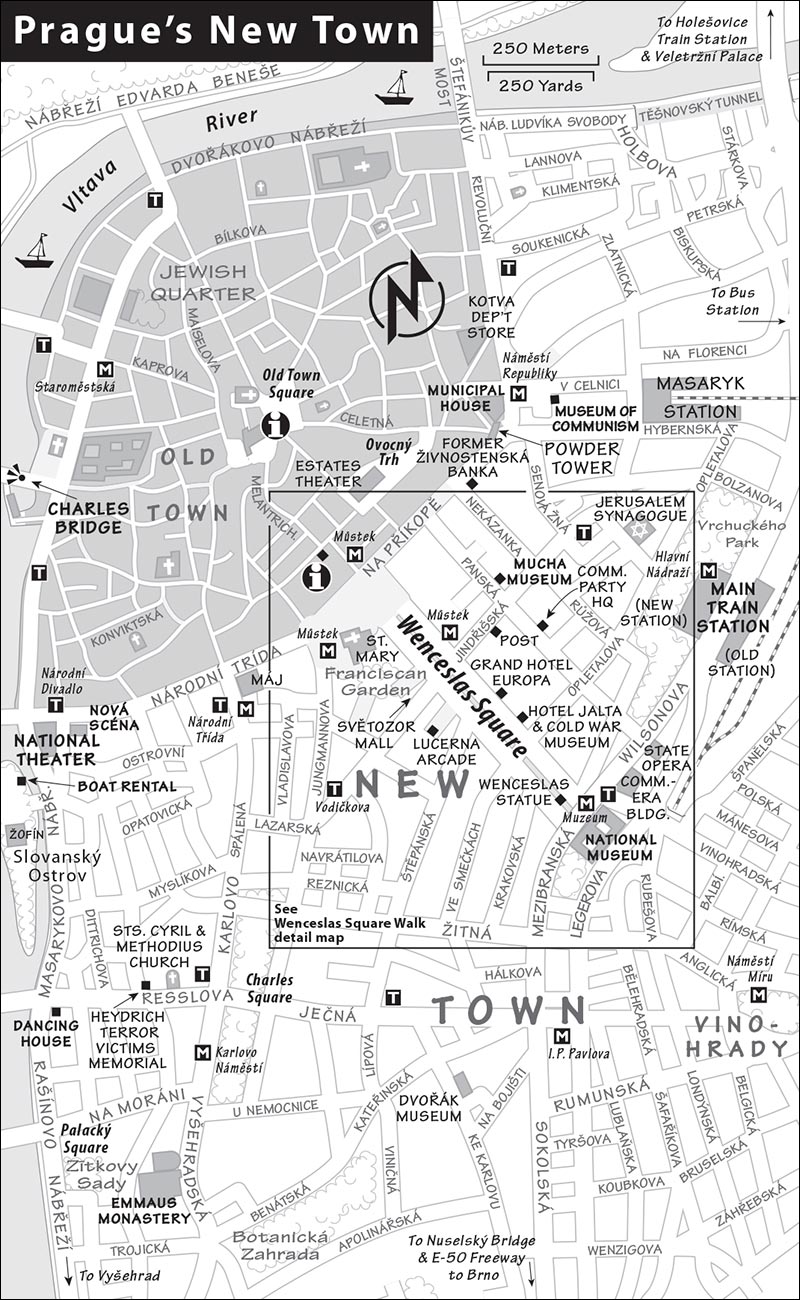
Enough of pretty, medieval Prague—let’s leap into the modern era. The New Town, with Wenceslas Square as its focal point, is today’s urban Prague, characterized by bustling boulevards and interesting neighborhoods. Even today, the New Town is separated from the Old Town by a “moat” (the literal meaning of the street called Na Příkopě). As you cross busy Na Příkopě, you leave the medieval cuteness and souvenir shops behind, and enter a town of malls and fancy shops that cater to locals and visitors alike. The New Town is one of the best places to view Prague’s remarkable Art Nouveau art and architecture, and to learn more about its communist past.
My Prague City Walk audio tour covers some of these sights.
WENCESLAS SQUARE AND NEARBY
These sights are on or within a few blocks of the elongated main square of the New Town. The top of the square is the highest point (and farther from the city center); the bottom of the long square is several blocks away, closer to the center.
▲▲▲Wenceslas Square (Václavské Náměstí)
More a broad boulevard than a square, this city landmark is named for St. Wenceslas (Václav in Czech), whose equestrian statue overlooks the square’s top end. Wenceslas Square functions as a stage for modern Czech history: The creation of the Czechoslovak state was celebrated here in 1918; in 1968, the Soviets suppressed huge popular demonstrations (called the Prague Spring) at the square; and in 1989, more than 300,000 Czechs and Slovaks converged here to demand their freedom (in the Velvet Revolution). Today, it’s a busy commercial thoroughfare.
At the top of the square, the National Museum stands behind Wenceslas. Just to the left is an ugly Soviet-era building that housed the communist parliament and later became the post-Cold War headquarters for Radio Free Europe. And in the square just in front of Wenceslas is the poignant memorial to Jan Palach (a student who set himself on fire in 1969 to protest the regime) and other victims of communism.
Shopping malls line the square, including (on the left as you look down from the top) the swanky Lucerna Arcade (with some interesting public art) and Světozor Mall (once a stronghold of rebellion against the communists, and now home to Prague’s favorite ice-cream stand). And in the streets to the right, you’ll find the excellent Mucha Museum.
See the Wenceslas Square Walk chapter.
National Museum (Národní Muzeum)
This meticulously renovated museum stands grandly at the top of Wenceslas Square. Its exterior (which still retains the bullet marks from 1968) and interior are both richly decorated in the Czech Revival Neo-Renaissance style that heralded the 19th-century rebirth of the Czech nation. Inside are eight far-ranging permanent exhibits, covering topics from evolution to the Czech 20th century. Admission includes entry to the rooftop cupola with great views over the city.
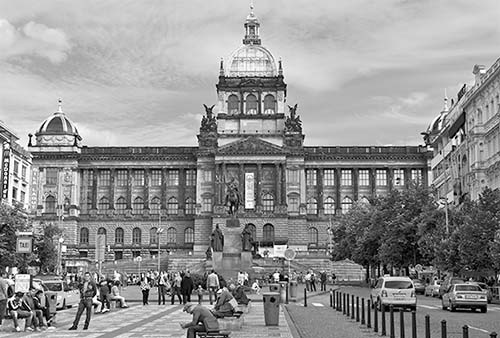
Cost and Hours: 250 Kč, daily 10:00-18:00 plus most Wed from 9:00, Václavské Náměstí 68, +420 224 497 111, www.nm.cz.
▲Cold War Museum
This is my choice for a Cold War sight, as it feels more authentic than the widely advertised Museum of Communism. Located inside the Jalta Hotel, it once served as a fallout shelter. Visits are by tour only. You’ll see a command room, hospital room, spying room (showing you how an operator tapped telephone conversations), and an air-filtering facility. Details such as the cheap period plastic floors are truthfully re-created. Though the museum focuses on one aspect of the Cold War time (nuclear-war shelters), the enthusiastic guides are a great source of information on the whole era.
Cost and Hours: 400 Kč for one-hour guided tour in English; tours—led by a guide typically dressed in a period uniform—depart daily at 11:00, 13:00, 14:30, and 16:00 from inside the Jalta Hotel; book online or inquire at reception, more departures in high season, www.en.muzeum-studene-valky.cz.
▲Mucha Museum (Muchovo Museum)
This enjoyable little museum features a small selection of the insistently likeable art of Alphonse Mucha (MOO-kah, 1860-1939), whose florid style helped define what became known as Art Nouveau. It’s all crammed into a too-small space, some of the art is faded, and the admission price is steep—but there’s no better place to gain an understanding of Mucha’s talent, his career, and the influence he’s had on the world art scene. And the museum, partly overseen by Mucha’s grandson, gives you a peek at some of the posters that made Mucha famous. You’ll learn how these popular patriotic banners, filled with Czech symbols and expressing his people’s ideals and aspirations, aroused the national spirit. Enjoy decorative posters from his years in Paris, including his celebrated ads for the French actress Sarah Bernhardt. Check out the photographs of his models, which Mucha later re-created in pencil or paint, and be sure to see the 30-minute film on the artist’s life. Then peruse the well-stocked gift shop.
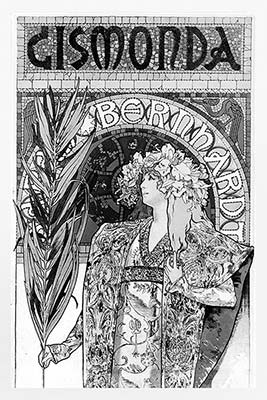
If you would like to see more modern art, head to the National Gallery’s spacious Veletržní Palace (five stops on tram #17 from Staroměstská).
Cost and Hours: 300 Kč, daily 10:00-18:00, good English descriptions, two blocks off Wenceslas Square at Panská 7, +420 224 233 355, www.mucha.cz.
See the Mucha Museum Tour chapter.
Jerusalem Synagogue (Jeruzalémské Synagóga)
Buried deep in a residential district a few blocks off Wenceslas Square, this colorful synagogue is a fascinating combination of Moorish Renaissance and Viennese Art Nouveau styles. It was built in 1905-1906 to commemorate Franz Josef’s liberal, relatively Jewish-friendly rule. Still serving Prague’s Jewish community, this is the most contemplative as well as the most visually stunning of the city’s synagogues. Inside are two permanent exhibits: The Jewish Community of Prague from 1945 to the Present Day and Jewish Monuments and Their Reconstruction After 1989.
Cost and Hours: 150 Kč; Sun-Fri 10:00-17:00, closed Sat, closed in winter and on Jewish holidays; between Jindřišská Tower and main train station at Jeruzalémská 7, +420 222 319 002, www.synagogue.cz/Jerusalem.
NEAR NA PŘÍKOPĚ
At the bottom of Wenceslas Square, the street running to the right is called Na Příkopě, meaning “On the Moat.” This busy boulevard follows the line of the Old Town wall, leading to one of the wall’s former gates, the Powder Tower (the black tower spire in the distance), and Náměstí Republiky (Republic Square). This street is a showcase of Art Nouveau: Be sure to keep your eyes up as you stroll here. City tour buses leave from along this street, which also offers plenty of shopping temptations (including these modern malls: Slovanský Dům at Na Příkopě 22 and Černá Růže at Na Příkopě 12, next door to Moser, which has a crystal showroom upstairs).
▲Museum of Communism (Muzeum Komunismu)
This small museum offers a fascinating look at the “dream, reality, and nightmare” of communism. Toward the end of World War II, the Soviets “liberated” Czechoslovakia from the Nazis. The communists quickly came to power, with statues of Stalin and propaganda permeating Czech society. Along with that came cosmonaut heartthrobs, socialist heroes, collectivization of agriculture, and the focus on very heavy industry.
Cost and Hours: 380 Kč, daily 9:00-20:00, a block off Republic Square at V Celnici 4, +420 224 212 966, www.museumofcommunism.com.
Visiting the Museum: You’ll walk through the years (with good English descriptions) starting with a little background, from the 1918 birth of Czechoslovakia to the 1938 Munich Agreement that gave the country’s Sudetenland region to Hitler.
A slice-of-life exhibit re-creates a student’s bedroom in the 1960s. Then the dark side: attempted escapes, police, interrogation, and torture as a video on the wall shows mesmerizingly sad images, humanizing the tragedy of this period. In the school room you’ll learn how “we teach Russian not English to honor the liberators of our country and our role model.”
After gazing at a factory workshop and a dreary general store, you can see how in 1980, because the law of supply and demand was ignored, the nation ran out of toilet paper. People then started using the newspaper (the voice of the Communist Party) as TP—because it was “the best quality paper and it was never sold out.”
Stairs lead to a café, gift shop, and temporary exhibits on the top floor (your ticket comes with a free cup of coffee to lure you up there).
A section on the fall of communism is inspiring. You’ll see the uprising of 1968 and learn of the “living torches” as students burned themselves alive in protest, and the Soviet crackdown that followed. With the fall of the Berlin Wall in 1989 came the Velvet Revolution, bringing freedom to Czechoslovakia and the people of Prague.
A little theater provides a powerful video finale showing the Czech people confronting the state and police in 1968 and 1989, eventually winning freedom. The video’s poetic text reads like a prayer for peace and freedom.
▲▲Municipal House (Obecní Dům)
The cultural and artistic leaders who financed this Art Nouveau masterpiece (1905-1911) wanted a ceremonial palace to reinforce self-awareness of the Czech nation. Built under Austrian Habsburg rule, it was slathered in patriotic Czech themes to emphasize how the Slavic Czechs were a distinct culture. In 1918, Czechoslovakia’s independence was declared from the balcony of this building. While the exterior is impressive, the highlight is the interior—and at least part of it is free. The Municipal House features Prague’s largest concert hall, a recommended Art Nouveau café (Kavárna Obecní Dům), and two other restaurants. To extend your Art Nouveau bliss, take a guided tour or attend a concert here.
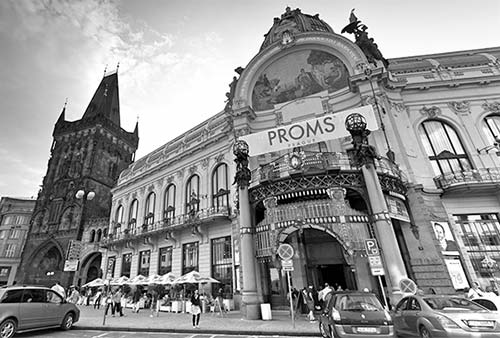
The interior is described below, but to learn more about the exterior of this fine building, see the Old Town & Charles Bridge Walk chapter.
Cost and Hours: The entrance halls and public spaces are free to explore (daily 10:00-18:00). For an in-depth look at all the sumptuous halls and banquet rooms, join a one-hour tour (290 Kč, English tours—usually 3/day departing between 11:00 and 17:00; limited to 35 people—buy your ticket online or from the ground-floor shop where tours depart; Náměstí Republiky 5, +420 222 002 101, www.obecnidum.cz).
Concerts: Performances are held regularly in the lavish Smetana Hall (schedule on website). Note that many concerts are promoted as if they are held in the Municipal House, but are performed in a smaller, less impressive hall in the same building.
Visiting the House: Don’t be timid about poking around the interior, which is open to the public. Having lunch or a drink in one of the eateries is a great way to experience the decor, but you can also just glimpse them from the doorway (as you “check out the menu”).
Enter under the green, wrought-iron arcade. In the rotunda, admire the mosaic floor, stained glass, woodwork doorway, and lighting fixtures. To the left is a recommended café (kavárna)—a harmony of woodwork, marble, metal, and glittering chandeliers.
From the rotunda, step into the lobby, where you can look up the staircase that leads to the main concert hall (no tourist access upstairs). Also in the lobby is the box office, selling concert tickets and guided English tours of the building.
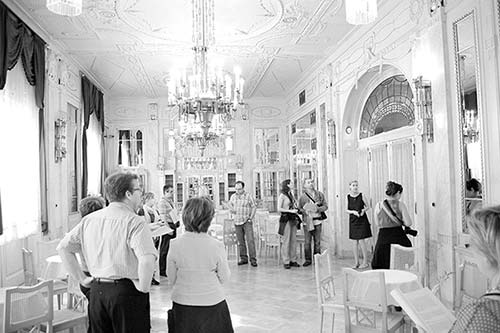
Facing the staircase, go right and head downstairs—yes, tourists are welcome there. Admire the colorful tiles in the stairwell, and more colorful tiles in the downstairs main room. Look for the plaster model of this building and the adjacent Powder Tower, which shows how the angled facade conceals a surprisingly large performance space. Also check out the American Bar (salute the US flags above the bar) and the Plzeňská Restaurant (with its dark-wood booths and colorful tile scenes of happy peasants).
Finish your tour by going back upstairs to find the Modernista shop (tucked to the left as you face the main staircase)—full of fancy teacups and jewelry.
Also upstairs, you may find temporary exhibits (extra fee), typically about Art Nouveau. This style was heavy on the applied arts (as opposed to fine arts like painting), so you’ll see elegant lamps, chairs, prints, and clothes. The period celebrated new technologies, which allowed high-quality objects to be mass-produced for the average Jan and Jana. They’re functional and minimal in design, but always beautiful. To reach this space, you’re allowed to ascend the main staircase, pass by the guard, and glimpse into the stylish Smetana Hall along the way.
Nearby: Standing sternly next to the Municipal House—and providing a somewhat jarring architectural contrast—is the medieval Powder Tower, with one of Prague’s trademark trapezoidal rooflines from the Gothic period. This is a good reminder that Na Příkopě was not just a moat but a heavily fortified wall—and this was its main entrance.
ALONG NÁRODNÍ TŘÍDA
This street runs in the opposite direction from Na Příkopě, starting from the bottom of Wenceslas Square.
Strolling National Street (Národní Třída)
Národní Třída is where you feel the pulse of the modern city. The street, which connects Wenceslas Square with the National Theater and the Vltava River, is a busy thoroughfare running through the heart of urban Prague. In 1989, this unassuming boulevard played host to the first salvo of a Velvet Revolution that would topple the communist regime.
From the bottom of Wenceslas Square, at the intersection (and nearby Metro stop) called Můstek, you can head west on Národní Třída (in the opposite direction from Na Příkopě) for an interesting stroll to the National Theater and the river. Here are a few highlights:
Můstek Metro Station (Jungmannovo Square exit): Look down the boulevard from here. It follows the path of the old moat and city wall to the river. Take a spin tour from this point, noticing all the grand, early-20th-century architecture around you. The Old Town is on the right. On the left towers the Adria Palace, a fine example of 1920s Rondo-Cubist architecture. This Czech version of Cubism—with curves—was used to express national identity after the creation of Czechoslovakia in 1918. As with many magnificent buildings, it comes with a grand passageway leading into an internal mall.
Head of Franz Kafka: Stroll about 100 yards down Národní Třída. At #34, on the left, look through the passageway to the glittering piece of modern art (a block in the distance). This 2014 work by David Černý is a continually reconfiguring head of the Czech writer famous as a master of the subconscious. With glassy slices constantly moving, Kafka comes and goes, looking in all directions.
Velvet Revolution: After you hit the tram tracks (just beyond the Máj department store), look on the left for the photo of President Bill Clinton playing saxophone, with Václav Havel on the side (this is the entrance to Reduta, Prague’s best jazz club—see here). Across the street (at #25) find the Image Theater, one of Prague’s top Black Light Theater venues. Across from that (back on the left side at #16) you’ll come to a tiny arch with a memorial and photos of the tumultuous events of November 17, 1989. On the street facing outside the arcade is a simple memorial to the hundreds of students injured inside the corridor by the police during the Velvet Revolution. The monument’s open hands and peace signs are a reminder that the terrified students corralled in here by the burly “Red Berets” that night were unarmed and nonviolent.
From Art Nouveau to Communist Decor: In this parade of architectural statements you come to two slinky and colorful Art Nouveau buildings on the right (at #7 and #9, a publishing house and an insurance company from the 1890s). Then, on the left at #4, is the boxy and glassy facade of the Nová Scéna. This “New National Theater” building, dating from 1983 (the 100th anniversary of the original National Theater building next door), reflects the bold and stark communist aesthetic.
Café NONA: Step into the Nová Scéna’s lobby and climb the green stone spiral staircase up the glass centerpiece—it all oozes 1980s nostalgia from a communist system that tried to show it had a little artistic spunk. The second-floor café features a commie-chic low ceiling and Socialist Realist reliefs that appear to say the working class is noble but that high culture is OK, too. This is a hangout for the local theater crowd and has nice views of Národní Třída.
National Theater (Národní Divadlo)
Opened in 1883 with Smetana’s opera Libuše, this theater was the first truly Czech theater venue in Prague. From the very start, it was nicknamed the “Cradle of Czech Culture.” The building is a key symbol of the Czech National Revival that began in the late 18th century. In 1800, “Prag” was predominantly German. The Industrial Revolution brought Czechs from the countryside into the city, their new urban identity defined by patriotic teachers and priests. By 1883, most of the city spoke Czech, and the opening of this theater represented the birth of the modern Czech nation. It remains an important national icon: The state annually pours more subsidies into this theater than into all of Czech film production. It’s the most beautiful venue in town for opera and ballet, often with world-class singers (for more details on performances, see here).
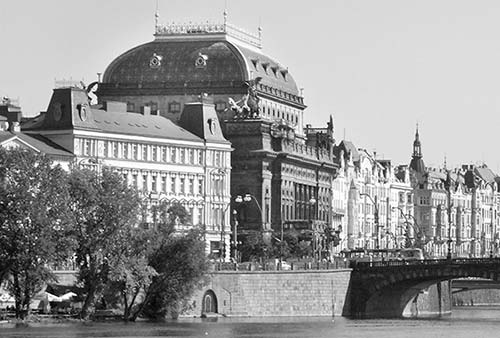
Café: Across the street from the National Theater and overlooking the Vltava River is the former haunt of Prague’s intelligentsia, the tired yet still elegant Kavárna Slavia. This recommended Viennese-style coffeehouse is fine for a meal or drink with a view of the river.
NEAR THE RIVER, SOUTH OF CHARLES BRIDGE
I’ve listed these sights along the Vltava River from north to south, beginning at the bridge next to the grand, Neo-Renaissance National Theater and ending at the hill called Vyšehrad. To see the National Memorial to the Heroes of the Heydrich Terror, you’ll need to detour away from the river a few blocks on Resslova street when you get to the Dancing House. It’s also easy to see these sights in the opposite order, on the long but scenic walk back from Vyšehrad—just hold the book upside-down.
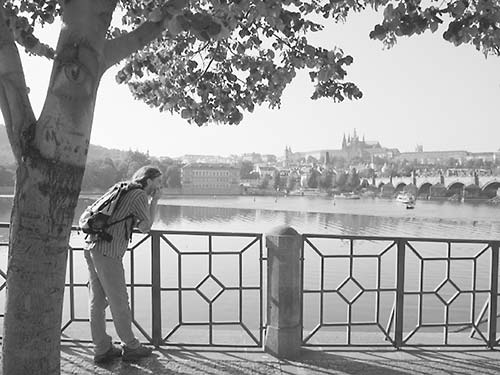
Prague’s Islands
From the National Theater, the Bridge of Legions (Most Legií) leads across the Vltava River and the island called Střelecký Ostrov. Covered with chestnut trees, this island boasts Prague’s best beach (on the sandy tip that points north to Charles Bridge). You might see someone fishing for trout in a river that’s now much cleaner than it used to be. Bring a swimsuit and take a dip just a stone’s throw from Europe’s most beloved bridge.
Paddleboats: In the mood for boating instead of swimming? On the next island up, Slovanský Ostrov, you can rent a rowboat or paddleboat (250-300 Kč/hour, daily 11:00-22:00, bring picture ID as deposit). A lazy hour paddling around Střelecký Ostrov—or just floating lazily in the middle of the river surrounded by the city’s architectural splendor—is a delightful experience on a sunny day. It’s cheap, easy fun (and it’s good for you).
Dancing House (Tančící Dům)
If ever a building could get your toes tapping, it would be this one, nicknamed “Fred and Ginger” by American architecture buffs. This metallic samba is the work of Frank Gehry (who designed the equally striking Guggenheim Museum in Bilbao, Spain, and Seattle’s Museum of Pop Culture). Eight-legged Ginger’s wispy dress and Fred’s metal mesh head are easy to spot. Some Czechs prefer to think that the two “figures” represent the nation’s greatest 20th-century heroes, Jozef Gabčík and Jan Kubiš (see “The Assassination of Reinhard Heydrich” sidebar). A contemporary-art gallery occupies unused office space throughout the building (190 Kč, daily 11:00-19:00).
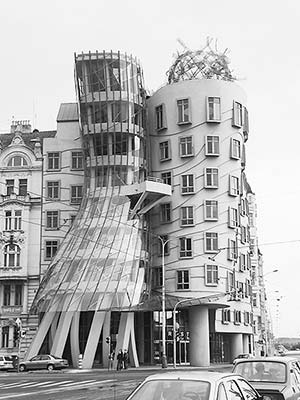
Eating: The building’s top-floor restaurant, $$$ Ginger and Fred, is a fine place for a fancy meal, whether you go up for breakfast (from 7:00), a reasonably priced lunch, or an expensive dinner (daily, +420 601 158 828, www.gfrest.cz).
▲National Memorial to the Heroes of the Heydrich Terror (Národní Památník Hrdinů Heydrichiády)
A short walk up Resslova street from the Dancing House is the Greek Orthodox Sts. Cyril and Methodius Church, which houses this exhibit. In 1942, during World War II, Czech paratroopers Jozef Gabčík and Jan Kubiš assassinated the SS second-in-command Reinhard Heydrich, who controlled the Nazi-occupied Czech lands and was one of the main architects of the Holocaust. In the weeks following his assassination, the two paratroopers hid, along with other freedom fighters, in the crypt of the church. Today, a modest exhibition in that crypt retells their story, along with the history of the Czech resistance movement. Outside, notice the small memorial, including bullet holes, a plaque, and flowers on the street. Around the corner is the entry to the museum and crypt.
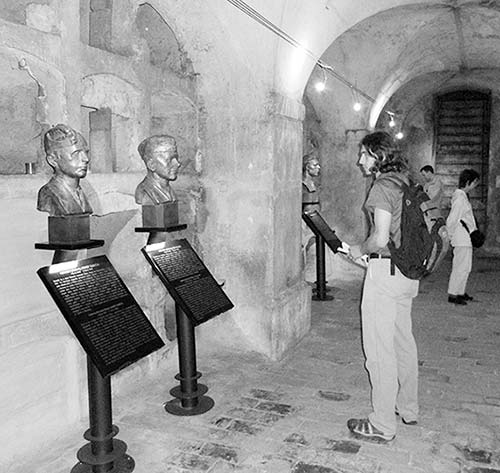
Cost and Hours: Free, Tue-Sun 9:00-17:00, closed Mon, full history explained in small 25 Kč booklet, two blocks up from the Dancing House at Resslova 9A, +420 222 540 718.
Nearby: Farther up Resslova street from the Heroes memorial is Charles Square (Karlovo Náměstí). Covered by lawns, trees, and statues of Czech writers, Prague’s largest square is a quiet antidote to the bustling Wenceslas and Old Town squares. The Gothic New Town Hall at the top-left corner of the square has excellent views and labeled panoramic photographs that help you orient yourself.
Palacký Square (Palackého Náměstí)
Depicted in the dynamic Art Nouveau monument overlooking the square named after him, František Palacký (1798-1876) is credited with rescuing the Czech culture from obscurity and, perhaps, oblivion.
By the early 19th century, the Czechs had been living under Austrian Habsburg rule for centuries—and their unique traditional culture had been all but lost. A historian and politician, Palacký was at the vanguard of the Czech National Revival, a movement that celebrated those old traditions and elevated them as being worthy of respect. Palacký spent 20 years dutifully digging through dusty archives, and singlehandedly revived the memory of Jan Hus (who had been nearly forgotten by history). Palacký effectively wrote the Czech national narrative still held dear by the people of this country—and, in stoking a flourishing of Czech pride, inspired the construction of the National Theater that still stands proudly just up the embankment. Today he’s considered the Father of the Nation—along with Charles IV and Tomáš Garrigue Masaryk. The inscription on the monument reads: “To our awakener and leader of the resurrected nation.”
The park just past Palacký Square, Zítkovy Sady, marks the single Prague neighborhood damaged by WWII bombs. On February 14, 1945, American pilots on a bombing run to Dresden, Germany, lost their way—mistaking Prague for their target. More than 700 civilians were killed and a hundred homes destroyed, as was Prague’s biggest synagogue. The bombing cleared the way for the Dancing House and other structures in this part of the city that are more modern than the norm. In the park, look for an obelisk flanked on three sides by soldiers. This Prague to Her Victorious Sons monument commemorates more than 100,000 Czech and Slovak volunteers who fought for the country’s independence in Russia, Italy, and France during World War I.
Prague’s Embankment
Much of the city’s Vltava-front embankment—especially the stretch between Palacký Square and Vyšehrad—has been gorgeously renovated and is a particularly fine (and untouristy) place to wander. Al fresco cafés and restaurant barges enliven the riverbank on sunny days, and a farmers market bustles on Saturday morning. At the southern end of the embankment, you’re in the Výtoň neighborhood, at the base of the historic Vyšehrad hill.
OUTSIDE THE CENTER
▲Vyšehrad
If you’re looking to escape the tourists—while digging more deeply into Czech culture and history (and enjoying fine city views)—head for the hilltop fortress-turned-park called Vyšehrad (VEE-sheh-rahd), just south of the center. While there, ogle the dynamic statues of Bohemian folkloric figures and dip into the National Cemetery to pay your respects to Czech greats such as Mucha and Dvořák.
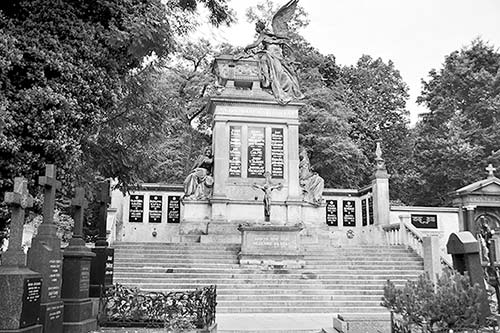
Cost and Hours: The park is free and open all the time (though the church closes at 18:00 and the cemetery closes between 17:00 and 19:00, depending on the time of year). To get there, ride the Metro to the Vyšehrad stop and hike five minutes downhill.
See the Vyšehrad Walk chapter.
The Lesser Town (Malá Strana)
Huddled under the castle on the west bank of the river just over the Charles Bridge, the Lesser Town is a Baroque time capsule. It’s the oldest of the four towns that make up Prague, dating to the early 10th century. It’s also the best-preserved part of the city, with only a few buildings here dating from after 1800.
In 1540, a fire burned 75 percent of the Lesser Town. But it rose from the ashes, rebuilt by Italians to become a Baroque town of fine palaces and gardens. The Czech and European nobility who settled here took pride in the grand designs of their gardens. In the 1990s, after decades of decay, the gardens were carefully restored. While some are open only to today’s version of nobility—including the Czech Parliament and the American, German, and Polish embassies—many are open to visitors.
Though underappreciated, there is nothing “lesser” about this part of town. If you like hidden, quiet alleyways rather than busy commercial bustle, you’ll want to take time to explore the neighborhood.
LESSER TOWN SQUARE AND NEARBY
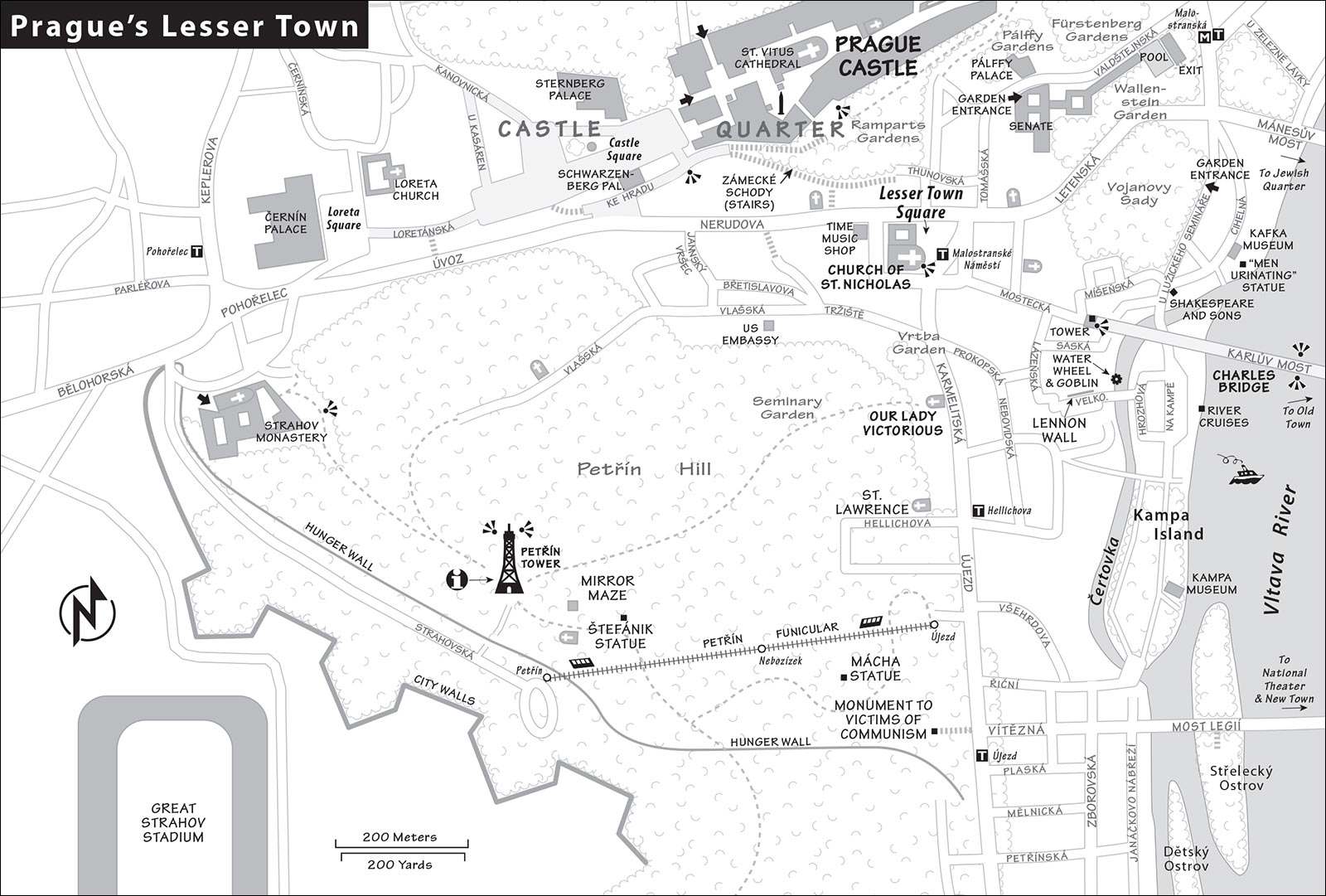
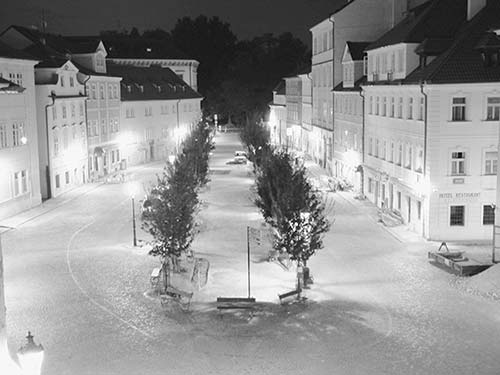
The focal point of this neighborhood is the Lesser Town Square. From the end of the Charles Bridge (with TI in tower), Mostecká street leads two blocks up to the Lesser Town Square and the huge Church of St. Nicholas.
Lesser Town Square (Malostranské Náměstí)
This square is split into an upper and lower part by the domineering Church of St. Nicholas. A Baroque plague column oversees the upper square (and a handy Via Musica ticket office is on the uphill side).
The lower square was once ruled by an equestrian statue of Marshal Radetzky (of “Radetzky March” fame), a 19th-century Czech military strategist in the service of the Habsburgs.
This hated symbol of support for a foreign monarchy was torn down with Czechoslovak independence in 1918 and was never replaced. But recently, some have suggested erecting a monument to Jára Cimrman, a fictional Czech globetrotter “who had never helped the Habsburgs with anything.” In accordance with his wishes, the statue would be carved out of white marble (“In white, the pigeon poop will be harder to see”) and would depict Cimrman walking beside, rather than sitting on, a horse (Cimrman was scared of horses). For more on Cimrman, see the sidebar in the Czech Republic: Past & Present chapter.
At the bottom of the square, the dark-gray-and-white Renaissance building was once the Lesser Town’s city hall—today it contains a lively music club, restaurant, and café. As you face this building, note the three houses along the left side of the square. These belonged to prominent noble families involved in the 1618 uprising against the Habsburgs. Trams trundle both directions here, conveniently connecting this spot with the castle (left) and the Old and New Towns (right).
Church of St. Nicholas (Kostel Sv. Mikuláše)
When the Jesuits came to Prague, they found the perfect piece of real estate for their church and its associated school—right on the Lesser Town Square. The church (built 1703-1760) is the best example of High Baroque in town.
Cost and Hours: Church—100 Kč, daily 9:00-18:00, Nov-Feb until 16:00; tower climb—100 Kč, daily 10:00-22:00, shorter hours in winter, tower entrance is outside the right transept.
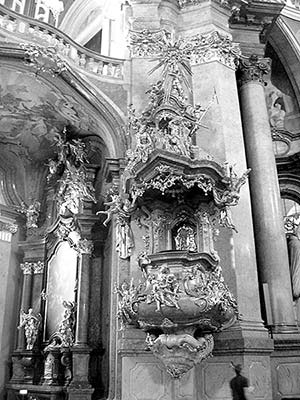
Visiting the Church: The church’s interior is giddy with curves and illusions. This is “dynamic Baroque,” with circles intersecting circles, creating an illusion of movement. Stand directly under the tallest dome and look up. Spin slowly around, greeting four giant statues—the fathers of the Eastern Church. Look up and see the earthly world merging with heaven above.
The altar features a lavish gold-plated Nicholas, flanked by the two top Jesuits: the founder, St. Ignatius Loyola, and his missionary follower, St. Francis Xavier—one killing evil, the other spreading the gospel.
Climb the staircase in the left transept up to the gallery for a close-up look at a collection of large canvases and illusionary frescoes by Karel Škréta, who is considered the greatest Czech Baroque painter. At first glance, the canvases are utterly dark, but as sunbeams shine through the window, various parts of the paintings brighten. The church walls seem to nearly fuse with the sky, suggesting that happenings on earth are closely connected to heaven.
Tower Climb: For a good look at the city and the church’s 250-foot dome, climb the 215 steps up the bell tower. Closed to the public during the communist period, the deck was used by the secret police to spy on activities at the nearby embassies of the US, Britain, and West Germany. There is a good exhibit in English on this aspect, as well as on the May 5, 1945, uprising against the Nazi occupiers.
Concerts: The church hosts evening classical-music concerts; tickets are usually on sale at the church ticket desk (500 Kč, generally nightly at 18:00 except Tue, www.stnicholas.cz).
Nerudova Street
This steep, cobbled street, connecting the Lesser Town Square up to the castle, is named for Jan Neruda, a gifted 19th-century journalist. It’s lined with old buildings still sporting the characteristic doorway signs (such as two golden suns, a red lion, a green lobster, or three violins) that once served as street addresses. The surviving signs have been carefully restored and protected by law. They represent the family name, the occupation, or the various passions of the people who once inhabited the houses. (If you were to use a symbol instead of a house number, what would it be?) In the 1770s, in order to run her empire (and collect taxes) more effectively, Habsburg empress Maria Theresa decreed that house numbers were to be used instead of these quaint names. The neighborhood is filled with noble palaces, now generally used as foreign embassies (the American embassy is a couple of blocks to the left as you hike uphill) and as offices of the Czech Parliament.
Wallenstein Palace Garden (Valdštejnská Zahrada)
A block up Tomášská street from the Lesser Town Square is one of the neighborhood’s many impressive palace gardens. This one, the largest in the Lesser Town, surrounds a palace that now houses the Czech Senate. The complex was commissioned during the Thirty Years’ War by the Habsburg general and Czech nobleman Albrecht z Valdštejna (or, in German, Albrecht von Wallenstein). It’s a testimony to how war can be such a great business for the unscrupulous. For 16 years (1618-1634) Albrecht conspired with all sides involved in the war, securing big money and huge territories for himself. Finally, somebody had enough: Albrecht was murdered in his bedroom in 1634.
Cost and Hours: Entry to the garden is free (Mon-Fri 7:30-18:00, Sat-Sun from 10:00, daily until 19:00 in summer, closed in winter). The palace, where the senate sits, is free and well described in English, but only open April-Oct Sat-Sun 10:00-17:00.
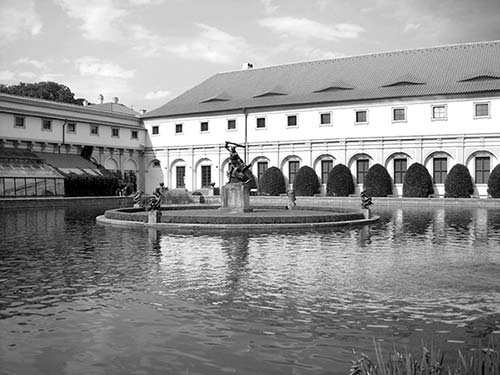
Visiting the Palace Garden: Like most of the Lesser Town, the Renaissance garden and the palace were designed by Italian architects. The theatrical loggia—the sala terena—is a stage for drama and music inspired by Greek amphitheaters. Inside, the gory depictions of the Trojan War tell you about the taste and character of the owner, who—apparently a bit of an egomaniac—is depicted here repeatedly in the garb of the god of war. (A handy WC is to the left of the amphitheater.) The bizarre grotto wall farther on the left creates the illusion of caves and holes, stalagmites and stalactites, interspersed with partially hidden goblins, frogs, and snakes. The wall continues into a cage with live owls, completing the transition from dead to living nature. The twisted cries of the owls intensify the surreal sensation of the place.
Deeper in the garden is a large pool surrounded by peacocks and filled with carp. The statues lining the central walkway (inspired by Greek mythology) were created by Dutch artist Adriaen de Vries—one of the best Renaissance sculptors outside Italy. Notice the elegant classical shapes, a sharp contrast to the chubbiness of the Baroque figures on the Charles Bridge and elsewhere in the city. The original statues were stolen by invading Swedish armies in 1648 and are still in Sweden; these replicas were cast in the early 1900s.
Exit through the door by the far-right corner of the pool. You’ll end up at the Malostranská Metro and tram stops.
LESSER TOWN SIGHTS NEAR THE RIVER
Riverside Walk
You could leave the Lesser Town by walking across the Mánes Bridge (Mánesův Most) to the Old Town, or by jumping on a tram or the Metro here. But instead, consider exploring along the river from here to the Charles Bridge and then going under the bridge into the next couple of sights.
Walking from the Malostranská Metro station down to the river, veer right onto U Lužického Semináře street. A gate 50 yards down on the right leads you to a delightful Lesser Town garden, Vojanovy Sady. A cool mixture of open lawns, shady giant beeches and smaller fruit trees, a few small chapels (this was once a monastery garden), and barely any tourists, this is a perfect place for a picnic.
One street over (toward the river) from U Lužického Semináře is Cihelna. Head down Cihelna toward the Charles Bridge to locate the Kafka Museum on the left. In its courtyard you’ll find a commotion caused by a statue of two men urinating on a tiny pool shaped like the Czech Republic. Continue through a charming square. You’ll come to an inviting English bookstore on your left.
Shakespeare and Sons welcomes you to browse. Check out its Czech literature and Central European history sections by the entry, as well as the laid-back downstairs reading room overlooking the romantic channel of the river.
Proceeding under the arch of the Charles Bridge, you come to Kampa Island and Kampa Square.
Kampa Island
One hundred yards from the castle end of the Charles Bridge, stairs on the left lead down to the main square of Kampa Island (mostly created from the rubble of the Lesser Town, after it was devastated in a 1540 fire). The island features relaxing pubs, a breezy park, hippies, lovers, a fine contemporary art gallery, and river access.
At the far end of Kampa Square is the entrance to a park popular with locals for picnics and concerts. Midway through the park (on the left) is the former mill building, Sovovy Mlýny. In it is the Museum Kampa, home to the Jan and Meda Mládek Collection, which features works once prohibited by the former communist regime, as well as other modern artworks. The permanent exhibit showcases a few abstract works by František Kupka and modernist sculptor Otto Gutfreund (permanent exhibit—190 Kč, all exhibits—350 Kč, daily 10:00-18:00, www.museumkampa.cz).
Returning to Kampa Square, as you leave the park take the first lane on the left, which winds around to a little bridge. The high-water mark at the end of the bridge dates from 1890. The old water wheel is the last survivor of many mills that once lined the canal here, powering industry before the arrival of steam power. Each mill had its own protective water spirit or goblin (vodník). Note the one sitting on a tree stump by the wheel.
Lennon Wall (Lennonova Zeď)
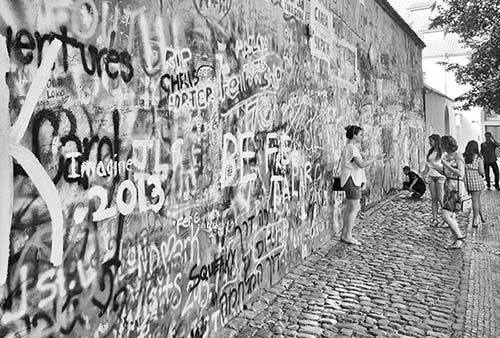
Just across the tiny bridge, beneath the trees on the right, is the colorful Lennon Wall. While V. I. Lenin’s ideas hung like a water-soaked trench coat upon the Czech people, singer John Lennon’s ideas gave many locals hope and a vision. When Lennon was killed in 1980, this large wall was spontaneously covered with memorial graffiti. Night after night, the police would paint over the “All You Need Is Love” and “Imagine” graffiti. And day after day, it would reappear. Until independence came in 1989, travelers, freedom lovers, and local hippies gathered here. Silly as it might seem, this wall is remembered as a place that gave hope to locals craving freedom. Even today, while the tension and danger associated with this wall are gone, people come here to imagine. “John žije” is Czech for “John lives.” The city actually pays artists to repaint the wall every two years.
SOUTH OF LESSER TOWN SQUARE, TO PETŘÍN HILL
The following sights lie south of the Lesser Town Square, along Karmelitská street. From the square, these are easily laced together by trams #22 or #23. The Vrtba Garden (Vrtbovská Zahrada), which you’ll pass on the way to the church, is a terraced Baroque garden that makes for an interesting comparison to the Renaissance garden at Wallenstein Palace, described earlier (120 Kč, daily 10:00-18:00, closed Nov-March).
Church of Our Lady Victorious (Kostel Panny Marie Vítězné)
This otherwise ordinary Carmelite church displays Prague’s most worshipped treasure, the Infant of Prague (Pražské Jezulátko). Stepping into the church, you feel a certain vitality, as it’s filled not with tourists but with pilgrims. Kneel at the banister in front of the tiny lost-in-gilded-Baroque altar and find the prayer in your language (of the 13 in the folder). Brought to Czech lands during the Habsburg era by a Spanish noblewoman who came to marry a Czech nobleman, the Infant has become a focus of worship and miracle tales in Prague and Spanish-speaking countries. South Americans come on pilgrimage to Prague just to see this one statue. An exhibit upstairs shows tiny embroidered robes given to the Infant, including ones from Habsburg empress Maria Theresa of Austria (1754) and the country of Vietnam (1958), as well as a video showing a nun lovingly dressing the doll-like sculpture.
Cost and Hours: Free, Mon-Sat 9:30-17:00, Sun 13:00-18:00, English-language Mass Sun at 12:00 and Thu at 17:00, Karmelitská 9, www.pragjesu.cz.
▲Petřín Hill (Petřínské Sady)
This hill, topped by a replica of the Eiffel Tower, features several unusual sights.
Monument to Victims of Communism (Pomník Obětem Komunismu): The sculptural figures of this poignant memorial, representing victims of the totalitarian regime, gradually atrophy as they range up the hillside steps. They do not die but slowly disappear, one limb at a time. The statistics inscribed on the steps say it all: From 1948 until 1989, in Czechoslovakia alone, 205,486 people were imprisoned, 248 were executed, 4,500 died in prison, 327 were shot attempting to cross the border, and 170,938 left the country. For further information, and a suggestion for a half-day trip delving into this history, see “The Legacy of Communism” sidebar earlier in this chapter.
Hunger Wall (Hladová Zed’): To the left of the Victims of Communism monument is this medieval defense wall, which was Charles IV’s 14th-century equivalent of FDR’s work-for-food projects. The poorest of the poor helped build this structure just to eke out a bit of income.
To the right (about 50 yards away) is the base of a handy funicular you can ride up the hill to the Petřín Tower (uses tram/Metro ticket, runs daily every 10-15 minutes 8:00-22:00).
Petřín Hill Summit and Tower: The top of Petřín Hill is considered the best place in Prague to take your date for a romantic city view. Built for an exhibition in 1891, the 200-foot-tall Petřín Tower—an elegant pure Art Nouveau steel-and-wood structure—is one-fifth the height of its Parisian big brother, which was built two years earlier. But, thanks to this hill, the top of the tower sits at the same elevation as the real Eiffel Tower. Before you climb up, appreciate the tower’s sinuous curves. Climbing the 400 steps rewards you with amazing views of the city (150 Kč, daily 9:00-21:00, shorter hours off-season).
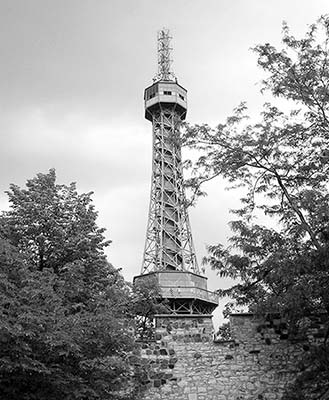
Czech couples come to the orchard-filled slope of Petřín Hill each May Day to reaffirm their love with a kiss under a blooming sour-cherry tree. A mirror maze next door to the tower is fun for a quick wander if you’re already here (75 Kč, same hours as tower).
Next to the maze, in front of the cupola-topped observatory, notice the statue of Milan Rastislav Štefánik (1880-1919), the charismatic Slovak astronomer and patriot. As a naturalized pilot and general in the French army during World War I, Štefánik assembled the first Czechoslovak units, and worked with Tomáš Garrigue Masaryk and Edvard Beneš to create the nation of Czechoslovakia. After the war, Štefánik fought to bring home tens of thousands of Czech and Slovak freedom fighters left stranded in Siberia by the Bolshevik Revolution. Štefánik died in a plane crash in May 1919 in bad weather just outside the newly named Slovak capital of Bratislava. His death eventually proved to be a devastating blow for the unity of the young country. Masaryk, Beneš, and Štefánik are the only 20th-century politicians commemorated with statues in the Czech capital.
Nearby: To the left of the tower as you face Prague Castle, stairs lead down to a path that swirls left along the hill’s contour and takes you directly to the Strahov Monastery, described later.
The Castle Quarter (Hradčany)
Looming above Prague, dominating its skyline, is the Castle Quarter. Prague Castle and its surrounding sights are packed with Czech history, as well as with tourists. The nearby Strahov Monastery (a 10-minute hike above the castle) is also a worthwhile sight, with a fascinating old library and beautiful views over all of Prague.
Castle Square (Hradčanské Náměstí)—right in front of the castle gates—is at the center of this area. Stretching along the promontory away from the castle (and the river) is a regal neighborhood that ends at the Strahov Monastery.
Surrounding the castle are fine gardens. On the north side are the Royal Gardens, and below the castle are more gardens and lanes leading down to the Lesser Town.
SIGHTS AT PRAGUE CASTLE (PRAŽSKÝ HRAD)
This vast and sprawling complex has been the seat of Czech power for centuries. It collects a wide range of sights, including the country’s top church, its former royal palace, and an assortment of history and art museums. (These are listed here in order, from top to bottom, starting at the main gate.) The castle is Prague’s most crowded sight and can be a bit intimidating to sightseers, but the casual visitor will find that a quick and targeted visit is ideal. The sights listed here are within the official castle complex.
Cost and Hours: 250 Kč “Basic circuit” ticket includes St. Vitus Cathedral, the Old Royal Palace, the Basilica of St. George, and the Golden Lane; a second 200 Kč “Permanent exhibitions” ticket adds the Story of Prague Castle exhibit and the Castle Picture Gallery; tickets good for two days. Castle grounds open daily 6:00-22:00, but most sights open daily 9:00-17:00, Nov-March until 16:00.
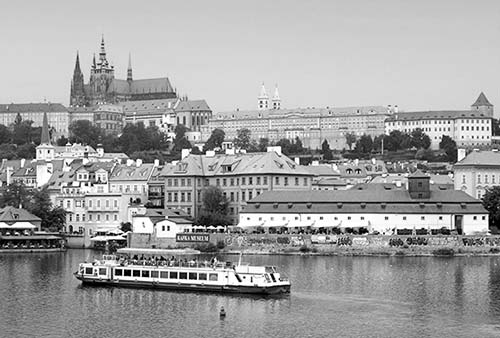
Getting There: You have three options: Ride a taxi up (ideally to the top of Nerudova street, just below Castle Square), walk up (figure 20 minutes uphill from the Charles Bridge, along charming cobbled Nerudova street), or ride the tram. Departing from various handy locations around town, tram #22 or #23 uses several stops near the castle. The closest stop to Castle Square is Pražský Hrad; two stops farther up is Pohořelec, which works for those who want to tour the Strahov Monastery before the downhill walk to Castle Square. The Královský Letohrádek (Royal Summer Palace) stop allows a scenic approach through the Royal Gardens to the castle’s northern entrance. For more on this tram line, see my self-guided tram tour on here.
Most of these sights, including an in-depth tour of St. Vitus Cathedral, are covered in far greater detail in the Prague Castle Tour chapter. You’ll also find crowd-beating tips, strategies for planning your visit, detailed maps, and a recommended route for connecting the sights.
Castle Square (Hradčanské Náměstí) and Ticket Offices
At the main entrance to the castle, this square is ringed by important buildings and art galleries. A statue of the statesman Tomáš Garrigue Masaryk (who led Czechoslovakia after World War I) surveys the scene. Above the gilded gateway to the complex, stone giants battle, while real-life soldiers stand stiffly at attention...until the ceremonial changing of the guard at the top of each hour.
To buy castle tickets, enter to the left of those giants into the First Courtyard, then go under a stone gateway into the Second Courtyard, where you’ll find a ticket office to your left. Or head on into the vast expanse of the Third Courtyard to find a ticket office in front of the cathedral. There’s one more ticket office at the east end of the complex, near the Golden Lane.
▲▲▲St. Vitus Cathedral (Katedrála Sv. Víta)
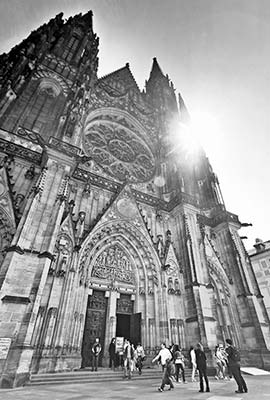
This towering house of worship—with its flying buttresses and spiny spires—is the top church of the Czech people. Many VIPs from this nation’s history—from saints to statesmen—are buried here. While it looks old, the front half is the same age as the Empire State Building—Neo-Gothic, built to match the original Gothic back half.
You can step into the very congested entry vestibule for a peek at the interior, but it’s worth paying for a ticket that lets you go deeper, leave some of the crowds behind, and explore. Inside the soaring nave are stately tombs, reliefs showing the Prague of yore, and the historic Wenceslas Chapel, with the tomb of the most important Czech saint. But for most, the cathedral’s highlight is the exquisite stained-glass window by the Art Nouveau great Alphonse Mucha, which tells the entire history of Christianity in the Czech lands—from the first missionaries to modern times—with swirling figures, vibrant colors, and powerful symbolism.
▲Old Royal Palace (Starý Královský Palác)
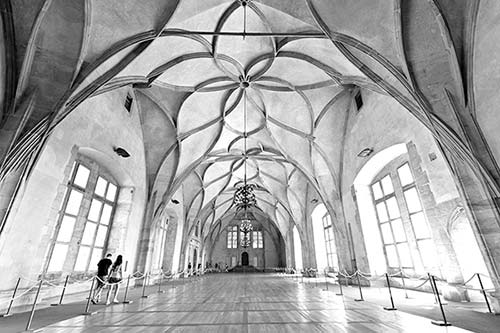
The traditional seat of Czech power, this feels like a mostly empty historical shell. But its oversized Vladislav Hall—big enough for horseback jousting competitions or bustling markets—is impressive. The smaller, adjoining rooms, called the “Czech Office,” were the site of a famous defenestration—the Czech way of dealing with unwanted politicians (just throw them out the window). The palace also comes with fine views of the surrounding hillsides, and assorted other royal portraits and bric-a-brac.
The Story of Prague Castle Exhibit (Příběh Pražského Hradu)
For those wanting to dig deeper into the history of Prague and its castle, this exhibit features well-described historical artifacts from the very first Czechs through the imported Habsburg monarchy of the 17th century. To enter, you need the additional “Permanent exhibitions” ticket; visit here only if you have a bigger-than-average appetite for history.
▲Basilica of St. George (Bazilika Sv. Jiří)
The oldest-feeling place at the castle, this atmospheric, dimly lit, stripped-down Romanesque chapel offers a subdued contrast to the big and bombastic spaces elsewhere. Its most significant feature is the tomb of St. Ludmila, the grandmother of St. Wenceslas.
▲Golden Lane (Zlatá Ulička)
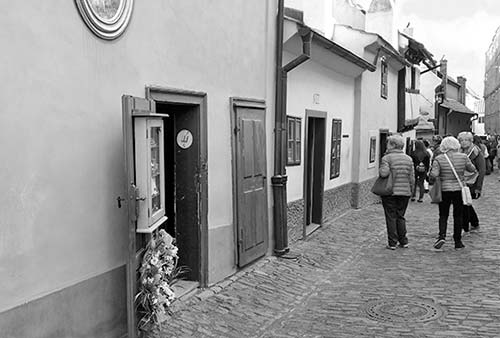
Named for the goldsmiths who likely worked here, this medieval merchant street retains its historic aura. When uncrowded, the atmospheric lane—lined with endearing little exhibits on the commerce and customs of a bygone era—is fun to explore. When busy, as it typically is, it’s a sticky touristic mosh pit.
▲▲Lobkowicz Palace
Located below the Golden Lane, this palace has a few top-notch paintings, a Beethoven manuscript on display, and an aristocratic ambience.
Cost and Hours: Requires separate 290 Kč admission ticket, tickets available onsite or online, daily 10:00-18:00, +420 233 312 925, www.lobkowicz.cz.
SIGHTS NEAR PRAGUE CASTLE
The following sights are not part of the castle complex. For locations, see the map on here.
Art Museums on Castle Square
Sternberg Palace (Šternberský Palác) and Schwarzenberg Palace (Schwarzenberský Palác)
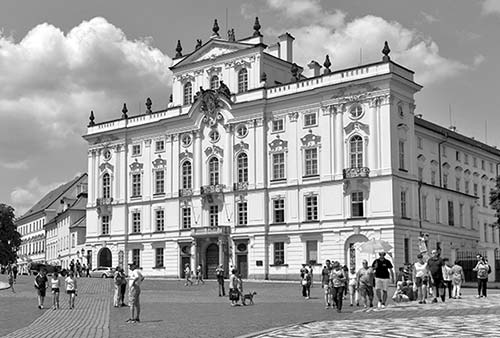
These two historic mansions—facing each other on the square—are filled with the National Gallery’s collection of paintings by the Old Masters. You’ll see minor works by Albrecht Dürer, Peter Paul Rubens, Rembrandt, and El Greco, plus works by their Czech contemporaries.
Cost and Hours: 250 Kč for each palace; 680 Kč 10-day combo-ticket covers both palaces plus the Museum of Medieval Art and Veletržní Palace; palaces open Tue-Sun 10:00-18:00, Wed until 20:00, closed Mon; Hradčanské Náměstí 15 and 2, www.ngprague.cz.
Gardens Behind the Palace
One of my favorite, untrampled corners of the castle area contains the fine gardens and Royal Summer Palace, just behind Prague Castle. This is a relaxing place to escape the crowded intensity—and is a scenic way to approach the castle. To reach the gardens, get off tram #22 or #23 at Královský Letohrádek (the Royal Summer Palace is across the street from this stop).
For details on this approach and the sights below, see the sidebar on here.
Royal Summer Palace (Královský Letohrádek)
The purest Renaissance building in town has detailed reliefs, based on stories from ancient Greek and Roman myths, as well as a musical bronze fountain.
Royal Gardens (Královská Zahrada)
Václav Havel opened the residence and grounds of communist presidents to the public. Today, a stroll here comes with fine views of the back of the castle complex and St. Vitus Cathedral.
Cost and Hours: Free, daily 10:00-18:00, closed Nov-March.
Sights Above the Castle
The Strahov Monastery, with its twin Baroque domes, and the pretty Loreta Church sit above the castle and are easy to combine with your castle visit. Visiting the monastery first allows you to walk downhill to the castle (taking in fine views and passing Loreta Church on the way), but it also means you’ll wind up at the busiest entrance to the castle. If you anticipate crowds, see the castle sights first, then walk back up to Loreta and Strahov.
Getting There: If coming from central Prague, take tram #22 or #23 to the Pohořelec stop. Follow the tracks for 50 yards, take the pedestrian lane that rises up beside the tram tracks, and enter the fancy gate on the left near the tall red-brick wall. You’ll see the twin spires of the monastery; the library entrance is on the little square with the monastery church. If coming from the castle, exit Castle Square past the Toskánský Palace and walk up along Loretánská street to the church and monastery.
▲Strahov Monastery and Library (Strahovský Klášter a Knihovna)
This fine old monastery has perched on the hill just above Prague Castle since the 12th century. In the Middle Ages, monasteries like this one weren’t simply places for prayerful reflection. Industrious monks served their community as keepers of knowledge (in the form of this monastery’s atmospheric, antique library) and producers of both beer and wine.
Medieval monasteries were a mix of industry, agriculture, and education, as well as worship and theology. In its heyday, Strahov Monastery had a booming economy of its own, with vineyards, a brewery, and a sizable beer hall—all now open once again. You can explore the monastery complex, check out the beautiful old library, and even enjoy a brew (no longer monk-made, but still refreshing).
Cost and Hours: Grounds—free and always open; library—150 Kč, daily 9:00-12:00 & 13:00-17:00, +420 233 107 718, www.strahovskyklaster.cz. Tickets are sold in the small former church to your left just after you pass through the fancy entrance gate. A pay WC is just to the right of the monastery entrance.
Visiting the Monastery and Library: The monastery’s main church, dedicated to the Assumption of St. Mary, is an originally Romanesque structure decorated by the monks in textbook Baroque (usually closed, but look through the gate inside the front door to see its interior). Notice the grand effect of the Baroque architecture—both rhythmic and theatric. Go ahead, inhale. That’s the scent of Baroque.
The library is just to the right of the church—head up the stairs for a peek at how enlightened thinkers in the 18th century influenced learning. The display cases in the library gift shop show off illuminated manuscripts, described in English. Some are in old Czech, but because the Enlightenment promoted the universality of knowledge (and Latin was the universal language of Europe’s educated elite), there was little place for regional dialects—therefore, few books here are in the Czech language.
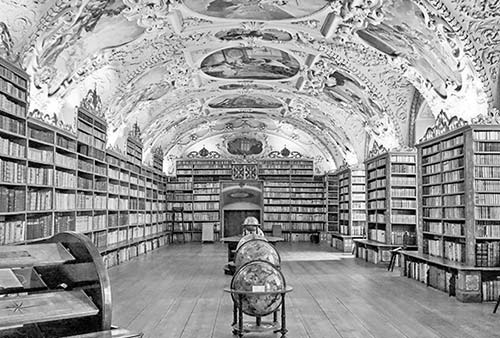
Two rooms (seen only from the doors) are filled with 10th-to-17th-century books, shelved under elaborately painted ceilings. The theme of the first and bigger hall is philosophy, with the history of the Western pursuit of knowledge painted on the ceiling. The second hall—down a hallway lined with antique furniture—focuses on theology. As the Age of Enlightenment began to take hold in Europe at the end of the 18th century, monasteries still controlled the books. Notice the gilded, locked case containing the libri prohibiti (prohibited books) at the end of the room, above the mirror. Only the abbot had the key, and you had to have his blessing to read these books—by writers such as Nicolas Copernicus, Jan Hus, and Jean-Jacques Rousseau. Even the French encyclopedia was locked away.
The hallway connecting the two library rooms was filled with cases illustrating the new practical approach to natural sciences. In the crowded area near the philosophy hall, find the dried-up elephant trunks (flanking the narwhal or unicorn horn) and one of the earliest models of an electricity generator.
Sights near the Monastery
From the library, turn downhill and appreciate the generous shade of the venerable linden trees lining the walkways. In pagan times, various Slavic peoples believed that the linden (lipa)—which can live for centuries and grow to massive size—had sacred powers. A linden often stood in the main square, and a linden sapling would be planted to celebrate special occasions. Many of the great Eastern Orthodox icons were painted on linden wood. Even in modern times, after more than a millennium of Christianity, the Czechs (and many of their Slavic cousins) still embrace the linden as a national symbol. Here in the Czech Republic, the linden is often used as a symbol of independence; you’ll spot linden trees and heart-shaped leaves around the city.
That hoppy smell you’re enjoying in front of the monastery is the recommended Klášterní Pivovar, where they brew beer just as monks have for centuries (in the little courtyard directly across from the library entrance; described on here).
Tucked in another courtyard across from the Strahov Monastery, the Museum of Miniatures (Muzeum Miniatur) displays 40 teeny exhibits—each under a microscope—crafted by an artist from a remote corner of Siberia. Yes, you could fit the entire museum in a carry-on-size suitcase, but good things sometimes come in very, very small packages—it’s fascinating to see minutiae such as a padlock on the leg of an ant (100 Kč, kids-50 Kč, daily 10:00-17:00, Strahovské Nádvoří 11, +420 233 352 371).
▲Monastery Garden Viewpoint
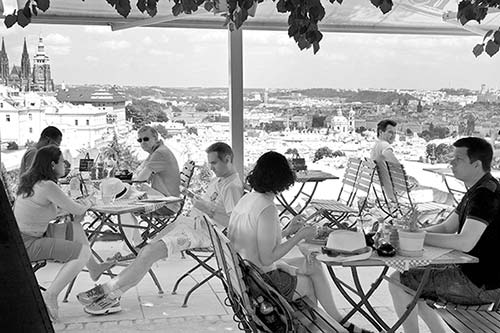
Downhill from the Museum of Miniatures and through the gate, find the view terrace to the right. From the public perch beneath the restaurant tables, you can see St. Vitus Cathedral (the heart of the castle complex), the green dome of the Church of St. Nicholas (marking the center of the Lesser Town), the two dark towers fortifying both ends of the Charles Bridge, and the fanciful black spires of the Týn Church (in the Old Town Square). On the horizon is the modern Žižkov TV and radio tower (conveniently marking the liveliest nightlife zone in town). Begun in the 1980s, the tower was partly meant to jam Radio Free Europe’s broadcast from Munich. By the time it was finished, communism was dead, and Radio Free Europe’s headquarters had moved to Prague. Panning right...is that Paris in the distance? No, it’s Petřín Tower, a mini-Eiffel Tower offering expansive views over Prague (described earlier).
Loreta Square (Loretánské Náměstí)
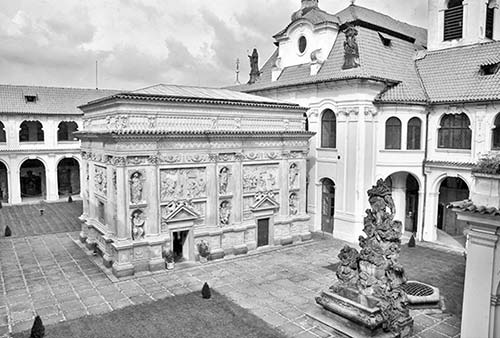
On the way to Castle Square (from Strahov Monastery, or directly from the tram stop) is Loreta Square, dominated by the beautiful Baroque Loreta Church. Pause at the plaza with the statue, overlooking the church. Popular with pilgrims, the church hides a surprise inside its courtyard: what’s purported to be part of Mary’s house from Nazareth.
Černín Palace is on the uphill (left) side of the square. Once home to a cosmopolitan Czech family, it was turned into the Ministry of Foreign Affairs in 1918. This building was the unfortunate site of a modern-day defenestration. On March 10, 1948, soon after the communists took over, popular Czechoslovak politician Jan Masaryk was found dead in this building’s courtyard, below a palace bathroom window. A charismatic piano player turned secretary of state—and the son of Tomáš Garrigue Masaryk, Czechoslovakia’s first president—Jan Masaryk was an important symbol of Czech democracy. His death snuffed out the tiny remaining hope that his people still had for regaining some control of their country. While authorities at the time ruled it a suicide, an independent forensic examination in the 1990s confirmed foul play. The most likely theory is that Masaryk was killed by the Soviet secret police, who had learned of Masaryk’s plans to leave the country and represent it while in exile.
A controversial memorial to Czechoslovakia’s second president, Edvard Beneš, stands in front of the Černín Palace. While the brilliant young Beneš was instrumental in securing international backing for the new country as Czechoslovakia’s first secretary of state, his actions as president between 1935 and 1948 (much of that time in exile in London) tarnished his legacy. Arrogant, aloof, and gullible, Beneš cozied up with Stalin during World War II, and after the war he masterminded the eviction of more than two million Germans from Czechoslovakia (see sidebar on here).
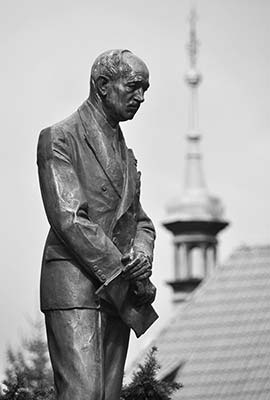
Take a moment to analyze the smaller-than-life-size statue: Beneš’ drooping shoulders suggest weakness and make his suit look too big. His crossed arms are a psychological “tell,” indicating that he’s closed off and withdrawn. And the look of worry and regret etched into his deeply furrowed brow hardly suggests a determined leader.
▲Loreta Church
This church has been a hit with pilgrims for centuries, thanks to its dazzling bell tower, peaceful yet plush cloister, sparkling treasury, and much-venerated Holy House.
Cost and Hours: 210 Kč; daily 9:00-17:00, Nov-March 9:30-16:00; audioguide-150 Kč, +420 220 516 740, www.loreta.cz.
Visiting the Church: Inside, follow the one-way clockwise route. While you stroll along the cloister, notice that the ceiling is painted with the many places in Europe Mary has miraculously appeared to the faithful.
In the garden-like center of the cloister stands the ornate Santa Casa (Holy House), considered by some pilgrims to be part of Mary’s home in Nazareth. Because many pilgrims returning from the Holy Land docked at the Italian port of Loreto, it’s called the Loreta Shrine. The Santa Casa is the “little Bethlehem” of Prague. It is the traditional departure point for Czech pilgrims setting out on the long, arduous journey to Europe’s most important pilgrimage site, Santiago de Compostela, in northwest Spain. Inside, on the left wall, hangs what some consider to be an original beam from the house of Mary. It’s overseen by a much-venerated statue of the Black Virgin. The Santa Casa itself might seem like a bit of a letdown, but generations of believers have considered this to be the holiest spot in the country.
The small Baroque church behind the Santa Casa is one of the most beautiful in Prague. The decor looks rich—but the marble and gold are all fake. From the window in the back, you can see a stucco relief on the Santa Casa that shows angels rescuing the house from a pagan attack in Nazareth and making a special delivery to Loreto in Italy.
Continue around the cloister. In the last corner, on the left wall of the chapel, is “St. Bearded Woman” (Svatá Starosta). This patron saint of unhappy marriages is a woman whose family arranged for her to marry a pagan man. She prayed for an escape, sprouted a beard...and the guy said, “No way.” While she managed to avoid the marriage, it angered her father, who crucified her. The many candles here are from people suffering through uncivil unions.
Take a left just before the exit and head upstairs, following signs to the treasury—a room full of jeweled worship aids (well described in English). The highlight here—in the heavily fortified room that feels like a bank vault—is a monstrance (Communion-wafer holder) from 1699, with more than 6,000 diamonds.
Enjoy the short carillon concert at the top of the hour; from the lawn in front of the main entrance, you can see the racks of bells being clanged. (At the exit, you’ll see a schedule of upcoming pilgrimages departing from here.)