ROMANIA
România
Still haunted by legends of Vlad the Impaler and Nicolae Ceaușescu, Romania is complex—with an epic history, a multifaceted ethnic mix, and an unusually rich cultural heritage. It may not be the easiest place to travel, but for adventurous souls, it’s exceptionally rewarding. It’s a land that layers gritty cities, charming cobbled towns, glorious castles, ragtag countryside, cut-glass peaks, playing chicken with horse carts, and connecting with kindhearted people living in a crazy world...sometimes all in the same day. Love it or hate it (and often both at once), Romania provides a powerful and memorable travel experience.
Where to Go: Romania is a vast and varied country. To focus your visit, break it into four chunks: Wallachia (Bucharest), Transylvania (cute towns and castles), Maramureș (traditional folk life), and Bucovina (painted monasteries).
Wallachia consists of Romania’s flatlands, wrapped around the Carpathian Mountains and stretching from Transylvania to the Danube (and Bulgaria). From a traveler’s perspective, the only city here worth visiting is Bucharest. The exquisite Peleș Castle is also (just barely) in Wallachia but feels closer to Transylvania.
Transylvania is Romania’s heartland and where most visitors focus their time. You could spend many days here, sampling great cities, evocative castles and fortified churches, and a mountainous landscape. For home-base towns, big but charming Brașov works well for venturing into the mountains and touring castles (including Bran, Râșnov, and Peleș). Little, well-preserved Sighișoara is the most charming town and handy for touring fortified churches (such as the ones in Biertan and Viscri). Sibiu is Romania’s most livable city, with a thriving historical core; it’s relatively close to the dramatic Corvin Castle. And sprawling Cluj-Napoca, Transylvania’s biggest city and de facto capital, has bustling squares, inviting parks, and busy nightlife.
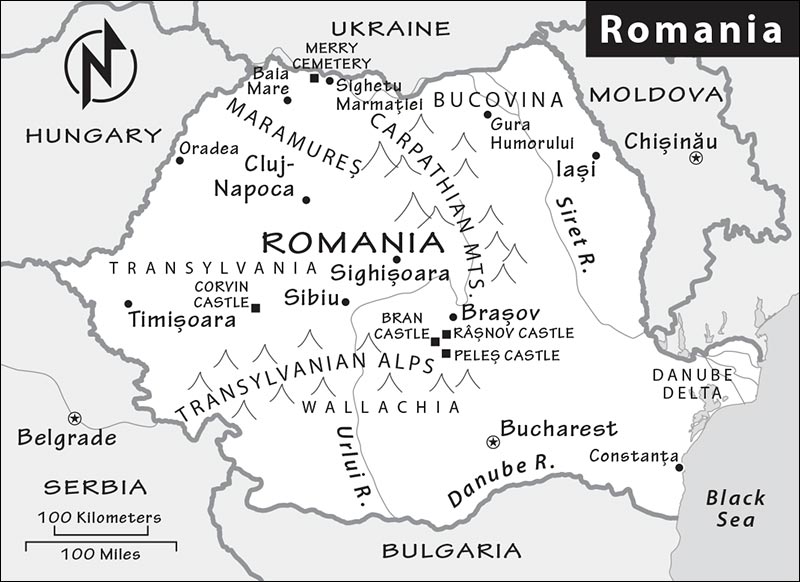
Maramureș—in the far-north of the country, squeezed just inside the Ukrainian border—is time-consuming to reach. But it’s definitely worth the effort for those interested in traditional lifestyles (and the gorgeous Merry Cemetery). Make a home base in the countryside near Sighetu Marmației and explore.
Bucovina, another traditional region to the east of Transylvania, is famous for its glorious painted monasteries (mostly near the town of Gura Humorului).
When planning your itinerary, don’t underestimate the long distances (or the slow traffic). To avoid spending all of your time on the road, be selective. With just a few days, focus on Transylvania, dividing your time between two home-base towns (Brașov and Sighișoara are handiest). With more time, add Maramureș and/or Bucharest. Bucovina’s painted monasteries are beautiful, but the region has little else to see, and it’s a time-consuming detour—include Bucovina only if you have ample time. For an even longer visit, the Dobrogea region (with the lush Danube Delta and the city of Constanța)—not covered in this book—is the most logical add-on.
Getting Around: Bucharest and other big cities are relatively well connected by the slow train network (www.cfrcalatori.ro) or by bus (www.autogari.ro). But visitors wanting to scour the countryside—which is Romania’s most appealing draw—are better off driving. Roads are in decent condition, but progress is slow; there are virtually no expressways, country roads are generally two-lane, and city bypasses are rare—you’ll usually have to drive right through the town center. On the other hand, drivers get a front-row seat for Romania’s weird and wonderful ways—it’s fascinating to just watch life unfold.
Romanian Cuisine: Romanian cooking is heavy peasant fare. Meals begin with a wooden platter of rustic mountain cheeses, greasy pork (including jumări—little strips of pork fat), and raw onions. Next is a simple but tasty soup (supă); a variety of “sour soups” called ciorbă, made with a base of fermented bran, are available (and typically delicious). Then comes the main course: pork, chicken, or fish. One popular protein is mici (MEE-chee)—minced-meat grilled sausages (like ćevapčići in the former Yugoslavia). Polenta (mămăligă)—often drizzled with sour cream—is the standard side, and sarmale (cabbage roll) is the national dish. A filling dessert is papanași—baseball-sized fried doughnuts smothered in jam and sour cream. Romanian wines and beers are nothing special, but try the fruity, 100-proof Romanian moonshine, palinka (a.k.a. țuică)...carefully. They say that when you drink palinka, “Your brain is OK, but your body is not OK.”
Romanian Language: Romanian is a Romance language. If you speak French, Spanish, or Italian, you’ll find that you may understand Romanian...a little. For example, “Good evening” is Bună seara. The character ș sounds like “sh,” and ț is “ts.” Some key survival phrases: “Hello” is Bună ziua (formal) or Alo (informal), “Please” is Vă rog, “Thank you” is Mulţumesc (or simply Mersi), and “Goodbye” is La revedere.
Local Guides: Hiring your own guide here is an exceptional investment. Prices are affordable, the guides I’ve recommended are top-notch, and Romania is much easier to take with a little local help. I’ve personally worked with each of the following guides and highly recommend their services. While I’ve listed each one’s area of specialty, most of them work throughout the country—consider hiring one to be with you for several stops (or even your entire trip): Daniel Gheorghiţă at Covinnus Travel (throughout Romania, www.covinnus.com, office@covinnus.com), Dan Nica (Bucharest and beyond, www.tourguidesromania.com, dsnica@gmail.com), Ana Adamoae (Bucharest and Transylvania, www.guidedtoursbucharest.wordpress.com, aadamoae@gmail.com), Ciprian “Chip” Slemco at Hello Bucovina (Bucovina and throughout Romania—and beyond, www.hellobucovina.com, contact@hellobucovina.com), and Teo Ivanciuc (just Maramureş, www.maramurestour.com, teofilivanciuc@yahoo.com).
Top Romanian Destinations
WALLACHIA
▲Bucharest (București)
Romania’s capital, Bucharest—with about two million people—is a muscular and gritty tangle of buildings. It can be hard to like at first glance, but with a thoughtful look, it reveals its charms. Between the dreary apartment blocks hides an impressive architectural heritage. Once called the “Little Paris of the East,” Bucharest flourished in the late 19th century, when independent Romania was born. Later, it was brutally disfigured by the communist dictator Ceaușescu, who left behind a starkly Socialist-style residential zone and the city’s main landmark (the Palace of the Parliament). But today’s Bucharest is working hard to move forward. In recent years, they’ve rejuvenated the once-derelict Old Town—transforming it into one of the liveliest nightlife zones in the region. Taken together, Bucharest is a fascinating place to grapple with for a day or two.
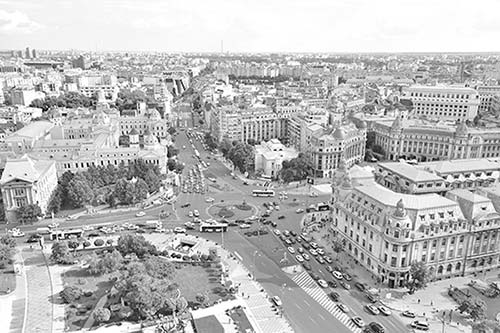
Visiting Bucharest: For a glimpse at Bucharest’s genteel past, go for a stroll along ▲▲ Victory Avenue (Calea Victoriei)—with grand belle époque architecture that has recently been scrubbed of its communist-era grime. Pause by the horseback statue of King Carol I (1839-1914), across the street from the Royal Palace. In the 1860s, Romania became a modern state for the first time. With no royal family to call their own, the Romanians went shopping for a king who could connect their country to the European mainstream. They found one in Germany, where a prince looking for a throne agreed to become King Carol I of Romania. King Carol embraced his new homeland: He learned the language and adopted the culture while bringing Western reforms and securing true independence for Romania. Under King Carol, Bucharest blossomed. He imported French architects to give Bucharest the romantic allure visitors still enjoy along Victory Avenue. Just up the street is the Athenaeum concert hall, one of the finest examples of Bucharest’s golden age of architecture.
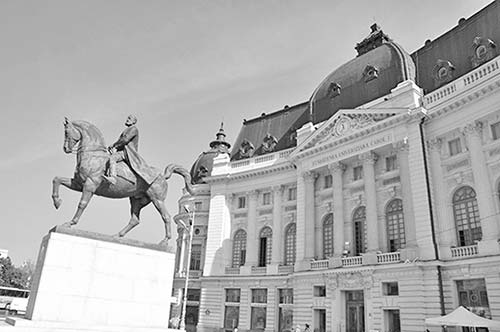
Nearby, Revolution Square (Piața Revoluției) is marked by a stark monument honoring the more than 1,000 Romanians who died to bring freedom to their country in 1989. It stands in front of the former Communist Party Headquarters, where dictator Nicolae Ceaușescu would deliver speeches from the little balcony. On December 21, 1989—as revolution swept Romania—Ceaușescu had to abandon his podium midspeech when the crowd turned on him. (For the rest of the story, see the sidebar.)
Just a few blocks south sits Bucharest’s ▲▲ Old Town. From communist times through the early 2000s, this area was deserted, dilapidated, and dangerous. But now it’s being systematically rejuvenated. Grand, glittering belle époque buildings (including several bank headquarters) have been scrubbed and polished. Formerly abandoned shopping galleries are newly inviting. Historical monuments—like the delightful Hanul Manuc, an early-19th-century caravansary—have been painstakingly restored. And an al fresco dining and drinking scene enlivens the traffic-free streets. The lanes of the Old Town are a revelation after dark (especially on weekends), when the entire neighborhood feels like one big, sprawling cocktail party.
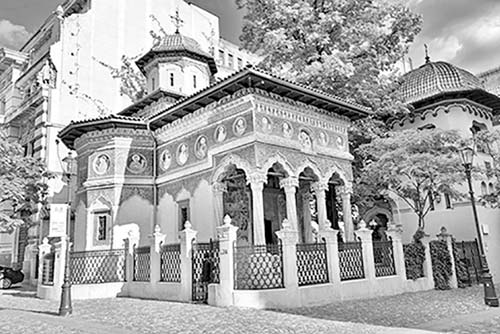
Also scattered around the Old Town are a few modest but colorfully decorated Romanian Orthodox churches. Observing passersby in front of any church, you’ll notice that—while religion was discouraged in communist times—these days, faith is an increasingly important part of everyday life. One of the best examples is the tiny ▲ Biserica Stavropoleos convent, unassumingly tucked between trendy restaurants and ritzy offices. Still tended by cloaked nuns, it feels like a transplanted time warp. A colorful Last Judgment painting fills the entranceway, and the little garden courtyard offers visitors a peaceful respite from the busy city.
Thriving as it is today, Bucharest’s Old Town was lucky to survive the communist period. In the early 1980s, after an inspiring visit to North Korea, Nicolae Ceaușescu ripped out 80 percent of the historical center—30,000 houses, schools, and churches—to create the Civic Center (Centrul Civic) district, with wide boulevards, stone-faced apartment blocks, gurgling fountains, and a Pyongyang aesthetic. (Urban planners managed to save a few churches by secretly relocating them inside city blocks, where you can still find them today.) This area, just across the neglected little river from the Old Town, is worth a stroll to better understand the scale of Ceaușescu’s ambition, not to mention his ego.
In the core of the Civic Center, rows of fountains lead from Unity Square (Piața Unirii) to the massive ▲▲▲ Palace of Parliament—the largest building in Europe (four million square feet, with more than a thousand rooms). Ceaușescu built this monstrosity as a symbol of his power. Today it houses the Romanian parliament, three skippable museums, and an international conference center—and is still about 70 percent vacant space.
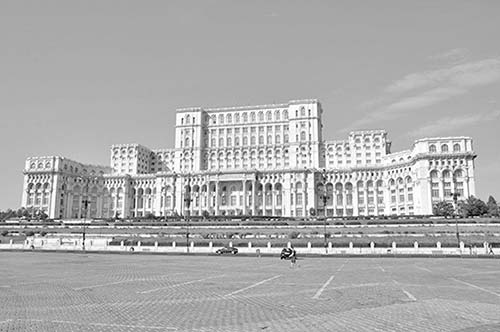
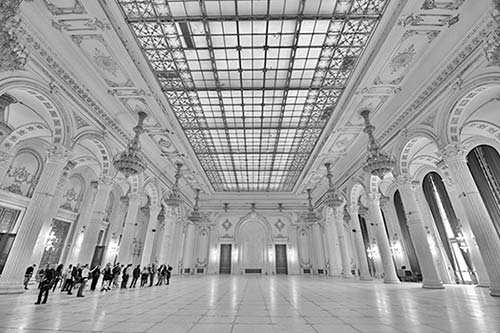
Guided tours lead gawking visitors around its cavernous, empty, and dimly lit halls (if they turned on all the lights, the palace would consume as much electricity as a small city). On the one-hour tour (bring your passport, www.cic.cdep.ro/en), visitors see the grand entry hall; the theater, with its gargantuan five-ton crystal chandelier; and the ballroom, big enough to host a football match and with a glass ceiling that, it’s rumored, could slide open to allow a helicopter to land. You’ll also step out onto the balcony that Ceaușescu designed specifically for delivering speeches, while looking down a boulevard grand enough to echo his self-importance. (To be sure it met his expectations, builders erected full-scale cardboard models of facades along the entire street for his personal sign-off.)
Throughout the tour, ogle the details: The wall-to-wall carpets had to be delivered in pieces and sewn together on-site. The curtains are stitched with silver-and-gold threads. Garage-sized “pocket doors” slide up into marble frames. Huge as the building is above ground, it’s built into the top of a hill—so there’s even more of it below ground. Most of the structure is steel and concrete, wrapped in a marble veneer—more than 10 million square feet of it. The building sinks a quarter-inch each year under its own sheer weight. They say underground tunnels go all the way to the airport—an emergency escape route for the paranoid Ceaușescu.
The dictator threw resources at his pet project like a crazed pharaoh. For six years, 700 architects and 20,000 laborers worked on it 24/7. Hundreds of workers died. Total cost: around three billion dollars. And even then, a third of the interior was never completed. Ceaușescu was executed halfway through its construction, and overnight, the “Presidential Palace” became the “Palace of the People”—and those people were stuck with it. Nobody could possibly afford to buy the building, and finishing it was cheaper than tearing it down. When it finally opened in 1994, the Romanian people—whose food had been rationed for years to help pay for the palace—were both wonderstruck and repulsed when they wandered its opulent halls.
Next door, others are carrying on Ceaușescu’s legacy of outsize projects. Just to the southwest, work crews are erecting the world’s largest Orthodox church: The Romanian People’s Salvation Cathedral, with a capacity of 6,000 worshippers, was consecrated in 2018 (though it’s still not complete).
While Bucharest has plenty of fine museums, on a short visit I find it more interesting to simply explore the zones described above and tour the parliament. But to dig deeper into the story of Romania, consider the National Museum of Romanian History (in the Old Town, www.mnir.ro) and the National Museum of the Romanian Peasant (folk-life artifacts on Victory Square/Piaţa Victoriei, www.muzeultaranuluiroman.ro; this is redundant if you’re heading to Maramureș).
Sleeping in Bucharest: The small, welcoming $ Rembrandt Hotel is well located at the edge of the bustling Old Town dining and nightlife zone (www.rembrandt.ro [URL inactive]). Also central is the more upscale, suite-oriented $$ Hotel Cișmigiu (www.hotelcismigiu.ro).
Eating in Bucharest: The Old Town has ample dining options; for a memorable meal of Romanian classics, consider the upmarket-beer-hall vibe of Caru’ cu Bere (www.carucubere.ro) or the atmospheric caravansary setting of Hanul’ lui Manuc (www.hanulluimanuc.ro).
▲▲▲Peleș Castle
Peleș (PEH-lesh) Castle, on a wooded hillside above the lovely mountain resort town of Sinaia, is Romania’s answer to Bavaria’s Neuschwanstein: a fanciful, over-the-top, Romantic interpretation of a Gothic hunting palace, prickly with spires but far too pretty to repel an actual siege. Designed to impress, Peleș ranks among Europe’s best Romantic Age palaces.
Background: Peleș was built in the 1880s by King Carol I, who had moved here from Germany. Carol was desperate to keep up with his rivals back home (such as “Mad” King Ludwig of Bavaria). And so, in a mountainous and forested landscape that reminded him of Germany, Carol imported German architects to create the ultimate palace. Here at Peleș, King Carol and Queen Elizabeth felt free from the stifling climate of German royalty: They slept together in the same bed, dressed in Romanian peasant costume, and decorated the place with Transylvanian folk themes. But Carol didn’t abandon his German efficiency. Audiences took place standing at his upright desk and lasted about five minutes. His queen, Elizabeth (look for her portrait in traditional Romanian costume), used her Germanic know-how to both celebrate and elevate her adopted culture. Inspired by Transylvanian fairy tales, Elizabeth even wrote some of her own. It’s no wonder that many contemporary Romanians still have great affection for their onetime-imported royalty.
Visiting Peleș Castle: You can get inside only with a guided tour (www.peles.ro). The interior is a rich world of sumptuous detail: cozy wood-paneled elegance, glittering Bohemian crystal chandeliers, whimsical paintings, colorful stoves, gilded stucco, Meissen porcelain, secret passages, and elaborate knickknacks (watch for the teak elephant table—a gift from the maharajah of India). Tours begin in the Hall of Honor—with its red carpets, grand staircase, venerable portraits, and inlaid-wood pictures of German castles (suggesting the king’s sense of one-upmanship). One particularly grandiose apartment—built for Emperor Franz Josef, who never actually slept here—has leather-tooled walls and a cozy breakfast room in the turret. In the Music Room, Queen Elizabeth hosted concerts and literary gatherings—and had scenes from her fairy tales painted on the walls. Meanwhile, the king’s impressive armory collection (Europe’s largest at the time) was designed both to intimidate and to stoke conversation. The private music halls and theaters were the site of many exclusive performances. And the library shows off the royal couple’s passion for education. But remember: This was a Romantic Age, faux-medieval castle, built in the 1880s, so it also had all the modern conveniences: bathrooms with running water, forced-air heating, elevators, a central vacuum cleaner system, and even its own power plant.
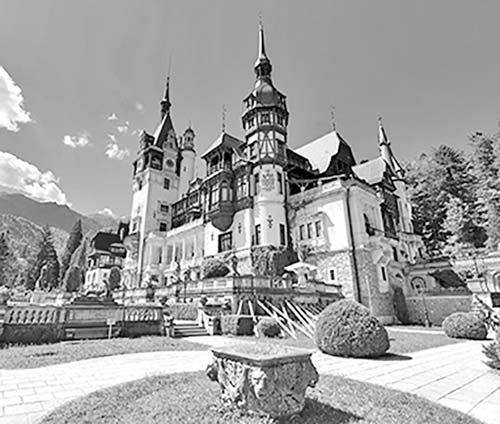
If one castle isn’t enough, you can also visit a second palace nearby, built by the next king (Carol’s nephew)—a half-timbered mini-Peleș called Pelișor Castle.
▲▲Transfăgărășan Road
The most challenging road connecting Bucharest to Transylvania—and, quite possibly, between any two points in Europe—is the Transfăgărășan (trans-fah-gah-rah-SHAHN) Road. It twists and turns and bends back on itself several times as it crosses the cut-glass peaks of the Făgărăș Mountains, summiting at 6,670 feet.
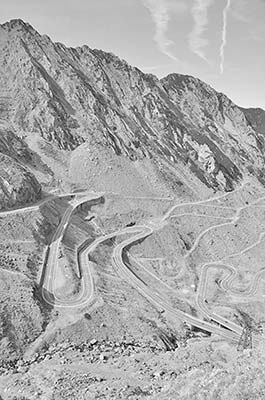
This improbable road is another artifact of Nicolae Ceaușescu’s rule. Following the 1968 Soviet invasion of Czechoslovakia to put down the Prague Spring uprising, a paranoid Ceaușescu wanted an escape route from Romania’s flat capital to its easier-to-defend mountains. According to the story, Ceaușescu simply put his finger on a map and said, “Build it here.” And they did. After incalculable costs and 40 workers’ lives lost, Ceaușescu’s dream was complete.
Today, the 56-mile-long Transfăgărășan Road has little practical value, but it’s a popular scenic drive for tourists...as long as you’re very comfortable with mountain driving. (Note that the road is only open when all snow has melted—typically late June through late October.) Consider the Transfăgărășan as a time-consuming but super-scenic alternate route for connecting Transylvania (it’s off E-68, between Brașov and Sibiu) to Bucharest (via Piteşti, where you can hop on the freeway).
At the southern (Bucharest) end of the pass, you’ll pass Poenari Castle. Unlike the “Dracula Castle” at Bran (described later), Poenari has a real connection to Vlad Țepeș, who actually spent time here. (It’s quite different than Bran, with a less striking interior; unless you have time and calories to burn, it’s not worth the 1,400 stairs to reach the entrance.)
TRANSYLVANIA
▲Brașov
Brașov (BRAH-shohv), about a three-hour drive north of Bucharest, is scenically tucked against Carpathian foothills. Brașov was one of the original seven towns founded by Saxon settlers (see the sidebar). It thrived then. It thrived during the Ceaușescu years, when it was aggressively developed into an industrial powerhouse. And it thrives today, with a rejuvenated old-town center that’s a popular springboard for the mountains: hiking in the summer, skiing in the winter, and castle-hopping anytime. Enjoyable but low-impact on its own, Brașov is an ideal home base for a Transylvanian “castle day”—with a car and an early start, you can easily side-trip to Peleș, Bran, and Râșnov in a single day.
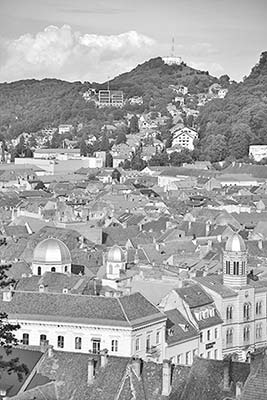
Visiting Brașov: While Brașov’s main appeal is its convenient location, its gorgeous main square and pedestrianized core are a big bonus. The town is a fine mix of tourism and real, contemporary Romanian life. Its main square, Piața Sfatului—and the lively walking streets that flow away from it—are a delightful people zone.
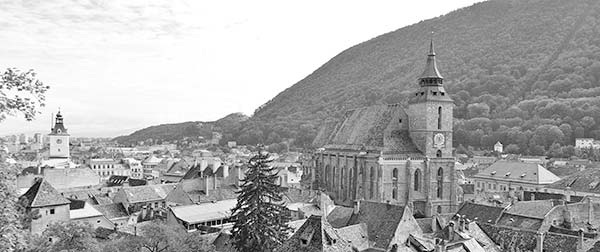
Brașov’s centerpiece is the Black Church (Biserica Neagră). The biggest Gothic church between Vienna and Istanbul, it got its nickname when it was charred by a 1689 fire. Inside, each bank of pews is lovingly decorated with the seal of the guild that financed it—suggesting the importance of trades and crafts in medieval Transylvania. The goldsmiths and other wealthy guilds sat near the front; poorer guilds, like the tailors and weavers, had the cheap seats in back. The mid-nave pews are reversible—with backs that can be flipped to face either the pulpit or the grand pipe organ. And the most extensive Turkish-carpet collection outside of Turkey fills the nave. These were donated by European traders, pilgrims, and crusaders who passed through this crossroads town on their way home from the Holy Land.
For a low-impact hike, head north across the little river and walk a few minutes up into the hills, where you can visit the Black Tower and the White Tower—part of the stout network of fortifications that protected the city in its medieval heyday. From the White Tower, you enjoy sweeping views over the tidy town center, the cable car that trundles to the adjacent mountaintop, and the big, white, Hollywood-like letters that spell out B-R-A-Ș-O-V.
Beyond the delightful urban core, Brașov features row after row of uniform concrete apartment blocks. But, revealing the city’s relative affluence, many are now refurbished and colorfully repainted. The sprawl is for good reason: Soon after the Iron Curtain slammed shut, Brașov was rechristened Orașul Stalin—“Stalintown.” Ceaușescu built an extensive network of auto and armaments factories here, imported and retrained peasants from the wilds of Moldavia to staff them, and erected forests of concrete apartment blocks to house them. (For a time, Brașov was Romania’s second-biggest city.) Trees with white bark were strategically planted on the hillside above to spell out the name S-T-A-L-I-N. And newlyweds felt compelled to have their picture taken with a big statue of “Father” Stalin in the park.
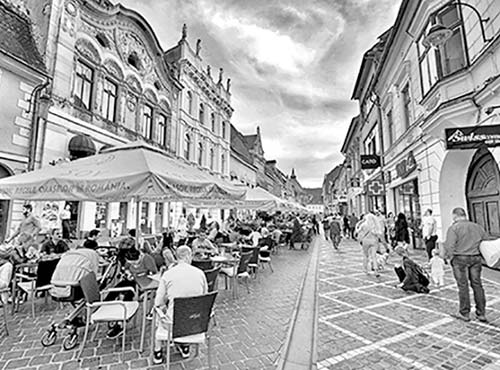
Sleeping in Brașov: Several cozy guesthouses are in the town center, including $ Hotel Bella Muzica (www.bellamuzica.ro) and the simpler $ Casa Albert (www.casa-albert.ro). For a glitzy option near the train station (in the modern sprawl—a long walk or short drive from the Old Town), $$ Hotel Kronwell is a big, slick design hotel with all the comforts (www.kronwell.com).
Eating in Brașov: You’ll find plenty of options in the pedestrianized town center. La Ceaun (“The Cauldron”) is good for traditional Romanian fare (www.laceaun.com), while the Italian-oriented Prato feels dressier but is still affordable (www.prato.ro). Both have appealing outdoor tables.
▲▲Castles near Brașov
You can link up all three of these castles in one busy day from Brașov. Or consider stopping off at Peleș on your way between Bucharest and Brașov, letting you linger and enjoy some time in Brașov itself.
The single best castle in the area (technically in Wallachia, just over the hills from Brașov) is ▲▲▲ Peleș Castle, described earlier.
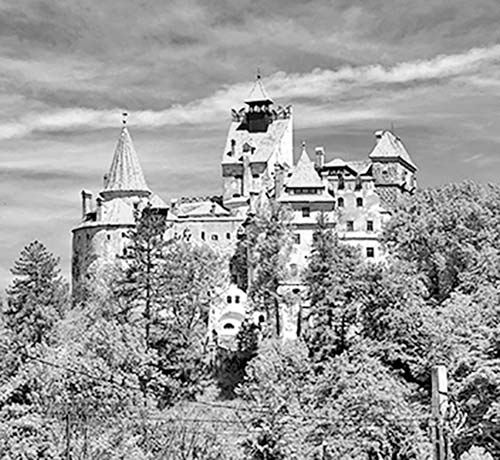
The mega-touristy ▲▲ Bran Castle perches evocatively on a bluff overlooking a busy valley road (www.bran-castle.com). Despite the tacky vampire-themed kitsch that clutters up the pathway, Bran has virtually no real connection to Dracula or to Vlad the Impaler...but it sure is striking. Fanciful legends aside, Bran is a good example of an authentic medieval fortress, dating from the 14th century. In the 1920s, Romania’s royal family converted Bran into a rustic country retreat. And that, rather than vampires, is what you’ll learn about in the whitewashed interior. As you follow the one-way route through the castle, exhibits introduce you to Romania’s King Ferdinand I (the nephew of King Carol I) and his wife, Princess Marie (the granddaughter of Britain’s Queen Victoria). Bran is also simply a fun kid-in-the-castle experience: Exploring the MC Escher floor plan, you’ll discover a humble armory, a secret passage, and a fairy-tale courtyard.
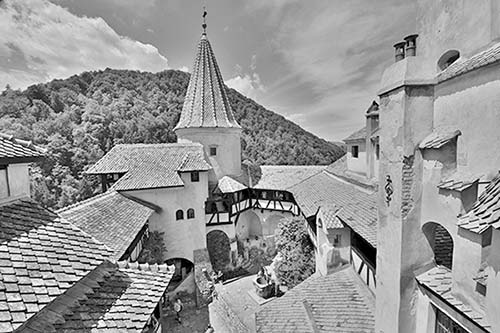
Transylvania’s tourist industry loves to milk its connection to Dracula. In reality, Dracula was the invention of a British novelist who never set foot in Transylvania, but was inspired, in part, by a real historical figure called Vlad the Impaler. Confused? To help you sort out fact from legend, here are the basics:
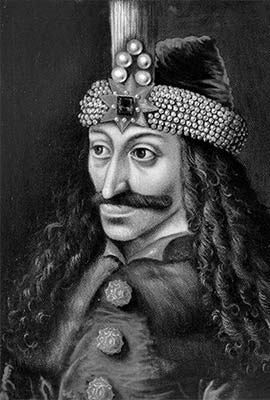
Vlad III (1431-1477) was a 15th-century prince of Wallachia who was taken captive by his Ottoman rivals. Some say he rotted in a prison, while others believe he apprenticed at the sultan’s court in Constantinople. Either way, after six years the authorities believed him “rehabilitated” and returned him to his homeland—with the expectation that he would serve as their obedient puppet ruler of Wallachia.
Instead, Vlad quickly turned on his former captors and joined the Hungarian fight to push back the Ottoman advance into Europe. According to later (and likely exaggerated) accounts, Vlad’s methods for dealing with his enemies were brutal: Slowly and sadistically, he’d drive stakes into the bodies of his victims as they screamed in agony. Then he’d display their mutilated corpses along busy roads as a warning to would-be foes. Vlad dispatched tens of thousands of victims this way, earning him a vivid nickname: Vlad Țepeș—“the Impaler.” He was also known by another name: Dracula, stemming from his father’s membership in the chivalric “Order of the Dragon” (Dracul in Romanian).
While feared by the Transylvanian nobles, Vlad the Impaler was beloved by the peasants, who cheered his heroic defense of their homeland. And after his death, his legend only grew in a Europe terrified of the ever-looming threat of Ottoman invasion.
By the late 1800s, the English novelist Bram Stoker (1847-1912)—like many before and after him—found his imagination captivated by the sadism of Vlad the Impaler. Stoker was also inspired by completely separate Transylvanian folk tales of the undead. Stoker merged the two storylines and, in 1897, published the Victorian Gothic novel Dracula. Stoker never traveled to Romania to research his book; the vampire called Dracula, and his evocative Transylvanian settings, all came purely from Stoker’s imagination.
All of this means that—from a sightseer’s perspective—there are no actual sights in Romania relating to “Dracula,” and only tenuous ties to Vlad the Impaler. Vlad may have lived for a brief time in Sighișoara. But it’s likely that he never even set foot in the most famous “Dracula” sight, Bran Castle (at most, he spent a night or two there). Of course, the locals will never set you straight...all that Dracula lore is just too lucrative.
▲ Râșnov Castle (RUZH-nohv) is your ruined-fortress-on-a-mountaintop experience. From the humble village of Râșnov (with its own Hollywood-like sign on the hills), you’ll curl around the back of the hill, park, buy your ticket, then hike or ride a shuttle bus to the castle on top. Once inside the stout walls, a few houses and turrets still stand, which—along with the foundations of others—give you a sense of the safety these castles provided during difficult times. Râșnov also enjoys grand views down over the valley.
▲▲Sighișoara
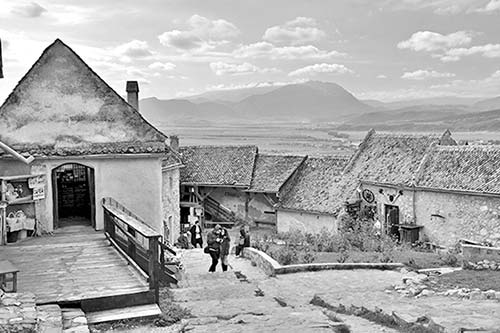
Sighișoara (sih-gih-SHO-rah, pop. 28,000) is Romania’s showpiece jewel-box town—the Transylvanian version of Rothenburg ob der Tauber or Český Krumlov. Sighișoara is the best-preserved of the original seven Saxon towns—it feels like a time warp. Sleep here if cuddly cobbles are your goal. Sighișoara is also a good home base for seeing the fortified churches, or as a stopover between Brașov and Maramureș.
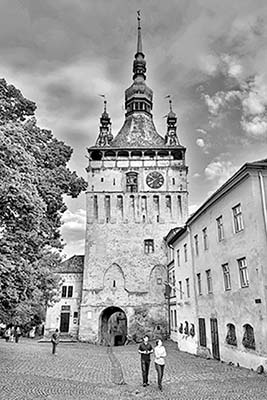
Visiting Sighișoara: The entire fortified hilltop of Sighișoara—perched on a little plateau halfway up a wooded hill—forms the town’s mighty Citadel. (Many tourists who come to Sighișoara ask, “So where’s the castle?” They don’t realize they’re already in it.) This walled area was both a home to craftsmen and a place of last refuge in case of invasions or raids—which were frequent. Nine of Sighișoara’s 15 pointy-topped watchtowers still survive—each one named for the guild that defended it.
Sighișoara’s icon is its Clock Tower—marked with symbols that proudly trumpet its special privileges. Inside, visitors spiral up and up on creaky wooden stairs, and peek out over the shoulders of the figures that change with the day of the week. At each landing are modest exhibits: a model of the town at its peak, and a display of the products of each of the main guilds that put this place on the map.
For a Dracula photo op, you’ll find a statue of Vlad Țepeș (who may have lived here briefly) on the square called Piața Muzeului, just above the Monastery Church; nearby, a garden terrace features views over the rooftops of Sighișoara’s workaday modern town.
From Sighișoara’s town center, a covered staircase—called the “Stairs of the Students”—leads 175 steps up to the hilltop. After every sixth step is a landing—a reminder to rest on the seventh day.
At the top, a school, a church, and a cemetery honor those original Saxon pioneers. German names fill the graveyard. And inside the church is a collection of artifacts from smaller German churches around the region—most now all but abandoned. You can see how, when austere Lutheranism reached Transylvania, frugal village churches kept their old Catholic altars but removed the showiest statues. Dowry chests were found squirrelled away in the attic of a village church, untouched for centuries. The tomb of a furrier recalls a time when it was cheaper to wear heavy cloaks on Sunday morning than to heat this huge space.
Sleeping in Sighișoara: Several quaint hotels and pensions line the cobbled streets of the Citadel. The biggest outfit is $ Hotel Sighișoara and its annex, the upscale $$ Fronius Residence (www.sighisoarahotels.ro). Or try the simpler $ Pension am Schneiderturm.
Eating in Sighișoara: In this touristy town, don’t go looking for a memorable meal—just pick the setting you enjoy best. I’ve eaten well at Casa cu Cerb (www.casacucerb.ro) and at the recommended Hotel Sighișoara.
▲▲Fortified Saxon Churches
Some of Romania’s best castles aren’t castles at all—they’re churches. While big towns like Sighișoara and Brașov were well protected, smaller Saxon settlements were vulnerable—especially after a devastating Tatar invasion in the 13th century. So what did the industrious settlers do? They fortified their churches.
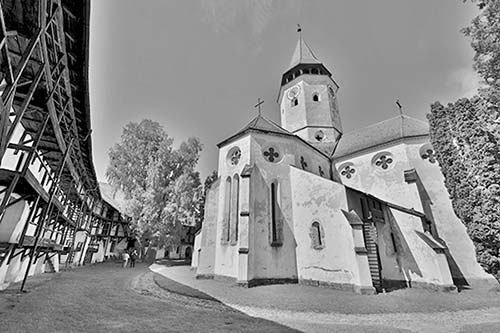
Dozens of fortified German churches—mostly built in the 13th and 14th centuries—are scattered across Transylvania. From the outside, they look like medieval fortresses: beefy bastions, stout lookout towers, narrow slits for raining arrows on enemies, distinctly Transylvanian trapezoidal turrets (to shed the heavy snowfall), and wraparound defensive galleries. While most Germans have long since left Romania, their heritage lives on here: The signs, the services, and the hymnals in the pews are all still in German. And periodically, some of these churches hold Lutheran services.
Visiting Fortified Churches: As you explore Transylvania—especially the area between Brașov and Sighișoara—you’ll drive past several of these fortified churches (a particularly fine example is in Saschiz). But a few are worth going a bit out of your way to see.
Close to Brașov, Prejmer (PREHZH-mehr) has a particularly well-preserved, half-timbered-and-whitewashed courtyard, showing how townspeople could flock into the protection of the church in times of crisis. Each cell was reserved for one family—notice that each rustic door is labeled. You can even see the little one-room “schoolhouse” tucked into the wall. (Nearby, Hărman has another well-preserved example.)
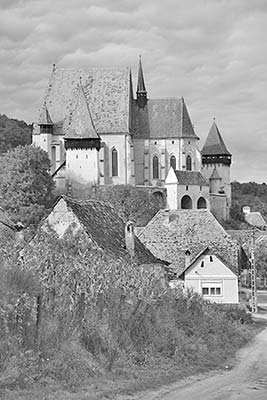
Between Sighișoara and Sibiu, Biertan (BEER-tahn) has one of the newest fortified churches (early 16th century)—illustrating the architecture style at its most evolved. Looking out from the top, you can see the surviving three concentric walls (of the original five) that protect the church. But stepping inside, you could be in any village church in medieval Germany. The original 16th-century stone pulpit still stands. And, like the Black Church in Brașov, each bank of pews is marked with the seal of a local guild. On the door to the left of the altar, the locksmiths’ guild showed off with an elaborate locking mechanism. In the church courtyard is a “divorce chamber,” where a quarrelling couple would be forced to share one bed, one pot, and one plate—for however long it took to resolve their differences. (From 1500 to 1800, only one divorce was recorded.)
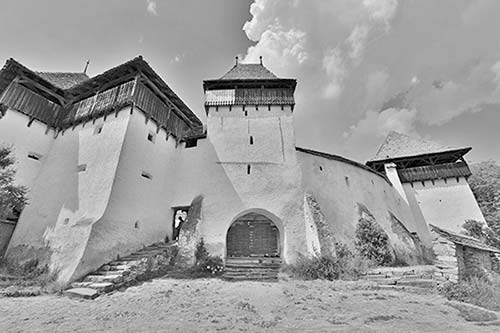
The whitewashed and ramshackle church of Viscri (VEE-scree, from the German Weiss Kirch—white church), hidden deep in the hills between Brașov and Sighișoara, is one of the oldest (c. 1100). Most of the pews don’t have backs. That’s because of the starched dresses and long headdresses of traditional village women, who wanted to avoid creases. The pews with backs were for the only families who were from elsewhere: the preacher’s and the teacher’s. The very humble dirt-street town of Viscri—where locals selling colorful woolens to tourists seems to be the only economy—is fun to explore. One of the houses belongs to (believe it or not) King Charles, who loves the anonymity this off-the-grid corner of Europe provides. Locals claim that then-Prince Charles and Prince Harry retreated here to hide from the press in the days following the 2011 royal wedding of William and Kate.
▲▲Sibiu
Charming Sibiu (SEE-bee-yoo) may be Romania’s most livable city. Sibiu began life as Hermannstadt, the biggest and most important of the original seven Saxon towns. And today, while only about one in a hundred residents has German ancestry, Sibiu’s tidy townscape still feels very Germanic. (In 2000, Sibiu elected Klaus Iohannis to be the first German mayor in Romania since World War II; beloved and hugely successful locally, he went on to be elected Romania’s president in 2014.) While not quite as practical a home base as Brașov or Sighișoara (it’s farther from Transylvania’s main sights), Sibiu is more appealing in its own right. It’s just the right size to be interesting yet still manageable (pop. 150,000), and the creaky, cobbled, atmospheric, and mostly traffic-free city center is a delightful place to simply hang out.
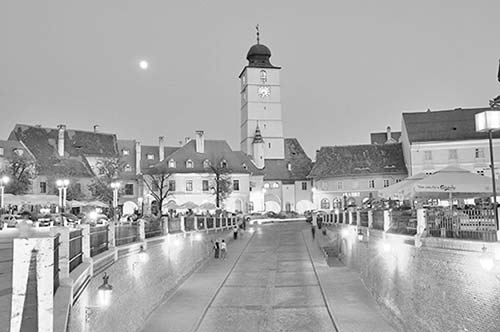
Visiting Sibiu: The atmospheric Upper Town core consists of three interlocking squares, each with a different personality: The aptly named Grand Square (Piaţa Mare) dominates an inviting and wide-open expanse fronted by stately municipal buildings (climb the Council Tower for sweeping views over town). Small Square (Piaţă Mică) is quaint, lined with al fresco cafés and a double-decker street plan that offers fine views from the “Liar’s Bridge.” And Huet Square (Piaţa Huet) is dominated by the gigantic German Protestant church—a reminder of Sibiu’s strong Saxon pedigree.
From Grand Square, a pedestrian street called Strada Nicolae Bălcescu bursts with life as it proceeds several blocks south through the city center. Where the traffic-free zone ends, turn left and follow Strada Cetății along a tranquil park that delineates the former moat—passing three stout fortified brick towers that stand as bold reminders of Sibiu’s militaristic past.
Beyond simply strolling its tidy core, Sibiu has some low-impact sightseeing options. Its giant, Neo-Byzantine-style ▲ Holy Trinity Cathedral is one of the country’s most impressive Romanian Orthodox churches. The ▲ Brukenthal Museum collects a wealth of both Romanian and European artwork (www.brukenthalmuseum.ro). And ASTRA, a Romanian literature and culture society, operates several museums of its own, including one of the country’s best ▲ open-air folk museums on the outskirts of town (www.muzeulastra.ro).
▲▲Corvin Castle (Castelul Corvinilor; a.k.a. Hunyadi/Hunedoara Castle)
Corvin Castle may be the most visually striking reminder that Transylvania was part of Hungary for most of its history. This is the home castle of János Hunyadi, the hero of the 15th-century fight against the Ottomans, and his son, Mátyás Corvinus, who became the only Hungarian king in more than 600 years of foreign rule (see here). With a certain “Hogwarts Gothic” quality, Corvin is also one of the most picturesque castles in a country where picturesque castles are a forté. When Budapest was building a faux-“Transylvanian” castle in their City Park in 1896, they modeled it after this one (see here). The evocative but mostly-empty castle sits unceremoniously along a gritty road on the outskirts of Hunedoara—about a 1.5-hour drive west of Sibiu (www.castelulcorvinilor.ro). While striking, it’s worth the long detour only if you’re a connoisseur of Transylvanian castles, Hungarian history, or both (or if you’re driving from central Transylvania to Timișoara or Hungary).
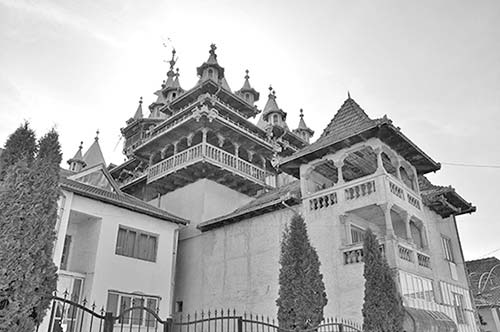
Nearby: The area around Hunedoara has one of Romania’s highest concentrations of “Gypsy palaces”: over-the-top-ostentatious mansions built just outside city limits by powerful members of the Roma community. Striking and controversial (and rumored to be funded through illegal activity), these are worth a fascinating drive-by to appreciate one more facet of the Romanian Roma experience. Be discreet about stopping or taking photos—the people living here often don’t appreciate unwanted attention. Several “Gypsy palaces” line up along road 687, at the south end of Hunedoara, on the way to Călan (beginning just east of Corvin Castle).
Cluj-Napoca
Cluj-Napoca—or simply Cluj (kloozh) for short—is Transylvania’s de facto capital and a major center of culture, universities, and business. While the compact historical core has its charm, the busy sprawl of Cluj feels like an urban jungle—making it challenging to appreciate on a quick visit. For that reason, Cluj ranks lower on my list of “must-visit” Transylvanian cities. But if you go, you’ll find a congested historic core that’s worth a stroll.
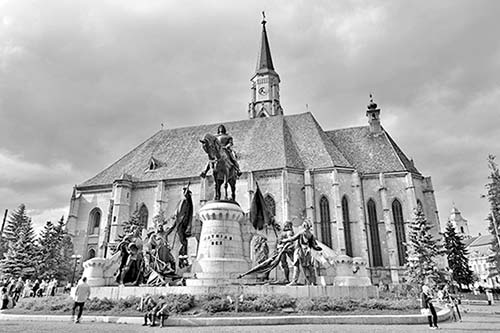
Visiting Cluj: The city’s landmarks reflect its multiethnic heritage—like Transylvania itself, it’s a mix of Romanian, Hungarian, and German. Towering high above Unity Square (Piața Unirii) is the Gothic steeple of ▲ St. Michael’s Church, built by Hungarian Catholics in the 15th century. Nearby stands a bulky statue of the Hungarian king Mátyás Corvinus—honoring Cluj’s substantial Hungarian-speaking minority (about 15 percent of the population). But just a couple of blocks to the east—as if to one-up the Hungarians—stands the skinny, slotted dome of the ▲ Dormition of the Theotokos Romanian Orthodox Cathedral, and out front, a statue of Avram Iancu, a proud Romanian who fought against Hungarian influence in Transylvania. Just to the northwest, between the Old Town and the river, is Cluj’s lively and inviting Central Park, with beautifully restored pavilions and the city’s cutting-edge soccer stadium. After hours, youthful Cluj is busy with nightlife. The university zone to the west—called Haşdeu—is edgy. Mellower and more inviting is the Museum Square (Piața Muzeului) pedestrian zone, tucked in the heart of the Old Town.
MARAMUREȘ
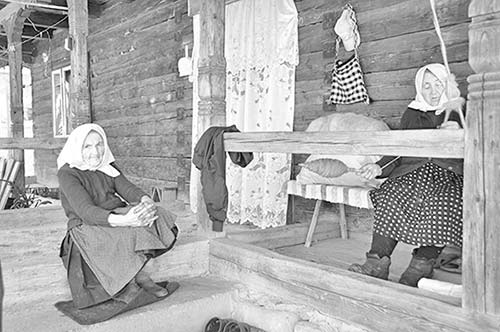
Maramureș (mah-rah-MOO-rehsh) is Europe’s most traditional corner. Here you’ll find time-warp locals farming fields, getting around by horse cart, and living agrarian—almost biblical—lifestyles, seemingly oblivious to the modern world just over the hills. This is the place in Romania to savor being far off the beaten track: Slow down, go for a lazy drive, pull over at anything that catches your eye, and marvel at the simplicity of it all. While it takes some effort to reach, Maramureș is well worth the effort for those who want to see a real, living open-air folk museum.
Orientation: To the north of sprawling Transylvania, the tourist’s Maramureș is small: a skinny sliver of land between the Gutâi Mountains and the Ukrainian border. From Transylvania, it’s a long drive up to the main city of Maramureș—dreary Baia Mare, with Europe’s third-tallest smokestack looming overhead—and even then, you’re still more than an hour away, over a twisty mountain pass. The best corner of Maramureș clusters around the town of Sighetu Marmației.
Local Guide: Particularly here in Maramureș, a good local guide is an essential investment to get the most of out of your time (and to make it worth the long drive here). Knowledgeable Teo Ivanciuc excels at putting you in touch with traditional lifestyles and giving them meaning (see here for contact info).
Sleeping in Maramureș: Expect rustic but cozy accommodations. While Sighetu Marmației has some big hotels, for the full Maramureș experience, stay in the countryside. Local guide $ Teo Ivanciuc, listed above, rents rooms (www.amizadil.com)—or can refer you to other locals who do. For a bigger but still-traditional option, try $ Hotel Grădina Morii, on the outskirts of Sighetu Marmației (www.hotelgradinamorii.ro).
Sighetu Marmației
With close to 40,000 inhabitants, “Sighet” (SEE-geht, as locals call it) is the area’s main town. Many locals don’t even call it Sighet—they just call it “the town.” With a scruffy main square (which hosts a daily farmers market) and dreary apartment blocks, Sighet is not particularly attractive—but you can’t avoid passing through several times on your visit to Maramureș.
Sighet was the birthplace of the Holocaust survivor, author, and Nobel Peace Prize laureate Elie Wiesel (whose novel Night is a definitive work of Holocaust literature). His birthplace—near a synagogue that the Nazis burned down in 1944 (now rebuilt)—is today a modest museum, with informational signs and a few artifacts. Wiesel lived in Sighet until he was taken away to Auschwitz at age 16.
Thanks to its remote location—closer to Budapest than to Bucharest—communist-era Sighet became a sort of “Siberia of Romania.” It was the site of the Securitate’s main prison, where dissenters, intellectuals, clergy, journalists, and political opponents of the regime were sent to rot, far from mainstream society. Many died. Today, the prison houses the ▲▲ Memorial for the Victims of Communism, with a modern, powerful, well-presented exhibit detailing the communist period in Romania (www.memorialsighet.ro).
Sighet also has a good Village Museum (with wooden houses) and an Ethnographic Museum, but you don’t really need them—Maramureș itself is the best sight.
▲▲▲Maramureș Joyriding
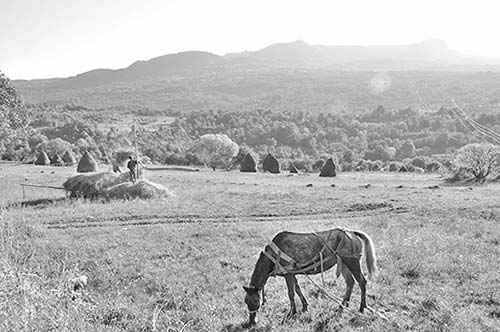
Maramureș is a rolling, pastoral landscape speckled with haystacks. Go for an aimless drive and just take it all in. Thanks to its rugged landscape and great distance from Bucharest, Maramureș avoided communist farm collectivization—so people still tend their small family plots by hand. Horse carts outnumber cars. Men in overalls and funny little straw hats pile hay onto their wooden wagons. Women wear big, puffy skirts just above the knee, babushkas on their heads, and baskets laden with heavy goods on their backs. While not ignorant of the modern world, Maramureș feels like Europe’s Amish Country, where centuries-old ways endure. It’s not for the benefit of tourists—it’s just their way of life.
Locals are very open and welcoming to curious travelers. This is an ideal place to be an amateur anthropologist...simply observe the way people live. (While you can do this on your own, it’s easier and more rewarding with a local guide.)
Wander through any village and peek into family compounds. Each one is marked with a huge, ceremonial wooden gateway—just big enough for a hay-loaded horse cart to trot through. (These gateways show off the Romanian knack for flaunting whatever wealth you have...even if it’s not much. Another status symbol is hanging colorful pots from tree branches.) The gates are carved with a whole iconography of local symbols: starburst (pagan sun worship), wolf teeth (protection), bull horns (masculinity), leaves (nature), and—most importantly—the “rope of life” motif, a helix-like design suggesting the continuity of life from generation to generation. Inside each courtyard, you’ll usually see—in addition to the main house—a humble barn with a paddock, a garden patch, and an old-fashioned, hand-pulled well.
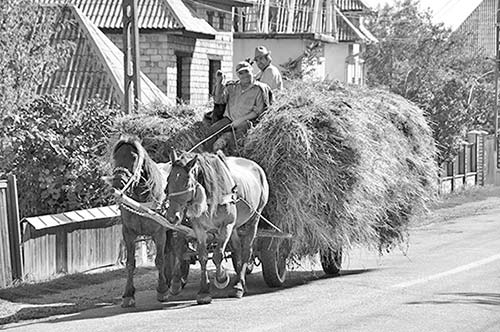
You’ll be surprised how often you’ll be invited inside. Many Maramureș residents are eager to show curious visitors their humble homes. Every house has a “show room,” where people collect their nicest belongings: colorful piles of blankets, pillows, and so on (often from the dowry of the woman of the house). This room is reserved exclusively for guests, while the family spends most of their time in much humbler surroundings.
It’s fine to simply wander around the area and see what you may stumble upon, but here are some areas you could focus on:
The little Cosău River Valley—especially the stretch between Călineşti and Budești (each with a wooden church)—is a picturesque throwback. The rushing river powers all manner of medieval industry. You’ll see carpet laundries, where wooden canals channel water into a naturally powered spin cycle. People use the flowing water to operate brandy stills, making their own plum firewater (horinca). Grist mills grind grains into both polenta and animal feed. And tucked deep inside family compounds, people spin wool into yarn and use creaky old looms to weave it into a loose fabric. That fabric is then taken to a fulling mill, where water-powered wooden hammers pound and pound and pound, mashing it into a dense, heavy material that’s used in the traditional winter costume.
For a scenic drive, take the high road between Călineşti and Văleni, offering high-altitude views over the rolling farm fields of Maramureș—and, if you’re lucky, hardworking farmers making haystacks.
From Văleni, you can coast down into Bârsana, which has the busy wood workshop of Toader Bârsan. Out in the courtyard, young lumberjacks artfully carve new wooden gates that look old. Toader himself sits on the stoop, hand-carving trinkets and wearing his distinctive little Maramureș straw hat. He loves to explain how he once met Hillary Clinton. (The wooden Bârsana monastery complex—described later—is at the edge of this town.)
Horse Market: Ocna Șugatag, a larger, functional town sitting on a plateau, is fairly dull—except on Thursday mornings, when the weekly livestock market makes it feel like a 17th-century car show. The people-watching is marvelous.
▲▲▲Merry Cemetery (Cimitirul Vesel)
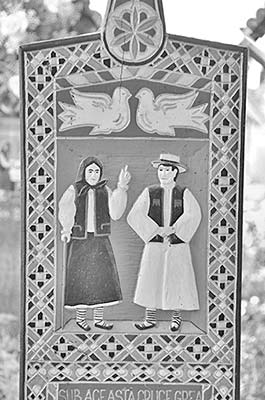
A 30-minute drive west of Sighet is one of Romania’s top cultural treasures: the Merry Cemetery. In 1935, woodcarver Stan Ioan Pătraș—inspired by a long-forgotten local tradition for colorful grave markers—began filling the Săpânţa village cemetery with a forest of technicolor memorials. Today there are more than 1,300—each one with a pointy roof to protect from the rain, a painting of the departed doing something they loved (or in the moment of death), and a whimsical poem. It’s all painted a cheery blue to match the heavens where the souls are headed. The Merry Cemetery is a poignant celebration of each individual’s life, a chronicle of village history, and an irreverent raspberry in the face of death.
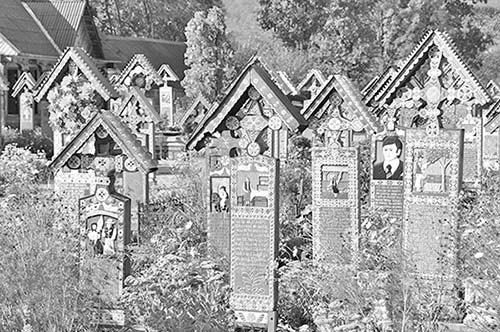
Although the cemetery is dubbed “merry,” many of the poems are downright morose. Tales of young lives cut short by tragic accidents, warriors mowed down in the prime of life, or people who simply never found happiness are a reminder that death, and life, are sometimes nothing to be cheerful about.
Even if you can’t read the poems, the images speak volumes: Weaver. Loved bikes. Television repairman. Soldier. Hit by a car. Struck by lightning. Nagging mother-in-law.
Tucked behind the church, you can find the grave of the artist who started it all, Stan Ioan Pătraș, who died in 1977. His apprentices carry on the work today.
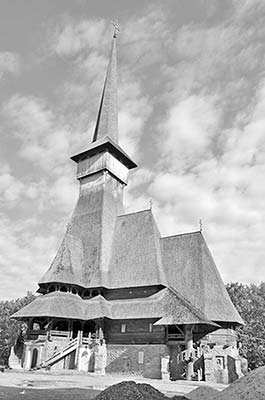
Nearby: Across the highway (and a half-mile back toward Sighet), Săpânţa Peri Monastery Church towers 250 feet tall. Completed in 2003, the church demonstrates that in Maramureș, wood remains as popular as it ever was. Inside, the technical mastery of Maramureș woodworkers is on display: chunky but precisely cut dovetailing keeps massive walls firmly in place, and the artistic shinglework cascades tidily from peak to eaves.
▲▲Wooden Churches
In Maramureș, surrounded by thickly forested mountains, wood is king. And some of the finest wooden churches in Europe are right here. These centuries-old structures resemble Norwegian stave churches but with less flair. They are graceful wooden pagodas with eye-pleasing lines angling up to the heavens. Inside, faded “wood frescoes” look like silly-puttied Sunday comics pages, stretched out and plastered against the wall—illustrating a medieval interpretation of Christianity. Dozens of these churches are scattered around the region, but most are generally closed to the public (local guides can usually get the key). Some of the churches are modern, including the Săpânţa Peri monastery church (near the Merry Cemetery, described earlier) and a striking ensemble of wooden ecclesiastical buildings at the Bârsana monastery complex (about a 30-minute drive southeast of Sighet).
BUCOVINA
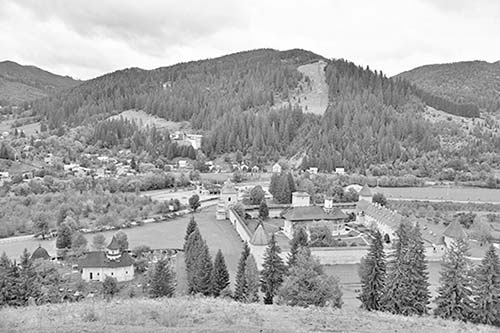
Within the large, eastern Romanian region of Moldavia sits the smaller sub-region called Bucovina (BOO-koh-vee-nah)—known for its traditional folk life, rolling Carpathian foothills, and, most of all, glorious painted monasteries. Unfortunately, Bucovina presents a time-consuming detour for travelers connecting the core of Transylvania with the folk-culture treasures of Maramureș. If you’re very tight on time, Bucovina is skippable, as there’s relatively little to see in this region beyond the monasteries. But if you can make the time, the monasteries are worth the trip.
Local Tours: If you make a special trip to Bucovina, invest in a tour to connect the painted monasteries (and other cultural sights) and bring them to life. Hello Bucovina, well run by Ciprian “Chip” Slemco, offers a range of well-designed tours, from a quick spin to the monasteries to multiday routes connecting Bucovina, the rest of Moldavia, and neighboring countries (www.hellobucovina.com).
▲▲Painted Monasteries of Bucovina
Remote and feisty Bucovina sits on the cusp of cultures. It’s just outside the Carpathian Mountains, squeezed between two would-be oppressors: The Hungarians of Transylvania to the west, and the Ottomans to the east. So maybe it’s no surprise that this stubbornly traditional region chose to cling fast to its faith in the rough-and-tumble 15th and 16th centuries, erecting dozens of fortified and vividly decorated monasteries. And today, many of the churches still survive—their outside walls slathered in colorful Byzantine-style fresco murals of saints and Bible stories.
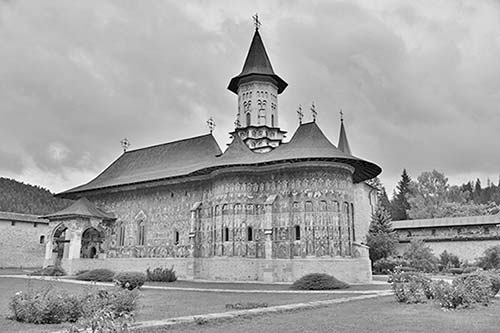
Background: The tradition of painted monasteries began during the reign of Prince Stephen the Great of Moldavia (1433-1504)—a contemporary of Vlad the Impaler of Wallachia, King Mátyás Corvinus of Hungary, and Sultan Mehmet the Conqueror of the Ottoman Empire. It was a frightening time, as big egos struggled for control of the Romanian lands—but Stephen the Great stubbornly asserted his Romanian Orthodox faith. According to legend, to celebrate his many military victories, Stephen would climb a mountain, shoot arrows into the rolling hills, and build a monastery where each arrow fell. Stephen’s son, Petru Rareș (1487-1546), was inspired by Renaissance frescoes on a visit to Florence and decided to decorate the monasteries with a similar technique. Their Moldavian subjects were very poor, very religious, and eager to do God’s work for low wages. And most people were illiterate, making the vivid illustrations a powerful educational tool. Of the dozens of monasteries built by Stephen the Great, nine still survive.
While each church has its own unique flourishes, all of them are wrapped in glorious, exceptionally well-preserved frescoes. You’ll see row after row of saintly icons, local religious figures, ancient philosophers, Bible stories, lush visions of heaven, terrifying depictions of hell, and epic historical scenes. Each church has its own distinctive coloring (for example, “Voroneț blue”).
Each church has a giant Last Judgment mural on its western wall. These are packed with symbolism that’s worth disentangling. (While this works best at Voroneț, the basic composition is standard across churches.) Striping the mural are five horizontal tiers (top to bottom):
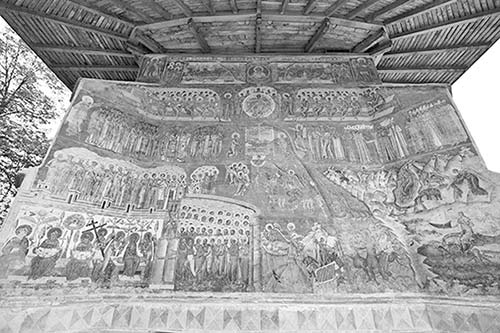
1. At the top sits God, flanked by 12 signs of the zodiac—merging Christian and pagan beliefs, driving home the eternal nature of God, and evoking the 12 Apostles.
2. Floating in a celestial bubble is Jesus—in his “furious vengeance” mode. He’s flanked by Mary, John the Baptist, and pews with 12 seated Apostles (with other saintly figures in the cheap seats behind them). From Jesus flows a river of flames that spreads out toward the lower-right corner...and the open mouth of a hideous, multiheaded Beelzebub.
3. A dove (the Holy Spirit) sits on the Throne of Judgment, flanked by Adam and Eve—who committed the original sin, and are now eyewitnesses to how it all turns out. To the right—cut off from the holiness by Jesus’ river of flames—are condemned pagans (depicted as the Moldavians’ historical enemies: Jews, Ottomans, Tatars, and Armenians). At the front of this pack, Moses gestures frantically with the Ten Commandments, hoping for some last-minute conversions. Meanwhile, to the left of the river of flames stand smug clumps of righteous believers: prophets, bishops, theologians, and so on.
4. Below the Holy Spirit, the hand of God holds the scales of judgment. Drama ensues, as angels and devils pile good and bad deeds on the scale in a struggle for the man’s soul. On the right, hideous beasts prowl a barren landscape where souls emerge from tombs—hoping to be rescued by the angels. Below them, a female figure lovingly cradles a ship—representing salvation even for those lost at sea. Meanwhile, on the left end of this tier is a saintly legion, halos aglow.
5. Finally, along the bottom level, we see (from left to right) the saved, kicking back in the garden of paradise (look for Mary, the archangels Gabriel and Michael, Abraham, Isaac, Jacob, the face of Moses’ burning bush, and the cross-toting thief who repented as he was crucified next to Jesus); the righteous waiting to enter heaven, led by St. Peter—about to use his key to open that golden door; and King David playing a traditional Moldavian instrument (one of many subtle references to local culture) in a mountainous terrain, flanked by the deaths of a righteous man (saved by angels) and a sinner (skewered by devils).
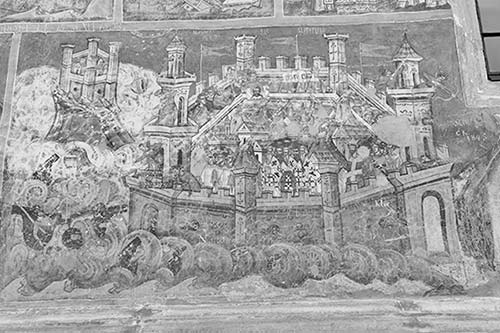
Elsewhere on the church, you’ll typically see a Tree of Jesse, tracing Jesus’ family tree from Mary all the way back to Jesse and King David. Another standard Orthodox theme is the Deesis, with Christ Pantocrator (“Ruler of All”) enthroned in heaven and surrounded by saints. And many churches illustrate the Christian defense of Constantinople (today’s Istanbul) during the Persian siege of 626. The “Persians” are dressed in Turkish clothes...a not-so-subtle reminder that these monasteries were built as bastions of Christendom against the rising tide of Islam.
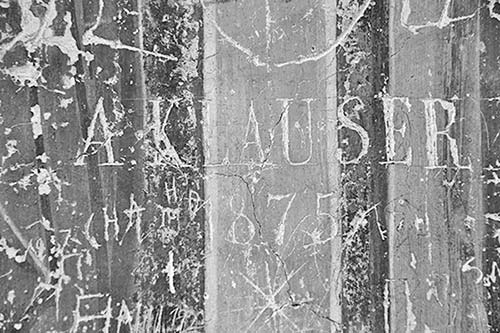
You’ll also see lots of unofficial decoration. Bucovina’s painted monasteries were a popular destination in the Romantic Age of the late 19th century, when Bucovina was part of the Habsburg Empire. Mostly German-speaking tourists scratched their own initials into the colorful plaster—century-old-graffiti that’s still readable.
Assuming there are no services going on, you can enter the church itself. People enter at the porch—traditionally, the unbaptized could go no farther. Inside, each church is divided into three sections, representing the holy trinity. First comes the pro-nous (pro-nave—sometimes outside on smaller churches), where regular people worshipped. Then comes the nous (nave), with benches for VIPs and a fresco of the donor who built the church. Finally, there’s the altar area, with the iconostasis. Each section is richly decorated with golden icons and colorful frescoes.
You may see a priest or nun walking around the courtyard, knocking on a piece of wood with a mallet. This means it’s time for worship—and for tourists to leave the church interior.
Visiting the Painted Monasteries: The best painted monasteries are near the town of Gura Humorului (pop. 12,000). On a quick, targeted visit, you can simply visit Voroneț (the best one overall) and Humor—each about a 10-minute drive from Gura Humorului (in opposite directions). With more time, do a loop through the hills north of Gura Humorului to also see Moldovița and Sucevița. I’ve listed these in the order of an all-day loop.
Voroneț Monastery (voh-roh-NETS, from 1487) is the most striking and most famous—sometimes called the “Sistine Chapel of the East.” Its vivid frescoes—with their distinctive “Voroneț blue” hue—are sumptuous and richly detailed. Voroneț also has the finest Last Judgment fresco. You could stare at it for hours, picking out details (see “Background,” earlier). If you see only one painted monastery, make it this one.
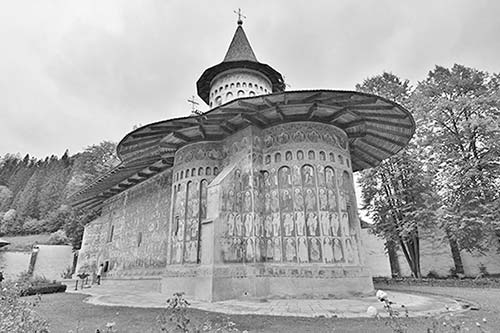
Moldovița Monastery (MOHL-doh-veet-sah, from 1532) is less crowded, filling a serene courtyard, and has art nearly as impressive as Voroneț’s. Moldovița has a particularly evocative fresco showing the siege of Constantinople, a fine Tree of Jesse mural, and the most evident examples of “graffiti” scratched into the plaster by 19th-century tourists (especially under the porch).
Between Moldovița and Sucevița, you’ll twist up and over a dramatic mountain pass with great views.
Sucevița Monastery (SOO-cheh-veet-sah) was the final painted monastery built (1581), with the best-preserved fortifications and the biggest, richest interior. Even more than the others, from the outside it feels more like a fortress than a monastery. The frescoes include a particularly exquisite Ladder to Paradise (or Jacob’s Ladder): The angled ladder (where each rung represents a holy virtue required to reach heaven) slices the composition in half, with a heavenly host of angels at the top and, below, grotesque beasts torturing sinners who missed a rung. If you’re in shape, hike up the steep hill behind for a fine view down over the monastery, the valley, and the wooded hills.
Just west of Sucevița, and on the way to Humor, you’ll pass through the workaday town of Marginea—famous for its many black pottery workshops.
Humor Monastery (a.k.a. Humorului, hoo-moo-ROO-lee, from 1530) is sleepier and lower impact, with a lone fortified tower that stands taller than the church itself. Its Last Judgment fresco curls up under the roofline of the porch, protected from the elements.
Sleeping near the Painted Monasteries: The handiest home base is the functional crossroads town of Gura Humorului, which has several big hotels and smaller guesthouses. To sleep in the countryside, try $ Casa Bunicilor, a rustic but comfortable retreat a few minutes’ drive out of town, near the Humor Monastery (www.casabunicilor.com).
Nearby: Suceava (soo-cheh-AH-vah, pop. 90,000), Bucovina’s largest city, is about 25 miles to the east. It’s workable as a home base, but its sparse sights (an empty-feeling old fortress and a mediocre open-air folk museum) and its distance from the monasteries make it less appealing than Gura Humorului.