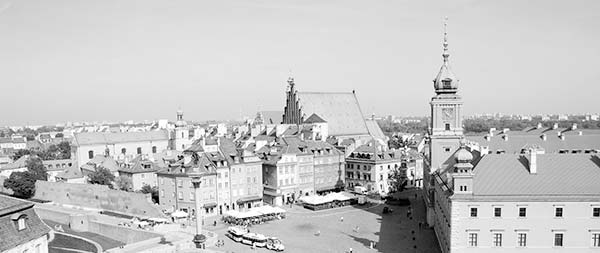
WARSAW
Warszawa
NEAR PALM TREE CIRCLE (NOWY ŚWIAT AND JERUSALEM AVENUE)
NEAR PALM TREE CIRCLE (NOWY ŚWIAT AND JERUSALEM AVENUE)
IN POWIŚLE, NEAR THE RIVERBANK
OTHER HIP, POSTINDUSTRIAL HANGOUTS
Warsaw (Warszawa, vah-SHAH-vah in Polish) is Poland’s capital and biggest city. It’s huge, famous, and important...but not particularly romantic. If you’re looking for Old World quaintness, head for Kraków. If you’re tickled by spires and domes, get to Prague. But if you want to experience a truly 21st-century city, Warsaw’s your place.
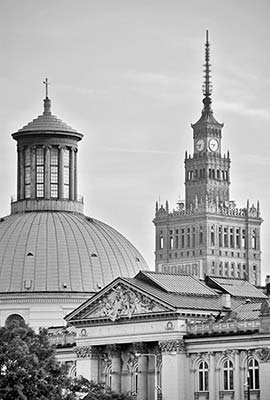
A decade ago, Warsaw was dreary and uninviting. But things have changed here dramatically. The Varsovians (as locals are called) are chic and sophisticated, and here by choice; according to some studies, as many as 8 out of every 10 Varsovians weren’t born in Warsaw. Young professionals dress and dine as well as the Parisians and Milanese, and they’ve mastered the art of navigating an urban jungle in heels or a man bun. Today’s Warsaw has gleaming new office towers, glitzy shopping malls, swarms of international businesspeople, inviting parks and pedestrian zones, hipster culture to rival Brooklyn or Portland, and a gourmet coffee shop or designer pastry store on every corner.
Stroll down revitalized boulevards that evoke the city’s glory days, pausing at an outdoor café to sip coffee and nibble at a pączek (the classic Polish jelly doughnut). Drop by a leafy park for an al fresco Chopin concert, packed with patriotic Poles. Commune with the soul of Poland at the city’s many state-of-the-art museums—take your pick: Poland’s artists (National Museum), its favorite composer (Chopin Museum), its dramatic history (Museum of Warsaw and Warsaw Uprising Museum), its dedication to the sciences (Copernicus Science Center), and its Jewish story (Museum of the History of Polish Jews). You can also dig into one of Europe’s most interesting foodie scenes, where a world of wildly creative chefs open new restaurants all the time—at budget prices. If you picture a dreary metropolis, think again. Warsaw is full of surprises.
PLANNING YOUR TIME
One day is the absolute minimum to get a quick taste of Warsaw—but you’ll have to sightsee very selectively. The city can easily fill two or three days, and even then you’ll need to pick and choose. Review your museum-going options to decide how much time you need.
No matter how long you stay, get your bearings by taking a stroll through Polish history, following my Royal Way Walk from Palm Tree Circle to the Old Town. With more time, extend your stroll on my Old Town Walk for a sampling of Warsaw’s historic core. Then visit other sights according to your interests and time: Jewish history, the Warsaw Uprising, Polish artists, royalty, hands-on science gizmos, hipster hangouts, or Chopin. To slow down and take a break from the city, relax in Łazienki Park.
For dinner, buck the tourist trend by leaving the overpriced Old Town and riding a tram or the Metro, or taking a taxi or an Uber to the hip Śródmieście district, which has the highest concentration of quality eateries.
Orientation to Warsaw
Warsaw sprawls with 1.8 million residents. Everything is on a big scale—it seems to take forever to walk just a few “short” blocks. Get comfortable with public transportation (or taxis or Uber) and plan your sightseeing to avoid backtracking.
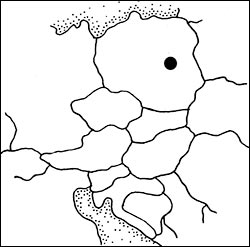
The tourist’s Warsaw blankets a mild hill on the west bank of the Vistula River (in Polish: Wisła, VEES-wah). To break things into manageable chunks, I think of the city as three major zones (from north to south):
The Old Town and Royal Way, at Warsaw’s northern edge, is the most touristy area. Here you’ll find the Old Town (Stare Miasto, STAH-reh mee-AH-stoh), the adjacent and nearly-as-old New Town (Nowe Miasto, NOH-vay mee-AH-stoh), the Royal Castle on Castle Square (Plac Zamkowy, plahts zahm-KOH-veh), and the historical artery called the Royal Way (Trakt Królewski, shwock kroh-LEHV-skee). This bustling strip has strollable boulevards, genteel cafés, expansive squares and parks, and stately landmarks both historic and faux-historic (much of this area was rebuilt after World War II).
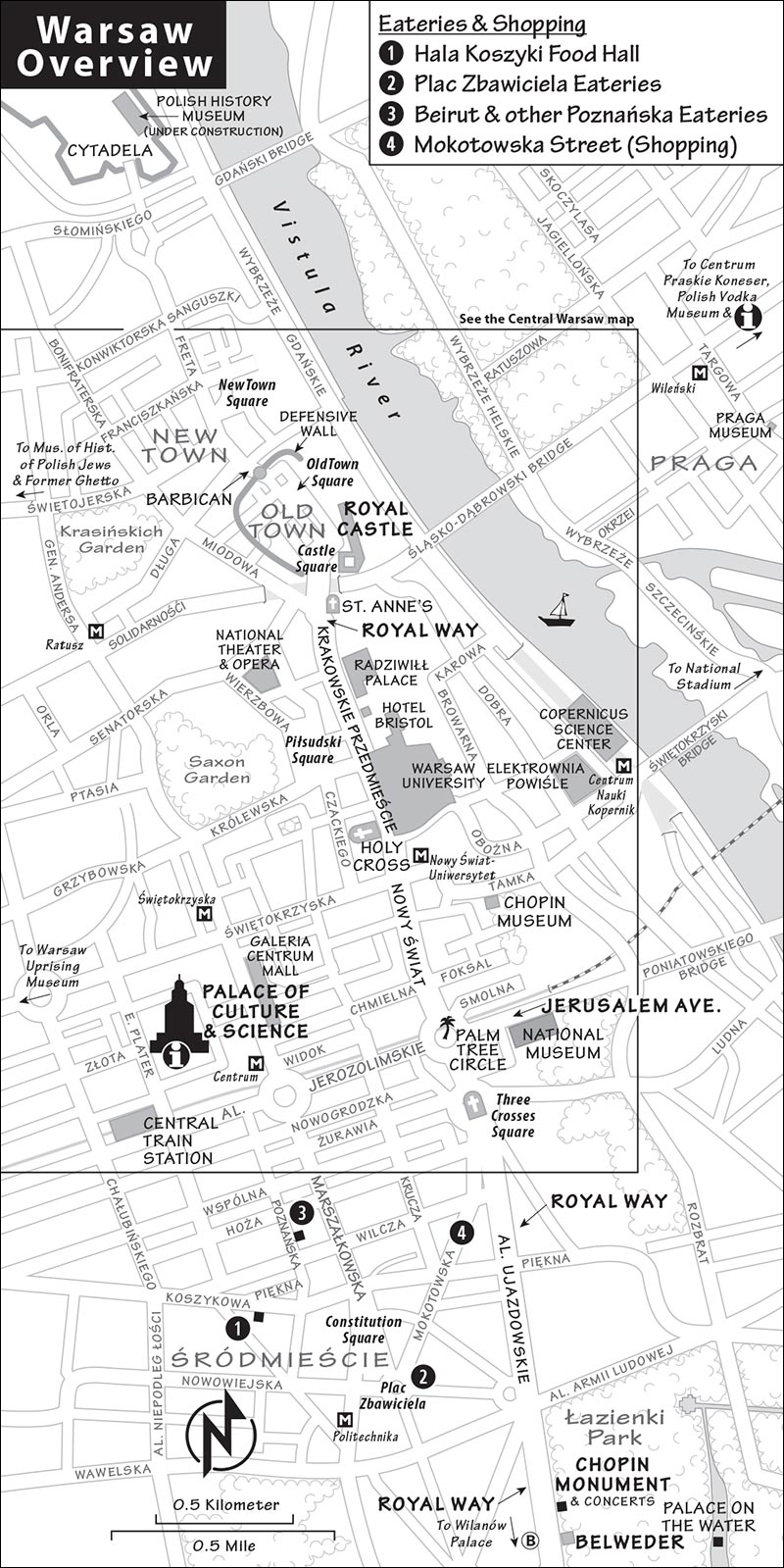
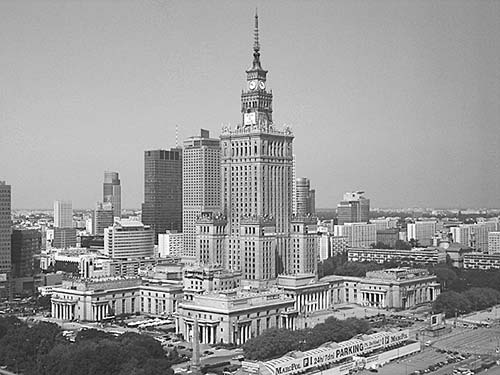
“Palm Tree Circle” is my nickname for the center of the city, near the traffic circle with a fake palm tree—where busy Jerusalem Avenue (Aleja Jerozolimskie, ah-LAY-uh yeh-ro-zoh-LIM-skyeh) crosses the shopping street called Nowy Świat (NOH-veh SHVEE-aht). Nearby are some good accommodations, trendy upscale eateries, pedestrianized shopping streets and glitzy malls, the National Museum (Polish art), the Palace of Culture and Science (communist-era landmark skyscraper), and the central train station (Warszawa Centralna).
The Śródmieście (SHROD-myesh-cheh, “Downtown”) district, to the south, is a mostly residential zone with the city’s best restaurant and nightlife scene and some good accommodations. The only real sight here is lush Łazienki Park, with its summertime al fresco Chopin concerts.
In sprawling Warsaw, many more sights—including some major ones—lie outside these three areas, but all are within a long walk or a short ride on public transit or in a taxi/Uber. These include the Museum of the History of Polish Jews and the Warsaw Uprising Museum (to the west) and the Copernicus Science Center (to the east, along the river). Across the river is the hardscrabble but gentrifying Praga district.
TOURIST INFORMATION
Warsaw’s TI is helpful, but the locations are less than handy: one at the Palace of Culture and Science (enter on the side facing the train station, on Emilii Plater; daily 9:00-19:00, Oct-April until 18:00) and the other across the river in Praga, at the trendy Koneser Center (same hours, Plac Konesera 2). There’s also a privately run TI partner on Castle Square, but it’s a souvenir shop first and far less helpful—drop by here only if you want to grab some brochures (Plac Zamkowy 1/13). The general information number for all TIs is +48 503 033 720. All information is also available online (www.warsawtour.pl).
Sightseeing Pass: Busy sightseers might consider the Warsaw Pass, which covers admission to most major sights, the best hop-on, hop-off bus tour, and a Chopin concert, but no city transit (149 zł/24 hours, 199 zł/48 hours, 239 zł/72 hours, sold at the TI). If your museum-going plans are ambitious, do the math.
ARRIVAL IN WARSAW
By Train
Most trains arrive at the central train station (Warszawa Centralna, vah-SHAH-vah tsehn-TRAHL-nah), a communist-era monstrosity that has been renovated with surprising grace. (Don’t get off at Warszawa Zachodnia or Warszawa Wschodnia—the Western and Eastern stations, respectively—which are far from the tourist area.)
Warszawa Centralna can be tricky to navigate: Three parallel concourses run across the tracks, accessed by three different sets of escalators from each platform, creating a subterranean maze (with well-signed lockers, ticket windows, and lots of shops and eateries). Be patient: To get your bearings, ride up on your platform’s middle escalator, then look for signs to the wide-open main hall (follow signs for hala główna/main hall). Here you’ll find a row of ticket windows, eateries, waiting areas (upstairs), and (from outside, near the taxi stand) views of the adjacent Palace of Culture and Science and Złota 44 skyscrapers. If you have a little time to kill, walk across the street to the super-modern Złote Tarasy shopping mall.
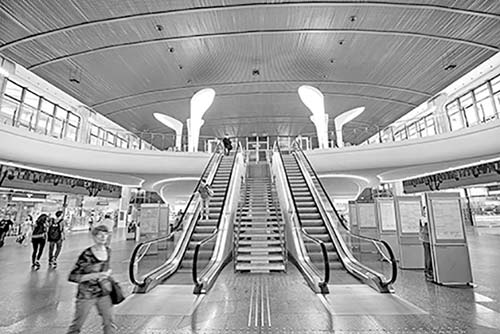
Getting into Town: To reach the tourist zone and most of my recommended hotels, a taxi/Uber is the easiest choice, while the bus is more economical (but more challenging to find).
Taxis wait outside the main hall. To get a fair fare, look for one with a company logo and telephone number, and ask for an estimate up front (the ride should cost no more than about 20-30 zł for most of my recommended hotels). You can also order an Uber, but it can be tricky to identify a pick-up location near the station—consider walking out to a busy road with pullouts and ordering it from there.
From the station, bus #175 or #128 takes you to the Royal Way and Old Town in about 10 minutes. (Credit-card-operated ticket machines are at major bus stops and often on board; for details on getting tickets, see “Getting Around Warsaw,” later.) You can catch either bus in front of the skyscraper with the Hotel Marriott, across busy Jerusalem Avenue from the station. Because it’s hard to find this stop from the station’s mazelike corridors, it’s probably simplest to ascend to street level (on the Aleja Jerozolimskie side) and cross surface streets to reach the well-marked Marriott tower. Both buses terminate just off Piłsudski Square, a five-minute walk from the Old Town. Bus #160 also goes to the Old Town (though not via the Royal Way), but it departs from the opposite side of the station: To find its stop from the main hall, go out the side door toward Ulica Emilii Plater.
Buying Train Tickets: Lining one wall of the main arrival hall (hala główna) are 16 ticket windows; window #1 is for information. There are also ticket machines throughout the station, and you can book online at Intercity.pl [URL inactive]. If buying tickets in person, allow plenty of time to wait in line. At one corner of the main hall, the InfoDworzec office can help you get oriented to the station but doesn’t sell tickets (daily 7:00-21:00). Remember: Even if you have a rail pass, a reservation is still required on many express trains (including EIC trains to Kraków or Gdańsk). If you’re not sure, ask. To get to your train, first find your way to the right platform (peron, as noted on schedules), then keep an eye on both tracks (tor) for your train.
By Plane
Fryderyk Chopin International Airport
Warsaw’s Fryderyk Chopin International Airport (Lotnisko Chopina Waszawa, code: WAW, www.lotnisko-chopina.pl) is about six miles southwest of the center.
To get into town, you can take the train or bus (similar prices, around 5 zł). The train is faster, but the bus makes more stops in the city center and may get you closer to your hotel. From the arrivals area, just follow signs to either option.
The train departs about twice hourly and takes 20-30 minutes. The line into town is operated by two different companies (SKM and KM)—take whichever one departs first. Be ready for your stop: Half the trains make fewer stops and take you to Centralna station; others make a few more stops and use the Warszawa Śródmieście station—which feeds into the same underground passages as Centralna (these trains also continue one more stop to the Warszawa Powiśle station, which is closer to Nowy Świat and nearby hotels). Whether arriving at Centralna station or Warszawa Śródmieście, see the “By Train” arrival instructions, earlier.
Bus #175 departs from the curb in front of arrivals every 15-20 minutes and runs into the city center (Centralna station, the Royal Way, and Piłsudski Square near the Old Town, 30-45 minutes depending on traffic; buy ticket from machine before you board).
For a taxi, head to the official taxi stand. Taxis have a fixed rate of about 50 zł to most downtown hotels (trip takes 30 minutes depending on traffic). It’s generally cheaper to order an Uber (except at very busy times).
Modlin Airport
Modlin Airport (code: WMI, www.modlinairport.pl), about 21 miles northwest of the city center, primarily serves budget airlines (especially Ryanair). A taxi into downtown Warsaw should be about 150 zł (the maximum legitimate fare is 200 zł, or 250 zł at night). There may be a direct bus operated by Flixbus (www.flixbus.com), or you can take the well-coordinated bus-plus-train connection: Take a shuttle bus to Modlin’s main train station, then hop on a train to Warszawa Centralna station (about 20 zł total, runs about hourly, 1-1.5 hours total, www.mazowieckie.com.pl).
GETTING AROUND WARSAW
Sprawling Warsaw can be exhausting to get around. Get comfortable with public transportation and taxis/Uber.
By Public Transit: Warsaw’s efficient, affordable public transportation network includes buses, trams, and the two-line Metro (transit info: www.wtp.waw.pl). Everything is covered by the same tickets. Most rides within the tourist zone take less than 20 minutes, so the default is the 3.40-zł 20-minute ticket (bilet 20-minutowy). For longer journeys, a single ticket (bilet jednorazowy) covers any trip up to 75 minutes for 4.40 zł. A 24-hour travelcard (bilet dobowy)—which pays for itself if you take at least five trips—costs 15 zł. Ticket machines, which are at most major stops and on board many buses and trams, are easy to use; they have English instructions and take credit cards. Be sure to validate your ticket as you board by inserting it into the little yellow box. You can also buy tickets on the Jakdojade app, which has a route finder.
Most of the city’s major attractions line up on a single axis, the Royal Way, which is served by several different buses (but no trams). Bus #175—particularly useful on arrival—links Chopin Airport, the central train station, the Royal Way, and the Old Town (it terminates at Piłsudski Square, about a five-minute walk from Castle Square). Once you’re in town, the designed-for-tourists bus #180 conveniently connects virtually all the significant sights and neighborhoods: the former Jewish Ghetto and Museum of the History of Polish Jews, Castle Square/the Old Town, the Royal Way, Łazienki Park, and Wilanów Palace (south of the center). This user-friendly bus lists sights in English on the posted schedule inside (other buses don’t). Bus #111 is another handy option for those going to the Jewish Museum; from there, it runs parallel to the bus #180 route, cutting over to the Royal Way just south of Piłsudski Square, then down to Nowy Świat, before turning off to the east with a stop in front of the National Museum and then over the river.
Bus routes beginning with “E” (marked in red on schedules) are express, so they go long distances without stopping (these don’t run July-Aug). Note that on Saturdays and Sundays in summer (May-Sept), the Nowy Świat-Krakowskie Przedmieście section of the Royal Way is closed to traffic, so the above routes detour along a parallel street.
Trams are useful for reaching the trendy Śródmieście district in the south. Several trams run along the north-south Marszałkowska corridor, with stops at Plac Konstytucji (Constitution Square, the heart of the Śródmieście) and at Plac Zbawiciela (with a cluster of great eateries).
Warsaw’s two-line Metro system, designed for commuters, can be useful for hops between certain sights—especially line 2, which runs east to west; its most convenient stops are Rondo Daszyńskiego (near the Warsaw Uprising Museum), Świętokrzyska (where you can transfer to line 1), Nowy Świat-Uniwersytet (in the middle of the Royal Way, near the Copernicus Monument), Centrum Nauki Kopernik (on the riverbank, near the Copernicus Science Center), Stadion Narodowy (National Stadium, across the river), and Wileński (near the heart of the Praga district). The north-south line 1, which stops at the train station (Centrum), is less useful for visitors.
By Taxi: Use only cabs that are clearly marked with a company logo and telephone number; official cabs have a mermaid decal on the front door (or call your own: Locals like City Taxi, +48 19459; MPT Radio Taxi, +48 19191; or Ele taxi, +48 22 811 1111). All official taxis have similar rates: 8 zł to start, then 3 zł per kilometer (4.50 zł after 22:00, on weekends, or in the suburbs). Uber also works well in Warsaw and is typically cheaper than a taxi.
Tours in Warsaw
Walking Tours
Each year, new companies crop up offering walking tours in Warsaw. These tend to have one of two approaches: a “free” tour of the main sights (with generous tipping expected); or communism-themed tours, often with a ride to a gloomy apartment-block area for a taste of the Red old days. The TI and most hotels have brochures. Survey the latest offerings, do some homework (check online reviews), and pick a tour that suits your interests.
Private Guides
Having a talented local historian as your guide in this city, with such a complex and powerful story to tell, greatly enhances your experience. I’ve worked with two great guides, who charge around 750 zł for a four-hour walking tour: Jola Postrzygacz (+48 602 252 707, jolanta@postrzygacz.pl) and Hubert Pawlik (various tours, includes options by car, see descriptions on his website, +48 502 298 105, www.warsaw-citytours.com [URL inactive], guide@warsaw-citytours.com).
Food Tours
Eat Polska does excellent food and vodka tours around this fast-changing foodie mecca. A top-quality guide will take your small group to a variety of restaurants and bars around the city, with tasting samples at each one. The guides provide insightful context about what you’re tasting, making this educational about both Polish cuisine and Polish culture in general. If you have a serious interest in food, this is the most worthwhile tour in town (food tours typically daily at 13:00, vodka tours with food pairings daily at 17:00, either tour is about 400 zł/person, get details and book at www.eatpolska.com).
Bus Tours
Warsaw’s spread-out landscape makes it a natural for a hop-on, hop-off bus—although heavy traffic may make you wish you’d taken a tram or the Metro instead. The best choice is CitySightseeing, with red buses (85 zł/24 hours, 90 zł/48 hours, two routes). Skip City-Tour (yellow buses), which is less reliable.
Walks in Warsaw
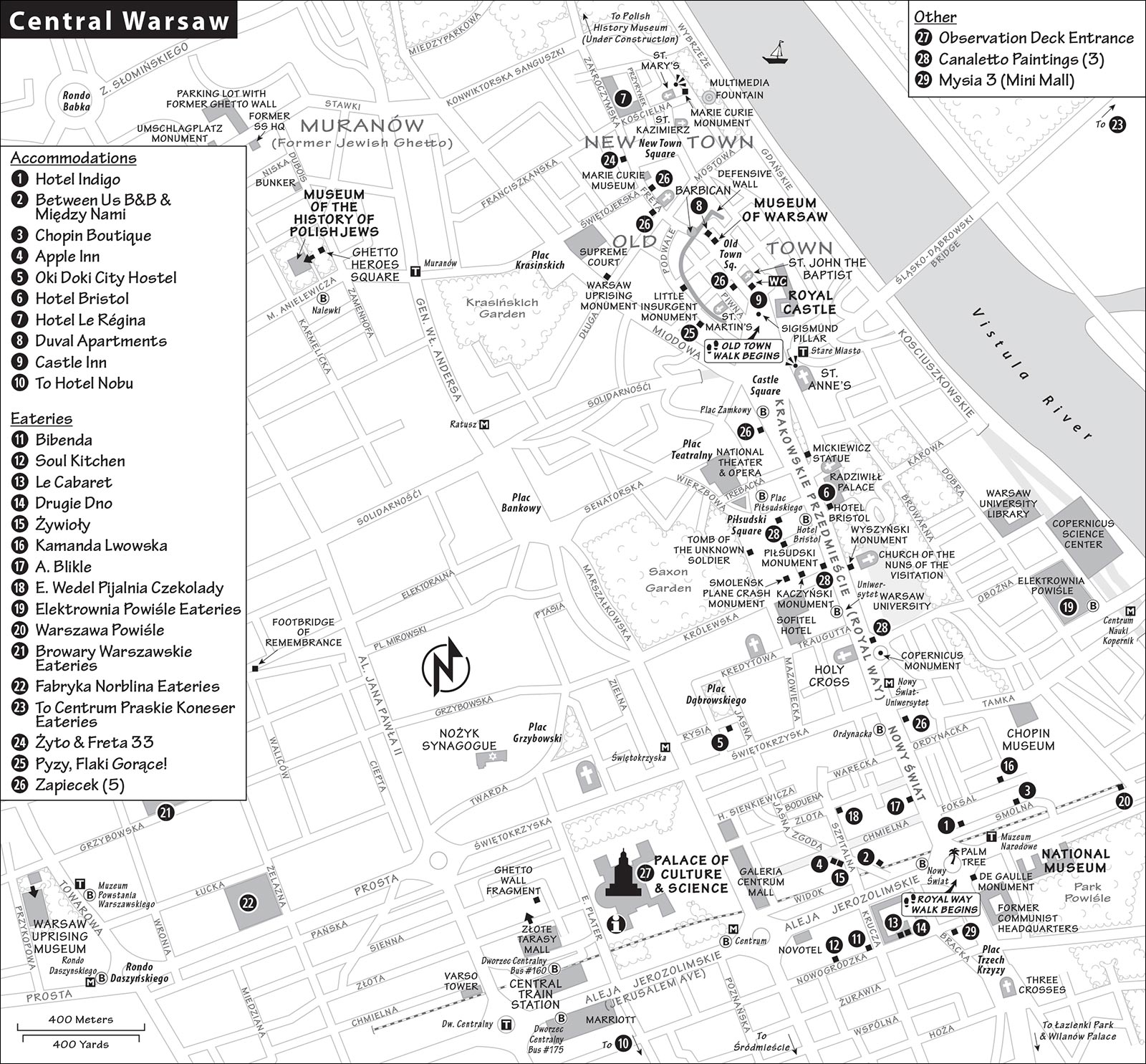
I’ve outlined two self-guided walks in Warsaw. The Royal Way Walk covers the most interesting one-mile section of the Royal Way—in the heart of the city, from Palm Tree Circle to Castle Square. It’s followed by the Old Town Walk, which starts in Castle Square and explores Warsaw’s Old Town, ending in the adjacent New Town. Allow about two hours to do both walks back-to-back.
ROYAL WAY WALK
The Royal Way (Trakt Królewski) is the six-mile route that the kings of Poland used to travel from their main residence (at Castle Square in the Old Town) to their summer home (Wilanów Palace, south of the center and not worth visiting). This busy boulevard changes names from Nowy Świat to Krakowskie Przedmieście as it stretches from south to north. Not counting sightseeing stops, figure about 30 minutes to walk along Nowy Świat (“Part 1”), then another 45 minutes along Krakowskie Przedmieście to the Old Town (“Part 2”).
Part 1: Palm Tree Circle and Nowy Świat
• Start this walk at the traffic circle officially named for Charles de Gaulle but colloquially known as...
Palm Tree Circle
This is one of the city’s main intersections, marked by the iconic palm tree. Stand near the communist-era monument under the spruce trees (on the curb, kitty-corner from the biggest building) and get oriented.
You’re standing at the intersection of two major boulevards: Nowy Świat (where we’re heading next) and Jerusalem Avenue (Aleja Jerozolimskie, which heads from Warszawa Centralna station across the river). This street once led to a Jewish settlement called New Jerusalem. Like so much else in Warsaw, it’s changed names many times. Between the World Wars, it became “May 3rd Avenue,” celebrating Poland’s 1791 constitution (Europe’s first). But this was too nationalistic for the occupying Nazis, who called it simply Bahnhofstrasse (“Train Station Street”). Then the communists switched it back to “Jerusalem,” strangely disregarding the religious connotations of that name. (Come on, guys—what about a good, old-fashioned “Stalin Avenue”?) The strikingly wide boulevards were part of the city’s post-WWII Soviet rebuilding. Communist urban planners felt that eight-to-twelve-lane roads were ideal for worker pageantry like big May Day parades...and, when the workers weren’t happy, for Soviet tanks to thunder around, maintaining order.
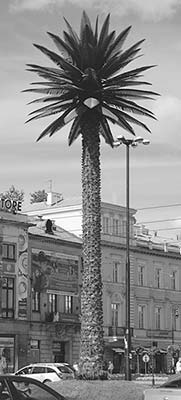
You can’t miss the giant palm tree in the middle of Jerusalem Avenue. When a local artist went to the real Jerusalem, she was struck by the many palm trees—and wanted to erect one along Warsaw’s own little stretch of “Jerusalem.” This artificial palm tree went up in 2002 as a temporary installation. It was highly controversial, dividing the neighborhood. One snowy winter day, the pro-palm tree faction—who appreciated the way the tree spiced up this otherwise dreary metropolis—camped out here in bikinis and beachwear to show their support. They prevailed, and the tree is now a permanent fixture.
The big, blocky building across the street (on the left side of the intersection) was the headquarters of the Communist Party, built in 1948. Nowy Świat translates as “New World,” inspiring a popular communist-era joke: What do you see when you turn your back on the Communist Party? A “New World.” Ironically, when the economy was privatized in 1991, this building became home to Poland’s stock exchange. And then the country’s only dealership for Ferraris—certainly not an automobile for the proletariat—moved in downstairs.
On the corner in front of the former Communist Party HQ, a statue of Charles de Gaulle strides confidently up the street. A gift from the government of France, this celebrates the military tactician who came to Warsaw’s rescue when the Red Army invaded from the USSR after World War I.
To the left of the Communist Party building is the vast National Museum—a good place for a fascinating lesson in Polish art (see the self-guided tour later, under “Sights in Warsaw”).
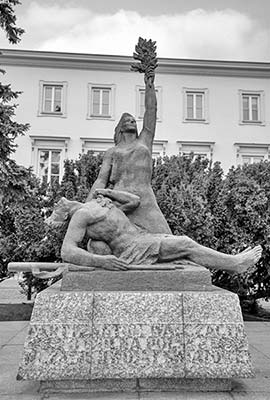
Before walking down Nowy Świat, notice the small but powerful monument near you. In 1956, this was dedicated to the “Poles who fought for People’s Poland”—with a strong communist connotation. In a classic example of Socialist Realism, the communists appropriated a religious theme that Poles were inclined to embrace (this pietà composition)...and politicized it. But in 2014, the statue was rededicated to the “partyzantom who fought for free Poland in World War II.” “Partisan” was a bad word in the 1950s, when it was used to describe the soldiers of the Polish Home Army—which fought against both the Nazis and the Soviets.
• From here, turn your back to the Communist Party building and head into a new world—down Nowy Świat—to the first intersection. As you stroll, notice how massive, intense Warsaw suddenly becomes more intimate and accessible.
Nowy Świat
This charming shopping boulevard, lined with boutiques, cafés, and restaurants, feels upscale and elegant. Before World War II, Nowy Świat was Warsaw’s most popular neighborhood. And today, once again, rents are higher here than anywhere else in town. While most tourists flock into the Old Town, Varsovians and visiting businesspeople prefer this zone and farther south. The city has worked hard to revitalize this strip with broad sidewalks, flower boxes, old-time lampposts, and strict restrictions on traffic (only buses and taxis—and on summer weekends, it’s entirely traffic-free).
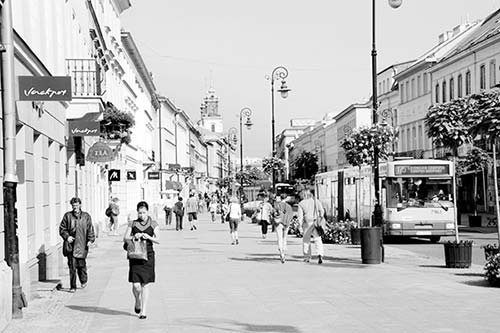
Look down the street and notice the harmonious architecture. In the 1920s, this street was anything but cohesive: an eclectic and decadent strip of Art Deco facades, full of individualism. Rather than rebuild in that “trouble-causing” style, the communists used an idealized, more conservative, Neoclassical style, which feels more like the 1820s than the 1920s.
Ulica Chmielna, the first street to the left, is an appealing pedestrian street leading to Emil Wedel’s chocolate heaven (a five-minute walk away—down Chmielna and then right on Szpitalna street; described later, under “Eating in Warsaw”). Between here and the Palace of Culture and Science stretches one of Warsaw’s top shopping neighborhoods (culminating at the Galleria Centrum mall).
Across the street from Chmielna (on the right) is the restaurant street called Foksal. On a balmy summer evening, this street is filled with chatty al fresco diners. For more ideas on eating along either of these streets—Foksal or Chmielna—see here.
A few steps farther down Nowy Świat, on the left, look for the recommended A. Blikle pastry shop and café—a venerable spot for Polish sweets, especially aczki (rose-flavored jelly doughnuts). Don’t miss the chance to sample this distinctly Polish treat. Step inside for a dose of the 1920s: good-life Art Deco decor and historical photos. Or, if you’re homesick for Starbucks, drop in to one of the second-wave coffee shops that line this stretch of Nowy Świat—many with American-style lattes “to go.”
A half-block down the street (on the left, at #39) is a rare surviving bit of preglitz Nowy Świat: Bar Mleczny Familijny, a classic milk bar—a government-subsidized cafeteria filled with locals seeking a cheap meal (an interesting cultural artifact, but not recommended for a meal; for more about milk bars, see the sidebar on here). But don’t be surprised if it’s gone by the time you visit; in this high-rent district, it’s unlikely that these few remaining holdovers from the old days will survive for much longer.
Eat and shop your way along Nowy Świat. About one more block down, Ordynacka street (on the right) leads downhill to the Chopin Museum, worth considering for musical pilgrims.
Keep going. At the intersection with busy Świętokrzyska is a handy Metro stop for the M2 line; you can use this to reach the Warsaw Uprising Museum to the west, or the Copernicus Science Center or Praga district to the east.
• Continuing straight along Nowy Świat through a duller stretch, you’ll walk alongside a hulking, gloomy building on your left before popping out in a pleasant square with a big statue of Copernicus.
Part 2: Krakowskie Przedmieście
• The street name changes to Krakowskie Przedmieście (meaning, roughly, “suburb in the direction of Kraków”) at the big…
Copernicus Statue
This statue, by the great Danish sculptor Bertel Thorvaldsen, stands in front of the Polish Academy of Science. Mikołaj Kopernik (1473-1543) was born in Toruń and went to college in Kraków. The Nazis stole his statue and took it to Germany (which, like Poland, claims Copernicus as its own). Now it’s back where it belongs. The concentric circles radiating from the front of the statue represent the course of the planets’ orbits, from Mercury to Saturn.
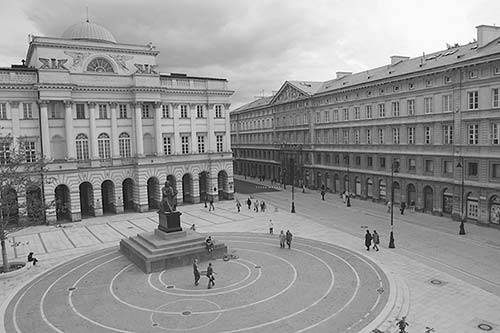
Just to Copernicus’ left is a low-profile, black-marble Chopin bench—one of many scattered around the center. These benches mark points related to his life (in this case, his sister lived across the street). Each of these benches plays Chopin’s music with the push of a button (though because of passing traffic, this one is tough to hear).
Directly in front of the statue, in the glass case, find a replica of a Canaletto painting of this same street scene in 1778 and compare it to today’s reality. As the national archives were destroyed, city builders referred to historic paintings like these for guidance after World War II. You’ll see other Canaletto replicas like this one scattered around the city.
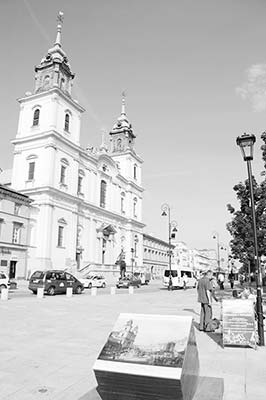
• Across from Copernicus, the Church of the Holy Cross is worth a look.
Church of the Holy Cross (Kośicół Św. Krzyża)
We’ll pass many churches along this route, but the Church of the Holy Cross is unique (and free to enter). Composer Fryderyk Chopin’s heart is inside one of the pillars of the nave (first big pillar on the left, look for the marker). After two decades of exile in France, Chopin’s final wish was to have his heart brought back to his native Poland after his death. During World War II, the heart was hidden away in the countryside for safety.
Check out the bright gold chapel, located on the left as you face the altar, near the front of the church. It’s dedicated to a saint whom Polish Catholics believe helps them with “desperate and hopeless causes.” People praying here are likely dealing with some tough issues. The beads draped from the altarpieces help power their prayers, and the many little brass plaques are messages of thanks for prayers answered.
In the back-left corner (as you face the altar) is a chapel dedicated to Poland’s favorite son, St. John Paul II. His ghostly image appears out of the wall; beneath him is a rock inscribed with the words Tu es Petrus (Latin for “You are Peter”—what Jesus said when he made St. Peter the first-ever pope), embedded with a capsule containing JPII’s actual blood.
Just opposite, in the back-right corner, behind the giant barbed wire, is a memorial to the 22,000 Polish POWs—mostly officers and prominent civilians—massacred by Soviet soldiers in 1940 near Katyń, a village in today’s Russia. Stalin was determined to decapitate Poland’s military intelligentsia in a ruthless mass killing, which Poles have never forgotten.
Leaving the church, notice the 19th-century, bronze-and-granite statue of Christ bearing the cross along the balustrade. In front, a placard reads, “Lift up your hearts.” Even as Warsaw bore the burden of Russian occupation, this statue inspired them to remain strong and not lose hope.
• Cross the street (appreciating how pedestrian-friendly it is—crossing here used to be a real-life game of Frogger), and continue left.
Warsaw University
A long block up the street on the right, you’ll see the gates (marked Uniwersytet) to the main campus of Warsaw University, founded in 1816. This lively student district has plenty of bookstores (księgarnia) and cafeterias.
Keep strolling, appreciating the fine facades. The 18th century was a time of great political decline for Poland, as a series of incompetent foreign kings mishandled crises and squandered funds. But ironically, it was also Warsaw’s biggest economic boom time. Along this boulevard, aristocratic families of the period built mansions—most of them destroyed in World War II and rebuilt since. Some have curious flourishes (just past the university on the right, look for the doorway supported by four bearded brutes admiring their overly defined abs...it’s supposed to be a six-pack, but I count ten). Over time, many of these families donated their mansions to the university.
• The bright-yellow church a block up from the university, on the right, is the...
Church of the Nuns of the Visitation (Kośicół Sióstr Wizytek)
This Rococo confection from 1761 is the only church on this walk that survived World War II, and is notable because Chopin was briefly the organist here.
The monument in front of the church commemorates Cardinal Stefan Wyszyński, who was the head of the Polish Catholic Church from 1948 to 1981. The communist authorities opposed the Church but also realized it would be risky for them to shut down the churches in such an ardently religious country. The Communist Party and the Catholic Church coexisted tensely in Poland, and when Wyszyński protested a Stalinist crackdown in 1953, he was arrested and imprisoned. Three years later, in a major victory for the Church, Wyszyński was released. He continued to fight the communists, becoming a great hero of the Polish people in their struggle against the regime—so much so, he’s been called the “uncrowned king of Poland.”
Across the street is another then-and-now Canaletto illustration.
• Farther up (on the right, past the park) is the elegant, venerable...
Hotel Bristol
A striking building with a round turret on its corner, the Hotel Bristol was used by the Nazis as a VIP hotel and bordello, and survived World War II. If you wander through any fancy Warsaw lobby...make it this one. Step in like you’re staying here and explore its fine public spaces, with fresh Art Deco and Art Nouveau flourishes. The café in front retains its Viennese atmosphere, but the pièce de résistance is the stunning Column Bar deeper in, past the dramatically chandeliered lounge.
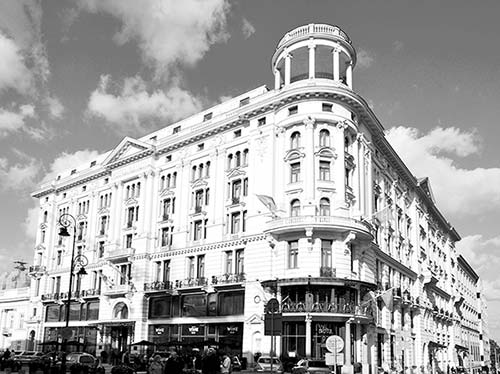
• Leave the Royal Way briefly here for a worthwhile detour. With the corner turret of Hotel Bristol at your back, cross the street and bear left between the buildings—passing the fancy Raffles Europejski Hotel. You’ll pop out at a vast expanse. Continue straight ahead across the street and stand at the edge of...
Piłsudski Square (Plac Marszałka Józefa Piłsudskiego)
The oversized, empty-feeling Piłsudski Square (pew-SOOD-skee) has been important Warsaw real estate for centuries, constantly changing with the times. In the 1890s, the Russians who controlled this part of Poland began construction of a huge and magnificent Orthodox cathedral on this spot. But soon after it was completed, Poland regained its independence, and anti-Russian sentiments ran hot. So in the 1920s, just over a decade after the cathedral went up, it was torn down. During the Nazi occupation, this square took the name “Adolf-Hitler-Platz.” Under the communists, it was Zwycięstwa, meaning “Victory” (of the Soviets over Hitler’s fascism).
When the regime imposed martial law in 1981, the people of Warsaw silently protested by filling the square with a giant cross made of flowers. The huge plaque in the ground near the road commemorates two monumental communist-era Catholic events on this square: John Paul II’s first visit as pope to his homeland on June 2, 1979; and the May 31, 1981, funeral of Cardinal Stefan Wyszyński, whom we met across the street. The cross nearby also honors the 1979 papal visit, with one of his most famous and inspiring quotes to his countrymen: “Let thy spirit descend, let thy spirit descend, and renew the face of the earth—of this earth” (meaning Poland, in a just-barely-subtle-enough dig against the communist regime that was tolerating his visit).
Now walk deeper into the square and stand in the center, near the giant flagpole, with the Royal Way at your back, for this quick spin tour orientation: Ahead are the Tomb of the Unknown Soldier and Saxon Garden; 90 degrees to the right is the old National Theater, eclipsed by a modern business center/parking garage; another 90 degrees to the right is a statue of Piłsudski (which you passed to get here); and 90 more degrees to the right is the Sofitel—formerly the Victoria Hotel, the ultimate plush, top-of-the-top hotel where all communist-era VIPs stayed.
In front of the hotel, the monument that resembles a giant black staircase commemorates the 2010 crash in Smoleńsk, Russia, of a plane carrying 96 top government officials, including President Lech Kaczyński. There were no survivors. (A week later, the funeral for Kaczyński on this square drew more than 100,000 mourners.) Now look to the left to see a giant statue of Kaczyński at the edge of the square—striding in this direction, with his hand over his heart. You’ll see lots of relatively new Kaczyński memorials throughout Warsaw (and Poland). On the one hand, it’s a shocking trauma for a nation to lose a president unexpectedly midterm—think of all the things named for JFK in the US. On the other hand, the party Kaczyński co-founded (Law and Justice) still holds power in Poland—in fact, his twin brother is its chairman—so it’s also politically expedient for them to lionize him as a martyr.
To the right of the hotel, on the horizon, you can see Warsaw’s quickly expanding skyline. The imposing Palace of Culture and Science, which once stood alone over the city, is now joined by a cluster of glittering postcommunist skyscrapers, giving Warsaw a Berlin-esque vibe befitting its important role as a business center of Central Europe.
Deeper into the square, you may see fences on either side, or you may see a sprawling construction zone. The city is finally getting around to rebuilding some of the buildings that were leveled by the Nazis: the Saski Palace, the Brühl Palace, and three tenement houses that once fronted Królewska street. (The colonnade straight ahead—described below—was once part of the Saski Palace.) If the fences are still up, peer through the holes to see the brick foundations they’ve already excavated.
If it’s accessible, walk to the fragment of colonnade by the park that marks the Tomb of the Unknown Soldier (Grób Nieznanego Żołnierza). The Saski Palace (this is all that’s left) was built by the Saxon prince electors (Dresden’s Augustus the Strong and his son), who became kings of Poland in the 18th century. After the palace was destroyed in World War II, this fragment was kept to memorialize Polish soldiers. The names of key battles over 1,000 years are etched into the columns, the urns contain dirt from major Polish battlefields, and two soldiers stand stiffly at attention. Every hour on the hour, they do a crisp Changing of the Guard—which, poignantly, honors those who have perished in this country, so shaped by wars against foreign invaders.
Just behind the tomb is the stately Saxon Garden (Ogród Saski), inhabited by genteel statues, gorgeous flowers, and a spurting fountain. This park was also built by the Saxon kings of Poland. Like most foreign kings, Augustus the Strong and his son cared little for their Polish territory, building gardens like these for themselves instead of investing in more pressing needs. Poles say that foreign kings such as Augustus did nothing but “eat, drink, and loosen their belts” (it rhymes in Polish). According to Poles, these selfish absentee kings were the culprits in Poland’s eventual decline. But they do appreciate having such a fine venue for a Sunday stroll.
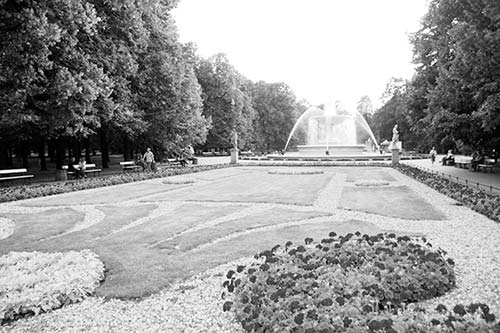
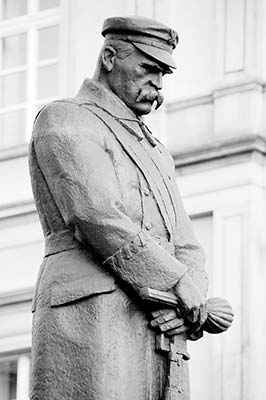
Walk back out toward the Royal Way, stopping at the statue you passed earlier. In 1995, the square was again renamed—this time for Józef Piłsudski (1867-1935), the guy with the big walrus mustache. With the help of a French captain named Charles de Gaulle (whom we met earlier), Piłsudski forced the Russian Bolsheviks out of Poland in 1920 in the so-called “Miracle on the Vistula.” Piłsudski is credited with creating a once-again-independent Poland after more than a century of foreign oppression, and he essentially ran Poland as a virtual dictator after World War I. Of course, under the communists, Piłsudski was swept under the rug. But since 1989, he has enjoyed a renaissance as many Poles’ favorite prototype anticommunist hero. His name adorns streets, squares, and bushy-mustachioed monuments all over the country.
• Return to Hotel Bristol, turn left, and continue your Royal Way walk.
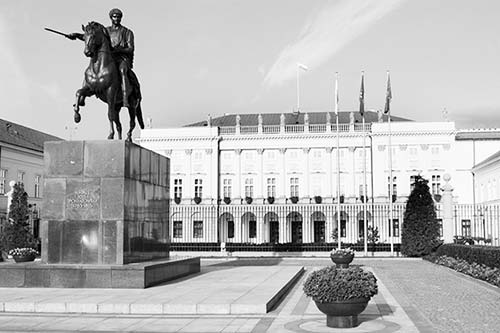
Radziwiłł Palace
Next door to the hotel, you’ll see the huge Radziwiłł Palace. The Warsaw Pact was signed here in 1955, officially uniting the Soviet satellite states in a military alliance against NATO. This building has also, from time to time, served as the Polish “White House.” Along the street in front of the palace is another monument to the 2010 Smoleńsk plane crash, which effectively decapitated Poland’s leadership.
• Beyond Radziwiłł Palace, on the right, you’ll reach a park with a...
Statue of Adam Mickiewicz
Poland’s national poet, Adam Mickiewicz spearheaded Poland’s cultural survival during more than a century when the country disappeared from maps—absorbed by Austria, Prussia, and Russia. This was an age when underdog nations (and peoples without nations) all over Europe had their own national revival movements. The statue was erected in 1898 with permission from the Russian czar, as long as the people paid for it themselves. It’s still an important part of community life: Polish high school students have a big formal ball (like a prom) 100 days before graduation. After the ball, if students come here and hop around the statue on one leg, it’s supposed to bring them good luck on their finals. Mickiewicz, for his part, looks like he’s suffering from a heart attack—perhaps in response to the impressively ugly National Theater and Opera a block in front of him.
• Continue to the end of the Royal Way, marked by the big pink palace. Just before the castle, on your right, is...
St. Anne’s Church
This Rococo church has playful Corinthian capitals inside and out and a fine pulpit shaped like the prow of a ship—complete with a big anchor. The richly ornamented apse, behind the altar, survived World War II. This church offers organ concerts nearly daily in summer (see “Entertainment in Warsaw,” later).
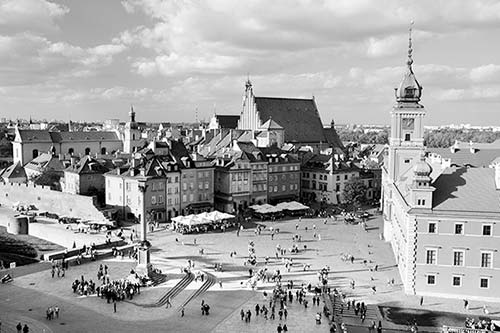
For a scenic finale to your Royal Way stroll, climb the 150 steps of the view tower by the church (10 zł, generally open daily 10:00-18:00, later in summer, closed in bad winter weather). You’ll be rewarded with excellent views—particularly of Castle Square and the Old Town. From up top, visually retrace your steps along the Royal Way, and notice the emerging skyline surrounding the Palace of Culture and Science. The tower also affords a good look at the Praga district across the river, where the Red Army waited for the Nazis to level Warsaw during the uprising. Help was so close at hand...but stayed right where it was.
• Just across from the view tower entrance, look for another Chopin bench (in front of #79). From St. Anne’s Church, it’s just a few more steps to Castle Square and the start of my Old Town Walk.
OLD TOWN WALK
In 1945, not a building remained standing in Warsaw’s “Old” Town (Stare Miasto). Everything you see here is rebuilt, mostly finished by 1956. Some think the Old Town seems artificial, in a Disney World kind of way. For others, the painstaking postwar reconstruction feels just right, with Old World squares and lanes charming enough to give Kraków a run for its money.
This concise walk, which can be done in about 45 minutes (and is a natural continuation of the Royal Way Walk outlined earlier), offers a quick overview of Warsaw’s rebuilt historic core. We’ll begin at Castle Square; wind through the streets and squares of the Old Town; pop out at the far side, at the Barbican; and have the opportunity to venture a few minutes farther, into the pretty and mellow New Town. For those looping back, there’s also an optional, lightly guided return to this point via sleepy back streets.
• Begin by standing on the gateway square to the Old Town, at the base of the tall pillar.
Castle Square (Plac Zamkowy)
This beautiful square (rated ▲▲) is packed with Polish history. Get comfy for a quick overview:
Historically, the Polish kings called Kraków home. But things began to change in 1572, with the expiration of the second great Polish dynasty—the Jagiellonians. Rather than elevate another Polish aristocratic family to the throne, the Polish nobility decided to keep power in their own hands. From that point on, Poland was ruled by the Sejm, or Republic of Nobles—consisting of the kingdom’s wealthiest 10 percent. The Sejm elected various foreign kings for limited stints on their throne. While this system kept Poland under its own control (to a degree), it wound up being unworkable: Poor choices of sovereigns, coupled with infighting among the nobles, paralyzed Poland and ultimately led to it being wiped from the map of Europe for a century and a half.
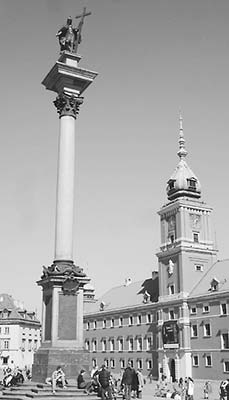
The guy on the 72-foot-tall pillar is Sigismund III, the first Polish king from the Swedish Vasa dynasty (or Waza in Polish). In 1596, it was Sigismund who relocated his royal seat from Kraków to Warsaw: Warsaw was the meeting point of the Sejm, and it was closer to the center of 16th-century Poland (which had expanded to the east).
Turn your attention to the big, pink Royal Castle. A castle has stood here since Warsaw was founded around 1300, but it grew much more important after Warsaw became the capital: It was both the meeting place of the Sejm and the residence of the king...sort of like Buckingham Palace and the Houses of Parliament rolled into one. The palace reached its peak under Stanisław August Poniatowski—the final Polish king—who imported artists and architects to spiff up the interior.
During World War II, Luftwaffe bombs all but obliterated the palace—only one wall remained standing. Reconstruction stalled because Stalin considered it a palace for the high-class elites. It was finally rebuilt in the more moderate 1970s, funded by local donations. The castle’s opulent interior is well worth touring—see listing later, under “Sights in Warsaw.” (I’ll wait while you tour the castle...then let’s meet out here to resume the walk.)
Along the right side of the castle, notice the two previous pillars lying on their sides. The first one, from 1644, was falling apart and had to be replaced in 1887 by a new one made of granite. In 1944, a Nazi tank broke this second pillar—a symbolic piece of Polish heritage—into the four pieces (still pockmarked with bullet holes) that you see here today. As Poland rebuilt, its citizens put Sigismund III back on his pillar. Past the pillars are views of Warsaw’s red-and-white National Stadium across the river—built for the Euro Cup soccer tournament in 2012.
Across the square from the castle, you’ll see the partially reconstructed defensive wall. This rampart once enclosed the entire Old Town. Like all of Poland, Warsaw has seen invasion from all sides.
Explore the café-lined lanes that branch off Castle Square. Street signs indicate the year that each lane was originally built.
The first street is Ulica Piwna (“Beer Street”). If you take a little detour up this street, you’ll find St. Martin’s Church (Kośicół Św. Martina, on the left). Run by Franciscan nuns, this church has a simple, modern interior. Walk up the aisle and find the second pillar on the right. Notice the partly destroyed crucifix—it’s the only church artifact that survived World War II. Across the street and closer to Castle Square, admire the carefully carved doorway of the house called pod Gołębiami (“Under Doves”)—dedicated to the memory of an old woman who fed birds amidst the Old Town rubble after World War II.
Back on Castle Square, find the white plaque on the wall (at Plac Zamkowy 15/19). It explains that 50 Poles were executed by Nazis on this spot on September 2, 1944. You’ll see plaques like this all over the Old Town, each one commemorating victims or opponents of the Nazis. The brick planter under the plaque is often filled with fresh flowers to honor the victims.
• Leave the square at the far end, on St. John’s street (Świętojańska). On the plaque under the street name sign, you can guess what the dates mean, even if you don’t know Polish: This building was constructed from 1433 to 1478, destroyed in 1944, and rebuilt from 1950 to 1953.
Partway down the street on the right, you’ll come to the big brick...
Cathedral of St. John the Baptist (Katedra Św. Jana Chrzciciela)
This cathedral-basilica is the oldest (1370) and most important church in Warsaw. Superficially unimpressive, the church’s own archbishop admitted that it was “modest and poor”—but “the historical events that took place here make it magnificent” (much like Warsaw itself). Poland’s constitution was consecrated here on May 3, 1791. Much later, this church became the final battleground of the 1944 Warsaw Uprising—when a Nazi “tracked mine” (a huge bomb on tank tracks—this one appropriately named Goliath) drove into the church and exploded, massacring the rebels. You can still see part of that tank’s tread hanging on the outside wall of the church (through the passage on the right side, between the buttresses).
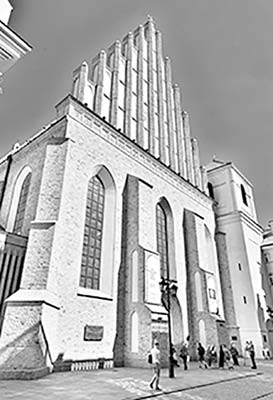
Cost and Hours: Cathedral—free, crypt—5 zł, both open to tourists Mon-Sat 10:00-17:00, Sun from 15:00, closed during services and summertime organ concerts (see “Entertainment in Warsaw,” later).
Visiting the Cathedral: Head inside. Typical of brick churches, it has a “hall church” design, with three naves of equal height. In the back-left corner, find the chapel with the tomb of Cardinal Stefan Wyszyński—the great Polish leader who, as Warsaw’s archbishop, morally steered the country through much of the Cold War. (Notice the request to pray for his beatification, as Poles would love to see him become a saint.) Nearby, the crypt holds graves of several important Poles, including Stanisław August Poniatowski (the last Polish king) and Nobel Prize-winning author Henryk Sienkiewicz. Then head up the nave to the main altar, which holds a copy of the Black Madonna—proclaimed “everlasting queen of Poland” after a victory over the Swedes in the 17th century. The original Black Madonna is in Częstochowa (125 miles south of Warsaw)—a mecca for Slavic Catholics, who visit in droves in hopes of a miracle. In the chapel left of the high altar, look for the crucifix ornamented with real human hair.
Nearby: Those interested in Cold War espionage may want to seek out a nearby exhibit about Ryszard Kukliński (1930-2004), a Polish military officer who worked closely with USSR authorities...all the while collecting priceless intelligence for the CIA. Kukliński’s story, with many twists and turns, is riveting. The excellent exhibit about this superspy was recently slated to be folded into a brand-new Cold War Museum, which you’ll likely find in the streets immediately behind the cathedral (for the latest, see www.muzeumzimnejwojny.com).
• Continue up the street and enter Warsaw’s grand...
Old Town Market Square (Rynek Starego Miasta)
For two centuries, this was a gritty market square. Sixty-five years ago, it was a pile of bombed-out rubble. And today, like a phoenix from the ashes, it’s risen to remind residents and tourists alike of the prewar glory of the Polish capital (which is why it’s rated ▲▲).
Head to the mermaid fountain in the middle of the square. The mermaid is an important symbol in Warsaw—you’ll see her everywhere. Legend has it that a mermaid (syrenka) lived in the Vistula River and protected the townspeople. While this siren supposedly serenaded the town, she’s most appreciated for her strength (hence the sword). This square seems to declare that life goes on in Warsaw, as it always has. Children frolic here, oblivious to the turmoil their forebears withstood. When the fountain gurgles, the kids giggle.
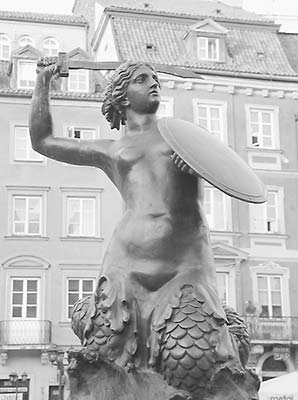
Each of the square’s four sides is named for a prominent 18th-century Varsovian: Kołłątaj, Dekert, Barss, and Zakrzewski. These men served as “Presidents” of Warsaw (mayors, more or less), and Kołłątaj was also a framer of Poland’s 1791 constitution. Take some time to explore the square. Enjoy the colorful architecture. Notice that many of the buildings were intentionally built to lean out into the square—to approximate the higgledy-piggledy wear and tear of the original buildings.
If you’d like to learn more about Warsaw’s history, visit the Museum of Warsaw on the Dekert (north) side of the square (described later, under “Sights in Warsaw”).
• Exit the square on Nowomiejska (at the mermaid’s 2 o’clock, next to the Museum of Warsaw, under the second-story niche sculpture of St. Anne). After a block, you’ll reach the Barbican (Barbakan). This defensive gate of the Old Town, similar to Kraków’s, protected the medieval city from invaders. Once you’ve crossed through the Barbican, you’re officially in Warsaw’s...
New Town (Nowe Miasto)
This 15th-century neighborhood is “new” in name only: It was the first part of Warsaw to spring up outside the city walls (and is therefore slightly newer than the Old Town). The New Town is a fun place to wander: only a little less charming than the Old Town, but with a more real-life feel—people live and work here. While busy sightseers may choose to skip the New Town, if you stick with me for a few minutes longer, it’s worth the extra time. Continue straight ahead from the Barbican on Nowomiejska, which becomes Freta. As you proceed deeper into the New Town, you can feel the tourism slowly melt away. You’ll pass an outpost of the E. Wedel chocolate empire, and some funky galleries and boutiques. On the right is the informative museum about Marie Skłodowska-Curie, who grew up in this neighborhood (at #16; see listing later, under “Sights in Warsaw”).
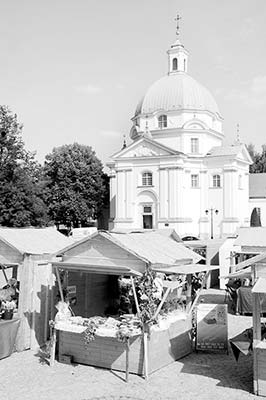
Just beyond, for some modern “design”-oriented souvenirs, watch on the left for the endearing Love Poland Design shop (at #29/31)...pierogi pillow, anyone?
That shop also marks the entrance to the mellow, easy-to-like New Town Square (Rynek Nowego Miasta). A few recommended restaurants line its top edge, and its bottom is dominated by the distinctive green dome of St. Kazimierz Church. While just a short walk from the Old Town, this feels a world apart—a fine spot to relax in the heart of this giant city, enjoy an al fresco meal, sit on a bench, do some people-watching...and just enjoy.
• To finish our walk with a scenic overview, cross through to the bottom end of the square and turn left, then right (with the green dome on your right). Keep going with the red-brick St. Mary’s Church (Kościół Mariacki) on your left-hand side. Soon you’ll emerge at a park with a monument and an overlook.
The Marie Skłodowska-Curie monument honors the woman whose museum we passed earlier. Maria Skłodowska (1867-1934) grew up in this neighborhood at a time when Warsaw was under Russian control, so women were not allowed to pursue a university education. Instead, she left in 1891 for Paris, where—while studying at the Sorbonne—she met and fell in love with a fellow scientist named Pierre Curie. The two wed and became partners in life and in research (and the Polish “Maria” became French “Marie”).
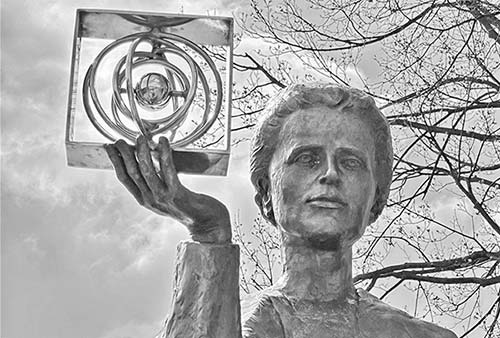
They were the first to identify and explain the phenomenon of radioactivity, and they discovered two new elements: polonium (which Marie named after her native land—in the monument she’s holding an object that represents that discovery) and radium. They were awarded the Nobel Prize in Physics; later, Marie also won a Nobel Prize in Chemistry, for how her discoveries revolutionized the world’s understanding of how the elements function.
After Pierre died in a horse-cart accident, Marie took over his professorship at the Sorbonne and continued her research; among other accomplishments, she founded the Radium Institute, which still carries out important cancer research. (Marie and Pierre were the first to treat certain tumors with radiation.) Few scientists of her generation had so great an impact on our understanding of the world than this brilliant woman from Warsaw.
Madame Curie is looking out over a panorama of the Vistula River and Warsaw’s more rugged and wild eastern embankment. Down below is an inviting park with a “multimedia fountain” that performs a sound-and-light show on weekends in the summer (ask the TI for the schedule)—which can be viewed from either up here or down along the river. Speaking of which, notice the inviting promenade that runs along the Vistula—in good weather, it’s packed with locals enjoying their city. Why not join them?
• Our walk is finished. You can head back the way you came to reach the Old Town Square. Or, to see a side of the Old Town that many tourists miss, consider this scenic detour back to Castle Square.
Optional Return Detour: From the Barbican to Castle Square
Go back through the Barbican and over the little bridge, turn right, and walk along the houses that line the inside of the wall. You’ll pass a leafy garden courtyard on the left—a reminder that people actually live in the tourist zone within the Old Town walls. Just beyond the garden on the right, look for the carpet-beating rack, used to clean rugs (these are common fixtures in people’s backyards). Go left into the square called Szeroki Dunaj (“Wide Danube”), walk to its end, then turn right at Wąski Dunaj (“Narrow Danube”).
After about 100 yards, you’ll pass the city wall. Just to the right (outside the wall), you’ll see the monument to the Little Insurgent of 1944, a child wearing a grown-up’s helmet and too-big boots, and carrying a machine gun. Children—especially Scouts (Harcerze)—played a key role in the resistance against the Nazis. Their job was mainly carrying messages and propaganda.
Continue around the wall, admiring more public art. Circling all the way back around, soon before you hit the giant pillar, look for the statue honoring Jan Zachwatowicz (1900-1983)—the architect who oversaw the rebuilding of Old Warsaw after World War II. If you’ve enjoyed your visit, offer him a thank-you to end this tour.
Sights in Warsaw
▲▲Royal Castle (Zamek Królewski)
▲Museum of Warsaw (Muzeum Warszawy)
▲Marie Skłodowska-Curie Museum
East of the Royal Way (Toward the River)
▲▲National Museum (Muzeum Narodowe)
Chopin Museum (Muzeum Fryderyka Chopina)
▲Copernicus Science Center (Centrum Nauki Kopernik)
West of the Royal Way (near Centralna Station)
Palace of Culture and Science (Pałac Kultury i Nauki, or PKiN)
▲Ghetto Heroes Square (Plac Bohaterow Getta)
▲▲▲Museum of the History of Polish Jews (Muzeum Historii Żydów Polskich, a.k.a. POLIN)
▲▲Warsaw Uprising Museum (Muzeum Powstania Warszawskiego)
▲Łazienki Park (Park Łazienkowski)
EAST OF THE CENTER: THE PRAGA DISTRICT
THE OLD TOWN
These sights are linked by my Old Town Walk, earlier.
▲▲Royal Castle (Zamek Królewski)
Warsaw’s Royal Castle, dominating Castle Square at the entrance to the Old Town, has the most opulent interior in Poland. Many of its furnishings are original (hidden away when it became clear the city would be demolished in World War II). A visit to the castle is like perusing a great Polish history textbook. In fact, you’ll likely see grade-school classes sitting cross-legged on the floors. Watching the teachers quizzing eager young history buffs, try to imagine what it’s like to be a young Pole growing up in a country with such a tumultuous history. The “Royal Route” (the lavish apartments) is worth paying for, but unless you’re an art lover, I’d skip the extra cost of the Gallery of Masterpieces. Wednesday is a good day to visit—it’s free, and although some royal rooms are closed, enough are open to make a visit worthwhile.
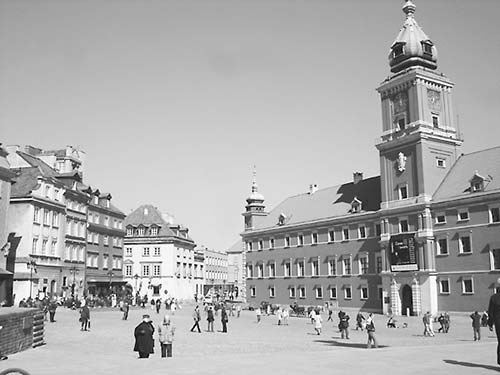
Cost and Hours: Royal Route—50 zł, Gallery of Masterpieces—40 zł, more for special exhibits, free on Wed (when some royal rooms are closed); open Tue-Sun 10:00-18:00, Oct-April until 17:00, closed Mon year-round, last entry one hour before closing; Plac Zamkowy 4, +48 22 355 5170, www.zamek-krolewski.pl [URL inactive].
Tours: The castle’s well-produced audioguide is included in the ticket price (10 zł on Wed, when entry is free). Good English information is posted throughout. For an efficient visit, use my commentary to follow the one-way route through the castle.
Services: A public WC is on the courtyard just around the corner of the castle, with more inside and downstairs.
Visiting the Castle: Because the castle visitor route often changes, it’s possible you won’t see the rooms in this exact order; match the labels in each room to the corresponding text below.
Entering the courtyard, find the ticket office, then cross to the opposite side to enter. (Downstairs are the mandatory coat check and the audioguide desk.) In the lobby, turn left, pass the gift shop and café, then follow Castle Route signs upstairs.
The first big room is the Council Chamber, where a “Permanent Council” consisting of the king, 18 senators, and 18 representatives met to chart Poland’s course. Next is the Great Assembly Hall, heavy with marble and chandeliers. The statues of Apollo and Minerva flanking the main door are modeled after King Stanisław August Poniatowski and Catherine the Great of Russia, respectively. (The king enjoyed a youthful romantic dalliance with Catherine on a trip to Russia, and never quite seemed to get over her...much to his wife’s consternation, I’m sure.)
Step into the Knights’ Hall, with yet more busts and portraits of VIPs—Very Important Poles. The statue of Chronos—god of time, with the globe on his shoulders—is actually a functioning clock, though now it’s stopped at 11:15 to commemorate the exact time in 1944 when the Nazis bombed this palace to bits. Attached to this hall is the Marble Room, with more portraits of Polish greats ringing the top of the room. Above the fireplace is a portrait of Stanisław August Poniatowski (the last Polish king).
Next, step into the Throne Room. Notice the crowned white eagles, the symbol of Poland, decorating the banner behind the throne. The Soviets didn’t allow anything royal or aristocratic, so postwar restorations came with crownless eagles. Only after 1989 were these eagles crowned again. Peek into the Conference Room, with portraits of Russia’s Catherine the Great, England’s George III, and France’s Louis XVI—in whose esteemed royal league Poniatowski liked to consider himself.
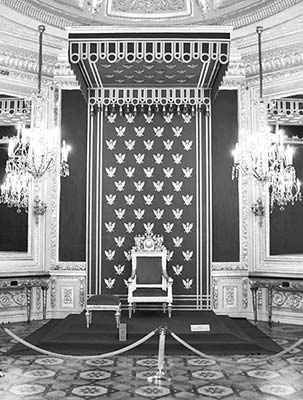
Pass through four more grand rooms: the King’s Study, Dressing Room, and Bedchamber (with a gorgeous green silk canopy over the bed), then the Old Audience Chamber. Finally, you’ll enter the Canaletto Room, filled with canvases of late 18th-century Warsaw painted in exquisite detail by this talented artist. (This Canaletto, also known for his panoramas of Dresden, was the nephew of another more famous artist with the same nickname, known for painting Venice’s canals.) Paintings like these helped post-WWII restorers resurrect the city from its rubble. Straight ahead as you enter, on the lower wall, the biggest canvas features the view of Warsaw from the Praga district across the river; pick out the few landmarks that are still standing (or, more precisely, have been resurrected). The castle you’re in dominates the center of the painting, overlooking the river. Notice the artist’s self-portrait in the lower left. On the facing wall is Canaletto’s depiction of the election of Stanisław August Poniatowski as king, in a field outside Warsaw (notice the empty throne in the middle of the group). Among the assembled crowd, each flag represents a different Polish province.
From here, look left of the big “view of Warsaw” painting into the side chapel, reserved for the king. In a box to the left of the altar is the heart of Tadeusz Kościuszko, a hero of both the American Revolution and the Polish struggle against the Partitions (for more about the Partitions, see here).
As you cross over to the other part of the castle, you’ll pass through the Four Seasons Gallery (with some fine but faded Gobelin tapestries) before entering a few rooms occupied by the houses of parliament—a reminder that this “castle” wasn’t just the king’s house but also the meeting place of the legislature. In the giant red room called the New Deputies’ Chambers, notice the maps over the doors showing Poland’s constantly in-flux borders—a handy visual aid for the many school groups that visit here.
After several rooms, you’ll reach the grand Senators’ Chamber, with the king’s throne, surrounded by different coats of arms. Each one represents a region that was part of Poland during its golden age, back when it was united with Lithuania and its territory stretched from the Baltic to the Black Sea (see the map on the wall between the doors). In this room, Poland adopted its 1791 constitution (notice the replica in the display case to the left of the throne). It was the first in Europe, written soon after America’s and just months before France’s. And, like the Constitution of the United States, it was very progressive, based on the ideals of the Enlightenment. But when the final Partitions followed in 1793 and 1795, Poland was divided between neighboring powers and ceased to exist as a country until 1918—so the constitution was never fully put into action.
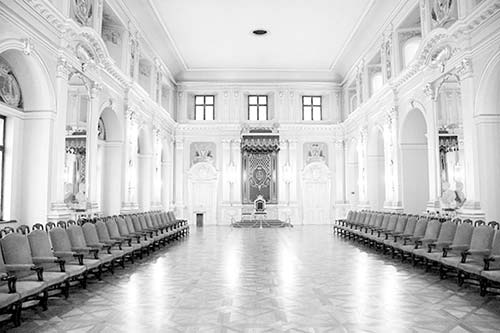
At the end of this impressive chamber, you’ll turn right into a room with two giant canvases by the great historical painter Jan Matejko, showing a very high point and a very low point in Polish history (for more on Matejko, see here). First, on the right wall, the Constitution of 3 May 1791 shows the giddy procession (with the Marshall of the Sejm crowd-surfing through the Old Town, and this castle in the background) heading up the street to the Cathedral of St. John the Baptist to consecrate the first constitution in Europe. But from there, Poland’s fortunes tumbled dramatically. Straight ahead from where you entered, Rejtan—The Fall of Poland shows the nobleman Tadeusz Rejtan (on the right) lying in front of a door and pulling his shirt open in violent protest against his colleagues in the Sejm debating the First Partition in 1773, which ceded some Polish territory to neighboring Russia, Prussia, and Austria. Two Partitions later, Poland was erased from the map of Europe for a century and a half.
In the next room is another Matejko painting (on the right): Stefan Batory at Pskov, in which the Polish king negotiates with Ivan the Terrible’s envoys to break their siege of a Russian town. Notice the hussars—fearsome Polish soldiers wearing winged armor.
From here, you’ll work your way back down to the lobby where you began. There you’ll also find the entrance to another sight...
Gallery of Masterpieces: This gallery of paintings, sculpture, and decorative arts may please art lovers, but it’s not essential viewing for most. Inside is a fine cabinet of silver and crystal, and the 36 paintings of the Lanckrońoski Collection. In the final room, take your time appreciating two canvases by Rembrandt (both from 1641). Girl in a Picture Frame is exactly that—except that she’s “breaking the frame” by resting her hands on a faux frame that Rembrandt has painted inside the real one...shattering the fourth wall in a way that was unusual for the time. The other, A Scholar at His Writing Table, shows the hirsute academic glancing up from his notes. Circle around behind the canvases to see X-rays of the paintings, which have helped experts better understand the master’s techniques.
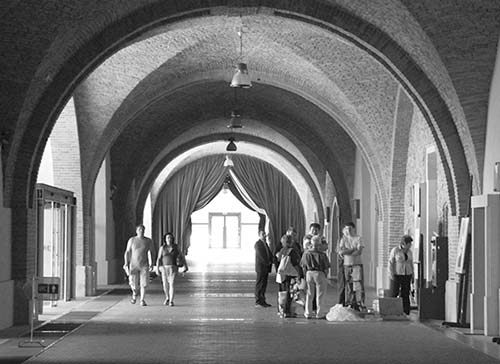
Other Castle Sights: Consider a detour to the Kubicki Arcades (Arkady Kubiciego), the impressively excavated arcades deep beneath the castle. From the entrance lobby, head downstairs to the area with the cloakroom, bathrooms, and bookshop, then find the long escalator that takes you down to the arcades. It’s free to wander the long, cavernous, and newly clean and gleaming space, made elegant by grand drapes.
The “Tin-Roofed Palace” (Pałac pod Blachą) features an extensive oriental carpet collection and seven unimpressive apartments of Prince Józef Poniatowski, the king’s brother; it’s not worth the 30 zł extra.
▲Museum of Warsaw (Muzeum Warszawy)
Four adjoining townhouses on the north side of the Old Town Square have been connected and turned into this in-depth museum that tells the story of Warsaw. While there’s too much detail for a casual visitor’s attention span, it’s well presented and offers some interesting insight into this great city.
Cost and Hours: 25 zł, includes audioguide, free on Tue; open Tue-Fri 9:00-17:00, Thu until 19:00, Sat-Sun 11:00-18:00, closed Mon; Rynek Starego Miasta 28–42, +48 22 277 4300, www.muzeumwarszawy.pl.
Visiting the Museum: The permanent collection, called “Warsaw in 23 Rooms,” offers exactly that. Pick up the detailed map and the dense-but-informative audioguide, and head down into the cellars for an orientation to the city’s history—with a timeline, lots of graphs, maps, and helpful models of key landmarks. Then head upstairs and weave your way through the labyrinthine collection; your geo-tagged audioguide knows (roughly) where you are and offers commentary.
Back up on the ground floor, in the courtyard, you’ll find architectural decorations from city buildings, as well as the original mermaid statue from the square. Then work your way up through four floors: Floor 1 has a photography gallery, paintings of Warsaw, and a model of the Old Town in the late 18th century. Floor 2 features bronzes, silverwork, portraits of important Varsovians, and clothing. Floor 3 has a moving collection of “relics” from the difficult WWII days and a more lighthearted exhibit on “Warsaw packaging”—with nostalgic vintage advertising. Floor 4 features antique clocks and the “Schiele Room”—named not for the artist, but for the local merchant family whose furnishings and personal objects you can see here. You can continue all the way up into the attic (“viewing platform”) to look down over the square, and to see panoramas of the Old Town’s rooftops.
The museum sporadically presents a poignant 20-minute film (in English) tracing the tragic WWII experience of this city—from a thriving interwar metropolis, to a bombed-out wasteland, to the focus of a massive rebuilding effort. This only runs a couple of times each week; consider calling or dropping by to find out when, so you can time your visit accordingly (10 zł).
▲Marie Skłodowska-Curie Museum
Maria Skłodowska (1867-1934)—who, as Marie Curie, would go on to accomplish many firsts, including pioneering the study of radioactivity and becoming the only person to win Nobel Prizes in two different disciplines—was born in this building and grew up in the neighborhood before she moved to Paris to study. This concise, endearing museum is happy to introduce visitors to Madame Curie’s world and work. Just a few rooms on one floor, it’s made meaningful by the good included audioguide.
Cost and Hours: 11 zł, free on Tue; open Tue-Sat 12:00-18:00, closed Sun-Mon; Ulica Freta 16, +48 22 831 8092, www.mmsc.waw.pl.
Visiting the Museum: Buy your ticket, pick up your audioguide, and head upstairs to tour the exhibit. First you’ll learn about Maria Skłodowska’s childhood (with lots of black-and-white photos). Then you’ll step into a re-creation of the glass-roofed Parisian shed where she and her husband, Pierre, conducted early experiments. You’ll see old instruments and equipment, and learn more about the couple and their revolutionary discoveries. On the wall are copies of the two Nobel Prizes she won—one jointly with Pierre, the other solo (later, other members of her family would also go on to win Nobels). Then you’ll walk through a room of biographical panels describing different stages of her life—for example, during World War I, where she contributed to the war effort by operating a mobile X-ray unit to treat injured soldiers. Finally, you’ll see a re-creation of a drawing room like the one she grew up in, including items from her family. A short film provides a recap of all you’ve learned about this remarkable, often unheralded scientist. Downstairs are temporary exhibits and a well-stocked shop of Skłodowska swag (say that three times fast).
Polish History Museum
This ambitious new museum is being built north of the New Town, at Warsaw’s Citadella. The project has been ongoing for years; it could open as early as 2024. Once open, this promises to become a big and important draw for all visitors—especially Poles. To check on the progress, see MuzHP.pl. They’re also planning a Polish Army Museum nearby.
NEAR PALM TREE CIRCLE
These sights are in the city center, near Palm Tree Circle—where Jerusalem Avenue crosses Nowy Świat.
East of the Royal Way (Toward the River)
▲▲National Museum (Muzeum Narodowe)
A celebration of underrated Polish artists, this museum offers a surprisingly engaging and—if you follow my tour—concise overview of this country’s impressive painters (many of whom are unknown outside their home country). A modern, state-of-the-art exhibition space allows these unsung canvases to really belt it out.
Cost and Hours: 25 zł, more for temporary exhibits, permanent collection free on Tue; Tue-Sun 10:00-18:00, Fri until 20:00, closed Mon, last entry 45 minutes before closing; one long block east of Nowy Świat at Aleja Jerozolimskie 3, bus #111 stops right out front, +48 22 629 3093, www.mnw.art.pl.
 Self-Guided Tour: The collection fills several separate galleries. The museum’s strongest point—and the bulk of this tour—is its 19th-century Polish art. But before diving in, consider some of the other collections.
Overview: To get your bearings, pick up a floor plan as you enter. On the ground floor are Ancient Art (from Greek pieces to artifacts left by early Polish tribes), the Faras Gallery (highlighting the museum’s fine collection of archaeological findings from that ancient Egyptian city), and a good collection of Medieval Art, which gathers altarpieces from churches around Poland—organized both chronologically and geographically—and displays some of the most graphic crucifixes and pietàs I’ve seen.
Upstairs (floor 1) is the excellent Gallery of 19th-Century Art, which is described by the tour below. Nearby, through the gift shop, is the worthwhile 20th- and 21st-Century Art collection, with an impressive array of Modern and Postmodern Polish artists, including photographers and filmmakers. The underwhelming Gallery of Old Masters fills floor 2.
To cut to the chase, focus on the Gallery of 19th-Century Art. We’ll start with the granddaddy of Polish art, Jan Matejko.
• From the entrance lobby, head up the left staircase, then turn left across the mezzanine and ascend a few more stairs to enter the collection. Matejko is hiding at the far end of this wing: Entering the collection, angle right, then left, heading all the way to the room at the far end, which is dominated by a gigantic battlefield canvas. (If you get lost, ask the attendants, “mah-TAY-koh?”)
Jan Matejko: While not the most talented of artists—he’s a fairly conventional painter, lacking a distinctive, recognizable style—Matejko more than made up for it with vision and productivity. His typically super-sized paintings are steeped in proud Polish history. Matejko’s biggest work here—in fact, the biggest canvas in the whole building—is the enormous Battle of Grunwald. This epic painting commemorates one of Poland’s high-water marks: the dramatic victory of a Polish-Lithuanian army over the Teutonic Knights, who had been terrorizing northern Poland for decades (for more on the Teutonic Knights, see here). On July 15, 1410, some 40,000 Poles and Lithuanians (led by the sword-waving Lithuanian in red, Grand Duke Vytautas) faced off against 27,000 Teutonic Knights (under their Grand Master, in white) in one of the medieval world’s bloodiest battles. Matejko plops us right in the thick of the battle’s climax, painting life-size figures and framing off a 32-foot-long slice of the two-mile battle line.
In the center of the painting, the Teutonic Grand Master is about to become a shish kebab. Duke Vytautas leads the final charge. And waaaay up on a hill (in the upper-right corner, on horseback, wearing a silver knight’s suit) is Władysław Jagiełło, the first king of the Jagiellonian dynasty...ensuring his bloodline will survive another 150 years.
Matejko spent three years covering this 450-square-foot canvas in paint. The canvas was specially made in a single seamless piece. This was such a popular work that almost as many fans turned out for its unveiling as there are figures in the painting.
From Poland’s high point in the Battle of Grunwald, look over your right shoulder for another, much smaller Matejko canvas, Stańczyk, to see how Poland’s fortunes shifted drastically a century later. This more intimate portrait depicts a popular Polish figure: the court jester Stańczyk, who’s smarter than the king, but not allowed to say so. This complex character, representing the national conscience, is a favorite symbol of Matejko’s. Stańczyk slumps in gloom. He’s just read the news (on the table beside him) that the city of Smoleńsk has fallen to the Russians after a three-year siege (1512-1514). The jester had tried to warn the king to send more troops, but the king was too busy partying (behind the curtain). The painter Matejko—who may have used his own features for Stańczyk’s face—also blamed the nobles of his own day for fiddling while Poland was partitioned.
More Matejkos fill this room. On the left wall as you face Grunwald is a self-portrait of the gray-bearded artist (compare his features to Stańczyk’s), flanked by Matejko’s portraits of his children and his wife.
On the final wall is a smaller but very dramatic scene, The Sermon of Piotr Skarga. In the upper-right corner, this charismatic, early 17th-century Jesuit priest waves his arms to punctuate his message: Poland’s political system is broken. Skarga is addressing fat-cat nobles and the portly King Sigismund III Vasa (seated and wearing a ruffled collar), who were acting in their own self-interests instead of prioritizing what was best for Poland. Notice that Skarga’s audience isn’t hearing his ravings—they seem bored, bugged, or both. The king is even taking a nap. They should have listened: Poland’s eventual decline is often considered the fault of its unworkable political system. After the Partitions, the ahead-of-his-time Skarga was rehabilitated as a visionary who should have been heeded. Notice that, like Stańczyk, Skarga is a self-portrait of Matejko.
• Leaving Matejko, we’ll pass through several more rooms of lesser-known Polish painters to the opposite wing, where we’ll meet several of Matejko’s students—each of whom developed his own style and left his mark on the Polish art world. On the way, I’ll point out a few canvases worth a pause.
Other Polish Painters: First, head back down the long corridor the way you came (passing some Matejko copycats), cutting through a corner of the Portrait Gallery. When you reach the door you came in, bear right to stay inside the gallery. At the end of that first, large room, you’ll find some battle scenes by Józef Brandt (1845-1915)—the only painter who rivaled Matejko in capturing epic warfare on canvas. Many of Brandt’s scenes focus on confronting an enemy from the east, which was Poland’s lot for much of its history. His biggest work here, Rescue of Tatar Captives, is typical of his scenes.
Continue straight into the next room, with some fine landscape scenes. This room (the partition in the middle) also has works by the talented Józef Chełmoński (1849-1914): Indian Summer and (around back) Storks—a young boy and his grandfather look to the sky as a formation of storks flies overhead. Storks, which are rare in many places but abundant in Poland, are a proud national symbol.
Turn right and go through one more long room, watching for Aleksander Gierymski’s (1850-1901) small, evocative, personality-filled Jewish Woman Selling Oranges (on the left wall).
• You’ll emerge into a big, violet-walled room that kicks off the collection of...
Młoda Polska: Matejko’s pupils took what he taught them and incorporated the Art Nouveau styles that were emerging around Europe to create a new movement called “Young Poland” (see here). This room features works by two of the movement’s big names.
On the left wall are paintings by Jacek Malczewski (1854-1929), some of them depicting the goateed, close-cropped artist in a semisurrealistic, Polish countryside context. Malczewski painted more or less realistically, but enjoyed incorporating one or two subtle, symbolic elements evocative of Polish folkloric tradition—magical realism on canvas. The Death of Ellenai (1907) shows the pivotal scene in Juliusz Słowacki’s epic 1838 poem, Anhelli, in which a young nobleman exiled from Poland during the Partitions is forced to make his way through the wastelands of Siberia. When his young and idealistic travel companion, Ellenai, perishes, Anhelli kisses her feet and abandons all hope.
Most of the works on the opposite wall are by Józef Mehoffer (1869-1946), who paints with brighter colors in a more stylized form, with more abstraction. Mehoffer’s hypnotic Strange Garden (from 1902-1903) is a bucolic vision of blue-clad Mary Poppinses, nude cherubs, lots of flowers...and a gigantic, hovering, golden dragonfly that places the otherwise plausible scene in the realm of pure fantasy. In the middle of the room, the small version of Auguste Rodin’s The Kiss reminds us how this emotion-conveying style, called Symbolism, was also finding expression elsewhere in Europe.
The next room, at the end of the hall, features some lesser-known painters from the age. Among these, Olga Boznańska (1865-1940) is worth lingering over: Her gauzy, almost Impressionistic portraits skillfully capture the humanity of each subject.
Head back into the Malczewski/Mehoffer room and find the small, darkened adjoining rooms. The first one features additional Malczewski paintings; the second is a treasure trove of works by the founder and biggest talent of Młoda Polska, Stanisław Wyspiański (1869-1907). The specific items in this room are subject to change—as Kraków, which owns the best collection of hometown boy Wyspiański, shuffles his works in and out of special exhibitions—but you’ll likely see both paintings and pastel works by this Art Nouveau juggernaut. Wyspiański also designed stage sets and redecorated some important churches; some of the large pastel-on-paper works you may see here were used as studies for those projects. And you’ll likely see some self-portraits and portraits of his wife and children.
Pondering the works here—and throughout the museum—think about how such a talented artist from a small country can be left out of textbooks across the ocean. The rest of the museum is yours to explore. If you’re craving lesser works by more recognizable names, they’re upstairs.
Chopin Museum (Muzeum Fryderyka Chopina)
The reconstructed Ostrogski Castle houses this museum honoring Poland’s most famous composer, with manuscripts, letters, and original handwritten compositions. You’ll learn about Chopin’s early life in Żelazowa Wola and Warsaw; see a replica of his drawing room in Paris, and his last piano, which he used for composing during the final two years of his life (1848-1849); and learn about the women who loomed large in his life (including his older sister Ludwika, his mother Justyna, and George Sand—the French author who took a male pseudonym in order to be published, and who was romantically linked with Chopin). Listening stations give you the chance to deepen your appreciation for Chopin’s talent. While this is all riveting to Chopin devotees, casual fans may find the museum falls a bit short in igniting enthusiasm for the composer—for that, it’s worth attending a concert, either here or elsewhere in Warsaw (see “Entertainment in Warsaw,” later).
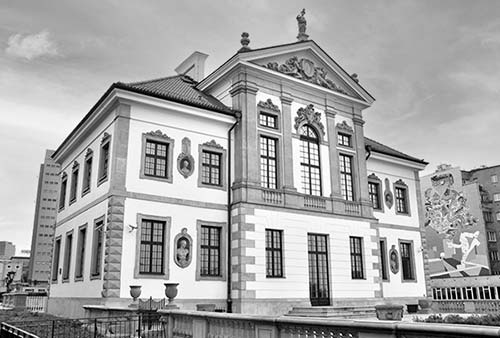
Cost and Hours: 25 zł, free (and crowded) on Wed; open Tue-Sun 10:00-18:00, closed Mon, last entry 45 minutes before closing; 3 blocks east of Nowy Świat at Ulica Okólnik 1, +48 22 441 6251, https://muzeum.nifc.pl.
Concerts: Under the palace is a concert hall, which hosts a variety of performances from May through September—ranging from frequent weekend piano recitals to “young talents” afternoon concerts by local music students. Some are included in museum entry, while others require a separate ticket. Check the schedule and book at Bilety.nifc.pl.
Nearby: The park next to the museum surrounds the Chopin University of Music; hanging out here, you’ll often hear students rehearsing inside.
Other Chopin Sight: The composer’s tourable birth house is in a park in Żelazowa Wola, 34 miles from Warsaw. While interesting to Chopin devotees, it’s not worth the trek for most (closed Mon, details at museum website, +48 46 863 3300).
▲Copernicus Science Center (Centrum Nauki Kopernik)
This facility, a wonderland of completely hands-on scientific doodads that thrill kids and kids-at-heart, is a futuristic romper room. (For kids, it’s worth at least ▲▲.) Filling two floors of an industrial-mod, purpose-built space, this is Warsaw’s best family activity. Exhibits are described in both Polish and English, and there are frequent demonstrations and special events—ask when you buy your ticket, or check their website.
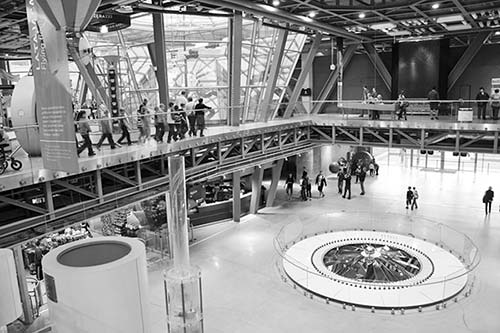
Cost and Hours: 40 zł, 28 zł for kids, slightly more on weekends; Mon-Thu 8:00-18:00, Fri until 20:00, Sat-Sun 9:00-19:00, last entry one hour before closing; Wybrzeże Kościuszkowskie 20, +48 22 596 4100, www.kopernik.org.pl.
Crowd-Beating Tips: This popular attraction can be busy on weekends and school holidays. If you anticipate crowds, book ahead on their website to secure your preferred entry time.
Getting There: It’s an easy downhill walk from Warsaw’s Royal Way, but the hike back up is fairly steep. Near the modern bridge—about a five-minute walk from the museum—are a Metro stop and a bus stop (both called Centrum Nauki Kopernik). Metro line 2 connects the science center to the National Stadium, the Royal Way (near the Copernicus statue), and the Warsaw Uprising Museum.
Visiting the Center: The science center is a sprawling, two-floor playhouse of hands-on, interactive exhibits. The specifics are always in flux, so pick up a map as you enter and just enjoy exploring. Kids love trying out the various tools and machines, playing with the air cannons, and running a slinky down an inclined treadmill. On the main floor is a special area for kids under five (called “Buzzz!”). Every visitor finds their own highlights, but favorites include the talking Copernicus robot and the “High Voltage Theater.” The attached planetarium has a constantly changing schedule of performances (these cost extra and run about hourly at :30 past the hour, in Polish with English headset, ask for schedule and book at main ticket desk).
Nearby: The riverside embankment near the center has a few areas that are fun to stroll; it was created when the busy riverfront highway was rerouted into an underground tunnel. A giant Warsaw mermaid raises her sword at passing joggers, cyclists, and rollerbladers. From here, you have good views of the modern Holy Cross Bridge (Most Świętokrzyski) and the National Stadium, proudly wrapped in the patriotic red and white of the Polish flag. These riverbanks are a popular hangout by day and after dark; in the summer, a stroll along here reveals a world of picnics, family outings, and impromptu parties.
Also don’t miss the postindustrial, futuristic Elektrownia Powiśle dining and shopping complex, just across the street from the museum (described later, under “Eating in Warsaw”).
West of the Royal Way (near Centralna Station)
Palace of Culture and Science (Pałac Kultury i Nauki, or PKiN)
This massive skyscraper, dating from the early 1950s, is still one of the tallest buildings in Europe (760 feet with the spire). While you can ride the lift to its top for a commanding view, the highlight is simply viewing it up close from ground level.
Viewing the Skyscraper: This building was a “gift” from Stalin that the people of Warsaw couldn’t refuse. Varsovians call it “Stalin’s Penis”...using cruder terminology than that. (There are seven such “Stalin Gothic” erections in Moscow.) If it feels like an Art Deco Chicago skyscraper, that’s because the architect was inspired by the years he spent studying and working in Chicago in the 1930s. Because it was to be “Soviet in substance, Polish in style,” Soviet architects toured Poland to absorb local culture before starting the project. Notice the frilly decorative friezes that top each level—evocative of Poland’s many Renaissance buildings (such as Kraków’s Cloth Hall). The clock was added in 1999 as part of the millennium celebrations. Since the end of communism, the younger generation doesn’t mind the structure so much—and some even admit to liking it for the way it enlivens the predictable glass-and-steel skyline springing up around it.
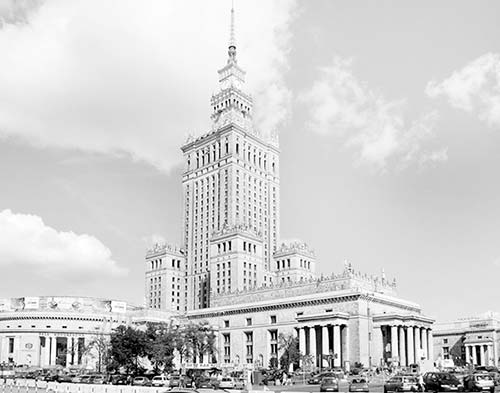
Everything about the Pałac is big. Approach it from the east side (facing the busy Marszałkowska street and the slick Galeria Centrum shopping mall). Stand in front of the granite tribune where communist VIPs surveyed massive May Day parades and pageantry on the once-imposing square, which today holds a sloppy parking lot. From there, size up the skyscraper—its grand entry flanked by massive statues of Copernicus on the right (science) and the great poet Mickiewicz on the left (culture). It’s designed to show off the strong, grand-scale Soviet aesthetic and architectural skill. The Pałac contains various theaters (the culture), museums of evolution and technology (the science), a congress hall, a multiplex, an observation deck, and lots of office space. With all this Culture and Science under one Roof, it’s a shame that only the ground-floor lobby (which feels like stepping into 1950s Moscow and is free to enter) and the 30th-floor observatory deck are open to the public (25 zł to zip up on retrofitted Soviet elevators, daily 10:00-20:00, may be open later in summer, www.pkin.pl).
Nearby: Behind the Pałac sprawls Warsaw’s new skyline of glittering skyscrapers. Varso Tower, which opened in 2022, finally eclipsed the Pałac’s height record, at 1,020 feet tall (the tallest building in the EU). But the most interesting skyscraper is Złota 44, with its dramatic swooping lines rising high into the air. This was designed by Poland-born architect Daniel Libeskind, perhaps best known for Berlin’s Jewish Museum and for his role as master architect in redeveloping the World Trade Center site in New York City. The tower’s shape evokes an eagle (a symbol for Poland) just beginning to take flight. At its base—and immediately behind Centralna station, easy to check out while waiting for your train—is Złote Tarasy shopping mall, featuring a funky, undulating glass-and-steel roof (https://zlotetarasy.pl).
JEWISH WARSAW
In the early 1600s, an estimated 80 percent of all Jews lived in Poland—then the largest country in Europe. And particularly between the two World Wars, Jewish culture flourished here. But after centuries of dwelling in relative peace in tolerant and pragmatic Poland, Warsaw’s Jews suffered terribly at the hands of the Nazis. Several sights in Warsaw commemorate those who were murdered, and those who fought back. Because the Nazis leveled the ghetto, there is nothing left except the street plan, a few scattered monuments, and the heroic spirit of its former residents. However, the top-notch Museum of the History of Polish Jews is a magnet for those interested in this chapter of Polish history.
Getting There: To reach Ghetto Heroes Square and the museum from the Old Town, you can hop in a taxi or an Uber, or take a bus (to the Nalewki-Muzeum stop; bus #180 is particularly useful; bus #111 reaches this stop from farther south—Piłsudski Square, Nowy Świat, Palm Tree Circle, and the National Museum). You can also walk there in about 15 minutes: Go through the Barbican gate two blocks into the New Town, turn left on Świętojerska, and walk straight 10 minutes—passing the green-glass Supreme Court building. En route, at the corner of Świętojerska and Nowiniarska, watch for the pattern of bricks in the sidewalk, marking Ghetto Wall 1940-1943.
▲Ghetto Heroes Square (Plac Bohaterow Getta)
The square is in the heart of what was the Jewish ghetto—now surrounded by bland Soviet-style apartment blocks. After the uprising, the entire ghetto was reduced to dust by the Nazis, leaving the communists to rebuild to their own specifications. Today, the district is called Muranów (“Rebuilt”).
The monument in the middle of the square commemorates those who fought and died “for the dignity and freedom of the Jewish Nation, for a free Poland, and for the liberation of humankind.” The statue features heroic Jewish men who knew that an inglorious death at the hands of the Nazis awaited them. Flames in the background show Nazis burning the ghetto. The opposite side features a sad procession of Jews trudging to concentration camps, with subtle Nazi bayonets and helmets moving things along.
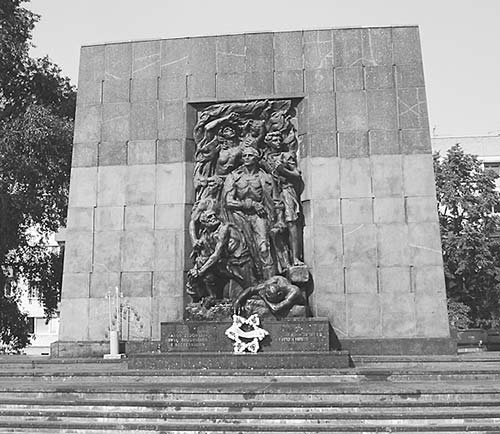
As you face the monument, look through the trees to the right to see a seated statue. Jan Karski (1914-2000) was a Catholic Pole and resistance fighter who traveled extensively through Poland during the Nazi occupation, collected evidence, and then reported on the Warsaw Ghetto and the Holocaust to the leaders of the Western Allies (including a personal meeting with FDR). In 1944, while the Holocaust was still going on, Karski published his eyewitness account, The Story of a Secret State (which you can see on this statue’s armrest). After the war he became a US citizen, and in 2012 President Barack Obama awarded him a posthumous Presidential Medal of Freedom.
The huge, glassy building facing the monument from across the square is the Museum of the History of Polish Jews (described next).
▲▲▲Museum of the History of Polish Jews (Muzeum Historii Żydów Polskich, a.k.a. POLIN)
This world-class attraction thoughtfully traces the epic, millennium-long story of Jews in Poland. This is not a “Holocaust museum”; rather, it provides stirring, comprehensive documentation of the very rich Polish Jewish experience across the centuries. In-depth, engaging, vividly illustrated, and eloquently presented, the exhibits present a powerful context for the many Jewish cultural sites around Poland—offering insights both for people familiar with the story and for those who aren’t. The museum is at once expansive and intimate, with ample descriptions, videos, and touchscreens; you could spend all day here, but two hours is the minimum. Its name, POLIN, means “rest here” in Hebrew and also evokes birdsong. It wins my vote for the best museum in Poland, and it’s easily Europe’s best Jewish museum—and a strong contender for the best European historical museum, period. The building also hosts cultural events and temporary exhibits.
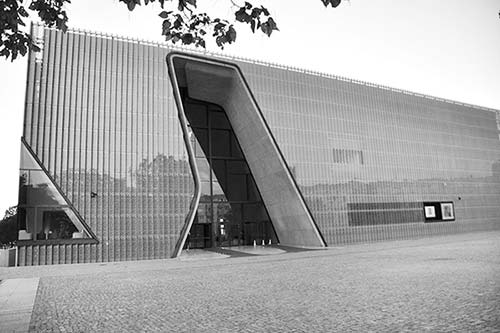
Cost and Hours: Core exhibition—45 zł, includes essential audioguide, more for temporary exhibits; Wed-Mon 10:00-18:00, Sat until 20:00, closed Tue, last entry two hours before closing; Anielewicza 6, +48 22 471 0300, www.polin.pl.
Visiting the Museum: Before entering, view the building’s striking exterior (designed by Finnish architect Rainer Mahlamäki). You’ll enter (and go through a security checkpoint) at the large, asymmetrical hole in the side of the building. Once you’re inside, the symbolism becomes clear: This represents Moses parting the Red Sea. (While the main exhibit covers the thousand years of Jews in Poland, this goes back even further—to the Jewish origin story.)
Buy your tickets for the core exhibition and pick up the invaluable 60-stop audioguide, which helps provide a concise structure for your exploration of the sprawling exhibitions. The main floor has a children’s area and the good $ Warsze café, with a tempting cafeteria line of Polish and Jewish classics.
Then head downstairs and follow the one-way route. In this high-tech, interactive space, exhibits in eight galleries mingle with actual artifacts to bring history to life.
You’ll begin by passing through a simulated forest—evocative of legends about the Jews’ arrival in Poland—to reach the First Encounters exhibit. Here you’ll learn how Jewish merchants made their way to Poland in the 10th century (with maps of their trade routes and samples of what they sold). The story is told partly from the perspective of Ibrahim ibn Yakub, a Sephardic Jew who penned early travelogues about Europe. Look for the display case that holds a coin from the ninth century, with Hebrew characters, that was minted in Poland. In 1264, Duke Bolesław the Pious—the first of many tolerant Polish rulers—extended rights and protections to his Jewish subjects, allowing them to thrive. In the next room, on the left wall are illustrations of the leading Polish cities of the time, and on the right wall are Polish medieval monarchs, with in-depth explanations of each one’s policies toward their Jewish subjects.
Next, the Paradisus Iudaeorum explains how, as Jews became more established in Polish society in the 15th and 16th centuries, they enjoyed better and better living conditions. (Meanwhile, anti-Semites bitterly complained that Poland was becoming a “Jewish Paradise”—the name of this exhibit.) The centerpiece here is a gigantic, interactive model of Kraków and its Jewish quarter, Kazimierz. In the library section, you can flip through virtual pages of books from the era—representing the flourishing of education during this time. Poland was a rare place where books would actually be printed in Hebrew.
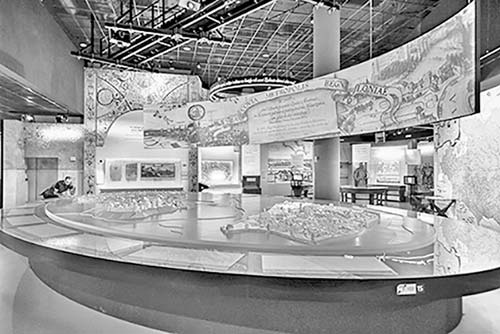
Continuing into the next area, you’ll enter a dark hallway that explains the Khmelnytsky Uprising—a mid-17th-century Cossack rebellion against the Polish lords and the Jews who served them. This brought a new wave of pogroms and 10,000 Jewish deaths, mainly in present-day Ukraine.
After the uprising, Polish lords invited Jews to privately owned market towns—called shtetls—to help reestablish the economy. The Jewish Town offers a fascinating look at different walks of life in a typical Jewish community: the market, where Jews and Christians could mingle at the tavern; the home, where a family would live, work, eat, and sleep in a single room; the cemetery (touchscreens invite you to learn about the symbolism of Jewish tombstones); and the synagogue, with a gloriously colorful replica of a ceiling and bema (prayer platform) from a wooden synagogue from the village of Gwoździec—dripping with symbolism that’s explained on nearby touchscreens. The depictions of “exotic” animals were influenced by Ottoman art and painted by local artists, who had never actually seen these beasts—leading to several errors, including an elephant with claws and an “ostrich” that looks more like an eagle. An exhibit also traces the mid-18th-century rise of Hasidism—a mystical branch of Judaism—in the eastern Polish lands (today’s Ukraine).
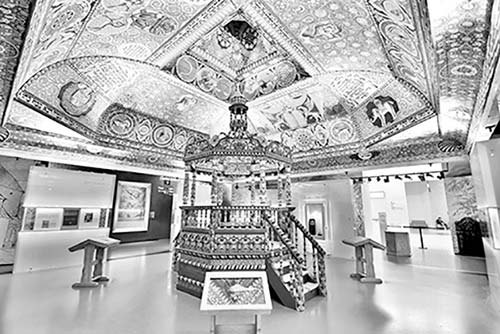
With the Partitions of the late 18th century (when Polish territory was divided among neighboring powers), the Jewish population—who had spent centuries carving out a vital niche in a united Poland—now found themselves split among three different empires (symbolized by giant portraits of the rulers of Prussia, Russia, and Austria, all facing the Polish throne).
Encounters with Modernity examines how Jews in different parts of the Polish lands had very different experiences. Some were required by the new authorities to adopt surnames for the first time. Flippable panels illustrate how Russian authorities required both men and women to change their traditional clothing. You’ll see a replica salon of a wealthy Jewish family who mingled with elites, and learn about the debate at that time of what the role of Jews in society should be (illustrated by a fine collection of items from Jewish ceremonies commemorating rites of passage). You’ll also learn about the competing movements within Judaism that emerged during this era: Hasidism, led by charismatic Tzadiks who promised a closer spiritual connection to God, and the more reform-minded Haskalah, an intellectual approach inspired by the Enlightenment.
A mesmerizing, painterly film follows a day in the life of a young student at a yeshiva (school). A railway station represents the Industrial Revolution, when the world got smaller. You’ll learn how some Jews worked hard to integrate with their dominant cultures (such as the painter Maurycy Gottlieb). This period also saw the emergence of modern anti-Semitism, including a brutal pogrom in Warsaw in 1881. As Jews sought to define a modern Jewish identity in the late 19th century, many emigrated—some to North or South America, and still others to the Holy Land (the beginnings of Zionism).
All of this sets the stage for World War I, when Jews were drafted into various armies—and often forced to fight one another. But at war’s end, Poland was reconstituted as an independent nation. You’ll step out onto The Jewish Street, which re-creates an interwar shopping street from a Jewish community. (“The Jewish Street” was also slang for the Jewish world in general.) It was between the world wars—when a newly independent Poland extended full citizenship and voting rights to its Jewish citizens—that Jewish cultural life flourished as never before. Three million Jews lived in Poland—including one-third of Warsaw’s population. You’ll see re-created Warsaw sites relating to newspapers, cinema, writers, and artists; and you’ll learn about Jewish tourism of the era (when middle-class Jews would travel around Poland and Europe to visit Jewish cultural sites). Don’t miss the mezzanine area, with exhibits about education and reform—including bilingual schooling (Yiddish and Polish), the beloved educator and author Janusz Korczak, and the debate over “ghetto benches” (segregated seating areas in schools).
This was also a time of rising anti-Semitism, segregation, boycotts, and anti-Jewish quotas. After one more nostalgic stroll down “The Jewish Street,” you come to September 1, 1939, when the Nazis invaded Poland. They stripped Jews of their rights and possessions; humiliated, labeled, tortured, and executed them; and eventually implemented the Holocaust.
The exhibit traces, step by step, the escalation of the Nazis’ “Final Solution,” with a focus on events here in Warsaw: forcing Jews into a ghetto (you’ll walk across a platform representing the bridge that connected the two parts of the ghetto, offering Jewish people fleeting glimpses of “normal” life going on outside their walls), the liquidation of the ghetto and the movement of Warsaw’s Jews to the death camp at Treblinka, and the Ghetto Uprising, a desperate last stand in which the dwindling number or Warsaw’s Jews put up a valiant, but ultimately doomed, fight. Making these stories personal are contemporaneous diaries, documents, and photographs.
The exhibit poses difficult questions about how non-Jewish Poles helped—or did not help—the Jews who were gradually disappearing from their cities. And it explains how a sort of “underground railroad” worked at great peril to save as many Jews as possible—as depicted in the movie The Pianist. (Look for the chess set carved by a Jew in hiding.) All told, 9 out of every 10 Polish Jews were murdered in the Holocaust. Only about 300,000 survived.
Finally, The Postwar Years follows Holocaust survivors in the years just after the war, when, astonishingly, they were scapegoated for war crimes. About 150,000 more (half the total survivors) fled to the newly created state of Israel, and those who remained had to navigate an unfriendly, anti-Semitic communist regime. In 1968, the communists launched an “anti-Zionist” campaign; eventually around 15,000 Polish Jews lost their citizenship and left for Israel, Western Europe, and the US. Not until the fall of communism could the rest finally enter a world of new possibilities. The final room poses a powerful question: Given this rich yet traumatic history, what is the future for Jews in Poland?
The creation of this museum—the first time that the full story of the Jews of Poland has ever been told in such a mainstream way, and in all its epic scope—represents a critical milestone in celebrating a culture that has survived a harrowing history.
Ghetto Walking Tour
For a poignant stroll through what was the ghetto, with faint echoes of a tragic history, take this brief, lightly guided walk for a few blocks. The neighborhood itself is drab and boxy, though increasingly gentrified. It was rebuilt in characterless communist style after it was leveled during the Holocaust. You’ll have to work hard to resurrect the memory of what went on here.
Stand along the street facing the back side of the monument, with the museum behind it. Turn right and walk along Zamenhofa—which, like many streets in this neighborhood, is named for a hero of the Ghetto Uprising. From here, you’ll follow a series of three-foot-tall, black stone memorials to uprising heroes—the Path of Remembrance. Like stations of the cross, each recounts an event of the uprising. Every April 19th (the day the uprising began), huge crowds follow this path.
In a block and a half, just beyond the corner of Miła (on the left, partly obscured by some bushes), you’ll find a bunker where about 100 organizers of the uprising hid (and where they committed suicide when the Nazis discovered them on May 8, 1943).
Continue following the black stone monuments up Zamenhofa (which becomes Dubois), then turn left at the corner, onto broad and busy Stawki. The ugly gray building on your left (a half-block down at #5, near the tram stop) was the headquarters of the SS within the ghetto. This is where the transportation of Warsaw’s Jews to concentration camps was organized.
Using the crosswalk at the tram stop, cross Stawki and proceed straight ahead into the gap between the two buildings. At the back of this parking lot is a surviving part of the red-brick ghetto wall, with a few remaining scraps of 1940s barbed wire.
Farther up Stawki street, on the right, is the finale of this walk: the Umschlagplatz monument. That’s German for “transfer place,” and it marks the spot where the Nazis brought Jewish families to prepare them to be loaded onto trains bound for Treblinka or Auschwitz. This was the actual site of the touching scene in the film The Pianist where the grandfather shares bits of chocolate with his family before being forever separated. In the walls of the monument are inscribed the first names of some of the victims.
Other Warsaw Ghetto Sights
There are several other powerful sights relating to the ghetto, but they’re spread far and wide around the city. Ideally, join a tour or hire a guide to weave them together. Here are some of the key locations; the first two are closer to the Palace of Culture and Science, while the final one is west of the Museum of the History of Polish Jews.
A rare, small surviving section of the ghetto wall that surrounded Warsaw’s Jews during the Nazi occupation is behind a stretch of humdrum buildings just west of the Palace of Culture and Science. Enter through the passage at Ulica Złota 62 and bear right; you’ll find it tucked back in a courtyard.
The Nożyk Synagogue, just north of the Palace of Culture and Science, is the only synagogue that survived World War II; it’s relatively new, dating from 1902 (Twarda 6). After the liquidation of the ghetto, the building was kept intact to use as stables by occupying Nazi forces. Rebuilt in 1983, it’s still used today as a place of worship and gathering, and is not typically open to the public.
Several blocks northeast, a monument called the Footbridge of Remembrance (Kładka Pamięci) spans Chłodna street near the intersection with Żelazna street. This recalls the wartime period when the walled Jewish ghetto included a corridor where local trams could pass through. In order to cross between the “Large Ghetto” (to the north of here) and the “Small Ghetto” (to the south), Jews had to walk over a footbridge—giving them a cruelly enticing glimpse of the “outside world.” (This scene was vividly staged in The Pianist, and there’s a conceptual re-creation of the bridge in the Museum of the History of Polish Jews.) A few steps up Chłodna street is a different monument from a different era, honoring Jerzy Popiełuszko, the outspoken, pro-Solidarity priest who was murdered by the communist secret police during martial law in 1984; he lived in the house at #15.
WARSAW UPRISING SIGHTS
For those interested in the 1944 Warsaw Uprising, it’s worth visiting two sights: one a monument, the other a museum. Neither is right along the main tourist trail; the monument is closer to the core sightseeing zone, while the museum is a subway, tram, or taxi/Uber ride away.
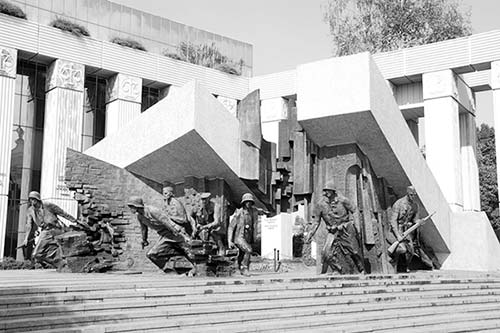
Warsaw Uprising Monument
The most central sight related to the Warsaw Uprising is the monument at Plac Krasińskich (intersection of Ulica Długa and Miodowa, one long block and about a five-minute walk southwest of the New Town Square). Larger-than-life soldiers and civilians race for the sewers in a desperate attempt to flee the Nazis. Just behind the monument is the oxidized-copper facade of Poland’s Supreme Court.
▲▲Warsaw Uprising Museum (Muzeum Powstania Warszawskiego)
Thorough, modern, and packed with Polish field-trip groups, this museum celebrates the heroes of the uprising (or, as this museum calls it, the Warsaw Rising). It’s a bit cramped, and finding your way through the exhibits can be confusing, but it works hard to illuminate this complicated chapter of Warsaw’s history. The location is inconvenient (a taxi/Uber or public transit ride west of Centralna station) and, because it takes some time to visit, may not be worth the trek for those with a casual interest. But history buffs find it worthwhile.
Cost and Hours: 30 zł, free on Mon; open Wed-Mon 8:00-18:00, Sat-Sun from 10:00, closed Tue; +48 22 539 7947, www.1944.pl.
Audioguide: The informative, two-hour audioguide is ideal if you want to delve into the whole story (10 zł, rent it in the gift shop). But the museum is so well described, you can just wander aimlessly and be immersed in the hellish events.
Eating: The museum’s $ café is oddly pleasant, serving drinks and light snacks amidst genteel ambience from interwar Warsaw. In summer you can dine on a peaceful terrace. You’ll also find a few business lunch-type places in the surrounding office zone.
Getting There: The museum is on the western edge of downtown—a long, dull walk—at Ulica Przyokopowa 28. While it’s easiest to reach by taxi or Uber (figure about 10 minutes and 20 zł from the Royal Way), you can get close on public transit: Ride the Metro or a bus to Rondo Daszyńskiego, or a tram to the Muzeum Powstania Warszawskiego stop. From any of these, it’s a short walk to the museum (can be tricky to find, as it’s tucked around on the back side of the block).
Visiting the Museum: Buy your ticket at the little house at the far end of the entrance courtyard (marked kasa), then head into the main hall. The high-tech main exhibit sprawls across three floors. It tells the story of the uprising chronologically, with a keen focus on military history. The exhibit covers several topics but doesn’t provide a big-picture narrative; to fully understand the context of what you’re seeing, read the sidebar before your visit.
As you enter, the Room of the Little Insurgent on the right is a children’s area, reminding visitors young and old that Varsovian kids played a role in the Warsaw Uprising, too.
The ground floor sets the stage with Germany’s invasion and occupation of Poland. The Generalgouvernement (Nazi puppet government of occupied Poland, ruled by Hans Frank in Kraków) wasted no time in asserting its control over the Poles; you’ll learn how they imprisoned and executed priests, professors, and students. You’ll also hear the story of the earlier, smaller uprisings that preceded the Warsaw Uprising, including the Poland-wide Operation Tempest (Burza) in 1943. During those earliest rebellions, Warsaw was intentionally left out of the fray...but only for the time being. The print shop shows how propaganda was spread during the occupation despite the watchful eye of the Nazis.
To keep with the chronological flow, skip the middle floor for now and ride the elevator to the top floor (#2), which covers the main part of the uprising. You’ll meet some of the uprising’s heroes and learn about their uniforms, weapons, and methods. The room in the middle, with felt drapes, tells the story of the Wola Massacre, in which some 40,000 residents of that Warsaw neighborhood were executed in just three days. Beyond that, the “Kino Palladium” movie screen shows fascinating Home Army newsreel footage from the period (with English subtitles). To the right of the screen, you’ll walk through a simulated sewer, reminiscent of the one that many Home Army soldiers and civilians used to evade the Germans. Imagine terrified troops quietly traversing a sewer line like this one more than a mile long (but with lower ceilings)—and doing it while knee-deep in liquid sewage. At the end of the “sewer,” stairs lead down to the middle floor.
The middle floor focuses on the grueling aftermath of the uprising. The later days of the uprising are outlined, battle by battle. A chilling section describes how Warsaw became a “city of graves,” with burial mounds and makeshift crosses scattered everywhere. One room honors the Field Postal Service, which, at great personal risk, continued mail delivery of both military communiqués and civilian correspondences. Many of these brave “mailmen” were actually Scouts who were too young to fight. Nearby, another room re-creates a clandestine radio broadcast station set up in a living room.
If you need a break, look for the red corridor leading through the USSR section to the café and WC.
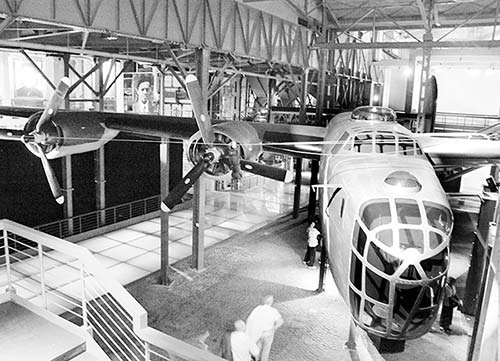
End your visit by walking down the stairs into the main hall, which is dominated by two large-scale exhibits: a replica of an RAF Liberator B-24 J, used for airborne surveillance of wartime Warsaw; and a giant movie screen showing more newsreels assembled by the Home Army’s own propaganda unit during the uprising. Under the screen, behind the black curtains, an exhibit tells the story of Germans in Warsaw, along with another, more claustrophobic walk-through sewer.
Also in the main hall, look for the entrance to the seven-minute 3-D film City of Ruins (Miasto Ruin), with virtual aerial footage of the postwar devastation. This gives you a look at the reality of the thousand people (nicknamed “Robinson Crusoes”) who lived in bombed-out Warsaw immediately after the war. It’s worth waiting in line to see this powerful film.
The park surrounding the building features several thought-provoking sights. A Chevy truck armored by the Home Army is both a people’s tank and an example of how outgunned they were. Along the back is the Wall of Memory, a Vietnam War Memorial-type monument to soldiers of the Polish Home Army who were killed in action. You’ll see their rank and name, followed by their code name, in quotes. The Home Army observed a strict policy of anonymity, forbidding members from calling each other by anything but their code names. The bell in the middle is dedicated to the commander of the uprising, Antoni Chruściel (code name “Monter”).
SOUTH OF THE CENTER
▲Łazienki Park (Park Łazienkowski)
The huge, idyllic Łazienki Park (wah-ZHYEN-kee) is where Varsovians go to play. The park is sprinkled with fun Neoclassical buildings, strutting peacocks, and young Poles in love. It was built by Poland’s very last king (before the final Partition), Stanisław August Poniatowski, to serve as his summer residence and provide a place for his citizens to relax.
On the edge of the park (along Belwederska) is a monument to Fryderyk Chopin. The monument, in a rose garden, is flanked by platforms, where free summer piano concerts of Chopin’s music are given weekly (mid-May-late Sept only, generally Sun at 12:00 and 16:00—confirm at TI). The statue shows Chopin sitting under a wind-blown willow tree. Although he spent his last 20 years and wrote most of his best-known music in France, his inspiration came from wind blowing through the willow trees of his native land, Poland. The Nazis were quick to destroy this statue, which symbolizes Polish culture. They melted the original (from 1926) down for its metal. Today’s copy was recast after World War II. Savor this spot; it’s great in summer, with roses wildly in bloom, and in autumn, when the trees provide a golden backdrop for the romantic statue.
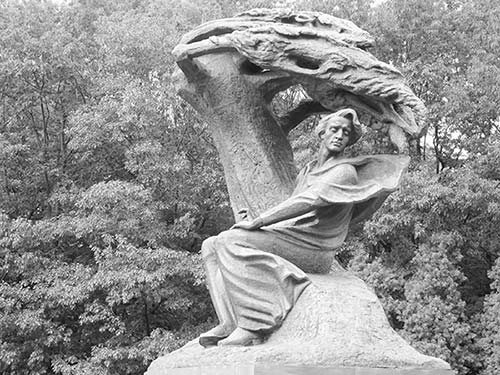
Venture down into the ravine and to the center of the park, where (after a 10-minute hike) you’ll find King Poniatowski’s striking Palace on the Water (Pałac na Wodzie)—literally built in the middle of a river. Nearby, you’ll spot a clever amphitheater with seating on the riverbank and the stage on an island. The king was a real man of the Enlightenment, hosting weekly Thursday dinners here for artists and intellectuals. But Poland’s kings are long gone, and proud peacocks now rule this roost.
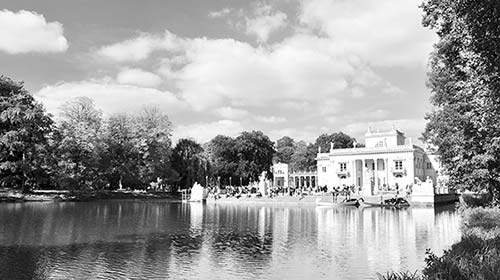
Getting There: The park is just south of the city center on the Royal Way. Buses #116 and #180 run from Castle Square in the Old Town along the Royal Way directly to the park (get off at the stop called Łazienki Królewskie, by Belweder Palace—you’ll see Chopin squinting through the trees on your left). Maps at park entrances locate the Chopin monument, the Palace on the Water, and other park attractions.
EAST OF THE CENTER: THE PRAGA DISTRICT
If you’re in Warsaw for a longer stay, or are curious to see an emerging hipster zone, cross the river to the Praga district. Praga was spared the worst of the WWII bombs; in fact, this is where the Red Army watched and waited as Hitler’s forces leveled the historic city center. And today, Praga’s relatively low rents and easy access to downtown make it a popular place for creative young Poles to live, eat, and party.
From Castle Square, the Śląsko-Dąbrowski Bridge rumbles over the Vistula (with ample tram and bus connections) right to the heart of this “other side of the river” neighborhood. (The Wileński stop, on the M2 Metro line, is also handy.) You can stroll along the traditional-feeling main drag, Targowa—a wide street with easy tram access, local shops and cafés, and Praga’s own history museum (closed Mon, www.muzeumpragi.pl). Or, for a look at contemporary Praga, walk 10 minutes east to the postindustrial Centrum Praskie Koneser—a former distillery that has been transformed into a hip dining and entertainment complex (for an events calendar, see www.koneser.eu). Wander through the red-brick buildings to find a tempting place for a meal. Or, if you need an excuse to cross the river, sign up for a tour and tasting at the Polish Vodka Museum—filling one part of the former Koneser distillery. After a tour and a look at both old and new methods for making vodka, you’ll enjoy an educational tasting designed to train your palate (closed Mon, smart to book ahead at www.muzeumpolskiejwodki.pl).
Shopping in Warsaw
You’ll notice that many Varsovians are chic, sophisticated, and very well dressed. To see where they outfit themselves, go window-shopping. Mysia 3 is a super-hip mini mall with three concise floors dedicated to mostly Polish fashion designers, but also has cutting-edge housewares and decor (daily, across Jerusalem Avenue from Nowy Świat, inside the former communist propaganda office at Mysia 3, www.mysia3.pl). Warsaw’s main “fashion row” is a bit farther south, in the Śródmieście district. Mokotowska street, which angles northeast from trendy Plac Zbawiciela, is lined with dozens of chichi boutiques, jewelry shops, shoe stores, designer pastry shops, hair salons, and hipster barbers. The highest concentration is a few short blocks north of Plac Zbawiciela, north of Piękna. If you enjoy this zone, the area immediately to the west—along Wilcza and Poznańska streets—has more of the same.
Entertainment in Warsaw
Warsaw fills the summer with live music. In addition to more serious options (opera, symphony, etc.), consider these crowd-pleasing choices.
CHOPIN
My favorite Warsaw music option is to enjoy a Chopin performance. There’s nothing like hearing Chopin’s compositions passionately played by a teary-eyed Pole who really feels the music. The best option is the outdoor concert in front of the big Chopin statue in Łazienki Park, but it is held only one day a week in summer (free, mid-May-late-Sept generally Sun at 12:00 and 16:00, www.lazienki-krolewskie.pl; for more on this option, see the Łazienki Park listing on here).
If you’re not in town on a Sunday, the next best thing is the Chopin Salon. Jarek Chołodecki, who runs the recommended Chopin Boutique lodging, hosts an intimate piano concert in his delightful salon nightly at 19:00. The performance can cover a range of musical styles and composers—but generally there are piano pieces featuring Chopin. The concert lasts around 45 minutes and is followed by wine, homemade cakes, and social time. A small group of locals and travelers gathers around Jarek’s big, shiny Steinway grand to hear great music by talented young artists in a great city (70 zł, half-price for hotel guests, Ulica Smolna 14, reservations required, +48 22 829 4801, www.bbwarsaw.com).
The Chopin Museum features a variety of quality piano recitals—including several presented by local music students. These typically take place from May through September, and many are included in the museum’s admission price (for details, see the museum listing on here).
Additionally, various touristy Chopin concerts are popping up all over the city; figure 85 zł for a piano performance set in a drawing room or small theater. Ask at the TI for the latest fliers.
OTHER MUSIC
Two big, historic churches in and near the Old Town put on 30-minute organ concerts most days. Choose between the Cathedral of St. John the Baptist, with an austere brick interior, right in the heart of the Old Town (25 zł, Mon-Sat at 12:00, no concerts Sun); and the frilly, Rococo St. Anne’s Church, with a more sumptuous interior, just outside the Old Town (25 zł, May-early Oct Mon-Sat at 12:00, no concerts Sun). Both are run by the same company (+48 501 158 477, www.kapitula.org).
Free outdoor jazz concerts take place each Saturday in summer right on the Old Town Square (July-Aug at 19:00). In the summer, in good weather, the recommended Chopin Boutique hotel hosts rooftop concerts with sweeping views over Warsaw; the music varies, but it’s often smooth jazz (free, usually May-Sept daily at 16:00, confirm schedule at https://bbwarsaw.com).
LIVELY HANGOUT ZONES
The Old Town and New Town are totally for tourists. To find some more interesting areas to explore and hang out after dark, your first stop should be Plac Zbawiciela in Śródmieście and the surrounding streets (see here). Locals also enjoy spending a balmy afternoon or evening on the Vistula riverbanks. Long ignored by Varsovians, the left (west) bank has undergone a dramatic renovation, with beautiful parklike embankments ideal for strolling. Meanwhile, the right (east) bank is still rugged and undeveloped, with forests and natural beaches; the biggest beach is around the eastern base of the Poniatowski Bridge (where Jerusalem Avenue crosses the river).
Sleeping in Warsaw
Warsaw is affordable for a European capital—for what you’d spend on a decent midrange room in Rome or Amsterdam, you can get a palatial room in a top-end hotel here. That said, two of my Warsaw favorites—Chopin Boutique and Duval Apartments—are both affordable and characteristic, making them great all-around choices.
I’ve arranged my listings by neighborhood. For locations, see the “Central Warsaw” map, earlier. Keep in mind that in the Old Town, you’ll rarely see a local, while in Śródmieście, you’ll rarely see a tourist. Choose your Warsaw experience.
NEAR PALM TREE CIRCLE (NOWY ŚWIAT AND JERUSALEM AVENUE)
Considering how spread out Warsaw is, this is a convenient location for reaching various sights around the city. While comfortable inside, these hotels are in big buildings on uninspiring urban streets.
$$ Hotel Indigo, part of a high-end chain, surrounds a sleek and glassy atrium with 60 posh rooms at reasonable prices. A row of nearby nightclubs can generate lots of noise on the weekends—ask for a quieter room, and pack earplugs (air-con, elevator, Smolna 40, +48 22 418 8900, www.indigowarsaw.com, reservation@indigowarsaw.com).
$$ Between Us B&B is an inviting home-away-from-home for hipsters in Warsaw. Beata rents three trendy rooms above a recommended café centrally located in downtown Warsaw. As this place books up early, reserve far ahead (on second floor, no elevator, check in at Między Nami café downstairs, Bracka 20, +48 22 828 5417 or +48 603 096 701, www.between-us.eu, info@between-us.eu).
$ Chopin Boutique offers comfort, class, personality, hospitality, and value in an ideal location. Jarek Chołodecki, who lived near Chicago for many years, returned to Warsaw and converted this beautifully renovated apartment building into a bed-and-breakfast with 38 endearingly creaky, creatively decorated, antique-furnished rooms. Quirky, charming Jarek is a good host (you’ll feel like you’re staying with your Warsaw sophisticate cousin), and his staff provide a warm professionalism. You’ll enjoy breakfast at big communal tables in the cellar restaurant, escape from the city in the garden courtyard, and have the opportunity to take in a nightly Chopin concert in the ground-floor salon—see “Entertainment in Warsaw,” earlier. Jarek prides himself on his hotel’s eco-friendliness and sustainability—with solar panels on the roof and much of the produce grown on the premises (RS%, elevator, free loaner bikes, rooftop deck with sweeping views over Warsaw, some rooms have street noise—ask for a quieter one in back, Ulica Smolna 14, +48 22 829 4801, https://bbwarsaw.com, info@bbwarsaw.com).
$ Apple Inn, with 10 tight, modern rooms that have small windows high above the streets of Warsaw, is your cheap-and-cheery option in the center. It’s in the attic of the former Jabłkowski Brothers department store—and, since jabłko means “apple,” the name is a clever pun (air-con, shared kitchen and library, sometimes unstaffed—clearly communicate your arrival time, Chmielna 21, unit 22B—ride elevator to fourth floor, +48 601 746 006, www.appleinn.pl, Marta).
¢ Oki Doki City Hostel, on a pleasant square a few blocks in front of the Palace of Culture and Science, is colorful, creative, and easygoing. Each of its 37 rooms was designed by a different artist with a special theme—such as Van Gogh, Celtic spirals, heads of state, or Lenin. It’s run by Ernest—a Pole whose parents loved Hemingway—and his wife Łucja, with help from their sometimes-jaded staff (private rooms available, up lots of stairs with no elevator, Plac Dąbrowskiego 3, +48 22 828 0122, www.okidoki.pl, okidoki@okidoki.pl).
In Śródmieście (“Downtown”): Foodies, people who hate tourists, and travelers who really want to disappear into Warsaw choose to sleep in Śródmieście, a 10-to-15-minute walk (or quick tram ride) south of Jerusalem Avenue. $$$$ Hotel Nobu, part of a high-end international chain, is a sophisticated home base in urbane Śródmieście. Its 117 rooms come in two types: The majority are sleek Asian minimalism, with bare-concrete hallways and well-decorated rooms. The rest are in a historic hotel building next door, with classic Art Deco style (air-con, elevator, Wilcza 73, nearest tram/bus stop at Koszykowa, +48 22 551 8888, https://warsaw.nobuhotels.com).
IN OR NEAR THE OLD TOWN
The Old Town area has some fine splurges and easy access to the romantic, rebuilt historic core. But it’s less handy to Warsaw’s trendier side.
$$$$ Hotel Bristol is Warsaw’s top splurge—as much a landmark as a hotel (see description on here), this classic address on the Royal Way is where you’re likely to spot visiting dignitaries and celebrities. (Just inside the round entrance on the corner, find the wall of brass knobs identifying past VIP guests—from Pablo Picasso to Ed Sheeran.) The public spaces are palatial, with sumptuous Art Deco lounges, bars, and coffee shops that make you want to dress up just to hang out. And the 206 rooms are fresh, elegant, and well equipped. If you like a posh home base, check the rates here first—you may be surprised at how affordable opulence can be (air-con, classy old vintage elevator, gym, swimming pool, sauna, Krakowskie Przedmieście 42, +48 22 551 1000, www.hotelbristolwarsaw.pl, bristol@luxurycollection.com).
$$$ Hotel Le Régina, part of the Mamaison group, is another tempting splurge, buried in the quiet and charming New Town (just north of the Old Town, a short walk away). From elegant public spaces to its 61 rooms, everything here is done with class (air-con, elevator, exercise room, pool, Kościelna 12, +48 22 531 6000, www.mamaisonleregina.com, reservations.leregina@mamaison.com).
$ Duval Apartments, named for a French woman who supposedly had an affair with the Polish king in this building, offers four nicely appointed rooms above a café and teahouse (called Same Fusy) a few steps off the square in the Old Town. Each spacious room has a different theme: traditional Polish, Japanese, glass, or retro. Offering B&B comfort with hotel anonymity, this is a solid value in a dreamy location. Especially on busy weekends, there may be some noise from revelers in the street out front—light sleepers can request a quieter back room (lots of stairs with no elevator, no breakfast—but ample options nearby, between the Barbican and Old Town Square at Nowomiejska 10, +48 608 679 346, www.duval.net.pl, duval@duval.net.pl). Arrange a meeting time with Agnieszka or Marcin when you reserve.
$ Castle Inn, sitting on Castle Square at the entrance to the Old Town, is run by the owners of Oki Doki Hostel (described earlier). Each of its 22 creative and colorful rooms has different decor. While not plush, it’s central and well priced (portable air-con in “deluxe” rooms in summer—otherwise no air-con, lots of stairs and no elevator, can be noisy—request quiet room, Świętojańska 2, +48 22 425 0100, www.castleinn.pl, castleinn@castleinn.pl).
Eating in Warsaw
Warsaw is, quite unexpectedly, one of Central Europe’s best food cities...not that the tourists who stick to the kitschy Old Town restaurants would know. While there are some fine places in the historic center to sample traditional Polish food, that’s better done in Old World Kraków; in Warsaw, don’t be shy about exploring some local neighborhoods to find a more eclectic, modern, cosmopolitan food scene. Prices are low, so even a “splurge” restaurant lets you experience high-end cuisine for a fraction of the cost of a similar place in a Western European capital.
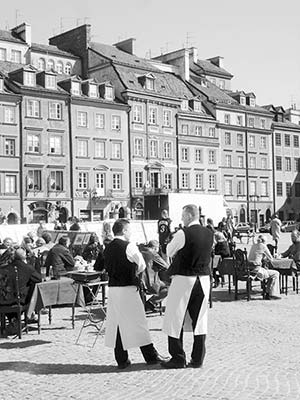
But be warned: The food scene here changes at a bewildering pace. What’s hot and new one year is shuttered the next. Don’t be surprised if some places I list here are closed when you visit. On the upside, that means there’s always something new to check out. Ask around, and do some research to find out what’s trending right now.
Unless otherwise noted, see the “Central Warsaw” map, earlier, for locations.
NEAR PALM TREE CIRCLE (NOWY ŚWIAT AND JERUSALEM AVENUE)
These practical options are right in the middle of your sightseeing plans. The clientele is a mix of local yuppies, savvy business travelers, and tourists smart enough to steer clear of Old Town restaurants.
Nowogrodzka Street
This otherwise unassuming street, one block south of busy Jerusalem Avenue, is a burgeoning foodie strip for local urbanites. The best choice here is $$ Bibenda, a rustic-trendy bar with cocktails and an enticing seasonal menu of Polish fusion dishes. The creative chefs use Polish classics as a starting point, then jazz them up with elements borrowed from corresponding dishes in other cultures. For example, you might see fried chicken (a Polish staple) marinated in buttermilk (from the American south) with a raspberry/chipotle glaze (from Mexico). Or perhaps a gołąbki (Polish cabbage roll) done in the style of a Turkish dolma (stuffed grape leaves). Or perhaps a beet salad with Sicilian citrus and radicchio. You may not see these exact dishes, as the menu changes constantly, but what you eat will invariably be creative, delicious, and surprisingly affordable. They have outstanding craft cocktails, too. They don’t take reservations, so arrive early or line up (Mon dinner only, Tue-Sun lunch from 13:00 and dinner, Nowogrodzka 10, +48 502 770 303, www.bibenda.pl).
Also along Nowogrodzka, you’ll find $$$ Soul Kitchen, a more upscale-feeling place with international cuisine in a sophisticated cellar (daily, downstairs at #18A, +48 519 020 888, www.soulkitchen.pl); $$ Le Cabaret, a dressy, grown-up-feeling “jazz café bistro” with a throwback-upscale interior, a short menu of hot and cold small plates, and live jazz music (daily, at #4A, +48 536 976 403); and $ Drugie Dno, an industrial microbrew taproom with bare brick, eight beers on tap, and affordable burgers (daily from 16:00, at #4, +48 22 625 3709, www.drugiedno.pl).
Near the Heart of Nowy Świat
The first cross street you reach on Nowy Świat (coming from Jerusalem Avenue) has a concentration of dining options in both directions. To the right (east, toward the river) runs Foksal street, lined with an ever-changing lineup of lively, contemporary eateries where diners cram the al fresco tables. This enticing strip feels generic and a bit touristy. (The recommended Kamanda Lwowska, described below, is a bit farther down Foksal.) To the left (west, toward the Palace of Culture and Science) runs Chmielna street. This grubby urban corridor has an entirely different vibe: Rather than upscale sit-down places, it’s an intriguing lineup of hole-in-the-wall and takeaway joints: Vietnamese, kebabs, pizza slices, Belgian fries, bubble tea, fancy ice cream, and so on.
After a couple of blocks, Chmielna opens up into a lovely traffic-free square (with modern benches) at Szpitalna street. Here the vibe changes again, with some appealing, upmarket, hangout hipster cafés where you can grab a good drink or a bite: The sleek and modern $$ Żywioły (“Elements”) bakery, filling the ground floor of the modernized Jabłkowski Brothers department store building, is a good and obvious choice (daily, straight ahead at Chmielna 19, +48 501 984 040, www.zywioly.pl); just to the left, find the hipper $ Między Nami, with ramshackle secondhand furniture, a short but tempting menu, and an ambience that encourages hanging out (closed Sun, Bracka 20, downstairs from recommended Between Us B&B, +48 22 828 5417, www.miedzynamicafe.com). Emil Wedel’s chocolate heaven, described later under “Classic Polish Treats,” is a block north.
Very Traditional Polish Food: $$ Kamanda Lwowska is the best spot in central Warsaw for big portions of homestyle Polish cooking. It’s named for the former Polish city that’s now in Ukraine (Lwow, a.k.a. Lviv). It has a few outdoor seats in a parklike setting and a charming, cluttered old cellar with just a touch of kitsch. The friendly and fun staff serves up well-executed Polish classics (daily from 13:00, Foksal 10, +48 22 828 1031, www.kamandalwowska.pl).
Classic Polish Treats: Pączki and Chocolate
These places are on or close to the busy Nowy Świat boulevard.
A. Blikle, Poland’s most famous pastry shop, serves a wide variety of delicious treats. This is where locals shop for cakes when they’re having someone special over for coffee. The specialty is pączki (PONCH-kee), the quintessential Polish doughnut, filled with rose-flavored jam. You can get your goodies “to go” in the shop, or pay double to enjoy them with coffee in the swanky, classic café with indoor or outdoor seating (daily, Nowy Świat 35, +48 22 828 6601). They also have a sit-down restaurant, but I come here only for the pączki. You’ll see many other A. Blikle branches around town, but this is the original.
E. Wedel Pijalnia Czekolady thrills chocoholics. Emil Wedel made Poland’s favorite chocolate, and today, his former residence houses this chocolate shop and genteel café. This is the spot for delicious pastries and a real hot chocolate—czekolada do picia (“drinking chocolate”), a cup of melted chocolate, not just hot chocolate milk. Or, if you fancy chocolate mousse, try pokusa. Wedel’s was the Christmas treat for locals under communism. Cadbury bought the company when Poland privatized, but they kept the E. Wedel name, which is close to all Poles’ hearts...and taste buds (daily, Szpitalna 8, +48 22 827 2916, www.wedelpijalnie.pl).
IN POWIŚLE, NEAR THE RIVERBANK
The low-lying Powiśle neighborhood—squeezed in the little canyon between the Royal Way and the river—is trendy, thanks partly to its proximity to the inviting riverbank parks and Copernicus Science Center. These places aren’t worth a big detour, but a trip here lets you escape the congested urban center, explore a quieter side of town, and combine a meal with a stroll along the river.
Elektrownia Powiśle is a sprawling, futuristic complex that fills a former electric plant across the street from the Copernicus Science Center. It preserves an original red-brick hall, newly adorned with lots of steel, glass, and steampunk accents. The core of the complex is dedicated to dining, surrounded by a sprawling designer mall (if you’re in the market for modern Polish fashion or upmarket tennis shoes, this is the place). The $ food hall is a handy place to browse for a meal—the eclectic lineup includes everything from microbrews, smash burgers, and gourmet hot dogs to sushi, ramen, dim sum, and tacos. There are also a few attached $$-$$$$ sit-down restaurants. Even if you’re not looking for a meal, the dramatic old-meets-new architecture makes this worth a stroll-through (closed Sun, Dobra 42, www.elektrowniapowisle.com).
$ Warszawa Powiśle is a café/bar occupying the old, communist-style ticket office for the suburban train station of the same name. Tucked along a picturesque bike lane beneath the towering legs of a bridge, its sidewalk is jammed with cool Varsovians and in-the-know visitors. I’d skip the basic food (light sandwiches, dumplings) and instead just enjoy the vibe with a drink (daily, Kruczkowskiego 3B, +48 22 474 4084).
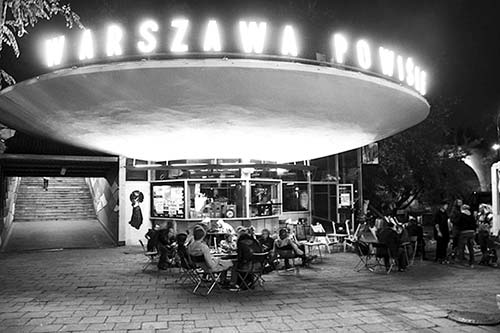
IN ŚRÓDMIEŚCIE (“DOWNTOWN”)
Warsaw’s Śródmieście district is the epicenter of Polish hipster/foodie culture—where you’ll find young Varsovian foodies digging into affordable dishes at the trendiest new places. This area is a 15-minute walk south of Jerusalem Avenue and also well served by public transportation (several trams run frequently along the main north-south Marszałkowska corridor to Plac Zbawiciela); the Politechnika Metro stop is also nearby. Listed next are a few different restaurant-hunting zones, with a handful of specific recommendations. For locations of the places listed in this section, see the “Warsaw Overview” map, on here.
Hala Koszyki
This trendy food hall (pronounced koh-SHEE-kee), which opened in 2016 in a renovated brick market hall from 1906, is your handiest one-stop shop for sampling Warsaw’s current dining scene. Outside—sandwiched between the two brick entrances—is a sprawling zone of al fresco tables amidst lush trees strewn with twinkle lights. Inside, you’ll find more than a dozen entirely different eateries, covering all of the culinary bases: Spanish tapas, sushi, Indian, Latin American, Italian, Thai, hummus bar, dim sum, beer hall, tea salon, gourmet chocolates, gelateria, Portuguese, the grotesquely over-the-top “Jeff’s American Food,” and more (most are $-$$). It’s anchored by the big bar in the middle, surrounded by communal seating.
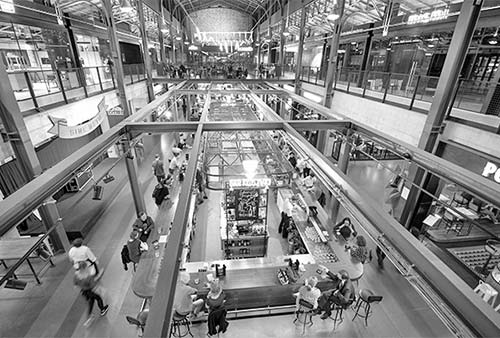
The upper level, ringed by design studios, has quieter seating and views over the action. The complex also has some serious sit-down eateries, including $$$ Ćma (“Moth”), with updated Polish fare and occasional DJs (daily, Koszykowa 63, www.koszyki.com). They also have live performances (ranging from concerts for kids to Polish stand-up comedy)—check the website for details.
On Plac Zbawiciela
Named “Holiest Savior Square” for the looming church, this is a dizzying six-way intersection with a big traffic circle ringed by hulking old colonnades. To get a quick taste of the Śródmieście scene, come here first and just do a slow loop around the circle, surveying your options. Starting to the right of the steeple and moving clockwise, here are a few options you’ll see (all open daily): $$ Izumi Sushi, $ Karma coffee shop (drinks, sandwiches, and salads), and $$ Tuk Tuk Thai street food are all popular, with great seating out on the square. Continuing two crosswalks around the circle, you’ll cross Mokotowska; looking left here, you may spot a line of people at Sucré—an unpretentious hole-in-the-wall serving all-natural, homemade ice cream. The next section (after Mokotowska) has Pałaszowanie, serving cheap but creative zapiekanki (French bread pizza), followed by the trendy $$ Charlotte designer bakery and wine bar, with homemade treats and sandwiches at tables spilling out all over the square. Up above, Plan B is a hipster dive bar with drinks, snacks, and views down over the square; this is where revelers head at 2 in the morning, after the restaurants are closed (find the graffiti-slathered staircase up just past Charlotte).
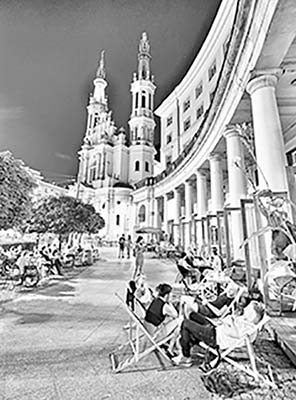
On and near Poznańska Street
A few short blocks west of Plac Zbawiciela, this street is also lined with trendy and youthful eateries (especially around the intersection with Wilcza street; the nearest tram/bus stop is Hoża, and it’s also not far from Plac Konstytucji). Strolling this strip, you’ll find several enticing options. $$ Beirut, a rustic and casual bar serving up good Middle Eastern food, is the culinary anchor of this neighborhood—always packed and lively. The hummus bar, on the left, has a wide variety of mezes (small plates) and grilled meats, while the “Kraken Rum Bar” on the right has fish dishes (portions are modest—plan to share a few, order at the counter then find a table, daily, Poznańska 12). $$ Tel Aviv, with gluten-free and vegan Middle Eastern food across the street, is the upscale and more user-friendly answer to Beirut...and enjoys handling its overflow (daily, Poznańska 11). A few steps away, at the intersection with Wilcza, is $$$$ Nolita, one of Warsaw’s top-end, white-tablecloth, fine-dining splurges (closed Sun-Mon, Sat dinner only, Wilcza 46, www.nolita.pl).
OTHER HIP, POSTINDUSTRIAL HANGOUTS
In addition to Hala Koszyki (in Śródmieście) and Elektrownia Powiśle (near the river and Copernicus Science Center)—both recommended above—Warsaw has several other trendy food-and-drink zones that fill rejuvenated former industrial complexes. Scattered around the city, these capitalize on a Poland-wide obsession with postindustrial hipness; if you’re near any of them, or if you’re simply interested in exploring a different chunk of this sprawling city, these are worth a browse. At each, you’ll find a range of options, from food-hall counters slinging tempting global cuisine, to sit-down splurges, to convivial pubs. All have eateries that are open daily; for the current lineup, see the websites.
Browary Warszawskie, near the Warsaw Uprising Museum in the Wola district west of downtown, fills the former home of Haberbusch and Schiele—Poland’s largest brewery in the 19th century. Leveled in World War II, now it’s been rebuilt in modern style under the name “Warsaw Breweries” (Grzybowska 60, www.browarywarszawskie.com.pl).
Fabryka Norblina, also in Wola, is the former factory of Norblin, a huge facility that produced metal items in the 19th and early 20th centuries. Now it’s a thriving entertainment zone, with ample bars, restaurants, and “Food Town,” with two dozen global food counters. If you’d like to learn more about the complex’s industrial history, they also have a museum and guided tours (Żelazna 51/53, www.fabrykanorblina.pl).
Centrum Praskie Koneser—or Koneser Center for short—offers a good excuse to visit the Praga district, across the river (described on here). In addition to housing the Polish Vodka Museum, this former distillery complex has a wide array of dining, drinking, and entertainment venues (Plac Konesera 8, https://koneser.eu).
IN OR NEAR THE OLD TOWN
The restaurants within the Old Town and surrounding streets are 100 percent for tourists. Dining right on the Old Town Market Square is exorbitantly expensive, but could be worth it for those who treasure a romantic memory. Still, I’d rather walk a block or two to one of these options. The first two are on the New Town Square—an enjoyable five-minute stroll beyond the Barbican; with each step, you feel the tourist-to-local ratio dropping.
$$ Żyto is a cozy, stylish spot facing the New Town Square, where you can sample Ukrainian cuisine. Perusing the menu is actually educational: You’ll see Ukrainian spins on what you might think are “Polish” dishes, like pierogi; and you’ll notice influences from other parts of that huge country—Hungarian-style borgacz, Georgian-style salad with walnut paste, and so on (daily, Freta 29/31, +48 575 806 296). For more on Ukrainian food, see here.
$$ Freta 33, next door, has decent international fare (such as pastas), fine outdoor seating, and a contemporary subway-tile interior. It feels modern and hip for this ye olde neighborhood (daily, Freta 33, +48 22 635 0931).
$ Pyzy, Flaki Gorące! is close to Castle Square, but just across the street from the Old Town wall, which helps it feel less touristy. The name—meaning “Hot Dumplings and Tripe!”—is also the menu. Cozy and casual, with a dash of trendy and kitschy, it’s a fine spot for updated-traditional Polish flavors. Most of the dishes—dumplings with various toppings, soups (including the namesake tripe soup, flaki po warszawsku), and herring—all come in jars, a homage to Poland’s historic propensity for preserving foods through the long, hard winters. They also have flatbreads with very Polish toppings (daily, Podwale 5, +48 722 255 245, www.pyzyflakigorace.pl).
$ Zapiecek, with a half-dozen locations in and near the Old Town, is a kitschy chain serving up cheap and cheery traditional Polish dishes. Yes, it’s definitely touristy. But the prices are reasonable, and the food is better and more authentic than it has any right to be. They proudly make their prizewinning pierogi by hand every morning. If you need a quick, traditional meal anywhere near the Old Town, you could do much worse (handiest location faces the Cathedral of St. John the Baptist at Świętojańska 13, others are on the main drag through the New Town at Freta 1 and Freta 18, two more on the Royal Way at Nowy Świat 64 and Krakowskie Przedmieście 55, all open long hours daily).
Warsaw Connections
Almost all trains into and out of Warsaw go through hulking Warszawa Centralna station (described earlier, under “Arrival in Warsaw,” including ticket-buying tips).
If you’re heading to Gdańsk, note that the red-brick Gothic city of Toruń and the impressive Malbork Castle are both on the way but are on separate train lines—making it difficult to do both en route (see the Gdańsk and Pomerania chapters). Also be aware that EIC and IC express trains to many destinations—including Kraków and Gdańsk—require seat reservations, even if you have a rail pass.
You can buy most tickets online (www.intercity.pl). To confirm rail journeys, check specific times online or at the station.
From Warszawa Centralna Station by Train to: Kraków (about hourly, 2.5 hours), Gdańsk (hourly, 3 hours), Malbork (hourly, 2.5 hours), Toruń (every 2 hours direct, 3 hours on express IC train, more with changes), Prague (2/day direct, more with change in Ostrava, 8.5 hours), Berlin (4/day direct, 6.5 hours, no direct night train), Budapest (1/day direct, 11.5 hours; 1/day overnight, 13 hours; more with change in Břeclav, Czech Republic), Vienna (2/day direct, 7.5 hours; plus 1 night train, 11.5 hours).
By Bus: Flixbus—described on here—runs bus routes throughout Poland and to international destinations (www.flixbus.pl).