POLAND
Polska
Saddle on a Cow: Poland Under Communism
Poland is a land of surprises. Some travelers may still imagine this place as a backwards, impoverished land of rusting factories, smoggy cities, and gloomy citizens—only to be left speechless when they step into Kraków’s vibrant main square, Gdańsk’s colorful Royal Way, or Warsaw’s trendy hipster zones. Today’s Poland has a vibrant urbanity, an enticing food and design culture, dynamic history, and kindhearted locals.
The Poles are a proud people—as moved by their spectacular failures as by their successes. Their quiet elegance has been tempered by generations of abuse by foreign powers.
In a way, there are two Polands: lively, cosmopolitan urban centers; and countless tiny farm villages in the countryside. A societal tension exists between city-dwelling progressives and what they call the “simple people” of Poland: salt-of-the-earth Poles descended from generations of farmers, who still live an uncomplicated, agrarian lifestyle and tend to be politically conservative and staunchly Euroskeptic.
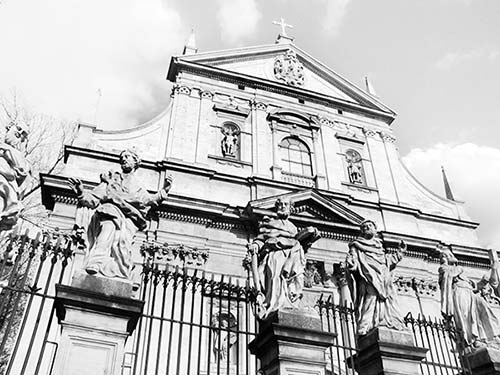
Poland is arguably Europe’s most devoutly Catholic country. Even compared to other nominally Catholic countries, travelers are struck by how the Poles’ faith pervades their lives and worldviews. This is probably because the Catholic faith has united and sustained the Poles through many tough times. Squeezed between Protestant Germany (Prussia) and Eastern Orthodox Russia, Poland wasn’t even a country for generations (during the Partitions, 1795-1918)—but its Catholicism helped keep its spirit alive. Then, under communism, Poles found their religion a source of both strength and rebellion—they could express dissent against the atheistic regime by going to church. Be sure to step into some serene church interiors. These aren’t museums—you’ll almost certainly see locals engrossed in prayer. (Visit with respect: Maintain silence, and if you want to take pictures, do so discreetly.)
Much of Poland’s story is a Jewish story. Starting in the Middle Ages, Poland was a magnet for Jewish refugees because of its relatively welcoming policies. “Relatively” is the operative word. Polish history is rife with pogroms and other acts of violence, and Jewish people were forbidden from owning land; that’s why they settled mostly in cities.
Jewish cultural life in Poland blossomed in the early 20th century. Before World War II, 80 percent of Europe’s Jews lived in this country. Warsaw was the world’s second-largest Jewish city (after New York), with 380,000 Jews (out of a total population of 1.2 million). But the Holocaust (and a later Soviet policy of sending “troublemaking” Jews to Israel) decimated the Jewish population.
This tragic chapter, combined with postwar border shifts and population movements, made Poland one of Europe’s most ethnically homogeneous countries. Today, 97 percent of citizens are ethnic Poles; only a few thousand Polish Jews remain, along with small minorities of Ukrainians and Germans.
Poland has long been staunchly pro-America. Of course, their big neighbors (Russia and Germany) have been their historic enemies. And when Hitler invaded in 1939, the Poles felt let down by their supposed European friends (France and Britain), who declared war on Germany but provided virtually no military support to the Polish resistance. America, meanwhile, is seen as the big ally from across the ocean—and the home of the largest population of Poles outside of Poland.
Poles may strike some visitors as brusque. Among older generations, this may be a holdover from challenging communist times. And it may help to know that, because of the plainspoken cadence of Polish, Poles speaking English sometimes sound more impatient or gruff than they realize. Part of the Poles’ charm is that they’re not as slick and self-assured as many Europeans: They’re kind, soft-spoken, and quite shy. On a recent train trip in Poland, I offered my seatmate a snack—and spent the rest of the trip enjoying a delightful conversation with a new friend.
HELPFUL HINTS
Price Ranges: Many hotels and restaurants in Poland fall in this book’s lower price ranges ($ and $$). This is a reflection not of quality but of the value of Poland compared to other destinations in Central Europe. A $$ hotel or restaurant in Poland can often meet or exceed the caliber of a $$$$ place in Prague or Vienna. Don’t be put off by seemingly low prices: Even elegant choices don’t break the bank here, and frugal travelers can order high on the menu.
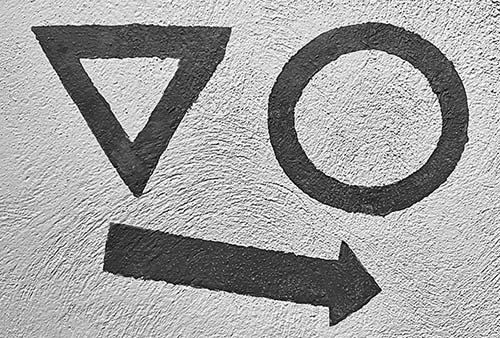
Restroom Signage: To confuse tourists, the Poles have devised a secret way of marking their WCs. You’ll see doors marked with męska (men) and damska (women)—but even more often, you’ll simply see a triangle (for men) or a circle (for women).
Train Tickets: It’s easiest to buy train tickets online at www.intercity.pl; while not particularly user-friendly, it’s in English and workable with a little patience (it helps to create a log-in). Tickets are emailed, and you can simply show them on your phone to the conductor. At train stations, you’ll see both ticket machines and staffed windows (kasy). These may be marked (sometimes only in Polish) for domestic tickets, international tickets, and so on; ask to make sure you’re in the right line. Leave plenty of time to buy your ticket.
Train Station Lingo: “PKP” is the abbreviation for Polish National Railways (“PKS” is for buses). In larger towns with several train stations, you’ll normally use the one called Główny (meaning “Main”—except in Warsaw, where it’s Centralna). Dworzec główny means “main train station.” Most stations have several platforms (peron), each of which has two tracks (tor). Departures are generally listed by the peron, so keep your eye on both tracks for your train. Arrivals are przyjazdy, and departures are odjazdy. Left-luggage counters or lockers are marked przechowalnia bagażu. On arriving at a station, to get into town, follow signs for wyjście (sometimes followed by do centrum or do miasta).
Transit Route Planner: For a good public transit route planner for most Polish cities, try https://jakdojade.pl [URL inactive]. You can also buy transit tickets on the Jakdojade app.
Easter Revelry: This is a major holiday in Poland, rivaling Christmas in importance. Expect most businesses to close from Friday or Saturday through Monday (which is also a national holiday). If you’re in town for Easter, take part in some of the special traditions: All week, churches feature specially decorated chapels and altars. On Saturday, Poles bring lovingly decorated baskets of food to be blessed at church (Święconka). On Easter Sunday, Poles attend Mass and celebrate with an hours-long breakfast (the sour soup żurek is one of many traditional dishes). Monday is Śmigus-Dyngus, when people throw water at their loved ones (no joke).
Busy May: May 1 is May Day and May 3 is Constitution Day; this usually causes virtually the entire country to close down for a week. Later in the month, younger kids get out of school, so families go on vacation (Kraków is one of the most popular domestic destinations).
POLISH HISTORY
Poland is flat. Glancing at a topographical map of Europe, it’s easy to see the Poles’ historical dilemma: The path of least resistance from northern Europe to Russia leads right through Poland. Over the years, many invaders—from Genghis Khan to Napoleon to Hitler—have taken advantage of this fact. The country has been called “God’s playground” for the many wars that have rumbled through its territory. Poland has been invaded by Soviets, Nazis, French, Austrians, Russians, Prussians, Swedes, Teutonic Knights, Tatars, Bohemians, Magyars—and, about 1,300 years ago, Poles.
Medieval Greatness
The first Poles were the Polonians (“people of the plains”), a Slavic band that arrived here in the eighth century. In 966, Mieszko I, duke of the Polonian tribe, adopted Christianity and founded the Piast dynasty, which would last for more than 400 years. Centuries before Germany, Italy, or Spain first united, Poland was born.
Poland struggled against two different invaders in the 13th century: the Tatars (Mongols who ravaged the south) and the Teutonic Knights (Germans who conquered the north). But despite these challenges, Poland persevered. The last king of the Piast dynasty was also the greatest: Kazimierz the Great, who famously “found a Poland made of wood and left one made of brick and stone,” and helped bring Poland (and its then-capital, Kraków) to international prominence. The progressive Kazimierz also invited Europe’s much-persecuted Jews to settle here, establishing Poland as a relative haven for the Jewish people, which it would remain until the Nazis arrived.
Kazimierz the Great died at the end of the 14th century without a male heir. His grand-niece, Princess Jadwiga, became “king” (the Poles weren’t ready for a “queen”) and married Lithuanian prince Władysław Jagiełło, uniting their countries against a common enemy, the Teutonic Knights. Their marriage marked the beginning of the Jagiellonian dynasty and set the stage for Poland’s golden age.
During this time, Poland expanded its territory, the Polish nobility began to acquire more political influence, Italy’s Renaissance (and its architectural styles) became popular, and the Toruń-born astronomer Nicholas Copernicus shook up the scientific world with his bold new heliocentric theory. Up on the Baltic coast, the port city of Danzig (today’s Gdańsk) took advantage of its Hanseatic League trading partnership to become one of Europe’s most prosperous cities.
Foreign Kings and Partitions
When the Jagiellonians died out in 1572, political power shifted to the nobility. Poland became a republic of nobles governed by its wealthiest 10 percent—the szlachta, who elected a series of foreign kings. In the 16th and 17th centuries, with its territory spanning from the Baltic Sea to the Black Sea, the Polish-Lithuanian Commonwealth was the largest state in Europe.
But over time, many of the elected kings made selfish or poor diplomatic decisions and squandered the country’s resources. To make matters worse, the nobles’ parliament (Sejm) introduced the concept of liberum veto (literally “I freely forbid”), whereby any measure could be vetoed by a single member. This policy, which effectively demanded unanimous approval for any law to be passed, paralyzed the Sejm’s already-waning power.
Sensing the Commonwealth’s weakness, in the mid-17th century forces from Sweden rampaged through Polish and Lithuanian lands in the devastating “Swedish Deluge.” While Poland eventually reclaimed its territory, a third of its population was dead. The Commonwealth continued to import self-serving foreign kings, including Saxony’s Augustus the Strong and his son, who drained Polish wealth to finance vanity projects in their hometown of Dresden.
By the late 18th century, the Commonwealth was floundering...and surrounded by three land-hungry empires (Russia, Prussia, and Austria). The Poles were unaware that these neighbors had entered into an agreement now dubbed the “Alliance of the Three Black Eagles” (all three of those countries, coincidentally, had that same symbol); they began to circle Poland’s white eagle. Stanisław August Poniatowski, elected king with Russian support in 1764, would be Poland’s last.
Over the course of less than 25 years, Russia, Prussia, and Austria divided Polish territory among themselves in a series of three Partitions. In 1772 and again in 1790, Poland was forced into ceding large chunks of land to its neighbors. Desperate to reform their government, Poles enacted Europe’s first democratic constitution (and the world’s second, after the US Constitution) on May 3, 1791—still celebrated as a national holiday. This visionary document protected the peasants, dispensed with both liberum veto and the election of the king, and set up something resembling a modern nation. But the constitution alarmed Poland’s neighbors, who swept in soon after with the third and final Partition in 1795. “Poland” disappeared from Europe’s maps, not to return until 1918.
Even though Poland was gone, the Poles wouldn’t go quietly. As the Partitions were taking place, Polish soldier Tadeusz Kościuszko (also a hero of the American Revolution) returned home to lead an unsuccessful military resistance against the Russians in 1794.
Napoleon offered a brief glimmer of hope to the Poles in the early 19th century, when he marched eastward through Europe and set up the semi-independent “Duchy of Warsaw” in Polish lands. But that fleeting taste of freedom lasted only eight years, until Napoleon’s defeat at Waterloo. The Congress of Vienna, which again redistributed Polish territory to Prussia, Russia, and Austria, is sometimes called (by Poles) the “Fourth Partition.” In a classic case of “my enemy’s enemy is my friend,” the Poles still have great affection for Napoleon for how fiercely he fought against their mutual foes.
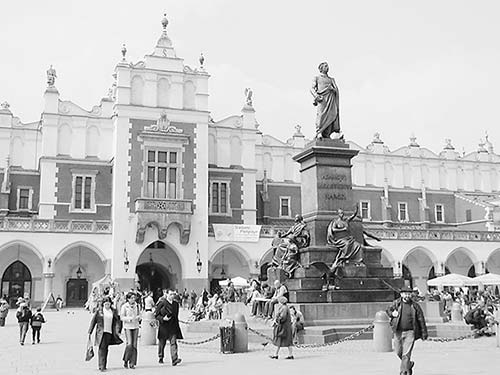
The Napoleonic connection also established France as a safe haven for refugee Poles. After another failed uprising against Russia in 1830, many of Poland’s top artists and writers fled to Paris—including pianist Fryderyk Chopin and Romantic poet Adam Mickiewicz (whose statue adorns Kraków’s main square and Warsaw’s Royal Way). These Polish artists tried to preserve the nation’s spirit with music and words; those who remained in Poland continued to fight with swords and fists. By the end of the 19th century, the image of the Pole as a tireless, idealistic insurgent emerged. During this time, some Romantics—with typically melodramatic flair—dubbed Poland “the Christ of nations” for the way it was misunderstood and persecuted by the world, despite its nobility.
Poles didn’t just flock to France during the Partitions. Untold numbers of Polish people uprooted their lives to pursue a better future in the New World. About 10 million Americans have Polish ancestry, and most of them came stateside from the mid-19th to early 20th century. Because the sophisticated and educated tended to remain in Poland, these new arrivals were mostly poor farmers who were (at first) unschooled and didn’t speak English, placing them on a bottom rung of American society. It was during this time that the tradition of insulting “Polack jokes” emerged. Some claim these originated in Chicago, which was both a national trendsetter in humor and a magnet for Polish immigrants. Others suggest that German immigrants to America imported cruel stereotypes of their Polish neighbors from the Old World. Either way, the jokes became more vicious through the 20th century, until the Polish government actually lobbied the US State Department to put a stop to them.
As the map of Europe was redrawn following World War I, Poland emerged as a reborn nation, under the war hero-turned-head of state, Marshal Józef Piłsudski. The newly reformed “Second Polish Republic,” which patched together the bits and pieces of territory that had been under foreign rule for decades, enjoyed a diverse ethnic mix—including Germans, Russians, Ukrainians, Lithuanians, and an enormous Jewish minority. A third of Poland spoke no Polish.
This interwar period was particularly good to Poland’s Jews. They were, for the first time, legally protected citizens of Poland, with full voting rights. Cities like Warsaw, Kraków, and Wilno (today’s Vilnius, Lithuania)—where Jews made up a quarter to a third of the population—saw the blossoming of a rich Jewish culture.
Meanwhile, the historic Baltic port city of Gdańsk—which was bicultural (German and Polish)—was granted the special “Free City of Danzig” status to avoid dealing with the prickly issue of whether to assign it to Germany or Poland. But the peace was not to last.
World War II
On September 1, 1939, Adolf Hitler began World War II by attacking Danzig to bring it into the German fold. Before the month was out, Hitler’s forces had overrun Poland, and the Soviets had taken over a swath of eastern Poland (today part of Ukraine, Belarus, and Lithuania).
In their Drang nach Osten (“March to the East”), the Nazis considered the Poles slawische Untermenschen, “Slavic sub-humans” who were useful only for manual labor. Poland was also home to a huge population of Jewish people. Nazi Germany annexed Polish regions that it claimed historic ties to, while the rest (including “Warschau” and “Krakau”) became a puppet state ruled by the Generalgouvernement and Hitler’s handpicked governor, Hans Frank. The Nazis considered this area Lebensraum—“living space” that wasn’t nice enough to actually incorporate into Germany but served perfectly as extra territory for building things that Germans didn’t want in their backyards...such as notorious death camps, including Auschwitz-Birkenau.
The Poles anxiously awaited the promised military aid of France and Britain; when help failed to arrive, they took matters into their own hands, forming a ragtag “Polish Home Army” and staging incredibly courageous but lopsided battles against their powerful German overlords (such as the Warsaw Uprising). Throughout the spring of 1945, as the Nazis retreated from their failed invasion of the Soviet Union, the Red Army gradually “liberated” the rubble of Poland from Nazi oppression—guaranteeing it another four decades of oppression under another regime.
During World War II, occupied Poland had the strictest laws in the Nazi realm: Along with Serbia, this was the only place where, if you were caught trying to help Jews escape, your entire family could be executed. And yet, many Poles risked their lives to help escapees. Of course, many other Poles looked the other way, and some willingly participated in Nazi atrocities. Poland (whose current government would rather forget some of this nuance) is still coming to grips with its role in the Holocaust.
But there’s no denying that Poland was horrifically scarred by World War II. With six million deaths over six years—including both Polish Jews and ethnic Poles—Poland suffered the worst per-capita losses of any nation. By the war’s end, one out of every five Polish citizens was dead—and 90 percent of those killed were civilians. While the human and infrastructure loss of World War II was incalculable, that war’s cultural losses were also devastating—for example, some 60,000 paintings were lost.
At the war’s end, the victorious Allies shifted Poland’s borders significantly westward—folding historically German areas into Polish territory and appropriating previously Polish areas for the USSR. This prompted a massive movement of populations—which today we’d decry as “ethnic cleansing”—as Germans were forcibly removed from western Poland, and Poles from newly Soviet territory were transplanted to Poland proper. Entire cities were repopulated (such as the formerly German metropolis of Breslau, which was renamed Wrocław and filled with refugee Poles from Lwów, now Lviv, in Ukraine). After millions died in the war, millions more were displaced from their ancestral homes. When the dust settled, Poland was almost exclusively populated by Poles.
Saddle on a Cow: Poland Under Communism
Poland suffered horribly under the communists. A postwar intimidation regime was designed to frighten people “on board” and coincided with government seizure of private property, rationing, and food shortages. The country enjoyed a relatively open society under Premier Władysław Gomułka in the 1960s, but the impractical, centrally planned economy began to unravel in the 1970s. Stores were marked by long lines stretching around the block.
The little absurdities of communist life—which today seem almost comical—made every day a struggle. For years, every elderly woman in Poland had hair the same strange magenta color. There was only one color of dye available, so if you had dyed hair, the choice was simple: Let your hair grow out (and look clownishly half red and half white), or line up and go red.
While communism is an ugly memory for most Poles, those who were teenagers when it ended—with only gauzy memories of communist times and no experience grappling with its adult realities—have some nostalgia. A friend who was 13 in 1989 recalled those days this way:
“My childhood is filled with happy memories. Under communism, life was family-oriented. Careers didn’t matter. There was no way to get rich, no reason to rush, so we had time. People always had time.
“But there were also shortages. We stood in line not knowing what would be for sale. We’d buy whatever shoes were available and then trade for the right size. At grocery stores, vinegar and mustard were always on the shelf, along with plastic cheese to make it seem less empty. We had to carry ration coupons, which we’d present when buying a staple that was in short supply. We didn’t necessarily buy what we needed—just anything that could be bartered on the black market. I remember my mother and father had to ‘organize’ for special events...somehow find a good sausage and some Coca-Cola.
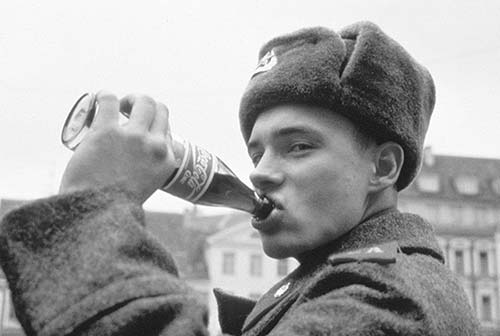
“Instead of a tidy roll of toilet paper, bathrooms came with a wad of old newspapers. Sometimes my uncle would bring us several toilet paper rolls, held together with a string—the best gift anyone could give.
“Boys in my neighborhood collected pop cans. Cans from other countries represented a world of opportunities beyond our borders. Parents could buy these cans on the black market, and the few families who were allowed to travel returned home with a treasure trove of cans. One boy up the street from me went to Italy and proudly brought home a Pepsi can. Everyone wanted to see this huge status symbol. But a month later, communism ended, you could buy whatever you wanted, and everyone’s can collections were worthless.
“We had real chocolate only for Christmas. The rest of the year, we got something called ‘chocolate-like product,’ which was sweet, dark, and smelled vaguely of chocolate. And we had oranges from Cuba for Christmas, too. Everybody was excited when the newspapers announced, ‘The boat with the oranges from Cuba is just five days away.’ The smell of Christmas was so special: chocolate and oranges. Now we have that smell every day. Still, my happiest Christmases were under communism.”
During these difficult times, the Poles often rose up—staging major protests in 1956, 1968, 1970, and 1976. Stalin famously noted that introducing communism to the Poles was like putting a saddle on a cow.
When an anticommunist Polish cardinal named Karol Wojtyła (later known as St. John Paul II) was elected pope in 1978, then visited his homeland in 1979, it was a sign to his compatriots that change was in the air. In 1980, Lech Wałęsa, an electrician at the shipyards in Gdańsk, became the leader of the Solidarity movement, the first workers’ union in communist Eastern Europe. After an initial 18-day strike at the Gdańsk shipyards, the communist regime gave in, legalizing Solidarity.
But the union grew too powerful, and the communists felt their control slipping away. On Sunday, December 13, 1981, Poland’s head of state, General Wojciech Jaruzelski, appeared on national television to declare martial law in order to “forestall Soviet intervention.” (Whether the Soviets actually would have invaded remains a hotly debated issue.) Tanks ominously rolled through the streets of Poland on that snowy December morning, and the Poles were terrified.
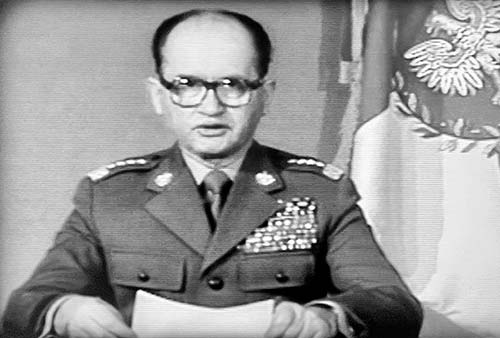
Martial law lasted until 1983. Each Pole has chilling memories of this frightening time. During riots, the people would flock into churches—the only place they could be safe from the ZOMO (riot police). People would go for their evening walks during the 19:30 government-sanctioned national news as a sign of protest. But Solidarity struggled on, going underground and becoming a united movement of all demographics, 10 million members strong (more than a quarter of the population).
In July 1989, the ruling Communist Party agreed to hold open elections (reserving 65 percent of representatives for themselves). Their goal was to appease Solidarity, but the plan backfired: Communists didn’t win a single contested seat. These elections helped spark the chain reaction across Eastern Europe that eventually tore down the Iron Curtain. Lech Wałęsa became Poland’s first postcommunist president.
Poland in the 21st Century
When 10 new countries joined the European Union in May 2004, Poland was the most ambivalent of the bunch. After centuries of being under other empires’ authority, the Poles were hardly eager to relinquish some of their hard-fought autonomy to Brussels. Many Poles thought that EU membership would make things worse (higher prices, a loss of traditional lifestyles) before they got better. But most people agreed that their country had to join to thrive in today’s Europe.
The most obvious initial impact of EU membership was the droves of job-seeking young Poles who migrated to other EU countries (mostly the UK, Ireland, and Sweden, which were the first to waive visa requirements for Eastern European workers). Many found employment at hotels and restaurants. In the mid-aughts, visitors to London and Dublin noticed a surprising language barrier at hotel front desks, and Polish-language expat newspapers joined British gossip rags on newsstands. Those who remained in Poland were concerned about the “brain drain” of bright young people flocking out of their country. But with the 2008 economic crisis, quite a few Polish expats returned home. Britain’s departure from the EU (2020’s Brexit) slammed the door shut on that already-waning British-Polish connection—though a large number of Polish expats remain in the UK.
Poland is by far the most populous of the Central European EU members, with over 41 million people (about the same as Spain, or about half the size of Germany). This makes Poland the sixth largest of the 26 EU member states—giving it serious political clout, which it has already asserted...sometimes to the dismay of the EU’s more established powers.
On the American political spectrum, Poland may be the most conservative country in Europe. This is partly due to the outsize influence of Catholicism on political discourse, and partly because Poles are phobic when it comes to “big government”—after being subjugated and manipulated by so many foreign oppressors over the centuries.
Since the early 2000s, the country’s right wing has been represented by a pair of twin brothers, Lech and Jarosław Kaczyński. (The Kaczyński brothers were child actors who appeared in several popular movies together.) Their conservative Law and Justice Party (PiS for short) is pro-tax cuts, fiercely Euroskeptic (anti-EU), and very Catholic. In the 2005 presidential election, Lech Kaczyński emerged as the victor, then took the controversial step of appointing his identical twin brother Jarosław as Poland’s prime minister.
The political pendulum swung back toward the left in October 2007, when the Kaczyński brothers’ main political rival, the pro-EU Donald Tusk, led his Civic Platform Party to victory in the parliamentary elections. The name Kaczyński loosely means “duck”—so the Poles quipped that they were led by “Donald and the Ducks.”
Tragically, the levity wasn’t to last. On April 10, 2010, a plane carrying President Lech Kaczyński and a large contingent of Poland’s leaders crashed in a thick fog near the city of Smoleńsk, Russia. All 96 people on board—including top government, military, and business officials, high-ranking clergy, and others—were killed, plunging the nation into a period of stunned mourning. Poles wondered why, yet again, an unprecedented tragedy had befallen their nation. (Ironically, the group’s trip was intended to put a painful chapter of Poland’s history to rest: a commemoration of the Polish officers and enlisted men killed in the Soviet massacre at Katyń.)
Over the last decade, the political pendulum has just kept on swinging, as key governmental posts have gone back and forth between the two dominant parties—the Civic Platform (which controlled parliament 2007-2015) and Law and Justice (2015-present).
Since taking power, Law and Justice—chaired by Jarosław Kaczyński—has come under fire for policies that many observers consider borderline-authoritarian (in the vein of Viktor Orbán’s Fidesz in Hungary, or Donald Trump in the US). They’ve packed the ostensibly autonomous Constitutional Tribunal with party loyalists; purged opposition Supreme Court judges, civil servants, and military leaders; levied fines against critical news coverage in a manner that threatens freedom of the press; and removed the director of the Museum of the Second World War in Gdańsk—deeming the exhibit “not Polish enough” and installing a new director who altered many of the exhibits. Because of these and other concerns, in late 2017, the EU initiated Article 7 of the EU Treaty for the first time—stripping Poland of some of its voting rights within the EU.
And yet, at the same time, Donald Tusk—Poland’s former prime minister and most high-profile left-leaning politician—has become a major player in the EU government, serving two terms as the president of the European Council (2014-2019). It remains to be seen where the Polish political pendulum swings next. But one thing is clear: The Poles are making their presence felt in European politics.
Invasion of Ukraine
When Vladimir Putin’s Russia invaded Ukraine in February 2022, millions of Ukrainians fled to neighboring countries—and more than eight million of them crossed the border into Poland. Even a year and a half later, an estimated 1.5 million Ukrainians were still in Poland.
However, this was not a chaotic “refugee crisis,” with sprawling tent cities and desperately miserable people camped out in squalor at borders, as we saw with Syrian refugees in southeastern Europe in the fall of 2015. Rather, Poland absorbed these new arrivals smoothly, with locals opening up their homes to take in strangers in need. Across the political divide, Poles were united on the importance of helping their neighbors. People here justifiably feel great pride in how their country rose to the occasion when faced with an unprecedented humanitarian crisis.
When you see a “bar” in Poland, it doesn’t mean alcohol—it means cheap grub. Eating at a bar mleczny (bar MLECH-neh) is an essential Polish sightseeing experience. These cafeterias, which you’ll see all over the country, are a remarkably affordable way to get a good meal...and, with the right attitude, a fun cultural experience.
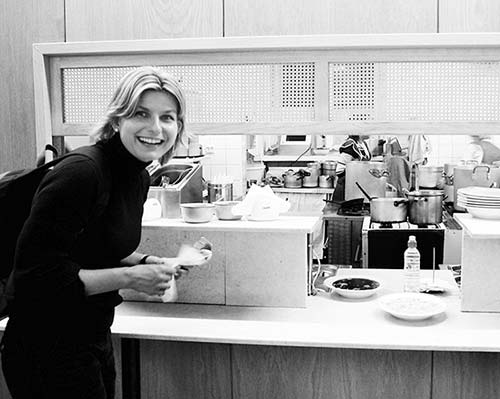
In the communist era, the government subsidized milk bars, allowing workers to enjoy a meal out. The name comes from the cheese cutlets that were sold here, back in a time when good meat was rare. The tradition (and name) continues today, as milk-bar prices remain astoundingly low: a filling meal for under $10. And, while communist-era fare could be gross, today’s milk-bar cuisine is typically great.
Milk bars usually offer many of the traditional tastes listed in the “Polish food” section. Common items are soups (such as żurek and barszcz), a variety of cabbage-based salads, kotlet (fried pork chops), pierogi (similar to ravioli, with various fillings), and naleśniki (pancakes). You’ll see glasses of juice, as well as bottles of water and Coke.
There are two broad categories of milk bars: updated, modern cafeterias that cater to tourists (English menus), add some modern twists to their traditional fare, and charge about 50 percent more; and time-machine dives that haven’t changed for decades. At truly traditional milk bars, the service is aimed at locals, which means limited English and a confusing ordering system.
Every milk bar is a little different, but here’s the general procedure: Head to the counter, wait to be acknowledged, and point to what you want. Handy vocabulary: to (sounds like “toe”) means “this”; i (pronounced “ee”) means “and.”
If the milk-bar server asks you any questions, you have three options: Nod stupidly until they just give you something, repeat one of the things they just said (assuming they’ve asked you to choose between two options, like meat or cheese in your pierogi), or hope that a kindly English-speaking Pole in line will leap to your rescue. If nothing else, ordering at a milk bar is an adventure in gestures. Smiling seems to slightly extend the patience of milk-bar staffers.
Once your tray is all loaded up, pay the cashier, do a double-take when you realize how cheap your bill is, then find a table. After the meal, bus your own dishes to the little window.
The resolution of this latest chapter of Poland’s story is not yet known. As the war in Ukraine drags on, more refugees are deciding to—at least for now—make new lives, putting down roots in Poland.
As time wears on, popular opinion is mixed. When I traveled around Poland in 2022 and 2023, most Poles I spoke with were proud of what they’d done for the Ukrainians. But some did raise concerns, including worry that this influx from a foreign (albeit similar) culture might lead to unwanted cultural shifts in the greater society. Others groused that generous policies designed to help the new arrivals (for example, free passage on public transportation) were not sustainable long-term. A few also noted that Ukraine has never formally apologized for WWII-era atrocities against the Poles (the so-called “Volhynian Slaughter,” in which tens of thousands of Polish civilians were ethnically cleansed by Ukrainian partisans in Nazi-occupied territory).
Still others pointed out that Poland lost approximately as many people when the country joined the EU and bright young workers moved to other European lands to find better employment. When viewing things from a historical perspective, Poland is simply replenishing its population.
Poland’s tourism industry also took a hit with the war, as many international visitors stayed away—perhaps not realizing that, as a member of NATO and the EU, Poland is in an entirely different geopolitical situation than Ukraine, at far lower risk of invasion. As Poles who work in tourism are still waiting to recoup their losses from the double-whammy of the Covid-19 pandemic and the Ukraine war, it’s clear to any visitor that the country is a safe, fascinating, rewarding place to visit.
POLISH FOOD
Polish food is hearty and tasty—most classic dishes were created to provide calories for working fields and farms. Because Poland is north of the Carpathian Mountains, its weather tends to be chilly, limiting the kinds of fruits and vegetables that flourish here. As in other northern European countries (such as Ukraine, Russia, or Scandinavia), dominant staples include potatoes, dill, berries, beets, and rye. Much of what you might think of as “Jewish cuisine” turns up on Polish menus (gefilte fish, potato pancakes, chicken soup, and so forth)—which makes sense, given that Poles and Jews lived in the same area for centuries.
For such a big country, you’ll find that menus are quite similar nationwide. Any regional variations were papered over during the communist period, when “Polish cuisine” was legally standardized. (Restaurants—which were rare—were obligated to meticulously follow recipes from one official, government-issued cookbook.) Over the last generation, some of this regional variation is beginning to return—especially in Gdańsk on the Baltic coast, with access to more seafood and influence from Scandinavian chefs—but you’ll still find a lot of consistency from place to place.
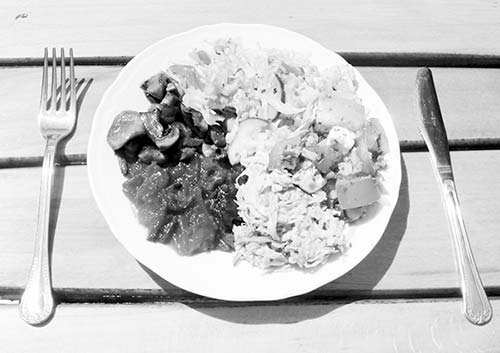
Polish soups are a highlight; they claim to have more than 200 types. The most typical are żurek and barszcz. Żurek (often translated as “sour soup” on menus) is a thickened, light-colored soup made from a sourdough or rye base, usually containing a hard-boiled egg and pieces of kiełbasa (sausage).
Barszcz, better known to Americans as borscht, is a savory beet soup that you’ll see in several varieties: Barszcz czerwony (red borscht) is a thin, flavorful broth with a deep red color, sometimes containing dumplings (uszkami) or a hard-boiled egg. Barszcz ukraiński (Ukrainian borscht) is thicker, with cream and vegetables (usually cabbage, beans, and carrots). Confusingly, there’s another type of “borscht” that has no beets at all: barszcz biały (“white borscht”), which is very similar to the sour soup żurek.
In summer, try the “Polish gazpacho”—chłodnik, a savory cream soup with beets, onions, and radishes that’s served cold. I had never met a Polish soup I didn’t like...until I was introduced to flaki (sometimes flaczki)—tripe soup.
Another Polish dish that may be familiar is pierogi. These ravioli-like dumplings come with various fillings. The most traditional are minced meat, sauerkraut, mushroom, cheese, and blueberry; many restaurants also experiment with more exotic fillings. Pierogi are often served with specks of fatty bacon to add flavor. Pierogi are a budget traveler’s dream: Restaurants serving them are everywhere, and they’re generally cheap, tasty, and very filling.
Bigos is a rich and delicious sauerkraut stew cooked with meat, mushrooms, and whatever’s in the pantry. It’s sort of the Polish version of chili—it’s a beloved comfort food, especially in the cold of winter, and everyone has their own recipe. Gołąbki is a dish of cabbage leaves stuffed with minced meat and rice in a tomato or mushroom sauce. Kotlet schabowy (fried pork chop) is another favorite.
Kaczka (duck) is popular, as is freshwater fish: Look for pstrąg (trout) and węgorz (eel). Carp (karp) is also common, especially at Christmas. Traditionally, people would bring home a live carp before the holiday, then keep it in the bathtub until it was time to eat. One Polish friend explained that she came to think of the carp as a family pet; at Christmas, her parents told her it had swum away, down the drain...at exactly the same time they were sitting down for a fish dinner. (She became a vegetarian for 20 years, and still won’t touch carp. She terms this affliction “carp-al trauma syndrome.”) On the Baltic Coast (such as in Gdańsk), you’ll also see łosoś (salmon), śledż (herring), and dorsz (cod).
Poles eat lots of potatoes, which are served with nearly every meal. Look for placki ziemniaczane—potato pancakes.
Some dreary old foods are newly hip in today’s Poland. Herring-and-vodka bars are trendy. The Polish street food zapiekanka—a toasted baguette with melted cheese, rubbery mushrooms from a can, and a drizzle of ersatz ketchup—began life as a “hardship food” under communism, as a pale imitation of pizza. These days it has been reborn as a street-food staple; zapiekanka vendors top them with a world of creative flavors. The bagel-like bread rings you’ll see sold on the street, obwarzanki (singular obwarzanek), are also cheap, and usually fresh and tasty. And, as throughout Europe, gourmet hamburgers are in—including a trend for vegan burgers.
Poland has good pastries—look for a cukiernia (pastry shop). The classic Polish treat is pączki, glazed jelly doughnuts. They can have different fillings, but most typical is a wild-rose jam.
Szarlotka is apple cake—sometimes made with chunks of apples (especially in season), sometimes with apple filling. Sernik is cheesecake, makowiec is a poppy-seed roll, and winebreda is like a Danish. Napoleonka is a French-style treat with layers of crispy wafers and custard. A mazurek could be vaguely compared to a “dessert pizza”—a dense, sweet flatbread smothered with even sweeter spreads (often chocolate or caramel) and other toppings. The yeast or sponge cake called babka literally means “grandma”—it’s named for the Bundt-pan shape, which resembles a traditional woman’s skirt. A babeczka (“little grandma”) is a smaller version, like a cupcake.
Lody (ice cream) is popular. The tall, skinny cones of soft-serve ice cream are called świderki, sometimes translated as “American ice cream.” The most beloved traditional candy is ptasie mleczko (birds’ milk), which is semisour marshmallow covered with chocolate. E. Wedel is the country’s top brand of chocolate, with outlets in all the big cities.
Thirsty? Woda is water, woda mineralna is bottled water (gazowana is with gas, niegazowana is without), kawa is coffee, herbata is tea, sok is juice, and mleko is milk. Żywiec, Okocim, and Lech are the best-known brands of piwo (beer).
With the influx of war refugees from Ukraine—many of whom have decided to put down roots in their adopted homeland—Poland’s culinary scene is also evolving. In addition to traditional Polish fare, travelers can look for restaurants serving two other cuisines: Georgian and Ukrainian.
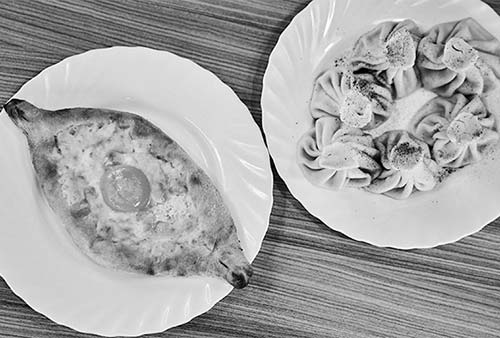
Keep an eye out for Georgian restaurants and bakeries (look for gruzińska). Throughout the former USSR—including in Ukraine—food from Georgia, the former Soviet satellite in the Caucasus, is a beloved, flavorful change of pace from the dominant local fare. (Compare it to Mexican cuisine in the US, or Indian food in Britain.) Even before the arrival of Ukrainian refugees, Georgian food was catching on in Poland—and now that trend is accelerating.
Georgian food is utterly delicious, with a more vibrant and varied flavor profile than most Polish cooking. Herbs, spices, walnuts, and plums are major ingredients. Popular items include khachapuri (hot bread filled with cheese and other fillings, somewhat like a calzone, sometimes topped with a fried egg), chinkhali or khinkali (a hearty filled dumpling gathered into a thick, doughy “handle” and dipped into sauces), kharcho (a spicy broth with lots of meat and onions), satsivi (diced chicken in a spicy yellow sauce), and Georgian-style salad—typically tomato, cucumber, onion, and herbs, mixed up with a walnut paste. Because this cuisine is relatively new even for Poles, many Georgian restaurants have enticing and educational picture menus. If you have yet to try a Georgian meal...do it here.
Ukrainian cuisine has many similarities to Poland’s own cooking, but with a regional spin: Staples include “Ukrainian-style” borscht, a red beet stew thick with vegetables and beans; the pierogi-like varenyky; and cabbage rolls (like a Polish gołąbki) called holubtsi. Other mainstays are the filled rolls called pyrizhky; the polenta-like cornmeal dish banosh, with meat and other flavorings mixed in; and syrnyky, deep-fried cheese-curd pancakes with berry sauce. Rye, which thrives in the Ukrainian climate, is a dominant flavor. Some Ukrainian restaurants also feature Georgian dishes, thanks to that cuisine’s popularity there.
As you consider where to eat, consider going beyond Polish fare—and the ubiquitous Italian places—to try some of these unique cuisines that you may not find back home.
Wódka (vodka) is a Polish staple—the word means, roughly, “precious little water.” Poles take vodka seriously and control its production assiduously. Its ingredients are domestically grown, and pure vodka contains some combination of just six ingredients: potatoes, rye, wheat, barley, oats, and the wheat-rye hybrid triticale. Quality vodkas have different flavor profiles depending on how the distiller has blended these ingredients; for example, potato gives an oily consistency, rye is sweeter and warming, and wheat is also sweet but lighter—ideal for summery mixed drinks.
Żubrówka, the most famous brand of vodka, comes with a blade of grass from the bison reserves in eastern Poland (look for the bison on the label). The bison “flavor” the grass...then the grass flavors the vodka. Poles often mix Żubrówka with apple juice, and call this cocktail szarlotka (“apple cake”).
Traditionally, vodka is shot rather than sipped, and it’s chased not by another drink but by salty, greasy food: pickles, lard, herring, potato pancakes, or steak tartare (but never just bread, which soaks up the spirit and keeps it in the stomach). For “Cheers!” say, “Na zdrowie!” (nah ZDROH-vyeh).
Other distillates are also popular, both traditional (Polish gins, whiskeys, and aqua vita, here called okowita) and more creative options—hipster-run artisanal distilleries are popping up all over. Nalewka, essentially a fruit-infused brandy (like a cordial), is typically made by macerating fruit with sugar, then pouring over vodka or firewater; it’s often aged, and can be used for medicinal purposes. The sour cherry version, wiśniówka, is newly trendy—you’ll see little pubs selling it all over Poland. Another “health” drink is the brandy called Krupnik: Poles swear that if you’re getting a cold, mixing a slug of Krupnik with hot water and a squeeze of lemon will fix you right up.
Unusual nonalcoholic drinks to try if you have the chance are kwas (a cold, fizzy, Ukrainian-style beverage made from day-old rye bread) and kompot (a hot drink made from stewed berries). Poles are unusually fond of carrot juice (often cut with fruit juice); Kubuś is the most popular brand.
“Bon appétit” is “Smacznego” (smatch-NEH-goh). To pay, ask for the rachunek (rah-KHOO-nehk).
POLISH LANGUAGE
Polish is closely related to its neighboring Slavic languages (Slovak and Czech), with the biggest difference being that Polish has lots of fricatives (hissing sounds—“sh” and “ch”—often in close proximity).
Polish intimidates Americans with long, difficult-to-pronounce words. But if you take your time and sound things out, you’ll develop an ear for it. One rule of thumb that helps: The stress is generally on the next-to-last syllable.
Polish has some letters that don’t appear in English, and some letters and combinations are pronounced differently than in English:
ć, ci, and cz all sound like “ch” as in “church”
ś, si, and sz all sound like “sh” as in “short”
ż, ź, zi, and rz all sound like “zh” as in “leisure”
dż and dź both sound like the “dj” sound in “jeans”
ń and ni sound like “ny” as in “canyon”
ę and ą are pronounced nasally, as in French: “en” and “an”
c sounds like “ts” as in “cats”
ch sounds like “kh” as in the Scottish “loch”
j sounds like “y” as in “yellow”
w sounds like “v” as in “Victor”
ł sounds like “w” as in “with”
So to Poles, “Lech Wałęsa” isn’t pronounced “lehk wah-LEH-sah,” as Americans tend to say—but “lehkh vah-WEHN-sah.”
The Polish people you meet will be impressed and flattered if you take the time to learn a little of their language. To get started, check out the selection of Polish survival phrases on the following pages.
As you’re tracking down addresses, these words will help: miasto (mee-AH-stoh, town), plac (plahts, square), rynek (REE-nehk, big market square), ulica (OO-leet-sah, road), aleja (ah-LAY-yah, avenue), and most (mohst, bridge). And that long word you see everywhere—zapraszamy—means “welcome.”
Polish Survival Phrases
Keep in mind a few Polish pronunciation tips: w sounds like “v,” ł sounds like “w,” ch is a back-of-your-throat “kh” sound (as in the Scottish “loch”), and rz sounds like the “zh” sound in “pleasure.” The vowels with a tail (ą and ę) have a slight nasal “n” sound at the end, similar to French.
| Hello. (formal) / Goodbye. | Dzień dobry. / Do widzenia. jehn doh-brih / doh veed-zay-nyah |
| Hi. / Bye. (informal) | Cześć. cheshch |
| Do you speak English? (asked of a man) | Czy Pan mówi po angielsku? chih pahn moo-vee poh ahn-gyehl-skoo |
| Do you speak English? (asked of a woman) | Czy Pani mówi po angielsku? chih pah-nee moo-vee poh ahn-gyehl-skoo |
| Yes. / No. | Tak. / Nie. tahk / nyeh |
| I (don’t) understand. | (Nie) rozumiem. (nyeh) roh-zoo-myehm |
| Please. / You’re welcome. / Can I help you? | Proszę. proh-sheh |
| Thank you (very much). | Dziękuję (bardzo). jehn-koo-yeh (bard-zoh) |
| Excuse me. / I’m sorry. | Przepraszam. psheh-prah-shahm |
| No problem. | Żaden problem. zhah-dehn proh-blehm |
| Good. | Dobrze. dohb-zheh |
| one / two / three | jeden / dwa / trzy yeh-dehn / dvah / tzhih |
| hundred / thousand | sto / tysiąc stoh / tih-shants |
| How much? | Ile? ee-leh |
| local currency | złoty (zł) zwoh-tih |
| Is it free? | Czy to jest za darmo? chih toh yehst zah dar-moh |
| Is it included? | Czy jest to wliczone? chih yehst toh vlee-choh-neh |
| Where can I find / buy...? | Gdzie mogę dostać / kupić...? guh-dyeh moh-geh doh-statch / koo-peech |
| I’d like... (said by a man) | Chciałbym... khchaw-beem |
| I’d like... (said by a woman) | Chciałabym... khchah-wah-beem |
| ...a room. | ...pokój. poh-kooey |
| ...a ticket to ____. | ...bilet do ____. bee-leht doh ____ |
| Where is...? | Gdzie jest...? guh-dyeh yehst |
| ...the train station | ...dworzec kolejowy dvoh-zhehts koh-leh-yoh-vih |
| ...the bus station | ...dworzec autobusowy dvoh-zhehts ow-toh-boos-oh-vih |
| ...the tourist information office | ...informacja turystyczna een-for-maht-syah too-ris-titch-nah |
| ...the toilet | ...toaleta toh-ah-leh-tah |
| men / women | męska / damska mehn-skah / dahm-skah |
| left / right / straight | lewo / prawo / prosto leh-voh / prah-voh / proh-stoh |
| At what time...? | O której godzinie...? oh kuh-too-ray gohd-zhee-nyeh |
| ...does this open / close | ...będzie otwarte / zamknięte bend-zheh oht-vahr-teh / zahm-knyehn-teh |
| today / tomorrow | dzisiaj / jutro jee-shī / yoo-troh |
In a Polish Restaurant
| I’d like to reserve... (said by a man) | Chciałbym zarezerwować... khchaw-beem zah-reh-zehr-voh-vahch |
| I’d like to reserve... (said by a woman) | Chciałabym zarezerwować... khchah-wah-beem zah-reh-zehr-voh-vahch |
| We’d like... | Chcielibyśmy... khchehl-ee-bish-mih |
| ...a table for one person / two people. | ...stolik na jedną osobę / dwie osoby. stoh-leek nah yehd-now oh-soh-beh / dvyeh oh-soh-bih |
| The menu (in English), please. | Menu (po angielsku), proszę. meh-noo (poh ahn-gyehl-skoo) proh-sheh |
| service (not) included | usługa (nie) wliczona oos-woo-gah (nyeh) vlee-choh-nah |
| cover charge | wstęp vstenp |
| “to go” | na wynos nah vih-nohs |
| with / without | z / bez z / behz |
| and / or | i / lub ee / loob |
| milk bar (cheap cafeteria) | bar mleczny bar mletch-nih |
| fixed-price meal (of the day) | zestaw (dnia) zehs-tahv (dih-nyah) |
| specialty of the house | specjalność zakładu speht-syahl-nohshch zah-kwah-doo |
| daily special | danie dnia dah-nyeh dih-nyah |
| breakfast / lunch / dinner | śniadanie / obiad / kolacja shnyah-dahn-yeh / oh-bee-aht / koh-laht-syah |
| appetizers | przystawki pshih-stahv-kee |
| bread / cheese / sandwich | chleb / ser / kanapka khlehb / sehr /kah-nahp-kah |
| soup / salad | zupa / sałatka zoo-pah / sah-waht-kah |
| meat / poultry | mięso / drób myehn-soh / droob |
| fish / seafood | ryba / owoce morza rih-bah / oh-voht-seh moh-zhah |
| fruit / vegetables | owoce / warzywa oh-voht-seh / vah-zhih-vah |
| dessert | deser deh-sehr |
| (tap) water | woda (z kranu) voh-dah (skrah-noo) |
| mineral water | woda mineralna voh-dah mee-neh-rahl-nah |
| carbonated / not carbonated | gazowana / niegazowana gah-zoh-vah-nah / nyeh-gah-zoh-vah-nah |
| milk | mleko mleh-koh |
| (orange) juice | sok (pomarańczowy) sohk (poh-mah-rayn-choh-vih) |
| coffee / tea | kawa / herbata kah-vah / hehr-bah-tah |
| wine/ beer / vodka | wino / piwo / wódka vee-noh / pee-voh / vood-kah |
| red / white | czerwone / białe chehr-voh-neh / bee-ah-weh |
| glass / bottle | szklanka / butelka shklahn-kah / boo-tehl-kah |
| Cheers! | Na zdrowie! nah zdroh-vyeh |
| More. / Another. | Więcej. / Inny. vyehnt-say / een-neh |
| The same. | Taki sam. tah-kee sahm |
| the bill / I’ll pay. | rachunek / Ja płacę. rah-khoo-nehk / yah pwaht-seh |
| tip | napiwek nah-pee-vehk |
| Delicious! | Pyszne! pish-neh |