CZECH REPUBLIC
Česká Republika
Charles IV and the Middle Ages (500s-1300s)
Jan Hus and Religious Wars (1300s-1600s)
Czech National Revival (1800s-1918)
Troubles of the 20th Century (1918-1989)
“It’s Not You, It’s Me”: The Peaceful Breakup (1989-1993)
The Czech Republic Today (2000 to Present)
The Czech Republic is geographically small. On a quick visit, you can enjoy a fine introduction while still packing in plenty of surprises. The country has a little of everything for the traveler. Quaint villages? Check. Beautiful landscapes? Check. World-class art? Czech, Czech, and Czech.
While the Czechs have long occupied the lands of the present-day Czech Republic, for most of their history they were treated as second-class citizens, under the thumb of foreign rulers (generally from Germany or Austria). That the Czech nation exists as an independent state today is practically a Cinderella story. So let’s get to know the underdog Czechs.
In Czech towns and villages, you’ll find a simple joy of life—a holdover from the days of the Renaissance. The deep spirituality of the Baroque era still shapes the national character. The magic of Prague, the beauty of Český Krumlov, and the lyrical quality of the countryside relieve the heaviness caused by the turmoil that passed through here. Get beyond Prague and explore the country’s medieval towns. These rugged woods and hilltop castles will make you feel as if you’re walking through the garden of your childhood dreams.
Given their imaginative, sometimes fanciful culture, it’s no surprise that the Czechs have produced some famously clever writers—from Franz Kafka (who wrote about a man waking up as a giant cockroach) to Karel Čapek (who wrote about artificially created beings he dubbed “roboti,” or robots). The unique entertainment form of Black Light Theater—a combination of illusion, pantomime, puppetry, and modern dance—exemplifies Czech creativity (see here).
Czechs refuse to dumb things down. Education and intellect are important, and academics are honored in Czech society. At the end of communism, the parliament elected a poet, playwright, and philosopher, Václav Havel, to serve two terms as president.
Beyond his intellect, the masses that took to the streets in 1989 no doubt also appreciated Havel’s independent thinking and bold actions (he had been imprisoned by communist authorities for his activities promoting human rights). Perhaps because they’ve seen their national affairs bungled by centuries of foreign overlords, many Czechs have a healthy suspicion of authority and an admiration for those willing to flout it.
Other Czechs with a rebellious spirit are national hero Jan Hus (who refused to recant his condemnation of Church corruption and was burned at the stake), contemporary artist David Černý (whose outrageous stunts are always a lightning rod for controversy), and, of course, the man named “the greatest Czech of all time,” Jára Cimrman. A fictional character created in the 1960s by a pair of radio satirists, Cimrman has taken on a life of his own—and today is something of a nationwide practical joke. (See the sidebar later in this chapter.)
The Czechs’ well-studied, sometimes subversive, often world-weary outlook can be perceived by outsiders as cynicism. Czechs have a sharp, dry, often sarcastic sense of humor and a keen sense of irony. They don’t suffer fools lightly...and watching a United Nations of clueless tourists trample their capital city for the past generation hasn’t done wonders for their patience. Be one of the very few visitors who bother to learn a few pleasantries—hello, please, thank you—in their language. (See “Czech Language,” later.) You’ll notice a difference in how you’re treated.
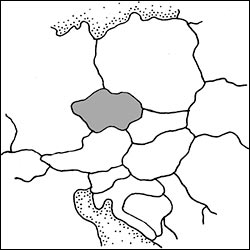
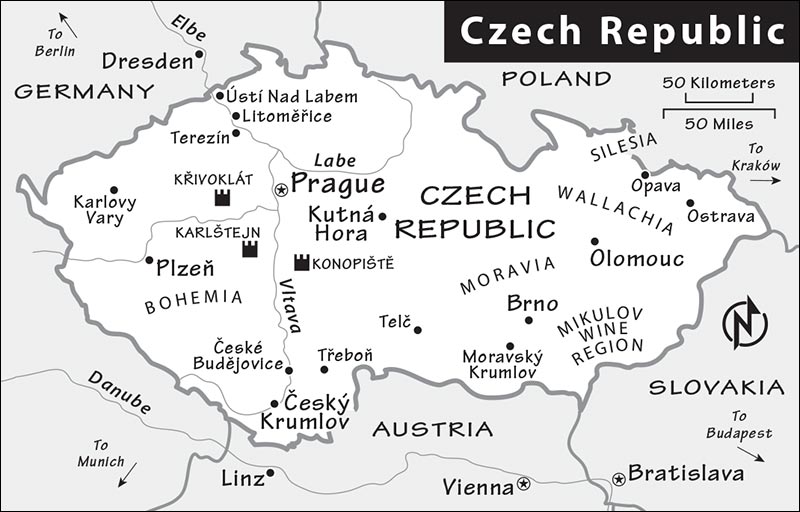
Of the Czech Republic’s three main regions—Bohemia, Moravia, and small Silesia—the best-known is Bohemia, where Prague is. It has nothing to do with beatnik bohemians; the name comes from the Celtic tribe that inhabited the land before the coming of the Germans and the Slavs. A longtime home of Czechs, Germans, and Jews, Bohemia is circled by a naturally fortifying ring of mountains and cut down the middle by the Vltava River. The winegrowing region of Moravia (to the east) is more Slavic and colorful, and more about the land.
But the country consists of more than rollicking beer halls and gently rolling landscapes. It’s also about dreamy wine cellars and fertile Moravian plains, with the rugged Carpathian Mountains on the horizon. Politically and geologically, Bohemia and Moravia are two distinct regions. The soils and climates in which the hops and wine grapes grow are very different...and so are the two regions’ mentalities. The boisterousness of the Czech polka contrasts with the melancholy of the Moravian ballad; the political viewpoint of the Prague power broker is at odds with the spirituality of the Moravian bard.
Only a tiny bit of Silesia—around the town of Opava—is part of the Czech Republic today; the rest of the region is in Poland and Germany. People in Silesia speak a wide variety of dialects that mix Czech, German, and Polish.
Most tourists who visit the Czech Republic see only Prague. But if you venture outside the capital, you’ll enjoy traditional towns and villages, great prices, a friendly and gentle countryside dotted by nettles and wild poppies, and almost no international tourists. Since the time of the Habsburgs, fruit trees have lined the country roads for everyone to share. Take your pick.
HELPFUL HINTS
Tolls: If you’re driving on highways in the Czech Republic, you’re required to display a toll sticker. Your rental car may already come with the necessary sticker—ask. For details, see “Tolls” on here.
Rail Passes: The Czech Republic is covered by a Eurail Czech Republic pass and the more expensive Eurail Global Pass. If your train travel will be limited to a handful of rides and/or short distances (for example, within the Czech Republic), you’re probably better off without a pass—Czech tickets are cheap to buy as you go. But if you’re combining Prague with international destinations, a rail pass could save you money. For more detailed advice on figuring out the smartest rail-pass options for your train trip, visit RickSteves.com/rail.
CZECH HISTORY
The Czechs have always been at a crossroads of Europe—between the Slavic and Germanic worlds, between Catholicism and Protestantism, and between Cold War East and West. As if having foreseen all of this, the mythical founder of Prague—the beautiful princess Libuše—named her city “Praha” (meaning “threshold” in Czech).
Charles IV and the Middle Ages (500s-1300s)
The pagan, Slavic tribes that arrived in this part of Europe in the sixth century AD were first united by the Prague-based Přemysl dynasty. The main figure of this era was Duke Václav (AD 907-935), who was later immortalized in a Christmas carol as “Good King Wenceslas.” He converted the Czechs to Christianity and founded a church at Prague Castle, on a bluff overlooking the Vltava River.
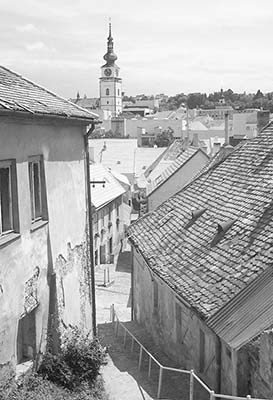
In 1004, Bohemia was incorporated into the Holy Roman Empire (an alliance of mostly German-speaking kingdoms and dukedoms). Within 200 years—thanks to its strategic location and privileged status within the empire—Prague had become one of Europe’s largest and most highly cultured cities.
The 14th century was Prague’s golden age, when Holy Roman Emperor Charles IV (1316-1378) ruled. Born to a Luxembourger nobleman and a Czech princess, Charles IV was an ambitious man on the cusp of the Renaissance. He lived and studied in France and Italy, spoke five languages, and counted Petrarch as a friend—but always felt a deep connection to his mother’s Czech roots.
Selecting Prague as his seat of power, Charles imported French architects to make the city a grand capital, founded the first university north of the Alps, and invigorated the Czech national spirit. (He popularized the legend of Wenceslas to give his people a near-mythical, King Arthur-type cultural standard-bearer.) Much of Prague’s history and architecture—including the famous Charles Bridge, Charles University, St. Vitus Cathedral, New Town, and Karlštejn Castle—can be traced to this dynamic man’s rule.
Jan Hus and Religious Wars (1300s-1600s)
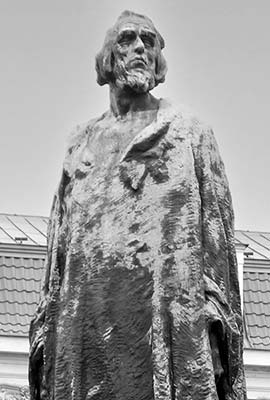
Jan Hus (c. 1369-1415) was a local preacher and professor who got in trouble with the Vatican a hundred years before Martin Luther. Like Luther, Hus preached in the people’s language rather than in Latin. To add insult to injury, he spoke out against Church corruption. Tried for heresy and burned in 1415, Hus became both a religious martyr and a national hero. While each age has defined Hus to its liking, the way he challenged authority while staying true to his beliefs has long inspired and rallied the Czech people.
Inspired by Hus’ reformist ideas, the Czechs rebelled against both the Roman Catholic Church and German political control. This burst of independent thought led to a period of religious wars. Protestant Czech patriots, like the rough-and-rugged war hero Jan Žižka (often depicted in patriotic art with his trademark eye patch), fought to maintain Czech autonomy. But ultimately, these rebels were overwhelmed by their Catholic opponents. The result of these wars was the loss of autonomy to Vienna.
Ruled by the Habsburgs of Austria, Prague stagnated—except during the rule of King Rudolf II (1552-1612), a Holy Roman Emperor. With Rudolf living in Prague, the city again blossomed as a cultural and intellectual center. Astronomers Johannes Kepler and Tycho Brahe flourished, as did other scientists, and much of the inspiration for Prague’s great art can be attributed to the king’s patronage.
Not long after this period, Prague entered one of its darker spells. The Thirty Years’ War (1618-1648) began in Prague when Czech Protestant nobles, wanting religious and political autonomy, tossed two Catholic Habsburg officials out the window of the castle. (This was one of Prague’s many defenestrations—a uniquely Czech solution to political discord, in which offending politicians are literally thrown out the window.) The Czech Estates Uprising lasted two years, ending in a crushing defeat in the Battle of White Mountain (1620), which marked the end of Czech freedom. Twenty-seven leaders of the uprising were executed (today commemorated by crosses on Prague’s Old Town Square), most of the old Czech nobility was dispossessed, and Protestants had to convert to Catholicism or leave the country.
Often called “the first world war” because it engulfed so many nations, the result was 300 years of Habsburg rule from afar, as Prague became a German-speaking backwater of Vienna. While the Austrian rule contributed to economic prosperity—and was fairly liberal compared to its Russian and Prussian neighbors—Czechs still tend to despise the Habsburgs.
Czech National Revival (1800s-1918)
The end of Prague as a German city came gradually. During the centuries that the Czech language and culture were suppressed, “Prag” and other cities were populated mainly by German-speaking urbanites, while “backwards” peasants kept the old Czech ways alive in the countryside. But as the Industrial Revolution attracted Czech farmers and country folk to the cities, the demographics of the Czech population centers began to shift. Between 1800 and 1900—though it remained part of the Habsburg Empire—Prague went from being an essentially German town to a predominantly Czech one.
As in the rest of Europe, the 19th century was a time of great nationalism, when the age of divine kings and ruling families came to a fitful end. The Czech spirit was first stirred by the work of historian František Palacký, who dug deep into the Czech archives to forge a national narrative. During this time, Czechs were inspired by the completion of Prague’s St. Vitus Cathedral, the symphonies of Antonín Dvořák, and the operas of Bedřich Smetana, which were performed in the new National Theater.
Alphonse Mucha, a prodigiously talented Czech artist who made a name for himself in the high society of turn-of-the-century Paris, embodied this wave of nationalism. When he could have lived out his days in the lap of luxury in Paris or New York City, Mucha chose instead to return to his homeland and spend decades painting a magnum opus celebrating the historical journey of the Czechs and all Slavs—the Slav Epic.
After the Habsburgs’ Austro-Hungarian Empire suffered defeat in World War I, their vast holdings broke apart and became independent countries. Among these was a union of Czechia, Slovakia, and Ruthenia, the brainchild of a clever politician named Tomáš Garrigue Masaryk (see sidebar on here). The new nation, Czechoslovakia, was proclaimed in 1918, with Prague as its capital.
Troubles of the 20th Century (1918-1989)
Independence lasted only 20 years. In the notorious Munich Agreement of September 1938—much to the dismay of the Czechs and Slovaks—Great Britain and France peacefully ceded to Hitler a fringe around the edge of Bohemia called the Sudetenland, populated mainly by people of German descent (see sidebar on here). It wasn’t long before Hitler seized the rest of Czechia (Slovakia, overrun by local clerical-fascists, declared itself a puppet state) and the Holocaust began. Under the ruthless Nazi governor Reinhard Heydrich, tens of thousands of Jews were sent first to the concentration camp at Terezín, and later to Auschwitz and other death camps. After Heydrich was assassinated by a pair of British-trained Czech agents, the campaign of genocide grew even worse. Out of the 55,000 Jews living in Prague before the war, more than 80 percent perished during the Holocaust; throughout Czechoslovakia, an estimated 190,000 Jews were murdered. Percentagewise, the Roma fared even worse, with 90 percent of the prewar Roma population of Czechia perishing in the Holocaust.
For centuries, Prague’s cultural makeup had consisted of a rich mix of Czech, German, and Jewish people—historically, they were almost evenly divided. With the Jewish population decimated, part of that delicate tapestry was gone forever. And after World War II ended, more than two million people of Germanic descent who lived in Czechoslovakia were pushed into Germany. Their forced resettlement—which led to the deaths of untold numbers of Germans (what some today might call “ethnic cleansing”)—was demanded by the public and carried out by Czechoslovak president Edvard Beneš, who had ruled from exile in London throughout the war. Today’s Czech Republic is largely homogenous—about 90 percent Czechs.
Although Prague escaped the bombs of World War II, it went directly from the Nazi frying pan into the communist fire. A local uprising freed the city from the Nazis on May 8, 1945, but the Soviets “liberated” them on May 9.
While the Soviets had special interest in controlling Czechoslovakia (particularly because of its uranium deposits), Czechoslovakia was represented by an internationally recognized exile government during the war. This government was allowed to come back and rule until the 1946 election. And up until 1948, Czechoslovakia was still a sovereign state (though it was under Soviet pressure) whose elected leaders were responsible for shaping its eventual orientation.
The first mistake was that the government in exile (despite Churchill’s warnings) signed a binding cooperation pact with the Soviet Union in 1943. Then the communists won the most seats in the 1946 election—garnering more than 40 percent of the vote in the Czech lands (in Slovakia, they came in second). In 1947, under Soviet pressure, parliament voted against the Marshall Plan. When the country’s leaders and electorate realized the communists weren’t playing according to any rulebook, it was too late. By 1948, the communists controlled all the powerful ministries and suppressed student-led protests calling for democracy. For more than 40 years, they would not hold a free election.
The early communist era (1948-1968) was a mixture of misguided zeal, Stalinist repressions, and attempts to wed socialism with democracy. The “Prague Spring” period of reform—initiated by a young generation of progressive communists in 1968, led by the charismatic Slovak politician Alexander Dubček—came to an abrupt halt under the treads of Warsaw Pact tanks (for details, see here). A wave of protests spread through the country in 1969, as furious young Czechs lit themselves on fire to decry communist oppression. But the status quo would hold strong for another 20 years.
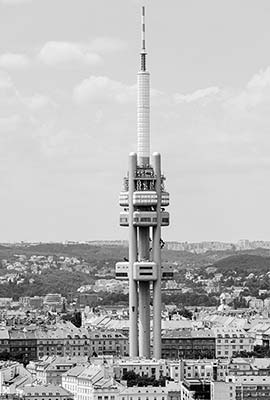
Every small town had its own set of loudspeakers for broadcasting propaganda. Locals remember growing up with these mouthpieces of government boasting of successes (“This year, despite many efforts of sabotage on the part of certain individuals in service of imperialist goals, we have surpassed the planned output of steel by 195 percent”), calling people to action (“There will be no school tomorrow as all will join the farmers in the fields for an abundant harvest”), or quelling disturbances (“Some citizens may have heard about alien forces in our society taking advantage of this week’s anniversary to spread unrest.”).
Eventually the Soviet empire crumbled, beginning with reforms in Hungary in the summer of 1989 and culminating in the fall of the Berlin Wall that November. A few weeks later, Czechoslovakia regained its freedom in the student- and artist-powered 1989 “Velvet Revolution,” so called because there were no casualties...or even broken windows (see here). Václav Havel, a poet, playwright, and philosopher who had been imprisoned by the communist regime, became Czechoslovakia’s first postcommunist president.
“It’s Not You, It’s Me”: The Peaceful Breakup (1989-1993)
In the postcommunist age of new possibility, the two peoples of Czechoslovakia began to wonder if, in fact, they belonged together.
Ever since they joined with the Czechs in 1918, the Slovaks felt overshadowed by Prague (unmistakably the political, economic, and cultural center of the country). Slovakia, which in the preceding 50 years had been stripped by Hungary even of the right to run schools in its own language, stood no chance of true independence after World War I. And over the years, the Czechs resented the financial burden of carrying their poorer neighbors to the east.
The dissolution of Czechoslovakia began over a hyphen, as the Slovaks wanted to rename the country Czecho-Slovakia. Ideally, this symbolic move would come with a redistribution of powers: two capitals and two UN reps, but one national bank and a single currency. This idea was rejected, and in June 1992, the Slovak nationalist candidate Vladimír Mečiar fared surprisingly well in the elections—suggesting that the Slovaks were serious about secession. The politicians plowed ahead, getting serious about the split in September 1992. The transition took only three months from start to finish.
The split became official on January 1, 1993, and each country ended up with its own capital, currency, and head of state. For most, the breakup dissolved tensions, and three decades later, Czechs and Slovaks still feel closer to each other than to any other nationality. It is no surprise that an elected Czech president’s first official visit is to Bratislava, and vice-versa.
Since the split, the Czech Republic has had three significant turning points. In March 1999, it joined NATO. On May 1, 2004, the country joined the European Union. Three and a half years later, it entered the Schengen Agreement, effectively erasing its borders for the purposes of work and travel. The Czech Republic had become a fully integrated member of the European community.
The Czech Republic Today (2000 to Present)
After 14 years in office, a term-limited Václav Havel stepped down in 2003. He died in 2011. While he’s fondly remembered by Czechs as a great thinker, writer, and fearless leader of the opposition movement during the communist days, many consider him to have been less successful as a president.
The next president, Václav Klaus, had been the pragmatic author of the economic reforms in the 1990s. Klaus’ surprising win in the 2003 election symbolized a change from revolutionary times, when philosophers became kings, to modern humdrum politics, when offices are gained by bargaining with the opposition (Communist Party votes in parliament were the decisive factor in Klaus’ election).
Behind-the-scenes deals in parliament allowed Klaus to be reelected, drawing public outrage and eventually a change in the country’s constitution. This led, in January 2013, to the first election of a president directly by the people (rather than by parliament).
The winner then (and again in 2018) was Miloš Zeman, the other political heavyweight of the 1990s. Zeman—a tobacco, pork, and Becherovka-powered man of the people—brought the Social Democratic Party back to dominance. Zeman was a controversial figure with slippery politics. He began his career on the left, then abandoned the Social Democrats and swung hard to the right, and fired up his base with populist rhetoric. (If you’re thinking “the Czech Donald Trump,” you’re not far off.)
But during the 2023 election, former army general Petr Pavel convincingly defeated the Zeman-backed candidate, marking a turn away from populism. Pavel started his military career pragmatically as a member of the Communist Party in the 1980s, but later transformed himself into a war hero (having saved a French contingent during the 1990s Yugoslav Wars). After his predecessors’ attempts to bring the country closer to Russia and China, President Pavel promised a return to the Western-oriented, human-rights-first approach of Václav Havel.
However, the Czech president is largely a figurehead. Power rests with the prime minister, who is chosen in the parliamentary elections. Recently, the traditional political parties were challenged by an antiestablishment candidate: food-industry mogul, second-wealthiest Czech, and former secret-police collaborator Andrej Babiš. He’s the founder and head of the populist Action of Dissatisfied Citizens party that’s considered by critics to be a cross between Vladimir Putin, Silvio Berlusconi, and Viktor Orbán.
Babiš served as prime minister between 2017 and 2021, a term that was plagued with mass public protests, mainly against his massive conflicts of interest. This inspired parties across the political spectrum to band together and eventually defeat Babiš at the polls. In 2022, the new government coalition strongly supported Ukraine and helped steer the rest of the EU to do the same. The government also opened the country’s borders—and its purse—to Ukrainian refugees, taking in over a half-million people. Many Czechs saw sharp parallels to the 1968 Soviet crackdown in their own country, so support for Ukrainian refugees came naturally. But the war also caused a surge in energy prices and an inflation rate of 15 percent, posing a major challenge for the government.
Despite recent turmoil, the trajectory of Czech history continues to trend positive. Both in the capital and in rural villages, the country feels more affluent than ever, all while celebrating its inherent Czech-ness.
CZECH CUISINE
The Czechs have one of Europe’s most stick-to-your-ribs cuisines. Heavy on meat, potatoes, and cabbage, it’s hearty and tasty—designed to keep peasants fueled through a day of hard work. Some people could eat this stuff forever, while others seek a frequent break in the form of international restaurants (bigger towns such as Prague, Český Krumlov, and Kutná Hora have several options).
Soups
Polévka (soup) is the most essential part of a meal. The saying goes: “The soup fills you up, the dish plugs it up.” Pečivo (bread) may be served with soup, or you may need to ask for it; it’s always charged separately depending on how many rohlíky (rolls) or slices of chleba (yeast bread) you eat.
Some of the thick soups for a cold day are:
Zelná (or zelňačka): Cabbage
Čočková: Lentil
Fazolová: Bean
Dršťková: Tripe—delicious if fresh, chewy as gum if not
Czech dumplings (knedlíky) resemble steamed white bread. They come in plain or potato (bramborové) varieties, are meant to be drowned in gravy (dumplings never accompany sauceless dishes), and are eaten with a knife and fork.
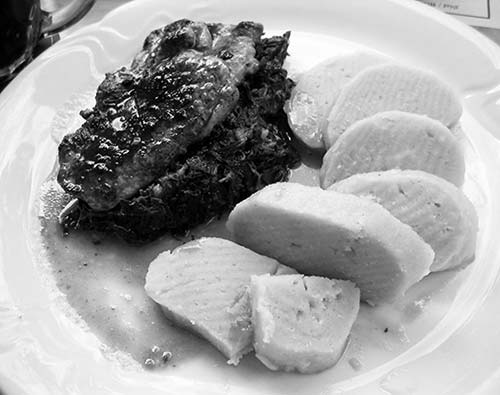
Sweet dumplings, listed in the dessert section on a menu, are a tempting option in summer, when they are loaded with fresh strawberries, blueberries, apricots, or plums, and garnished with custard and melted butter. Beware, though, that many restaurants cheat by filling the sticky dough with a smattering of jam or fruit preserve; before ordering, ask the waiter for details, or discreetly inspect that plate at your neighbor’s table. Dumplings with frozen fruit lose some of the flavor but are still worth trying.
The lighter soups are:
Hovězí (or slepičí vývar s nudlemi): Beef or chicken broth with noodles
Pórková: Leek
Květáková: Cauliflower
Main Dishes
These can either be hotová jídla (quick, ready-to-serve standard dishes, in some places available only during lunch hours, generally 11:00-14:30) or the more specialized jídla na objednávku or minutky (plates prepared when you order).
Below are some popular meat dishes. Note that the word pečené (roasted) shows up frequently on menus.
Guláš: Thick, meaty stew
Pečená kachna: Roasted duck
Pečené kuře: Roasted chicken
Smažený řízek: Fried pork fillet, like Wiener schnitzel
Svíčková na smetaně: Beef tenderloin in cream sauce
Vepřové koleno: Pork knuckle
Vepřová pečeně: Pork roast
If you’re spending the night out with friends, have a beer and feast on the huge vepřové koleno, usually served with mustard (hořčicí), horseradish sauce (křenem), and yeast bread (chleba).
In this landlocked country, fish options are typically limited to kapr (carp) and pstruh (trout), prepared in a variety of ways and served with potatoes or fries—although Czech perch and Norwegian salmon have cropped up on many local menus.
Vegetarians can go for the delicious smažený sýr s bramborem (fried cheese with potatoes) or default to čočka s vejci (lentils with fried egg).
Salads and Sides
Starches and Garnishes: Hotová jídla come with set garnishes, but if ordering à la carte (jídla na objednávku), you’ll typically need to order your garnishes separately (otherwise you’ll get only the main dish). In either case, the most common sides are knedlíky (bread dumplings), zelím (cabbage), and bramborem (potatoes).
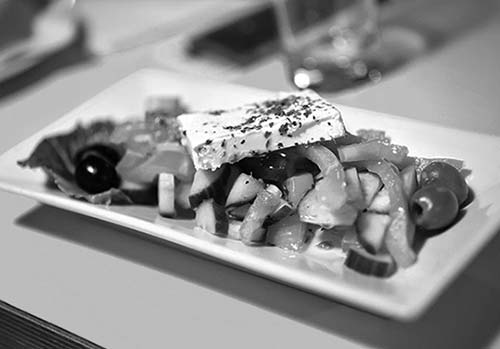
Salad: Šopský salát, like a Greek salad, is usually the best salad option (a mix of tomatoes, cucumbers, peppers, onion, and feta cheese with vinegar and olive oil). The server will bring it with the main dish, unless you specify that you want it before.
Dessert
Consider the following for moučník (dessert):
Lívance: Small pancakes with jam and curd
Palačinka: Crêpes served with fruit or jam
Zmrzlinový pohár: Ice-cream sundae
Many restaurants will offer fruit-filled dumplings and different sorts of koláče (pastries) and štrůdl (apple strudel), but it’s much better to get these from a bakery. A větrník is a super-decadent, glazed cream puff.
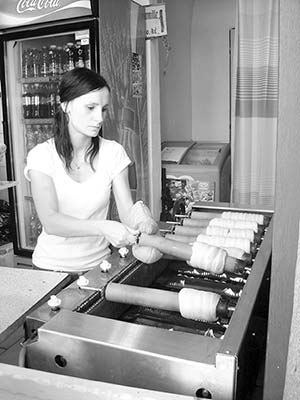
All over Prague’s Old Town, you’ll find kiosks selling a treat called trdlo or trdelník. This is a long ribbon of dough wrapped around a stick, slowly cooked on a rotisserie, then rolled in cinnamon, sugar, or other toppings. While these aren’t “traditional Czech” (they were imported quite recently from Hungary), they do offer a fresh, sweet treat. Try to get one that’s still warm, rather than one wrapped in plastic—it makes a big difference.
BEVERAGES
Coffee: No Czech meal is complete without a cup of coffee. Espresso has become the norm in recent years, and locals drink it with added water and cream on the side. In most places, you’ll still find turecká káva (Turkish coffee—finely ground coffee that only partly dissolves, leaving “mud” on the bottom; drink it without milk). This is how Czechs used to drink their coffee.
Water: Water comes bottled and generally costs more than beer (tap water is generally not served). Czech mineral waters (minerálka) have a high mineral content. They’re naturally carbonated because they come from the springs in the many Czech spas (Mattoni, the most common brand, is from Carlsbad). If you want still water, ask for neperlivá.
Beer, Wine, and Liqueurs: Bohemia is beer country, with Europe’s best and cheapest brew (see the sidebar on here). Moravians prefer wine and slivovice (SLEE-voh-veet-seh)—a plum brandy so highly valued that it’s the de facto currency of the Carpathian Mountains (often used to barter with sheepherders and other mountain folk). Medovina (“honey wine”) is mead.
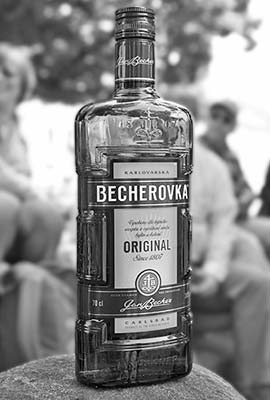
In bars and restaurants, you can go wild with memorable liqueurs, most of which cost about a dollar a shot. Experiment. Fernet, a bitter drink made from many herbs, is the leading Czech aperitif. Absinthe, made from wormwood and herbs, is a watered-down version of the hallucinogenic drink that’s illegal in much of Europe. It’s famous as the muse of many artists (including Henri de Toulouse-Lautrec in Paris more than a century ago). Becherovka, made of 13 herbs and 38 percent alcohol, was used to settle upset aristocratic tummies and as an aphrodisiac. This velvety drink remains popular today. Becherovka and tonic mixed together is nicknamed beton (“concrete”). If you drink three, you’ll find out why.
CZECH LANGUAGE
Czech is a Slavic language closely related to its Polish and Slovak neighbors. These days, English is widely spoken, and you’ll find the language barrier minimal—unless you’re dealing with a clerk or service person over age 50.
Czech pronunciation can be tricky. The language has a dizzying array of diacritical marks (little doo-hickeys over some letters that affect pronunciation). Most notably, some letters can be topped with a háček (č, š, ž, ň, ě).
Czechs are among the world’s most enthusiastic beer (pivo) drinkers—adults drink an average of 80 gallons a year. The pub is a place to have fun, complain, discuss art and politics, talk hockey, and chat with locals and visitors alike. Na zdraví means “to your health” in Czech. Whether you’re in a restaurace (restaurant), hostinec (pub), or hospoda (bar), a beer will land on your table upon the slightest hint to the waiter, and a new pint will automatically appear when the old glass is almost empty (until you tell the waiter to stop). Order beer from the tap (točené means “draft”; sudové pivo means “keg beer”). More and more pubs are upgrading to beer from the tank (tankové). A pivo is large (0.5 liter—17 oz); a malé pivo is small (0.3 liter—10 oz).
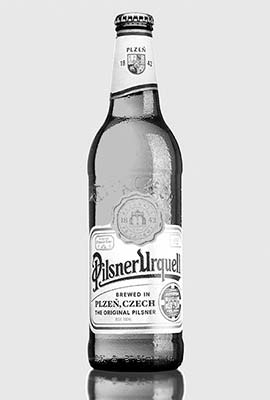
The Czechs perfected the first Pilsner-style lager, introduced by a Bavarian in nearby Plzeň, and the result, Pilsner Urquell, is on tap in many local pubs. But the Czechs produce plenty of other good beers; most of the famous brands, including Krušovice, Gambrinus, Staropramen, and Kozel, are owned internationally. Budvar, from the town of Budějovice (“Budweis” in German), is the last state-owned brewery. For years, the Czech and the American breweries disputed the “Budweiser” brand name. The solution: Czech Budweiser is sold under its own name in Europe, China, and Africa, while in America it is marketed as Czechvar.
The big degree symbol on beer bottles doesn’t indicate alcohol content. Instead, it is a measurement used by brewers to track the density of certain ingredients. As a rough guide, 10 degrees is about 3.5 percent alcohol, 12 degrees is about 4.2 percent alcohol, and 11 and 15 degrees are dark beers. The most popular Czech beers are about as potent as German beers and only slightly stronger than typical American brews. Traditional establishments have beers from only one brewery on tap: one 10-degree, one 12-degree, one dark, and one nonalcoholic beer.
In recent years, Czechs have moved toward local microbrews. More restaurants are making their own beer or serving beer only from independent breweries. Modern beer bars (pivní bar, with a range of microbrews on tap) are popping up like crazy. The one word to characterize a successful Czech microbrew is balance. While Czechs do like to try new tastes, they are looking for a beer they can spend an evening with, drinking several pints throughout the night.
Here are some clues for Czech pronounciation:
j sounds like “y” as in “yarn”
c sounds like “ts” as in “cats”
č sounds like “ch” as in “chicken”
š sounds like “sh” as in “shrimp”
ž sounds like “zh” as in “leisure”
ň sounds like “ny” as in “canyon”
ě sounds like “yeh” as in “yet”
ď sounds like the “dj” sound in “ledge”
Prague is flooded with tourists, most of whom don’t bother to learn a single word of the local language. Study the Czech survival phrases on the following pages and give it your best shot. The locals will appreciate your efforts.
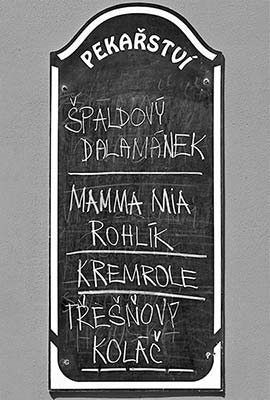
When navigating town, these words might be helpful: město (MYEHS-toh, town), náměstí (nah-myehs-tee, square), ulice (OO-leet-seh, street), nábřeži (NAH-bzheh-zhee, embankment road), and most (mohst, bridge).
Czech Survival Phrases
The emphasis in Czech words usually falls on the first syllable—but don’t overdo it, as this stress is subtle. A vowel with an accent (á, é, í, ú, ý) is held longer. The combination ch sounds like the guttural “kh” sound in the Scottish word “loch.” The uniquely Czech ř (as in Dvořák) sounds like a cross between a rolled “r” and “zh”; in the phonetics, it’s “zh.” Here are a few English words that all Czechs know: super, OK, pardon, stop, menu, problem, and no problem.
| Hello. (formal) | Dobrý den. doh-bree dehn |
| Hi. / Bye. (informal) | Ahoj. ah-hoy |
| Do you speak English? | Mluvíte anglicky? mloo-vee-teh ahn-glits-kee |
| Yes. / No. | Ano. / Ne. ah-noh / neh |
| I don’t understand. | Nerozumím. neh-roh-zoo-meem |
| Please / You’re welcome. / Can I help you? | Prosím. proh-seem |
| Thank you. | Děkuji. dyeh-kwee |
| Excuse me. / I’m sorry. | Promiňte. proh-meen-teh |
| Good. | Dobře. dohb-zheh |
| Goodbye. | Nashledanou. nah-skleh-dah-noh |
| one / two / three | jeden / dva / tři yay-dehn / dvah / tzhee |
| hundred / thousand | sto / tisíc stoh / tee-seets |
| How much? | Kolik? koh-leek |
| local currency | koruna (Kč) koh-roo-nah |
| Write it? | Napište to? nah-pish-teh toh |
| Is it free? | Je to zadarmo? yeh toh zah-dar-moh |
| Where can I buy / find…? | Kde mohu koupit / najít…? guh-deh moh-hoo koh-pit / nah-yeet |
| I’d like… (said by a man) | Rád bych… rahd bikh |
| I’d like… (said by a woman) | Ráda bych… rah-dah bikh |
| We’d like… | Rádi bychom… rah-dyee bee-khohm |
| …a room. | …pokoj. poh-koy |
| …a ticket to ____. | …jízdenka do ____. yeez-dehn-kah doh ____ |
| Where is…? | Kde je…? guh-deh yeh |
| …the train station | …nádraží nah-drah-zhee |
| …the bus station | …autobusové nádraží ow-toh-boo-soh-veh nah-drah-zhee |
| …the tourist information office | …turistická informační kancelář too-rih-stit-skah een-for-mahch-nee kahn-tseh-lahzh |
| …the toilet | …vécé veht-seh |
| men / women | muži / ženy moo-zhee / zheh-nee |
| left / right / straight | vlevo / vpravo / rovně vleh-voh / fprah-voh / rohv-nyeh |
| At what time…? | V kolik…? fkoh-leek |
| …does this open / close | …otevírají / zavírají oh-teh-vee-rah-yee / zah-vee-rah-yee |
| now / soon / later | teď / brzy / později tedge / bir-zih / pohz-dyeh-yee |
| today / tomorrow | dnes / zítra duh-nehs / zee-trah |
In a Czech Restaurant
| I’d like to reserve… (said by a man) | Rád bych zarezervoval… rahd bikh zah-reh-zehr-voh-vahl |
| I’d like to reserve… (said by a woman) | Ráda bych zarezervovala… rah-dah bikh zah-reh-zehr-voh-vah-lah |
| …a table for one / two. | …stůl pro jednoho / dva. stool proh yehd-noh-hoh / dvah |
| nonsmoking | nekuřácký neh-kuhzh-aht-skee |
| Is this table free? | Je tento stůl volný? yeh tehn-toh stool vohl-nee |
| Can I help you? | Mohu vám pomoci? moh-hoo vahm poh-moht-see |
| The menu (in English), please. | Jídelní lístek (v angličtině), prosím. yee-dehl-nee lee-stehk (fahn-gleech-tee-nyeh) proh-seem |
| Service is / isn’t included. | Spropitné je / není zahrnuto. sproh-pit-neh yeh / neh-nee zah-har-noo-toh |
| to go | s sebou seh-boh |
| with / and / or | s / a / nebo suh / ah / neh-boh |
| ready-to-eat meal | hotová jídla hoh-toh-vah yeed-lah |
| breakfast / lunch / dinner | snídaně / oběd / večeře snee-dahn-yeh / ohb-yeht / veh-cheh-sheh |
| appetizers | předkrmy pzhehd-krih-meh |
| bread / cheese / sandwich | chléb / sýr / sendvič khlehb / seer / sehnd-veech |
| soup / salad | polévka / salát poh-lehv-kah / sah-laht |
| meat / poultry / fish | maso / drůbež / ryby mah-soh / droo-behzh / rih-bih |
| fruit / vegetables | ovoce / zelenina oh-voht-seh / zeh-leh-nyee-nah |
| dessert | dezert deh-zehrt |
| (tap) water | voda (z kohoutku) voh-dah (skoh-hoht-koo) |
| mineral water | minerální voda mih-neh-rahl-nyee voh-dah |
| carbonated / not carbonated (spoken) | s bublinkami / bez bublinek sboob-leen-kah-mee / behz boo-blee-nehk |
| carbonated / not carbonated (printed) | perlivá / neperlivá pehr-lee-vah / neh-pehr-lee-vah |
| milk | mléko mleh-koh |
| (orange) juice | (pomerančový) džus (poh-mehr-ahn-choh-vee) “juice” |
| coffee / tea | káva / čaj kah-vah / chai |
| wine / beer | vino / pivo vee-noh / pee-voh |
| red / white | červené / bílé chehr-veh-neh / bee-leh |
| sweet / dry | sladké / suché slahd-keh / soo-kheh |
| glass / bottle | sklenka / lahev sklehn-kah / lah-hehv |
| light / dark | světlé / tmavé svyeht-leh / tmah-veh |
| Cheers! | Na zdraví! nah zdrah-vee |
| Enjoy your meal. | Dobrou chuť. doh-broh khoot |
| More. / Another. | Více. / Další. veet-seh / dahl-shee |
| The same. | To samé. toh sah-meh |
| The bill. | Účet. oo-cheht |
| I’ll pay. | Zaplatím. zah-plah-teem |
| tip | spropitné sproh-pit-neh |
| Delicious! | Výborné! vee-bohr-neh |