SPAIN: PAST & PRESENT
PREHISTORY TO ROME (15,000 BC-AD 500)
RECONQUISTA AND THE MEDIEVAL WORLD (1100-1400)
THE CATHOLIC MONARCHS CREATE MODERN SPAIN (1400s)
CIVIL WAR, FRANCO, AND DEMOCRACY (1900-2000)
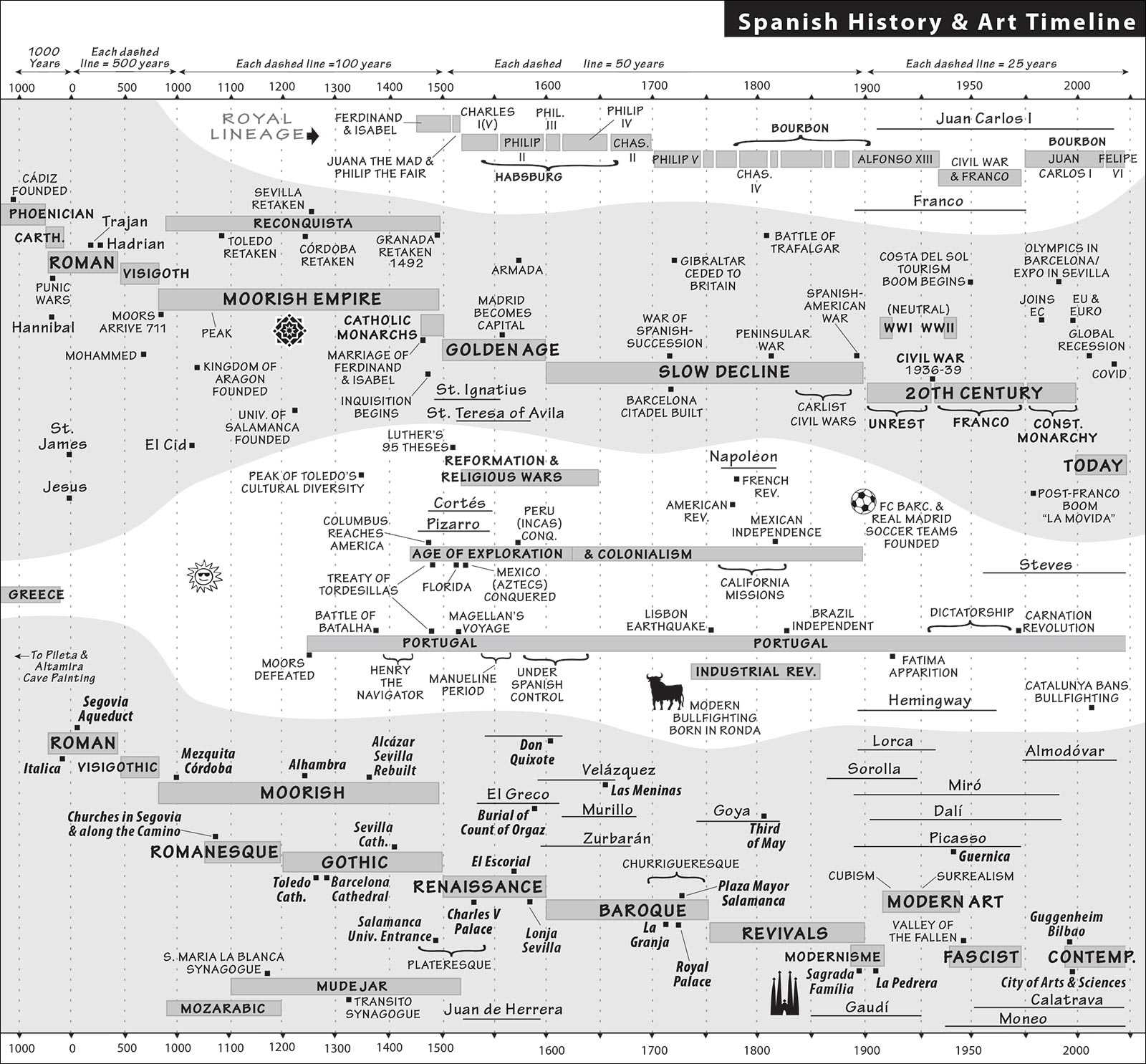
Map: Spanish History & Art Timeline
AUTHENTIC RITUAL OR CRUEL SPECTACLE?
The distinctive Spanish culture has been shaped by the country’s wide mix of regions, languages, and ethnicities. Over the centuries, Roman emperors, Muslim sultans, hard-core Christians, cruel conquistadors, French dandies, and Fascist dictators have all left their mark on Spain’s art, architecture, and customs.
PREHISTORY TO ROME (15,000 BC-AD 500)
Spain—with its sunny weather, fertile soil, and natural seaports—has always been a popular place to call home, from prehistoric cave painters (15,000 BC) to sea-trading Phoenicians (1,000 BC) to the Celtic “Iberians” (500 BC).
By AD 1, the Romans had conquered the peninsula, connecting Spain with the wider world. Roman “Hispania” became the agricultural breadbasket (olives, wheat) to feed their vast Roman Empire. The Romans gave Spain its Latin-based language, the Christian religion (fourth century), cities...and, of course, wine.
When the Empire crumbled (around AD 500), Spain made a fairly peaceful transition, now ruled by Christian Visigoths from Germany who maintained the Roman order.
Sights
• Prehistoric cave paintings at Altamira and Pileta
• Roman ruins: Segovia’s 100-foot-high aqueduct, Barcelona’s Temple of Augustus
MOORS (711-1100)
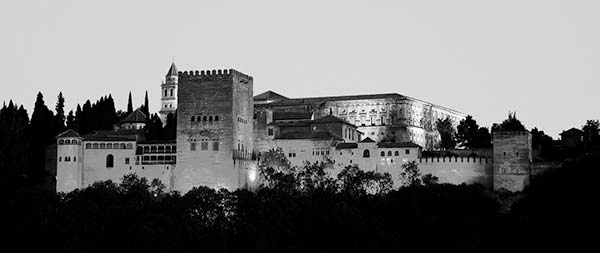
In AD 711, zealous members of the world’s newest religion—Islam—landed on the Rock of Gibraltar and, in three short years, conquered the Iberian Peninsula. These “Moors”—North African Muslims with Arabic ties—would dominate Spain for centuries. From their capital in Córdoba, they ruled an enlightened Islamic caliphate called “al-Andalus.”
While the rest of Europe was mired in medieval darkness, Spain’s Moorish culture flourished, from mathematics and astronomy to literature and architecture. Though devout Muslims, the Moors were surprisingly tolerant of the native Christians and Jews they ruled, so long as they paid extra taxes. The Moors themselves were an ethnically diverse culture, including both simple Berber tribesmen from Morocco and sophisticated rulers from old Arab families.
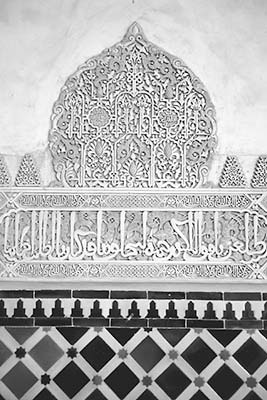
The Moorish legacy lives on today in Spain’s language (the Spanish el comes from Arabic al) and architecture (horseshoe arches, ceramic tiles, fountains, and gardens).
Sights
• Córdoba’s well-preserved mosque, with its infinite forest of delicate columns, captures 10th-century al-Andalus in its prime.
• Granada’s lush and exotic Alhambra evokes the era’s final flowering (1400s).
• Sevilla’s richly decorated Alcázar (or Moorish “castle”) is just one of many historic alcázars across Spain, from Segovia to Toledo.
• Morocco, a half-hour sail from Spain, continues the connection today.
RECONQUISTA AND THE MEDIEVAL WORLD (1100-1400)
Even as Islam dominated, pockets of Christian resistance remained. Over several centuries, local Christian warrior-kings chipped away, “reconquering” more and more land in what’s called the Reconquista.
The peninsula became a battleground of heavy stone castles and fortified hill towns. Toledo fell to the Christians (1085), then Córdoba (1237) and Sevilla (1285), as the Moors retreated to their last stronghold in Granada. Massive Christian cathedrals were built atop the ruins of mosques.
During this era, “Spain” was not a nation but a patchwork of many small, independent dukedoms, from Christian Toledo to Muslim Granada. There was a rich array of ethnic groups—Moorish, Jewish, Galician, Basque, Catalan. Fervent pilgrims crisscrossed the countryside to venerate miraculous images of the Virgin Mary. These ingredients were cooking up into modern “Spain.”
Sights
• Grand cathedrals in León and Burgos reflect the fierce pride of Christians on the front lines of the Reconquista.
• Santiago de Compostela’s cathedral and Montserrat’s Black Virgin evoke the devotion of medieval pilgrims.
• Toledo’s mix of churches, synagogues, and mosques reflect the multiethnic Mudejar (mix of Muslim and Christian) character of medieval Spain; Toledo’s cathedral is a glorious patchwork of styles.
• Sevilla’s Barrio Santa Cruz and Córdoba’s Jewish Quarter still have the maze-of-lane ambience of medieval Jewish neighborhoods.
• Barcelona’s Catalan Art Museum is “the Prado of Romanesque.”
• Many of Spain’s most distinct traditions are rooted in medieval times: Holy Week, Virgin Mary veneration, flamenco, bullfights, and Pamplona’s running of the bulls.
THE CATHOLIC MONARCHS CREATE MODERN SPAIN (1400s)
By 1400, two powerful kingdoms were emerging: the Mediterranean sea-trading power of Aragon and castle-dotted Castile in the interior.
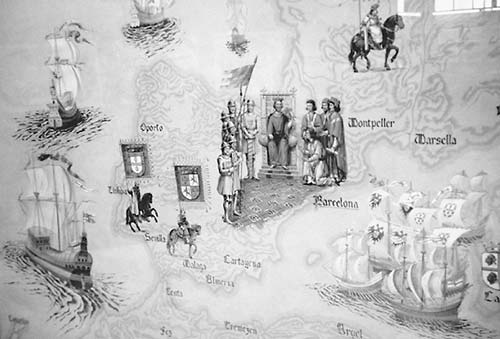
In 1469, Aragon’s Ferdinand II married Isabel of Castile, uniting much of the peninsula and instantly making Spain a European power. These so-called “Catholic Monarchs” (Reyes Católicos) enforced the Christian code throughout their realm. The Inquisition was introduced to root out heresy. In the pivotal year 1492, Ferdinand and Isabel drove the last Moors out of Granada, expelled the country’s Jews, and sent Christopher Columbus to explore the world. Spain was now a unified, Christian, militaristic nation-state, fueled by the religious fervor of the Reconquista.
Sights
• Sevilla’s massive cathedral, built atop a mosque, represents the triumph of Christianity over the Moors.
• Ferdinand and Isabel’s elaborate tomb is in Granada’s Royal Chapel.
• Columbus’s tomb is in Sevilla, and the Columbus Monument towers over Barcelona’s harbor.
THE GOLDEN AGE (1500-1650)
Spain’s bold sea explorers changed the economics of Europe, opening up a New World of riches and colonies. The Spanish flag soon flew over most of South and Central America, where diseases and harsh treatment wiped out many indigenous people. Spain entered the slave trade, transporting enslaved Africans to the New World to replenish the labor force. Gold, silver, and plunder poured into the country.
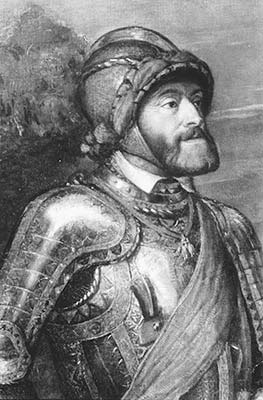
Spain’s growing empire only got bigger when Ferdinand and Isabel’s daughter married a powerful Habsburg prince, uniting both empires. Their son, Emperor Charles V (1500-1558, known as Charles I in Spain) became the most powerful man in the world, ruling an empire from Holland to Sicily, Bohemia to Bolivia. Spain was swimming in money. The arts flourished during this golden age, from El Greco to Cervantes to the mystic nun St. Teresa of Ávila.
Charles’s son Philip II (1527-1598) solidified the gangly empire by moving Spain’s capital to Madrid and building a new palace at El Escorial. Meanwhile, his wars with Europe’s rising powers were draining the treasury of its New World gold. Then in the summer of 1588, Spain’s seemingly unbeatable fleet—the Invincible Armada—sailed off to conquer Elizabethan England, only to be unexpectedly routed. Just like that, Britannia ruled the waves, and Spain would never fully recover.
Still, Spain entered the 1600s as one of Europe’s greatest powers. Sevilla, the gateway to New World wealth, was funding great painters like Velázquez and Murillo. Madrid, once a tiny village, was coming into its own as the hub of a united Spain.
Sights
• The imposing palace of El Escorial came to symbolize Spain’s Imperial power. With its slate roofs, grid-like windows, and corner towers, it set the template for many similar “Herreresque” buildings across Spain.
• Many churches across Spain have elaborate gold and silver altars and treasures forged from New World riches.
• El Greco’s mystic paintings shine especially bright in his beloved Toledo.
• Madrid’s stately Plaza Mayor reflects the city’s status as a grand European capital.
SLOW DECLINE (1650-1900)
While Spain doubled down on its stagnant colonial economy, Great Britain was developing science and technology, and France was becoming Europe’s new superpower. Spain began a slow, centuries-long downward spiral.
By 1700, once-mighty Spain lay helpless while Europe’s rising powers fought over who should rule it (in the War of the Spanish Succession, 1701-1714). The new Spanish king would be a Frenchman, the grandson of Louis XIV, from the Bourbon family. Once crowned, King Philip V (1683-1746) made himself right at home, building a lavish Versailles-like palace in Madrid. Such extravagance only made Spain more of a debt-ridden, flabby nation.
There were bright spots. When France’s Napoleon invaded (1807), the Spanish bravely resisted and preserved their independence. In the mid-1800s, Barcelona developed into a beacon of progressivism (or “Modernisme”), using all the latest technology to rebuild the city.
Still, as the century drew to a close, Spain remained a backward nation of bickering nobles and religious repression. One by one, Spain lost its colonies to South American revolutionaries. In 1898, the upstart United States thrashed Spain in the Spanish-American War, taking away Spain’s last major possessions: Cuba, Puerto Rico, and the Philippines. Spain hit rock bottom.
Sights
• Madrid’s 2,800-room Royal Palace reflected the chandeliered elegance (and decadence) of the new French Bourbon rulers.
• The Puerta del Sol and the Prado were part of King Charles III’s makeover of Madrid.
• Salamanca’s Plaza Mayor and Cathedral showcase the Baroque Churriguera style.
• Gibraltar, ceded to Britain in the War of Spanish Succession, brought the Brits (and their fondness for sherry) to southern Spain.
• Goya’s paintings captured both the decadence of the late monarchy and the brave Spanish resistance.
• Barcelona’s colorful Modernisme sights: Block of Discord and Sagrada Família
CIVIL WAR, FRANCO, AND DEMOCRACY (1900-2000)
A drained and disillusioned Spain was ill-prepared for the modern world. While the rest of Europe was becoming democratic and technologically advanced, Spain’s old ruling class (the monarchy, Church, landowners, and military) resisted change led by new economic powers (cities, businessmen, labor unions). When a democratic election brought a modern Republican government to power, right-wing fascists under General Francisco Franco fomented a coup.
Spain was plunged into a bitter, bloody Civil War (1936-1939). It pitted Franco’s Nationalist Falangists against the Republican Loyalists. Some 500,000 Spaniards died, and Franco emerged the winner. (For more on the Spanish Civil War, see here.)
For the next 36 years, Spain would be ruled with an iron fist by Franco—a dictator backed by the military and blessed by the Church. Franco tried to bring the backward country into the modern age while simultaneously isolating it from corrupting modern influences. (Spain even sat out World War II, declaring neutrality.) Spain went into decades of suspended animation—an alternative universe of conservative values and Art Deco buildings while the rest of the world sped forward. (On my first visit to Spain, in 1973, I came face-to-face with fellow teenagers—me in backpack and shorts, the Spaniards in military uniforms, brandishing automatic weapons.)
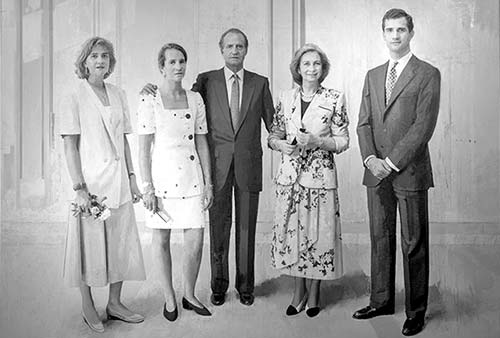
Finally in 1975, Franco died. To everyone’s surprise, his hand-picked protégé, the young, mild-mannered King Juan Carlos I, stepped aside, settled for a figurehead title, and guided the country quickly and peacefully to democratic elections (1977).
Spain had a lot of catching up to do. Almost overnight the conservative nation exploded with liberal values, from legalized abortion to sexy movies. In the 1980s, under a leftist prime minister, Spain flowered. It soon joined the global economy and the European Union. In 1992, Spain showed the world its new modern face, hosting the Summer Olympics in Barcelona. After centuries of decline and decades of repression, Spain emerged into the 21st century full of optimism.
Sights
• Valley of the Fallen (Valley of Cuelgamuros), an immense stone monument, offers a sobering honor to the many victims of the Spanish Civil War.
• Picasso’s Guernica is a Cubist rendering of Civil War devastation. (Also, Barcelona’s Picasso Museum showcases this Spaniard’s groundbreaking art.)
• Other pioneering Spanish artists have their museums, from Miró (Barcelona) to Dalí (Figueres and Cadaqués).
• At Bilbao’s Guggenheim Museum, you can almost feel Spain’s progressive spirit as it entered the 21st century.
SPAIN TODAY
In today’s vibrant Spain, the dark days of Franco feel like a half- century ago. (Oh right, they were.) Spain is now a culturally liberal, highly secular society with a global outlook.
With Madrid as the banker and Catalunya the industrial powerhouse, Spain is one of the top 20 economies in the world. Its factories pump out Fords, Mercedes, designer clothes, and affordable shoes. Tourism rakes in billions. Once-isolated Spain is now a strong member of both the EU and NATO (hosting a US naval base at Rota). It’s on the cutting edge of green energy, with sweeping fields of windmills and solar panels. High-speed trains link major cities, Metro lines are regularly expanded, and once diesel-choked streets have been pedestrianized. As a result, Spain enjoys a great quality of life, from high income to free health care to long life expectancy.
But Spain still has its issues. Unemployment, especially among the young, is chronically high. Tax collection is a problem, due to a persistent underground economy. There’s a longstanding rift with Britain over who owns Gibraltar. A low birthrate and aging populace present long-term challenges. And rapid immigration—especially boatloads of migrants from Africa—has polarized the country.
Spain’s government—though officially a constitutional monarchy under King Felipe VI—is led by a prime minister along with a bicameral parliament. Politics can get complicated as there are a number of political parties (from left to right), making coalition building essential to governance.
Spain’s federal system is more decentralized than most, with lots of authority delegated to regional governments. By nature, Spaniards are less rah-rah patriotic than they are fiercely proud of their region—Andalusia, Galicia, and so on. That’s led to problems, with some regions even demanding complete independence. For decades, it was the troublesome (and sometimes terrorist) Basques. More recently, Catalunya voted to secede—a movement the Madrid government quashed brutally. Though those separatist fires may have been batted down, they continue to smolder.
The Spanish populace is increasingly diverse. Latin Americans, Africans, Romanians, and ex-pat Brits with deep tans now constitute more than one in ten Spanish citizens. While Spanish is the official language, one in four can also converse in either Catalan, Galician, Basque, or Arabic.
In general, the Spanish people are culturally liberal: pro-LGBTQ+, pro-abortion, pro-euthanasia, and so on. Young people party in the clubs until dawn. Given Spain’s long history with the Catholic church it’s surprising—or maybe not—that the country is now so secular. Half of Spaniards are nominally Catholic, but few go to Mass. One in four Spaniards is openly atheist or agnostic. Separation of church and state is baked solidly into the constitution.
Culturally, Spain makes its mark. Its architects grace the world with soaring sail-like bridges. Edgy film directors win Oscars, while celebrity chefs spread the gospel of Mediterranean cuisine, exotic soups, and the cult of jamón. In sports, Spain is a global superpower in “minor” things like handball, cycling, and moto sports. And Spaniards regularly crowd the bars to watch soccer matches, especially the arch-rivalry between Real Madrid and FC Barcelona that they call “El Clásico.”
Perhaps the most distinctive thing about Spain today is not its modernity, but how Spaniards still embrace their time-honored traditions. At small-town festivals, bulls still run, tomatoes still get thrown, sherry gets drunk, and Virgin Mary floats are hefted through the streets. Spain holds on tightly to its history even as its history continues to unfold.
Architecture
SPANISH HISTORY SET IN STONE
The two most fertile periods of architectural innovation in Spain were during the Moorish era and the golden age. Otherwise, Spanish architects marched obediently behind the rest of Europe. But in the modern era, Spain’s architects have brought the country back to the forefront of construction and design.
Spain’s Christian history is dominated by 700 years of a territorial give-and-take with Muslim Moors (711-1492). Throughout Spain, it seems every old church was built upon a mosque (Sevilla’s immense cathedral, for one, and Córdoba’s remarkable Mezquita, which preserved the mosque but plopped a cathedral right in the middle of it). Granada’s Alhambra is the best example of the secular Moorish style. It’s an Arabian Nights fairy tale: finely etched domes, lacy arcades, stalactite-studded ceilings, keyhole arches, and lush gardens. At its heart lies an elegantly proportioned courtyard, where the designers created an ingenious microclimate: water, plants, pottery, thick walls, and darkness...all to be cool. The stuccoed walls are ornamented with a stylized Arabic script, creating a visual chant of verses from the Quran. Meanwhile, simple Romanesque churches dotted the northern part of Spain not controlled by the Moors (such as along the Camino de Santiago and in the folds of the Picos de Europa).
As the Christians slowly reconquered Iberian turf, they turned their fervor into stone, building churches in the lighter, heaven-reaching stained-glass Gothic style (as in León, Toledo, and Sevilla). Gothic was a French import, trickling into conservative Spain long after it had swept through Europe.
As Christians moved in, many Muslim artists and architects stayed, giving the new society the Mudejar style—Moorish in appearance, but commissioned by Catholics. (Mudejar means “those who stayed.”) In Sevilla’s Alcázar, the Arabic script on the walls refers not to the Quran, but to New Testament verses and Christian propaganda, such as “Dedicated to the magnificent Sultan, King Pedro—thanks to God!”
The money reaped and raped from Spain’s colonies in the golden age (1500-1600) spurred new construction. Churches and palaces borrowed from the Italian Renaissance and the more elaborate Baroque. Ornamentation reached unprecedented heights in Spain, culminating in the Plateresque style of stonework, so called because it resembles intricate silver (plata) filigree work (see, for example, the facade of the University of Salamanca).
The 1500s were also the era of religious wars. The monastery/palace of El Escorial, built in sober geometric style, symbolizes the austerity of a newly reformed Catholic Church ready to strike back. King Philip II ruled his empire and directed the Inquisition from here, surrounded by plain white walls, well-scrubbed floors, and simple furnishings. El Escorial was built at a time when Catholic Spain felt threatened by Protestant heretics, and its construction dominated the Spanish economy for a generation (1563-1584). Because of this bully in the national budget, Spain has almost nothing else to show from this most powerful period of her history.
Over the next two centuries (1600-1800), Spain followed the rest of Europe in an explosion of extravagant Baroque designs, especially in Sevilla and Madrid in the 1700s. The 1800s were not much for innovation, but as Europe leapt from the 19th into the 20th century, it celebrated a rising standard of living and nearly a hundred years without a major war. Art Nouveau architects forced hard steel and concrete into softer organic shapes. Barcelona’s answer to Art Nouveau was Modernisme, and its genius was Antoni Gaudí, with his asymmetrical “cake-in-the-rain” Barcelona buildings such as La Pedrera (a.k.a. Casa Milà) and Sagrada Família.
History comes to life when you visit a centuries-old church. Even if you wouldn’t know your apse from a hole in the ground, learning a few simple terms will enrich your experience. Note that not every church has every feature, and a “cathedral” isn’t a type of church architecture, but rather a designation for a church that’s a governing center for a local bishop.
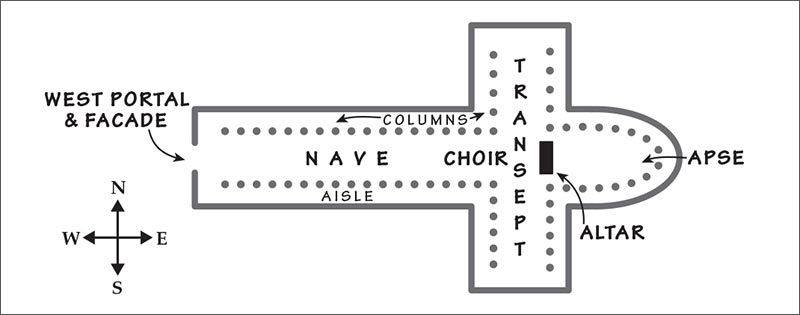
Aisles: Long, generally low-ceilinged arcades that flank the nave
Altar: Raised area with a ceremonial table (often adorned with candles or a crucifix), where the priest prepares and serves the bread and wine for Communion
Apse: Space behind the altar, sometimes bordered with small chapels
Barrel Vault: Continuous round-arched ceiling that resembles an extended upside-down U
Choir: Intimate space reserved for clergy and choir, located within the nave near the high altar and often screened off
Cloister: Covered hallways bordering a square or rectangular open-air courtyard, traditionally where monks and nuns got fresh air
Facade: Exterior of the church’s main (west) entrance, usually highly decorated
Groin Vault: Arched ceiling formed where two equal barrel vaults meet at right angles
Narthex: Area (portico or foyer) between the main entry and the nave
Nave: Long central section of the church (running west to east, from the entrance to the altar) where the congregation sits or stands during the service
Transept: One of the two parts forming the “arms” of the cross in a traditional cross-shaped floor plan; runs north-south, perpendicularly crossing the east-west nave
West Portal: Main entry to the church (on the west end, opposite the main altar)
Much of Spain’s 20th-century architecture—the minimal fascist style of the Valley of the Fallen and ugly concrete apartments—follows patterns seen elsewhere in Europe. But Spain today produces some of Europe’s most interesting structures. Santiago Calatrava (from Valencia, born 1951) uses soaring arches and glass to create bridges (such as the iconic one in Sevilla, and similar copies around the world), airports, and performance halls (including Valencia’s Opera House). One of the world’s most striking and well-known buildings in recent years—Frank Gehry’s Guggenheim Museum—is in Bilbao, and similarly innovative structures are popping up everywhere.
Bullfighting
AUTHENTIC RITUAL OR CRUEL SPECTACLE?
The Spanish bullfight is as much a ritual as it is a sport. Not to acknowledge the importance of the bullfight is to censor a venerable part of Spanish culture. But it also makes a spectacle out of the cruel killing of an animal. Should tourists boycott bullfights? I don’t know.
When the day comes that bullfighting is kept alive by tourist dollars rather than by the local culture, then I’ll agree with those who say it’s immoral and that tourists shouldn’t encourage it by buying tickets. Consider the morality of supporting this gruesome aspect of Spanish culture before buying a ticket. If you do decide to attend a bullfight, here’s what you’ll see:
While no two bullfights are the same, they unfold along a strict pattern. The ceremony begins punctually with a parade of participants across the ring. Then the trumpet sounds, the “Gate of Fear” opens, and the leading player—el toro bravo—thunders in. A ton of angry animal is an awesome sight, even from the cheap seats (with the sun in your eyes).
The fight is divided into three acts. Act I is designed to size up the bull and wear him down. With help from his assistants, the matador (literally, “killer”) attracts the bull with a shake of the cape, then directs the animal past his body, as close as his bravery allows. The bull sees only things in motion and (some think) in red. After a few passes, the picadores enter, mounted on horseback, to spear the swollen lump of muscle at the back of the bull’s neck. This tests the bull, causing him to lower his head and weakening the thrust of his horns.
In Act II, the matador’s assistants (banderilleros) continue to enrage and weaken the bull. They charge the charging bull and—leaping acrobatically across its path—plunge brightly colored barbed sticks into the bull’s vital neck muscle.
After a short intermission, during which the matador may, according to tradition, ask permission to kill the bull and dedicate the kill to someone in the crowd, the final, lethal Act III begins.
The matador tries to dominate and tire the bull with hypnotic cape work. A good pass is when the matador stands completely still while the bull charges past. Then the matador thrusts a sword between the animal’s shoulder blades for the kill. A quick kill is not always easy, and the matador may have to make several bloody thrusts before the sword stays in and the bull finally dies. (One of the matador’s assistants may go in at the end to finish the job with a dagger between the eyes.) Mules drag the dead bull out, and his meat is in the market mañana (barring “mad cow” concerns—and if ever there was a mad cow...). Rabo de toro (bull-tail stew) is a delicacy.
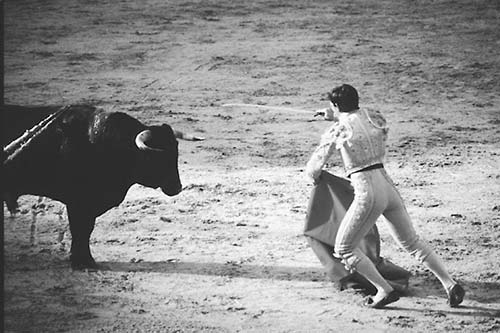
Throughout the fight, the crowd shows its approval or impatience. Shouts of “¡Olé!” or “¡Torero!” mean they like what they see. Whistling or rhythmic hand-clapping greets cowardice and incompetence.
You’re not likely to see much human blood spilled. For example, in 200 years of bullfighting in Sevilla, only 30 fighters have died (and only three were actually matadors). If a bull does kill a fighter, the next matador comes in to kill him. Historically, even the bull’s mother is killed, since the evil qualities are assumed to have come from her.
After an exceptional fight, the crowd may wave white handkerchiefs to ask that the matador be awarded the bull’s ear or tail. A brave bull, though dead, gets a victory lap from the mule team on his way to the slaughterhouse. Then the trumpet sounds, and a new bull charges in to face a fresh matador.
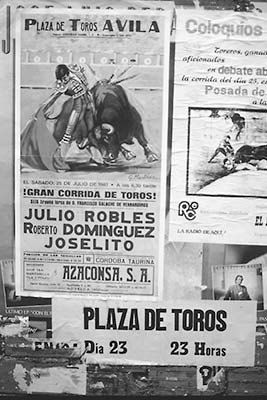
Fights are held on most Sundays in May and June (generally at 18:30), during the April Fair, and for two weeks in late September. Serious fights with adult matadors are called corridas de toros. These are often sold out in advance. Summer fights are often novilladas, with teenage novices doing the killing. Corrida de toro seats range from €60 for nosebleed seats in the sun to €225 for front-row seats in the shade. Novillada seats are half that, and generally easy to get at the arena a few minutes before showtime. A few Spanish women consider bullfighting sexy. They swoon at the dashing matadors who are sure to wear tight pants (with their partes nobles—noble parts—in view, generally organized to one side, farthest from the bull).
The exact origins of bullfighting are impossible to trace, but men have battled bulls since antiquity. In ancient Crete, Minoan athletes sprang somersaults over bulls’ horns (c. 1500 BC). In Asia and Italy, worshippers of Mithras and Artemis slaughtered bulls in ritual sacrifice (c. 500 BC-AD 500). And in ancient Rome, animal fights were popular warm-up acts for the gladiator games, performed in large arenas while thousands cheered. (In an interesting counterpoint, in many cultures—including, some would argue, Spain—bulls are respected or even revered, from those who would worship a golden calf in Moses’ time, to the people of contemporary India.)
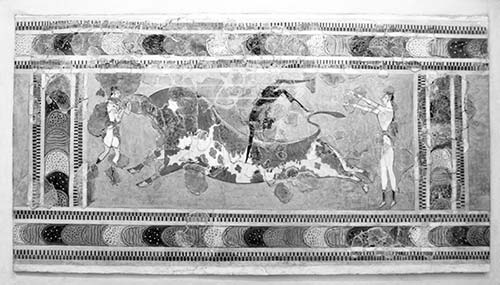
The Romans likely introduced bullfights to Spain. In the Middle Ages (historians speculate), bullfighting became a sport for knights, both Christian and Moorish, who held tournaments on feast days. They fought on horseback with lances, assisted by squires.
It was in the town of Ronda, around 1726, that the charismatic Francisco Romero transformed bullfighting from a sport of nobles on horseback to one of commoners on foot, armed only with a sword and cape. The mounted picador became the support player, and the matador became the star. Successive matadors thrilled crowds by allowing the bull to come ever closer.
From Spain, bullfighting spread to southern France and Latin America (where it continues today). In the 20th century, the dictator Franco made bullfighting the national pastime. Since Franco’s death, it’s become increasingly unpopular. Today, only a third of Spaniards follow it at all. Calling bullfights unsuitable for children, the government has banned live broadcasts on state-run TV, though private channels continue to cover the events.
Today’s matadors remain the brave-but-pretty cover boys gracing the tabloids. But the sport’s brutality was underscored in 2016 when a matador died after being gored by a bull—the first bullfighter to die in the ring in more than 30 years. The debate continues to divide the country: In 2010, bullfighting was banned in Catalunya, but in 2016 the national government overturned that ruling, saying it violated Spain’s cultural heritage (though bullfights haven’t resumed in Catalunya since).
A typical bullfight lasts about two hours and consists of six separate fights—three matadors (each with his own team of picadores and banderilleros) fighting two bulls each. If you’re curious to see a bullfight without making an expensive and time-consuming trip to the ring, keep an eye out for televised bullfights in bars. For a closer look at bullfighting by an American aficionado, read Ernest Hemingway’s classic Death in the Afternoon.