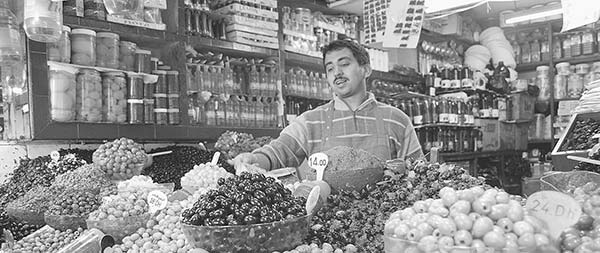
MOROCCO & TANGIER
al-Maghreb • Tanja
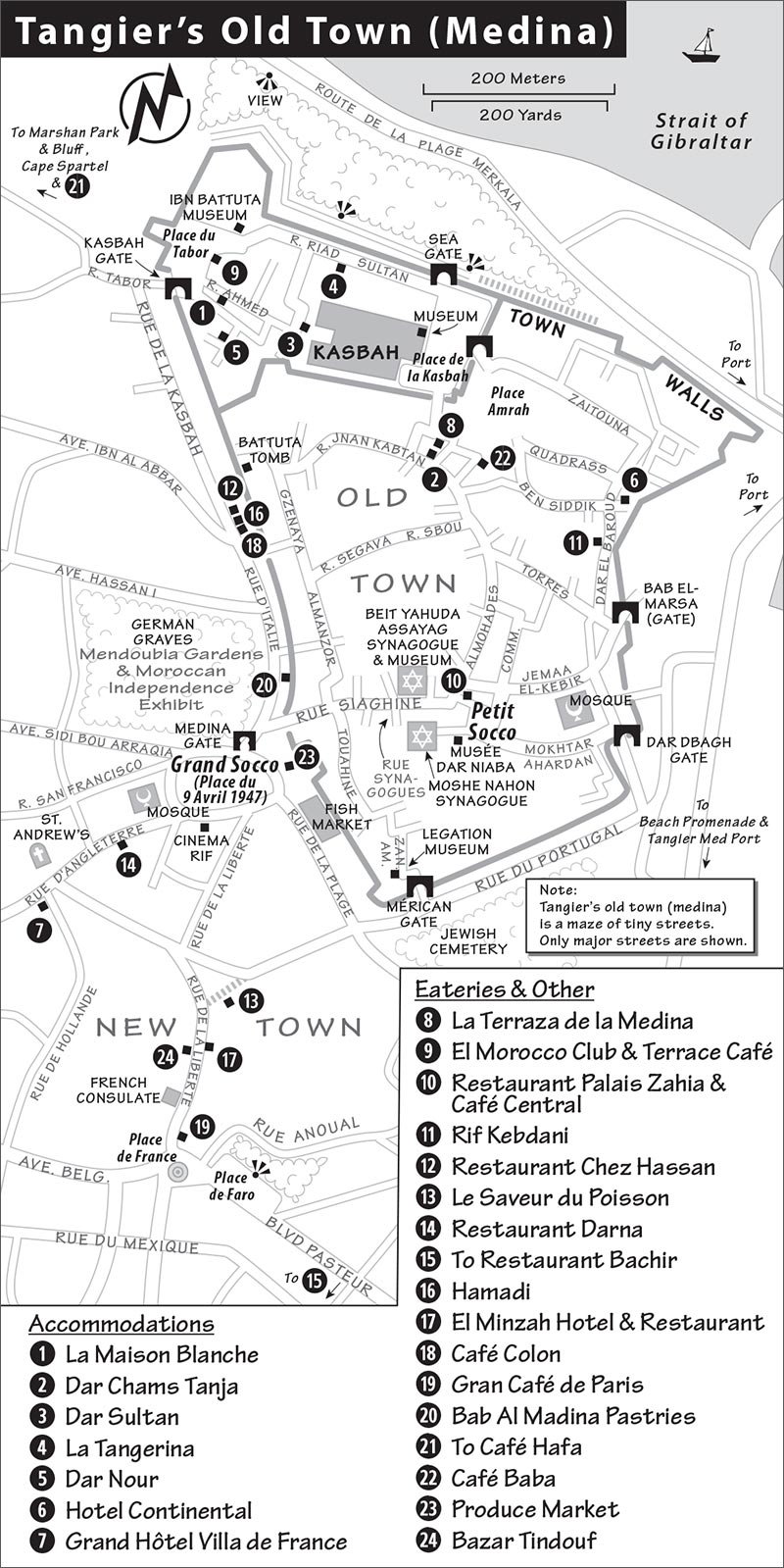
Map: Tangier’s Old Town (Medina)
A young country with an old history, Morocco is a photographer’s delight, a budget traveler’s dream, and a chance to experience an African country that is stable, likes its king, and is full of positive energy. Along with a rich culture, Morocco offers plenty of contrast—from beach resorts to bustling desert markets, from jagged mountains to sleepy, mud-brick oasis towns. And a visit to Morocco—so close to Europe, yet Arabic-speaking and Muslim—lets a Westerner marinated in anti-Muslim propaganda see what Islam aspires to be...and can be.
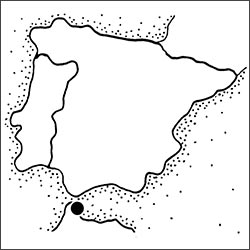
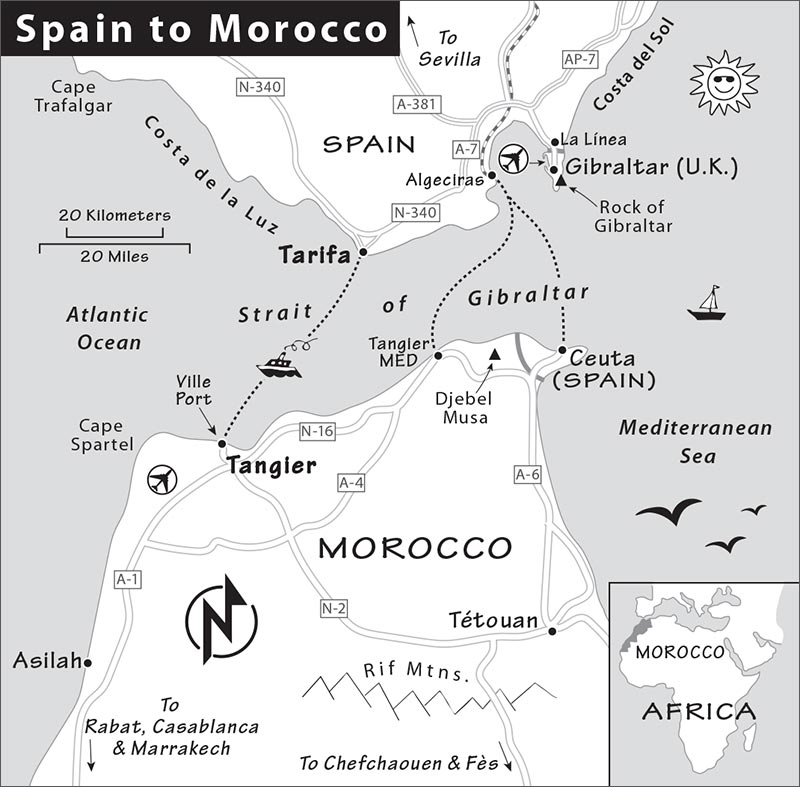
From the town of Tarifa in southern Spain, it’s just 35 minutes by boat to the Moroccan port city of Tangier (the only Moroccan city we cover in this Spain guidebook). Wind your way from the port to the Grand Socco, pause in the medina’s colorful market, and peek through keyhole gates as you follow twisty lanes up to the Kasbah. If you stay overnight, you may experience the early morning call to prayer that proclaims, “It’s better to pray than to sleep.”
For me, a side trip here from Spain is one of the most exciting days you can have on a European vacation: You’ll get a legitimate taste of North Africa and an authentic slice of an Islamic culture. As you step off the boat, you realize that that short crossing from Spain to Morocco gives you more change culturally than flying all the way from the US to Spain. Morocco needs no museums; its sights are living in the streets.
Morocco in a Day?
Of course you could dedicate an entire trip to Morocco. But this is a guidebook to Spain and I’ll present Tangier in the context of a day trip or two nights and two days at the most. (The Moon guidebook to Morocco by Peter Lucas is excellent for more extensive coverage, and countless small-tour organizers would love to build a private multiday trip around your Moroccan dreams.)
Guided excursions to Tangier from Tarifa make day-tripping foolproof, if clichéd. But it’s inexpensive and arguably more rewarding to take a boat on your own and meet a local guide at the port. A day or overnight in Tangier gives you a good introduction to the country and its people; be sure to pack light so you can navigate cobblestones and hilltop climbs with ease. All you need is a passport (no visa or shots required) and about €80 for either a tour package or the round-trip ferry crossing.
WITH A TOUR OR ON YOUR OWN?
Your big decisions: to visit Tangier independently or with a guided tour, and how long to stay (day trip or overnight).
Taking a package tour is easier and cheap (your cost is subsidized by the expectation that they’ll make plenty of money off kickbacks from your shopping), but less rewarding. On a package tour, visitors are met at the ferry dock by a guide, toured around town by bus and on foot, shepherded through lunch and a shopping excursion, then hustled back down to the boat where—five hours after they landed—they return to the First World thankful they don’t have diarrhea.
The alternative is to see Tangier on your own. Independent adventurers get to see the sights and avoid the kitsch. You can catch a morning boat and return to Spain that evening, extend with an overnight in Tangier, or even head deeper into Morocco (see the end of this chapter for ideas).
My preferred approach is a hybrid: Get to Tangier “on your own,” but arrange in advance to meet a local guide to curate your culture shock and accompany you as you explore (I list a few of my picks for reliable guides under “Tours in Tangier,” later in this chapter). While you’ll pay more than joining a package tour, ultimately the cost difference is pretty negligible, considering the luxury of having your own private guide.
ON YOUR OWN FROM TARIFA
For a day-trip traveler, there’s only one logical ferry: from Tarifa to Tangier Ville Port. Only the Tarifa ferry takes you to the Tangier passenger port, in the city center. Ferries also travel to Morocco from Algeciras and Gibraltar, but they arrive at the container-laden Tangier Med Port, 25 miles from downtown (connected to the Tangier Ville Port by a cheap one-hour shuttle bus). So, in this chapter, I’m assuming you’re sailing from Tarifa to Tangier Ville Port.
Ferry Schedule and Tickets: Two companies make the 35-minute crossing from Tarifa to Tangier; confirm schedules online. FRS ferries leave Tarifa on odd hours (7:00, 9:00 and so on, except none at 15:00 or 18:00; +34 956 681 830, www.frs.es). Inter Shipping ferries depart Tarifa four times daily on even hours (8:00, 12:00, 16:00, and 20:00; +34 956 684 729, www.intershipping.es). Return boats from Tangier to Tarifa typically run from about 6:00 to 22:00. A few crossings a year are canceled due to storms or wind. Tarifa’s modern little terminal has a cafeteria and WCs. Prices are roughly €40 each way.
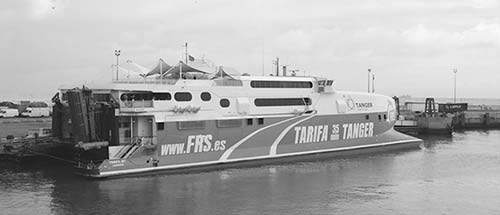
Tickets are easy to get: You can buy them online or your Moroccan guide can book them for you and email you the booking numbers. It’s also possible to buy them in person, but given that ferries can fill up during the summer as well as during Ramadan—or any one of Spain’s many long weekends—it’s smarter to purchase tickets online in advance. Tickets may be nonrefundable (check with your carrier), but changes are free and unlimited if your schedule changes.
Ferry Crossing to Tangier: The ferry from Tarifa is a quick 35-minute ride (but often leaves a little late). You’ll need to clear Spanish customs at the terminal and Moroccan customs on the ferry. Whether taking a tour or traveling on your own, you must get a stamp in your passport (only available on board): As soon as you board the boat in Tarifa, find the Moroccan immigration desk on the boat and get a stamp in your passport and an entry paper (which they keep). Get in the line immediately or wait until the very end of the crossing, otherwise you’ll spend much of the ride waiting through the inefficient process. The ferry is equipped with WCs, a shop, and a snack bar—but almost no open deck space.
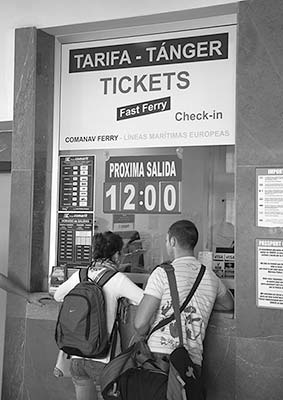
Returning to Tarifa: Your round-trip ticket allows you to return on any departure from the line that took you to Tangier. Check that carrier’s timetables; there are likely two hours between your return options. For the return trip, you must complete a passport-control form and get an exit stamp at the Tangier terminal before you board. Back in Tarifa, you’ll show your passport once more to reenter Spain and the European Union.
WITH A PACKAGE TOUR FROM TARIFA
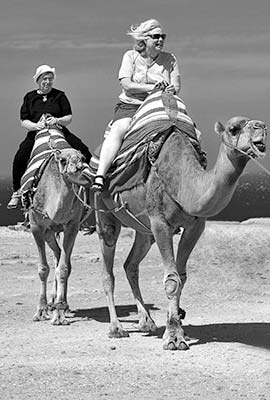
A typical day-trip tour from Spain includes a round-trip crossing and a guide who meets your big group at the Tangier port, then hustles you onto your tour bus. All tours offer essentially the same five-hour Tangier experience: a city bus tour, a drive through the ritzy palace neighborhood, a walk through the medina (old town), and an overly thorough look at a sales-starved carpet shop (where prices include a commission for your guide and tour company; some carpet shops are actually owned by the ferry company). Longer tours may include a trip to the desolate Atlantic Coast for some rugged African scenery and a short camel ride. Any tour wraps up with lunch in a palatial Moroccan setting with live music and belly dancing, topped off by a final walk back to your boat through a gauntlet of desperate merchants.
Standard Large-Group Tour Prices: Tour tickets are priced roughly the same no matter where you buy them: about €55-80. Don’t worry about which company you select. (They’re all equally bad.)
Tour Schedules: Tours leave Tarifa on a variable schedule throughout the day: For example, one tour may depart at 9:00 and return at 15:00, the next could run 11:00-17:00, and the next 13:00-19:00. If you’re an independent type on a one-day tour, you could book an early tour, stay with your group until you return to the ferry dock, and then escape…slipping back into town, thinking, “Freedom!”
Overnight Options: If you want a longer visit, you can book a package through the ferry company that includes a one-night stay in a Tangier hotel. There are also two-day options with frills (all meals and excursions outside the city) or no-frills.
Booking a Tour: Book directly with the ferry companies (see contact information earlier or visit their offices in Tarifa) or through your hotel.
Tangier
Tangier has seen it all, from Phoenician and Roman conquerors to pirates and diplomats, with a history that dates to the fifth century BC.
In the 15th century, Tangier was a hotspot for European traders because of its strategic location at the entrance of the Mediterranean Sea. But the city’s most interesting age was more recent, when artists, writers, and musicians made it their haunt. Eugène Delacroix and Henri Matisse were drawn by its evocative light. The Beat Generation, led by William S. Burroughs and Jack Kerouac, sought the city’s multicultural, otherworldly feel.
While Morocco is clearly a place apart from Mediterranean Europe, it doesn’t seem purely African either. It’s a mix, reflecting its strategic position between the two continents. Situated on the Strait of Gibraltar, Morocco has been flooded by waves of invasions over the centuries: The Berbers, the native population, have had to contend with the Phoenicians, Carthaginians, Romans, Vandals, and more.
The Arabs brought Islam to Morocco in the seventh century AD and stuck around, battling the Berbers in various civil wars. A series of Berber and Arab dynasties rose and fell; the Berbers won out and still run the country today. From the 15th century on, European countries carved up much of Africa. By the early 20th century, most of Morocco was under French control, and strategic Tangier was jointly ruled by multiple European powers as a freewheeling international zone. The country finally gained independence in 1956.
As throughout the Arab world, Morocco has had its share of political unrest in recent years. Widespread but mostly peaceful protests in 2011, influenced by the Arab Spring, called for greater democracy and economic reforms. A new constitution, adopted later that year, gave more power to the legislative branch and the prime minister (although King Mohammed VI retained a lot of authority). Since that time, crackdowns on protesters (demanding vital services for all) and news-media critics (calling for respect for constitutional rights) have occasionally threatened the country’s stability.
Morocco is also struggling to reconcile tensions between Islamist and secular factions within its government and in the region. Bombings attributed to Islamic fundamentalists in 2003 and in 2011 prompted an array of initiatives to counter extremism. Americans are warmly received and I found no political edge in the country in 2023.
A feast for the senses, Morocco provides a good dose of culture shock—both good and bad. It’s economical, relatively safe, and private guides are affordable. You’ll also encounter sometimes oppressive friendliness, pushy hustlers and aggressive beggars, brutal summer heat, and the unfamiliarity of the Arabic language. Many visitors develop some intestinal problems by the end of their visit. And in terms of efficiency, Morocco makes Spain look like Sweden. When you cruise south across the Strait of Gibraltar, leave your busy itineraries and split-second timing behind. Morocco must be taken on its own terms. Here things go smoothly only “Inshallah”—if God so wills.
With its unique history of having been controlled by many different foreign and domestic rulers, Tangier is a babel of languages. Most locals speak Arabic first and French second (all Moroccans learn it in school); sensing that you’re a foreigner, they’ll most likely address you in French, or maybe Spanish. Still, as Morocco emerges as a leading African economy and works to engage with the world more effectively—they’ll co-host soccer’s World Cup in 2030—there’s a movement in Morocco to make English rather than French the official second language. Meanwhile, communication can still be tricky for English-speaking travelers. A little French goes a long way, but learn a few words in Arabic. Have your first local friend help you with the pronunciation:
| English | Arabic |
| Hello (“Peace be with you”) | Salaam alaikum (sah-LAHM ah-LAY-koom) |
| Hello (response: “Peace also be with you”) | Wa alaikum salaam (wah ah-LAY-koom sah-LAHM) |
| Please | Min fadlik (meen FAHD-leek) or Afak (AAH-fak) |
| Thank you | Shokran (SHOH-kron) |
| Excuse me | Ismahli (ees-SMAH-lee) |
| Yes/No | Yeh (EE-yeh)/Lah (lah) |
| Give me five (kids enjoy this) | Ham sah (hahm sah) |
| OK | Wah hah (wah hah) |
| Very good | Miz yen biz ef (meez EE-yehn beez ehf) |
| Goodbye | Maa salama (mah sah-LEM-ah) |
| Let’s go | Yallah (ya-LA) |
| How much? | Bshal (BI-sh-HAL) |
| No problem | Mashi muchkil (MA-shih mou-shKIL) |
Observe the sweet social norms and learn from them. Moroccans have a touchy-feely culture. Expect lots of hugs if you make an effort to communicate. When greeting someone, a handshake is customary, followed by placing your right hand over your heart. It helps to know the polite words and a few practical ones as well.
From the 1920s through the 1950s Tangier was an “international city.” Too strategic to give to any one nation, it was jointly governed by as many as nine different powers, including France, Spain, Britain, Italy, Belgium, the Netherlands...and Morocco. The city was a tax-free zone (since there was no single authority to collect taxes), which created a booming free-for-all atmosphere, attracting playboy millionaires, bon vivants, globe-trotting scoundrels, con artists, beatniks, spies, and expat romantics. Tangier enjoyed a cosmopolitan golden age that, in many ways, shaped the city visitors see today. Because so many different colonial powers have had a finger in this city, it goes by many names: In English, it’s Tangier; in French, Tanger (tahn-zhay); in Arabic, it’s Tanja (TAHN-zhah); in Spanish, Tánger (TAHN-hair).
Due to its international-zone status, Morocco’s previous king effectively disowned the city, denying it national funds for improvements. Over time, neglected Tangier became run-down, and the once-grand coastal city earned a reputation as the “armpit of Africa.” But that has dramatically changed. When King Mohammed VI was crowned in 1999, the first city he visited was Tangier. He’s enthusiastic about the city and has worked hard to restore Tangier to its former glory.
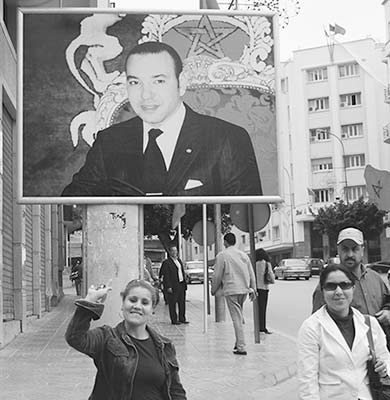
Under his rule the city has undergone a massive facelift, as royal projects have transformed it into a modern, vibrant metropolis. Tanja Marina Bay International, the first and most urban marina in the kingdom of Morocco, has modern cafés overlooking an awe-inspiring view. New underground parking and tunnels have relieved Tangier’s legendary traffic jams. Large-scale economic initiatives include Morocco’s largest industrial port, Tangier Med, which was completed in 2018.
The city (with a population of more than one million and growing quickly) has been restored on a grand scale: The beach is cleaned up, new roads with pedestrian crossings are emerging, the Kasbah is spruced up, pedestrian promenades are popping up, gardens bloom, and its soccer stadium may soon see action in the World Cup (which Morocco will co-host in 2030). The first high-speed rail line in Africa (Al Boraq) whisks people to Morocco’s capital, Rabat, in less than 90 minutes and to Casablanca in a little over two hours. The old port has been transformed into a slick marina complex capable of handling cruise ships, yachts, and ferries from Tarifa efficiently. And the arrival experience for those just off the boat is much improved.
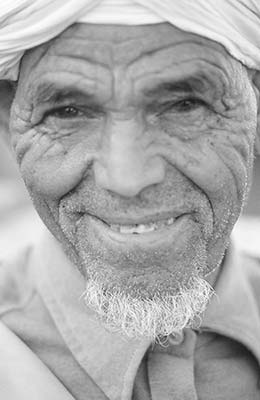
Today, Tangier is affluent and modern without having abandoned its roots. The government is stamping out the aggressive begging and scamming that marred its reputation for so long. Police are posted everywhere to maintain a calm order. And visitors are impressed by the warmth of the Moroccan people. I love how they touch their right hand to their heart after shaking hands or saying thank you—a kind gesture meant to emphasize sincerity.
PLANNING YOUR TIME
If you’re not on a package tour, arrange for a private guide to meet you at the ferry dock or head on your own to the big square called the Grand Socco to get oriented (while you can catch a taxi, it’s just a short—but uphill—walk; see “Arrival in Tangier,” later). Get your bearings with my Grand Socco spin tour, then delve into the old town (the lower medina, with the Petit Socco, market, and American Legation Museum; and the upper medina’s Kasbah, with its museums and residential lanes). The biggest joy is simply to wander away from the touristy zone, explore the back lanes, and peek in on everyday life. A stroll into the new city and some time in a café might round out your visit. You’ll see fewer tourists outside the regular tour-group circuit.
Orientation to Tangier
Like almost every city in Morocco, Tangier is split in two: old and new. From the ferry dock you’ll see the old town (medina)—encircled by its medieval wall. The old town has the markets, the Kasbah, and a number of humble sights. The twisty, hilly streets of the old town are caged within a wall accessible by several keyhole gates. A big square, the Grand Socco (officially named Place du 9 Avril 1947), is the hinge between the old and new parts of town.
The city could use more street signs, but distances are short and maps are posted at the major gates. In the mazelike medina, you’ll sometimes find street names on ceramic plaques on the corners of buildings, as well as hand-painted signs directing you to sights. Petit Taxis (see under “Getting Around Tangier”) are a remarkably cheap godsend for the hot and tired tourist. Use them liberally.
ARRIVAL IN TANGIER
By Ferry
If you’re taking a tour, just follow the leader. If you’re on your own, you have a few options: Head for the Grand Socco on foot or by taxi to begin sightseeing, check in to your hotel if staying overnight, or hop on a City Tour bus. Whatever you choose, be sure to exchange some cash inside the ferry terminal before exiting (see the “Money” section under “Helpful Hints,” later).
Given the hilly nature of the city, a small, cheap, blue Petit Taxi can be a good way to get into town (described later, under “Getting Around Tangier”). Confirm what you’ll pay before you hop in. An honest cabbie will charge you 20-30 dh (about $3) for a ride from the ferry into town; less scrupulous drivers will try to charge closer to 100 dh.
If you’re taking a bus tour (see “Tours in Tangier,” later), ride the Tanger Ville one-hour circuit for a little orientation, then stay on for one stop past the port and get off at the Grand Socco to dive into the medina.
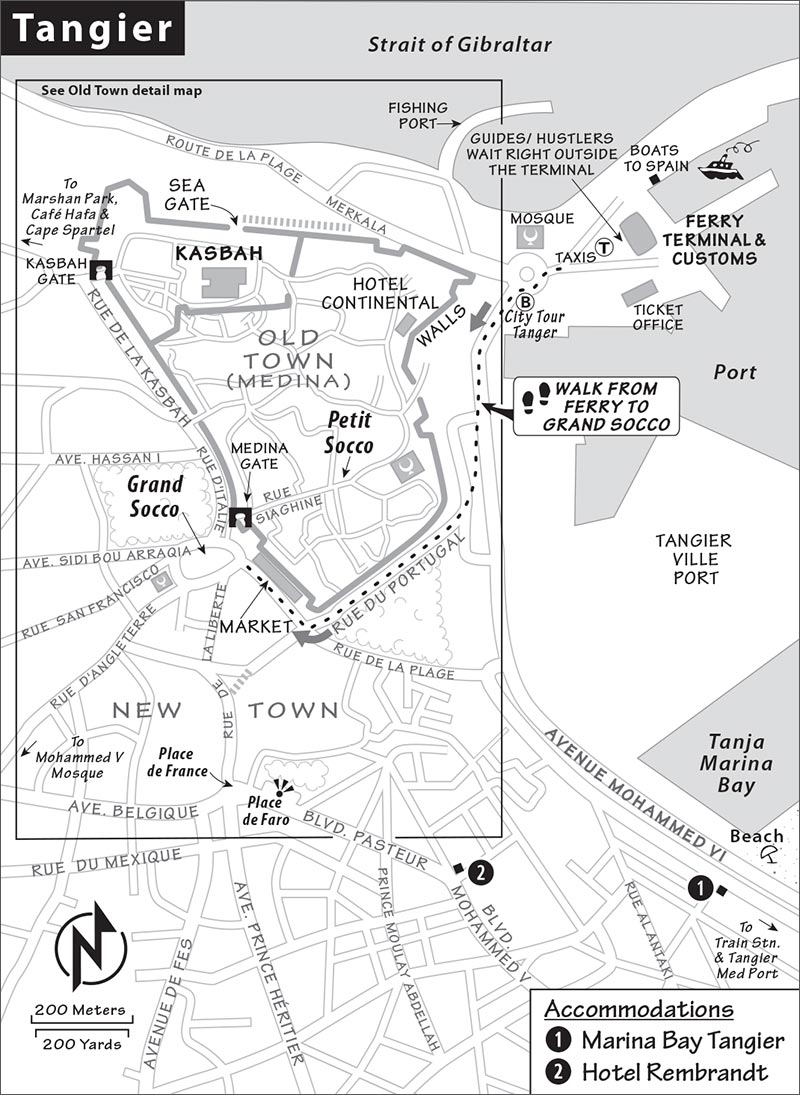
If walking, it’s easiest to skirt around the wall of the old town to reach the Grand Socco (see map on here). This takes about 15-20 minutes and has a bit of an uphill climb, but it saves you the headache of getting confused immediately after arrival—plenty of time for that later. Head out through the police-controlled port entrance gate (with a tall mosque minaret on the right) and go through a busy intersection at the roundabout’s pedestrian crossing (just past the City Tour bus kiosk). Be brave and venture out during a lull in traffic; drivers will slow or stop to let you cross.
Continue left at the signposted Borj Dar El-Baroud fortifications into a large, wide-open plaza, keeping the landmark Hotel Continental on your right. Follow the road—don’t be tempted to climb through those keyhole arches—to find a grassy area with palm trees. Look right for a curved, sloping street with cars coming down; that’s your way uphill. After the switchback curve, the street becomes Rue du Portugal; follow it as it skirts the old city wall. At the corner of the wall, take the first right onto Rue de la Plage. This will lead you past a small market area and into the Grand Socco.
To go directly to the Kasbah, hop a taxi to the Kasbah Gate (tell the cabbie “Bab Kasbah”). You don’t want to try to find it on foot, even if you pack light.
By Plane
The Tangier Ibn Battuta Airport (code: TNG) is small but well organized, with ATMs and cafés. Air Arabia, Iberia, Royal Air Maroc, Ryanair, and others fly from here to destinations in Spain and throughout Europe.
Taxis between the airport and downtown Tangier run from 150 to 250 dh and take 30 minutes. If spending the night, ask your hotel to book a taxi and confirm the fare in advance. Your driver will be waiting (usually with a sign) in the main terminal after you go through passport control and the luggage belts.
GETTING AROUND TANGIER
Avoid the big, beige “Grand Taxis,” which don’t use their meters (they’re meant for longer trips outside the city center and are best only for airport transfers). Look instead for the cheap Petit Taxis—blue with a yellow stripe (they fit 2-3 people). These generally use their meters in town, but from the port, they charge whatever they can get, so agree on a price up front.
Be aware that Tangier taxis sometimes “double up”—if you’re headed somewhere, the driver may pick up someone else who’s going in the same direction. Each passenger pays full price.
HELPFUL HINTS
Tourist Information: There’s not much available in English or otherwise. The TI is not worth a visit. Hotels can give you a map.
Hustler Alert: Muslims believe that guests are a gift from God and they treat us that way. But even so, as a non-Arab-speaking visitor from a wealthy country, you’re considered rich and vulnerable and the temptation to overcharge can be irresistible. The government is working hard to discourage aggressive begging and haggling. Still, be on guard for hustlers and con artists. The city feels safe, and bargaining is still a market tradition, but it’s up to you to not be ripped off.
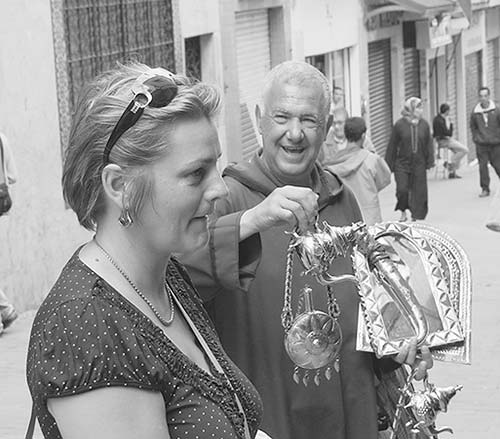
By hiring a guide, you have a translator/friend/patient teacher and shield against street hustlers. (Be aware that anything you buy in a guide’s company gets him a hefty commission.) You’ll still find a few people scrambling for a local buck. Get used to it. While irritating, it’s understandable. To these very poor people, you’re impossibly rich—your pocket change is at least a good day’s wage. If someone pesters you, you can simply ignore them, or say “Lah shokran” (No, thank you). But be warned: The moment you engage with anyone, you’ve just prolonged the sales pitch.
Money: Assume you’ll be paying cash. While you can use euros, it’s smarter and better style to have local dirhams. ATMs are plentiful (use one from a regular bank such as Banque Populaire, Bank of Africa, or Société Générale). Changing money at an exchange booth is actually a great deal here. They are plentiful, regulated, fast, and offer good rates with no commissions. Just establish that there is less than 10 percent difference between their buying rate and selling rate with no commission and you’ll be fine. (If you change €50 into dirhams and immediately change the dirhams back, you should have about €45.) When you exchange money, get as much small change (including coins) as you can. Another way to get small change is to buy a small bottle of water at a mini-market with a big bill.
Convert your dirhams back to euros before catching the ferry or going to the airport—it’s cheap and easy to do here but very difficult once you’re back in Spain.
Keeping Your Bearings: Tangier’s maps and street signs are frustrating, and your phone’s mapping app may not work here. I ask in French for the landmark: “Où est...?” (Where is...?), pronounced “oo ay,” as in “oo ay medina?” or “oo ay Kasbah?” It can be fun to meet people this way. However, most people who offer to help you (especially those who approach you) are angling for a tip—young and old, locals see dollar signs when a traveler approaches. To avoid getting unwanted company, ask for directions only from people who can’t leave what they’re doing (such as the only clerk in a shop) or from women who aren’t near men. Be aware that most locals tend to navigate by landmarks and don’t know the names of the smaller streets (which don’t usually have signs). Ask three times and go with the consensus. If there’s no consensus, it’s time to hop into a Petit Taxi.
Mosques: Tangier’s mosques (and virtually all of Morocco’s) are closed to non-Muslim visitors. But everyone hears the five-times-a-day call to prayer. Enjoy the cacophony of live calls to prayer and imagine the global wave of praise that sweeps across the planet (at least across Islam, from Malaysia to Morocco) as fast as the earth spins five times a day.
Antiques and Souvenirs: Across from the El Minzah Hotel, Bazar Tindouf is a fun place to browse and practice your bargaining skills, with three labyrinthine levels of wall-to-wall, floor-to-ceiling antiques, carpets, pottery, tiles, old photographs, and Moroccan bric-a-brac. Even if you aren’t into shopping, it’s interesting to browse everyday articles long abandoned by their original owners (daily 10:30-20:30, Rue de la Liberté 64, +212 539 931 525).
Cooking and Connecting: Blue Door Cuisine is run by an expat couple with their all-female, English-speaking team of Moroccan guides who, through cooking and dining together, offer visitors a candid opportunity to discuss slice-of-life issues from a Muslim and woman’s perspective. The three-hour experience (cooking, eating, and sharing) runs twice a day except Sunday (€65/person, book online in advance; 11:00 for lunch, 16:00 for dinner, maximum 10 participants, located near the Grand Socco at Rue de la Plage 106, +212 612 020 210, www.bluedoorcuisine.com).
What’s with All the Cats? The prophet Muhammad was a cat person. So Muslims like cats too. They think cats are cleaner than dogs, so people generally only have cats in the house. Muslims don’t neuter animals and believe it’s a plus in God’s eyes to care for them. Dogs are used for guarding and shepherding. But cats rule—they have lots of babies, are a hit at home, and communities take care of the neighborhood stray cats.
Tours in Tangier
PRIVATE TOURS WITH LOCAL GUIDES
There are about 150 self-employed and licensed guides in Tangier and most make their money leading bus tours and cruise groups on half-day package tours and giving couples and families tailor-made private tours.
I’ve selected five local guides who understand my expectations: maximum cultural experience and no high-pressure sales tactics to earn kickbacks from vendors. Each speaks great English and is a joy to be with. While each has his own style and special interests, they offer the same general tour. And each promises to guide you personally rather than farm you out to a colleague without your permission.
Options include a half-day city walk (€60 for 3 hours covering the old town on foot: medina, Kasbah, and major sights) or a full-day split between a drive and a walking tour (€180 for 6 hours; see details below). The tour price is the same for one to five people; book in advance by email and meet at the ferry terminal or other prearranged place—you’ll pay in cash at the end of the tour. Admissions and lunch are not included, and there will be no shopping stops unless you request them (if so, as is standard here, the guide would receive a kickback on what you purchase).
For a full-day tour, you’ll generally meet your guide at the ferry terminal and go on a three-hour drive visiting famous viewpoints of the city and the Atlantic Ocean, the Caves of Hercules and Cape Spartel, and other sights beyond the old center of Tangier, with short stops along the way. Then you’ll have about an hour break for lunch. After that, you’ll walk for three hours or so through Tangier’s old center, hitting all the basics or visiting stops tailored to your interests. Time on your own to explore aimlessly or shop is always an option. The exact timing might change a bit because of ferry schedules.
Guides generally have special offerings explained on their websites. While this price is very fair and tips are not expected, if you’re very pleased with your guide, he’ll appreciate a tip (usually €5 to €10 per person). If you’re displeased with your guide, please let me know at rick@ricksteves.com.
Aziz (“Africa”) Benami is energetic, fun to spend the day with, and a leader in using travel to build peace and understanding (+212 618 504 030 or toll-free +1 888 745 7305, www.abtravels.com, info@abtravels.com).
Aziz Begdouri is an old friend who has filmed with me when I’m in town with my crew. He also manages the recommended hotel, La Maison Blanche (+212 661 639 332, aziztour@hotmail.com).
Ahmed Taoumi has been guiding for more than 35 years and is considered the professor of the guides (+212 661 665 429, taoumitour@hotmail.com).
Abdellatif (“Latif”) Chebaa has been the president of the local guides’ association and is another great guide (+212 661 072 014, visittangier@gmail.com).
Achraf Benamar was the youngest licensed guide in Morocco when he started in 2017, fresh out of college with his tourism degree. He has a gentle way of teaching and sharing his love of Tangier (+212 607 743 007, www.tourguidebenamar.com, benamar.achraf@gmail.com).
BUS TOURS
City Tour Tanger double-decker buses leave from a red kiosk set up outside the port gates at the busy roundabout. Two different hop-on, hop-off routes with recorded narration offer a good overview of Tangier for independent travelers who’ve literally arrived just off the boat. The Tanger Ville route lasts one hour and takes you to the Grand Socco, through the new part of the city, then back along the beach and newly redeveloped waterfront (departs every 30-60 minutes from 9:00-18:00). The Grottos of Hercules route goes farther afield to Cap Spartel, stopping at the namesake grottos (two hours, departs at 12:00, 14:00, and 16:00). Tickets cover both routes and are good for 48 hours (€13/130 dh, daily, +212 662 013 506, http://tanger.city-tour.com).
Sights in Tangier
▲▲Grand Socco (Place du 9 Avril 1947)
Map: Tangier’s Old Town (Medina)
▲Mendoubia Gardens and the Moroccan Independence Exhibit
Boulevard Pasteur—Art Deco and Modern Tangier
Beit Yahuda Assayag Synagogue and Museum
▲▲Tangier American Legation Museum
Walking to the Kasbah on Rue de la Kasbah
▲Kasbah Museum of Mediterranean Cultures
GRAND SOCCO AND NEARBY
▲▲Grand Socco (Place du 9 Avril 1947)
This big, bustling square is a transportation hub, market, popular meeting point, and the fulcrum between the new town and the old town (medina). While it’s officially named April 9 1947 Square (for patriotic reasons explained below), it’s still popularly referred to as the Grand Socco. A few years ago, it was a pedestrian nightmare and a perpetual traffic jam. But now, like much of Tangier, it’s been spiffed up. (Many of the sights mentioned in this spin tour are described in more detail later in this chapter.)
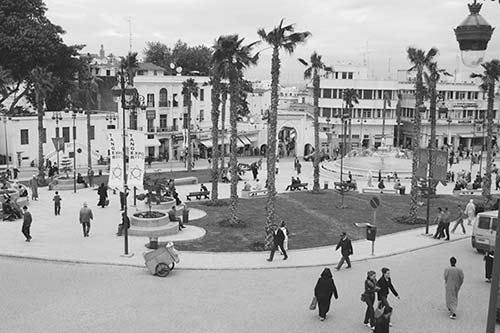
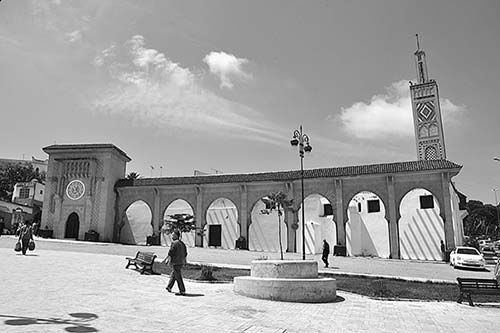
 Self-Guided Spin Tour: The Grand Socco is a good place to get oriented to the heart of Tangier. Stand on the square between the fountain and the mosque (the long building with arches and the tall tower). We’ll do a slow clockwise spin.
Start by facing the mosque, with its long arcade of keyhole arches and colorfully tiled minaret. Morocco is a decidedly Muslim nation, though its take on Islam is moderate, likely owing to the country’s crossroads history. Five times a day, you’ll hear the call to prayer echo across the rooftops of Tangier, from minarets like this one. Unlike many Muslim countries, Morocco does not allow non-Muslims to enter its mosques. This custom may have originated decades ago, when occupying French foreign legion troops spent the night in a mosque, entertaining themselves with wine and women. Following this embarrassing desecration, it was the French government—not the Moroccans—who instituted the ban that persists today.
Traditionally the Grand Socco was Tangier’s hub for visiting merchants. The town gates were locked each evening, and vendors who arrived too late spent the night in this area. (Nearby were many caravanserai—old-fashioned inns.)
But King Mohammed VI dramatically renovated this square and gave it a new name commemorating the date—April 9, 1947—when an earlier king appealed to French overlords to grant his country its independence and free Tangier from its “International Period” so it could return to Morocco. (France eventually complied, peacefully, in 1956.) Mohammed VI tamed the traffic, added the fountain you’re standing next to, and turned this into the delightfully people-friendly space you see today.
Spin a few more degrees to the right, where you’ll see the crenellated gateway marked Tribunal de Commerce—the entrance to the Mendoubia Gardens, a pleasant park with a gigantic tree and a free museum-like monument to Morocco’s independence. At the top of the garden gateway, notice the Moroccan flag: a green five-pointed star on a red field. The five points of the star represent the five pillars of Islam, green is the color of peace, and red represents the struggles of hard-fought Moroccan history. To the right is an unimportant-looking double staircase that is actually quite important: It was from the landing atop these stairs that the king spoke in 1947 to kick off Morocco’s successful quest for independence.
Some visitors to Tangier expect to see women completely covered head-to-toe. In fact, not all Moroccan women adhere strictly to this religious dress code, especially in cities. Some cover only their hair (allowing their face to be seen), while others eliminate the head scarf altogether. Some women wear only Western-style clothing. This change in dress visibly reflects slowly changing Moroccan attitudes about women’s rights.
Morocco is one of the more progressive Muslim countries. As in any border country, contact with other cultures fosters the growth of new ideas. Bombarded with Spanish television and visitors like you, change is inevitable. Another proponent of change is King Mohammed VI, who was only 35 years old when he rose to the throne in 1999. For the first time in the country’s history, the king personally selected a female adviser to demonstrate his commitment to change. However, sexual mores are still traditional: Sex outside of marriage is illegal in Morocco, as is homosexual behavior.
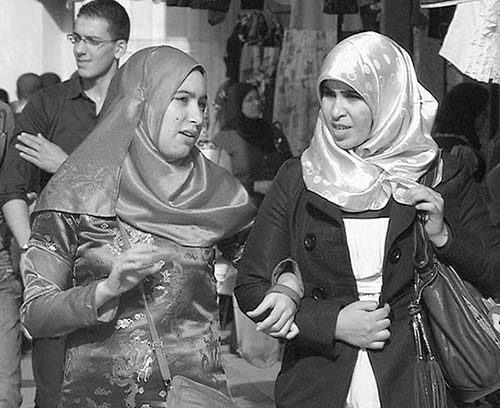
But recent times have brought some transformations for women in Morocco. Schools are now coed, although many more boys than girls are enrolled, especially in rural areas. The legal age for women to marry is now 18 instead of 15 (although arranged marriages are still commonplace). Other changes make it more difficult for men to have a second wife. Verbal divorce and abandonment are no longer legal—disgruntled husbands, including the king (who married a commoner for…get this…love), must now take their complaints to court. And for the first time, women can divorce their husbands. If children are involved, whoever takes care of the kids gets the house.
Morocco took another step forward with its 2011 constitutional reforms, which guarantee women “civic and social” equality. But it will take time for any progressive changes in the law to be thoroughly translated into practice.
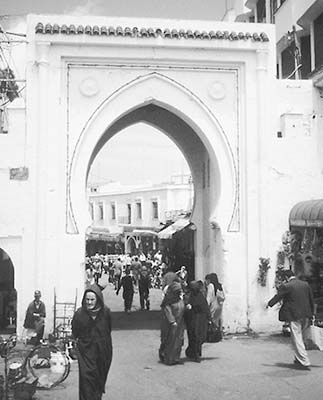
Spinning farther right, you’ll see the keyhole arch marking the entrance to the medina. (If you need cash, a bank ATM and exchange booths are just to the left of this gateway.) To reach the heart of the medina—the Petit Socco (the café-lined little brother of the square you’re on now)—you’d go through this arch and take the first right. To reach the Kasbah, you’d go through this and hike straight up the hill.
To the right of the main arch is the low-profile archway entrance to a thriving produce market (souk). A barrage on all the senses, this is a fascinating place to explore.
Continue spinning another 90 degrees to the tall, white building at the top of the square labeled Cinema Rif, a historic movie house where you might want to see a film tonight (see “Nightlife in Tangier,” later). The street to the left of the cinema takes you to Rue de la Liberté, which eventually leads through the modern town via the French Quarter, a district of mid-20th-century modern architecture. Just to the right of the cinema, the yellow terrace offers the best view over the Grand Socco (just go up the staircase).
▲St. Andrew’s Church
St. Andrew’s Anglican Church, tucked behind the showpiece mosque on the Grand Socco, embodies Tangier’s mingling of Muslim and Christian tradition. The land on which the church sits was a gift from the sultan to the British community in 1881, during Queen Victoria’s era. Shortly thereafter, this church was built. Although fully Christian, the church is designed in the style of a Muslim mosque. The Lord’s Prayer rings the arch in Arabic, as verses of the Quran would in a mosque, and the garden surrounding the church is a tranquil, parklike cemetery (where a group of British WWII bombers has lain since 1944).
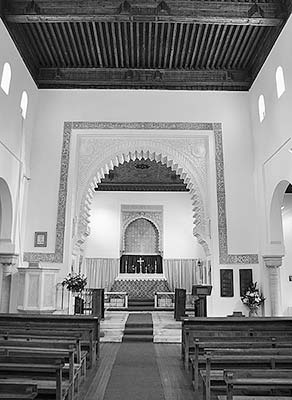
Cost and Hours: Tour possible—knock on the door, 20 dh tip appreciated; open daily 9:30-12:30 & 14:30-sunset, closed during Sun services.
▲Mendoubia Gardens and the Moroccan Independence Exhibit
From the downhill side of the Grand Socco, a castle-like archway leads to a pleasant park and an important memorial to Moroccan independence. Walk through the gateway to see the trunk of a gigantic banyan tree, which, according to local legend, dates from the 12th century. Notice how the extra supportive roots have grown from the branches down to the ground.
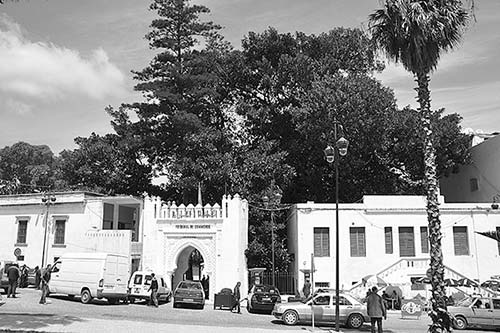
But the big news here is Moroccan independence. On April 9, 1947, the king ventured here to the “international city” of Tangier and declared from the top of the steps facing the Grand Socco that Morocco should be free and it must fight if necessary to get there. After returning to Rabat he was exiled to Madagascar. But his declaration kicked off a struggle that led to independence in 1956 (which is why the Grand Socco is now officially called Place du 9 Avril 1947).
The memorial building, guarded by two cannons, is dedicated to the long fight for Moroccan independence. Step in (it’s free) and enjoy the fine craftsmanship and lacy Arabic architecture, portraits of the sultans of old and the kings of our age, plus photos of martyrs and great moments leading up to the time when Tangier rejoined Morocco and Morocco gained freedom from French and Spanish colonial power.
A fence separates the memorial park from a public park downhill with a fun, kid-filled playground. Families living in the medina banded together, declaring their kids had no green place to play, and this was the happy result. You can find the playground (and public WC) through the largest arch off of the Grand Socco, then look left across from the market stalls along Rue d’Italie).
Boulevard Pasteur—Art Deco and Modern Tangier
For a good look at the Art Deco part of town (built around 1924) walk from the Grand Socco uphill along Rue de la Liberté to a roundabout called Place de France, from where Boulevard Pasteur (on the left) leads to Place de Faro. This (along with the side streets off these main boulevards) was the French Quarter, and has the city’s best modern architecture—a fusion of Spanish tiles, Moroccan lamps, and French facades. During the International Period, from 1924 to 1956, four European powers each had a quarter.
Facing Place de France you’ll see the French Consulate and the Gran Café de Paris, which has been doing business here since 1920. Moroccans call this the “tennis” street because while sitting at an al fresco café like this one, your head will be constantly swiveling back and forth to watch the passing parade.
A block farther along is the beautiful Place de Faro terrace, with its cannons and views back to Spain. It’s nicknamed “Terrace of the Lazy Ones”: instead of making the trek down to the harbor, family members came here in the old days to see if they could spot ships returning with loved ones who’d been to Mecca.
MEDINA (OLD TOWN)
Tangier’s medina is its convoluted old town—a twisty mess of narrow stepped lanes, dead-end alleys, and lots of local life spilling out into the streets. It’s divided roughly into two parts: the lower medina with its market, two synagogues, the Petit Socco, the American Legation Museum, and bustling street life; and, at the top, the more tranquil Kasbah.
Lower Medina Walk
A maze of winding lanes and tiny alleys weaves through the old-town market area. In an effort to help orient hopelessly turned-around tourists, Tangier has installed map signboards with suggested walking tours at the major medina gates. The following itinerary will help you see major sights before setting you free to explore on your own.
▲▲Market (Souk)
The medina’s produce market is a highlight. Wander past piles of fruit, veggies, and olives; countless varieties of bread; and fresh goat cheese wrapped in palm leaves. Phew!
To enter the market, look toward the large, horseshoe archway of the Grand Socco. Turn your gaze right, past two modern, chunky buildings to see another—but much smaller—keyhole arch (next to rows of glazed, green awning tiles). Go inside to find butchers, a cornucopia of produce (almost all of it from Morocco), even more butchers, piles of olives slathered with an aromatic and lustrous topcoat of oil, yet more butchers—and lamb, goat, chicken…every meat but pig. The chickens are plucked and hung to show they have been killed according to Islamic guidelines (halal): Animals are slaughtered with a sharp knife in the name of Allah, head toward Mecca, and drained of their blood. The far aisle (parallel and to the left of where you’re walking) has more innards and is a little harder to stomach.
When buying a souvenir in Tangier, the shopping style is pure Moroccan. Bargain hard! The first price you’re offered is simply a starting point, and it’s expected that you’ll try to talk the price way down. Bargaining can become an enjoyable game if you follow a few basic rules:
Determine what the item is worth to you. Before you even ask a price, decide what the item’s value is to you. Consider the hassles involved in packing it or shipping it home.
Determine the merchant’s lowest price. Many merchants will settle for a nickel profit rather than lose the sale entirely. Work the cost down to rock bottom, and when it seems to have fallen to a record low, walk away. That last price the seller hollers out as you turn the corner is often the best price you’ll get.
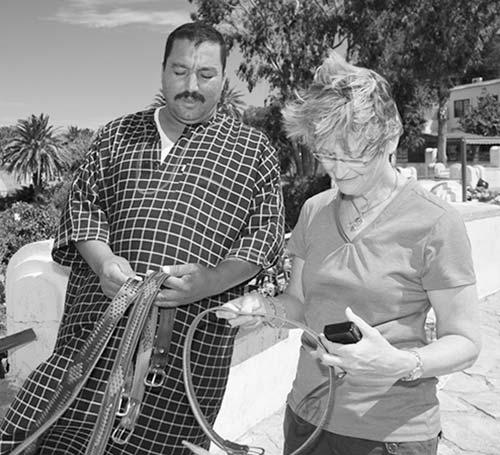
Look indifferent. As soon as the merchant perceives the “I gotta have that!” in you, you’ll never get the best price.
Employ a third person. Use your friend who is worried about the ever-dwindling budget or who is bored and wants to return to the hotel. This can help to bring the price down faster.
Show the merchant your money. Physically hold out your money and offer him “all you have” to pay for whatever you are bickering over. He’ll be tempted to just grab your money and say, “Oh, OK.”
If the price is too much, leave. Never worry about having taken too much of the merchant’s time. They are experts at making the tourist feel guilty for not buying. It’s all part of the game.
Scattered around the market are Berber tribeswomen, squatting with their goat cheese wrapped in palm fronds. Often wearing colorful striped skirts or straw hats decorated with ribbons, they ride buses to the city from the nearby Rif Mountains, mostly on Tuesdays and Thursdays. (Before taking photos of these women, or any people you see here, it’s polite to ask permission.)
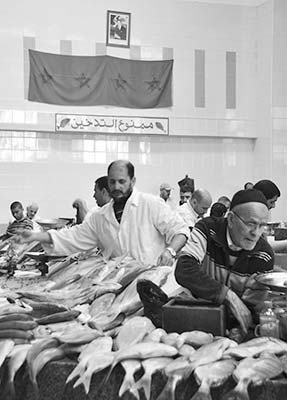
Keep going downhill. Eventually you’ll emerge into the large, white fish market; with the day’s catch from both the Mediterranean and the Atlantic, this place is a textbook of marine life.
The door at the far end of the fish market pops you out on Rue de la Plage; a right turn takes you past several spice vendors back to the Grand Socco. Dive in to the large, horseshoe gate and look for a smaller, double-arched gate on your right. Decorated with a tile panel from 2012, this reminds visitors that Tangier came in second to host a world exposition that took place that year in Yeosu, South Korea. With so many changes to the city since then, Tangier could certainly win a bid now.
• The gateway leads to Rue Siaghine, your axis for the next part of this walk, where you’ll find several interesting possible stops. Down a narrow, dead-end alley to the right is the...
Moshe Nahon Synagogue
Buried deep in the former Jewish quarter of Tangier, this ornately decorated synagogue draws inspiration from Spanish, Islamic, and Jewish design, reminding visitors how the three cultures are historically connected. Plaques on the wooden benches bear the names of members who paid an annual fee for seats—a mark of wealth and privilege. The wooden panel in the front under the Ten Commandments opens to reveal the Torah, written on gazelle skin over 600 years old and protected by a traditional cloth covering. To the left is the circumcision altar, and upstairs is the women’s gallery (accessed by a staircase in the courtyard), lined with Hebrew scripture proclaiming “God for everyone” and decorated with marriage embroideries from the early 1900s. A one-room museum has faded photos that humanize Tangier’s Jewish community (today down to just a handful of members). It’s open to the public—ring the bell outside to the left of the iron gate (20 dh donation requested, closed Sat, Rue Synagogues 3).
• Midway between the Grand and Petit soccos (on the right) stands a remarkable stone entrance that opens to the…
Musée Dar Niaba Art Gallery
This art gallery was once the house of the naib (an official representative of the sultan to all foreign governments from 1851-1920). Initial displays cover Moroccan diplomatic history, then shift into two floors of art showing the city and its people through the eyes of foreign artists (including some fantastic tile work made in Spain). Tangier’s alluring light and exotic scenes have long drawn international painters—from Delacroix and those he inspired to Matisse (20 dh, 9:00-17:00, closed Tue, right-hand side going downhill, Rue Siaghine 41).
• Now head to the best Jewish sight in town, immediately across the street, at the end of a narrow alley.
Beit Yahuda Assayag Synagogue and Museum
King Mohammad VI (who considers himself the guarantor of the three great religions, all “people of the book”) funded the restoration of this 1890 synagogue, adding a museum. Upstairs you’ll learn how Morocco welcomed many Sephardic Jews who fled here after they were expelled from Spain in 1492. At one point, there were 17 synagogues within the walls of the medina, and today a large percentage of Israel’s population is made of Jews who previously lived in Morocco (free, 10:00-17:00, closed Sat).
• Now explore the square.
Petit Socco
This little square, also called Souk Dahel (“Inner Market”), is the center of the lower medina. Lined with tea shops and cafés, it has a romantic quality that has long made it a people magnet. In the 1920s, it was the meeting point for Tangier’s wealthy and influential elite; by the 1950s and ’60s, it drew Jack Kerouac and his counterculture buddies. Nursing a coffee or a mint tea here, it’s easy to pretend you’re a Beat Generation rebel, dropping out from Western society and delving deeply into an exotic, faraway culture.
The Petit Socco is ideal for some casual people-watching over a drink. You can go to one of the more traditional cafés, but Café Central—with the large awnings and look of a European café—is accessible, and therefore the most commercialized and touristy (coffees, fruit drinks, and meals; long hours daily).
From the Petit Socco, the downhill lane leads past the Great Mosque (built on the site of a Roman temple) to a fine harbor viewpoint, the Terrace dar Dbagh (pron: duh-bag-gh). From this perch you can see 16th-century Portuguese fortifications, a huge WWI-era cannon, the cruise port and ferry terminal, Spain across the water, and lots of cargo ships headed for the massive Tangier Med port about 25 miles east. (Below you and the cannon, built into the fortification, is an exhibit about the old Tangier harbor.)
• Now is your chance to get lost in the medina—see the next section—before making your way uphill to the Kasbah.
▲▲▲Exploring the Medina
One of the most magical Tangier experiences is to simply lose yourself in the lanes of the medina. A first-time visitor cannot stay oriented—so don’t even try. I just wander, knowing that going uphill will eventually get me to the Kasbah and going downhill will lead me to the port. Expect to get a little lost...going around in circles is part of the fun. Pop in to see artisans working in their shops: mosaic tilemakers, thread spinners, tailors.
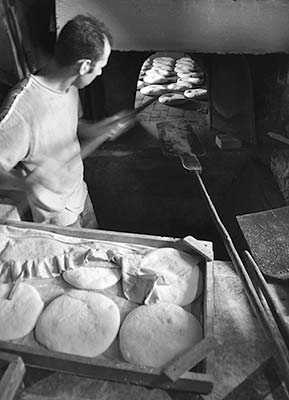
If you smell the aroma of baking bread, look for a hole-in-the-wall bakery, where locals drop off their ready-to-cook dough (as well as meat, fish, or nuts to roast).
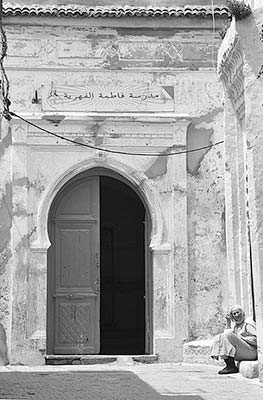
Go on a photo safari for ornate “keyhole” doors, many of which lead to neighborhood mosques (see photo). Green doors are the color of Islam and symbolize peace. The ring-shaped door knockers doubled as a place to hitch a donkey.
As you explore, notice that some parts of the medina seem starkly different, with fancy wrought-iron balconies. Approximately 20 percent of the town was built and controlled by Spaniards and Portuguese living here (with the rest being Arabic and Berber). The two populations were separated by a wall, the remains of which you can still trace running through the medina. It may seem at first glance that these European zones are fancier and “nicer” compared to the poorer-seeming Arabic/Berber zones. But the Arabs and Berbers take great care with the insides of their homes—if you went behind these humble walls, you’d be surprised how pleasant the interiors are. While European cultures externalize resources, Arab and Berber cultures internalize them.
▲▲Tangier American Legation Museum
Located at the bottom end of the medina (just above the port), this unexpected museum is worth a visit. Morocco was one of the first countries to recognize the newly formed United States as an independent country (in 1777). The original building, given to the United States by the sultan of Morocco, became the fledgling government’s first foreign acquisition. It was declared a US National Historic Landmark in 1983.
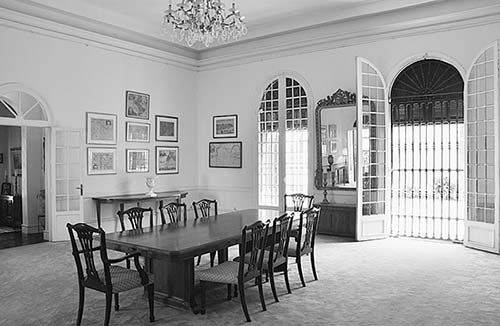
Cost and Hours: 50 dh, Mon-Fri 10:00-17:00, Sat-Sun until 15:00; during Ramadan daily 10:00-15:00; just inside Bab Merican at Rue d’Amérique 8, +212 539 935 317, www.legation.org. The museum occasionally hosts concerts; look for fliers posted near the door.
Islam has more than a billion adherents worldwide, and traveling in an Islamic country is an opportunity to better understand the religion. This admittedly basic and simplistic outline (written by a non-Muslim) is meant to help travelers from the Christian West understand a very rich but often misunderstood culture. Just as it helps to know about spires, feudalism, and the saints to comprehend European sightseeing, a few basics on Islam help make your sightseeing in Morocco more meaningful.
Muslims, like Christians and Jews, are monotheistic. They call God “Allah” (simply the Arabic word for God). The most important person in the Islamic faith is the prophet Muhammad, who lived in the sixth and seventh centuries. The holy book of Islam is the Quran, believed by Muslims to be the word of Allah as revealed to Muhammad. The “five pillars” of Islam are the core obligations of the faith that followers must satisfy:
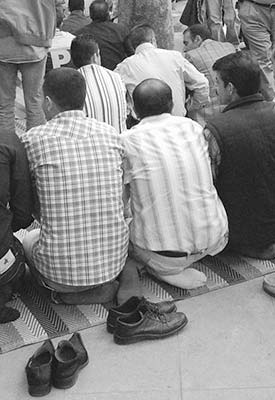
1. Say and believe this basic statement of faith: “There is no god but God, and Muhammad is his prophet.”
2. Pray five times a day.
3. Give to the poor (annually, about 2.5 percent of one’s income).
4. Fast during daylight hours through the month of Ramadan. Fasting develops self-control and awareness and is a step toward achieving selflessness.
5. Make a pilgrimage (hajj) to Mecca. Muslims who can afford it and are physically able are required to travel to Mecca at least once in their lifetimes.
Visiting the Museum: This 19th-century mansion was the US embassy (or consulate) in Morocco from 1821 to 1961, and it’s still American property—our only National Historic Landmark overseas. Today this is a strangely peaceful oasis within Tangier’s intense old town. Offering a warm welcome and three floors of interesting artifacts, its tangle of rooms is well worth exploring, and all well described in English.
The ground floor has a handy historical timeline starting from 1777. In the stairwell, you’ll see photos of kings with presidents.
Upstairs is a virtual museum of paintings, historic maps, and model soldiers playing out two battle scenes from Moroccan history. (These belonged to American industrialist Malcolm Forbes, who had a home in Tangier.)
You’ll find rooms dedicated to Paul Bowles (an original beatnik writer), other big foreign personalities who loved Tangier, and an exhibit on “Operation Torch” (the US WWII spy program).
A visit here is a fun reminder of how long the US and Morocco have had good relations.
• When you’ve soaked in enough old-town atmosphere, make your way to the Kasbah (see map on here. Within the medina, head uphill, or exit the Medina Gate and go right on Rue d’Italie, which turns into Rue de la Kasbah and follows the old wall uphill to Bab Kasbah (a.k.a. Porte de la Kasbah or Kasbah Gate), a gateway into the Kasbah.
THE KASBAH
Loosely translated as “fortress,” a kasbah is an enclosed, protected residential area near a castle that you’ll find in hundreds of Moroccan towns. Originally this was a place where a king or other leader could protect his tribe. Tangier’s Kasbah, comprising the upper quarter of the old town, has twisty lanes and some nice guesthouses. It is a bit more sedate and less claustrophobic than parts of the medina near the market below. Along with dramatic views from hotel and restaurant rooftops, there are a few important sights within the Kasbah walls (described below).
Walking to the Kasbah on Rue de la Kasbah
From the Grand Socco (Place du 9 Avril) you can hop a Petit Taxi and for around 30 dh get to Bab Kasbah, the gate to the Kasbah, in a couple of minutes. But it’s also a fun (if uphill) walk. The recommended Bab Al Madina bakery with sweet temptations is just across the street from the park and playground. Notice the 19th-century Italian facades on the buildings as you head up Rue d’Italie, which becomes Rue de la Kasbah. From here, you’ll walk straight and then up, up, up to the Kasbah Gate. You’ll pass Cine Alcazar (a theater that plays movies in their original language), the classic Café Colon for a nice mint tea and some people watching (or game of Parcheesi), the recommended Chez Hassan restaurant, a free little donkey museum (on the left, Abdul’s personal mission), ongoing restoration of medina walls, trendy new gift shops and eateries, and finally, on the right at the very top, Bab Kasbah, the old gate to the Kasbah (generally closed to vehicles). Entering the gate, you face the Ibn Battuta Museum.
▲Ibn Battuta Museum/Memorial
This simple memorial—a fort within a fort—venerates Ibn Battuta, the man considered the Moroccan Marco Polo, and his journeys (if you fly out of Tangier, you’ll be using an airport named for this hometown boy). What started as a six-month pilgrimage to Mecca in 1325 stretched out to some 30 years for Ibn Battuta, as he explored throughout the Islamic world and into India and China and later recounted his travels to a scholar who wrote about them. While there are no artifacts here, it’s a fascinating story of a man who traveled more miles than Marco Polo back in the 1300s, told in an evocative space (50 dh, daily 8:00-18:00, June–Sept until 22:00).
▲Kasbah Museum of Mediterranean Cultures
On Place de la Kasbah, you’ll find a former sultan’s palace, Dar el-Makhzen, that’s now a history museum with a few historical artifacts. While there’s not a word of English, some of the exhibits are easy to appreciate, and the building itself is beautiful. You’ll notice the scripts at the entry include Berber—even though, in practice, almost no one entering would read it.
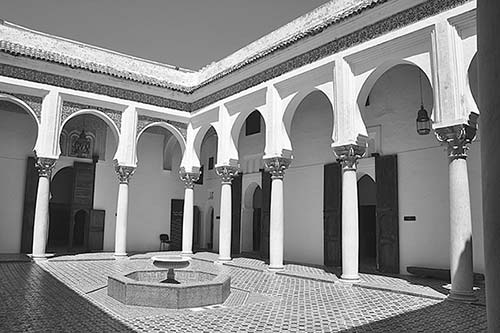
Cost and Hours: 30 dh, Wed-Mon 10:00-18:00, closed for prayer Fri 12:00-13:30 and all day Tue, ask for English brochure, +212 539 932 097. Your ticket includes the attached Museum of Contemporary Art.
Visiting the Museum: Enter straight past the ticket booth. Most of the exhibits surround the central, open-air courtyard; rooms proceed roughly chronologically as you move counterclockwise, from early hunters and farmers to prehistoric civilizations, Roman times, the region’s conversion to Islam, and the influence of European powers. Duck through the far-right corner of the courtyard to find a second-century Roman mosaic floor depicting the journey of Venus. A 12th-century wall-size map shows the Moorish view of the world: with Africa on top (Spain is at the far right). Upstairs is an exhibit on funerary rituals.
Back at the front desk (hiding out just past the WC) is the treasure room, with a mirror to aid in marveling at the complex wooden ceiling. From here (on the right) you enter a second museum—The Museum of Contemporary Art—filling a labyrinthian former prison under 15th-century brick arches.
Place de la Kasbah
The square in front of the Kasbah Museum attracts more than its share of tourists, and it can be a gauntlet of amusements: snake charmers, squawky dance troupes, and flamboyant water vendors—but mostly in the morning, only for tour groups.
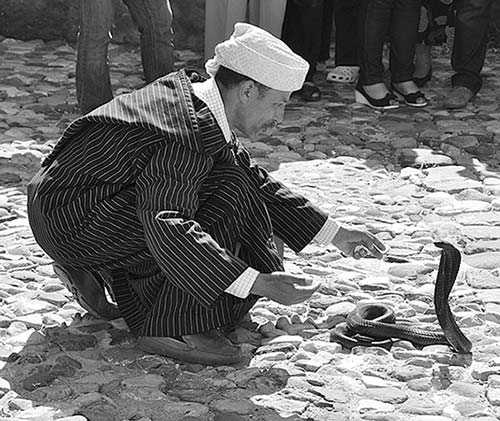
Before leaving the Kasbah, don’t miss the ocean viewpoint—as you stand in the square and face the palace, look to the right to find the rebuilt city wall and Bab Al Bahr, the “Sea Gate.” This leads out to a large natural terrace with fine views over the port, the fishing fleet below, the Mediterranean, and Spain (the last rock on the right is Gibraltar). From here, a lengthy staircase descends toward the port.
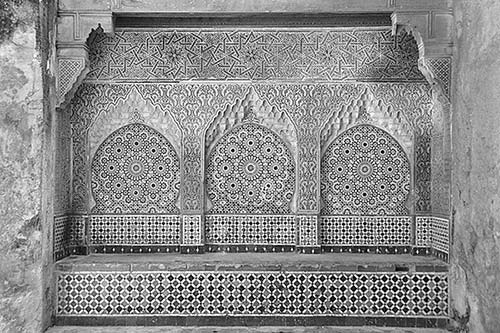
The lower gate of the Kasbah (as you stand in Place de la Kasbah facing the palace, it’s on your left) leads to a charming little alcove between the gates (Bab el-Assa), where you can see a particularly fine tile fountain: The top part is carved cedarwood, below that is carved plaster, and the bottom half is hand-laid tiles. Leaving the Kasbah, it’s all literally downhill through the medina.
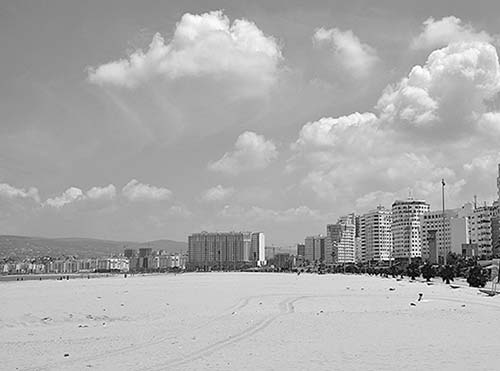
TANGIER BEACH AND MARINA
Tanja Marina Bay, inaugurated in 2018 as part of the port’s rejuvenation project, offers cafés, shops, over 1,400 berths, modern underground parking, and a home for the Royal Yacht Club of Tangier. Stretching gracefully eastward from the marina, the chic La Corniche promenade rests above a stretch of eateries and entertaining nightclubs as it follows the curve of the wide, white-sand crescent beach (Plage de Corniche). The locals call it by the Spanish word playa. It’s packed with locals doing what people around the world do at the beach—with a few variations. The modern pier has American-style cocktail bars and soulless restaurants, if you miss American prices.
Nightlife in Tangier
Nighttime can be a highlight of your Tangier experience. If you’re staying overnight, don’t relax in a fancy hotel restaurant. Get out and about in the old town after dark. In the cool of the evening, the atmospheric squares and lanes become even more alluring. It’s an entirely different experience and a highlight of any visit. I recommend one of the following options.
Paseo
Locals enjoy a nice stroll in the cool of the evening. Along with just strolling in and around the medina, there are two waterfront paseo zones: along the Route de la Plage Merkala—the boulevard west of the port under the Kasbah, which includes people both cruising in cars and strolling); and “the Playa Paseo” along Avenue Mohammed VI (either at street level, along the beach, or out on the modern marina jetty). Lush green areas become instant congregation points for families and friends to enjoy the fresh air.
Marshan Park and Bluff
The size of a soccer field, Marshan Park, west of the Kasbah, is a fun zone of families, nostalgic old-timers, and young couples out on cheap dates. A sprawling park facing the king’s palace grounds and grand ocean views, bars, and cafés, it’s just a 30 dh taxi ride from the medina. Locals gather on the bluff known for its Phoenician necropolis—tombs cut into the rocks—and literally dangle their feet into the stony tombs while picnicking and gazing longingly at Europe. The bluff, the park, and the cafés are within a couple hundred yards of each other. Café Hafa, a basic outdoor café cascading down a series of cliff-hugging terraces, is a longtime Tangier landmark and a cool scene where you can settle in to sip tea and enjoy the fantastic sea views surrounded by locals (simple pizzas and brochettes, long hours daily).
Hippie-Style Café
The medina is filled with surprises for which serendipity is your best or only guide. The legendary Café Baba, old, grimy, and smoky, has been around since the late 1940s. It was a hippie hangout in the 1960s and ’70s—the Rolling Stones smoked hash here; look for a battered picture of Keith Richards holding a pipe. Enjoy a mint tea and take in the great view over the old quarter. But remember, smoking pot is still illegal in Morocco (daily till very late, up a few stairs on Rue Doukkala—not far from Place Amrah).
Music
Hear traditional music with dinner most nights at El Minzah Hotel. The El Morocco Club has a sophisticated piano bar. For details on both, see “Eating in Tangier,” later.
Movies
Right on the Grand Socco, Cinema Rif shows films in v.o.—version originale, their original language—including French, Arabic, and occasionally English. As movies are cheap, consider dropping by to see the Art Deco interior and a bit of whatever’s on (closed Mon, +212 539 934 683). Nearby up Rue d’Italie, Cine Alcazar is another classic old theater that shows movies in v.o. with Arabic subtitles (across from Café Colon).
Sleeping in Tangier
I’ve recommended two vastly different types of accommodations in Tangier: cozy Moroccan-style (often French-run) guesthouses in the maze of lanes of the Kasbah neighborhood, and modern international-style hotels, most in the urban new town, a 10- to 20-minute walk from the central sights. June through mid-September is high season, when rooms may be a bit more expensive and reservations are wise.
Although the local currency is the dirham, nearly every hotel gives prices in euros, too. I’ve ranked the hotels below as $ Budget: 500-900 dh, $$ Moderate: 900-1300 dh, $$$ Pricier: 1300-1700 dh, and $$$$ Splurge: Over 1700 dh. All include breakfast.
GUESTHOUSES AND A HOTEL IN THE KASBAH
In Arabic, riad means “guesthouse.” You’ll find these in the atmospheric old town (medina). While the lower part of the medina is dominated by market stalls and tourist traps—and can feel a bit seedy after dark—the upper Kasbah area is more tranquil and residential. My recommendations are buried in a labyrinth of lanes that can be difficult to navigate; the map of “Tangier’s Old Town (Medina),” earlier, gives you a vague sense of where to go, but it’s essential to ask for very clear directions when you reserve—or better yet, if you’re hiring a guide in Tangier, ask him to help you find your riad. If you’re on your own, you can ask the host to meet you at a landmark like the Bab Kasbah (a.k.a. Porte de la Kasbah or Kasbah Gate), or try asking for directions when you arrive—but be forewarned that locals may see that as an invitation to tag along and hound you for tips. The communal nature of riads means that occasional noise from other guests can be an issue; bring your earplugs.
When you arrive at your riad, don’t look for a doorbell—the tradition is to use a door knocker. The guesthouses listed here are in old houses with rooms surrounding a courtyard atrium, and all have rooftop terraces where you can relax and enjoy sweeping views over Tangier. Besides breakfast, many also serve good Moroccan dinners, which cost extra and should be arranged beforehand, typically that morning. Some also offer hammams (Turkish-style baths) with massages and spa treatments. Some lack stand-alone showers; instead, in Moroccan style, you’ll find a handheld shower in a corner of the bathroom.
$$$ La Maison Blanche (“The White House”), run by Aziz Begdouri, one of my recommended guides, has nine rooms in a restored traditional Moroccan house. Modern and attractively decorated, each room is dedicated to a personality who’s spent time in Tangier—including a travel writer I know well. With its friendly vibe, great rooftop view terrace, and lavish setting, this is a worthwhile splurge (all with bathtubs, air-con, just inside the upper Kasbah gate at Rue Ahmed Ben Ajiba 2, +212 661 639 332, www.lamaisonblanchetanger.com, info@lamaisonblanchetanger.com). Tell the taxi driver “Bab Kasbah” and it’s just steps through the gate.
$$$ Dar Chams Tanja, just below the lower Kasbah gate, has seven elegant, new-feeling rooms (named after women from Morocco) that surround an inner courtyard with lots of keyhole windows. It’s impeccably decorated, has a proper French-expat ambience, and boasts incredible views from its rooftop terrace (air-con, hammam, massage service, Rue Jnan Kabtan 2, +212 539 332 323 or +212 654 935 175, available via Booking.com, darchamstanja@gmail.com).
$$$ Dar Sultan rents seven romantically decorated rooms on a pleasant street in the heart of the Kasbah with a small rooftop terrace (some rooms with balconies, Rue Touila 49, +212 539 336 061, +212 671 181 580, www.darsultan.com, dar-sultan@menara.ma).
$$ La Tangerina, run by Jürgen (who’s German) and his Moroccan wife, Farida, has 10 comfortable rooms that look down into a shared atrium. At the top is a gorgeous rooftop sea-view balcony (cash or PayPal only, wood-fired hammam, Riad Sultan 19, +212 539 947 731, www.latangerina.com, info@latangerina.com). They also have an apartment on the Grand Socco with perfect views of Cinema Rif.
$$ Dar Nour, run with funky French style by Philippe, Jean-Olivier, and Catherine, has an “Escher-esque” floor plan that sprawls through five interconnected houses (it’s “labyrinthine like the medina,” says Philippe). The 10 homey rooms feel very traditional, with lots of books and lounging areas spread throughout, and a fantastic view terrace and cocktail bar on the roof (Wi-Fi in lobby only, Rue Gourna 20, +212 662 112 724, www.darnour.com, contactdarnour@yahoo.fr).
$$ Hotel Continental—sprawling at the edge of the old town, facing the port—is the sentimental option. It’s like sleeping in a neglected antique store. Although the hotel has seen better days, its 53 spacious bedrooms are very convenient for those arriving by ferry (family rooms, Dar Baroud 36; follow my directions for walking into town from the port, but take a right at the open plaza through the horseshoe-arched gateway—Bab Dar Dbagh—marked 1339, then turn right again and continue up, +212 539 931 024, hcontinental@menara.ma).
MODERN HOTELS IN THE MODERN CITY
These hotels are centrally located and within walking distance of the Grand Socco, medina, and market.
$$$$ Grand Hôtel Villa de France, perched high above the Grand Socco, has been a splurge since the 19th century, when Eugène Delacroix stayed here and started a craze for Orientalism in European art. Henri Matisse was a guest in 1912-1913, painting what he saw through his window. Lavish public spaces, including a restaurant and view terrace, have more charm than most of the 58 modern, updated rooms (intersection of Rue d’Angleterre and Rue de Hollande, +212 539 333 111, http://www.villadefrancetanger.com [URL inactive], reservation.ghvdf@leroyal.com).
$$$$ Marina Bay Tangier, restored to its 1970s glamour, is a worthy splurge. Offering 127 plush, modern rooms, sprawling public spaces, a garden, a pool, and grand views, it feels like an oversized boutique hotel. Overlooking the harbor, the great lounge—named for Winston Churchill—compels you to relax (some view rooms, air-con, elevator, 3 restaurants, spa and sauna, Avenue Mohammed VI 152—see the “Tangier” map near the beginning of this chapter, +212 539 349 300, www.atlashotelscollection.com).
$ Hotel Rembrandt feels just like the 1950s, with a restaurant, a bar, and a swimming pool surrounded by a great grassy garden. Its 70 rooms are basic and simple but clean and comfortable, and some come with views (air-con, elevator, a 5-minute walk above the beach in a busy urban zone at Boulevard Mohammed V 1—see the “Tangier” map near the beginning of this chapter, +212 539 333 314, http://www.rembrandthotel.ma, reservation@hotelrembrandt.ma).
Eating in Tangier
Moroccan food is a joy to sample. Tourist-oriented restaurants have a predictable menu. For starters, you’ll find a Moroccan tomato-based vegetable soup (harira) or Moroccan salad (a combination of fresh and stewed vegetables). Main dishes include couscous (usually with chicken, potatoes, carrots, and other vegetables and spices), tagine (literally the cone-shaped earthenware pot that meat, fish, or vegetables are cooked and then served in), and briouates (small savory meat or fish pies). Everything comes with Morocco’s distinctive round, flat bread. For dessert, it’s pastries—typically, almond cookies. For good service, tip 10-14 percent directly to the waiter (don’t leave tip on table).
IN THE KASBAH
The fort neighborhood at the very top of the medina has the best views of Tangier and the Strait of Gibraltar. Several roof gardens trying to cash in on that (like Le Salon Bleu and Restaurant/Bar Nord Pinus) are better for a drink than a serious meal, but there are three other places to consider: a basic terrace view restaurant, a sedate clubby place with American prices for a top-end splurge, and its adjacent hip little café for lunch.
$$ La Terraza de la Medina has two floors of spacious dining areas and an outdoor terrace with views. If you’re looking for a low-stress restaurant in the heart of the Kasbah, you’ll find it here, just behind the recommended hotel Dar Chams Tanja. They serve traditional Moroccan fare such as pastella—a savory-sweet chicken pastry, harira, couscous, tagines, and family-friendly options. While this can be mobbed by tour groups at lunch, it’s more intimate and peaceful for dinner (Rue Dakakine 6, +212 539 332 386).
El Morocco Club actually has a night bouncer who lets you into its $$$ fine restaurant with a French-Moroccan menu of grilled fish, roasted lamb, and creamy risottos. The small, romantic dining room is a rare-for-Morocco place that serves wine and beer (19:30 until late, closed Mon, just inside the Bab Kasbah gate on Place du Tabor, reservations smart, +212 539 948 139). Its $ terrace café offers a light menu of breakfasts, sandwiches, quiches, and salads served in the shade of a rubber tree. It’s a hit with rich kids having brunch.
IN THE MEDINA
$$ Restaurant Palais Zahia, in the courtyard of a hotel just 100 feet below the Petit Socco, is purely Moroccan in design and atmosphere. Mellow and tastefully touristy with a singer and Moroccan lute (oud) player and an accessible menu with all the favorites, they’ve got it figured out (reservations smart, no alcohol, 19:30-22:00 nightly, Rue de la Marine 76, +212 539 934 000).
$ Café Central, established in 1813, has long dominated Petit Socco, with tables inside and out to treat the people-watching scene like theater. Its touristy menu with photos has breakfasts, salads, crêpes, mojitos (perfect for a society in love with mint), and more (daily 6:00-24:00). Café Tingis next door is more rough, manly, and conducive to artistic brooding.
$$ Rif Kebdani, between the gate to the port and the Hotel Continental, is an intensely cozy, not-too-touristy eight-table place with colorful tiles and Berber decor that’s matched by a simple yet appetizing menu of tagines, Moroccan salads, and pastilla. With these choices plus a variety of seafood dishes at reasonable prices, it’s a memorable option (long hours daily from 12:00, Rue Dar Baroud 14, +212 539 371 760).
Snacking in the Medina for 10 Dirham:
So much of Tangier’s medina is about food. You’ll see little joints for sandwiches and bocadillos (that you construct like a Subway sandwich), merchants stacking melons and shelling shrimp in the market, holes in the wall with six stools everywhere you look, and snacks. Vendors likely don’t speak a word of English. The easiest way to buy is to hold up how much money you want to spend (minimum 10 dh or €1) and point to what you’d like. It’s easy to assemble a mix of nuts, cookies, olives, and dried fruits. Another bit of local street food is the caliente (“hot” in Spanish), a chickpea crêpe. Beware: Snacking like this can cause rumble tummy.
OUTSIDE THE MEDINA
These places are clustered outside the medina walls, just beyond the Grand Socco.
$$ Restaurant Chez Hassan, on Rue de la Kasbah at the bottom of the hill, is a hole in the wall that spilled out into the sidewalk with its success. Hassan is the hardworking boss who serves tagines and fresh seafood. As they cook to order, this is definitely not a fast meal. You’ll be dining amid sidewalk commotion and enjoying great people watching while you wait (Rue de la Kasbah 8, +212 613 769 293).
$$$ Le Saveur du Poisson is an adventure, featuring one room cluttered with paintings adjoining a busy kitchen. There are no choices here. Just sit down and let owner Hassan (and his nephew Mohammed) take care of the rest. Surrounded by lots of locals and unforgettable food, you’ll dig into a multicourse menu with your rough wooden spoon and fork. Savor the delicious fish dishes—Tangier is one of the few spots in Morocco where seafood is a major part of the diet. The fruit punch—a mix of seasonal fruits brewed overnight in a vat—simmers in the back room. Ask for an explanation, or even a look. The desserts are full of nuts and honey. The big sink is for locals who prefer to eat with their fingers (Sat-Thu 13:00-17:00 & 19:00-22:30, closed Fri and during Ramadan, no reservations—arrive just before opening to get a table; from El Minzah Hotel, walk down Rue de la Liberté roughly a block toward the Grand Socco, look for the stairs leading down to the market stalls, Escalier Waller 2, +212 539 336 326).
$ Restaurant Darna, operated by the Maison Communautaire des Femmes, a community center for women, is open to everyone and offers a serviceable 60 dh two-course lunch. Profits support the work of the center (cash only, closed Sun, last order at 15:30, also open mornings and late afternoons for cakes and tea, pleasant terrace out back, a few steps above Grand Socco on Rue Jules Cot, +212 539 947 065).
$ Restaurant Bachir, a thriving local favorite without a hint of tourism, is fun and accessible. Bright, efficient, modern, and easy with a cheap menu in English, you can’t go wrong. They have tables on both sides of the street—choose high energy or across the street for more space and peace (on Rue Zyriabe near busy Boulevard Pasteur, a 10-minute walk from the Grand Socco, +212 642 287 939).
TOURISTY PLACES
Tangier has a couple of touristy restaurants designed to feed and entertain dozens or even hundreds of tour-group members with overpriced Moroccan classics, live music, and belly dancing (which really has nothing to do with Morocco). The only locals you’ll see are the waiters. But for day-trippers who just want a safe, comfortable break in the heart of town to dine with Americans, these restaurants’ predictability and Moroccan clichés are a good fit.
$$ Hamadi serves good food at reasonable prices—but check your bill carefully (long hours daily, Rue de la Kasbah 2, +212 539 934 514).
$$$ El Minzah Hotel, a historic luxury hotel that is now just garishly touristic, offers a fancy yet still-authentic experience. Classy but low stress, it’s where unadventurous tourists and local elites dine. Dress up and choose between two dining zones: the white-tablecloth continental (French) dining area, called El Erz; or the Moroccan lounge, El Korsan, where you’ll be serenaded by live traditional music (music nightly 20:00-23:00, belly-dance show at 20:30 and 21:30, no cover). There’s also a cozy wine bar here—a rarity in a Muslim country—decorated with photos of visiting celebrities. At lunch, light meals and salads are served poolside (all dining areas open daily 13:00-16:00 & 20:00-22:30, Rue de la Liberté 85, +212 539 333 444).
VENERABLE CAFÉS
Your first priority in a Tangier café is experiencing a glass of refreshing “Moroccan tea”—green tea that’s boiled and steeped once, then combined with fresh mint leaves to boil and steep some more, before being loaded up with sugar. (They’ll ask “with or without sugar” when you order.) Tea comes so hot that I always ask for a small extra glass to pour it into for more comfortable sipping. Here are some places to try it; also consider Café Hafa, listed earlier under “Nightlife in Tangier.”
Café Colon is a window into the real, present-day Tangier, where locals come to pass the day playing cards and drinking coffee and tea. There’s no food—just tea, coffee, and orange juice—almost no tourists, and drinks come with a customary glass of water (astute waiters bring bottled mineral water for travelers). Matisse hung out here in 1912, and stopping here fills your cultural sustenance tank. As you idly watch passersby from a sidewalk table, you’ll feel a part of keeping traditions—and Tangier—alive (long hours daily, Rue d’Italie 54). Inside it’s all men and the clinking of dice. Tourist women can sit comfortably outside. I was told women are not unwelcome—local women just wouldn’t want to be here because the smoky atmosphere makes their hair smell.
Gran Café de Paris offers the same scene in the modern town facing the Place de France at the foot of Boulevard Pasteur. Sitting here you feel how café culture is integral to Moroccan life. For many, the café is an office for wheeling and dealing, a place to play spy, gather for soccer games, talk sports or politics, or simply get out of the house (long hours daily).
PASTRIES
Moroccan pastries and cookies are often offered with mint tea in cafés or hotels and are served for dessert after meals. But those with a serious sweet tooth should step into a pâtisserie to choose from the variety of local sweets made with almonds, pistachios, cashews, pine nuts, peanuts, dates, honey, and sugar. Ask for “une boîte petite” (a little box) and point to what you want to fill it—you’ll pay by weight.
$ Bab Al Madina, just off the Grand Socco, is delicious and easy (daily 6:00-22:00, Rue d’Italie 28, +212 667 151 779). It has two sections: a café with pizzas and shawarma, and a bakery that offers Moroccan and French pastries, bread, and Moroccan crêpes (called baghrir, these have nooks and crannies similar to a crumpet). Eat at the café’s tables or on your hotel terrace for a sweet sunset.
Morocco Beyond Tangier
Visiting Tangier and saying you’ve “seen Morocco” is like visiting Tijuana and saying the same about Mexico. You’ve just tasted the tip of this fabled land. Morocco gets much better as you go deeper. The country is incredibly rich in cultural thrills, though you’ll pay a price in hassles and headaches—it’s a package deal. Moroccan trains are quite good—and a high-speed line connects Tangier with Casablanca. Second class is cheap and comfortable. Buses connect all smaller towns very well. By car, Morocco is easy.
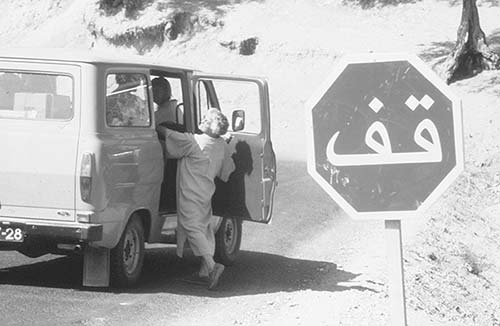
To plan a trip that extends beyond Tangier, you’ll need a supplemental guidebook. Moon and Lonely Planet both publish good ones, available at home and in Spain. Bear in mind that the farther south you go, the more you may see areas recovering from 2023’s devastating earthquake that hit Marrakech and the nearby Atlas Mountains.
MOROCCAN TOWNS
Chefchaouen
About two-and-a half hours by car from Tangier (and also possible by bus), this is the first pleasant town beyond the north coast. Monday and Thursday are colorful market days. Wander deep into the atmospheric old town from the main square and admire the colorful buildings that inspired the nickname “blue pearl of Morocco.”
Asilah
A peaceful beach town on the northern coast of Morocco a 40-minute drive from Tangier, Asilah is an artists’ hangout with whitewashed buildings, tranquil beaches, and a vibrant street scene on the Atlantic Coast.
Rabat
Morocco’s capital and most European city, Rabat is a comfortable and low-stress place to continue your North African trip. You’ll find a colorful market (in the old neighboring town of Salé), bits of Islamic architecture (Mausoleum of Mohammed V), the king’s palace, mellow hustlers, and fine hotels.
Fès
More than just a funny hat that tipsy Shriners wear, Fès is Morocco’s religious and artistic center, bustling with craftspeople, pilgrims, shoppers, and shops. Like most large Moroccan cities, it has a distinct new town from the French colonial period, as well as an exotic (and stressful) old walled Arabic town (the medina), where you’ll find the market.
For 12 centuries, traders have gathered in Fès, founded on a river at the crossroads of two trade routes. Soon there was an irrigation system, a university, resident craftsmen from Spain, and a diverse population of Muslims, Christians, and Jews. When France claimed Morocco in 1912, they made their capital in Rabat, and Fès fizzled. But the Fès marketplace is still Morocco’s best.
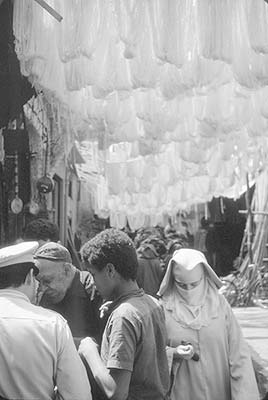
Marrakech
Morocco’s gateway to the south, Marrakech is where the desert, mountain, and coastal regions merge. This market city is a constant folk festival, bustling with Berber tribespeople and a colorful center. The new city has the train station, and the main boulevard (Mohammed V) is lined with banks, airline offices, a post office, a tourist office, and comfortable hotels. The old city features the mazelike market and the huge Djemaa el-Fna, a square seething with people—a 43-ring Moroccan circus.
Over the Atlas Mountains
Extend your Moroccan trip several days by heading south over the Atlas Mountains. Take a bus from Marrakech to Ouarzazate (short stop), and then to Tinerhir (great oasis town, comfy hotel, overnight stop). The next day, go to Er Rachidia and take the overnight bus to Fès.
By car, drive from Fès south, staying in the small mountain town of Ifrane, and then continue deep into the desert country past Er Rachidia, and on to Rissani (market days: Sun, Tue, and Thu). Explore nearby mud-brick towns still living in the Middle Ages. Hire a guide to drive you past where the road stops, and head cross-country to an oasis village (Merzouga), where you can climb a sand dune and watch the sun rise over the vastness of Africa. Only a sea of sand separates you from Timbuktu.