PRACTICALITIES
RESERVATIONS, ADVANCE TICKETS, AND PASSES
Map: Italy’s Public Transportation
Map: Hill Town Public Transportation
TAXIS AND RIDE-BOOKING SERVICES
This chapter covers the practical skills of European travel: how to get tourist information, pay for things, sightsee efficiently, find good-value accommodations, eat affordably but well, use technology wisely, and get between destinations smoothly. For more information on these topics, see RickSteves.com/travel-tips.
Travel Tips
Travel Advisories: Before traveling, check updated health and safety conditions, including restrictions for your destination, on the travel pages of the US State Department (www.travel.state.gov) and Centers for Disease Control and Prevention (www.cdc.gov/travel [URL inactive]). The US embassy website for Italy is another good source of information (see here).
Covid Vaccine/Test Requirements: It’s possible you’ll need to present proof of vaccination against the coronavirus and/or a negative Covid-19 test result to board a plane to Europe or back to the US. Carefully check requirements for each country you’ll visit well before you depart, and again a few days before your trip. See the websites listed above for current requirements.
ETIAS Registration: The European Union may soon require US and Canadian citizens to register online with the European Travel Information and Authorization System (ETIAS) before entering Italy and other Schengen Zone countries (quick and easy process). For the latest, check www.etiasvisa.com [URL inactive].
Tourist Information: Before your trip, scan the website of the Italian national tourist office (www.italia.it) for a wealth of travel information. If you have a specific question, try contacting one of their US offices (New York: +1 212 245 5618, newyork@enit.it; Los Angeles: +1 310 820 1898, losangeles@enit.it).
In Italy, a good first stop in every town is generally the tourist information office (abbreviated TI in this book). TIs are in business to help you spend money in their town—which can color their advice—but I still swing by to pick up a city map and get info on public transit, walking tours, special events, and nightlife. While Italian TIs are about half as helpful as those in other countries, their information is twice as important. Some TIs have information on the entire country or at least the region, so you can pick up maps and other info for destinations you’ll be visiting later in your trip.
Be wary of travel agencies or special information services that masquerade as TIs but serve fancy hotels and tour companies. They’re selling things you don’t need.
Emergency and Medical Help: For any emergency service—ambulance, police, or fire—call 112 from a mobile phone or landline (operators typically speak English). If you get sick, do as the locals do and go to a pharmacist for advice. Or ask at your hotel for help—they’ll know the nearest medical and emergency services.
Theft or Loss: To replace a passport, you’ll need to go in person to an embassy (see next). If your credit and debit cards disappear, cancel and replace them (see “Damage Control for Lost Cards” on here). File a police report, either on the spot or within a day or two; you’ll need it to submit an insurance claim for lost or stolen items, and it can help with replacing your passport or credit and debit cards. For more information, see RickSteves.com/help.
US Embassies and Consulates: Embassy in Rome—+39 06 46741, passport and nonemergency consular services, by appointment only (Via Vittorio Veneto 121). Consulates in Milan—+39 02 290 351 (Via Principe Amedeo 2/10); Florence—+39 055 266 951 (Lungarno Vespucci 38); and Naples—+39 081 583 8111 (Piazza della Repubblica). For all, see http://it.usembassy.gov.
Canadian Embassies: Rome—+39 06 854 442 911 (Via Zara 30); Milan—+39 02 626 94238 (Piazza Cavour 3). For both, see www.italy.gc.ca. After-hours emergency in Ottawa +1 613 996 8885.
Avoiding Theft and Scams: Although violent crime is rare in Italy, petty theft is common in large cities and heavily touristed sights. With sweet-talking con artists meeting you at the station and well-dressed pickpockets on buses, tourists face a gauntlet of rip-offs. Pickpockets don’t want to hurt you—they usually just want your money and gadgets. Green or sloppy tourists are prone to scams.
Thieves strike when you’re distracted. Don’t trust overly kind strangers. Keep nothing important in your pockets, and be especially careful with expensive cell phones—maintain a firm grip when you’re using one. Be on guard while boarding and leaving buses and subways. Thieves jam up the door, then stop and turn while others crowd and push from behind. You’ll find less crowding and commotion—and less risk—on the end cars of a subway rather than the middle cars. Hold your bags in front with your arms over them. Sneaky thieves pretend to be teenagers on holiday, well-dressed businessmen, or tourists wearing fanny packs and toting cameras and even Rick Steves guidebooks. The best deterrent is to look confident and aware, not confused and afraid.
Watch out for fast-fingered moms with babies and groups of children picking the pockets and handbags of naive tourists. Be particularly aware of groups of young women who seem to have nothing to do. Pickpockets troll tourist crowds around major sights and at train stations. Watch them target tourists who are overloaded with bags or distracted with their phones.
Scams abound. When paying for something, be aware of how much cash you’re handing over, demand clear and itemized bills, and count your change. Don’t give your wallet to self-proclaimed “police” who stop you on the street, warn you about counterfeit (or drug) money, and ask to see your cash. If a bank machine eats your ATM card, check for a thin plastic insert with a tongue hanging out (thieves use these devices to extract cards).
If you feel you are being scammed or are in a situation that makes you feel threatened, use your camera to document the incident and call the police immediately. This alone may deter criminal behavior.
Don’t be scared—just be aware and be smart, and you’ll be fine.
Time Zones: Italy, like most of continental Europe, is generally six/nine hours ahead of the East/West Coasts of the US. The exceptions are the beginning and end of Daylight Saving Time: Europe “springs forward” the last Sunday in March (two weeks after most of North America), and “falls back” the last Sunday in October (one week before North America). For a handy time converter, use the world clock app on your phone or download one (see www.timeanddate.com).
Business Hours: Traditionally, Italy used the siesta plan, with people generally working from about 9:00 to 13:00 and from 15:30-16:00 to 19:00-19:30, Monday through Saturday. Siesta hours are no longer required by law, so offices and many shops stay open through lunch or later into the evening, especially larger stores in tourist areas. Shops in small towns and villages are more likely to close during lunch. Stores are usually closed on Sunday, and often on Monday. Many shops close for a couple of weeks around August 15.
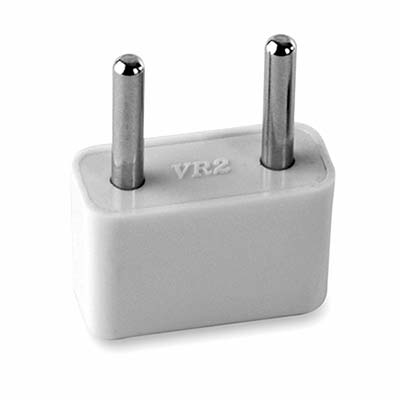
Watt’s Up? Europe’s electrical system is 220 volts, instead of North America’s 110 volts. Most electronics (laptops, phones, cameras) and appliances (newer hair dryers, CPAP machines) convert automatically, so you won’t need a converter, but you will need an adapter plug with two round prongs, sold inexpensively at travel stores in the US.
Rip up this book! Turn chapters into mini guidebooks: Break the book’s spine and use a utility knife to slice apart chapters, keeping gummy edges intact. Reinforce the chapter spines with clear wide tape; use a heavy-duty stapler; or make or buy a cheap cover (see the Travel Store at RickSteves.com), swapping out chapters as you travel.
Discounts: Discounts for sights are generally not listed in this book. However, youths under 18 and students and teachers with proper identification cards (obtain from www.isic.org) can get discounts at many sights—always ask. Italy’s national museums generally offer free admission to children under 18, but some discounts are available only for citizens of the European Union (EU).
Tobacco Shops: Known as tabacchi (often indicated with a big T sign), these Italian-style minimarts are ubiquitous across the country. They’re handy places to pay for street parking and purchase such things as batteries, tickets for city buses and subways, and sometimes postage. If you aren’t sure where to buy something, a tabacchi is a good place to start.
Online Translation Tips: Google’s Chrome browser instantly translates websites; Translate.google.com and DeepL.com [URL inactive] are also handy. The Google Translate app converts spoken or typed English into most European languages (and vice versa) and can also translate text it “reads” with your smartphone’s camera.
Going Green: There’s plenty you can do to reduce your environmental footprint when traveling. When practical, take a train instead of a flight within Europe, and use public transportation within cities. In hotels, use the “Do Not Disturb” sign to avoid daily linen and towel changes (or hang up your towels to signal you’ll reuse them). Bring a reusable shopping tote and refillable water bottle (Europe’s tap water is safe to drink). Skip printed brochures, maps, or other materials that you don’t plan to keep—get your info online instead. To find out how Rick Steves’ Europe is offsetting carbon emissions with a self-imposed carbon tax, see RickSteves.com/about-us/climate-smart.
Money
Here’s my basic strategy for using money wisely in Europe. I pack the following and keep it all safe in my money belt.
Credit Card: You’ll use your credit card for purchases both big (hotels, advance tickets) and small (little shops, food stands). Some European businesses have gone cashless, making a card your only payment option. A “tap-to-pay” or “contactless” card is widely accepted and simple to use.
Debit Card: Use this at ATMs to withdraw a small amount of local cash. Wait until you arrive to get euros (European airports have plenty of ATMs); if you buy euros before your trip, you’ll pay bad stateside exchange rates. While most transactions are by card these days, cash can help you out of a jam if your card randomly doesn’t work, and can be useful to pay for things like tips and local guides.
Backup Card: Some travelers carry a third card (debit or credit; ideally from a different bank) in case one gets lost or simply doesn’t work.
Stash of Cash: I carry $100-200 in US dollars as a cash backup, which comes in handy in an emergency (for example, if your debit card gets eaten by the machine).
BEFORE YOU GO
Know your cards. For credit cards, Visa and MasterCard are universal while American Express and Discover are less common. US debit cards with a Visa or MasterCard logo will work in any European ATM.
Go “contactless.” Get comfortable using contactless pay options. Check to see if you already have—or can get—a tap-to-pay version of your credit card (look on the card for the tap-to-pay symbol—four curvy lines), and consider setting up your smartphone for contactless payment (see next section for details). Both options are widely used in Europe and are more secure than a physical credit card: Instead of recording your credit card number, a one-time encrypted “token” enables the purchase and expires shortly afterward.
Know your PIN. Make sure you know the numeric, four-digit PIN for each of your cards, both debit and credit. Request it if you don’t have one, as it may be required for some purchases. Allow time to receive the information by mail—it’s not always possible to obtain your PIN online or by phone.
Report your travel dates. Let your bank know that you’ll be using your debit and credit cards in Europe, and when and where you’re headed.
Adjust your ATM withdrawal limit. Find out how much you can withdraw daily and ask for a higher daily limit if you want to get more cash at once. Note that European ATMs will withdraw funds only from checking accounts, not savings accounts.
Find out about fees. For any purchase or withdrawal made with a card, you may be charged a currency conversion fee (1-3 percent) and/or a Visa or MasterCard international transaction fee (less than 1 percent). If you’re getting a bad deal, consider getting a new card. Reputable no-fee cards include those from Capital One, as well as Charles Schwab debit cards. Most credit unions and some airline loyalty cards have low or no international transaction fees.
IN EUROPE
Using Credit Cards and Payment Apps
Tap-to-Pay or Contactless Cards: These cards have the usual chip and/or magnetic stripe, but with the addition of a contactless symbol. Simply tap your card against a contactless reader to complete a transaction—no PIN or signature is required. This is by far the easiest way to pay and has become the standard in much of Europe.

Payment Apps: Just like at home, you can pay with your smartphone or smartwatch by linking a credit card to an app such as Apple Pay or Google Pay. To pay, hold your phone near a contactless reader; you may need to verify the transaction with a face scan, fingerprint scan, or passcode. If you’ve arrived in Europe without a tap-to-pay card, you can easily set up your phone to work in this way.
Other Card Types: Chip-and-PIN cards have a visible chip embedded in them; rather than swiping, you insert the card into the payment machine, then enter your PIN on a keypad. In Europe, these cards have largely been supplanted by tap-to-pay cards, but you may be asked to use chip-and-pin for certain purchases. Swipe-and-sign credit cards—with a swipeable magnetic stripe, and a receipt you have to sign—are increasingly rare.
Will My US Card Work? Usually, yes. On rare occasions, at self-service payment machines (such as transit-ticket kiosks, tollbooths, or fuel pumps), some US cards may not work. Usually a tap-to-pay card does the trick in these situations. Just in case, carry cash as a backup and look for a cashier who can process your payment if your card is rejected. Drivers should be prepared to move on to the next gas station if necessary. (In some countries, gas stations sell prepaid gas cards, which you can purchase with any US card). When approaching a toll plaza or ferry ticket line, use the “cash” lane.
Using Cash
Cash Machines: European cash machines work just like they do at home—except they spit out local currency instead of dollars, calculated at the day’s standard bank-to-bank rate. In most places, ATMs are easy to locate—in Italy ask for a bancomat. When possible, withdraw cash from a bank-run ATM located just outside that bank.
If your debit card doesn’t work, try a lower amount—your request may have exceeded your withdrawal limit or the ATM’s limit. If you still have a problem, try a different ATM or come back later.
Avoid “independent” ATMs, such as Travelex, Euronet, Moneybox, Your Cash, Cardpoint, and Cashzone. These have high fees, can be less secure, and may try to trick users with “dynamic currency conversion” (see next).
Dynamic Currency Conversion: When withdrawing cash at an ATM or paying with a credit card, you’ll often be asked whether you want the transaction processed in dollars or in the local currency. Always refuse the conversion and choose the local currency. While DCC offers the illusion of convenience, it comes with a poor exchange rate, and you’ll wind up losing money.
Exchanging Cash: Minimize exchanging money in Europe; it’s expensive (you’ll generally lose 5 to 10 percent). In a pinch you can find exchange desks at major train stations or airports. Banks generally do not exchange money unless you have an account with them.
Security Tips
Pickpockets target tourists. Keep your cash, credit cards, and passport secure in your money belt, and carry only a day’s spending money in your front pocket or wallet.
Before inserting your card into an ATM, inspect the front. If anything looks crooked, loose, or damaged, it could be a sign of a card-skimming device. When entering your PIN, carefully block other people’s view of the keypad.
Avoid using a debit card for purchases. Because a debit card pulls funds directly from your bank account, potential charges incurred by a thief will stay on your account while your bank investigates.
To access your accounts online while traveling, be sure to use a secure connection (see the “Tips on Internet Security” sidebar, later).
Damage Control for Lost Cards
If you lose your credit or debit card, report the loss immediately to the respective global customer-assistance centers. With a mobile phone, call these 24-hour US numbers: Visa (+1 303 967 1096), MasterCard (+1 636 722 7111), and American Express (+1 336 393 1111). From a landline, you can call these US numbers collect by going through a local operator.
You’ll need to provide the primary cardholder’s identification-verification details (such as birth date, mother’s maiden name, or Social Security number). You can generally receive a temporary card within two or three business days in Europe (see RickSteves.com/help for more).
If you report your loss within two days, you typically won’t be responsible for unauthorized transactions on your account, although many banks charge a liability fee.
TIPPING
Tipping in Italy isn’t as automatic and generous as it is in the US. For special service, tips are appreciated, but not expected. As in the US, the proper amount depends on your resources, tipping philosophy, and the circumstances, but some general guidelines apply.
Restaurants: In Italy, a service charge (servizio) is usually built into your check (look at the bill carefully). If it is included, there’s no need to leave an extra tip. If it’s not included, it’s common to leave about €1 per person (a bit more at finer restaurants) or to round up the bill. If paying with a credit card, be prepared to tip separately with cash or coins; credit card receipts don’t often have a tip line. For more details on restaurant tipping, see here.
Taxis: For a typical ride, round up your fare a bit (for instance, if the fare is €4.50, pay €5). If the cabbie hauls your bags and zips you to the airport to help you catch your flight, you might want to toss in a little more.
Services: In general, if someone in the tourism or service industry does a super job for you, a small tip of a euro or two is appropriate...but not required. If you’re not sure whether (or how much) to tip, ask a local for advice.
GETTING A VAT REFUND
Wrapped into the purchase price of your Italian souvenirs is a Value-Added Tax (VAT) of about 22 percent. You’re entitled to get most of that tax back if you purchase more than €155 worth of goods at a store that participates in the VAT-refund scheme. Typically, you must ring up the minimum at a single retailer—you can’t add up your purchases from various shops to reach the required amount. (If the store ships the goods to your US home, VAT is not assessed on your purchase.)
Getting your refund is straightforward...and worthwhile if you spend a significant amount.
At the Merchant: Have the merchant completely fill out the refund document (they’ll ask for your passport; a photo of your passport usually works). Keep track of the paperwork and your original sales receipt. Note that you’re not supposed to use your purchased goods before you leave Europe.
At the Border or Airport: Process your VAT document at your last stop in the European Union (such as at the airport) with the customs agent who deals with VAT refunds (allow plenty of extra time to deal with this process). At some airports, you’ll have to go to a customs office to get your documents stamped and then to a separate VAT refund service (such as Global Blue or Planet) to process the refund. At other airports, a single VAT desk handles the whole thing. (Note that refund services typically extract a 4 percent fee, but you’re paying for the convenience of receiving your money in cash immediately or as a credit to your card.) Otherwise, you’ll need to mail the stamped refund documents to the address given by the merchant.
CUSTOMS FOR AMERICAN SHOPPERS
You can take home $800 worth of items per person duty-free, once every 31 days. Many processed and packaged foods are allowed, including cheeses, dried herbs, jams, baked goods, candy, chocolate, oil, vinegar, condiments, and honey. Fresh fruits and vegetables and most meats are not allowed, with exceptions for some canned items. As for alcohol, you can bring in one liter duty-free (it can be packed securely in your checked luggage, along with any other liquid-containing items).
To bring alcohol (or liquid-packed foods) in your carry-on bag on your flight home, buy it at a duty-free shop at the airport. You’ll increase your odds of getting it onto a connecting flight if it’s packaged in a “STEB”—a secure, tamper-evident bag. But stay away from liquids in opaque, ceramic, or metallic containers, which usually cannot be successfully screened (STEB or no STEB).
For details on allowable goods, customs rules, and duty rates, visit http://help.cbp.gov [URL inactive].
Sightseeing
Sightseeing can be hard work. Use these tips to make your visits to Italy’s finest sights meaningful, fun, efficient, and painless.
MAPS AND NAVIGATION TOOLS
A good map is essential for efficient navigation while sightseeing. The maps in this book are concise and simple, designed to help you locate recommended destinations, sights, hotels, and restaurants. In Europe, simple maps are generally free at TIs and hotels.
You can also use a mapping app on your mobile device, which provides turn-by-turn directions for walking, driving, and taking public transit. Google Maps, Apple Maps, and CityMaps2Go allow you to download maps for offline use; ideally, download the areas you’ll need before your trip. For certain features, you’ll need to be online—either using Wi-Fi or an international data plan.
PLAN AHEAD
Set up an itinerary that allows you to fit in all your must-see sights. For a one-stop look at opening hours, see this book’s “At a Glance” sidebars for each major city (Venice, Milan, Florence, Siena, and Rome). Since the Covid-19 pandemic, hours for museums and sights have been unstable. Both before and during your trip, confirm the latest opening days and times with the TI or on a museum or sight’s official website (listed throughout this book).
Don’t put off visiting a must-see sight—you never know when a place will close unexpectedly for a holiday, strike, or restoration. Many museums are closed or have reduced hours at least a few days a year, especially on holidays such as Christmas, New Year’s (Capodanno), Italian Liberation Day (April 25), Labor Day (May 1), and Ferragosto (Feast of the Assumption, Aug 15). A list of holidays is in the appendix; check for possible closures during your trip. In summer, some sights may stay open late. Off-season hours may be shorter.
Going at the right time helps avoid crowds. This book offers tips on the best times to see specific sights. Try visiting popular sights very early or very late. Evening visits (when possible) are usually more peaceful, with fewer crowds. Late morning is usually the worst time to visit a popular sight.
If you plan to hire a local guide, reserve ahead by email. Popular guides can get booked up.
Study up. To get the most out of the self-guided tours and sight descriptions in this book, read them before you visit.
RESERVATIONS, ADVANCE TICKETS, AND PASSES
Many popular sights in Europe come with long lines—not to get in, but to buy a ticket. Visitors who buy tickets online in advance (or who have a museum pass covering these key sights) can skip the line and waltz right in. Advance tickets are generally timed-entry, meaning you’re guaranteed admission on a certain date and time.
For some sights, buying ahead is required (tickets aren’t sold at the sight and it’s the only way to get in). At other sights, buying ahead is recommended to skip the line and save time. And for many sights, advance tickets are available but unnecessary: At these uncrowded sights you can simply arrive, buy a ticket, and go in.
Don’t confuse the reservation options: available, recommended, and required. Use my advice in this book as a guide. Note any must-see sights that sell out long in advance and be prepared to buy tickets early. If you do your research, you’ll know the smart strategy.
Given how precious your vacation time is, I’d book in advance both where it’s required (as soon as your dates are firm) and where it will save time in a long line (in some cases, you can do this even on the day you plan to visit). Make reservations well in advance to visit these top sights in Venice (St. Mark’s Basilica), Padua (Scrovegni Chapel), Milan (Last Supper), Florence (Uffizi Gallery, Accademia, Duomo dome climb), or Rome (Colosseum, Roman Forum, Vatican Museums, Borghese Gallery).
You’ll generally be emailed an eticket with a QR or bar code that you’ll store on your phone to scan at the entrance (if you prefer, you can print it out). At the sight, look for the ticket-holders line rather than the ticket-buying line; you may still have to wait in a security line.
Some cities offer passes (e.g., Florence’s Duomo complex passes or Siena’s Acropoli pass) that cover admission to several sights. At some popular places (such as Venice’s Doge’s Palace), you can get in more quickly by buying a ticket or pass at a less-crowded sight (the Correr Museum).
Booking a guided tour can help you avoid lines at many popular sights. So can knowing what days to avoid. State museums in Italy are free to enter (and more crowded) once or twice a month, usually on a Sunday. In peak season, check museum websites for specifics and avoid free entry days when possible.
AT SIGHTS
Here’s what you can typically expect:
Entering: You may not be allowed to enter if you arrive too close to closing time. And guards start ushering people out well before the actual closing time, so don’t save the best for last.
Many sights have a security check. Allow extra time for these lines. Some sights require you to check day packs and coats. (If you’d rather not check your day pack, try carrying it tucked under your arm like a purse as you enter.) Pocketknives may not be allowed.
Photography: If the museum’s photo policy isn’t clearly posted, ask a guard. Generally, taking photos without a flash or tripod is allowed. Some sights ban selfie sticks; others ban photos altogether.
Audioguides and Apps: I’ve produced free, downloadable audio tours for some of Italy’s major sights, including those in Venice, Florence, Milan, Rome, Assisi, Naples, and Pompeii; look for the  in this book. For more on my audio tours, see here.
Some sights offer audioguides with excellent recorded descriptions in English. In some cases, you’ll rent a device to carry around (if you bring your own plug-in earbuds, you’ll enjoy better sound). Increasingly, museums and sights instead offer an app you can download with their audioguide (often free; check websites from home and considering downloading in advance as not all sights offer free Wi-Fi hotspots).
Temporary Exhibits: Museums may show special exhibits in addition to their permanent collection. Some exhibits are included in the entry price, while others come at an extra cost (which you may have to pay even if you don’t want to see the exhibit).
Expect Changes: Artwork can be on tour, on loan, out sick, or shifted at the whim of the curator. Pick up a floor plan as you enter, and ask the museum staff if you can’t find a particular item. Say the title or artist’s name, or point to the photograph in this book and ask, “Dov’è?” (doh-VEH, meaning “Where is?”).
Dates for Artwork: Art historians and Italians refer to the great Florentine centuries by dropping a thousand years. The Trecento (300s), Quattrocento (400s), and Cinquecento (500s) were the 1300s, 1400s, and 1500s. The Novecento (900s) means modern art (the 1900s). In Italian museums, art is dated with sec for secolo (century, often indicated with Roman numerals), AC (avanti Cristo, or BC), and DC (dopo Cristo, or AD). OK?
Services: Important sights usually have a reasonably priced on-site café or cafeteria (handy air-conditioned places to rejuvenate during a long visit). The WCs at sights are free and generally clean.
Before Leaving: At the gift shop, scan the postcard rack or thumb through a guidebook to be sure you haven’t overlooked something that you’d like to see. Every sight or museum offers more than what is covered in this book. Use the information I provide as an introduction—not the final word.
FIND RELIGION
Churches offer some amazing art (usually free), a cool respite from heat, and a welcome seat.
A modest dress code—no bare shoulders or shorts for anyone, even kids—is enforced at larger churches—such as the Duomos in Florence and Siena, Venice’s St. Mark’s Basilica, and the Vatican’s St. Peter’s—but is often overlooked elsewhere. If you’re caught by surprise, you can sometimes improvise, using maps to cover your shoulders and a jacket for your knees. A few major churches let you borrow or buy disposable ponchos to cover up in a pinch. (I wear a super-lightweight pair of long pants rather than shorts for my hot and muggy Italian sightseeing.) If your heart’s set on seeing a certain church, err on the side of caution and dress appropriately.
Some churches have coin-operated boxes that trigger lights to illuminate works of art. I pop in a coin whenever I can, to improve my experience (and photos), as a small contribution to that church, and as a courtesy to other visitors enjoying this great art. Whenever possible, let there be light.
Sleeping
Extensive and opinionated listings of good-value rooms are a major feature of this book’s Sleeping sections. Rather than list accommodations scattered throughout a town, I choose hotels in my favorite neighborhoods that are convenient to your sightseeing.
My recommendations run the gamut, from dorm beds to luxurious rooms with all of the comforts. I like places that are clean, central, relatively quiet at night, reasonably priced, friendly, small enough to have a hands-on owner or manager, and run with a respect for Italian traditions. I’m more impressed by a handy location and a fun-loving philosophy than oversized TVs and a fancy gym. Most of my recommendations fall short of perfection. But if I can find a place with most of these features, it’s a keeper.
Book your accommodations as soon as your itinerary is set, especially if you want to stay at one of my top listings or if you’ll be traveling during busy times. See the appendix for a list of major holidays and festivals in Italy.
Some people make reservations a few days ahead as they travel. This approach fosters spontaneity, and booking sites make it easy to find available rooms, but—especially during busy times—you run the risk of settling for lesser-value accommodations.
RATES AND DEALS
I’ve categorized my recommended accommodations based on price, indicated with a dollar-sign rating (see sidebar). Room prices can fluctuate significantly with demand and amenities (size, views, room class, and so on), but relative price categories remain constant.
City taxes vary from place to place (figure €2-5 per person, per night). Some hoteliers will ask to collect the tax in cash to make their bookkeeping and accounting simpler.
Booking Direct: Once your dates are set, compare prices at several hotels. You can do this by checking hotel websites and booking sites such as Hotels.com or Booking.com. After you’ve zeroed in on your choice, book directly with the hotel itself. This increases the chances that the hotelier will be able to accommodate special needs or requests (such as shifting your reservation). And when you book on the hotel’s website, by email, or by phone, the owner avoids the commission paid to booking sites, giving them wiggle room to offer you a discount, a nicer room, or a free breakfast (if it’s not already included).
Getting a Discount: Some hotels extend a discount to those who pay cash or stay longer than three nights. And some accommodations offer a special discount for Rick Steves readers, indicated in this guidebook by the abbreviation “RS%.” Discounts vary: Ask for details when you reserve. Generally, to qualify for this discount, you must book direct (not through a booking site), mention this book when you reserve, show this book upon arrival, and sometimes pay cash or stay a certain number of nights. In some cases, you may need to enter a discount code (which I’ve provided in the listing) in the booking form on the hotel’s website. Rick Steves discounts apply to readers with either print or digital books. Understandably, discounts do not apply to promotional rates.
TYPES OF ACCOMMODATIONS
Hotels
Double rooms listed in this book range from about €50 (very simple, toilet and shower down the hall) to €450 (maximum plumbing and more), with most clustered around €140 (with private bathrooms). Prices are higher in big or heavily touristed cities, and lower off the beaten path. Traveling alone can be expensive: A camera singola is often only 25 percent less than a camera doppia.
Some hotels can add an extra bed (for a small charge) to turn a double into a triple; some offer larger rooms for four or more people (I call these “family rooms” in the listings). If there’s space for an extra cot, they’ll cram it in for you. In general, a triple room is cheaper than the cost of a double and a single. Three or four people can economize by requesting one big room.
Arrival and Check-In: Hotels and B&Bs are sometimes located on the higher floors of a multipurpose building with a secured door. In that case, look for your hotel’s name on the buttons by the main entrance. When you ring the bell, you’ll be buzzed in.
Hotel elevators are common, though small, and some older buildings still lack them. You may have to climb a flight of stairs to reach the elevator (if so, you can ask the front desk for help carrying your bags up).
The EU requires hotels to collect your name, nationality, and ID number. At check-in, the receptionist will normally ask for your passport and may keep it for several hours. If you’re not comfortable leaving your passport at the desk, bring a copy to give them instead.
If you’re arriving in the morning, your room probably won’t be ready. Check your bag safely at the hotel and dive right into sightseeing.
In Your Room: Most hotel rooms have a TV and free Wi-Fi, which can vary in strength and quality. Simpler places rarely have a room phone. Pricier hotels usually come with a small fridge stocked with beverages, called a frigo bar (FREE-goh bar; pay for what you use).
Nearly all places offer private bathrooms, which have a tub or shower, a toilet, and a bidet (which Italians use for quick sponge baths). The cord over the tub or shower is not a clothesline. You pull it when you’ve fallen and can’t get up.
Double beds are called matrimoniale, even though hotels aren’t interested in your marital status. Twins are due letti singoli. Convents offer cheap accommodation but have more letti singoli than matrimoniali.
Breakfast and Meals: Italian hotels typically include breakfast in their room prices. If breakfast is optional, you may want to skip it. While convenient, it’s usually pricey for what you get: a simple continental buffet with (at its most generous) bread, croissants, ham, cheese, yogurt, and unlimited caffè latte. It’s cheaper—and much more Italian—to head to the corner café for a sweet roll and coffee and stand at the counter. If you need a bigger breakfast, have a little picnic in your room before heading out.
Hotels in resort areas may charge you for half-pension, called mezza pensione, during peak season. Half-pension means that you pay for one meal per day per person (lunch or dinner). If half-pension is required, you can’t opt out and pay less. If it’s an option, it can be worth considering, especially if they charge less per meal than you’ve been paying for an average restaurant meal (and provided the chef is good).
Checking Out: While it’s customary to pay for your room upon departure, it can be a good idea to settle your bill the day before, when you’re not in a hurry and while the manager’s in.
Hotelier Help: Hoteliers can be a good source of advice. Most know their city well and can assist you with everything from public transit and airport connections to finding a good restaurant, the nearest launderette, or a late-night pharmacy.
Hotel Hassles: Even at the best places, mechanical breakdowns occur: Sinks leak, hot water turns cold, toilets may gurgle or smell, the Wi-Fi goes out, or the air-conditioning dies when you need it most. Report your concerns clearly and calmly at the front desk.
If you find that night noise is a problem (if, for instance, your room is over a nightclub or facing a busy street), ask for a quieter room in the back or on an upper floor.
To guard against theft in your room, keep valuables out of sight. Some rooms come with a safe, and other hotels have safes at the front desk. I’ve never bothered using one and, in a lifetime of travel, I’ve never had anything stolen out of my room.
For more complicated problems, don’t expect instant results. Above all, keep a positive attitude. Remember, you’re on vacation. If your hotel is a disappointment, spend more time out enjoying the place you came to see.
Bed-and-Breakfasts
B&Bs can offer good-value accommodations in excellent locations. Usually converted family homes or apartments, they can range from humble rooms with communal kitchens to high-end boutique accommodations with extra amenities. Boutique B&Bs can be an especially good option, as they are typically less expensive than a big hotel, but often newer and nicer, with more personal service. Because the B&B scene is constantly changing, it’s smart to supplement this book’s recommendations with your own research.
Short-Term Rentals
A short-term rental—whether an apartment, a house, or a room in a private residence—is a popular alternative, especially if you plan to settle in one location for several nights. For stays longer than a few days, you can usually find a rental that’s comparable to—and even cheaper than—a hotel room with similar amenities. Plus, you’ll get a behind-the-scenes peek into how locals live.
Many places require a minimum-night stay and have strict cancellation policies. And you’re generally on your own: There’s no reception desk, breakfast, or daily cleaning service.
Finding Accommodations: Websites such as Airbnb, FlipKey, Booking.com, and VRBO let you browse a wide range of properties. Alternatively, rental agencies such as InterhomeUSA.com or RentaVilla.com can provide a more personalized service (their curated listings are also more expensive). Or try Cross-Pollinate, a booking service for private rooms and apartments in the old centers of Florence, Rome, and Venice; rates start at €35 per person (www.cross-pollinate.com).
Before you commit, be clear on the location. I like to virtually “explore” the neighborhood using Google Street View. Also consider the proximity to public transportation, and how well connected the property is with the rest of the city. Ask about amenities (elevator, air-conditioning, laundry, Wi-Fi, parking, etc.). Reviews from previous guests can help identify trouble spots.
Think about the kind of experience you want: Just a key and an affordable bed...or a chance to get to know a local? Some hosts offer self check-in and minimal contact; others enjoy interacting with you. Read the description and reviews to help shape your decision.
Confirming and Paying: Many places require payment in full before your trip, usually through the listing site. Be wary of owners who want to take your transaction offline; this gives you no recourse if things go awry. Never agree to wire money (a key indicator of a fraudulent transaction).
Apartments or Houses: If you’re staying in one place several nights, it’s worth considering an apartment or rental house. Apartment or house rentals can be especially cost-effective for groups and families. European apartments, like hotel rooms, tend to be small by US standards. But they often come with laundry facilities and small, equipped kitchens (cucinetta), making it easier and cheaper to dine in.
Rooms in Private Homes: In small towns, there may be few hotels or apartments, but an abundance of Airbnb rentals and some affittacamere (rental rooms). These can be anything from a set of keys and a basic bed to a cozy B&B with your own Tuscan grandmother. Renting a room in someone’s home is a good option for those traveling alone, as you’re more likely to find true single rooms—with just one single bed, and a price to match. Beds range from air-mattress-in-living-room basic to plush-B&B-suite posh. While you can’t expect your host to also be your tour guide—or even to provide you with much info—some are interested in getting to know the travelers who pass through their home.
Other Options: Swapping homes with a local works for people with an appealing place to offer (don’t assume where you live is not interesting to Europeans). Good places to start are HomeExchange.com and LoveHomeSwap.com. To sleep for free, Couchsurfing.com is a vagabond’s alternative to Airbnb. It lists millions of outgoing members who host fellow “surfers” in their homes.
Agriturismi
Agriturismi—working farms that double as countryside B&Bs—began cropping up in the 1980s to allow small family farms to survive (as in the US, many have been squeezed out by giant agribusinesses). By renting rooms to travelers, farmers receive generous tax breaks that allow them to remain on their land and continue to grow food crops. These B&Bs make a peaceful home base for those exploring rural Italy, and are ideal for those traveling by car—especially families.
It’s wise to book several months in advance for high season (late May-mid-Oct). July and August are jammed with Italians and other European vacationers; in spring and fall, it’s mostly Americans. Weeklong stays (typically Saturday to Saturday) are preferred at busy times, but shorter stays are possible off-season. To sleep cheaper, try early spring and late fall. Most places are closed in winter (about Nov-Easter).
As the name implies, agriturismi are in the countryside, although some are located on the outskirts of a large town or city. Most are family-run. Agriturismi vary dramatically in quality—some properties are rustic, while others are downright luxurious, offering amenities such as swimming pools and riding stables. The rooms are usually clean and comfortable. Breakfast is often included, and mezza pensione (half-pension, which in this case means a home-cooked dinner) might be built into the price whether you want it or not. Most places serve tasty homegrown food; some are vegetarian or organic, others are gourmet. Kitchenettes are often available to cook up your own feast.
To qualify officially as an agriturismo, the farm must still generate more money from its farm activities, thereby ensuring that the land is worked and preserved. Some farmhouse B&Bs aren’t working farms, but are still fine places to stay. Some travelers who are enticed by romanticized dreams of agriturismi are turned off when they arrive to actual farm smells and sounds. These folks would be more comfortable with a countryside B&B or villa that offers a bit more upscale comfort. In this book, I’ve listed both types of rural accommodations; if you want the real thing, make sure the owners call their place an agriturismo.
In addition to my listings, local TIs can give you a list of places in their area. For a sampling, visit www.agriturismoitaly.it or search online for agriturismo. One booking agency among many is Farm Holidays in Tuscany (closed Sat-Sun, tel. 0564-417-418, www.byfarmholidays.com, info@byfarmholidays.com).
Hostels
A hostel provides cheap beds in dorms where you sleep alongside strangers for about €25-30 per night. Travelers of any age are welcome if they don’t mind dorm-style accommodations and meeting other travelers. Most hostels offer kitchen facilities, guest computers, Wi-Fi, and a self-service laundry. Hostels almost always provide bedding, but the towel’s up to you (though you can usually rent one). Family and private rooms are often available.
Independent hostels tend to be easygoing, colorful, and informal (no membership required; www.hostelworld.com). You may pay slightly less by booking directly with the hostel. Official hostels are part of Hostelling International (HI) and share a booking site (www.hihostels.com). HI hostels typically require that you be a member or else pay a bit more per night.
Eating
The Italians are masters of the art of fine living. That means eating long and well. Lengthy, multicourse meals and endless hours sitting in outdoor cafés are the norm. Americans eat on their way to an evening event and complain if the check is slow in coming. For Italians, the meal is an end in itself, and only rude servers rush you.
I’ve written an entire book (with co-author Fred Plotkin) on the subject: Rick Steves Italy for Food Lovers, a region-by-region handbook on how to appreciate Italian cuisine like an Italian. This section condenses that book’s most valuable tips and insights.
A highlight of your Italian adventure will be this country’s cafés, cuisine, and wines. Trust me: This is sightseeing for your palate. Even if you liked dorm food and are sleeping in cheap hotels, your taste buds will relish an occasional first-class splurge. You can eat well without going broke. But be careful: You’re just as likely to blow a small fortune on a disappointing meal as you are to dine wonderfully for €25. Rely on my recommendations in the various Eating sections throughout this book.
In general, Italians start their day with a light breakfast (prima colazione; coffee—usually cappuccino or espresso—and a pastry, often eaten while standing at a counter). Lunch (pranzo) was traditionally the largest meal of the day, eaten at home between 13:00 and 15:00 (earlier in northern Italy, later in the south). Dinner (cena) was a lighter affair, often just soup with cold cuts, eaten around 20:00 or 21:00 (maybe earlier in winter).
However, as times have changed, so have eating habits. So, while some Italian families still have a big lunch and a small dinner, others do the reverse. Many Italian urbanites grab a quick lunch in a tavola calda bar (cafeteria) or buy a panino or tramezzino (sandwich). To bridge the gap until dinner, people drop into a bar in the late afternoon for a cocktail (aperitivo), often served with snacks.
RESTAURANT PRICING
I’ve categorized my recommended eateries based on the average price of a typical main course, indicated with a dollar-sign rating (see sidebar). Obviously, expensive specialties, fine wine, appetizers, and dessert can significantly increase your final bill.
The categories also indicate the personality of a place: Budget eateries include street food, takeaway, order-at-the-counter shops, basic cafeterias, and bakeries selling sandwiches. Moderate eateries are nice (but not fancy) sit-down restaurants, ideal for a pleasant meal with good-quality food. Most of my listings fall in this category—great for a taste of the local cuisine at a reasonable price.
Pricier eateries are a notch up, with more attention paid to the setting, presentation, and (often inventive) cuisine. Splurge eateries are dress-up-for-a-special-occasion swanky—typically with an elegant setting, polished service, and pricey and refined cuisine.
BREAKFAST
Italian breakfasts, like Italian bath towels, can be small: The basic, traditional version is coffee and a roll with butter and marmalade. Many places have yogurt and juice (in season, look for spremuta d’arancia rossa—fresh-squeezed juice from Sicilian blood oranges), and possibly also cereal, cold cuts and sliced cheese, and eggs (typically hard-boiled; scrambled or fried eggs are less common). Small budget hotels may leave a basic breakfast in your room (stale croissant, roll, jam, yogurt, coffee).
If you want to skip your hotel breakfast, consider browsing for a morning picnic at a local open-air market. Or do as the Italians do: Step into a bar or café to drink a cappuccino and munch a cornetto (croissant) while standing at the counter. While the cornetto is the most common pastry, you’ll find a range of pasticcini (pastries, sometimes called dolci—sweets). Look for otto (an 8-shaped pastry, often filled with custard, jam, or chocolate), sfoglia (filo-dough crust that’s fruit-filled, like a turnover), or ciambella (doughnut filled with custard or chocolate)—or ask about local specialties.
ITALIAN RESTAURANTS
In Italy, ristorante typically means a high-end, sit-down restaurant. A trattoria is a notch below a ristorante in price, but the food is often just as good, if not better. An osteria, which originated as a place to drink wine accompanied by food, is similar. Trattorie and osterie are generally family-owned and serve home-cooked meals at moderate prices. A locanda is an inn, a cantina is a wine cellar, and a birreria is a brewpub. Pizzerie, rosticcerie (delis), tavola calda (“hot table”) bars, enoteche (wine bars), and other alternatives are explained later.
I look for restaurants that are convenient to your hotel and sightseeing. When restaurant-hunting, choose a spot filled with locals, not the place with the big neon signs boasting, “We speak English and accept credit cards.” Restaurants parked on famous squares generally serve bad food at high prices to tourists. Venturing even a block or two off the main drag leads to higher-quality food for a better price. Locals eat better at lower-rent locales. Family-run places operate without hired help and can offer cheaper meals.
Most restaurant kitchens close between their lunch and dinner service. Good restaurants don’t reopen for dinner before 19:00. If you arrive at opening time, most restaurants will be empty and available—the main push of customers arrives later. Small restaurants with a full slate of reservations for 20:30 or 21:00 often will accommodate walk-in diners willing to eat a quick, early meal, but you aren’t expected to linger.
When you want the bill, mime-scribble on your raised palm or request it: “Il conto, per favore.” You may have to ask more than once. If you’re in a hurry, request the check when you receive the last item you order.
Cover and Tipping
Avoid surprises when eating out by familiarizing yourself with two common Italian restaurant charges: coperto and servizio. You won’t encounter them in all restaurants, but both charges, if assessed, by law must be listed on the menu.
The coperto (cover) is a minor fee (€1.50-3/person) covering the cost of the linens, cutlery, and typical basket of bread found on your table. (It’s sometimes called pane e coperto—“bread and cover.”) It’s not negotiable, even if you don’t eat the bread. And it’s not a tip. Think of it as a fee paid to the owner entitling you to use the table for as long as you like.
The servizio is a 10- to 15-percent “service” charge that goes to the server (similar to the mandatory gratuity that American restaurants often add for groups of six or more). These days, most Italian restaurants don’t charge this separately; rather, they include service in their prices—you’ll see servizio compreso or servizio incluso on the menu. (At places that do levy a separate servizio charge, you don’t need to leave an additional tip.)
Italian servers are well paid and are not as reliant on additional tips as servers are back home. Even so, if you’re pleased with the service, it’s polite to add a small tip (una mancia). This is much smaller than the standard 20 percent in the US. A common tip at a simple restaurant or pizzeria is €1 per person (or simply round up the bill); at a finer restaurant, leave a few euros per person. While you could leave coins on the table, it’s classier to simply round up the bill when paying. (For instance, if the bill is €46, hand the server €50 and tell them to keep the change.) If paying with a credit card, be prepared to tip separately with cash or coins; credit card receipts don’t have a tip line.
Italian Menu Courses
A full Italian meal consists of multiple courses.
Antipasto: An appetizer such as salumi (cured meats including salami and prosciutto), cheeses, bruschetta, grilled veggies, or deep-fried tasties. To get a sampler plate of salumi and cheeses in a restaurant, look for affettato misto (mixed salumi), antipasto misto (salumi, cheeses, and marinated vegetables), or tagliere (a sampler “board”). This could make a light meal in itself.
Primo piatto: A “first dish” generally consisting of pasta, soup, rice (usually risotto), or polenta. If you think of pasta when you think of Italian food, you can dine well here without ever going beyond the primo.
Secondo piatto: A “second dish” of meat or fish/seafood. Italians freely admit the secondo is the least interesting part of their cuisine.
Contorno: A vegetable side dish may come with the secondo but more often must be ordered separately. Typical contorni are insalata mista (mixed salad), spinach, roasted potatoes, or grilled veggies. This can be an interesting, if overlooked, part of the menu. Vegetarians can skip the secondo and order several contorni to make a meal.
Dolce: No meal is complete without a sweet. On most menus, you’ll find typical Italian desserts such as tiramisu and panna cotta, or other local favorites. Servers are accustomed to diners splitting a single dessert—just ask for extra forks. Fruit (frutta) is often eaten as a dessert, often in the form of macedonia (a mixed-fruit salad). A shot of espresso (un caffè) is typically served after dessert. (Or skip the restaurant dessert and wander around licking a cone of gelato.)
Ordering Tips
For most travelers, a complete, multicourse meal is simply too much food—and the euros can add up in a hurry. To avoid overeating (and to stretch your budget), share dishes. A good rule of thumb is for each person to order two courses. For example, a couple can order and share one antipasto, one primo, one secondo, and one dessert; or two antipasti and two primi; or whatever combination appeals. Small groups can mix antipasti and primi family-style (skipping secondi).
It can be worth paying a little more for an inventive fixed-price meal that shows off the chef’s creativity. A menù turistico is a made-for-tourists plate of Italian food clichés for one fixed price. But locals have their own, typically more interesting version, usually called a prezzo fisso or sometimes menù del giorno (menu of the day). For a smaller appetite, some restaurants serve a piatto unico, with smaller portions of each course on one plate (for instance, a meat, starch, and vegetable).
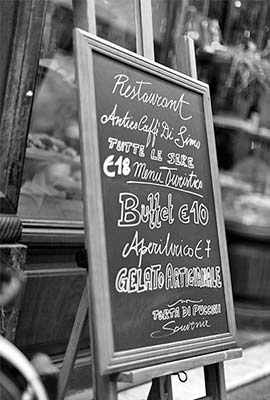
Seafood and steak may be sold by weight and priced by the etto (100 grams, 3.5 ounces) or the kilo (1,000 grams, 2.2 pounds). The abbreviation s.q. (secondo quantità) indicates an item is priced by weight (often used at antipasto buffets). Unless the menu indicates a fillet (filetto), fish is usually served whole with the head and tail. You can always ask your server to select a small fish and fillet it for you. Sometimes, especially for steak, restaurants require a minimum order of four or five etti (which diners can share). Make sure you’re clear on the price before ordering.
Some dishes come in larger quantities meant to be shared by two people. The shorthand way of showing this on a menu is “X2” (for two), but the price listed could indicate the cost per person.
If you order only a pasta and a salad, the server may bring them in that order, which is the opposite of what you might expect; astute severs ask if you want it insieme (een-see-EH-meh; together).
Because pasta and bread are both starches, Italians consider them redundant. If you order only a pasta dish, bread may not come with it; you can request it, but you may be charged extra. On the other hand, if you order a vegetable antipasto or a meat secondo, bread is often provided to balance the ingredients.
At places with counter service—such as at a bar or a freeway rest-stop diner—you’ll first order and pay at the cassa (cashier). Then take your receipt to the counter to claim your food.
When going to an especially good restaurant with an approachable staff, I like to find out what they’re eager to serve. Sometimes I’ll simply say “Make me happy”...and set a price limit.
BUDGET EATING
Italy offers many budget options for hungry travelers. Self-service cafeterias offer the basics without add-on charges. Travelers on a hard-core budget equip their room with a pantry stocked at the market (fruits and veggies are remarkably cheap), or pick up a sandwich or döner kebab, then dine in at picnic prices. Bars and cafés are also good places to grab a meal on the go.
Pizzerias
Italians head to a pizzeria at dinnertime to order a one-person pie. Some shops sell pizza rustica (also called pizza al taglio or pizza al trancio)—thick pizza baked in a large rectangular pan and sold by weight. This, rather than floppy New York-style slices, is the standard option for Italians on the go. If you simply ask for a piece, you may wind up with a gigantic slab and be charged top euro. Instead, clearly indicate how much you want: un etto—100 grams—is a hot and cheap snack; due etti—200 grams—makes a light meal. Or show the size with your hands: tanto così (TAHN-toh koh-ZEE; this much). They may ask if you want it riscaldata (ree-skahl-DAH-tah; heated up). The correct answer is si. For a rundown of common types of pizza, see that section, later. Pizzerias also sell cecina, a savory crêpe-like garbanzo-bean flatbread—a cheap snack that pairs well with a glass of red wine.
Bars/Cafés
An Italian bar isn’t so much a tavern as an inexpensive café. These neighborhood hangouts serve coffee, light food, and drinks from the cooler. This is where locals go for a breakfast of cappuccino and cornetto (croissant). Throughout the day, bars are the place to drop in for a coffee or another drink.
Many bars are small—if you can’t find a table, you’ll need to stand or find a ledge to sit on outside. Most charge extra for table service. To get food to go, say, “da portar via” (for the road). All bars have a WC (toilette, bagno) in the back, available to customers...and the discreet public.
Food: For quick meals, bars usually have trays of cheap, premade sandwiches (panini, on a baguette; piadine, on flatbread; tramezzini, on crustless white bread; or toasts, on, well, toast)—some are delightful grilled. (Others have too much mayo.) In bigger cities, they’ll have a variety of salads ready to serve up from under the glass counter. To save time for sightseeing and room for dinner, stop by a bar for a light lunch, such as a ham-and-cheese sandwich—ideally thrown on the grill to heat up.
Ordering: If the bar isn’t busy, you can probably just order and pay when you leave. Otherwise, there’s a particular procedure: First look around to decide what you want, then go to cashier (la cassa) to order and pay. Often, a list with two sets of prices is posted near the cashier: al banco (standing at the bar) or al tavolo (seated). Unless you really plan to settle in and watch the world go by, have your drink at the bar. If you’re not sure, you can ask, “Same price if I sit or stand?”: “Costa uguale al tavolo o al banco?” (KOH-stah oo-GWAH-lay ahl TAH-voh-loh oh ahl BAHN-koh).
Upon paying, you’re handed a receipt (scontrino). Take that to the bartender (whose clean fingers handle no dirty euros) and tell them what you want. It’s customary to set a small coin or two on the bar, as a tip, when you place your order. Throughout Italy, you can get cheap coffee at the bar of any establishment, no matter how fancy, and pay the same low, government-regulated price (generally about a euro if you stand).
Tavola Calda Bars and Rosticcerie
For a fast and cheap lunch, find an Italian variation on the corner deli: a rosticceria (“roasting place,” specializing in roasted meats and accompanying sides, such as roasted potatoes or sautéed greens) or a tavola calda bar (a “hot table” point-and-shoot cafeteria with a buffet spread of meat and vegetables; sometimes called tavola fredda, or “cold table,” in the north of Italy). For a healthy light meal, ask for a mixed plate of vegetables with a hunk of mozzarella (piatto misto di verdure con mozzarella; pee-AH-toh MEE-stoh dee vehr-DOO-ray). Don’t be limited by what’s displayed. If you’d like a salad with a slice of cantaloupe and some cheese, they’ll whip that up for you in a snap. Belly up to the bar; with a pointing finger, you can assemble a fine meal. If something’s a mystery, ask for un assaggio (oon ah-SAH-joh) to get a little taste. To have your choices warmed up, ask for them to be heated (riscaldata; ree-skahl-DAH-tah).
Wine Bars
Wine bars (enoteche) are a popular, fast, and generally inexpensive option for lunch. Meaning “wine library,” an enoteca is usually a bar highlighting local wines, accompanied with well-paired light food (such as salumi and cheese, a salad, or simple seasonal dishes). A good enoteca aims to impress visitors with its wine—look for a blackboard listing today’s selection and price per glass. The food prices can add up—be careful with your ordering to keep this a budget choice). For more on Italian cocktails and wines, see here.
Aperitivo Snacks (“Apericena”)
The Italian term aperitivo means a predinner drink, but it’s also used to describe their version of what we might call happy hour: a light buffet of snacks that many bars serve to customers during the predinner hours (typically around 18:00 or 19:00 until 21:00). The drink itself may not be cheap (typically around €8-12), but some bars lay out an enticing array of salumi, cheeses, grilled vegetables, and other antipasti-type dishes. (Really good spreads earn the nickname “apericena”—a pun combining aperitivo and cena, dinner.) You’re welcome to nibble while you nurse your drink.
The apericena is intended as an appetizer course before heading out for dinner: You’re invited to have a couple of hearty snacks with each drink you pay for. For light eaters who’ve had a too-big lunch, this could wind up being enough to skip dinner. Drop by a few bars around this time to scope out their buffets before choosing. Or opt for a place with a big view and simpler snacks—either way, you’ll get your money’s worth.
Markets, Groceries, and Delis: Assembling a Picnic
Picnicking saves lots of euros and is a great way to sample regional specialties. A picnic can even be an adventure in high cuisine. Be daring. Try the fresh ricotta, presto pesto, shriveled olives, and any regional specialties the locals are excited about.
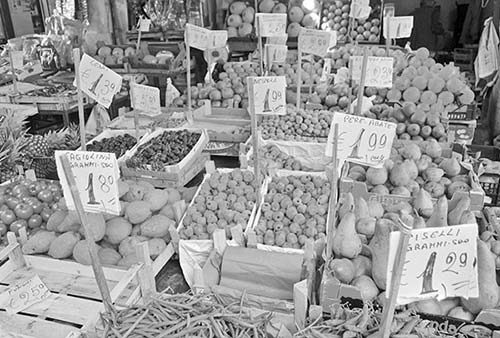
Markets: For the most colorful experience, gather your ingredients in the morning at a produce market. Towns big and small have markets selling everything imaginable for a fantastic picnic, including cheese, meat, bread, sweets, and prepared foods. You’ll often find street-food stalls tucked into the marketplace as well (note that many stalls close in the early afternoon).
Groceries and Delis: Another budget option is to visit a supermarket (look for the Conad, Carrefour, Esselunga, and Co-op chains), alimentari (neighborhood grocery), or salumeria (delicatessen) to pick up salumi, cheeses, and other picnic supplies. Some grocery stores, salumerie, and any paninoteca or focacceria (sandwich shop) can make a sandwich to order. Just point to what you want, and they’ll stuff it into a panino. Almost every grocery store has a deli case with prepared items like stuffed peppers, marinated olives, lasagna, and chicken, all usually sold by weight; if you want it reheated, remember the word riscaldata (ree-skahl-DAH-tah). And rosticcerie sell cheap food to go—you’ll find options such as lasagna, rotisserie chicken, and sides including roasted potatoes and spinach. For more on salumi and cheeses, see those sections, later.
Ordering: A typical picnic for two might be fresh rolls, un etto (3.5 ounces) of cheese, and un etto of meat (sometimes ordered by the slice—fetta—or piece—pezzo). For two people, I might get un etto of prosciutto and due pezzi of bread. Add two tomatoes, three carrots, two apples, yogurt, and a liter box of juice. Total: about €10.
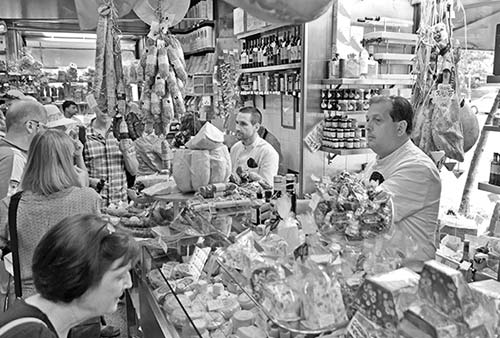
If ordering antipasti (such as grilled or marinated veggies) at a deli counter, you can ask for una porzione in a takeaway container (contenitore). Use gestures to show exactly how much you want. To set a price limit of 5 or 10 euros on what you order, say “Da [cinque/dieci] euro, per favore.” The word basta (BAH-stah; enough) works as a question or as a statement.
Shopkeepers are happy to sell small quantities of produce, but it’s customary to let the merchant choose for you. Say “per oggi” (pehr OH-jee; for today) and he or she will grab you something ready to eat. To avoid being overcharged, know the cost per kilo, study the weighing procedure, and do the math. Remember that a kilo is 2.2 pounds.
ITALIAN CUISINE STAPLES
Much of your Italian eating experience will likely involve the big five: pizza, pasta, salumi, cheese, and gelato. Here’s a rundown on what you might find on menus and in stores. I’ve included specifics on regional cuisine throughout this book. For more food help, try a menu translator, such as the Rick Steves Italian Phrase Book & Dictionary, which has a menu decoder and plenty of useful phrases for navigating the culinary scene.
Pizza
Here are some of the pizzas you might see at restaurants or at a pizzeria. Note that if you ask for pepperoni on your pizza, you’ll get peperoni (green or red peppers); instead, try requesting salsiccia piccante (spicy sausage) or salame piccante (spicy salami).
Bianca: White pizza with no tomatoes
Capricciosa: Prosciutto, mushrooms, olives, and artichokes—literally the chef’s “caprice”
Carciofi: Artichokes
Diavola: Spicy hot
Funghi: Mushrooms
Margherita: Tomato sauce, mozzarella, and basil—the red, white, and green of the Italian flag
Marinara: Tomato sauce, oregano, garlic, no cheese
Ortolana or vegetariana: “Greengrocer-style,” with vegetables
Quattro formaggi: Four different cheeses
Quattro stagioni: “Four seasons,” with tomato, mozzarella, and usually one-quarter each of ham, mushrooms, artichokes, and olives
Salsiccia: Sausage
Siciliana: Capers, olives, and often anchovies
Pasta
While we think of pasta as a main dish, in Italy it’s considered a primo piatto—first course. There are hundreds of varieties of Italian pasta, each one specifically used to highlight a certain sauce, meat, or regional ingredient. Pastasciutta is dry-stored pasta, which is boiled until al dente (chewy, “to the tooth”) and tossed with a sauce. Pasta fresca is fresh pasta cut into noodles and served with sauce, or cut into sheets (sfoglie), filled with different ingredients, folded, cooked, and then covered lightly with butter, cream, or broth.
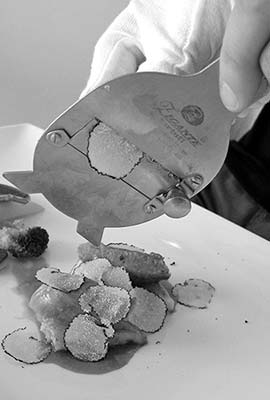
Italian cooks love to serve fresh produce and seafood at its tastiest. Each region in Italy has its seasonal specialties, which you’ll see displayed in open-air markets. To get a plate of the freshest veggies at a fine restaurant, request “Un piatto di verdure della stagione, per favore.” (“A plate of seasonal vegetables, please.”) Italians take fresh, seasonal ingredients so seriously that a restaurant cooking with frozen ingredients (congelato) must note it on the menu. Here are a few examples of what’s fresh when:
April-May: Calamari (Venice), romanesco (similar to cauliflower), fava beans (Rome), green beans, artichokes
April-May and Sept-Oct: Black truffles
April-June: Asparagus, zucchini flowers, zucchini
May-June: Mussels, cantaloupe, loquats, strawberries
May-Aug: Eggplant, clams
July-Sept: Figs, cherries, peaches, apricots, plums
Oct-Nov: Mushrooms, white truffles, persimmons, chestnuts
Nov-Feb: Radicchio (Venice), cardoon (wild artichoke), puntarelle (chicory shoots; Rome)
Don’t mistakenly assume that dry pasta is inferior to fresh. If prepared well, it can be just as satisfying. There are two general types of dry pasta:
Pasta lunga, also called strand pasta, are noodles long enough to twist around a fork. Spaghetti is the most famous, but pasta lunga can be round, such as capellini (thin “little hairs”), vermicelli (“little worms”), and bucatini (long and hollow); or it can be flat, such as linguine (narrow “little tongues”), fettuccine (wider “small ribbons”), tagliatelle (even wider), and pappardelle (very wide, best with meat sauces).
Pasta corta (“short pasta”) are smaller, designed to be scooped or speared with a fork. They go well with creamy sauces and chunkier meat sauces. The most common are dried tubular pastas called maccheroni; these come in endless forms, such as penne (“quills”) and maccheroncini (tiny macaroni). Tubular pastas come either lisce (smooth) or rigate (grooved—so sauce clings better). Many short pastas are named for their shapes, such as conchiglie (shells), farfalle (butterflies), or cavatappi (corkscrews).
Here’s a list of common pasta toppings and sauces. On a menu, these terms are usually preceded by alla (in the style of) or in (in):
Aglio e olio: Garlic and olive oil
Alfredo: Sweet butter and heaps of Parmigiano-Reggiano cheese
Amatriciana: Guanciale (pork cheek), tomatoes, pecorino romano cheese, and chili peppers
Arrabbiata: “Angry,” spicy tomato sauce with chili peppers
Bolognese: “Bologna-style” meat and tomato sauce
Boscaiola: “Woodsman-style,” with mushrooms and sausage or ham
Brodo: Broth (typical for filled pastas)
Burro e salvia: Butter and sage
Cacio e pepe: Pecorino romano cheese and fresh-ground pepper
Carbonara: Raw egg, guanciale (pork cheek), pecorino romano cheese, and fresh-ground pepper
Carrettiera: Spicy and garlicky, with olive oil and little tomatoes
Diavola: “Devil-style,” spicy hot
Frutti di mare: Seafood
Genovese: Basil ground with Parmigiano-Reggiano cheese, garlic, pine nuts, and olive oil; a.k.a. pesto
Gricia: Cured pork cheek and pecorino romano cheese
Marinara: Usually tomato, often with garlic and onions, but can also be a seafood sauce (“sailor’s style”)
Mollicata: Simple sauce of tomato, onion, red wine, breadcrumbs, and sometimes anchovy
Norma: Tomato, eggplant, basil, and ricotta salata (Sicily)
Pajata: Calf intestines (also called pagliata)
Pescatora: Seafood (“fisherman style”)
Pomodoro: Tomato only
Puttanesca: Tomato sauce with anchovies and/or tuna, olives, capers, and garlic
Ragù: Meaty tomato sauce (more meat in the north; more tomato in the south)
Scoglio: Mussels, clams, and tomatoes
Sorrentina: “Sorrento-style,” with tomatoes, basil, and mozzarella (usually over gnocchi)
Sugo di lepre: Rich sauce made of wild hare
Tartufi: Truffles (also called tartufate)
Vongole: Clams and spices
Salumi
Salumi (cured meats)—sometimes called affettati (sliced meats)—are an Italian staple. While most American cold cuts are cooked, in Italy they’re far more commonly cured by air-drying, salting, and smoking. (While called “raw”—crudo—these are perfectly safe to eat.)
The two most familiar types of salumi are salame and prosciutto. Salame is an air-dried, sometimes-spicy sausage that comes in many varieties. When Italians say “prosciutto,” they usually mean prosciutto crudo—the raw ham that air-cures on the hock and is then thinly sliced. Produced mainly in the north of Italy, prosciutto can be either dolce (sweet) or salato (salty). Purists say the best is prosciutto di Parma.
Other salumi may be less familiar, but no less worth trying:
Bresaola: Air-cured beef
Capocollo: Peppery pork shoulder (also called coppa)
Culatello: High-quality, slow-cured prosciutto
Finocchiona: Salame with fennel seeds
Guanciale: Tender pork cheek
Lardo: Pork lard made fragrant with herbs and spices; the best is lardo di Colonnata
Lonzino: Cured pork loin
Mortadella: A finely ground pork loaf, similar to our bologna
‘Nduja: Super-spicy, smoky, soft, spreadable pork sausage with a texture like bright-red pâté
Pancetta: Salt-cured, peppery pork-belly meat, similar to bacon
Salame di Sant’Olcese: What we’d call “Genoa salami”
Salame piccante: Spicy hot, similar to pepperoni
Soppressata: A simple dry salame that has some kick, common in the south
Speck: Smoked pork shoulder
Squeamish eaters should avoid testa in cassetta (headcheese—organs in aspic) and lampredotto (cow stomach).
Cheese
When it comes to cheese (formaggio or cacio), you’re probably already familiar with most of these Italian favorites:
Asiago: Hard cow cheese that comes either mezzano (young, firm, and creamy) or stravecchio (aged, pungent, and granular)
Burrata: Ball of mozzarella wrapped around a buttery, almost liquid center
Caciocavallo: This misnamed “horse cheese” is a cow’s-milk cheese that’s pear-shaped so it can be lashed at the top and hung to dry, like a saddlebag
Fontina and Montasio: Semihard, nutty, Gruyère-style mountain cheeses
Gorgonzola: Pungent, blue-veined cheese, either dolce (creamy) or piccante (aged and sharp)
Grana: Generic term for grating cheeses; most common is grana padano (“grana of the Po”)
Mascarpone: Sweet, buttery, spreadable dessert cheese
Mozzarella di bufala: Made from the milk of water buffaloes
Parmigiano-Reggiano: Hard, crumbly, sharp, aged cow cheese with more nuanced flavor than American parmesan
Pecorino: Sheep’s cheese, either fresco (fresh, soft, and mild) or stagionato (aged and sharp, sometimes called pecorino romano—a popular grating cheese)
Provolone: Rich, firm, aged cow cheese
Ricotta: Soft, airy cheese made by “recooking” leftover whey
Scamorza: Similar to mozzarella, but often smoked
Gelato
American and Italian ice cream are similar but decidedly not the same. Italy’s gelato is denser and creamier (even though it has less butterfat than ice cream) than American versions, and connoisseurs swear it’s more flavorful.
A key to gelato appreciation is sampling liberally and choosing flavors that go well together. At a gelateria, ask, as Italians do, for a taste: “Un assaggio, per favore?” (oon ah-SAH-joh pehr fah-VOH-ray).
Most gelaterie clearly display prices and sizes. But in the textbook gelateria scam, the tourist orders two or three flavors—and the clerk selects a fancy, expensive chocolate-coated waffle cone, piles it high with huge scoops, and cheerfully charges the tourist €10. To avoid rip-offs, point to the price or say what you want—for instance, a €3 cup: “Una coppetta da tre euro” (OO-nah koh-PEH-tah dah tray eh-OO-roh).
The best gelaterie display signs reading artigianale, nostra produzione, or produzione propria, indicating that the gelato is made on the premises. Seasonal flavors are also a good sign, as are mellow hues (avoid colors that don’t appear in nature). Gelato stored in covered metal tins (rather than white plastic) is more likely to be homemade. The chain called Grom is the Starbucks of Italian gelato: It’s an acceptable choice, but try to find something more local.
Other Italian frozen treats include sorbetto (sorbet—made with fruit, but no milk or eggs); granita or grattachecca (a cup of slushy ice with flavored syrup); and cremolata (a gelato-granita float). Caffè affogato is a scoop of gelato “drowned” in a shot of hot espresso.
Classic gelato flavors include:
After Eight: Chocolate and mint
Bacio: Chocolate hazelnut, named for Italy’s popular “kiss” candies
Cassata: With dried fruits
Cioccolato: Chocolate
Crema: Plain (similar to vanilla)
Croccantino: “Crunchy,” with toasted peanut bits
Fior di latte: Sweet milk
Fragola: Strawberry
Frutti di bosco: Mixed berries
Gianduia (or gianduja): Chocolate-hazelnut
Lampone: Raspberry
Macedonia: Mixed fruits
Malaga: Similar to rum raisin
Nocciola: Hazelnut
Noce: Walnut
Riso: With actual bits of rice mixed in
Stracciatella: Vanilla with chocolate shreds
Tartufo: Super chocolate
Zabaione: Named for the egg yolk-and-Marsala wine dessert
Zuppa inglese: Sponge cake, custard, chocolate, and cream
BEVERAGES
Italian bars serve great drinks—hot, cold, sweet, caffeinated, or alcoholic.
Water, Juice, and Cold Drinks
Italians are notorious water snobs. At restaurants, your server just can’t understand why you wouldn’t want good water to go with your good food. It’s customary and never expensive to order a litro or mezzo litro (half-liter) of bottled water. Simply ask for con gas if you want fizzy water and senza gas if you prefer still water. You can ask for acqua del rubinetto (tap water) in restaurants, but your server may give you a funny look.
Chilled bottled water—still (naturale) or carbonated (frizzante)—is sold cheap in stores. Half-liter bottles of mineral water are available everywhere for about €1. (I refill my water bottle with tap water.)
Juice is succo, and spremuta means freshly squeezed. Order una spremuta (don’t confuse it with spumante, sparkling wine)—it’s usually orange juice (arancia), and from February through April it can be made from Sicilian blood oranges (arance rosse).
In grocery stores, you can get a liter of OJ for the price of a Coke or coffee. Look for 100% succo or senza zucchero (without sugar) on the label—or be surprised by something diluted and sugary sweet. Hang on to your water bottles. Buy juice in cheap liter boxes, then drink some and store the extra in your water bottle.
Tè freddo (iced tea) is usually from a can—sweetened and flavored with lemon or peach. Lemonade is limonata.
Coffee and Other Hot Drinks
The espresso-based style of coffee so popular in the US was born in Italy. If you ask for “un caffè,” you’ll get a shot of espresso in a little cup. Most Italian coffee drinks begin with espresso, to which they add varying amounts of hot water and/or steamed or foamed milk. The closest thing to American-style drip coffee is a caffè americano—a shot of espresso diluted with hot water. Milky drinks, like cappuccino or caffè latte, are served to locals before noon and to tourists any time of day. To an Italian, cappuccino is a morning drink; they believe having milk after a big meal impairs digestion. If they add any milk after lunch, it’s just a splash, in a caffè macchiato.
Italians like their coffee only warm—to get it very hot, request “Molto caldo, per favore” (MOHL-toh KAHL-doh pehr fah-VOH-ray). Any coffee drink is available decaffeinated—ask for it decaffeinato (deh-kah-feh-NAH-toh).
If you want a hot drink other than coffee, cioccolato is hot chocolate, and tè is hot tea.
Cappuccino: Espresso with foamed milk on top (cappuccino freddo is iced cappuccino)
Caffè latte: Espresso mixed with hot milk, no foam, in a tall glass (ordering just a “latte” gets you only milk)
Caffè macchiato: Espresso “stained” with a splash of milk, in a small cup
Latte macchiato: Layers of hot milk and foam, “stained” by an espresso shot, in a tall glass. Note that if you order simply a “macchiato,” you’ll probably get a caffè macchiato (see above).
Caffè corto/lungo: Concentrated espresso diluted with a tiny bit of hot water, in a small cup
Caffè americano: Espresso diluted with even more hot water, in a larger cup
Caffè corretto: Espresso “corrected” with a shot of liqueur (normally grappa, amaro, or sambuca)
Marocchino: “Moroccan” coffee with espresso, foamed milk, and cocoa powder; the similar mocaccino has chocolate instead of cocoa
Caffè freddo: Sweet and iced espresso
Caffè hag: Instant decaf
Alcoholic Beverages
Beer: While Italy is traditionally considered wine country, in recent years there’s been a huge and passionate growth in the production of craft beer (birra artigianale). Even in small towns, you’ll see microbreweries slinging their own brews. What’s on tap is often inspired by the same trends you’ll find stateside—IPAs, ambers, stouts, saisons, sours, seasonal beers, and so on. You’ll also find local brews (Peroni and Moretti), as well as imports such as Heineken. Italians drink mainly lager beers. Beer on tap is alla spina. Get it piccola (33 cl, 11 oz), media (50 cl, about a pint), or grande (a liter). A lattina (lah-TEE-nah) is a can and a bottiglia (boh-TEEL-yah) is a bottle.
Cocktails and Spirits: Italians appreciate both aperitivi (palate-stimulating cocktails) and digestivi (after-dinner drinks designed to aid digestion).
The classic aperitivo is the spritz: prosecco (or white wine) and soda livened up with either Campari (carmine-red bitters with a secret blend of herbs and orange peel) or Aperol (sweeter, softer, bright-orange bitters with herbal, citrusy undertones). Vermouths (both red and white) from Carpano, Cinzano, Martini, or Riccadonna can be served straight, on the rocks, with a splash of soda, or as part of drinks like Punt e Mes (sweet red vermouth and red wine). Other choices include Americano (vermouth with bitters, brandy, and lemon peel); Garibaldi (also known as Campari-Orange, a mixture of Campari and orange juice); and Cynar (bitters flavored with artichoke).
Digestivo choices fall into three categories. First is the bittersweet, syrupy herbal drink called amaro (many restaurants have their own brew; popular commercial brands are Fernet Branca and Montenegro). For something sweeter, try limoncello (lemon-flavored), amaretto (almond), Frangelico (hazelnut), sambuca (anise), or Marsala wine. And grappa is a brandy distilled from grape skins and stems; stravecchio is an aged, mellower variation. Acquavite (“water of life”) is similar to grappa, but distilled from fruit such as apples, berries, or plums.
Wine: The ancient Greeks who colonized Italy more than 2,000 years ago called it Oenotria—land of the grape. Centuries later, Galileo wrote, “Wine is light held together by water.” Wine (vino) is certainly a part of the Italian culinary trinity—grape, olive, and wheat. (I’d add gelato.) Ideal conditions for grapes (warm climate, well-draining soil, and an abundance of hillsides) make the Italian peninsula a paradise for grape growers, winemakers, and wine drinkers.
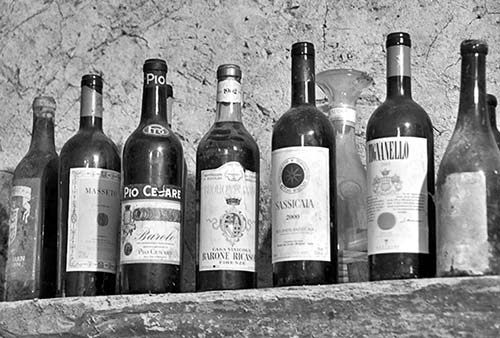
In most years, Italian winemakers produce more wine than any other country—more than 4 million liters annually. Production is mainly red (rosso) and white (bianco) wines. Rosé (rosato) is less traditional—though as it’s become trendy stateside and elsewhere, more Italian vintners are experimenting with it. A sparkling wine is frizzante or spumante; prosecco is a bubbly white wine from northeastern Italy (though that word is sometimes, incorrectly, used to refer to any Italian sparkling white).
Even if you’re clueless about wine, the information on an Italian wine label can help you choose something decent. Terms you may see on the bottle include classico (from a defined, select area), annata (year of harvest), vendemmia (harvest), and imbottigliato dal produttore all’origine (bottled by producers).
In general, Italy designates its wines by one of four official categories:
Vino da Tavola (VDT) is table wine, the lowest grade, made from grapes grown anywhere in Italy. It’s often inexpensive, but Italy’s wines are so good that, for many people, a basic vino da tavola is just fine with a meal. And, because it’s grown in the same area as the other ingredients you’re enjoying, it pairs perfectly with the food. Many restaurants, even modest ones, take pride in their house wine (vino della casa), bottling their own or working with wineries.
Denominazione di Origine Controllata (DOC) meets national standards for high-quality wine, produced in a legally controlled geographical area. It’s usually good and still quite affordable.
Denominazione di Origine Controllata e Guarantita (DOCG), the highest grade, meets national standards for the highest-quality wine (made with grapes from a defined area whose quality is “guaranteed”). These wines can be identified by the pink or green label on the neck...and the high price. They’re a good bet if you want a quality wine. (Riserva indicates a DOC or DOCG wine that’s been aged for even longer than required.)
Indicazione Geografica Tipica (IGT) is a broad group of wines that don’t meet the standard for DOC or DOCG status but have been designated as “typical” of a particular region.
If you’re on a tight budget, try looking for a more affordable alternative. For example, in Tuscany, the world-famous Brunello di Montalcino (a DOCG) can break the bank, but Rosso di Montalcino (a DOC)—made in the same zone with similar grapes, in a similar way, but aged for a shorter period of time—costs half as much.
Staying Connected
One of the most common questions I hear from travelers is, “How can I stay connected in Europe?” The short answer? More easily and affordably than you might think.
The simplest solution is to bring your own device—phone, tablet, or laptop—and use it much as you would at home, following the money-saving tips below, such as getting an international plan or connecting to free Wi-Fi whenever possible. Another option is to buy a European SIM card for your mobile phone. Or you can use European landlines and computers to connect. More details are at RickSteves.com/phoning.
USING YOUR PHONE IN EUROPE
Here are some budget tips and options.
Sign up for an international plan. To stay connected at a lower cost, sign up for an international service plan through your carrier. Most providers offer a simple bundle that includes calling, messaging, and data. Your normal plan may already include international coverage (for example, T-Mobile’s covers data and text, but not voice calls).
Before your trip, research your provider’s international rates. Activate the plan a day or two before you leave, then remember to cancel it when your trip’s over.
Use free Wi-Fi whenever possible. Unless you have an unlimited-data plan, save most of your online tasks for Wi-Fi. Most accommodations in Europe offer free Wi-Fi. Many cafés offer hotspots for customers; ask for the password when you buy something. You may also find Wi-Fi at TIs, city squares, major museums, public-transit hubs, airports, and aboard trains and buses.
Minimize the use of your cellular network. The best way to make sure you’re not accidentally burning through data is to put your device in “airplane” mode (which also disables phone calls and texts), and connect to Wi-Fi as needed. When you need to get online but can’t find Wi-Fi, simply turn on your cellular network (or turn off airplane mode) just long enough for the task at hand.
Even with an international data plan, wait until you’re on Wi-Fi to Skype or FaceTime, download apps, stream videos, or do other megabyte-greedy tasks. Using a navigation app such as Google Maps over a cellular network can require lots of data, so download maps when you’re on Wi-Fi, then use the app offline.
Here’s how to dial from anywhere in the US or Europe, using the phone number of one of my recommended Florence hotels as an example (055 213 154). If a non-Italian number starts with 0, drop it when dialing internationally.
Phone numbers in this book are presented exactly as you would dial them from a US mobile phone. For international access, press and hold 0 (zero) to get a + sign, then dial the country code (39 for Italy) and phone number.
 To call the Florence hotel from any location, dial +39 055 213 154.
Replace + with 011 (US/Canada access code), then dial the country code (39 for Italy) and phone number.
To call the Florence hotel from your home landline, dial 011 39 055 213 154.
Replace + with 00 (Europe access code), then dial the country code (39 for Italy, 1 for the US) and phone number.
To call the Florence hotel from a Spanish landline, dial 00 39 055 213 154.
To call my US office from an Italian landline, dial 00 1 425 771 8303.
To place a domestic call (from an Italian landline or mobile), drop +39 and dial the phone number.
To call the Florence hotel from Rome, dial 055 213 154.
Local Numbers: European phone numbers and area codes can vary in length and spacing, even within the same country. Mobile phones use separate prefixes (for instance, in Italy, landlines begin with 0, and mobile numbers begin with 3).
Toll and Toll-Free Calls: It’s generally not possible to dial European toll or toll-free numbers from a US mobile or landline (although you can sometimes get through using Skype). Look for a direct-dial number instead.
Calling the US from a US Mobile Phone, While Abroad: Dial +1, area code, and number.
More Phoning Help: See HowToCallAbroad.com.
Limit automatic updates. By default, your device constantly checks for a data connection and updates app content. Check your device’s menu for ways to turn this off, and change your email settings from “auto-retrieve” to “manual” (or from “push” to “fetch”).
Use Wi-Fi calling and messaging apps. Skype, WhatsApp, FaceTime, and Google Meet are great for making free or low-cost calls or sending texts over Wi-Fi worldwide. Just log on to a Wi-Fi network, then connect with friends, family members, or local contacts who use the same service.
Buy a European SIM Card. If you anticipate making a lot of local calls or need a local phone number, or if your provider’s international data rates are expensive, consider buying a SIM card in Europe to replace the one in your (unlocked) US phone or tablet.
In Italy, buy SIM cards at mobile-phone shops. You’ll be required to register the SIM card with your passport as an antiterrorism measure (which may mean you can’t use the phone for the first hour or two).
There are generally no roaming charges when using a European SIM card in other EU countries, but confirm when you buy.
WITHOUT A MOBILE PHONE
It’s less convenient but possible to travel in Europe without a mobile device. You can make calls from your hotel and check email or get online using public computers.
Most hotels charge a fee for placing calls. You can use a prepaid international phone card (carta telefonica prepagata internazionale—usually available at newsstands, tobacco shops, and train stations) to call out from your hotel.
Some hotels have public computers in their lobbies for guests to use; otherwise you may find them at public libraries (ask your hotelier or the TI for the nearest location). On a European keyboard, use the “Alt Gr” key to the right of the space bar to insert the extra symbol that appears on some keys. If you can’t locate a special character (such as @), simply copy and paste it from a web page.
You can mail one package per day to yourself worth up to $200 duty-free from Europe to the US (mark it “personal purchases”). If you’re sending a gift to someone, mark it “unsolicited gift.” For details, visit www.cbp.gov [URL inactive], select “Travel,” and search for “Know Before You Go.” The Italian postal service works fine, but for quick transatlantic delivery (in either direction), consider services such as DHL (DHL.com).
Transportation
Figuring out how to get around in Europe is one of your biggest trip decisions. Cars work well for two or more traveling together (especially families with small kids), those packing heavy, and those delving into the countryside. Trains and buses are best for solo travelers, blitz tourists, city-to-city travelers, and those who want to leave the driving to others. Short-hop flights within Europe can creatively connect the dots. Be aware of the potential downside of each option: A car is an expensive headache in any major city; with trains and buses you’re at the mercy of a timetable; flying entails a trek to and from a usually distant airport and leaves a larger carbon footprint.
If your itinerary mixes cities and countryside, my advice is to connect cities by train or bus and to explore rural areas by rental car. Arrange to pick up your car in the last big city you’ll visit, then use it to lace together small towns and explore the countryside. For more detailed information on transportation throughout Europe, see RickSteves.com/transportation.
TRAINS
To travel by train affordably within Italy, you can simply buy tickets as you go. For travelers ready to lock in dates and times weeks or months in advance, buying nonrefundable tickets online can cut costs in half. Note that the Italy rail pass is generally not a good value, but if your travel extends beyond Italy, there are multicountry rail passes that might be worth checking into. For advice on figuring out the smartest train-ticket or rail-pass options for your trip, visit the Trains & Rail Passes section of my website at RickSteves.com/rail.
Types of Trains
Most trains in Italy are operated by the state-run Trenitalia company (www.trenitalia.com, a.k.a. Ferrovie dello Stato Italiane, abbreviated FS). Ticket prices depend on the speed of the train, so it helps to know the different types of trains: pokey Regionale (R or REG); medium-speed Regionale Veloce (RV); fast InterCity (IC) and EuroCity (EC); and super-fast Frecce trains.
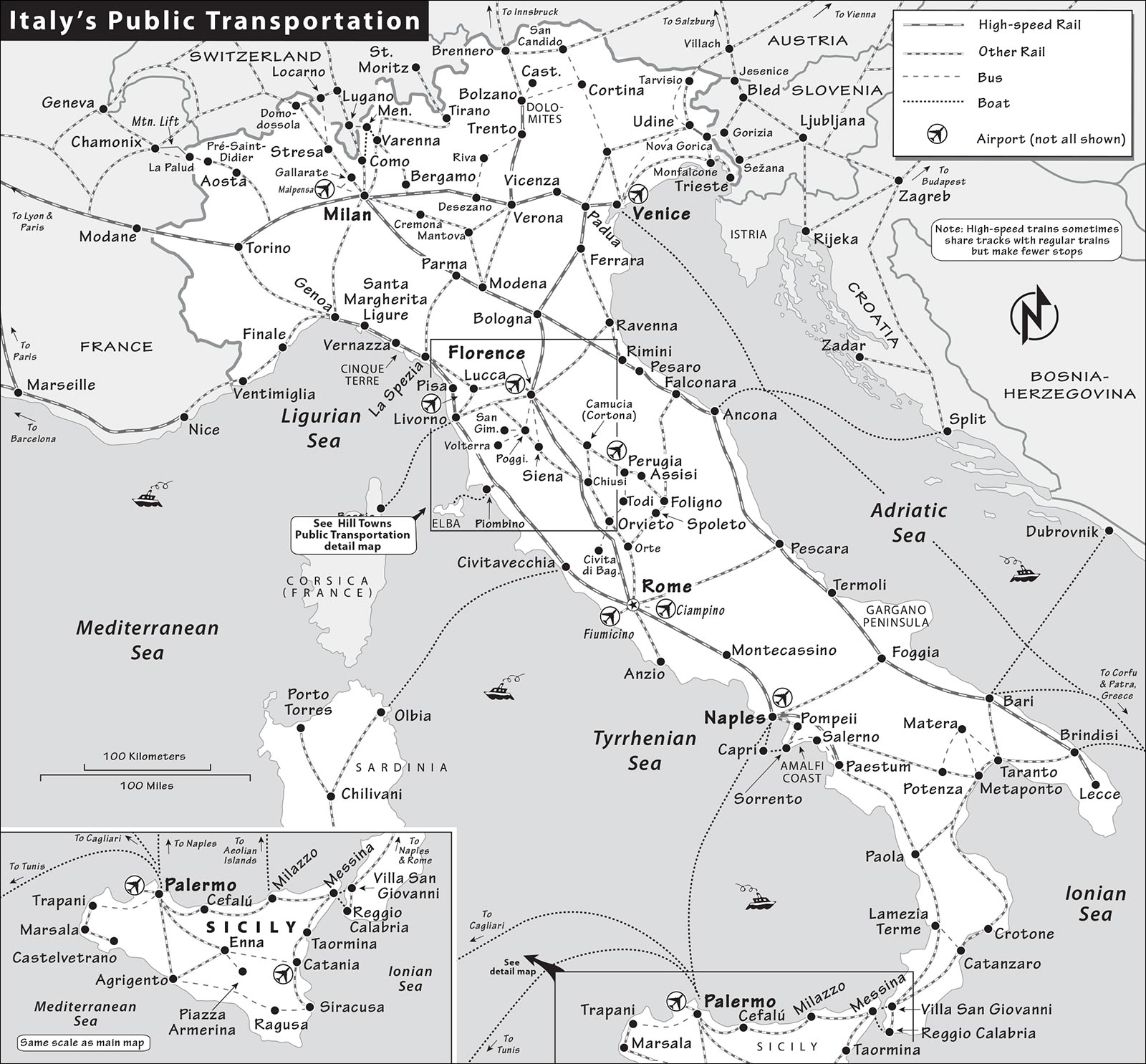
All trains (except those with Regionale in the name) require seat assignments, which are built into your ticket for a specific date and time. If you’re traveling with a rail pass, you’ll need to buy a separate seat reservation (see “Rail Passes,” later). Regional trains offer only open seating (no assigned seats for love nor money).
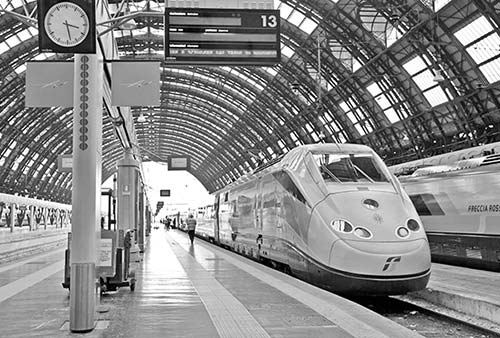
The private train company Italo (www.italotreno.it) runs fast trains on major routes serving large cities on the mainland but few small towns. Italo has fewer departures than Trenitalia but its service is comparable to Trenitalia’s Frecce service, with similar prices and advance purchase discounts. Be aware that in Naples, Milan, and Rome, a few departures use secondary stations. Italo does not accept rail passes but is a worthy alternative for point-to-point tickets.
Both train companies have call centers for answering general questions (Trenitalia: daily 7:00-24:00, +39 06 6847 5475; Italo: daily 6:00-23:00, +39 06 8937 1892).
Be aware that Trenitalia and Italo don’t cooperate. If you buy a ticket for one train line, it’s not valid on the other. Both companies tend to ignore the other’s schedules.
Schedules
Check schedules at Trenitalia.it and ItaloTreno.it (domestic journeys only) or use their apps; for international trips, use Bahn.com (Germany’s excellent all-Europe schedule website, which reflects national railways but not private companies like Italo). At the train station, the easiest way to check schedules is at a ticket machine. Enter the desired date, time, and destination to see all your options. Printed schedules are also posted at the station (yellow posters show departures—partenze; white posters show arrivals).
Schedules list the time of departure (ora), the type of train (treni), and service classes offered (classi servizi)—first- and second-class cars, dining car, cuccetta berths, and whether you need reservations (usually denoted by an R in a box). The train’s destination (principali fermate destinazioni) is shown, along with intermediate stops, and notes such as “also stops in...” (ferma anche a...), “doesn’t stop in...” (non ferma a...), “stops in every station” (ferma in tutte le stazioni), “delayed...” (ritardo...), and so on.
At the station, look at the electronic display to find your train’s track (binario) number. Remember that your destination may be listed as an intermediate (not final) stop. For example, if you’re going from Milan to Florence, you’ll notice that virtually all the trains that terminate in Naples or Salerno stop in Florence en route (but most terminating in Rome do not). If you’re not sure, ask for help.
Point-to-Point Tickets
Train tickets are a good value in Italy. Typical full fares are shown on the map on here, though ticket prices can vary for the same journey, mainly depending on the time of day, the speed of the train, and advance discounts.
Classes of Service: Frecce and Italo trains each offer several classes of service (e.g., Standard, Premium, Business, Executive). Other trains offer standard first- and second-class seating (with first class costing up to 50 percent more than second). Buying up gives you a little more elbow room, a snack, or perhaps a better chance at seating a group together, if you’re buying on short notice.
Advance Discounts: Ticket price levels are Base (full fare, easily changeable or partly refundable before scheduled departure), Economy (one schedule change allowed before departure, for a fee), and Super Economy or Low Cost (sells out quickly, no refunds or exchanges).
For example, traveling Standard class from Rome to Florence on the fastest train costs €50 at Base fare, €39 at Economy fare, or €30 at Super Economy rate. Discounted fares must be purchased at least two days in advance but typically sell out several weeks before departure. Fares labeled servizi abbonati are available only for locals with monthly passes—not tourists. Regional trains don’t offer advance discounts or seat assignments, so there’s little need to buy those tickets in advance.
Speed vs. Savings: For point-to-point tickets, you’ll pay more the faster you go. Spending a modest amount of extra time in transit can save money on shorter trips. For example, the regional train from Milano Centrale to Stresa takes just over an hour (67 minutes) and costs €9, while the EC train takes just under an hour (58 minutes)—but costs €19.
On longer mainline routes, fast trains save more time and provide most of the service. For example, speedy Florence-Rome trains run about 3/hour, cost €50 in second class, and make the trip in 1.5 hours, while infrequent InterCity trains (only 1-2/day) cost €37 at full price and take three hours.
Age-Based Discounts: Discounts for kids don’t usually beat the Super Economy rate described above. If the cheapest tickets are no longer available, look for deals like “Bimbi Gratis” and “Offerta Famiglia.” Other discounts for youths and seniors require purchase of a separate card (€40 Carta Verde for ages 12-26, €30 Carta Argento for ages 60 and over), but the discount is so minor (10-15 percent for domestic travel), it’s not worth it for most.
Buying Point-to-Point Tickets
You can buy tickets online, with an app, at train station ticket windows, from ticket machines, or at travel agencies. For long-haul runs or travel on a busy weekend or holiday, it can be cheaper to buy tickets in advance. But because most Italian trains run frequently and there’s no deadline to buy tickets, for the most part I prefer to keep my travel plans flexible by purchasing tickets as I go. (You can buy tickets at one station for several trips when you are ready to commit.)
It’s easy to buy tickets online at Trenitalia.com or ItaloTreno.it. On either website, choose English and be sure to read the pricing info, as many of the cheaper tickets are not refundable or changeable. You can keep the ticket on your mobile device (either as a PDF or with a QR code), or you can print it out. Or download the Trenitalia or Italo app to your phone—both have English versions that make ticket-buying a breeze.
If you instead go to the train station to buy tickets, you can avoid ticket-office lines by using the ticket machines in station halls. You’ll be able to easily purchase tickets for travel within Italy, make seat reservations, and even book a cuccetta (koo-CHEH-tah; overnight berth). If you do use the ticket windows (e.g., to buy international tickets), be sure you’re in the correct line. Key terms: biglietti (general tickets), prenotazioni (reservations), nazionali (domestic), and internazionali. Some big stations have counters (close to the tracks) marked “Last Minute,” which let you jump the line if your train is departing soon.
Trenitalia’s ticket machines are user-friendly and found in all but the tiniest stations in Italy. You can pay with cash (change given when indicated) or by debit or credit card (even for small amounts, but you may need to enter your PIN—even when using “tap-to-pay”). Select English, then your destination. If you don’t immediately see the city you’re traveling to, keep keying in the spelling until it’s listed. You can choose from first- and second-class seats, request tickets for more than one traveler, and pick seats, when applicable. Don’t select a discount rate without being sure that you meet the criteria (for example, Americans are not eligible for certain EU or resident discounts).
To buy tickets at the station for Italo trains, look for a dedicated service counter (in most major stations) or a red ticket machine labeled Italo.
Some international tickets can’t be bought online or from machines; for these tickets and anything else that requires a real person, you must go to a ticket window at the station. A good alternative, though, is to drop by a local travel agency. Agencies sell domestic and international tickets and make reservations. They charge a small fee, but the language barrier (and the lines) can be smaller than at the station’s ticket windows.
Will you be better off buying a rail pass or point-to-point tickets? It pays to know your options and choose what’s best for your itinerary.
A Eurail Italy Pass lets you travel by train in Italy for three to eight days (consecutively or not) within a one-month period. Italy is also covered (along with most of Europe) by the classic Eurail Global Pass.
Discounted rates are offered for seniors (age 60 and up) and youths (ages 12-27). Up to two kids (ages 4-11) can travel free with each adult-rate pass (but not with senior rates). All rail passes offer a choice of first or second class for all ages.
While most rail passes are delivered electronically, it’s smart to get your pass sorted before leaving home. For more on rail passes, including current prices and purchasing, visit RickSteves.com/rail.
Italian train tickets are relatively cheap, and most include seat reservations, making them the best deal for most travelers. Use this map to add up approximate pay-as-you-go fares for your itinerary, and compare that to the price of a rail pass plus reservations. Keep in mind that significant discounts on point-to-point tickets may be available with advance purchase.
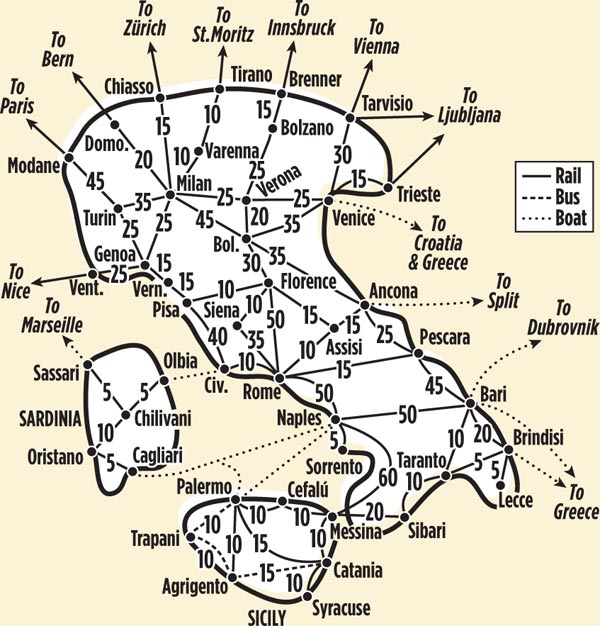
Map shows approximate costs, in US dollars, for one-way, second-class tickets on faster trains.
Rail Passes
The single-country Eurail Italy Pass may save you money if you take several long train rides or prefer first-class travel, but for most people it’s not a good value. Most train travelers in Italy take relatively short rides on the Milan-Venice-Florence-Rome circuit. For these trips, it can be cheaper to buy point-to-point tickets. Remember that rail passes are valid on Trenitalia trains but not on Italo trains.
Furthermore, a rail pass doesn’t offer much hop-on convenience in Italy, since even with a rail pass, seat reservations are required for InterCity, EuroCity, and Frecce trains (€5-10 each; make seat reservations at station ticket machines or windows). Most regional trains (such as Florence-Pisa-Cinque Terre service) don’t require (or offer) reservations. Reservations for berths on overnight trains cost extra and aren’t covered by rail passes.
If you’re also traveling by train in other countries, consider a Eurail Global Pass. Although it covers most of Europe, prices can work for trips as short as three travel days or as long as three months. For more info, see the sidebar.
Train Tips
Validating Tickets: If your ticket includes a seat reservation on a specific train (biglietto con prenotazione), you’re all set and can just get on board. The same is true for any ticket bought online or with the Trenitalia or Italo apps (whether open or reserved seating); these tickets are considered already validated.
An open ticket (generally for a regionale train) bought from a ticket desk or machine must be validated (date-stamped) before you board (the ticket may say da convalidare or convalida). To validate it, before getting on the train, stamp your ticket in the machine near the platform (usually marked convalida biglietti or vidimazione). Once you validate a ticket, you must complete your trip within the stamped timeframe (usually about four hours). If you forget to validate your ticket, go right away to the train conductor—before he comes to you—or you’ll pay a fine.
Getting a Seat: If you’re taking an unreserved regionale train that originates at your departure point (e.g., you’re catching the Florence-Pisa train in Florence), arriving at least 15 minutes before the departure time will help you snare a seat.
Baggage Storage: Many Italian stations have deposito bagagli where you can safely leave your bag for a standardized but steep price (€6/5 hours, €12/12 hours, €17/24 hours, payable when you pick up the bag, double-check closing hours; they may ask to photocopy your passport). Due to security concerns, no Italian stations have lockers.
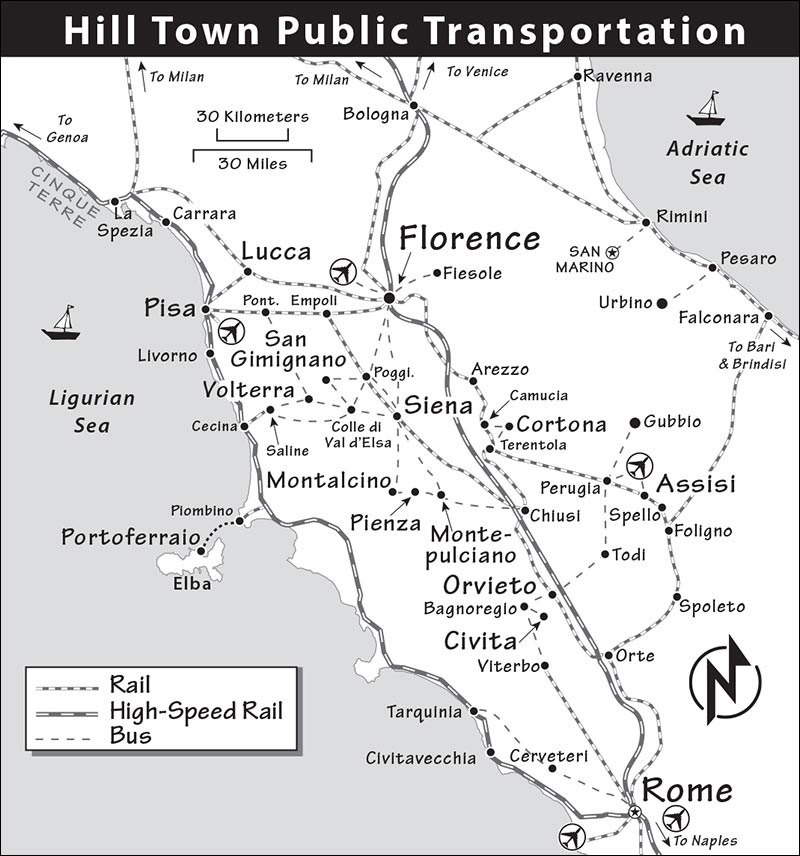
Theft: In big cities, exercise caution and prudence at train stations to avoid thieves and con artists. If someone helps you to find your train or carry your bags, be aware that they are not an official porter; they are simply hoping for some cash. And if someone other than a uniformed railway employee tries to help you use the ticket machines, politely refuse.
Italian trains are famous for their thieves. Never leave a bag unattended. Police do ride the trains, cutting down on theft. Still, for an overnight trip, I’d feel safe only in a cuccetta (a bunk in a special sleeping car with an attendant who keeps track of who comes and goes while you sleep—approximately €40 or more).
Strikes: Strikes, which are common, generally last a day (often a Friday). Train employees will simply explain, “Sciopero” (SHOH-peh-roh, strike). But in actuality, a minimum amount of “essential” or “guaranteed” (garantito) main-line service is maintained (by law) during strikes. When a strike is pending, travel agencies, savvy hoteliers, and remaining station personnel can check to see when the strike will go into effect and which trains will continue to run. Revised schedules may be posted online and in Italian at stations. See Trenitalia.com, choose English, then “Information and Contacts,” and then “In Case of Strike.”
If your train is cancelled, your reserved-seat ticket will likely be accepted on any similar train running that day (either earlier or later than the original departure time) but you won’t have a seat assignment. Tickets for cancelled trains should also be exchangeable without penalty ahead of the original departure time, or can be refunded (have an agent mark it “unused,” and check refund deadlines). A rail pass works on any train still operating, but partially used rail passes can’t be refunded—so make full use of any pass you have to continue your trip.
BUSES
You can usually get anywhere you want in Italy by bus, as long as you’re not in a hurry and plan ahead using bus schedules (pick up at local TIs or bus stations). For reaching small towns, buses are sometimes the only option if you don’t have a car. In many hill towns, trains leave you at a station in the valley far below, while buses more likely drop you right into the thick of things. (If the bus stop or station is below town, sometimes an escalator or elevator helps get you up into town.)
Long-distance buses are catching on in Italy as an alternative to the train. Buses are usually cheaper, more modern, and often have free Wi-Fi. They’re especially useful on routes poorly served by train, or to allow a direct connection instead of having to change trains (such as from Rome to Siena or Sorrento). Some of the operators you’ll see are Flixbus (http://global.flixbus.com) and Marozzi (www.marozzivt.it). In general, orange buses are local city buses, and blue buses are for long distances.
Larger towns have a (usually chaotic) long-distance bus station (stazione degli autobus or autostazione), with ticket windows and several stalls (usually labeled corsia, stallo, or binario)—but to save time, buy your ticket at a travel agent or online; many companies use etickets (they’ll scan your emailed QR code as you board). Smaller towns—where buses are more useful—often have a central bus stop (fermata), likely along the main road or on the main square, and maybe several more scattered around town. In small towns, buy bus tickets at newsstands or tobacco shops (with the big T signs). When buying your ticket, confirm the departure point (“Dov’è la fermata?”).
Before boarding, confirm the destination with the driver. You are expected to stow big bags underneath the bus (if the compartment is closed, ask the driver for help; which compartment you use may depend on your destination). If you’ll be continuing on later by bus, upon arrival, double-check that the posted schedule lists your next destination and departure time.
Traveling by bus on Sundays and holidays can be problematic; even from large cities, schedules are sparse, departing buses are jam-packed, and ticket offices are often closed. Plan ahead and buy your ticket in advance. Most travel agencies book bus (and train) tickets for a small fee.
TAXIS AND RIDE-BOOKING SERVICES
Most Italian taxis are reliable and cheap. In many cities, two people can travel short distances by cab for little more than the cost of bus or subway tickets. If you like ride-booking services such as Uber, their apps usually work in Europe just like they do in the US: Request a car on your mobile phone (connected to Wi-Fi or data), and the fare is automatically charged to your credit card. In Italy, however, Uber faces legal challenges, and may not be consistently available (for instance, Uber does not operate in Florence).
RENTING A CAR
It’s cheaper to arrange most car rentals from the US, so research and compare rates before you go. Most of the major US rental agencies (including Avis, Budget, Enterprise, Hertz, and Thrifty) have offices throughout Europe. Also consider the two major Europe-based agencies, Europcar and Sixt. Consolidators such as Auto Europe (AutoEurope.com—or the sometimes cheaper AutoEurope.eu) compare rates at several companies to get you the best deal.
Wherever you book, always read the fine print. Check for add-on charges—such as one-way drop-off fees, airport surcharges, or mandatory insurance policies—that aren’t included in the “total price.”
Rental Costs and Considerations
If you book well in advance, expect to pay $350-500 for a one-week rental for a basic compact car. Allow extra for supplemental insurance, fuel, tolls, and parking. To save money on fuel, request a diesel car.
Manual vs. Automatic: Almost all rental cars in Europe are manual by default—and cars with a stick shift are generally cheaper. If you need an automatic, reserve one specifically. When selecting a car, don’t be tempted by a larger model, as it won’t be as maneuverable on narrow, winding roads or when squeezing into tight parking lots.
Age Restrictions: Some rental companies impose minimum and maximum age limits. Young drivers (25 and under) and seniors (69 and up) should check the rental policies and rules section of car-rental websites.
Choosing Pick-Up/Drop-off Locations: Always check the hours of the locations you choose: Many rental offices close from midday Saturday until Monday morning and, in smaller towns, at lunchtime. When selecting an office, confirm the location on a map. A downtown site might seem more convenient than the airport but could actually be in the suburbs or buried deep in big-city streets. Pedestrianized and one-way streets can make navigation tricky when returning a car at a big-city office or urban train station. Wherever you select, get precise details on the location and allow ample time to find it. And be aware that most Italian cities have a “ZTL” (limited traffic zone) that’s carefully monitored by cameras. If your drop-off point is near this zone, get clear directions on how to get there to avoid getting a big fine.
Have the Right License: If you’re renting a car in Italy, bring your driver’s license. You’re also technically required to have an International Driving Permit—an official translation of your license (sold at AAA offices for about $20 plus the cost of two passport-type photos; see AAA.com). How this is enforced varies: I’ve never needed one.
Picking Up Your Car: Before driving off in your rental car, check it thoroughly and make sure any damage is noted on your rental agreement. Rental agencies in Europe tend to charge for even minor damage, so be sure to mark everything. Find out how your car’s gearshift, lights, turn signals, wipers, radio, and fuel cap function, and know what kind of fuel the car takes (diesel is common in Europe). When you return the car, make sure the agent verifies its condition with you.
Car Insurance Options
When you rent a car in Europe, the price typically includes liability insurance, which covers harm to other cars or motorists—but not the rental car itself. To limit your financial risk in case of damage to the rental, choose one of these options: Buy a Collision Damage Waiver (CDW; also called “loss damage waiver” or LDW by some firms) with a low or zero deductible from the car-rental company (roughly 30-40 percent extra), get coverage through your credit card (free, but more complicated), or get collision insurance as part of a larger travel-insurance policy.
Basic CDW costs $15–30 a day and typically comes with a $1,000-2,000 deductible, reducing but not eliminating your financial responsibility. When you reserve or pick up the car, you’ll be offered the chance to “buy down” the deductible to zero (for an additional $10–30/day; this is sometimes called “super CDW” or “zero-deductible coverage”).
In Italy, most car-rental companies’ rates automatically include CDW coverage. Even if you try to decline CDW when you reserve your car, you may find when you show up at the counter that you must buy it after all (along with mandatory theft insurance, about $15–20 a day).
If you opt for credit-card coverage, you must decline all coverage offered by the car-rental company—which means they can place a hold on your card to cover the deductible. In case of damage, it can be time-consuming to resolve the charges. Before relying on this option, quiz your card company about how it works.
For more on car-rental insurance, see RickSteves.com/cdw.
Navigation Options
If you’ll be navigating using your phone or a GPS unit from home, remember to bring a car charger and device mount.
Your Mobile Phone: The mapping app on your mobile phone works fine for navigating Europe’s roads. To save on data, most apps allow you to download maps for offline use (do this before you need them, when you have a strong Wi-Fi signal). Some apps—including Google Maps—also have offline route directions, but you’ll need mobile data access for current traffic. For more on using a mapping app without burning through data, see “Using Your Phone in Europe,” earlier.
GPS Devices: If you want a dedicated GPS unit, consider renting one with your car (about $20/day, or sometimes included—ask). These units offer real-time turn-by-turn directions and traffic without the data requirements of an app. The unit may come loaded only with maps for its home country; if you need additional maps, ask. Make sure you know how to use the device—and that the language is set to English—before you drive off.
Paper Maps and Atlases: Even when navigating primarily with a mobile app or GPS, I always have a paper map, ideally a big, detailed regional road map. It’s invaluable for getting the big picture, understanding alternate routes, and filling in if my phone runs out of juice. The free maps you get from your car-rental company usually don’t have enough detail. It’s smart to buy a better map before you go, or pick one up at a local gas station, bookshop, newsstand, or tourist shop.
DRIVING
Driving in Italy can be scary—a video game for keeps, and you only get one quarter. Locals drive fast and tailgate as if it were required. They pass where Americans are taught not to—on blind corners and just before tunnels. Roads have narrow shoulders or none at all. Driving in the countryside is less stressful than driving through urban areas or on busy highways, but stay alert. On one-lane roads, larger vehicles have the right-of-way.
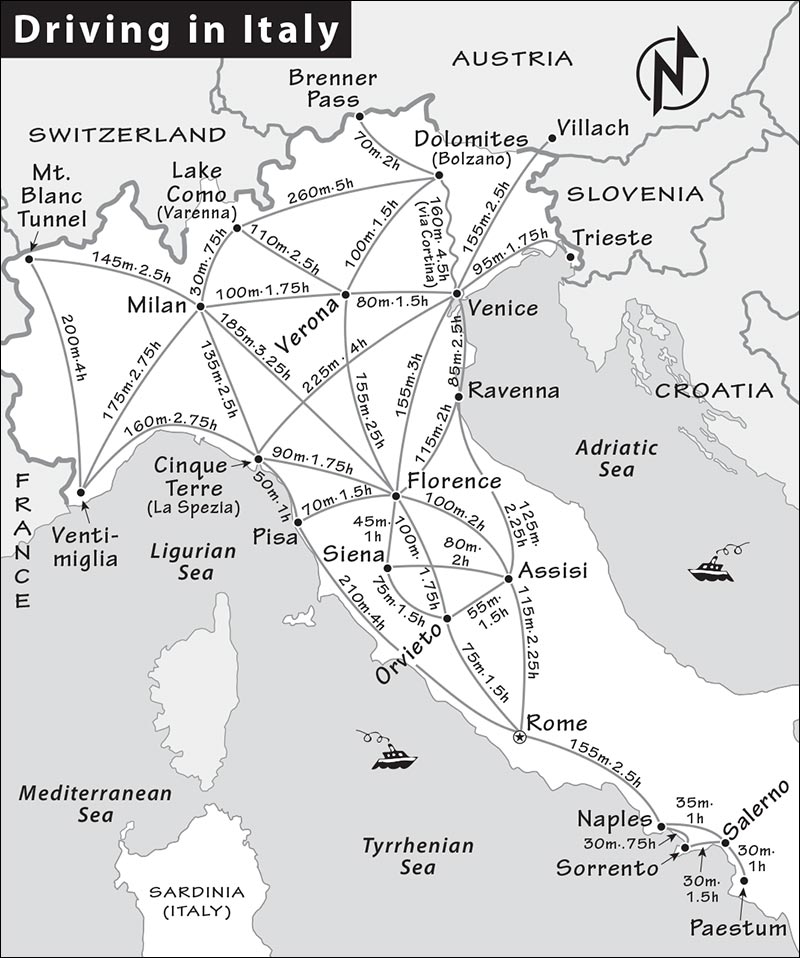
Road Rules: Stay out of restricted traffic zones or you’ll risk huge fines. Car traffic is restricted in many city centers. Don’t drive or park in any area that has a sign reading Zona Traffico Limitato (ZTL, often shown above a red circle—see image). If you do, your license plate will likely be photographed and a hefty (€80-plus) ticket mailed to your home without your ever having met a cop. Bumbling in and out of these zones can net you multiple fines. If your hotel is within a restricted area, ask your hotelier to direct you to parking outside the zone. (Although your hotelier can register your car as an authorized vehicle permitted to enter the zone, this usually isn’t worth the hassle.) If you get a ticket, it could take months to show up (for more about traffic tickets in Italy, see www.bella-toscana.com/traffic_violations_italy.htm).
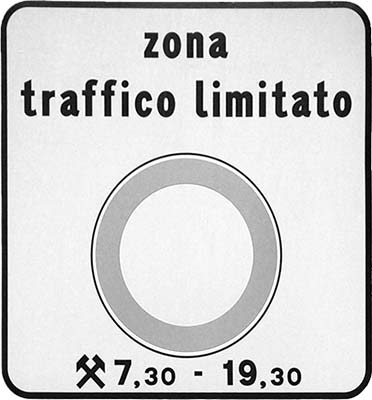
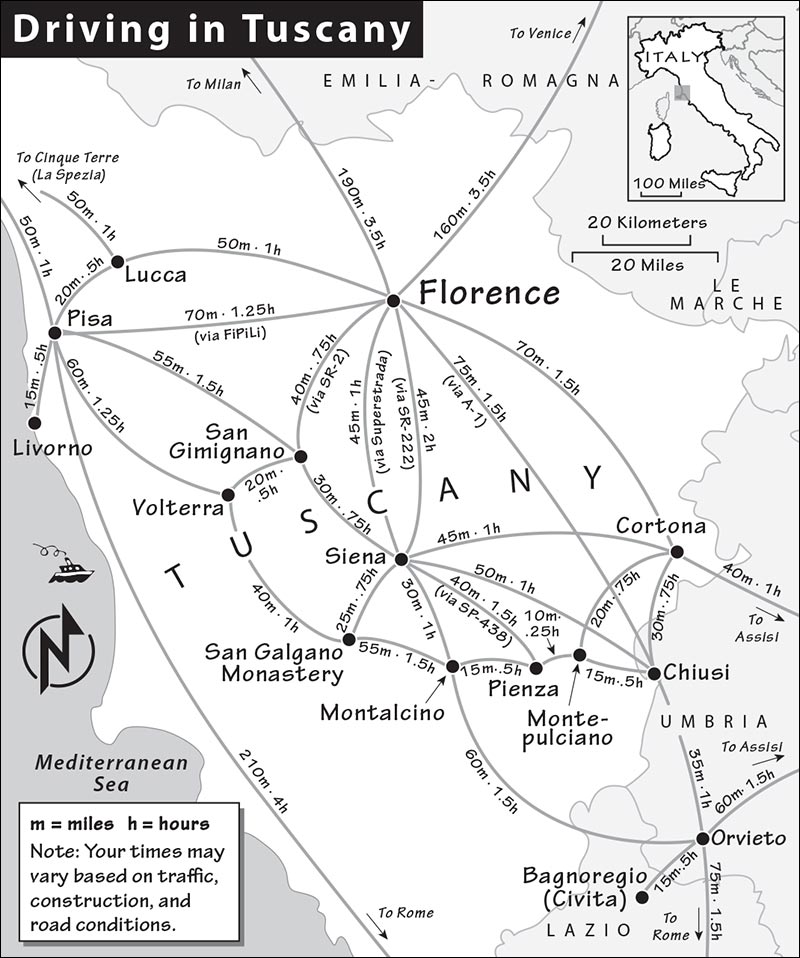
Be aware of typical European road rules; for example, many countries require headlights to be turned on at all times, and nearly all forbid handheld mobile-phone use. Seatbelts are mandatory, and children under age 12 must ride in child-safety or booster seats. In Europe, you’re not allowed to turn right on a red light unless a sign or signal specifically authorizes it, and on expressways it’s illegal to pass drivers on the right. Ask your car-rental company about these rules, or check the “International Travel” section of the US State Department website (www.travel.state.gov, search for your country in the “Learn About Your Destination” box, then click “Travel and Transportation”).
Drive Defensively: Italians are aggressive drivers. Turn signals are optional. If a driver is tailgating you on the highway, pull to the side to let them pass, even if that means driving on the shoulder. If you’re traveling in the right-hand lane on the highway, keep an eye out for slow-moving cars that appear out of nowhere. Also, if you brake quickly, it’s customary to put on your hazard lights to warn the driver behind you. All this is normal for locals, who may colorfully gesture at you. Don’t take it personally.
Motor scooters are very popular, and scooter drivers often see themselves as exempt from rules that apply to automobiles.
Tolls: You’ll pay tolls for some stretches of freeway (autostrada; for costs, use the trip-planning tool at www.autostrade.it or search “European Tolls” on www.theaa.com). When approaching a tollbooth, skip lanes marked Telepass; for an attended booth, choose a lane with a sign that shows a hand or coins. Some expressways (such as those between Milan and the lakes) use automated toll systems that take a photo of your license plate and bill you by mail. When you pick up your rental car, ask how this will be handled so you don’t incur late-payment fees (more info at https://apl.pedemontana.com).
While I favor freeways because I feel they’re safer and less nerve-racking than smaller roads, savvy local drivers know which toll-free superstrade are actually faster and more direct than the autostrada (e.g., Florence to Pisa). In some cases, if you have some time to spare, smaller roads can be worth the extra hassle.
Fuel: Fuel is expensive—often about $6.50 per gallon. Diesel cars are more common in Europe than back home, so be sure you know what type of fuel your car takes before you fill up. Diesel costs less, about $6 per gallon. Some pumps are color-coded: Unleaded pumps (senza piombo) are green and labeled “E,” while diesel pumps (gasolio; often yellow or black) are labeled “B”. You’ll also see the term benzina, which is standard fuel. If you are unsure or need help, stop for full-service gas (servito). To fill up, say “Pieno” (pee-EH-noh). Autostrada rest stops can have full- or self-service stations (open daily without a siesta break). Many 24-hour stations are entirely automated. Small-town stations are usually cheaper and offer full service but shorter hours.
Maps and Signage: Learn the universal road signs (see illustration). Although roads are numbered on maps, actual road signs give just a city name (if you were heading west out of Venice, the map would be marked “route SR-11”—but you’d follow signs to Padua, the next town along this road). Signs are inconsistent: They may direct you to the nearest big city or simply the next town along the route.
Theft: Cars are routinely vandalized and stolen. Thieves easily recognize rental cars and assume they are filled with a tourist’s gear. Be sure your valuables are out of sight and locked in the trunk, or even better, with you or in your room.
Parking: White lines generally mean parking is free. Yellow lines mean that parking is reserved for residents only (who have permits). Blue lines mean you’ll have to pay—usually around €1.50 per hour (use machine, leave time-stamped receipt on dashboard). Study the signs. Free zones often have a 30- or 60-minute time limit. Signs showing a street cleaner and a day of the week indicate which day the street is cleaned; there’s a €100 tow-fee—incentive to learn the days of the week in Italian.
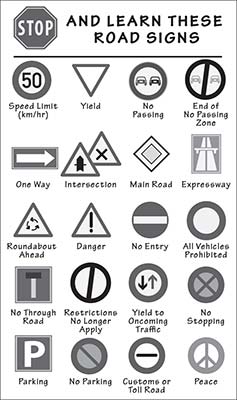
Zona disco has nothing to do with dancing. Italian cars come equipped with a time disc (a cardboard clock), which you can use in a zona disco—set the clock to your arrival time and leave it on the dashboard. (If your rental car doesn’t come with a disco, pick one up at a tobacco shop or just write your arrival time on a piece of paper and place it on the dashboard.) These are generally used in areas where parking is free but has a time limit.
Garages are safe, save time, and help you avoid the stress of parking tickets. Take the parking voucher with you to pay the cashier before you leave.
FLIGHTS
To compare flights, begin with an online travel search engine: Kayak is the top site for flights to and within Europe, easy-to-use Google Flights has price alerts, and Skyscanner includes many inexpensive flights within Europe. To avoid unpleasant surprises, before you book be sure to read the small print about refunds, changes, and the costs for “extras” such as reserving a seat, checking a bag, or printing a boarding pass.
Flights to Europe: Start looking for international flights about four to six months before your trip, especially for peak-season travel. Depending on your itinerary, it can be efficient and no more expensive to fly into one city and out of another. If your flight requires a connection in Europe, see my hints on navigating Europe’s top hub airports at RickSteves.com/hub-airports.
Flights Within Europe: Flying between European cities is surprisingly affordable. Before buying a long-distance train or bus ticket, check the cost of a flight on one of Europe’s airlines, whether a major carrier or a no-frills outfit like Easyjet or Ryanair. Be aware that flying with a discount airline can have drawbacks, such as minimal customer service, time-consuming treks to secondary airports, and a larger carbon footprint than a train or bus.
Flying to the US and Canada: Because security is extra tight for flights to the US, be sure to give yourself plenty of time at the airport (see www.tsa.gov for the latest rules).
Resources from Rick Steves
Begin Your Trip at RickSteves.com
My mobile-friendly website is the place to explore Europe in preparation for your trip. You’ll find thousands of fun articles, videos, and radio interviews; a wealth of money-saving tips for planning your dream trip; travel news dispatches; a video library of travel talks; my travel blog; our latest guidebook updates (RickSteves.com/update); and the free Rick Steves Audio Europe app. You can also follow me on Facebook, Instagram, and Twitter.
Our Travel Forum is a well-groomed collection of message boards where our travel-savvy community answers questions and shares their personal travel experiences—and our well-traveled staff chimes in when they can be helpful (RickSteves.com/forums).
Our online Travel Store offers bags and accessories that I’ve designed to help you travel smarter and lighter. These include my popular carry-on bags (which I live out of four months a year), money belts, totes, toiletries kits, adapters, guidebooks, and planning maps (RickSteves.com/shop).
Our website can also help you find the perfect rail pass for your itinerary and your budget, with easy, one-stop shopping for rail passes, seat reservations, and point-to-point tickets (RickSteves.com/rail).
Rick Steves’ Tours, Guidebooks, TV Shows, and More
Small Group Tours: Want to travel with greater efficiency and less stress? We offer more than 40 itineraries reaching the best destinations in this book...and beyond. Each year about 30,000 travelers join us on about 1,000 Rick Steves bus tours. You’ll enjoy great guides and a fun bunch of travel partners (with small groups of 24 to 28 travelers). You’ll find European adventures to fit every vacation length. For all the details, and to get our tour catalog, visit RickSteves.com/tours or call us at +1 425 608 4217.
Books: This book is just one of many books in my series on European travel, which includes country and city guidebooks, Snapshots (excerpted chapters from bigger guides), Pocket guides (full-color little books on big cities), “Best Of” guidebooks (condensed, full-color country guides), and my budget-travel skills handbook, Rick Steves Europe Through the Back Door. A complete list of my titles—including phrase books, cruising guides, and travelogues on European art, history, and culture—appears near the end of this book.
TV Shows and Travel Talks: My public television series, Rick Steves’ Europe, covers Europe from top to bottom with over 100 half-hour episodes—and we’re working on new shows every year (watch full episodes at my website for free). My free online video library, Rick Steves Classroom Europe, offers a searchable database of short video clips on European history, culture, and geography (Classroom.RickSteves.com). And to raise your travel IQ, check out the video versions of our popular classes (covering most European countries as well as travel skills, packing smart, cruising, tech for travelers, European art, and travel as a political act—RickSteves.com/travel-talks).
Audio Tours on My Free App: I’ve produced dozens of free, self-guided audio tours of the top sights in Europe. For those tours and other audio content, get my free Rick Steves Audio Europe app, an extensive online library organized by destination. For more on my app, see here.
Radio: My weekly public radio show, Travel with Rick Steves, features interviews with travel experts from around the world. It airs on 400 public radio stations across the US. An archive of programs is available at RickSteves.com/radio.
Podcasts: You can enjoy my travel content via several free podcasts. The podcast version of my radio show brings you a weekly, hour-long travel conversation. My other podcasts include a weekly selection of video clips from my public television show, my audio tours of Europe’s top sights, and live recordings of my travel classes (RickSteves.com/watch-read-listen/audio/podcasts).