EAST ROME
Near Termini Train Station
Most of these sights are within a 10-minute walk of the station.
▲▲▲National Museum of Rome (Museo Nazionale Romano Palazzo Massimo alle Terme)
The National Museum’s main branch, at Palazzo Massimo, houses the greatest collection of ancient Roman art anywhere. Think of this museum as a walk back in time. As you gaze at the same marble statues that the Romans swooned over, the history of ancient Rome comes alive—from Julius Caesar’s murder to Caligula’s incest to Vespasian’s Colosseum to the coming of Christianity.
Cost and Hours: €10, €12 combo-ticket covers three other branches—all skippable; open Tue-Sun 9:00-19:45, closed Mon, last entry one hour before closing; audioguide may be available, about 100 yards from Termini station at Largo di Villa Peretti 2, Metro: Repubblica or Termini, +39 06 3996 7700, www.museonazionaleromano.beniculturali.it [URL inactive].
Visiting the Museum: The museum is rectangular, with rooms and hallways built around a central courtyard. The ground-floor sculptures follow Rome’s history as the city changes from a republic to a dictatorial empire. The first-floor exhibits take Rome from its peak through its slow decline. The second floor houses rare frescoes and fine mosaics, and the basement presents coins and everyday objects. Take advantage of the thoughtfully written information panels throughout. As you tour this museum, note that in Italian, room is sala and hall is galleria.
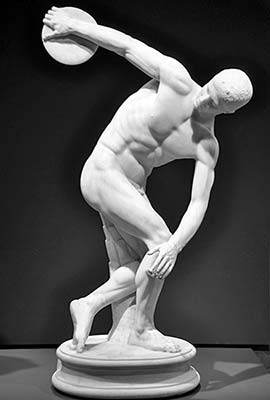
On the first floor, along with statues and busts showing such emperors as Trajan and Hadrian, you’ll see the best-preserved Roman copy of the Greek Discus Thrower. Statues of athletes like this commonly stood in the baths, where Romans cultivated healthy bodies, minds, and social skills, hoping to lead well-rounded lives. Other statues on this floor originally stood in the pleasure gardens of the Roman rich—surrounded by greenery with the splashing sound of fountains, all painted in bright, lifelike colors. Though created by Romans, the themes are mostly Greek, with godlike humans and human-looking gods.
The second floor contains frescoes and mosaics that once decorated the walls and floors of Roman villas. They’re remarkably realistic and unstuffy, featuring everyday people, animals, flowery patterns, and geometrical designs. The Villa Farnesina frescoes—in black, red, yellow, and blue—are mostly architectural designs, with fake columns, friezes, and garlands. The Villa di Livia frescoes, owned by the wily wife of Augustus, immerse you in a leafy green garden full of birds and fruit trees, symbolizing the gods.
Finally, descend into the basement to see fine gold jewelry, the mummified body of an eight-year-old girl, and vault doors leading into the best coin collection in Europe, with fancy magnifying glasses maneuvering you through cases of coins from ancient Rome to modern times.
▲Baths of Diocletian/Church of Santa Maria degli Angeli (Terme di Diocleziano/Basilica S. Maria degli Angeli)
Of all the marvelous structures built by the Romans, their public baths were arguably the grandest, and the Baths of Diocletian were the granddaddy of them all. Built by Emperor Diocletian around AD 300 and sprawling over 30 acres—roughly five times the size of the Colosseum—these baths could cleanse 3,000 Romans at once. They functioned until AD 537, when barbarians attacked and the city’s aqueducts fell into disuse, plunging Rome into a thousand years of poverty, darkness, and BO. Today, tourists can visit one grand section of the baths, the former main hall. This impressive remnant of the ancient complex was later transformed (with help from Michelangelo) into the Church of Santa Maria degli Angeli.
Cost and Hours: Free, Mon-Sat 10:00-13:00 & 16:00-18:30, Sun until 19:00, may be open midday in summer, entrance facing the fountain on Piazza della Repubblica, Metro: Repubblica, www.santamariadegliangeliroma.it.
▲Church of Santa Maria della Vittoria
This church, originally a poor Carmelite church, was slathered with Baroque richness in the 17th century. It houses Bernini’s best-known statue, the swooning St. Teresa in Ecstasy. Note that the church may be closed for repair work.
Cost and Hours: Free (anyone collecting money at the door is not affiliated with the church), pay €0.50 for light, Mon-Sat 8:30-12:00 & 15:30-18:00, Sun 15:30-18:00, about 5 blocks northwest of Termini train station at Via XX Settembre 17, Metro: Repubblica.
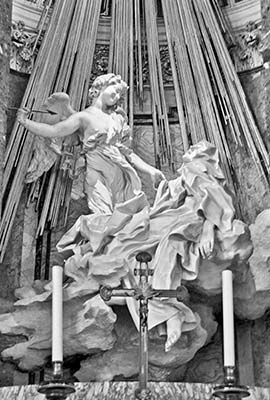
Visiting the Church: Inside the church, you’ll find St. Teresa to the left of the altar. Teresa has just been stabbed with God’s arrow of fire. Now, the angel pulls it out and watches her reaction. Teresa swoons, her eyes roll up, her hand goes limp, she parts her lips...and moans. The smiling, cherubic angel understands just how she feels. Teresa, a 16th-century Spanish nun, later talked of the “sweetness” of “this intense pain,” describing her oneness with God in ecstatic, even erotic, terms.
Bernini, the master of multimedia, pulls out all the stops to make this mystical vision real. Actual sunlight pours through the alabaster windows, and bronze sunbeams shine on a marble angel holding a golden arrow. Teresa leans back on a cloud and her robe ripples from within, charged with her spiritual arousal. Bernini has created a little stage-setting of heaven. And watching from the “theater boxes” on either side are members of the family who commissioned the work.
Shopping in Rome
Even if you’re not aiming to buy anything, shopping is a way to connect with contemporary Rome. Shop hours are generally 10:00-19:00; some also have a midday closure. Stores often are closed on Sundays, summer Saturday afternoons, and winter Monday mornings. Produce or flea markets typically close by 13:30.
Department Stores
The shopping complex under Termini train station is a convenient place to peruse clothes, bags, shoes, and perfume at several major Italian chain stores (most open daily 8:00-22:00).
A good upscale department store is La Rinascente (Via del Tritone 61). Besides deluxe brands, it has a fine design section with great and often affordable ideas for gifts, a magnificent rooftop terrace for a romantic aperitivo, good restaurants, free bathrooms, and a section of an ancient aqueduct in the basement (worth a quick visit). You’ll find another branch on Piazza Fiume (east of the Borghese Gallery).
The Galleria Alberto Sordi is an elegant 19th-century “mall” (across from Piazza Colonna). UPIM is a popular midrange department store (many branches, including inside Termini train station, Via Nazionale 111, and Piazza Santa Maria Maggiore). Oviesse/OVS, a cheap clothing outlet, is near the Vatican Museums (on the corner of Via Candia and Via Mocenigo, Metro: Cipro) and also near Piazza Barberini (Via del Tritone 172, Metro: Barberini).
Affordable Shopping
The shopping area all along Via del Corso features moderately priced goods, with prices increasing as you head toward Piazza di Spagna (by the Spanish Steps). Via Nazionale also features a range of reasonably priced shops, especially for clothes and shoes. Near the bottom of Via Nazionale, in the Monti neighborhood near the Roman Forum, Via del Boschetto and Via dei Serpenti are more unique, with a mix of clothing shops and designer bric-a-brac. Via Cola di Rienzo, near the Vatican, is good for midrange clothes. Cheapskates scrounge through the junky but dirt-cheap shops in the gritty area around Piazza Vittorio.
Boutique Shopping: Rome’s “Shopping Triangle”
The triangular-shaped area between the Spanish Steps, Piazza Venezia, and Piazza del Popolo (along Via del Corso, see map on here) contains Rome’s highest concentration of upscale boutiques and fashion stores. For top fashion, stroll the streets around the Spanish Steps, including Via dei Condotti, Via Borgognona (for the big-name shops), and Via del Babuino (more big names and a few galleries). For antiques and vintage items, wander Via dei Coronari (between Piazza Navona and the bend in the river), Via Giulia (between Campo de’ Fiori and the river), Via dei Banchi Vecchi (parallel to Via Giulia), and the super-chic Via Margutta, with art galleries too (hidden parallel to Via del Babuino and running from the Spanish Steps to Piazza del Popolo). For dozens of stores selling affordable apparel aimed mainly at a younger crowd, try Via Giubbonari near Campo de’ Fiori.
Near Campo de’ Fiori
Two worthwhile parallel shopping streets run northwest (toward the river) from Piazza Farnese, just a block south of Campo de’ Fiori: Via Monserrato/Via dei Banchi Vecchi and Via Giulia. (Streets in the opposite direction—to the southeast—are sleepier, with fewer shops.)
Heading away from Piazza Farnese on low-key Via Monserrato, you’ll see several antique, furniture, and home-decorating shops. Hollywood (#107) is a treat for cinephiles, with movie posters and rare DVDs; next door, at #108, is a fascinating old-time cobbler, with a crowded workbench crammed into a tiny shop.
Flea Markets
For antiques and fleas, the granddaddy of markets is the Porta Portese mercato delle pulci (flea market). This Sunday-morning market is long and spindly, running between the actual Porta Portese (a gate in the old town wall) and the Trastevere train station. While the shopping gets old (and the vendor food shouldn’t be consumed), the people-watching is endlessly entertaining (6:30-13:00 Sun only, on Via Portuense and Via Ippolito Nievo; to get to the market, catch bus #75 from Termini train station or tram #8 from Piazza Venezia, get off on Viale di Trastevere, and walk toward the river—and the noise).
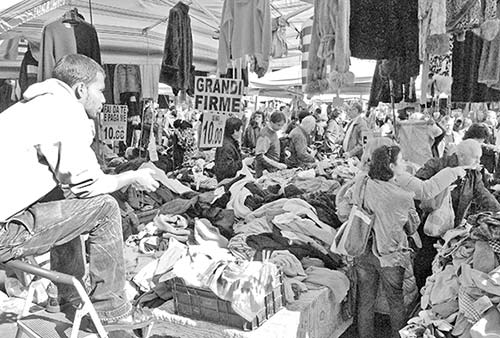
At the Via Sannio market, you’ll find new and used clothing and leather goods, some handicrafts, and random items that were probably stolen. You won’t find antiques (Mon-Sat 9:00-13:30, closed Sun, behind Coin department store, just outside the walls of San Giovanni in Laterano, Metro: San Giovanni).
For something a bit hipper, visit the weekend Mercato Monti in the Monti district. This flea market has an emphasis on vintage clothes and housewares and up-and-coming designers (Sat-Sun 10:00-20:00, closed July-Aug, Hotel Palatino, Via Leonina 46, Metro: Cavour, www.mercatomonti.com).
Open-Air Produce Markets
For a fun and colorfully authentic experience, wander through the easygoing neighborhood produce markets that clog certain streets and squares every morning (7:00-13:30) except Sunday. Consider the huge Mercato Trionfale (three blocks north of Vatican Museums at Via Andrea Doria). Another great food market is the Mercato Esquilino (near Termini station at Via Filippo Turati, Metro: Vittorio Emanuele). The covered Mercato di Testaccio sells produce and housewares and is a hit with photographers and people-watchers (Metro: Piramide). Smaller but equally charming slices of everyday Roman life are at markets on these streets and squares: Piazza delle Coppelle (near the Pantheon), Via Balbo (near Termini train station), and Via della Pace (near Piazza Navona). And Campo de’ Fiori, despite having become quite touristy, is still a fun scene.
Nightlife in Rome
For most visitors, the best after-dark activity is simply to grab a gelato and join in the passeggiata, the evening stroll through the medieval lanes that connect Rome’s romantic, floodlit squares and fountains. Head for Piazza Navona, the Pantheon, Campo de’ Fiori, Trevi Fountain, the Spanish Steps, Via del Corso, Trastevere (around the Santa Maria in Trastevere Church), or Monte Testaccio.
Sound-and-Light Shows
The Imperial Forums area hosts two atmospheric and inspirational sound-and-light shows that give you a chance to fantasize about the world of the Caesars. During each of these “nighttime journeys through ancient Rome,” you spend about an hour with a headphone dialed to English, listening to an artfully crafted narration synced with projections on ancient walls, columns, and porticos. The final effect is worth the price tag (€15, both for €25, nightly mid-April-mid-Nov—bring your warmest coat, confirm the schedule and prebook on website, shows can sell out on busy weekends, +39 06 0608, www.viaggioneifori.it). If you plan to see both, do Caesar first and allow 80 minutes between starting times.
Caesar’s Forum Stroll: Starting at Trajan’s Column, this tour leads you to eight stops along a wooden sidewalk of a few hundred yards, while an hour’s narration tells the dramatic story of Julius Caesar. You’ll be on the ground level of an archaeological site that is otherwise closed to the public, giving you views you’d never see otherwise. The tour departs every 20 minutes from dark until nearly midnight.
Forum of Augustus Show: From your perch on wooden bleachers overlooking the remains of a vast forum, you’ll learn the story of Augustus through images projected on an ancient firewall that survives to provide a fine screen for modern-day spectacles. Showings are on the hour from dark until 22:00 or 23:00. Enter on Via dei Fori Imperiali just before Via Cavour (you’ll see the bleachers along the boulevard).
Museums and Art Exhibitions
Some museums have later opening hours (especially on Sat in summer), offering a good chance to see art in a cooler, less-crowded environment. See the “Rome at a Glance” sidebar on here for suggestions.
Performances and Film
Check out the current listings of concerts, operas, dance, and films. Posters around town also advertise upcoming events. For the most up-to-date events calendar, check these English-language websites: www.wantedinrome.com and www.angloinfo.com.
Contemporary Music Scene
Music lovers will seek out the mega-music complex of the Rome Auditorium (Auditorium Parco della Musica), designed by contemporary architect Renzo Piano and hosting concerts by both Italian and international artists (€20-60 tickets, check availability in advance—concerts often sell out, Viale Pietro de Coubertin 30, take Metro to Flaminio and then catch tram #2 to Apollodoro, from there it’s a 5-minute walk east, just beyond the elevated road, tram/Metro runs until 23:30, box office +39 02 6006 0900, www.auditorium.com).
Classical Music and Opera
The Teatro dell’Opera has an active schedule of opera and classical concerts. In the summer, the productions move to the Baths of Caracalla, where ancient ruins make an evocative backdrop. You’ll brush shoulders with locals in all their finery, so pull your fanciest outfit from your backpack (tickets from €25, online reservations encouraged, box office takes phone reservations beginning 5 days prior at +39 06 481 7003; Piazza Beniamino Gigli 7, a block off Via Nazionale, Metro: Repubblica; www.operaroma.it).
Opera da Camera di Roma is a cute, tourist-oriented, greatest-hits-of-opera performance in various smaller venues around Rome. While their advertising may make the show seem grander than it is, it’s still a charming hour-plus of music—and it comes with a glass of wine. You’ll enjoy a revue of the most popular Italian arias and Neapolitan songs in a casual and fun-loving atmosphere. Buy the cheapest tickets and request the Rick Steves upgrade (RS%—use code “RickSteves”; check schedule and book on their website, +39 320 530 7112, www.operadacameradiroma.com).
Tourist-oriented musical events take place at the Episcopal Church of St. Paul’s Within the Walls. The music ranges from orchestral concerts to full operatic performances to candlelit “Luminaria” concerts. Check the church website (under “Music”) to see what’s on (arrive 30-45 minutes early for best seat, Via Napoli 58 at corner of Via Nazionale, Metro: Repubblica, +39 06 482 6296, www.stpaulsrome.it).
Jazz
Rome has a small but vibrant jazz scene. Alexanderplatz is the venerable club in town (Via Ostia 9, Metro: Ottaviano, +39 06 8678 1296, www.alexanderplatzjazz.com [URL inactive]). TramJazz, a creative venture by the public transit company, combines dinner, music, and a journey through the city in a vintage cable car for a mostly local crowd (€75, daily at 21:00, 3 hours, leaves from Piazza di Porta Maggiore—reached by tram #5 or #14 from Termini station, book well ahead, www.tramjazz.com).
Bars and Nightspots
I’ve listed some fun neighborhoods worth exploring after dark, along with a few bars and enoteche (wine bars) in each. All of these places are recommended in the “Eating in Rome” section, where you’ll find more details on each.
Heart of Rome, near the Pantheon: The scene here is touristy but delightful. The monuments—especially the Pantheon and Trevi Fountain—are magically floodlit at night. Not far from the Trevi Fountain, L’Antica Birreria Peroni is a big, boisterous beer hall. Farther south, Campo de’ Fiori and the surrounding streets become one big, rude street party around 22:00. One good place to sample the youthful energy, as well as some craft beers, is the rollicking Open Baladin pub.
North Rome, near the Spanish Steps and Via del Corso: A babel of international tourists, this glitzy zone is bustling after dark. For many, just hanging out around the Spanish Steps is enough to fill an evening.
Near the Colosseum and Forum, in Monti: The best plan in this lively village-Rome zone is to pop the top off a brew and hang out at the fountain on Piazza della Madonna dei Monti. To join the after-dark scene, buy a drink at the shop on the uphill side of the square (cheap bottles of wine with plastic glasses, beer, fruit, and munchies) and be part of what becomes the hottest bar in the area. There are plenty of makeshift benches around the fountain. For more details, see the Monti section of “Eating in Rome.”
Sleeping in Rome
Choosing the right neighborhood in Rome is as important as choosing the right hotel. All of my recommended accommodations are in safe areas convenient to sightseeing. Most central hotels near ancient Rome are close to the Colosseum and Roman Forum (with the trendy Monti area nearby). The most romantic ambience is in neighborhoods near the Pantheon, which encompass the Campo de’ Fiori and the Jewish Ghetto. Hotels near Vatican City put St. Peter’s and the Vatican Museums at your doorstep. The Termini train station neighborhood is a hub of good, midrange hotels that are handy for public transit and services, although the area is not particularly charming. Finally, the bohemian Trastevere neighborhood is a good choice for living like a Roman (or a young American expat) when in Rome for a few days.
Off-season, it’s common for hotels in Rome to cut their prices up to 50 percent, although prices at hostels and cheaper hotels won’t fluctuate much. Room rates are lowest in sweltering August. Book any accommodations well in advance, especially if you’ll be traveling during peak season (April-June and Sept-early Nov) or if your trip coincides with a major holiday or festival (see the appendix).
Sleeping at Convents: Rome has many convents that rent out rooms. At convents, the beds are twins and English is often in short supply, but the price is right. I’ve listed three nun-run places in this chapter: Casa Il Rosario (near Piazza Venezia), the expensive but divine Casa di Santa Brigida (near Campo de’ Fiori), and Suore di Santa Elisabetta (near Termini station). For a longer list of convents, see the Church of St. Patrick’s website (www.stpatricksamericanrome.org)—select “Resources” and then “Convent Accommodations.”
NEAR ANCIENT ROME
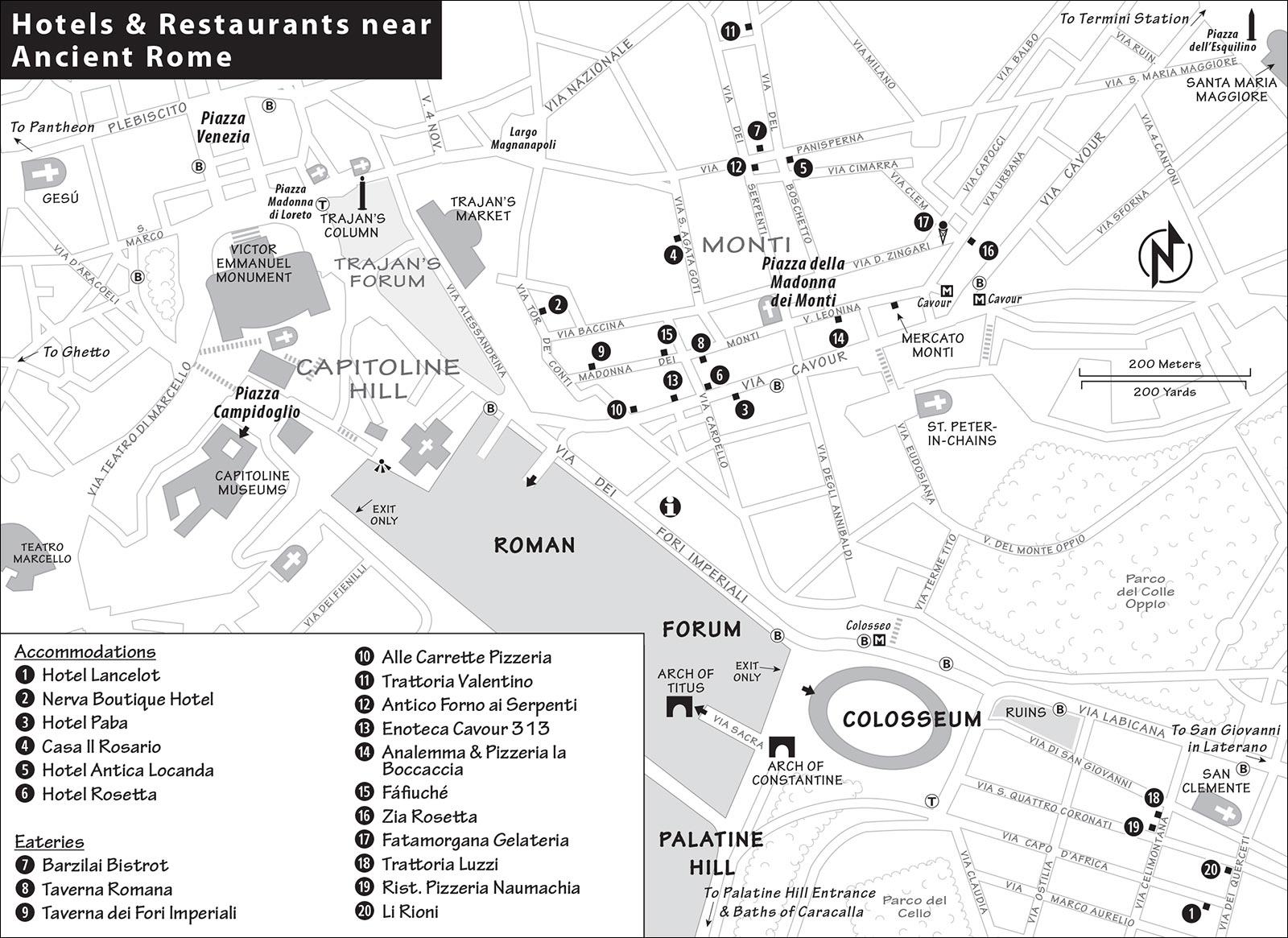
This area is central, so you’ll find these hotels are a short walk from the Colosseum and Roman Forum, as well as restaurants and shopping in the Monti district (described on here). All except Hotel Lancelot are within a 10-minute walk of the Cavour Metro stop.
$$$$ Hotel Lancelot is a comfortable refuge east of the Colosseum—a 60-room hotel with an elegant feel at a fair price. Located in a pleasant, low-key residential neighborhood, it’s quiet and safe, with a shady courtyard, restaurant, bar, and tiny communal sixth-floor terrace. It’s well run by the Khan family, who serve a good €25 dinner—a tasty way to connect with your hotel neighbors and the friendly staff. No wonder it’s popular with returning guests (family rooms, some view rooms, air-con, elevator, wheelchair accessible, cheap parking, 10-minute walk behind Colosseum near San Clemente Church at Via Capo d’Africa 47, +39 06 7045 0615, www.lancelothotel.com, info@lancelothotel.com). Faris and Lubna speak the Queen’s English.
$$$$ Nerva Boutique Hotel is a snazzy slice of tranquility with 20 small, stylish, and often discounted rooms. It sits on a quiet, ideally located side street that faces the Roman Forum and backs onto the enjoyable Monti neighborhood (RS%—use code “RICKSTEVES,” air-con, elevator, Via Tor de’ Conti 3, +39 06 678 1835, www.hotelnerva.com [URL inactive], info@hotelnerva.com, Antonio and Paolo).
$$$ Hotel Paba is homey, chocolate-box-tidy, and lovingly cared for by Alberta Castelli. It’s just two blocks from the Forum. You’ll take a vintage elevator to reach the seven rooms. Although some overlook busy Via Cavour, it’s quiet enough (RS%, email reservations preferred, big beds, no breakfast, air-con, elevator, Via Cavour 266, second floor, +39 06 4782 4497, www.hotelpaba.com, info@hotelpaba.com).
$$ Casa Il Rosario is a peaceful, well-run Dominican convent renting 40 rooms with monastic simplicity to both pilgrims and tourists in a steep but pleasant corner of the Monti neighborhood. Doubles have two single beds that can be pushed together (RS%—use code “ricksteves,” cheaper single rooms with shared bath, reserve several months in advance, some rooms with air-con and others with fans, elevator, small garden and rooftop terrace, midnight curfew, near bottom of Via Nazionale at Via Sant’Agata dei Goti 10, bus #40 or #170 from Termini, +39 06 679 2346, www.casailrosarioroma.it, info@casailrosarioroma.it).
$$ Hotel Antica Locanda is a gem on a small street in the heart of the Monti neighborhood. The 15 rooms—each named for a composer or an artist—come with romantically rustic, stylish furnishings. The rooftop terrace is great for sunbathing or relaxing with a sunset drink (air-con, Via del Boschetto 84, +39 06 484 894, www.anticalocandaroma.it, anticalocandaroma@gmail.com).
$$ Hotel Rosetta, a homey, basic, and family-run pensione, rents 11 dated rooms. It’s pretty minimal, with no lounge and no breakfast, but its convenient location makes it a fine budget option (air-con, up one flight of stairs, Via Cavour 295, +39 06 4782 3069, www.rosettahotel.com, info@rosettahotel.com, Antonietta and Francesca).
PANTHEON NEIGHBORHOOD
Winding, narrow lanes filled with foot traffic and lined with small shops and tiny trattorias...this part of Rome still feels like a village. As in a real village, buses and taxis are the only practical way to connect with other destinations. The atmosphere doesn’t come cheap, but this is a great place to be—especially at night, when Romans and tourists gather in the floodlit piazzas.
This neighborhood has two main transportation hubs: Piazza delle Cinque Lune (just north of Piazza Navona) has a TI, a taxi stand, and (just around the corner) handy buses #81 and #87. Largo Argentina has buses to almost everywhere, a taxi stand, and the tram to Trastevere (#8). Peruse my recommended buses on here, and you’ll likely find a few (#81, #87, #492, and others) that stop near your hotel.
There are two expensive Co-op supermarkets in the neighborhood. One is a half-block from the Pantheon toward Piazza Navona (daily until 22:00, Via Giustiniani 18b). A larger Co-op, with a good bakery and sandwich section, is three blocks from the Pantheon, near Largo Argentina (daily until 21:00, Corso Vittorio Emanuele II 42; for Co-op locations see the map on here).
Near Largo Argentina and Campo de’ Fiori
Each of these places is romantically set deep in the tangled back streets near the idyllic Campo de’ Fiori and, for many, worth the extra money. This area is connected to Termini station by bus along Via Nazionale (#40 or #64). From the airport, consider taking the regional train to Trastevere station and then the #8 tram to Largo Argentina.
$$$$ Relais Teatro Argentina, a six-room gem, is steeped in tasteful old-Rome elegance, but has all the modern comforts. It feels cozy like a B&B (despite the busy streets surrounding it) and couldn’t be more centrally located (air-con, 3 flights of stairs, breakfast in room or on balcony, Via del Sudario 35, +39 06 9893 1617, www.relaisteatroargentina.com, info@relaisteatroargentina.com, kind Paolo and Carlotta).
$$$ Arch Rome Suites, in a tranquil palace on the site of the former Baths of Agrippa, is just a few steps from the Pantheon and near the Jewish Ghetto. It rents 12 spacious, modern, and cozy rooms—some with balconies and views (family rooms, air-con, elevator, Via dell’Arco della Ciambella 19, +39 06 4549 8947, www.archromesuites.it, info@archromesuites.com, friendly Marika and Omar).
$$$ Casa di Santa Brigida overlooks the elegant Piazza Farnese. With soft-spoken sisters gliding down polished hallways, and pearly gates instead of doors, this lavish 20-room convent makes exhaust-stained Roman tourists feel like they’ve died and gone to heaven. You won’t have a double bed or a TV in your room, but you can luxuriate in the inn’s public spaces or on its lovely roof terrace (book well in advance, air-con, elevator, tasty €25 dinners—reserve ahead, roof garden, plush library, Via di Monserrato 54, +39 06 6889 2596, www.brigidine.org, casabrigidaroma@brigidine.org, many of the sisters are from India and speak English—pray you get to work with wonderful Mother Gertrude).
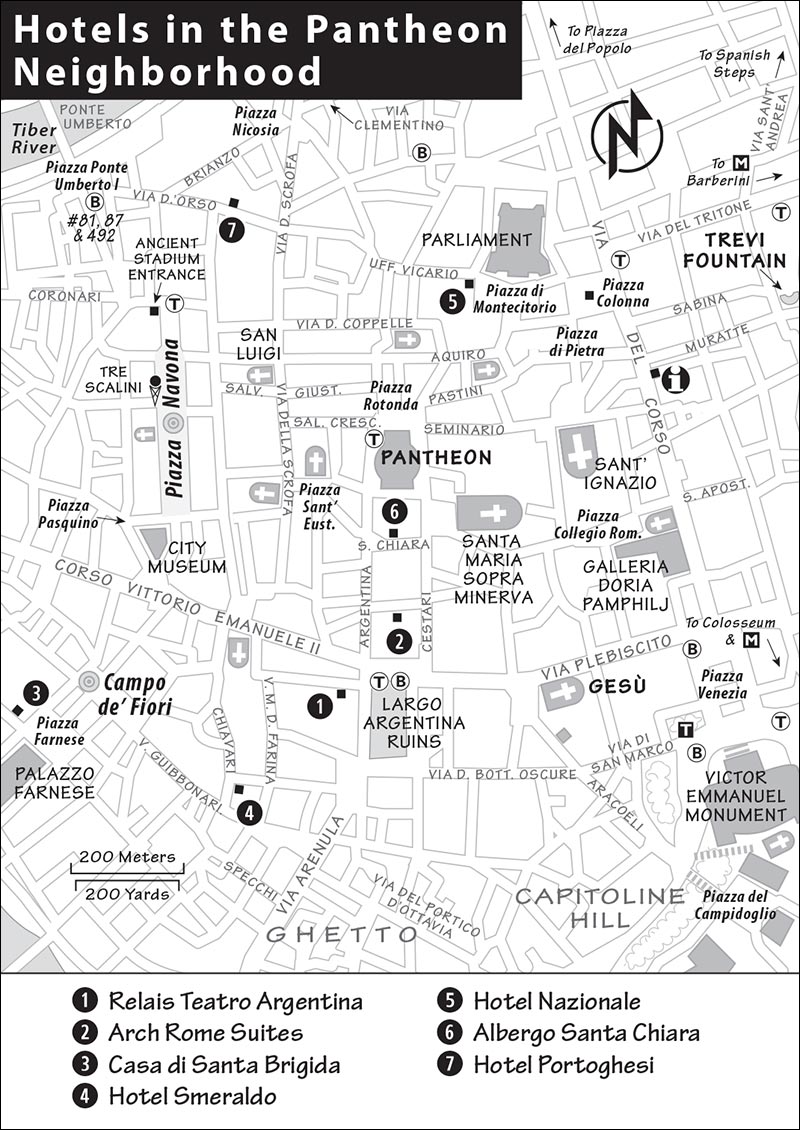
$$$ Hotel Smeraldo, with 66 rooms, is clean and a reasonable deal in a good location. Sixteen of the rooms are in an annex across the street, but everyone has breakfast in the main building. They have a rooftop bar for afternoon aperitivi (air-con, elevator, roof terrace, midway between Campo de’ Fiori and Largo Argentina at Via dei Chiavari 20, +39 06 687 5929, www.smeraldoroma.com, info@smeraldoroma.com, Massimo and Walter).
Close to the Pantheon
These places are buried in the pedestrian-friendly heart of ancient Rome, each within about a five-minute walk of the Pantheon. They’re an easy walk from many sights but are a bit distant from major public transportation arteries (though buses do run nearby). To get close, arrive and depart by taxi.
$$$$ Hotel Nazionale, a four-star landmark, is a 16th-century palace that shares a well-policed square with the Italian Parliament building. Its 100 forgettable rooms are augmented by lush public spaces, fancy bars, a uniformed staff, and a marble-floored breakfast room. It’s a big, stuffy, impersonal hotel, but it’s a worthy splurge if you want security, comfort, and the heart of Rome at your doorstep (RS%—use code “RICK,” family rooms, air-con, elevator, Piazza Montecitorio 131, +39 06 695 001, www.hotelnazionale.it, info@hotelnazionale.it).
$$$$ Albergo Santa Chiara, remarkably central just a few steps behind the Pantheon, is big, solid, and hotelesque. Flavia, Silvio, and their fine staff offer marbled elegance (but somewhat dated furnishings) and all the hotel services. Its ample public lounges are dressy and professional, and its 96 rooms are quiet and spacious (RS%—use code “RICK,” family rooms, air-con, elevator, behind the Pantheon at Via di Santa Chiara 21, +39 06 687 2979, www.albergosantachiara.com, info@albergosantachiara.com).
$$$$ Hotel Portoghesi is a classic hotel with 27 colorful rooms in the medieval heart of Rome. It’s peaceful, quiet, and comes with a delightful roof terrace—though you pay for the location (family rooms, breakfast on roof, air-con, elevator, Via dei Portoghesi 1, +39 06 686 4231, www.hotelportoghesiroma.it, info@hotelportoghesiroma.it).
NEAR VATICAN CITY
Sleeping near the Vatican costs a little more, but some enjoy calling this relaxed, residential neighborhood home. The tree-lined streets are wider than in the historical center, so it feels less claustrophobic. Although it’s handy to the Vatican, everything else is a long way away. Fortunately, it’s well served by public transit, especially the Metro (line A). Most of these listings are within a 10-minute walk of either the Cipro or Ottaviano Metro stops.
$$$$ Hotel dei Consoli, family-run with 28 rooms, is a lesser value pleasantly located on a side street. Breakfast is served on its leafy rooftop terrace, with a view to St. Peter’s—a nice way to start the day (RS%, air-con, elevator, Via Varrone 2D, +39 06 6889 2972, www.hoteldeiconsoli.com, info@hoteldeiconsoli.com, friendly Laura and mom Amalia).
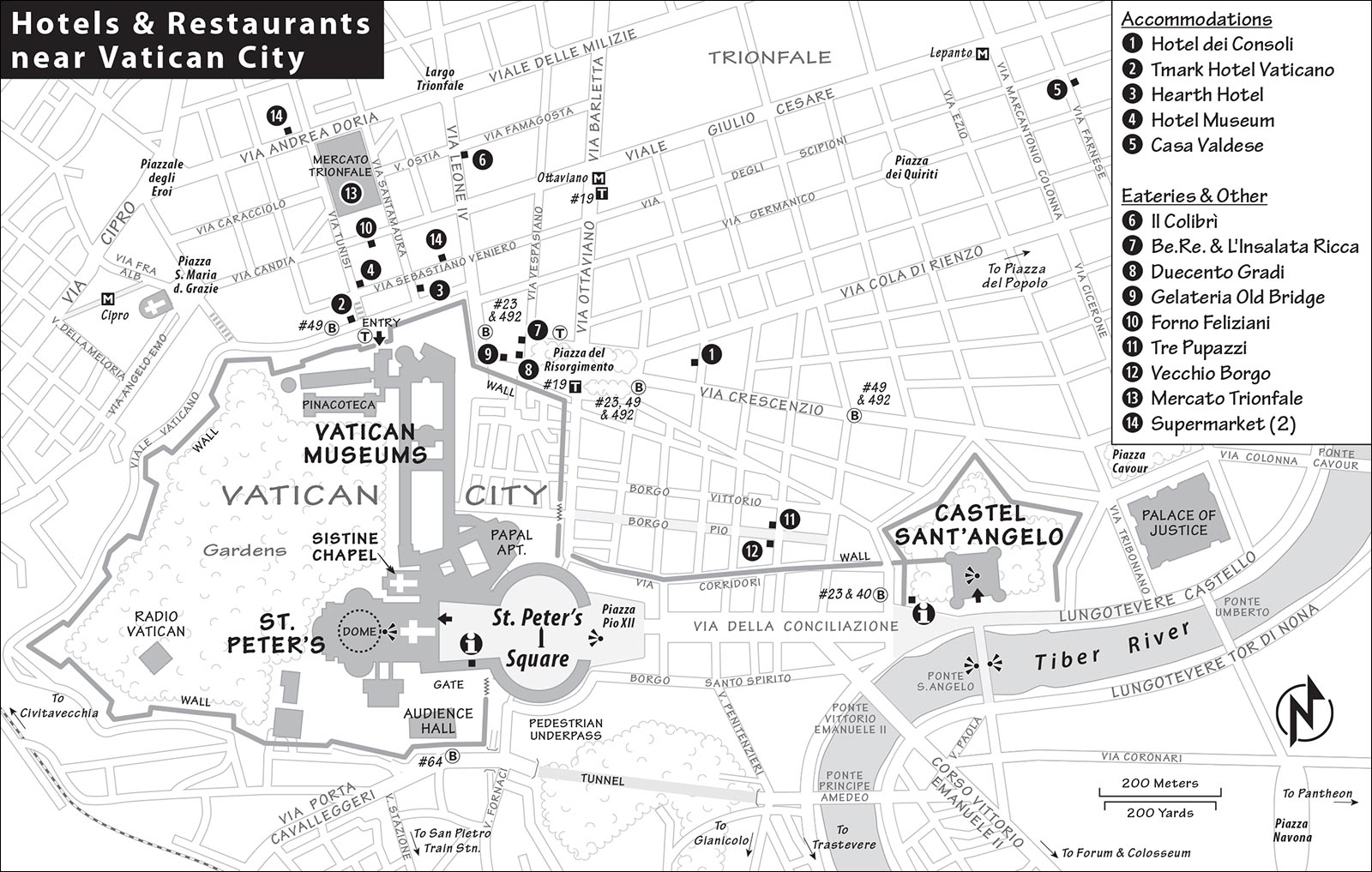
$$$$ Tmark Hotel Vaticano, facing the Vatican Museums, features four stars, 24 spacious rooms, and all the modern comforts (air-con, elevator, Viale Vaticano 99, +39 06 3974 5562, www.tmarkhotelvaticano.it, info@tmarkhotelvaticano.it).
$$$$ Hearth Hotel, a block from the Vatican wall, has 22 small, modern, efficient, and characterless rooms (RS%—use code “rick steves,” air-con, elevator, Via Santamaura 2, +39 06 3903 8383, www.hearthhotel.com, info@hearthhotel.com).
$$$ Hotel Museum is located steps from the Vatican Museums. It has 31 modest but comfortable rooms and large public spaces, including a piano lounge, pool table, and rooftop terrace (family rooms, air-con, elevator, down the stairs directly in front of Vatican Museums, Via Tunisi 8, +39 06 9727 6695, www.hotelmuseum.it, info@hotelmuseum.it).
$$ Casa Valdese is a well-managed, Protestant church-run hotel that’s a good value and feels a bit institutional. Its 33 renovated but basic rooms come with the bonus of two breezy, communal roof terraces with incredible views (family rooms, air-con, elevator, Via Alessandro Farnese 18, Metro: Lepanto, +39 06 321 5362, www.casavaldeseroma.it, reception@casavaldeseroma.it).
NEAR TERMINI STATION
While this neighborhood is not as atmospheric as other areas of Rome, the hotels near Termini train station are less expensive, and the Metro and buses link you easily to the rest of the city. My recommendations are within a 10-minute walk of the station (some are actually closer to the Repubblica Metro stop).
West of the Station
Most of these hotels are on or near Via Firenze, a safe, handy, central, and relatively quiet street that’s a 10-minute walk from Termini and the airport train, and two blocks beyond Piazza della Repubblica. The Defense Ministry is nearby, so you’ve got heavily armed guards watching over you all night.
The neighborhood is served by two Metro stops: Repubblica (line A) and Termini (intersection of lines A and B). Virtually all the city buses that rumble down Via Nazionale (#60, #64, #70, and the #40 express) take you to Piazza Venezia (near the Forum).
These neighborhood supermarkets are all open daily until late (for locations see the map on here): Co-op (Via Nazionale 213, at the corner of Via Venezia), Carrefour Express (corner of Via Napoli and Via del Viminale), and Sapori & Dintori (downstairs from the inner atrium at Termini station). There are many smaller grocery stores, as well.
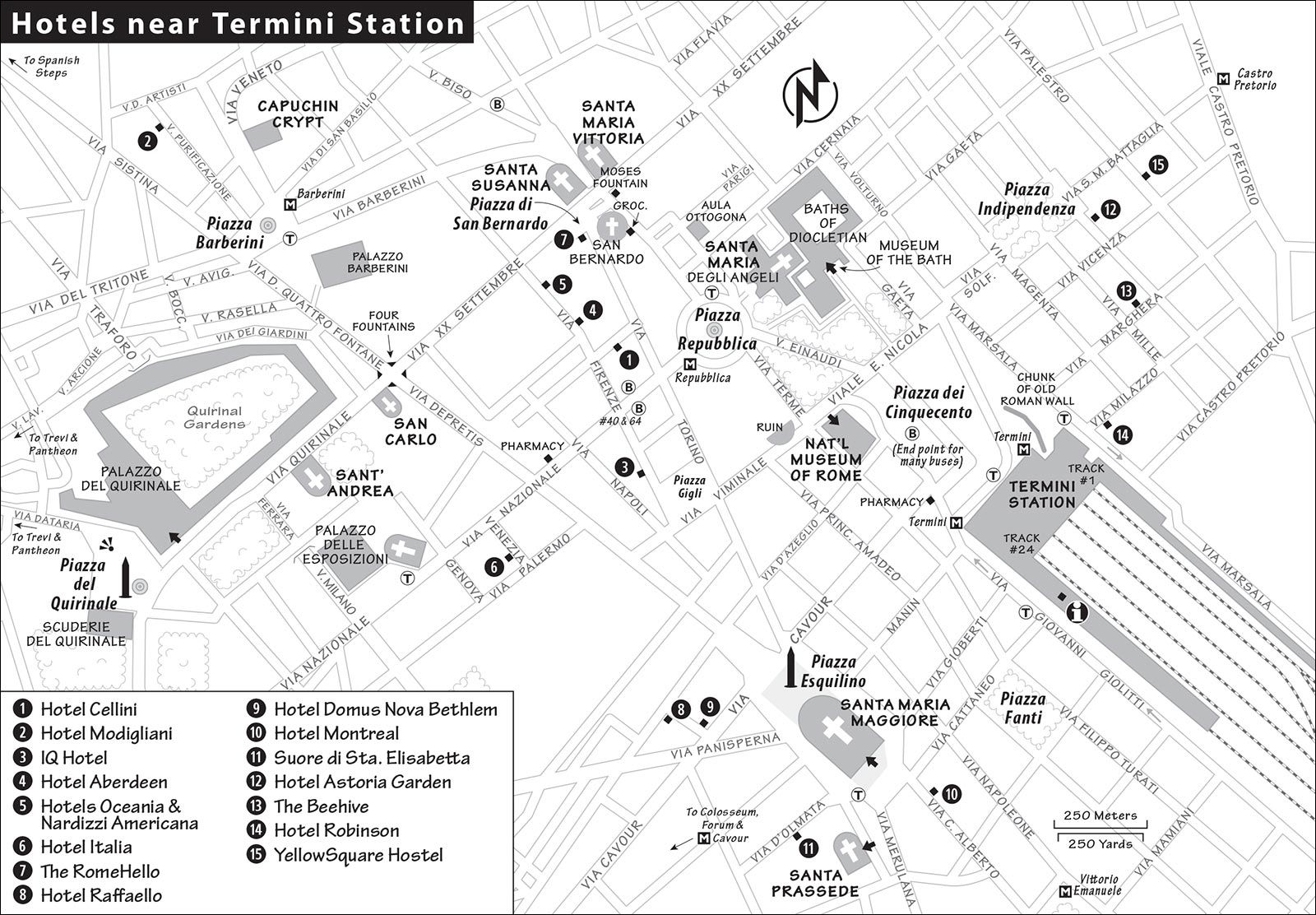
$$$$ Hotel Cellini feels like the guest wing of a gorgeous Neoclassical palace. It offers 13 rooms, “ortho/anti-allergy beds,” four-star comforts and service, and a small, breezy terrace where you can enjoy breakfast (RS%, air-con, elevator, Via Modena 5, third floor, +39 06 4782 5204, www.hotelcellini.it, info@hotelcellini.it; Barbara, Gaetano, and Donato).
$$$$ Hotel Modigliani, a delightful 23-room place, is energetically run in a clean, bright, minimalist yet in-love-with-life style that its artist namesake would appreciate. It has a vast and plush lounge, a garden, and a newsletter introducing you to each of the staff (RS%, air-con, elevator; from Tritone Fountain on Piazza Barberini, go 2 blocks up Via della Purificazione to #42; +39 06 4281 5226, www.hotelmodigliani.com, info@hotelmodigliani.com, Giulia and Marco).
$$$$ IQ Hotel, in a modern blue building facing the Opera House, feels almost Scandinavian in its efficiency, without a hint of the Old World. It lacks charm, but more than compensates with modern amenities. Its 90 rooms are fresh and spacious, the roof garden comes with a play area and foosball, and vending machines dispense bottles of wine (RS%, family rooms, breakfast extra, air-con, elevator, cheap self-service laundry, gym, Via Firenze 8, +39 06 488 0465, www.iqhotelroma.it, info@iqhotelroma.it, Diego).
$$$ Hotel Aberdeen, which combines quality and friendliness, is warmly run by Annamaria, with support from sister Laura, cousin Cinzia, and staff member Costel. The 37 comfy rooms, on the ground floor and one floor up, are a fine value (RS%—use “Rick Steves reader reservations” link, family rooms, air-con, Via Firenze 48, +39 06 482 3920, www.hotelaberdeen.it, info@hotelaberdeen.it).
$$$ Hotel Oceania is a peaceful slice of air-conditioned heaven. The 24 rooms are spacious, quiet, and tastefully decorated, and the elegant sitting room has a manor-house feel. Stefano runs a fine staff, serves wonderful coffee, provides lots of thoughtful extra touches, and works hard to maintain a caring family atmosphere (RS%—use code “RICKSTEVES,” family rooms, elevator, TV lounge, Via Firenze 38, third floor, +39 06 482 4696, www.hoteloceania.it, info@hoteloceania.it; Kira and Roberto round out the staff).
$$ Hotel Nardizzi Americana, with a small rooftop terrace, 34 slightly scruffy rooms, and a laid-back atmosphere, is another decent value (RS%—email reservation for discount, family rooms, air-con, elevator, Via Firenze 38, fourth floor, +39 06 488 0035, www.hotelnardizzi.it, info@hotelnardizzi.it; friendly Stefano, Fabrizio, Mario, and Giancarlo).
$$ Hotel Italia enjoys a handy locale on a side street next to the Ministry of the Interior. It has a nice, harmonious feeling and 35 modest but comfortable rooms plus four newer, more expensive “residenza” rooms on the third floor (RS%, family rooms, air-con, elevator, Via Venezia 18, just off Via Nazionale, +39 06 482 8355, www.hotelitaliaroma.it, info@hotelitaliaroma.it; Andrea, Sabrina, and Abdul). They offer eight similar annex rooms across the street for the same price as the main hotel.
¢The RomeHello hostel is, as its slogan brags, “more than just a bed.” It’s a modern, quiet, and friendly hostel run with a mission to employ locals and provide a comfortable home for travelers, with about 200 beds in doubles, triples, and dorms. The public areas and guest kitchen feel like a computer-generated image of a hostel utopia (Via Torino 45, +39 06 9686 0070, www.theromehello.com, ciao@theromehello.com).
Southwest of the Station
These good-value places cluster around the Basilica of Santa Maria Maggiore. Most are a five-minute walk from the Cavour Metro stop.
$$$ Hotel Raffaello, with a professional staff, offers 41 rooms in a grand 19th-century building on the edge of the Monti district. This formal hotel comes with generous public spaces and a breakfast room fit for aristocrats (family rooms, air-con, elevator, Via Urbana 3, +39 06 488 4342, www.hotelraffaello.it, info@hotelraffaello.it).
$$ Hotel Domus Nova Bethlem, owned by the Oblate Sisters of Baby Jesus, is a spacious, institutional-feeling hotel. The 38 high-ceilinged rooms are modest yet classy, and guests have access to a peaceful and leafy courtyard garden (RS%, air-con, elevator, expensive pay parking, Via Cavour 85A, +39 06 4782 4414, www.dnbhotel.com, info@dnbhotel.com).
$$ Hotel Montreal is a basic three-star place with 27 rooms on a big, noisy street a block southeast of Santa Maria Maggiore (RS%, family rooms, air-con, elevator, small garden terrace; Via Carlo Alberto 4, 1 block from Metro: Vittorio Emanuele, 3 blocks from Termini train station, +39 06 445 7797, www.hotelmontrealroma.it, info@hotelmontrealroma.it, Fabrizio).
$ Suore di Santa Elisabetta is a heavenly Polish-run convent with a serene garden, roof terrace with grand views, and 37 rooms. All doubles have twin beds. Often booked long in advance, with such tranquility it’s a super value (family rooms, cheaper rooms with shared bath, fans but no air-con, elevator for top floors, guest kitchen, Wi-Fi in lounge only, 23:00 curfew; a block southwest of Santa Maria Maggiore at Via dell’Olmata 9, Metro: Termini or Vittorio Emanuele; +39 06 488 8271, www.csse-roma.com, select “Casa per ferie” for English, ist.it.s.elisabetta@libero.it).
Sleeping Cheaply, Northeast of the Station
The cheapest beds in town are beyond Termini train station, to the northeast: Standing so that the tracks dead-end into your back, this neighborhood is to your right (Metro: Termini). The streets quiet down a block or so away from the station, and these hotels feel plenty safe.
$$ Hotel Astoria Garden is a modern and comfortable 54-room hotel (air-con, elevator, Via V. Bachelet 6, +39 06 446 9908, www.hotelastoriagarden.it, hotelastoriagarden@gmail.com).
$ The Beehive gives vagabonds—old and young—a cheap, clean, and comfy home in Rome (air-con in some rooms, breakfast extra, private garden terrace, aperitivo with pizza in the afternoon, 2 blocks from Termini train station at Via Marghera 8, +39 06 4470 4553, www.the-beehive.com, info@the-beehive.com).
$ Hotel Robinson is your dreary, bare-bones-basic budget option, just a few steps from the station. Tucked away from the commotion on an interior courtyard, it has 20 small and simple rooms (RS%—includes breakfast and air-con when you pay in cash, apartment also available, Via Milazzo 3, +39 06 491 423, www.hotelrobinsonrome.com, info@hotelrobinsonrome.com).
¢YellowSquare Hostel is hip yet sane, with loads of activities (Via Palestro 44, +39 06 446 3554, https://yellowsquare.it/roma).
TRASTEVERE
Colorful and genuine, with uneven cobbles and remnants of its tumbledown past, Trastevere is a treat for travelers looking for a more residential, bohemian atmosphere. ( Download my free Trastevere Walk audio tour to explore the neighborhood.) It’s also very trendy among American college students and young expats, who fill its bars and restaurants. The heart of Rome and its ancient ruins are just across the river, and tram #8 makes getting there and back a snap. Convenient bus #23 runs to the Vatican area, bus #H runs directly to Termini (none on Sun), and tram #3 goes to the Colosseum. From the airport, you can reach these listings by taking the regional train to Trastevere train station, and the #8 tram downhill from there.
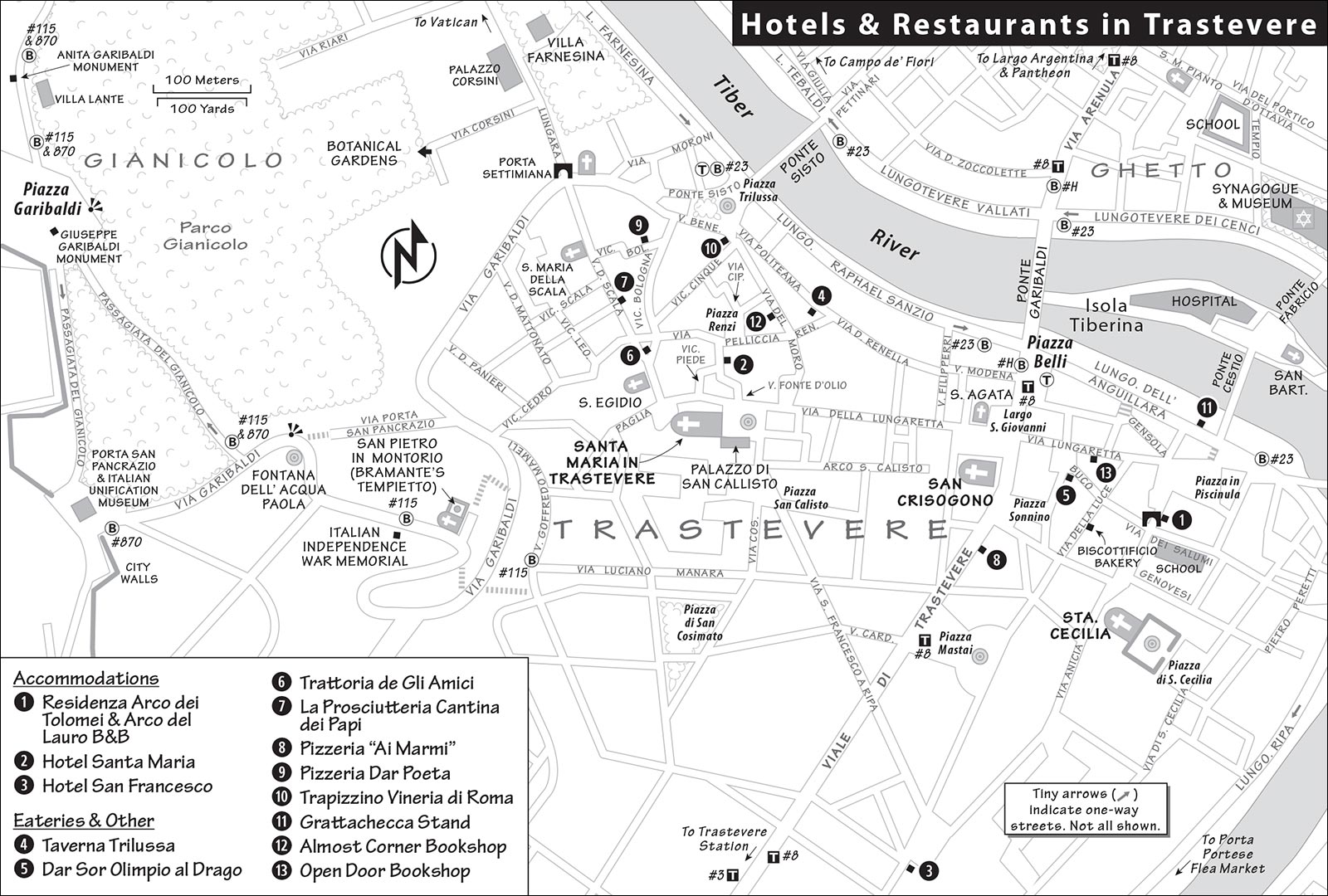
$$$$ Residenza Arco dei Tolomei is the most poetic Trastevere experience imaginable, with six small, unique, antique-filled rooms, some boasting fragrant balconies. In this quiet and elegant setting, you can pretend you’re visiting aristocratic relatives (reserve well in advance, air-con, from Piazza Piscinula a block up Via dell’Arco de’ Tolomei at #27, +39 06 5832 0819, www.bbarcodeitolomei.com, info@bbarcodeitolomei.com, Marco and Gianna Paola).
$$$$ Hotel Santa Maria sits like a lazy hacienda in the middle of Trastevere. Surrounded by a medieval skyline, you’ll feel as if you’re on some romantic stage set. Its 20 small but well-equipped, air-conditioned rooms—former cells in a cloister—are mostly on the ground floor, as are a few suites for up to six people. The rooms circle a gravelly courtyard of orange trees and stay-awhile patio furniture. Privacy is limited and noises travel, but it’s generally peaceful compared to the bustle just outside the door (RS%, family rooms, email reservations preferred, air-con, free loaner bikes, face church on Piazza Maria Trastevere and go right down Via della Fonte d’Olio 50 yards to Vicolo del Piede 2, +39 06 589 4626, www.hotelsantamariatrastevere.it, info@hotelsantamaria.info).
$$$ Hotel San Francesco, big and modern yet welcoming, stands practically and efficiently at the far end of Trastevere. It rents 24 trim rooms and comes with an inviting roof terrace (May-Oct only). It’s a good choice for a “real” hotel—compared to the more casual B&B style of the other listings in this area—but is a bit farther from the action (email reservations preferred, air-con, elevator, on-site restaurant, Via Jacopa de’ Settesoli 7, +39 06 5830 0051, www.hotelsanfrancesco.net, hotelsanfrancesco@gmail.com).
$$$ Arco del Lauro B&B rents six tight, whitewashed, straightforward rooms around a dim, quiet back courtyard. Consider it the less expensive version of the Residenza Arco dei Tolomei, which is upstairs. The lower prices make up for the lack of public spaces and mostly offsite management (one family room, includes small breakfast at nearby café, air-con, from Piazza Piscinula a block up Via dell’Arco de’ Tolomei at #29, +39 346 244 3212, www.arcodellauro.it, info@arcodellauro.it, Lorenza and Daniela).
Eating in Rome
Romans take great pleasure in dining well. Embrace this passion over a multicourse meal at an outdoor table, watching a parade of passersby while you sip wine with loved ones.
Roman meals are lengthy social occasions. Simple, fresh, seasonal ingredients dominate the dishes. The cucina is robust, strongly flavored, and unpretentious—much like the people who’ve created it over the centuries. It is said that Roman cooking didn’t come out of emperors’ or popes’ kitchens, but from the cucina povera—the home cooking of the common people. This may explain the Romans’ fondness for meats known as the quinto quarto (“fifth quarter”), such as tripe, tail, brain, and pigs’ feet, as well as their interest in natural preservatives like chili peppers and garlic.
Rome belongs to the warm, southern region of Lazio, which produces a rich variety of flavorful vegetables and fruit that are the envy of American supermarkets. Rome’s proximity to the Mediterranean also allows for a great variety of seafood.
EATING TIPS
Kitchens close at most restaurants between lunch and dinner; if it’s a quality restaurant, it won’t reopen before 19:00. If a smaller restaurant is booked up later in the evening (from 20:30 or so), they may accommodate walk-ins if you’re willing to eat quickly.
Choosing Restaurants: I’ve listed restaurants that I enjoy. Many are in characteristic and touristy (and therefore pricey) areas such as Piazza Navona, Campo de’ Fiori, and Trastevere. Others are tucked away from the tourist crush.
I’m impressed by how small the price difference can be between a mediocre Roman restaurant and a fine one. You can pay about 20 percent more for double the quality. If I had $100 for three meals in Rome, I’d spend $50 for one and $25 each for the other two, rather than $33 on all three. For splurge meals, I’d consider Gabriello (near the Spanish Steps) and Taverna Trilussa (in Trastevere), described later.
Rome’s fabled squares—most notably Piazza Navona, near the Pantheon, and Campo de’ Fiori—are lined with the outdoor tables of touristy restaurants with enticing menus and formal-vested waiters. The atmosphere is super romantic but restaurants in these areas are notorious for surprise charges, forgettable food, microwaved ravioli, and bad service. I enjoy the view by savoring just a drink or dessert on a famous square, but I dine with locals on nearby low-rent streets, where the proprietor needs to serve a good-value meal and nurture a local following to stay in business.
If you’re set on eating—or just drinking and snacking—on a famous piazza, you don’t need a guidebook listing to choose a spot; enjoy the ritual of slowly circling the square, observing both the food and the people eating it, and sit where the view and menu appeal to you.
The Aperitivo Tradition: For a fun drink and snacks in a memorable Roman setting, consider partaking in an aperitivo buffet. Bars all over town serve up a buffet of small dishes, from about 18:00 to 21:00, and anyone buying a drink (generally €8-12) is entitled to one or two heavy appetizers.
Picnicking: A good budget option is to assemble a picnic and dine with Rome as your backdrop. Buy ingredients for your picnic at one of Rome’s open-air produce markets (mornings only; see here), an alimentari (corner grocery store), a rosticcerie (cheap food to go), or a supermercato, such as Conad or Co-op. You’ll find handy late-night supermarkets near the Pantheon (Via Giustiniani), Spanish Steps (Via Vittoria), Trevi Fountain (Via del Bufalo), and Campo de’ Fiori (Via di Monte della Farina). Note that Rome discourages people from picnicking or drinking at historic monuments (such as at the Pantheon) in the old center. Violators can be fined. You’ll be OK if you eat with a view rather than in the view and remain discreet.
ANCIENT ROME: NEAR THE COLOSSEUM AND FORUM
Within a block of the Colosseum and Forum, you’ll find convenient eateries catering to weary sightseers, most offering neither memorable food nor good value. To get your money’s worth, stick with one of my recommendations, even if it means a 10-minute walk from the ruins. For locations, see the map on here.
Monti
Behind the Imperial Forums, nestled in the tight and cobbled lanes between Via Nazionale and Via Cavour, is the characteristic (and trendy) Monti neighborhood. While young American expats gravitate to Trastevere, the Monti crowd is predominantly Roman. It’s just a few steps farther from the ancient sites than the battery of forgettable touristy restaurants, but that extra effort opens up a world of characteristic dining experiences. From the Forum, head up Via Cavour and then left on Via dei Serpenti; the action centers on Piazza della Madonna dei Monti and nearby lanes.
$$ Barzilai Bistrot, a family-run wine bar with a kitchen under stout timbers, feels like the neighborhood hangout. The bar is inviting if you just want a nice glass of wine with a plate of meat and cheese. Or consider the full menu, mixing Italian and international influences—from pastas to burgers (daily 9:00-24:00, Sun until 18:00, no reservations, Via Panisperna 44, +39 06 487 4979).
$$ Taverna Romana is small, simple, and a bit chaotic—with an open kitchen and servers scurrying to and fro. This family-run eatery’s tonnarelli cacio e pepe (cheese-and-pepper pasta) is a favorite. Book ahead at busy times (daily 12:30-14:45 & 19:00-22:45, Via della Madonna dei Monti 79, +39 06 474 5325, www.monti79.it).
$$$ Taverna dei Fori Imperiali serves typical, slightly higher-priced Roman cuisine in a snug interior that bustles with energy (Wed-Mon 12:30-15:00 & 19:30-22:30, closed Tue, reserve for dinner, Via della Madonna dei Monti 9, +39 06 679 8643, www.latavernadeiforiimperiali.com).
$$ Alle Carrette Pizzeria—simple, rustic, and family-friendly—serves great wood-fired pizza. It’s just 200 yards from the Forum, tucked down a sleepy dead-end lane with outdoor tables just off Via Cavour. It’s cheap and fast (daily 12:00-15:30 & 19:00-24:00, Vicolo delle Carrette 14—or enter from Via della Madonna dei Monti 95, +39 06 679 2770).
$$ Trattoria Valentino is a classic time warp hiding under its historic (and therefore protected) Birra Peroni sign. They specialize in scamorza (grilled cheese with various toppings), list the day’s pastas on a chalkboard, and serve a variety of meat dishes (Mon-Sat 13:00-14:45 & 19:30-23:00, closed Sun, Via del Boschetto 37, +39 06 488 0643).
$ Antico Forno ai Serpenti, a hip bakery with a few simple tables, puts out a small selection of panini, baked potatoes, and lasagna. They also bake good bread and pastries and do breakfasts (order at the counter, daily 7:00-22:00, Via dei Serpenti 122, +39 06 4542 7920).
$$ Enoteca Cavour 313 is a quality wine bar with a menu ranging from Lazio specialties and salads to high-quality affettati (cold cuts) and cheese. You’ll be served with a mellow ambience under lofts of wine bottles, enjoying spacious-for-Rome seating (Mon-Sat 12:30-14:45 & 18:00-23:30, closed Sun, 100 yards off Via dei Fori Imperiali at Via Cavour 313, +39 06 678 5496, Angelo).
Monti Aperitivo: Look for bars hosting the aperitivo—a happy hour where, for the cost of a drink (€8-12), you get access to a buffet of simple dishes. It’s a basic dinner (the Italian equivalent of macaroni and cheese, Spam, and Jello) in a fun scene with a drink. A good example, just a block off Monti’s main square, is Analemma, which has a casual, youthful scene and a nightly buffet with a drink for about €10 (18:30-22:00, Via Leonina 77).
Monti Food Crawl
The streets of Monti are crowded with fun and creative places offering inexpensive quality snacks and light meals to eat on tiny informal tables or to take away. For a fun movable feast, drop in for a bite to whatever casual places you see that appeal. Here are some ideas:
Here are some Roman specialties worth seeking out. For more on Italian food, including salumi, cheeses, pizza, and pasta, see the “Eating” section of the Practicalities chapter.
Antipasto misto: Marinated or grilled vegetables (eggplant, artichokes, peppers, mushrooms), cured meats, cheeses, or seafood (anchovies, octopus).
Fritti: Battered or breaded fried snacks—often olives stuffed with meat, potato croquettes, or mozzarella balls. Other classics are supplì (rice balls with tomato sauce and mozzarella) and fiori di zucca (squash blossoms filled with mozzarella and anchovies).
Prosciutto e melone: Cantaloupe wrapped in thin-sliced ham.
Bucatini all’amatriciana: Thin pasta tubes with a sauce of tomatoes, guanciale (cured pork cheek), pecorino romano, and hot chili peppers.
Gnocchi alla romana: Dumplings made from semolina (not potatoes) and baked with butter and cheese.
Pasta alla gricia: Guanciale (cured pork cheek) and pecorino romano cheese.
Pasta cacio e pepe: Simply pecorino romano cheese and fresh-ground black pepper.
Penne all’arrabbiata: Spicy tomato sauce with chili peppers (peperoncini) and garlic over penne.
Rigatoni con la pajata: Pasta topped with a stew of calf intestines.
Spaghetti alla carbonara: Pasta prepared with raw eggs, guanciale (cured pork cheek), pecorino romano, and black pepper.
Spaghetti alle vongole: Pasta served with small clams in the shell.
Stracciatella alla romana: Meat broth with whipped eggs, topped with parmesan; Rome’s version of “egg drop soup.”
Abbacchio alla scottadito: Baby lamb chops grilled and eaten as finger food.
Anguillette in umido: Stewed baby eels from Lake Bracciano.
Coda alla vaccinara: Oxtail braised with garlic, wine, tomato, and celery.
Filetti di baccalà: Battered and fried salt cod (like fish-and-chips minus the chips).
Involtini di vitello al sugo: Veal cutlets rolled with prosciutto, celery, and cheese in a tomato sauce.
Saltimbocca alla romana: “Jump-in-the-mouth”—thinly sliced veal layered with prosciutto and sage, then lightly fried.
Trippa alla romana: Tripe braised with onions, carrots, and mint.
You may want to order a side dish if your second course is not served with a vegetable. Note that olive oil and wine vinegar are typically the only salad dressings.
Carciofi: Artichokes served either alla romana (simmered with garlic and mint) or alla giudia (flattened and fried).
Fave al guanciale: Fava beans simmered with cured pork cheek and onion.
Misticanza: Mixed green salad.
Puntarelle: Curly chicory served with a dressing of oil, vinegar, and anchovy.
Dessert can be a seasonal fruit, such as fragole (strawberries) or pesche (peaches), or even cheese, such as pecorino romano (made from ewe’s milk) or caciotta romana (combination of ewe’s and cow’s milk).
Bignè: Cream-puff-like pastries filled with zabaione (egg yolks, sugar, and Marsala wine).
Crostata di ricotta: A cheesecake-like dessert with ricotta, sweet Marsala wine, cinnamon, and bits of chocolate.
Grattachecca: Sweetened shaved ice. Vendors at little booths scrape shavings off ice blocks, then flavor them with syrups, such as limoncocco (lemon and coconut with fresh chunks of coconut).
Roman-style pizza is made with a very thin and crispy dough called scrocchiarella (thinner and less chewy than Neapolitan-style pizza). In Rome, pizza bianca (white pizza) can mean a pizza made without tomato sauce, but can also simply mean a chunk of flat, crispy bread, or a sandwich made with that bread (similar to what’s called a panino in other parts of Italy).
Rome is located in the region of Lazio, which produces several pleasant white wines and a few reds. Frascati, the region’s dominant wine, is an affordable, drinkable, dry white made from trebbiano (from the hills just south of Rome) and malvasia grapes. Castelli Romani, light and fairly dry, is made from trebbiano grapes and is similar to Marino, Colli Albani, and Velletri wines. Torre Ercolana is a dense, balanced, medium-bodied red made from the regional cesanese grape, as well as cabernet and merlot (known as Lazio’s best-quality red, aged at least five years).
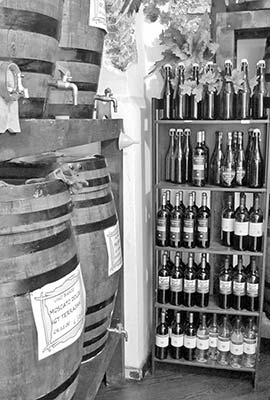
Wine with Aperitivo (dinner only): $$ Fáfiuché is an intimate yet vibrant family-run wine bar with a fun-loving vibe and no pretense. They serve a broad selection of wines and beers inside or at tables on the cobblestones outside. Andrea, Maria, and their son Gianmarco offer serious dishes from Apulia and Piedmont. And, if you’re assembling a mobile dinner, they put out an inviting buffet for your choice of affordable tapas plates (Mon-Sat 18:30-21:00, closed Sun, Via della Madonna dei Monti 28).
Pizza by the Slice on the Square: The hole-in-the-wall $ Pizzeria la Boccaccia is good for a takeaway slice. Point at what you like and mime how big of a rectangle you want (pricing by the etto, or 100 grams, daily, Via Leonina 73). Take it a block away to the main square (Piazza della Madonna dei Monti), buy a beer at the convenience store (top of the square), and make the piazza scene.
Gourmet Sandwich and Veggie Juice: Gourmet rosette—sandwiches on rose-shaped buns—are the specialty at $ Zia Rosetta. They’re perfect for a light bite to take away or eat in. A fun, healthy, and creative menu includes salads and centrifughe—fresh-squeezed, vitamin-bomb fruit and veggie juices (Mon-Wed 11:00-16:00, Thu-Sun until 22:00, Via Urbana 54).
Gelato: Hiding on the welcoming little square just above Zia Rosetta, Fatamorgana features some of the most creative gelato combinations I’ve seen in Italy, along with more conventional flavors. Portions are small but good quality—everything is organic and gluten-free (Piazza degli Zingari 5).
Behind the Colosseum
A pleasant little residential zone just up the street from the back of the Colosseum (the opposite direction from the Forum) features a real neighborhood feel and a variety of restaurants that capably serve tired and hungry sightseers.
$ Trattoria Luzzi is a well-worn, no-frills eatery serving simple food in a high-energy—sometimes chaotic—environment (as they’ve done since 1945). With good prices, big portions, and proximity to the Colosseum, it draws a crowd, so reserve ahead or expect a short wait at lunch and after 19:30 (Thu-Tue 12:00-24:00, closed Wed, Via Celimontana 1, +39 06 709 6332).
$$ Ristorante Pizzeria Naumachia, next door to Trattoria Luzzi, is another solid bet with slightly higher (but still reasonable) prices, a bit more refinement, and tasty pastas and pizza (daily 11:00-23:00, Via Celimontana 7, +39 06 700 2764).
$$ Li Rioni, a pizzeria, is open only for dinner, when its over-the-rooftops interior and terrace out front are jammed with Romans watching the busy chef plunge dough into its wood-fired oven, then pull out crispy-crust Roman-style pizzas (Wed-Mon 19:30-24:00, closed Tue, Via dei SS. Quattro 24, +39 06 7045 0605).
PANTHEON NEIGHBORHOOD
I’ve listed the restaurants in this central area based on which landmark they’re closest to: Campo de’ Fiori, Piazza Navona, the Trevi Fountain, or the Pantheon itself.
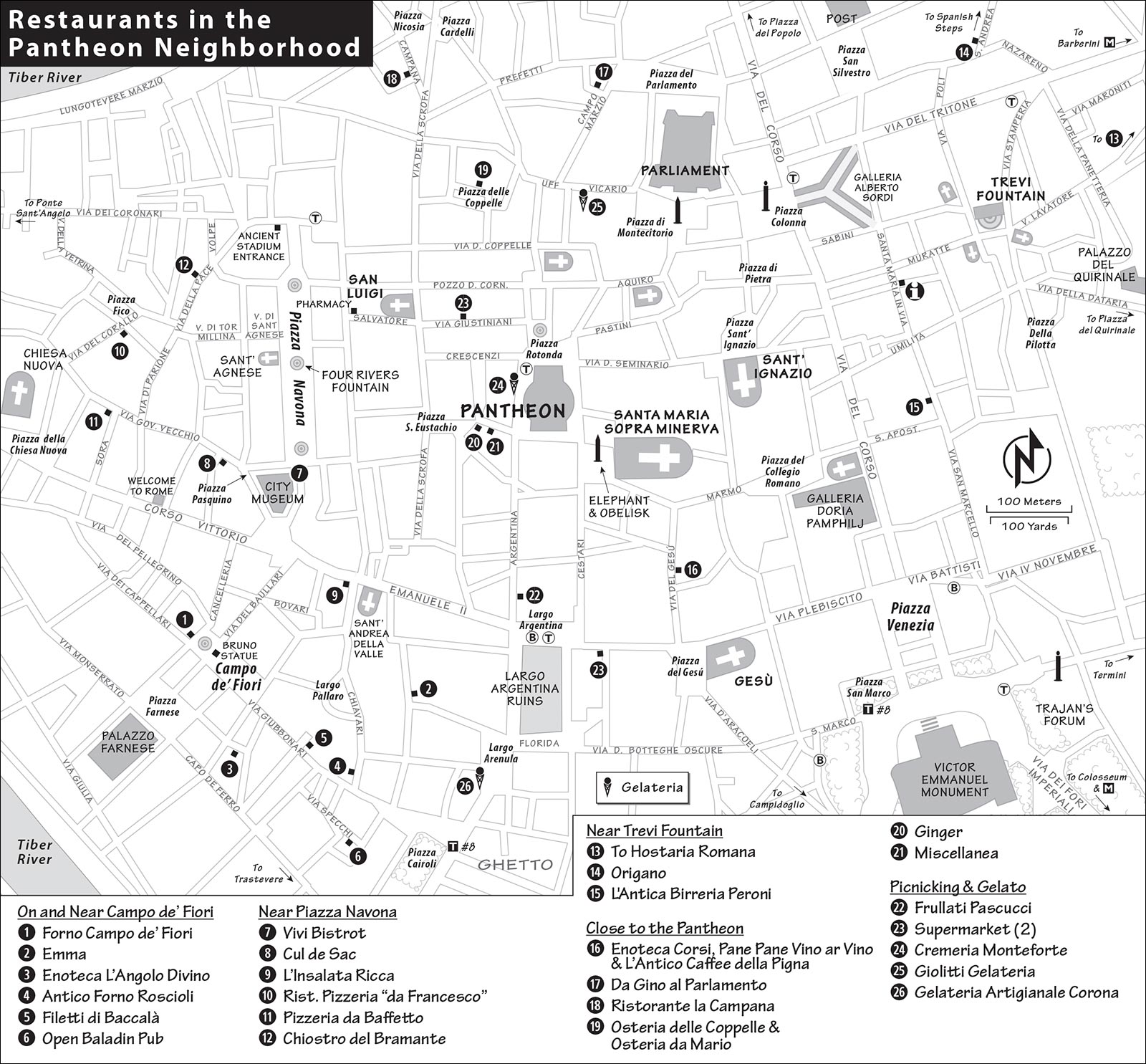
On and near Campo de’ Fiori
By day, Campo de’ Fiori hosts a colorful fruit-and-veggies market (with an increasing number of tourist knickknacks; Mon-Sat until around 13:30, closed Sun). Combined with a sandwich and a sweet from Forno Campo de’ Fiori, the bakery in the west corner of the square (behind the fountain), you can assemble a nice picnic.
In the evening, Campo de’ Fiori offers a characteristic setting—although it can be overrun by tourists out drinking.
$$$ Emma bills itself as a pizzeria, but it’s so much more. Tucked down a quiet side street near Campo de’ Fiori, it has an enticing menu, often supplemented with seasonal additions. The prices are a bit high, but the quality is also a step above—as evidenced by the higher ratio of Romans to visitors for this very touristy part of town. Reserve ahead (daily 12:30-15:30 & 19:00-23:00, Via del Monte della Farina 28, +39 06 6476 0475, https://emmapizzeria.com).
$$ Enoteca L’Angolo Divino is an inviting little wine bar run by Massimo Crippa, a sommelier who beautifully describes a fine array of wines along with the best accompanying meats, cheeses, and pastas. With tiny tables, a tiny menu, great wines by the glass, intriguing walls of wine bottles, smart advice, more locals than tourists, and a smooth jazz vibe, this place can leave you with a lifelong memory (daily 17:00-24:00 plus Tue-Sat 11:00-14:00, a block off Campo de’ Fiori at Via dei Balestrari 12, +39 06 686 4413).
$ Antico Forno Roscioli is an attractive upscale bakery with a few stools, selling a tempting array of breads, pizzas, and pastries (Mon-Sat 7:30-20:00, Sun 8:30-18:00, Via dei Chiavari 34).
$ Filetti di Baccalà is a cheap and basic Roman classic, where nostalgic regulars cram in at wooden tables and savor €6 fried cod finger-food fillets and raw, slightly bitter puntarelle greens (slathered with anchovy sauce, available in spring and winter). Study what others are eating, and order from your grease-stained server by pointing at what you want. Sit in the fluorescently lit interior or try to grab a seat out on the little square, a quiet haven a block east of Campo de’ Fiori (Mon-Sat 17:00-23:00, closed Sun, Largo dei Librari 88, +39 06 686 4018). If you’re not into greasy spoons, avoid this place.
$$ Open Baladin is a busy, modern, and spacious brewpub featuring a few dozen Italian craft beers on tap and a menu of burgers, salads, and freshly cooked potato chips. As burger bars are trendy in Italy, prices are somewhat high. It’s a nice break if you’re parched and ready for pub grub (Mon-Fri 12:00-15:00 & 18:00-late, Sat-Sun 12:00-late, Via degli Specchi 5, +39 06 683 8989).
Near Piazza Navona
Piazza Navona and the streets just to the west are jammed with an amazing array of restaurants. The places lining the piazza itself are traditional and touristy. Instead, survey the scene on the two streets heading west from the square. Here are my favorites in that zone:
$$ Vivi Bistrot is in the Museum of Rome building at the south end of Piazza Navona, with two window tables overlooking the square and quasi-outdoor tables filling the entranceway. This cheery and modern little restaurant serves salads, pastas, and burger plates with a focus on organic ingredients (Tue-Sun 10:00-24:00, closed Mon, Piazza Navona 2, +39 06 683 3779).
$$ Cul de Sac, a long and skinny trattoria lined with wine bottles, is packed with an enthusiastic crowd enjoying a wide-ranging menu, from pasta to homemade pâté. They have fun sampler plates of salumi and cheese, good wines by the glass, and fine outdoor seating. It’s jammed with regulars, and they don’t take reservations—come early to avoid a wait (daily 12:00-23:00, a block off Piazza Navona on Piazza Pasquino 73, +39 06 6880 1094).
$$ L’Insalata Ricca, a popular local chain, specializes in filling salads and also serves pasta, pizzas, and €12 meal deals. It’s a couple of blocks toward Largo Argentina, just across busy Corso Vittorio Emanuele (daily 12:00-24:00, Largo dei Chiavari 85, +39 06 6880 3656).
$$$ Ristorante Pizzeria “da Francesco,” bustling and authentic, has a 50-year-old tradition, a hardworking young waitstaff, great indoor seating, and a few tables stretching along the quiet street. Their blackboard explains the daily specials (daily 12:00-16:00 & 19:00-24:00, Piazza del Fico 29, +39 06 686 4009, www.dafrancesco.it). While a bit overpriced, it’s very popular. Reservations are required for evening seatings at 19:00, 20:30, or 22:00.
$ Pizzeria da Baffetto is famous among visiting Italians and therefore generally comes with a ridiculous line. The pizzas are great, the service is surly, and the tables are tightly arranged amid the mishmash of sketches littering the walls. The pizza-assembly kitchen keeps things energetic, and the pizza oven keeps the main room warm. Streetside tables are less congested and sweaty, but also less memorable (daily 12:00-15:30 & 18:00-late, order “M” or “D”—medium or large, Via del Governo Vecchio 114, +39 06 686 1617).
$$ Chiostro del Bramante (“Bramante’s Cloister”) is a museum café serving light lunches in a unique setting—overlooking the tranquil open-air chiostro. Gaze out as the Renaissance master Bramante brings symmetry to your meal. With not a hint of tourism, it’s a refined and elegant place, and fine for a predinner drink too. Enter just to the left of the church entrance and tell the ticket-window staff that you’re just going to the café (daily 10:00-20:00, meals served 12:00-15:00, Arco della Pace 5, +39 06 6880 9035).
Near the Trevi Fountain
The streets surrounding the Trevi Fountain are littered with mediocre restaurants catering exclusively to tourists. Skip them and walk a few blocks away to one of these. Also consider nearby Hostaria Romana, behind the fountain near the Palazzo del Quirinale (walk along Via Rasella to reach the restaurant; see the listing on here).
$$$ Origano is a bustling, modern bistro (and café) located three blocks away from the Trevi Fountain. It serves well-priced traditional Roman specialties and wood-fired pizza in an often chaotic setting (daily 12:00-24:00, Via di Sant’Andrea delle Fratte 25, +39 06 6992 0907, Germana).
$$ L’Antica Birreria Peroni is Rome’s answer to a German beer hall. Serving hearty mugs of the local Peroni beer and lots of just plain fun beer-hall food and Italian classics, the place is a hit with Romans for a cheap night out (Mon-Sat 12:00-24:00, closed Sun, midway between Trevi Fountain and Capitoline Hill, a block off Via del Corso at Via di San Marcello 19, +39 06 679 5310).
Close to the Pantheon
Eating on the square facing the Pantheon is a temptation, and I’d consider it for breakfast or just to relax and enjoy the Roman scene over a drink. But if you walk a block or two away, you’ll get less view and better value. Here are some suggestions:
$$$ Enoteca Corsi, a wine shop that grew into a thriving restaurant, is a charming local scene with the family table in back, where the kids do their homework. The Paiella family serves straightforward, traditional cuisine to an appreciative crowd of office workers. The board lists daily specials (gnocchi on Thursday, fish on Friday, and so on). Friendly Manuela and her staff offer fine wine at a third of the price you’d pay in normal restaurants—buy from their shop and pay a corking fee. Show this book for a free glass of homemade limoncello for dessert (Mon-Sat 12:00-15:30, Wed-Fri also 19:15-22:30, closed Sun, a block toward the Pantheon from the Gesù Church at Via del Gesù 87, +39 06 679 0821).
$$ Next to Enoteca Corsi are two other good lunch-only options popular with local office workers: Pane Pane Vino ar Vino is a creative little sandwich bar (Via del Gesù 84) and L’Antico Caffee della Pigna is a timeless old café serving pastas, salads, and sandwiches (Piazza della Pigna 57).
$$ Da Gino al Parlamento, tucked away on a tiny street behind the Parliament, has been a favorite since 1963. Photos on the wall recall the days when it was the haunt of big-time politicians. Siblings Carla and Fabrizio serve up traditional Roman favorites. They offer four seatings: 13:00, 14:30, 20:00, and 22:00. Reserve ahead, even for lunch, as you’ll be packed in with savvy locals (closed Sun, behind Piazza del Parlamento and just off Via di Campo Marzio at Vicolo Rosini 4, +39 06 687 3434, www.ristoranteparlamento.roma.it).
$$$ Ristorante la Campana is a classic—an authentic slice of old Rome appreciated by well-dressed locals. Claiming a history dating to 1518, this place feels unchanged over the years. It serves typical Roman dishes and daily specials, plus it has a self-service antipasti buffet, which makes a nice €12 lunch (Tue-Sun 12:30-15:00 & 19:30-23:00, closed Mon, inside seating only, just off Via della Scrofa and Piazza Nicosia at Vicolo della Campana 18, +39 06 687 5273, www.ristorantelacampana.com [URL inactive]).
$$$ Osteria delle Coppelle, a slapdash, trendy place, serves traditional dishes to a local crowd and a fun (if overpriced) selection of €3 cicchetti (small plates) that lets you enjoy a variety of Roman and other Italian dishes as tapas. It has a rustic interior and jumbled exterior seating on mismatched furniture, with a much classier dining section in the back (daily 12:30-15:30 & 19:00-late, Piazza delle Coppelle 54, +39 06 4550 2826). They run a fun “speakeasy” bar which opens nightly at 22:00—but don’t tell anyone. On the same charming square, the more old-school Osteria da Mario, with classic tables inside or out, is also worth considering.
$$$ Ginger, one block from the Pantheon, has a spacious and bright interior and seating on a delightful square. The menu selection—pastas, panini, salads, and smoothies—is healthy, organic, and a bit pricey. They may have tables when other places nearby are jammed (daily 8:00-23:00, Piazza di S. Eustachio 54, +39 06 6830 8559). A second location is four blocks in front of the Spanish Steps (see listing later, under “North Rome”).
$$ Miscellanea is run by much-loved Miki, who’s on a mission to keep foreign students well fed. He offers €4-5 sandwiches, pizza-like bruschetta, and a long list of hearty salads, along with pasta and other staples—it’s a good value for a cheap and filling dinner in a convenient location. Miki (and his son Romeo) often tosses in a fun little extra (like their “sexy wine”) if you have this book on the table (daily 9:00-24:00, just behind the Pantheon at Via della Palombella 37, +39 06 6813 5318).
Picnicking Close to the Pantheon
It’s fun to picnic with a view of the Pantheon. (Remember to be discreet.) Here are some options:
$ Frullati Pascucci, a hole-in-the-wall convenient for takeaway, has been making refreshing fruit frullati and frappés (like smoothies and shakes), plus fruit salads, for more than 80 years. Add an inexpensive sandwich to make a healthy light meal (Mon-Sat 6:00-23:00, closed Sun, north of Largo Argentina at Via di Torre Argentina 20, +39 06 686 4816).
For picnic goodies, try the Co-op supermarket. There’s a very expensive but handy one a half block from the Pantheon (daily 8:30-22:00, Via Giustiniani 18b) and another one three blocks away (daily until 21:00, Corso Vittorio Emanuele II 42).
Gelato Close to the Pantheon
Several fine gelaterie are within three or four blocks of the Pantheon.
Cremeria Monteforte is known for its traditional gelato and super-creamy sorbets (cremolati). The fruit flavors are especially refreshing—think gourmet slushies (closed Mon, faces the west side of the Pantheon at Via della Rotonda 22).
San Crispino serves small portions of tasty gourmet gelato. Because of their commitment to natural ingredients, the colors are muted; ice cream purists know that bright colors are artificial and used to attract children (a block in front of the Pantheon at Piazza della Maddalena 3).
Giolitti is Rome’s most famous and venerable ice-cream establishment (although few would say it has the best gelato). Takeaway prices are reasonable, and it has elegant Old World seating (just off Piazza Colonna and Piazza Montecitorio at Via Uffici del Vicario 40).
Gelateria Artigianale Corona feels like a time warp and is nothing fancy, but it serves honest, homemade gelato with an array of creative flavors (just south of Largo Argentina at Largo Arenula 27).
NEAR VATICAN CITY
As in the Colosseum area, some eateries near the Vatican prey on exhausted tourists. Avoid the restaurant pushers handing out fliers: They’re usually hawking places with bad food and expensive menu tricks. Instead, tide yourself over with a slice of pizza or at any of these eateries (see map on here), and save your euros for a better meal elsewhere.
Handy Lunch Places near Piazza Risorgimento
These listings are a stone’s throw from the Vatican wall. They’re mostly fast and cheap, with a good gelateria nearby.
$$ Il Colibrì, run by the Ricci brothers, has noisy streetside seating and a quiet interior (daily 10:30-15:30 & 19:00-24:00, at corner of Via Leone IV and Via Famagosta 69, +39 06 3751 4767).
$ Be.Re., facing the Vatican wall, feels trendy and serves a variety of microbrews. It’s an outpost of the Trapizzino chain, which means they sell little doughy “pizza pockets” with toasted crusts and a variety of fillings—plus supplì and other dishes (daily 10:00-late, Via Vespasiano 2, +39 06 9442 1854).
$ L’Insalata Ricca, next door, is another branch of the popular chain that serves hearty salads and pastas (daily 12:00-23:30, across from the Vatican walls at Piazza Risorgimento 5, +39 06 3973 0387).
$ Duecento Gradi, also nearby, is a good bet for fresh and creative sandwiches—though at €5-8 they’re expensive by Roman standards. Munch your lunch sitting down (€1 extra) or take it away (daily 11:00-24:00, Piazza Risorgimento 3, +39 06 3975 4239).
Gelateria Old Bridge scoops up hearty portions of fresh gelato for tourists and nuns alike—join the line (just off Piazza Risorgimento across from the Vatican walls at Viale dei Bastioni di Michelangelo 3).
Other Options in the Vatican Area
Most of these listings are near the Vatican Museums and Cipro Metro stop. The Borgo Pio eateries are near St. Peter’s Basilica.
Viale Giulio Cesare and Via Candia: These streets are lined with cheap pizza rustica shops and self-serve places. $ Forno Feliziani (closed Sun, Via Candia 61) is a fancy version with nicely presented pizza by the slice and simple cafeteria-style dishes that you can eat in or take out.
Covered Market: Turn your nose loose in the wonderful Mercato Trionfale, one of the city’s best market halls. It’s more of a sight than a place to eat. Almost completely untouristy (with lots of vendors, but no real prepared-food stands aside from a bakery and a sandwich counter), it’s located just three blocks north of the Vatican Museums (Mon-Sat roughly 7:00-14:00, Tue and Fri some stalls stay open until 19:00, closed Sun, corner of Via Tunisi and Via Andrea Doria). If the market is closed, try one of these grocery stores (both open daily until 20:30): Co-op, with a big bakery section and tables where you can eat pizza by the slice (to the northwest at Via Andrea Doria 46), or the smaller Carrefour Express (closer to the Vatican at Via Sebastiano Veniero 16).
Eating Close to St. Peter’s: The pedestrian-only Borgo Pio—a block from Piazza San Pietro—has restaurants worth a look, such as the traditional $$ Tre Pupazzi (Mon-Sat 12:00-15:00 & 19:00-23:00, closed Sun, at corner of Via Tre Pupazzi and Borgo Pio, +39 06 6880 3220). At $ Vecchio Borgo, across the street, you can get pasta, pizza by weight, and veggies to go or to eat at simple tables (daily 9:30-22:30, Borgo Pio 27a).
NORTH ROME
Near the Spanish Steps and Ara Pacis
To locate these restaurants, see the map on here.
$$$$ Ristorante il Gabriello is inviting and small—modern under medieval arches—and provides a peaceful and local-feeling respite from all the top-end fashion shops in the area. Claudio serves with charisma, while his brother Gabriello cooks creative Roman cuisine using fresh, organic products from his wife’s farm. Italians normally just trust their waiter and say, “Bring it on.” Tourists are understandably more cautious, but you can be trusting here. Invest €55—not including wine—in “Claudio’s Extravaganza,” created especially for my readers (not on the menu). Specify whether you’d prefer fish, meat, or both. (Be warned: Romans think raw shellfish is the ultimate in fine dining. If you don’t, make that clear.) While you’re likely to dine surrounded by my readers here (especially if eating before 21:00), the atmosphere is fun and convivial (dinner only, Mon-Sat 19:00-23:00, closed Sun, reservations smart, air-con, dress respectfully—no shorts, 3 blocks from Spanish Steps at Via Vittoria 51, +39 06 6994 0810, www.ilgabriello.com [URL inactive]).
$$ Ginger, four blocks in front of the Spanish Steps, is modern and bright. It feels stylish with a pinch of posh and pretense (daily 8:00-23:00, Via Borgognona 43, +39 06 9603 6390). A sister location near the Pantheon is described earlier.
$$$ Caffè Vitti, delightfully set on a fine traffic-free square, has been serving its neighborhood for over a century. The food won’t win any awards—and you pay for the location—but it offers a delightful chance to enjoy a meal (good salads, pizza) or a cocktail on a quiet and characteristic square. Sit outside and people-watch amidst a professional Roman crowd. The aperitivi come with a little tray of munchies (daily 6:30-24:00, Piazza San Lorenzo in Lucina 33, +39 06 687 6304).
Via della Croce Stand-Up Food Crawl
Two blocks north of the Spanish Steps, touristy Via della Croce is a fun street to graze for a light meal or snack. As you peruse this street from Via del Corso, you’ll pass these enticing stops for a bite:
Grano Frutta e Farina (#49) sells hard-to-resist pizza by the weight. Consider a tasting plate with a tiny bit of each pizza.
Focacci Deli (#43) makes sandwiches on request. Choose from their long, enticing counter of meats and cheeses.
Antica Enoteca (#76) is an inviting bar for a glass of wine in wonderful surroundings.
Venchi (#25) can make your gelato and chocolate dreams come true.
Pompi (#82), the self-proclaimed “kingdom of tiramisù,” features several flavors (classic, strawberry, pistachio, chocolate-banana, and more).
Pastificio (#8), with a history going back to World War I, serves up two fresh €4.50 pasta dishes each day; a glass of water or wine is included when you eat at the stools along the wall.
NEAR TERMINI STATION
With a constant swarm of hungry, well-worn travelers, Rome’s train station and the streets on either side of it are a nightmare of mostly low-end eateries. A few places stand out as options to consider:
At the Station
$-$$ Terrazza Termini is a bright, spacious, and safe-feeling food court, with several decent mall-type eateries, free Wi-Fi and charging stations, and plenty of places to sit. To find it, ride the escalator up from near track 15. In the afternoon, you’ll notice competing aperitivo deals (17:00-20:00, around €7 for a drink and access to buffet, Eccellenze della Costiera is best).
$-$$ Mercato Centrale (at the far end of the corridor that runs along track 24, facing Via Giovanni Giolitti) is a thriving, upscale food market hall with a great vibe and plenty of foodie options (daily 8:00-24:00).
Near Recommended Via Firenze Area Hotels
$$$ Target Restaurant seems to be the favorite recommendation of every hotel receptionist on Via Firenze. It has a sleek and dressy ambience, capable service, and food that’s reliably good, but pricey (free aperitivo with this book, daily 12:00-15:30 & 19:00-24:00, closed Sun at lunch, reserve to specify seating outside or inside—avoid getting seated in basement, Via Torino 33, +39 06 474 0066, www.targetrestaurant.it).
$$ Café Pasticceria Dagnino, a time warp from the 1960s set in a classic and stately old arcade, has a big selection at its tavola calda counter. It’s known for its fine pastry section and Sicilian treats—savory and sweet, from arancini to cannoli. A hit with local office workers, it’s fast, reasonably priced, and reliable, with good seating inside, upstairs, and outside in the mall (daily 7:00-23:00, Galleria Esedra, enter at Via Torino 95, +39 06 481 8660).
$ Caffè Torino Tavola Calda is another workers’ favorite for a quick, cheap lunch. They have good, fresh, hot dishes ready to go for a fine price. Head back past the bar to peruse their enticing display, point at what you want, then grab a seat and the young waitstaff will serve you (Mon-Fri 6:00-16:00, closed Sat-Sun, Via Torino 40, +39 06 487 0000).
$ Il Forno degli Amici, handy if your hotel is on Via Firenze, is a little hole-in-the-wall selling salads by the weight, pizza by the slice, sandwiches, and bakery items (Mon-Sat until 21:00, closed Sun, Via Firenze 51).
On Via Flavia
For a serious meal near the station, it’s worth walking 10 minutes to the quiet and residential-feeling Via Flavia, where you’ll find almost no tourism and a cluster of fine dining options.
$$$ Ristorante la Pentolaccia, upscale and romantic, is a dressy but still tourist-friendly place with tight seating and traditional Roman cooking—consider their daily specials. This is a local hangout, and reservations are smart. To start things off with a free bruschetta, place this book on your table (daily 12:00-15:00 & 18:00-23:00, a block off Via XX Settembre at Via Flavia 38, +39 06 483 477, www.lapentolaccia-restaurant.it [URL inactive], Vincenzo gives a warm welcome).
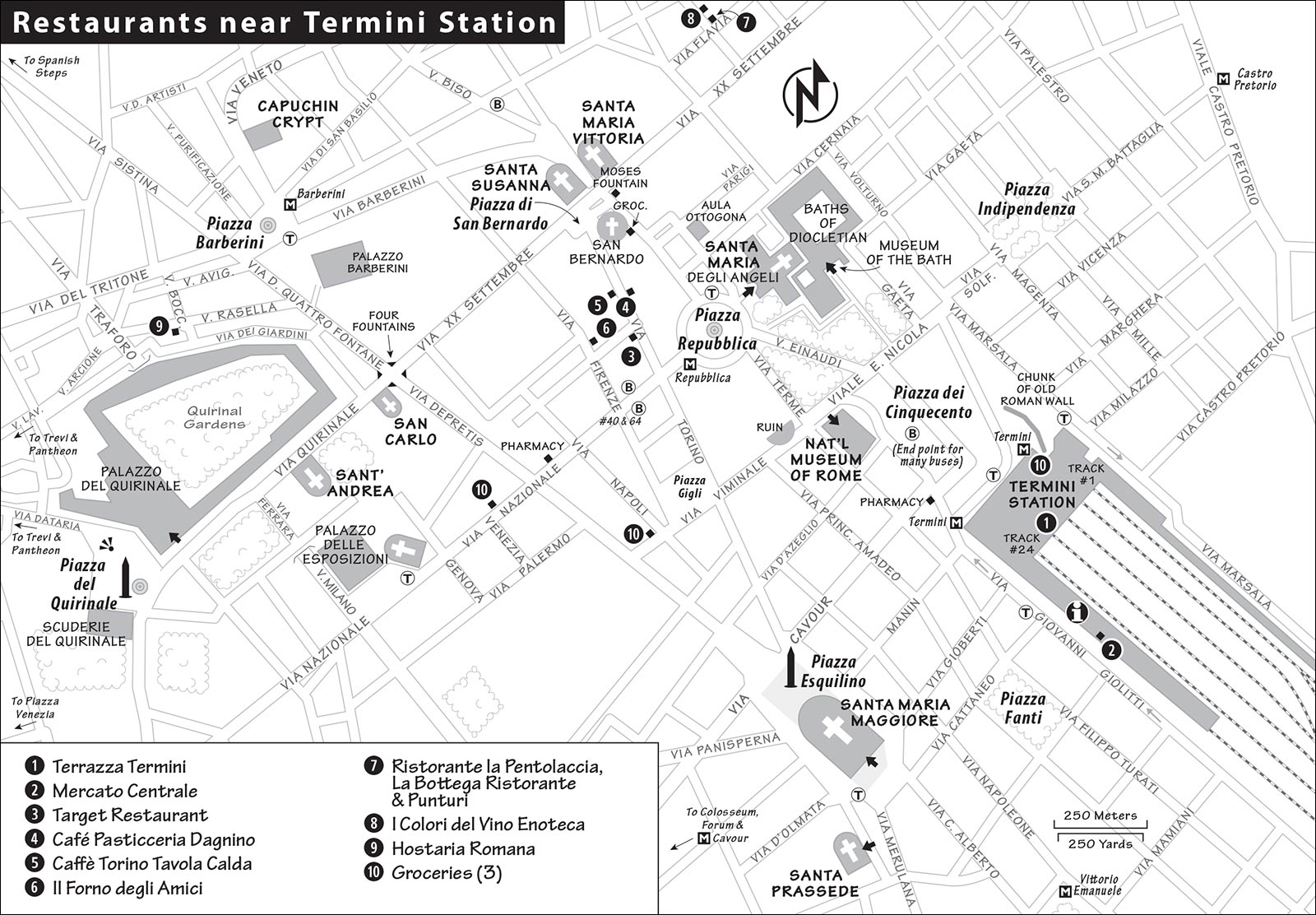
$$$ La Bottega Ristorante, next door, feels bigger—almost industrial. In the Punturi family since 1919, it’s a bright, contemporary, and easygoing place serving Roman and Mediterranean cuisine, and good wine by the glass (nightly from 17:00, Via Flavia 46, +39 06 487 0391).
$ Punturi—owned by the same people, and next door—is a high-end rosticceria cooking up super casual dishes sold by the weight and eaten on plastic at its fast-food-type seating (Mon-Sat 8:30-20:30, closed Sun, Via Flavia 46).
$$$ I Colori del Vino Enoteca is a classy wine bar that feels like a laboratory of wine appreciation. It has a creative menu of affettati (cold cuts) and cheeses, and a great list of fine wines by the glass. Helpful, English-speaking Marco carries on a long family tradition of celebrating the fundamentals of good nutrition: fine wine, cheese, meat, and bread. They also have a menu with more standard restaurant items (Mon-Sat 12:00-15:00 & 18:00-23:00, closed Sun, may close Sat at quiet times, Via Aureliana 15 at corner of Via Flavia, +39 06 474 1745). This is a great stop after dinner for a dessert wine (which comes with a plate of cookies).
Between Piazza Barberini and Trevi Fountain
$$$ Hostaria Romana, near the Quirinale, is a busy bistro with a hustling and fun-loving gang of waiters and makes a good choice on your way to or from Trevi Fountain. The upstairs is a tight, tidy, glassed-in terrace, while the cellar has noisy walls graffitied by happy eaters. As its menu specializes in traditional Roman dishes, it’s a good place to try saltimbocca alla romana or bucatini all’amatriciana. Their €12 antipasto della casa plate, with a variety of vegetables and cheeses, makes a hearty start to your meal (Mon-Sat 12:30-15:00 & 19:15-23:00, closed Sun and Aug, reservations smart, midway between Piazza Barberini and Trevi Fountain at Via del Boccaccio 1, +39 06 474 5284, www.hostariaromana.it).
TRASTEVERE
Restaurants line the streets of colorful Trastevere. It’s a favorite dining neighborhood for both Romans and tourists—more rustic than the downtown zone, but just a short walk across the river. ( Download my free Trastevere Walk audio tour to combine sightseeing with dinner.) It has become extremely touristy and attracts large numbers of young, hip, sometimes rowdy Americans. But if you venture away from the central square (Piazza di Santa Maria in Trastevere) into the back streets you’ll find places that serve with sincerity and charm. For locations, see the map on here.
$$$$ Taverna Trilussa is your best bet for dining memorably in Trastevere. Brothers Massimo and Maurizio offer quality without pretense. With a proud 100-year tradition, this place has the right mix of style and informality. The service is fun-loving (they’re happy to let you split plates into smaller portions to enjoy a family-style meal), yet professional. The menu celebrates local classics and seasonal specials—as well as their award-winning pasta amatriciana—and comes with a big wine selection. The spacious dining hall is strewn with eclectic Roman souvenirs. And outdoors, Trilussa has an actual hedged-in terrace rather than just tables jumbled together on the sidewalk. While the food is on the pricey side, you’re paying for an all-around memorable dining experience (dinner only, Mon-Sat from 19:30, closed Sun, reservations smart, Via del Politeama 23, +39 06 581 8918, www.tavernatrilussa.it).
$$$ Dar Sor Olimpio al Drago, with a small, romantic dining room (no outdoor seating), has a friendly staff and an enticing menu—both typical Roman and modern Italian. The chef enjoys exercising a little creative license (Mon-Fri 18:00-23:00, Sat-Sun 12:30-16:00 & 18:30-23:00, Piazza del Drago 2, +39 339 885 7574).
$$ Trattoria de Gli Amici employs people with developmental disabilities (who are helped and mentored by volunteers) to offer delightful meals in a charming atmosphere. Be a part of that community service mission and enjoy traditional Roman cuisine with a modern twist while surrounded by contemporary art in a medieval building or on a romantic square (daily 12:00-23:00, Piazza Sant’Egidio 6, +39 06 580 6033).
$$ La Prosciutteria Cantina dei Papi is a cozy and friendly place celebrating the wine, cheese, and meats of Lazio and Tuscany. They serve hearty taglieri (easily splittable boards) of regional delights (€5-15) and fine wine by the big or little bottle. If you’re in the mood for porchetta and mortadella, look no further. Nothing’s hot and you order at the counter (daily 12:00-24:00, Via della Scala 71, +39 06 6456 2839).
Classic Pizzerias in Trastevere
$$ Pizzeria “Ai Marmi” is a noisy festival of pizza. Tight marble-slab tables (hence the nickname “the Morgue”) fill the seating area in front of the oven and pizza-assembly line. It’s a classic Roman scene whether you enjoy the chaos inside, sit at a sidewalk table, or take the famously good, thin, and crispy €8-10 pizza to go. They also serve fried cod, rice balls with mozzarella (supplì), and bean dishes. Expect brusque service and a long line between 20:00 and 22:00 (Thu-Tue 18:30 until very late, closed Wed, cash only, tram #8 from Piazza Venezia to first stop over bridge, just beyond Piazza Sonnino at Viale di Trastevere 53, +39 06 580 0919).
$$ Pizzeria Dar Poeta, tucked in a back alley and a hit with local students, cranks out €9 wood-fired pizzas and calzones. These pizzas are easily splittable. If you’re extra hungry, pay an extra euro for pizza alta (thicker crust). Choose between their sloppy, cramped interior or the lively tables outside on the cobblestones (daily 12:00-24:00; call to reserve, arrive before 19:00, or expect a wait; 50 yards directly in front of Santa Maria della Scala Church at Vicolo del Bologna 45, +39 06 588 0516).
$ Trapizzino Vineria di Roma is a modern cousin to these classic pizzerias. It’s a bar with just two items on the menu: a variety of €4 trapizzini (pizza-like wraps with freshly toasted crusts) and €2 supplì (the Roman answer to arancini—Sicily’s fried rice balls). They also serve a good variety of Lazio wine. It’s a fast and cheap option if you’re in the mood for something like pizza—but a bit different (Tue-Sun 12:00-late, closed Mon, Piazza Trilussa 46, +39 06 581 7312). They have other locations around Rome, including in Testaccio; near the Vatican wall; and at the Mercato Centrale food court inside Termini station.
Rome Connections
BY TRAIN
Rome’s primary train station, centrally located Termini, has high-speed connections to other Italian cities and fast trains to the airport. Rome’s other major station is called Tiburtina. Most trains you’ll ride depart from Termini, but it’s always smart to confirm whether your train departs from Termini or Tiburtina (or one of Rome’s even smaller stations).
Termini Train Station
Termini, Rome’s main train station (www.romatermini.com), is a buffet of tourist services. At the head of the tracks are two atriums. The inner atrium, open at both ends, houses shops and eateries. The outer atrium, with glass walls, houses ticket windows and ticket machines plus a good-sized bookstore. (Note that ticket windows can be jammed with travelers—find the small red kiosk, take a number, and wait. Better yet, use the machines.) Outside the station is a large square where city buses depart. A basement shopping area extends beneath both atriums.
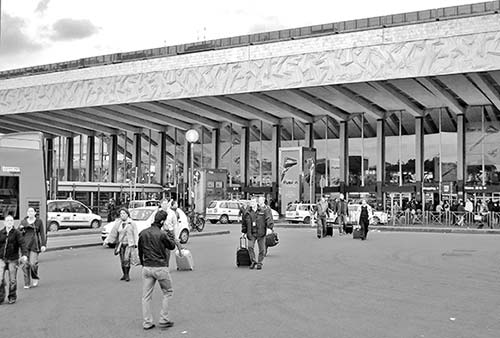
For security, entry to the train platforms themselves is restricted to ticket holders. Entrances are from the inner atrium and from the halls to the sides of the tracks. You may need to show your ticket, but there are no metal detectors and lines are generally short.
The Leonardo Express train to Fiumicino Airport runs from track 23 or 24—that’s on the far right, as you face the tracks (see “By Plane,” later).
Eating: In general, the best places in the station to sit are in its eateries (open long hours daily). A snack bar and a good self-service cafeteria (Ciao) are perched one floor above the ticket windows in the outer atrium, accessible from the side closest to track 24. For good-quality sandwiches to go, try VyTA in the inner atrium across from track 1. The large Sapori & Dintori supermarket is on the basement shopping level, below the inner atrium (go down the escalators on the Via Marsala side). For something more substantial, try the Terrazza Termini food court near track 15, or the Mercato Centrale at the far end of the corridor near track 24 (see listings on here).
Services: A long hall runs along Via Giovanni Giolitti, on the southwest side of the station (near track 24). Here you’ll find the TI (look for counters at the far end, just before the Mercato Centrale; daily 9:30-19:00), travel agencies, several car-rental desks, a medical center, and baggage storage (deposito bagagli). (This hallway is connected to the main part of the station by a long, slick Coin department store; you can walk through the store, or go around outside.)
In the hall along Via Marsala, on the northeast side of the station (near track 1), you’ll find a pharmacy.
Pay WCs are down the escalators from the inner atrium, and also inside both the Terrazza Termini and Mercato Centrale food courts.
Warning: The station has some sleazy sharks with official-looking business cards; avoid anybody selling anything unless they’re in a legitimate shop at the station. Other shady characters linger around the ticket machines—offers to help usually come with the expectation of a “tip.” There are no official porters; if someone wants to carry your bags or help you find your platform, they are simply angling for some cash.
Getting Between Termini and Rome Hotels
From Termini, many of my recommended hotels are easily accessible by foot or by Metro (for those in the Colosseum and Vatican neighborhoods). The Termini Metro station, where Metro lines A and B intersect, is beneath the station (take the escalator down and look for the red M). City buses leave from the square directly in front of the outer atrium. Buses to the airport leave from the streets on both sides of the station. Taxis queue in front and outside exits on both the north and south sides; if there’s a long taxi line in front, try a side exit instead. Avoid con men hawking “express taxi” services in unmarked cars (only use official white taxis with the maroon Roma Capitale logo).
Train Connections
Unless otherwise specified, the following connections are for Trenitalia.
From Termini by Train to: Fiumicino Airport (Leonardo Express; 2/hour, 32 minutes—see details under “By Plane,” later), Venice (hourly, 4 hours, 1 direct night train, 7.5 hours; Italo: 4/day, 4 hours, reservations required), Florence (2-3/hour, 1.5 hours; Italo: 2/hour, 1.5 hours), Siena (1-2/hour, 1 change, 3-4 hours), Orvieto (every 1-2 hours, 1.5 hours; regional trains are half the price and only slightly slower than Intercity trains), Assisi (4/day direct, 2 hours; more with change in Foligno), Pisa (1-2/hour, 3 hours, some change in Florence), La Spezia (7/day direct, 3-4 hours), Milan (1-3/hour, 3.5 hours; Italo: 1-2/hour), Naples (1-4/hour, 1 hour on Frecciarossa, 2 hours on Intercity, 2.5 hours and much cheaper on regional trains; Italo: hourly, 70 minutes), Pompeii (connect in Naples; see here), Sorrento (Italo train/bus combination, 2/day, 3.5 hours), Civitavecchia cruise-ship port (regional trains roughly hourly, 80 minutes; faster but pricier trains every 2 hours, 40-50 minutes), Brindisi (3/day, 5 hours), Bern (3/day, 6.5 hours, change in Milan), Munich (4/day, 10 hours, change in Verona or Padua; 1 direct night train, 11.5 hours), Nice (2/day, 9 hours, change in Milan), Paris (2/day, 11.5 hours, change in Turin; 1 night train, 13.5 hours, change in Milan), Vienna (3/day, 12 hours, 1-2 changes; 1 direct night train, 14 hours).
Tiburtina Train Station
Tiburtina, Rome’s second-largest train station (www.stazioneromatiburtina.it), sits in the city’s northeast corner (alongside a Metro stop and the intercity bus station). It’s a pass-through station: Fast trains along the Milan-Naples line stop here and continue on quickly. A few of these fast trains now stop only at Tiburtina, but most stop at both Tiburtina and Termini. Use the station that’s most convenient for you.
A massive top-level concourse (up several escalators) connects the platforms and is lined with all the expected services. The Tiburtina bus station is a five-minute walk to the west (described later, under “By Bus”).
Getting Between Tiburtina and Downtown Rome: Tiburtina is on Metro line B, four stops from Termini. Note that when going to Tiburtina, Metro line B splits—you want a train signed Rebibbia, not Jonio. Bus #492 runs conveniently between Tiburtina, several city-center stops (including Piazza Barberini, Piazza Venezia, and Piazza Navona), and the Vatican neighborhood (as you emerge from the train station’s front door, the city bus stop is just to the left).
Smaller Stations
Rome has about a dozen small train stations that are usually only useful if you’re staying nearby. The ones you’re most likely to use are San Pietro (south of Vatican City; bus #64 connects it to Piazza Venezia and Termini; if you’re staying near the Vatican and taking a regional train, get off here); Trastevere (a few minutes’ ride on tram #8 from Trastevere and Piazza Venezia); and Ostiense (5 minutes from the Piramide Metro stop via an underground walkway).
BY BUS
Long-distance buses use Autostazione Tiburtina, 200 yards west of the Tiburtina train and Metro station. Buses are typically slower than trains, but fares are cheap (as little as €5 to Naples or Florence). Buses are also handy for destinations poorly served by rail, or for making a direct connection instead of having to change trains (such as to Siena or Sorrento).
To reach the bus station from Tiburtina train station, follow signs to exit toward P.le Stazione Tiburtina (from inside, it’s past track 1); you may also see signs for Bus Regionali. You’ll end up on a square with local bus stops on your left; the long-distance bus station is straight ahead, around the row of trees (look for the large, fenced-in area with bus platforms). The station is mostly outdoors, chaotic, and crowded, with limited seating. Ticket-window lines can be slow, so buy your ticket online in advance if possible. If your bus departure platform isn’t listed on the digital board, ask one of the drivers or at a ticket desk for help.
From Rome by Bus to: Siena (9/day, 3 hours, https://global.flixbus.com), Sorrento (1-2/day, 4 hours; this is a cheap and easy way to go straight to Sorrento, buy tickets at www.marozzivt.it—in Italian only, at the Tiburtina ticket office, travel agencies, or on board for a €3.50 surcharge; +39 080 579 0111), Naples (every 1-2 hours, 3 hours, https://global.flixbus.com), and Florence (every 1-2 hours, 4 hours, https://global.flixbus.com).
BY PLANE
Rome’s two airports—Fiumicino (a.k.a. Leonardo da Vinci, code: FCO) and the small Ciampino (code: CIA)—share the same website (www.adr.it [URL inactive]).
Fiumicino Airport
Rome’s major airport is manageable. Terminals T1, T2, and T3 are all under one roof—walkable end to end in 20 minutes. T5 is a separate building requiring a short shuttle trip. (T4 is still being built.) The T1-2-3 complex has ground transport, a TI (in T3, daily 9:00-17:30, longer in summer), ATMs, banks, luggage storage, shops, and bars.
Getting Between Fiumicino Airport and Downtown Rome
In either direction, give yourself lots of time to allow for traffic delays, travel between your hotel and the train/bus station, finding your train or bus, and walking to the terminal.
By Train: Trenitalia’s slick, direct, first-class-only Leonardo Express train connects the airport train station (called Fiumicino Aeroporto) and Rome’s central Termini station in 32 minutes for €14. At either station, buy your ticket from a Trenitalia machine, a ticket office (biglietteria), or a newsstand near the platform. Machines sell open tickets that can be used on any train (even if it asks you to select a specific one). You must validate your ticket before boarding by stamping it in a green-and-gray machine near the track. Trains run at least twice hourly in both directions from roughly 6:00 to 23:00 (up to 4/hour in busy times).
From the airport’s arrival gate, follow signs to the train icon or Stazione/Railway Station. Make sure the train you board is going to the central “Roma Termini” station, as trains from the airport serve other destinations too.
Returning from Termini train station to the airport, trains usually depart from track 23 or 24. Check the departure boards for “Fiumicino Aeroporto” and confirm with an official or a local on the platform that the train is indeed going to the airport.
You can access most of the airport’s terminals from the airport train station. If your flight leaves from terminal T5 (where most American air carriers flying direct to the US depart), catch the T5 shuttle bus (navetta) on the sidewalk in front of T3—it’s too far to walk with luggage.
Cheaper (€8) local trains also run between the airport and some of Rome’s smaller train stations (including Trastevere, Ostiense, and Tiburtina). If you’re staying in Trastevere or the Pantheon area, it can be simpler and cheaper to take the local train to Trastevere station, then walk out to the street and take the #8 tram downhill to your hotel. The train to Tiburtina is useful if you have a long-distance bus to catch.
Only a couple of long-distance trains per day serve the airport. To connect to other Italian cities, you’ll usually have to change at Termini or Tiburtina.
By Bus: Various bus companies—including Cotral (www.cotralspa.it [URL inactive]), Terravision (www.terravision.eu), SIT (www.sitbusshuttle.com), T.A.M. (www.tambus.it), and Schiaffini (www.romeairportbus.com)—connect Fiumicino and Termini train station. The SIT bus also stops near the Vatican. I’d just hop on whichever one is departing first (every 10-15 minutes at peak times). While cheaper than the train (about €7 one-way), buses take twice as long (about an hour, depending on traffic) and can fill up (allow plenty of extra time). At the airport, the bus station is at the far end of terminal T3.
By Airport Shuttle: Shared shuttle van services can be economical for one or two people. Consider Rome Airport Shuttle (€25 for one person, extra people—€6 each, by reservation only, +39 06 4201 4507 or 06 4201 3469, www.airportshuttle.it).
By Taxi: A taxi between Fiumicino and downtown Rome takes 45 minutes in normal traffic (for taxi tips, see here) and costs €50. (Add a €2-5 tip for good service.) From the airport, be sure to catch an official taxi at the taxi stand. Avoid unmarked, unmetered taxis; these drivers will try to tempt you away from the taxi-stand lineup by offering an immediate (rip-off) ride. Rome’s official taxis are white, with a “taxi” sign on the roof and a maroon Roma Capitale logo on the door. Cabs based in Fiumicino (the town near the airport) are allowed to charge €60 for the ride to downtown Rome.
Signs stating the Rome and Fiumicino price caps are posted next to the taxi stand. It’s best to use the Rome city cabs and establish the price before you get in.
When departing Rome, your hotel can arrange a taxi to the airport at any hour. Alternatively, they sometimes work with comparably priced private car services, which are usually just fine (if not nicer than a regular cab).
Ciampino Airport
Rome’s smaller airport handles charter flights and some budget airlines (including most Ryanair flights).
Getting Between Ciampino Airport and Downtown Rome: Bus companies Terravision, Schiaffini, and SIT will take you to Rome’s Termini train station (about €5, 2/hour, 45 minutes). Atral runs a quicker route (25 minutes, www.atral-lazio.com) to the Anagnina Metro stop, where you can connect to the stop nearest your hotel (departs every 40 minutes). City bus #520 runs from Ciampino to the Subaugusta Metro stop for a single transit ticket.
The fixed price for any official taxi (with the maroon Roma Capitale logo on the door) is €31 to downtown (within the old city walls, including most of my recommended hotels).
Rome Airport Shuttle also offers shared van rides to and from Ciampino (€25 for one person, listed earlier).
BY CAR
A car is a worthless headache in Rome. If you’re visiting Rome as part of a longer trip, avoid a pile of stress and save money by parking at the huge, easy, free, and relatively safe lot behind the train station in the hill town of Orvieto (follow P signs from the autostrada) and catching a cheap regionale train to Rome (every 1-2 hours, 1.5 hours).
Or, if Rome is the first stop of your trip and you plan to rent a car for the rest of Italy, you could sightsee Rome, then take the train to Orvieto and rent a car there (Hertz has an office down the street from the train station). If you absolutely must drive and park a car in Rome, there’s a large underground garage at the Villa Borghese Gardens near the Spagna Metro station, just outside the restricted downtown zone (€20/day, Viale del Galoppatoio 33, www.sabait.it).
Alternatively, use one of the more than two dozen park-and-ride lots at Rome’s outlying Metro stations (€5/24 hours). These vary in size and convenience; one of the largest is at the Anagnina Metro station, just inside Rome’s ring expressway along the Via Tuscolana (southeast of downtown). For details, search for “park and ride” (parcheggi di scambio) at www.atac.roma.it.
For general information on train travel in Italy, see here.
BY CRUISE SHIP
Hundreds of cruise ships dock each year at the small, manageable port city of Civitavecchia (chee-vee-tah-VEH-kyah), about 45 miles northwest of Rome. For more details, see my Rick Steves Mediterranean Cruise Ports guidebook.
Getting to Rome: Trains are generally the fastest (and most economical) way to day-trip into Rome. Trains connect Civitavecchia with several stations in Rome, including Ostiense (two Metro stops from the Colosseum), San Pietro (a short walk from Vatican City), or Termini (the main transit hub, but farther from key sights). Trains depart frequently for Rome and take 40-80 minutes. You can buy train tickets at Civitavecchia’s station, or the “Tourist Information” travel agency at the station, which also sells other transportation tickets.
To reach Civitavecchia’s train station, take a free shuttle bus from your ship to the Largo della Pace transit hub. City bus service from the hub to the train station is fast and reliable (€2, 6/hour, 10 minutes, buy tickets from kiosk before boarding). Or you can walk (about 25 minutes) or take a taxi (€15-20).
By Seasonal Express Train for Cruisers: When there are enough ships in port to justify it, a special “Civitavecchia Express” train offers round-trips to San Pietro station designed for cruise travelers (departs once or twice each morning with one return trip from San Pietro in the afternoon). The €15 round-trip ride is comfortable, air-conditioned, and limited to cruise passengers, and can save you up to 20 minutes each way (https://civitavecchia.portmobility.it [URL inactive]). Buy tickets at Trenitalia.com, at the station’s ticket window (not available at self-service machines), at the station’s “Tourist Information” travel agency, or on the train.
More Options: Organized tours into Rome are offered by Can’t Be Missed Tours (RS%, +1 607 7542 7981, www.cantbemissedtours.com) and Miles & Miles Private Tours (see here). Several private companies offer cheap bus transfers from the transit hub to Rome or Rome’s airports (try Civita Tours, +39 346 217 7803, www.civitatours.com).