AMALFI COAST & PAESTUM
Amalfi Coast Tour • Positano • Ravello • Paestum
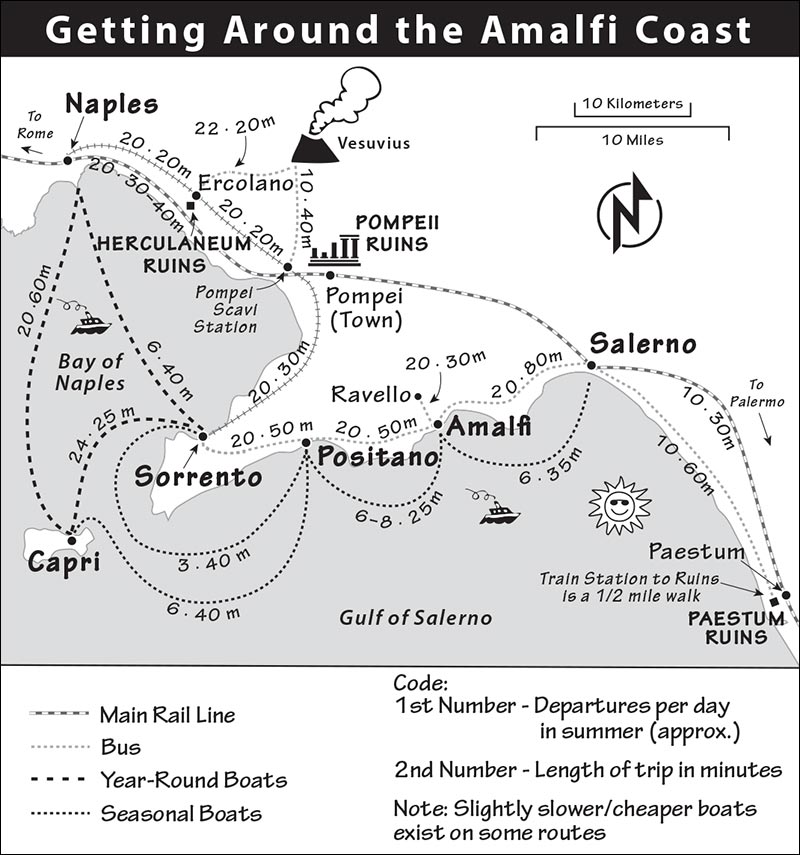
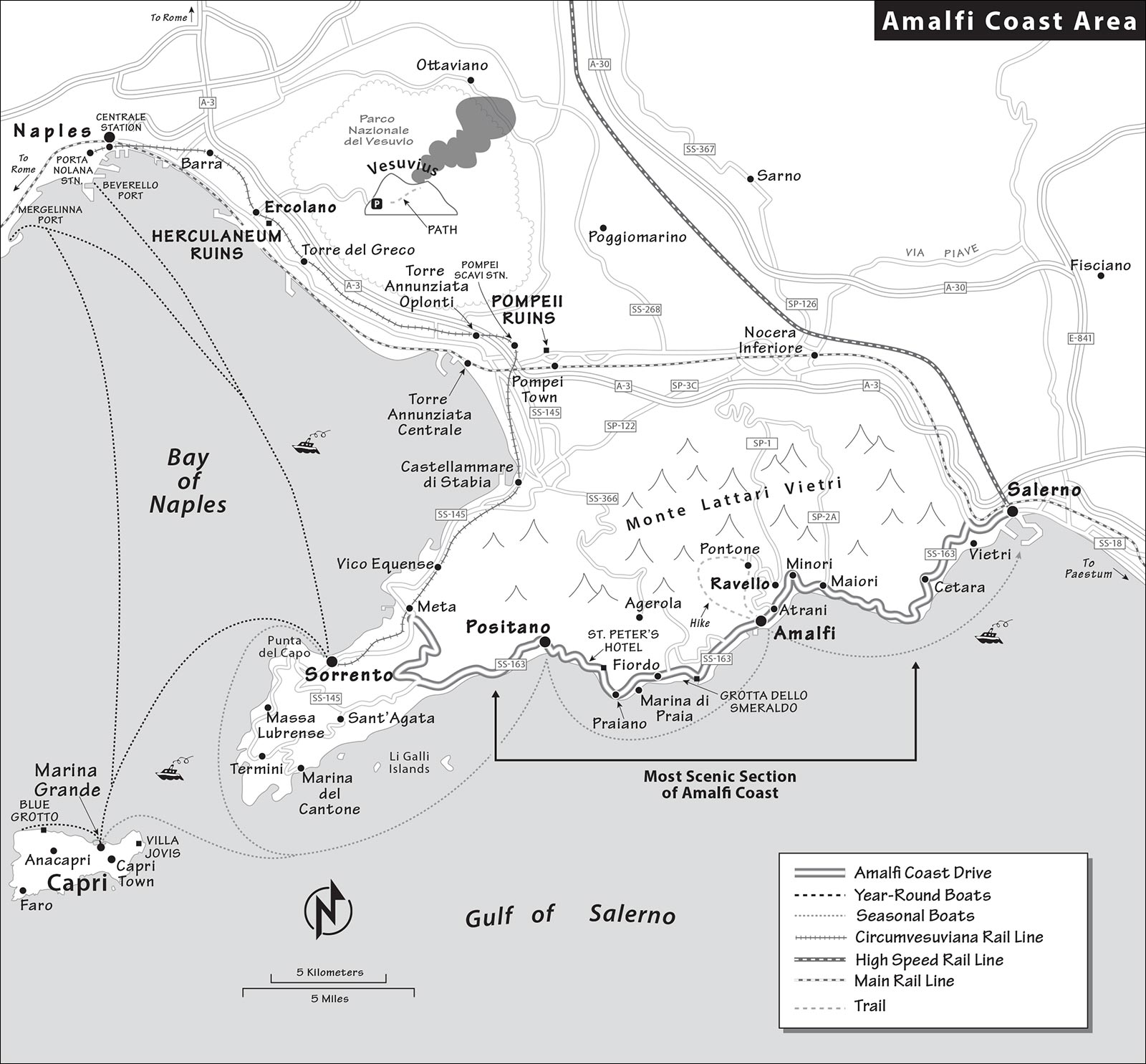
Map: Getting Around the Amalfi Coast
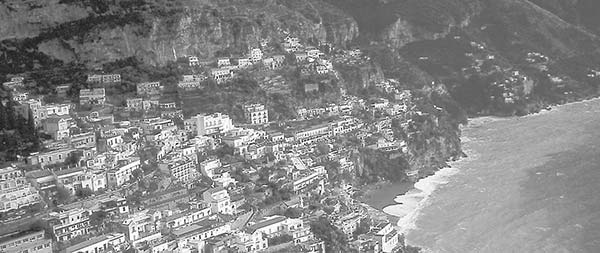
With its stunning scenery, hill- and harbor-hugging towns, and historic ruins, Amalfi is Italy’s coast with the most. The breathtaking trip from Sorrento to Salerno is one of the world’s great bus or taxi rides. It will leave your mouth open and your camera’s memory card full. You’ll gain respect for the 19th-century Italian engineers who built the roads—and even more for the 21st-century drivers who squeeze past each other here daily. Cantilevered garages, hotels, and villas cling to the vertical terrain, and beautiful but out-of-reach coves tease from far below. As you hyperventilate, notice how the Mediterranean, a sheer 500-foot drop below, really twinkles. All this beautiful scenery apparently inspires local Romeos and Juliets, with the latex evidence of late-night romantic encounters littering the roadside turnouts. Over the centuries, the spectacular scenery and climate have been a siren call for the rich and famous, luring Roman emperor Tiberius, Richard Wagner, Sophia Loren, Gore Vidal, and others to the Amalfi Coast’s special brand of la dolce vita.
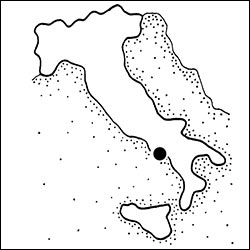
The two main Amalfi Coast towns (Positano and Amalfi) are pretty, but they’re also touristy, congested, and overpriced. (Many visitors prefer side-tripping in from Sorrento.) Most beaches here are private, pebbly, and expensive. Check and understand your bills in this greedy region.
In Paestum, farther south, you can see one of the world’s best collections of 2,500-year-old Greek temples, a worthwhile museum with artifacts from the site, and the remains of a Roman town.
Amalfi Coast
The Amalfi Coast is one of those places with a “must see” reputation. Staggeringly picturesque and maddeningly touristy, it can be both rewarding and frustrating. As an antidote to intense Naples, it’s the perfect place for a romantic break—if done right and if you can afford it. These towns are the big three sights of the Amalfi Coast: Positano is like a living Gucci ad and has good overnight options; Amalfi evokes a day when small towns with big fleets were powerhouses on the Mediterranean; and Ravello is fun for that tramp-in-a-palace feeling.
PLANNING YOUR TIME
On a quick visit, use Sorrento (see previous chapter) as your home base and do the Amalfi Coast as a day trip. But for a small-town vacation from your vacation, spend a few more days on the coast, sleeping in Positano.
Trying to decide between staying in Sorrento or Positano? Sorrento is larger, with useful services and the best transportation connections and accommodations. Tiny Positano is more touristy, but also more chic and picturesque, with a decent beach.
Naples or Paestum can also work as a base for an Amalfi Coast day trip, if you get an early start and the timetables align. From Naples, you have two options by public transport: train to Salerno, then bus (or boat) to Amalfi town; or, Circumvesuviana train to Sorrento, then bus to Positano and/or Amalfi. (You can go out one way and return the other.) From Paestum, you can take the train to Salerno, then the bus (or boat) to Amalfi or Positano.
GETTING AROUND THE AMALFI COAST
The real thrill here is the scenic drive between Sorrento and Salerno. The stretch from Positano to Amalfi is the best. This is treacherous stuff—even if you have a car, you may want to take the bus or hire a driver. Brave souls enjoy seeing the coast by scooter or motorbike (rent in Sorrento).
Next, I’ve outlined your options by bus, boat, and taxi. Many travelers do the Amalfi Coast as a round-trip by bus, but a good strategy is to go one way by land and return by boat. For example, take the bus along the coast to Positano and/or Amalfi, then catch the ferry back. Ferries run less often in spring and fall, and some don’t run at all off-season (mid-Oct-mid-April). Boats don’t run in stormy weather at any time of year. If boats aren’t running directly between Amalfi or Positano and Sorrento, check if you can change boats in Capri.
Looking for exercise? Consider an Amalfi Coast hike (see “Hikes” in the Amalfi Town section, later in this chapter). Numerous trails connect the main coastal towns with villages on the hills. Get a good map before you venture out (local hiker and orienteer Giovanni Visetti has posted free maps and itineraries at www.giovis.com).
By Public Bus
SITA buses from Sorrento to Amalfi, via Positano, are the most common, inexpensive way to see the coast (for schedules, see www.sitasudtrasporti.it or—easier to read—www.positano.com). From Sorrento, the first bus leaves at 6:30; from 8:30 they run roughly every half-hour until 17:00, then hourly until 22:00 in summer or until 20:00 in winter (50 minutes to Positano; another 50 minutes to Amalfi). To reach Ravello (the hill town beyond Amalfi) or Salerno (at the far end of the coast), transfer in Amalfi. When checking the schedule, note that giornaliero (G) means daily, scolastico (S) means school bus, feriale (F) denotes Monday-Saturday, and festivo (H) is for Sundays and holidays.
Individual tickets are inexpensive (€2-4). All rides are covered by the 24-hour Costiera SITA Sud pass (€10), which may not save you money but does save time buying tickets. Tickets are sold at tobacco shops and newsstands, not by drivers.
In Sorrento, SITA buses leave from stalli (bays) 1-3 at the train station (10 steps down, then join the line). In warm months, look for an extra ticket sales desk under an umbrella.
Leaving Sorrento, grab a seat on the right for the best views. If you return by bus, it’s fun to sit directly behind the driver for a box seat with a view over the twisting hairpin action. Sitting toward the front will also help minimize carsickness. If you’re unlucky enough to land the occasional bus whose windows are covered by advertising, either sit right up front, or try your luck with the next departure.
Avoiding Crowded Buses: Amalfi Coast public buses are routinely unable to handle demand during summer months and holidays (perhaps because the fares are so cheap). Generally, if you don’t get on one bus, you’re well positioned to catch the next one. From Sorrento, aim to leave on the 8:30 bus at the latest—earlier if possible. Departures between 9:00 and 11:00 can be frustratingly crowded.
Note that an eight-seater minibus and driver costs about €350 for the day: If you can organize a small group, €50 per person is a very good deal. (For options, see “By Taxi,” later.)
When to Stop in Positano: Summer congestion can be so bad—particularly in July and August—that some Amalfi-Sorrento buses don’t even stop in Positano (because they fill up in Amalfi). Those trying to get back from Positano to Sorrento are stuck taking an extortionist taxi or hopping a boat...if one’s running. When day-tripping from Sorrento to Amalfi, it’s safest to make your Positano stop on the outbound leg, then come straight home from Amalfi, where the bus originates. Or consider the hop-on, hop-off bus as an alternative.
By Tour Bus
CitySightseeing’s bright red hop-on, hop-off buses travel from Sorrento to Positano to Amalfi and back. While more expensive than public buses, they can be much less crowded and come with a recorded commentary. You’ll pay €15 for your outgoing ride (buy tickets onboard) and €6 for the return trip (on the same day). Buses run from the Sorrento train station—confirm times locally (+39 081 1825 7088, www.city-sightseeing.it).
By Boat
A few passenger boats per day link Positano and Amalfi with Sorrento, Capri, and Salerno (generally April-Oct only). The last daily departure can be as early as midafternoon and is never much later than 18:00. Check schedules carefully: Frequency varies from month to month, and boats may be cancelled in bad weather (especially at Positano, where there’s no real pier). The companies operating each route change frequently, compete for passengers, and usually claim to know nothing about their rivals’ services. The best sources for timetables are www.positano.com (under “Ferry Schedules”) and www.capritourism.com (under “Shipping Timetable”). Go to the dock to confirm times and buy tickets. For a summary of sample routes, frequencies, and travel times, see the “Getting Around the Amalfi Coast” map.
If you’re going to Capri from Positano, save time and money by finding a boat that goes directly to the Blue Grotto (rather than dropping you at the port in Capri to catch another boat from there). Here’s another useful trick: If no boats are going directly between Sorrento and Positano/Amalfi, you can usually still connect the two sides of the peninsula via Capri.
By Taxi
Given the hairy driving, impossible parking, crowded public buses, and potential fun, you might consider splurging to hire your own car and driver for your Amalfi day.
The English-speaking Monetti family car-and-driver service—Raffaele, daughter Carolina, and cousin Gianpaolo—have taken excellent care of my readers’ transit needs for decades. Sample trips and rates: all-day Amalfi Coast (Positano, Amalfi, Ravello, usually with stops in each town and lunch in Ravello), 8 hours, €350; Pompeii and Paestum, 10 hours, €480; transfer between Naples airport or train station and Sorrento, €160. These prices are for up to three people; you’ll pay more for a larger eight-seater van. Though based in Sorrento, they can also pick you up from other places. Payment is cash only (as with most of the car services listed). Reserve directly by email (or by phone on short notice)—don’t rely on a web search for the name Monetti, as that might lead you to an impersonator trying to siphon off their business (Raffaele’s mobile +39 335 602 9158 or +39 338 946 2860, “office” run by his English-speaking Finnish wife, Susanna, www.monettitaxi17.com, monettitaxi17@libero.it). If you get into any kind of serious jam in the area, you can call Raffaele for help.
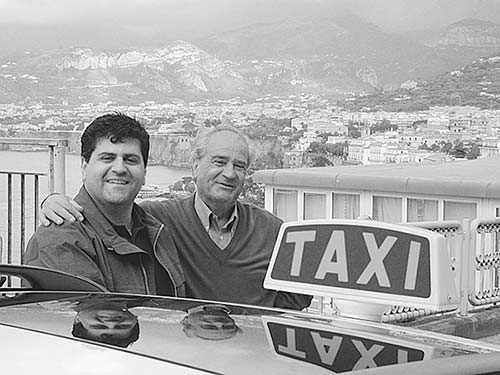
Francesco del Pizzo is another smooth and honest Sorrento-based driver. A classy man who speaks English well, Francesco enjoys explaining things as he drives (9 hours or so in a car with up to 4 passengers, €320; up to 8 passengers in a minibus, €360; +39 333 238 4144, francescodelpizzo@yahoo.it).
Anthony Buonocore, an Amalfi native, specializes in cruise shore excursions, as well as trips anywhere in the region in his eight-person Mercedes van (rates vary, special deals for early booking and in low season, +39 349 441 0336, www.amalfitransfer.com, buonocoreanthony@yahoo.it).
Rides Only: If you’re hiring a cabbie off the street for a ride and not a tour, a one-way trip from Sorrento to Positano might cost about €90 (to Amalfi, €150). All Sorrento taxis are white minivans (taking up to eight passengers), sport a taxi sign on top, and use a meter (fares will vary a bit depending on traffic). If there’s no meter, it’s not an official taxi.
By Shared Minibus
While hiring your own driver is convenient, it’s also expensive. To bring the cost down, split the trip—and the bill—with other travelers using this book. Naples-based Mondo Guide offers a nine-hour minibus trip that departs from Sorrento and heads down the Amalfi Coast, with brief stops in Positano, Amalfi, and Ravello, before returning to Sorrento (€65/person). They also offer Rick Steves readers shared tours in Pompeii and Naples. For details, see here.
Amalfi Coast Tour
The wildly scenic Amalfi Coast drive from Sorrento to Salerno, worth ▲▲▲, is one of the all-time great white-knuckle rides, whether you tackle it by bus, taxi, or shared minibus.
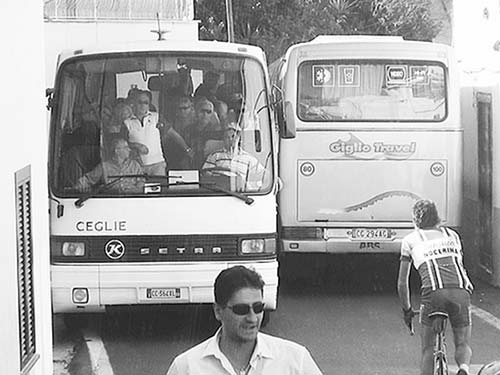
Gasp from the right side of the car or bus as you go out and from the left as you return to Sorrento. (Those on the wrong side really miss out.) Traffic is so heavy that private tour buses are only allowed to go in one direction (southbound from Sorrento). Summer traffic is infuriating. Fluorescent-vested police are posted at tough bends during peak hours to help fold in side-view mirrors and keep things moving. Here’s a loose, self-guided tour of what you’re seeing as you travel from west to east.
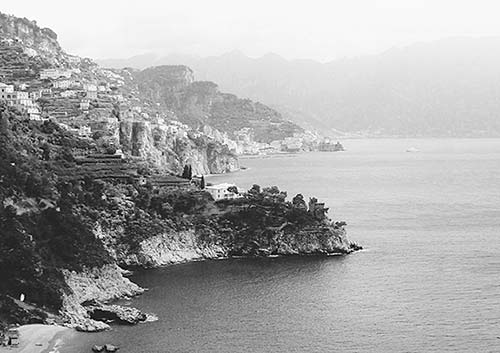
 Self-Guided Tour: Leaving Sorrento, the road winds up into the hills past lemon groves and hidden houses. The gray-green trees are olives. (Notice the green nets slung around the trunks; these are unfurled in October and November, when the ripe olives drop naturally, for an easy self-harvest.) Dark, green-leafed trees planted in dense groves are the source of the region’s lemons (many destined to become limoncello liqueur) and big, fat citrons (cedri, mostly used for marmalade). The black nets over the orange and lemon groves create a greenhouse effect, trapping warmth and humidity for maximum tastiness, while offering protection from extreme weather (preserving the peels used for limoncello).
Atop the ridge outside Sorrento, look to your right: The two small islands are the Li Galli Islands, where some say the sirens in Homer’s Odyssey lived. The largest of these islands was once owned by the famed ballet dancer Rudolf Nureyev; it’s now a luxury residence, rented to wealthy visitors for upward of $100,000 per week (bring your own yacht or arrive by helicopter).
When Nureyev bought the island, the only building standing was the stony watchtower—the first of many you’ll see all along the coast. These were strategically placed within sight of one another so that a relay of rooftop bonfires could quickly spread word of a pirate attack.
The limestone cliffs that plunge into the sea were traversed by a hand-carved trail that became a modern road in the mid-19th century. Fruit stands sell produce from farms and orchards just over the hill. Limestone absorbs heat and rainwater, making this south-facing coastline a fertile suntrap, with temperatures as much as 10 degrees higher than in nearby Sorrento. The chalky, reflective limestone, which extends below the surface, accounts for the uniquely colorful blues and greens of the water. With the favorable climate, bougainvillea, geraniums, oleander, and wisteria grow like weeds here in the summer. Notice the nets pulled tight against the cliffs—they’re designed to catch rocks that often tumble loose after heavy rains.
The dramatic, exotic-looking town of Positano is the main stop along the coast. The town is built on a series of man-made terraces, which were carefully carved out of the steep rock, then filled with fertile soil carried here from Sorrento on the backs of donkeys. You can read the history of the region in Positano’s rooftops—a mix of Roman-style red terra-cotta tiles and white domes inspired by the Saracens (see sidebar).
If you’re getting off here, stay on through the first main stop by the round-domed yellow church (Chiesa Nuova), which is a very long walk above town. Instead, get off at the second main stop, Sponda, then head downhill toward the start of my self-guided Positano Walk (later in this chapter). Sponda is also the best place to catch the onward bus to Amalfi. If you’re coming on a smaller minibus, you’ll twist all the way down—seemingly going in circles—to Piazza dei Mulini and the start of the walk.
Just south of Positano, St. Peter’s Hotel (Il San Pietro di Positano, camouflaged below the tiny St. Peter’s Church) is just about the poshest stop on the coast. In the adjacent gorge, notice the hotel’s terraced gardens (where produce is grown for their restaurant) above an elevator-accessible beach and dock.
Just around the bend, Praiano comes into view. Less ritzy or charming than Positano or Amalfi, it’s notable for its huge Cathedral of San Gennaro, with a characteristic majolica-tiled roof and dome—a reminder of this region’s respected ceramics industry. In spindly Praiano, most of the homes are accessible only by tiny footpaths and staircases. Near the end of town, just before the big tunnel, watch on the left for the big presepe (manger scene) embedded into the cliff face. This Praiano-in-miniature was carved by one local man over several decades. At Christmastime, each house is filled with little figures and twinkle lights.
Just past the tunnel, look below and on the right to see another Saracen watchtower. (Yet another caps the little point on the horizon.)
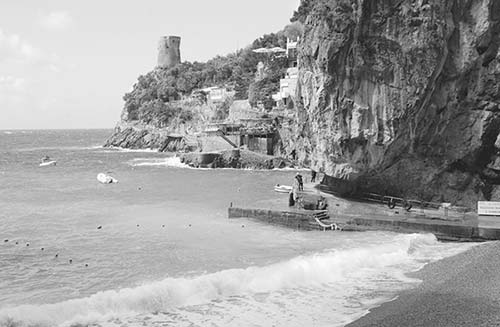
A bit farther along, look down to see the fishing hamlet of Marina di Praia tucked into the gorge (furore) between two tunnels. If you’re driving—or being driven—consider a detour down here for a coffee break or meal. This serene, tidy nook has its own little pebbly beach with great views of the stout bluffs and watchtower that hem it in. A seafront walkway curls around the bluff all the way to the tower.
Just after going through the next tunnel, watch for a jagged rock formation on its own little pedestal. Locals see the face of the Virgin Mary in this natural feature and say that she’s holding a flower (the tree growing out to the right). Also notice several caged, cantilevered parking pads sticking out from the road. This stretch of coastline is popular for long-term villa rentals—Italians who want to really settle into Amalfi life.
Look down and left for the blink-or-you’ll-miss-it fishing village that’s aptly named Fiordo (“fjord”), filling yet another gorge. You’ll see humble homes burrowed into the cliff face, tucked so far into the gorge that they’re entirely in shadow for much of the year. Today these are rented out to vacationers; the postage-stamp beach is uncrowded and inviting.
After the next tunnel, in the following hamlet, keep an eye out for donkeys with big baskets on their backs—the only way to make heavy deliveries to homes high in the rocky hills.
Soon you’ll pass the big-for-Amalfi parking lot of the Grotta dello Smeraldo (“Emerald Grotto”), a cheesy roadside attraction that wrings the most it can out of a pretty, seawater-filled cave. Passing tourists park here and pay €5 to take an elevator down to sea level, pile into big rowboats, and get paddled around a genuinely impressive cavern while the boatman imparts sparse factoids. Unless you’ve got time to kill, skip it.
Now you’re approaching what might be the most dramatic watchtower on the coast, perched atop a near-island. This tower guarded the harbor of the Amalfi navy until the fleet was destroyed in 1343 by a tsunami caused by an earthquake, which also led to Amalfi’s decline (it was once one of Italy’s leading powers).
Around the next bend you’re treated to stunning views of the coastline’s namesake town—Amalfi. The white villa sitting on the low point between here and there (with another watchtower at its tip) once belonged to Sophia Loren. Now look up to the very top of the steep, steep cliffs overhead. The hulking former Monastery of Santa Rosa occupies this prime territory. Locals proudly explain that the sfogliatella dessert so beloved throughout the Campania region was first created at this monastery. (Today it’s a luxury resort, where you can pay a premium to sleep in a tight little former monk’s cell.)
Now the bus pulls to a halt—at the end of the line, the waterfront of Amalfi town. Spend some time enjoying this once-powerful, now-pleasant city, with its fine cathedral, fascinating paper museum, and fun-to-explore tangle of lanes (covered later in this chapter).
From Amalfi, you can transfer to another bus to head up to Ravello (described later), capping a cliff just beyond Amalfi, or onward to the big city of Salerno. Alternatively, buses and boats take you back to Positano and Sorrento.
If you’re continuing the trip southward (on the bus to Salerno or Ravello), look up to the left as you leave Amalfi—the white house that clings to a cliff (Villa Rondinaia) was home for many years to writer Gore Vidal. Soon you’ll pass through the low-impact, less touristy town of Atrani (described later in this chapter). From here, you’ll enjoy fine (though slightly less thrilling) scenery all the way to Salerno.
Positano
Specializing in scenery and sand, the easygoing town of Positano hangs halfway between Sorrento and Amalfi town on the most spectacular stretch of the coast. According to legend, the Greek god Poseidon created Positano for Pasitea, a nymph he lusted after, but some think the town’s name comes from Poseidon himself.
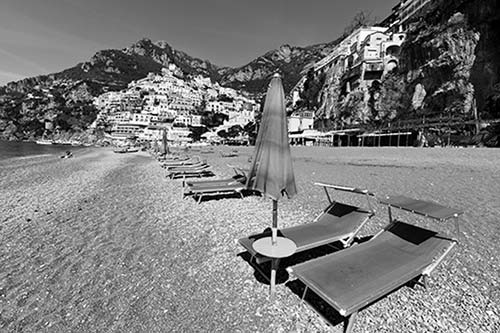
In the early Middle Ages, Positano was part of the Amalfi Republic, famed for its bold sailors and hearty fleet. But after a big 1343 tsunami and the pirate raids of the Middle Ages, its wealth and power declined. Positano flourished again as a favorite under the Bourbon royal family in the 1700s, when many of its fine mansions were built. Until the late 1800s, the only access was by donkey path or by sea. In the 20th century, Positano became a haven for artists and writers escaping Communist Russia and Nazi Germany. In 1953, American writer John Steinbeck’s essay on the town popularized Positano among tourists, and soon after it became a trendy stop. That was when the town gave the world “Moda Positano”—a leisurely dolce vita lifestyle of walking barefoot; wearing bright, happy, colorful clothes; and sporting skimpy bikinis.
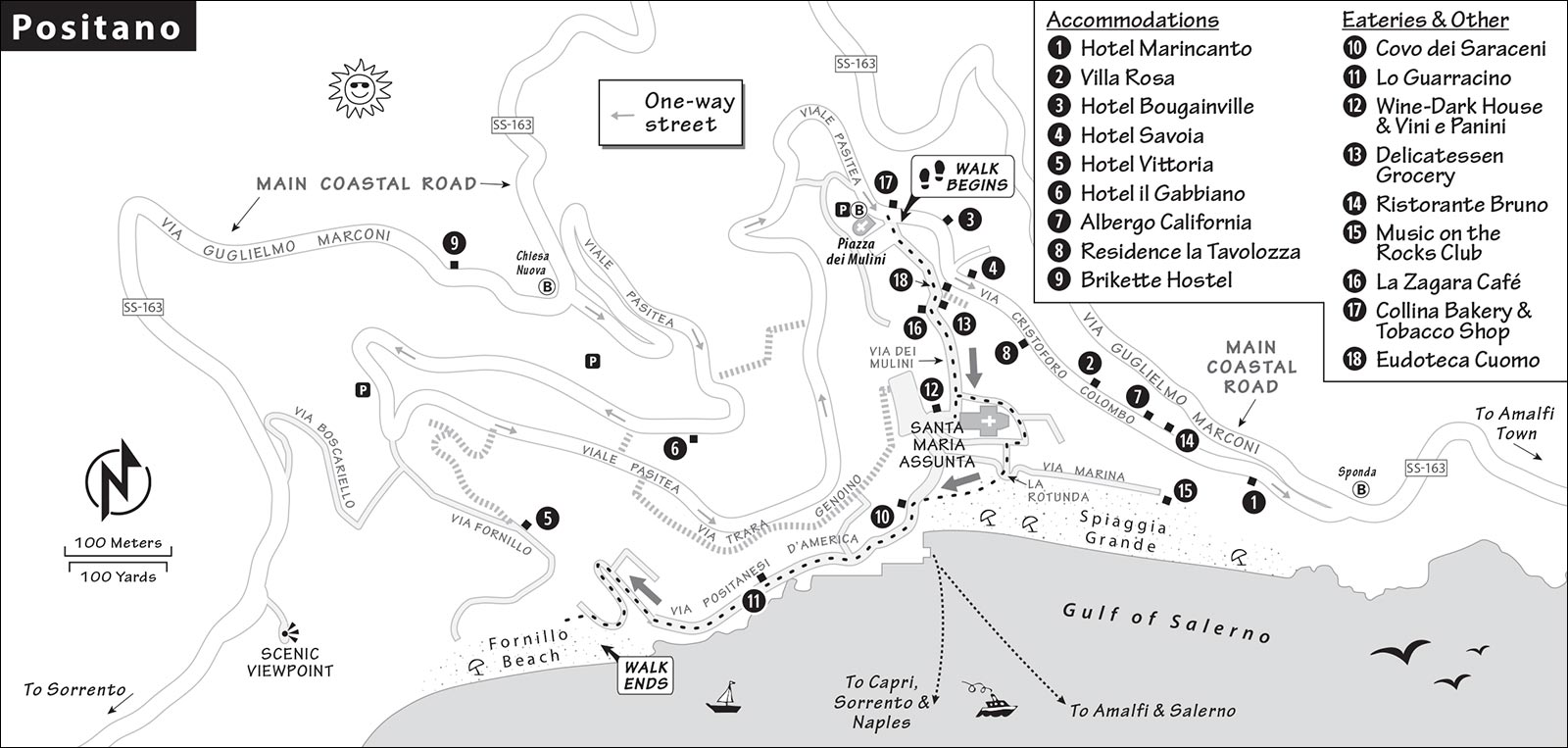
Today, the village, a breathtaking ▲▲▲ sight from a distance, is a pleasant gathering of cafés and expensive stores draped over an almost comically steep hillside. Terraced gardens and historic houses cascade downhill to the stately Church of Santa Maria Assunta and a broad, pebbly beach. Positano is famous for its fashions—and many of its shops are women’s clothing boutiques (linen is a particularly popular item).
The “skyline” looks like it did a century ago. Notice the town’s characteristic Saracen-inspired rooftop domes. Filled with sand, these provide low-tech insulation—to help buildings, in the days before central air, stay cool in summer and warm in winter. Traditionally, they were painted white in summer and black in winter.
For decades, it’s been practically impossible to get a building permit in Positano. Landowners who want to renovate can’t make external changes. Endless staircases are a way of life for the hardy locals. Only one street in Positano allows motorized traffic; the rest are narrow pedestrian lanes. While Positano has 4,000 residents, an average of 12,000 tourists visit daily from Easter through October. But because hotels don’t take large groups (bus access is too difficult), this town—unlike Sorrento—has been spared the worst ravages of big-bus tourism. In winter, hotels shut down and the town once again belongs to the locals.
Consider seeing Positano as a day trip from Sorrento: Take the bus out and the afternoon ferry home, but be sure to check boat schedules when you arrive—the last ferry often leaves before 18:00 and doesn’t always run in spring and fall. Or spend the night to enjoy the magic of Positano after dark. The town has a local flavor at night, when the grown-ups stroll and the kids play soccer on the church porch.
Orientation to Positano
Squished into a ravine, with narrow alleys that cascade down to the harbor, Positano requires you to stroll, whether you’re going up or heading down. The center of town has no main square (unless you count the beach). There’s little to do here but eat, window shop, and enjoy the beach and views...hence the town’s popularity.
Tourist Information: There’s no full-time TI. In summer, the town sets up information stands at the Sponda bus stop, Piazza dei Mulini, and the beach.
Local Guide: Positano native Lucia Ferrara (a.k.a. “Zia Lucy”) brings substance to this glitzy town. During the day, she leads guided hiking tours, including the “Path of the Gods” high above town (up to 10 people, about 4 miles, 5 hours, €55/person, includes picnic). In the evening, if there’s enough demand, she leads a Positano town walking tour (3 hours, departs at 17:00, €30/person). She also offers food tours, and can guide in Amalfi town (+39 339 272 0971, www.zialucy.com).
ARRIVAL IN POSITANO
The main coastal highway winds above the town. Regional SITA buses stop at two scheduled bus stops located at either end of town: Chiesa Nuova (at Bar Internazionale, near the Sorrento end of town; use this one only if you’re staying at Brikette Hostel) and Sponda (nearer Amalfi town). Although both stops are near roads leading downhill through the town to the beach, Sponda is closer and less steep; from this stop, it’s a scenic 20-minute downhill stroll/shop/munch to the beach.
Neither bus stop has easy baggage storage. Positano does have porter services: A porter can meet you at the Sponda bus stop and watch your bags for €5 apiece—but you have to call them in advance (try Positano Porter, +39 089 875 310). A last resort is to get off at the Sponda stop and roll your bags all the way down to Piazza dei Mulini, where the porters tend to hang out.
If you’re catching the SITA bus from Positano, be aware that it may leave from the Sponda stop five minutes before the printed departure time. There’s simply no room for the bus to wait, so in case the driver is early, you should be, too. Buy tickets at the tobacco shop in the town center (on Piazza dei Mulini).
To skip the walk up to the stop, take one of the dizzy little shuttle buses (marked Interno Positano) that constantly loop through Positano, connecting the lower town with the two bus stops up on the highway (2/hour, €1.30 at tobacco shop on Piazza dei Mulini, €1.80 on board, catch it at Piazza dei Mulini). The Collina bakery is just across from the shuttle bus stop, with a fine, breezy terrace to enjoy while you wait.
Coming from the ferry, you can give luggage to one of the porter services or lug everything uphill yourself. Follow crowds up wide stairs to the large church, then follow the trellis to Piazza dei Mulini. You’ll be doing the reverse of my Positano Walk (described next).
Drivers must go with the one-way flow, entering the town only at the Chiesa Nuova bus stop (closest to Sorrento) and exiting at Sponda (a 20-minute one-way loop). Driving is a headache here. Parking is even worse.
Positano Walk
This short, self-guided stroll downhill will help you get your bearings from top to bottom.
• Start at...
Piazza dei Mulini: This “square” is the town center’s main junction—as close to the beach as vehicles can get—and the lower stop for the little shuttle bus. The Collina bakery is a nice place for gelato or pastries.
Dip into the little yellow Church of the Holy Rosary (by the bus stop), with a serene 12th-century interior. Up front, to the right of the main altar, find the delicately carved fragment of a Roman sarcophagus (first century BC). Positano sits upon the site of a sprawling Roman villa, and we’ll see a few reminders of that age as we walk.
In summer, look for a popular granita stand at the top of the lane (across from the church), where the family has been following the same secret lemon slush recipe for generations.
Now continue downhill into town, passing a variety of shops—many selling linen and ceramics. These industries boomed when tourists discovered Positano. The beach-inspired Moda Positano fashion label was born as a break from the rigid dress code of the 1950s. (For tips on shopping for linen, see “Shopping,” under “Sights in Positano,” later). Positano also considers itself an artists’ colony, and you’ll see many galleries featuring the work of area artists.
• Wander downhill to the “fork” in the road (stairs to the left, road to the right). You’ve reached...
Midtown: At Eudoteca Cuomo (#3), butchers Pasquale and Rosario stock fine local red wines and are happy to explain their virtues. They also make homemade sausages, salami, and panini—good for a quick lunch. The smaller set of stairs leads to the recommended Delicatessen grocery, where Emilia can fix you a good picnic.
La Zagara (across the lane from the steps, at #10, with a leafy terrace) is a pricey pastry shop by day and a restaurant by night. Tempting pastries such as the rum-drenched babà (a southern Italian favorite) fill the window display. A bit farther downhill, Brunella (on the right, at #24) is respected for traditional quality, and Positano-made linens.
Across the street, the ritzy Hotel Palazzo Murat fills what was once a grand Benedictine monastery. Napoleon, fearing the power of the Church, had many such monasteries closed during his rule here. This one became a private palace, named for his brother-in-law, who was briefly the King of Naples. Glance into the plush courtyard to appreciate the scene. Continuing on, under a fragrant wisteria trellis, you’ll pass “street merchants’ gulch,” where artisans display their goodies.
• Continue straight down. You’ll run into a fork at the big church. For now, turn right and go downstairs to Piazza Flavio Gioia, facing the big...
Church of Santa Maria Assunta: This church, which sits upon Roman ruins, was once the abbey of Positano’s 12th-century Benedictine monastery. Originally Romanesque, it got an extreme Baroque makeover in the 18th century, when the town was booming and the coast was clear of pirate attacks.
Step inside and find these items: In the first chapel on the left is a fine manger scene (presepe). Its original 18th-century figurines give you an idea of the folk costumes of the age. Above the main altar is the Black Madonna, an icon-like Byzantine painting likely brought here from Constantinople by monks in the 12th century. But locals prefer a more romantic origin story for the gilded painting: Saracen pirates had it on their ship as plunder. A violent storm hit—sure to sink the evil ship. The painting of Mary spoke, saying, “Posa, posa” (lay me down), and the ship glided safely to this harbor. The pirates were so stricken they became Christians. Locals kept the painting, and the town became known as Posa-tano (recalling Mary’s command).
To the right of the altar, a small freestanding display case holds a silver-and-copper bust of St. Vitus (along with his bones, now holy relics). He’s the town patron, who brought Christianity here in about AD 300. In the adjacent niche (on the right) is a rare 1599 painting by Fabrizio Santafede of Baby Jesus being circumcised, considered the finest historic painting in town.
Back outside, you’ll see the bell tower, dating from 1707. Above the door, it sports a Romanesque relief scavenged from the original church. The scene—a wolf mermaid with seven little fish—was a reminder to worshippers of how integral the sea was to their livelihood. Nicknamed “our pagan protector,” it’s a good example of how early Christians incorporated pagan elements into their worship. Notice the characteristic shallow, white “insulation domes” on rooftops in front of the church.
• Backtrack up the steps, where you’ll see a phone-booth-like, glass-walled ticket office for the...
Roman Villa Complex: The entire town center of today’s Positano—from this church all the way up to Piazza dei Mulini, where we started this walk—sits upon the site of a huge Roman villa complex, buried when Mount Vesuvius erupted in AD 79. In 2004, archaeologists made an exciting find under the church crypt: a surviving room from the villa. Now a 30-minute guided tour of the excavated remains (limited to 10 people at a time) will take you down a safe, well-lit stairway to see the walls and floor of what might have been a dining room. The walls are frescoed with decorations not unlike those at Pompeii. Artifacts from the excavation are nicely displayed, and the guide explains the history of the church directly above you, as well as its crypt (pricey at €15, tours daily April-Oct 9:00-21:00, Nov-March until 14:00, Piazza Flavio Gioia 7, +39 331 208 5821, https://marpositano.it).
• Now circle around the church, and continue descending the steps to the right (following beach/spiaggia signs). You’ll eventually come to the little square with concrete benches facing the beach, called...
La Rotonda: This is the town gathering point in the evening, as local boys hustle tourist girls into the nearby nightclub. Step down to beach level. Residents traded their historic baptistery font with Amalfi town for the two iron lions you see facing the beach. Around the staircase, you’ll also see some original Roman columns, scavenged from the buried villa. Look up and admire the colorful majolica tiles so typical of church domes in this region.
Positano’s beach, called Spiaggia Grande, is almost completely private now. It’s atmospherically littered with a commotion of fishing boats and recreational craft. The big kiosk on the beach sells excursions to Capri and elsewhere.
Looking out over the beach from this point, you can see three of the watchtowers built centuries ago to protect the Amalfi Coast from Saracen pirates: one on the far-left horizon, just below Praiano; a small one on the Li Galli Islands, ahead and right; and the rectangular one far to the right, marking the far end of Fornillo Beach. Defenders used these towers—strategically situated within sight of each other—to relay smoke signals. In more recent times, the tower on the right (near Fornillo Beach) was a hangout for artists, who holed up inside for inspiration. (The people of Positano pride themselves on being artists rather than snazzy jet-setters like those in Capri.)
As you face out to sea, on the far-left side of the beach (below Rada Restaurant) is Music on the Rocks, a chic club that’s the only remaining piece of the 1970s scene, when Positano really rocked. While it’s dead until very late, you’re welcome to peek in at the cool troglo-disco interior, or go upstairs to the Fly Bar for the priciest cocktails in town.
• Now turn right and wander across the beach. Behind the kiosks that sell boat tickets, find the steps to the path that climbs up and over, past a 13th-century lookout fort from Saracen pirate days, to the next beach. It’s a worthwhile little five-minute walk through a shady ravine to...
Fornillo Beach: This is where locals go for better swimming and to escape some of the tourist crowds. Via Positanesi d’America is the lane (lit at night) leading to the beach. It’s named for the people who emigrated to America between the 1860s and the 1940s (more than 50 percent of Positano’s population) and sent money back to build this path. (Some locals remember when priests used to say at Mass, “And now, let’s pray for Positanesi d’America.”)
• Our walk is over. Time to relax. When you’re ready to return, go back the way you came to the main beach. Although tempting, Via Fornillo continues straight up the cliffside with a whopping 200-plus stairs...not for the faint of heart.
Sights in Positano
Beaches
Positano’s pebbly and sandy primary beach, Spiaggia Grande, is colorful with umbrellas as it stretches wide around the cove. It’s mostly private (pay €20-100 to enter, includes lounge chair and umbrella, most expensive near Music on the Rocks). There’s a tiny free section near the middle, close to where the boats take off. Look for the pay showers. The nearest WC is beneath the steps to the right (as you face the water).
Fornillo Beach, a less-crowded option just around the bend (to the west) of Spiaggia Grande, is favored by residents, with more affordable chair/umbrella rentals (€15-20) and a wider free area. It has a mellow Robinson Crusoe vibe, with a sturdy Saracen tower keeping watch overhead. This beach has a few humble snack bars and lunch eateries. Note that its position, tucked back in the rocks, means it gets shade earlier in the day than the main beach.
Boat Trips
Boats serving Positano pull up to the dock at the west end of Spiaggia Grande (to the right as you face the sea; booths sell tickets). Also consider renting a rowboat, or see whether they can talk you into taking a boat tour. Passenger boats run to Amalfi, Capri, Salerno, and Sorrento; see “Getting Around the Amalfi Coast” on here.
Shopping
Linen: Garments made of linen (especially women’s dresses) are popular items in Positano. To find a good-quality piece that will last, look for “Made in Positano” (or at least “Made in Italy”) on the label, and check the percentage of linen; 60 percent or more is good quality and 100 percent is best. Two companies with top reputations and multiple outlets are Brunella and Pepito’s (each has shops on Via Colombo, near the top of town; along Viale Pasitea, a main drag; and along claustrophobic Via del Saracino, near the bottom of town, parallel to the beach).
Ceramics: One of the oldest ceramics stores in Positano, Ceramica Assunta carries colorful Solimene dinnerware and more at two locations (Via Cristoforo Colombo 97 and 137).
Custom Sandals: Positano has a tradition of handmade sandals, crafted to your specifications while you wait (prices start at about €70). One good shop, La Botteguccia, faces a tranquil little square (Piazzetta del Saracino); around the corner, in front of the Capricci restaurant, you’ll see Carmine Todisco, who loves to explain how his grandfather shod Jackie O.
Nightlife
The big-time action in the old town center is the impressive club Music on the Rocks, literally carved into the rocks on the beach (opens at 23:00 mid-April-Oct, but the party starts even later; there’s often a €15-30 cover charge on weekends and in summer, which includes a drink; closed off-season; Via Grotte Dell’Incanto 51, +39 089 875 874, www.musicontherocks.it).
Sleeping in Positano
Most of these hotels are on Via Cristoforo Colombo, which leads from the Sponda bus stop down into the village (ideal for arrival by bus). Most places close in the winter (Dec-Feb or longer). Expect to pay at least €30 per day to park.
$$$$ Hotel Marincanto is a somewhat impersonal four-star hotel with 32 beautiful rooms and a bright breakfast terrace practically teetering on a cliff. Suites seem to be designed for a luna di miele—honeymoon (air-con, elevator, pool, stairs down to a private beach, pay parking, closed Nov-March, Via Cristoforo Colombo 50, reception on bottom floor, +39 089 875 130, www.marincanto.it, info@marincanto.it). This is the closest hotel to the Sponda bus stop, 50 yards away.
$$$$ Villa Rosa decorates its 12 spacious rooms plus one apartment with—you guessed it—roses. Most rooms have views plus a terrace, which is the perfect place to have your breakfast served (air-con, no elevator, closed Nov-March, Via Cristoforo Colombo 127, +39 089 811 955, www.villarosapositano.it, info@villarosapositano.it).
$$$$ Hotel Bougainville rents 16 comfortable rooms, half with balconies. Everything’s bright, modern, and tasteful (rooms without views are cheaper, air-con, small elevator, closed Nov-March, Via Cristoforo Colombo 25, +39 089 875 047, www.bougainville.it, info@bougainville.it).
$$$$ Hotel Savoia, run by the friendly D’Aiello family, has 39 sizeable, breezy, bright, simple, tiled rooms (RS%, most rooms with balcony or terrace, some cheaper nonview rooms, air-con, elevator, closed Nov-March, Via Cristoforo Colombo 73, +39 089 875 003, www.savoiapositano.it, info@savoiapositano.it).
$$$$ Hotel Vittoria sits just west of the town center with 20 open, spacious rooms and arched ceilings that feel right out of Positano’s 1950s boom era. Sprawling up a cliffside, they offer their own free porter service (tips appreciated). All rooms have balconies, most with views overlooking the town (buffet breakfast, uphill from Fornillo Beach on Via Fornillo 19, +39 089 875 049, www.hotelvittoriapositano.it, info@hotelvittoriapostiano.it).
$$$$ Hotel il Gabbiano lies west of the busy town center and has 19 simple but tasteful rooms plus one apartment. All have a view terrace. From here you can explore the many eateries downhill (past the curve) along Viale Pasitea without having to trek into the main part of town (air-con, elevator, closed Nov-March, Viale Pasitea 310, +39 089 875 306, www.ilgabbianopositano.com, info@ilgabbianopositano.com).
$$$$ Albergo California has 15 spacious rooms (all with lofty views), a grand terrace draped with vines, and full breakfasts. The Cinque family—including Maria, Bronx-born son John, and grandchildren Giuseppe and Maria—will welcome you (air-con, pay parking, closed Nov-Feb, Via Cristoforo Colombo 141, +39 089 875 382, www.hotelcaliforniapositano.it, info@hotelcaliforniapositano.it).
$$$ Residence la Tavolozza is an attractive six-room hotel (doubles only), warmly run by Celeste (cheh-LEHS-tay) and English-speaking daughters Francesca and Paola. Each cheerily tiled room comes with a view, a terrace, and silence (lavish à la carte breakfast extra, air-con, confirm by phone if arriving late, closed Dec-Feb, Via Cristoforo Colombo 10, +39 089 875 040, www.latavolozzapositano.it, info@latavolozzapositano.it).
$ Brikette Hostel is your best budget option in this ritzy town. Its 35 dorm beds are pricey by hostel standards, but you’re in Positano. It has a great sun and breakfast terrace and a youthful ambience (private and family rooms available, breakfast extra, cheap dinners, air-con, usually open all year, leave bus at Chiesa Nuova stop and backtrack uphill 500 feet to Via G. Marconi 358, www.hostel-positano.com, hostelpositano@gmail.com, Cristiana). The hostel isn’t reachable by phone; email instead.
Eating in Positano
Down at the beach, several interchangeable restaurants with view terraces leave people fat and happy, albeit with skinnier wallets (figure €15-20 pastas and secondi, plus pricey drinks and sides, and a cover charge). Little distinguishes one place from the next; all are scenic, convenient, and overpriced. $$$ Covo dei Saraceni offers the best value on the beach, with good pizza and tables overlooking the action (daily, on the far right as you face the sea, where Via Positanesi d’America starts).
A local favorite for its great views, $$$ Lo Guarracino is on the path to Fornillo Beach, with good food at prices similar to the beachfront places (daily 12:00-15:30 & 18:30-22:30, closed Nov-March, follow path behind the boat-ticket kiosks 5 minutes to Via Positanesi d’America 12, +39 089 875 794). $$ Wine-Dark House, tucked around the base of the stairs below the church, fills a cute little piazzetta at the start of Via del Saracino. They serve good pastas and secondi and excellent local wines, and are popular with Positano’s youngsters for their long list of sandwiches (Wed-Mon 10:00-15:30 & 18:30-22:30, closed Tue, Via del Saracino 6, +39 089 811 925).
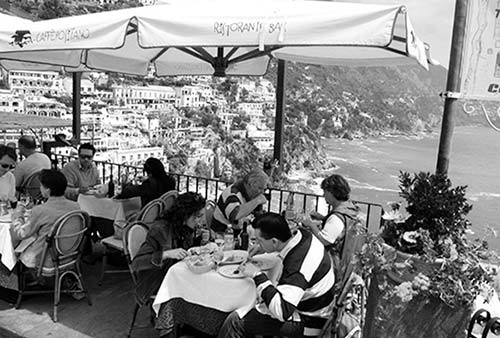
Picnics: If a picnic dinner on your balcony or the beach sounds good, sunny Emilia at the Delicatessen grocery store can supply the ingredients: antipasto misto, pastas, home-cooked dishes, and sandwiches made to order. She’ll heat it up for you and throw in the picnic ware. Come early for the best selection (all sold by weight, daily 7:00-22:00, shorter hours off-season, Via dei Mulini 5, +39 089 875 489). Vini e Panini (a.k.a. “The Wine Shop”), another small grocery, is a block from the beach just behind the church steps. Daniela, the fifth-generation owner, speaks English and happily makes sandwiches to order. Choose between the “Caprese” (mozzarella and tomato) and the “Positano” (mozzarella, tomato, and prosciutto), or create your own. They also have a nice selection of well-priced regional wines (daily 8:00-20:00, until 22:00 in summer, closed mid-Nov-mid-March, +39 089 875 175).
“Uptown”: The unassuming, family-run $$$ Ristorante Bruno is handy to my listed hotels on Via Cristoforo Colombo. While expensive, it has nice views and is worth considering if you want a meal without hiking down into the town center (daily 12:00-23:00, closed Nov-Feb, near the top of Via Cristoforo Colombo at #157, +39 089 875 179).
Amalfi Town
After Rome fell, the town of Amalfi was one of the first to trade goods—coffee, carpets, and paper—between Europe and points east. Its heyday was the 10th and 11th centuries, when it was a powerful maritime republic—a trading power with a fleet that controlled this region and rivaled Pisa, Genoa, and Venice. The Republic of Amalfi founded a hospital in Jerusalem and claims to have founded the Knights of Malta order—even giving them the Amalfi cross, which became the famous Maltese cross. Amalfi minted its own coins and established “rules of the sea”—the basics of which survive today.
In 1343, this little powerhouse was suddenly destroyed by a tsunami caused by an undersea earthquake. That disaster, compounded by devastating plagues, left Amalfi a humble backwater. Much of the culture of this entire region was driven by this town—but because it fell from power, Amalfi doesn’t always get the credit it deserves. Today its 5,000 residents live off tourism. The coast’s namesake is not as picturesque as Positano or as well connected as Sorrento, but it has a real-life feel and a vivacious bustle.
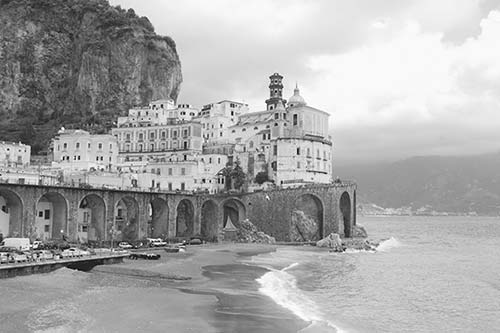
Though generally less touristy than Positano, Amalfi is still packed during the day with big-bus tours (whose drivers pay €80 an hour to park while their groups shop for limoncello and ceramics). Amalfi’s charms reveal themselves early and late in the day, when the crowds dissipate.
Orientation to Amalfi Town
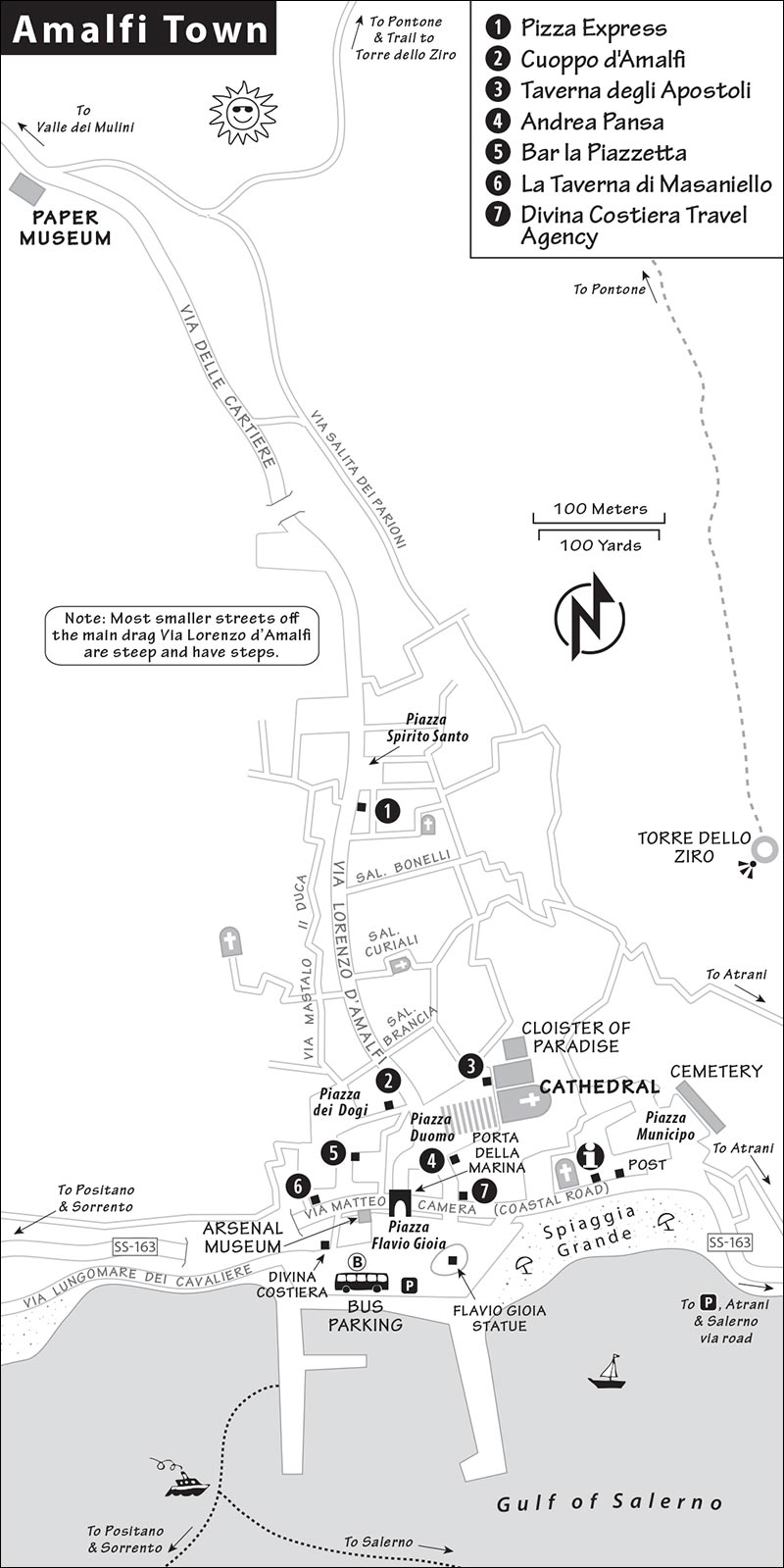
Amalfi’s waterfront is the coast’s biggest transport hub. Right next to each other at Piazza Flavio Gioia are the bus station, ferry docks, and a parking lot (€5/hour; if the lot is full, park in the huge Lunarossa garage, burrowed into the hillside just past town and just before the tunnel leading into Atrani). The waterfront hub is overlooked by a statue of local boy Flavio Gioia, the purported inventor of the magnetic compass.
Amalfi’s TI is just 100 yards up the main road heading east, right before the post office and overlooking the beach (daily 9:00-17:00; Nov-March Mon-Sat until 14:00, closed Sun; pay WC in same courtyard, Corso della Repubbliche Marinare 27; facing the sea, it’s to the left; +39 089 871 107, http://incampania.com).
HELPFUL HINTS
Don’t Get Stranded: If you’re day-tripping to Amalfi from elsewhere in the region, check locally to confirm when the last return bus or boat to Sorrento or Salerno leaves in the evening (in winter this can be as early as 19:00). Don’t plan to leave on the last bus or boat of the day in peak season: If that bus or boat is full, your only way home might be a €100 taxi ride.
Baggage Storage and Bus Tickets: You can store your bag safely at the Divina Costiera Travel Office facing the waterfront square, across from the bus parking area (€5/4 hours, daily 8:00-20:00, closed Feb, Piazza Flavio Gioia 3, +39 089 871 181). They also sell tickets for the bus to Ravello.
Speedboat Charters: To hire your own boat for a tour of the coastline from Amalfi (or to Capri), consider Premium Boat Charter (+39 329 460 3771, www.premiumboatcharter.com).
Sights in Amalfi Town
AMALFI TOWN
Amalfi’s one main street runs up from the waterfront through a deep valley, with stairways to courtyards and houses on either side. It’s worth walking uphill to the workaday upper end of town. Super-atmospheric, narrow, stepped side lanes branch off, squeezing between hulking old buildings. If you hear water under a grate in the main street, it’s the creek that runs through the ravine—a reminder that the town originally straddled the stream but later paved it over to create a main drag.
Before you enter the town, notice the colorful tile above the Porta della Marina gateway, showing off the trading domain of the maritime Republic of Amalfi. Just to the left, along the busy road, a series of arches marks the long, narrow, vaulted halls of Amalfi’s arsenal—where ships were built in the 11th century. One of these is now the little Arsenal Museum.
Venture into town, and you’ll quickly come to Piazza Duomo, the main square, with the cathedral—the town’s most important sight—and a spring water-spewing statue of St. Andrew.
As you get farther away from the water, Amalfi becomes less glitzy and more traditional. The Paper Museum is a 10-minute walk up Via Lorenzo d’Amalfi, the main drag. On the way up to the museum, don’t miss the huge, outdoor presepi (Nativity scenes) on your left. From the museum, the road narrows and you can turn off onto a path leading to the shaded Valle dei Mulini; it’s full of paper-mill ruins that recall this once proud and prosperous industry. The ruined castle clinging to the rocky ridge above Amalfi is Torre dello Ziro, a good lookout point for intrepid hikers (see “Hikes,” later).
As you return downhill, be sure to explore up the winding and narrow lanes and arcaded passages on either side of the main street.
Arsenal Museum
This small, underground museum just across the road from the bus station tells a bit about Amalfi’s maritime glory years. Stepping into the single long room under the dramatic vaulted stone ceiling, you can just tell that 1,000 years ago, they made ships here.
Cost and Hours: €4; Wed-Thu 10:00-13:00 & 16:00-18:00, Fri-Sun until 20:00, closed Mon-Tue; Piazza Flavio Gioia, +39 089 873 6204, https://arsenalediamalfi.it.
Cathedral
This church is “Amalfi Romanesque” (a mix of Moorish and Byzantine flavors, built c. 1000-1300), with a fanciful Neo-Byzantine facade from the 19th century. Climb the imposing stairway, which functions as a mini Spanish Steps-style hangout zone and a handy outdoor theater. The 1,000-year-old bronze door at the top was given to Amalfi by a wealthy local merchant who had it made in Constantinople. Visitors are directed on a one-way circuit through the cathedral complex with four stops: the cloister, original basilica, crypt, and cathedral.
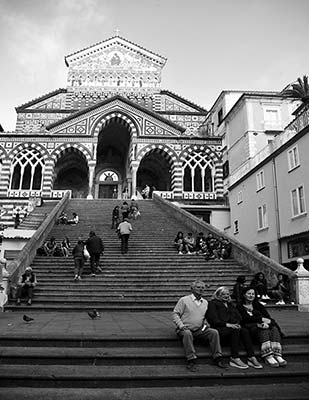
Cost and Hours: €3, daily 10:00-17:00, open later in summer, closed Jan-March. The cathedral—but not the rest of the complex—can be entered free for prayer or discreet visits daily 7:30-10:00 & 17:00-19:30; it’s closed 10:00-17:00 except as part of the paid visit; +39 089 871 324, www.parrocchiaamalfi.com. There’s a fine, free WC at the top of the steps (through unmarked green door, just a few steps before ticket booth, ask for key at desk).
Visiting the Cathedral: You’ll follow a self-guided, one-way tour of the complex, beginning in a courtyard of 120 graceful columns—the “Cloister of Paradise.” This was the cemetery for nobles in the 13th century (note their stone sarcophagi). Don’t miss the fine view of the bell tower and its majolica tiles.
The original ninth-century church, known as the Basilica of the Crucifix, boasts a fine 13th-century wooden crucifix. Today the basilica is a museum filled with the cathedral’s art treasures. The Angevin Mitre (Mitra Angioina), with a “pavement of tiny pearls” setting off its gold and gems, has been worn by bishops since the 14th century. Also on display (waist-high, facing the altar) is a carved wooden decoration from a Saracen pirate ship that wrecked just outside of town in 1544 during a freak storm. The church is dedicated to St. Andrew, whom believers credit with causing the storm and saving the town from certain pillage and plunder.
Down the stairs to the right of the basilica’s altar is the Crypt of St. Andrew. Just as Venice needed St. Mark to get on the pilgrimage map, Amalfi needed St. Andrew—one of the apostles who, along with his brother Peter, left their fishing nets to become the original “fishers of men.” Under the huge bronze statue, you’ll see a reliquary holding what are believed to be Andrew’s remains (kneel at the back of the crypt for a better view). These were brought here from Constantinople in 1206 during the Crusades—an indication of the wealth and importance of Amalfi back then.
Climb the stairs up into the cathedral itself. Behind the main altar is a painting of St. Andrew martyred on an X-shaped cross flanked by two Egyptian granite columns supporting a triumphal arch. Before leaving, check out the delicate mother-of-pearl crucifix (right of door in back).
▲Paper Museum (Museo della Carta)
This excellent little museum—worth ▲▲▲ for paper enthusiasts—makes for a good excuse to break free from the crowds and walk up the main drag to a quieter, more local part of town. Paper has been an important industry here since Amalfi’s glory days in the Middle Ages. Millworkers would pound rags into pulp in a big vat, pull it up using a screen, and air-dry each sheet (the same technique used to make artisan paper today—look for it at shops in town). At this cavernous, cool museum (an actual paper mill from the 13th century), a multilingual guide collects groups at the entrance (no particular times) for a 25-minute tour. The guide recounts the history and process of papermaking and turns on the museum’s vintage machinery. You’ll see how the Amalfi River (which you can still hear rumbling underfoot) powered this important industry, and you’ll learn the origins of the term “watermark.” Kids can dip a screen into the rag pool and make a sheet of paper. It’s amazing to think this factory produced paper through 1969 (when it was replaced by a modern facility up the valley).
Cost and Hours: €4.50; daily 10:00-19:00, shorter hours and closed Mon Nov-Jan, closed Feb, last entry 40 minutes before closing; a 10-minute walk up the main street from the cathedral—follow signs to Museo della Carta at Via delle Cartiere 23; +39 089 830 4561, www.museodellacarta.it.
HIKES
Amalfi is the starting point for several fine hikes, two of which I’ve described here. The TI hands out photocopies of Giovanni Visetti’s trail maps (or download them from his engaging website, www.giovis.com). The best book on local hikes is Julian Tippett’s Sorrento Amalfi Capri Car Tours and Walks (2015), with useful color-coded maps and info on public transportation to the trailheads. Lucia Ferrara, a great guide based in Positano, leads hikes around Amalfi (see her listing on here).
Hike #1: Pontone
This loop trail leads up the valley past paper-mill ruins, ending in the tiny town of Pontone; you can get lunch there, and head back down to the town of Amalfi (allow 3 hours total). Bring a good map, since it’s easy to veer off the main route. Start your hike by following the main road (Via Lorenzo d’Amalfi) away from the sea.
After the Paper Museum, jog right, then left to join the trail, which runs through the shaded woods along a babbling stream. Heed the signs that warn people to stay away from the ruins of paper mills (no matter how tempting they look), since many are ready to collapse on unwary hikers. Continue up to Pontone, where Trattoria l’Antico Borgo offers wonderful cuisine and a great view (Via Noce 4, +39 334 748 6611). After lunch, return to Amalfi via a steep stairway.
If you’re feeling ambitious and have good shoes, before you head back to Amalfi, add a one-hour detour from Pontone (30 minutes each way) to visit the ridge-hugging Torre dello Ziro (a map and trail description are at www.giovis.com). You’ll be rewarded with a spectacular view from the headland between Amalfi and Atrani.
Hike #2: Atrani
For an easier walk, head to the nearby town of Atrani. This village, just a 15-minute stroll beyond Amalfi town, is a world apart; its 1,500 residents consider themselves definitely not from Amalfi. Leave Amalfi via the main road and stay on the water side until the promenade ends. Cross the street, continue a few more yards, then go up the whitewashed staircase just past the pizzeria. From here, twist up through old lanes to a paved route that takes you over the hill and drops you into Atrani in about 15 minutes.
With relatively few tourists, a delightful town square, and a free, sandy beach (if you drive here, pay for parking at harbor), Atrani has none of Amalfi’s trendy resort feel. Piazza Umberto I is the core of town, with cafés, restaurants, and little grocery stores that can make sandwiches. A whitewashed staircase leads up to the serene and beautiful town church (under the clock face).
To save time and sweat on the return walk, follow the promenade just above water level toward Amalfi. Then walk up through the restaurant terrace and find the big, long tunnel next to the parking garage—this will deposit you in the middle of Amalfi.
From Atrani, you could theoretically continue up to Ravello (described later in this chapter). But unless you’re part mountain goat, you’ll probably prefer catching the bus to Ravello from Amalfi town instead.
Eating in Amalfi Town
Quick Bites: Walk five minutes up the main drag; on the right, past the first archway, is $ Pizza Express, with honest pies, calzones, and heated sandwiches to go (Thu-Tue 11:00-21:00, closed Wed, Via Capuano 48, +39 329 046 9403). The Cuoppo d’Amalfi fried-fish stand at Piazza dei Dogi (described below) is another good option.
On the Main Square, Piazza Duomo: Several pricey places face the cathedral steps. The best of the bunch is tucked just around the left side of the grand staircase, up a smaller flight of stairs: $$$$ Taverna degli Apostoli, with colorful outdoor tables and cozy upstairs dining room in what was once an art gallery. The menu is brief but thoughtful, going beyond the old standbys, and everything is well executed (Thu-Tue 12:00-16:00 & 19:00-24:00, closed Wed, cash only, Supportico San Andrea 6, +39 089 872 991). For dessert, the Andrea Pansa pastry shop and café, to the right as you face the cathedral steps, is the most venerable place in town—a good spot to try sfogliatella (the delicate pastry invented at a nearby monastery) and other desserts popular in southern Italy (daily 7:30-24:00).
Near the Main Square, on Piazza dei Dogi: If you walk straight ahead from the cathedral stairs, go up the little covered lane, and hook right at the fork, you’ll pop out in atmospheric little Piazza dei Dogi. Slightly less trampled and more neighborhood-feeling than Piazza Duomo, this has several decent (if forgettable) restaurants aimed squarely at pleasing tourists. The $ Cuoppo d’Amalfi fried-fish shop, on the right as you enter the square, fills cardboard cones with all manner of deep-fried sea life. $$$ Bar la Piazzetta has tables right in the middle of the square, and $$$ La Taverna di Masaniello, tucked at the corner of the square leading to the port, also has good food.
Amalfi Town Connections
Amalfi is connected by bus and boat to all other nearby towns. In season, boats run to Sorrento, Capri, Positano, and Salerno. Amalfi is the terminus for SITA buses to Sorrento (via Positano), Ravello, and Salerno. CitySightseeing buses from Sorrento terminate in Amalfi as well. For details see “Getting Around the Amalfi Coast” on here.
Ravello
The Amalfi Coast’s version of a hill town, Ravello (a 30-minute bus ride from Amalfi town) sits atop a lofty perch 1,000 feet above the sea. It boasts an interesting church, two villas with stunning gardens, and breathtaking views that have attracted celebrities for generations. Gore Vidal, Richard Wagner, D. H. Lawrence, M. C. Escher, Henry Wadsworth Longfellow, Tennessee Williams, and Greta Garbo all succumbed to Ravello’s charms and called it home.
The town is like a lush and peaceful garden floating in a world all its own. It seems to be made entirely of cafés, stonework, old villas-turned-luxury hotels, tourists, and grand views. Ravello feels like a place to convalesce.
GETTING TO RAVELLO
Ravello and Amalfi town are connected by bus along a very windy road (hourly, 30-minute trip, €1.30). Coming from Amalfi, buy your bus ticket at the Divina Costiera travel office facing the waterfront square, or at any tobacco shop. Wait for the bus under the big awning by the statue on the waterfront, just to the left of the statue as you face the water. Coming from Positano or Sorrento, you’ll change buses in Amalfi. From Naples or Paestum, you’ll change twice (in Salerno and Amalfi), making for a long day.
When returning from Ravello to Amalfi, line up early, since the buses are often crowded (buy ticket in tobacco shop; catch bus 100 yards off main square, by the recommended Ristorante da Salvatore).
Orientation to Ravello
To see the sights listed here, start at the bus stop and walk through the tunnel to the main square, where you’ll find Villa Rufolo on the left and the church on the right. Villa Cimbrone is a 10-minute walk from the square (follow the signs).
If you have time for only one villa, consider this: Villa Rufolo is easier to reach (facing the main square) and has a stunning terrace garden. Villa Cimbrone is a 10-minute up-and-down hike from the square, but it’s bigger and more rugged and offers even grander views in both directions along the coast.
Tourist Information: From the bus stop, to find the TI, face the church, then walk up the stepped lane to the left and into the Giardino del Vescovo (Bishop’s Garden) behind the church (TI open daily 10:00-18:00, closes earlier Nov-April, Viale Richard Wagner 4, +39 089 857 096). The independent website www.ravello.com has helpful information.
Sights in Ravello
Piazza Duomo
Though Ravello is perfectly peaceful today, the weathered watchtower of Villa Rufolo—which once kept an eye out for fires and invasions—is a reminder that it wasn’t always postcards and limoncello.
The fine umbrella pines on the square provide a shady meeting place for strollers ending up here on the piazza. Opposite the church is a fine view of the terraced hillside and the community of Scala (which means “steps”—historically a way of life there). The terraces—supporting grapevines and lemon trees—mostly date from the 16th century. To the left of the church, Viale Richard Wagner climbs past the TI to the top of town for sea views and ruined villas that are now luxury hotels. The town center is essentially traffic-free.
Duomo
Ravello’s cathedral, overlooking the main square, feels stripped-down and Romanesque. The facade of the cathedral is plain because the earlier, fancy west portal was destroyed in a 1364 earthquake. Inside, you’ll find tastefully restrained decoration and a floor that slopes upward. The key features of this church are its 12th-century bronze doors (from Constantinople), with 54 biblical scenes; the carved marble pulpit supported by six lions; and the chance to get a close-up look at the relic of holy blood (in the chapel left of main altar). The geometric designs show Arabic influence. In the afternoon, the church’s front doors are locked; to enter, you’ll need to pay to visit the museum on Viale Richard Wagner, around the left side. The humble museum is two rooms of well-described carved marble that evoke the historical importance of the town.
Cost and Hours: €3 for the museum—which also gets you into the church, daily 12:00-17:00; in the morning and early evening, the church is free to enter.
Villa Rufolo
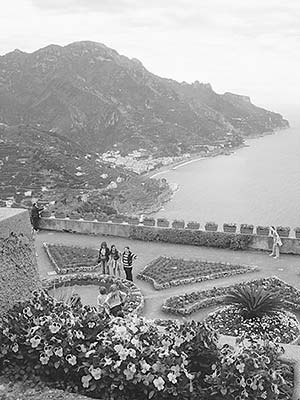
The villa, built in the 13th-century ruins of a noble family’s palace, presents wistful gardens among stony walls, with oh-my-God views. The Arabic/Norman gardens seem designed to frame commanding coastline vistas (you can enjoy some of the same view, without the entry fee, from the bus parking lot just below the villa). It’s also one of the venues for Ravello’s annual arts festival (July-Sept, www.ravellofestival.com) and music society performances (April-June and Sept-Oct, www.ravelloarts.org). Musicians perch on a bandstand on the edge of the cliff for a combination of wonderful music and dizzying views. Wagner visited here and was impressed enough to set the second act of his opera Parsifal in the villa’s magical gardens. By all accounts, the concert on the cliff is a sublime experience.
Cost and Hours: €7, daily 9:00-20:00, Oct-April until sunset, may close earlier for concerts, +39 089 857 621, www.villarufolo.it.
Visiting the Villa: From Piazza Duomo, enter through the stout watchtower to buy your ticket and pick up the English booklet explaining the sight. Then, walk through part of the sprawling villa ruins. Check out the short video in the tiny theater at the base of the tower and the exhibit upstairs. The palace itself has little to show, but the gardens and views are magnificent and invite exploration.
▲Villa Cimbrone
This villa offers another romantic garden, this one built upon the ruins of an old convent. Located at the seaward end of Ravello, it was created in the 20th century by Englishman William Beckett. His mansion is now a five-star hotel. The longish walk out rewards you with dreamy landscaping around a villa set on a bluff over the ocean. At the far end, above a sublime café on the lawn, “the Terrace of Infinity” dangles high above the sea.
Cost and Hours: €10, daily 9:00-sunset, +39 089 857 459, www.hotelvillacimbrone.com.
Getting There: Facing the cathedral on Piazza Duomo, exit the square to the right and follow signs. You’ll climb up and down (and up and down) the stepped lanes, enjoying a quieter side of Ravello, before reaching the villa at the point.
Visiting the Villa: Buy your ticket and pick up the free map/guide of the gardens. Across from the ticket booth, duck into the old monastery. Then pass the rose-garden terrace and head up the “main boulevard,” which leads straight to the stunning Terrace of Infinity, with 360-degree views up and down the coast. If you have the interest and energy, loop back along the more rugged downhill slope (facing the adjacent town of Scala). Tiny lizards scurry underfoot, while mythological statues (Mercury’s Seat, Temple of Bacchus, Eve’s Grotto) strike their poses before a stunning and serene backdrop.
▲Hike Down to Amalfi Town
Enthusiastic walkers, who have good knees and don’t mind lots of uneven stairs, enjoy taking the bus up to Ravello and then making the descent back to Amalfi on foot (there are several ways down). If you plan on this, study your route in advance, get a good map (the free, downloadable one at www.giovis.com will do in a pinch), wear good shoes, allow extra time to give your knees a break, and visit the Ravello TI to check that the paths are open.
The steepest, quickest route starts from Ravello’s Villa Cimbrone. From the villa, retrace your steps back toward town. Take the first left, just by the arched entrance gate, onto Via Santa Barbara (this “via” is actually a stairway signposted Amalfi/Minori). The stepped path winds its way below the cliff. Pause here to look back up at the rock with a big white mansion—Villa La Rondinaia, where American author Gore Vidal lived for many years. Continue downward, mostly on stone stairs, about 40 minutes to the town of Atrani, where several bars on the main square offer well-deserved refreshments. From here, it’s about a 15-minute walk back to Amalfi (see “Hike #2” under “Sights in Amalfi,” earlier).
Another route down starts below the Church of Santa Maria a Gradillo (a couple hundred yards down Via Roma from Piazza Duomo). Look for a set of steps called Via Sigilgaida, signposted for Amalfi. This path, which has some short stretches on the road (take care), leads you down to Pontone (see “Hike #1” under “Sights in Amalfi”). At Pontone, you can continue directly to Amalfi, or take a fairly level detour through the evocative, ruin-filled Valle delle Ferriere.
Eating in Ravello
Several no-brainer, interchangeable restaurants face Piazza Duomo and line the surrounding streets. To enjoy this fine setting, just take your pick. You can also grab a takeaway lunch at one of the little groceries and sandwich shops that line Via Roma (running off Piazza Duomo). Enjoy your meal at the panoramic benches at the far end of Piazza Duomo (facing the cathedral), or facing even better views just outside of town, near the bus stop and Ristorante da Salvatore. (Picnicking isn’t allowed inside the two villas.)
$$$$ Ristorante da Salvatore, near the Ravello bus stop (at the other end of the little tunnel from the Duomo), serves a serious sit-down lunch with great views. Pino, the English-speaking owner of this formal restaurant, serves nicely presented, traditional Amalfi cuisine from a fun, if pricey, menu. Their pasta with potatoes and calamari is a favorite. Be adventurous when ordering and share dishes (Tue-Sun 12:30-15:00 & 19:30-22:00, closed Mon, Via della Repubblica 2, smart to call ahead for reservations—+39 089 857 227).
$$ Trattoria Cumpà Cosimo, a classic indoor family-run restaurant, is a good choice for a quicker, less expensive lunch. For a special treat, get their piatto misto with five different pastas for €20 (daily 12:00-15:30 & 18:00-24:00, Via Roma 44, +39 089 857 156).
Paestum
The archaeological park at Paestum (PASTE-oom) includes one of the best collections of Greek temples anywhere—and certainly the most accessible to Western Europe. Serenely situated, Paestum is surrounded by fields and wildflowers. Not quite a village, it also has a bus stop, a church, a TI, a straggle of houses, and a handful of eateries.
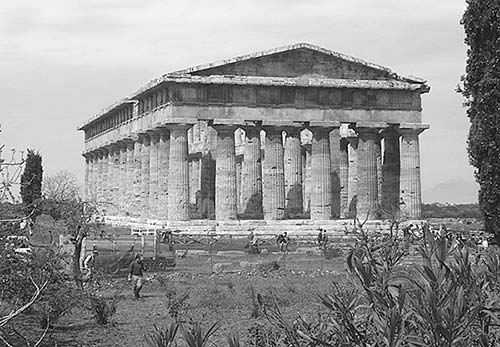
This city was founded as Poseidonia by Greeks in the sixth century BC and became a key stop on an important trade route. In the fifth century BC, the Lucanians, a barbarous inland tribe, conquered Poseidonia and tried to adopt the cultured ways of the Greeks. By the time of the Romans, who took over in the third century BC and built a fine town on the site, the name Poseidonia had been simplified to Paestum. The final conquerors of Paestum, malaria-carrying mosquitoes, kept the site wonderfully deserted for nearly a thousand years. The temples were never buried—just ignored. Rediscovered in the 18th century, Paestum today offers the only well-preserved Greek ruins north of Sicily.
While most visitors do Paestum as a day trip (it’s 1.25 hours from Naples by convenient direct train), it’s not a bad place to overnight. Accommodations offer great value, and you could use Paestum as a base for day trips to Naples or the Amalfi Coast. With more time, there’s a beach nearby, and local buffalo-milk dairies that you can visit.
Tourist Information: There’s a small TI window at the train station (daily 9:00-13:00 & 14:00-18:00) and a bigger one next to the Paestum Archaeological Museum (daily 9:00-13:00 & 14:00-16:00, +39 0828 811 016).
GETTING TO PAESTUM
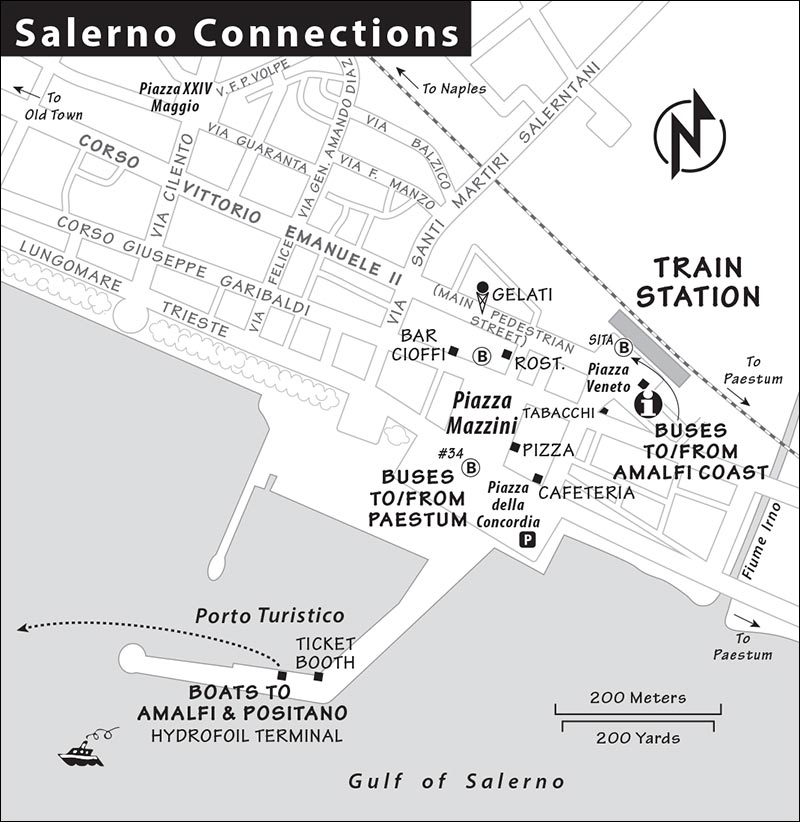
A dozen slow milk-run trains to Paestum run directly from Naples via Salerno; from elsewhere, you’ll need to transfer at one of those two points. For those transferring in Salerno, see the “Salerno Connections” map, which shows train, bus, and boat stops as well as a few handy eateries if you need to grab a bite. Confirm train schedules at www.trenitalia.it and bus schedules at www.sitasudtrasporti.it (or—easier to read—www.positano.com).
From Naples
Direct trains run from Naples’ Centrale station to Paestum for €7 (12/day, 1.25 hours, direction: Sapri or Reggio; only the more expensive Intercity trains have a first-class section). Buy tickets online, or from ticket windows or machines at the station. For a day trip from Naples, it’s wise to get an early start—especially in warm weather. As of this printing, trains left Naples at 6:50, 7:35, 7:50, and 8:50, then not until 11:45. In the cooler shoulder season, consider arriving for lunch, visiting the museum, then seeing the temples bask in warm afternoon light.
From Sorrento
For a day trip, the smart (if dull) approach is to go bright and early by Circumvesuviana train to Naples (70 minutes), catch a direct Naples-Paestum train, and take the same route back (about 3 hours each way). While it’s technically possible to do one leg of the trip via an Amalfi Coast SITA bus, this makes for a very long day marred by worry about making connections. By car from Sorrento, Paestum is 60 miles and at least 3 hours (depending on traffic) via the Amalfi Coast road, but a smooth 2 hours by autostrada. To reach Paestum from Sorrento via the autostrada, drive toward Naples, catch the autostrada (direction: Salerno), skirt Salerno (direction: Reggio), exit at Battipaglia, and drive straight through the roundabout.
From Positano via Salerno
First take a SITA bus (2 hours, change in Amalfi) or boat (70 minutes) to Salerno, where you can catch the train on its way from Naples (30 minutes from Salerno to Paestum). Buses from Amalfi to Salerno terminate at the Salerno train station; boats arrive at a dock a few short blocks from the train station (about a 10-minute, mostly level walk). Once in Salerno, buy your Paestum train ticket at ticket machines or the ticket office in the train station. Note: To start your day trip by bus, you’ll need to leave Positano at the crack of dawn—7:00 at the latest—to make the last morning train in Salerno. Check return times from Paestum to Positano carefully in advance; the last possible connection may leave Paestum as early as 16:20.
If you’re in a pinch—for example, you’ve arrived in Salerno during the midday lull in the train schedule—you could take local CSTP/BusItalia bus #34 from Salerno to Paestum (about hourly, fewer on Sun, 1 hour). It departs from Piazza della Concordia—look for bus shelter between the big parking lot and the main road. This looks convenient to the port, but the closest ticket sales point is the tobacco shop a block in front of the train station. In Paestum, this bus drops you only slightly closer to the ruins than does the train.
To drive from Positano to Paestum, you can either follow the Amalfi Coast road to Salerno, or cross back over the peninsula toward Sorrento and then take the expressway. Either way, allow at least 2.5 hours.
Returning from Paestum
Paestum’s train station is unstaffed but you can buy tickets at machines.
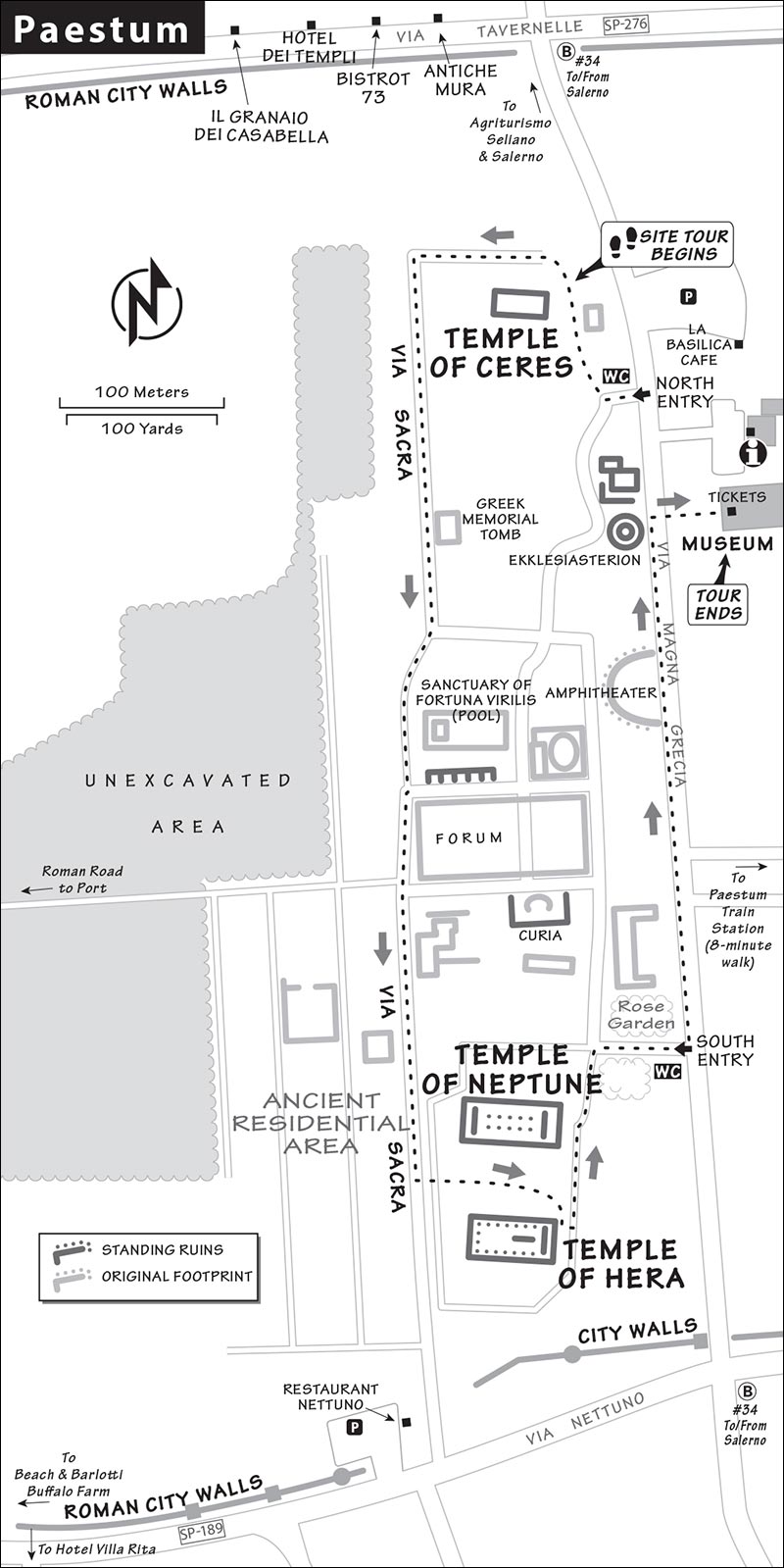
To return to Salerno on local bus #34, buy a ticket from one of the bars in Paestum, then go to either of the intersections that flank the ruins (see the “Paestum” map), flag down any northbound bus, and confirm “Salerno?” The last stop is the Salerno waterfront; from here you can catch a boat to Amalfi or Positano, or walk up to the train station to catch an Amalfi-bound SITA bus or a train.
Orientation to Paestum
If you arrive by train, cross under the tracks, exit the tiny station, and walk through the ancient city gate; the ruins are a half-mile walk straight ahead, up a dusty road. When you hit the street with hotels and shops, turn right to find the museum and archaeological park entrance. If you’d rather not walk, English-speaking Patrizia Pecora runs a great team of local taxi drivers available for transport to hotels or to the ruins (€10-15, +39 392 444 9020). Buses from Salerno stop near a corner of the ruins (at a little bar/café). Drivers park in the lot by the museum and La Basilica pizzeria (€3). The street between the ruins and museum has been closed off to cars.
Baggage Storage: There’s no official baggage storage at the train station or museum. If you’re desperate, you can try nicely asking at one of the bars along the main road (they may want a small payment) or at a restaurant you’ve already patronized.
Local Guide: For an insider’s knowledge, Silvia Braggio and her team specialize in Paestum and give a fine two-hour walk of the site and museum (RS%—special €100 rate for my readers, arrange in advance, +39 347 643 2307, www.silviaguide.it, silvia@silviaguide.it). Ask about rounding out the day with a visit to a buffalo farm or another nearby sight. Silvia also offers walking tours of Pompeii and Herculaneum.
Sights in Paestum
PAESTUM ARCHAEOLOGICAL PARK AND MUSEUM
While Paestum is famous for its marvelous Greek temples, most of the structures you see are Roman. Five elements of Greek Paestum survive: three misnamed temples, a memorial tomb, and a circular meeting place (the Ekklesiasterion). The rest, including the wall that defines the site, are the remains of the later Roman town.
Paestum was once a seaport (the ocean is now about a mile away—the wall in the distance, which stretches about three miles, is about halfway to today’s coastline). Only about a fifth of the site has been excavated. The original Greek city, which archaeologists figure had a population of about 13,000, was first conquered by Lucanians (distant relatives of the Romans, who spoke a language related to Latin), and then by the Romans (who completely made it over and built the wall you see today).
The remaining Greek structures survive because the Romans were superstitious—they respected sacred areas and didn’t mess with temples and tombs. While most old Christian churches are built upon Roman temples (it tends to be what people do when they conquer another culture), no Roman temple is built upon a Greek temple. The three Greek temples that you’ll see here today have stood for about 2,500 years.
Cost: €12, Dec-Feb-€6, free (and packed) first Sun of each month. Tickets are valid for three days and also cover a nearby archaeological site at Velia.
Hours: Daily 9:00-19:30, last entry one hour before closing.
Information: +39 0828 811 023, www.museopaestum.beniculturali.it [URL inactive].
Getting In: The site and museum have separate entrances. The museum, across the street from the ruins, is in a cluster with the TI and a small early-Christian basilica.
Visitor Information: The following self-guided tours provide all the information you need for both the site and the museum. Skip the museum bookshop’s dull audioguide. Renovations are in progress at the museum and ruins; expect changes. You’ll enjoy the coolest temperatures in the morning, but the best light and smallest crowds late in the day.
Length of This Tour: Allow two hours to see the ruins and the museum (about an hour for each).
▲▲Paestum Archaeological Site
This tour starts at the site’s northern gate (by the museum), visits the Temple of Ceres, goes through the center of the Roman town past the Greek Memorial Tomb, circles around the other two Greek temples, and then leaves the site through the southern gate to walk down the modern road to the Ekklesiasterion (which faces the museum).
Self-Guided Tour
• Buy your ticket at the museum, then head to the right to find the site’s northern gate. (Note that entry is sometimes permitted only through the southern gate: If that’s the case, enter the ruins and stroll less than five minutes up to the northern gate and Temple of Ceres to begin this tour.)
Stand in front of the...
Temple of Ceres: All three Paestum temples have inaccurate names, coined by 19th-century archaeologists who based their “discoveries” on wishful thinking. (While the Romans made things easy by leaving lots of inscriptions, the Greeks did not.) Those 1800s archaeologists wanted this temple to be devoted to Ceres, the goddess of agriculture. However, all the little votive statues found later, when modern archaeologists dug here, instead depicted a woman with a big helmet: Athena, goddess of wisdom and war. (The Greeks’ female war goddess was also the goddess of wisdom—thinking...strategy...female. The Romans’ masculine war god was Mars—just fighting.) Each temple is part of a sanctuary—an open, sacred space around the temple. Because regular people couldn’t go into the temple, the altar logically stood outside.
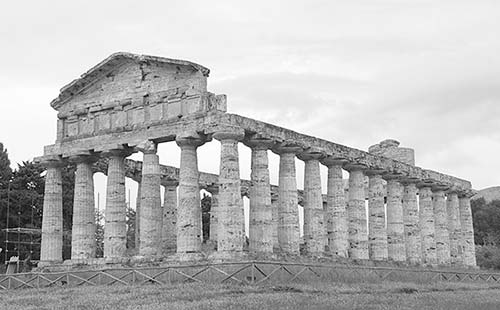
The Temple of Ceres dates from 500 BC. It’s made of locally quarried limestone blocks. Good roads and shipping didn’t come along until the Romans, so the Greeks’ buildings were limited to local materials. The wooden roof is long gone. Like the other two temples, this one was once painted white, black, and red, and has an east-west orientation—facing the rising sun. This temple’s cella (interior room) is gone, cleared out when it was used as a Christian church in the sixth century. In medieval times, Normans scavenged stones from here; chunks of these temples can be found in Amalfi’s cathedral.
Walk around to the back side of the Temple of Ceres. The capitals broke in a modern earthquake, so a steel bar provides necessary support. Each of the Paestum temples is Doric style—with three stairs, columns without a base, and shafts that narrow at the top to a simple capital of a round, then a square, block. While there were no carved reliefs, colorful frescoes once decorated the pediments.
As you walk away, look back at the temple. Traditionally, Greeks would build a sanctuary of Athena on a city’s highest spot (like the Parthenon in Athens, on the Acropolis). Paestum had no hill, so the Greeks created a mound. The hill was more impressive in its time because the level of the Greek city was substantially lower than the Roman pavement stones you’ll walk on today.
• Follow the path down from behind the temple, and turn left to walk on the paving stones of Via Sacra toward the other Greek temples. After about 100 yards, to the left of the road, you’ll see a little half-buried house with a tiled roof.
Greek Memorial Tomb (Heroon): This tomb (from 500 BC) also survived because the Romans respected religious buildings. But the tomb was most inconveniently located, right in the middle of their growing city. So the practical Romans built a perimeter wall around it (visible today), added a fine tiled roof, and then buried the tomb.
There’s a mystery here. Greeks generally buried their dead outside the city (as did Romans)—there are over a thousand ancient tombs outside Paestum’s walls—yet this tomb was parked smack-dab in the center of town. When it was uncovered in 1952, no bodies were found inside. The tomb instead held nine perfectly preserved vases (now in the museum). Archaeologists aren’t sure what the tomb’s purpose was. Perhaps it was a memorial dedicated to some great hero (like a city founder). Or perhaps it was a memorial to those lost when a neighboring community had to evacuate and settle as refugees here.
• Continue walking down Via Sacra, the main drag of...
Roman Paestum: Roman towns were garrison towns: rectangular with a grid street plan and two main streets cutting north-south and east-west, dividing the town into four equal sections. They were built by military engineers with a no-nonsense standard design. New excavations (on the left) have uncovered Roman-era lead piping. City administration buildings were on the left, and residential buildings were on the right.
Shortly after the road turns into a dirt path, you’ll come to a big Roman pool (on the left) that archaeologists believe was a sanctuary dedicated to Fortuna Virilis, goddess of luck and fertility. The strange stones likely supported a wooden platform for priests and statues of gods. Imagine young women walking down the ramp at the far end and through the pool, hoping to conceive a child.
The next big square on the left was the Roman forum and ancient Paestum’s main intersection. The road on the right led directly (and very practically) to the port. It made sense to have a direct connection to move freight between the sea and the center of town.
Until 2007, the vast field of ruins on the right (between the forum and the next temple) was covered in vegetation. It’s since been cleared and cleaned of harmful lichen, which produce acids that dissolve limestone. Study the rocks: Yellow lichen is alive, black is dead. Even the great temples of Paestum were covered in this destructive lichen until 2000, when a two-year-long project cleaned them for the first time.
• Ahead on the left are the so-called...
Temples of Neptune and Hera: The Temple of Neptune dates from 450 BC and employs the Greek architectural trick where the base line is curved up just a tad to overcome the illusion of sagging caused by a straight base. The Athenians built their Parthenon (with a similar bowed-up base line) just 30 years after this. Many think this temple could have been their inspiration.
The adjacent Temple of Hera, dating from 550 BC, is the oldest of Paestum’s three temples and one of the oldest Greek temples still standing anywhere. Notice the change 100 years makes in the architectural styles: Archaic Doric in 550 BC versus Classic Doric in 450 BC.
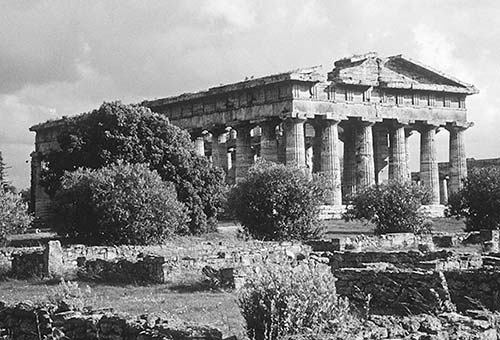
Archaeologists now believe the “Temple of Neptune” was actually devoted to a different god. Votive statues uncovered here suggest that Hera was the focus (perhaps this was a new-and-improved version of the adjacent, simpler, and older Temple of Hera). Or perhaps it was a temple to Zeus, Hera’s husband, to honor the couple together.
Together, the two temples formed a single huge sanctuary, with altars outside the temples on the far (east) side. Walk between the temples, then hook right to get a good look at the front of the Temple of Hera. Notice how overbuilt this temple appears. Its columns and capitals are closer together than necessary, as if the builders lacked confidence in their ability to span the distance between supports. Square pillars mark the corners of the cella inside. Temples with an odd number of columns (here, nine) had a single colonnade crossing in the center inside to support the wooden roof. More modern temples (such as the Temple of Neptune) had six columns, with two colonnades passing through the cella. This left a line of vision open through the middle so that worshippers could see the big statue of the god.
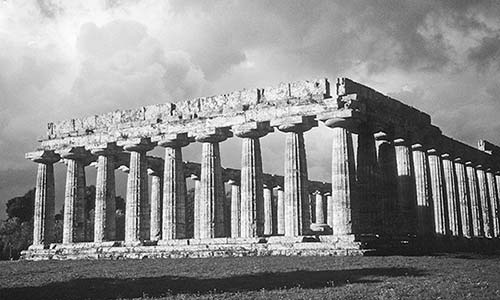
By the way, in 1943, Allied paratroopers dropped in near here during the famous “Landing of Salerno,” when the Allies (who had already taken Sicily) invaded mainland Italy. Paestum was part of their first beachhead. The Temple of Hera served as an Allied military tent hospital. From here, the Allies pushed back the Nazis, marching to Naples, Cassino, and finally to Rome.
• With the Temple of Hera at your back, turn left then right to leave the site (using the exit straight across from the Temple of Neptune). Now turn left onto the modern road...
Via Magna Grecia: The king of Naples had this Naples-to-Paestum road built in 1829 to inspire his people with ancient temples. While he was modern in his appreciation of antiquity, his road project destroyed a swath of the ancient city, as you’ll see as you pass by half of a small amphitheater.
• Just past the amphitheater, you’ll find the...
Ekklesiasterion: Immediately across the street from the museum is what looks like a sunken circular theater. This rare bit of ancient Greek ruins was the Ekklesiasterion, a meeting place where the Greeks would get together to discuss things and vote. Archaeologists believe that the Greek agora (market) was next to here, where the museum stands today.
• Across the street is the...
▲▲Paestum Archaeological Museum
Paestum’s museum offers the rare opportunity to see artifacts—dating from prehistoric to Greek to Roman times—at the site where they were discovered. These beautifully crafted works (with good English descriptions throughout) help bring Paestum to life. Not everything you see here is from Paestum, though, as the museum also collects artifacts from other nearby sites.
Self-Guided Tour
Before stepping into the museum, notice the proud fascist architecture meant to imitate the structure of the temples you’ve just seen. Though the building dates from 1954, it was designed in 1938. It seems to command that you will enjoy this history lesson.
The exhibit is on several levels. As you follow this tour, expect some location changes due to a recent renovation. You’ll likely find mostly Greek pieces on the ground floor (artifacts from the Temple of Hera in front, frescoes from tombs in the back), Paleolithic to Iron Age artifacts on the mezzanine level, and Roman art on the top floor (statues, busts, and inscriptions dating from the time of the Roman occupation). While Roman art is not unique to Paestum, the Greek collection is—so that’s what you should focus on.
• Before exploring the collection, notice the display case (tucked into the far-right corner near the entrance) with the huge book turned to a page with a fine drawing by the Italian artist Giovanni Piranesi, showing his visit to Paestum in 1777. Then look for these museum highlights.
Temple Reliefs: The museum’s center room is designed like a Greek temple inner cella and only opened for temporary exhibitions. If it’s open, look at the large carvings overhead (known as metopes) that wrap around this inner sanctum. They once adorned a sanctuary of the goddess Hera five miles away. This sanctuary, called Heraion del Sele, was discovered and excavated in 1934. Some of the carvings show scenes from the life of Hercules. You’ll get a chance to see the details later in this visit.
• Along the back wall of this room, find the glass case holding nine perfectly preserved...
Vases: One ceramic and eight bronze, with artistic handles, these vases were found in Paestum’s Greek Memorial Tomb. Greek bronzes are rare because Romans often melted them down to make armor. These were discovered in 1952, filled with still-liquid honey and sealed with beeswax. The honey (as you can see in the display cases below) has since crystallized. Honey was a standard part of a funeral because, to ancient Greeks, honey symbolized immortality...it lasts forever.
• Enter the room at the far end of the main hall, filled with ancient Greek...
Votive Offerings: These were dug up at Heraion del Sele (not at Paestum) like the temple reliefs seen earlier. Such offerings are a huge help to modern archaeologists, since the figures that worshippers brought to a temple are clues as to which god the temple honored. These votives depict a woman with a crown on a throne—clearly Hera. The clay votives were simple, affordable, and accessible to regular people.
• Now continue ahead into the large room (broken up by pillars and interior walls) that holds...
Relics from the Temples at Paestum: This room displays smaller pieces. Displays tell in which temple each relic was found (videos unfortunately are only in Italian). The Temple of Ceres is often referred to as the Temple of Athena or as the northern (settentrionale) sanctuary. The Temples of Neptune and Hera are spoken of as the southern (meridionale) sanctuaries.
In a glass case nearby, find the seated statue of Zeus. This painted clay Zeus dates from 520 BC. The king of the gods was so lusty with his antics, he’s still smirking.
Farther into the room, you can’t miss the display case of a statue’s torso emblazoned with swastikas—a reminder that this symbol (carrying completely different meanings) predated Hitler by millennia.
Across the room, look for the short fragment of a frieze with lion heads. Paestum’s three temples were once adorned with decorations, such as these ornamental spouts that spurted rainwater out of lions’ mouths. Notice the bits of the surviving black, red, and white paint. Reconstructions on the adjacent wall show archaeologists’ best guesses as to how the original decorations might have looked.
• Look out the museum’s back window for a good, if distant...
View of Paestum’s Walls: The walls of ancient Paestum reach halfway to the mountain—a reminder that most of the site is still private property and yet to be excavated. The town up on the mountainside is Capaccio, established in the eighth century when inhabitants of the original city of Paestum were driven out by malaria and the city was abandoned.
• Walk along the corridor at the back of the museum, which shows...
Objects from Tombs: More than 1,000 tombs have been identified outside the ancient city’s wall. About 100 were found decorated with frescoes or containing objects such as these.
• At the far end of the corridor, turn left to see...
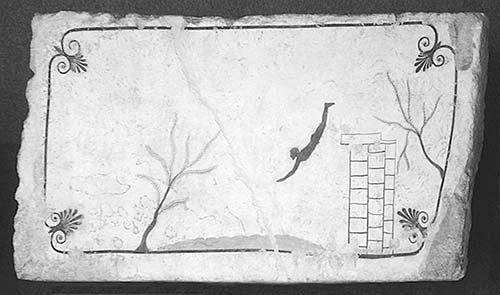
The Tomb of the Diver: This is the museum’s treasure and the most precious Paestum find. Dating from 480 BC, it’s not only the sole ancient Greek tomb fresco in the museum—it’s the only one ever found in southern Italy. Discovered in 1968, it has five frescoed slabs (four sides and a lid; the bottom wasn’t decorated). The Greeks saw death as a passage: diving from mortality into immortality...into an unknown world. Archaeologists believe that the pillars shown on the fresco represent the Pillars of Hercules at Gibraltar, which in ancient times defined the known world. The ocean beyond the Mediterranean was the great unknown...like the afterlife. The Greek banquet makes it clear that this was an aristocratic man.
• After the Tomb of the Diver, the next room displays...
Lucanian Tomb Frescoes: The many other painted slabs in the museum date from a later time, around 350 BC, when Paestum fell under Lucanian rule. These frescoes are cruder than their earlier Greek counterpart. The people who conquered the Greeks tried to appropriate their art and style, but they lacked the Greeks’ distinctive light touch. Still, these offer fascinating glimpses into ancient life here at Paestum. At the entrance to this room, study the tomb and skeleton of an ancient warrior, who was buried with his armor.
• Beyond this room, you’ll find yourself back at the entrance. Before you leave, go up the stairs by the bookshop for a glimpse at the mezzanine level, which focuses on prehistoric archaeology. Also see the temple friezes at eye level now, with explications of what’s happening in almost every scene. The back wall of the mezzanine displays bronze vases, mostly from Gaudo, a half-mile from Paestum.
MORE SIGHTS IN PAESTUM
Barlotti Caseificio Buffalo Farm
This part of Italy is known for its mozzarella cheese made from buffalo milk. A convenient place to appreciate buffalo mozzarella and other buffalo products is at Barlotti Caseificio, a working buffalo farm about a mile from the Paestum ruins (a 25-minute walk from the museum). Visitors can look around for free, lunch on a buffalo burger or buffalo-cheese ravioli in the café, or buy buffalo gelato and buffalo-based cosmetics in the shop (open daily year-round, shop and gelato counter 8:00-20:00, lunch 12:00-15:00, guided tours available, Via Torre di Paestum 1, +39 0828 811 146, www.barlotti.it).
Sleeping in Paestum
Paestum at night, with views of the floodlit ruins, is magic. Accommodations here offer great value. You can sleep in a mansion for the same price you’d pay for a closet in Positano. For locations see the “Paestum” map earlier in this section.
$$ Hotel Villa Rita is a tidy, quiet country hotel set on two acres of attractive grounds with grassy lawns. A 15-minute walk from the museum and a 20-minute walk from the beach, it has 22 rooms, a kid-friendly swimming pool, and rental bikes (RS%, air-con, lunch or dinner available, free parking, closed Nov-March, Via Nettuno 9, +39 0828 811 081, www.hotelvillarita.it, info@hotelvillarita.it, Luigi and his children Rita and Arnaldo).
$$ Il Granaio dei Casabella, a converted old granary with 14 attractive, reasonably priced rooms, is a 10-minute walk from the museum at the end of the little restaurant strip. It has a beautiful garden and pretty common areas, and four rooms have temple views (RS%, family rooms, air-con, free parking, closed Dec-Feb, 300 yards west of the #34 bus stop closest to Salerno, Via Tavernelle 84, +39 0828 721 014, www.ilgranaiodeicasabella.com, info@ilgranaiodeicasabella.com, hospitable Celardo family).
$$ Hotel dei Templi, with 11 good rooms, is a few doors from Il Granaio dei Casabella (air-con, lots of stairs, pay parking, Via Tavernelle 64, +39 0828 811 747, www.hoteldeitempli.it, info@hoteldeitempli.it).
Outside Town: An offbeat option for drivers, $$ Agriturismo Seliano has a huge dining room and lounge with a fireplace, a pool, and 14 spacious rooms on a peaceful, once-elegant farm estate that’s been in the same family for 300 years (air-con, closed Nov-March; two miles north of ruins—Azienda Agrituristica Seliano sign directs you off the main road down a long, potholed dirt driveway; Via Seliano, +39 0828 723 634, www.agriturismoseliano.it, seliano@agriturismoseliano.it). If you stay here, reserve dinner too—it’s served at one long table and made with produce fresh from the garden. They can also organize cooking classes. The place is run by Cecilia, an English-speaking baroness, and her family, including a half-dozen nice and friendly dogs.
Eating in Paestum
Picnics in the ruins aren’t allowed. Several eateries cluster around the museum. $ La Basilica, facing a pretty little garden between the parking lot and TI, is the most straightforward and reasonable option, with good pizzas and other lunch fare (open daily 12:00-15:00 & 19:00-22:00, Via Magna Grecia 881, +39 0828 811 301).
At the south end of the ruins, $$$ Ristorante Nettuno is more elegant, with white tablecloths, a grand piano, and views of the temples; it’s built into a surviving tower from the Roman city walls. It has limited hours, though, serving only dinners in summer (mid-June-mid-Sept from 19:30) and lunches in spring and fall (March-mid-June and mid-Sept-Oct 12:00-15:30; closed Tue and Nov-Feb; Via Nettuno 2, +39 0828 811 028).
Just north of the ruins, outside the Roman city wall, Via Tavernelle has been partly blocked off to traffic, creating a fun little restaurant row with casual indoor and outdoor tables. Consider $$$ Bistrot 73, with wonderful pasta dishes (at #48, +39 342 526 1393), or $$$ Antiche Mura, which accompanies fine grilled meats with an impressive wine list (at #20, +39 0828 199 8535).