ICELAND WITH CHILDREN
MONEY, SAFETY, AND STAYING CONNECTED
Top Kids’ Sights and Activities
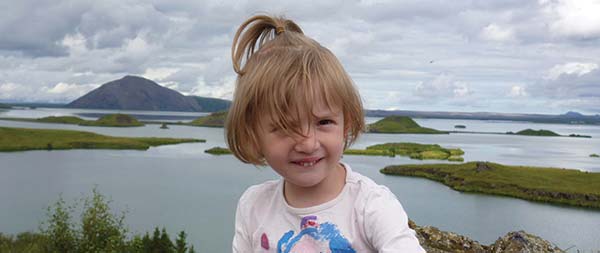
With relatively few museums and plenty of stunning natural wonders and other outdoor activities, Iceland is a great destination for kids. Icelandic culture prizes children. Many restaurants and museums have designated play areas, and every neighborhood has a playground. And Iceland’s dramatic landscapes make for a road trip that rivals the great national parks of the US. Encourage your kids to learn about exciting geological features like volcanoes and glaciers so they can play tour guide. Figure out what their friends’ names would be using the Icelandic naming system (I’d be “Rick Dicksson”). And challenge them to master the pronunciation of “Eyjafjallajökull.”
Trip Tips
PLAN AHEAD
Involve your kids in trip planning. Have them read about the places that you may include in your itinerary (even the hotels you’re considering), and let them help with your decisions.
Where to Stay
• In Reykjavík, hotels are pricey and can be cramped; renting an apartment or house can be cheaper and provides more room to spread out. The advantages of renting a home in Reykjavík’s suburbs are substantial—you’ll have more space and get a look at real Icelandic life. But be warned that short-term rentals might not be childproofed or fully equipped for small kids (unlike hotels, which are likely to have loaner cribs). Search for places with the amenities you’ll need, or, if necessary, bring them along.
• Outside of the capital area, you’ll find fun farm-stay and cottage options that are ideal for families (see the “Sleeping” section of the Practicalities chapter).
• Minimize moves by planning longer stays. From a home base in the Reykjavík area, you can spend days side-tripping to many of Iceland’s highlights: Golden Circle, South Coast, Blue Lagoon/Reykjanes Peninsula, Borgarnes/Reykholt Valley, and more. If doing the entire Ring Road, budget enough time to spend multiple nights in places like Mývatn, southeast Iceland, or the South Coast.
• Consider hotels with restaurants (on-site or nearby), so older kids can go back to the room while you finish a pleasant dinner.
• In most of Iceland, hot water is piped directly from geothermal sources. It can be scalding right out of the tap. Show your kids how to carefully test the water temperature before washing their hands or getting in a shower or bathtub. (Also reassure them that the sometimes-sulfurous odor of the hot water is perfectly natural and safe.)
What to Bring (or Not)
• Don’t bother bringing a car seat—car-rental agencies usually rent them (but reserve in advance).
• Bring your own drawing supplies and English-language picture books, as these are pricey in Iceland.
• Pack a swimsuit, towel, and maybe goggles for fun in Iceland’s many thermal swimming pools.
• With the unpredictable weather (even in summer), bring a waterproof jacket and plenty of layers to bundle up your child.
• If you’re flying Icelandair, ask for the activity sheets and pencils that kids will appreciate. And the airline’s onboard video entertainment, showcasing Iceland’s many attractions, may help get your child excited about what lies ahead.
EATING
Iceland offers plenty of food options for children.
What to Eat (and Drink)
• Icelandic soups (especially the staple lamb soup, called kjötsúpa) are hearty, nourishing, and accessible for kids. The freshly made bread that accompanies most soups is a good bet for picky eaters.
• Most accommodations provide a hearty buffet-style breakfast (including cereals, breads, cheeses, juices, yogurts, fresh fruit, etc.) with enough options to fortify kids for a busy day of sightseeing.
• Iceland’s wide variety of yogurt-like treats (þykkmjólk, jógúrt, and skyr) are tasty, but not as sweet as American-style yogurts. Try mixing in fresh fruit or topping it with granola.
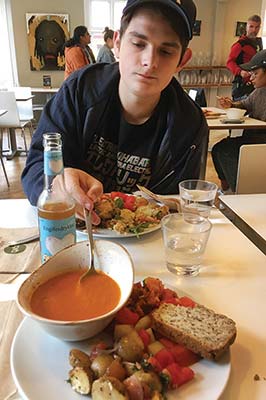
• Pop into a bakery for heavenly scents and fresh-baked pastries. In Reykjavík, try the colorful Brauð & Co or Sandholt (with a larger selection). At Brauð & Co, you can even watch the bakers at work (for details, see here).
• While certain Icelandic dishes might challenge less adventurous young eaters, plenty of familiar American-style food is available—and many restaurants offer a children’s menu. Pizza is virtually a staple dish in Iceland. Hot dogs are a mainstay even for Icelandic families; burgers and fries are easy to find (and taste more or less like their American counterparts); fish-and-chips is readily available. In the Reykjavík area, Domino’s, the Ikea cafeteria, Subway, and other international chains are good fallbacks.
• Most kids will enjoy sampling local sweets. Icelandic candy is tasty and unique (licorice encased in chocolate is a specialty). And Icelanders love soft-serve ice cream. For a special treat, ask at an ice-cream store for a bragðarefur—an overflowing cup of soft serve with candy or sauces mixed in. Also look for familiar sweets in new packaging—for example, Rís Buff (puffed rice and marshmallow covered in chocolate). Kids also might like to try the local orange soda, Egils Appelsín.
• Adventurous older kids might get a kick out of trying some of Iceland’s more exotic foods, such as the infamous fermented shark or other “hardship meats.”
When and Where to Eat
• In Reykjavík, eat dinner early, when restaurants are less crowded.
• Skip romantic or super-traditional eateries. Try relaxed cafés or fast-food restaurants where kids can move around without bothering others. Many eateries have play areas.
• Picnics work well. Stock up on supplies at one of Iceland’s budget supermarkets, Bónus and Krónan.
SIGHTSEEING
The key to a successful Iceland family vacation is to slow down. Tackle one or two key sights each day, mix in a healthy dose of pure fun, and take extended breaks when needed.
Planning Your Time
• Lower your sightseeing ambitions and let kids help choose daily activities. Plan longer stays at fewer stops—you won’t regret it.
• To make your trip fun for everyone in the family, mix heavy-duty sights with kids’ activities—such as going for a swim or soak after tackling a museum or long hike.
• If you’re linking destinations by car, be prepared for long stretches of arguably not much to see. Come ready with activities for kids to do in the car (you can only count so many sheep), plan ahead for meal and bathroom stops, and take advantage of scenic pullouts to stretch everyone’s legs.
• Keep in mind that museums in Iceland can be very expensive. Even a fairly modest exhibit that takes less than an hour can cost $20 or more per person. Younger children may get discounts, and some sights offer family discounts—each sight varies. Weigh your sightseeing options and consider the investment each place requires. And remember that most of Iceland’s best attractions—in the great outdoors—are free.
Successful Sightseeing
• Older kids and teens can help plan the details of a sightseeing visit, such as what to see, how to get there, and ticketing details.
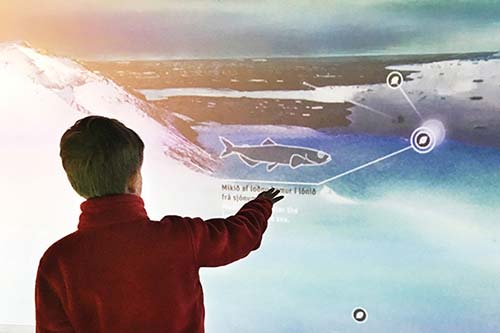
• Audioguides are great for older children. Many exhibits—such as the Wonders of Iceland exhibit at the Pearl in Reykjavík or the Lava Center near the South Coast—offer interactive exhibits that will keep kids of all ages engaged. For younger children, hit the gift shop first so they can buy postcards and have a scavenger hunt to find the pictured items.
• Bring a sketchbook and encourage kids to select an object or landscape to draw.
• Pick up a field guide to Iceland’s flora and fauna and use it to identify unfamiliar birds and plants.
Making or Finding Quality Souvenirs
• Souvenirs tend to be extremely expensive. Parents may find it wise to give kids a budget and advise them to choose their souvenir carefully. Many of the same items are available for the same price at multiple locations.
• Buy your child a trip journal, perfect for recording observations, thoughts, and favorite sights and memories. This journal could end up being your child’s favorite souvenir.
• For a group project, keep a family journal. Pack a small diary and a glue stick. While relaxing at a café, take turns writing about the day’s events and include mementos such as ticket stubs from museums, postcards, or pinches of black sand from volcanic beaches.
• Younger kids may enjoy a typically Icelandic stuffed animal, like a cuddly puffin. An Icelandic flag is simple, colorful, and low-cost. T-shirts with unique Icelandic words or sayings are fun.

MONEY, SAFETY, AND STAYING CONNECTED
Before your trip gets under way, talk to your kids about safety and money.
• Give your child a money belt and an expanded allowance; you are on vacation, after all. Let your kids budget their funds by comparing and contrasting the dollar and the króna.
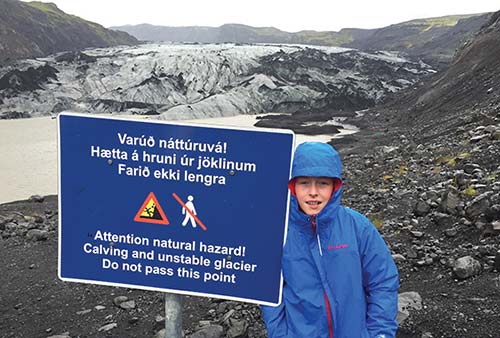
• Iceland’s nature is untamed and can be quite dangerous. Anytime you’re near the open ocean (especially along the South Coast), be aware of the risk of sneaker waves—which can suddenly deluge a beach, pulling people out to the open ocean. At any geothermal area, keep children very close at hand and ensure that they understand the extreme danger of straying from marked paths and into scalding springs. (Impress on your kids that the water is extremely hot, not just warm...they shouldn’t try to “test” the temperature with their finger.) And if you’re walking up close to a glacier, don’t go on top of the ice unless you are properly outfitted and with a guide. For a complete rundown about safe travel, see the sidebar on here.
• In town, if you allow older kids to explore a museum or neighborhood on their own, be sure to establish a clear meeting time and place.
• It’s good to have a “what if” procedure in place in case something goes wrong. Give your kids your hotel’s business card (or write down the address of your rental apartment), your phone number, and emergency taxi fare. Let them know to ask to use the phone at a hotel if they are lost. And if they have mobile phones, enable the “Find my Phone” feature in case you get separated; show them how to make calls in Iceland (see the “Staying Connected” section of the Practicalities chapter).
• Most parents find it worth the peace of mind to buy supplemental messaging and data plans for the whole family. Adults can stay connected to teenagers while allowing them maximum independence, and teens can keep in touch with friends via apps such as FaceTime, WhatsApp, Facebook Messenger, Snapchat, Google Chat, and Skype. Wi-Fi is readily available at just about every business in Iceland.
Top Kids’ Sights and Activities
ATTRACTIONS AROUND REYKJAVÍK
Most of these sights are covered in the Reykjavík chapter. For specifics, see the individual listings under “Sights in Reykjavík,” on here.
Reykjavík City Hall
The large 3-D map of Iceland will fascinate many kids and can be a nice prelude or postscript to your Iceland visit.
Laugardalur
This valley, just east of downtown, is where Icelanders spend time with their kids. It has a “family park” (including the city’s biggest jungle gym and a few amusement-park rides), a zoo (with mostly farm animals), botanic gardens, and an indoor ice rink.
Árbær Open-Air Museum
Not far from Laugardalur, this very kid-friendly exhibit lets you walk through historic buildings from around Iceland.
FlyOver Iceland
Strap into a simulator and virtually soar—feet dangling—over Iceland’s breathtaking scenery, with light bursts of wind, mist, and scents. It feels like a Disneyland ride—with prices to match (adults—5,490 ISK, children 12 and under—3,490 ISK—check height restrictions online; daily 9:30-19:00; near the Old Harbor at Fiskislóð 43, www.flyovericeland.com).
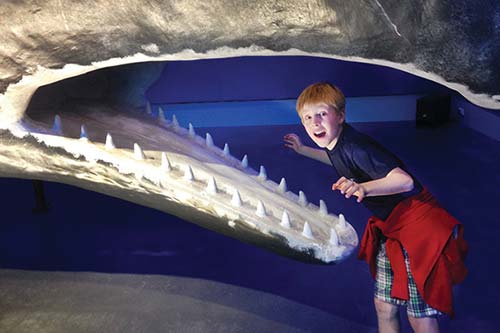
Whales of Iceland
While this attraction is expensive, kids love wandering among the life-size models of majestic giants. Actual whale-watching cruises may bore kids; read my description in the Icelandic Experiences chapter before assuming yours will enjoy one.
Lava Show
Another expensive but kid-friendly experience in the Grandi area, the Lava Show is educational and exciting—allowing kids an up-close view of real, flowing lava in a safe, controlled environment.
Hallgrímskirkja Lutheran Church
This architecturally striking church is an eye-catching symbol of the capital, which kids might enjoy seeing inside and out. If the line isn’t too long, ascending its tower offers a fine view over the city’s colorful rooftops. The statue of Leifur Eiríksson out front is a fun photo-op landmark (with a dramatic story).
The Pearl
The viewpoint here offers a farther-out, big-picture view of Reykjavík, and the Wonders of Iceland exhibit downstairs makes Icelandic nature fun for kids, with interactive exhibits and a walk-through ice cave. Enjoy an ice cream with a 360-degree view of the city and surroundings.
The Pond
Surrounded by a walking path, the small lake in the heart of Reykjavík has ducks to feed—and if it’s cold enough in winter, it may have a skating rink. Near the northeast corner of the lake, find the sweet little “Mother’s Garden” (Mæðragarðurinn)—designed in 1925 for moms to bring their kids to play (notice the touching statue, called Motherly Love).
Walking Paths
On a nice day, the paths along the south side of the Reykjavík peninsula make for a nice stroll and have lots of diversions. At low tide, you can walk down onto the rocks and sand (in the bay, there are no giant ocean waves to worry about). Start near the streets called Ægisíða and Faxaskjól (take bus #11).
Indoor Play Areas
High-energy kids can spend an afternoon doing tumbly activities at a couple of indoor facilities. The Kringlan shopping mall has the “Adventure Land” (Ævintýraland) supervised play zone where parents can pay to leave kids ages 3-9 for an hour or two (www.kringlan.is/aevintyraland). The giant Ikea has a small, supervised play area, called Småland, for kids ages 3-7 (free for up to an hour or so, may be a line to get in, www.ikea.is).
Saga Museum
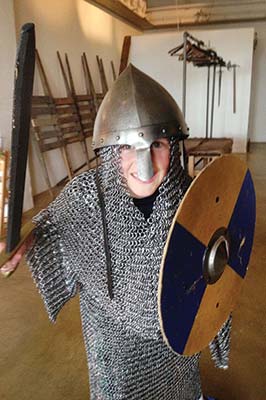
Life-size mannequins enacting great moments of early Icelandic history help bring those tales to life. But some of the mannequins may be too graphic (violence and a little nudity) for certain kids; before buying tickets, flip through the picture book at the entrance to help you decide. At the end of the visit, kids have a chance to dress up like a Viking. Skip the audioguide—it’s too dry for younger kids.
Harpa Concert Hall
Kids enjoy walking around the lobby of this bold concert hall—with its many multicolored windows—and walking out on the jetty just beyond it for views back on the sailboat harbor in front of the building.
The Settlement Exhibition and Reykjavík City Museum
Older kids might enjoy seeing the actual remains of a Viking Age longhouse from the 10th century—well explained by interactive exhibits—and a reconstruction of the oldest house in Reykjavík.
Icelandic Phallological Museum
Jaded, older teenagers (bored with every other museum in town) may show a spark of interest at this collection of preserved animal phalluses. In some ways, 12-year-old boys are the most fitting audience possible for this collection.
Viking World
Near the international airport in the town of Keflavík, this museum features a replica Viking boat and some interactive exhibits. While mostly underwhelming, this exhibit is a handy place to kill some time near the airport and Blue Lagoon (see here).
OUTDOOR AND WATER FUN
There are many remarkable things for kids to see in nature: glaciers, volcanoes, puffins, horses, and more. Most of these are equally suitable for kids as for adults, though some do have age restrictions. Below I’ve called out a few highlights for families. For an overview of these activities, see the Icelandic Experiences chapter.
Waterfalls
Iceland offers many opportunities to get up close to waterfalls, from Gullfoss (on the Golden Circle) and Seljalandsfoss and Skógafoss (on the South Coast) to Dynjandi (in the Westfjords) and Dettifoss (in the north). Each one’s a bit different, but they’re all thrilling. Surefooted kids particularly enjoy Seljalandsfoss, where they can walk behind the falls (see here. Be very careful at any waterfall when it’s cold—the mist can make footing icy and slippery.
Basalt Columns
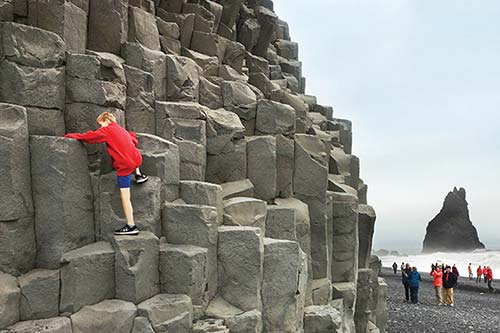
The black sand beach at Reynisfjara, on the South Coast, has seaside caves and stair-step basalt columns that kids enjoy climbing on (see here). But be very careful with kids at this beach, as this is one of the places prone to dangerous sneaker waves.
Glaciers and Glacier Lagoons
All along the South Coast, you’ll spot glacial tongues lapping down from giant, slow-motion rivers of ice. If you’re doing a long road trip, the best place to see these is from the glacier lagoons in southeast Iceland: Jökulsárlón and Fjallsárlón (see here). You can walk very near to a glacier at Skaftafell National Park and nearby Svínafellsjökull (see here).
Older kids might enjoy walking (or snowmobiling) on top of a glacier or touring an ice cave, both of which you can experience by joining an excursion. For more on these options, see the “Glaciers” section in the Icelandic Experiences chapter.
Volcanoes and Other Geothermal Areas
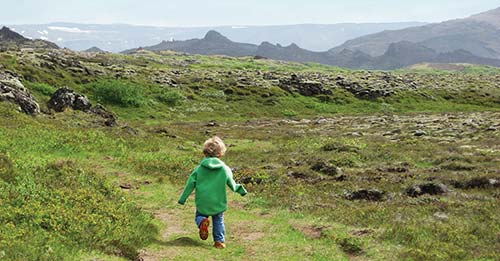
Iceland’s volcanic landscape is fascinating to see and learn about. For more tips, see the “Volcanoes” section of the Icelandic Experiences chapter.
Grábrók (near Borgarnes, see here and Hverfjall (by Mývatn, see here) are comparatively easy and safe crater experiences for small kids (they’ll still need a bit of hand-holding at the top). Less than an hour southeast of Reykjavík, the one-hour guided tour of the Raufarhólshellir lava tunnel is an easy and fun underground walk through a colorful 5,000-year-old lava tube (see here). The most kid-friendly volcano museum is the Lava Center in Hvolsvöllur, which you’ll drive right by on a South Coast day trip (see here). And the best all-around volcanic sight is the Westman Islands, where you can walk onto a lava flow that partly covered the town in 1973, visit the excellent Volcano Museum (called Eldheimar), and hike up to the still-warm summit of Eldfell (see the Westman Islands chapter).
At places like Geysir Geothermal Field (on the Golden Circle), it’s exciting for kids to walk through a bubbling, steaming, spurting landscape of hot water (see here). But stay on the trail!
The Mývatn volcanic area in North Iceland—with its many unique land formations, steaming geothermal landscapes, and easy nature walks—is Iceland’s Yellowstone. The lava castles at Dimmuborgir are fun for kids and relatively safe. If you’re setting up for a few days of nature trips anywhere outside of the capital, Mývatn is a good choice (see here).
Historic Sights and Events
While its historical importance may be lost on younger kids, Þingvellir, on the Golden Circle route, can still be fun. Although the rocky outcrops and rushing river may make parents nervous, children like the boardwalks and paths.
In the northern town of Skagafjörður, the open-air Glaumbær Museum does a fine job re-creating the lifestyles of medieval Icelanders. You can actually walk through several sod-walled homes and better understand how people lived. While the museum is not specifically aimed at kids, older children interested in local folk culture enjoy it (see here).
Also in Sauðárkrókur, for some virtual-reality fun, consider 1238: The Battle of Iceland, an exhibit that lets your kids fight alongside the Vikings in a famous 13th-century battle (see here).
Farms and Animal Activities
In the summer, find a place to look for puffins. You can spot these adorable seabirds all over—you’re likely to have luck on a short cruise from Reykjavík, at Reynisfjara black sand beach on the South Coast (look above the basalt columns), or on the Westman Islands (on a minibus tour or at the Sea Life Trust’s puffin rescue center). Farther afield, you may see puffins at Flatey island (north of the Snæfellsnes Peninsula), at the Látrabjarg bird cliffs (in the Westfjords), or at the coastal village of Borgarfjörður Eystri in the northeast (off the Ring Road).
A number of Icelandic farms offer horseback riding, accommodations, restaurants, or areas where visitors can see animals and learn a bit about the workings of Icelandic farm life. Many of my accommodations outside of Reykjavík are on working farms. Good restaurants on farms include Efstidalur II and Friðheimar on the Golden Circle, and Gamla Fjósið on the South Coast (see those chapters for details). There’s also Cowshed Café near Mývatn (see the Ring Road chapter).
The unique Icelandic horse—typically small and mighty—offers an enjoyable horseback riding experience for visitors old and young. Riding opportunities are plentiful around Iceland, including at horse farms (some near Reykjavík; see here). In the Reykholt Valley, kids love the family-run Háafell Goat Farm, which is working hard to revive the nearly extinct Icelandic goat. It’s a fun visit, with hands-on goat encounters.
Thermal Swimming Pools
Iceland’s thermal bathing scene is extremely kid-friendly—particularly at municipal swimming pools, which you’ll find around the capital area and throughout the country. Many of the larger pools have colorful waterslides and other activities that are designed just for kids, and there’s usually a shallow wading section for tiny tots. For tips on thermal pools, see the Icelandic Experiences chapter.
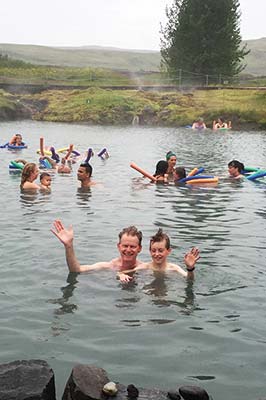
Iceland’s upscale premium baths are less suitable for kids. Families may want to steer clear of the famous and expensive Blue Lagoon, as it doesn’t have any areas or activities designated for children, the mellow and spa-like atmosphere feels very grown-up, and its opaque water makes anything that slips under next to impossible to find. I also wouldn’t take younger kids to the rugged natural thermal bathing experiences (like the Golden Circle’s Reykjadalur); those landscapes are quite volatile, and it’s easy to absentmindedly step into too-hot water. It’s best to stick with the many municipal pools around Iceland.
Skiing and Snowboarding
Two decent options for winter sports are ski areas at Bláfjöll, 25 minutes from Reykjavík, and Hlíðarfjall, near Akureyri. Both are open generally late Nov-early May and offer downhill and cross-country skiing as well as snowboarding, along with equipment rental (Bláfjöll-3,600 kr/3 hours, www.skidasvaedi.is; Hlíðarfjall-5,170 kr/3 hours, www.hlidarfjall.is).
Sledding
If you’re in Reykjavík on a snowy winter day, you can borrow sleds and drive to the slope at Ártúnsbrekku in the eastern part of the city. It’s off the street called Rafstöðvarvegur, near the Elliðaá River.