WESTMAN ISLANDS
Vestmannaeyjar
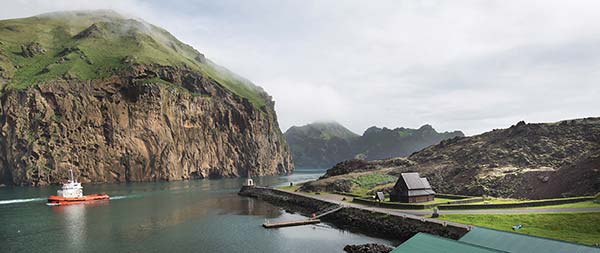
Highly scenic and relatively undiscovered, the Westman Islands are my favorite “Back Door” destination in Iceland. On clear days, the islands’ sharp cliffs hover like a seductive mirage just off the shore of the South Coast. Those who make the trip discover that this pint-sized archipelago packs in an appealing variety of experiences: a dramatic approach by sea, a gorgeously set small town with engaging museums and good restaurants, an up-close look at a recent volcanic eruption, and craggy sea cliffs teeming with birds (including puffin colonies in the summer). The islands take some planning to reach, but it’s worth the trouble for travelers spending more than a few days in Iceland. You can get there by ferry from the South Coast.
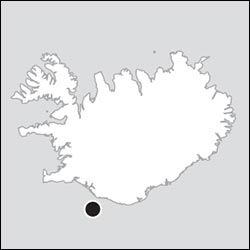
Among Icelanders, the Westman Islands (Vestmannaeyjar, VEST-mah-nah-AY-ar) have various claims to fame: They’re known for their recent volcanic activity (and excellent Volcano Museum), busy fishing industry, large populations of seabirds, and musical traditions celebrated in a huge annual festival. Puffins are an unofficial mascot for all of Iceland, but in summer they are particularly abundant here.
According to the sagas, the “Westman” Islands, which actually lie south of the mainland, are named for a trio of Irish slaves who fled there after killing their owner. In Old Norse, the Irish were called Vestmenn (Westmen)—that is, from west of Scandinavia—so a better translation might be the “Irishmen’s Islands.”
The only inhabited island is Heimaey (HAME-ah-AY), and that’s the one you’ll be visiting.
PLANNING YOUR TIME
Consider whether you’ll visit Heimaey for the day or stay the night, and whether to walk or drive on to the ferry.
Overnight or Day Trip?: An overnight on Heimaey Island works well in conjunction with a visit to the South Coast; the Landeyjahöfn ferry dock is about a 15-minute drive south of the Seljalandsfoss waterfall. Overnighting gives you the flexibility to take a later ferry and enjoy the place when it’s less crowded.
You can day-trip here from Reykjavík or the South Coast in a rushed but still worthwhile visit. If home-basing on the South Coast for a few days, use the day with nicer weather for your Westman Islands trip (to check weather conditions, visit https://en.vedur.is or call +354 481 2800). Drive or ride a bus to Landeyjahöfn harbor to catch the ferry first thing in the morning, and reverse the trip in the evening.
Walk On or Drive On?: If you walk on the ferry, it’s easy to see the main sights in town by foot and then join a recommended bus tour (see “Tours on Heimaey Island,” later). Drivers can bring a car over to explore more of the island (but book a spot in advance; see “Helpful Hints,” later). Drivers who walk on can park their cars for free at the Landeyjahöfn port.)
Day-Trip Plan: Take the earliest ferry over and a late one back. (It’s 40 minutes each way.) To really see the island, take an island tour (2 hours, late morning or early afternoon departures). Budget an hour apiece for museums in town and another hour for the self-guided town walk. To save time en route, consider picnicking on the ferry (there’s a fairly priced cafeteria with basic meals on board).
GETTING TO THE WESTMAN ISLANDS
You’ll take a 40-minute ferry (called Herjólfur) from the tiny harbor at Landeyjahöfn, just 10 minutes south of highway 1 on the South Coast. The port is a two-hour drive east from Reykjavík; turn south onto highway 254 just before the bridge over the Markarfljót river. (In winter, ferries depart from Þorlákshöfn, closer to Reykjavík.)
A handy bus from Reykjavík connects with two ferries per day. Take bus #52 from Reykjavík’s Mjódd terminal (5,700 ISK, first bus departs Reykjavík about 8:00, last bus departs Landeyjahöfn about 20:40, 2.5 hours, +354 540 2700, www.straeto.is).
Book Ahead: Both walk-on passengers and those bringing a car should book ferry tickets in advance (especially cars in summer). Morning departures from Landeyjahöfn (especially the 10:45) and evening departures (especially the 17:00) from Vestmannaeyjar can sell out weeks, or even months, in advance. Festival weekends are hectic and require early booking (see “Helpful Hints,” later). If you plan to walk on and it’s not a busy festival weekend, you can typically book your ferry ticket a day or two ahead (but earlier is better).
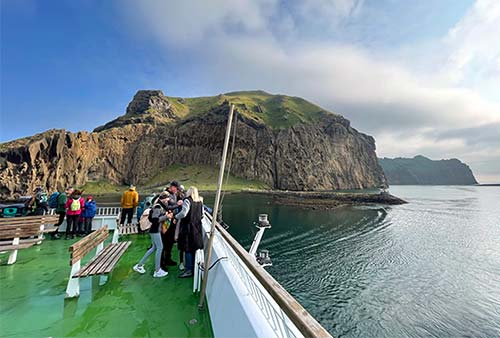
Sailing from Landeyjahöfn: The short, scenic crossing to the islands on the Herjólfur ferry is a pleasure (2,400 ISK/person, 3,600 ISK/car, book ahead online at www.herjolfur.is). In summer, there are typically seven sailings a day in each direction.
Passengers are expected to check in 30 minutes before sailing, so plan to arrive in Landeyjahöfn with enough time to find parking and walk to the tiny ferry terminal (with WCs, a small waiting area, and vending machines). With a car, arrive 30 minutes ahead—the ferry may begin loading 15-20 minutes before it departs. In Vestmannaeyjar, the boat ticket office is at the harbor (open whenever boats sail).
Back-Up Sailing from Þorlákshöfn: Especially in winter, the Landeyjahöfn ferry can be canceled due to harbor and weather conditions. If the ferry can’t dock at Landeyjahöfn, it will use the older Þorlákshöfn harbor instead (a two-hour drive from Landeyjahöfn). To minimize inconvenience to drivers parked in Landeyjahöfn, the ferry company always provides a bus back to that port in the event of a detour.
The ferry from Þorlákshöfn is a three-hour crossing, which makes a day trip to Heimaey impractical—it really only works if you stay overnight on the island. Þorlákshöfn is a 45-minute drive from Reyjkavík, or take bus #51 to Hveragerði, then change to bus #71 (around 1.5 hours, 3,400 ISK).
Heimaey Island
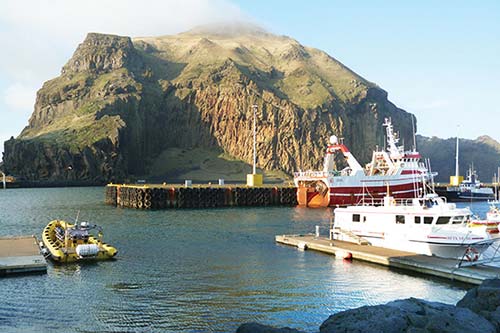
Your visit is limited to Heimaey (Home Island), the only inhabited Westman island. Although its lone town, Vestmannaeyjar, is humble, its setting is dramatic: buildings huddle up along the harbor, facing a busy industrial port and steep, scenic cliffs. From here, Vestmannaeyjar climbs gradually uphill, filling a broad plateau between the cliffs to the west and the volcanoes to the east. The roughly dozen smaller islands surrounding Heimaey have a wet, warm, and windy climate—by Icelandic standards. Icelanders refer to this area as simply “the islands,” and people from here as “islanders.”
Orientation to Heimaey Island
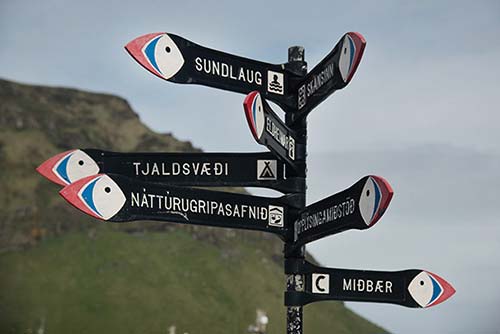
The only town on Heimaey shares the name of the archipelago: Vestmannaeyjar. Its main commercial street, Bárustígur, runs up from the harbor and holds many of my recommended eats and sleeps. Puffin-head signposts scattered around town direct you to the various museums and other landmarks.
Tourist Information: The TI is at the ferry dock, right across from where walk-on passengers disembark, though it may have moved by the time you visit (ask locally, Mon-Fri 9:00-16:00, closed Sat-Sun, shorter hours off-season, +354 488 2555, www.visitvestmannaeyjar.is).
ARRIVAL IN VESTMANNAEYJAR
If arriving on foot by ferry, follow the blue stripe painted onto the pavement. This leads you to the TI and the ticket kiosks for various boat and bus tours, plus a bike-rental kiosk. The main drag (and the start of my self-guided walk) is uphill from the harbor, roughly behind the Krónan supermarket, about two blocks to the left (look for the Eymundsson bookshop).
HELPFUL HINTS
Puffin Viewing: The best time to see puffins is from roughly late May to mid-August. (They arrive around the end of April but spend only a brief time cleaning their burrows before they go out to sea to mate.) Puffin spotting tends to be more successful in the cooler morning and evening hours; on sunny days, they hunker down during the midday “heat” (by Icelandic standards). In recent years, the number of puffins nesting here has declined, perhaps due to the warming ocean around the islands.
Festivals: On the first weekend in August, the islands host the massive Þjóðhátíð (National Festival) in Herjólfsdalur, a picturesque valley near town where upwards of 20,000 people gather (fireworks, bonfires, and singing; must buy festival ticket and book accommodations and transport to islands well in advance; www.dalurinn.is). The weekend is known for drunkenness and other rowdy behavior, and everything books up.
School-age athletes and their families fill the island for soccer tournaments on two separate June weekends: Pæjumót (girls, https://tmmotid.is) and Orkumót (boys, www.orkumotid.is). Book hotels and ferry tickets well in advance.
The Goslok festival commemorates the end of the 1973 eruption of Eldfell (weekend following July 3). Islanders also celebrate the annual nationwide Seamans’ Day enthusiastically (first weekend in June). These festivals are smaller, but reservations are still essential.
Bike Rentals: A rent-a-bike kiosk is at the harbor next to Eyja Tours (mountain bikes and electric bikes, +354 896 3640).
Tours on Heimaey Island
Bus Tour
Ebbi and Íris of Eyja Tours run a delightful two-hour minibus tour of the island every day in summer. The route covers all the points described later in my “Driving Tour of the Island.” This tour is a great value and the best use of your time, offering a good overview of the entire island, lively commentary from a gregarious islander, and just the right balance of information and stops to snap photos and stretch your legs. They have a little ticket office next to the harbor, across from Tanginn restaurant (10,000 ISK, RS%—use code “Rick Steves” when booking direct; tours run May-mid-Sept at 9:30, 12:00, and 14:30; smart to book in advance July-Aug, may be available off-season, +354 852 6939, www.eyjatours.is).
Boat and Kayak Tours
Weather permitting, several companies run boat and kayak tours that give you a glimpse of the smaller islets and stacks surrounding Heimaey. Note that these are commonly canceled on windy days.
Ribsafari runs bumpy tours on small RIBs—rigid inflatable boats (15,900 ISK, 1- and 2-hour tours, +354 661 1810, www.ribsafari.is). Tours do not visit Surtsey (the island that erupted from the sea in the mid-1960s), as it’s too distant from Vestmannaeyjar and landing there is not allowed.
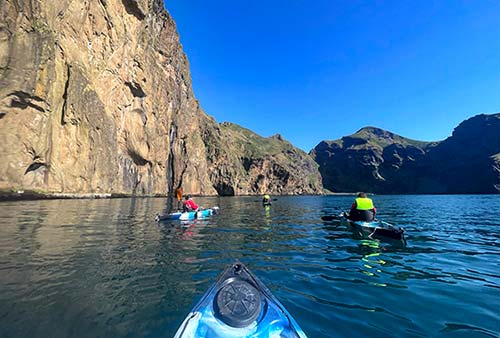
Kayak & Puffins leads guided 1.5-2-hour kayak tours from Skansinn cove, by the old wooden church (10,000 ISK, must be 14 years old, 2/day in summer, generally at 10:00 and 18:00, 2-person minimum; dry suit, boots, and dry bag provided; +354 779 4234, www.kayakandpuffins.is).
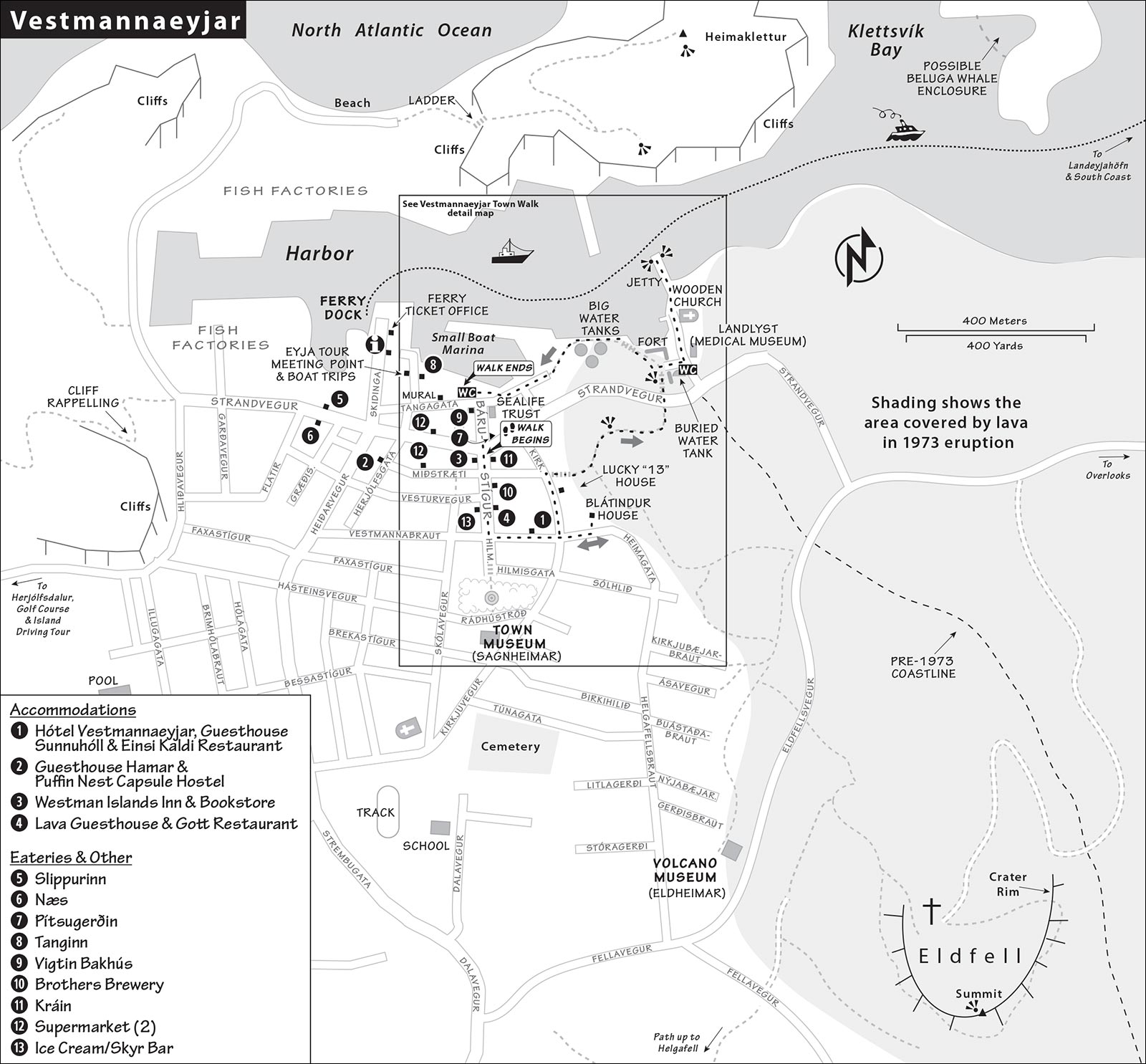
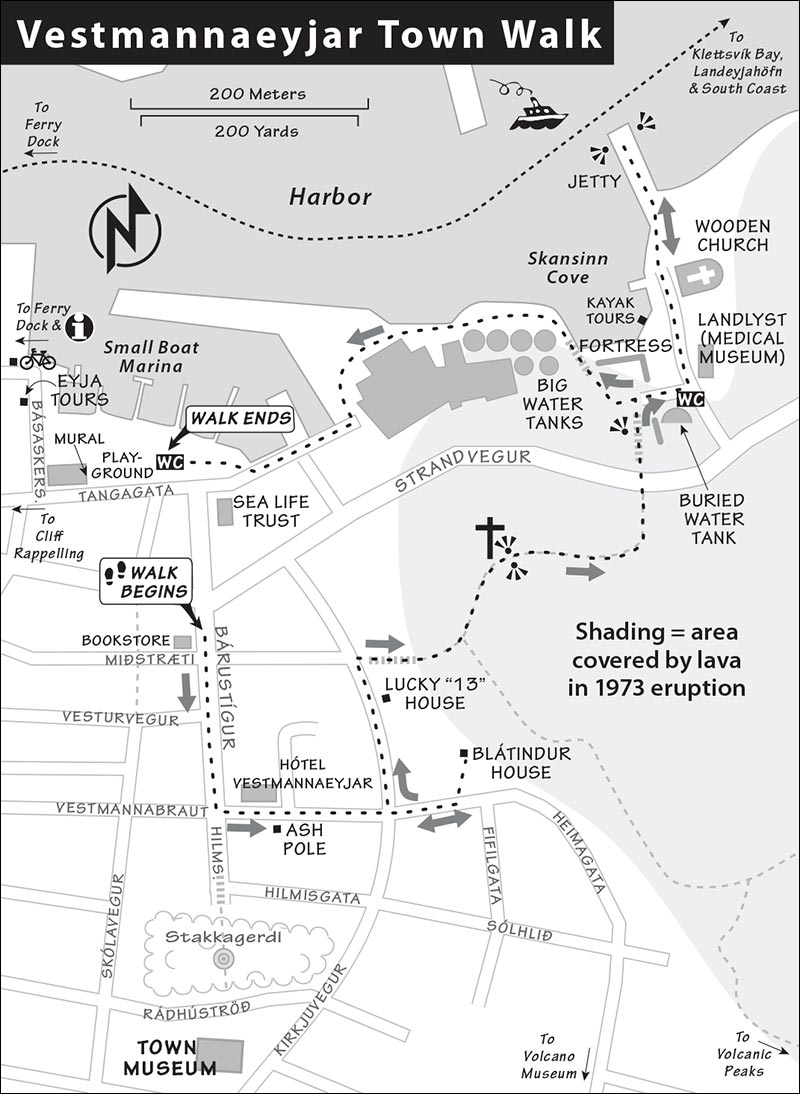
Vestmannaeyjar Town Walk
This one-hour walk is designed to give you a handy ▲▲▲ overview of the island’s only town, Vestmannaeyjar. You’ll take in views from atop the lava that swallowed up several houses, and stroll past the town’s scant historic landmarks and its busy harborfront. The walk begins in front of the Eymundsson bookstore on the main street.
• Stand with your back to the water, looking up the street called...
Bárustígur: This is the little main street of a little town on a little island. The bookstore staff are helpful and can answer your questions between ringing up book sales and pulling espresso shots. Look up the street to find the gray, blocky building at the far end (above the long set of steps)—it houses the town history and culture museum (called Sagnheimar and described later).
• Walk two blocks up Bárustígur, taking note of the town’s handful of restaurants and shops. When you reach Vestmannabraut, turn left and head toward the hill in front of you. Across the street from Hótel Vestmannaeyjar, find the black...
Ash Pole: Standing here today, it’s hard to imagine this entire street buried in pumice and gravel-like ash for months following the 1973 eruption of a previously unknown fissure (see sidebar). These poles, scattered throughout the east part of Vestmannaeyjar, show just how high the ash reached, providing a tangible scale of the destruction.
• Continue straight, toward the hill, crossing over Kirkjuvegur. A half-block up, behind the bright yellow house (just after the house labeled Lagafell 1908), turn left onto the path leading to a reconstructed white facade.
Blátindur House: Although the 1973 eruption almost entirely swallowed this house in pumice and piping hot lava, its facade remained standing, becoming a symbol of the island people’s resilience. When the original facade eventually gave way decades later, funds were raised to rebuild one wall as a memorial. More striking than the house itself are the photos on display chronicling the home pre- and post-eruption. A short slideshow plays inside the window, explaining the history of the house and its owners. You can walk around behind the reconstruction to see the actual ruins.
• Return to Kirkjuvegur and turn right. We’re heading for the staircase up the side of a bluff. Before climbing up, notice the brown wooden chalet-type house to the right: The lava—now the grassy bank between you and it—stopped just in time to save the house. Its street number? Lucky number 13.
Climb to the top of the stairs, then take a hard left and follow the trail out along the edge of the bluff to a wooden cross, marked Njarðarstigur, and a small stone monument a few steps beyond.
Vestmannaeyjar Viewpoint Spin-Tour: Get oriented with this 360-degree visual tour. First, look out over the harbor, where boats big and small are sheltered by two steep cliffs with rounded, green tops. Vestmannaeyjar’s excellent natural harbor became even more sheltered by cooled lava after the huge eruption in 1973. A significant share of Iceland’s total fish exports comes from here, even though the island has only a little more than 1 percent of Iceland’s population. The whole northern side of the harbor is given over to fish processing, and the community tends to vote for Iceland’s conservative party, which works to protect fishing interests. The harbor is too tight for big cruise ships (though you may see some smaller ships).
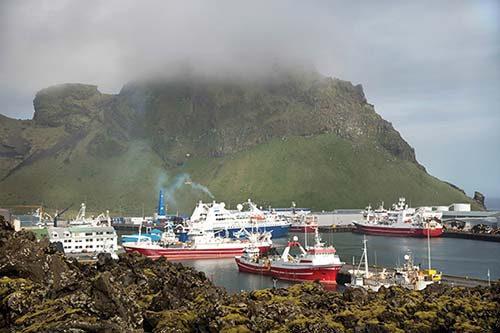
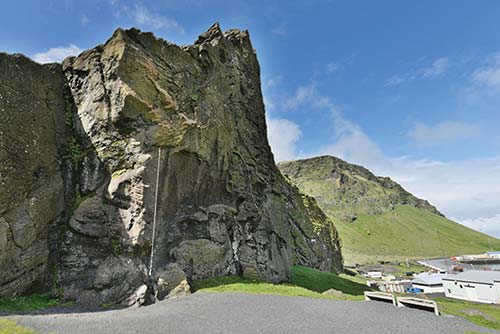
Just to the left of the harbor is a towering cliff, home to some of the island’s many birds. The Westman Islands are rich with bird life—puffins, of course, but also fulmars, guillemots, and kittiwakes. This cliff is also where local kids learn the age-old climbing and rappelling skills needed to collect seabird eggs on the jagged outlying islands—a practice called sprangan. If you have great vision (or binoculars), you may be able to spot a knotted rope dangling from the rock. Starting around age eight, children learn how to free-climb their way up steep cliff faces and swing on strategically placed ropes. Better to learn here, where at worst they might fall on the soft sod, rather than the sharp rocks and cold surf at the base of a sea cliff.
Tucked around the far side of that cliff (not visible from here) is Herjólfsdalur, a natural amphitheater where this teensy island hosts a gigantic music festival each summer.
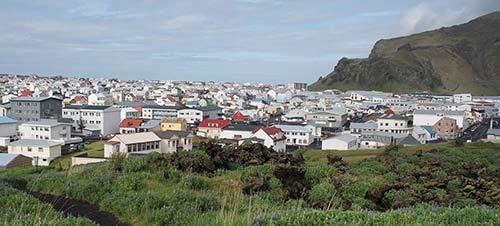
Now pan left, over Vestmannaeyjar’s rooftops. This is not a cutesy tourist town, but a no-nonsense working community. For centuries, no more than a few hundred people lived here. The island boomed between 1900 and 1920 with the rise of motorized boats for fishing, and much of the downtown zone dates from that era. Today, the 4,600 islanders still live off fishing, plus a little tourism. Living out on the islands comes with compromises: Errands often require a trip to the mainland, and many expectant mothers travel to Reykjavík to give birth at the larger hospital there. If the houses look a little ragtag, keep in mind that maintaining property on a little island is a challenge. Despite the islands’ volcanic activity, there’s no geothermal water source, so homes are heated with electricity and oil.
Turning farther left, find the two looming volcanic peaks on the horizon. The one on the right, with the classic volcanic dome shape, is the dormant Helgafell, which last erupted 6,000 years ago. The lower-lying, reddish one to its left, Eldfell, was born in the 1973 eruption—when, for six months, a slow and steady flow of lava gradually consumed this corner of the island.
Continue looking left, across a rocky landscape. The entire “hill” upon which you stand—all the land between here and that volcano—is about 50 years old. You’re standing on a now-solidified molten river of liquid rock that’s 50 feet deep. (Remember that staircase you climbed up?) All around you, notice the wood-carved “street signs,” bearing the names of streets that now lie deep underfoot. Keep an eye out for plaques memorializing former landmarks (Kiwanis club, electrical plant, and so on). Looking down from this vantage point, it’s easy to see where present-day dead-end streets once continued directly below you. The low-lying, rust-colored, boxy building that sits between the V formed by the two volcanoes is the excellent Volcano Museum, called Eldheimar; a visit here is an essential Westman Islands experience (described later).
Hiking paths and gravel roads crisscross this area. It’s fun to wander around the lava rocks, which are blanketed in fuzzy moss and (in early summer) enlivened by colorful wildflowers. If you have time and energy, you can hike all the way up to the volcano summit (see “Climbing up Eldfell Volcano,” later).
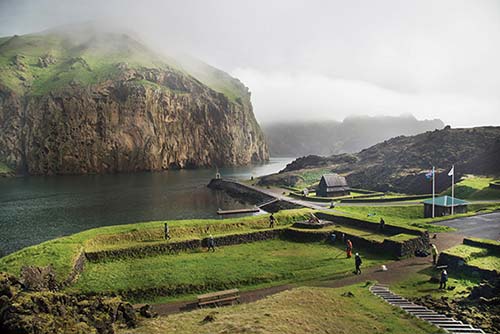
• Now continue along the gravel path, with the lava on your right and the harbor on your left. When the path reaches an asphalt road, carefully cross it to the bench and look down over historic Skansinn Cove. Walk down the steep steps to the remaining walls of an old fortress with a lone cannon.
Fortress (Virkið): In 1586, the Danish king built this to enforce Danish power against the British, who wanted to trade with the islands. The fortress saw action only once, during perhaps the only dramatic event in local history until the 1973 eruption: In 1627, pirates raided the island and carried off most of its inhabitants to slavery in Algeria. The island’s priest, Ólafur Egilsson, was one of the few who managed to return. He wrote a book about his experiences, which you can buy in English translation. More of the fortress’s history is on the information board.
Just past the fortress, embedded in the bluff on the right, look for the white, semicircular water tank—or what’s left of it, as more than half of the structure was consumed by lava. Built in 1932, this was a seawater tank that helped local fishermen keep their catch fresh. It also fed a big swimming pool—which is now under the lava (see photos of happy swimmers on the nearby information boards). For centuries, the Westman Islands suffered from a lack of fresh water, with just two wells and the rainwater that residents collected from their roofs. In 1968, a pipeline was completed that brought water from the mainland, which is now stored in the huge white tanks between here and the harbor.
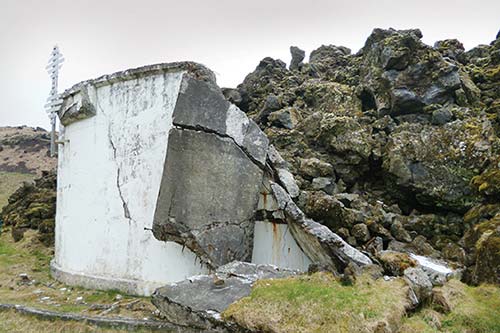
• Continue past the water tank (there’s a WC on your right) and the big mast mounted in the ground. Carry on to the old, black house across the street.
Landlyst: Relocated here in 2000, this building is the oldest residence on the island and the former home of Iceland’s first maternity hospital. Information boards explain how neonatal tetanus killed three-quarters of all babies born on the Westman Islands in the mid-19th century. This problem was solved only when local woman Sólveig Pálsdóttir went to Copenhagen at just 21 years old to train as a midwife. She had to receive special permission from the Danish authorities to get such training, because she was an unmarried and childless woman. (She completed her education with honors, became the town doctor here in 1863, and left for a job in Reykjavík in 1867.) Today the building houses a delightful little medical museum (looks closed when it’s open, free, daily 10:00-17:00).
• Continue downhill a few yards to the...
Wooden Church: Just below the old house, you can’t miss the small black wooden church, donated by Norway in 2000 to mark a millennium of Christianity in Iceland (free to enter). While lacking a tall steeple, it’s typical of humble Norwegian village churches (and designed as a replica of a circa-1170 church in Trondheim, Norway).
• Walk out to the end of the stubby...
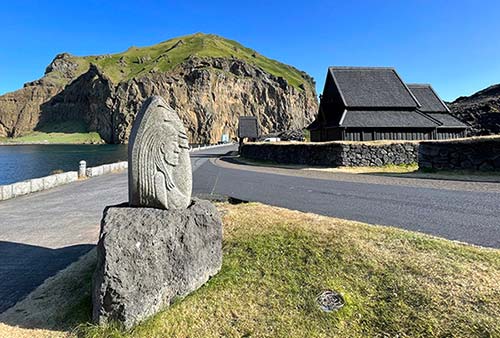
Jetty (Hringskersgarður): This helps protect the harbor from the churning sea. Looking right, you’ll see the narrow passage ships use to access Vestmannaeyjar’s port—and you can clearly see how the harbor became even more protected by the 1973 lava flow, which came as far as this jetty. Islanders were terrified that the lava would seal off the harbor entirely, which would have turned Vestmannaeyjar into a ghost town. With the help of the US military, locals pumped seawater on the lava to try to cool sections of it and divert the flow away from the town and harbor. Opinions are divided about whether this had any real effect, but the islanders like to think it did. American writer John McPhee wrote a good account of this effort (The Control of Nature, 1989).
In the middle of the night on January 21-22, 1973, a volcanic eruption started along a fissure just above the town of Vestmannaeyjar. Most of the islanders were immediately evacuated, but the eruption went on for months—destroying a third of the town. This event is still fresh in many islanders’ minds, and tourists usually spend part of their visit understanding it and seeing its consequences—including the many bits of buried homes still sticking out of the lava all around the east side of town.
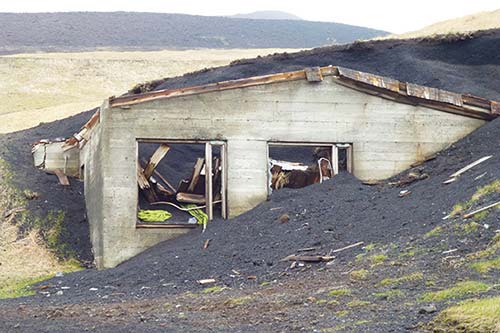
Lava from the newly formed volcanic cone, named Eldfell, gradually encroached on local homes and expanded the island’s footprint by about 20 percent. Meanwhile, the volcano ejected massive volumes of tephra (volcanic particles) into the air, blanketing much of the island’s northern half under a thick layer of ash and rock. A small crew stayed on the island to observe the eruption and wrap up the evacuation, and when possible, they retrieved valuables from houses before they were buried by ash or set alight by hot lava bombs. Ultimately the eruption destroyed 400 homes, displacing 1,500 residents. One person died (from toxic gases that built up where he was sleeping).
By June, after six terrifying months, the eruption was finally over. Some islanders moved back home, but about a third never returned—they’d forged new lives on the mainland, or they didn’t want to live in fear of another eruption.
Although the volcano caused great disruption, it also had some positive effects. Geothermal heat from the earth allowed the islanders to heat their water for a few years, with pipes running underneath the new lava (these days, they’re back to electricity and oil). Tephra from the eruption was useful for road building and paving. Most important, the eruption narrowed the harbor mouth enough to make it a much more sheltered anchorage. For better or for worse, the 1973 eruption shaped the Westman Islands that you’re visiting today.
You may see pontoons going to the small cove across from you, Klettsvík Bay, where an underwater pen was built to house two beluga whales brought to Heimaey in 2019. So far, the belugas are still under care at the Sea Life Trust, and the pen will probably be empty when you visit (for details, see the “Sea Life Trust Visitor Center” listing, later). This cove has been home to a whale before: Keiko, the orca made famous by the movie Free Willy, was held here from 1998 to 2002.
Now gaze up at the 930-foot-tall cliff that rockets up across the harbor—called Heimaklettur. Seabirds love to nest in the craggy horizontal walls, and you may spot some surefooted sheep grazing at the top. Using specially placed ladders, hardy islanders race each other to the top of this cliff; the record is 13 minutes. For us mortals, it’s more like 45 minutes up, 25 minutes down...but only if you’re in great shape—it’s fearsomely steep and only for adventurous, dedicated climbers.
• Let’s head back into town. Retrace your steps back up to and through the fortress. Past the lonely cannon, a small lane and stairway lead down to the big, white water tanks. Walk around the tanks, then head left along the water, back into town to...
Vestmannaeyjar’s Harbor: Stroll along the busy waterfront, peering into warehouses and onto ship decks. After the blue warehouse, you’ll bear left, then right, to circle around the inner harbor, where smaller boats moor. This area, called Bæjarbryggjan (Town Wharf), was built in 1907, around the time motorized fishing arrived in the Westman Islands. It was later expanded, and eventually modern docks were built on the far side of the harbor.
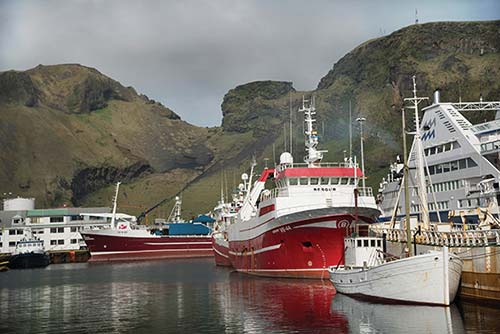
Soon you’ll reach a little playground under a mural, with WCs and benches nearby. The Sea Life Trust Visitor Center and the main drag, Bárustígur, are across the street. Straight ahead are the sales kiosks for various bus and boat tours (see “Tours on Heimaey Island,” earlier). The ferry dock back to the mainland is just a couple minutes’ walk past the kiosks.
• Our walk has come nearly full circle. From here, you can browse tour options, head into town for lunch, or visit your choice of Vestmannaeyjar’s museums, described in the next section.
Sights on Heimaey Island
Vestmannaeyjar has two charming homegrown museums worth your time, plus the overpriced Sea Life Trust Visitor Center. For efficiency, see the town museum (Sagnheimar) first and then walk 10 minutes to the Volcano Museum; extend your sightseeing by walking from the Volcano Museum up the path to the summit of Eldfell volcano.
▲▲Town Museum (Sagnheimar)
This endearing museum has an eclectic array of exhibits that give context to your island visit. It’s well done, insightful, and worth seeing if you have time.
Cost and Hours: 1,000 ISK; daily 10:00-17:00; Oct-April Sat only 12:00-15:00, closed Sun-Fri; Ráðhúströð, at the upper end of the Bárustígur main drag, building marked Safnahús Vestmannaeyja, on the second floor in the same building as the town library and archives; +354 488 2050, www.sagnheimar.is.
Visiting the Museum: Head upstairs, buy your ticket, then make a counterclockwise loop through the circular floor plan. Not all items are described in English, but there’s enough to get by.
First you’ll learn about the 1973 eruption; this area includes before-and-after photos and video interviews with local residents. The next section has photos of the roughly 200 islanders who converted to the Mormon Church in the mid-1800s and emigrated to Utah, and an illustrated retelling of the 1627 raid on the islands (in which pirates kidnapped over 200 islanders and took them away to slavery in Algeria). One room tells the stories of notable women on the island, including mid-19th century midwife Sólveig Pálsdóttir (you can visit her old home and maternity hospital on the Vestmannaeyjar Town Walk, earlier.)
Next, you’ll learn about musician and composer Oddgeir Kristjánsson (1911-1966), who wrote many of the songs near and dear to the hearts of Westman Islands residents. Many of these songs are still sung during the annual Þjóðhátíð, Iceland’s largest outdoor music festival, held here every August. You’ll see some of his old instruments, including his piano, along with the hats he wore while leading the Lúðrasveitar—a brass band that still exists on the island today (www.ludrasveit.com).
The back of the museum features an exhibit about the history of the Þjóðhátíð festival, including some of the outrageous costumes the revelers wear. Then you’ll loop around to a fun section on puffins (with a birders cabin and interesting video clips). Next is an exhibit about the fishing industry that is at the heart of Westman Island life, with a reconstructed 1924 town pier, a 1970s fishermen’s dorm, a poignant “in memoriam” wall honoring fishermen lost at sea, and a seasickness-inducing video showing a fishing trawler navigating insanely rough seas. The last room, on the left, displays examples of Iceland’s national costume, developed as the country sought independence.
▲▲Volcano Museum (Eldheimar)
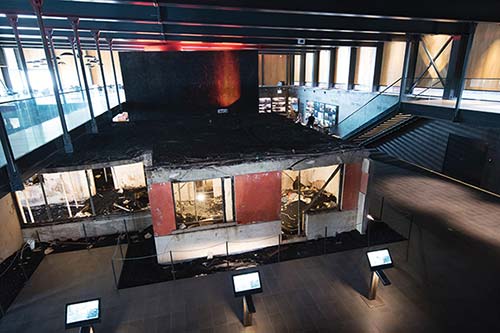
This modern museum tells the story of the 1973 Eldfell eruption, which destroyed half the town and has been an inseparable part of the islands’ image ever since. The vivid exhibits are well described by the included audioguide. The centerpiece of the museum is an actual house, half-immersed in lava rock.
Cost and Hours: 2,900 ISK, includes audioguide; daily 11:00-17:00; mid-Oct-April Wed-Sun 13:00-17:00, closed Mon-Tue, open other times by appointment only; Gerðisbraut 10, +354 488 2700, http://eldheimar.is. The museum is about a 20-minute, moderately uphill walk from the harbor; follow the red lampposts, and look for the boxy, rust-colored building on the hillside.
Visiting the Museum: Before going inside, first pause to look up at the cleverly aligned window that, on a nice day, catches the reflection of the volcano behind you. Then, to the right of the entry, a staircase leads to the ruins of a house immersed in lava. The museum itself is built over the excavated remains of a house that was buried (but didn’t burn) in the eruption. Guðni Ólafsson and Gerður Sigurðardóttir and their three young sons lived in the one-story, ranch-style house, which had just been finished two years before. Their home—now windowless, with its roof propped up by steel supports, and its contents left in disarray as they were found—is the highlight of the museum. You can’t go in the ruin, but joysticks and monitors allow you to control cameras and investigate remotely. The oft-heard label “Pompeii of the North” is a bit of an exaggeration, but it’s definitely a one-of-a-kind sight.
From there, the audioguide takes you around the seven stages of the exhibit in about 20 minutes. You’ll learn about the town before, during, and after the eruption, with striking photographs and gripping (if grainy) television footage. Island residents retell the exhausting excavation of the town—mountains of tephra (2.2 cubic tons) were shoveled and trucked away. If you have time, there’s also a 25-minute documentary film. Upstairs, you’ll find good views over the house stuck in lava, a coffee shop, and a less engaging exhibit on the Surtsey eruption of 1963-1967, which caused a brand-new island to emerge from the Atlantic.
Climbing Up Eldfell Volcano
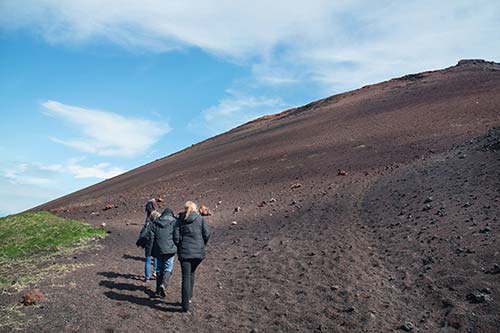
To walk up to the summit of Eldfell (ELD-fehtl), the volcano that emerged in the 1973 eruption, follow the short path that starts a bit above the Volcano Museum (20-30 minutes up), by a small parking lot. You can also walk directly through the lava from downtown, starting at the stairway at the intersection of Miðstræti and Kirjustræti streets (this area is also described on my self-guided walk). The ground at the summit gets a bit cooler every year, and it’s no longer easy to boil an egg or bake potatoes in holes dug in the lava. However, locals report that you can still bake Icelandic rye bread in it.
Sea Life Trust Visitor Center
The 2019 opening of the Sea Life Trust Beluga Whale Sanctuary and Puffin Rescue Center on the harborfront (a.k.a. the Sea Life Trust Visitor Center) coincided with the arrival of two beluga whales rescued from captivity. The center replaced the town’s longtime homey aquarium and ad hoc puffin center, and it feels more commercial than educational (Sea Life Trust is a partner charity of the British firm behind Legoland and Madame Tussaud’s Waxworks). It’s really only worthwhile if the belugas are on view, or if you won’t have the chance to see puffins in the wild. You can think of your entrance fee as a donation toward whale rescue efforts (all admissions go to the whale program).
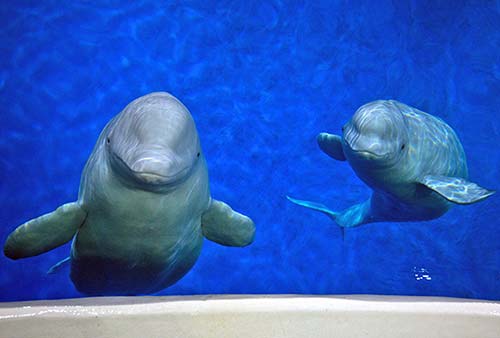
The two female belugas, Little Grey and Little White, are native to Russia but spent most of their lives in an aquarium in China. Shipped to Heimaey by plane in 2019, they’ve been spending time in the center’s “care pool.” A few unsuccessful attempts have been made to move them to a 350,000-square-foot enclosure across the harbor in Klettsvík Bay. The first time, strong winter currents proved too much for the whales; the second time, the Covid-19 pandemic prevented experts (required to help the whales acclimate) from traveling to the island; and on the most recent attempt, one of the whales became stressed and sick not long after returning to the bay. Locals hope to attempt a move again in the future. Beluga whales, like orcas, are highly sociable, and if you have the chance to view them in the center, you’ll understand why they’ve struggled in the bay. (This story resembles that of Keiko the orca, who struggled to adapt outside of containment.) The whales won’t ever be released into the wild, but the hope is they’ll eventually learn to fish for themselves and enjoy greater freedom.
Cost and Hours: 3,500 ISK, 2,500 ISK for kids 6-12, combined aquarium/puffin island boat trip—10,900 ISK; daily May-Sept 10:00-16:00, shorter hours off-season; Ægisgata 2, +354 620 2724, https://belugasanctuary.sealifetrust.org.
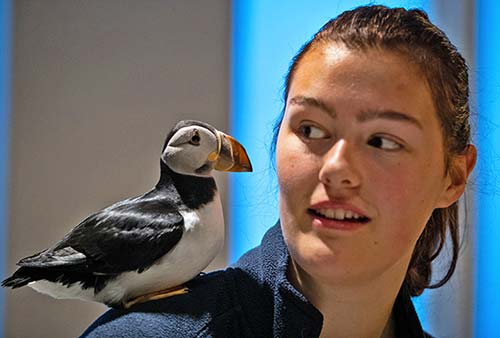
Visiting the Center: Your visit starts in the puffin rescue center, where you’ll learn how disoriented birds are rehabilitated, then see a handful of resident puffins (you may meet the rescue’s oldest puffin, Karen). Puffins nest in burrows on steep grassy slopes just above the island’s cliff edges. Every August, when the baby puffins are ready to take flight for the South Atlantic, some become distracted by the lights of the town and land in the streets. Island children collect the pufflings (that’s right, a baby puffin is called a puffling) and bring them to the rescue center, which keeps them overnight and then releases them at an appropriate spot by the sea. Cute photos show local kids with the pufflings they rescued.
Next, you’ll learn about Little Grey and Little White’s journey to Vestmannaeyjar, before the grand finale—peering through the windows into the pool holding the whales (if they’re not in the bay). While the belugas may not give you the time of day, if there are kids present, you might get quite a show. Belugas especially love kids and will playfully swim right up to the viewing window to interact with them.
Driving Tour of the Island
With a car, you can take an easy spin around the island of Heimaey. The entire loop (which is what the island bus tour does) takes about a half-hour with no stops—but allow an hour or two at a leisurely pace, with plenty of photo stops for views of Westman islets and happy, roaming sheep grazing on scrubby groundcover. Once you leave town, you won’t see much civilization. Heimaey once had several working farms, but the sheep and horses you see now are raised more as a hobby.
• From town, loop west to...
Herjólfsdalur: This valley, in a collapsed volcanic crater, is the dramatic setting for the Þjóðhátíð (National Festival) held each August. Look for the stage (which faces the cliff and benefits from the acoustics of the mountain bowl) and the pulpit-like spot where bonfires are lit.
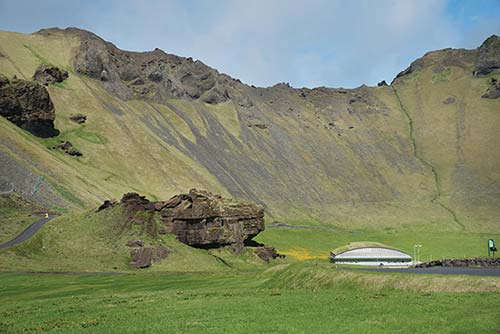
Between the amphitheater and road sits Herjólfstown, a reconstruction of the first Westman Island settler’s farmhouse. What looks like two separate dwellings is actually connected; in winter, animals and slaves were housed on the left to share their warmth with the family’s living space on the right. The dwellings have been fixed up recently and turned into an interesting exhibit with dioramas and tales of life in the Viking Age. Timber beams were added just as they would have been constructed a thousand years ago (1,500 ISK, April-Sept daily 11:00-17:00, www.herjolfstown.is).
The area also has a golf course and a campsite. The cliffs over the little jagged inlet on the western side of the meadow (which famously look like an elephant) are a good place for puffin spotting in summer. If you have time, a lovely walking path leads south from Herjólfsdalur along the island’s western shore.
• Drive south toward the island’s southern point, Stórhöfði. Along the way are some prime...
Offshore Island Views: The best views of the 15 other (uninhabited) Westman Islands, worth ▲, are from the road that runs south between Herjólfsdalur and Stórhöfði. Nobody lives on any of these islands full-time, but island men participate in fraternity-like clubs that own them. Each club builds and maintains a hut on its island—and some huts are quite elaborate. Locals go to the outer islands mostly to harvest seabird eggs.
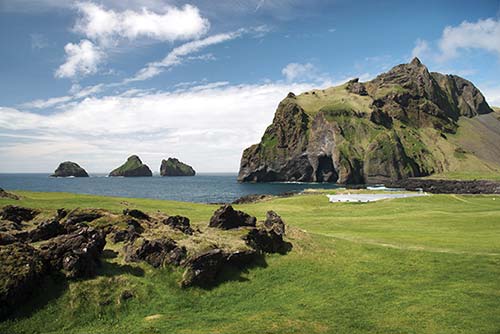
The most distant of the smaller islands—just barely visible on the horizon on very clear days—is Surtsey, which rose from the sea in a long eruption lasting from 1963 to 1967. Surtsey is off-limits to all but scientists, who visit regularly to follow the progress of the plants that colonize it and the wave erosion that makes it a little smaller each year.
• About 10 minutes after leaving Herjólfsdalur, you’ll reach...
Stórhöfði: This hilly knob of land was a separate island before the Helgafell eruption created the isthmus several thousand years ago. The first pullout along the road up to the lighthouse, on a hairpin bend, has a small parking area and short path to a bird-watching blind. Here you can get a good view of the cliffs where puffins nest in the summer (not visible from the road; be sure to close the windows, door, and gate when you’re finished). The second pullout, just below the lighthouse, has the best views. You’re standing in line with three volcanoes: On the coastline to the north you can see Eyjafjallajökull (erupted 2010), on the island itself stands Eldfell (1973), and behind you (not visible, off-shore), is Surtsey (1963). The lighthouse has a weather station that regularly records the strongest winds in Iceland...and that’s really saying something.
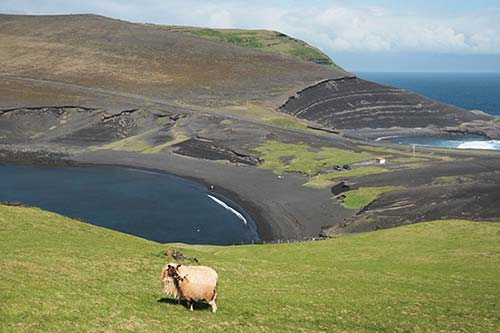
• From here it’s just 10 minutes back to Vestmannaeyjar. To drive right into a volcano as you enter town, turn right on Strembugata (above the school playfield) then left on Fellavegur, and left on Eldfellsvegur. Look on the right for an unmarked gravel road that crosses the lava field (see the map on here).
Eldfell: You’re driving into the “new” land created by the 1973 eruption. The eruption’s lava flow made the island 20 percent bigger, gave the harbor more protection, and provided a land barrier to break the harsh wind that until then barreled from the open sea right into town. The gravel road leads to a cross below the summit that marks the center of the volcano. From here, it’s possible to climb a steep path to the crater rim. Notice the different colors of volcanic rock, and the slow-growing scrub grass planted to keep the volcanic dust from blowing into town.
Sleeping on Heimaey Island
These places are within a 10-minute walk of the harbor. As options are limited on the island, it’s worth checking Airbnb (which may also be cheaper).
$$$$ Hótel Vestmannaeyjar, the only large, well-established hotel in town, is a few short blocks away from the harbor, with 43 business-class rooms, an upscale on-site restaurant, and an indoor sauna and hot tubs in the basement that are free for guests (elevator, generous breakfast buffet, Vestmannabraut 28, +354 481 2900, www.hotelvestmannaeyjar.is, booking@hotelvestmannaeyjar.is).
$$$ Guesthouse Hamar, closer to the harbor, is a family-run place renting 14 basic rooms with private baths at reasonable prices (family rooms, Herjólfsgata 4, +354 659 3400 or +354 694 2598, www.guesthousehamar.is, info@guesthousehamar.is).
$$ Westman Islands Inn fills the two floors above the Eymundsson bookstore with 17 fresh rooms, most with private baths. As one side of the building faces busy Bárustígur, consider requesting a room on the quieter side (some with kitchenettes, family rooms, lots of stairs, no reception but staff is responsive, Bárustígur 2, +354 868 5228, www.westmanislandsinn.is, westmanislandsinn@gmail.com).
$$ Lava Guesthouse is simple and hands-off but sits right on the main shopping drag. The six tight rooms share bathrooms and a kitchen (family rooms, Bárustígur 13, +354 659 5400, www.lavaguesthouse.com, info@lavaguesthouse.com).
$$ Guesthouse Sunnuhóll is actually the back wing of Hótel Vestmannaeyjar. It’s a simple annex—woody and modern—with four twin rooms and four family rooms with facilities down the hall and a kitchen (same contact info as Hótel Vestmannaeyjar).
¢ The Puffin Nest Capsule Hostel, run by the same people as Guesthouse Hamar, fills a garage-like space with 40 sleeping pods and a shared bath, kitchen, and living room. The pods are futuristic, private cocoons about twice as big as a coffin, with high-tech gadgetry to make them sleepable (individual TVs and air-con, +354 481 3400 or +354 659 3400, www.puffinnest.is, info@puffinnest.is).
Eating on Heimaey Island
The Westman Islands are a good place to eat. Most mid-price restaurants generally charge the same prices at lunch and dinner, and you can easily get a good, square meal for 2,700-3,200 ISK at any time of day. At nicer restaurants, it’s smart to make a reservation for dinner. The island’s restaurants don’t serve puffin (breeding populations are low) or other seabirds.
$$$$ Slippurinn (The Shipyard) is the town’s top restaurant and a mecca for foodies—offering Reykjavík quality at Reykjavík prices. It’s run by a respected chef who prides himself on mingling authentic traditions with modern cookery. Its long, well-worn tables and other funky mismatched furniture fill a big, open, industrial-mod space a block above the harbor. While you might want to splurge on a blowout fixed-price dinner, they also offer a more affordable three-course option and à la carte dishes. Even if you’re not drinking, peruse their “cocktail book,” which features colorful drawings of the local herbs used in each concoction. Reservations are a must (Wed-Sun from 17:00, closed Mon-Tue, above the harbor at Strandvegur 76, +354 481 1515, www.slippurinn.com).
$$$ Næs, across the street, is Slippurinn’s more affordable sister restaurant. They serve small plates in a small, simple space. The menu also includes a few mains and inventive cocktails (long hours daily, reservations recommended for dinner, Strandvegur 79, +354 481 1520, www.naesrestaurant.is).
$$ Gott (Good) feels like the town’s living room, with tables spilling out onto the street on a nice day (even on cooler days, heaters and blankets make sitting outside enjoyable). The indoor seating is convivial and casual, and the appealing menu features fish, chicken, burgers, and healthy bowls at competitive prices (vegetarian and vegan options, long hours daily, Bárustígur 11, +354 481 3060).
$$ Pítsugerðin (Pizza Garden), at the base of the little shopping street, serves excellent pizza in a trendy indoor space—reserve ahead to snag one of these tables. It can be tempting to sit outside on a nice day, but those tables come with some traffic noise (long hours daily, Bárustígur 1, +354 551 0055).
$$$ Einsi Kaldi, in a large timber-filled dining space inside the recommended Hotel Vestmannaeyjar, serves interesting fish dishes among its slightly overpriced offerings (3-course set menu and 5-course tasting menus available, daily for dinner only, reservations recommended, Vestmannabraut 28, +354 481 1415, www.einsikaldi.is).
$$ Tanginn (The Spit), at the harbor, has a great view of the cliffs and the fishing boats—which means it gets crowded and servers can be overwhelmed at busy times. The menu is predictable: fish of the day, ribs, lamb, and less expensive burgers, soup, and salad (lunch buffet, daily until late, Básaskersbryggja 8, +354 414 4420).
$ Vigtin Bakhús is quick, simple, affordable, central, and usually filled with locals. This bakery, in a window-lined circular space facing the harbor, sells tasty sandwiches, pastries, and coffee (daily until 17:00, Strandvegur 30, +354 481 1104).
Local Craft Beer: With a convivial tap house on the main street, Brothers Brewery makes their own microbrews right here on Heimaey (no food, tasting flight-2,500 ISK, daily from 14:00, Bárustígur 7, +354 571 5510).
Cheap Eats: Find budget takeaway options at Kráin, which fries up “fresh fast food” on Bárustígur (daily). Two supermarkets near the harbor are open daily: Bónus, a few blocks up at Miðstræti 20, and Krónan, right along the harbor.
Ice Cream/Skyr Bar: Across from Gott on the main shopping street, Eydís Ísbúð serves good-quality ice cream (try the salted caramel-licorice flavor). It shares space with Ísey Skyr, which makes skyr-based smoothies and fruit bowls. Or try plain skyr with your choice of toppings (both open daily, skyr until 16:00, Vesturvegur 5).