BLUE LAGOON & REYKJANES PENINSULA
Reykjanes and Blue Lagoon Loop
The Blue Lagoon—arguably Iceland’s most famous attraction—is tucked into a jagged volcanic landscape in the middle of nowhere, about a 45-minute drive south of downtown Reykjavík and not far from the international airport. People flock here from around the globe to soak, splash, and bob in the lagoon’s thermal and, yes, milky-blue waters. While many visitors consider the Blue Lagoon a must, it’s not everyone’s cup of tea—it’s pricey, crowded, time-consuming, and not ideal for small kids.
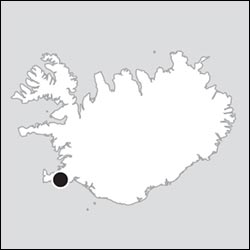
The Blue Lagoon and Keflavík Airport both sit on the Reykjanes (RAYK-yah-NESS) Peninsula, which extends into the sea south of Reykjavík. A few low-impact sights are scattered around the volcanic terrain beyond the Blue Lagoon—including Kleifarvatn lake; the thermal fields at Seltún; Grindavík, a humdrum town with some good lunch options; and Keflavík, the peninsula’s main town. While the scenery is more impressive in other parts of the country, a quick drive around Reykjanes provides those on a tight timeframe with an efficient glimpse of the Icelandic landscape.
PLANNING YOUR TIME
The Blue Lagoon requires reservations—don’t show up without a ticket and hope to slip in. Day-of openings are rare. To have your choice of slots, book at least several days ahead.
Blue Lagoon Strategic Strike: Given the Blue Lagoon’s proximity to the international airport, a smart, time-saving strategy is to schedule your visit to coincide with your flight: If arriving on a morning flight, hit the Blue Lagoon on your way into Reykjavík; if you’re flying out in the afternoon, soak in the Blue Lagoon on your way to the airport. With a several-hour layover, it may not be worth the trouble to go all the way into Reykjavík—but a visit to the Blue Lagoon (or sights in the town of Keflavík) is a far better alternative to hanging out at the airport. Luggage storage is available at the lagoon parking lot.
Blue Lagoon and Reykjanes Peninsula Loop: If you’re staying longer in Reykjavík and want to make a day of it, follow this plan (remember to book ahead for the Blue Lagoon). For details, see here.
| 10:00 | Leave Reykjavík for Kleifarvatn lake (45 minutes) |
| 11:00 | Visit Kleifarvatn and Seltún geothermal field |
| 11:30 | Drive to Grindavík (30 minutes) and have lunch |
| 13:00 | Drive to the Blue Lagoon (10 minutes) |
| 13:15 | Soak in the Blue Lagoon—aaah |
| 16:00 | Return to Reykjavík—or, before heading home, take in one of the museums in the town of Keflavík |
Blue Lagoon
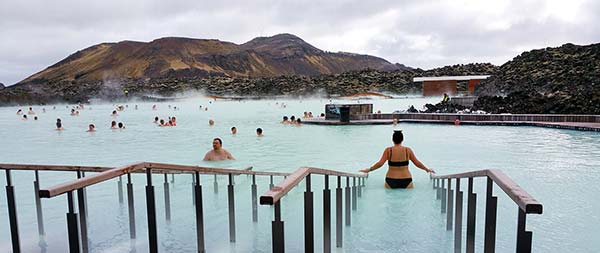
While Iceland has a wide variety of thermal baths, the Blue Lagoon’s setting amid rocky, moss-covered lava fields makes it unique. Bathing at the wildly popular Blue Lagoon is, for some travelers, the ultimate Icelandic experience and worth ▲▲▲.
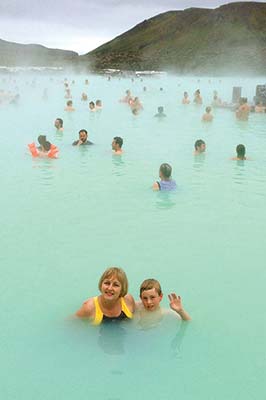
The Blue Lagoon (Bláa Lónið) has a don’t-miss-it reputation and prices to match. More than 3,000 people visit each day. Reservations are required, and some slots sell out days in advance. (The bottleneck isn’t the lagoon itself, but the number of lockers.) The reservation requirement keeps the lagoon from getting too congested—even on the busiest days, you can find pockets of hot water where you can escape the tour groups.
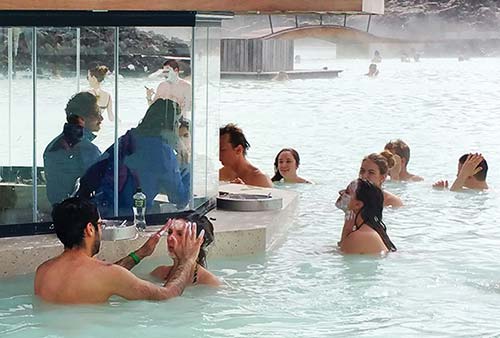
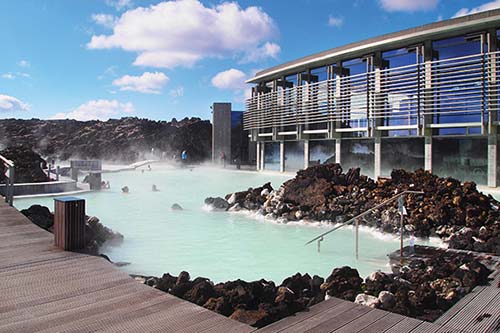
The Blue Lagoon is a steamy oasis—a sprawling hot-water playground for grown-ups. Chunky rocks disappear beneath the opaque water, where they’re coated with white silica slime. The naturally heated water is thoroughly relaxing. You’ll smear mineral deposits on your face while giggling at your fellow silica-masked bathers. The hardest “work” you’ll do is keeping your Icelandic microbrew or skyr smoothie above the water as you behold the surrounding rocks hissing like teakettles.
GETTING THERE
With a Car: The Blue Lagoon is very easy by car. It’s about 45 minutes from downtown Reykjavík and only 15 minutes from Keflavík Airport, off highway 43, on the way to the town of Grindavík. Some highway signs use only the Icelandic name: Bláa Lónið. It’s free to park in the lagoon’s huge parking lot.
By Excursion Bus: The lagoon runs its own hourly bus service, Destination Blue Lagoon, from Reykjavík and Keflavík Airport (7,990 ISK round-trip; each leg 3,995 ISK one-way, i.e., airport to lagoon or lagoon to Reykjavík; sold separately or as an add-on to lagoon admission, https://destinationbluelagoon.is).
Reykjavík Excursions sells packages that include standard “comfort” admission and round-trip travel between Reykjavík and the Blue Lagoon for about 20,000 ISK. You can use your return ticket to continue to Keflavík Airport instead of going back to Reykjavík. Buses run hourly between Reykjavík and the lagoon but less frequently between the lagoon and airport—check schedules carefully and plan ahead (+354 580 5400, www.re.is).
Gray Line offers a pricey, five-hour round-trip “tour” from Reykjavík starting at around 20,000 ISK, including “comfort” admission (more-expensive private packages also available; +354 540 1313, www.grayline.is).
Note that excursion companies have access to the same time slots for the Blue Lagoon as individuals—if the lagoon is sold out in one place, it’ll be sold out everywhere.
ORIENTATION TO THE BLUE LAGOON
Cost: The basic “comfort” package costs 11,200 to 15,000 ISK (depending mostly on how far in advance you buy your ticket) and includes entry, a locker, a towel, a drink from the lagoon bar, and a dollop of silica white mud for your face. Fancier packages get you extra mud masks, a bathrobe, a glass of bubbly at the Lava Restaurant (if dining there), in-water massage, and access to the luxury Retreat Spa (for details on these packages, see the website). Bring your own suit or rent one there (800 ISK).
Hours: June-Aug daily 7:00-24:00, Sept-Jan 8:00-22:00, Feb-May 8:00-21:00, last entry one hour before closing. You need to leave the water at closing time, but you have another 30 minutes after that to dress.
The Blue Lagoon dates only from the early 1970s, when the local power authority drilled for hot water to heat homes on the Reykjanes Peninsula. They hit a good high-temperature source, but as often happens, the water wasn’t suitable for piping directly into home radiators—it was salty (due to seawater intrusions) and had a high mineral and clay content. Instead, they set up a heat-exchange system where the geothermal water was used to heat fresh, cold water that could then be piped to homes. After running through the system, the partly cooled geothermal water was simply dumped into the lava field near the plant.
Within a few years, locals realized this was a great place for a free dip and started to bathe in the water. Silica clay gives the water its milky texture, and sunlight gives it a blue appearance. (The name “Blue Lagoon”—borrowed from the notorious 1980 Brooke Shields movie—was originally used in jest.) Authorities caught on, fenced off the lagoon, built a changing shed, and started to charge admission, which at first was no more than at a local swimming pool. Word spread, and within a few years the lagoon had become a major tourist attraction. The power authority privatized the lagoon, controversially selling it to a group of local politicians. They raised capital and did an admirable job developing and marketing the lagoon, adding cosmetics lines, a gift shop, a hotel, and a fancy restaurant.
Today, almost all the Blue Lagoon’s guests are tourists; only a small percentage are Icelanders, who now find the facility too expensive. Meanwhile, other premium pools have sprung up across Iceland: Sky Lagoon (in Reykjavík); Fontana and Secret Lagoon (on the Golden Circle in Laugarvatn and Flúðir, respectively); Hvammsvík Hot Springs (between Reykjavík and Borgarnes, in West Iceland); Krauma (at Deildartunguhver, in West Iceland); Forest Lagoon (in Akureyri); and Geosea and the Mývatn Nature Baths (along the Ring Road, in the north).
Information: +354 420 8800, www.bluelagoon.com.
Reservations: Book far in advance for the widest selection of times. Morning and evening entries are often cheaper and less likely to be sold out. If your preferred date is sold out, check back closer to that day: Big excursion companies may release a block of unsold tickets. The website explains cancellation and change fees.
Arrival and Luggage Storage: You must enter within an hour of your selected entry time. You may be let in early depending on locker availability (just ask); a half-hour early is often no problem.
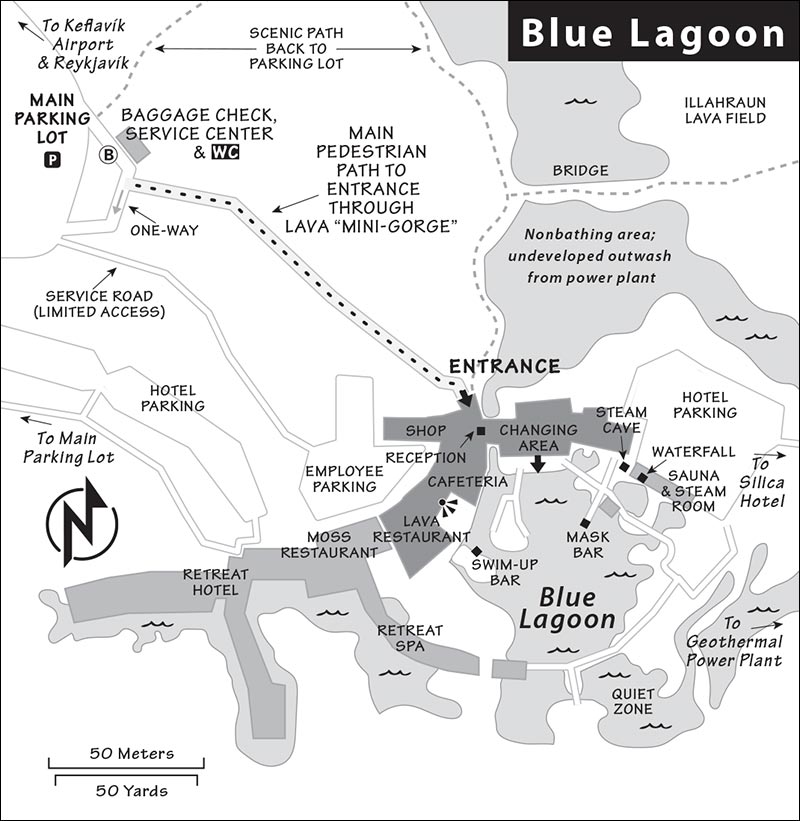
The lagoon’s parking lot is connected to the main building by a 100-yard path cut through the lava field. A small building near the parking lot has a WC, pay luggage storage, and a waiting room for those taking buses from the lagoon.
Eyewear and Jewelry: Avoid wearing eyeglasses if you can—they fog up, and you won’t find them in the opaque water if they fall off (a strap can help). Clay can scratch delicate lenses; rinse glasses in fresh water when you leave the pool. Cheap sunglasses can make the lagoon more pleasant—even on an overcast day, the lagoon’s milky water reflects the light and can be very bright. Because the water is opaque, there’s no need for goggles. Leave jewelry in your locker to avoid tarnishing or losing it in the pool.
Hair Concerns: The minerals in the Blue Lagoon can leave hair dry and brittle. The effect goes away within a day or two. Don’t stress about this too much—the lagoon is more fun if you relax and let your hair get wet. Still, especially for those with long hair, it’s smart to slather on the free conditioner (from dispensers in the shower stalls) before and after you bathe, or keep long hair tied up and out of the water. A bathing cap offers the best protection. In addition to conditioner, the lagoon provides free shampoo, body wash, and hair dryers.
Kids: Children under age two are not allowed in the Blue Lagoon, and the facility is not designed for kids (no slides, kiddie pools, or play areas). Staff may ask for your child’s identification to confirm their age. The water is opaque, so if a child goes under, you won’t be able to see them. The same goes for toys, glasses, goggles...and anything else that might slip out of little hands.
Eating: The main building has an appealing $ self-service cafeteria (with prepackaged sandwiches, sushi, salads, and drinks), plus the expensive, sit-down $$$$ Lava Restaurant (reservations recommended, same contact info as lagoon). In the luxury Retreat Hotel next door, the $$$$ Moss Restaurant offers elegant dining with a view (reservations recommended, accessible from lobby/cafeteria via stairs up to second level, +354 420 8700). Better-value eateries are in Grindavík, a 10-minute drive away (described later in this chapter).
Sleeping: The lagoon runs the nearby $$$$ Silica Hotel and the preposterously expensive Retreat Hotel. You’ll find lower prices in Keflavík and Grindavík (see “Hotels near the Airport” in the Reykjavík chapter).
Free Peek: If you just want a glimpse at the dreamy setting, you can park, enter the main building, and visit the Blue Lagoon’s gift shop, cafeteria, and restaurant without a ticket. There’s a good view of the pools from the cafeteria and the open deck between the cafeteria and the restaurant. A peaceful path from just outside the main entry leads through the nonbathing section of the lagoon and is worth a stroll (see “Leaving the Lagoon,” later).
VISITING THE BLUE LAGOON
The procedures for a visit to the Blue Lagoon are basically the same as at other Icelandic pools (see the “Pool Rules” sidebar on here). If you arrive at peak times, getting in can be chaotic. Watch the helpful video on the website, which walks you through a visit (www.bluelagoon.com, also linked by a posted QR code at the lagoon entrance).
Check-In: There are two lines at the entrance: one for check-in and one for those who have “pre-checked in”—intended for guests who have watched the introductory video online. This is meant to expedite check-in so staff won’t have to reexplain the process to you (but the two lines seem to create more confusion than they’re worth).
Entry Procedure: When you check in, you’ll get an electronic wristband that serves as your locker key (and lets you charge drinks, mud masks, and other extras—pay when you leave).
Once in the changing area, find an available locker. To secure the locker, first touch your wristband to the light-up panel (if you forget, your locker will pop open after you leave). You can use your wristband to reopen your locker as often as you like. If you forget your locker number, touch your wristband to the panel and it will remind you. I suggest leaving your phone in the locker and just taking it out to take a few photos when you’re finished soaking.
Once you’ve changed and showered (in a private cabin, if you prefer), head out to the lagoon. Review the lagoon map above the main door as you leave the indoor area. It locates everything (bar, mask bar, waterfall, sauna, steam rooms, etc.) and shows the temperature of various hot spots. If you get turned around, bath attendants are standing by to answer questions and point you in the right direction.
In the Pools: The lagoon is big. The towel situation is chaotic. I don’t even bother tracking mine: It’s easy to just ask for another when you exit the lagoon and head back inside.
Once you’re in, be aware that the water ranges from waist- to chest-deep. The temperature varies more than in a regular swimming pool, with hot and cool spots—the average is around 100°F. For safety, the original scalding hot springs are contained in “hot boxes” (never over 105°F). While the water is not chlorinated, new water continually circulates into the lagoon—refilling the entire pool about every 40 hours. Bathers congregate by the warm spots where the hot water enters. Lifeguards love to talk and are full of fun facts.
Splish and splash around, exploring the hidden nooks and crannies of the interconnected pools, including a little roofed grotto, and several areas with benches that resemble hot pots at the municipal baths. The farther out you go, the quieter the pool becomes. Find the hot, thundering waterfall and give your shoulders a pounding. From there you can access the steam room, steam cave, and sauna.
Don’t forget to find the swim-up bar—everyone gets one free drink. Water fountains under the bridges help you stay hydrated.
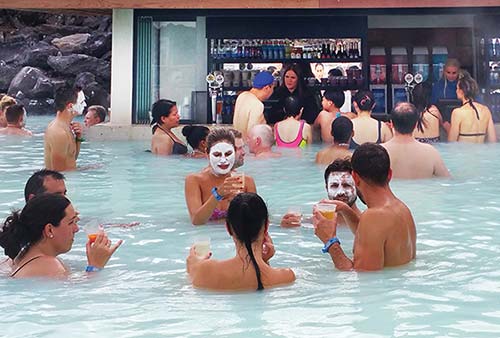
At the mask bar, there are four mud mask options. Every bather gets a free ladleful of the white silica mud that collects in the lagoon. Smear this exfoliant on your face, let it set for about 10 minutes, then wash it off. Bathers with a higher-end ticket (or who pay extra for a dollop) get to try two additional masks: a black “lava scrub” mask and a choice of either a greenish algae mask, which supposedly reduces wrinkles and rejuvenates the skin, or a mineral mask, which moisturizes. While the masks add to the experience, all that mud is really just a sales pitch for the pricey spa products for sale inside.
Leaving the Lagoon: After you’ve showered and dressed, you’ll pay for any extras you indulged in. At the exit turnstile, touch your wristband to the panel, then insert it in the slot. The machine eats it, and you’re on your way. If you have time, consider taking the long way back to the parking lot (5-10 minute walk): When you exit through the main doors, keep right and follow the paved path along the untouched part of the lagoon. It’s a peaceful path, and it’s refreshing to see these serene milky-blue pools (which feel a world away from the mobbed lagoon) as you loop around to the parking lot.
Reykjanes Peninsula
The Reykjanes Peninsula has enough sights to fill a day trip, and it’s easy to combine with a visit to the Blue Lagoon. This is not the most scenic or historic part of Iceland—don’t visit here at the expense of more dramatic scenery only a bit farther away, such as the Golden Circle or South Coast. But Reykjanes is handy for those who don’t have time to venture far beyond the airport area. My plan for the drive from Reykjavík to the Blue Lagoon assumes you’ll tour the peninsula first and then visit the Blue Lagoon, but it works just fine in reverse, too.
I’ve also listed a short yet scenic loop drive around the northern tip of the peninsula—a pleasant, less-touristed introduction to Iceland or fine way to kill time if you’re picking up or returning a rental car at Keflavík Airport.
Reykjanes and Blue Lagoon Loop
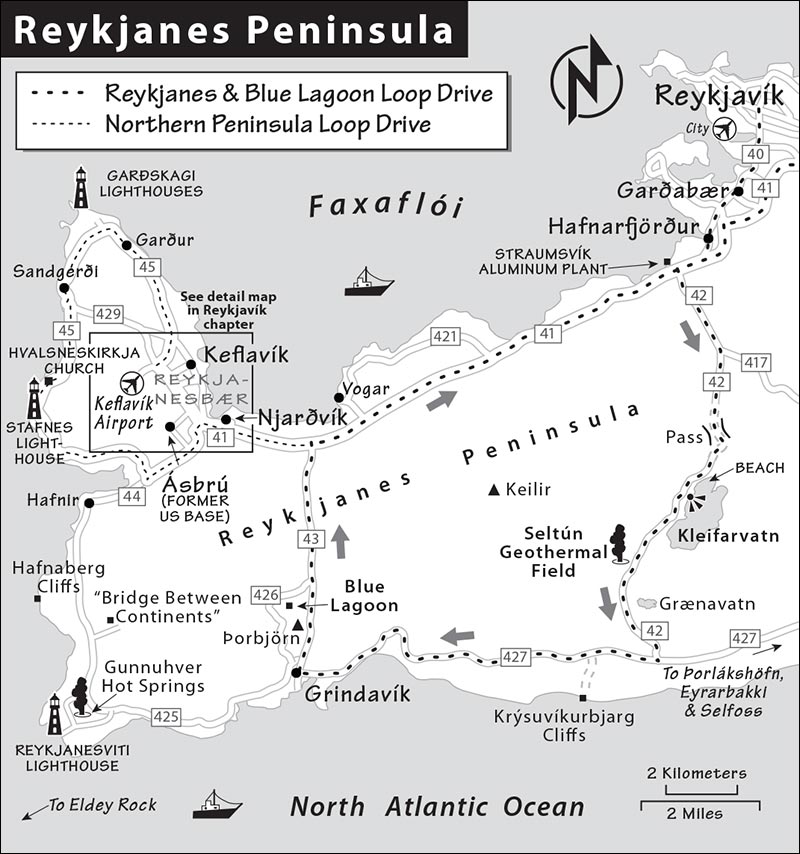
This 90-mile loop route is fairly straightforward. From Reykjavík, you’ll drive about 45 minutes across the Reykjanes Peninsula to the rugged Kleifarvatn lakeshore, with some interesting natural features (especially the Seltún geothermal field). Then you’ll loop along the peninsula’s south coast to Grindavík (about 30 minutes), a harbor town with some appealing lunch options. From there, it’s a 10-minute drive to the Blue Lagoon. When you’re done bathing, you can head straight back to Reykjavík (45 minutes) or take a quick detour to some of the museums in Keflavík.
• Leaving the city, drive south on highway 40 or 41 to Hafnarfjörður—following the route toward the airport.
Hafnarfjörður
This harborfront suburb of Reykjavík feels like a small town and has some good eateries (see here). It doesn’t have much in the way of sights, but there are some nice places to stroll (such as its pedestrianized core and Hellisgerði, a small park off Hellisgata) and a surprisingly good little town history museum (Vesturgata 6, https://byggdasafnid.is/en).
As you crest the hill at the end of Hafnarfjörður, notice the red-and-white striped towers of the massive aluminum plant at Straumsvík. This was Iceland’s first metal smelter, opened in 1969.
• Before you reach the smelter, follow the signs for Krýsuvík and turn left onto highway 42. Notice a golf course carved out of the lava field on the right as you exit. Continue as the road makes several turns through an industrial area, then straightens out and leads through lava fields.
The forbidding-looking mountains ahead of you enclose your destination, the lake called Kleifarvatn. A nicely paved low pass winds through the mountains to the lake.
Kleifarvatn Lake
Kleifarvatn (CLAY-vahr-VAHT) lake offers a nice sample of Iceland’s distinctive volcanic scenery. In good weather, you can walk along the black sand beach and even dip your toes in the water. There’s something peculiar about Kleifarvatn: It has no outlet (it’s fed by underground springs, and the water level varies). The area around the lake is totally undeveloped and is a good (if lonely) place to look for the northern lights on clear, dark nights. You’ll drive along the lake and a stretch of sandy beach before seeing a small parking lot (and picnic bench) on the right. There are two more parking lots at the overlooks from the headlands a little farther on. Don’t drive off-road here.
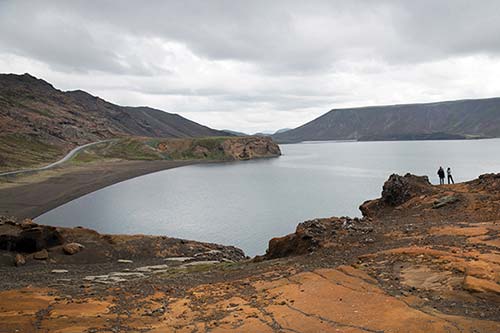
• A little past the end of the lake, take the turnoff to the right and park to explore the...
▲Seltún Geothermal Field
This steaming, bubbling, boiling (and very smelly) landscape hints at the geothermal power just underfoot. A boardwalk and marked paths take you on a 15- to 20-minute circuit through the field. Stay on the path, as the water and steam here are boiling hot. Partway through the loop, you can climb steeply up to a hilltop viewpoint overlooking the entire area, with Kleifarvatn lake just beyond—but the up-close boardwalk stroll through the steam zone is plenty satisfying. The environment here is not just natural, but also the product of botched attempts to exploit the geothermal field for energy—first in the 1750s, and most recently in the 1940s. In 1999, one of the boreholes from the last attempt got plugged up and exploded violently, creating a 30-foot crater now filled with water (at the first overlook). There are picnic benches here, and a WC (in summer).
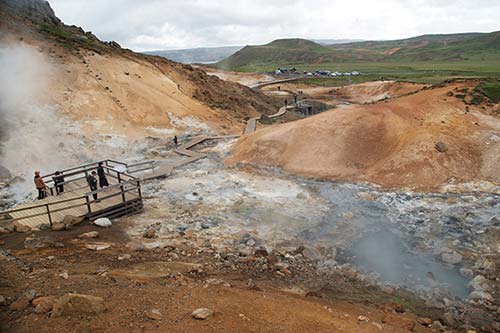
Just after leaving Seltún, watch on the left for the sign and turn-off for the Grænavatn parking lot. Grænavatn (Green Lake), a small lake that formed inside a volcanic crater, is worth a quick stop to gaze at its vivid color (from algae) and the surrounding jagged hilltops.
• Continue south on highway 42 until it tees at highway 427, where you’ll turn right. About 10 minutes from Seltún, you’ll see a dirt road branch off to the left, signposted Krýsuvíkurbjarg. This road (too rough for two-wheel-drive cars) leads out to a high coastal cliff with a large seabird colony. Hikers not in a hurry could park along the shoulder of the dirt road and walk out (about 2.5 miles each way).
Highway 427 continues through attractive, moss-covered lava fields and then traverses a dark, inhospitable upland before arriving in the town of Grindavík.
Grindavík Town
Unassuming Grindavík is important for its harbor, which was improved in the 20th century and is one of the few usable ports on Iceland’s southern coast. Follow Höfnin signposts to reach the harbor, where you’ll see moored fishing boats and large fish-processing factories. If you like, spend a few minutes driving around this windswept town of 2,000; keep an eye out for the old church, the new church, the police station, the primary school, and the municipal swimming pool.
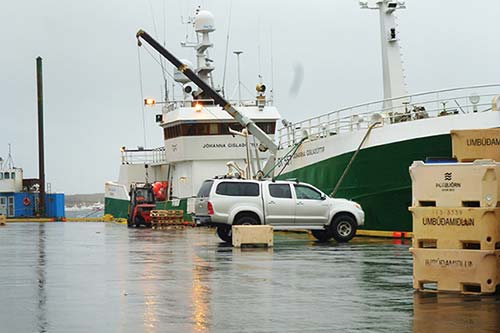
Sights in Grindavík: The town cultural center, Kvikan Menningarhús, backs up to the harbor. It has two floors with modest exhibitions on the town’s history, the history of salted cod (once the backbone of the local economy), and novelist Guðbergur Bergsson (b. 1932), who was born here but spent much of his life in Spain. The building also serves as the local TI, with maps and brochures. While thoughtfully presented, the exhibits are only worth visiting if you have time to kill before your Blue Lagoon appointment (free, daily 11:00-17:00, closed Sun off-season, Hafnargata 12a, +354 420 1190, www.grindavik.is/kvikan).
Eating in Grindavík: The cozy $ Café Bryggjan at the harbor specializes in lobster soup, served with bread and butter, as well as sandwiches and cakes. Decorated with fishing gear and memorabilia from Iceland and the Faroe Islands, it attracts both locals and travelers. Its upstairs restaurant offers hot dishes and more options (daily, Miðgarður 2, +354 426 7100). $$ Hjá Höllu (Halla’s Place) is a popular local lunch joint with a small, inventive, ever-changing menu that includes vegetarian options. It’s on the town’s main road, in the tiny mall next door to the Nettó supermarket, which also houses a liquor store, pharmacy, and hair salon—enter from inside the mall (Mon-Sat until 17:00, closed Sun, Víkurbraut 62, +354 896 5316). $$ Fish House is a casual and welcoming place, with volcano murals and cute, beachy terrariums between sections. They serve various seafood dishes (including fish-and-chips), soup, pizzas, and burgers (Mon-Thu until 17:00, Fri-Sun until 21:30, Hafnargata 6, +354 426 9999).
Onward to the Blue Lagoon
The Blue Lagoon is a 10-minute drive north of Grindavík: Hopefully you’ve timed things so that you arrive promptly for your reservation. Even if you’re not getting wet at the Blue Lagoon, you can park for free at the complex and have a look around.
• Road signs direct you to Bláa Lónið along highway 426, which winds through the lava around the west side of the mountain called Þorbjörn.
Alternate Route: It’s also fine to take highway 43, going north past the Svartsengi geothermal plant, which feeds the lagoon. The plant is not open to the public, but from the highway you can get a view of the red-painted water pipes that deliver hot water to area communities, and the turbine halls that generate electricity. (To actually visit a geothermal power plant, plan a trip to Hellisheiði, between Reykjavík and Selfoss; see here.)
Skip the Southwest: From Grindavík, you may be tempted to drive around the desolate southwestern tip of the Reykjanes Peninsula. Be warned that the route is much less interesting than it looks on the map. Although the Reykjanesviti lighthouse and the nearby headland would seem to promise great views, in practice the lighthouse is set on a hill far, far from the shore, and the view of the coast from it or the headland path doesn’t merit the effort. The Gunnuhver geothermal area is interesting, but Seltún is better; and the bridge over a tectonic fissure, which claims to let you “walk between continents,” is an unexciting gimmick. I’d skip this circuit.
Blue Lagoon back to Reykjavík (or Detour to Keflavík/Njarðvík)
From the Blue Lagoon, most travelers get back on the road to Reykjavík. Alternatively, you can detour to Keflavík and Njarðvík, with a few good museums.
• Head out to highway 43 and head north. After about 10 minutes, highway 43 tees into highway 41, the main road between Keflavík and Reykjavík. Turn right to head straight back to Reykjavík (about 45 minutes from the Blue Lagoon), or left to stop in Keflavík and Njarðvík (about a 15-minute drive from the Blue Lagoon).
Keflavík and Njarðvík (Reykjanesbær)
The peninsula’s main settlement (pop. 15,900) isn’t a must-see, but it has some attractions that can easily fill a few hours. Once separate towns, Keflavík and Njarðvík have grown together; in the 1990s they merged governments under the new name Reykjanesbær (www.visitreykjanesbaer.is).
In 2006, the town expanded even more when the US military left its base near the airport and turned the area over to civilian use. That neighborhood is now called Ásbrú; if you’re curious, you can follow signs into it and drive around (turning off highway 41 at a roundabout). The streets still have English names, and you can drive past the old military PX, the base’s theater, and the yellow-painted housing blocks.
Keflavík and Njarðvík have several museums that can be a good end to this driving tour. To reach them, turn off highway 41 and head into town, following signs for the museums. For a map of this area, see the end of the Reykjavík chapter.
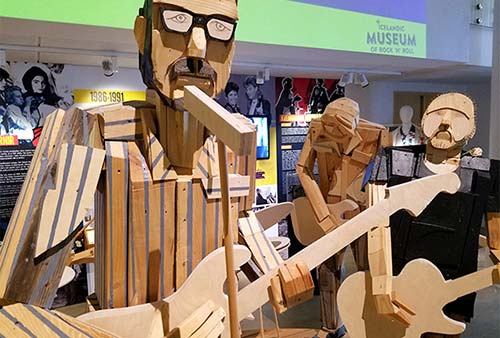
Icelandic Museum of Rock ’n’ Roll: Chronicling all genres of Icelandic music (not just rock) from the 1800s to the present, this museum fills a large space in the local music school and concert-hall complex. Exhibits cover the biggies (Björk, Sigur Rós, and Of Monsters and Men), as well as lesser-known Icelandic musicians. Visitors can sample music and video clips on cute turntable-style interactive exhibits, visit the sound booths to sing karaoke and try out drums and guitars, and watch documentary films in a small theater. The museum sells coffee, beer, wine, and candy but doesn’t have a real café (1,500 ISK, free for kids under 18, daily 11:00-18:00, Hjallavegur 2, Reykjanesbær, +354 420 1030, www.rokksafn.is).
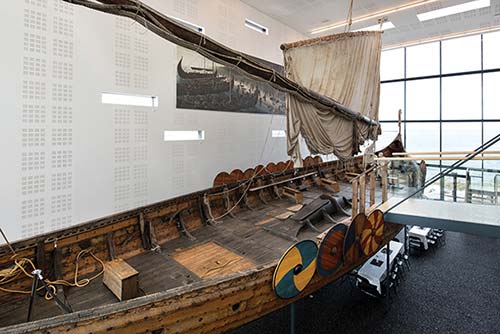
Viking World: This museum houses the Icelander, a replica of the medieval Scandinavian ship unearthed at Gokstad, Norway, in the 1880s (the original is in Oslo). While the boat itself is worth seeing, the rest of the attraction—with a few artifacts, some conceptual exhibits, and a Viking dress-up area—lacks substance (1,500 ISK, Mon-Sat 10:00-16:00, Sun until 15:00, café, Víkingabraut 1, +354 422 2000, www.vikingworld.is).
Duus Museum: At the northwestern end of Keflavík, this local history and art museum has an eclectic collection of modern art, plus an exhibit on local geology (including a large relief map of the Reykjanes Peninsula), an exhibit on bird life, and a collection of old sewing machines (1,500 ISK, daily 12:00-17:00, Duusgata 2, +354 420 3245, https://sofn.reykjanesbaer.is/duusmuseum).
• To head back to Reykjavík, it’s a straight 45-minute shot along highway 41.
Northern Peninsula Loop Drive
For a short and sweet drive that samples an uncrowded stretch of coastal Iceland, take a spin around the northern tip of the Reykjanes Peninsula. My counterclockwise route takes you to a lighthouse, an old church built of lava rock, and a short, pleasant walk to another scenically set lighthouse. It takes less than an hour to drive the 27 miles, but be sure to allow time to linger along the way.
• From Keflavík Airport, take highway 45, following the coastline through the tiny town of Garður (which is still big enough to have a municipal pool, on the right as you leave town). You’ll come to a pair of lighthouses and a parking lot at Garðskagi Point, the northernmost tip of the Reykjanes Peninsula.
Garðskagi Point
The short red-and-white lighthouse on the water is the old Garðskagi lighthouse. Built in 1897, it’s the second-oldest lighthouse in Iceland (and it’s no longer in service). The big lighthouse you see inland, Garðskagaviti, was built in 1944 and is Iceland’s tallest at just over 90 feet. Because of coastal erosion, this replacement for the old lighthouse was built well away from the shoreline. Inside its doorway is a plaque presented by survivors of the US Coast Guard cutter Alexander Hamilton—torpedoed by a German U-boat in January 1942—to the crews of Icelandic fishing boats who came to their rescue. You can pay to enter the lighthouse to see its digital exhibits on the northern lights and whales (1,500 ISK, pay at Röstin Restaurant across the parking lot).
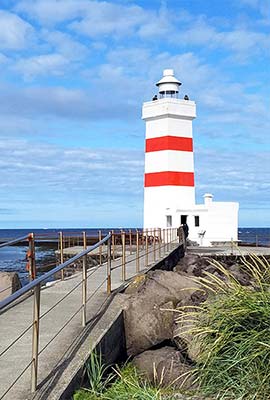
In the white building beyond the lighthouse is the small Heritage Museum, which focuses on the maritime history of this area (free, daily 13:00-17:00). Upstairs, the charming $ Röstin Restaurant has a friendly, plant-filled dining room overlooking the water. Keep an eye out for whales while dining on a local fish or meat dish (daily, no lunch Mon-Wed, +354 422 7220). The owner also maintains the two lighthouses here.
Aside from the lighthouses, Garðskagi Point is a fine spot for birdwatching, whale watching, and catching sunsets or the northern lights.
• From the point, it’s about 7 miles to our next stop. Head south on road 402. (Part of it is rough gravel—drive with caution. If need be, you can turn left partway down the road and then right on parallel highway 45). Once you join up with (and turn right onto) highway 45, continue on this lightly traveled road through the sleepy fishing port of Sandgerði. Turn right onto Stafnesvegur in town. You’ll then drive along small hay farms and pastures until you see a dark stone church on a rise off to the right in the distance. Turn off at the Hvalsnes sign and drive to the walled cemetery and park.
Hvalsneskirkja Church
Hvalsneskirkja, standing solidly against the elements, dates to 1887. It was built of local basalt, with an interior partially finished using driftwood collected from the nearby shores. Famous Icelandic poet Hallgrímur Pétursson, who wrote 50 hymns telling the story of the Passion of Christ, served as pastor from 1644 to 1651 at a previous church that stood here (the iconic Hallgrímskirkja in Reykjavík is named after him). It’s a serene setting, with the church watching peacefully over wide-open fields spreading out under even wider skies.
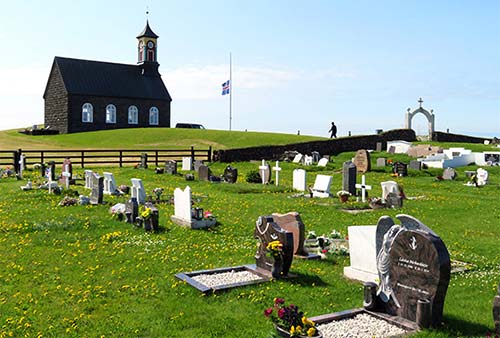
Before driving on, visit the sweet cemetery, with lovingly tended graves decorated in summer with pots of colorful flowers braving the breeze.
• Continue south on highway 45 for about a mile until you see a sign for Stafnes, where you’ll turn off to the right. Drive a short distance past some farmhouses to the parking lot at the end of the road.
Stafnes Lighthouse (Stafnesviti)
The plaque in the parking lot memorializes the 1928 wreck of the trawler Jón Forseti, in which 15 crewmembers perished (and 10 survived). Just past the plaque, a grassy path leads out to the orange-colored Stafnes Lighthouse. Built in 1925 of concrete, today it’s automated (and not open to visitors). The lighthouse itself may not be all that remarkable, but it does strike a colorful pose. Walking past the lighthouse toward the sea (if the surf allows), you can’t miss the curiously pockmarked lava rock stretching along the shore. It’s quiet here, and even on a sunny day you’ll likely have this place to yourself, with nothing but the North Atlantic between you and Greenland.
• From Stafnes, it’s a 10-minute drive through lava fields and blue lupines (in season) to the junction with highway 44. Turn left and follow it to highway 41 where, at the roundabout, you can go right for Reykjavík or left for Keflavík Airport and Keflavík town.