PRACTICALITIES
RESERVATIONS AND ADVANCE TICKETS
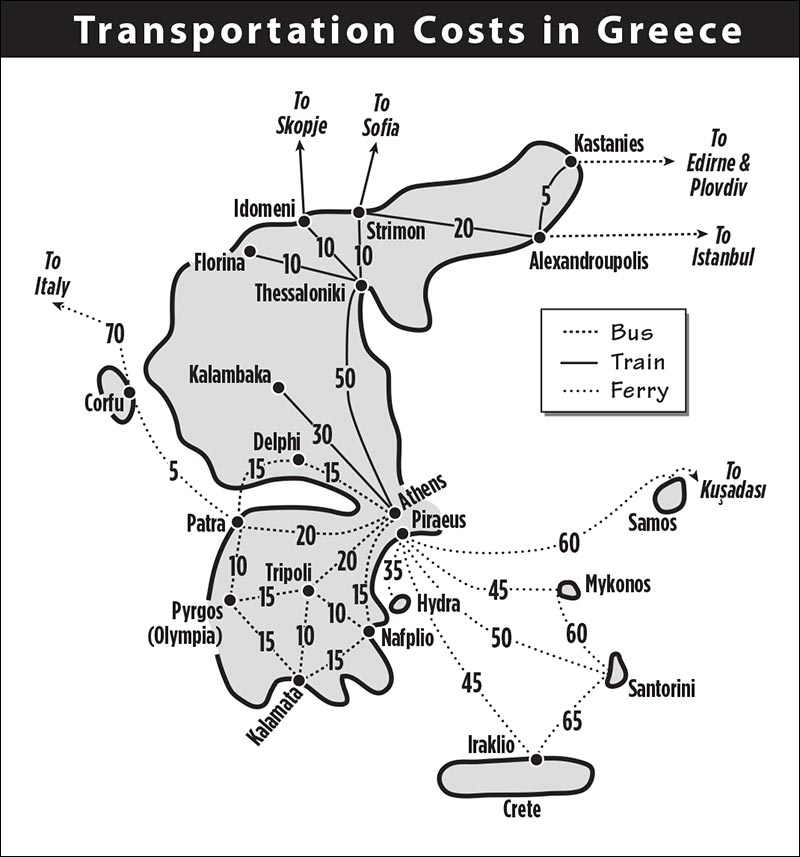
Map: Transportation Costs in Greece
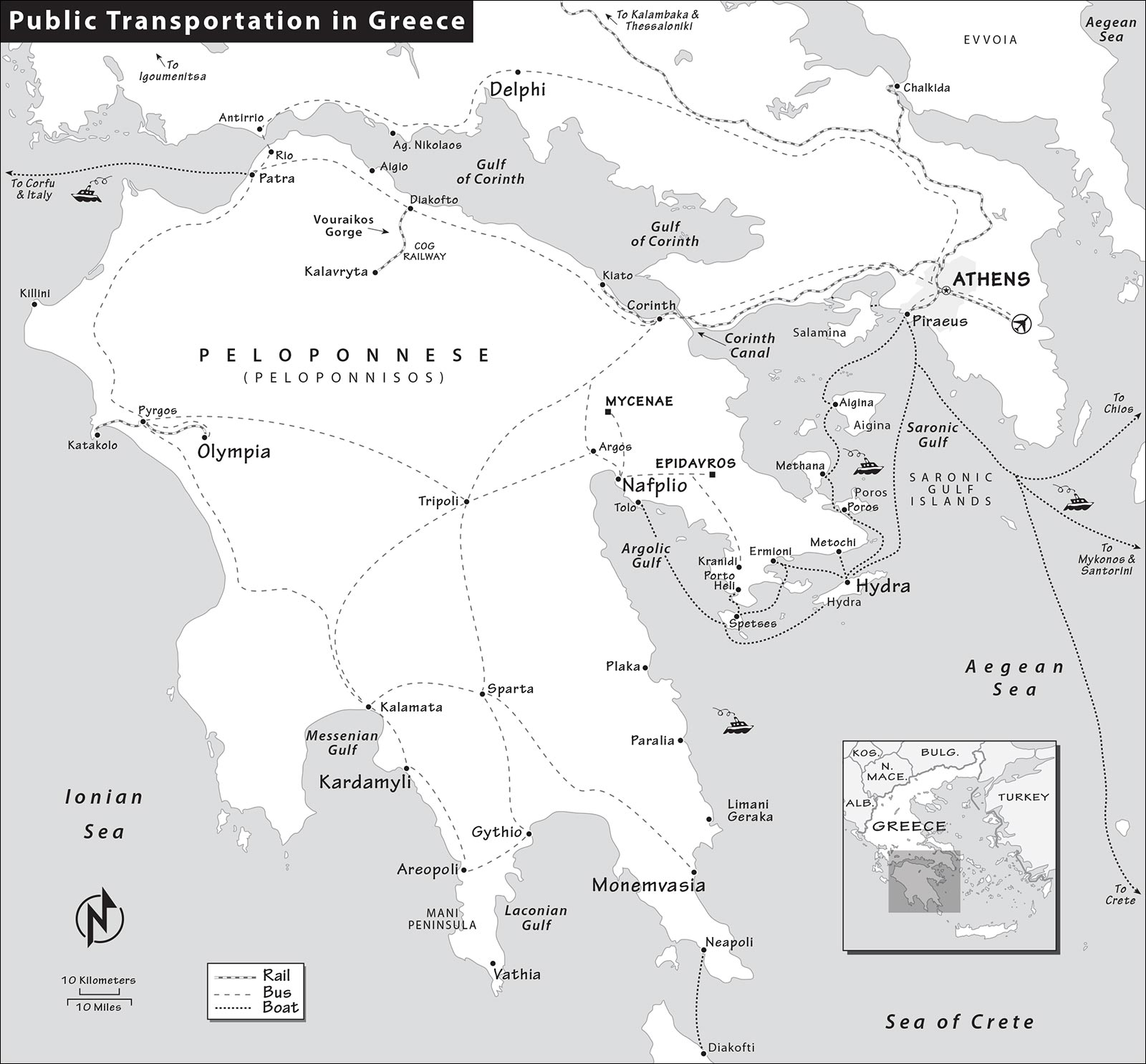
Map: Public Transportation in Greece
TAXIS AND RIDE-BOOKING SERVICES
This chapter covers the practical skills of European travel: how to get tourist information, pay for things, sightsee efficiently, find good-value accommodations, eat affordably but well, use technology wisely, and get between destinations smoothly. For more information on these topics, see RickSteves.com/travel-tips.
Travel Tips
Travel Advisories: Before traveling, check updated health and safety conditions, including restrictions for your destination, on the travel pages of the US State Department (www.travel.state.gov) and Centers for Disease Control and Prevention (www.cdc.gov/travel). The US embassy website for Greece is another good source of information (see below).
Covid Vaccine/Test Requirements: It’s possible you’ll need to present proof of vaccination against the coronavirus and/or a negative Covid-19 test result to board a plane to Europe or back to the US. Carefully check requirements for each country you’ll visit well before you depart, and again a few days before your trip. See the websites listed above for current requirements.
ETIAS Registration: The European Union may soon require US and Canadian citizens to register online with the European Travel Information and Authorization System (ETIAS) before entering Greece and other Schengen Zone countries (quick and easy process). For the latest, check www.etiasvisa.com.
Tourist Information: The Greek national tourist office has a helpful website with lots of information and downloadable maps and brochures (VisitGreece.gr). Other good websites include http://odysseus.culture.gr (Greek Ministry of Culture, with information on major archaeological sites and museums), www.thisisathens.org (City of Athens Convention and Visitors Bureau), and www.athensguide.com (guide to Athens by travel writer Matt Barrett).
In Greece, tourist offices (abbreviated TI in this book) are often marked EOT (for the Greek phrase “Greek Tourism Organization”). Unfortunately, budget cuts have forced many towns to close their TIs. The offices that are still open can usually give you a free map, a few local tips, and some assistance with bus connections. In general, though, your hotelier may end up being your best source of information.
Emergency and Medical Help: For any emergency service—ambulance, police, or fire—call 112 from a mobile phone or landline (operators typically speak English). In Greece, you can also dial 171 or 1571 for the Tourist Police.
The Tourist Police serves as a contact point between tourists and other branches of the police and is also responsible for handling problems such as disputes with hotels, restaurants, and other tourist services (available 24 hours daily; Athens office located east of the Central Market in the Psyrri district, +30 210 322 2230).
If you get sick, do as the locals do and go to a pharmacist for advice. Or ask at your hotel for help—they’ll know the nearest medical and emergency services.
Theft or Loss: To replace a passport, you’ll need to go in person to an embassy (see next). If your credit and debit cards disappear, cancel and replace them (see “Damage Control for Lost Cards” on here). File a police report, either on the spot or within a day or two; you’ll need it to submit an insurance claim for lost or stolen items, and it can help with replacing your passport or credit and debit cards. For more information, see RickSteves.com/help.
US Embassy in Athens: Dial +30 210 720 2414, after-hours emergency +30 210 729 4444; consular section open Mon-Fri 8:30-17:00, closed Sat-Sun and last Wed of month; Vasilissis Sophias 91, Metro: Megaro Moussikis, http://gr.usembassy.gov.
Canadian Embassy in Athens: Dial +30 210 727 3400, for after-hours emergency help call Canada collect at +1 613 996 8885; open Mon-Fri 8:30-16:30, closed Sat-Sun; Ethnikis Antistaseos 48, www.canadainternational.gc.ca/greece-grece.
Borders: If you enter Greece from most European countries (those that are part of Europe’s open-borders Schengen Agreement), you won’t need to go through customs. But if you arrive on a direct flight from the US, or from the neighboring countries of Turkey, North Macedonia, Albania, or Bulgaria (which aren’t part of the EU pact), you’ll have to clear customs.
Time Zones: Greece, which is one hour ahead of most of continental Europe, is generally seven/ten hours ahead of the East/West Coasts of the US. The exceptions are the beginning and end of Daylight Saving Time: Europe “springs forward” the last Sunday in March (two weeks after most of North America) and “falls back” the last Sunday in October (one week before North America). For a handy time converter, use the world clock app on your phone or download one (see www.timeanddate.com).
Business Hours: Most shops catering to tourists are open long hours daily. In Athens stores are generally open weekdays from 9:00 to 20:00 or later. Afternoon breaks are common, and Saturdays are like weekdays but with earlier closing hours. Sundays have the same pros and cons as they do for travelers in the US: Sightseeing attractions are generally open, while shops and banks are closed, public transportation options are fewer, and there’s no rush hour.
Watt’s Up? Europe’s electrical system is 220 volts, instead of North America’s 110 volts. Most electronics (laptops, phones, cameras) and appliances (newer hair dryers, CPAP machines) convert automatically, so you won’t need a converter, but you will need an adapter plug with two round prongs, sold inexpensively at travel stores in the US.
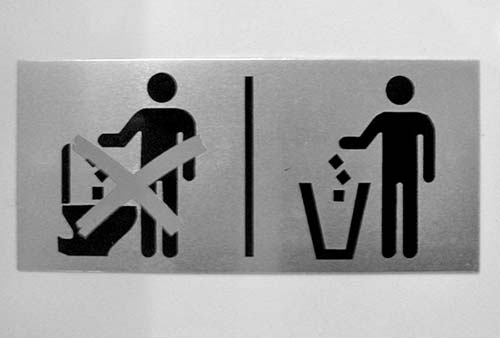
Bathroom Etiquette: There’s a reason every bathroom in Greece has a small wastebasket next to the toilet—bad plumbing. Don’t flush toilet paper; use the wastebasket instead.
Rip up this book! Turn chapters into mini guidebooks: Break the book’s spine and use a utility knife to slice apart chapters, keeping gummy edges intact. Reinforce the chapter spines with clear wide tape; use a heavy-duty stapler; or make or buy a cheap cover (see the Travel Store at RickSteves.com), swapping out chapters as you travel.
Discounts: Discounts for sights are generally not listed in this book. However, seniors (age 65 and over), youths under 18, and students and teachers with proper identification cards (obtain from www.isic.org) can get discounts at many sights—always ask. Some discounts are available only to European citizens.
Online Translation Tips: Google’s Chrome browser instantly translates websites; Translate.google.com and DeepL.com are also handy. The Google Translate app converts spoken or typed English into most European languages (and vice versa) and can also translate text it “reads” with your phone’s camera.
Going Green: There’s plenty you can do to reduce your environmental footprint when traveling. When practical, take a bus or train instead of a flight within Europe, and use public transportation within cities. In hotels, use the “Do Not Disturb” sign to avoid daily linen and towel changes (or hang up your towels to signal you’ll reuse them). Bring a reusable shopping tote and refillable water bottle (Europe’s tap water is safe to drink). Skip printed brochures, maps, or other materials that you don’t plan to keep—get your info online instead. To find out how Rick Steves’ Europe is offsetting carbon emissions with a self-imposed carbon tax, see RickSteves.com/about-us/climate-smart.
Money
Here’s my basic strategy for using money wisely in Europe. I pack the following and keep it all safe in my money belt.
Credit Card: You’ll use your credit card for purchases both big (hotels, advance tickets) and small (little shops, food stands). Some businesses have gone cashless, making a card your only payment option. A “tap-to-pay” or “contactless” card is the most widely accepted and simplest to use.
Debit Card: Use this at ATMs to withdraw a small amount of local cash. Wait until you arrive to get euros (European airports have plenty of ATMs); if you buy euros before your trip, you’ll pay bad stateside exchange rates. You’ll use cash more often in Greece than in many other European countries, especially outside big cities. Cash can help you out of a jam if your card randomly doesn’t work, and can be useful to pay for things like tips and local guides.
Backup Card: Some travelers carry a third card (debit or credit; ideally from a different bank) in case one gets lost or simply doesn’t work.
Stash of Cash: I carry $100-200 in US dollars as a cash backup, which comes in handy in an emergency (for example, if your debit card gets eaten by the machine).
BEFORE YOU GO
Know your cards. For credit cards, Visa and MasterCard are universal while American Express and Discover are less common. US debit cards with a Visa or MasterCard logo will work in any European ATM.
Go “contactless.” Get comfortable using contactless pay options. Check to see if you already have—or can get—a tap-to-pay version of your credit card (look on the card for the tap-to-pay symbol—four curvy lines), and consider setting up your smartphone for contactless payment (see next section for details). Both options are widely used in Europe.
Know your PIN. Make sure you know the numeric, four-digit PIN for each of your cards, both debit and credit. Request it if you don’t have one, as it may be required for some purchases. Allow time to receive the information by mail—it’s not always possible to obtain your PIN online or by phone.
Report your travel dates. Let your bank know that you’ll be using your debit and credit cards in Europe, and when and where you’re headed.
Adjust your ATM withdrawal limit. Find out how much you can withdraw daily and ask for a higher daily limit if you want to get more cash at once. Note that European ATMs will withdraw funds only from checking accounts, not savings accounts.
Find out about fees. For any purchase or withdrawal made with a card, you may be charged a currency conversion fee (1-3 percent) and/or a Visa or MasterCard international transaction fee (less than 1 percent). If you’re getting a bad deal, consider getting a new card. Reputable no-fee cards include those from Capital One, as well as Charles Schwab debit cards. Most credit unions and some airline loyalty cards have low or no international transaction fees.
IN EUROPE
Using Credit Cards and Payment Apps
Tap-to-Pay or Contactless Cards: These cards have the usual chip and/or magnetic stripe, but with the addition of a contactless symbol. Simply tap your card against a contactless reader to complete a transaction—no PIN or signature is required.

Payment Apps: Just like at home, you can pay with your smartphone or smartwatch by linking a credit card to an app such as Apple Pay or Google Pay. To pay, hold your phone near a contactless reader; you may need to verify the transaction with a face scan, fingerprint scan, or passcode. If you’ve arrived in Europe without a tap-to-pay card, you can easily set up your phone to work in this way.
Other Card Types: Chip-and-PIN cards have a visible chip embedded in them; rather than swiping, you insert the card into the payment machine, then enter your PIN on a keypad. Swipe-and-sign credit cards—with a swipeable magnetic stripe, and a receipt you have to sign—are increasingly rare.
Will My US Card Work? Usually, yes. On rare occasions, at self-service payment machines (such as transit-ticket kiosks, tollbooths, or fuel pumps), some US cards may not work. Usually a tap-to-pay card does the trick in these situations. Just in case, carry cash as a backup and look for a cashier who can process your payment if your card is rejected. Drivers should be prepared to move on to the next gas station if necessary. (In some countries, gas stations sell prepaid gas cards, which you can purchase with any US card). When approaching a toll plaza or ferry ticket line, use the “cash” lane.
Using Cash
Cash Machines: European cash machines work just like they do at home—except they spit out local currency instead of dollars, calculated at the day’s standard bank-to-bank rate. In most places, ATMs are easy to locate—in Greece, they are surprisingly labeled ATM in the Greek alphabet. When possible, withdraw cash from a bank-run ATM located just outside that bank.
If your debit card doesn’t work, try a lower amount—your request may have exceeded your withdrawal limit or the ATM’s limit. If you still have a problem, try a different ATM or come back later.
Avoid “independent” ATMs, such as Travelex, Euronet, Moneybox, Your Cash, Cardpoint, and Cashzone. These have high fees, can be less secure, and may try to trick users with “dynamic currency conversion” (see next).
Dynamic Currency Conversion: When withdrawing cash at an ATM or paying with a credit card, you’ll often be asked whether you want the transaction processed in dollars or in the local currency. Always refuse the conversion and choose the local currency. While DCC offers the illusion of convenience, it comes with a poor exchange rate, and you’ll wind up losing money.
Exchanging Cash: Minimize exchanging money in Europe; it’s expensive (you’ll generally lose 5 to 10 percent). In a pinch you can find exchange desks at airports. Banks generally do not exchange money unless you have an account with them.
Security Tips
Pickpockets target tourists. Keep your cash, credit cards, and passport secure in your money belt, and carry only a day’s spending money in your front pocket or wallet.
Before inserting your card into an ATM, inspect the front. If anything looks crooked, loose, or damaged, it could be a sign of a card-skimming device. When entering your PIN, carefully block other peoples’ view of the keypad.
Avoid using a debit card for purchases. Because a debit card pulls funds directly from your bank account, potential charges incurred by a thief will stay on your account while your bank investigates.
To access your accounts online while traveling, be sure to use a secure connection (see the “Tips on Internet Security” sidebar, later).
Damage Control for Lost Cards
If you lose your credit or debit card, report the loss immediately to the respective global customer-assistance centers. With a mobile phone, call these 24-hour US numbers: Visa (+1 303 967 1096), Mastercard (+1 636 722 7111), and American Express (+1 336 393 1111). From a landline, you can call these US numbers collect by going through a local operator.
You’ll need to provide the primary cardholder’s identification-verification details (such as birth date, mother’s maiden name, or Social Security number). You can generally receive a temporary card within two or three business days in Europe (see RickSteves.com/help for more).
If you report your loss within two days, you typically won’t be responsible for unauthorized transactions on your account, although many banks charge a liability fee.
TIPPING
Tipping in Greece isn’t as automatic and generous as it is in the US. For special service, tips are appreciated, but not expected. As in the US, the proper amount depends on your resources, tipping philosophy, and the circumstances, but some general guidelines apply.
Restaurants: At Greek restaurants that have waitstaff, locals generally round up their bill after a good meal (usually about 10 percent). If paying with a credit card, be prepared to tip separately with cash or coins; credit card receipts often don’t have a tip line. For more on tipping in restaurants, see “Eating,” later.
Taxis: For a typical ride, round up your fare a bit (for instance, if the fare is €4.50, pay €5). If the cabbie hauls your bags and zips you to the airport to help you catch your flight, you might want to toss in a little more.
Services: In general, if someone in the service industry does a super job for you, a small tip of a euro or two is appropriate...but not required. If you’re not sure whether (or how much) to tip for a service, ask a local for advice.
GETTING A VAT REFUND
Wrapped into the purchase price of your Greek souvenirs is a value-added tax (VAT) of about 24 percent. You’re entitled to get most of that tax back if you purchase more than €50 worth of goods at a store that participates in the VAT-refund scheme. Typically, you must ring up the minimum at a single retailer—you can’t add up your purchases from various shops to reach the required amount. (If the store ships the goods to your US home, VAT is not assessed on your purchase.)
Getting your refund is straightforward...and worthwhile if you spend a significant amount.
At the Merchant. Have the merchant completely fill out the refund document (they’ll ask for your passport; a photo of your passport usually works). Keep track of the paperwork and your original sales receipt. Note that you’re not supposed to use your purchased goods before you leave Europe.
At the Border or Airport. Process your VAT document at your last stop in the European Union (such as at the airport) with the customs agent who deals with VAT refunds (allow plenty of extra time to deal with this process). At some airports, you’ll have to go to a customs office to get your documents stamped and then to a separate VAT refund service (such as Global Blue or Planet) to process the refund. At other airports, a single VAT desk handles the whole thing. (Note that refund services typically extract a 4 percent fee, but you’re paying for the convenience of receiving your money in cash immediately or as a credit to your card.) Otherwise, you’ll need to mail the stamped refund documents to the address given by the merchant.
CUSTOMS FOR AMERICAN SHOPPERS
You can take home $800 worth of items per person duty-free, once every 31 days. Many processed and packaged foods are allowed, including cheeses, dried herbs, jams, baked goods, candy, chocolate, oil, vinegar, condiments, and honey. Fresh fruits and vegetables and most meats are not allowed, with exceptions for some canned items. As for alcohol, you can bring home one liter duty-free (it can be packed securely in your checked luggage, along with any other liquid-containing items).
To bring alcohol (or liquid-packed foods) in your carry-on bag on your flight home, buy it at a duty-free shop at the airport. You’ll increase your odds of getting it onto a connecting flight if it’s packaged in a “STEB”—a secure, tamper-evident bag. But stay away from liquids in opaque, ceramic, or metallic containers, which usually cannot be successfully screened (STEB or no STEB).
For details on allowable goods, customs rules, and duty rates, visit https://help.cbp.gov.
Sightseeing
Sightseeing can be hard work. Use these tips to make your visits to Greece’s finest sights meaningful, fun, efficient, and painless.
MAPS AND NAVIGATION TOOLS
A good map is essential for efficient navigation while sightseeing. The maps in this book are concise and simple, designed to help you locate recommended destinations, sights, hotels, and restaurants. In Europe, simple maps are generally free at TIs and hotels. Maps with more detail are sold at newsstands and bookstores.
You can also use a mapping app on your mobile device, which provides turn-by-turn directions for walking, driving, and taking public transit. Google Maps, Apple Maps, and CityMaps2Go allow you to download maps for offline use; ideally, download the areas you’ll need before your trip. For certain features, you’ll need to be online—either using Wi-Fi or an international data plan.
PLAN AHEAD
Set up an itinerary that allows you to fit in all your must-see sights. For a one-stop look at opening hours in Athens, see “Athens at a Glance” in the Sights in Athens chapter. Since the Covid-19 pandemic, hours for museums and sights have been unstable. Confirm the latest opening days and times before your visit.
Don’t put off visiting a must-see sight—you never know when a place will close unexpectedly for a holiday, strike, or restoration. Many museums are closed or have reduced hours at least a few days a year, especially on holidays such as Christmas, New Year’s, and Labor Day (May 1). A list of holidays is in the appendix; check for possible closures during your trip.
Most of Greece’s ancient sites and archaeological museums are operated by the government. In general, hours at sights are longer during peak season (April-Oct) and on weekends, and shorter on weekdays and in the off-season. The timing of this seasonal switch can be unannounced and differs between sights. Year-round, if things are slow, places may close early with no advance notice. It’s smart to arrive well in advance of listed closing times and to hit your must-see sights in the morning, especially if traveling outside of summer.
The Ministry of Greek Culture website (http://odysseus.culture.gr) lists hours for virtually all of the major sights—including Athens’ Acropolis, Ancient Agora, Acropolis Museum, and the National Archaeological Museum, plus sights at Delphi, Olympia, Epidavros, and Mycenae—but you’ll get more reliable, up-to-date information by asking your hotelier or calling the sights directly. These sights, including the Acropolis, are free on national holidays and every first Sunday from November through March, and children under 18 always get in free.
Going at the right time helps avoid crowds. This book offers tips on the best times to see specific sights. Try visiting popular sights very early or very late. Evening visits (when possible) are usually more peaceful, with fewer crowds. Late morning is usually the worst time to visit a popular sight.
If you plan to hire a local guide, reserve ahead by email. Popular guides can get booked up.
Study up. To get the most out of the self-guided tours and sight descriptions in this book, read them before you visit. The Acropolis is much more entertaining if you’ve polished up on Doric architecture the night before.
RESERVATIONS AND ADVANCE TICKETS
Many popular sights in Europe come with long lines—not to get in, but to buy a ticket. Visitors who buy tickets online in advance can skip the line and waltz right in. Advance tickets are sometimes timed-entry, meaning you’re guaranteed admission on a certain date and time.
For some sights, buying ahead is required (tickets aren’t sold at the sight and it’s the only way to get in). At other sights, buying ahead is recommended to skip the line and save time (in some cases, you can do this even on the day you plan to visit). And for many sights, advance tickets are available but unnecessary: At these uncrowded sights you can simply arrive, buy a ticket, and go in.
Don’t confuse the reservation options: available, recommended, and required. Use my advice in this book as a guide. If you do your research, you’ll know the smart strategy. For Greece, consider buying tickets online for the Acropolis and Acropolis Museum to avoid a ticket-buying line at the sights.
You’ll generally be emailed an eticket with a QR or bar code that you’ll store on your phone to scan at the entrance (if you prefer, you can print it out). At the sight, look for the ticket-holders line rather than the ticket-buying line; you may still have to wait in a security line.
AT SIGHTS
Many of Greece’s artifacts have been plunked into glass cases labeled with little more than title and date. Sights run by the Greek Ministry of Culture provide a free information pamphlet, though usually only by request.
More than most destinations in Europe, Greece demands (and rewards) any effort you make to really understand its treasures. If you read up on Greek history and art, the artifacts come to life; without this background, visiting Greece’s museums can quickly become an unforgiving slog past stiff statues and endless ceramic vases.
It can also help to put your imagination into overdrive. As you stroll Athens’ Ancient Agora, mentally clad the other tourists in robes. Approach the temple at Delphi as if you were about to learn your fate from an oracle; enter the stadium at Olympia ready to race its length in front of a huge crowd. At museums, imagine being the archaeologist who unearthed the intact glass vessels, intricate golden necklaces, and vases inscribed with the faces of people who lived four millennia ago.
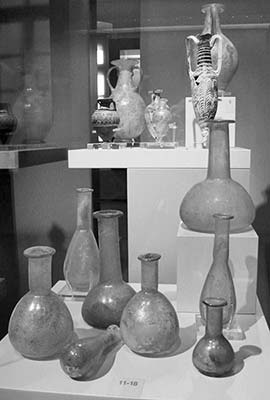
Many major ancient sites have both an archaeological site and a museum for the artifacts and models. You can choose between visiting the museum first (to mentally reconstruct the ruins before seeing them) or the site first (to get the lay of the ancient land before seeing the items found there). In most cases, I prefer to see the site first, then the museum. However, crowds and weather can also help determine your plan. If it’s a blistering hot afternoon, tour the air-conditioned museum first, then hit the ruins in the cool of evening (if opening hours allow). Or, if rain clouds are on the horizon, do the archaeological site first, then duck into the museum when the rain hits.
Here’s what you can typically expect:
Entering: You may not be allowed to enter if you arrive too close to closing time. And guards start ushering people out well before the actual closing time, so don’t save the best for last.
Some sights have a security check. Allow extra time for these lines. Some sights require you to check day packs and coats. (If you’d rather not check your day pack, try carrying it tucked under your arm like a purse as you enter.)
At churches—which often offer interesting art (usually free) and a cool, welcome seat—a modest dress code (no bare shoulders or shorts) is encouraged.
Etiquette and Photography at Ancient Sites: Archaeological sites are meticulously monitored; you’re sure to hear the tweets of many whistles aimed at visitors who’ve crossed a barrier or climbed on a ruin.
If an attraction’s photo policy isn’t clearly posted, ask a guard. Generally, taking photos without a flash or tripod is allowed. Some sights ban selfie sticks; others ban photos altogether. The Greeks take their ancient artifacts very seriously. Posing with ancient statues—or even standing next to them for a photo—is strictly forbidden.
Audioguides and Apps: I’ve produced free, downloadable audio tours for my Athens City Walk, the Acropolis, Ancient Agora, and National Archaeological Museum; look for the  in this book. For more on my audio tours, see here.
In Greece, audioguides are rare, but good guidebooks are available. You can usually hire a live local guide at the entrance to major ancient sites or museums at a reasonable cost (prices are soft and negotiable; save money by splitting the guide fee with other travelers). I list recommended guides in the “Helpful Hints” section of many chapters. Two notable exceptions are Olympia, where guides are sparse, and the Acropolis, where the loitering guides are generally of poor quality.
Temporary Exhibits: Museums may show special exhibits in addition to their permanent collection. Some exhibits are included in the entry price, while others come at an extra cost (which you may have to pay even if you don’t want to see the exhibit).
Expect Changes: Artwork can be on tour, on loan, out sick, or shifted at the whim of the curator. Pick up a floor plan as you enter and ask museum staff if you can’t find a particular item.
Services: Important sights usually have a reasonably priced on-site café or cafeteria (handy and air-conditioned places to rejuvenate during a long visit). The WCs at sights are free and generally clean.
Before Leaving: At the gift shop, scan the postcard rack or thumb through a guidebook to be sure you haven’t overlooked something that you’d like to see. Every sight or museum offers more than what is covered in this book. Use the information I provide as an introduction—not the final word.
Sleeping
Extensive and opinionated listings of good-value rooms are a major feature of this book’s Sleeping sections. Rather than list accommodations scattered throughout a town, I choose hotels in my favorite neighborhoods that are convenient to your sightseeing.
My recommendations run the gamut, from dorm beds to luxurious rooms with all the comforts. I like places that are clean, central, relatively quiet at night, reasonably priced, friendly, small enough to have a hands-on owner or manager, and run with a respect for Greek traditions. I’m more impressed by a handy location and a fun-loving philosophy than oversized TVs and a fancy gym. Most of my recommendations fall short of perfection. But if I can find a place with most of these features, it’s a keeper.
Book your accommodations as soon as your itinerary is set, especially if you want to stay at one of my top listings or if you’ll be traveling during busy times (roughly Orthodox Easter through October). See the appendix for a list of major holidays and festivals in Greece.
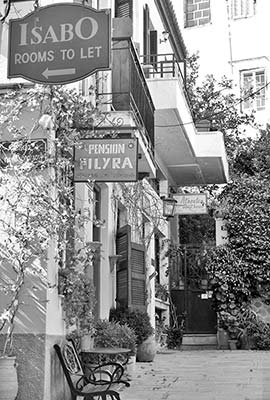
Some people make reservations a few days ahead as they travel. This approach fosters spontaneity, and booking sites make it easy to find available rooms, but—especially during busy times—you run the risk of settling for lesser-value accommodations.
RATES AND DEALS
I’ve categorized my recommended accommodations based on price, indicated with a dollar-sign rating (see sidebar). Room prices can fluctuate significantly with demand and amenities (size, views, room class, and so on), but relative price categories remain constant. City taxes, which can vary from place to place, are generally insignificant (a few dollars per person, per night). And keep in mind that some hotels in Greece, especially smaller places, may require payment in cash.
Booking Direct: Once your dates are set, compare prices at several hotels. You can do this by checking hotel websites and booking sites such as Hotels.com or Booking.com. After you’ve zeroed in on your choice, book directly with the hotel itself. This increases the chances that the hotelier will be able to accommodate special needs or requests (such as shifting your reservation). And when you book on the hotel’s website, by email, or by phone, the owner avoids the commission paid to booking sites, giving them wiggle room to offer you a discount, a nicer room, or a free breakfast (if it’s not already included).
Getting a Discount: Some hotels extend a discount to those who pay cash or stay longer than three nights. And some accommodations offer a special discount for Rick Steves readers, indicated in this guidebook by the abbreviation “RS%.” Discounts vary: Ask for details when you reserve. Generally, to qualify for this discount, you must book direct (not through a booking site), mention this book when you reserve, show this book upon arrival, and sometimes pay cash or stay a certain number of nights. In some cases, you may need to enter a discount code (which I’ve provided in the listing) in the booking form on the hotel’s website. Rick Steves discounts apply to readers with either print or digital books. Understandably, discounts do not apply to promotional rates.
TYPES OF ACCOMMODATIONS
Hotels
You’ll usually see the word “hotel,” but you might also see the traditional Greek word Xenonas (ΞΕΝΏΝΑΣ/Ξενώνας). In some places, especially Nafplio, small hotels are called pensions.
Plan on spending €140 per hotel double in Athens and popular islands, and €85 in smaller towns. Some hotels can add an extra bed (for a small charge) to turn a double into a triple; some offer larger rooms for four or more people (I call these “family rooms” in the listings). If there’s space for an extra cot, they’ll cram it in for you. In general, a triple room is cheaper than the cost of a double and a single. Three or four people can economize by requesting one big room.
Arrival and Check-In: Hotels and B&Bs are sometimes located on the higher floors of a multipurpose building with a secured door. In that case, look for your hotel’s name on the buttons by the main entrance. When you ring the bell, you’ll be buzzed in.
Hotel elevators are common, though small, and some older buildings still lack them. You may have to climb a flight of stairs to reach the elevator (if so, you can ask the front desk for help carrying your bags up).
The EU requires hotels to collect your name, nationality, and ID number. At check-in, the receptionist will normally ask for your passport and may keep it for several hours. If you’re not comfortable leaving your passport at the desk, bring a copy to give them instead.
If you’re arriving in the morning, your room probably won’t be ready. Check your bag safely at the hotel and dive right into sightseeing.
In Your Room: Most hotel rooms have a TV and free Wi-Fi, which can vary in strength and quality. Simpler places rarely have a room phone.
All over Greece, including Athens, most bathrooms have ancient plumbing that clogs easily. You may see signs requesting that you discard toilet paper in the bathroom wastebasket. This may seem unusual, but it keeps the sewer system working and prevents you from getting cozy with your hotel janitor.
If visiting areas with mosquitoes (such as Kardamyli and Monemvasia), avoid opening your windows, especially at night. If your hotel lacks air-conditioning, request a fan. Many hotels furnish a small plug-in bulb that helps keep the bloodsuckers at bay. If not already plugged into the electric socket, it may be on a table or nightstand. Some may have a separate scented packet that you have to unwrap and insert into the device.
Hotels in Greece are required by law to be nonsmoking, but enforcement is spotty. Hoteliers are obsessive about eliminating any odors, but if your room smells like the Marlboro man slept there, ask to be moved.
Breakfast and Meals: A satisfying Greek breakfast with cheese, ham, yogurt, fresh bread, honey, jam, fruit, juice, and coffee or tea is standard and is sometimes included in hotel prices. More expensive hotels also tend to serve eggs and cereal.
Checking Out: While it’s customary to pay for your room upon departure, it can be a good idea to settle your bill the day before, when you’re not in a hurry and while the manager’s there.
Hotelier Help: Hoteliers can be a good source of advice. Most know their city well and can assist you with everything from public transit and airport connections to finding a good restaurant, the nearest launderette, or a late-night pharmacy.
Hotel Hassles: Even at the best places, mechanical breakdowns occur: Sinks leak, hot water turns cold, toilets may gurgle or smell, the Wi-Fi goes out, or the air-conditioning dies when you need it most. Report your concerns clearly and calmly at the front desk.
If you find that night noise is a problem (if, for instance, your room is over a nightclub or facing a busy street), ask for a quieter room in the back or on an upper floor. To guard against theft in your room, keep valuables out of sight. Some rooms come with a safe, and other hotels have safes at the front desk. I’ve never bothered using one and in a lifetime of travel, I’ve never had anything stolen from my room.
For more complicated problems, don’t expect instant results. Above all, keep a positive attitude. Remember, you’re on vacation. If your hotel is a disappointment, spend more time out enjoying the place you came to see.
Dhomatia (Rooms)
Rooms in private homes (similar to B&Bs, called dhomatia/ΔΩΜΑΤΙΑ/δωµατια in Greece) offer double the cultural intimacy for a good deal less than most hotel rooms. You’ll usually have air-conditioning, your own bathroom, and a minifridge, but expect simple, stripped-down rooms, and little or nothing in the way of a public lounge. Hosts generally speak English and are interesting conversationalists. Your stay probably won’t include breakfast, but you’ll have access to a kitchen.
You’ll save money by booking directly with the dhomatia listed in this book.
Short-Term Rentals
A short-term rental—whether an apartment, a house, or a room in a private residence—is a popular alternative, especially if you plan to settle in one location for several nights. For stays longer than a few days, you can usually find a rental that’s comparable to—and cheaper than—a hotel room with similar amenities. Plus, you’ll get a behind-the-scenes peek into how locals live.
Many places require a minimum stay and have strict cancellation policies. And you’re generally on your own: There’s no reception desk, breakfast, or daily cleaning service.
Finding Accommodations: Websites such as Airbnb, FlipKey, Booking.com, and VRBO let you browse a wide range of properties. Alternatively, rental agencies such as InterhomeUSA.com and RentaVilla.com can provide more personalized service (their curated listings are also more expensive).
Before you commit, be clear on the location. I like to virtually “explore” the neighborhood using Google Street View. Also consider the proximity to public transportation, and how well connected the property is with the rest of the city. Ask about amenities (elevator, air-conditioning, laundry, Wi-Fi, parking, etc.). Reviews from previous guests can help identify trouble spots.
Think about the kind of experience you want: Just a key and an affordable bed...or a chance to get to know a local? Some hosts offer self check-in and minimal contact; others enjoy interacting with you. Read the description and reviews to help shape your decision.
Confirming and Paying: Many places require payment in full before your trip, usually through the listing site. Be wary of owners who want to take your transaction offline; this gives you no recourse if things go awry. Never agree to wire money (a key indicator of a fraudulent transaction).
Apartments or Houses: If you’re staying in one place for several nights, it’s worth considering an apartment or rental house (shorter stays aren’t worth the hassle of arranging key pickup, buying groceries, etc.). Apartment or house rentals can be especially cost-effective for groups and families. European apartments, like hotel rooms, tend to be small by US standards. But they often come with laundry facilities and small, equipped kitchens, making it easier and cheaper to dine in.
Rooms in Private Homes: Renting a room in someone’s home is a good option for those traveling alone, as you’re more likely to find true single rooms—with just one single bed, and a price to match. These can range from air-mattress-in-living-room basic to plush-B&B-suite posh. While you can’t expect your host to also be your tour guide—or even to provide you with much info—some are interested in getting to know the travelers who pass through their home.
Other Options: Swapping homes with a local works for people with an appealing place to offer (don’t assume where you live is not interesting to Europeans). Good places to start are HomeExchange.com and LoveHomeSwap.com. To sleep for free, Couchsurfing.com is a vagabond’s alternative to Airbnb. It lists millions of outgoing members, who host fellow “surfers” in their homes.
Hostels
A hostel provides cheap beds in dorms where you sleep alongside strangers for about $25 per night. Travelers of any age are welcome if they don’t mind dorm-style accommodations and meeting other travelers. Most hostels offer kitchen facilities, guest computers, Wi-Fi, and a self-service laundry. Hostels almost always provide bedding, but the towel’s up to you (though you can usually rent one). Family and private rooms are often available.
Independent hostels tend to be easygoing, colorful, and informal (no membership required; www.hostelworld.com). You may pay slightly less by booking directly with the hostel. Official hostels are part of Hostelling International (HI) and share an online booking site (www.hihostels.com). HI hostels typically require that you be a member or else pay a bit more per night.
Eating
Greek food is simple...and simply delicious. Unlike the French or the Italians, who are forever experimenting to perfect an intricate cuisine, the Greeks found an easy formula and stick with it—and it rarely misses. The four Greek food groups are olives (and olive oil), salty feta cheese, ripe tomatoes, and crispy phyllo dough. Virtually every dish you’ll have here is built on a foundation of these four tasty building blocks.
For listings in this guidebook, I look for restaurants that are convenient to your hotel and sightseeing. When restaurant-hunting, choose a spot filled with locals, not the place with the big neon signs boasting, “We Speak English and Accept Credit Cards.” Venturing even a block or two off the main drag leads to higher-quality food for a better price.
RESTAURANT PRICING
I’ve categorized my recommended eateries based on the average price of a typical main course, indicated with a dollar-sign rating (see sidebar). Obviously, expensive specialties, fine wine, appetizers, and dessert can significantly increase your final bill.
The categories also indicate the personality of a place: Budget eateries include street food, takeaway, order-at-the-counter shops, basic cafeterias, and bakeries selling sandwiches. Moderate eateries are nice (but not fancy) sit-down restaurants, ideal for a pleasant meal with good-quality food. Most of my listings fall in this category—great for a good taste of local cuisine at a reasonable price.
Pricier eateries are a notch up, with more attention paid to the setting, presentation, and (often inventive) cuisine. Splurge eateries are dress-up-for-a-special-occasion swanky—typically with an elegant setting, polished service, and pricey and refined cuisine.
DINING TIPS
Greeks like to eat late: Dine at 18:00, and you’ll be surrounded by other tourists; stick around until 21:00, and they’ll all have been replaced by locals. Especially in cities, popular restaurants tend to stay open until midnight or even later.
Restaurant hours can be informal. While the opening times I’ve listed are reasonably reliable, closing times often depend on how busy a place is—if you arrive late on a slow day, you may find the place shuttered.
Smoking is banned in enclosed spaces, such as restaurants and bars. As a result, many smokers occupy outdoor tables—often that’s where you’ll want to sit, too. Despite the law, many bars and some restaurants allow smoking inside, too.
Types of Restaurants
In addition to the traditional Greek restaurant (estiatorio), you’ll also encounter these places:
Taverna: Common, rustic neighborhood restaurant with a smaller menu, slinging Greek favorites. These tend to be cheaper, to cater to locals’ budgets.
Mezedopolio: Eatery specializing in small plates/appetizers/mezedes
Ouzerie: Bar that makes ouzo, often selling high-quality meze—or even meals—to go along with it
If you’re looking for fast food, in addition to the usual international chains (McDonald’s and Starbucks), there are some Greek versions. Gregory’s is the local version of Starbucks, and Goody’s is the Greek take on McDonald’s. Everest is open 24/7, selling sandwiches and savory pies to go.
Ordering and Paying
When you sit down at a restaurant, you’ll likely be asked if you want a basket of (generally fresh, good) bread, often with your napkins and flatware tucked inside. You’ll pay a bread and cover charge of about €0.50-1 (usually noted clearly on the menu).
Menus are usually written in both Greek and English. Many tavernas will have a display case showing what they’ve been cooking for the day, and it’s perfectly acceptable to ask for a look and point to the dish you want. This is a good way to make some friends, sample a variety of dishes, get what you want (or at least know what you’re getting), and have a truly memorable meal. Be brave. Kali orexi! (Bon appétit!)
A small dessert (that you didn’t order) may appear at the end of your restaurant meal—often a tiny pastry, candied fruit, or shot of grappa. It’s included in the price of your meal. You are welcome to linger as late as you want—don’t feel pressured to eat quickly and turn over the table.
Tipping: Tipping is an issue only at restaurants that have table service. If you order your food at a counter, don’t tip. At Greek restaurants that have waitstaff, service is generally included, although it’s common to round up the bill after a good meal (about 10 percent; so, for an €18.50 meal, pay €20). It’s considered bad form to leave a single euro, though; if a bill is €10, leave a €2 tip.
GREEK CUISINE
Although the Greeks don’t like to admit it, their cuisine has a lot in common with Turkish food, including many of the same dishes. (This is partly because they share a similar climate, and partly because Greece was part of the Ottoman Empire for nearly 400 years.) Some names—such as moussaka—come directly from Turkish. You’ll find traces of Italian influences as well, such as pastitsio, the “Greek lasagna.”
My favorite fast, cheap, and filling Greek snack is souvlaki pita, a tasty shish kebab wrapped in flatbread. Souvlaki stands are all over Greece (see sidebar on here). On the islands, eat fresh seafood. Don’t miss the creamy yogurt with honey. Feta-cheese salads and flaky nut-and-honey baklava are two other tasty treats. Dunk your bread into tzatziki (TZAHT-zee-kee), the ubiquitous and refreshing cucumber-and-yogurt dip. (Tourists often call it tzitziki, which sounds like the Greek word for crickets—a mispronunciation that endlessly amuses local waiters.)
In the early 20th century, chef Nikolaos Tselementes learned international cooking techniques and used them to revolutionize Greek cuisine—codifying many recipes you’ll still find all over the country. It was Tselementes who introduced non-Greek elements like béchamel sauce to local cooking, in beloved recipes such as moussaka and pastitsio. To this day, Greeks call a cookbook—and anyone who’s really adept at using it—a “Tselementes.”
Here are more flavors to seek out during your time in Greece.
Olives
As you’ll quickly gather when you pass endless tranquil olive groves on your drive through the countryside, olives are a major staple of Greek food—both the olives themselves and the oil they produce. Connoisseurs can distinguish as many varieties of olives as there are grapes for wine, but they fall into two general categories: those for eating and those for making oil.
Greeks are justifiably proud of their olive oil: Their country is the third-largest producer in the European Union, and they consume more olive oil per capita than any other Mediterranean nation—almost seven gallons per person a year. Locals say that the taste is shaped both by the variety and the terrain where the olives are grown. Olive oils from the Peloponnese, for example, are supposed to be robust with grassy or herbaceous overtones. Pay attention, and you’ll notice the differences as you travel. Common, edible Greek olives include the following:
Amfissa: Found in both black and green varieties, grown near Delphi. These are rounder and mellower than other varieties.
Halkithiki: Large, green olives from northern Greece, often stuffed with pimento, sun-dried tomato, feta cheese, or other delicacies
Kalamata: Purple and almond-shaped, the best-known variety. These come from the southern Peloponnese and are cured in a red-wine vinegar brine.
Throubes: Black, wrinkled olives, usually from the island of Thassos, that stay on the tree until fully ripe. Dry-cured, they have an intense, salty taste and chewy texture.
Tsakistes: Green olives grown mainly in Attica (near Athens) that are cracked with a mallet or cut with a knife before being steeped in water and then brine. After curing, they are marinated in garlic and lemon wedges or herbs.
Cheese
Feta: Protected by EU regulations, it’s made with sheep’s milk, although up to 30 percent of goat’s milk can be added (but never cow’s milk). Feta comes in many variations—some are soft, moist, and rather mild; others are sour, hard, and crumbly (it depends on how much goat milk is used, and how—and how long—it’s aged).
Graviera: A hard cheese usually made in Crete from sheep’s milk, it tastes sweet and nutty, almost like a fine Swiss cheese.
Kasseri: The most popular Greek cheese after feta, it’s a mild, yellow cheese made from either sheep’s or goat’s milk.
Halloumi: A semi-hard, squeaky, brined cheese made from a mix of sheep’s and goat’s milk, it’s often fried to a gooey crisp in the flaming dish saganaki (see “Salads and Starters,” below).
Pies
Flaky phyllo-dough pastries (pita, not to be confused with pita bread) are another staple of Greek cuisine. These can be ordered as a starter in a restaurant or purchased from a bakery for a tasty bite on the run. They can be made out of just about anything, but the most common are spanakopita (spinach), tiropita (cheese), kreatopita (beef or pork), meletzanitopita (eggplant), and bougatsa (with a sweet cream filling).
Salads and Starters (Mezedes)
Mezedes (meh-ZEH-dehs), known internationally as meze, are a great way to sample several tasty Greek dishes. This “small plates” approach is common and easy—instead of ordering a starter and a main dish per person, get two or three starters and one main dish to split.
Almost anything in Greece can be served as a small-plate “starter” (including several items listed in other sections here—olives, cheeses, and main dishes), but these are most common:
Bekri meze: Literally “drunkard’s snack”—chunks of chicken, pork, or beef cooked slowly with wine, cloves, cinnamon, bay leaves, and olive oil
Dolmathes: Stuffed grape (or cabbage) leaves filled with either meat or rice and served hot or cold
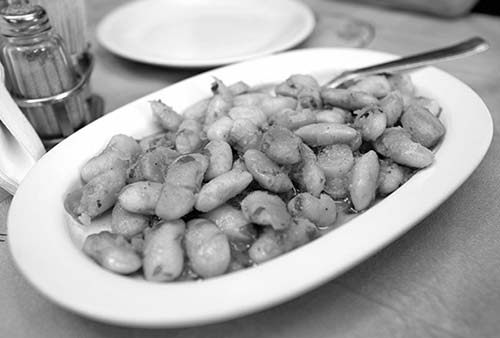
Gigantes (also Gigantes plaki): “Giant” lima beans oven-baked until tender in a mix of tomato, peppers, dill, other herbs, and sometimes sausage or pork
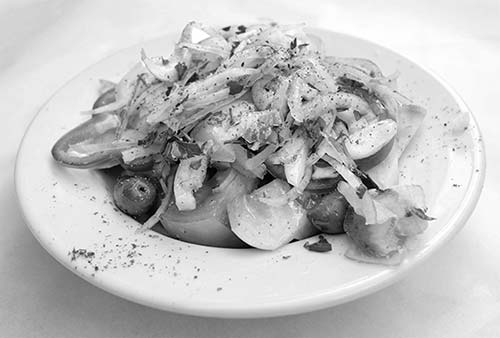
Greek salad (a.k.a. horiatiki, “village” salad): Chunked tomatoes, rich feta cheese (usually in a long, thick slab meant to be broken apart), olives, and onions, all drenched with olive oil. You’ll find yourself eating this combination again and again—yet somehow, it never gets old. It’s sometimes topped with rusk (or “Cretan rusk”)—crunchy, dry croutons made of rustic barley bread.
Keftedes: Small meatballs, often seasoned with mint, onion, parsley, and sometimes ouzo
Melitzanosalata: Cooked eggplant with the consistency of mashed potatoes, usually well seasoned and delicious
Pantzarosalata: Beet salad dressed with olive oil and vinegar
Papoutsaki: Eggplant “slippers” filled with ground beef and cheese
Roasted red peppers: Soft and flavorful, often drizzled with olive oil
Saganaki: Cooked cheese, often breaded, sometimes grilled and sometimes fried, occasionally flambéed
Soutzoukakia: Meatballs with spicy tomato sauce
Taramosalata: Smoky, pink, fish-roe mixture with the consistency of mashed potatoes, used as a dip for bread or vegetables
Tirokafteri: Feta cheese that’s been softened and mixed with white pepper to give it some kick, served either as a spread or stuffed inside roasted red peppers
Tzatziki: A pungent and thick sauce of yogurt, cucumber, and garlic. It seems like a condiment but is often ordered as a starter, then eaten as a salad or used to complement other foods.
Soups
Summertime visitors might be disappointed not to find much soup on the menu (including avgolemono, the delicious egg, lemon, and rice soup). Soup is considered a winter dish and is almost impossible to find in warm weather. If available, Greek chicken soup (kotosoupa) is very tasty, and fasolada (bean soup) is affectionately attributed as the country’s national dish (though not as popular as horiatiki, a.k.a., Greek salad). Kremithosoupa is the Greek version of French onion soup, and kakavia or psarosoupa is a famous fish soup often compared to bouillabaisse.
Main Dishes
Here are some popular meat and seafood dishes you’ll likely see.
Meats
Arnaki kleftiko: Slow-cooked lamb, usually wrapped in phyllo dough or parchment paper. Legend says it was created by bandits who needed to cook without the telltale signs of smoke or fire. (Baked fish, and other meats, may also be served kleftiko.)
Gyro: Literally “turn,” a gyro is not a type of meat but a way of preparing it—stacked on a metal skewer and vertically slow-roasted on a rotisserie, then shaved off in slices. In Greece it’s usually made from chicken or pork, and often served wrapped in a pita, making a handy to-go sandwich.
Moussaka: A classic casserole with layers of minced meat, eggplant, and potatoes and a topping of cheesy béchamel sauce or egg custard
Pastitsio: A layered baked dish called the “Greek lasagna.” Ground meat is sandwiched between two layers of pasta with an egg-custard or béchamel topping.
Souvlaki: Pork or lamb cooked on a skewer, often wrapped in pita bread (and sometimes topped with fries); also can be served on a platter with rice
Stifado: Beef stew with onions, tomatoes, and spices such as cinnamon and cloves. It was traditionally made with rabbit (kouneli).
Fish and Seafood
Barbounia: Red mullet that is usually grilled or fried and is always expensive. These small fish are bony, but the flesh melts in your mouth.
Gavros: An appetizer similar to anchovies. Squeeze lemon all over them, and eat everything but the wispy little tails.
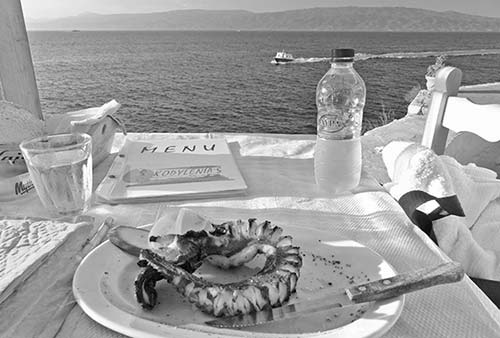
Htapothi: Octopus, often marinated and grilled, then drizzled with olive oil and lemon juice
Psari plaki: Fish baked in the oven with tomatoes and onions
Sweets
Baklava: Phyllo dough layered with nuts and honey
Bougatsa: Thin pastry filled with cream
Ekmek: A cake made of thin phyllo fibers soaked in honey, then topped with custard and a layer of whipped cream
Halva: A tahini- or sesame-based sweet confection, often with honey, chocolate, or pistachio
Karydopita: Honey-walnut cake made without flour
Kataifi: Thin fibers of phyllo (like shredded wheat) layered with nuts and honey
Loukoumades: Greek doughnut, soaked in honey or sugar syrup
Loukoumi: Similar to Turkish delight, a chewy, sweet, jelly-like candy with flavors like rose or lemon, coated in powdered sugar
Meli pita: Honey-cheese pie, traditionally served at Easter
DRINKS
Wine: There are two basic types of Greek wines—retsina (resin-flavored, rarely served) and nonresinated wines.
Retsina wine, a post-WWII rotgut with a notorious resin flavor, has long been famous as the working man’s Greek wine. It makes you want to sling a patch over one eye and say, “Arghh.” The first glass is like drinking wood. The third glass is dangerous: It starts to taste good. If you drink any more, you’ll smell like it the entire next day. Why resin? Way back when, Greek winemakers used pine resin to seal the amphoras that held the wine, protecting the wine from the air. Discovering that they liked the taste, the winemakers began adding resin to the wine itself.
If pine sap is not your cup of tea, there are plenty of nonresinated wine options. With its new generation of winemakers (many of them trained abroad), Greece is receiving more recognition for its wines. More than 300 native varietals are now grown in Greece’s wine regions. About two-thirds of the wine produced in Greece is white. The best known are Savatiano (the most widely grown grape used for retsina and other wines), Assyrtiko (a crisp white mostly from Santorini), and Moschofilero (a dry white from the Peloponnese). Red wines include Agiorgitiko (a medium red also from the Peloponnese; one carries the name “Blood of Hercules”) and Xynomavro (an intense red from Naoussa in Macedonia). Greeks also grow cabernet sauvignon, merlot, chardonnay, and other familiar varieties. And Santorini bottles the sweet, luxurious, expensive dessert wine called Vinsanto.
Here are a few wine terms that you may find useful: inos (οίνος—term for “wine” printed on bottles), krasi (spoken term for “wine”), ktima (winery or estate), inopolio (wine bar), lefko (white), erithro or kokkino (red), xiro (dry), agouro (young), me poli soma (full-bodied), epitrapezio (table wine), and O.P.A.P. (an indication of quality that tells you the wine came from one of Greece’s designated wine regions).
Beer: Greeks are proud of their few local brands, including Alpha, Fix, Vergina, and Mythos.
Spirits: Beyond wine and beer, consider special Greek spirits. Cloudy, anise-flavored ouzo, supposedly invented by monks on Mount Athos, is worth a try even if you don’t like the taste (black licorice). Similar to its Mediterranean cousins, French pastis and Turkish raki, ouzo turns from clear to milky white when you add ice or water (don’t drink it straight). Greeks drink it both as an aperitif and with food. I like to sip it slowly in the early evening while sharing a plate of several meze with my travel partner. Some of the best-selling brands are Ouzo 12, Plomari Ouzo, and Sans Rival Ouzo.
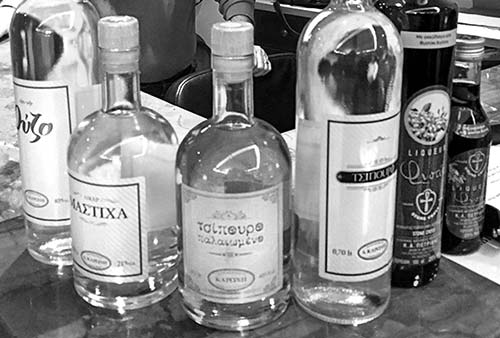
Even better is tsipouro. Similar to Italian grappa, this brandy is distilled from leftover grape skins and stems; it is sometimes flavored with anise. Stronger and purer than ouzo, it’s best drunk with water on the rocks. Some of the best are Barbayanni, Tsilili, and Adolo.
Metaxa is to be savored after dinner. This rich, sweet, golden-colored liqueur has a brandy base blended with aged wine and a “secret” herbal mixture.
If you’re traveling on the Peloponnese, try Tentura, a regional liqueur flavored with cloves, nutmeg, cinnamon, and citrus. It packs a spicy kick.
Coffee: All over Greece, Starbucks-style coffeehouses have invaded Main Street. But, while most modern Greeks drink espresso, you can still seek out traditional Greek coffee (similar to Turkish coffee). This unfiltered brew is prepared in a small copper pot called a briki or an ibrik, and usually served with a glass of water and a chunk of candy called loukoumi. While most of the world calls this candy “Turkish delight,” locals boast that it was actually invented by Greek pastry chefs, then spread throughout the Ottoman Empire—so their name, “Greek delight,” is more fitting.
In summer, cafés are filled with Greeks sipping iced coffee drinks. There are two types: frappé and freddo. Both are essentially cold coffee, whipped in a blender, and served over ice. Locals are staunchly devoted to one or the other, so what’s the difference? Frappé is made with instant coffee that’s mixed with evaporated milk and water, while freddo is made with coffee (from an espresso machine) and can be ordered as a freddo espresso (iced espresso, no milk) or freddo cappuccino (with cold foamed milk).
When ordering coffee, the barista will usually ask how much sugar you want in it. (They may say, “How much sugar? Normal?”) You can order your coffee pikro/sketos (bitter/plain), metrio (semisweet—the default choice), or gliko (sweet).
Don’t ask for a “regular coffee,” as almost nobody will understand what you mean.
Water: Water is served in bottles. It’s very cheap (even in otherwise expensive areas) and rarely carbonated.
Staying Connected
One of the most common questions I hear from travelers is, “How can I stay connected in Europe?” The short answer? More easily and affordably than you might think.
The simplest solution is to bring your own device—phone, tablet, or laptop—and use it much as you would at home, following the money-saving tips below, such as getting an international plan or connecting to free Wi-Fi whenever possible. Another option is to buy a European SIM card for your mobile phone. Or you can use European landlines and computers to connect.
USING YOUR PHONE IN EUROPE
Here are some budget tips and options.
Sign up for an international plan. To stay connected at a lower cost, sign up for an international service plan through your carrier. Most providers offer a simple bundle that includes calling, messaging, and data. Your normal plan may already include international coverage (for example, T-Mobile’s covers data and text, but not voice calls).
Before your trip, research your provider’s international rates. Activate the plan a day or two before you leave, then remember to cancel it when your trip’s over.
Use free Wi-Fi whenever possible. Unless you have an unlimited-data plan, save most of your online tasks for Wi-Fi. Most accommodations in Europe offer free Wi-Fi. Many cafés (including Starbucks and McDonald’s) offer hotspots for customers; ask for the password when you buy something. You may also find Wi-Fi at TIs, city squares, major museums, public-transit hubs, and airports.
Here’s how to dial from anywhere in the US or Europe, using the phone number of one of my recommended Athens hotels as an example (210 323 4357). If a number starts with 0, drop it when dialing internationally (except when calling Italy).
Phone numbers in this book are presented exactly as you would dial them from a US mobile phone. For international access, press and hold 0 (zero) to get a + sign, then dial the country code (30 for Greece) and phone number.
 To call the Athens hotel from any location, dial +30 210 323 4357.
Replace + with 011 (US/Canada access code), then dial the country code (30 for Greece) and phone number.
To call the Athens hotel from your home landline, dial 011 30 210 323 4357.
Replace + with 00 (Europe access code), then dial the country code (30 for Greece, 1 for the US) and phone number.
To call the Athens hotel from a French landline, dial 00 30 210 323 4357.
To call my US office from a Greek landline, dial 00 1 425 771 8303.
To place a domestic call (from a Greek landline or mobile), drop +30 and dial the phone number (including the initial 0).
To call the Athens hotel from Olympia, dial 210 323 4357.
Local Numbers: European phone numbers and area codes can vary in length and spacing, even within the same country. Mobile phones use separate prefixes (for instance, in Greece, mobile numbers begin with 69).
Toll and Toll-Free Calls: It’s generally not possible to dial European toll or toll-free numbers from a US mobile or landline (although you can sometimes get through using Skype). Look for a direct-dial number instead.
Calling the US from a US Mobile Phone, While Abroad: Dial +1, area code, and number.
More Phoning Help: See HowToCallAbroad.com.
Minimize the use of your cellular network. The best way to make sure you’re not accidentally burning through data is to put your device in “airplane” mode (which also disables phone calls and texts) and connect to Wi-Fi as needed. When you need to get online but can’t find Wi-Fi, simply turn on your cellular network (or turn off airplane mode) just long enough for the task at hand.
Even with an international-data plan, wait until you’re on Wi-Fi to Skype or FaceTime, download apps, stream videos, or do other megabyte-greedy tasks. Using a navigation app such as Google Maps over a cellular network can require lots of data, so download maps when you’re on Wi-Fi, then use the app offline.
Limit automatic updates. By default, your device constantly checks for a data connection and updates app content. Check your device’s settings menu for ways to turn this off, and change your email settings from “auto-retrieve” to “manual” (or from “push” to “fetch”).
Use Wi-Fi calling and messaging apps. Skype, WhatsApp, FaceTime, and Google Meet are great for making free or low-cost calls or sending texts over Wi-Fi worldwide. Just log on to a Wi-Fi network, then connect with friends, family members, or local contacts who use the same service.
Buy a European SIM card. If you anticipate making a lot of local calls, need a local phone number, or your provider’s international data rates are expensive, consider buying a SIM card in Europe to replace the one in your (unlocked) US phone or tablet. SIM cards are sold at department-store electronics counters and some newsstands (you may need to show your passport), and vending machines. If you need help setting it up, buy one at a mobile-phone shop.
There are generally no roaming charges when using a European SIM card in other EU countries, but confirm when you buy.
WITHOUT A MOBILE PHONE
It’s less convenient but possible to travel in Europe without a mobile device. You can make calls from your hotel and check email or get online using public computers.
Most hotels charge a fee for placing calls. You can use a prepaid international phone card (usually available at newsstands, and tobacco shops) to call out from your hotel.
Some hotels have public computers in their lobbies for guests to use; otherwise you may find them at public libraries (ask your hotelier or the TI for the nearest location). On a European keyboard, use the “Alt Gr” key to the right of the space bar to insert the extra symbol that appears on some keys. If you can’t locate a special character (such as @), simply copy and paste it from a web page.
You can mail one package per day to yourself worth up to $200 duty-free from Europe to the US (mark it “personal purchases”). If you’re sending a gift to someone, mark it “unsolicited gift.” For details, visit www.cbp.gov, select “Travel,” and search for “Know Before You Go.” The Greek postal service works fine, but for quick transatlantic delivery (in either direction), consider services such as DHL (DHL.com). Get stamps for postcards and letters at the neighborhood post office, newsstands within fancy hotels, and some minimarts and card shops.
Transportation
To connect the destinations in this book, you’ll either drive, take a bus or boat, or fly (train service is minimal in Greece).
For touring around the mainland, your best options are car or bus. A rental car allows you to come and go on your own schedule, and make a beeline between destinations. Outside of congested Athens, roads are uncrowded, and parking is often free. However, driving in Greece can be stressful, as Greek drivers tackle the roads with a kind of anything-goes, Wild West abandon. And it’s more expensive than the bus. But if you’re a confident driver, the convenience of driving in Greece trumps the hassles of bus transport.
Greece’s network of public buses is affordable and will get you most anywhere you want to go. Unfortunately, it’s not user-friendly. Particularly outside of Athens, the frequency can be sparse and schedules are hard to nail down. You’ll need to allow plenty of time, expect delays, and pack lots of patience to visit all of my recommended destinations.
BUSES
Greek buses are cheap, and the fleet is clean, modern, and air-conditioned, but the bus system can be frustrating. Athens has decent bus service to popular destinations such as Delphi, Nafplio, and the port town of Piraeus, but smaller destinations on the Peloponnese are connected by only one or two buses a day.
All buses are run by a central company (KTEL, or KTEΛ in Greek), but the local offices set their own schedules, and they often don’t coordinate well. Specific bus schedules can be difficult to pin down, even for buses leaving from the town you’re in. (Forget about getting bus schedules for other Greek towns.) Local TIs, where they exist, are unlikely to have the information you need. Don’t hesitate to ask your hotelier for help—they’re used to it.
KTEL has no helpful website or information office for the entire Greek bus system, but Greeka.com has a list of regional bus websites, which often provide more information (www.greeka.com/greece-travel/buses). The KTEL Athens site (www.ktelattikis.gr) is hard to navigate, but Matt Barrett’s website has schedules for long-distance buses from and to Athens (www.athensguide.com).
Particularly on the Peloponnese, where your journeys likely will require a transfer (or multiple transfers), you frequently won’t be able to get the information for the full route from the bus station at your starting point. For example, to go from Nafplio to Monemvasia, you’ll change at Tripoli, then Sparta. The Nafplio bus station can give you details for the leg to Tripoli, but can’t tell you anything about the rest of the journey.
Before you get on a bus, ask the ticket seller and the conductor explicitly if there are transfers—they may not volunteer these details otherwise. Then pay attention (and maybe even follow the route on a map) to be sure you don’t miss your change.
BOATS
Greece has been a great seafaring nation since the days of Odysseus. Today the country’s islands are connected to Athens’ port (Piraeus, see the Athens Connections chapter for details) and to one another by a variety of ferries, ranging from hulking, slow-moving car ferries to sleek, speedy catamarans. While the decentralized ferry system isn’t as straightforward or efficient as many travelers would like it to be, it’s still fairly fast and easy to get around by boat in Greece.
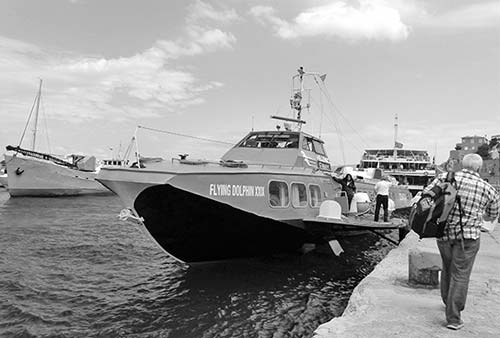
Buying Tickets: In peak season (especially July-Aug), some popular connections—such as Piraeus-Hydra—can sell out early; book at least a week in advance. Advance tickets also make sense if you’ll be setting sail soon after your arrival in Greece. Outside of peak season, it’s generally fine to purchase your ticket a day or two before your crossing. Buying from a travel agency can be the easiest way to understand your options, and costs no more than buying online, but beware that some agencies may try to upsell you. Ferries are comfortable; there’s no need to spring for business-class seats.
Greek ferry services are operated by multiple companies without a central information service. Good websites for researching connections include www.danae.gr/ferries-Greece.asp, www.greekferries.gr, and www.gtp.gr. Some ferry companies post only their current schedule—if you’re looking online in January, you may not find sailing times for June. If you buy tickets online, you’ll need to convert your reservation into an actual ticket. Some ferry companies let you do this through online check-in (they’ll send you an eticket). Otherwise, you’ll need to go to a ticket office or travel agency before the boat trip to pick up a paper ticket (you’ll need your passport, and you may have to pay a small fee).
Before you buy, make sure you’re clear on the ferry company’s refund and exchange policies. Since schedules can flex with demand, confirm your sailing time a day ahead.
Possible Delays or Cancellations: Smaller high-speed ferries (such as the Hellenic Seaways’ “Flying Cat” and SeaJets’ SuperJet or SeaJet2) can be affected by high winds and other inclement weather. Larger ferries, such as the Hellenic Seaways Highspeed, SeaJet Champion Jet, and the Blue Star ferries are slower, more stable, and less likely to be canceled. In general, cancellations are rare but possible in summer, and more common off-season. If a sailing is canceled, the ferry company will contact you to rebook (for this reason, it’s essential to provide a telephone number when you book). Usually you can go later that same day, but once in a while passengers get stranded overnight. Even if the sea is rough, the ships may still run—but the ride can be very rocky. If you’re prone to seasickness, be prepared.
Boarding the Ferry: If a place has several ports, make sure you know which port your boat leaves from. While ferry companies tell passengers to be at the dock 30 minutes before the boat leaves, most locals amble over to the dock about 10 minutes ahead. The sole advantage to turning up early is the chance to grab a better seat, which only makes a difference if your ferry has open seating, such as the Blue Star ferries (although even if there are assigned seats, they’re often ignored). Don’t be surprised if boats aren’t on time—soak up some sun at the dock while you wait.
On the Ferry: Greece’s ferries are very relaxing and can be a lot cheaper than flying, though they take longer. On big, slow-moving car ferries, you can sit outside and watch the islands slide by—but on the fast boats you’ll be sitting inside, peering through saltwater-spattered windows.
Bigger ferries move slowly but can run in almost any weather. While the number of cars allowed onboard is limited, they can accommodate about 1,000-2,000 walk-on passengers, and tend to cost less. The smallest, fastest ferries are typically catamarans carrying only about 300-400 passengers, so they are more likely to sell out. While small boats are time-efficient, they have to slow down (or sometimes can’t run at all) in bad weather. On some islands, bigger ferries arrive at a different point (usually farther from the main town) than the smaller boats (which may drop you right in the town center).
You may be able to stow your luggage on a rack on the boarding level of your boat; otherwise you’ll haul it up several flights of stairs to the passenger decks. Ferries of all sizes typically are equipped with WCs and charging outlets; many offer Wi-Fi (usually for a fee and with spotty service). You can buy food and drinks on most boats. It’s not too expensive, but it’s usually not top quality, either. Bring your own snacks or a picnic instead.
TAXIS AND RIDE-BOOKING SERVICES
Most European taxis are reliable and cheap. In many cities, two people can travel short distances by cab for little more than the cost of bus or subway tickets. If you like ride-booking services such as Uber, their apps usually work in Europe just like they do in the US: Request a car on your mobile phone (connected to Wi-Fi or a data plan), and the fare is automatically charged to your credit card. For more about taxis and Uber (which operates as UberTaxi in Athens), see here.
RENTING A CAR
It’s cheaper to arrange most car rentals from the US, so research and compare rates before you go. Most of the major US rental agencies (including Avis, Budget, Enterprise, Hertz, and Thrifty) have offices throughout Europe. Also consider the two major Europe-based agencies, Europcar and Sixt. For a friendly local car-rental company in Athens, consider Swift/Escape (see here; www.greektravel.com/swift). Consolidators such as Auto Europe (AutoEurope.com—or the sometimes cheaper AutoEurope.eu) compare rates at several companies to get you the best deal.
Wherever you book, always read the fine print. Check for add-on charges—such as one-way drop-off fees, airport surcharges, or mandatory insurance policies—that aren’t included in the “total price.”
Rental Costs and Considerations
If you book well in advance, expect to pay $350-500 for a one-week rental for a basic compact car. Allow extra for supplemental insurance, fuel, tolls, and parking. To save money on fuel, request a diesel car.
Manual vs. Automatic: Almost all rental cars in Europe are manual by default—and cars with a stick shift are generally cheaper. If you need an automatic, reserve one specifically. When selecting a car, don’t be tempted by a larger model, as it won’t be as maneuverable on narrow, winding roads or when squeezing into tight parking lots.
Age Restrictions: Some rental companies impose minimum and maximum age limits. Young drivers (25 and under) and seniors (69 and up) should check the rental policies and rules section of car rental websites. If you’re considered too young or too old, look into leasing (covered later), which has less stringent age restrictions.
Choosing Pick-up/Drop-off Locations: Always check the hours of the locations you choose: Many rental offices close from midday Saturday until Monday morning and, in smaller towns, at lunchtime. When selecting an office, confirm the location on a map. A downtown site might seem more convenient than the airport but could actually be in the suburbs or buried deep in big-city streets. Pedestrianized and one-way streets can make navigation tricky when returning a car at a big-city office. Wherever you select, get precise details on the location and allow ample time to find it.
Have the Right License: If you’re renting a car in Greece, bring your driver’s license. You’re also technically required to have an International Driving Permit—an official translation of your license (sold at AAA offices for about $20 plus the cost of two passport-type photos; see AAA.com). How this is enforced varies: I’ve never needed one.
Crossing Borders in a Rental Car: Be aware that international trips—say, picking up in Athens and dropping in Istanbul—can be expensive if the rental company assesses a drop-off fee for crossing a border.
Always tell your car-rental company exactly which countries you’ll be entering. Some companies levy extra insurance fees for trips taken in certain countries with certain cars (such as BMWs, Mercedes, and convertibles). Double-check with your rental agent that you have all the documentation you need before you drive off (especially if you’re crossing borders into non-Schengen countries, such as Turkey, where you might need to present proof of insurance).
Picking Up Your Car: Before driving off in your rental car, check it thoroughly and make sure any damage is noted on your rental agreement. Rental agencies in Europe tend to charge for even minor damage, so be sure to mark everything. In Greece, your rental car is likely to come prescratched and dented for you (which is actually a plus, in that you’re unlikely to get hassled for tiny dings in the vicinity of preexisting ones). Find out how your car’s gearshift, lights, turn signals, wipers, radio, and fuel cap function, and know what kind of fuel the car takes (diesel is common in Europe). When you return the car, make sure the agent verifies its condition with you.
Car Insurance Options
When you rent a car in Europe, the price typically includes liability insurance, which covers harm to other cars or motorists—but not the rental car itself. To limit your financial risk in case of damage to the rental, choose one of these options: Buy a Collision Damage Waiver (CDW; also called “loss damage waiver” or LDW by some firms) with a low or zero deductible from the car-rental company (roughly 30-40 percent extra), get coverage through your credit card (free, but more complicated), or get collision insurance as part of a larger travel-insurance policy.
Basic CDW costs $15-30 a day and typically comes with a $1,000-2,000 deductible, reducing but not eliminating your financial responsibility. When you reserve or pick up the car, you’ll be offered the chance to “buy down” the deductible to zero (for an additional $10-30/day; this is sometimes called “super CDW” or “zero-deductible coverage”).
If you opt for credit-card coverage, you must decline all coverage offered by the car-rental company—which means they can place a hold on your card to cover the deductible. In case of damage, it can be time-consuming to resolve the charges. Before relying on this option, quiz your card company about how it works.
If you’re already purchasing a travel-insurance policy for your trip, adding collision coverage can be an economical option. For example, Travel Guard (TravelGuard.com) sells affordable renter’s collision insurance as an add-on to its other policies; it’s valid everywhere in Europe except the Republic of Ireland, and some Italian car-rental companies refuse to honor it, as it doesn’t cover you in case of theft.
For more on car-rental insurance, see RickSteves.com/cdw.
Leasing
For trips of three weeks or more, consider leasing (which automatically includes zero-deductible collision and theft insurance). By technically buying and then selling back the car, you save money on taxes and insurance. Leasing provides you a brand-new car with unlimited mileage and a 24-hour emergency assistance program. You can lease for as little as 21 days to as long as five and a half months. Car leases must be arranged from the US.
Navigation Options
If you’ll be navigating using your phone or a GPS unit from home, remember to bring a car charger and device mount.
Your Mobile Phone: The mapping app on your phone works fine for navigating Europe’s roads. To save on data, most apps allow you to download maps for offline use (do this before you need them, when you have a strong Wi-Fi signal). Some apps—including Google Maps—also have offline route directions, but you’ll need mobile data access for current traffic. For more on using a mapping app without burning through data, see “Using Your Phone in Europe,” earlier.
GPS Devices: If you want a dedicated GPS unit, consider renting one with your car (about $20/day, or sometimes included—ask). These units offer real-time turn-by-turn directions and traffic without the data requirements of an app. The unit may come loaded only with maps for its home country; if you need additional maps, ask. Make sure you know how to use the device—and that the language is set to English—before you drive off.
Paper Maps and Atlases: Even when navigating primarily with a mobile app or GPS, I always have a paper map, ideally a big, detailed regional road map. It’s invaluable for getting the big picture, understanding alternate routes, and filling in if your phone runs out of juice. The free maps you get from your car-rental company usually don’t have enough detail. It’s smart to buy a better map before you go, or pick one up at a local gas station, bookshop, newsstand, or tourist shop.
DRIVING IN GREECE
Statistically, Greece is one of the most dangerous European countries to drive in. Traffic regulations that are severely enforced back home are treated as mere suggestions here. Even at major intersections in large towns, you may not see stop signs or traffic lights; drivers simply help each other figure out who goes next. And yet, like so many seemingly chaotic things in Greece, somehow it works quite smoothly. Still...drive defensively. Greeks won’t hesitate to pass you, if they feel you’re going too slowly.
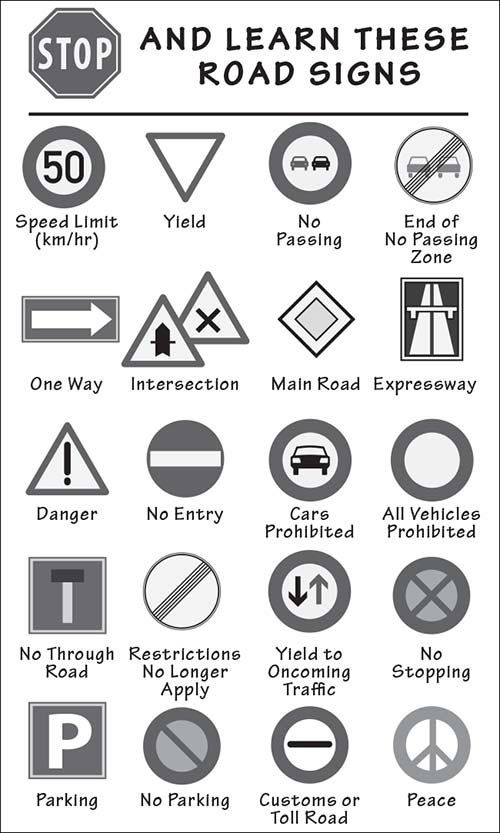
Road Rules: The speed limit, almost never posted, can be hard to ascertain on backcountry roads. Generally, speed limits in Greece are as follows: city—50 km/hour; open roads—90 km/hour; divided highways—110 km/hour, superhighways—130 km/hour. Making matters even more confusing, half of all Greek drivers seem to go double the speed limit, while the others go half the limit. On country roads and highways, the lanes are often a car-and-a-half wide, with wide shoulders, so passing is common—even when there’s oncoming traffic in the other lane. Do as Greek drivers do on two-lane roads with wide shoulders—straddle the shoulder if someone wants to pass you.
Don’t drink and drive: The legal alcohol limit is lower in Greece than in the US. It is also illegal to smoke while driving in Greece. Be aware of typical European road rules; for example, many countries require headlights to be turned on at all times, and nearly all forbid handheld mobile-phone use. In Europe, you’re not allowed to turn right on a red light, unless a sign or signal specifically authorizes it, and on expressways it’s illegal to pass drivers on the right. Ask your car-rental company about these rules, or check the “International Travel” section of the US State Department website (www.travel.state.gov, search for your country in the “Learn About Your Destination” box, then click “Travel and Transportation”).
Road Signs: Because road numbers can be confusing and inconsistent, navigate by city names. Know the names of major cities en route to your destination. Often the signs will point only to the next major town, even if your final destination is a big city. Almost all road signs are in Greek and in English, but you should also know the name of your destination using the Greek alphabet—road sign transliteration can be confusing. Most Greek town names can be spelled a number of different ways in the Latin alphabet—don’t be too worried about exact spelling, especially at the ends of town names.
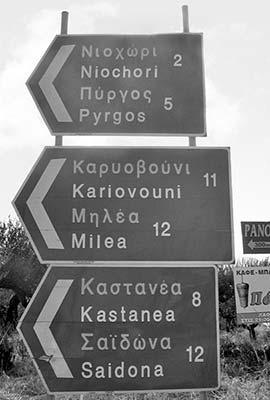
Tolls: Special highways called Ethniki Odos (National Road) have tolls, which vary and must be paid in cash. This includes the road between Athens and the Peloponnese and part of the stretch between Athens and Delphi.
Fuel: Gasoline (venzini, βενζίνη) prices are around $6.50 a gallon for regular unleaded—labeled 95, less for diesel, which is around $5 per gallon (ntizel, ντίζελ). Some pumps are color-coded: Unleaded pumps are green and labeled “E,” while diesel pumps (often yellow or black) are labeled “B.” Self-service gas stations are rare. Tell the attendant how much you want to spend and use cash. He’s just there to pump gas, so don’t expect him to wash your windshield or check your tires.
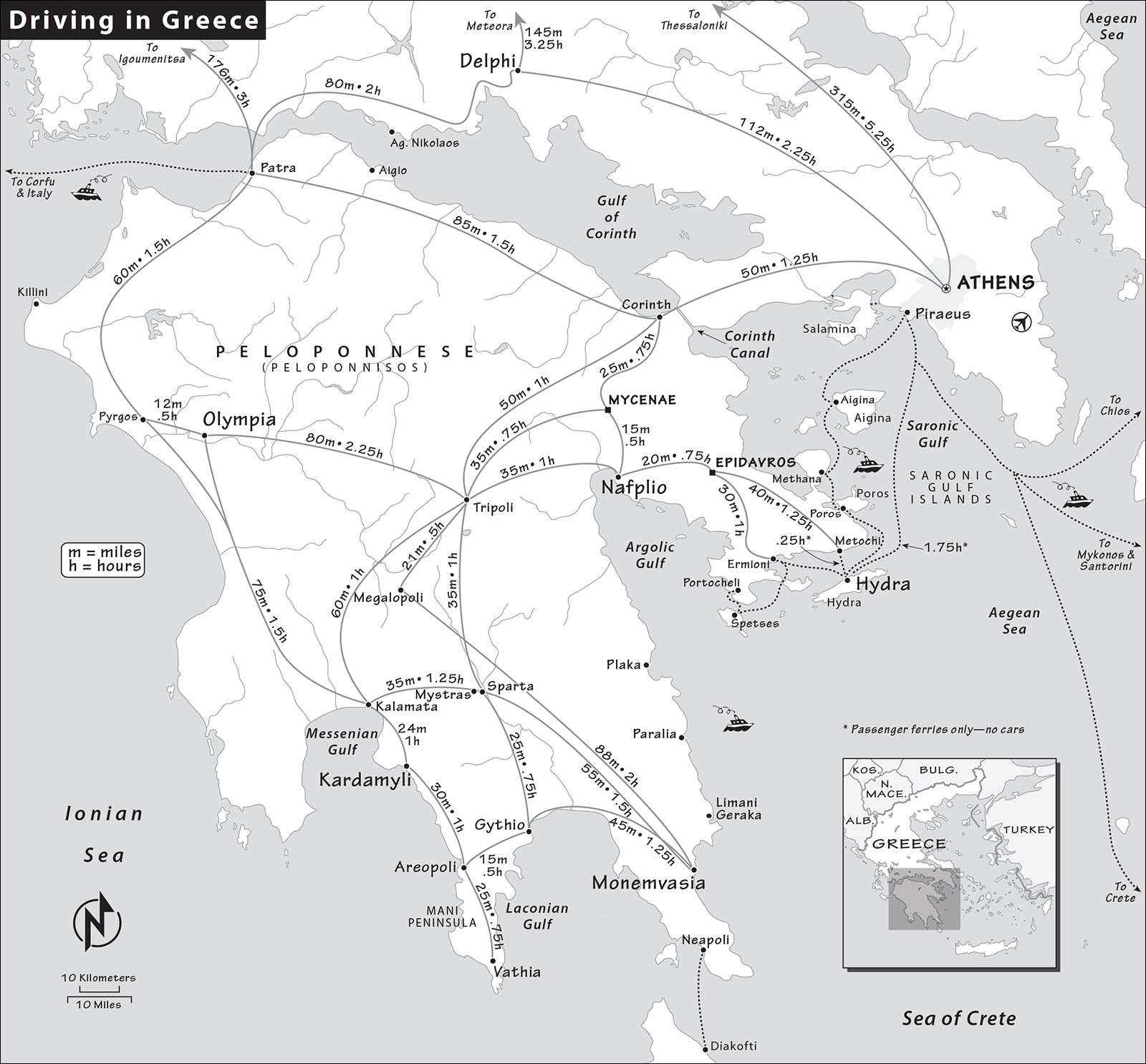
Parking and Safety: Choose parking places carefully. You’ll rarely pay for parking, and parking laws are enforced only sporadically. If you’re not certain, ask at your hotel (or ask another local) whether your space is legit. Keep your valuables in your hotel room, or, if you’re between destinations, covered in your trunk. Leave nothing worth stealing in the car, especially overnight. If your car’s a hatchback, take the trunk cover off at night so thieves can look in without breaking in. Try to make your car look locally owned by hiding the “tourist-owned” rental-company decals and putting a local newspaper in your front or back window. While you should avoid parking lots with twinkly asphalt, thieves break car windows anywhere, even at stoplights.
Drive carefully. If you’re involved in an accident, expect a monumental headache—you will be blamed. Small towns come with speed traps.
FLIGHTS
To compare flights, begin with an online travel search engine: Kayak is the top site for flights to and within Europe, easy-to-use Google Flights has price alerts, and Skyscanner includes many inexpensive flights within Europe. To avoid unpleasant surprises, before you book be sure to read the small print about refunds, changes, and the costs for “extras” such as reserving a seat, checking a bag, or printing a boarding pass.
Flights to Europe: Start looking for international flights about four to six months before your trip, especially for peak-season travel. Depending on your itinerary, it can be efficient and no more expensive to fly into one city and out of another. If your flight requires a connection in Europe, see my hints on navigating Europe’s top hub airports at RickSteves.com/hub-airports.
Flights Within Europe: Flying between European cities is surprisingly affordable. Before buying a long-distance bus ticket, check the cost of a flight on one of Europe’s airlines, whether a major carrier or a no-frills outfit like EasyJet or Ryanair. For flights within mainland Greece and to the Greek islands, the country’s main carriers are Olympic (www.olympicair.com), Aegean Airlines (www.aegeanair.com), and Sky Express (www.skyexpress.gr). Be aware that flying with a discount airline can have drawbacks, such as minimal customer service, time-consuming treks to secondary airports, and a larger carbon footprint than a bus.
Flying to the US and Canada: Because security is extra tight for flights to the US, be sure to give yourself plenty of time at the airport (see www.tsa.gov for the latest rules).
Resources from Rick Steves
Begin Your Trip at RickSteves.com
My mobile-friendly website is the place to explore Europe in preparation for your trip. You’ll find thousands of fun articles, videos, and radio interviews; a wealth of money-saving tips for planning your dream trip; travel news dispatches; a video library of travel talks; my travel blog; our latest guidebook updates (RickSteves.com/update); and the free Rick Steves Audio Europe app. You can also follow me on Facebook, Instagram, and Twitter.
Our Travel Forum is a well-groomed collection of message boards, where our travel-savvy community answers questions and shares their personal travel experiences—and our well-traveled staff chimes in when they can be helpful (RickSteves.com/forums).
Our online Travel Store offers bags and accessories that I’ve designed to help you travel smarter and lighter. These include my popular carry-on bags (which I live out of four months a year), money belts, totes, toiletries kits, adapters, guidebooks, and planning maps (RickSteves.com/shop).
Our website can also help you find the perfect rail pass for your itinerary and your budget, with easy, one-stop shopping for rail passes, seat reservations, and point-to-point tickets (RickSteves.com/rail).
Rick Steves’ Tours, Guidebooks, TV Shows, and More
Small Group Tours: Want to travel with greater efficiency and less stress? We offer more than 40 itineraries reaching the best destinations in this book...and beyond. Each year about 30,000 travelers join us on about 1,000 Rick Steves bus tours. You’ll enjoy great guides and a fun bunch of travel partners (with small groups of 24 to 28 travelers). You’ll find European adventures to fit every vacation length. For all the details, and to get our tour catalog, visit RickSteves.com/tours or call us at +1 425 608 4217.
Books: This book is just one of many books in my series on European travel, which includes country and city guidebooks, Snapshots (excerpted chapters from bigger guides), Pocket Guides (full-color little books on big cities), “Best Of” guidebooks (condensed, full-color country guides), and my budget-travel skills handbook, Rick Steves Europe Through the Back Door. A complete list of my titles—including phrase books, cruising guides, and travelogues on European art, history, and culture—appears near the end of this book.

TV Shows and Travel Talks: My public television series, Rick Steves’ Europe, covers Europe from top to bottom with over 100 half-hour episodes—and we’re working on new shows every year (watch full episodes at my website for free). My free online video library, Rick Steves Classroom Europe, offers a searchable database of short video clips on European history, culture, and geography (Classroom.RickSteves.com). And to raise your travel I.Q., check out the video versions of our popular classes (covering most European countries as well as travel skills, packing smart, cruising, tech for travelers, European art, and travel as a political act—RickSteves.com/travel-talks).
Audio Tours on My Free App: I’ve produced dozens of free, self-guided audio tours of the top sights in Europe. For those tours and other audio content, get my free Rick Steves Audio Europe app, an extensive online library organized by destination. For more on my app, see here.

Radio: My weekly public radio show, Travel with Rick Steves, features interviews with travel experts from around the world. It airs on 400 public radio stations across the US. An archive of programs is available at RickSteves.com/radio.
Podcasts: You can enjoy my travel content via several free podcasts. The podcast version of my radio show brings you a weekly, hour-long travel conversation. My other podcasts include a weekly selection of video clips from my public television show, my audio tours of Europe’s top sights, and live recordings of my travel classes (RickSteves.com/watch-read-listen/audio/podcasts).