GREECE: PAST & PRESENT
THE PRE-GREEK WORLD: THE MINOANS (2000-1450 BC)
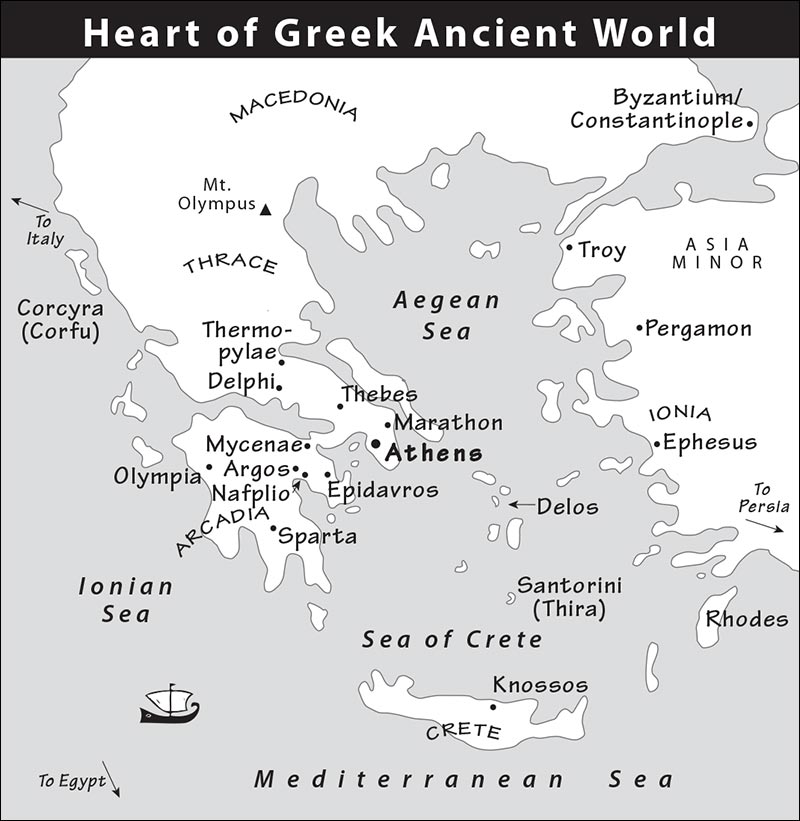
Map: Heart of Greek Ancient World
THE GREEK DARK AGES (1200-700 BC)
PRE-GOLDEN AGE: THE RISE OF ATHENS AND THE PERSIAN WARS (480-450 BC)
GOLDEN AGE ATHENS (450-400 BC)
LATE CLASSICAL PERIOD: THE DECLINE OF ATHENS (400-323 BC)
BYZANTINE GREECE (AD 323-1453)
ISLAMIC/OTTOMAN GREECE (1453-1821)
GREEK INDEPENDENCE AND NEOCLASSICISM (1800s)
Our lives today would be quite different if it weren’t for a few thousand Greeks who lived in the small city of Athens about 450 years before Jesus was born. Democracy, theater, literature, mathematics, science, philosophy, and art all flourished in Athens during its 50-year “golden age”—a cultural boom time that set the tone for the rest of Western history to follow.
Greece’s history since Classical times may be less familiar to most visitors, but it’s fascinating nonetheless. From pagan to Christian to Muslim, to the freedom fighters of the 19th century and the refugees of the 20th and 21st centuries, Greece today is the product of many different peoples, religions, and cultures.
Greek History
THE PRE-GREEK WORLD: THE MINOANS (2000-1450 BC)
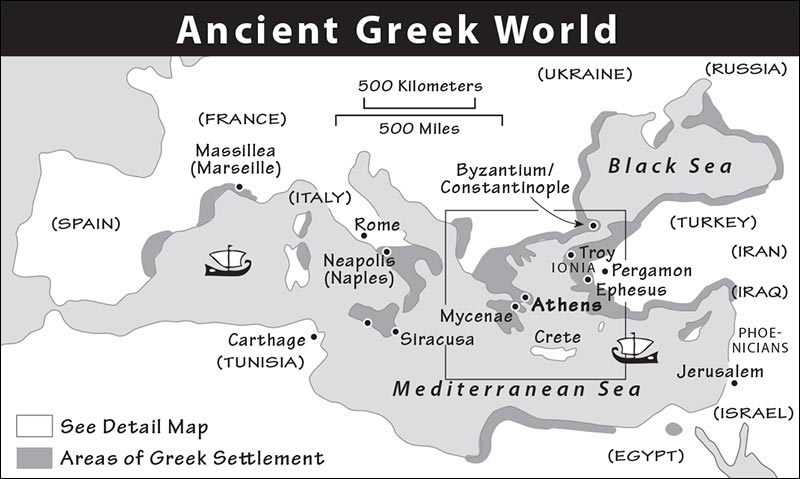
The incredible civilization that we now call Classical Greece didn’t just pop out of nowhere. Cursed with rocky soil, isolated by a rugged landscape, and scattered by invasions, the Greeks took centuries to unify. The civilization of golden age Greece was built on the advances of earlier civilizations: Minoans, Mycenaeans, Dorians, and Ionians—the stew of peoples that eventually cooked up what became Greece.
A safe, isolated location on the island of Crete, combined with impressive business savvy, enabled the Minoans to dominate the pre-Greek world. Unlike most early peoples, they were traders, not fighters. With a large merchant fleet, they exported wine, olive oil, pottery, and well-crafted jewelry, then returned home with the wealth of the Mediterranean.
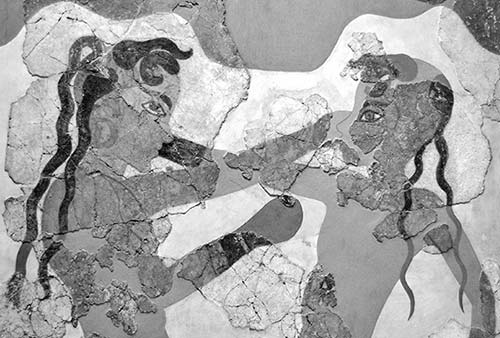
Today we know the Minoans by the colorful frescoes they left behind on the walls of prosperous, unfortified homes and palaces. Surviving frescoes show happy people engaged in everyday life: ladies harvesting saffron, athletes leaping over bulls, and charming landscapes with animals.
The later Greeks would inherit the Minoans’ business skills, social equality, love of art for art’s sake, and faith in rational thought over brute military strength. Some scholars hail the Minoans as the first truly “European” civilization.
Between about 1450 and 1150 BC, the Minoan civilization suddenly collapsed, and no one knows why (volcano? invasions?). Physically and economically weakened, they were easily overrun and absorbed by a tribe of warlike people from the mainland—the Mycenaeans.
Minoan-Era Sights
• Frescoes from Akrotiri on the island of Santorini—in the National Archaeological Museum in Athens, and the Museum of Prehistoric Thira on Santorini
MYCENAE (1600-1100 BC)
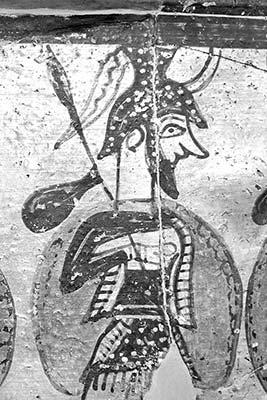
After the fall of the Minoans, the Greek mainland was dominated by the Mycenaeans (my-seh-NEE-uhns), a fusion of local tribes concentrated in the city of Mycenae (my-SEE-nee). Culturally, they were the anti-Minoans—warriors not traders, chieftains not bureaucrats. Their ruins at the capital of Mycenae (about two hours by bus southwest of Athens, or a half-hour’s drive north of Nafplio) tell the story. Buildings are fortress-like, the city has thick defensive walls, and statues are stiff and crude. Early Greeks called Mycenaean architecture “cyclopean,” because they believed that only giants could have built with such colossal blocks. Mycenaean kings were elaborately buried in cemeteries and tombs built like subterranean stone igloos, loaded with jewels, swords, and precious objects that fill museums today.
The Mycenaeans dominated Greece during the era of the legends of the Trojan War. Whether there’s any historical truth to the legends, Mycenae has become associated with the tales of Agamemnon, Clytemnestra, and the invasion of Troy.
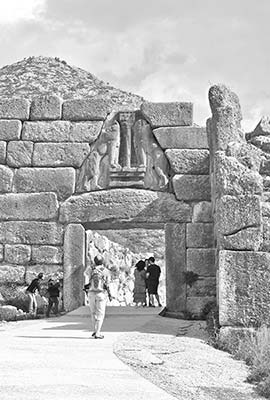
Around 1100 BC, the Mycenaeans—like the Minoans before them—mysteriously disappeared, plunging Greece into its next, “dark,” phase.
Official Name: It’s the Hellenic Republic (Elliniki Dhimokratia in Greek). In shorthand, that’s Hellas—or Greece in English.
Size: Greece is home to 11.1 million people (similar to the state of Ohio). With 51,485 square miles, Greece is a bit smaller than Alabama.
Geography: Greece is a mountainous peninsula that extends into the Mediterranean Sea between Albania and Turkey in southern Europe. It includes the Peloponnesian Peninsula—separated from the mainland by a canal—and 3,000 rugged islands (227 are inhabited). Nearly four-fifths of the country’s landscape is covered by mountains, the highest of which is Mount Olympus (9,570 feet). About 30 percent of the land is forested. Flat, arable plains are centered in Macedonia, Thrace, and Thessaly. Greece’s coastline is the 10th longest in the world at 9,246 miles.
Latitude and Longitude: 39°N and 22°E. The latitude is the same as Maryland.
Biggest Cities: One in three Greeks lives in the capital of Athens (about 664,000 in the city, 3.75 million including the greater metropolitan area). Thessaloniki has 315,000 (811,000 in its urban area).
Economy: Greece has a GDP of $299 billion, with a GDP per capita of $27,000. A European Union member, Greece has used the euro as its currency since 2002. At first, its economy—based heavily on tourism, shipping, and agriculture—benefited from an infusion of EU cash. But by the end of the decade the country was in a severe recession. In 2010, 2012, and again in 2015, Greece accepted huge bailout packages from the EU and was forced to adopt severe (and controversial) spending cuts and tax increases. They exited the bailout regime in 2018, and a new center-right government will try to guide Greece through the post-bailout era.
Government: Greece is a parliamentary republic, headed by a largely ceremonial president elected by the parliament. Power resides with the prime minister, chosen from the majority political party. The New Democracy party, headed by center-right conservative Kyriakos Mitsotakis, won Greece’s 2019 election in a landslide.
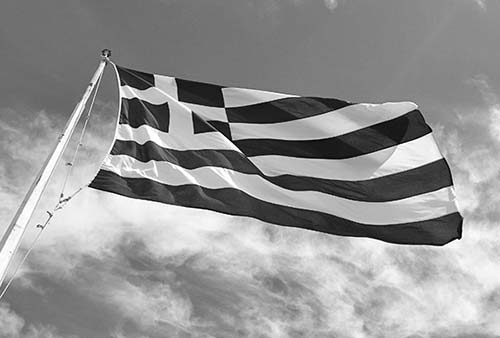
Flag: A blue square bears a white cross (the symbol of Greek Orthodoxy) in the upper-left corner, against a field of horizontal blue-and-white stripes. The blue is said to stand for the sky and seas, while the white represents the purity of the push for Greek independence. Each of the nine stripes is said to symbolize a syllable in the Greek motto, Eleutheria e Thanatos, which translates as “Freedom or Death.”
Mycenaean Sights
• The citadel at Mycenae, with its Lion Gate, Grave Circle A, palace, and tholos tombs
• Mask of Agamemnon and other artifacts at the National Archaeological Museum in Athens
• Dendra Panoply, a 15th-century BC suit of bronze armor in the Nafplio Archaeological Museum
THE GREEK DARK AGES (1200-700 BC)
Whatever the reason, once-powerful Mycenaean cities became deserted, writing was lost, roads crumbled, trade decreased, and bandits preyed on helpless villagers. Dark Age graves contain little gold, jewelry, or fine pottery. Divided by mountains into pockets of isolated, warring tribes, the Greeks took centuries to unify and get their civilization back on track.
It was during this time that legends passed down over generations were eventually compiled (in the ninth century BC) by a blind, talented, perhaps nonexistent man that tradition calls Homer. His long poem, the Iliad, describes the battles and struggles of the early Greeks (perhaps the Mycenaeans) as they conquered Troy. The Odyssey tells of the weary soldiers’ long, torturous trip back home. The Greeks saw these epics as perfect metaphors for their own struggles to unify and build a stable homeland. The stories helped shape a collective self-image.
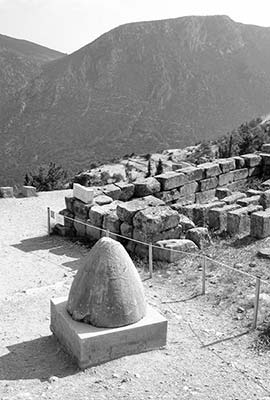
It was also during this time that Delphi, which was believed to be the center of the world, emerged as an important place where leaders would go to find answers and gain (divine?) inspiration.
Dark Age Sights
• The Kastalian Spring and omphalos monuments at Delphi
ARCHAIC PERIOD (700-480 BC)
Tradition holds that in 776 BC, Greek-speaking people from all over the mainland and islands halted their wars and gathered in Olympia to compete in the first Olympic Games. Bound by a common language and religion, Greece’s scattered tribes began settling down.
Living on islands and in valleys, the Greek-speaking people were divided by geography from their neighbors. They naturally formed governments around a single city (or polis) rather than as a unified empire. Petty warfare between city-states was practically a sport.
Slowly, the city-states unified, making alliances with one another, establishing colonies in what is now Italy and France, and absorbing culture from the more sophisticated Egyptians (style of statues) and Phoenicians (alphabet). Scarcely two centuries later, Greece would be an integrated community and the center of the civilized world.
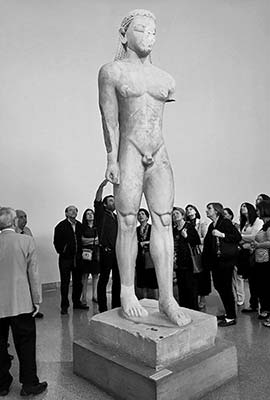
Statues from Archaic times are crude, as stiff as the rock from which they’re carved. Rather than individuals, they are generic people: called either kore (girl) or kouros (boy). With perfectly round heads, symmetrical pecs, and a navel in the center, these sturdy statues reflect the order and stability the troubled Greeks were striving for.
By the sixth century BC, Greece’s many small city-states had coalesced around two power centers: oppressive, no-frills, and militaristic Sparta; and its polar opposite, the democratic, luxury-loving, and business-friendly Athens.
Archaic Sights
• Dipylon Vase (National Archaeological Museum in Athens) and other geometric vases in various museums
• Kouros and kore statues (National Archaeological Museum in Athens, Acropolis Museum in Athens, Archaeological Museum in Delphi)
• The Olympic Stadium and Temple of Hera in Olympia
• Sphinx of Naxos (Archaeological Museum in Delphi)
• Lions of the Naxians statues on the island of Delos
PRE-GOLDEN AGE: THE RISE OF ATHENS AND THE PERSIAN WARS (480-450 BC)
In 490 BC, an enormous army of Persians under King Darius I swept into Greece to punish the city of Athens, which had dared to challenge his authority over Greek-speaking Ionia (in today’s western Turkey). A few thousand plucky Athenians raced to head off the Persians in a crucial bottleneck valley, at the Battle of Marathon. Though outnumbered three to one, the crafty Greeks lined up and made a wall of shields (a phalanx) and pushed the Persians back. An excited Greek soldier ran the 26.2 miles from the city of Marathon to Athens, gasped the good news...and died.
Greek temples, built to house the cult image of a god, follow the same basic layout, with an inner chamber surrounded by a parade of columns. Important activities mostly took place outside, at an altar in front of the temple doors.
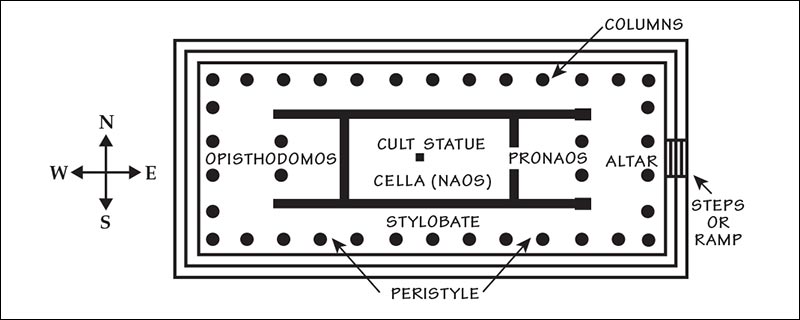
Pronaos: Small vestibule or porch, the entry to the cella
Cella (or Naos): The heart of the temple, where the cult image of the god was kept
Opisthodomos: Rear chamber, usually with no access to the cella and sometimes used as a treasury
Peristyle: Colonnade, the columns surrounding the cella
Stylobate: Platform on which the peristyle stands
In 480 BC, Persia attacked again. This time all of Greece put aside its petty differences to fight the common enemy as an alliance of city-states. King Leonidas of Sparta and his 300 Spartans made an Alamo-like last stand at Thermopylae that delayed the invasion. Meanwhile, Athenians abandoned their city and fled, leaving Athens (and much of the lower mainland) to be looted. But the Athenians rallied to win a crucial naval victory at the Battle of Salamis, followed by a land victory at the Battle of Plataea, driving out the Persians.
Athens was hailed as Greece’s protector and policeman, and the various city-states cemented their alliance (the Delian League) by pooling their defense funds, with Athens as the caretaker. Athens signed a 30-year peace treaty with Sparta...and the golden age began.
Pre-Golden Age Sights
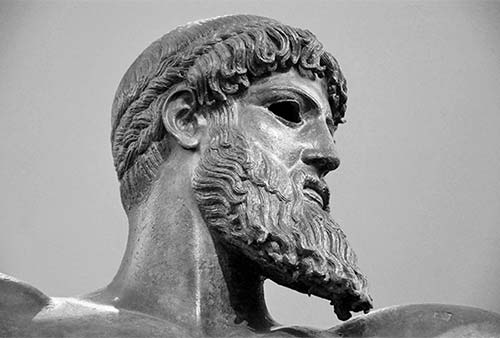
• Severe-style statues, such as the Artemision Bronze (Athens’ National Archaeological Museum) and Bronze Charioteer (Delphi)
• Olympia’s Temple of Zeus and the bronze helmet of Miltiades
GOLDEN AGE ATHENS (450-400 BC)
Historians generally call Greece’s cultural flowering the “Classical Period” (approximately 500-323 BC), with the choice cut being the two-generation span (450-400 BC) called the “golden age.” After the Persian War, the Athenians set about rebuilding their city (with funds from the Delian League). Grand public buildings and temples were decorated with painting and sculpture. Ancient Athens was a typical city-state, with a population of at least 100,000 gathered around its acropolis (“high town”), which was the religious center and fort of last defense. Below was the agora, or marketplace, the economic and social center. Blessed with a harbor and good farmland, Athens prospered, exporting cash crops (wine and olive oil, pottery and other crafts) to neighboring cities and importing the best craftsmen, thinkers, and souvlaki. Amphitheaters hosted drama, music, and poetry festivals. The marketplace bustled with goods from all over the Mediterranean. Upwardly mobile Greeks flocked to Athens. The incredible advances in art, architecture, politics, science, and philosophy set the pace for all of Western civilization to follow. And all this from a Greek town smaller than Muncie, Indiana.
Athens’ leader, a charismatic nobleman named Pericles, set out to democratize Athens. As with many city-states, Athens’ government had morphed from rule by king, to a council of nobles, to rule by “tyrants” in troubled times, and finally to rule by the people. In golden age Athens, every landowning man had a vote in the Assembly of citizens. It was a direct democracy (not a representative democracy, where you elect others to serve), in which every man was expected to fill his duties of voting, community projects, and military service. Of course, Athens’ “democracy” excluded women, slaves, freed slaves, and anyone not born in Athens.
Perhaps the greatest Greek invention was the very idea that nature is orderly and man is good—a rational creature who can solve problems. Their concept of the “Golden Mean” reveals the value they placed in balance, order, and harmony in art and in life. At school, both the mind and the body were trained.
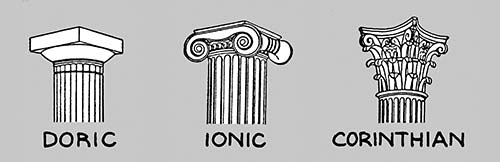
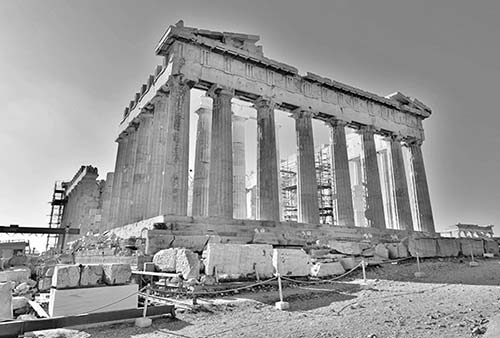
Classical Greek architecture evolved through three orders: Doric (strong-looking columns topped with simple and stocky capitals), Ionic (thinner columns with rolled capitals), and Corinthian (even thinner columns with leafy, ornate capitals). As a memory aid, remember that the orders gain syllables as they evolve: Doric, Ionic, Corinthian. The differences between the three orders point to how the Greek outlook mirrored its developing culture: Having mastered the ability to show balance and harmony in its finest Doric temples (the Parthenon being the cream of the crop), the Corinthian order caught on as architects began to prefer a more elegant look. The Corinthian order, developed to look good from all sides (Ionic columns didn’t work well on corners), and to give temple interiors a foresty look, could only have come from the Hellenistic era, when Greek tastemakers preferred their art and architecture ornate and lavish.
Philosophers debated many of the questions that still occupy the human mind. Socrates questioned traditional, superstitious beliefs. His motto, “Know thyself,” epitomizes Greek curiosity about who we are and what we know for sure. Branded a threat to Athens’ youth, Socrates willingly obeyed a court order to drink poison rather than compromise his ideals. His follower Plato wrote down many of Socrates’ words. Plato taught that the physical world is only a pale reflection of true reality (the way a shadow on the wall is a poor version of the 3-D, full-color world we see). The greater reality is the unseen mathematical orderliness that underlies the fleeting physical world. Plato’s pupil Aristotle, an avid biologist, emphasized study of the physical world rather than the intangible one. Both Plato and Aristotle founded schools that would attract Europe’s great minds for centuries. And their ideas would resurface much later, after Europe experienced a resurgence of humanism and critical thought.
Greeks worshipped a pantheon of gods, viewed as supernatural humans (with human emotions) who controlled the forces of nature. Greek temples housed a statue of a god or goddess. Because the people worshipped outside, the temple exterior was the important part and the interior was small and simple. Generally, only priests were allowed to go inside, where they’d present your offering to the god’s statue in the hope that the god would grant your wish.
Most temples had similar features. They were rectangular, surrounded by rows of columns, and topped by slanted roofs. Rather than single-piece columns, the Greeks usually built them of stacked slices of stone (drums), each with a plug to keep it in line. Columns sat on a base, and were topped with a capital. The triangle-shaped roof formed a gable—typically filled with statues—called the pediment. A typical pediment might feature a sculpted gang of gods doing their divine mischief. Beneath the pediment was a line of carved reliefs called metopes. Under the eaves, a set of sculpted low-relief panels—called the frieze—decorated one or more sides of the building.
Classical art is known for its symmetry, harmony, and simplicity. It shows the Greeks’ love of rationality, order, and balance. Greek art of this era featured the human body in all its naked splendor. The anatomy is accurate, and the poses are relaxed and natural. Greek sculptors learned to capture people in motion, and to show them from different angles, not just face-on. The classic Greek pose—called contrapposto, Italian for “counter-poise”—has a person resting weight on one leg while the other leg is relaxed or moving slightly. This pose captures a balance between timeless stability and fleeting motion that the Greeks found beautiful. It’s also a balance between down-to-earth humans (with human flaws and quirks) and the idealized perfection of a Greek god.
Golden Age Sights
• The Acropolis in Athens, with the Parthenon, Erechtheion, Propylaea, Temple of Athena Nike, and Theater of Dionysus
• The Agora, Athens’ main square—crossed by the Panathenaic Way and frequented by all the golden age greats
• Temple of Hephaistos, in the Agora
• Panathenaic Stadium in Athens
• Sanctuary of Apollo at Delphi
• Workshop of Pheidias at Olympia
• Museum of Cycladic Art in Athens (top-floor exhibit)
LATE CLASSICAL PERIOD: THE DECLINE OF ATHENS (400-323 BC)
Many Greek city-states came to resent the tribute money they were obliged to send to Athens, supposedly to protect them from an invasion that never came. Rallying behind Sparta, they ganged up on Athens. The Peloponnesian War, lasting a generation, toppled Athens (404 BC), drained Greece, and ended the golden age. Still more wars followed, including struggles between Sparta and Thebes. In 338 BC, Athens, Sparta, and all the rest of the city-states were conquered by powerful Greek-speaking invaders from the north: the Macedonians.
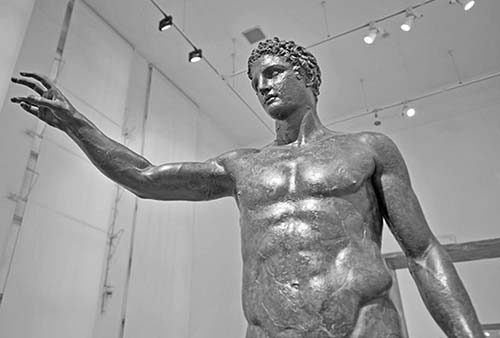
Late Classical Sights
• Bronze statue of a youth at Athens’ National Archaeological Museum
• Statue of Hermes, perhaps by Praxiteles, in Olympia
HELLENISM (323-100 BC)
“Hellenism,” from the Greek word for “Greek,” refers to the era when Greece’s political importance declined but Greek culture was spread through the Mediterranean and Asia by Alexander the Great.
After King Philip of Macedonia conquered Greece, he was succeeded by his 20-year-old son, Alexander (356-323 BC). Alexander had been tutored by the Greek philosopher Aristotle, who got the future king hooked on Greek culture. According to legend, Alexander went to bed each night with two things under his pillow: a dagger and a copy of the Iliad. Alexander loved Greek high culture, but was also pragmatic about the importance of military power.
In 334 BC, Alexander and a well-trained army of 40,000 headed east. Their busy itinerary included conquering today’s Turkey, Palestine, Egypt (where he was declared a living god), Iraq, and Iran, and moving into India. Alexander was a daring general, a benevolent conqueror, and a good administrator. As he conquered, he founded new cities on the Greek model, spread the Greek language, and opened Greek schools. After eight years on the road, an exhausted Alexander died at the age of 32, but by then he had created the largest empire ever.
Hellenistic art reflects the changes in Greek society. Rather than noble idealized gods, the Hellenistic artists gave us real people with real emotions, shown warts-and-all. Some are candid snapshots of everyday life, like a boy stooped over to pull a thorn from his foot. Others show people in extreme moments as they struggle to overcome life’s obstacles. We see the thrill of victory and the agony of defeat. Arms flail, muscles strain, eyes bulge. Clothes and hair are whipped by the wind. Figures are frozen in motion, in wild, unbalanced poses that dramatize their inner thoughts.
Socrates (c. 469-399 BC) questioned the status quo, angered authorities, and calmly accepted his own death rather than change his teachings.
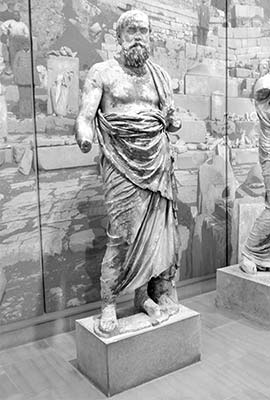
Plato (c. 424-348 BC) was Socrates’ follower (and note taker), and focused on elucidating nonmaterial, timeless mathematical ideas.
Aristotle (c. 384-322 BC) was Plato’s follower and championed the empirical sciences, emphasizing the importance of the physical world as a means of knowledge.
Pericles (c. 495-429 BC) was a charismatic nobleman who promoted democracy.
Pythagoras (c. 580-500 BC) gave us a2 + b2 = c2.
Euclid (c. 335-270 BC) laid out geometry as we know it.
Diogenes (c. 412-323 BC) lived homeless in the Agora, turning from materialism to concentrate on ethical living.
Aristophanes (c. 446-386 BC), Sophocles (c. 496-406 BC), and Euripides (c. 480-406 BC) wrote comedies and tragedies that are still performed today.
Hippocrates (c. 460-370 BC) made medicine a hard science. He rejected superstition and considered disease a result of natural—rather than supernatural—causes.
Pheidias (c. 480-430 BC) designed the statuary of the Parthenon and several monumental statues.
Praxiteles (c. 400-330 BC) sculpted lifelike yet beautiful human figures.
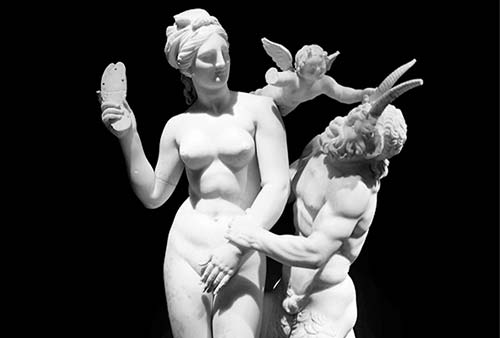
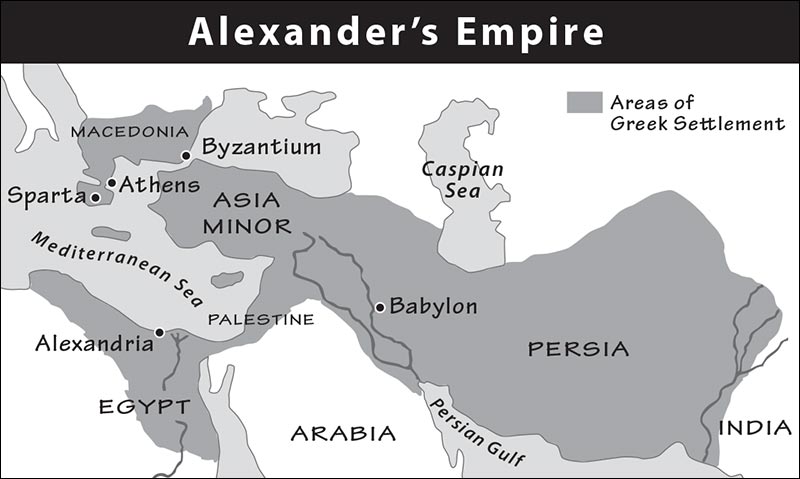
For two centuries much of the Mediterranean and Asia—the entire known civilized world—was dominated by Greek rulers and Greek culture.
Hellenistic Sights
• Stoa of Attalos, in Athens’ Agora, built by a Grecophile from Pergamon
• Artemision Jockey, Fighting Gaul, and other statues in Athens’ National Archaeological Museum
• Head of Alexander the Great in Athens’ Acropolis Museum
• Theater (and sanctuary) of Epidavros
• Philippeion temple in Olympia
ROMAN GREECE (146 BC-AD 476)
At the same time that Alexander was conquering the East, a new superpower was rising in the West: Rome. Eventually, Rome’s legions conquered Greece (146 BC) and the Hellenized Mediterranean (31 BC). Culturally, however, the Greeks conquered the Romans.
Roman governors ruled cosmopolitan Greek-speaking cities, adopting the Greek gods, art styles, and fashions. Greek-style temple facades, with their columns and pediments, were pasted on the front of (Roman-arch) temples as a veneer of sophistication. Greek statues dotted Roman villas and public buildings. Pretentious Romans sprinkled their Latin conversation with Greek phrases as they enjoyed the plays of Sophocles and Aristophanes. Many a Greek slave was more cultured than his master, reduced to the role of warning his boss not to wear a plaid toga with polka-dot sandals.
Athens was a major city in the cosmopolitan Roman world. Paul—a Jewish Christian with Roman citizenship—came to Athens (AD 49) to spread the Christian message from atop Mars Hill. The Bible makes it clear (Acts 17) that the sophisticated Athenians were not impressed.
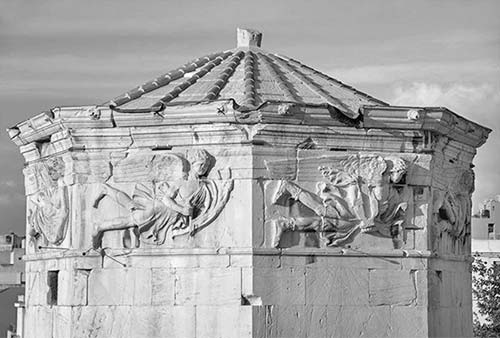
Athens, with its prestigious monuments, was well-preserved under the Romans, but as Rome began to collapse, it became less able to protect and provide for Greece. In AD 267, Athens suffered a horrendous invasion by the Germanic Herulian people, who left much of the city in ashes. Other invasions followed.
In AD 476, even the city of Rome fell to invaders. As Christianity established itself, Greece’s pagan sanctuaries were closed. For a thousand years Athens had carried the torch of pagan and secular learning. But in AD 529, the Christian/Roman/Byzantine Emperor Justinian closed Athens’ famous schools of philosophy...and the “ancient” world came to an end.
Greek culture would live on, resurfacing throughout Western history and eventually influencing medieval Christians, Renaissance sculptors, and Neoclassical architects, including the ones who designed Washington, DC in the Greek style.
Roman Sights
• Roman Forum (and Tower of the Winds) in Athens
• Temple of Olympian Zeus and Arch of Hadrian in Athens
• Odeon of Agrippa and Statue of Hadrian, in Athens’ Agora
• Library of Hadrian (near Monastiraki) in Athens
• Temple of Roma and Monument of Agrippa, on the Acropolis in Athens
• Odeon of Herodes Atticus (built by a wealthy ethnic-Greek/Roman-citizen) in Athens
• Mars Hill (the rock where the Christian Apostle Paul preached to the pagans) in Athens
• Nymphaeum in Olympia
• Many Greek buildings and artworks that were renovated in Roman times
BYZANTINE GREECE (AD 323-1453)
With the fall of Rome in Western Europe, Greece came under the sway of the Byzantine Empire—namely, the eastern half of the ancient Roman Empire that didn’t “fall” in AD 476. Byzantium remained Christian and enlightened for another thousand years, with Greek (not Latin) as the common language. The empire’s capital was Constantinople (modern Istanbul), founded in AD 330 by Roman Emperor Constantine to help manage the fading Roman Empire. For the next thousand years, Greece’s cultural orientation would face east.
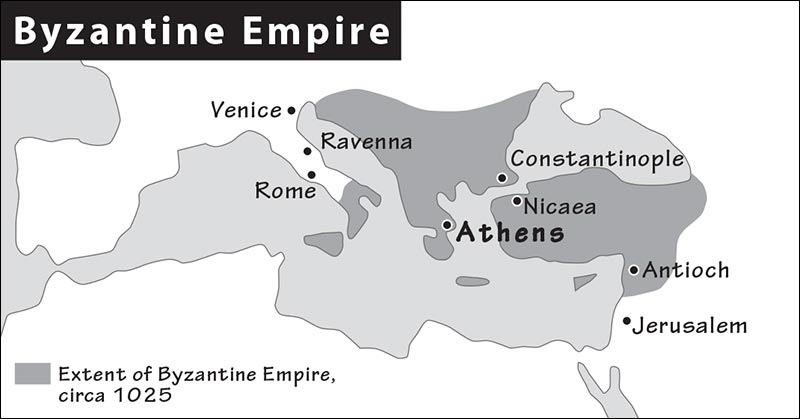
Though ostensibly protected by the Byzantine emperor in Constantinople, Greece suffered several centuries of invasions (AD 600-900) by various Slavic tribes. The Orthodox Church served as a rallying point, and the invaders were eventually driven out or assimilated.
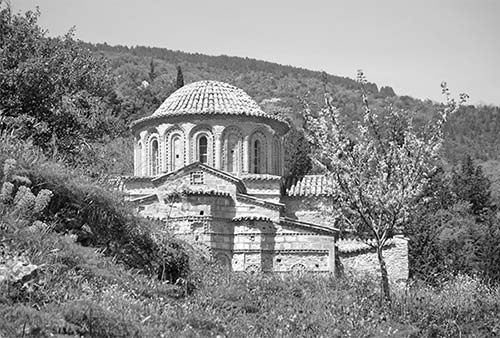
After AD 1000, Greece’s economic prosperity returned—farms produced, the population grew, and cities engaged in trade—and Athens entered a second, more modest, golden age (c. 1000-1200). Greece reconnected with the rest of Western Europe during the Crusades, when Western soldiers traveled through Greek ports on their way to Jerusalem. This revived East-West trade, which was brokered by Venetian merchants who were granted trading rights to establish ports in Greek territory.
This golden age is when many of Athens’ venerable Orthodox churches were built. Christian pilgrims from across the Byzantine Empire flocked to Athens to visit the famous church housed within the (still-intact) Parthenon. Byzantine mosaics, featuring realistic plants, animals, and people, were exported to the West.
The Byzantine Empire—and, by extension, Greece—was weakened by the disastrous Fourth Crusade (1204), in which greedy Crusaders looted their fellow Christian city of Constantinople. Following this, Western Crusaders occupied and ruled many parts of Greece, including Athens, and Byzantine Christians battled Crusading Christians at Monemvasia. Meanwhile, the Ottomans were whittling away at the empire’s fringes. In 1453, Constantinople fell to the Ottoman Turks.
Byzantine-Era Sights
• Athens’ old Orthodox churches, including the Church of Kapnikarea (on Ermou street), Agios Eleftherios (next to the cathedral), and Holy Apostles (in the Agora)
• Byzantine and Christian Museum in Athens
• Icons of the Eastern Orthodox Church
• Monemvasia fortress
• Churches and palaces at Mystras
ISLAMIC/OTTOMAN GREECE (1453-1821)
Under the Ottomans, Greece was ruled by Islamic Turks from their capital of Constantinople. Like many other temples-turned-churches, Athens’ Parthenon (still intact) became a mosque, and a minaret was built alongside it.
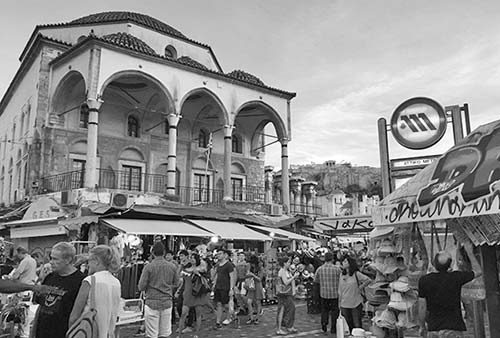
Greek Christians had several choices for surviving the new regime. Some converted to Islam and learned Turkish, while others faked their conversion and remained closet Christians. Some moved to the boonies, outside the reach of Ottoman administrators. Many of Greece’s best and brightest headed to Western Europe, helping to ignite the Renaissance (which revived the Classical achievements of ancient Athens). Most Greeks just stayed put, paid the “Christian tax,” and lived in peace alongside the Ottomans. The Ottomans were (relatively) benevolent rulers, and the Greek language and Orthodox Christianity both survived.
Greece found itself between the powerful Ottomans and powerful merchants of Venice. This made Greece a center for East–West trade, but also a battleground. Venetian traders (backed by their military) occupied and fortified a number of Greek seaports in order to carry on trade throughout the Ottoman Empire. In 1687, the Venetians attacked Ottoman-controlled Athens. The Ottomans hunkered down on the Acropolis, storing their gunpowder in the Parthenon. A Venetian cannonball hit the Parthenon, destroying it and creating the ruin we see today. Venetian looters plundered the rubble and carried off statues as souvenirs.
Ottoman-Era Sights
• Benaki Museum of Islamic Art in Athens
• The Tzami, a former mosque on Monastiraki Square in Athens
• Venetian fortresses (including those in Nafplio) established in Byzantine times
GREEK INDEPENDENCE AND NEOCLASSICISM (1800s)
After centuries of neglect, Greece’s Classical heritage was rediscovered, both by the Greeks and by the rest of Europe. Neoclassicism was all the rage in Europe, where the ancient Greek style was used to decorate homes, and create paintings and statues. In 1801-1805, the British Lord Elgin plundered half of the Parthenon’s statues and reliefs, carrying them home for Londoners to marvel at.
Greeks rediscovered a sense of their national heritage, and envisioned a day when they could rule themselves as a modern democracy. In 1821, the Greeks rose up against rule from Constantinople. It started with pockets of resistance by guerrilla Klepht warriors from the mountains, escalating into large-scale massacres on both sides. The Greeks’ struggle became a cause célèbre in Europe, attracting Romantic liberals from England and France to take up arms. The poet Lord Byron died (of a fever) near the Gulf of Patra while fighting for Greece.
At one point the rebels gained control of the Peloponnese and declared Greek independence. The Greeks even sank the flagship of the Ottoman fleet in 1822, earning international respect for their nascent rebellion. But tribal rivalries prevented the Greeks from preserving their gains. With Egyptian reinforcements, the Ottomans successfully invaded the Peloponnese and captured several cities. An Egyptian army in Europe was too much to take for Britain, France, and Russia, who intervened with their navies and saved Greek independence.
By 1829, the Greeks had their freedom, a constitution, and—for the first time—a unified state of “Greece,” based in Nafplio. But after its first president, Ioannis Kapodistrias, was assassinated in 1831, the budding democracy was forced by Europe’s crowned heads to accept a monarch: 17-year-old King Otto from Bavaria (crowned in 1832). In 1834, historic Athens was chosen as the new capital, despite the fact that it was then a humble village of a few thousand inhabitants.
Over the next century, Greece achieved a constitution (or syntagma, celebrated by Syntagma Square in Athens, as well as Nafplio and many other cities) and steered the monarchy toward modern democracy. Athens was rebuilt in the Neoclassical style. Greek engineers (along with foreigners) built the Corinth Canal. The Greek nation expanded, as Greek-speaking territories were captured from the Ottomans or ceded to Greece by European powers. In 1896, Greece celebrated its revival by hosting the first modern Olympic Games.
19th-Century Neoclassical Sights
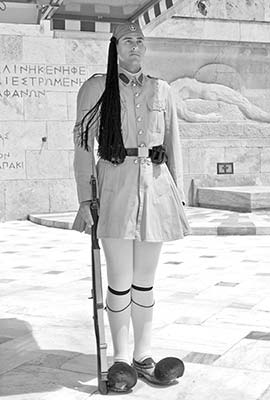
• Syntagma Square, Parliament, and the evzone at the Tomb of the Unknown Soldier, in Athens
• National Gallery and National Garden in Athens
• Patriotic paintings in the Nafplio Annex of the National Gallery
• Zappeion exhibition hall in Athens
• Athens’ Panathenaic Stadium (ancient stadium renovated for the first modern Olympics in 1896)
• Cathedral in Athens
• Museum of Greek Folk Art (17th-19th century) in Athens
• Corinth Canal
20TH CENTURY
Two world wars and the Greek Civil War caused great turmoil in Greece. During World War I, Greece remained uncommitted until the final years, when it joined the Allies (Britain, France, Italy, Russia, and the US) against Germany.
World War I scrambled the balance of power in the Balkans. Greece was given control of parts of western Turkey, where many ethnic Greeks lived. The Turks, having thrown out their Ottoman rulers, now rose up to evict the Greeks, sparking the Greco-Turkish War (1919-1922) and massacres on both sides. To settle the conflict, a million ethnic Greeks living in Turkish lands were shipped to Greece, while Greece sent hundreds of thousands of its ethnic Turks to Turkey. In 1923, hordes of desperate refugees poured into Athens, and the population doubled overnight. Many later immigrated to the US, Canada, and Australia. Today there are more than a million Greek Americans living in the US.
In World War II Greece sided firmly with the Allies, heroically repulsing Mussolini’s 1940 invasion. But Adolf Hitler finished the job, invading and occupying Greece for four brutal years of repression and hunger.

Making the situation worse, the Greek Resistance movement (battling the Nazis) was itself divided. It broke out into a full-fledged civil war (1944-1949) between Western-backed patriots and Marxist patriots.
World War II and the Greek Civil War left Greece with hundreds of thousands dead, desperately poor, and bitterly divided. Thanks to America’s Marshall Plan (and tourism), the economy recovered in the 1950s and ’60s, and Greece joined the NATO alliance. Along with modernization came some of Europe’s worst pollution, which eroded the ancient monuments.
Politically, Greece would remain split between the extreme right (the ruling monarchy, military, and the rich) and the extreme left (communists, students, and workers), without much room in the middle. The repressive royalist regime was backed heavily by the United States, which made Greece the first battleground in the Cold War (the Truman Doctrine). By the 1960s, when the rest of Europe was undergoing rapid social change, the Greek government was still trying to control its society with arrests and assassinations. When the royalists began losing control, a CIA-backed coup put the military in charge (1967-1974). They outlawed everything from long hair and miniskirts to Socrates and the theme song from Zorba the Greek (because its composer was accused of being a communist).
For Greece, 1974 was a watershed year. In the midst of political turmoil, Turkey invaded the Greek-friendly island of Cyprus (sparking yet more decades of bad blood between Turkey and Greece). The surprise attack caught the Greek military junta off guard, and they resigned in disgrace. A new government was elected with a new constitution. Guided by two strong (sometimes antagonistic) leaders—Andreas Papandreou and Constantine Karamanlis—Greece inched slowly from right-wing repression toward open democracy. Greece in the 1970s and ’80s would suffer more than its share of assassinations and terrorist acts. But the economy grew, and Greece joined the European Union (1981) and adopted the euro (2002).
20th-Century Sights
• National War Museum in Athens
• National Gallery in Athens
• Central Market in Athens
• Greek flag atop the Acropolis in Athens (reminder of resistance leaders who flew it there during the Nazi occupation in World War II)
GREECE TODAY
After adopting the euro, the Greek economy boomed. EU subsidies flowed in for major infrastructure projects, such as highways and high-speed rail. As host of the 2004 Summer Olympics, Athens cleaned up its city and installed a new airport and Metro. But the worldwide recession that started in 2008 hit Greece hard. Three bailouts from the EU and the International Monetary Fund kept Greece afloat but required severe economic reforms, sending the economy into recession and pushing the unemployment rate over 25 percent.
Financial markets and European leaders feared a Greek exit from the euro, which could have caused a breakup of the currency. In 2019, Kyriakos Mitsotakis—a center-right conservative heading the New Democracy party—became prime minister. He pledged to lower taxes, create jobs, reduce unemployment, and reenergize the economy. Following a couple of years of GDP growth and unemployment reduction under Mitsotakis, Greeks remain cautiously optimistic and are taking a wait-and-see approach as to whether these improvements will last.
Greece is seriously hampered by widespread governmental corruption and a bloated (indeed, “Byzantine”) bureaucratic system. Though recent administrations have had some success with attempts to combat the corruption, few Greeks are optimistic that the bureaucracy is headed toward efficiency.
Immigration is another hotly debated topic. The Greek people are divided over how the nation can and should accommodate the thousands of economic and political refugees who arrive here, both legally and illegally. This has bolstered support for far-right, brazenly racist extremists (about 92 percent of Greeks are citizens, while 8 percent are citizens of other countries, mainly Albania, Bulgaria, and Romania). Greeks also argue among themselves about the nation’s high military spending, the draft, and excessive privileges for the Greek Orthodox church (more than 95 percent of Greeks are Orthodox, the state religion; just over 1 percent are Muslim). Meanwhile, relations with Turkey—its next-door neighbor across the Aegean pond—remain strained.
Along with these issues, Greece is dealing with the aftermath of the Covid-19 pandemic. Tourism is on the rebound, but by no means is Greece out of the economic woods. Yet, considering that the Greek language and culture have survived for more than two millennia—despite being conquered by Romans, Turks, and Nazis—there’s good reason to feel confident that they’ll overcome the latest turmoil, too.
Greece Today Sights
• Ermou street pedestrian zone in Athens
• Renovated Monastiraki Square in Athens
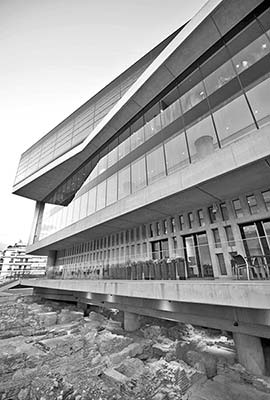
• Acropolis Museum in Athens
• Athens’ Metro and airport
• 2004 Olympic Games sights in Athens
• Athens’ Psyrri neighborhood
To learn more about Greek history, consider Europe 101: History and Art for the Traveler, by Rick Steves and Gene Openshaw (available at RickSteves.com).
Greek Language
Even though the Greek alphabet presents challenges to foreign visitors, communication is not hard. You’ll find that most people in the tourist industry—and almost all young people—speak fine English. Many signs and menus (especially in Athens and major tourist spots) use both the Greek and our more familiar Latin alphabet. Greeks realize that it’s unreasonable to expect visitors to learn Greek (which has only 14 million speakers worldwide). It’s essential for them to find a common language with the rest of the world—especially their European neighbors to the west—so they learn English early and well.
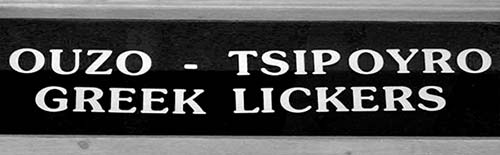
Of course, not everyone speaks English. You’ll run into the most substantial language barrier when traveling in rural areas and/or dealing with folks over 60, who are more likely to have learned French as a second language. Because signs and maps aren’t always transliterated into our alphabet (i.e., spelled out using a Latin-letter equivalent), a passing familiarity with the basics of the Greek alphabet is helpful for navigating—especially for drivers (see “Greek Alphabet,” below).
There are certain universal English words all Greeks know: hello, please, thank you, OK, pardon, stop, menu, problem, and no problem. While Greeks don’t expect you to be fluent in their tongue, they definitely appreciate it when you’re making an effort to pronounce Greek words correctly and use the local pleasantries.
It’s nice to learn “Hello” (“Gia sas,” pronounced “yah sahs”), “Please” (“Parakalo,” “pah-rah-kah-LOH”), and “Thank you” (“Efharisto,” “ehf-hah-ree-STOH”). Watch out for this tricky point: The Greek word for “yes” is ne (pronounced “neh”), which sounds a lot like “no” to us. What’s more, the word for “no” is ohi (pronounced “OH-hee”), which sounds enough like “OK” to be potentially confusing. For more Greek words, see the “Greek Survival Phrases” in the appendix.
Don’t be afraid to interact with locals. You’ll find that doors open a little more quickly when you know a few words of the language. Give it your best shot.
Greek Alphabet
Most visitors find the Greek alphabet daunting, if not indecipherable. At first, all the signs look like...well, Greek to us. However, Greek has more in common with English than may be immediately apparent. Technically the world’s oldest complete alphabet (Phoenician, its predecessor, had no vowel symbols), Greek is the parent of our own Latin alphabet—itself named for the first two Greek letters (alpha and beta). Because it’s used worldwide among mathematicians and scientists (not to mention frats and sororities), you may recognize some letters from your student days—but that doesn’t help much when you’re trying to read a map or a menu.
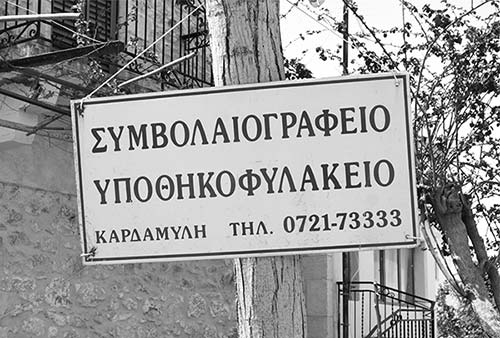
Fortunately, with a little effort the alphabet becomes a lot less baffling. Many uppercase Greek letters look just like their Latin counterparts (such as A, B, and M), and a few more look similar with a little imagination (Δ, Ξ, and Σ look a little like D, X, and S, if you squint). A few look nothing like anything in our alphabet, and a couple are particularly confusing (Greek’s P is our R, and Greek’s H is our I).
Getting comfortable with the lowercase letters is more challenging. Just like in our alphabet, most lowercase letters are similar to their uppercase versions, but a few bear no resemblance at all.
Once you’re familiar with the letters, it’s less of a challenge to learn how each is said. Nearly every letter (except P and H) is pronounced roughly like the Latin letter it most resembles. As for the handful of utterly unfamiliar characters, you’ll just have to memorize those.
Most Greek words have one acute accent that marks the stressed vowel (such as ά rather than α, έ rather than ε, ί rather than ι, ό rather than ο, and ύ rather than υ). These accents are worth paying attention to, as a change in emphasis can bring a change in meaning. Also, note the list of letter combinations below—pairs of letters that, when together, sound a little different than expected (similar to our own “th” or “ch” combinations).
Learn to recognize and pronounce each letter, and you’ll be able to sound out the words you see around you: Μάνη = M-a-n-i, Mani (the peninsula, pronounced MAH-nee). Greek is phonetic—it has rules of pronunciation, and it sticks to them. As you stroll the streets, practice reading aloud—you may be surprised how quickly you’ll be able to sound out words.
Certain Greek letter combinations create specific sounds. These include:
| Greek | Transliteration | Pronounced |
| AI αι | e | E as in get |
| AY αυ | av/af | AV as in have, or AF as in after |
| EI ει | i | I as in ski |
| EY ευ | ev/ef | EV as in never, or EF as in left |
| ΟI οι | i | I as in ski |
| OY ου | ou/u | OU as in you |
| ΓΓ γγ | ng | NG as in angle |
| ΓΚ γκ | ng/g | NG as in angle, or G as in go (at start of word) |
| MΠ µπ | mb/b | MB as in amber, or B as in bet (at start of word) |
| NΔ νδ | nd/nt/d | ND as in land, or D as in dog (at start of word) |
| TΣ τσ | ts | TS as in hats |
| TZ τζ | dz | DS as in lands, or DG as in judge |
Greek Place Names
One Greek word can be transliterated into English in many different ways. For example, the town of Nafplio may appear on a map or road sign as Navplio, Naufplio, or Nauvplio. Even more confusing, there are actually two different versions of Greek: proper Greek, which was used until the 1950s (and now sounds affected to most Greeks); and popular Greek, a simplified version that is the norm today. This means that even Greeks might use different names for the same thing (for example, the city names Nafplio and Patra are popular Greek, while Nafplion and Patras are formal Greek).
The following list includes the most common English spelling and pronunciation for Greek places. If the Greeks use their own differently spelled transliteration, it’s noted in parentheses.
Note that these are the pronunciations most commonly used in English. Greeks may put the emphasis on a different syllable—for example, English-speakers call the Olympics birthplace oh-LEEM-pee-ah, while Greeks say oh-leem-PEE-ah.