ORIENTATION TO ATHENS
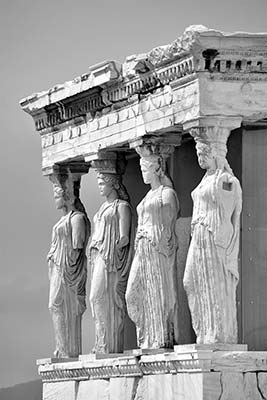
Though sprawling and congested, Athens has a compact, enjoyable core capped by the famous Acropolis—the world’s top ancient site. In this historic town, you’ll walk in the footsteps of the great minds that created democracy, philosophy, theater, and more...even as you’re dodging motorcycles on “pedestrianized” streets. Romantics can’t help but get goose bumps as they kick around the same pebbles that once stuck in Socrates’ sandals, with the floodlit Parthenon forever floating ethereally overhead.
Many tourists visit Athens without ever venturing beyond the Plaka (Old Town) and the ancient zone. With limited time, this is not a bad plan, as greater Athens offers few sights (other than the excellent National Archaeological Museum). But for a more authentic taste of the city, check out the trendy Psyrri district—right next door to the Plaka—with its dilapidated-chic hipster dining and nightlife scene.
Because of its prominent position on the tourist trail—and the irrepressible Greek spirit of hospitality—the city is user-friendly. It seems that virtually all Athenians speak English, major landmarks are well-signed, and most street signs are in both Greek and English.
ATHENS: A VERBAL MAP
Most of Athens is a noisy, polluted modern sprawl: characterless, poorly planned, and hastily erected concrete suburbs that house the area’s rapidly expanding population. The construction of the Metro and other infrastructure for the 2004 Olympics was, in many ways, the first time urban planners had ever attempted to tie the city together and treat it as a united entity.
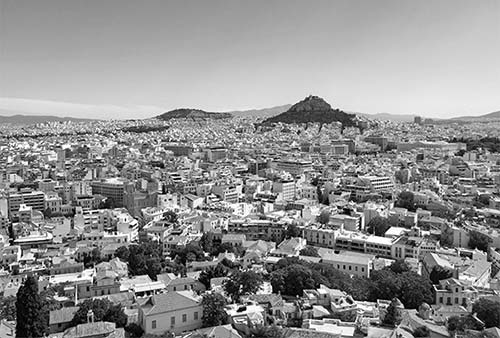
But most visitors barely see that part of Athens. Almost everything of importance to tourists is within a few blocks of the Acropolis, in the Plaka, Monastiraki, Syntagma, and Psyrri neighborhoods. As you explore this city-within-a-city on foot, you’ll realize just how small it is.
A good map is a necessity for enjoying Athens on foot. The free map you’ll find at hotels and the TI works great. Get a good map and use it.
Athens by Neighborhood
The Athens you’ll be spending your time in includes the following districts:
The Plaka (PLAH-kah, Πλάκα): This neighborhood at the foot of the Acropolis is the core of the tourist’s Athens. One of the only parts of town that’s atmospheric and Old World-feeling, it’s also the most crassly touristic. Its streets are lined with souvenir shops, tourist-oriented tavernas, a smattering of small museums, ancient Greek and Roman ruins, and pooped tourists. The Plaka’s narrow, winding streets can be confusing at first, but you can’t get too lost with a monument the size of the Acropolis looming overhead to keep you oriented. Think of the Plaka as Athens with training wheels for tourists. While some visitors enjoy the Plaka, others find it obnoxious.
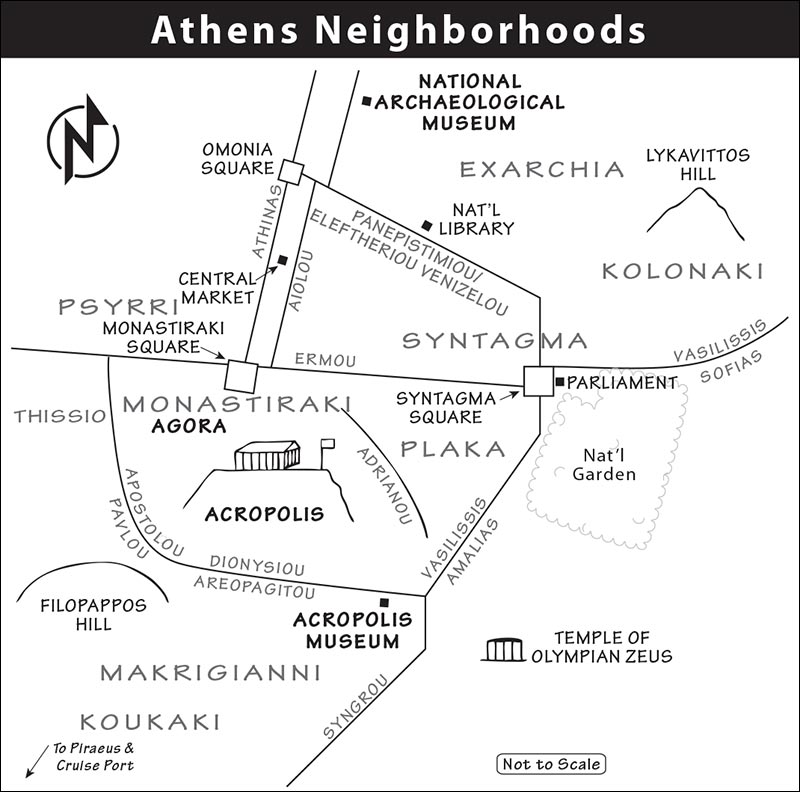
Monastiraki (moh-nah-stee-RAH-kee, Μοναστηρακι): This area (“Little Monastery”) borders the Plaka to the northwest, surrounding the square of the same name. It’s known for its handy Metro stop (where line 1/green meets line 3/blue), seedy flea market, and souvlaki stands. The Ancient Agora is nearby (roughly between Monastiraki and Thissio).
Psyrri (psee-REE, Ψυρρή): Just north of Monastiraki, once-dumpy Psyrri is now a thriving dining and nightlife district. Along its northern edge is the bustling Central Market. Don’t be put off by the crumbling, graffiti-slathered buildings of Psyrri...this is one of central Athens’ most appealing areas to explore, and for now, locals still outnumber tourists here.
Syntagma (SEEN-dag-mah, Συνταγµα): Centered on Athens’ main square, Syntagma (“Constitution”) Square, this urban-feeling zone melts into the Plaka to the south. While the Plaka is dominated by tourist shops, Syntagma is where local urbanites do their shopping. Syntagma is bounded to the east by the Parliament building and the vast National Garden.
Thissio (thee-SEE-oh, Θησείο): West of the Ancient Agora, Thissio is an upscale, local-feeling residential neighborhood with lots of outdoor cafés and restaurants. It’s easily accessible thanks to the handy “Acropolis Loop” pedestrian walkway bordering the base of the Acropolis.
Makrigianni (mah-kree-YAH-nee, Μακρυγιάννη) and Koukaki (koo-KAH-kee, Κουκάκι): Tucked just behind (south of) the Acropolis, these overlapping urban neighborhoods with characterless apartment blocks are so nondescript that many locals just call Makrigianni the “south Plaka.” If you want to escape the crowds of the Plaka, this area—with hotels and restaurants within easy walking distance of the ancient sites—makes a good home base.
Kolonaki (koh-loh-NAH-kee, Κολωνάκι): Just north and east of the Parliament/Syntagma Square, this upscale diplomatic quarter is home to several good museums, high-end shops, and a yuppie dining zone. It’s huddled under the tall, pointy Lykavittos Hill, which challenges the Acropolis for domination of the skyline.
Exarchia (ex-AR-hee-yah, Εξάρχεια): Just beyond Kolonaki is this graffiti-slathered, rough-and-funky student zone. A visit here is a fascinating but not-for-everyone glimpse into Athens counterculture.
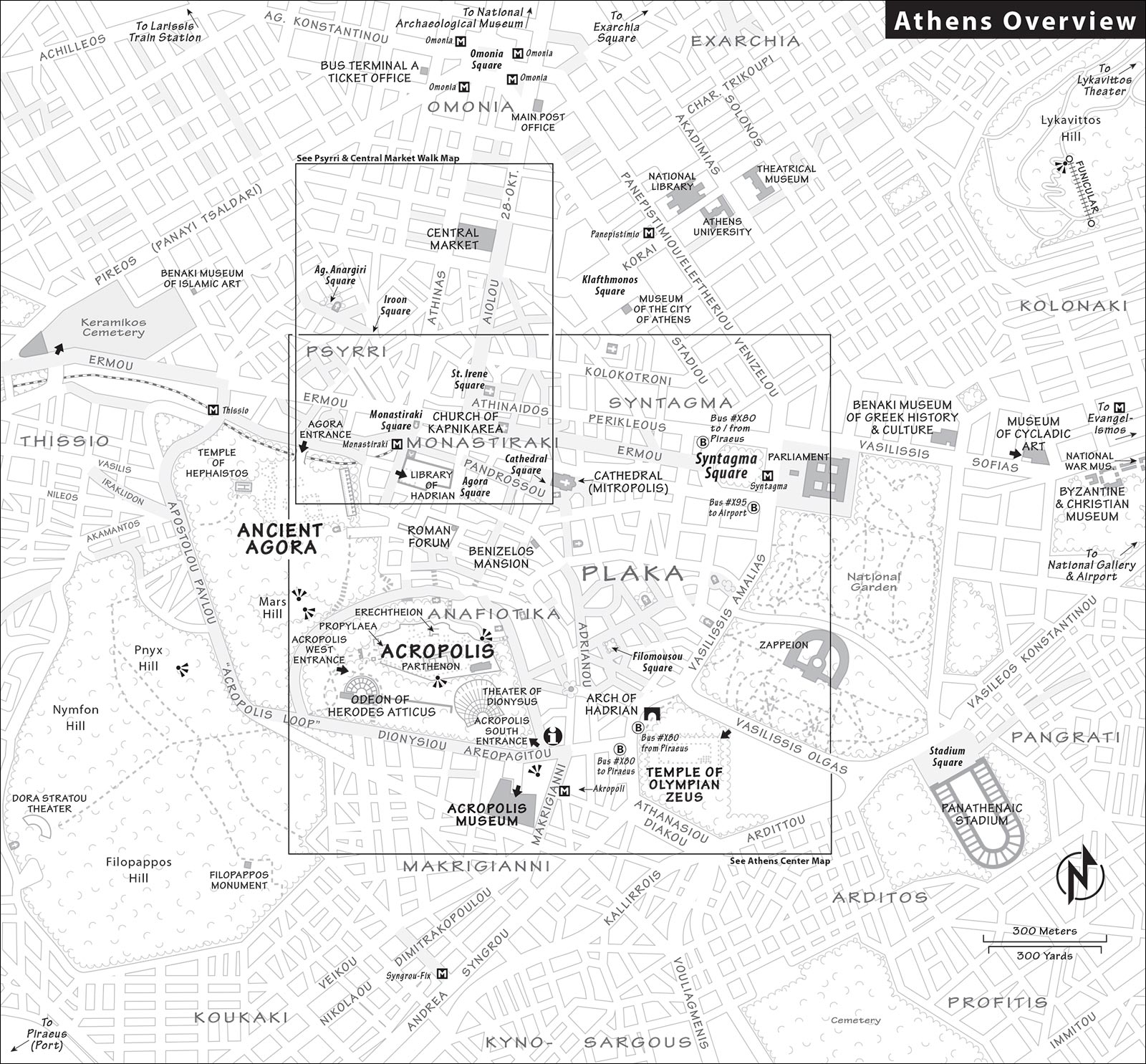
Major Streets: Various major streets define the tourist’s Athens. The base of the Acropolis is partially encircled by a broad traffic-free walkway, named Dionysiou Areopagitou (Διονυσίου Αρεοπαγίτου) to the south and Apostolou Pavlou (Αποστόλου Παύλου) to the west; for simplicity, I call these the “Acropolis Loop.” Touristy Adrianou street (Αδριανού) curves through the Plaka a few blocks away from the Acropolis’ base. Partly pedestrianized Ermou street (Ερµού) runs west from Syntagma Square, defining the Plaka, Monastiraki, and Thissio to the south and Psyrri to the north. Where Ermou meets Monastiraki, Athinas street (Αθηνάς) heads north to Omonia Square. Running parallel to Athinas, heading north to the Central Market area, Aiolou street (Αιóλου) is mostly traffic-free and lined with shops and affordable eateries; the trendy St. Irene/Agia Irini Square (Άγια Ειρήνη) marks its southern end.
The tourist zone is hemmed in on the east by a series of major highways: The north-south Vasilissis Amalias avenue (Βασιλίσσης Αµαλίας) runs between the National Garden and the Plaka/Syntagma area. To the south, it jogs around the Temple of Olympian Zeus and becomes Syngrou avenue (Συγγρού). To the north, at the Parliament, it forks: The eastward branch, Vasilissis Sofias (Βασιλίσσης Σοφίας), heads past some fine museums to Kolonaki; the northbound branch, Panepistimiou (usually signed by its official name, Eleftheriou Venizelou, Eλευθερίου Βενιζέλου), angles northwest past the library and university buildings to Omonia Square.
PLANNING YOUR TIME
Although Athens is a massive city, its main sights can be seen quickly. The top sights—the Acropolis, Ancient Agora, Acropolis Museum, and National Archaeological Museum—deserve about two hours apiece. Two days total is plenty of time for the casual tourist to see the city’s main attractions and have a little time left over for exploring (or to add more museums).
Day 1: In the morning, follow my Athens City Walk, then grab a souvlaki at Monastiraki. After lunch, as the crowds subside, visit the ancient biggies: First tour the Ancient Agora, then hike up to the Acropolis (confirm how late it’s open). Be the last person off the Acropolis. Stroll down the Dionysiou Areopagitou pedestrian boulevard, then promenade to dinner—in Thissio, Monastiraki, Psyrri, or the Plaka.
Day 2: Spend the morning visiting the Acropolis Museum and exploring the Plaka. For lunch, graze your way through my Psyrri and Central Market Walk. Then head to the National Archaeological Museum. Explore a different neighborhood for dinner.
Day 3: Museum lovers will want more time to visit other archaeological sites, museums, and galleries. The city has many “also-ran” museums that reward patient sightseers. I’d suggest heading toward Kolonaki to enjoy your choice of the Benaki Museum of Greek History and Culture, Museum of Cycladic Art, Byzantine and Christian Museum, or the National Gallery.
A third (or fourth) day could also be used for the long but satisfying side trip by bus to Delphi or a quick getaway by boat to the isle of Hydra. But these sights—and many others—are better as an overnight stop.
Overview
TOURIST INFORMATION
The Greek National Tourist Organization (EOT), with its main branch near the Acropolis Museum, covers Athens and the rest of the country. Although their advice can be hit-or-miss, it’s worth a stop to pick up their free city map and City Break booklet. They also have information on museums, entertainment options, bus and train connections, and a handy WC (Mon-Sat 8:00-21:00, Sun 9:00-18:00, shorter hours off-season; on pedestrian street leading to Acropolis Museum at Dionysiou Areopagitou 18, Metro: Akropoli; +30 210 331 0392, www.visitgreece.gr, info@visitgreece.gr).
Helpful Websites: A great resource for anyone visiting Greece is Matt Barrett’s Athens Survival Guide (www.athensguide.com). Matt, who splits his time between North Carolina and Greece, splashes through his adopted hometown like a kid in a wading pool, enthusiastically sharing his discoveries and observations on his generous website. While his practical information isn’t always the most up to date, his perspectives and advice are top-notch. Matt covers emerging neighborhoods that few visitors venture into, and offers offbeat angles on the city and recommendations for untouristy restaurants. He also blogs about his latest impressions of the city.
ARRIVAL IN ATHENS
For information on arriving in (or departing from) Athens by plane, boat, bus, train, or car, see the Athens Connections chapter.
GETTING AROUND ATHENS
The tourist core of Athens is surprisingly walkable. Many travelers—on a short visit and sleeping in the Plaka—find they don’t need to take public transit at all, once they’re settled into their hotel. For short rides in the center, it’s easy to flag down a yellow taxi (or hail one by using Uber). On a longer visit, it’s smart to get comfortable with public transportation, which is useful for reaching the National Archaeological Museum, the port of Piraeus, and the airport.
By Taxi
Athens is a great taxi town. Its yellow taxis are cheap and handy (€3.50 minimum charge covers most short rides in town; after that it’s about €1/km—tariff 1 on the meter, plus surcharges: €1.20 from Piraeus ports and train and bus stations, €4 from the airport—already included in airport flat rate). Between midnight and 5:00 in the morning or outside the city limits, prices are about 50 percent higher (tariff 2). Taxis have a fixed price of €38 from downtown to the airport.
Hotels and restaurants can call to order a taxi (“radio-taxi”), but there’s a €2-4 surcharge. Warning: Cabbies may try to cheat you with a higher surcharge. Hold firm.
A good option is to use Uber, which operates in Athens only as a taxi-hailing service. You book your ride through the app like normal, but a taxi picks you up. Using Uber here inoculates you from any taxi fare rip-offs: You’ll pay just the honest fare, and there’s no calling surcharge.
By Public Transportation
For information on all of Athens’ public transportation, see www.oasa.gr. Pick up a map locally, or refer to the “Athens Public Transportation” map at the back of this book. Beware of pickpockets when taking public transit.
Note that the tickets described next—except for the tourist ticket—do not cover journeys to the airport (see the Athens Connections chapter for information on getting to and from the airport).
Tickets: Athens’ buses, trams, and Metro use the same ticketing system. A basic ticket (€1.20) is good for 90 minutes on all public transit and covers transfers. The multiride passes are available as paper tickets with 2, 5, or 11 rides (appears as “10+1” on ticket machines). They offer a slight per-ride discount, and do not expire—but cannot be shared between people.
If planning more than three rides in a day, consider the 24-hour ticket (€4.10); for a longer visit using lots of public transit, you might get your money’s worth with a five-day ticket (€8.20).
If starting and finishing at the airport, consider the three-day tourist ticket (€20), which includes a round-trip airport transfer on the Metro or Express bus #X95 as well as unlimited in-city travel on all Metro lines, the suburban railway (Proastiakos), the tram, and the bus.
You can buy tickets at machines, staffed ticket windows (at some Metro stations), and some newsstands. When using the Metro, scan your ticket at the turnstile each time you start and end a journey. For buses, scan your ticket as you board. Those riding without a ticket (or with an unscanned ticket) are subject to stiff fines.
Metro
The Metro is the most straightforward way to get around Athens. Just look for signs with a blue M in a green circle. The Metro—mostly built, renovated, or expanded for the 2004 Olympics—is slick and user-friendly. Signs are in both Greek and English, as are announcements inside subway cars, and electronic reader boards on the platforms show which exits have escalators going up or down. Trains run every few minutes on weekdays, and slightly less frequently on weekends (5:30-24:00, later on Fri-Sat, www.stasy.gr).
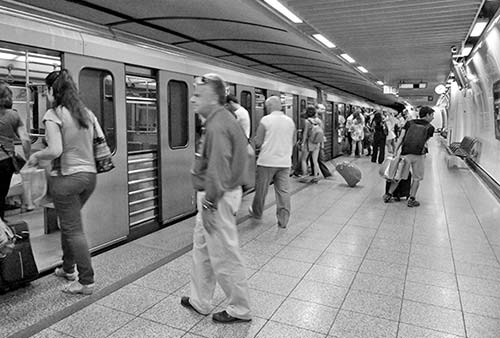
The Metro lines are color-coded and numbered. Use the end-of-the-line stops to figure out which direction you need to go.
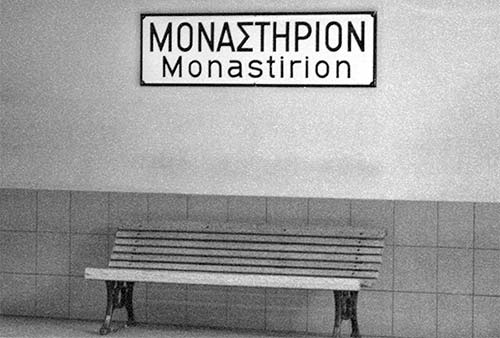
Line 1 (green) runs from the port of Piraeus in the southwest to Kifissia in the northern suburbs. Because this is an older line—officially called ISAP (Η.Σ.Α.Π.) or electrical train (elektrikos) rather than “Metro”—it is slower than the other two lines. Key stops include Piraeus (boats to the islands), Thissio (enjoyable neighborhood with good restaurants and nightlife), Monastiraki (city center), Omonia (15-minute walk from National Archaeological Museum), and Victoria (10-minute walk from National Archaeological Museum). You can transfer to line 2 at Omonia and to line 3 at Monastiraki (sometimes labeled “Monastirion”).
Line 2 (red) runs from Anthoupoli in the northwest to Helliniko (Elliniko) in the southeast. Important stops include Larissa Station (train station), Omonia (National Archaeological Museum), Syntagma (city center), Akropoli (Acropolis and Makrigianni/Koukaki hotel neighborhood), and Syngrou-Fix (Makrigianni/Koukaki hotels). Transfer to line 1 at Omonia and to line 3 at Syntagma.
Line 3 (blue)—probably the most useful for tourists—takes you from the port of Piraeus to the airport in 55 minutes. Important stops in between are Keramikos (near Keramikos Cemetery), Monastiraki (city center), Syntagma (city center), Evangelismos (Kolonaki neighborhood, with Byzantine and Christian Museum and National War Museum), and the airport (requires a separate ticket). Transfer to line 1 at Monastiraki and to line 2 at Syntagma.
Underground Bonus: Because so much of ancient Athens was unearthed while the Metro tunnels were dug, you’ll find displays from antiquity at many stations (especially at Akropoli, Syntagma, and Monastiraki). Stations without ancient treats to share do their best with modern art.
Bus
Public buses can help connect the dots between Metro stops, though the city center is so walkable that most visitors never ride one. In general, I’d avoid Athens’ slow and overcrowded buses (taxis and UberTaxi are cheap and easy), but there are a few exceptions: Buses #2, #4, #5, and #11 run from Syntagma north up the busy Eleftheriou Venizelou corridor, bearing right on 28 Oktovriou and stopping near the National Archaeological Museum (at the Polytechneio stop). From near Monastiraki (on Athinas street), bus #035 also gets you to the National Archaeological Museum. Express bus #X80 links the cruise terminals to Dionysiou Areopagitou (near the Acropolis Museum). Three special airport buses (€6 each) are also helpful: express bus #X95 to Syntagma Square, express bus #X96 to Piraeus, and express bus #X93 to both bus terminals (bus info: www.oasa.gr).
Tram
The Athens Coastal Tram is slow and essentially worthless to tourists. It starts at Syntagma and runs 18 miles through the neighborhoods of Neos Kosmos and Nea Smyrni, emerging at the sea near Paleo Faliro. From there it splits: One branch heads north, to the modern stadium and Olympic coastal complex in Neo Faliro (SEF/Σ.Ε.Φ.); the other runs south, past the marinas and beaches to the Voulas neighborhood (www.stasy.gr).
The city also has various suburban rail lines, but you’re unlikely to need them.
By Private Car with Driver
These companies offer tours from Athens and airport transfers for individuals and small groups as well as excursions from the cruise port: George’s Taxi, run by George Kokkotos and his sons, has a solid reputation (for 4 people or fewer, call Nikolas at +30 693 220 5887; for larger groups, call Billy at +30 697 443 0678; www.georgestaxi.com, info@georgestaxi.com). Tune In Tours car service, run by Christos Dorzioti, has cars and minivans in Athens and Olympia (+30 210 653 7209, mobile +30 697 320 1213, www.tuneintours.com, info@tuneintours.com). AthensTourTaxi is another good and reliable service (+30 697 025 8817, www.athenstourtaxi.com, atsathens@gmail.com; Konstantinos and his father, Panagiotis).
HELPFUL HINTS
Theft Alert: Be wary of pickpockets, especially in crowds. Avoid carrying a wallet in your back pocket, and hold purses or small day bags in front, particularly at the following locations: Monastiraki flea market, Central Market, changing of the guard at the Tomb of the Unknown Soldier, major public transit routes (such as the Metro between the city and Piraeus or the airport), at the port, and on the main streets through the Plaka.
Emergency Help: The Tourist Police have a 24-hour help line in English and other languages for emergencies (171 or 1571). Their office, east of the Central Market in Psyrri, is open 24 hours daily (Dragatsaniou 4, +30 210 322 2230).
Slippery Streets Alert: Athens (and other Greek towns) have marble-like streets and red pavement tiles that can be very slick, especially when it rains. Watch your step.
Check Open Hours Locally: Unexpected staffing shortages, budget cuts, and other circumstances can cause the hours for sights in Greece to change without much notice. I’ve listed the posted hours, but it’s smart to check locally for the most up-to-date information.
Free Sights: The National Garden and all of Athens’ churches have no entry fee. Sights and museums run by the state, including the Acropolis, are free on national holidays and on the first Sunday of the month in off-season (Nov-March).
Laundry: A full-service launderette in the heart of the Plaka will wash, dry, and fold your clothes (same-day service if you drop off by noon; Mon and Wed 8:00-17:00, Tue and Thu-Fri until 20:00, closed Sat-Sun; Apollonos 17, +30 210 323 2226). Easywash has self-service locations across the city (all open daily until midnight), including one in the Plaka (Vlachou Angelou 8, +30 697 860 4401, www.easywashathens.gr). For both locations, see the map on here. There’s also a self-service launderette in the Makrigianni neighborhood, close to the Acropolis Museum (daily 7:00-24:00, Veikou 3A—see map on here, +30 210 923 5811, www.athenslaunderette.gr).
Tours in Athens
 To sightsee on your own, download my series of free audio tours that illuminate some of Athens’ top sights and neighborhoods, including the Acropolis, the Agora, the National Archaeological Museum, and my Athens City Walk (see sidebar on here).
ON WHEELS
Bus Tours
Various companies offer half-day, bus-plus-walking tours of Athens that include a guided visit to the Acropolis (about €65). Longer tours also include a guided tour of the Acropolis Museum (about €80).
Some companies also offer a night city tour that finishes with dinner and folk dancing at a taverna (about €70) as well as longer excursions, such as a 90-mile round-trip afternoon drive down the coast to Cape Sounion and the Temple of Poseidon (€50, not worth the time if visiting ancient sites elsewhere in Greece) or a 100-mile round-trip journey to ancient Corinth (including the Corinth Canal; €65, 4-6 hours). These buses pick up passengers at various points around town and near most hotels.
The most established operations include the well-regarded Hop In (modern comfy buses, narration usually English only, +30 210 428 5500, www.hopin.gr), CHAT Tours (+30 210 607 2000, www.chat-tours.com), Key Tours (+30 210 923 3166, www.keytours.gr), and G.O. Tours (+30 210 921 9555, www.gotours.com.gr). It’s convenient to book tours through your hotel; most act as a booking agent for at least one tour company. While hotels do snare a commission, some offer discounts to their guests.
Athens and Beyond: Some companies also offer day-long tours to Delphi and to Mycenae, Nafplio, and Epidavros (either tour around €100 with lunch, €85 without), two-day tours to the monasteries of Meteora (from €200), and more. Tune In Tours offers day trips with smaller groups from Athens to the Peloponnese and mainland, as well as airport transfers and customized private tours of Athens (English-speaking drivers, reasonable rates, +30 697 320 1213, www.tuneintours.com, info@tuneintours.com; charming guides Christos and Niki).
Hop-On, Hop-Off Bus Tours
Several hop-on, hop-off bus companies offer 1.5-hour loops and 24-hour tickets for €16-25, including CitySightseeing Athens (red buses, www.citysightseeing.gr), Athens Open Tour (yellow buses, www.athensopentour.com), and the cheaper Open Top Bus (blue buses, www.sightsofathens.gr). The main stop is on Syntagma Square, though you can hop on and buy your ticket at any stop—look for signs around town. Because most of the major sights in Athens are within easy walking distance of the Plaka, I’d use this only if I wanted an overview of the city or had extra time to get to the outlying sights.
Tourist Trains
These goofy little trains can go where big buses can’t, and can be useful for people with limited mobility. The Athens Happy Train offers hop-on, hop-off privileges at a few strategic stops (€5, about 2/hour 9:00-23:00, 40-minute loop; catch it at the bottom of Syntagma Square or at Monastiraki Square; +30 698 991 9091, www.athenshappytrain.com).
ON FOOT
Walking Tours
Athens Walking Tours offers several walks, including just the Acropolis (€35, daily at 11:30, 1.5 hours), the Acropolis and City Tour (€47 plus entry fees, daily at 9:30, 3.5 hours), and their combo Acropolis, City Tour, and Acropolis Museum Tour (€67 plus entry fees, daily at 9:30, 5.5 hours). Reserve all tours in advance (+30 210 884 7269, mobile +30 694 585 9662, www.athenswalkingtours.gr, Despina). They also offer a food tour, wine-tasting tour, and cooking lesson with dinner.
Context Athens’ “intellectual by design” walking tours are geared for serious learners and led by “docents” (historians, architects, and academics) rather than by guides. They cover ancient sites and museums and offer themed walks with topics ranging from food to architecture to the Byzantine era (www.contexttravel.com/city/athens, info@contexttravel.com).
Alternative Athens delves into the Greek capital’s contemporary side, with a less strict focus on weighty history. They run excellent food tours, as well as walks focusing on street art, Greek designers, Athens’ neighborhoods, and Greek mythology (+30 211 012 6544, www.alternativeathens.com).
Food Tours
A good way to experience Greek culture is through its cuisine. Several companies offer culinary walking tours around Athens (see here for a rundown).
Local Guides
A good private guide can bring Athens’ sights to life. While there’s some variation, most charge around €55-60 per hour and have a 3-hour minimum (but will negotiate a lower rate for longer gigs). I’ve enjoyed working with each of these guides: Faye Georgiou (+30 697 768 5503, fayegeorgiou@yahoo.gr); Dora Mavrommati (+30 694 689 9300, mavrom.dor@gmail.com); Danae Kousouri (+30 697 353 3219, danaekousouri@gmail.com); Niki Vlachou (+30 697 242 6085, www.olympictours.gr, niki@olympictours.gr); Angelos Kokkaliaris (+30 697 412 7127, www.athenswalkingguide.com, angelo@athenswalkingguide.com); Anastasia Gaitanou (+30 694 446 3109, anastasia2570@yahoo.com); and Effie Perperi (+30 697 739 6659, effieperperi@gmail.com).