GREECE
Map: Greece’s Top Destinations
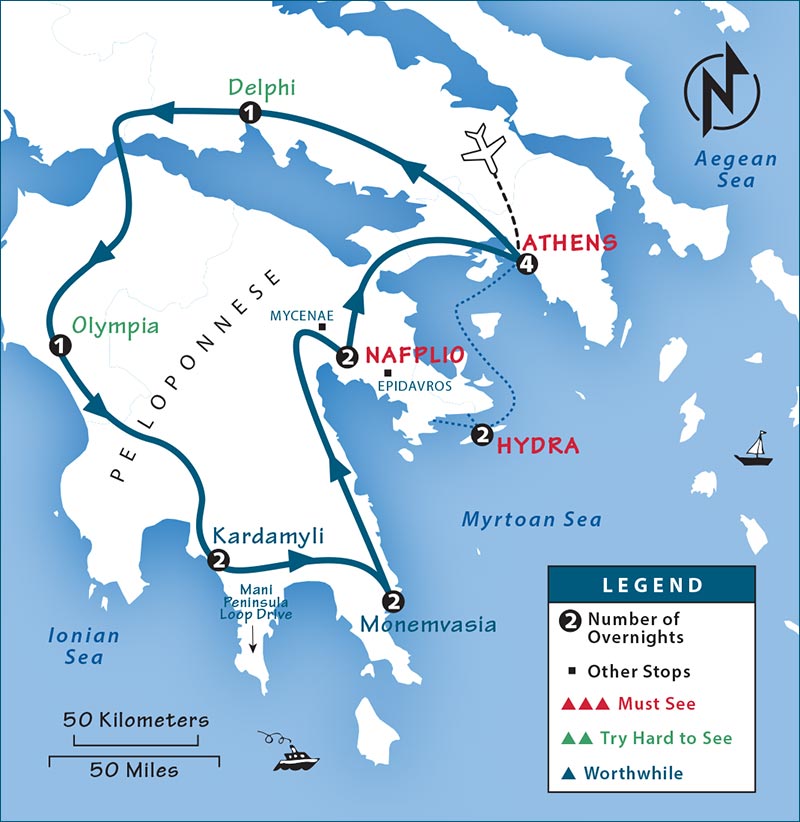
Map: Athens and the Peloponnese in Two Weeks by Car
Slip a coaster under that rickety table leg, take a sip of ouzo, and watch the sun dip into the sea. You’ve arrived in Greece.
Greece offers sunshine, whitewashed houses with bright-blue shutters, delicious food, and a relaxed lifestyle. And, as the cradle of Western civilization, it has some of the world’s greatest ancient monuments.
The ancient Greeks—who reached their golden age apex in Athens in the fifth century BC—have had an unmatched impact on European and American culture: democracy and mathematics, medicine and literature, theater and astronomy, mythology and philosophy. All of these—and more—were developed by a bunch of tunic-clad Greeks in a village huddled at the base of the Acropolis.
Today the capital of Athens is the teeming home of 3.75 million people—about one-third of the country’s population of 11 million. Athens is a fascinating mix of ancient ruins and an old center with modern upgrades—world-class museums, fun pedestrian zones ringing the Acropolis, fine public transport, and a state-of-the-art airport.
By day, tour the Acropolis, the Agora, and the history-packed museums. Light a candle alongside black-clad widows at an icon-filled church. Haggle with a sandal maker at a busy market stall, or have coffee with locals in an old town café. At night, join the pan-European party of eating, drinking, and dancing in open-air tavernas, especially in the colorful Thissio and rickety-chic Psyrri neighborhoods.
Athens is a great city to see, and worth a few days to explore. Centrally located, it’s also the perfect launchpad for farther-flung Greek destinations. Commune with ancient spirits at the center of the world: the oracle near the mountain hamlet of Delphi. Take a vacation from your busy vacation on one of the best and easiest-to-reach Greek islands, traffic-free Hydra. Other top isle getaways are the whitewashed village-island of Mykonos and the ridge-topping crescent of Santorini, cradling a volcano’s flooded crater.
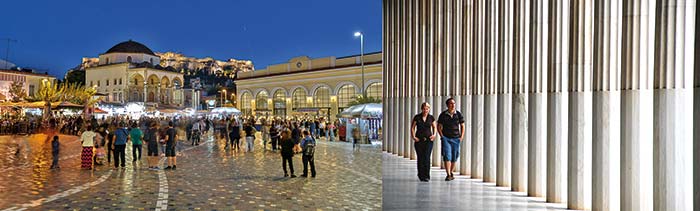
Athens’ market square—Monastiraki—with an Acropolis backdrop; a stroll through the Ancient Agora
An hour’s drive west of Athens, the peninsula known as the Peloponnese hangs from the rest of the Greek mainland by the narrow Isthmus of Corinth. This stark, mountainous landscape is dotted with the ruins of Mycenaean palaces, ancient temples, frescoed Byzantine churches, and medieval hilltop castles built by the Crusaders and the Venetians. At Mycenae, visit the hub of a civilization that dominated Greece from 1600 to 1200 BC. Hike up the stone rows of the world’s best-preserved ancient theater at Epidavros. Run a lap at Olympia, site of the first Olympic Games. To round things out, enjoy the stunning landscapes of the wild Mani Peninsula and the engaging old Venetian towns of Monemvasia (a fortified, village-topped giant rock hovering just offshore) and Nafplio (the first capital of independent Greece).
Greece is easy on travelers. Tourism makes up 20 percent of the country’s GDP, and the people are welcoming and accommodating. Greeks strive to demonstrate filotimo (“love of honor”), roughly translated as being open and friendly and doing the right thing. Social faux pas made by unwitting foreigners are easily overlooked by Greeks.
Greece’s friendly people, mouthwatering food and drink, and joyful music and folk dances meld into a lesson in good living for travelers.
When I’m in Greece, I eat as the Greeks do. Around 9 p.m., I head to a taverna and order a medley of meze plates (Greek tapas) to share family-style. The selection, while predictable, never gets old for me: garlic dip, fava bean dip, tzatziki dip (made from yogurt, cucumber, and mint), or all three on a single serving platter; fried eggplant or zucchini; Greek salad; and big grilled peppers—red or green—stuffed with feta cheese.
Most of my meals also include something from the sea, such as grilled calamari or octopus, sardines, or a plate of fried small fish (three inch), smaller fish (two inch), or very small fish (one inch). With three-inch fish, I leave the head and tail on the plate (and try not to wonder about the once inky, now dry black guts). With the smaller fish, I leave nothing but a line of greasy fingerprints on the fringe of my paper tablecloth.
In Athens, I enjoy visiting the Central Market, where many locals come to do their weekly grocery shopping. It’s a living, breathing, smelly barrage on all the senses. You’ll see dripping-fresh meat, livestock in all stages of dismemberment, and the still-wriggling catch of the day. The fruit and vegetable stalls, just outside the market, are flanked by shops selling feta from the barrel and countless varieties of olives.
My favorite stop at the market is an ouzo bar. These bars, in the middle of the fish market, offer a memorable setting for a drink and snack. And it’s cheap. About €3 gets you an ouzo (anise-flavored liquor) and a little meze plate to enjoy at the bar while taking in the action.
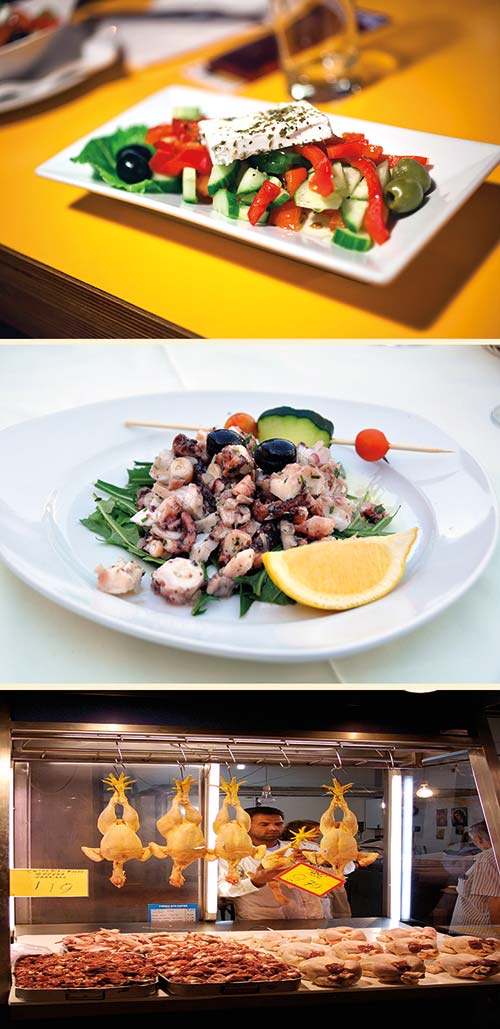
The quintessential Greek salad; succulent octopus salad; fresh chickens winging it at Central Market
As you wander about, you’ll often hear Greek music playing—it’s best when it’s live. In many towns on weekend summer evenings, you’re likely to come across musicians sitting around an outdoor table playing traditional folk music on their bouzouki (a long-necked mandolin). When the weather cools down, they move inside to tavernas to entertain the late-night crowds.
Greeks love to dance, especially when celebrating events like weddings and baptisms, but any good music is reason enough. Popular dances include the graceful kalamatianos circle dance and the syrtaki, done with arms outstretched or thrown across one another’s shoulders as immortalized by Anthony Quinn in the film Zorba the Greek. A few dancers might get carried away, “applaud” by throwing plates or flowers, and then dance on the tables into the wee hours.
Greeks tend to show hospitality with drinks—often ouzo. You don’t drink ouzo straight; instead, you add ice or water, which turns the ouzo from clear to milky white. When Greeks really want to show hospitality, the drink is tsipouro. Like Italian grappa, this brandy-like firewater is about 40 percent alcohol and makes ouzo seem like kid stuff. The last time I had it, I had a hard time holding my camera steady as I took “going local” to a very tasty extreme.
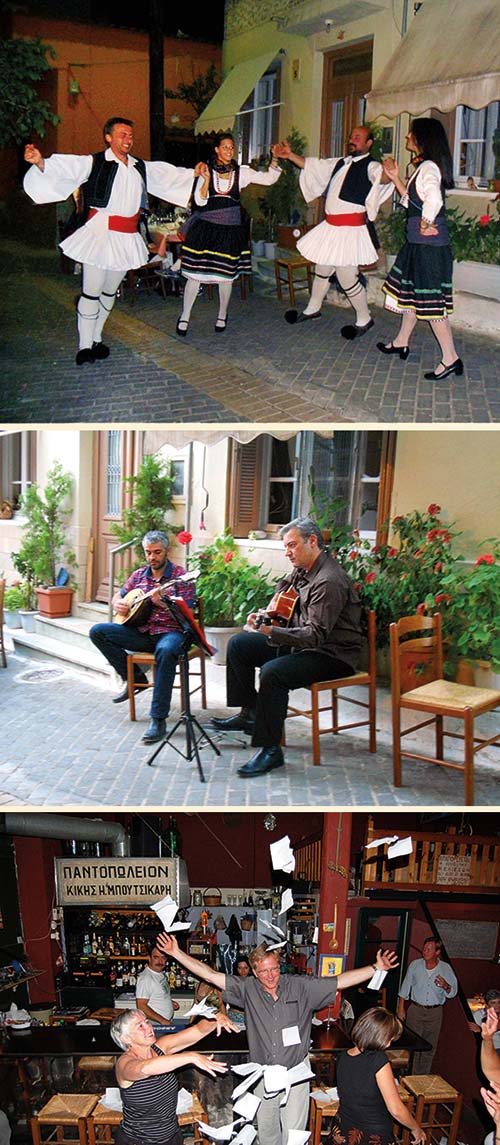
Dancers in traditional garb; folk music in Nafplio; embracing the Greek way of life—opa!
But that’s part of the appeal of this place. When in Greece, sometimes it’s best to put down the camera, ditch the plans, and join in the fun.
You’ll find two Greeces: traditional/old/rural and modern/young/urban. In the countryside, you’ll see men on donkeys, women wearing headscarves, and families harvesting olives by hand. In bigger cities like Athens, it’s a concrete world of honking horns and buzzing mobile phones. Well-dressed, educated Greeks listen to hip-hop music and Instagram their vacations. As the rural exodus continues, cities are now home to a majority of Greeks.
Despite modern changes, many Greek men and women play traditional roles. Women generally run the home; fewer women join the workforce than in other European countries. Men like to hang out at coffee shops, playing backgammon, watching sports on TV, and arguing over politics.
The Greek Orthodox Church—a rallying point for Greeks during centuries of foreign occupation—remains part of everyday life. Ninety-five percent of all Greeks declare themselves Orthodox, even if they rarely go to church.
Orthodox elements appear everywhere. Icon shrines dot the highways. Orthodox priests—with their Old Testament beards, black robes, cake-shaped hats, and families in tow—mingle with parishioners on street corners. Greeks routinely pop into churches to light a candle, asking for favors. Even the young celebrate feast days with their families and make the sign of the cross when passing a church.
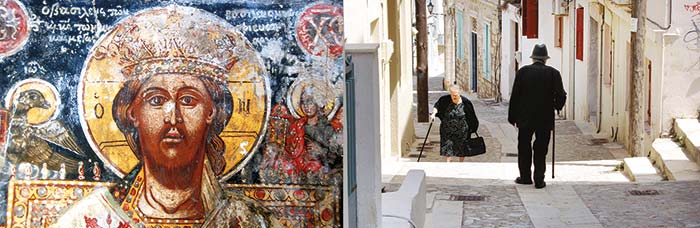
Timeless Greece: Jesus in a Greek Orthodox church, locals in black in a whitewashed town
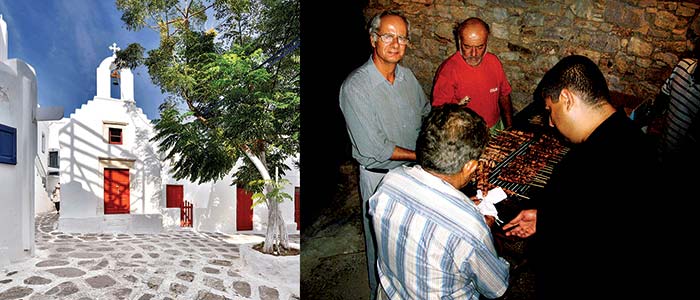
The appealing town and island of Mykonos; grilling souvlaki for a feast-day celebration
Greeks are family-oriented, with large extended families. Kids live at home until they’re married, and then they might just move into a flat upstairs in the same apartment building. The “family” extends to the large diaspora of emigrants. Three million Greek-Americans (including George Stephanopoulos, Pete Sampras, and Tina Fey) keep ties to the home country through their Orthodox faith and their festive celebratory traditions.
On warm summer nights, families spill into the streets to greet their neighbors on the evening stroll. For entertainment, they go out to eat, where they order large amounts and share it family-style. And when the music plays, it’s time to dance.
Culturally rich, Greece has given the world the Olympic Games, tall tales of gods (such as Zeus, Apollo, and Aphrodite), and exciting heroes (Achilles, Odysseus, and Hercules). From Socrates to souvlaki, Greece has a classical past and a hang-loose present.
It’s easy to surrender to the Greek way of living. With its long history, incomparable sights, and simple lifestyle, Greece has a timeless appeal.
Greece’s Top Destinations
Opa! Over its 3,000 years of history, Greece has created more sights than you have time to see. To help you plan your trip, this overview categorizes the country’s top destinations into must-see places (for everyone) and worth-it places (for those with extra time or special interests). I’ve also suggested a minimum number of days to allow per destination.
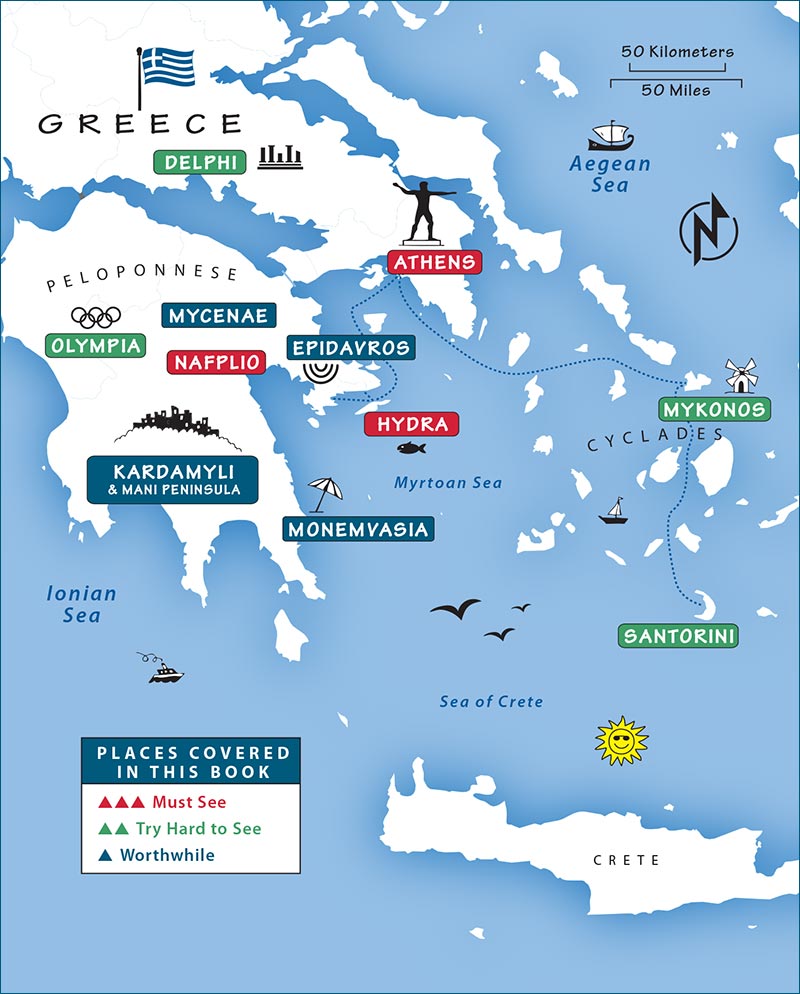
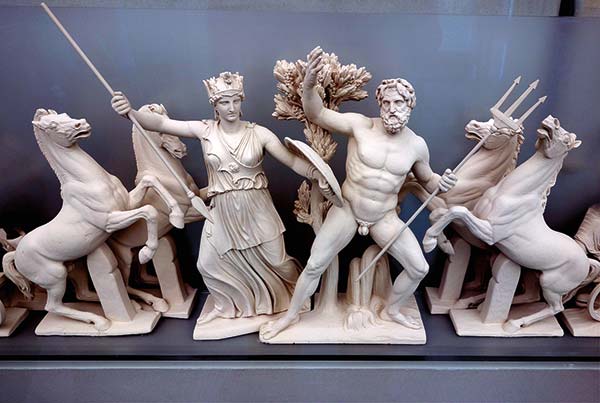
MUST-SEE DESTINATIONS
These three places—Greece’s bustling capital, a pleasant port town, and a sleepy island—give you the essential Greek experience in an easy-to-manage package.
▲▲▲Athens (allow 2-3 days)
Greece’s capital features the ancient world’s most magnificent sight—the Parthenon atop the Acropolis hill—plus excellent museums (Acropolis and Archaeological), the Ancient Agora, an atmospheric old town, the lively Central Market, and funky neighborhoods bursting with avant-garde nightlife.
▲▲▲Nafplio (2 days, including day trips)
Strategic Nafplio, on the Peloponnese, was Greece’s first capital. Today it’s just a cozy port with an elegant old town, energetic street life, and a cliff-topping fortress offering dramatic sea-and-mountain views. A good home base, it’s handy to the ancient sites of Mycenae and Epidavros.
▲▲▲Hydra (2 days)
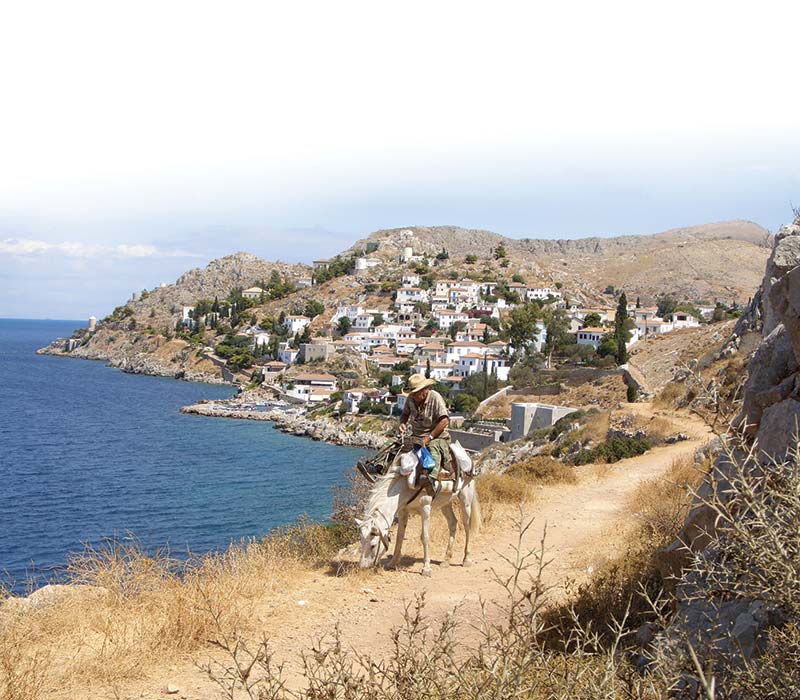
The small island of Hydra—an idyllic and relaxing getaway—is an easy ferry ride from Athens or the Peloponnese. Hydra has a picturesque harbor, casual beaches, and enticing coastal trails. It’s wonderfully traffic-free, unless you count the donkeys.
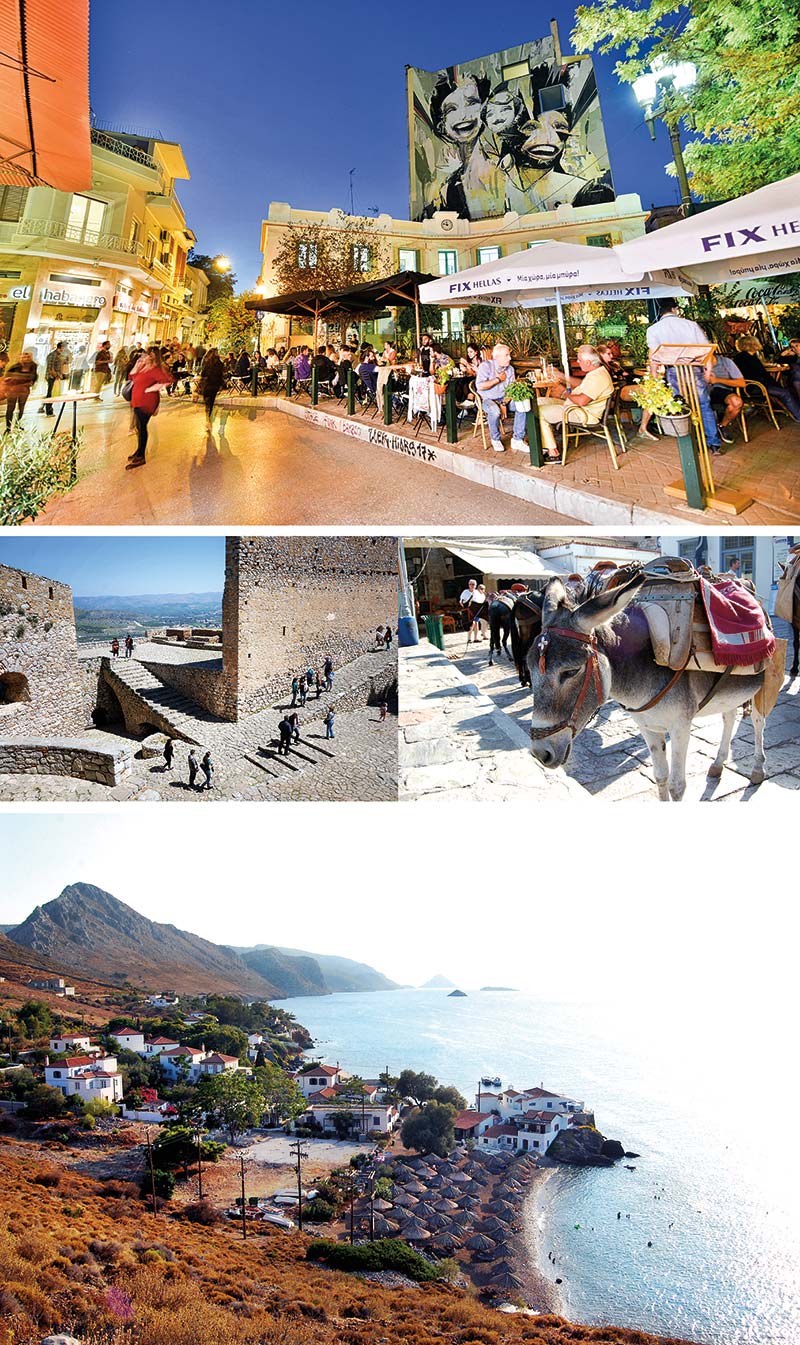
Evening fun in Athens’ Psyrri neighborhood; burro on the traffic-free island of Hydra; one of the island’s beaches; hilltop castle in Nafplio
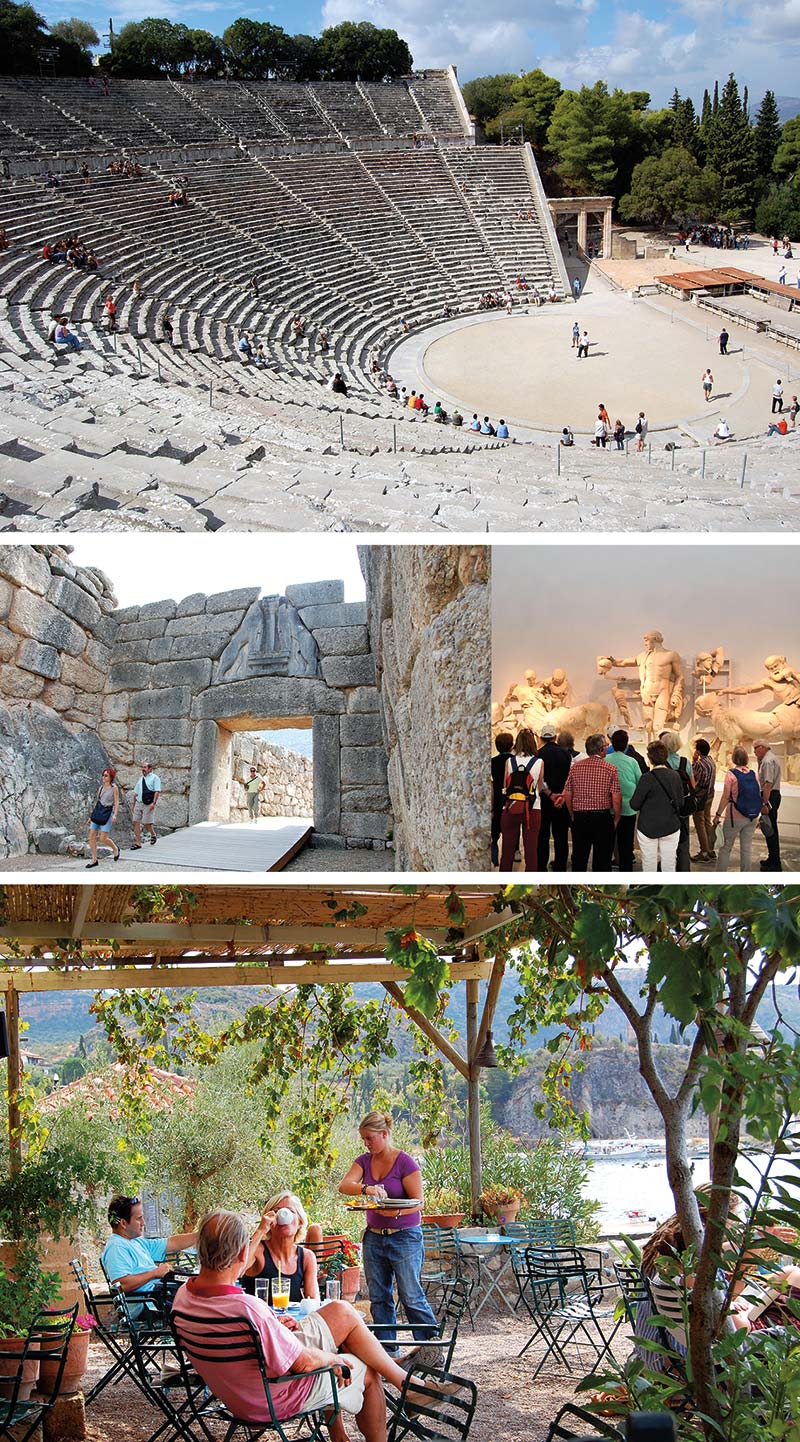
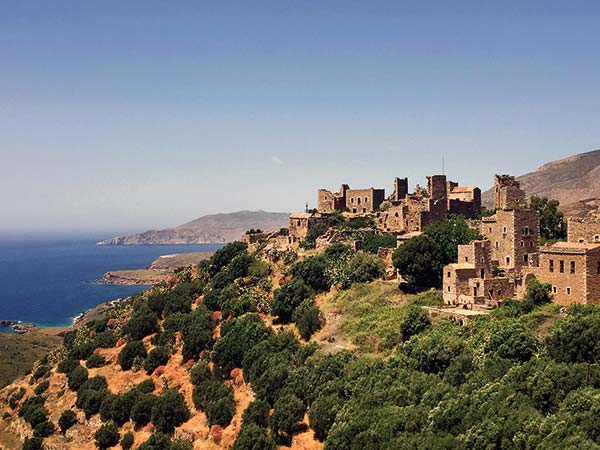
(Clockwise from top) Ancient Epidavros theater; statuary from Olympia; refreshing Kardamyli; Lion Gate in Mycenae; (opposite) ghost town on the Mani Peninsula
WORTH-IT DESTINATIONS
You can weave any of these destinations—rated ▲ or ▲▲—into your itinerary. It’s easy to add some destinations based on proximity (if you’re going to Nafplio, Epidavros is nearly next-door), but some out-of-the-way places can merit the journey, depending on your time and interests.
▲Epidavros (half-day)
At 2,300 years old, this is the best-preserved theater of the ancient world, with unbelievable acoustics. Open to sightseers by day, it’s used for performances on summer weekend nights.
▲Mycenae (half-day)
Long before Athens’ golden age (450-400 BC), the mighty Mycenaeans built this now-ruined mountaintop fortress, dating from roughly 1300 BC. The grand Lion Gate and massive beehive tomb impressed even the golden-age Greeks and still wow tourists today.
▲▲Olympia (1 day)
Birthplace of the Olympic Games, this famous site has evocative temple ruins, a still-functional stadium (and original starting line), an intimate museum of ancient masterpieces, and a town nearby.
▲Kardamyli (1 day)
The cozy, unspoiled beach town is a fun hangout and a good jumping-off point for the Mani Peninsula. Stroll the town, pop into food shops, relax on the pebbly beach, and hike up to old fortifications.
▲Mani Peninsula (1 day)
Easiest for drivers, this remote, rustic region has seaside villages, eerie ghost towns, Byzantine churches, spectacular caves (Pyrgos Dirou), stark ridges, and jagged coastlines.
▲Monemvasia (1 day)
An old fortress town, dating from Venetian and Byzantine times, caps a gigantic rock peninsula jutting out into the sea. The modern town on the mainland offers million-dollar views of the monolith.
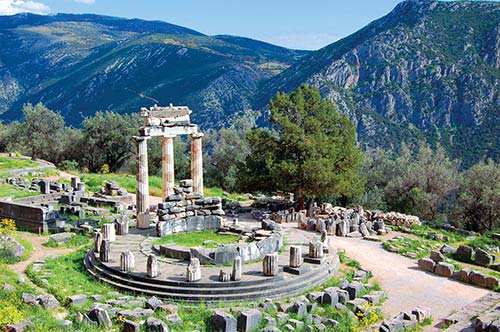
▲▲Delphi (1 day)
These dramatic mountainside ruins, near the town of Delphi, are draped with the Sanctuary of Apollo, where ancients came to consult the oracle. A great museum displays statues and treasures found on-site.
▲▲Mykonos (1-2 days)
This quintessential, popular island has a postcard-perfect whitewashed village, old-time windmills, and pulsating nightlife. Temple ruins on nearby Delos, reachable by ferry, mark the fabled birthplace of Apollo and Artemis.
▲▲Santorini (1-2 days)
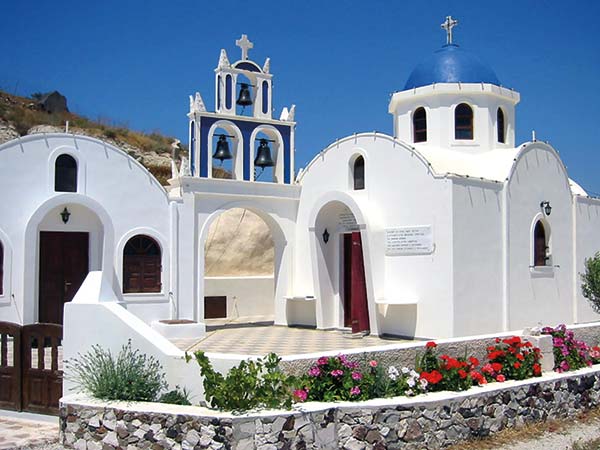
This stunningly situated, romantic island—actually the lip of a volcano’s flooded crater—is renowned for cliff-clinging white villages, blue-domed churches, volcanic-sand beaches, and spectacular sunsets.
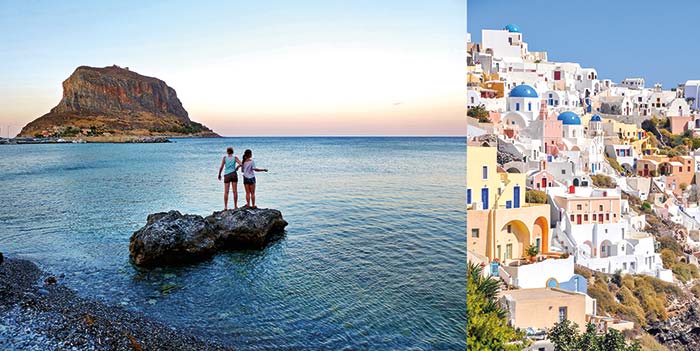
Rocky Monemvasia looming at twilight; a Santorini village spilling down the hill
Planning Your Trip
To plan your trip, you’ll need to design your itinerary—choosing where and when to go, how you’ll travel, and how many days to spend at each destination. For my best general advice on sightseeing, accommodations, restaurants, and more, see the Practicalities chapter.
DESIGNING AN ITINERARY
As you read this book and learn your options…
Choose your top destinations.
My recommended itinerary (see here) gives you an idea of how much you can reasonably see in two weeks, but you can adapt it to fit your own interests and time frame.
Athens has the country’s best museums, ancient sites, shopping, and nightlife.
Drivers enjoy road-tripping, especially on the wide-open Peloponnese, which offers tempting sights without crowds—the monolithic Monemvasia, the beach village of Kardamyli, the remote Mani Peninsula—and wherever you go, ancient ruins are nearby. Explorers may want to linger.
Historians zero in on the ancient sites—the best are in Athens, Delphi, Epidavros, Mycenae, and Olympia. Hikers and nature lovers make tracks for the Peloponnese destinations of Nafplio, Kardamyli, and Monemvasia, and the islands of Hydra and Santorini. Nearly every hike in Greece comes with grand panoramic views.
If basking appeals, unroll your towel on one of the islands. Little, low-key Hydra is easy to reach and enjoy. Picturesque Mykonos offers more nightlife and a quick ferry to ancient Delos. Santorini has the best mix of beaches, sights, and stunning natural scenery. Photographers want to go everywhere.
Outside of Athens, this region is best visited by car. If you’d rather get around by bus, you’ll see less in the same amount of time (or you can add more days to your itinerary to see it all)—see here.
| Day | Plan | Sleep |
| 1 | Arrive in Athens | Athens |
| 2 | Sightsee Athens | Athens |
| 3 | More time in Athens | Athens |
| 4 | Boat to Hydra | Hydra |
| 5 | Relax on Hydra | Hydra |
| 6 | Boat back to Athens, pick up rental car, drive to Delphi | Delphi |
| 7 | Sightsee Delphi, drive to Olympia | Olympia |
| 8 | Sightsee Olympia, drive to Kardamyli | Kardamyli |
| 9 | Relax in Kardamyli | Kardamyli |
| 10 | Mani Peninsula loop drive, on to Monemvasia | Monemvasia |
| 11 | Sightsee Monemvasia | Monemvasia |
| 12 | See Mycenae en route to Nafplio | Nafplio |
| 13 | Nafplio, side-trip to Epidavros | Nafplio |
| 14 | Return to Athens, drop off rental car | Athens |
| 15 | Fly home, or continue to Mykonos and/or Santorini by plane or boat |
Decide when to go.
Tourist season is roughly Easter through October. Peak season is summer, when Athens is packed with tourists, and hotel prices can be high. July and August are the hottest.
The best time to visit is late spring (May) and fall (Sept-Oct). It’s pleasant, with comfortable weather, no rain, and smaller crowds (except during holiday weekends).
Winter (late Oct through mid-March) is colder, with some rainfall. Sights may close during lunch, TI offices keep shorter hours, and some tourist activities vanish altogether. Hotel rates are soft; look for bargains. Avoid the islands in winter, when many hotels and restaurants close, and bad weather can delay or cancel ferries.
For weather specifics, see the climate chart in the appendix.
Connect the dots.
Link your destinations into a logical route. Determine which cities you’ll fly into and out of. Begin your search for transatlantic flights at Kayak.com.
Decide if you’ll travel by car or bus (Greece lacks a a robust rail system). A car is great for exploring the mainland and the Peloponnese, but is useless in Athens (rent when leaving Athens). Outside of Athens, buses get you to popular destinations such as Delphi, but can be sparse and frustrating elsewhere. If you travel by bus, allow extra time.
To determine approximate travel times between destinations, study the driving map in the Practicalities chapter or check Google Maps. To connect Athens and the Greek islands, take a ferry or a flight.
Write out a day-by-day itinerary.
Figure out how many destinations you can comfortably fit in your time frame. Don’t overdo it—few travelers wish they’d hurried more. Allow enough days per stop (see estimates in “Greece’s Top Destinations,” earlier). Minimize one-night stands. It can be worth taking an afternoon drive or bus ride to settle into a town for two consecutive nights—and gain a full uninterrupted day for sightseeing. Include sufficient time for transportation; whether you travel by bus or car, it’ll take you at least a half-day to get between most destinations.
To get over jet lag, consider starting your trip in a more laid-back destination, such as Hydra or the other islands, before tackling Athens.
Check if any holidays or festivals fall during your trip—these attract crowds and can close sights (for the latest, visit Greece’s tourist website, www.visitgreece.gr).
Give yourself some slack. Every trip, and every traveler, needs downtime for doing laundry, picnic shopping, people-watching, and so on. Pace yourself. Assume you will return.
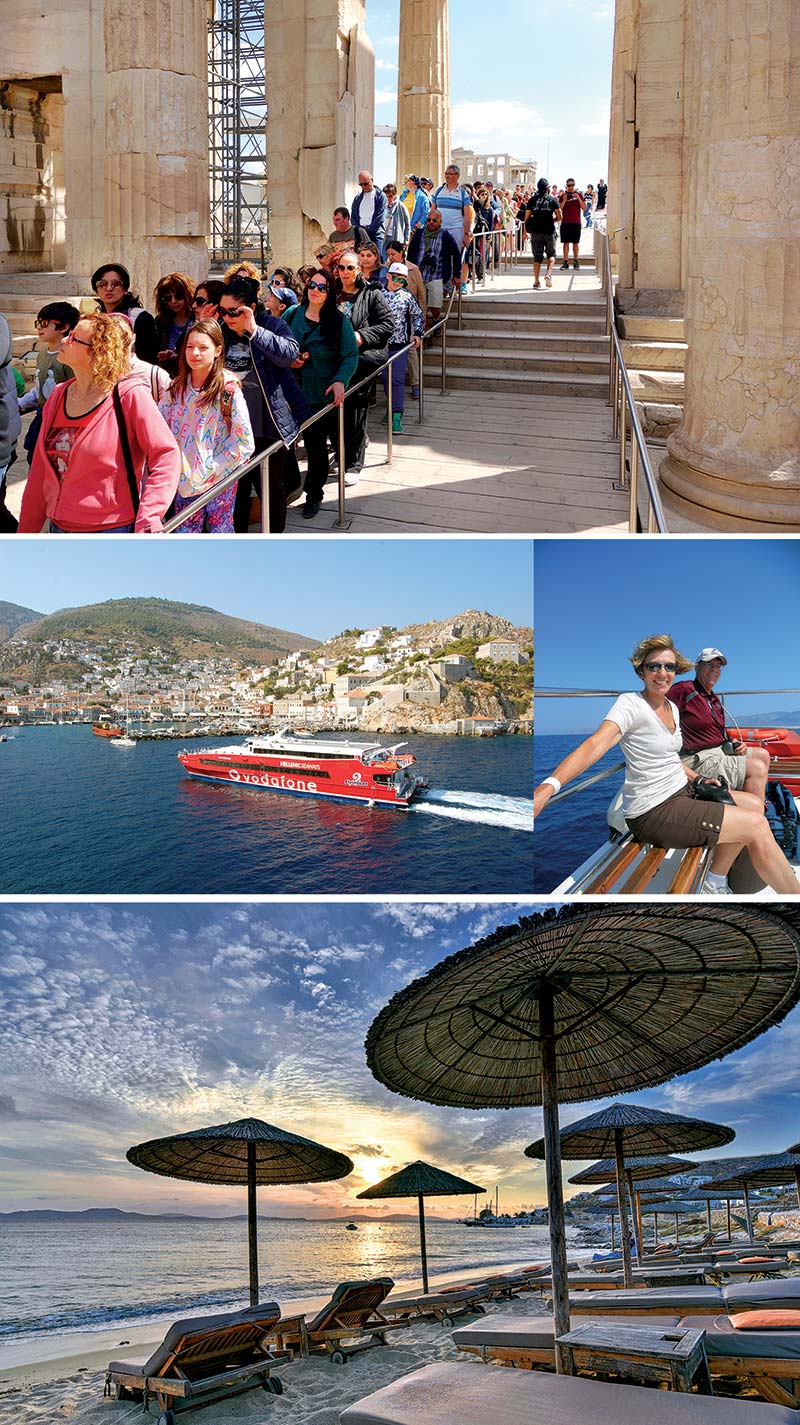
Crowds leaving the Acropolis in late afternoon—a smart time to visit; arriving at the island of Hydra; beach sunset on Mykonos; Hydra ferry
Run a reality check on your dream trip. You’ll have major transportation costs in addition to daily expenses.
Flight: A round-trip flight from the US to Athens costs about $900-1,500, depending on where you fly from and when.
Public Transportation: For a two-week trip, figure on per-person costs of $150 by public transit (boat to Hydra, bus to everything else).
Car Rental: Allow roughly $350-500 per week (booked well in advance), not including tolls, gas, parking, and insurance. If you need the car for three weeks or more, leasing can be cheaper.
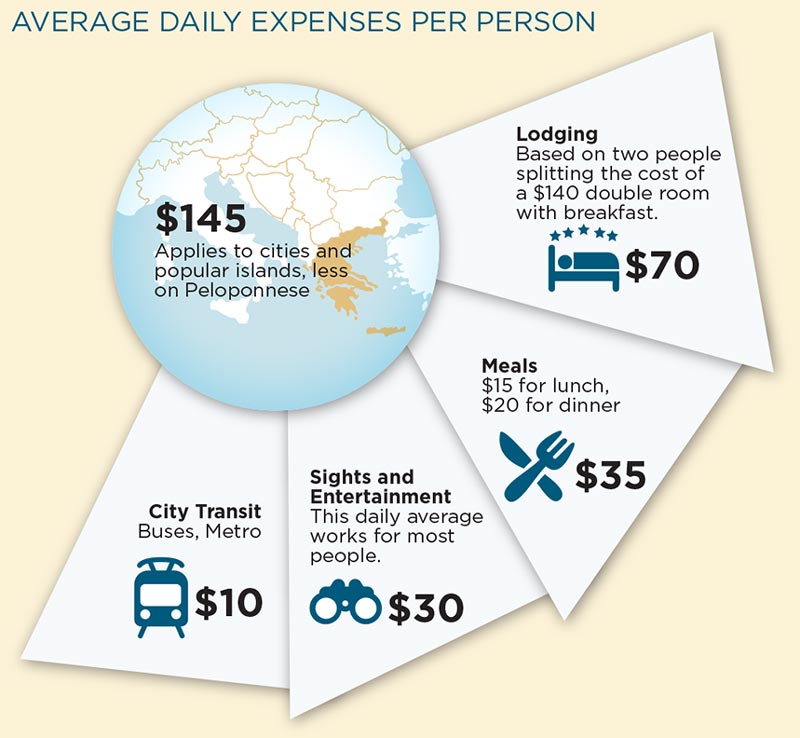
To cut your daily expenses, take advantage of the deals you’ll find throughout Greece and mentioned in this book.
In Athens, you’ll save money buying the Acropolis combo-ticket, which covers a number of ancient sites (buy at a less-crowded site to save time). City transit passes (for multiple rides or all-day usage) decrease your cost per ride.
Some businesses—especially hotels—offer discounts to my readers (look for the RS% symbol in the listings in this book).
Reserve your rooms directly with the hotel. Some hotels offer a discount if you pay in cash and/or stay three or more nights (check online or ask).
Rooms can cost less outside of tourist season (Easter-October). And even seniors can sleep cheaply in hostels (most have private rooms) for about $30 per person. Or check Airbnb-type sites for deals.
It’s no hardship to eat inexpensively in Greece. You can get tasty, affordable meals at souvlaki stands, Greek fast-food shops, tavernas, cafeterias, and bakeries that sell sandwiches. Cultivate the art of picnicking in atmospheric settings.
When you splurge, choose an experience you’ll always remember, such as a walking tour, a food tour, or even a private tour with a guide who introduces you to a city or ancient site. Minimize souvenir shopping; focus instead on collecting wonderful memories.
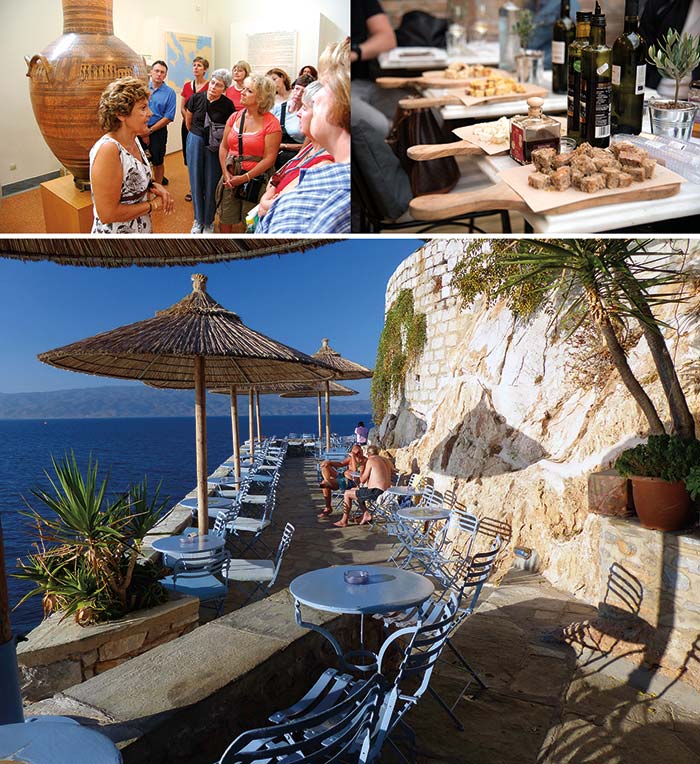
Guide at an Athens museum; tasty samples at a Central Market shop; inviting view bar in Hydra
BEFORE YOU GO
You’ll have a smoother trip if you tackle a few things ahead of time. For more details on these topics, see the Practicalities chapter and RickSteves.com, which has helpful travel-tip articles and videos.
Make sure your travel documents are valid. If your passport is due to expire within six months of your ticketed date of return, you need to renew it. Allow six weeks or more to renew or get a passport (www.travel.state.gov). Check for current Covid entry requirements, such as proof of vaccination or a negative Covid-19 test result.
Arrange your transportation. Book your international flights. Overall, Kayak.com is the best place to start searching for flights. Figure out your transportation options: It’s worth thinking about renting a car, buying boat tickets online, or booking flights to the islands. (You can wing it once you’re there, but tickets may cost more or be sold out.) Drivers: Consider bringing an International Driving Permit (sold at AAA offices in the US, www.aaa.com) along with your license.
Book rooms well in advance, especially if your trip falls during peak season or any major holidays or festivals, or if you’re hoping to land a particular hotel on Mykonos or Santorini, where perennial visitors often book their favorite rooms months ahead.
Hire local guides in advance. Reserve ahead by email; popular guides can get booked up.
Consider travel insurance. Compare the cost of insurance to the cost of your potential loss. Check whether your existing insurance (health, homeowners, or renters) covers you and your possessions overseas.
Call your bank. Alert your bank that you’ll be using your debit and credit cards in Europe. Ask about transaction fees, and, if you don’t already have one, get a “contactless” credit card (request your card PIN too). You don’t need to bring euros for your trip; you can withdraw euros from cash machines in Europe.
Use your smartphone smartly. Sign up for an international service plan to reduce your costs, or rely on Wi-Fi in Europe instead. Download any apps you’ll want on the road, such as maps, translators, transit schedules, and Rick Steves Audio Europe (see sidebar).
Pack light. You’ll walk with your luggage more than you think. I travel for weeks with a single carry-on bag and a day pack. Use the packing checklist in the appendix as a guide.
Travel smarter with these free, fun resources:
Rick Steves Classroom Europe, a powerful tool for teachers, is also useful for travelers. This video library contains about 500 short clips excerpted from my public television series. Enjoy these videos as you sort through options for your trip and to better understand what you’ll see in Europe. Check it out at Classroom.RickSteves.com (just enter a topic to find everything I’ve filmed on a subject).

Rick Steves Audio Europe, a free app, makes it easy to download my audio tours and listen to them offline as you travel. For this book (look for the  ), these audio tours include my Athens City Walk and tours of the Acropolis, Ancient Agora, and National Archaeological Museum. The app also offers interviews (organized by country) from my public radio show with experts from Europe and around the globe. Find it in your app store or at RickSteves.com/AudioEurope.

Travel Smart
If you have a positive attitude, equip yourself with good information (this book), and expect to travel smart, you will.
Read—and reread—this book. To have an “A” trip, be an “A” student. Note opening hours of sights, closed days, crowd-beating tips, and whether reservations are required or advisable. Check the latest at RickSteves.com/update.
Be your own tour guide. As you travel, get up-to-date info on sights, reserve tickets and tours, reconfirm hotels and travel arrangements, and check transit connections. Visit local tourist information offices (TIs). Upon arrival in a new town, lay the groundwork for a smooth departure; confirm the road, bus, or boat you’ll take when you leave.
Outsmart thieves. Pickpockets abound in crowded places where tourists congregate. Treat commotions as smokescreens for theft. Keep your cash, credit cards, and passport secure in a money belt tucked under your clothes; carry only a day’s spending money in your front pocket or wallet. Don’t set valuable items down on counters or café tabletops, where they can be quickly stolen or easily forgotten.
Minimize potential loss. Keep expensive gear to a minimum. Bring copies or take photos of important documents (passport and cards) to aid in replacement if they’re lost or stolen. Back up photos and files frequently.
Beat the summer heat. If you wilt easily, choose a hotel with air-conditioning, start your day early, take a midday siesta, and resume your sightseeing later. Churches offer a cool haven (though dress modestly—no bare shoulders or shorts). Take frequent breaks for ice cream or iced coffee.
Guard your time and energy. Taking a taxi can be a good value if it saves you a long wait for a cheap bus or an exhausting walk across town. To avoid long lines in Athens, follow my crowd-beating tips, such as sightseeing early or late, and buying an Acropolis combo-ticket online or at a less-crowded site.
Be flexible. Even if you have a well-planned itinerary, expect changes, strikes, closures, sore feet, bad weather, and so on. Your Plan B could turn out to be even better.
Attempt the language. Many Greeks—especially in the tourist trade and in cities—speak English, but if you learn some Greek, even just a few pleasantries, you’ll get more smiles and make more friends. Apps such as Google Translate work for on-the-go translation help, but you can get a head start by practicing the survival phrases near the end of this book.
Connect with the culture. Interacting with locals carbonates your experience. Enjoy the friendliness of the Greek people. Ask questions; most locals are happy to point you in their idea of the right direction. Set up your own quest for the best baklava (or ouzo), finest temple, or craziest myth. When an opportunity pops up, make it a habit to say “yes.”
Greece...here you come!