BRITAIN: PAST & PRESENT
WARS WITH FRANCE, WARS OF THE ROSES (1000-1500)
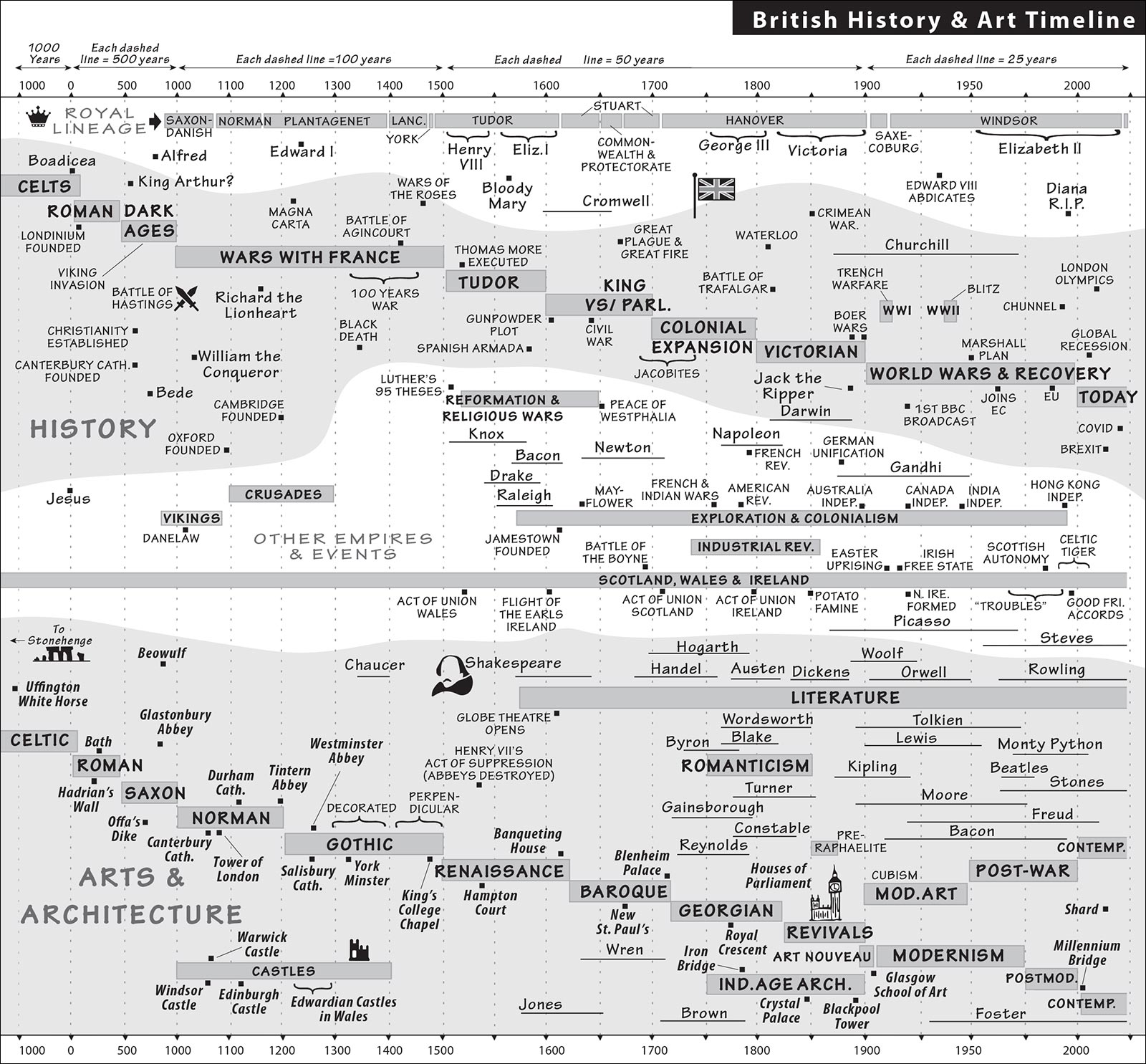
Map: British History & Art Timeline
VICTORIAN GENTILITY AND THE INDUSTRIAL REVOLUTION (1800s)
WORLD WARS AND RECOVERY (20th Century)
The more you know of Britain’s roots, the better you’ll appreciate Britain’s fascinating sights. (Warning: The boring facts you’ll hear from tour guides are true... but the fascinating stories they tell can be dodgy.)
ORIGINS (2000 BC-AD 500)
Awe-inspiring stone structures like Stonehenge and Avebury stand as powerful testaments to the sophistication of Britain’s first people. Unfortunately, we know little of these mysterious early Brits, and they were soon conquered (c. 1000 BC) by the immigrants from the Continent we do know—the Celts.
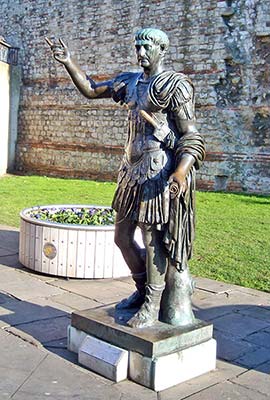
When Julius Caesar landed on the misty isle (55 BC) he encountered these Celtic tribes whose druid priests made human sacrifices and worshipped trees. Eventually, the Romans conquered them, building towns and roads and establishing a Roman capital at Londinium (today’s London). But the Celts didn’t go quietly. Rallied by their queen, Boadicea (c. AD 60), they burned Londinium before the Romans finally squelched the revolt.
By AD 100, southern England had become a thriving part of the greater Roman Empire. But on the fringes, the Romans never quite subdued the troublesome Celts—the Gaels, Picts, and Welsh. Eventually, the Romans built Hadrian’s Wall near their northern frontier, hardening a cultural divide that survives to this day: England was connected to the Continent, while Scotland and Wales remained more Celtic and remote.
Sights
• Britain’s prehistoric sites were made of huge stones or earthen mounds, used as celestial calendars, for worship, or burial. They include stone circles at Stonehenge (the most famous), Avebury (the oldest and biggest), Castlerigg (most atmospheric), and Scorhill (least touristed).
• Celtic culture lives on today in everything from the Gaelic and Welsh languages to Celtic-inspired jewelry, New Age druids, and the unique customs of Cornwall.
• See well-preserved Roman luxury at their hot springs spa at Bath. Many other British towns have scant remains of Roman-built walls, roads, temples, and villas.
• The 70-mile-long Hadrian’s Wall marked the northern extent of Rome’s Empire.
DARK AGES (500-1000)
As Rome fell, so fell Roman Britain—a victim of internal troubles and invading tribes. First came the Angles and Saxons from Germany, who turned south Britain into “Angle-land.” These were the days of King Arthur, possibly a Christianized Roman general who fought valiantly—but in vain—against the invaders.
Next, England was plundered by Vikings from Scandinavia (c. 800-900). It took King Alfred the Great (849-899) to liberate London and reestablish Christianity. For most of this troubled time, marked by wars, plagues, and poverty, the island was plunged into a dark age—lit only by the dim candle of a few learned Christian monks. Early Britain was a stew of peoples: Anglo-Saxons in England, Gaels in Scotland, and the isolated Welsh. But slowly, the Great Britain we know would take shape.
Sights
• Glastonbury’s King Arthur sights mark it as the birthplace of Christian Britain. Tintagel Castle may be Arthur’s own birthplace.
• Viking culture is on display at York’s Jorvik Viking Centre.
• See early pagan/Christian manuscripts (Beowulf, Lindisfarne Gospels) at London’s British Library.
• The evocative, impressive ruins of medieval abbeys and monasteries (Lindisfarne, Rievaulx, Glastonbury) recall the power and influence of the Catholic Church in the Middle Ages.
• The town of York, with its medieval Shambles, has many layers of early British history: Roman, Saxon, Viking, Norman, and Tudor.
WARS WITH FRANCE, WARS OF THE ROSES (1000-1500)
Modern England began with yet another invasion. In 1066, William the Conqueror crossed the English Channel from France, defeated England, and crowned himself king in Westminster Abbey.
Norman (French-speaking) kings would rule both England and France for two centuries, as the two budding nations struggled to define their modern borders. This was the era of the legendary Robin Hood, who robbed from rich Norman oppressors and gave to the Saxon poor during the reign of (French-speaking) King Richard the Lionheart (1157-1199). When Richard’s brother, King John, was forced by England’s barons to sign the Magna Carta (1215), Britain got its first glimmers of self-rule.
England began to thrive, with London as its bustling trade center. Christianity now reigned supreme, and large churches were built.
Under King Edward I (1239-1307), England asserted its dominance over its Celtic neighbors. First, Edward conquered Wales, bringing it permanently into the English sphere. Next, he invaded Scotland and stole the revered Stone of Scone. But the enraged Scots rallied around William Wallace and Robert the Bruce and drove the English back, securing a few more centuries of independence.
England also tried to claim territory in France in the Hundred Years’ War (1337-1443). English longbowmen trounced France at Agincourt (1415), but Joan of Arc eventually rallied the French to drive the English out (1429). By war’s end, the two weary countries were content to go their separate ways.
Now, who should rule England? That had to be settled in a series of civil wars: the Wars of the Roses (1455-1487). The York family (with Norman/French roots) was defeated by the Lancaster/Tudors (with roots in Wales). Henry VII Tudor emerged as king of a united England…with a baby boy on the way who would change everything.
Sights
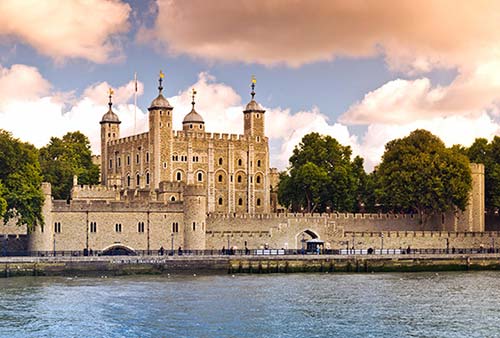
• The Battle of Hastings battlefield, the site of William the Conqueror’s 1066 triumph, is spare but evocative. William the Conqueror built churches and castles in the European Romanesque style (round arches, thick walls, small windows), which Brits call “Norman.” William started the square-shaped Tower of London as well as Windsor Castle (the residence of many monarchs to come).
• London’s Westminster Abbey is where monarchs since William the Conqueror have been crowned and buried. Its colorful Chapel of Henry VII captures the optimism following the Wars of the Roses.
• Durham Cathedral is England’s greatest Norman (Romanesque) church.
• See the Magna Carta and other early manuscripts (The Canterbury Tales) at the British Library.
• The London we know began to take shape, including the original stone London Bridge (1209) and Old St. Paul’s (1314).
• Britain has some of Europe’s most awe-inspiring Gothic cathedrals, including York Minster (stunning stained glass), Wells (inspiring evensong), Salisbury (soaring steeple), and Canterbury (major pilgrimage site). English Early Gothic (1200-1300) is fairly simple (Wells Cathedral). Decorated Gothic (1300-1400) adds fancier tracery and bigger windows (Westminster Abbey). Perpendicular Gothic (1400-1600) is the most ornate, emphasizing vertical lines from floor to ceiling, culminating in exuberant fan-vaulted ceilings (King’s College Chapel at Cambridge).
• England’s evocative castles, both renovated and ruined, are legendary: Warwick (the best), Dover, Tintagel, Arundel, Bamburgh, the castle/monastery of St. Michael’s Mount, and more.
THE TUDOR RENAISSANCE (1500s)
Henry VIII Tudor—charismatic, highly sexed, scholar, musician, and Renaissance man—thrust England onto the world stage. He was also arrogant, cruel, gluttonous, and paranoid. He went through six wives in 40 years. (As British schoolkids learn their fates: “Divorced, beheaded, died; divorced, beheaded, survived.”)
When the pope refused to allow Henry to marry his mistress Anne Boleyn, Henry “divorced” England from the Catholic Church, “dissolved” England’s once-powerful abbeys, and established the Anglican Church. The Protestant faith seeped into southern Scotland as well, under the reformer John Knox. For a century, Britain had to endure bitter Protestant/Catholic squabbles.
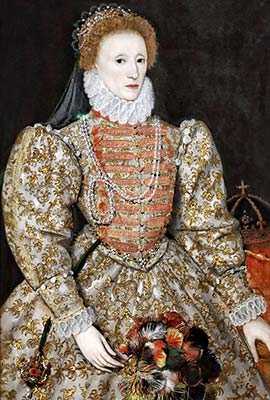
Henry was eventually succeeded by Queen Elizabeth I, the daughter he had with Anne Boleyn. Elizabeth reigned for 45 years, making England a great naval power and presiding over a cultural renaissance in the arts and literature. William Shakespeare strutted the stage, Sir Francis Drake circumnavigated the globe, and Sir Walter Raleigh explored America. London’s population swelled.
But when Elizabeth—the Virgin Queen—died childless, her distant cousin, Scotland’s King James, was the only real choice to inherit the English throne. Just like that, mortal enemies Scotland and England became a single country—and they’ve been tied together ever since, however fitfully.
Sights
• King’s College Chapel in Cambridge, with its elaborate fan vaulting and Henry VIII/Anne Boleyn choir screen, shows off the wealth of the age.
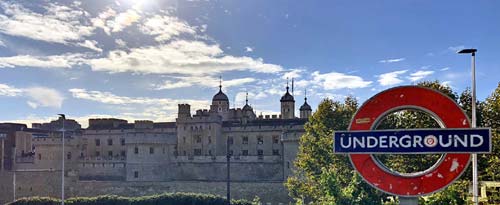
• The Tower of London, where Anne Boleyn was executed, has seen centuries of intrigue and beheadings. It’s a wonder the country survived its rulers.
• Elizabeth I’s tomb is in Westminster Abbey.
• Stratford-upon-Avon has Shakespeare sights and half-timbered Elizabethan-era ambience. In London, Shakespeare’s Globe reconstructs the Bard’s stage, while his early scripts are at the British Library.
• You’ll see the famous black-and-white Tudor style in many half-timbered buildings in Cotswolds villages and the charming town of Rye.
KINGS VS. PARLIAMENT (1600s)
Since the days of Magna Carta, England’s Parliament of nobles had only grown more powerful. It led to the English Civil Wars (1642-1651) between the Protestant Parliament and the Catholic King Charles I. After a decade of bitter warfare, Parliament won. They beheaded the king and made a mere commoner, Oliver Cromwell, the head of state. When Cromwell died, Parliament was still in charge, though they graciously invited Charles’ son (Charles II) to take the throne in 1660—“restoring” the monarchy.”
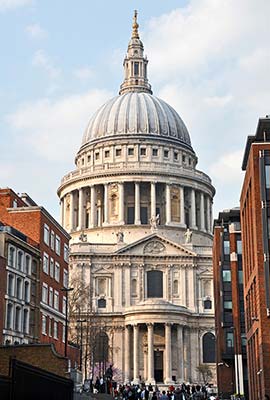
The turbulent civil wars were followed by back-to-back disasters—the Great Plague of 1665 (which killed 100,000) and the Great Fire of 1666 (which incinerated London). But London rose from the ashes, rebuilt largely by architect Christopher Wren. With a population over 200,000, London was now Europe’s largest city, and England was challenging France as Europe’s greatest nation.
History comes to life when you visit a centuries-old church. Even if you wouldn’t know your apse from a hole in the ground, learning a few simple terms will enrich your experience. Note that not every church has every feature, and a “cathedral” isn’t a type of church architecture, but rather a designation for a church that’s a governing center for a local bishop.
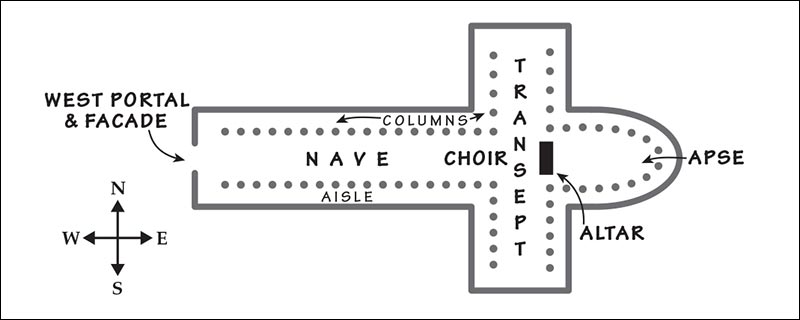
Aisles: Long, generally low-ceilinged arcades that flank the nave
Altar: Raised area with a ceremonial table (often adorned with candles or a crucifix), where the priest prepares and serves the bread and wine for Communion
Apse: Space behind the altar, sometimes bordered with small chapels
Barrel Vault: Continuous round-arched ceiling that resembles an extended upside-down U
Choir (“quire” in British English): Intimate space reserved for clergy and choir, located within the nave near the high altar and often screened off
Cloister: Covered hallways bordering a square or rectangular open-air courtyard, traditionally where monks and nuns got fresh air
Facade: Exterior of the church’s main (west) entrance, usually highly decorated
Groin Vault: Arched ceiling formed where two equal barrel vaults meet at right angles
Narthex: Area (portico or foyer) between the main entry and the nave
Nave: Long central section of the church (running west to east, from the entrance to the altar) where the congregation sits or stands during the service
Transept: One of the two parts forming the “arms” of the cross in a traditional cross-shaped floor plan; runs north-south, perpendicularly crossing the east-west nave
West Portal: Main entry to the church (on the west end, opposite the main altar)
Castles were fortified residences for medieval nobles. Castles come in all shapes and sizes, but knowing a few general terms will help you understand them.
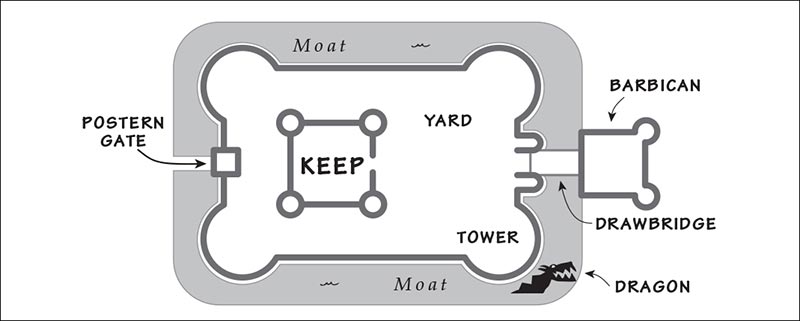
Barbican: Fortifed gatehouse, sometimes a standalone building located outside the main walls
Crenellation: Gap-toothed pattern of stones atop the parapet Drawbridge: Bridge that could be raised or lowered using counterweights or a chain and winch
Great Hall: Largest room in the castle, serving as throne room, conference center, and dining hall
Hoardings (or Gallery or Brattice): Wooden huts built onto the upper parts of the stone walls; served as watchtowers, living quarters, and fighting platforms
Keep (or Donjon): High, strong stone tower in the center of the complex; the lord’s home and refuge of last resort
Loopholes (or Embrasures): Narrow wall slits through which soldiers could shoot arrows
Machicolation: Stone ledge jutting out from the wall, with holes through which soldiers could drop rocks or boiling oil onto wall-scaling enemies below
Moat: Ditch encircling the wall, sometimes filled with water
Motte-and-Bailey: Type of early English castle, with a hilltop fort (motte) and an enclosed, fortified yard (bailey)
Parapet: Outer railing of the wall walk
Portcullis: Iron grille that could be lowered across the entrance
Postern Gate: Small, unfortified side or rear entrance; in wartime, became a sally port used to launch surprise attacks or as an escape route
Towers: Square or round structures with crenellated tops or conical roofs serving as lookouts, chapels, living quarters, or the dungeon
Turret: Small lookout tower rising from the top of the wall
Wall Walk (or Allure): Pathway atop the wall where guards could patrol and where soldiers stood to fire at the enemy
Yard (or Bailey): Open courtyard inside the castle walls
In 1688, Parliament deposed King James II—a Catholic with Scottish Stuart heritage—and replaced him with Dutch monarchs William and Mary, guaranteeing a Protestant succession. With Parliament calling the shots, Britain was becoming a modern nation.
Sights
• London’s Banqueting House proclaimed the opulence of the monarchy, and—ironically—was the site of Charles I’s beheading.
• The City of London has reminders of the Great Fire (The Monument) and the great rebuild (St. Paul’s and other Wren churches). London’s new look was soon everywhere: classical-style columns, domes, and symmetry.
• Kensington Palace was the residence of William and Mary, and their successor Queen Anne.
• Cambridge has the Wren Library (designed by Sir Christopher), documents by Isaac Newton, and the apple tree where he supposedly discovered gravity.
COLONIAL EXPANSION (1700s)
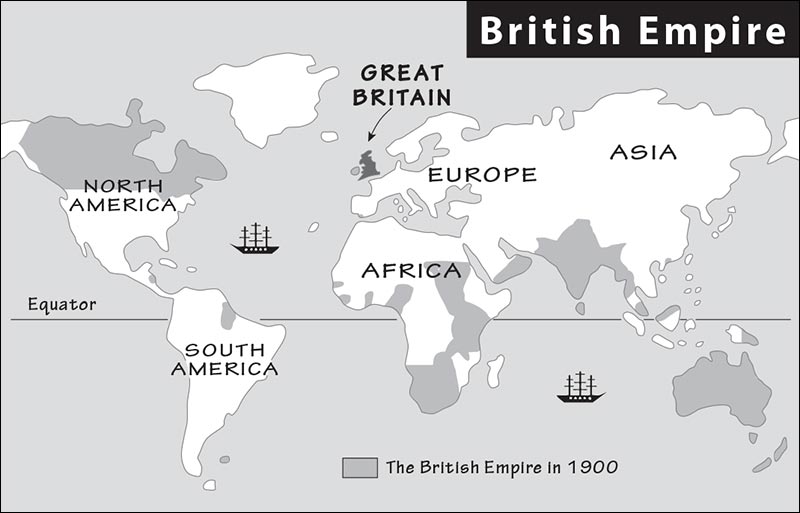
England was a colonial power on the rise. Britannia ruled the waves, trading across the globe, and exploiting the wealth of India, Africa, Australia, and America (at least until 1776). At home, powerful England pressured bankrupt Scotland to dissolve its Scottish Parliament and sign the Act of Union (1707). Scotland officially joined England and Wales as part of “Great Britain.” (A century later, Ireland would also join to form the “United Kingdom.”)
This Georgian era—named for a strong of kings named George—was one of great wealth (1714-1837). London’s population was now a half-million, with a thriving cultural scene filled with painters (like Thomas Gainsborough), musicians (Handel’s Messiah), and writers (Samuel Johnson’s dictionary). In the countryside, Jane Austen penned romantic tales about the landed gentry.
Edinburgh became one of Europe’s most intellectual cities, home to economist Adam Smith and poet Robert Burns. But while Lowland Scotland thrived, the Highlands—fervently Catholic and still loyal to the recently deposed James II—were seething. The clans launched a fierce rebellion led by Bonnie Prince Charlie (1745-1746). The British army had to crush the revolt and brutally suppress all elements of Highland culture, from Gaelic to tartans.
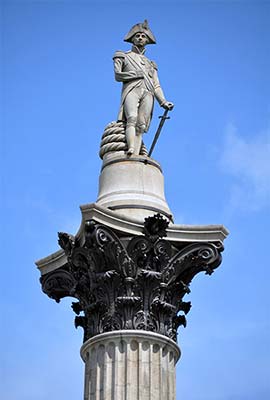
By mid-century, Great Britain was overtaking France. When France erupted in chaos in its revolution (1789), Britain seized the moment. Admiral Horatio Nelson defeated Napoleon’s fleet at the Battle of Trafalgar and the Duke of Wellington stomped Napoleon at Waterloo.
And as the next century began, Britain emerged as Europe’s—and the world’s—supreme superpower.
Sights
• Britain’s naval prowess and splendid Georgian architecture are on display at Greenwich (Royal Observatory and National Maritime Museum) and Portsmouth (historic ships).
• Georgian-era Castle Howard, near York, is a made-for-Hollywood manor house of the aristocracy.
• The city of Bath—the height of British elegance in the late 1700s—is slathered in the Georgian style, including the Royal Crescent and the Circus. Chippendale furniture and white-on-blue Wedgwood ceramics graced rich homes everywhere.
• Memorials to Nelson and Wellington are everywhere in England, including Nelson’s Column at Trafalgar Square, Apsley House (Wellington’s home and museum) and the adjacent Wellington Arch.
VICTORIAN GENTILITY AND THE INDUSTRIAL REVOLUTION (1800s)
Britain reigned supreme, with a colonial empire that covered one-fifth of the world. Britain led the Industrial Revolution with her steam engines, factories, coal mines, gas lights, and nationwide network of trains. By century’s end, the country had electricity, telephones, and the first underground “Tube” lines. In this 100-year period alone, more buildings were constructed than in all previous eras combined.
Plump, pleasant, and not quite five feet tall, Queen Victoria, with her regal demeanor and 64-year reign, came to symbolize the global dominance of the British Empire during its greatest era.
Born in Kensington Palace, Victoria was the granddaughter of “Mad” King George III, the tyrant who sparked the American Revolution. Her domineering mother raised her in sheltered seclusion, drilling into her the strict morality that would come to be known as “Victorian.” At 18, she was crowned queen. Victoria soon fell deeply in love with Prince Albert, a handsome German nobleman. They married and set up house in Buckingham Palace (the first monarchs to do so) and at Windsor Castle. Over the next 17 years, she and Albert had nine children, whom they married off to Europe’s crowned heads. Victoria’s descendants include Kaiser Wilhelm II of Germany (who started World War I); the current monarchs of Spain, Norway, Sweden, and Denmark; and England’s late Queen Elizabeth II, who was Victoria’s great-great-granddaughter.
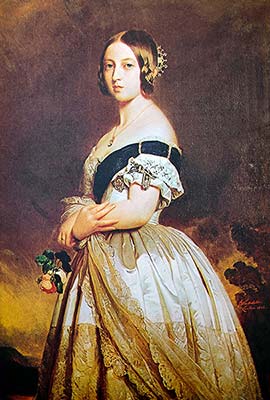
Victoria and Albert promoted the arts and sciences, organizing a world’s fair in Hyde Park (1851) that showed off London as the global capital. Just as important, they were role models for an entire nation; this loving couple influenced several generations with their wholesome middle-class values and devoted parenting. Though Victoria is often depicted as dour and stuffy—she supposedly coined the phrase, “We are not amused”—in private she was warm, easy to laugh, plainspoken, thrifty, and modest, with a talent for sketching and journal writing.
In 1861, Victoria’s happy domestic life ended. Her mother’s death was soon followed by the sudden loss of her beloved Albert to typhoid fever. A devastated Victoria dressed in black for the funeral—and for her remaining 40 years. She hunkered down at Windsor with her family. Critics complained she was an absentee monarch. Rumors swirled that her kilt-wearing servant, John Brown, was not only her close friend but also her lover. For two decades, she rarely appeared in public.
Over time, Victoria emerged from mourning to assume her role as one of history’s first constitutional monarchs. She had inherited a crown with little real power. But beyond her ribbon-cutting ceremonial duties, Victoria influenced events behind the scenes. She studiously learned politics from powerful mentors (especially Prince Albert and two influential prime ministers) and kept well informed on what Parliament was doing. Thanks to Victoria’s personal modesty and honesty, the British public never came to disdain the monarchy, as happened in other countries.
Victoria gracefully oversaw the peaceful transfer of power from the nobles to the people. The secret ballot was introduced during her reign, and ordinary workers acquired voting rights (though this applied only to men—Victoria opposed women’s suffrage). The traditional Whigs and Tories morphed into today’s Liberal and Conservative parties. Victoria personally promoted progressive charities, and even paid for her own crown.
Most of all, Victoria became the symbol of the British Empire, which she saw as a way to protect and civilize poorer peoples. Britain enjoyed peace at home, while its colonial possessions included India, Australia, Canada, and much of Africa. Because it was always daytime someplace under Victoria’s rule, it was often said that “the sun never sets on the British Empire.”
The Victorian era saw great changes. The Industrial Revolution was in full swing. When Victoria was born, there were no trains. By 1842, when she took her first train trip (with much fanfare), railroads crisscrossed Europe. The telegraph, the telephone, and newspapers further laced the world together. The popular arts flourished—it was the era of Dickens novels, Tennyson poems, Sherlock Holmes stories, Gilbert and Sullivan operettas, and Pre-Raphaelite paintings. Economically, Britain saw the rise of the middle class. Middle-class morality dominated—family, hard work, honor, duty, and sexual modesty.
By the end of her reign, Victoria was wildly popular, both for her personality and as a focus for British patriotism. At her Golden Jubilee (1887), she paraded past adoring throngs to Westminster Abbey. For her Diamond Jubilee (1897), she did the same at St. Paul’s Cathedral. Cities, lakes, and military medals were named after her. When she passed away in 1901, it was literally the end of an era.
It was all overseen by Queen Victoria, who ruled for 64 years (1837-1901), presiding over an era of unprecedented wealth, peace, and middle-class (“Victorian”) values. (For more on Victoria and her Age, see the sidebar.)
Even in this Industrial Age, the spirit of Romanticism flourished. Romantic poets (like William Wordsworth) reveled in nature’s innocence, while painters (like Turner and Constable) captured its awesome power. Architects looked to the medieval past for inspiration, building “Neo”-Gothic structures like Big Ben.
Everyday life was changing fast. Farmers left their land for factory work, while others emigrated to America for a better life. Democracy advanced, and the Queen’s powers were increasingly restricted. Novelist Charles Dickens educated the rich about the harsh realities of the poor. Rudyard Kipling critiqued the colonial system. Charles Darwin questioned the very nature of humanity with his work on evolution. And Jack the Ripper, a serial killer of prostitutes, terrorized East London and was never caught. Not even by Sherlock Holmes—a fictional detective who solved crimes even the real Scotland Yard couldn’t.
As Britain turned to the year 1900, she was at the top of the world, and the future looked endlessly rosy.
Sights
• Under Queen Victoria, Buckingham Palace became the headquarters of the monarchy.
• The Victoria and Albert Museum shows off objects from Britain’s colonial empire, and Brighton’s exotic Royal Pavilion reflects Asian influence.
• The Neo-Gothic Big Ben and the Halls of Parliament are barely 160 years old but they look 700. In the Victorian era, the Neo-Gothic style’s pointy turrets and crenellations were everywhere, from renovated castles (like Arundel) to a school for wizardry called Hogwarts.
• Britain’s world-class writers are enshrined at the British Library and honored at the Poets’ Corner in Westminster Abbey.
• London’s quirky Sherlock Holmes Museum, at 221B Baker Street, whimsically captures the age, while the East End tenements show its darker Jack-the-Ripper side.
• The Industrial Revolution steams on at Ironbridge Gorge (where it was born), Cornwall (tin mines powered with steam-engine pumps), and Blackpool (founded as a mill worker’s resort).
• York’s Castle Museum and National Railway Museum also capture the era.
• The Lake District’s scenic hikes and peaceful villages are what drew the Romantic poet William Wordsworth to Dove Cottage.
• See paintings by the Romantics and dreamy Pre-Raphaelites in London’s Tate Britain.
• As the traditional way of life began to disappear, there was a movement to preserve old buildings: The Beamish open-air museum (near Durham), St. Fagans (Wales), Blists Hill (Ironbridge Gorge), and Mary Arden’s Farm (Stratford-upon-Avon).
WORLD WARS AND RECOVERY (20th Century)
The 20th century was not kind to Britain. Two world wars and economic decline whittled Britain down from a world empire to an island chain struggling to compete in a global economy.
In World War I, a million British men died. Amid the chaos, Britain lost its grip on Ireland, though Northern Ireland remained part of the UK. This division of the Emerald Isle would result in decades of bitter strife, protests, and terrorist attacks known as the Troubles.
Britain carried on after the war but was rocked again in 1936, when King Edward VIII abdicated to marry a divorced American commoner. He had to be succeeded by his brother, George VI—the father of Queen Elizabeth II.
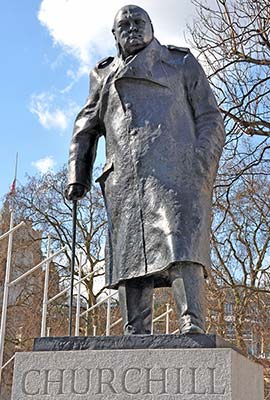
When World War II erupted, the Nazi Blitz pulverized London, sending residents into Tube stations for shelter. In its darkest hour, Britain was rallied by stout Prime Minister Winston Churchill and his inspiring radio addresses. Britain emerged from the war victorious but damaged. Its colonial empire was unraveling, leaving Britain a shell of its former superpower self.
The postwar recovery began, aided by the United States and guided by a new young queen—Elizabeth II. Elizabeth ruled for 70 years (1952-2022), during which Britain got its groove back.
Culturally, Britain remained world-class. In the 1960s, “Swinging London” became a center for rock music (Beatles, Rolling Stones), film, theater, youth culture, and an Austin Powers-style joie de vivre.
Still, America was now the world’s superpower, and Britain had to adjust. Britain joined other struggling European nations to form the European Union (1973). In the 1970s, Britain suffered through massive unemployment, while the 1980s brought austerity measures under Prime Minister Margaret (Iron Lady) Thatcher.
In 1981, the world was enchanted when then-Prince Charles married Lady Diana in St. Paul’s Cathedral. Their children, Princes William and Harry, grew up in the media spotlight, and when Diana died in a car crash (1997), the nation—and the world—mourned.
Britain faced a new issue—“devolution”—when citizens in both Wales and Scotland began demanding increased independence. In 1998, Parliament granted both countries a measure of self-governance they hadn’t enjoyed for centuries.
By the year 2000, Britain was finally emerging from decades of economic stagnation and social turmoil, and once again taking its place on the global stage.
Sights
• London’s Cenotaph and other monuments along Whitehall soberly honor the brave soldiers of Britain’s disastrous world wars. Such memorials are found in towns throughout Britain, with long lists of local boys who gave the utmost for their country.
• The Churchill War Rooms in London were the fortified bunker of the British government during World War II. St. Paul’s Cathedral, heavily bombed in the Blitz, has several war memorials.
• London’s Imperial War Museum and National Army Museum chronicle numerous wars.
• Dover Castle has WWII secret tunnels.
• Blenheim Palace (near Oxford), home of the heir Winston Churchill, shows off his remarkable life.
• The Beatles are remembered in Liverpool and at London’s British Library.
• The city of Liverpool encapsulates much of Britain’s recent trajectory: from industrial shipping port, to 1960s Beatles explosion, to 1970s decline and urban blight, to recent rise and revitalization.
EARLY 2000s
In the new millennium, the issues Britain dealt with echoed those of the world at large: the Iraq War (under PM Tony Blair), Islamic terrorist attacks, and the global recession of 2008. Thankfully, one hot spot—Northern Ireland—was healed, when a peace agreement was reached (2007), ending almost 40 years of the Troubles.
In 2011, Prince William married commoner Kate Middleton, soon followed by William’s younger brother Harry marrying American TV star Meghan Markle. The two couples, along with their children, stirred renewed interest (and controversy) in the monarchy.
In 2016, Britain faced its greatest challenge since World War II—Brexit. Brits narrowly voted to leave the European Union. And in 2020, after 47 years as a member, they did just that.
Leaving Europe left Britain with an uncertain future. But you wouldn’t know it by the flurry of renovation that’s taken place recently. Cities are booming and former urban wastelands have been transformed into hip, thriving people zones. The country’s future couldn’t look brighter.
Sights
• London celebrated the new millennium with the London Eye, the Millennium Bridge, and The O2 exhibition hall.
• See cutting-edge art at London’s Tate Modern and trendsetting theater in the West End.
• Liverpool and London’s Docklands are just two of the places that got a livability makeover. London got a striking new skyline, with playful structures like City Hall (nicknamed The Armadillo), 30 St. Mary Axe (The Gherkin), 20 Fenchurch (The Walkie-Talkie), and the pointy, soaring Shard.
• Feel the pulse of 21st-century politics at London’s 10 Downing Street, Parliament Square, and Whitehall, which are frequented by demonstrators.
• Harry Potter sights have made Britain a magical destination for a generation of 21st-century kids.
BRITAIN TODAY
Britain is one of the richest, freest, best-educated, and most culturally powerful nations on earth. Its people are vibrant and alive.
Though geographically small, and no longer the superpower it once was, it’s still a major player. It’s the world’s fifth-biggest economy, sixth-biggest manufacturer, and largest financial center (London). Twenty-six of the world’s 500 largest companies are headquartered here. The population is a fifth that of the United States.
| 802-1066 | Saxon and Danish kings | |
| 1066-1154 | William the Conqueror and Norman kings | |
| 1154-1399 | Plantagenet (kings with French roots) | |
| 1399-1461 | Lancaster | |
| 1462-1485 | York | |
| 1485-1603 | Tudor (Henry VIII, Elizabeth I) | |
| 1603-1649 | Stuart (civil war and beheading of Charles I) | |
| 1649-1653 | Commonwealth, no royal head of state | |
| 1653-1659 | Protectorate, with Cromwell as Lord Protector | |
| 1660-1714 | Restoration of Stuart dynasty | |
| 1714-1901 | Hanover (four Georges, William IV, Victoria) | |
| 1901-1910 | Saxe-Coburg (Edward VII) | |
| 1910-present | Windsor (George V to Charles III) |
It seems you can’t pick up a British newspaper without some mention of the latest event, scandal, or oddity involving the royal family. Here is the cast of characters:
Queen Elizabeth II, who died in September 2022 at age 96, was Britain’s longest-serving monarch and generally beloved as the nation’s grandmother. She ruled the commonwealth for 70 years and 214 days, becoming queen at age 25 when her father died (in 1952). The TV audience for Elizabeth’s funeral was estimated at one-half of the world’s population—more than four billion people. She was buried at Windsor Castle, next to her husband, Prince Philip, who died in 2021 at age 99.
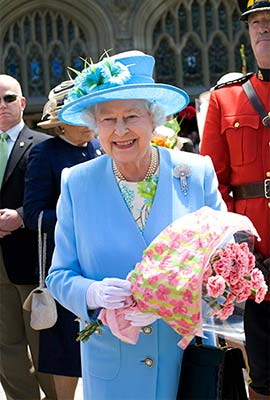
Their son, King Charles III (formerly the Prince of Wales), held the title as the longest “heir in waiting” and is also the oldest person to assume the British throne (at age 73). Charles’ fairy-tale 1981 marriage to Princess Di, then their bitter divorce, Diana’s dramatic death in 1997, and drama with Charles’ girlfriend—now queen consort—Camilla Parker Bowles, was all fodder for the British press. The jury is still out on what sort of monarch Charles will be—and how his reign will be judged by the British people.
Lately it’s been King Charles’ sons who generate the tabloid buzz. Prince William (b. 1982) is a graduate of Scotland’s St. Andrews University and served as a search-and-rescue helicopter pilot with the Royal Air Force. In 2011, William married Catherine “Kate” Middleton, a commoner William met at university, who now holds the title once bestowed on Diana—Princess of Wales—and will eventually become Britain’s queen. Their first son, Prince George Alexander Louis, born in 2013, will ultimately succeed William as sovereign.
William’s brother, redheaded Prince Harry (b. 1984), proved his mettle as a career soldier, completing a tour in Afghanistan, doing charity work in Africa, and serving with the Army Air Corps. His 2018 marriage to American actress Meghan Markle added sparkle to the musty royals. But in 2020, citing negative media scrutiny, racism, and lack of support from the royal family, Harry and Meghan gave up some of their titles, royal duties, and funds—and moved to the US.
You can see the trappings of royalty at Buckingham Palace (historically the monarch’s London residence) with its Changing of the Guard; Kensington Palace—the London residence of Will, Kate, and kids; Althorp Estate (80 miles from London), the childhood home and burial place of Princess Diana; and Windsor Castle, the monarch’s royal country home. Don’t forget the crown jewels in the Tower of London.
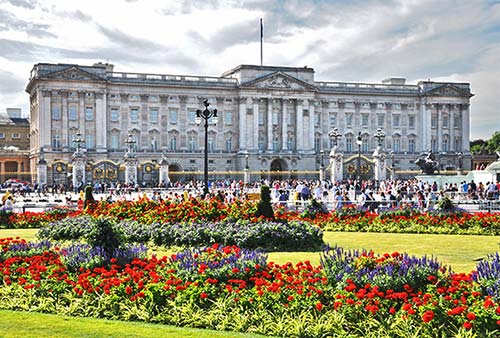
Your best chances to see the King are on three public occasions: State Opening of Parliament (on the first day of a new parliamentary session), Remembrance Sunday (early November, at the Cenotaph), or Trooping the Colour (one Saturday in June, parading down Whitehall and at Buckingham Palace). Otherwise, check Royal.uk, where you can search for royal events.
Britain still retains echoes of its once-vast Empire. There are a few token colonial scraps (the Falklands, Gibraltar, Northern Ireland), as well as a loose association of friendly former colonies (Canada, Australia, India) called the British Commonwealth.
Even as it sets trends for the 21st century, Britain treasures its heritage and takes great pains to preserve its historic districts and “listed” (government-protected) buildings. With a booming tourist trade, these quaint reminders of the past are now a valuable part of the British economy.
Politically, Britain is a constitutional monarchy, ruled by the House of Commons, with some guidance from the mostly figurehead monarch and House of Lords. King Charles III—the son of the popular and long-serving Queen Elizabeth II—has the difficult task of upholding tradition in a fast-changing world.
The prime minister is the chief executive but is not elected directly by voters; rather, the PM assumes power as the head of the party that wins a majority in parliamentary elections. Current prime minister Rishi Sunak is leader of the Conservative Party and the first person of Indian heritage to hold the title.
Two parties have traditionally dominated Britain’s Parliament: left-leaning Labour and right-leaning Conservative (Tories). The dividing lines between them are familiar: Should government nurture the economy through spending on social programs (Labour’s platform), or cut programs and taxes to allow businesses to thrive (as Conservatives say)?
Third parties have made gains, including the Liberal Democrats (center-left), the Scottish National Party (advocating for Scottish concerns), and the ecology-minded Greens. If no single party wins an outright majority, whoever rules must form a coalition, making compromise and deal-making essential to governing.
Britain has its challenges. Even with Brexit in the rearview mirror, the consequences continue to affect Brits’ relationship with the rest of Europe and with each other. They’re still figuring out new arrangements on trade, travel, and immigration. And culturally, Brexit only sharpened the class divide between the working class (who generally supported Brexit) and the well-off (who opposed it).
Immigration remains divisive. Some argue that excess immigration dilutes British culture and takes jobs and financial aid away from citizens. On the other hand, the exodus of foreign workers from Britain is now causing labor shortages.
The United Kingdom also struggles to balance the demands of its four members: England, Scotland, Wales, and Northern Ireland. Though Scotland and Wales have been granted a measure of self-governance, many Scots are demanding out-and-out independence. Brexit only intensified those tensions, as England and Wales were generally pro-Brexit, while Scotland and Northern Ireland hoped to remain in the EU.
Then there’s the eternal question of the royals. Is having a monarch (who’s politically irrelevant) and a royal family (who fill the tabloids with scandals) worth it? Recent polls suggest two in five Brits want to toss the whole lot of them. On the other hand, aren’t the little princes and princesses adorable? With a new generation and a hardworking king, there may still be hope for the royals.
For a fun glimpse at Britain today, after a hard day of sightseeing, kick back and watch the telly over tea in your B&B. You’ll see some familiar fare: period dramas (like Downton Abbey) comedies (like classic Monty Python or The Office), sci-fi (Doctor Who), and crime shows (Morse, Luther). But to really tap into middle Britain, check out their ever-popular quiz shows, reality shows, and slice-of-life soap operas (like long-running Coronation Street). Brits can even still watch a couple dozen channels for free. (Well, “free” with a $200-a-year TV license.) Free channels include eight from the BBC, which is government-regulated, fairly highbrow, and commercial-free. Others (ITV, Sky News, etc.) have “adverts”—clever commercials that provide a fun look at British life. Notice the many regional accents—Scottish, Irish, Geordie—that are celebrated in Britain. But beware: after the 21:00 hour, some nudity and profanity are allowed.
All in all, the defining feature of Britain today is the outsized impact it still has on planet Earth. This tiny island nation is a global superpower of heritage, culture, and tradition. It’s a major exporter of actors, writers, rock and classical musicians, and cutting-edge artists. People from all continents flock here to enjoy its castles, cathedrals, and half-timbered charm as well as its lively pubs, high teas, dudes in kilts, glitzy musicals, and chatty locals. After 4,000 years of tradition, timeless Britain is still the perfect place to make your own history.
For more about British history, consider Europe 101: History and Art for the Traveler by Rick Steves and Gene Openshaw, available at RickSteves.com.